MENU
Close





What happens when blue-collar luxe clocks in, rolls up its sleeves, and makes the runway look like the most expensive shift of the season?
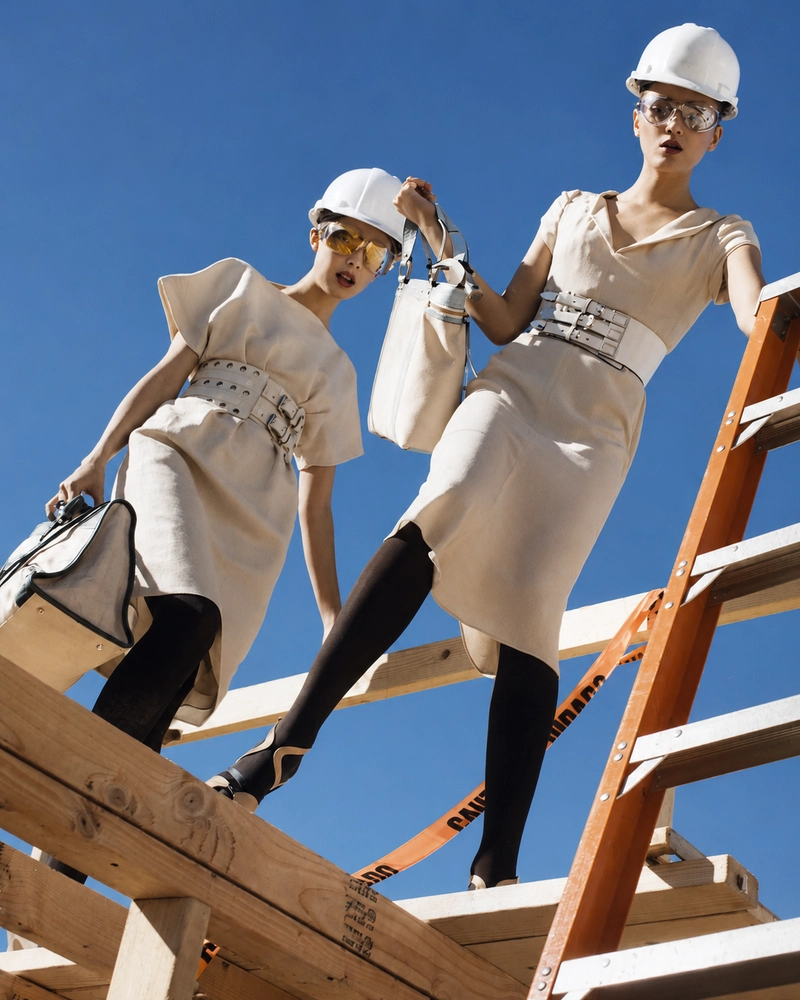
What happens when blue-collar luxe clocks in, rolls up its sleeves, and makes the runway look like the most expensive shift of the season?
June 3, 2026
Advertisement
Advertisement


The contemporary runway establishes a profound fixation on the aesthetics of manual labor, elevating utilitarian garments to the pinnacle of high luxury. This new language of blue-collar luxe turns labor-coded clothing into one of contemporary fashion’s most charged visual systems.
During the current season, the fashion landscape features an abundance of aprons, uniforms, and chore jackets, signaling a deliberate embrace of gravity. This structural orientation responds directly to the heavy socio-economic conditions of the era, where designers choose to engage with the visual language of the working class, elevating functional garments to positions of extreme cultural prestige. The runway becomes a space where the garment of the laborer undergoes a complete conceptual conversion, serving as a vehicle for profound sociological commentary.
Miuccia Prada occupies a central position within this analytical movement, utilizing her platform to investigate the political dimensions of dress. Her spring/summer 2026 Miu Miu collection explicitly adopted the environment of a factory lunchroom, placing the audience upon Formica tabletops to establish an atmosphere of industrial austerity. The presentation commenced with the appearance of actress Sandra Hüller, an individual possessing distinct experience in manual operation through her training as a forklift driver. Hüller walked the runway wearing a heavy canvas apron, structured trousers, and a jacket, completed by a blue-collared shirt, asserting an absolute statement regarding the integrity of functional forms. The collection expanded into an array of aprons, spanning from leather butcher garments to traditional domestic pinafores, establishing a collective aesthetic defined by functional historical archetypes.
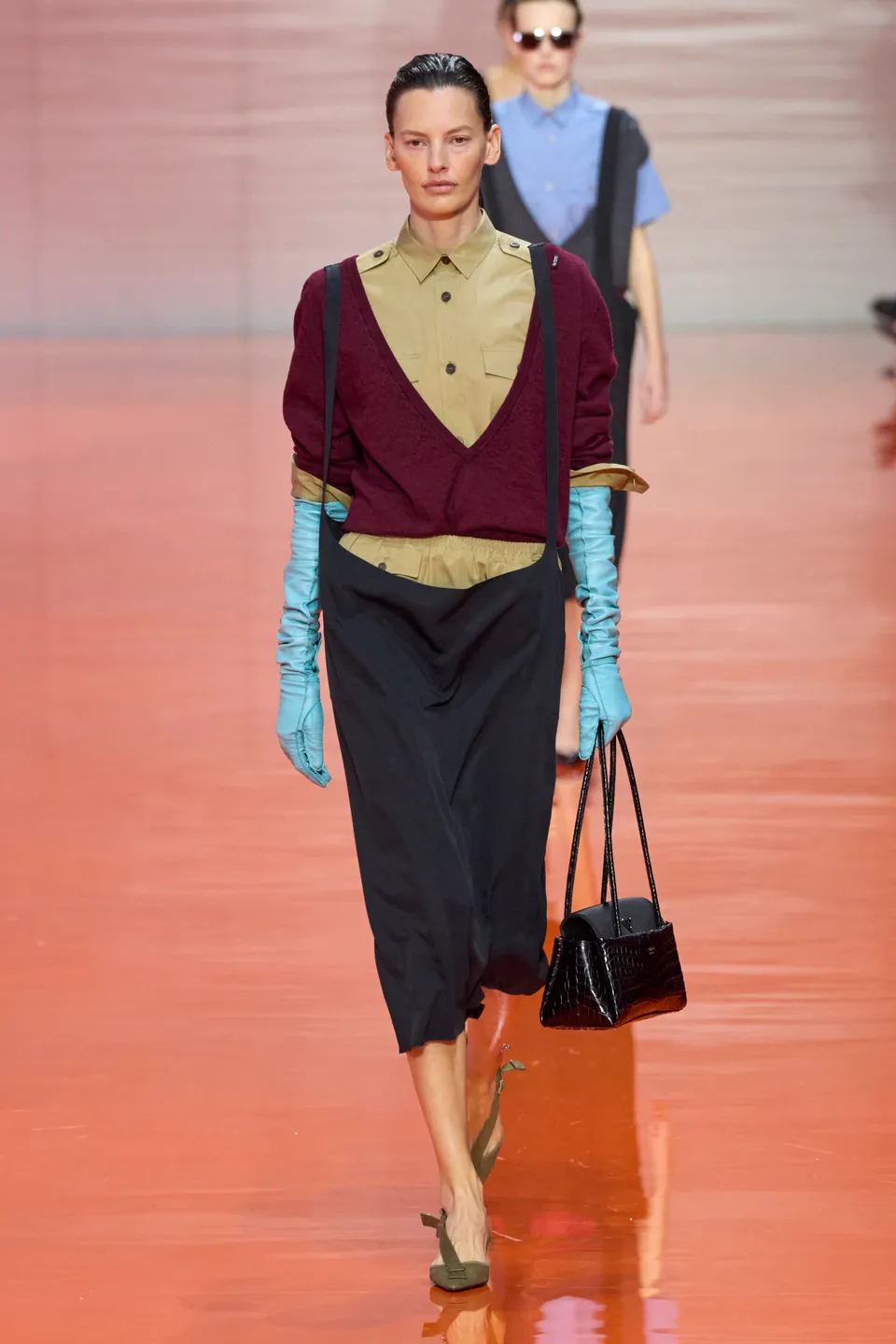
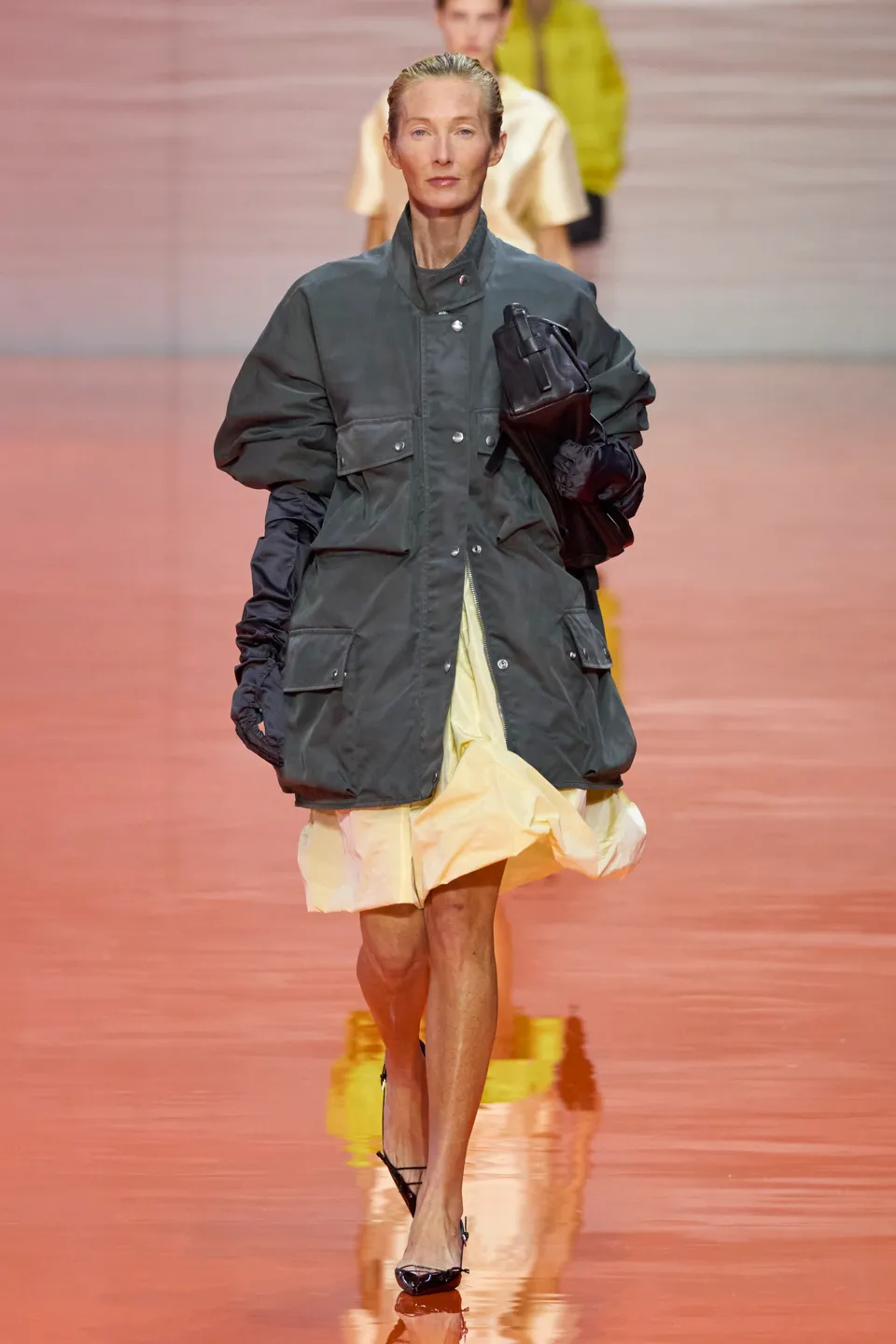
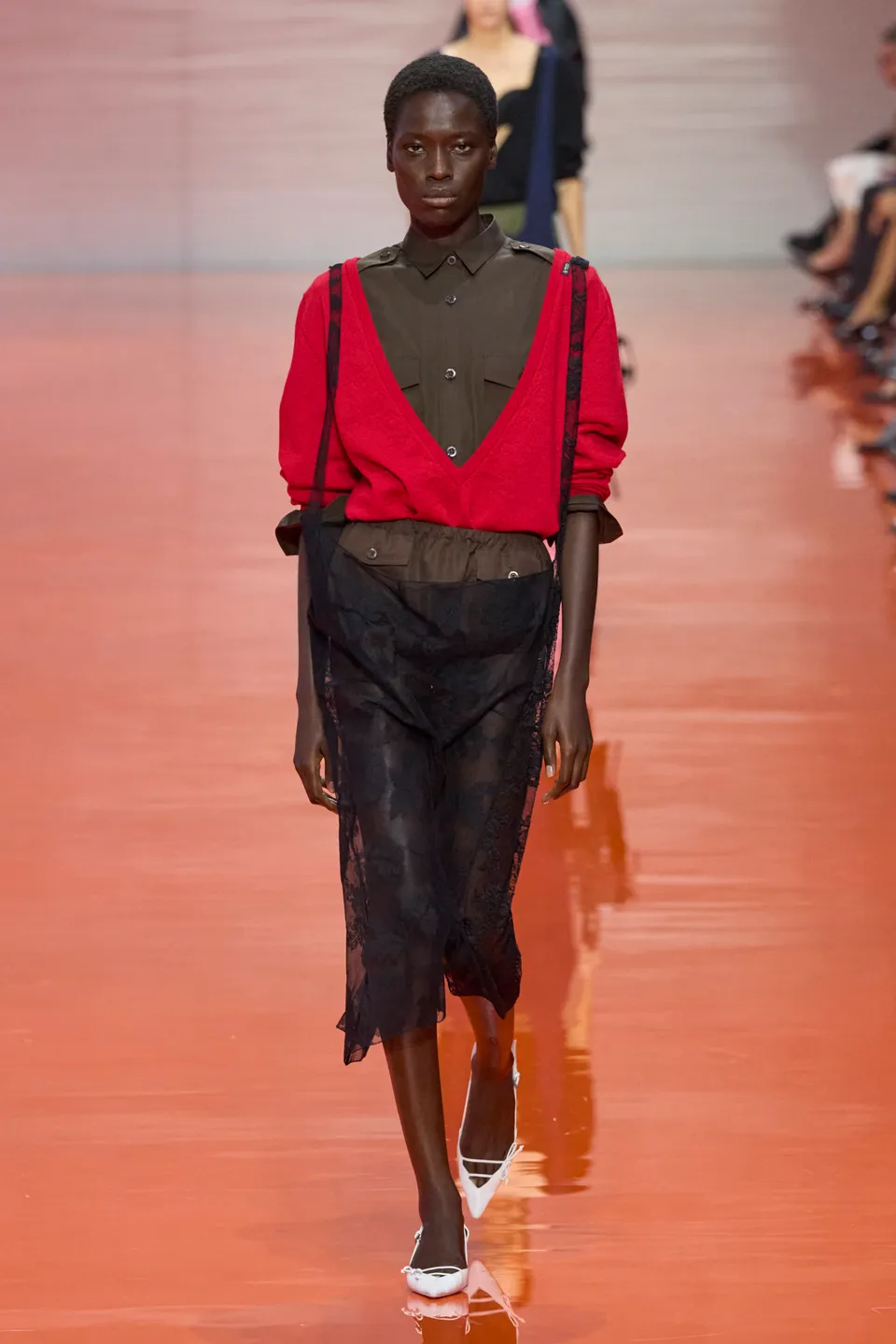
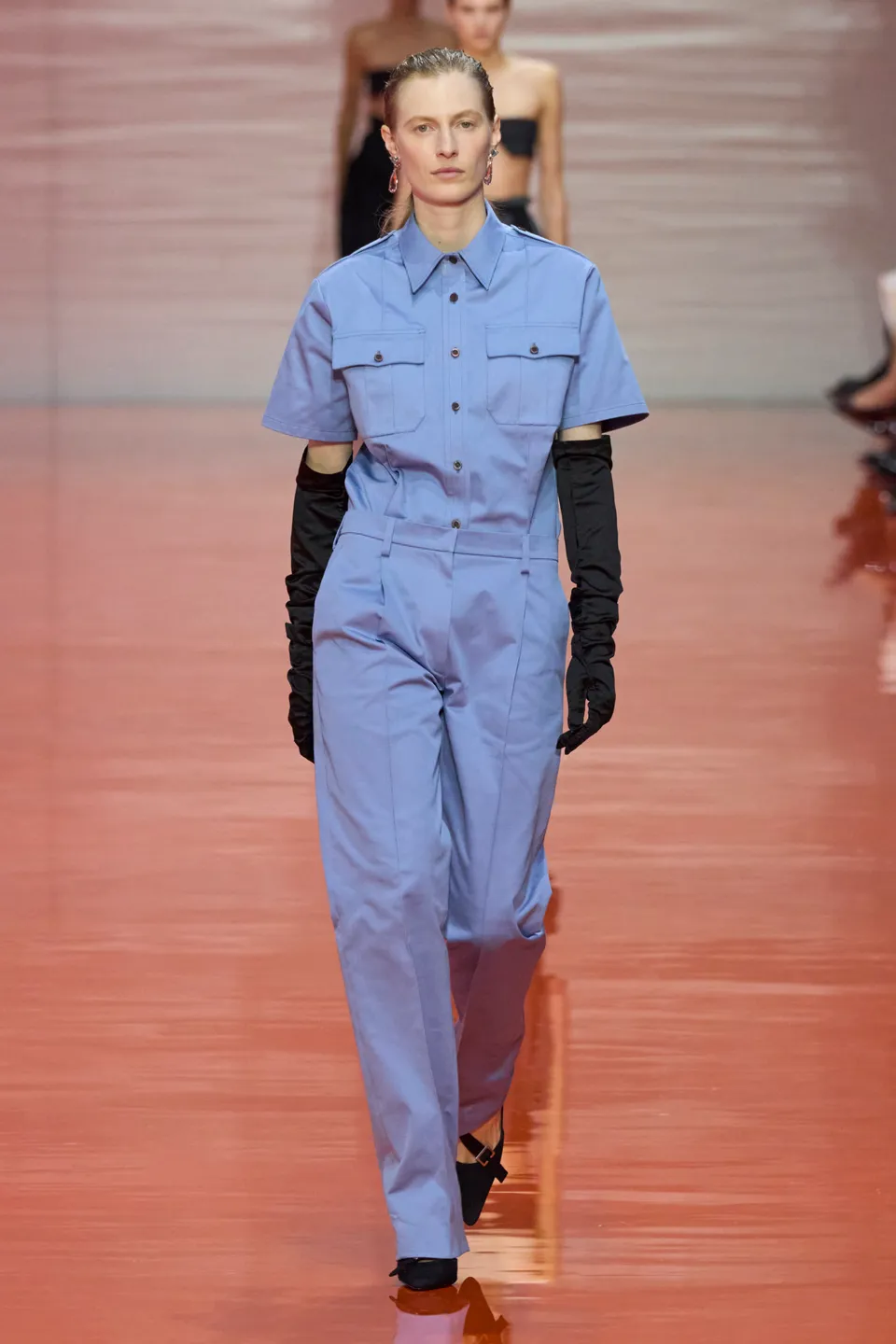
The meticulous design of the show space reinforced this conceptual focus, converting the act of viewing fashion into an encounter with industrial reality. The choice of Formica, a material deeply associated with mid-century institutional spaces, grounded the venue in absolute austerity, forcing an immediate contemplation of the labor required to sustain society. This theatrical staging framed the clothing perfectly, ensuring that each apron and chore jacket carried the weight of its original context. The audience observed garments engineered for physical exertion, now presented as objects of intense desire and high financial value. The chromatic choice of the blue collar carries an immense burden of historical meaning, invoking the socio-political divisions of the twentieth century.
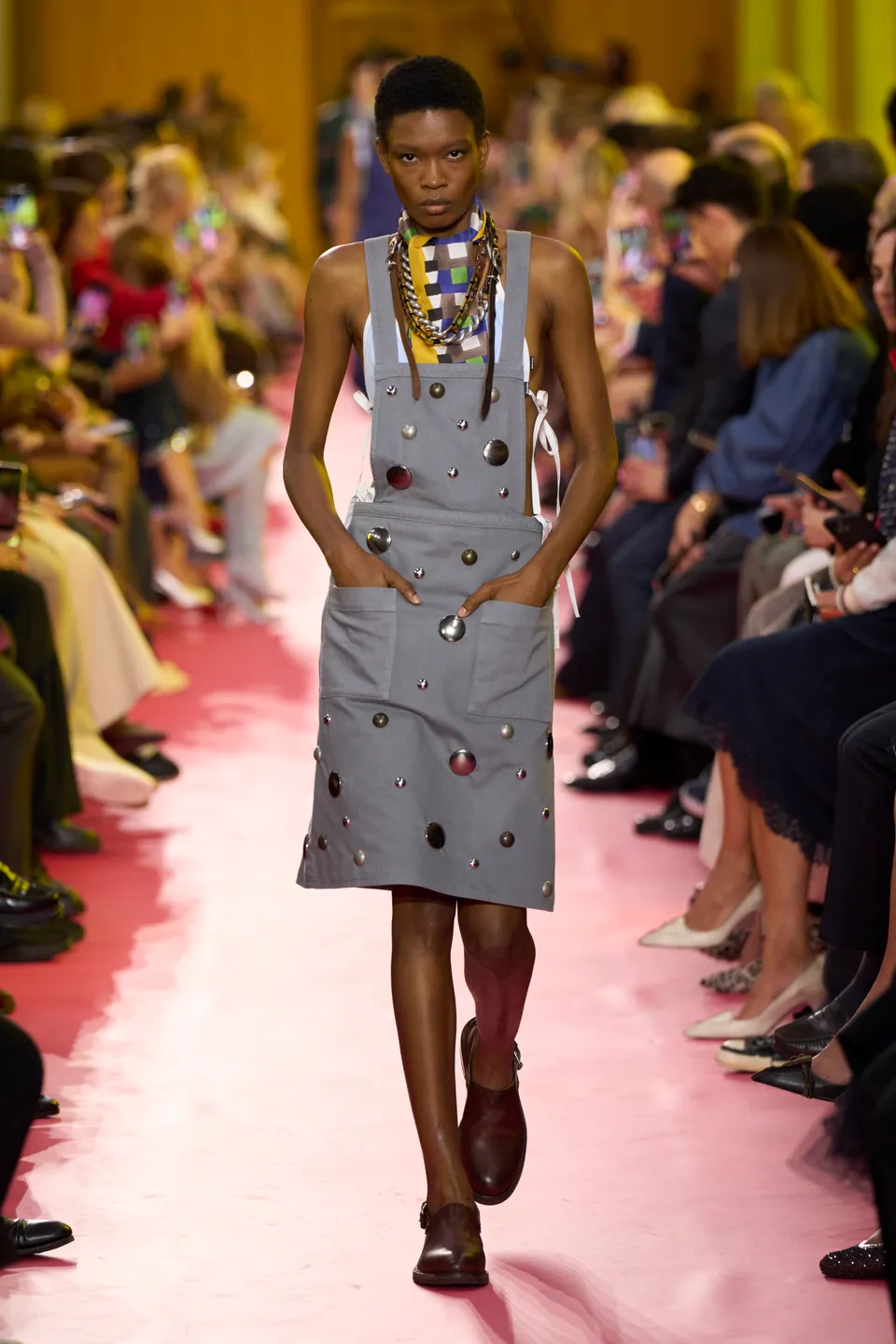
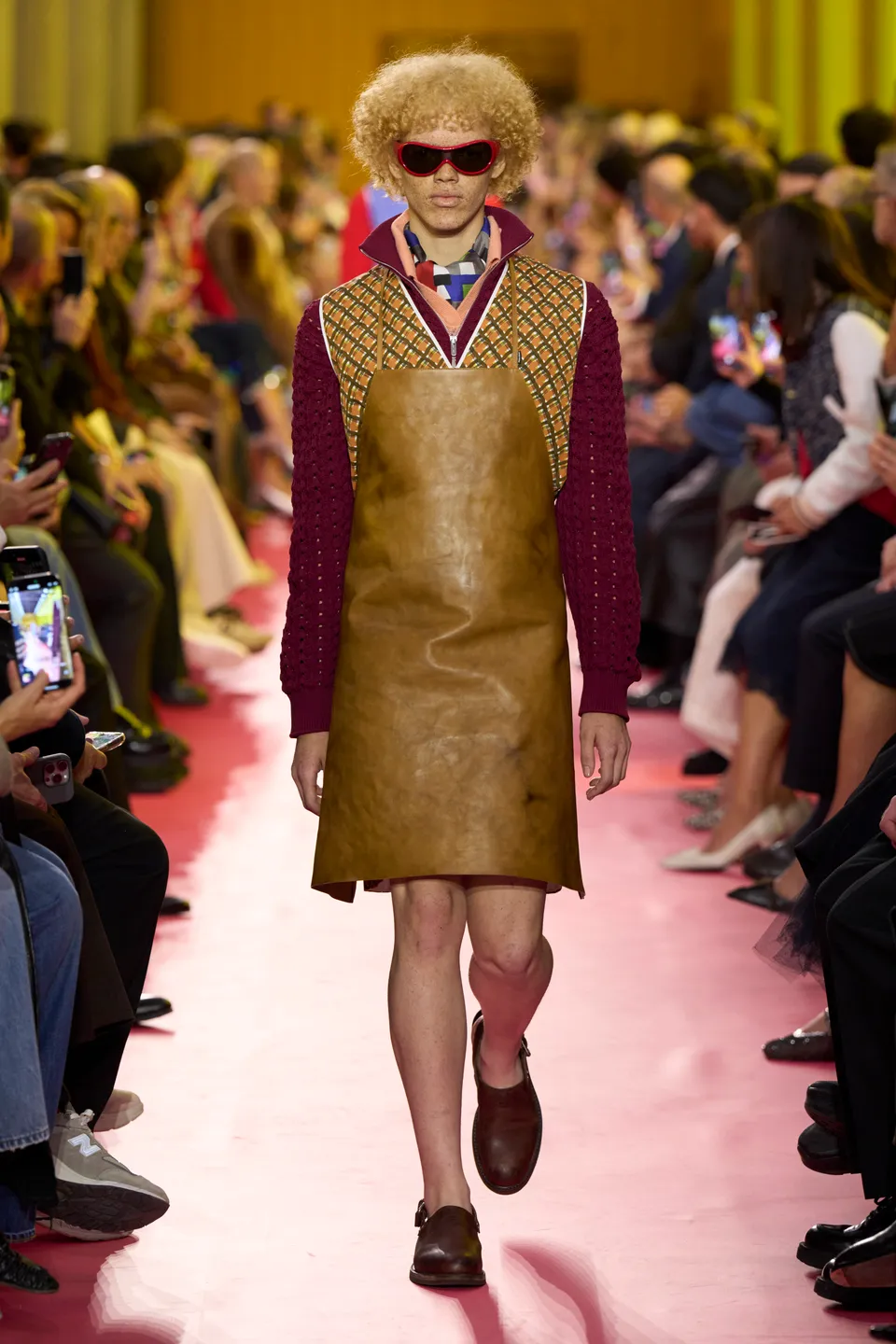
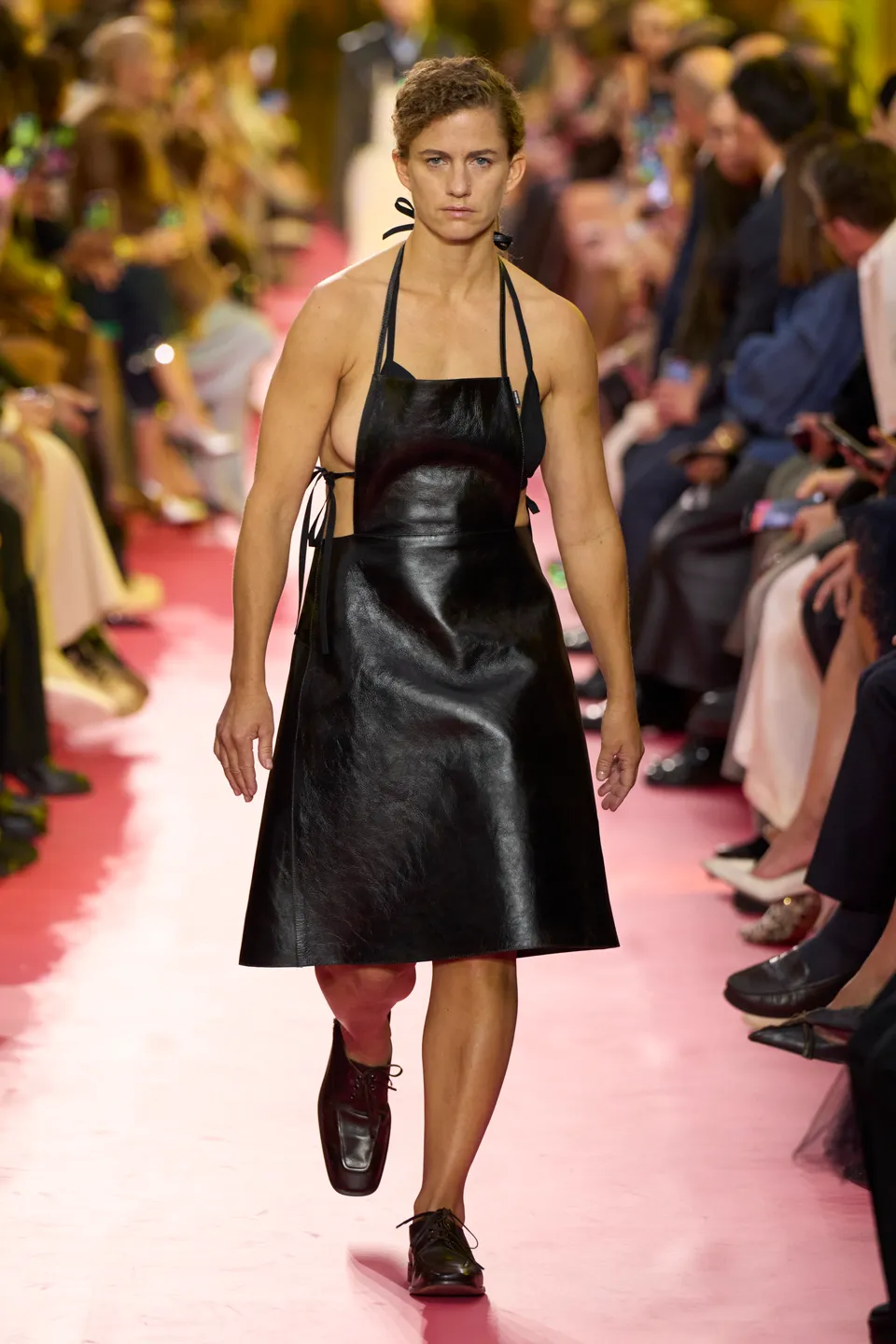
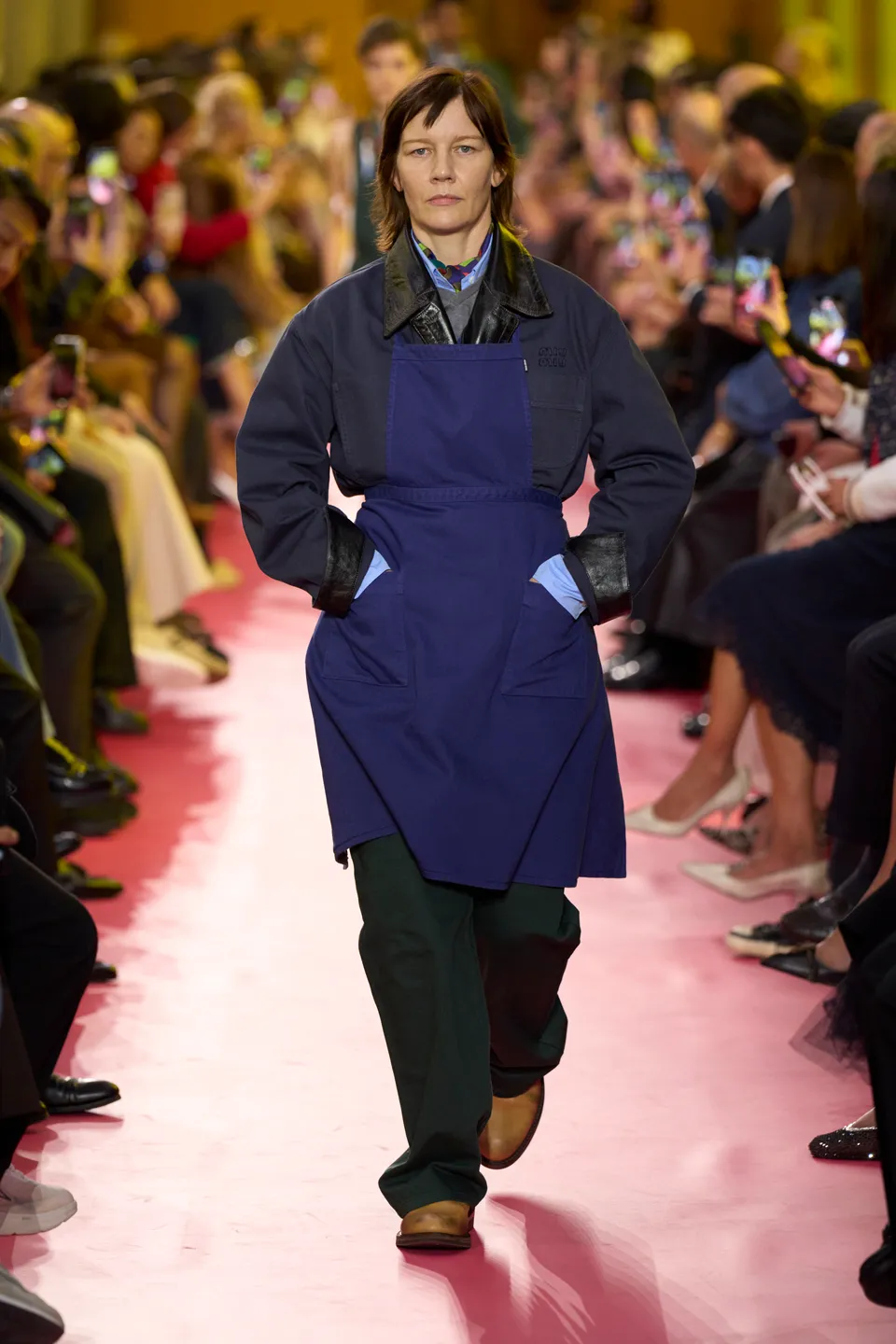
In the context of Miu Miu’s presentation, this specific hue functions as a primary signifier of physical labor, introduced into a space frequented by the international elite. By placing this color at the core of her collection, Prada forces a reconciliation between the history of class struggle and the contemporary desire for exclusive luxury, proving that the architecture of daily labor contains an inherent dignity worthy of supreme artistic attention. This is precisely where blue-collar luxe gains its force, transforming the blue-collar symbol into a luxury code charged with discipline, class memory, and desire.
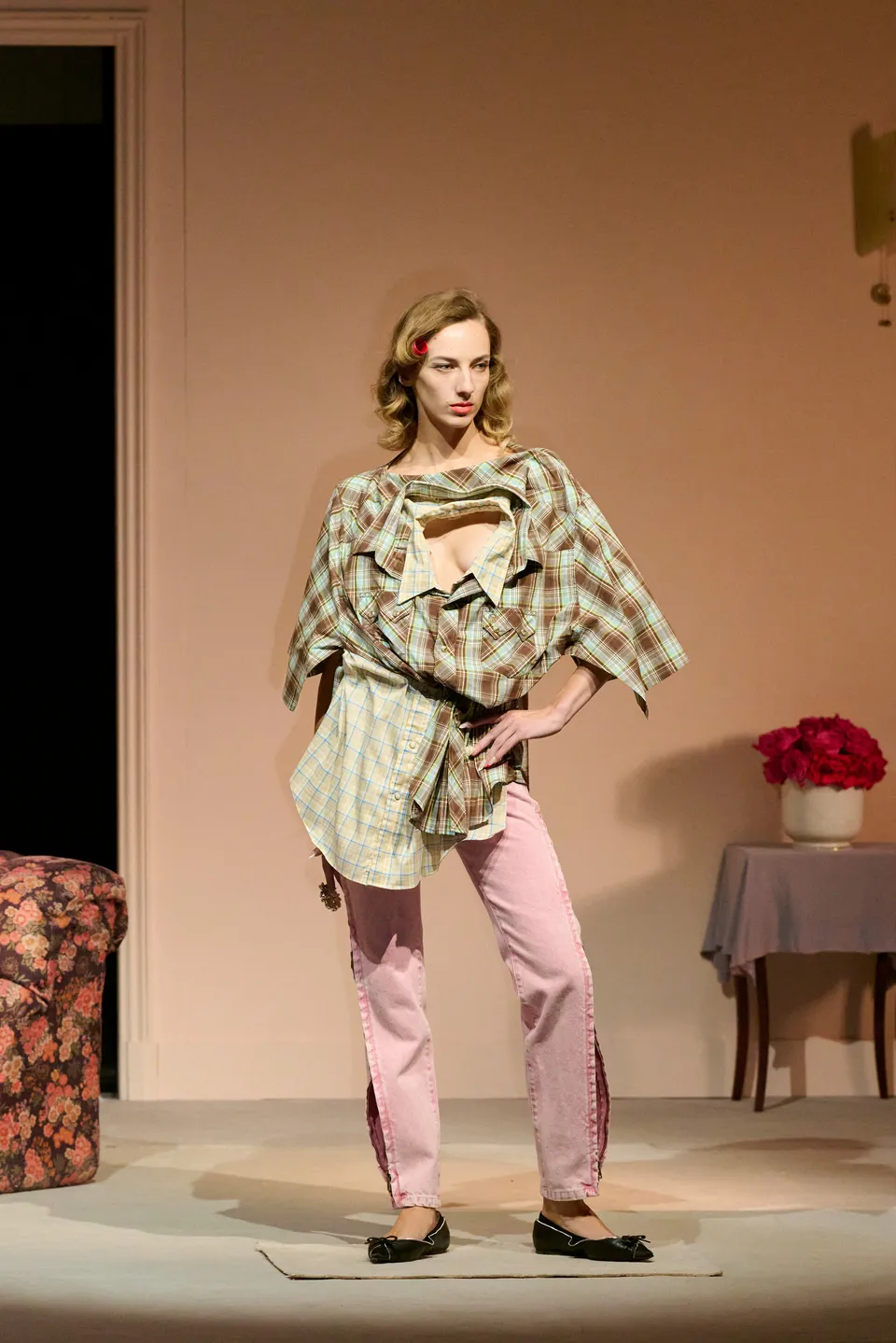
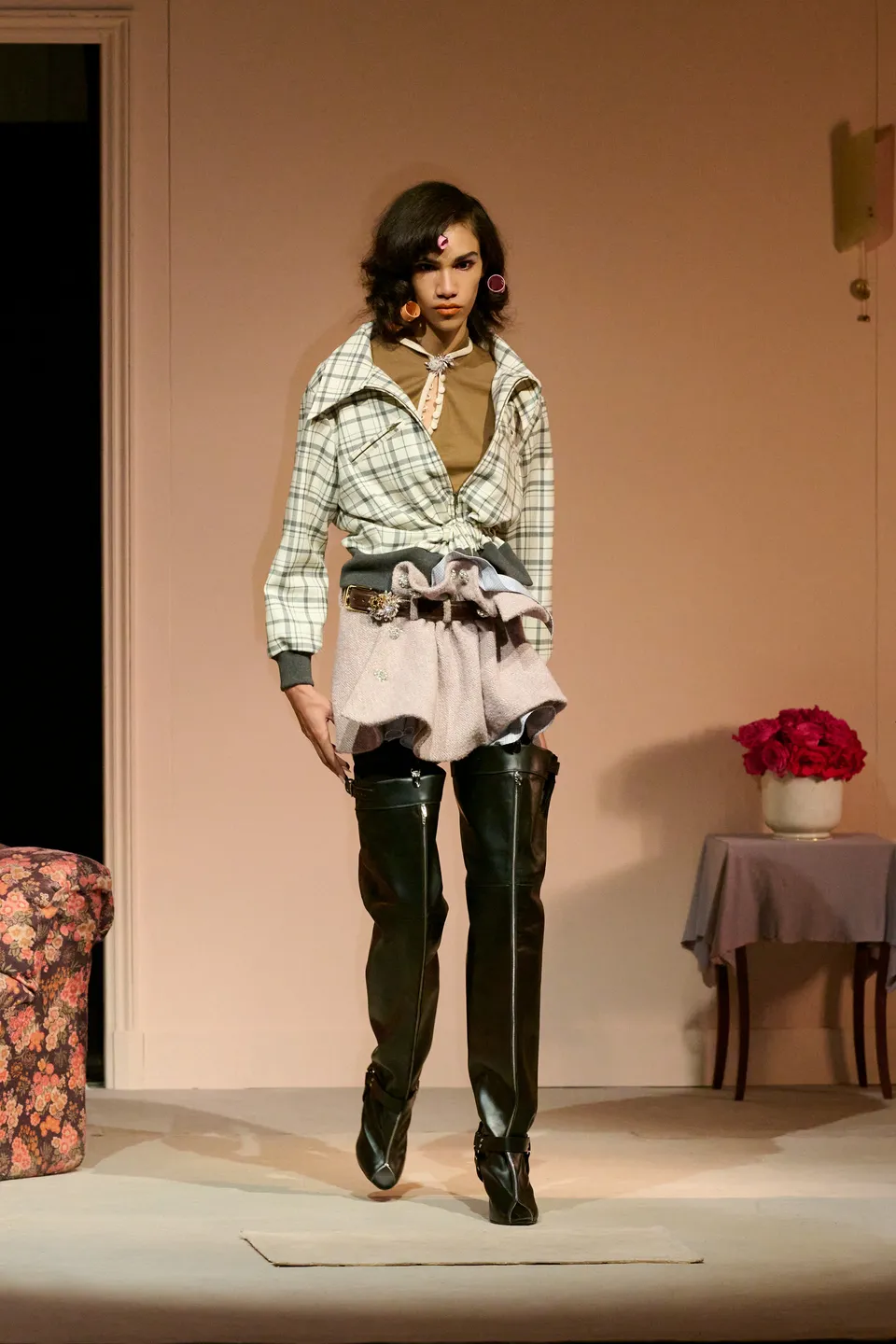
The mainline Prada spring/summer 2026 collection reinforced this thematic trajectory through the introduction of monochrome cotton ensembles that precisely embodied the exact uniform structures characteristic of delivery personnel and security staff, projecting a sense of severe discipline. Through blue-collar luxe, these uniform structures become both social evidence and luxury proposition. Prada openly voices her appreciation for the literal uniform, actively selecting functional attire to occupy the space of traditional luxury textiles. This methodology positions the runway as a site of ideological reflection, where the history of leftist activism informs the creation of luxury commodities.
Her youthful participation in the Unione Donne Italiane established a permanent awareness of class politics and structural power, which continues to influence her creative output. These uniforms signify obligation, routine, and systemic placement, qualities that stand in stark juxtaposition to the decorative elements of haute couture. By focusing purely on structural utility, the collection demands that the observer confront the inherent architecture of the garment, focusing entirely on its utility and its connection to the working body.
The elite adoption of working-class attire constitutes a recurring historical phenomenon, revealing deep-seated tensions within the social hierarchy. The contemporary rise of blue-collar luxe, therefore, belongs to a much longer history of elite sartorial transgression.
During the eighteenth century, Queen Marie Antoinette adopted the dress of a shepherdess within her specialized ornamental farm, creating a sanitized simulation of rural life. This choice generated significant public hostility, as the populace viewed the queen’s embrace of peasant attire as a provocative mockery of actual agrarian struggle. The historical record indicates that this aesthetic transgression severely damaged her public standing, fueling the political resentment that eventually culminated in the destruction of the monarchy.
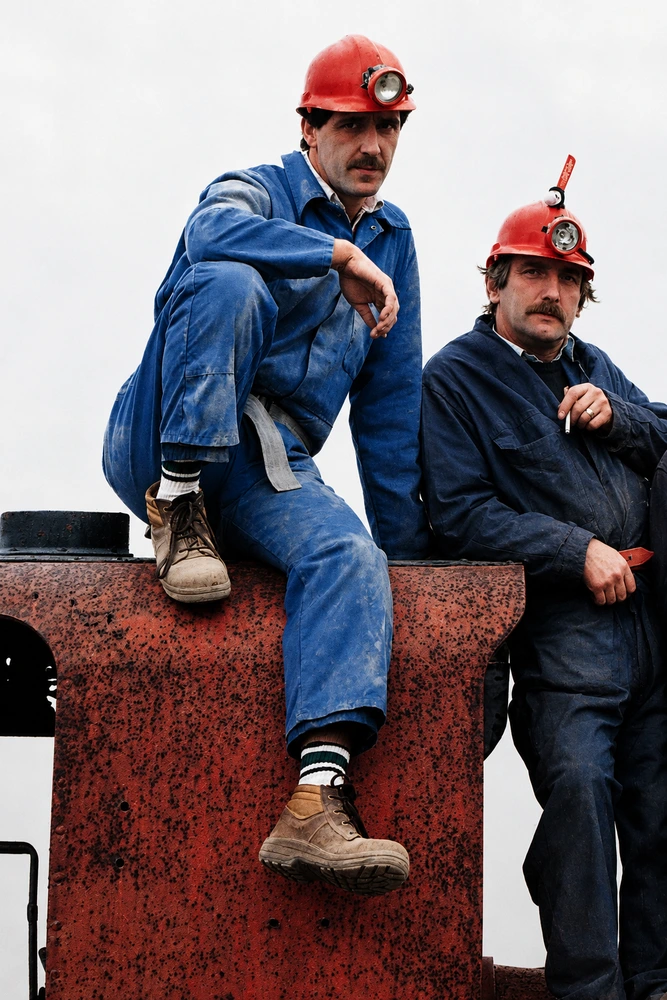
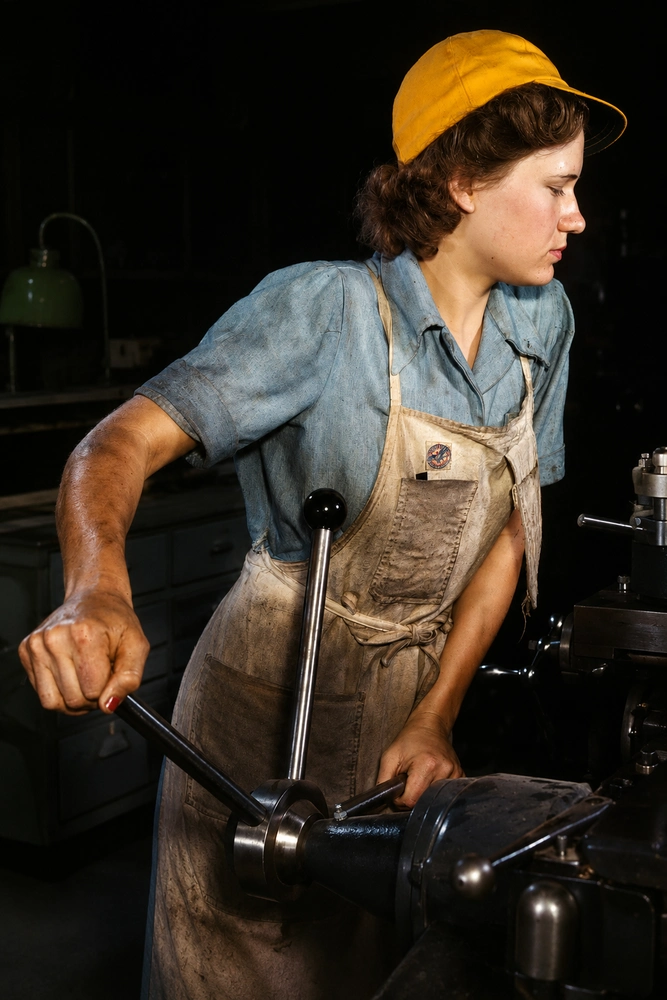
The act of adopting the uniform of the worker while maintaining absolute economic privilege remains a highly charged political gesture. This historical incident illustrates the inherent danger of class tourism within the realm of dress. When the ruling elite appropriate the garments of those who experience economic hardship, they engage in a performative masquerade that overlooks the systemic realities of labor. Marie Antoinette’s silk aprons served as a method of escape from the rigid protocols of the court, yet to the citizens of Paris, this behavior represented supreme arrogance, converting the garment into a lightning rod for class warfare.
In the twentieth century, Gabrielle Chanel executed a significant revolution by introducing stretch jersey into the elite wardrobe, a textile previously reserved for fishermen’s undergarments. This radical introduction faced intense criticism from traditional couturiers, who characterized Chanel’s clients as lean telegraph operators. Chanel’s work reconfigured the parameters of luxury, proving that simplicity and physical freedom possessed immense cultural value.
Historian Anne Hollander, in her foundational text Sex and Suits, notes that functional clothing naturally expresses a sovereign fashion statement external to the traditional cycle. Throughout history, political actors and cultural elites have utilized the chore jacket, army surplus, and the humble blue jean to project an alignment with the masses, transforming functional attire into a symbol of ideological solidarity. Hollander’s analysis highlights the way functional attire strips away the performative theatricality of traditional fashion, delivering an absolute focus on utility and purpose. When contemporary designers reference these historical forms, they tap into a deep well of cultural memory, invoking the integrity and solidarity associated with the labor movements of the past. This historicism elevates the runway show to a complex exploration of social identity and political allegiance, demonstrating that the adoption of functional materials can liberate the body from the restrictive structures of traditional elite fashion.
Phoebe Philo contributes significantly to this contemporary dialogue through her focus on pragmatic luxury forms, introducing cargo trousers rendered in opulent silks and ensembles she defines as utility twinsets, consisting of voluminous canvas shirts paired with structured canvas trousers. Her work refines blue-collar luxe into a language of sensual utility and modern authority. Furthermore, her introduction of industrial black leather dungarees presents a striking proposition for evening attire, allowing the heavy, functional material to interact directly with bare skin. These design choices reposition the functional garment as an item of high sensuality, celebrating a rugged, self-contained femininity within formal spaces.
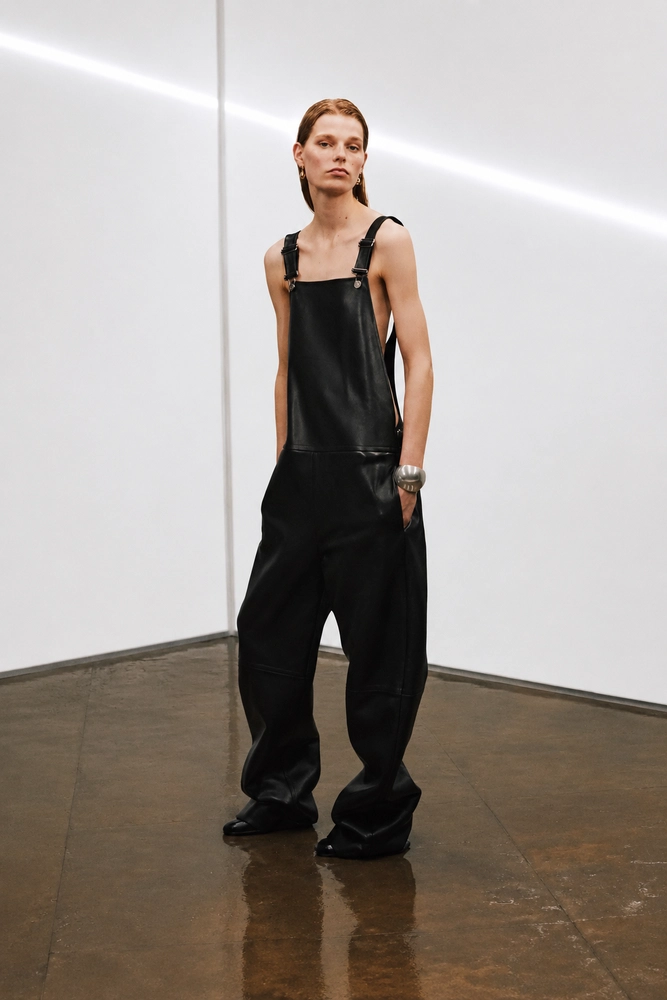
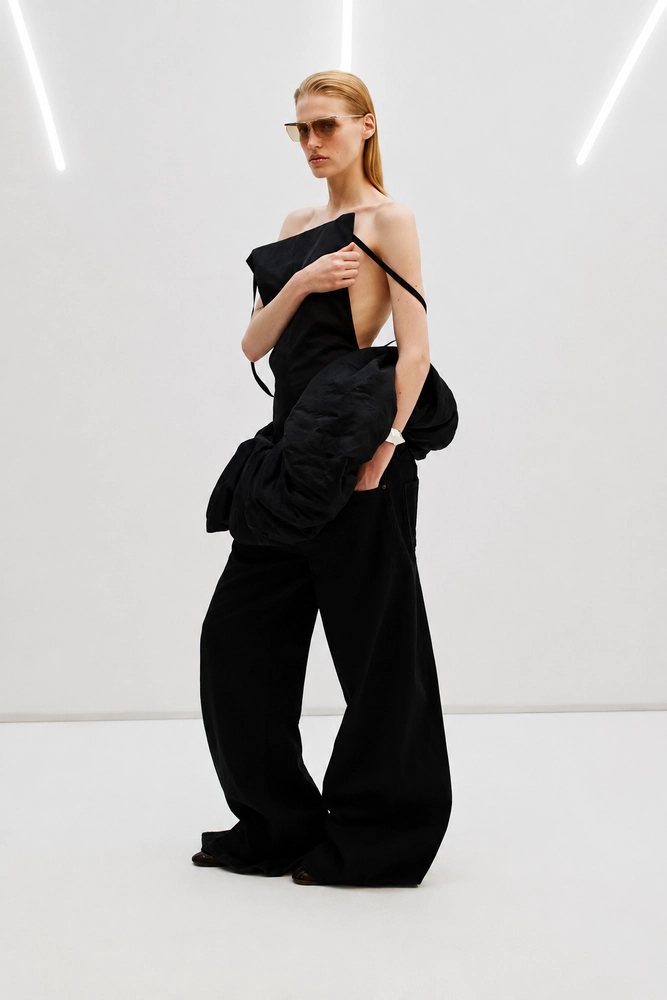
Philo’s approach treats the uniform as an armor for the modern woman, prioritizing structural integrity and personal comfort. The choice of heavy leather for dungarees references the protective gear worn in maritime and industrial environments, yet its placement on the bare body transforms it into a statement of profound confidence. By elevating the cargo trouser through the use of silk, Philo bridges the gap between raw utility and extreme luxury, creating a garment that satisfies both the practical needs and the aesthetic desires of the contemporary woman. This philosophy suggests that true luxury resides in the absolute functionality of the garment, where the wearer feels fully equipped to navigate the complexities of the modern world.
This staging suggests that fashion design itself is a form of rigorous construction, requiring structural engineering and physical effort. The phenomenon of the uniform extends far beyond the runway, governing the actual daily attire of the fashion industry’s creative elite. Within the design studios of the preeminent fashion houses, staff members universally adopt utilitarian garments for a standard dress code. Carhartt has emerged as a major brand within this professional sphere, celebrated for its absolute practicality and structural integrity, featuring double-layered knees and water-resistant duck cloth that find appreciation among individuals whose labor involves the physical demands of studio production.
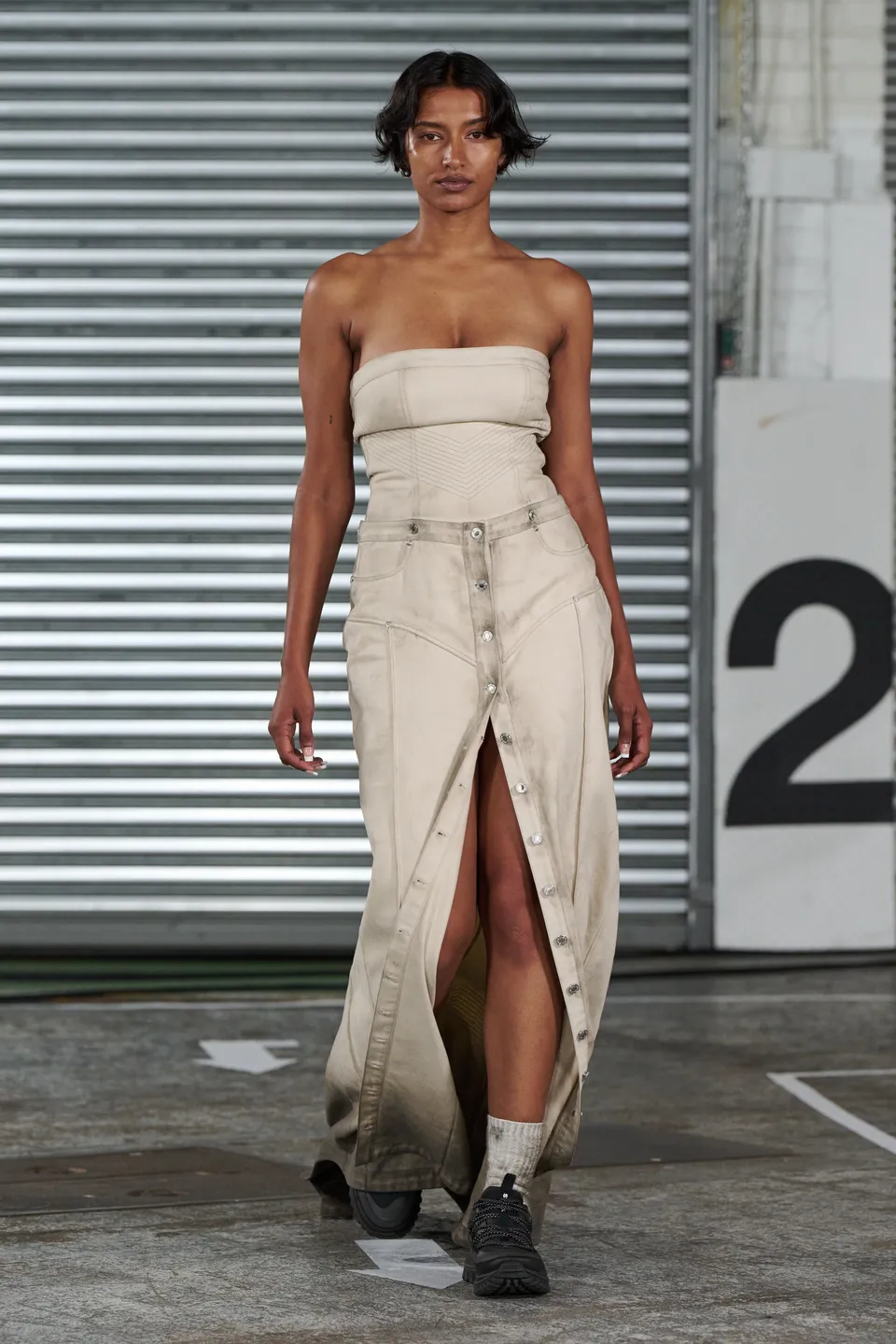
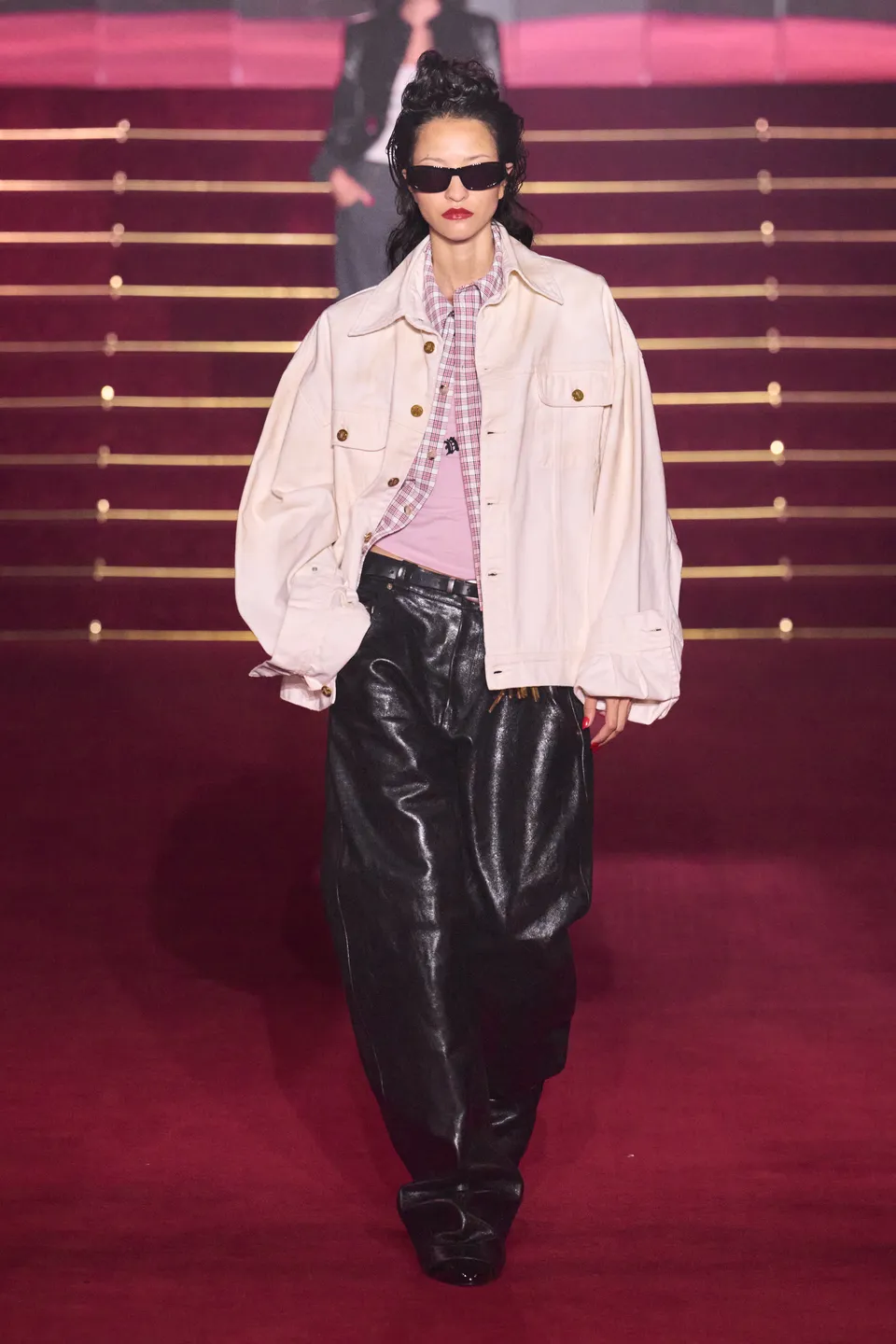
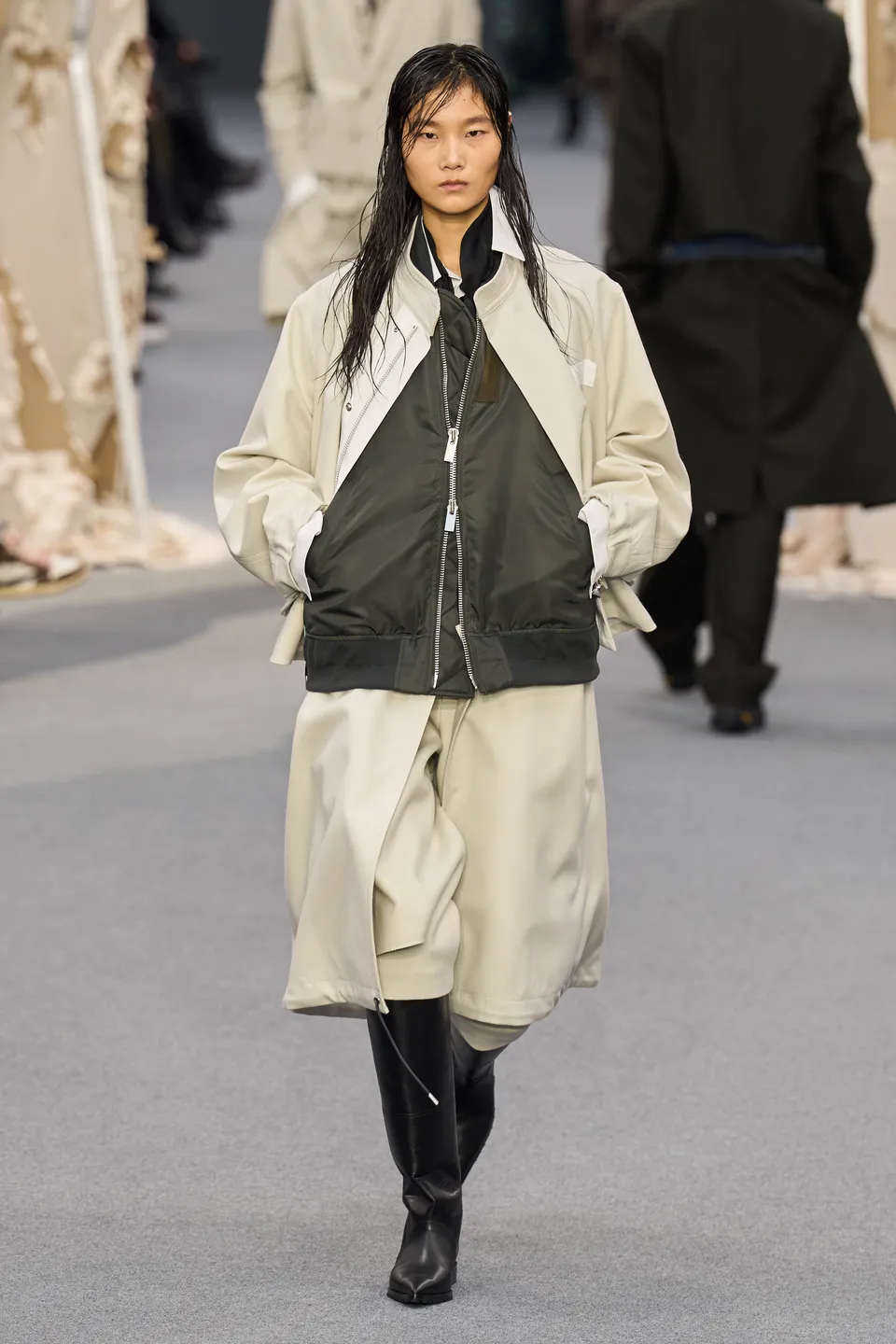
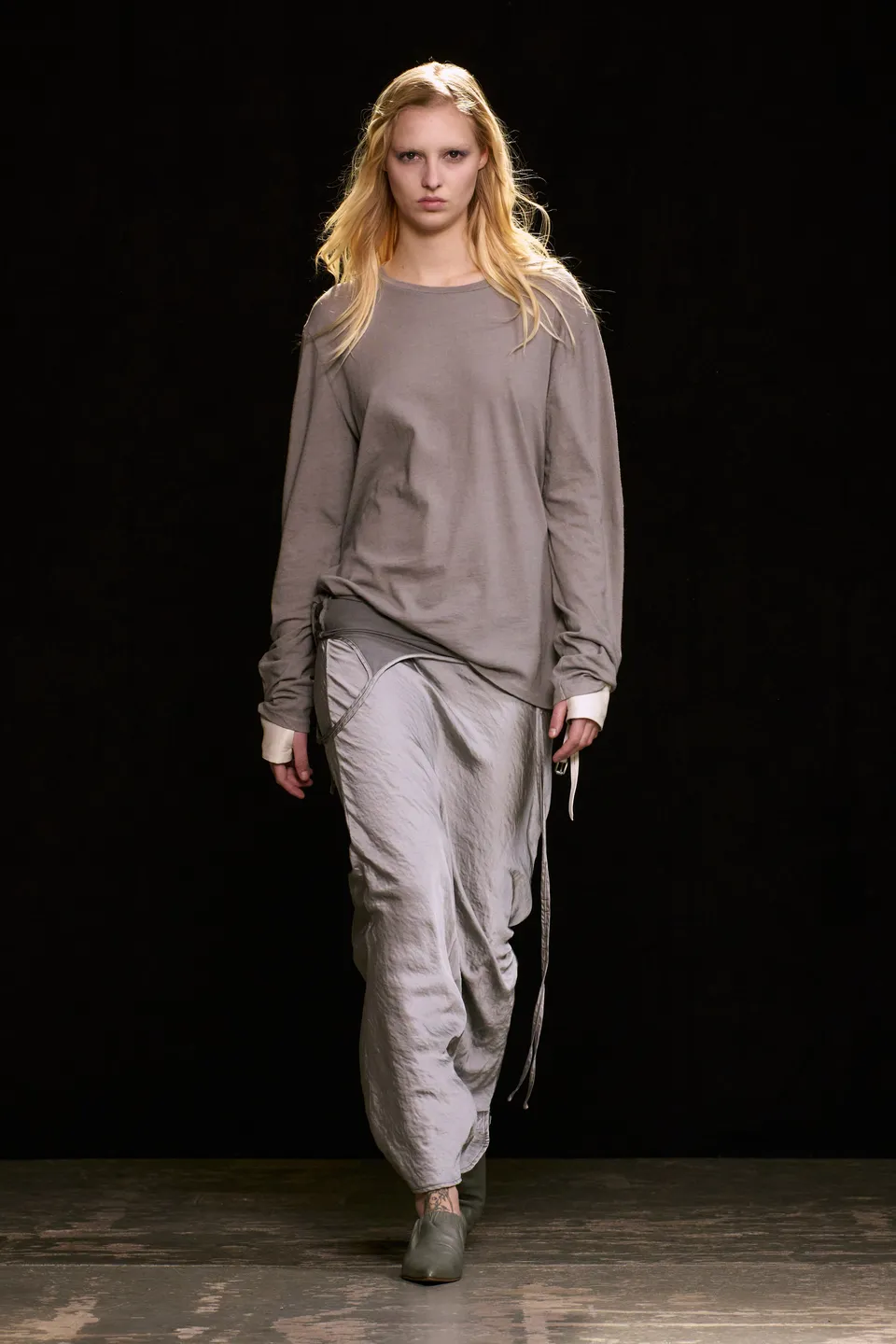
As a phenomenon, blue-collar luxe gives this desire a sharper name and a more provocative cultural shape. These serious clothes respond directly to serious times, offering consumers a sense of grounding and physical empowerment. This style has established a firm foothold among prominent stylists and creative directors globally, who consistently integrate heritage workwear pieces from brands such as Dickies and Carhartt with structured couture, creating a hybrid aesthetic that signifies creative authority and functional capability. This widespread industry embrace proves that the uniform has moved to exist external to a temporary seasonal trend, establishing itself as a permanent philosophy of contemporary dress.
Blue-collar luxe paradigm reconfigures contemporary femininity, moving to embrace garments that prioritize mobility, strength, and historical depth. By adopting the uniform, the contemporary wardrobe claims a position of authority, transforming the attire of manual labor into an absolute statement of modern identity and cultural awareness. The woman of the current era chooses garments that protect, support, and facilitate action, finding beauty in the clean lines and robust materials of the workspace, converting the uniform into an instrument of personal sovereignty and cultural critique.
Advertisement