MENU
Close





Are Prada’s Spring/Summer 2027 menswear glasses trying to send us to the optical clinic as soon as possible?
Are Prada’s Spring/Summer 2027 menswear glasses trying to send us to the optical clinic as soon as possible?
August 11, 2026


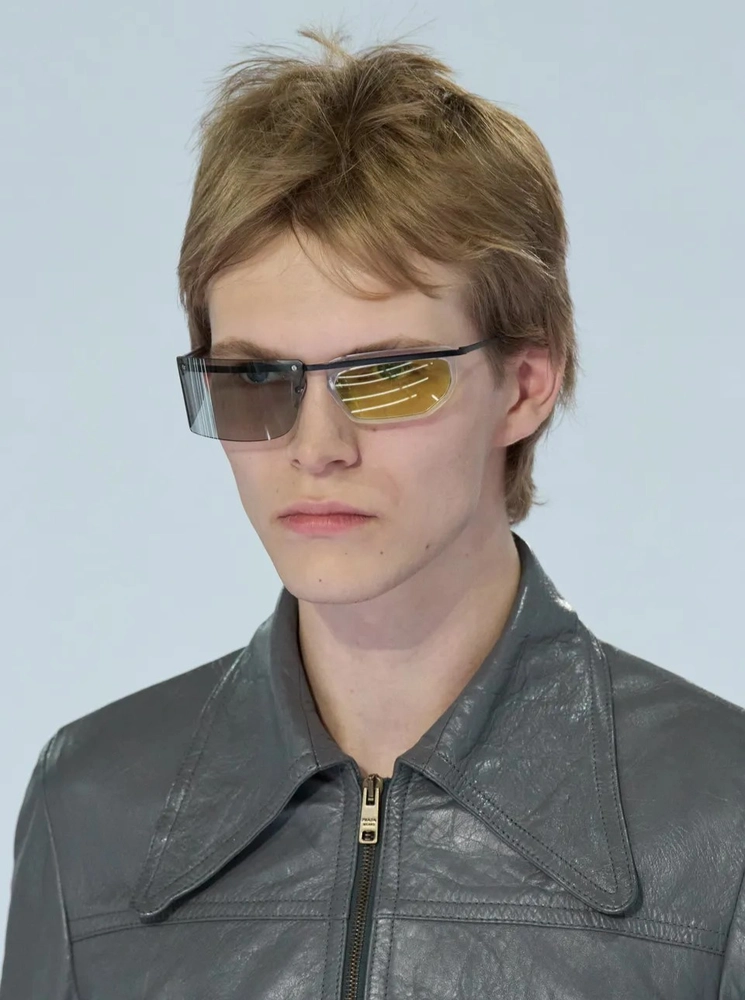
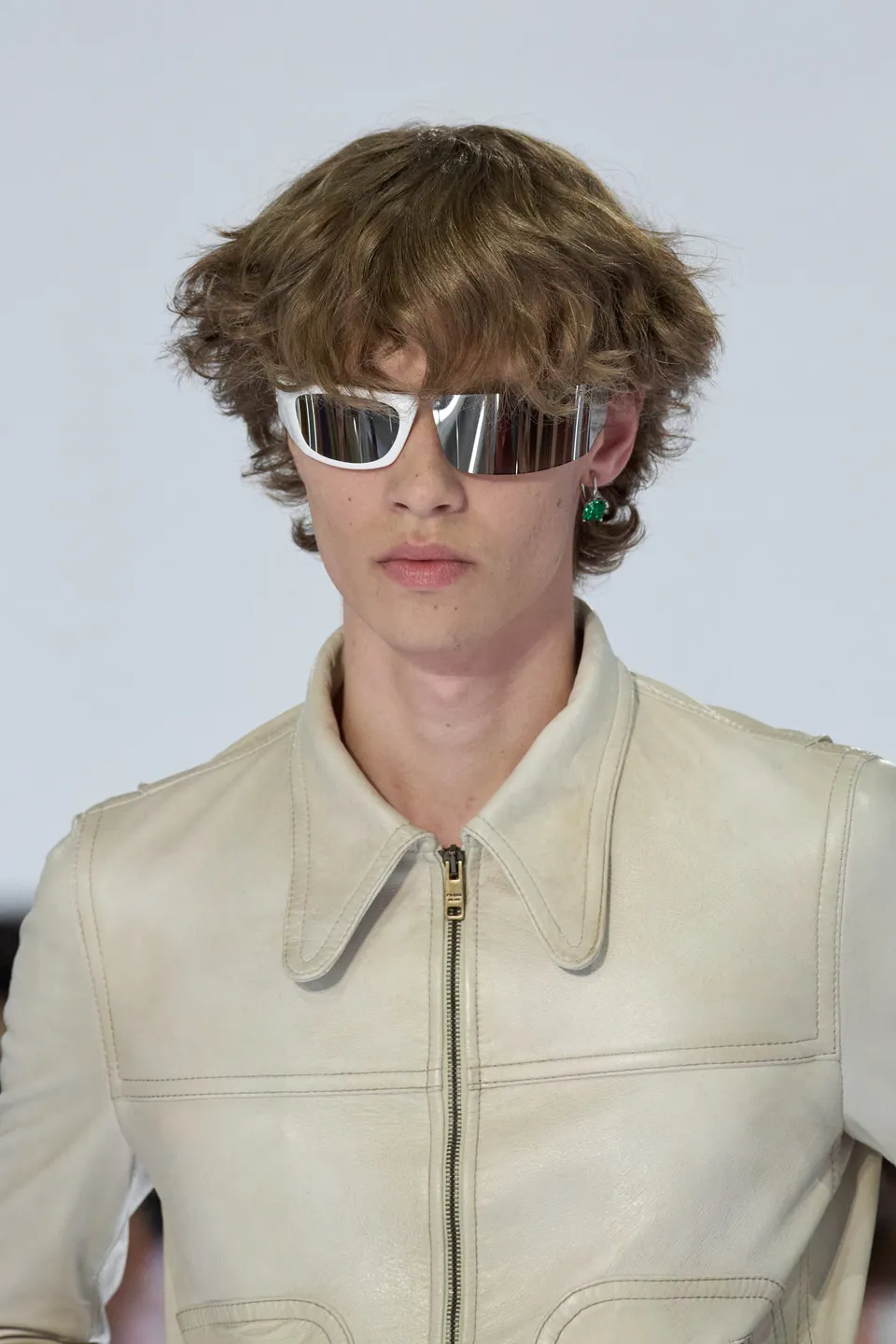
Prada’s Spring/Summer 2027 menswear glasses sat at the center of a visual irritation. The frames appeared spliced from different eyewear systems, with each side carrying its own shape, lens language, tint logic, and facial rhythm. The object looked wrong before it looked luxurious, which means it worked exactly as a Prada object often works: it turned discomfort into thought.
The brand framed the collection around choice, conscious decision, and the reduction of clothes to forms that feel intentional and meaningful. That context gives the glasses their bite. Eyewear carries a practical function before fashion adds attitude. It protects, filters, corrects, shields, stabilizes. Prada took that trusted category and made it visually argumentative. The result looked less like sunglasses and more like a theory placed directly in front of the eyes.
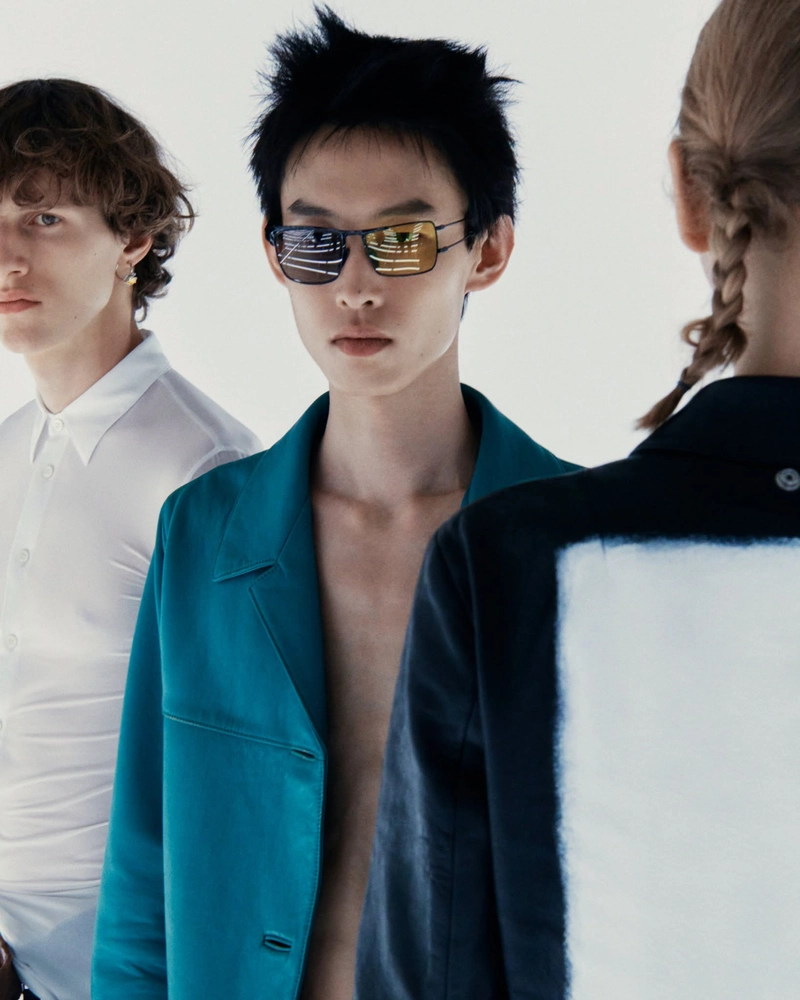
The viral charge came from that fracture. Show reports described the pieces as “Frankenstein sunglasses,” spreading quickly across social media as viewers tried to decide whether the object was genius, ridiculous, wearable, hostile, or all of those things at once. The glasses became instant content because the design already contained conflict.
Is Prada making eyewear, or staging a critique of eyewear? That question gives the object its real force. A warped bag still holds. A strange skirt still wraps. A divided pair of sunglasses enters a deeper contract, because it sits between the eye and the world.
Prada’s Spring/Summer 2027 menswear glasses have been read through the idea of altered perception, the kind of visual wrongness that makes the ordinary appear strange again. The collection asked viewers to look harder at everyday dress, but the eyewear pushed that proposition into the body. “Seeing differently” becomes charming as a phrase. On the face, the same idea starts to brush against actual binocular stress.
Fashion has always built pain into beauty. Designers have sold shoes that destabilize walking, corsets that compress the waist, gowns so heavy the body performs endurance, and platforms that turn balance into theatre. Vivienne Westwood’s Super Elevated Gillie platforms became fashion legend after Naomi Campbell fell on the runway in 1993; the heel height had reached over 21cm. Alexander McQueen’s Armadillo boots carried that danger into a sculptural register, rising around 30cm and turning the foot into an alien architecture.
That McQueen moment carries weight because even elite models resisted it. Abbey Lee Kershaw, Natasha Poly, and Sasha Pivovarova were reported to have refused to walk over safety concerns around the towering Armadillo shoes. These were professional bodies trained to survive fashion’s violence. Their refusal marked a boundary.
Prada’s Spring/Summer 2027 menswear glasses move the boundary again. A painful shoe asks the foot to suffer. A tight corset asks the ribs to negotiate glamour. A heavy dress asks the spine and shoulder to perform control. A mismatched lens asks the brain to accept competing realities and call that conflict chic.
The eye carries a different intimacy. Eyewear promises clarity, protection, balance, and visual comfort before it promises style. When a lens system appears to split the left eye and right eye into separate experiences, the runway metaphor becomes physical. Eye strain, headache, dizziness, nausea, spatial distortion, and depth-perception confusion enter the conversation.
Prada’s provocation cuts deeper than another ugly-cute accessory debate. Westwood made falling iconic. McQueen made walking terrifying. Prada may have found a sharper disturbance: visual sickness dressed as intellect.
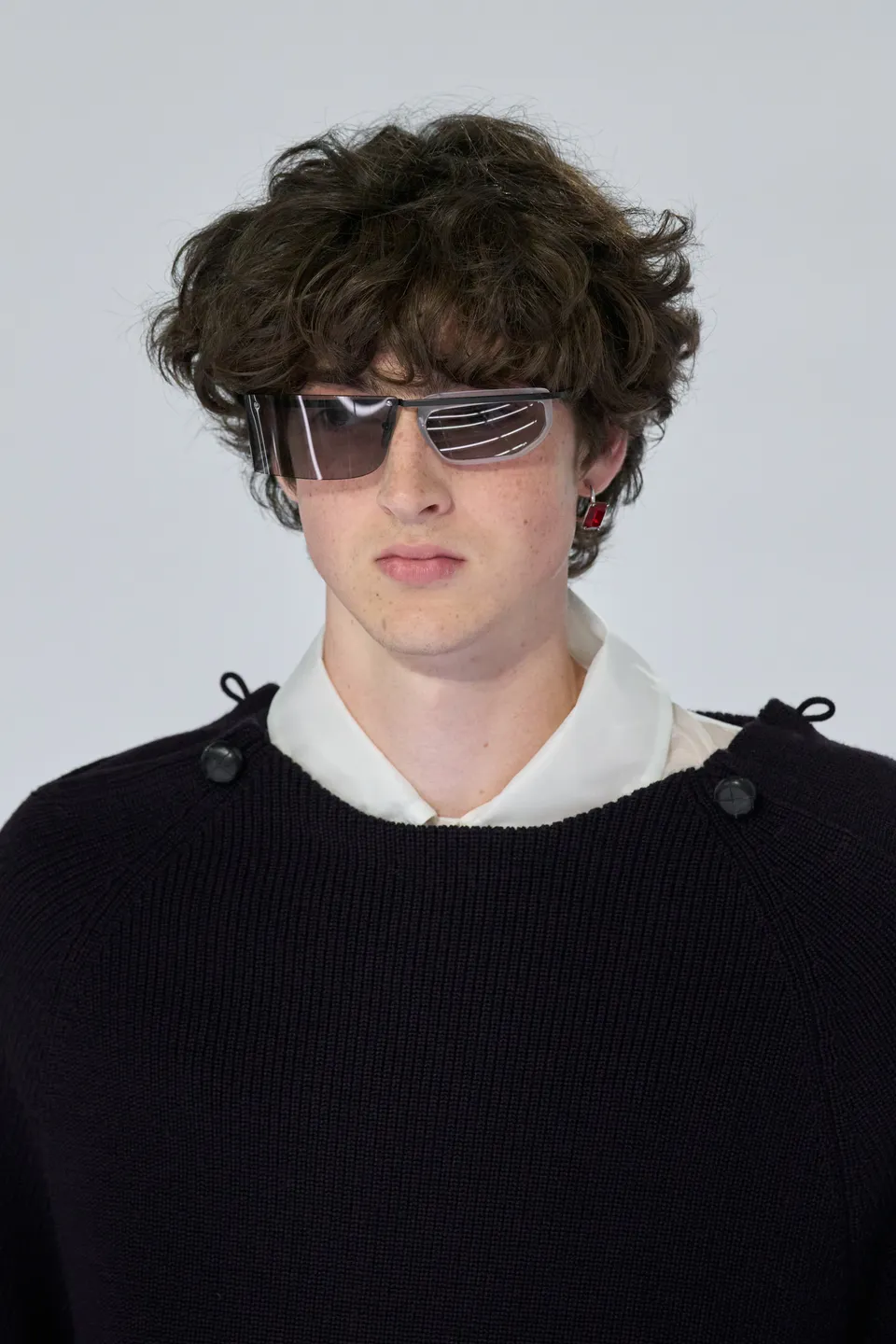
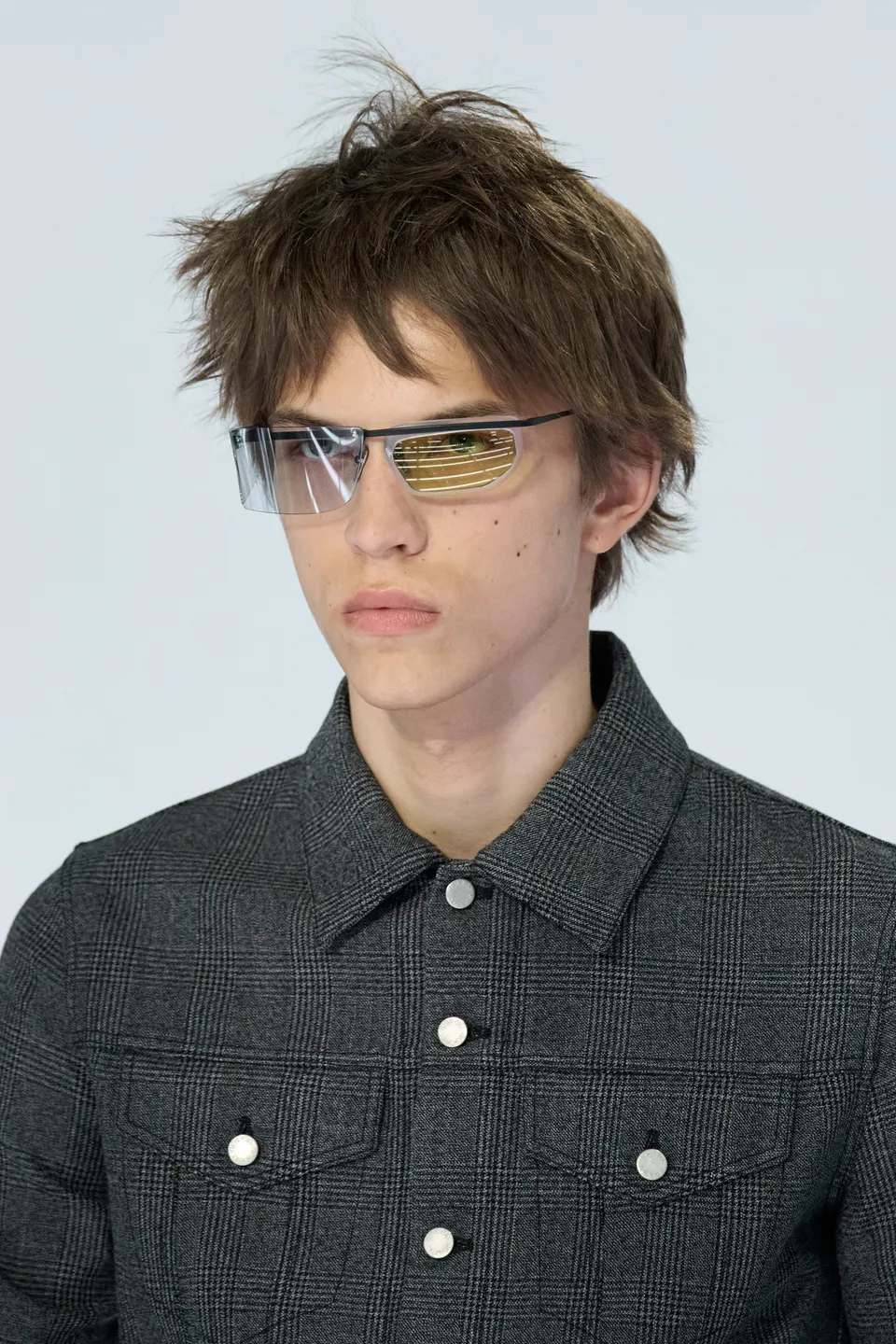
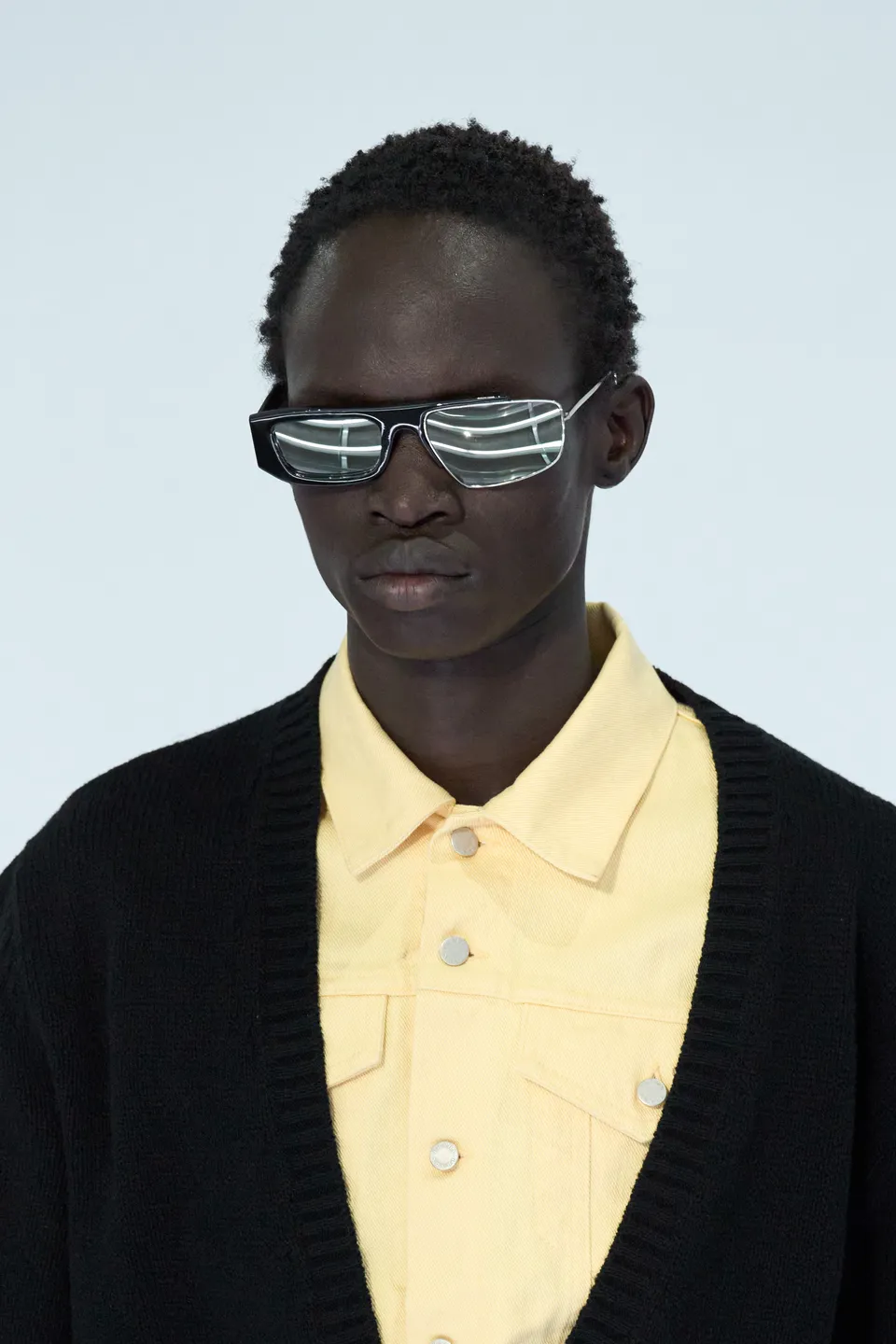
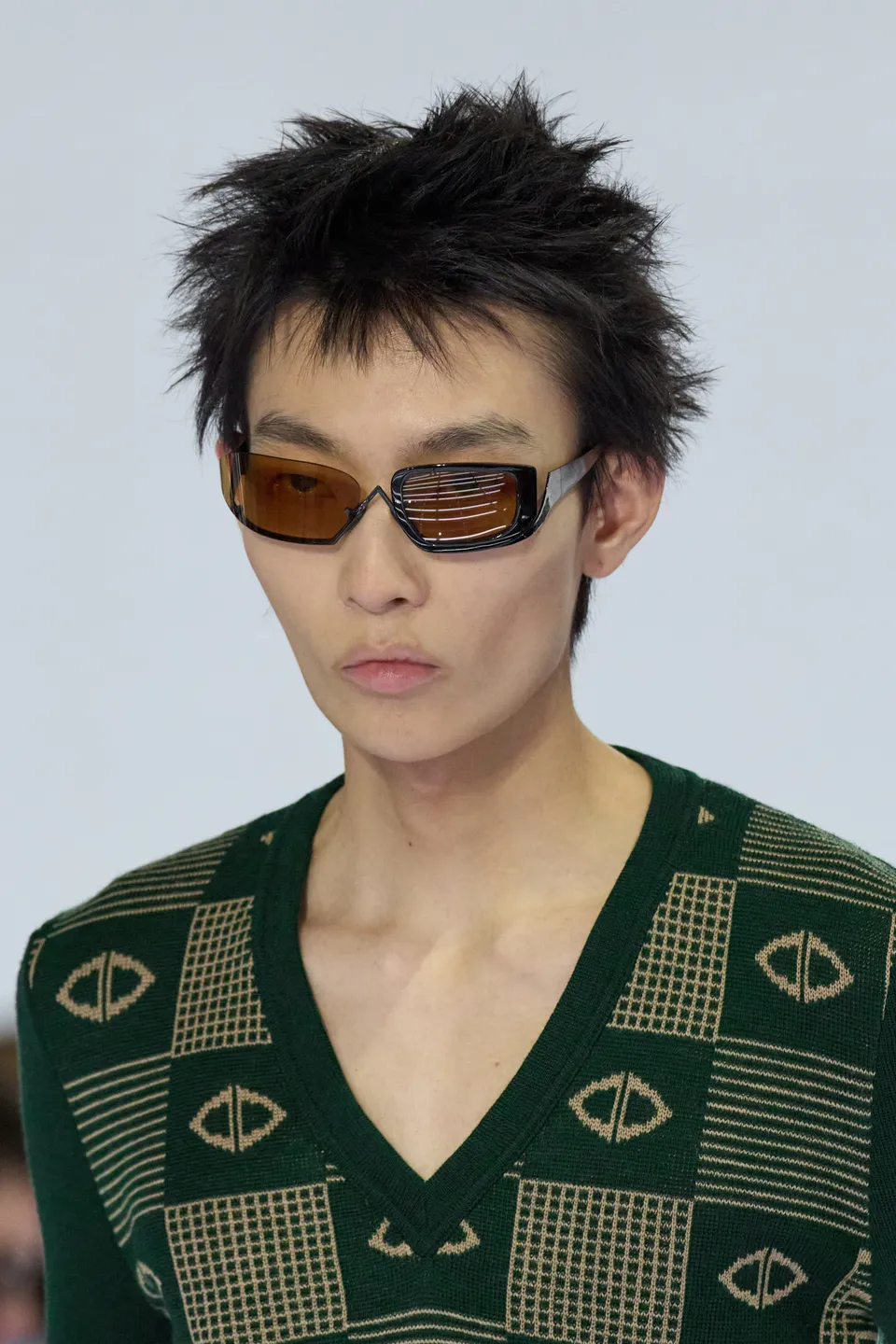
The danger sits in mismatch. If the two lenses differ in tint density, color, curvature, magnification, optical center, distortion, UV filtering, polarization, or coverage, the wearer’s visual system must reconcile unequal streams of information.
Ordinary optical guidance moves toward harmony. The American Optometric Association advises consumers to choose sunglasses with lenses matched in color, free from distortion and imperfection, with uniform tint. Prada’s Spring/Summer 2027 menswear glasses appear to flirt with the opposite proposition: eyewear as disagreement, eyewear as imbalance, eyewear as style built from visual argument.
Medical descriptions of aniseikonia sharpen the concern. The condition involves a difference in perceived image size or shape between the two eyes, with possible symptoms including eyestrain, headache, dizziness, nausea, imbalance, spectacle intolerance, and distorted spatial perception. Clinical summaries also note that symptoms can appear around 1% to 3% aniseikonia, while higher levels can disrupt binocular vision severely.
This does away with easy dismissal. The issue is visual logic, not mere eccentricity. A strange frame can remain a styling gesture. A lens system that produces different optical impressions becomes physiology. The face turns fashionable because the eyes are asked to negotiate.
Is a pair of sunglasses still sunglasses if each lens asks the brain to process a different world? This is the hardest technical question around the Prada object. The final retail specifications will matter. Cosmetic asymmetry with stable UV protection and controlled optical performance would land differently. A true mismatch in tint, distortion, or optical behavior would make the design far harder to defend as daily eyewear.
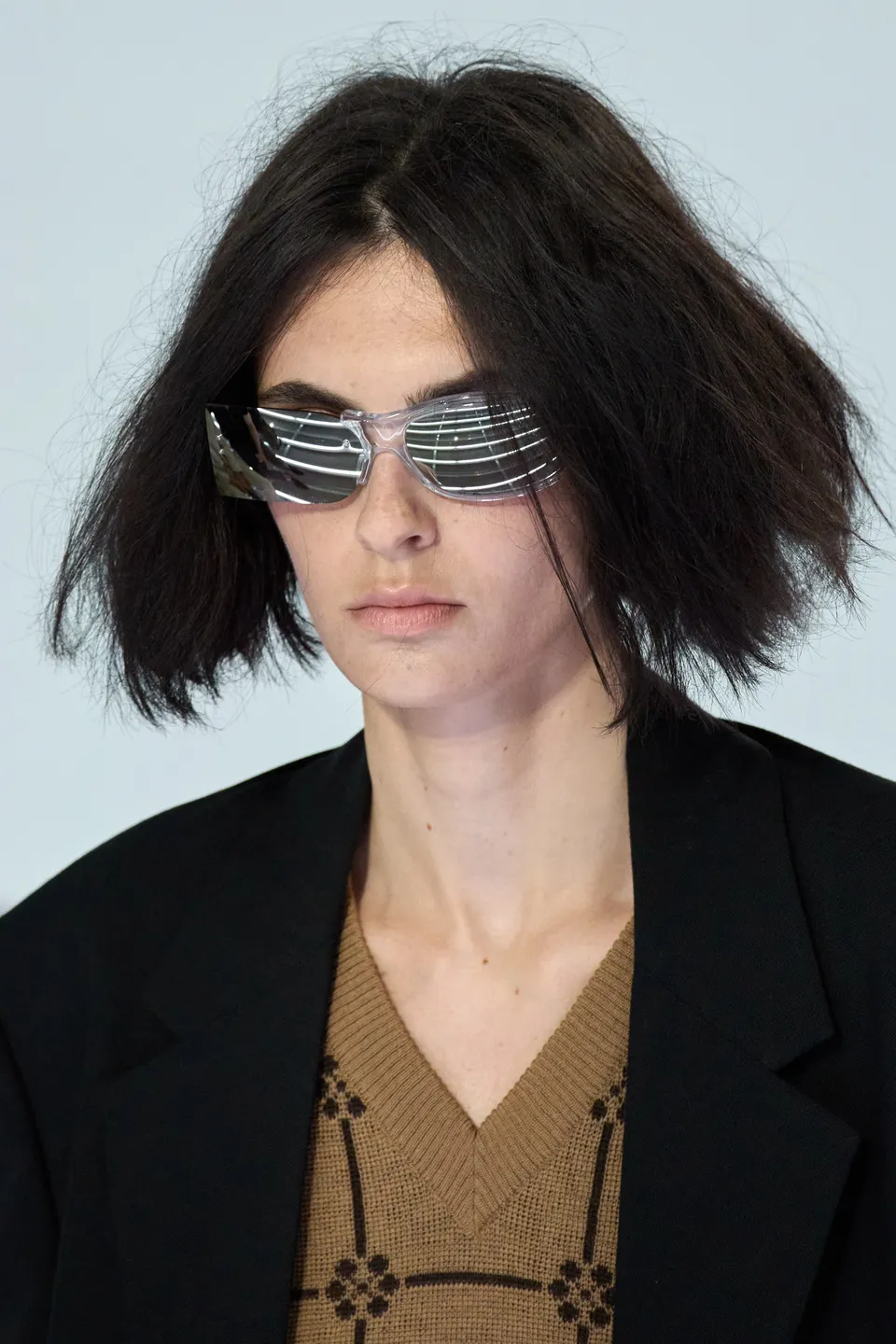
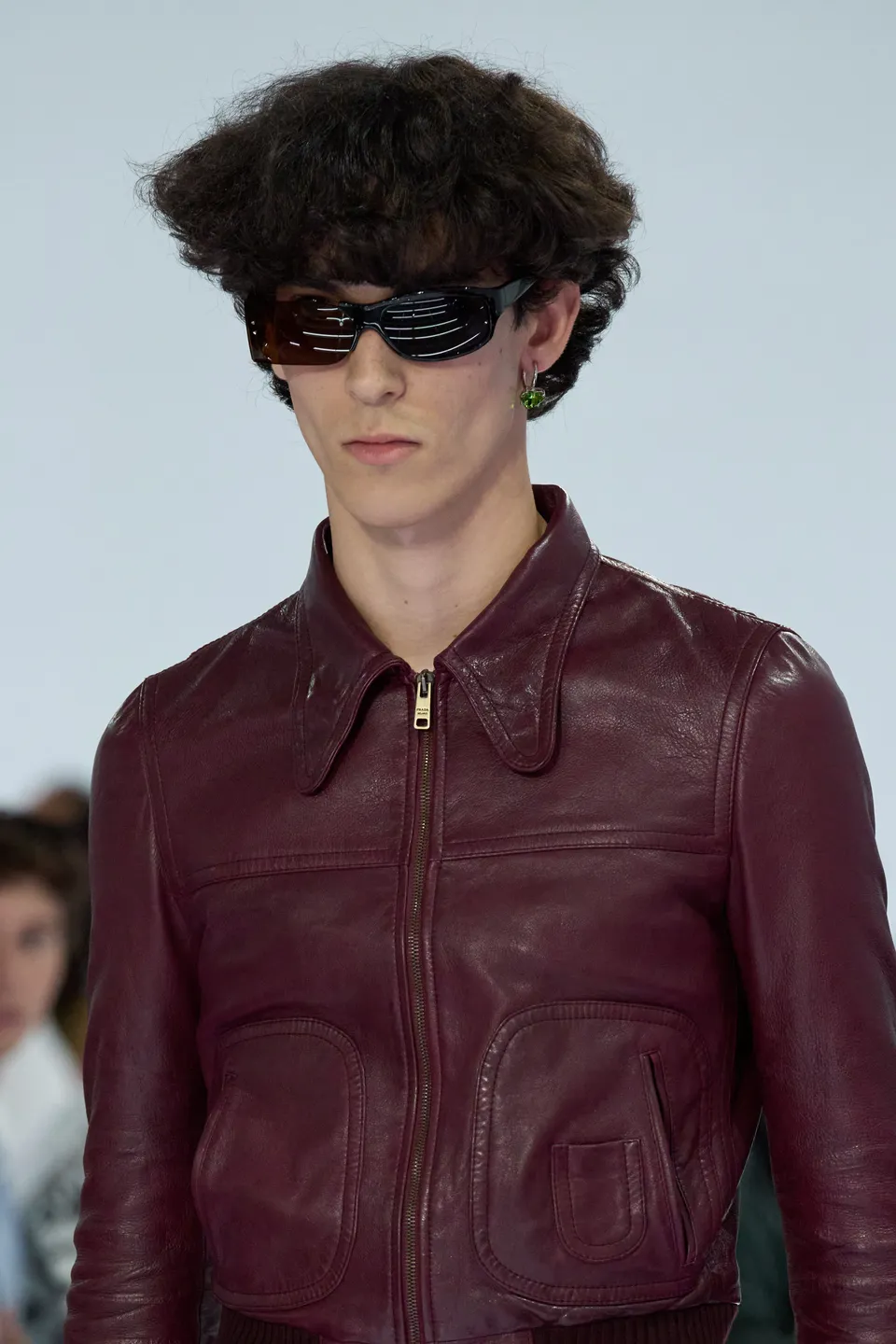
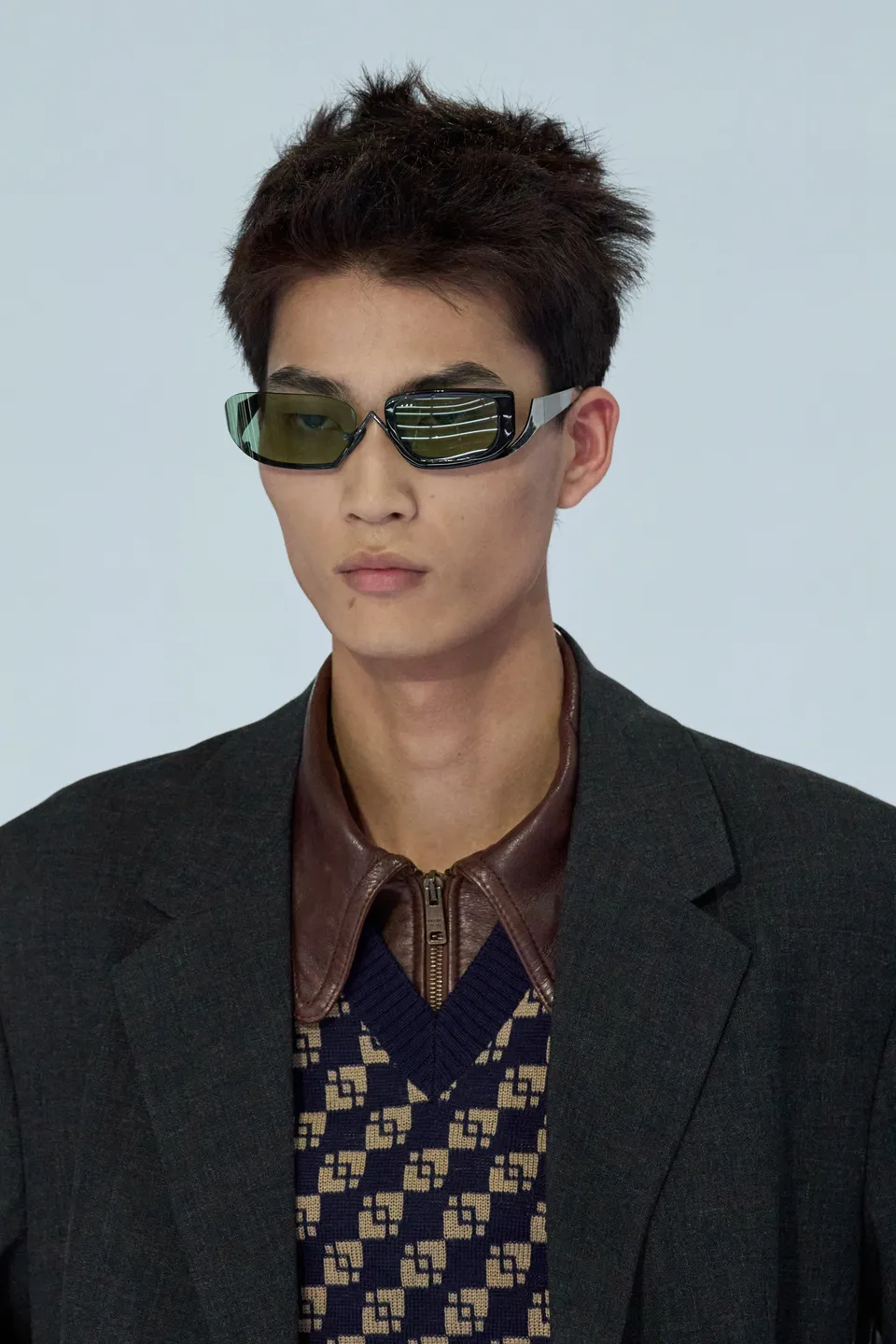
Prada’s Spring/Summer 2027 menswear glasses arrive inside a powerful commercial category. Global eyewear sales are forecast to reach around $171 billion in 2026, spanning contact lenses, spectacles, and sunglasses. Luxury eyewear also remains attractive because it blends fashion identity with recurring need, health adjacency, and accessible entry into designer branding.
Prada holds serious machinery behind this category. In December 2024, Prada Group and EssilorLuxottica renewed their licensing agreement for the development, production, and worldwide distribution of eyewear under Prada, Prada Linea Rossa, and Miu Miu. The deal runs through the end of 2030, with a possible extension through 2035.
They energize a category that already matters financially. A viral, impossible pair of sunglasses can make Prada eyewear feel intellectually alive, even if the retail version softens the risk. The exact runway pair may function as image, provocation, meme, archive object, and sales atmosphere all at once.
The optical clinic gains symbolic power here. Prada has made opticians feel newly relevant because the controversy reminds viewers that eyewear remains a health-adjacent object. Luxury can call glasses identity, attitude, styling, or concept. The eye still demands balance, filtering, fit, and comfort.
Did Prada design a functional accessory, or a viral prototype for a licensed eyewear machine? That question makes the business story more severe. In a crowded luxury accessory market, tasteful sunglasses create desire. Optically hostile sunglasses create debate. Debate travels faster.
The most credible motivation appears to be discourse. Prada thrives when wrongness becomes intelligent. The house has long understood that an object can gain power by resisting easy pleasure. Prada’s Spring/Summer 2027 menswear glasses use that strategy with surgical efficiency: one face, two visions; one category, two contracts; one accessory, both commodity and philosophical problem.
A fully explained provocation dies quickly. A strange object with unresolved meaning recruits everyone else into the work. Editors interpret it. Viewers screenshot it. Critics argue with it. Optical experts give it a practical objection. Fashion defenders elevate it as a concept. The object grows because everybody has to finish the sentence Prada left open.
Confusion has become luxury’s most efficient publicity engine. A perfectly wearable accessory competes with thousands of other accessories. A pair of glasses that seems capable of making the eye uncomfortable enters cultural memory faster. The shock sits in the suspicion that the object understands exactly how wrong it looks.
Prada’s old trick has always been making bad taste, awkwardness, severity, or plainness feel newly desirable. This time, the wrongness enters vision. The disturbance feels sharper because eyewear touches perception itself. Prada turned the face into a testing ground for visual disagreement.
Prada wants to decide how the world is seen, how the body is framed, how intelligence appears on a runway, how a product becomes argument before it becomes merchandise. The SS27 glasses succeed because they make fashion feel dangerous again without needing spectacle on the scale of fire, feathers, or enormous gowns. Two mismatched lenses did the work.
The real test comes if Prada’s Spring/Summer 2027 menswear glasses reach consumers. A retail version can preserve the divided look while correcting the optical behavior. Matched UV protection, controlled tint density, stable optical centers, and distortion-free lenses could allow the idea to survive as fashion with care. Prada’s runway image would remain provocative, while the actual object protects daily wearers from extended visual discomfort.
A retail version with true optical mismatch would carry a harsher meaning. It would turn broken perception into a sellable accessory. That choice would prioritize luxury pleasure over visual comfort, making the glasses a daily test of binocular patience.
Prada’s Spring/Summer 2027 menswear glasses expose the contradiction inside luxury eyewear. The market wants glasses to perform identity, content, attitude, and intellect. The eye wants balance, clarity, protection, and rest. Prada put those demands into conflict and made the conflict beautiful enough to argue about.