MENU
Close





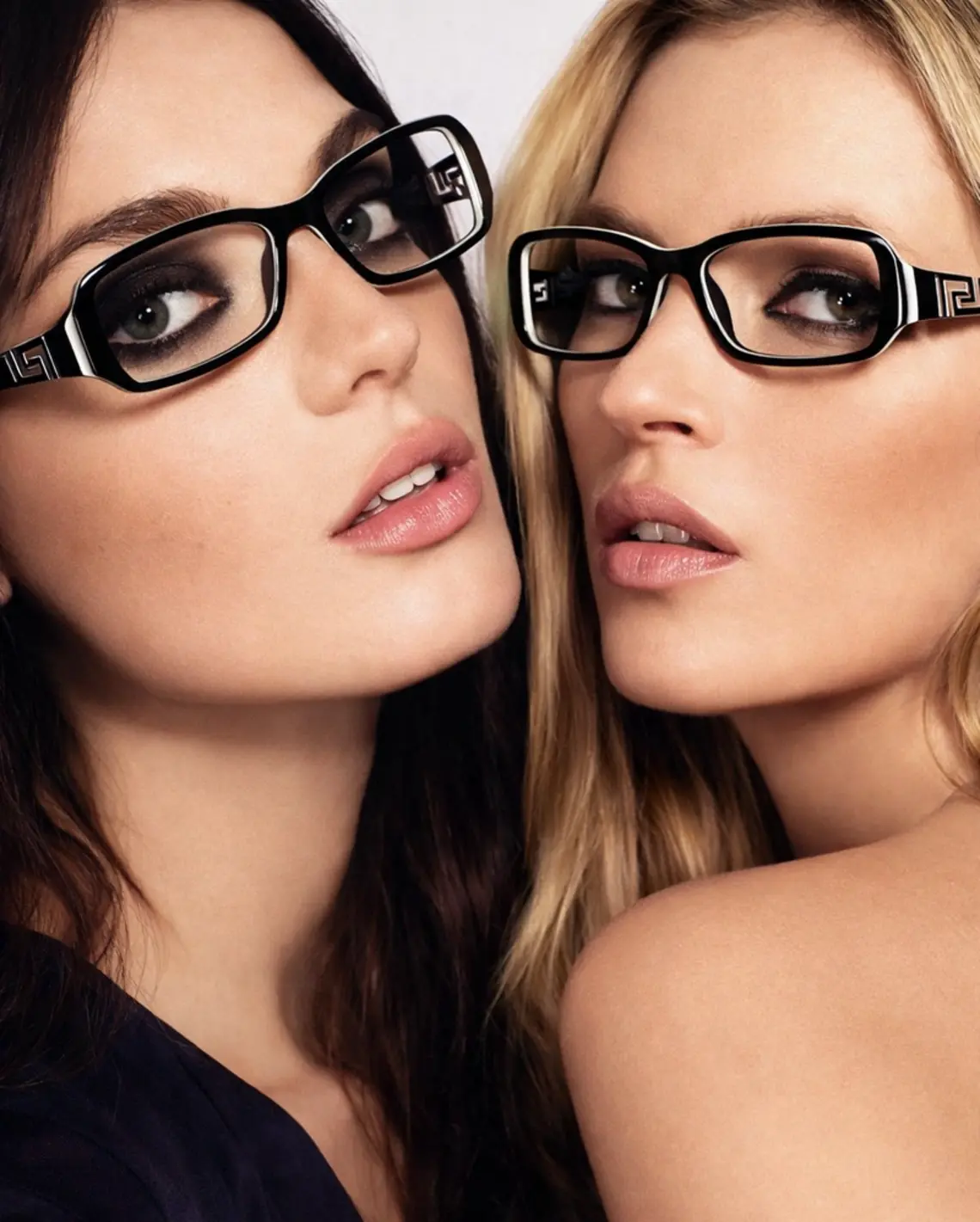
If the history of eyeglasses began with blurred vision, why does it now read like a story about status, desire, and beautifully managed identity?
If the history of eyeglasses began with blurred vision, why does it now read like a story about status, desire, and beautifully managed identity?
April 10, 2026
Advertisement

Advertisement



Listen, four-eyes, and I say that with love, because your face is basically a high-end canvas for the most iconic accessory in human history. You’d think that in an era of precision lasers and contact lenses so thin they’re basically a suggestion, the history of eyeglasses would be a closed chapter. But look at us. We are still obsessed with strapping plastic, metal, and glass to our faces. From the tech-heavy energy of AI-powered glasses to the immersive depths of VR, technology isn’t killing the frame; it’s just colonizing it. We’ve moved past medical necessity into a world where eyewear is a digital interface for your nose.

Let’s go back to where the drama started: a literal jar of water. Imagine being a 13th-century monk squinting at a dusty manuscript and realizing that a bottle of H2O turned blurry scribbles into HD. That was the conceptual breakthrough that birthed the first magnifying lenses and eventually led to crude, pinchy spectacles. But here’s the shift: once we figured out how to make these things stay on our faces without hands, the world changed. Suddenly, you could read and write at the same time. Glasses became the ultimate signifier of intellectual energy. If you had frames, you were likely literate or a scholar, which is why we still subconsciously associate specs with being the smartest person in the room. It makes you wonder: if we’ve spent centuries linking glasses to high-status intellect, why did the 20th century try so hard to make them a social handicap?
As the Industrial Revolution rolled in, the history of eyeglasses took a turn for the theatrical. Manufacturing became faster and more flexible, meaning you could finally have glasses that were more about the look than the vision. However, because humans are inherently vain, 19th-century French elites decided that needing glasses was a flaw to be hidden at all costs. Instead of just wearing a pair of frames, they went full undercover. They hid lenses inside intricate, foldable necklaces or tucked them into elaborate monocular opera glasses. It was the original "I’m not wearing makeup, I’m just naturally perfect lie, but for eyeballs. They wanted the clarity of vision without the vulnerability of the frame, turning a medical tool into a high-stakes game of vanity and hide-and-seek.

Throughout the history of eyeglasses, the female frame has always been a political weapon, signaling a "smart woman problem" that threatened the soft-focus femininity society once demanded. This perceived threat was famously industrialized by Hollywood’s favorite ritual, the dramatic removal of spectacles, which functioned as a facial exorcism to strip away a woman's intelligence so she could finally be polished into a lovable, brainless object. However, mid-century icons eventually reclaimed this visual flaw, transforming eyewear into a witty, sculptural power move for women who realized that while perfect vision is optional, a sharp, authored silhouette is mandatory. Today’s obsession with office sirens and Bayonetta rims isn't just about sight; it’s a craving for intellectual density in a world of boring, algorithmic prettiness, giving us the look of a woman with a lethal outbox and zero time for distractions. Eyeglasses have regained their crown because deep attention has become the ultimate high-fashion flex, proving that a private life filled with paragraphs is far more provocative than a face that’s merely easy on the eyes.


Fast forward past the architectural frames of Le Corbusier, John Lennon’s iconic circles, and the ubiquity of modern optical chains. We are now entering an era where eyewear is less of a fashion statement and more of a technological assistant. Designers were told to push the boundaries, and they delivered. We’re talking frames that replace nose pads with tiny sculptures and even an extra lens for your "third eye." None of these are wearable if you plan on walking down a flight of stairs, but that’s not the point. The point is that we are no longer just fixing our sight; we are redesigning how we see the world. We started with a jar of water on a table, and now we’re putting conceptual art on our foreheads. It begs the question: are you wearing those frames to see the world better, or just to make sure the world sees you?
So the history of eyeglasses leaves behind a rather marvelous question. Do glasses sharpen vision, or do they sharpen identity? The honest answer is both, and that duality is exactly what keeps the frame so culturally alive.
Advertisement