MENU
Close





When Fire, Life and Brilliance describe the way a diamond performs in light, do Certificate, Conscience and Chain of Custody now decide whether that stone is worthy of becoming an heirloom?
When Fire, Life and Brilliance describe the way a diamond performs in light, do Certificate, Conscience and Chain of Custody now decide whether that stone is worthy of becoming an heirloom?
May 21, 2026


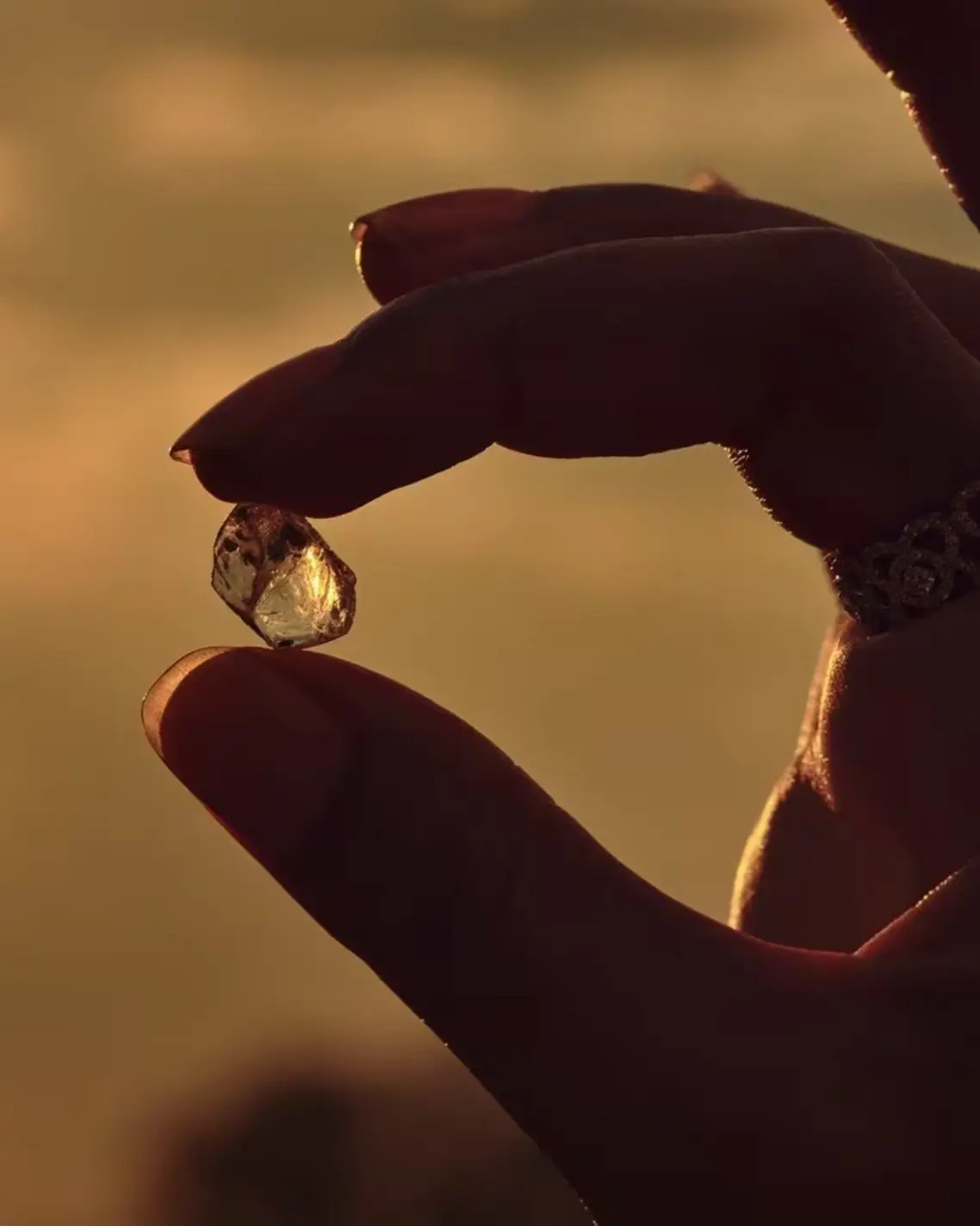
Beyond the Four Cs, De Beers uses a more sensory vocabulary to describe the beauty of a diamond: Fire, Life and Brilliance. If Carat, Colour, Clarity and Cut allow a buyer to read a stone through the language of technical assessment, these three terms return the diamond to its most elemental purpose: an object made to converse with light.
Fire refers to the flashes of rainbow colour produced when white light disperses through the diamond. Life is the flicker of movement when the stone changes angle, when the hand turns slightly, when light skims the surface and disappears in an instant. Brilliance is the overall white brightness, the diamond’s ability to gather light, hold it, and return it with an intensity that draws the eye almost involuntarily.

If the 4Cs represent the rational side of choosing a diamond, Fire, Life and Brilliance belong to the realm of feeling. They explain why two stones with similar specifications can create entirely different reactions. A beautiful diamond does not simply sit still as a precious object. It must have rhythm, response and a visual life of its own. It is not only seen; it demands to be looked at again.
If the first Four Cs speak to the physical beauty of a diamond, Certificate speaks to trust. Within the industry, this document is more accurately called a diamond grading report, though buyers often refer to it simply as a certificate. It does not make the diamond physically brighter, but it makes the stone’s value legible, verifiable and tradable.
A reputable grading report records crucial details: weight, colour, clarity, cut quality, proportions, polish, symmetry, shape and identifying characteristics. In other words, the certificate is the diamond’s identity document. It turns beauty from the seller’s promise into a file that can be checked. In a market where a small difference in colour grade, clarity or proportion can significantly alter value, paperwork is no longer a piece of administration attached to the sale. It is the mechanism that protects trust.

This logic was sharply expressed in Trespass (2011), in which Nicolas Cage plays Kyle Miller, a diamond dealer. In a scene involving stolen stones, Kyle explains that diamonds need their system of verification: inscriptions, certificates, weight, shape, grade and fluorescence. If someone tries to sell them “without a certificate,” the buyer immediately knows something is wrong. His cold conclusion is that, in the hands of people who cannot prove their provenance, they are reduced to “pretty, shiny little rocks.”
The film is fiction, but the market logic behind the line is strikingly real. A diamond without a certificate should not be described as worthless, because the stone still has material, weight and physical beauty. Yet its value becomes uncertain. Without a grading report from a trusted laboratory, the buyer absorbs the risk around colour, clarity, weight, origin, possible treatment and even whether the stone is natural or lab-grown. There is no universal rule stating that an uncertified diamond loses exactly 30 per cent of its value, but the absence of a certificate can lead to a steep discount because trust has been removed from the transaction.
From here, many retailers and jewellers expand the 4Cs into frameworks such as 5C, 6C or 8C. It is important to be precise: 8C is not a single international standard in the way GIA’s 4Cs are. It is usually an expanded language of value, adding elements such as Certificate, Craftsmanship, Conscience and Chain of Custody. A modern version of 8C might be understood as: Carat, Colour, Clarity, Cut, Certificate, Craftsmanship, Conscience and Chain of Custody.


Within that framework, Craftsmanship refers to the quality of making and the way a stone is set into a jewel. Conscience speaks to ethical responsibility. Chain of Custody, or Country of Origin, addresses the journey and provenance of the diamond. The question is no longer only how the stone looks under a loupe, but how securely its story can be traced.
Clarity once referred only to the traces within the diamond. Today, in the language of luxury, “clean” has moved beyond the loupe. A stone is no longer asked only how many inclusions it contains, whether it has blemishes, or whether it is eye-clean. It is also asked where it came from, under what conditions it was mined, which supply chain it passed through, and whether its story is transparent enough to carry lasting meaning.
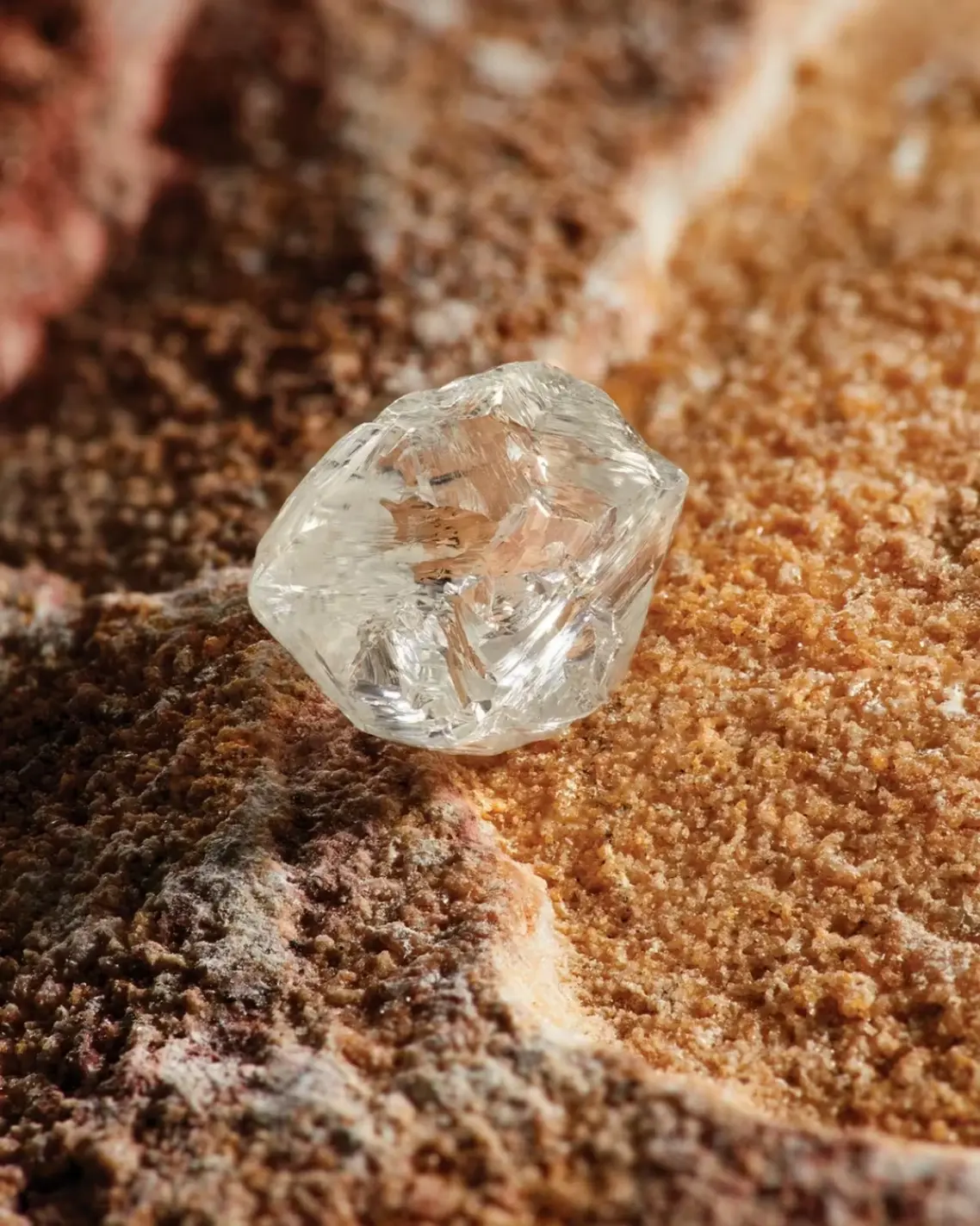
This is what makes the idea of a “clean diamond” more complex than before. Clean no longer means merely flawless. Clean also means unmuddied by opaque origins. A beautiful diamond must be clear under magnification, but it must also be clear in the story it carries. For the modern buyer, especially at the high-jewellery end of the market, provenance is no longer a note at the bottom of the file. It is becoming part of the beauty itself.
The Kimberley Process Certification Scheme is one of the best-known examples, created to help reduce the flow of conflict diamonds into the legitimate rough diamond trade. Alongside it, the World Diamond Council’s System of Warranties requires warranty statements on invoices, extending the language of responsibility further through the supply chain.
This vocabulary has now moved into the centre of strategy for major jewellery houses. De Beers has invested in traceability through Tracr, a platform designed to record a diamond’s journey from mine to market. Tiffany & Co. has made provenance part of its brand promise, sharing information about the origin and craftsmanship journey of individually registered diamonds. Chopard places responsible sourcing at the heart of its “Journey to Sustainable Luxury”, while Cartier frames responsibility through broader industry initiatives around climate, resources and inclusion.

Still, precision matters. The Kimberley Process, System of Warranties and traceability platforms are not automatically the same thing as “fair trade” in the broadest sense. They are mechanisms of conflict-free assurance, responsible sourcing and provenance within defined limits. Questions around labour, environmental impact, community benefit, full step-by-step traceability and social responsibility still require additional reporting, standards and auditing systems.
These mechanisms do not replace the 4Cs. They expand the meaning of value. A diamond is no longer asked only: how heavy is it, how white is it, how clean is it, how well is it cut? It is also asked: who mined it, who cut it, who sold it, and who takes responsibility for its journey? In the new language of luxury, a stone without a transparent story will find it increasingly difficult to stand before an informed buyer.
A fine diamond needs a design refined enough to honour it. The setting does not merely hold the stone in place. It determines how light enters the diamond, whether the stone is lifted or pressed low, whether the proportions on the hand feel graceful or heavy, modern or old-fashioned. In diamond jewellery, the setting is the architecture of light.
In a diamond ring, the prongs, band, height of the setting and proportion of metal all influence the final impression. A beautiful stone can lose its force when placed in a structure that is too thick, too heavy or blocks the path of light. Conversely, a clean, balanced and precisely made setting can make a diamond appear brighter, more elegant and more enduring over time.


Some buyers choose to purchase a loose stone and ask a small, lesser-known jeweller without deep specialist expertise to create the setting and complete the piece. This route may offer more flexibility in cost and design, but it carries risks in proportion, technique and finish. If the setting is poorly calculated, if the prongs are too heavy or if the structure blocks light, the diamond can lose part of its natural radiance.
This is why choosing a reputable house or a highly skilled workshop is worth considering. A beautiful diamond jewel is not only about the stone. It is the result of selection, grading, cutting, design and hand-finishing. Diamond is nature’s material, but jewellery is the test of human craft.
The Four Cs give buyers a clear foundation for comparison. Carat tells us the weight. Colour tells us the degree of colourlessness, or the rarity of natural colour. Clarity tells us the purity of the stone. Cut tells us how well it handles light. But in the modern diamond market, those questions are only the beginning.

A stone may look perfect on paper and fail to move the hand that wears it. Another may not lead every grade, yet possess the brightness, balance and vitality that make it unforgettable. Certificate gives it identity. Craftsmanship gives it form. Conscience gives it ethics. Chain of Custody gives it a journey. Light, finally, gives it a reason to be desired.
That is why the ideal diamond is not necessarily the largest, whitest or most expensive. It is the stone that achieves the most convincing balance between standard, design, certification, provenance and wearer. When chosen well, a diamond is not merely a precious material. It becomes a memory with structure, a point of light held across time.