MENU
Close





When jewelry is no longer bought only for beauty, but also to hold a private belief, what turns talisman jewelry, with a medallion, a gemstone or a lucky symbol, into true luxury?
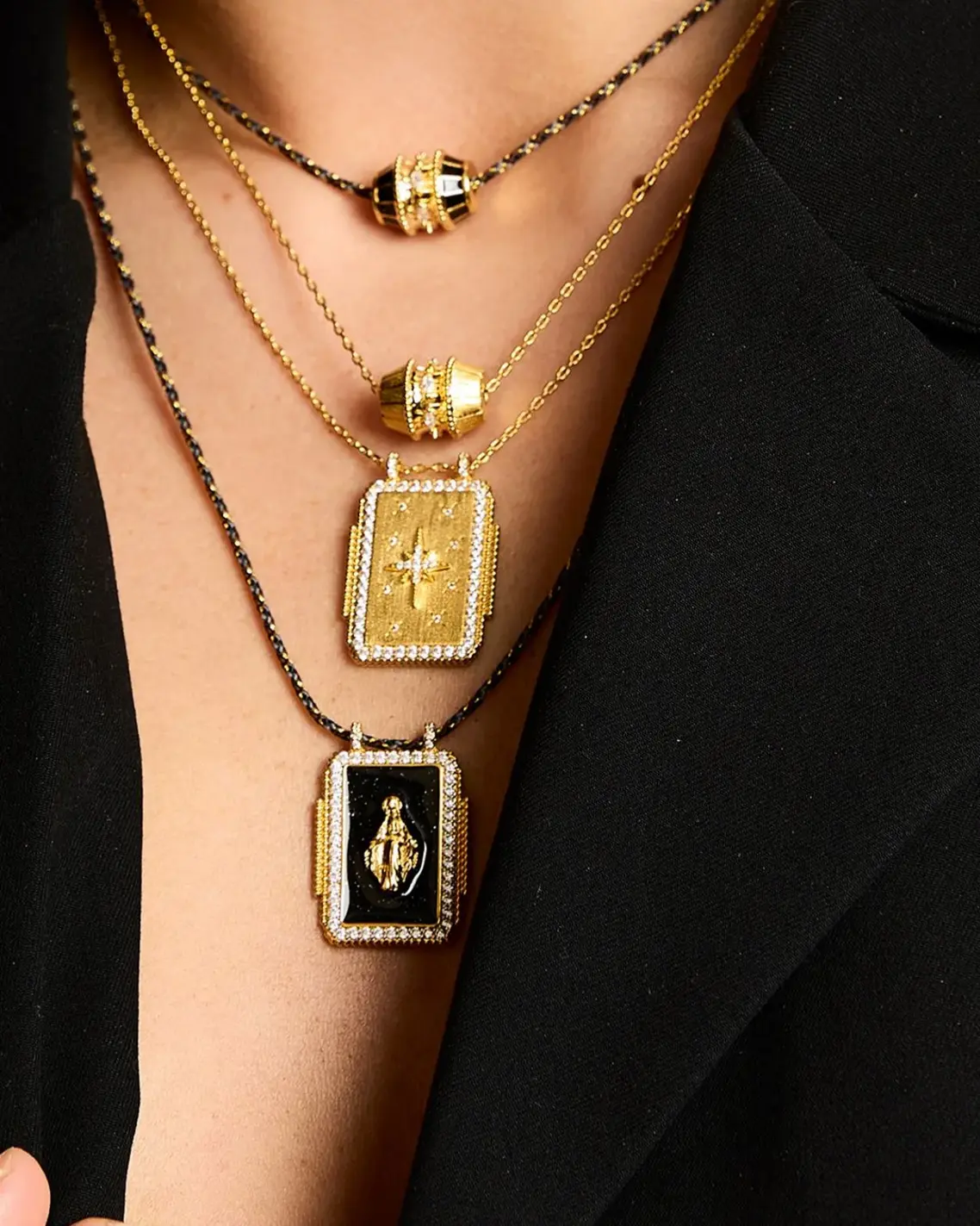
When jewelry is no longer bought only for beauty, but also to hold a private belief, what turns talisman jewelry, with a medallion, a gemstone or a lucky symbol, into true luxury?
May 21, 2026


Talisman jewelry has never belonged only to Asian culture. From feng shui stones, jade pendants and protective bracelets to gemstones believed to carry guarding energy, human beings have long asked jewelry to do more than adorn the body. In the West, that instinct has never disappeared. It has simply lived under different names: Talisman, amulet, lucky charm, medallion, protective symbol.
By 2026, talisman jewelry is no longer a romantic niche sitting at the edge of the jewelry world. It has become one of the most important languages of modern luxury jewelry, where material value, personal symbolism, memory, spirituality and brand power meet on one small surface. A necklace may be made of 18K gold, diamonds, pearls, malachite or mother-of-pearl. Yet once it takes the form of a lock, a star, a flower, a wheat sheaf, a four-leaf clover or a round disc resembling an astrological chart, it begins to do something else: it turns luxury into belief with a physical body.
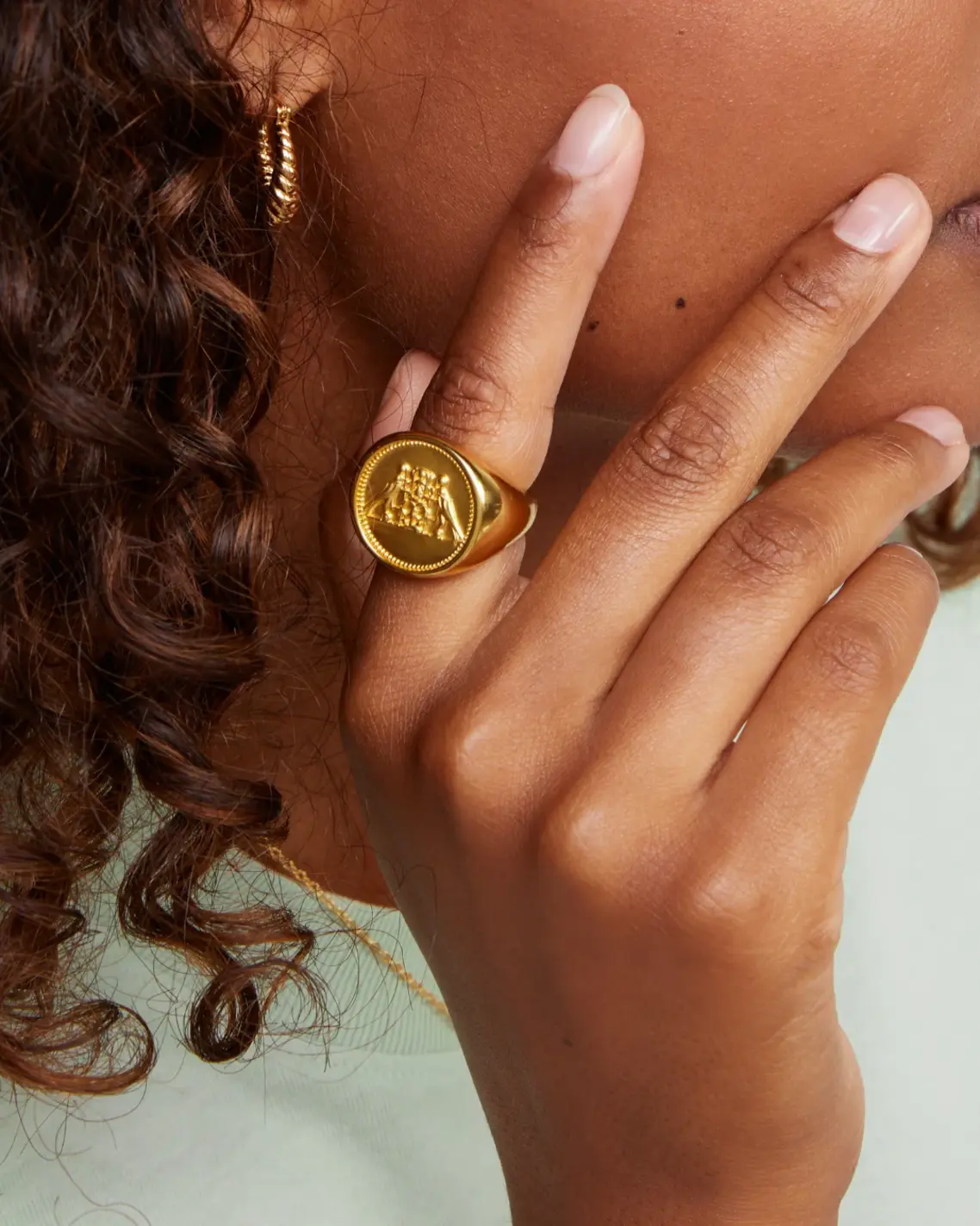
The market context makes this shift even clearer. The State of Fashion 2026 by McKinsey and The Business of Fashion forecasts jewelry unit growth of around 4.1% per year from 2025 to 2028, significantly ahead of clothing. Fine jewelry and costume jewelry are also expected to grow sales by roughly 5.3–5.6% per year through 2028. The report also notes that branded jewelry accounted for 25% of the market in 2024, with annual growth of 8.3% between 2021 and 2024.
This shows that jewelry is moving from accessory to emotional asset. The same report notes that 61% of consumers in 2025 said jewelry is the category where brand matters most; in China, that figure rises to 82%. Meanwhile, Richemont, the group that owns Cartier, Van Cleef & Arpels, Buccellati and Vhernier, reported 14% growth in jewelry sales for the quarter ending 31 December 2025, suggesting that high jewelry remains one of luxury’s brighter territories even as the wider market recovers unevenly.
In other words, in an era of selective luxury recovery, jewelry is winning because it can be worn, kept, inherited and made to tell a private story. Talisman jewelry, then, is not merely superstition wrapped in gold. It is where buyers find a new kind of luxury: personal belief legitimised by brand, craftsmanship and precious stones.
A piece of talisman jewelry usually carries three layers of value. The first is material: gold, diamonds, gemstones, enamel, lacquer, pearls, hard stones, setting techniques, polishing, engraving. The second is symbolic: stars, compasses, petals, circles, locks, hearts, lucky numbers, protective animals. The third is the wearer’s private belief: a wish, a new beginning, a journey, a person to protect, a memory, or simply the feeling of carrying a small object with meaning.
True luxury begins when these three layers meet. If there is only material, the piece may be expensive but cold. If there is only symbol, it may be charming but thin. If there is only belief, it may be intimate but lack the weight of craftsmanship. A talisman from a major maison must do something more difficult: make belief look credible, make gemstones feel articulate, and make symbols resist becoming empty decoration.
That is why major houses keep returning to the talisman. In a market where logos have been overconsumed, talismans give luxury a subtler route. The wearer is not simply saying, “I bought Cartier” or “I wear Dior”. They are saying: I carry a piece of luck, a promise, a secret lock, a private star, a stone that means something to me.
De Beers is one of the maisons that has brought the idea of the talisman most clearly into high jewelry. Its Talisman collection stands out because it does not use only polished diamonds. It places rough diamonds and polished diamonds side by side. This is an expensive idea, intellectually as much as materially: instead of celebrating only the stone after it has been disciplined by cutting, De Beers preserves the rawness of the diamond, as if reminding us that a diamond is not only the product of a workshop, but also of geology, time and pressure deep inside the earth.
De Beers describes Talisman as a collection that celebrates rough diamonds, using the serti poinçon technique to emphasise the natural beauty of unpolished stones. On the official website, a Talisman Medal in White Gold is described as featuring green and yellow fancy colour rough and polished diamonds totalling around 12.63 carats, set in 18K white gold, with a listed price of £76,000. Other Talisman Medallions with a total of around 10 carats are listed at £45,200.
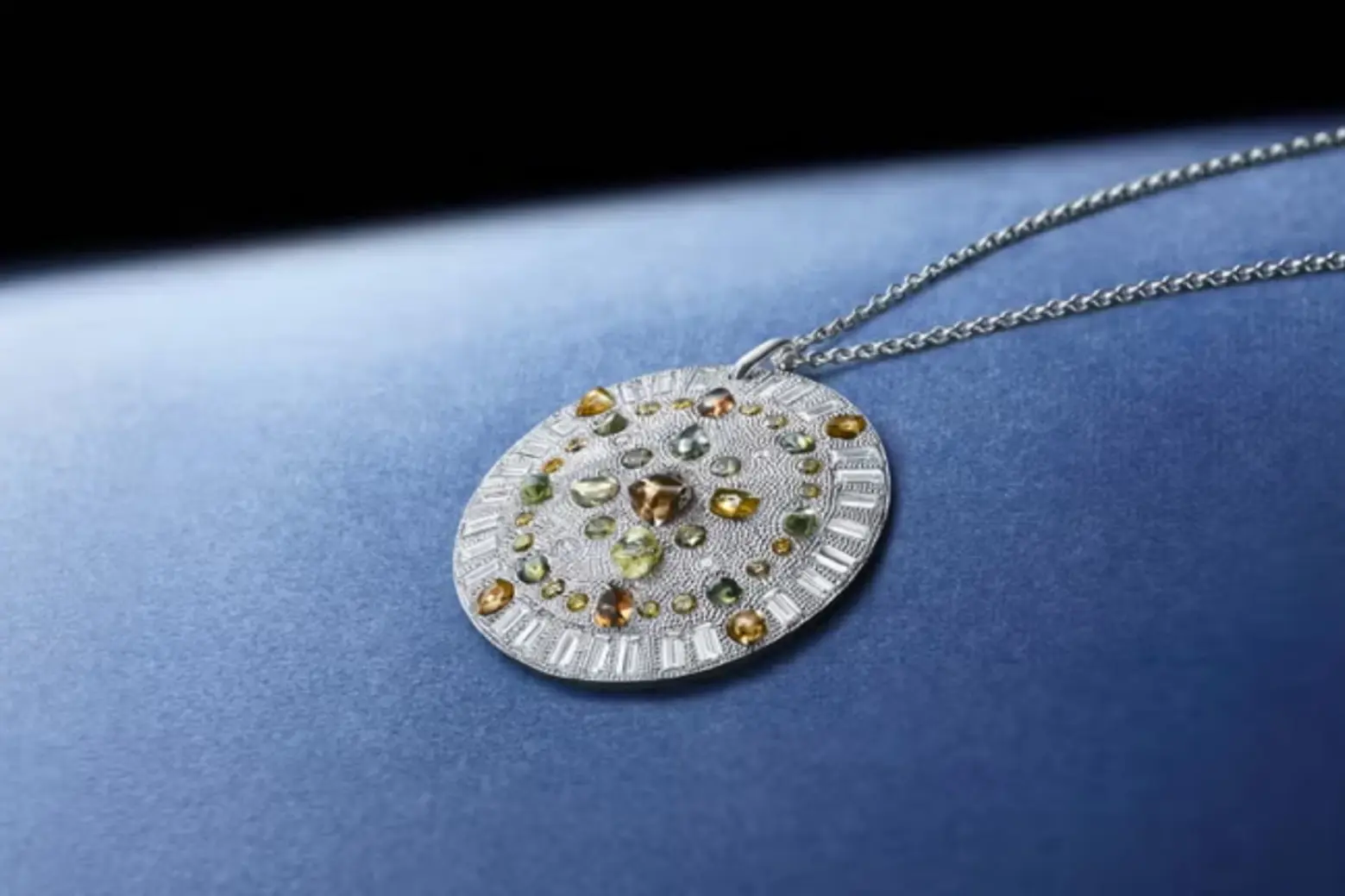
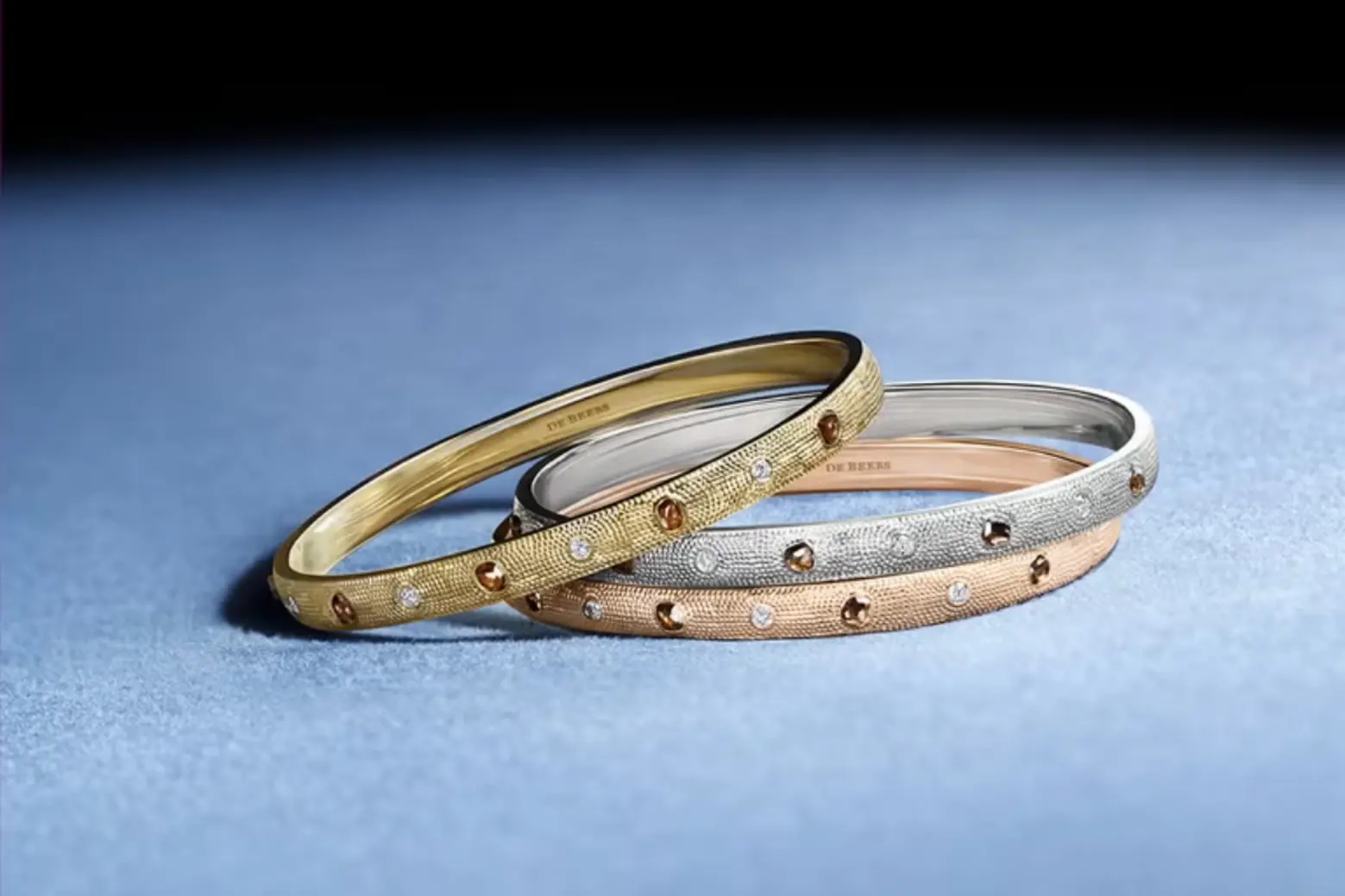
The beauty of De Beers Talisman lies in the dialogue between raw and finished stones. The polished diamond is order, light, discipline, cut. The rough diamond is instinct, ancient force, untamed energy. When both exist on the same gold medallion, the talisman speaks not only of luck, but of the journey of matter: from the earth to the wearer’s neck, from chaos to symbol.
If De Beers sees the talisman through rough diamonds and the energy of nature, Chanel sees it through Gabrielle Chanel’s private symbolic universe. For Chanel, luck was never decorative. Gabrielle Chanel lived with symbols: the number 5, the lion, wheat, comets, camellias, signatures, private signs repeated until they became the language of the house.
This is especially clear in the Chance de Chanel Fine Jewelry Collection, where Chanel creates reversible medallions that evoke good-luck charms. Chanel writes that for Gabrielle Chanel, luck was not a matter of chance, but a state of mind. The new medallions combine 18K yellow gold, diamonds and natural black jade; one side gathers the house’s symbols, while the other reveals Mademoiselle’s signature.
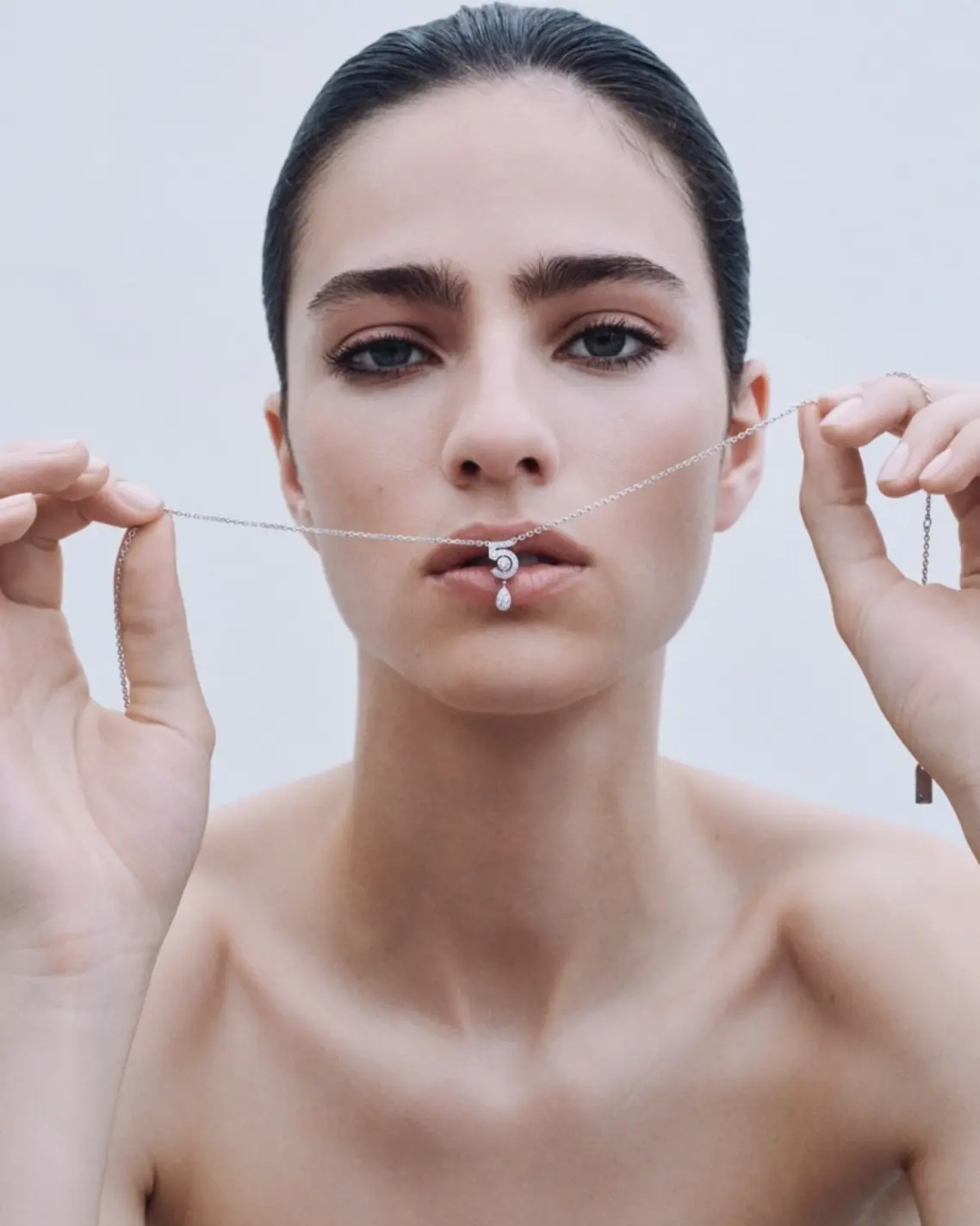
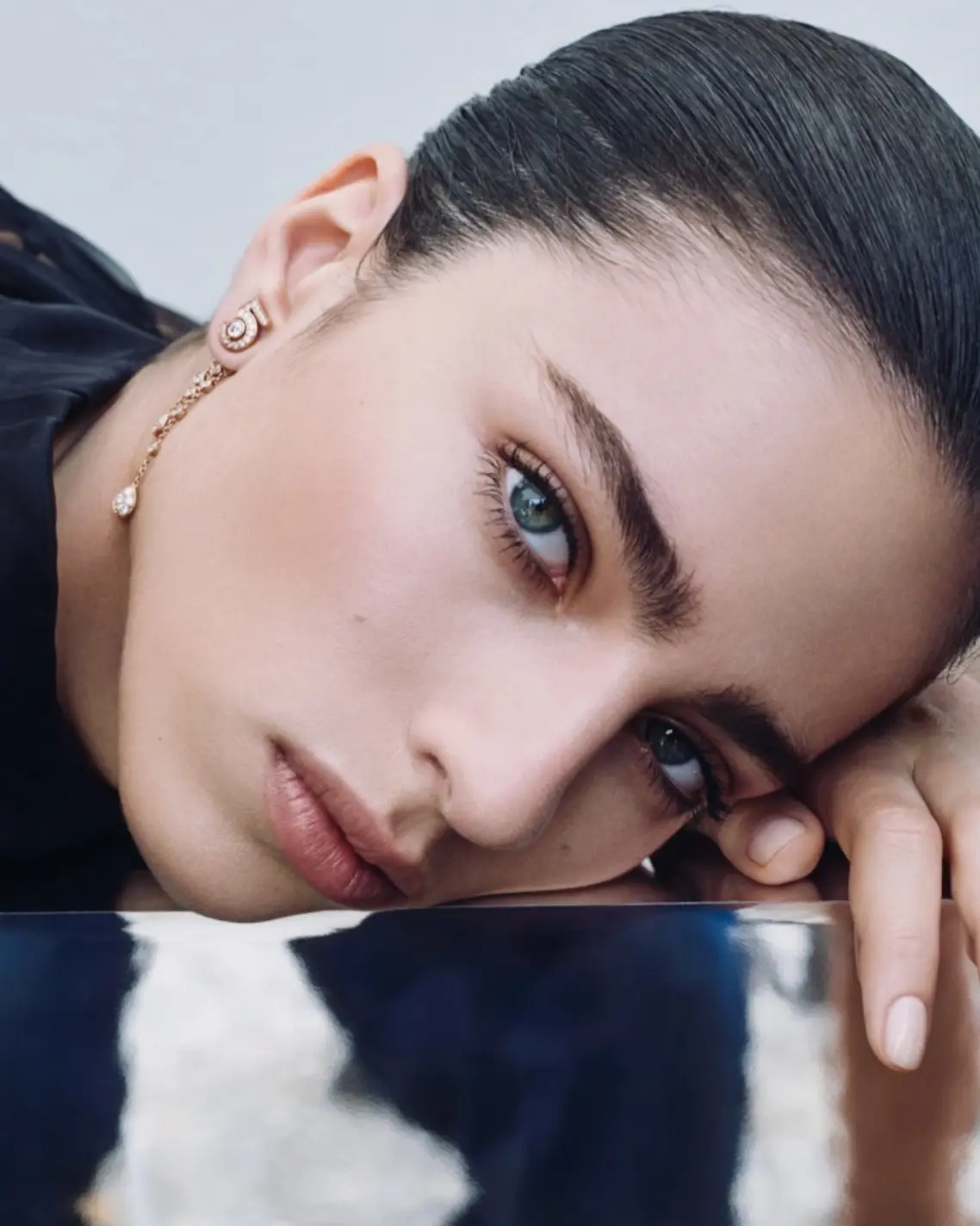
What feels so Chanel here is that luck is controlled by style. The lion represents courage, power and loyalty, while also referencing Gabrielle Chanel’s Leo zodiac sign and one of her personal protective symbols. The comet represents hope and dreams, having first appeared in the Bijoux de Diamants collection of 1932. Wheat symbolises prosperity, abundance and good fortune, a metaphor for creative life continually reborn.
Compared with talismans that lean heavily into mysticism, Chanel does something more refined: it turns the amulet into a system of codes. The wearer of Chance de Chanel is not merely wearing a beautiful medallion. They are wearing something like Gabrielle Chanel’s private cipher: a little lion, a little number 5, a little wheat, a little comet, a little signature. It is the talisman of those who believe luck does not simply fall from the sky, but is created through will, posture and a very Chanel kind of stubbornness.
If Chanel turns the talisman into the symbolic system of a legendary woman, Cartier brings it back to an almost archetypal form: a small lock holding a wish. Amulette de Cartier is one of the collections that speaks most directly about the idea of the amulet in modern jewelry. Cartier describes the collection as “colorful talismans for your most private wishes”; each Amulette features a natural stone, a central diamond, and a form “guarded by a padlock”.
Amulette de Cartier succeeds because it does not try to be overly complex. A partial circle, a coloured stone, a small diamond, a feeling of a lock. The design understands the psychology of talisman jewelry very well: a charm does not need to be huge, rare or spectacular. It needs to feel kept. Cartier does not claim that the jewel will change the wearer’s fate. It does something more elegant: it creates an object into which the wearer may place a private wish.
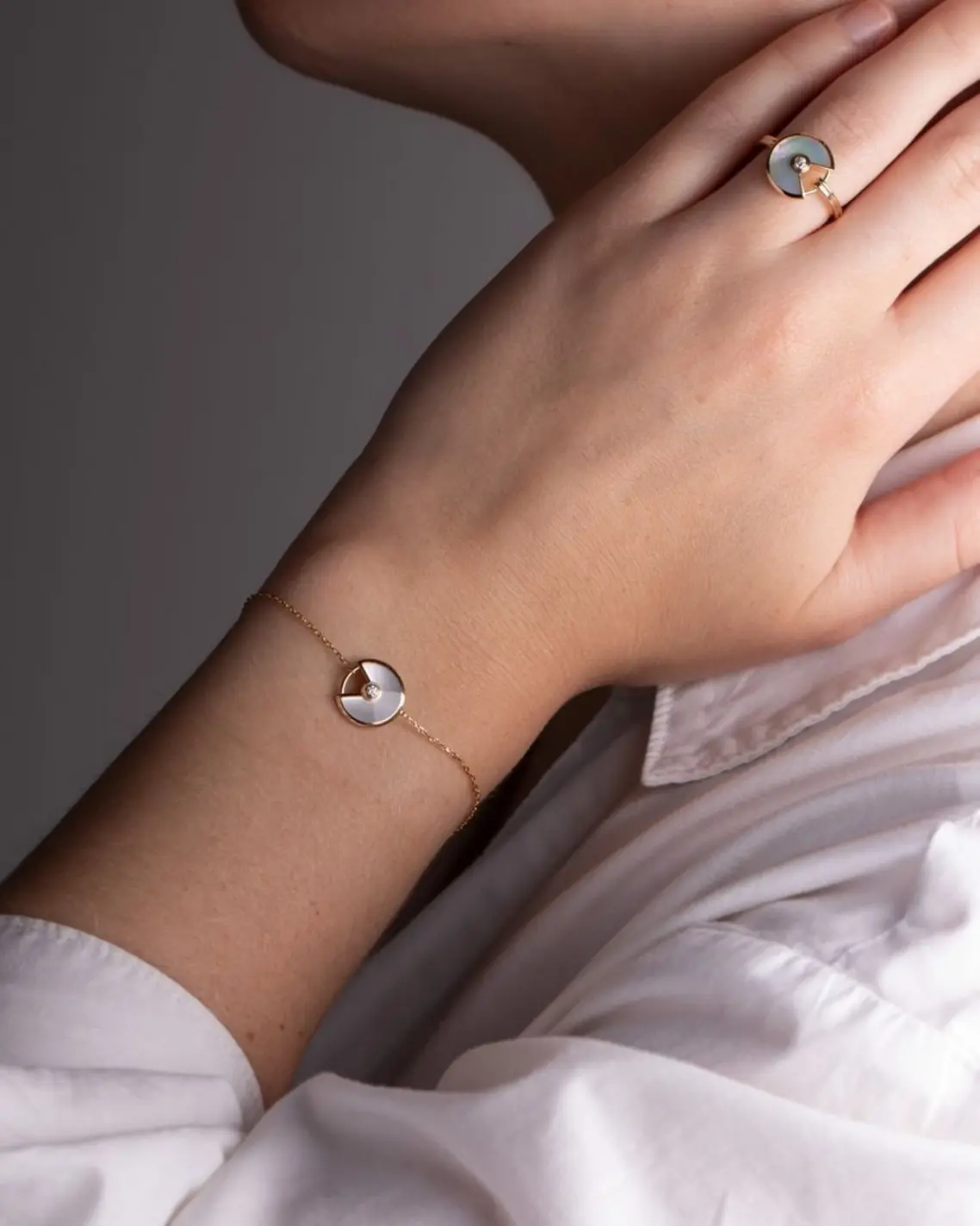
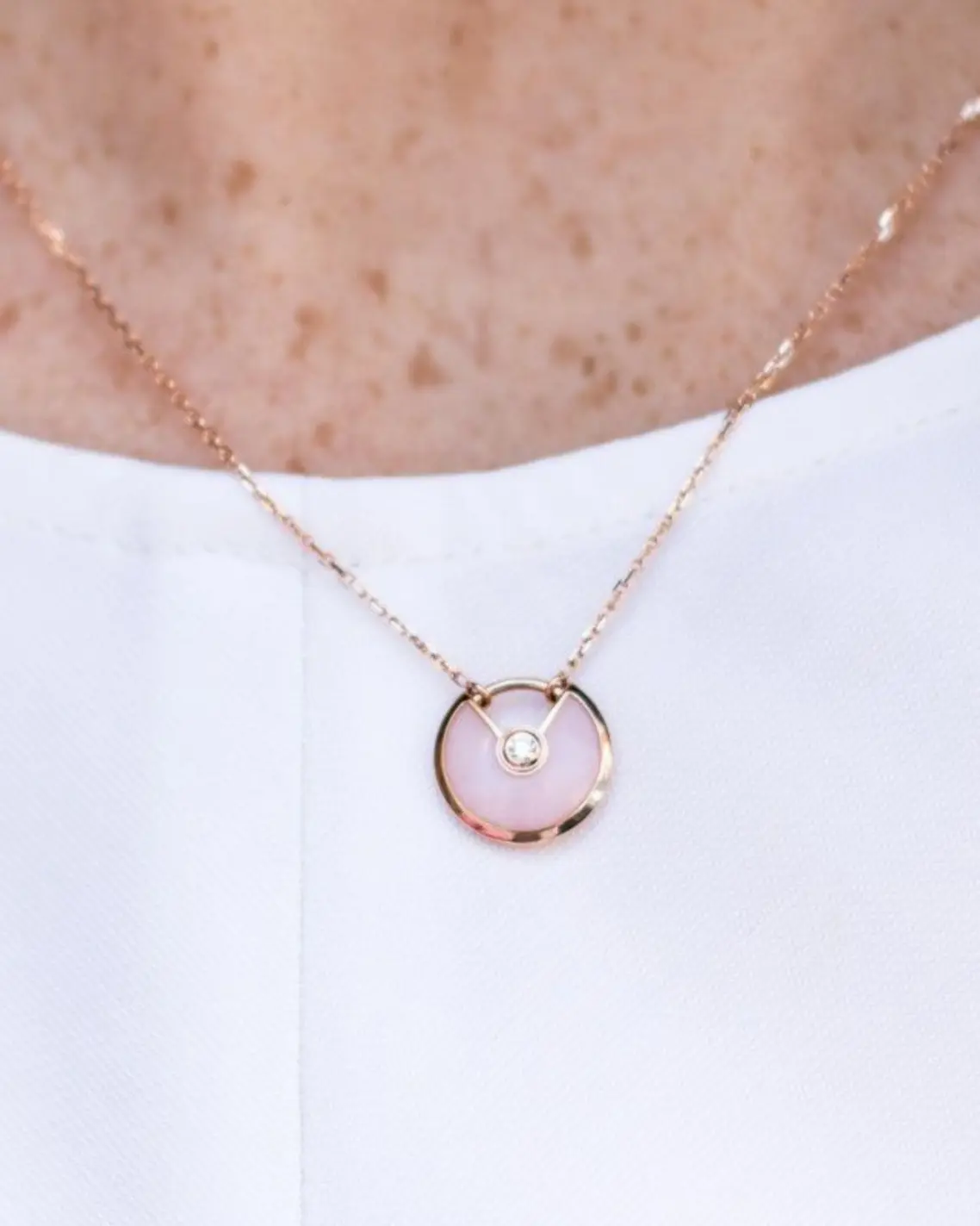
In an age when everything is exposed on social media, Amulette appeals because it is small, discreet, personal and almost whispered. It does not display power. It keeps a secret.
In the world of Dior, the amulet is practically part of the house DNA. Christian Dior was famously attached to beautiful forms of superstition: tarot cards, lily of the valley, lucky stars, numbers, signs, omens. So when Victoire de Castellane created Rose des Vents, she was not simply making a pretty jewelry collection. She was translating Dior’s folklore into a modern system of medallions.
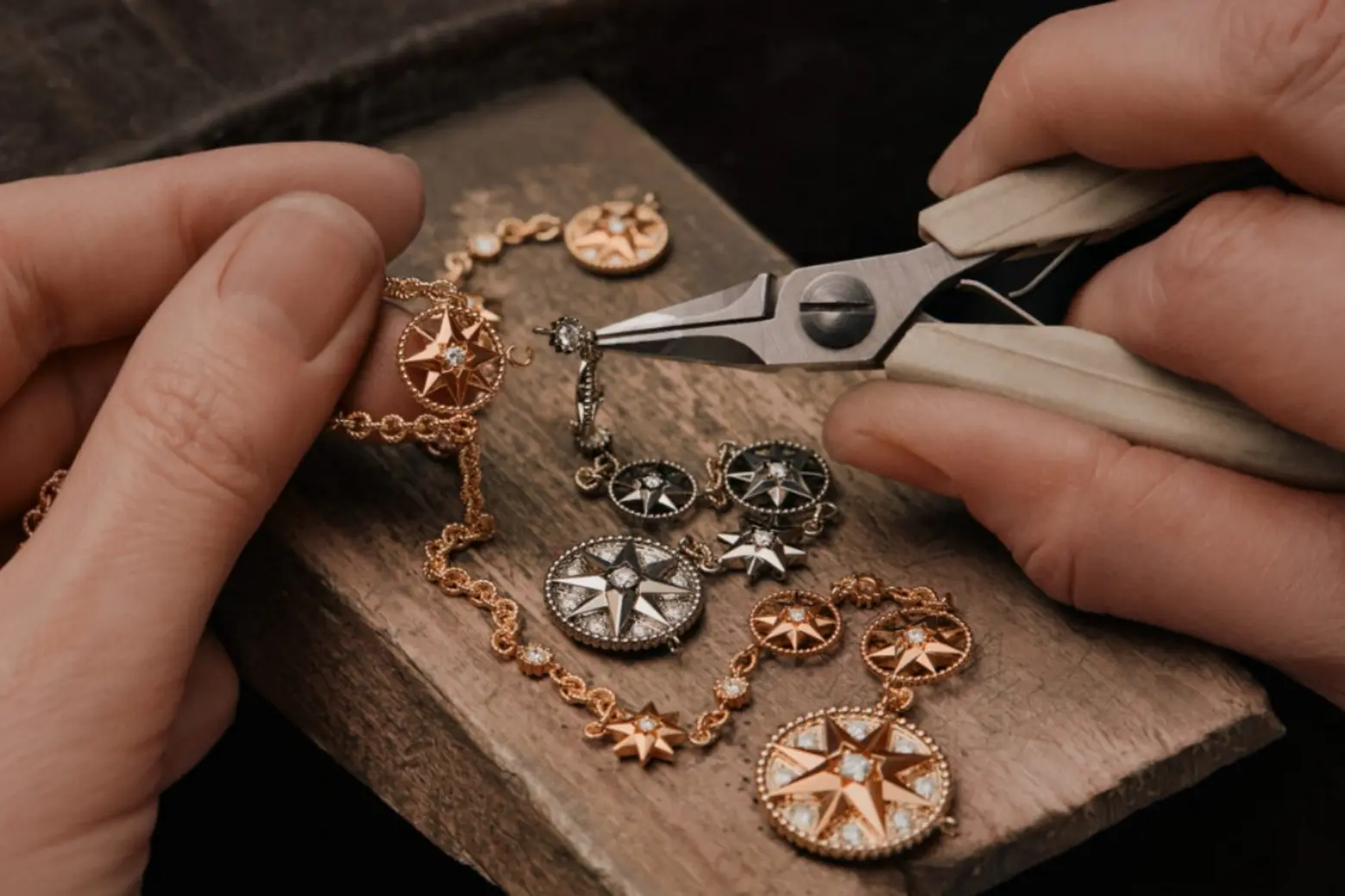
Dior describes Rose des Vents as Victoire de Castellane’s reinterpretation of Monsieur Dior’s lucky star in the form of a wind rose, an eight-pointed star design. The medallion is framed by gold beading and can rotate, shifting between the gemstone face and the wind rose motif. A Medium Rose des Vents Medallion in pink gold, diamond and onyx is currently listed on Dior Vietnam at 175,000,000 VND; another version in yellow gold, diamond and mother-of-pearl is listed at 160,000,000 VND
The intelligence of Rose des Vents lies in the compass image. A compass does not protect by supernatural force. It protects by giving direction. This makes Rose des Vents a very Dior kind of talisman: soft, feminine, but not weak. It does not promise to stop the storm. It simply says that on every journey, the wearer still has a star to follow.
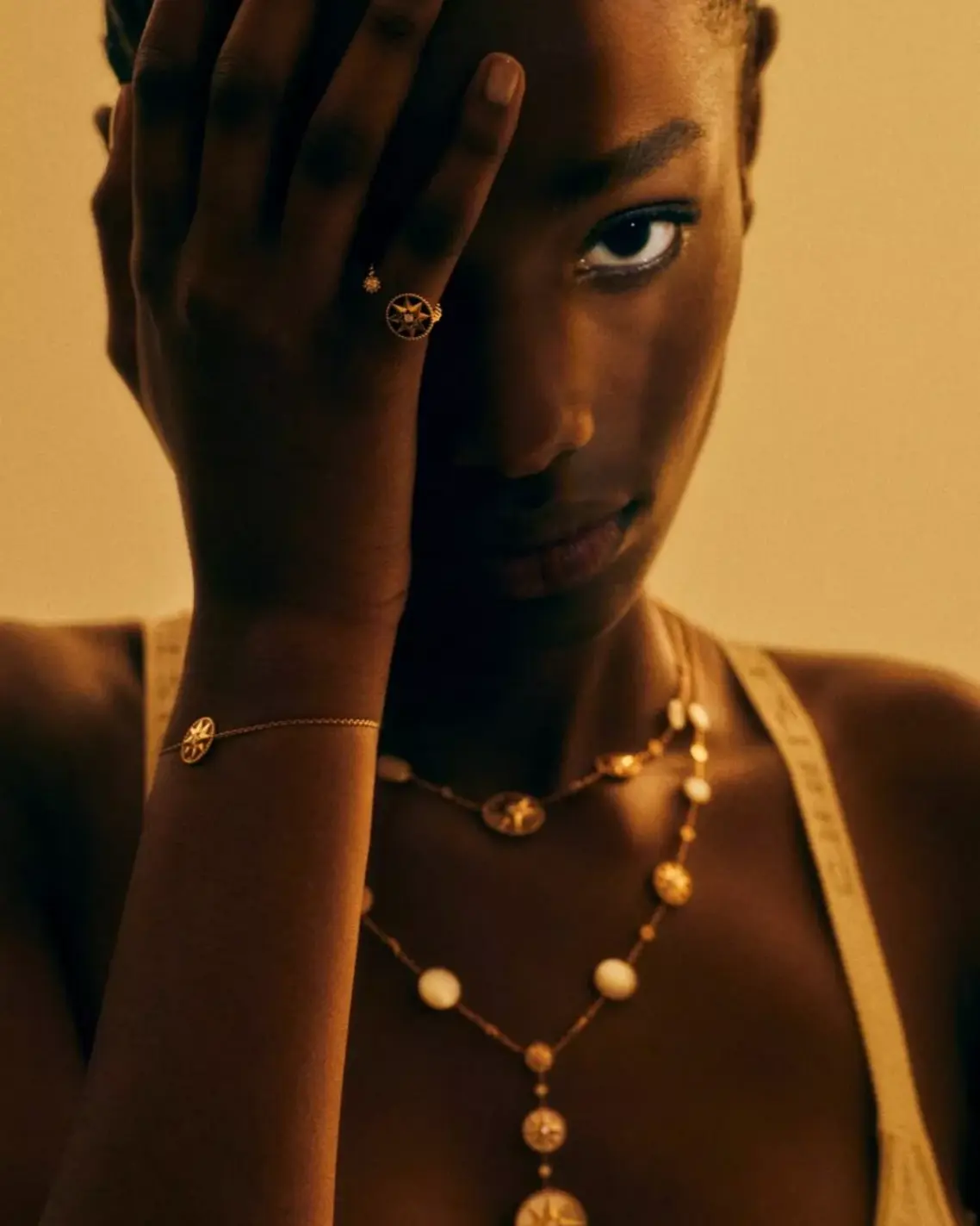
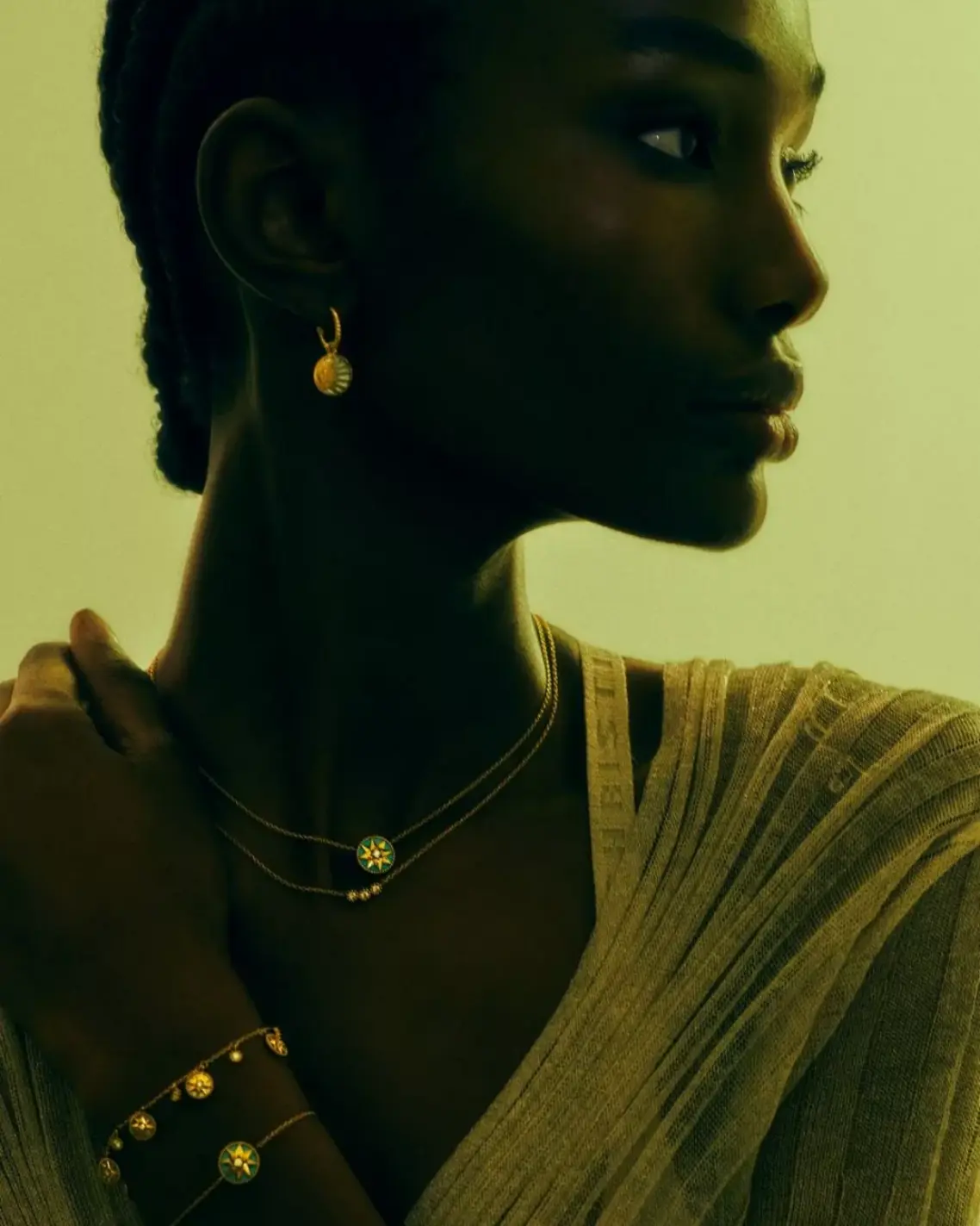
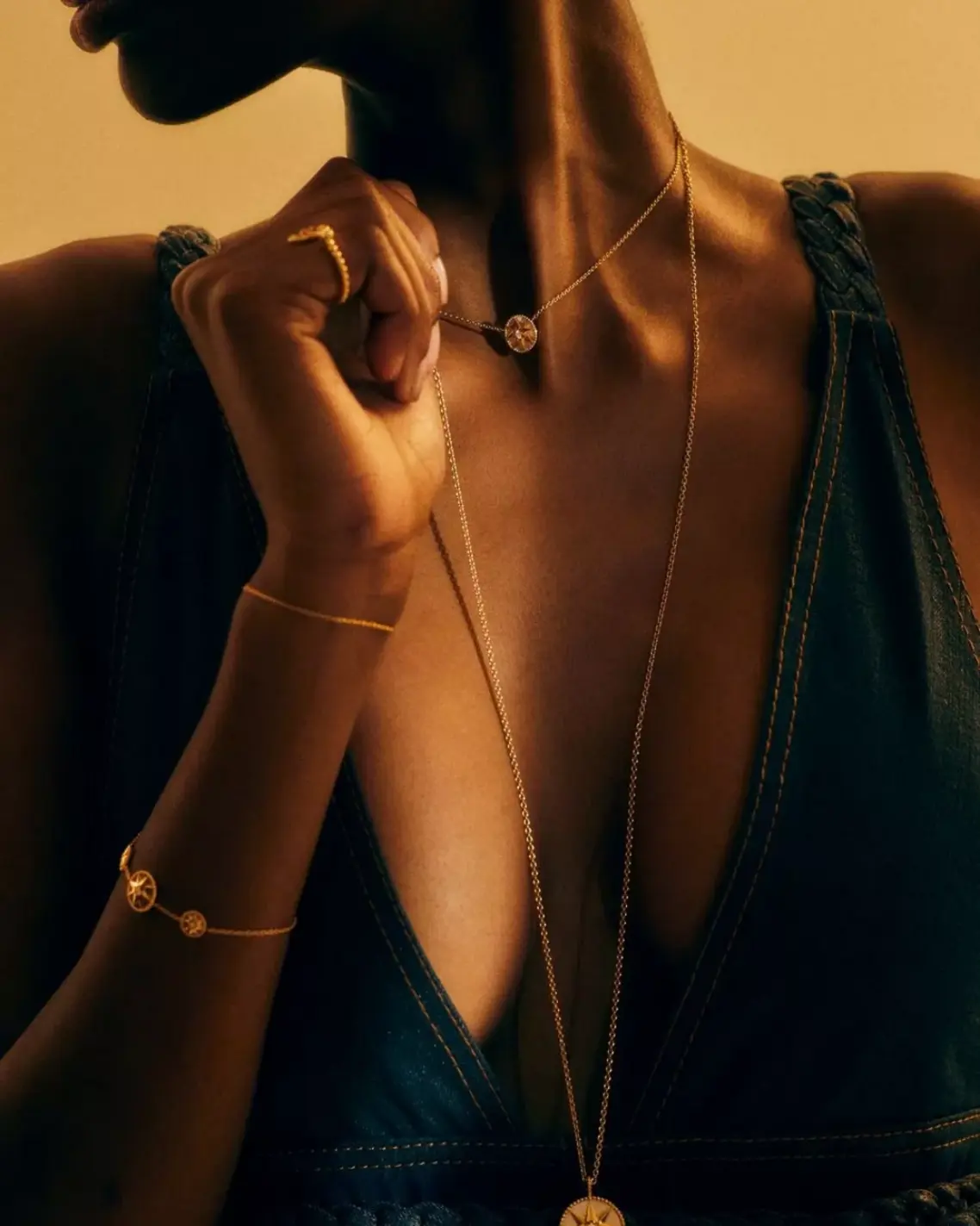
The rotating face is also important. It allows the wearer to move from gemstone to star, from colour to symbol, from jewelry to amulet. This is luxury in an intimate form: an object with two faces, just as every person has one face for the world and another kept private.
No discussion of talisman jewelry can ignore Van Cleef & Arpels Alhambra. Created in 1968, Alhambra is perhaps one of the most successful examples of turning a lucky symbol into a social language. The stylised four-leaf clover motif is not simply decoration. It is a signal: soft, polite, refined, recognisable without being crude.
Van Cleef & Arpels describes the Alhambra motif as an “emblem of luck”, expressing a positive vision of life, and records that the first Alhambra long necklace was created in 1968. That original long necklace featured 20 four-leaf clover motifs in yellow gold, bordered with gold beads, and quickly became recognised around the world as a token of luck.
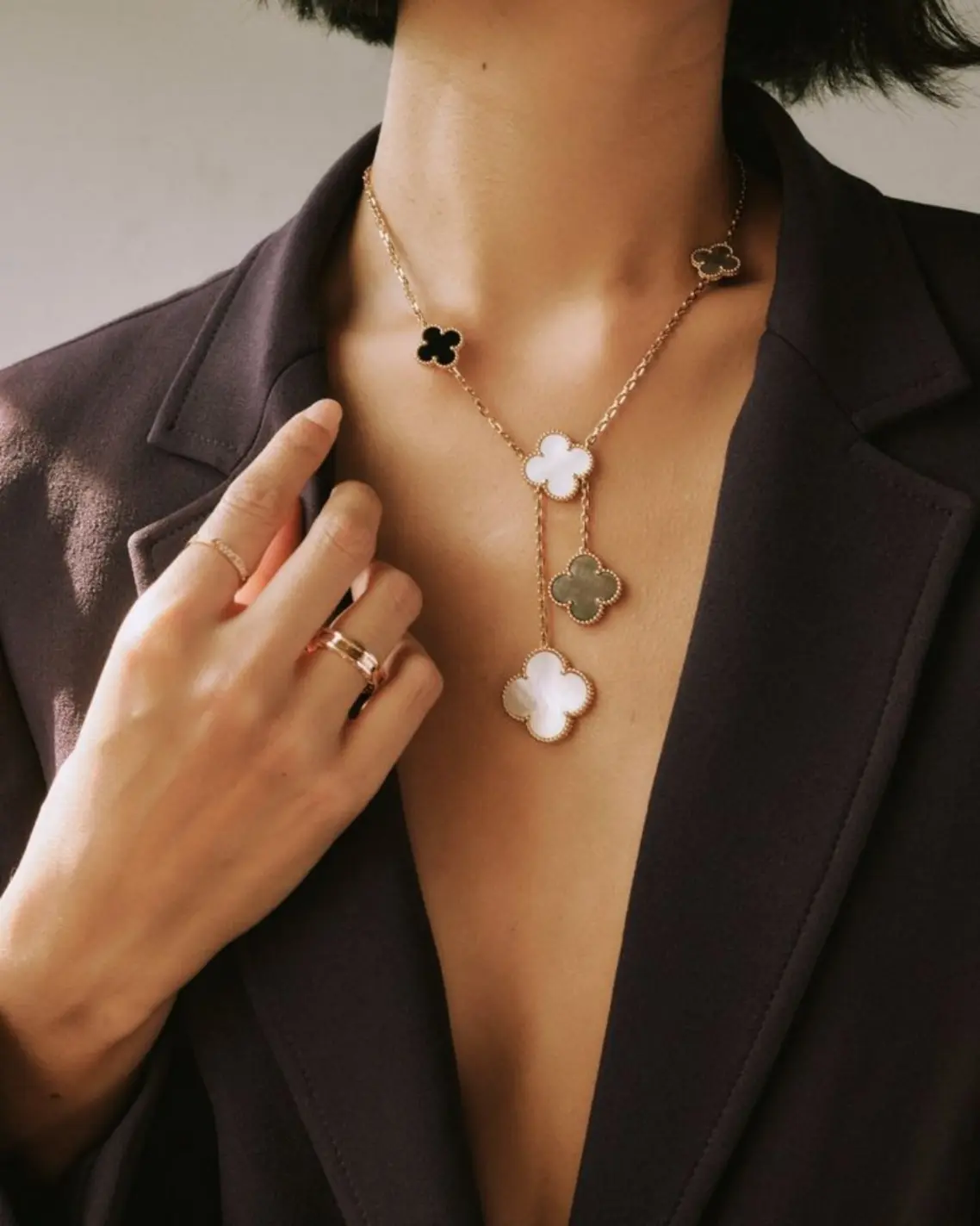
Alhambra is a lesson in how a talisman becomes socialised. It is easy enough to wear as daily jewelry, symbolic enough to be recognised, historical enough to escape the logic of a short-lived trend, and rich enough in materials to keep collectors returning. One person may buy Alhambra because they like the idea of luck. Another buys it because they understand Van Cleef. Another buys it because Alhambra has become a very quiet code among people who know jewelry.
Here, the talisman is no longer purely personal. It becomes a form of membership. The wearer of Alhambra carries luck, but also the history of a motif that has lived for nearly six decades without losing its power.
If Cartier uses the lock, Dior the compass and Van Cleef the four-leaf clover, Chopard uses the heart. Happy Hearts combines the heart motif with moving diamonds, one of Chopard’s most recognisable jewelry codes. The brand describes Happy Hearts as a combination of the “talisman heart” and its emblematic moving diamonds, made for “the world’s big-hearted women”, with the very Chopard line: “Little diamonds do great things.”
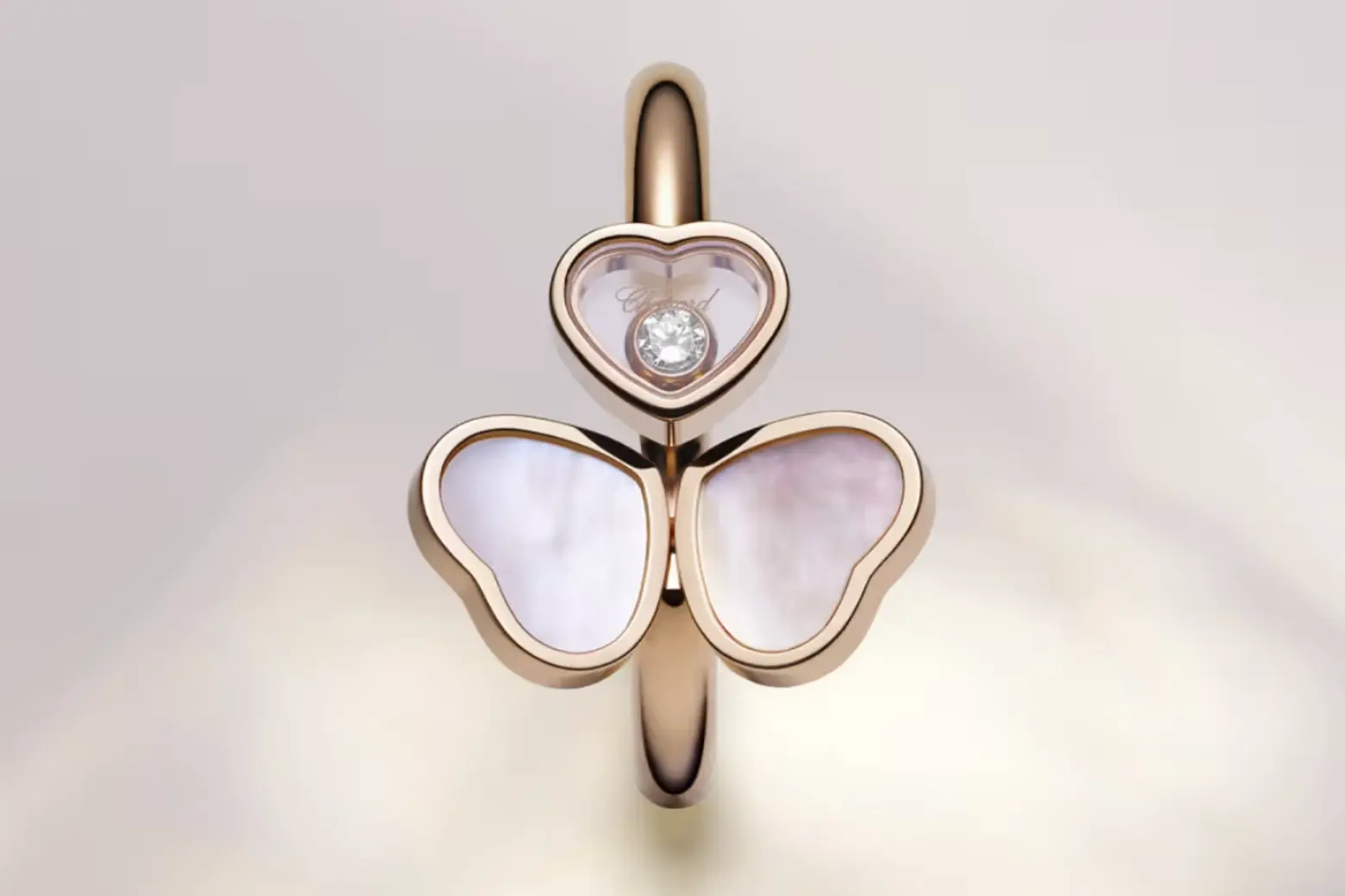
What is striking is that Chopard does not approach the talisman through mystery or astrology. Happy Hearts is an amulet of generosity, joy, affection and kindness. A free-moving diamond inside the heart motif creates the sensation of a tiny life trembling within the jewel. If De Beers Talisman carries the breath of geology, Cartier Amulette holds a wish, and Dior Rose des Vents gives direction, then Chopard Happy Hearts feels like a softer reminder: keep a little innocence inside this very expensive world.
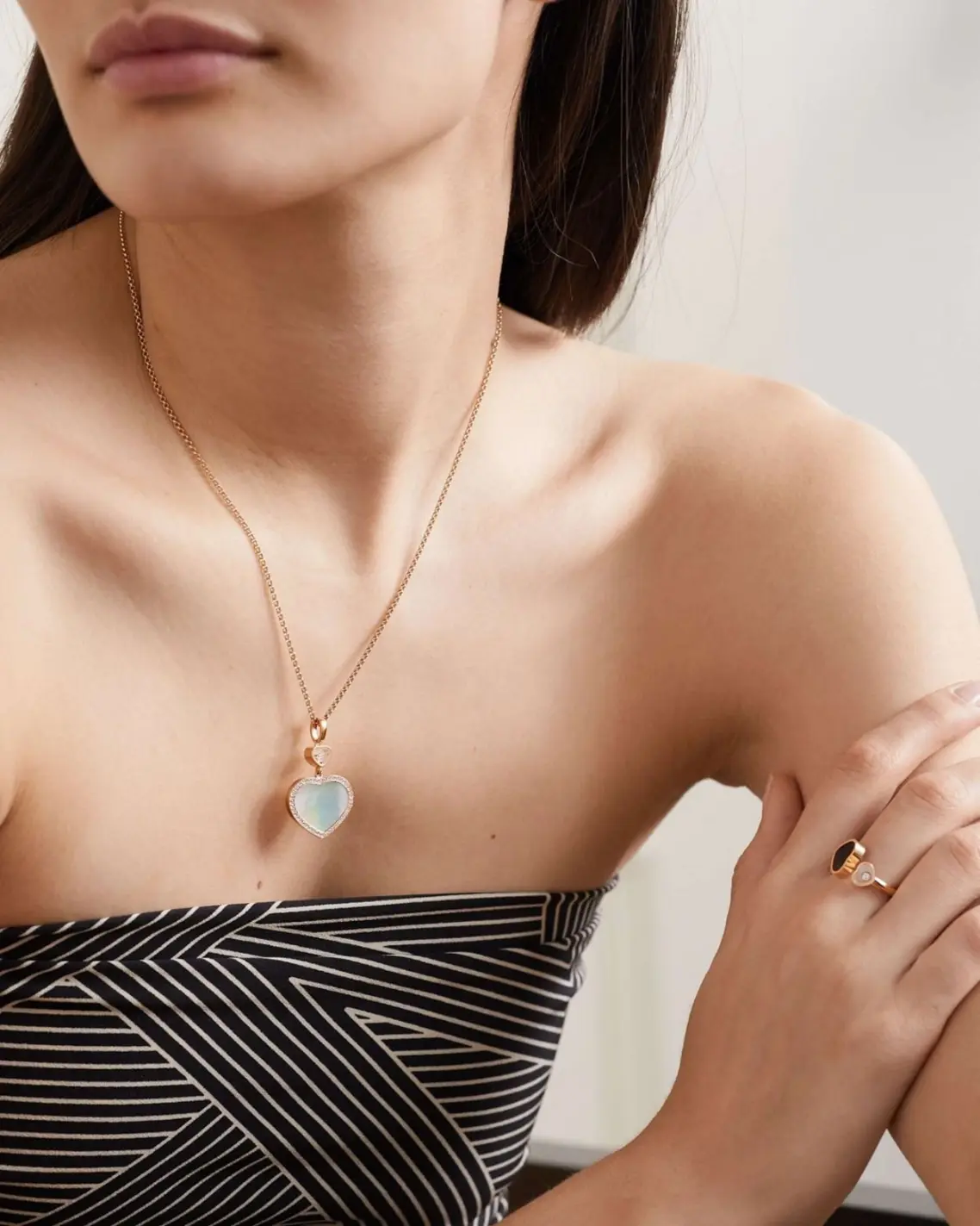
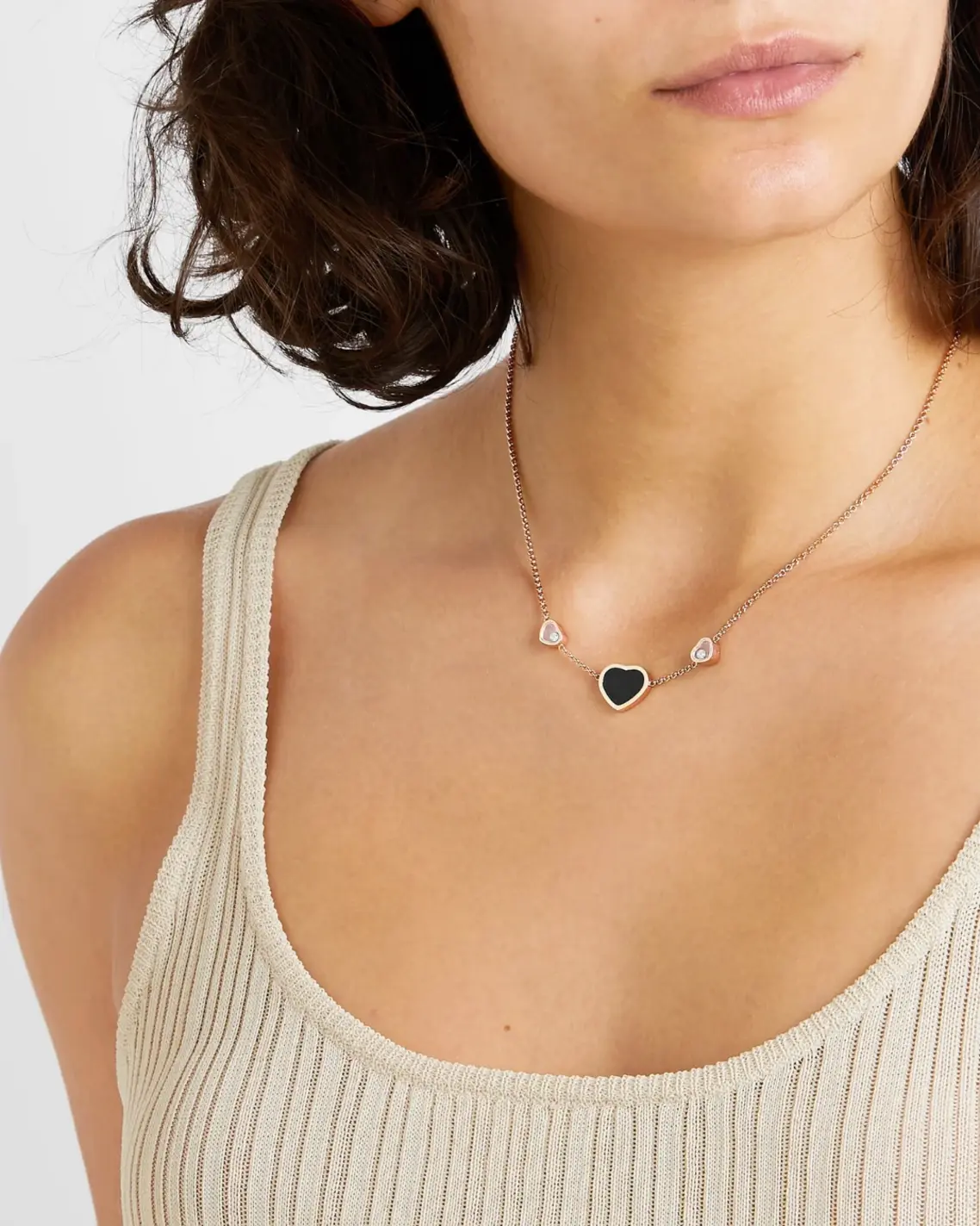
That also fits the mood of 2026, when jewelry buyers are not only looking for precious materials but for wearable emotion. Self-expression and self-purchasing are major forces in jewelry growth; talisman jewelry is an ideal format because it has story, intimacy and the ability to expand into a brand symbol.
If the French maisons turn the talisman into stars, locks, clovers and compasses, Shamballa Jewels takes protective jewelry into a more direct spiritual territory. The Danish brand builds its world around the meeting point of Nordic design, Eastern philosophy, gemstones, 18K gold and the idea that each piece of jewelry can reflect a personal journey.
What makes Shamballa different is that the brand does not use symbolism as an added decorative layer. Symbolism is the skeleton. Beads are chosen not only for colour or preciousness, but for the values, states of mind and energies they evoke. In Shamballa’s own language, the Double Dorje, or Double Thunderbolt, is a symbol of pure consciousness, a state that cannot be destroyed or corrupted; the Star of Shamballa logo itself is inspired by this symbol.
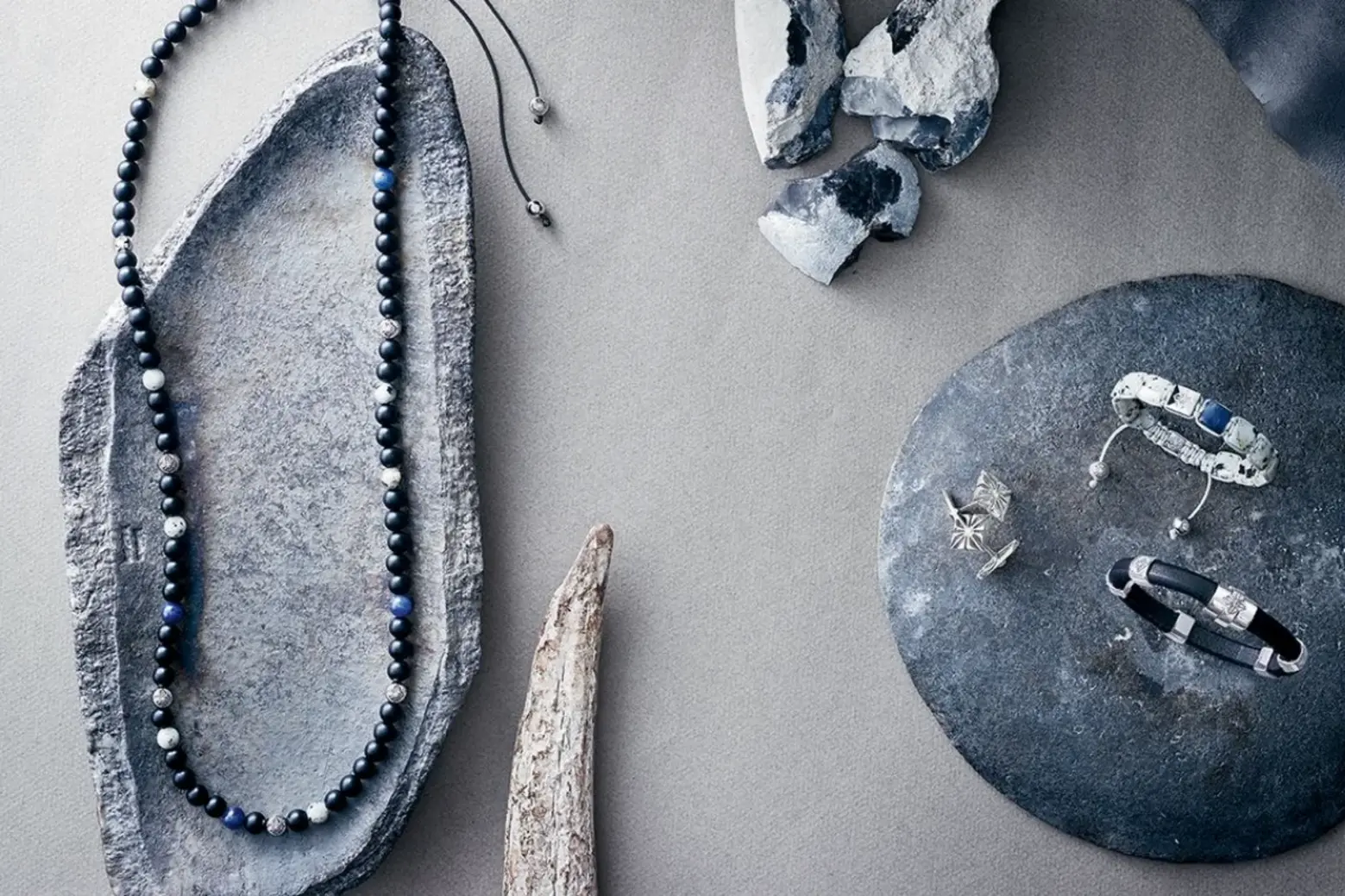
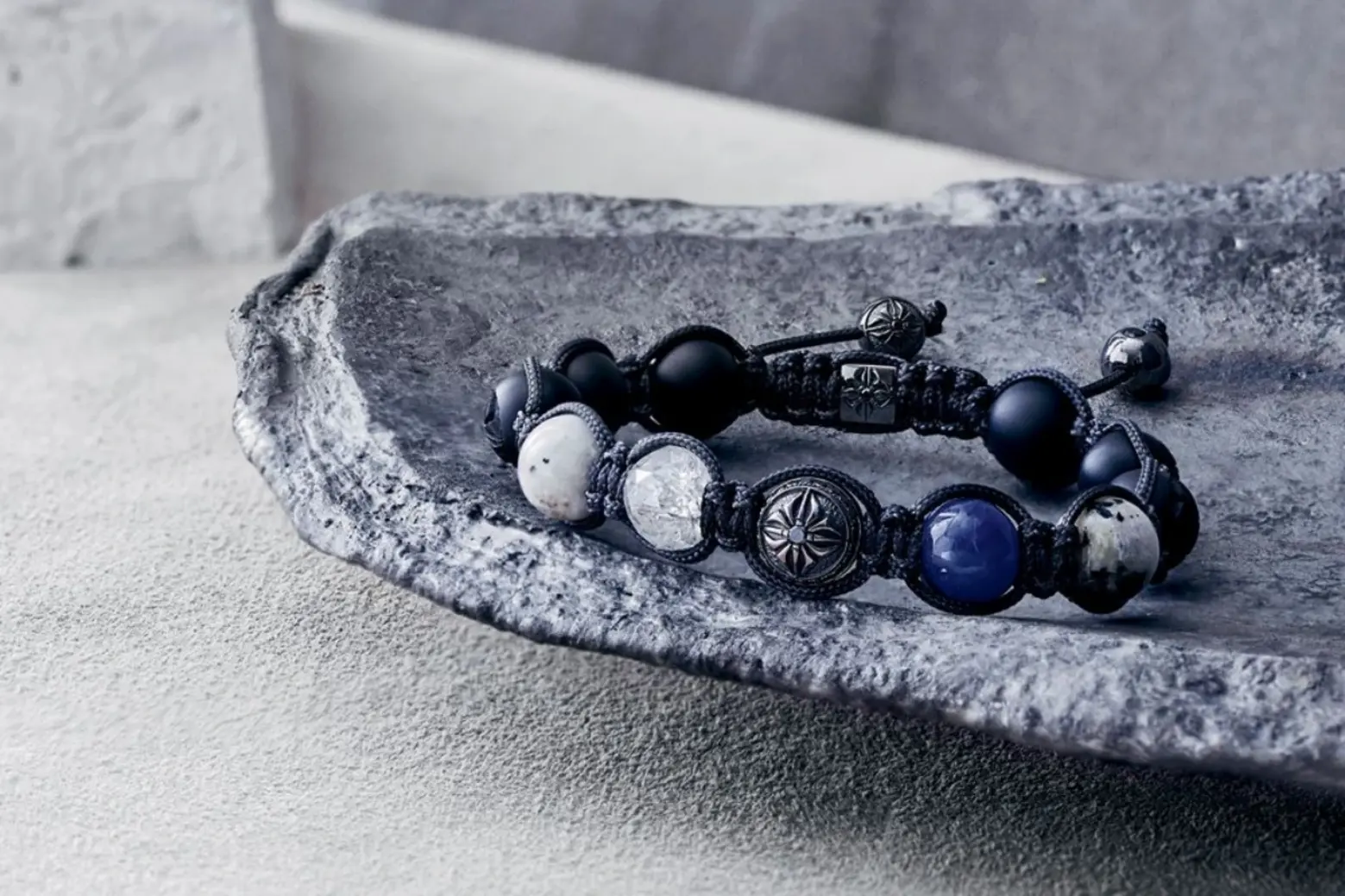
Shamballa makes the talisman conversation more contemporary. It is not a heritage maison in the style of Cartier, Dior or Van Cleef & Arpels, nor a diamond authority like De Beers. It is a form of spiritual luxury brand: a house that turns belief, personal customisation, gemstones and self-expression into its original DNA.
In Shamballa’s language, jewelry does not merely sit on the skin. It exists between body and belief. A bracelet made of gold, diamonds and macramé cord does not hide its hybridity. On the contrary, that hybridity is the source of its appeal: luxury does not always have to be rigid, cold or European in ceremony. It can also feel meditative, nomadic, personal and deeply private.
It is not only jewelry that has transformed protective symbols into luxury objects. The world of high watchmaking has also turned zodiac imagery into a stage for métiers d’art. Lunar zodiac watches reveal the same ancient human desire: to carry time, destiny and protective symbols on the body.
A beautiful example is Vacheron Constantin Métiers d’Art The Legend of the Chinese Zodiac – Year of the Horse, created for the Year of the Horse 2026. Vacheron Constantin describes the horse as an auspicious symbol in Chinese culture, full of vitality and freedom, rendered through hand engraving on a miniature enamel background. The platinum limited edition is powered by an automatic movement stamped with the Hallmark of Geneva.
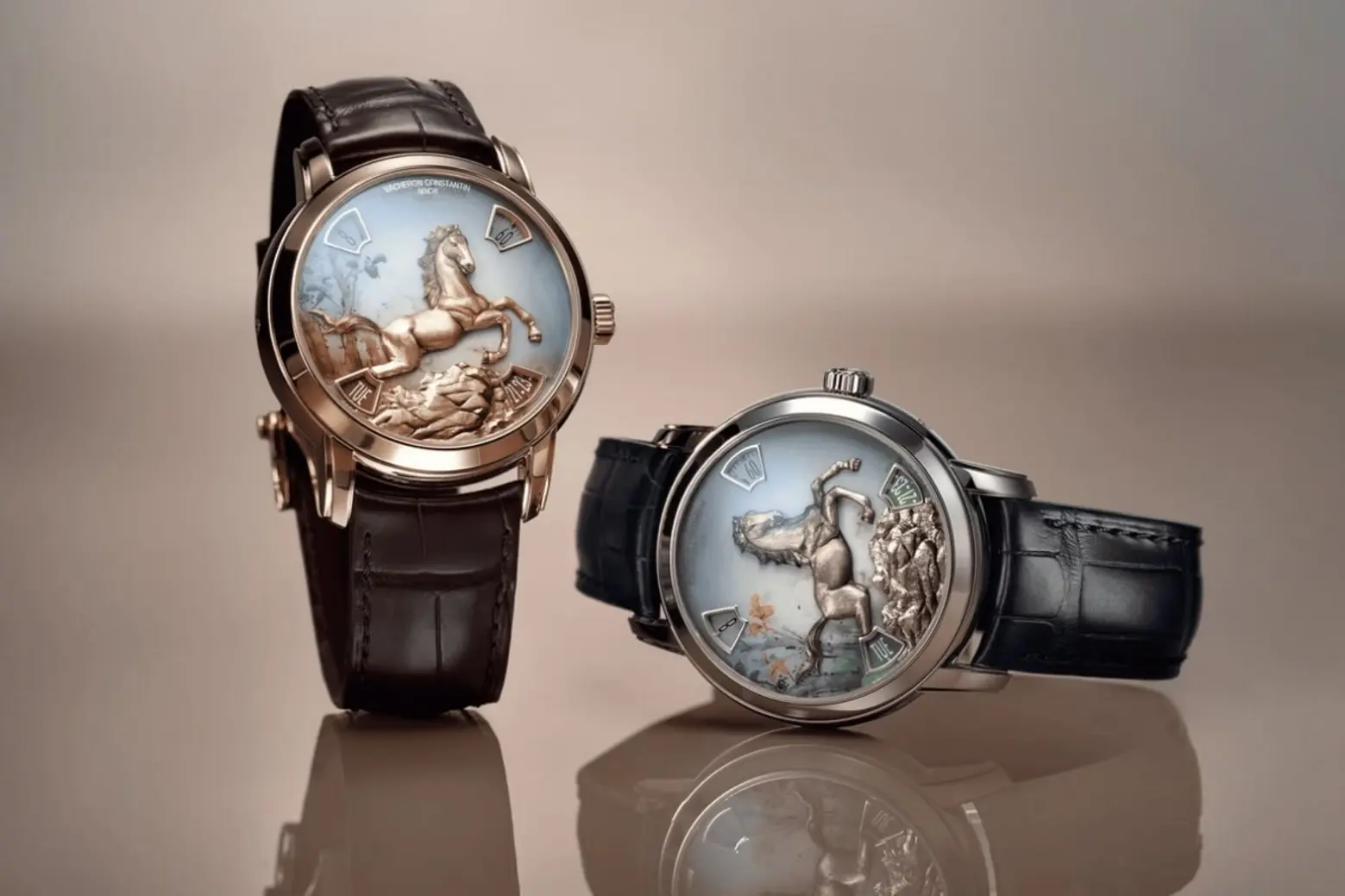
This expands the talisman beyond necklaces and bracelets. A zodiac watch is not only decoration, nor merely a machine for measuring time. It makes the amulet move according to the rhythm of time itself. Unlike a medallion resting quietly on the neck, a zodiac watch reminds the wearer that luck is always tied to cycles, seasons, years, movement and return. It protects not only through image, but by placing the wearer inside a symbolic circle of time.
This is why zodiac watches deserve to appear in the conversation, but only as a refined detour. They prove that the need for talismans is no longer limited to jewelry. It has entered watchmaking, where protective symbols are made through enamel, engraving, gold appliqué, calibre and time.
Bain & Company expects the luxury market to return to moderate growth in 2026, with low- to mid-single-digit growth compared with 2025 at constant exchange rates. But that recovery does not mean the road ahead is easy. Luxury is facing a more demanding consumer: less persuaded by logos, more sensitive to price, and increasingly insistent that products must have a reason to exist.
In that context, talisman jewelry returns because it solves one of luxury’s biggest problems: luxury needs meaning. A bag can be read as a logo. A shoe can be read as a trend. A talisman jewel can be read as something private. It allows the buyer to say they are not buying only because of the brand, but because of a symbol, a blessing, a memory or a belief.
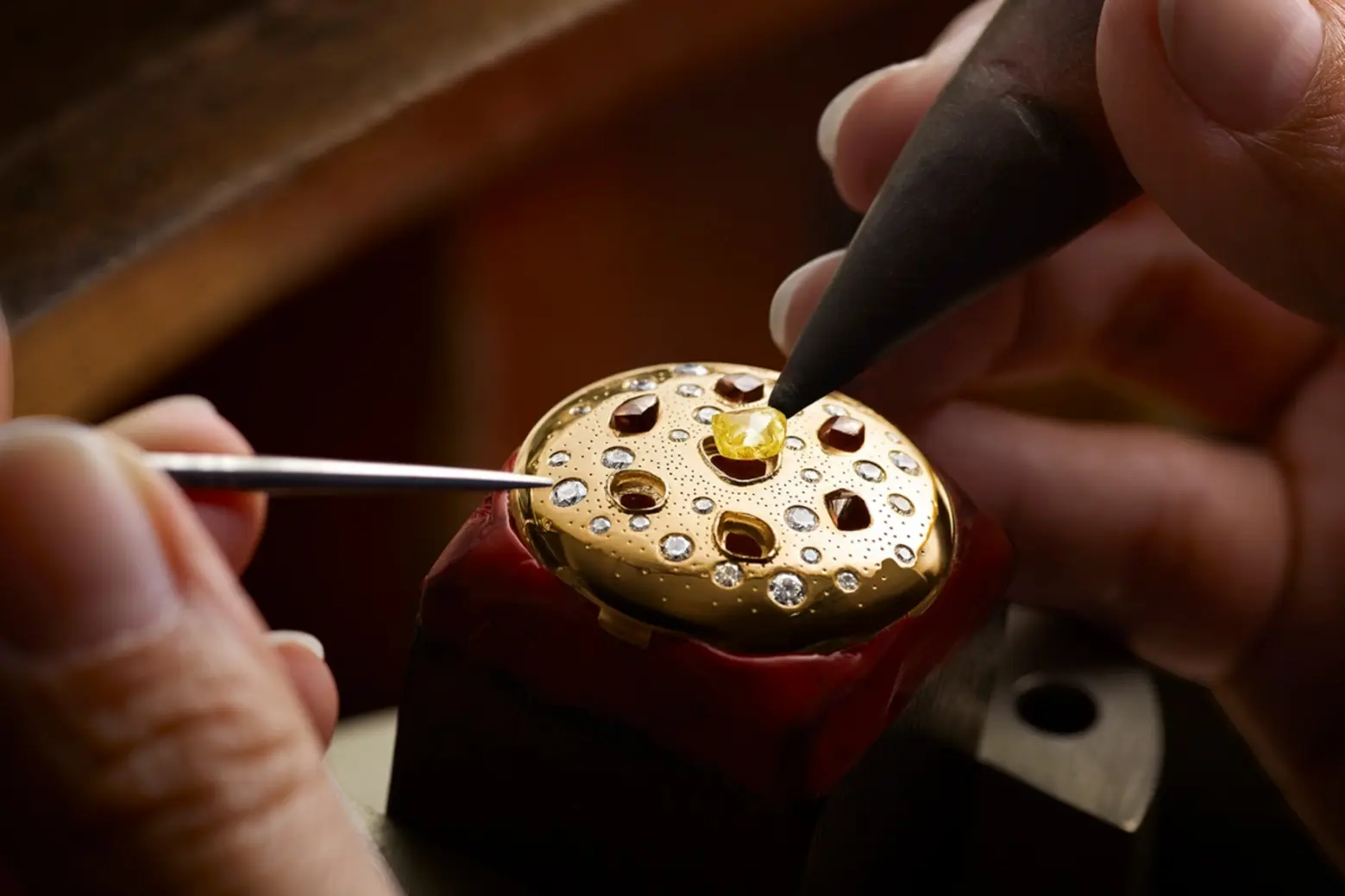
Of course, this should not be romanticised too much. A talisman from a major maison is still a luxury product, still part of a commercial strategy, still priced through gold, stones, diamonds, brand equity and margins. But it is precisely at the meeting point of money and belief that talisman jewelry becomes fascinating. It does not hide its expense. It simply gives that expense a soul.
A gemstone does not need to be declared supernatural to become meaningful. If it is chosen well, cut well, set well and placed inside a symbol old enough, beautiful enough and personal enough, it can become a small shelter for the wearer’s imagination.
Talisman jewelry is not a new trend. It is an old human instinct renewed by luxury through craftsmanship, materials and brand power. From De Beers to Chanel, Cartier, Dior, Van Cleef & Arpels, Chopard and Shamballa, maisons are not only selling diamonds, gold or gemstones. They are selling a refined way for people to believe they can carry luck, memory and personal power on the body.
What makes talisman jewelry expensive is not only the number of carats or the name of the maison. It lies in the fact that a small symbol can hold many layers of meaning: earth and light at De Beers, signature and destiny at Chanel, secrecy at Cartier, direction at Dior, social luck at Van Cleef & Arpels, kindness at Chopard, spirituality at Shamballa, and the cycle of time at Vacheron Constantin.
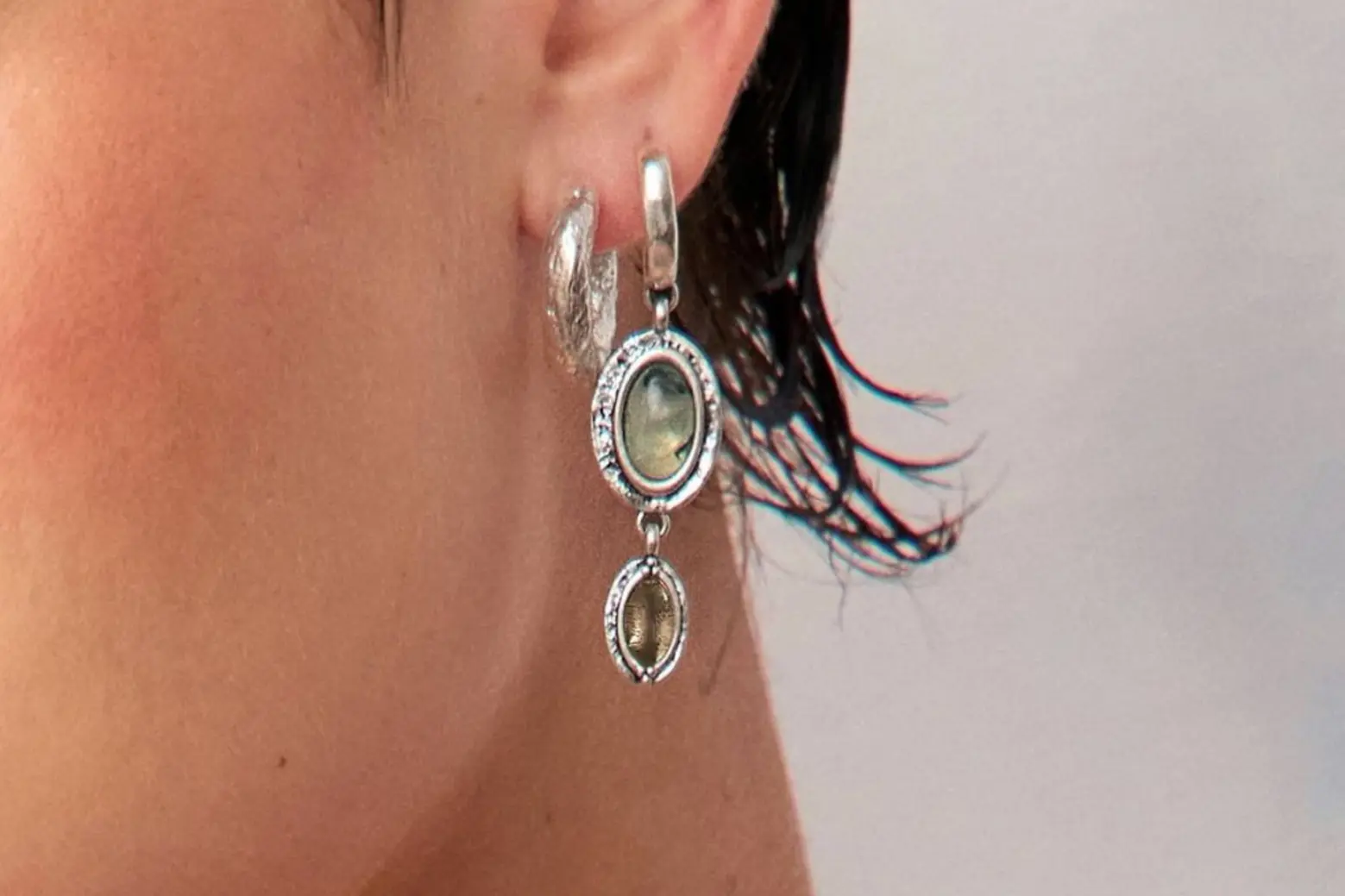
In a world where luxury is often pulled back toward price, logo and visibility, talisman jewelry reminds us of something older: the most precious object is not always the one that loudly announces its cost. It is the one the wearer believes is holding an invisible part of their life.
And perhaps that is the true power of talisman jewelry. It does not need to prove magic. It only needs to make the wearer feel that they are carrying a beautiful secret, crafted finely enough to outlast the very moment in which they needed protection.