MENU
Close





At the 79th Cannes Film Festival, the red carpet seemed to lose its appetite for shock and rediscover something more dangerous: the authority of a well-cut dress. The best Cannes 2026 strongest looks suggest a red carpet learning to trade spectacle for discipline, and red carpet fashion may be sharper for it.
At the 79th Cannes Film Festival, the red carpet seemed to lose its appetite for shock and rediscover something more dangerous: the authority of a well-cut dress. The best Cannes 2026 strongest looks suggest a red carpet learning to trade spectacle for discipline, and red carpet fashion may be sharper for it.
May 19, 2026
Advertisement
Advertisement
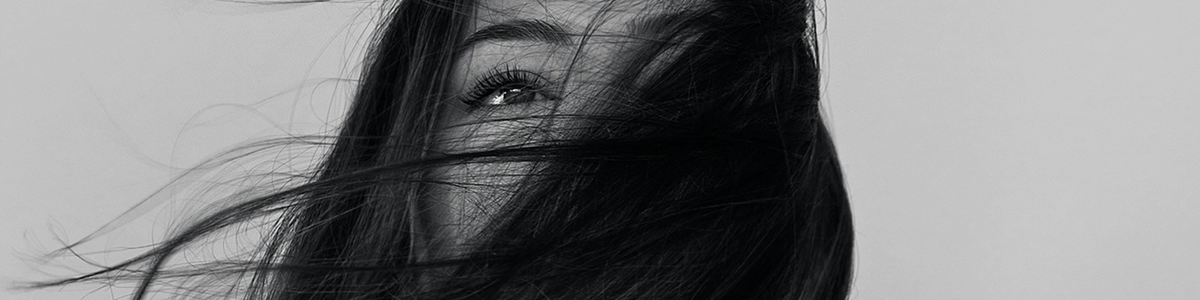


The Cannes red carpet has always loved spectacle, but 2026 feels more controlled. The festival’s updated dress guidelines, which restrict nudity and very large trains that block movement or seating, gave the clothes a sharper frame this season. Instead of asking who wore the least, the better question became who understood the dress best. The answer lies in clothes that treated the red carpet as a ritual of construction, where glamour sharpened itself through control, tension, and the dangerous calm of a perfectly held silhouette.
That shift gives Cannes 2026 red carpet looks a clearer story. The season is not only about glamour coming back, but rather how glamour is becoming more disciplined. Bodies were shaped by bodices, softened by draping, framed by jackets, and sharpened by black eveningwear. The strongest looks understood that a dress can speak before a pose does.
At Cannes 2026, the opening note belongs to Old Hollywood glamour, a colder and more discipline face. The fantasy rested on the patience of a gown that could hold the body, slow the camera, and turn a red carpet entrance into a scene. Maura Higgins in Andrew Kwon brought the first note through a strapless silhouette, a clean contrast at the neckline, and a train that gave the gown the rhythm of a studio-era ceremony. Diane Kruger in Givenchy sharpened the same mood with a more cinematic shape, where the body felt framed by the dress before the flash arrived. Jane Fonda in Gucci pushed the language into screen-legend territory, using black sequins, long sleeves, and a covered neckline to create glamour through polish and composure.
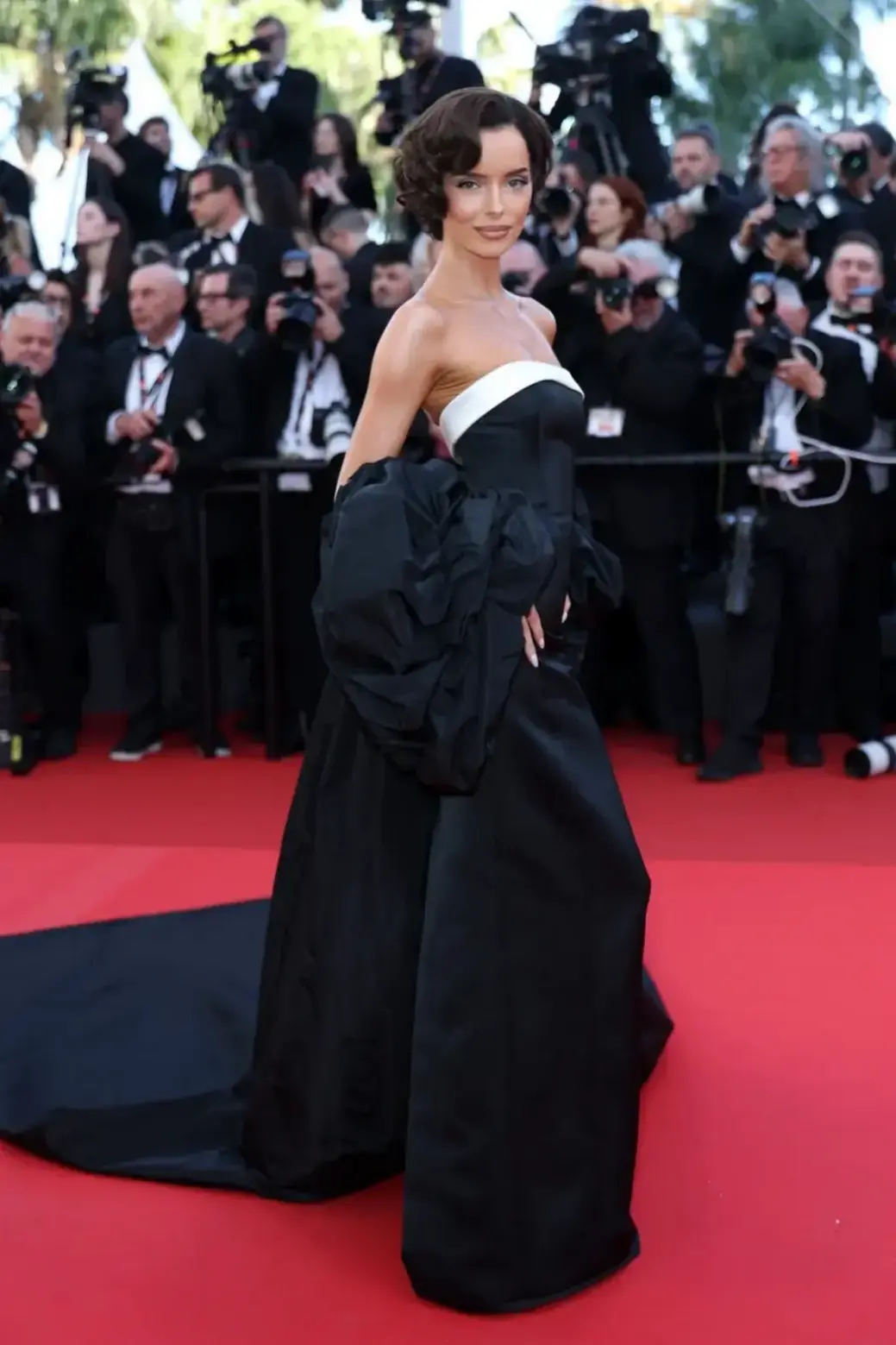
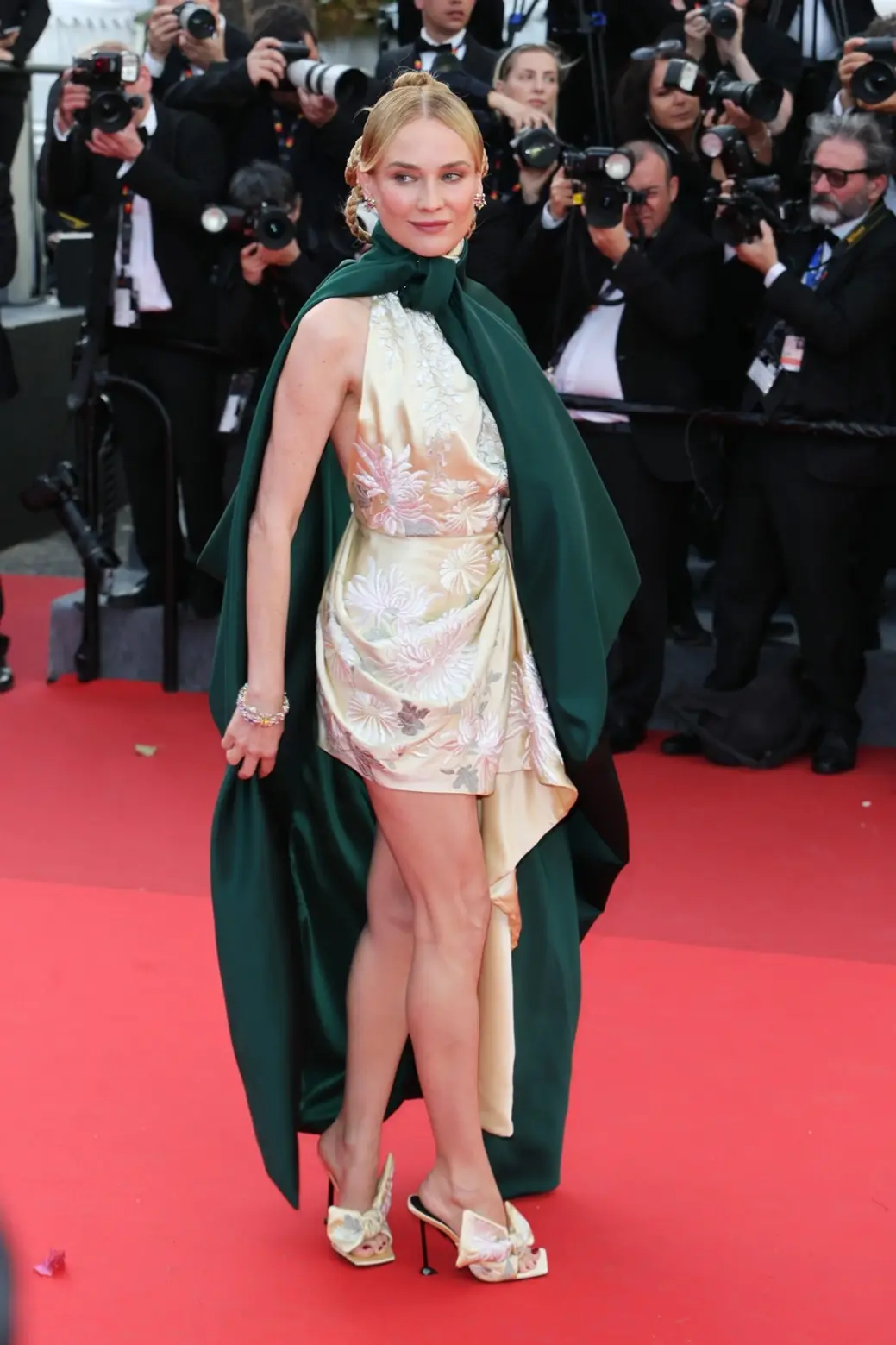
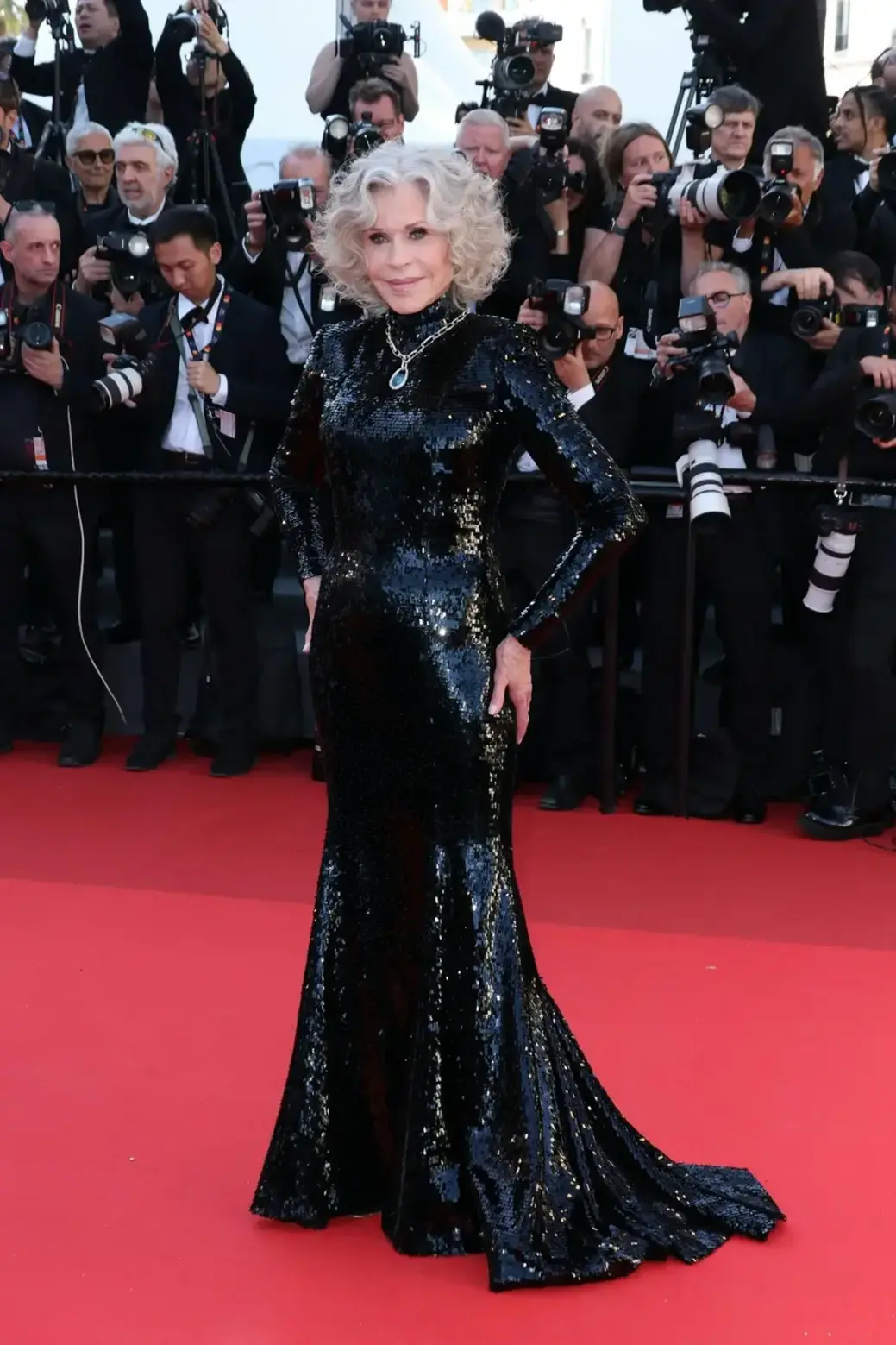
Together, these looks recall the mythology of Hollywood starlet style, where an entrance could begin with a neckline, a pause, and the controlled fall of fabric. Yet Cannes 2026 gave that fantasy to the body that underneath its drama, creating a red carpet language where the gown carried the scene before styling had to explain it.
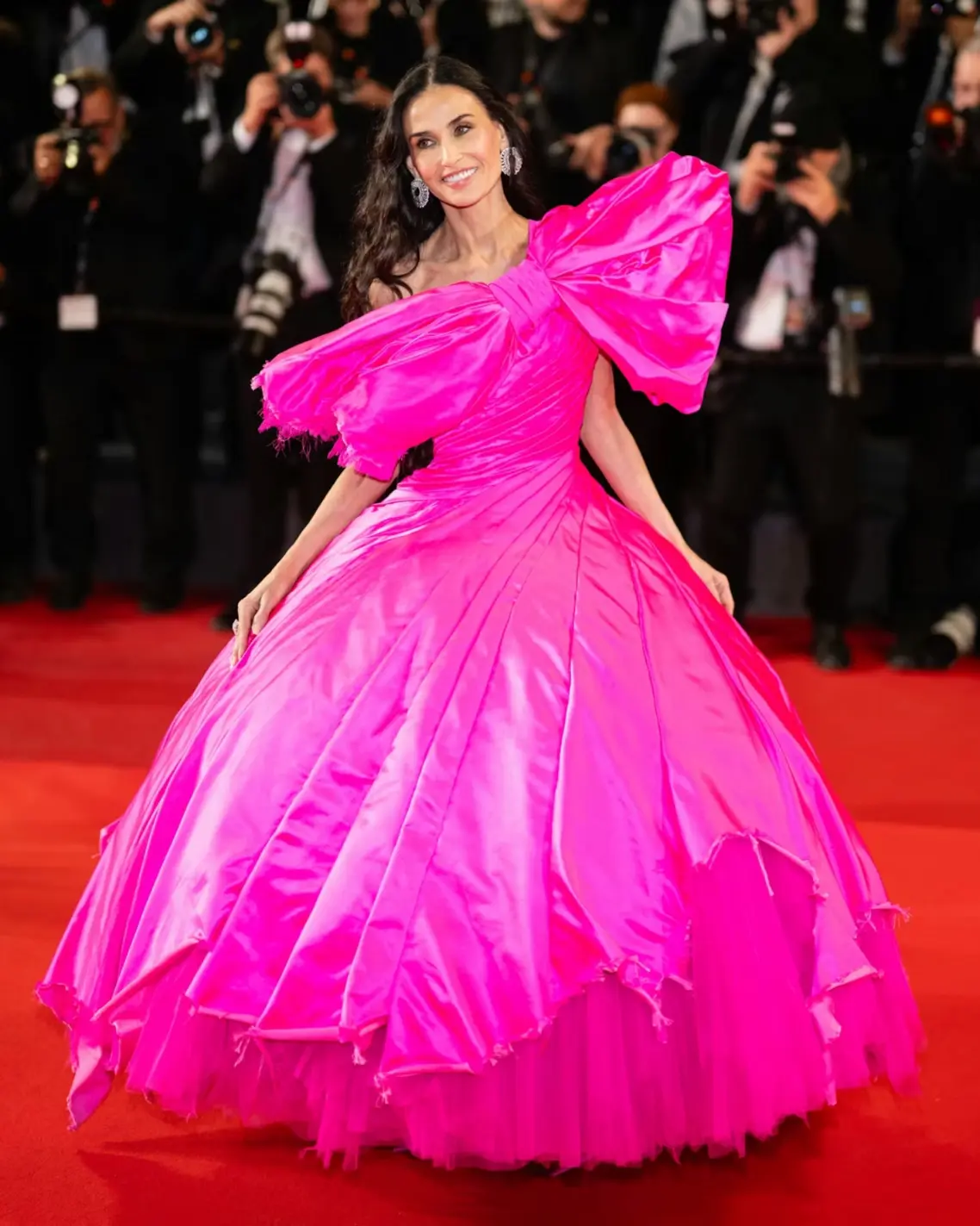
At Cannes 2026, sculptural couture made the body look less dressed than possessed by form. The red carpet suddenly felt full of strange gravity, as if fabric had learned how to pull the eye before the actor even turned. Demi Moore in Matières Fécales brought the most dramatic version of that language, with a wrapped waist, a giant bow across the chest, and a skirt shaped with almost theatrical force. Chloé Zhao in Schiaparelli Couture Spring 2026 moved through a more surreal register, where couture became a frame around the body and gave the silhouette a sense of strange poise. Isabelle Huppert in Balenciaga carried the idea into cooler territory, using shape, restraint, and a severe fashion attitude to make the body feel edited by the dress itself.
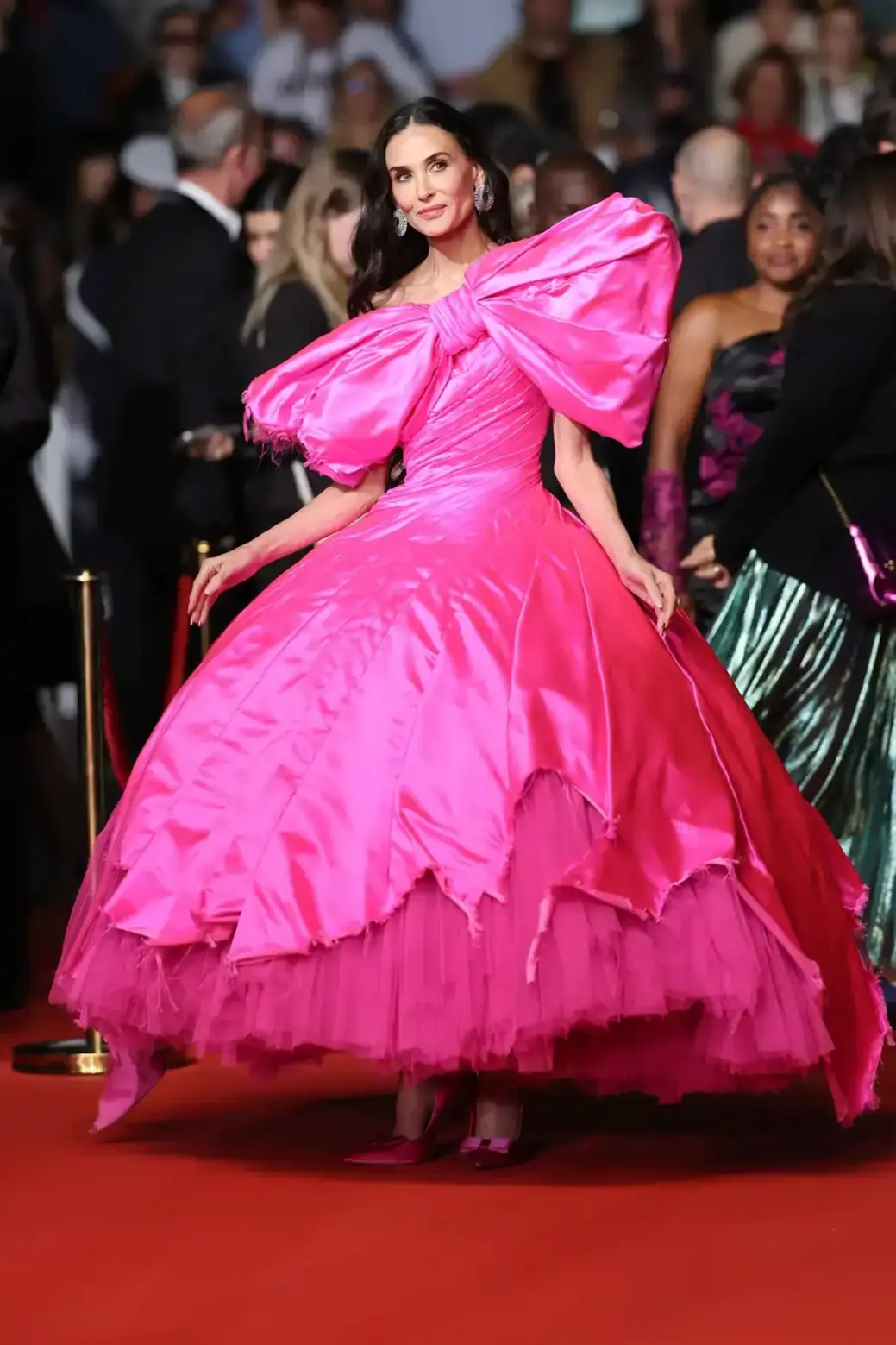
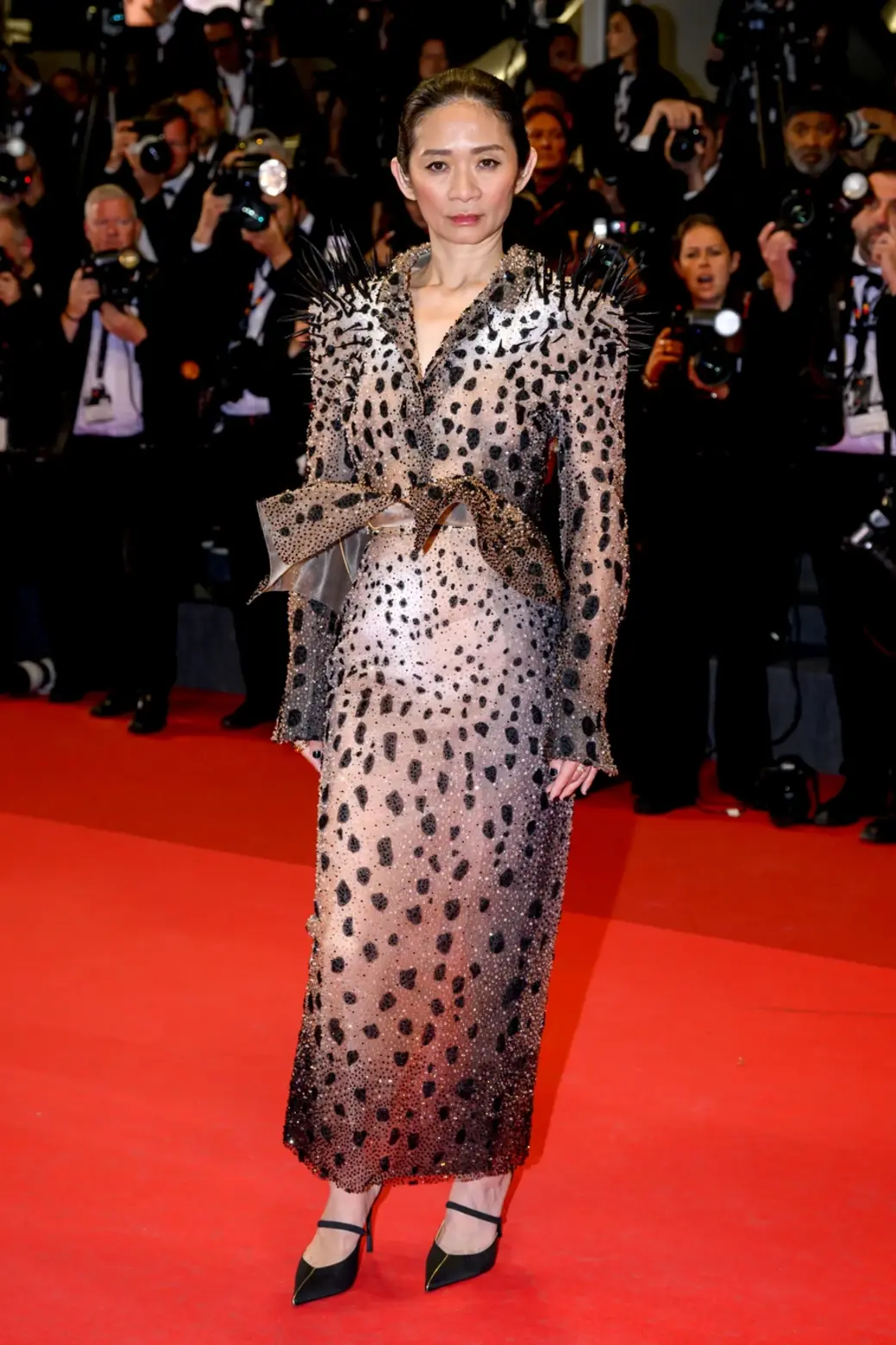
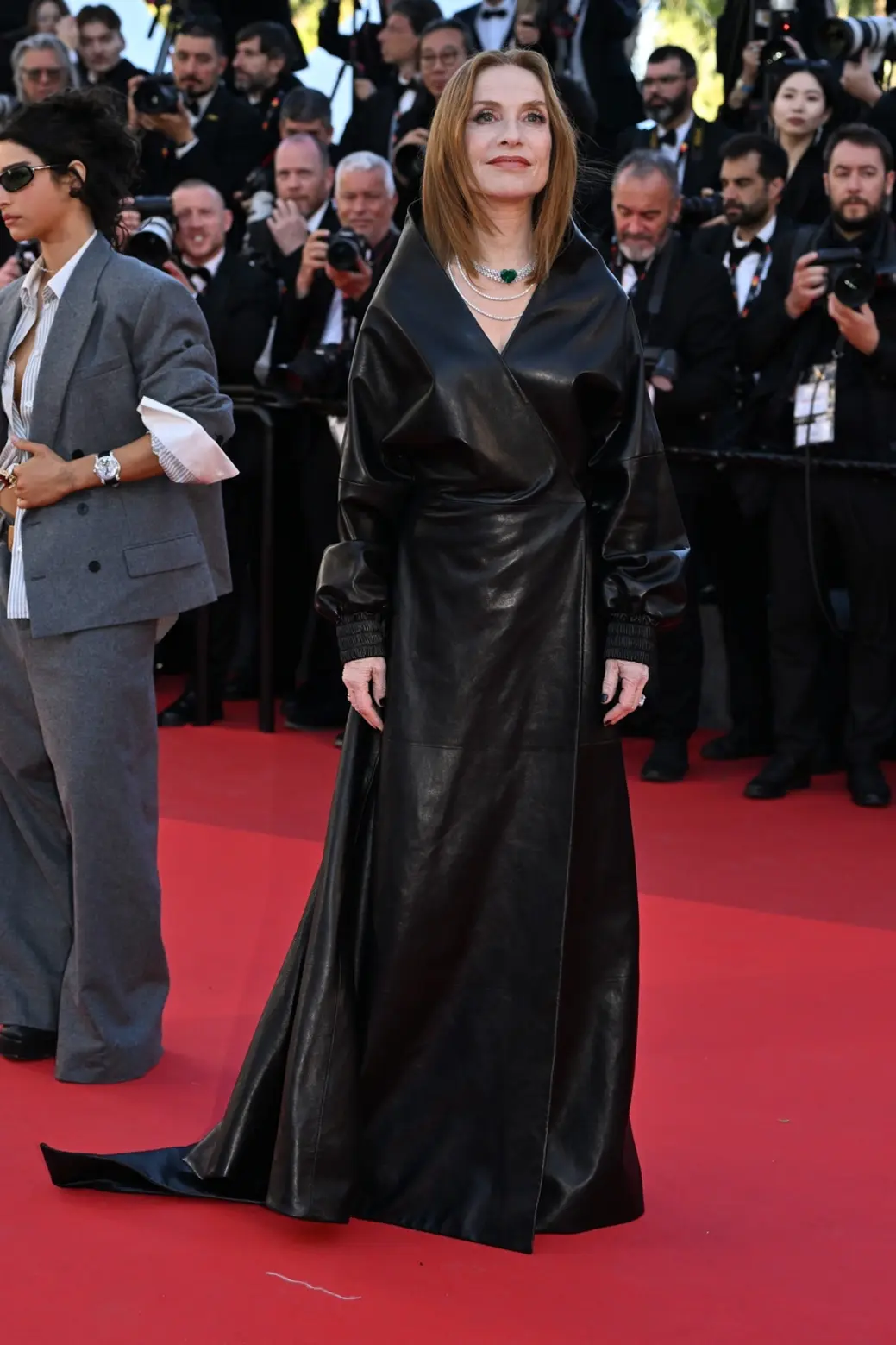
Here, the body became a site of construction. Fabric built a second silhouette around the person wearing it, creating a kind of fashion double that entered the room first. This cluster gave Cannes 2026 its hardest visual spell, where couture behaved like architecture and the dress became the event before the premiere began.
Dark romance entered Cannes like a beautiful bad omen. The mood carried the charge of a locked room, a half-lit corridor, a dress that seemed to remember danger before anyone else did. Simone Ashley in vintage Alexander McQueen gave the cluster its historical charge, bringing the house’s gothic severity into a Cannes frame. Halsey in Vivienne Westwood deepened the tension through curve, pressure, and theatrical darkness, while Cara Delevingne in Tom Ford turned noir into a cleaner wound, sleek, cut close, and charged with after-hours intent.
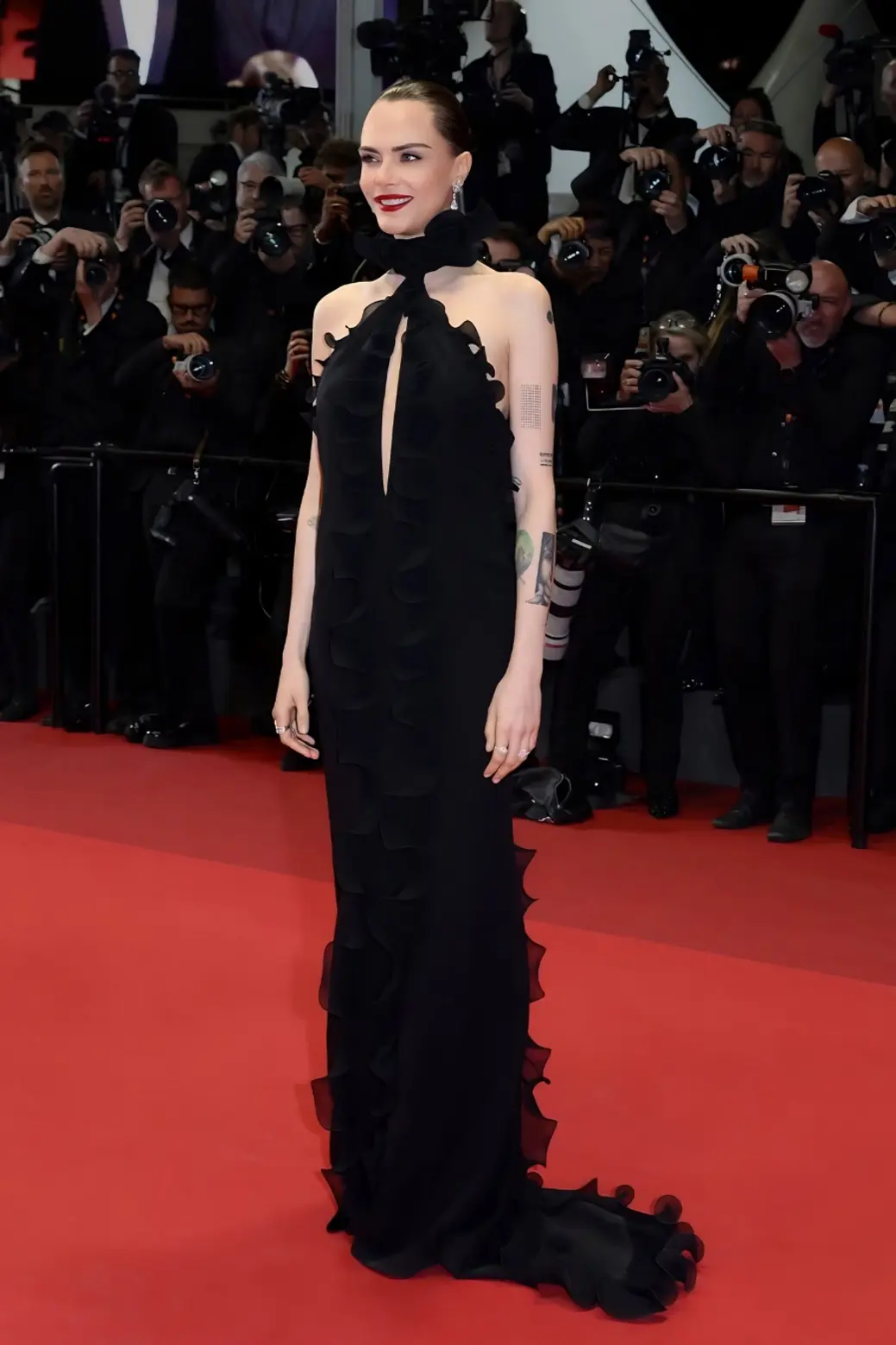
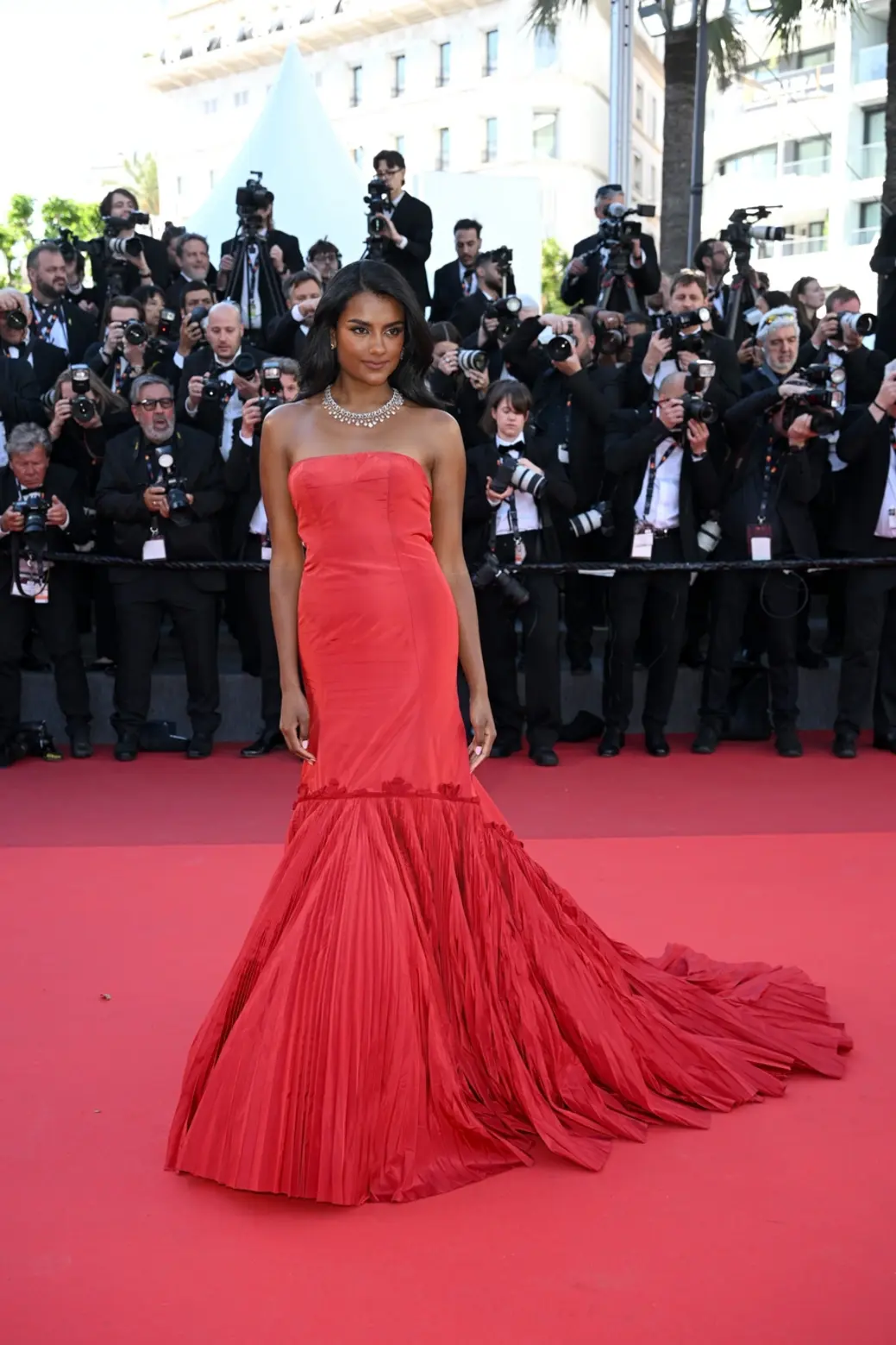
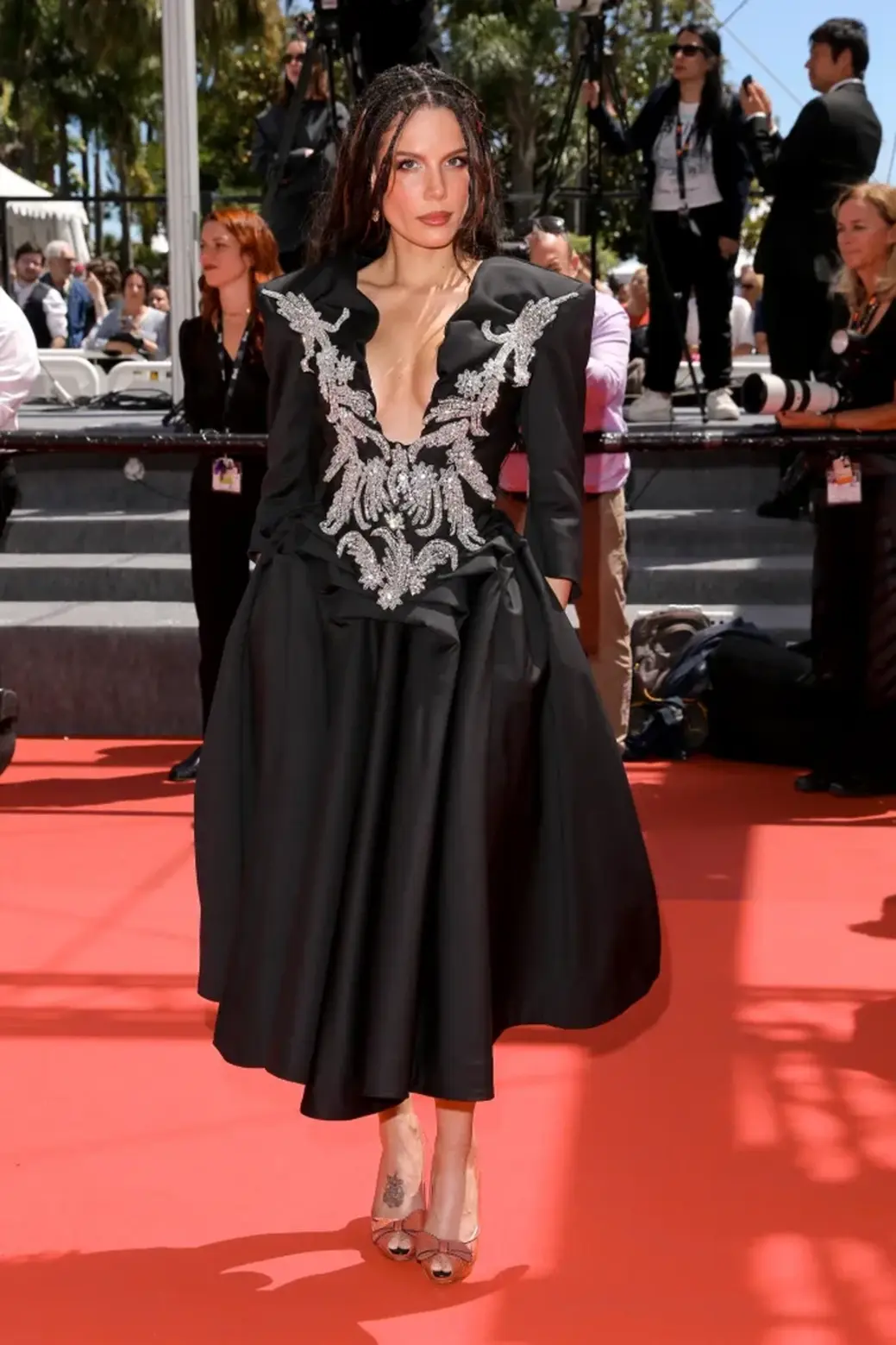
This was the red carpet after midnight, when romance gained sharper teeth. The mood came through corseted pressure, shadowed surfaces, severe lines, and fabrics that seemed to carry a little danger inside them. In a festival often polished to perfection, dark romance gave red carpet fashion a pulse that felt cinematic, haunted, and slightly unsafe.
Riviera minimalism worked like a quiet interruption inside the parade of drama. Philippine Leroy-Beaulieu in Saint Laurent brought a cool, fluid ease to the carpet, using a clean silhouette and soft color to make restraint feel magnetic. Gillian Anderson in Miu Miu carried the same calm through a more exact kind of polish, where the look relied on proportion and surface instead of excess. Emma Mackey in Louis Vuitton gave the cluster a younger precision, with dress language that kept the eye on line, posture, and the clean fall of fabric.
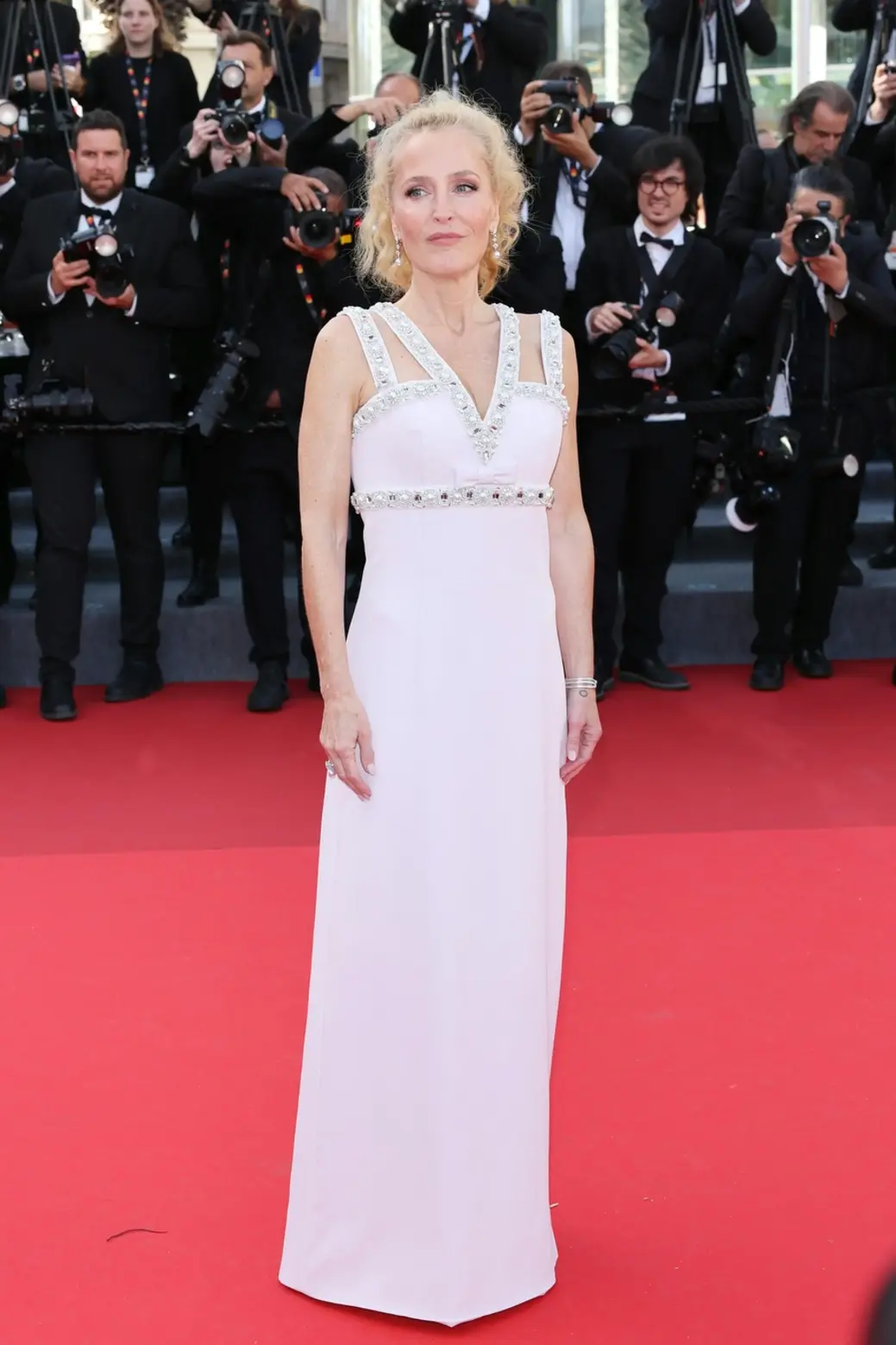
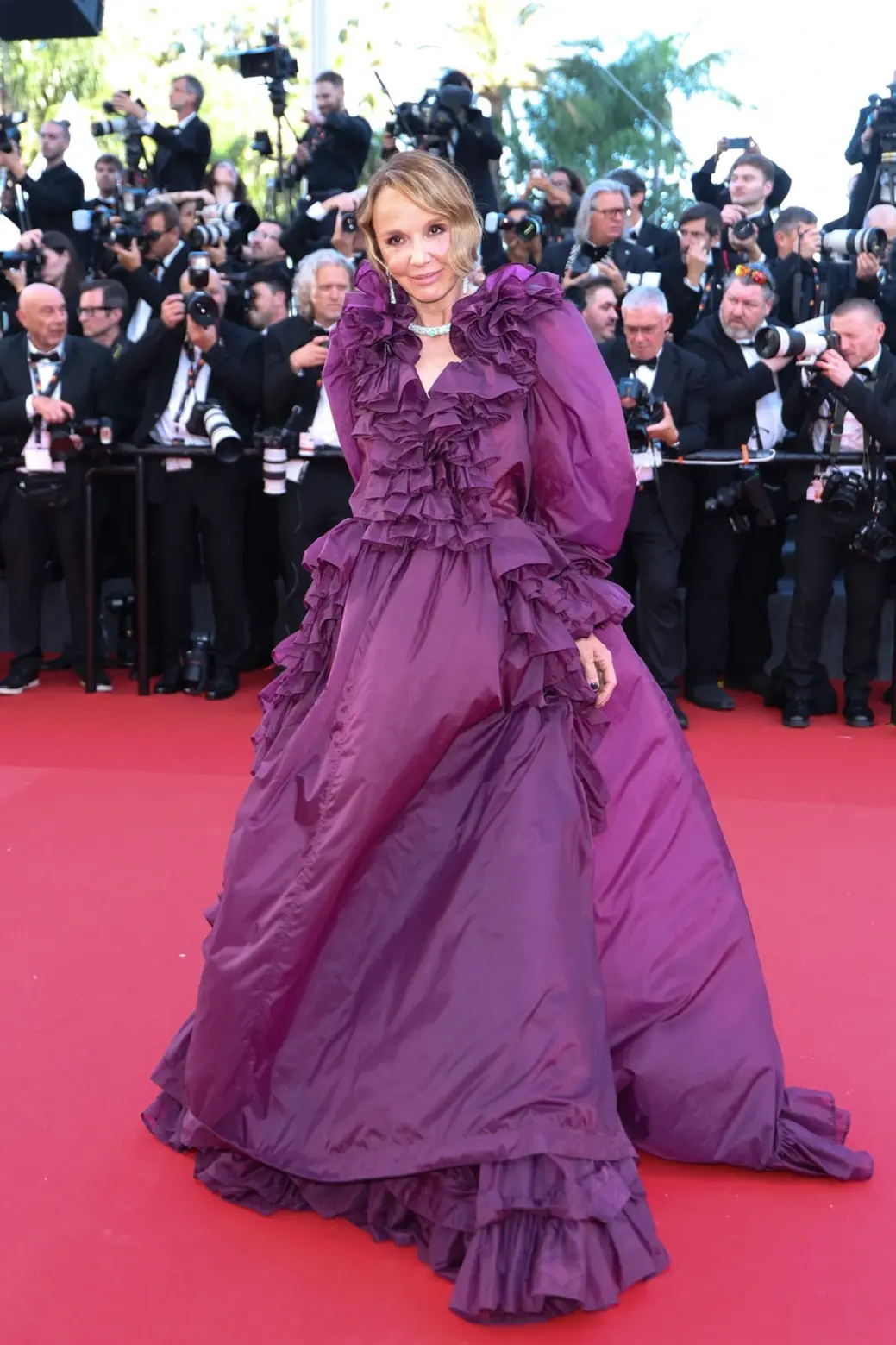
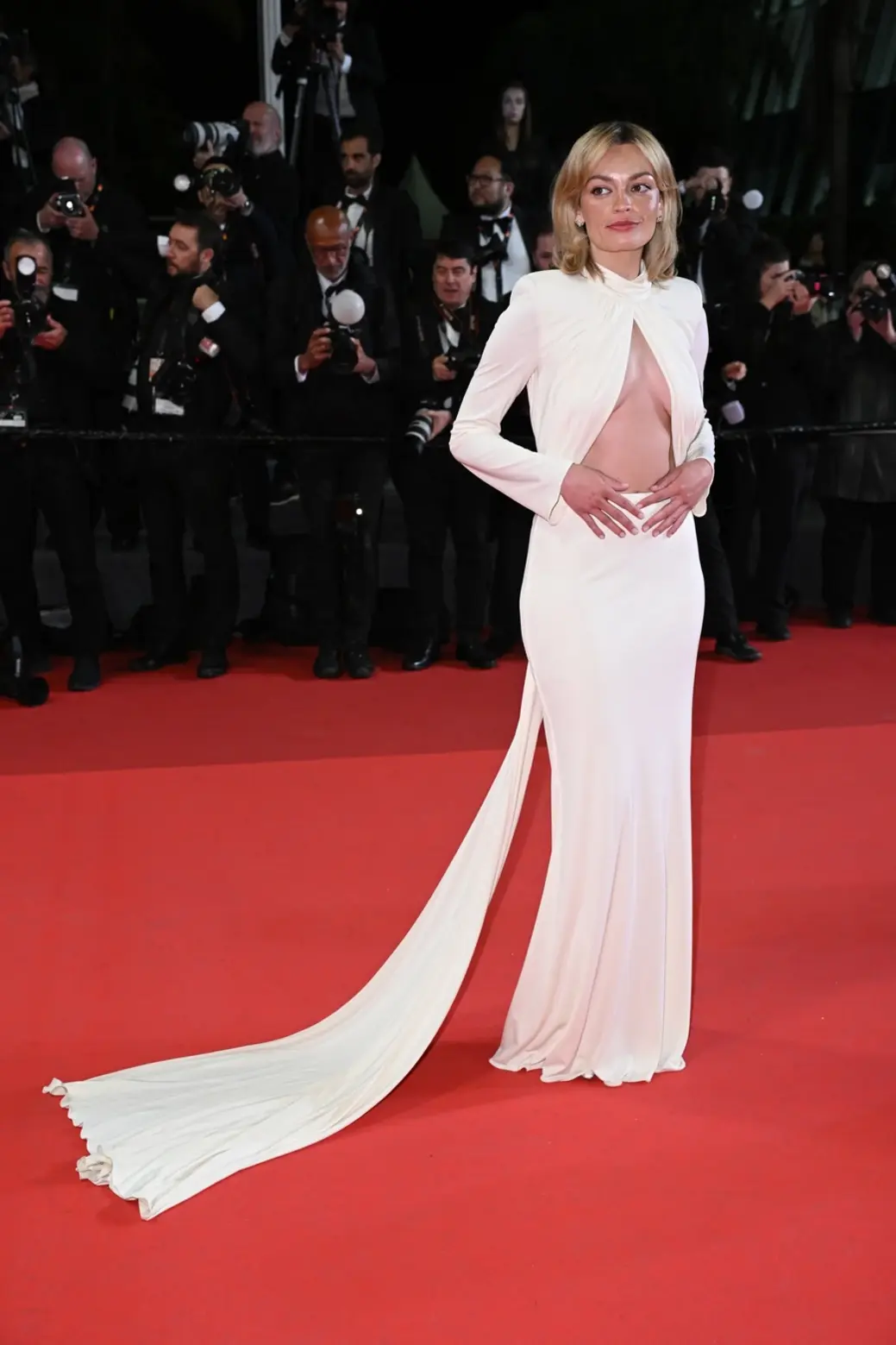
Minimalism on the Croisette works when the cut has nerves. In this group, restraint became magnetic because the clothes seemed to hide their danger in perfect calm. The closer the camera came, the sharper the silence around each cut became.
Lace and draping brought softness back without making it innocent. This was romance with a pulse under the skin, pale at first glance, then stranger the longer one looked. Barbara Palvin in Ella Mae gave the section a romantic surface, using delicacy to create presence through texture and movement. Anaïs Demoustier in Prada carried a softer, more intellectual version of the same idea, where fabric seemed to skim the body with quiet intention. Camille Cottin in Dior by Jonathan Anderson completed the group with a French ease that made softness feel composed, lived-in, and gently cinematic.
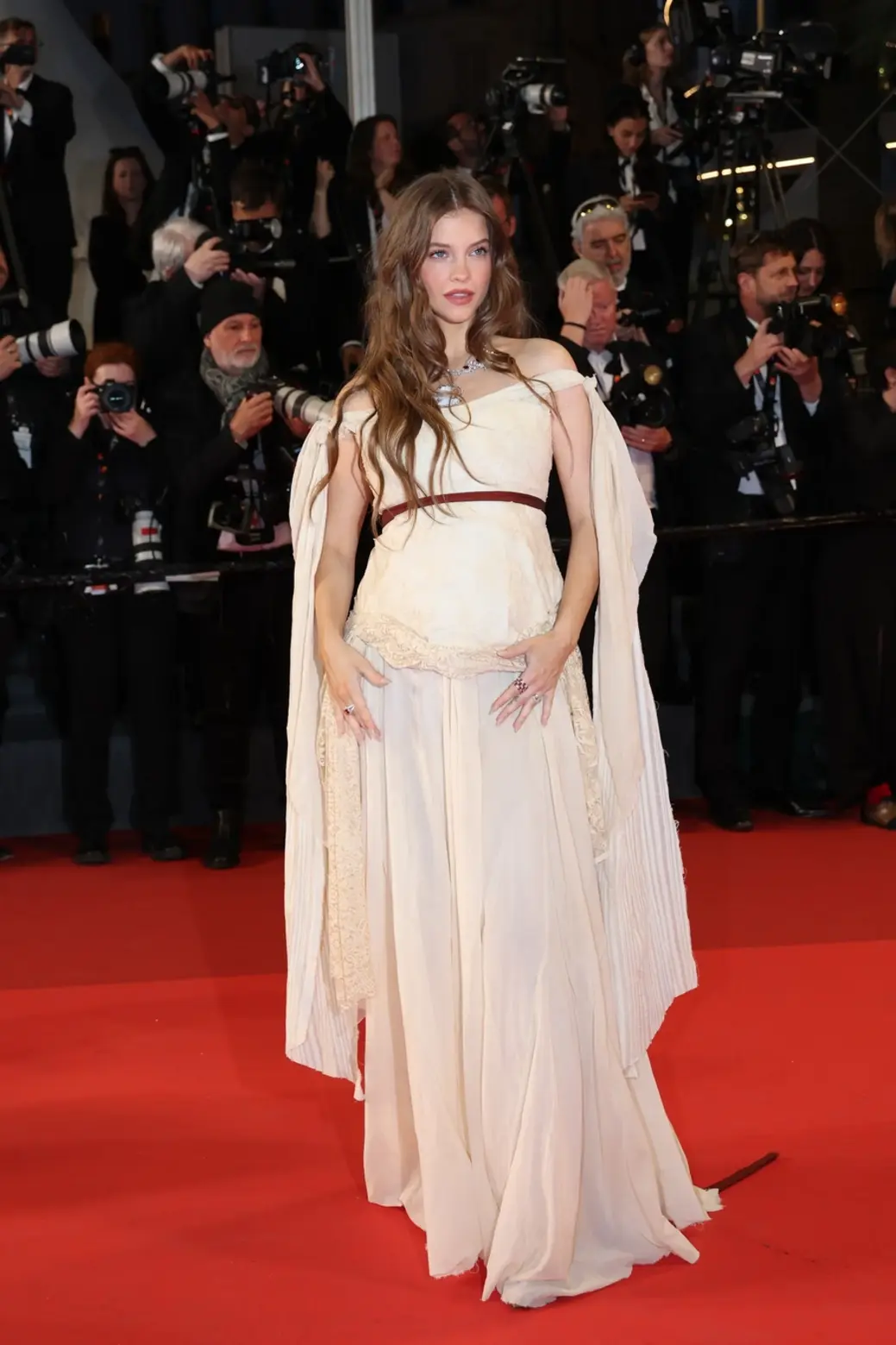
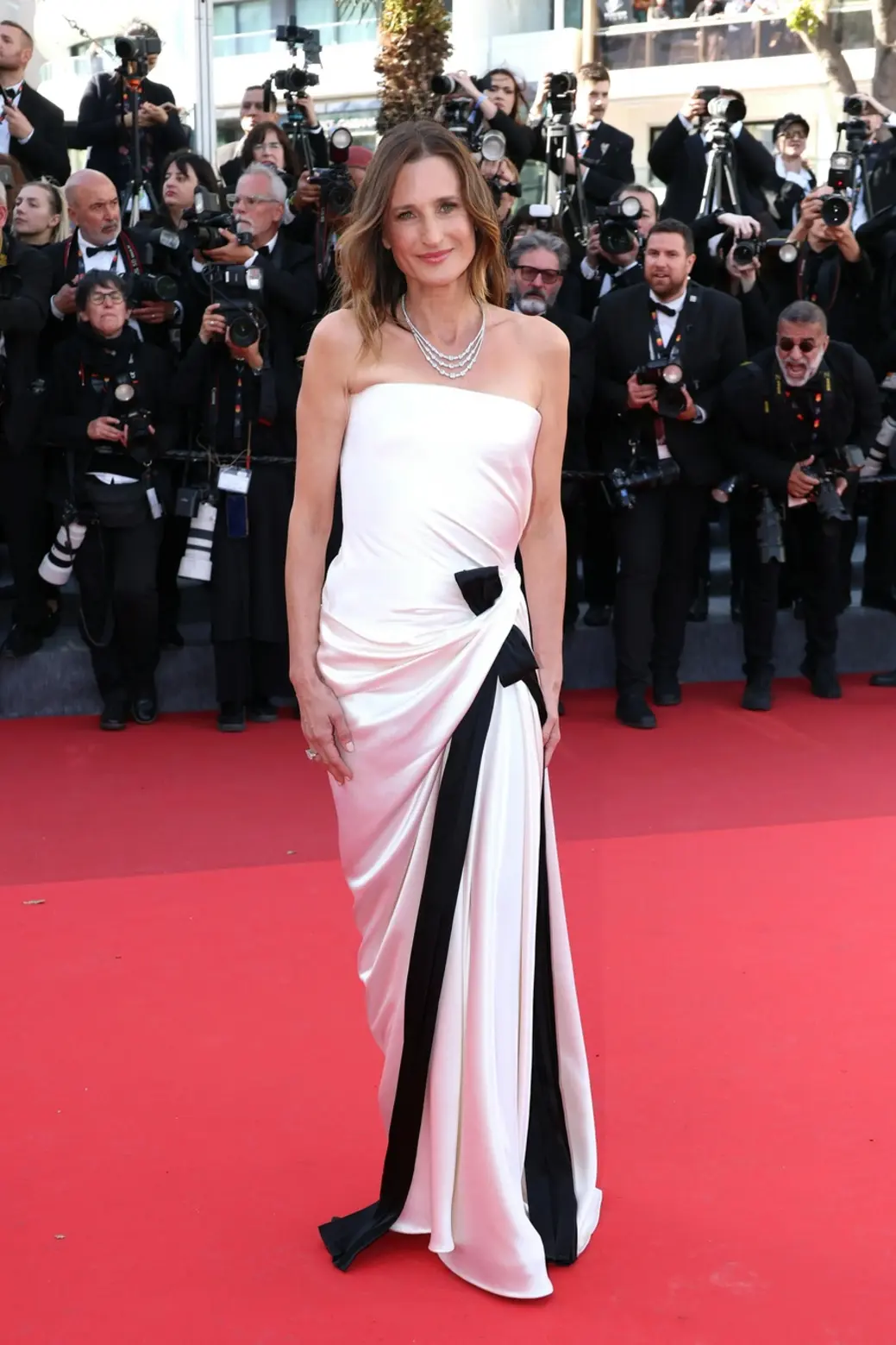
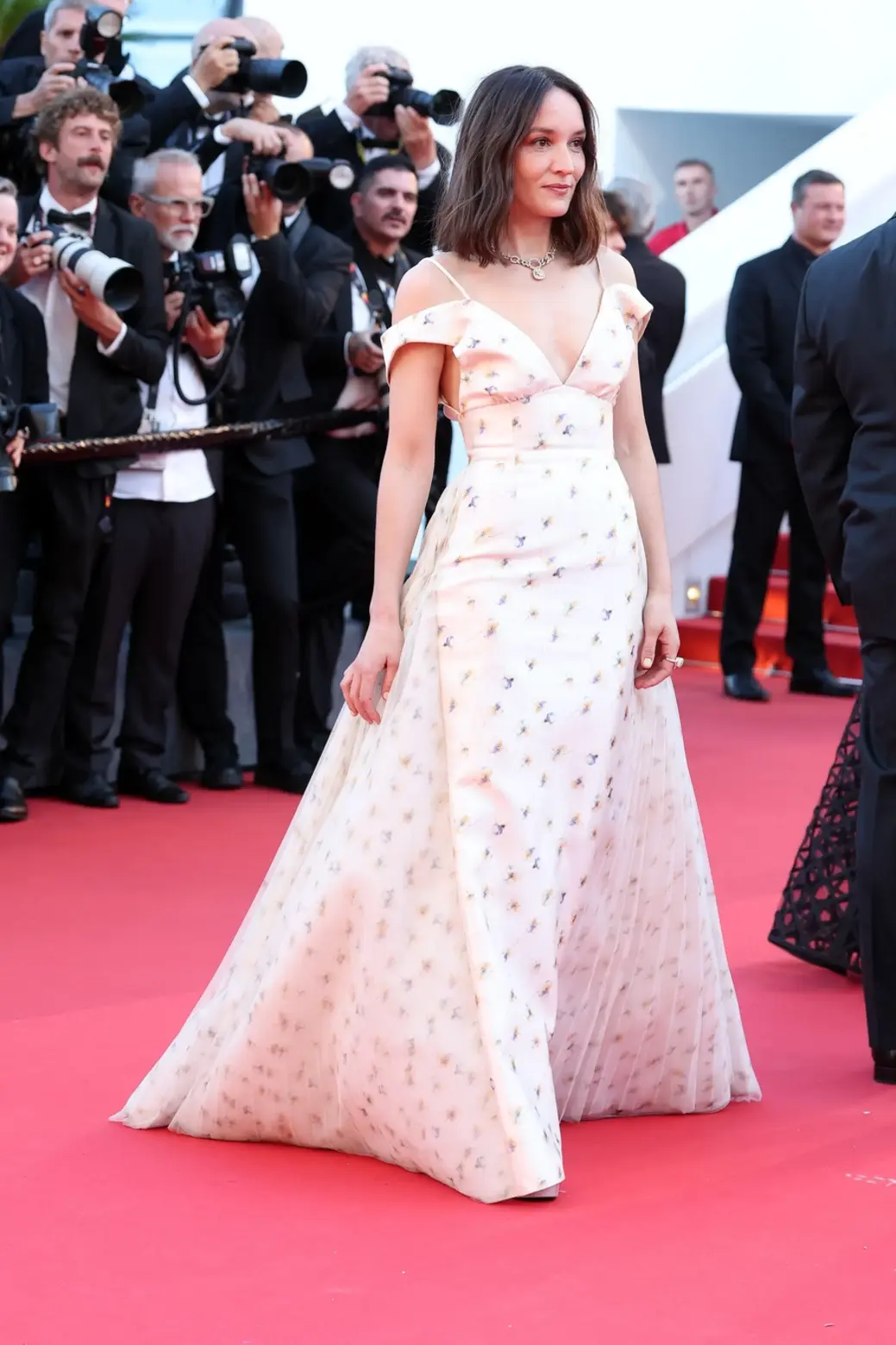
Softness had its own discipline here. Lace blurred the outline without weakening the silhouette, while draping gave fabric a sense of movement around the body. This was the lighter side of Cannes 2026, where glamour behaved like something half remembered. Allowing the dresses breathe around the body, turning romance into a movement the eye could almost feel.
Women in suits gave the Cannes carpet one of its cleanest statements of authority. A suit on the Cannes carpet carries a different kind of threat, one built from shoulder, stance, and the calm refusal to melt into romance. Odessa A’zion in Dior brought the relaxed confidence of oversized tailoring, where the jacket and trouser created a slouched but deliberate silhouette. Malgosia Bela in Tom Ford sharpened the mood with a cooler line, turning the suit into something sleek, severe, and almost nocturnal. Ruth Negga in Ami Paris gave the cluster its most refined register, using tailoring to create an image of control that felt elegant without losing force.
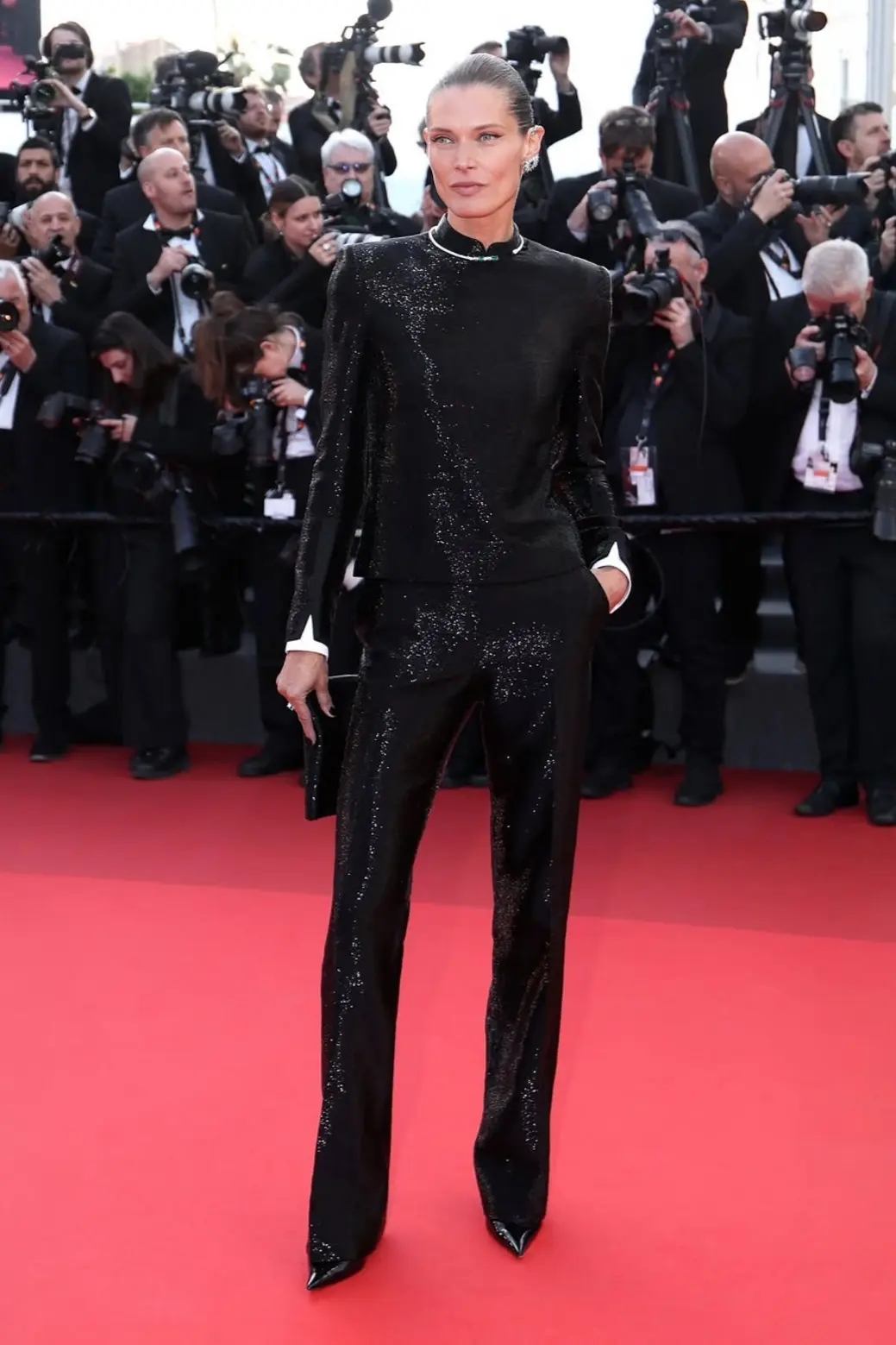
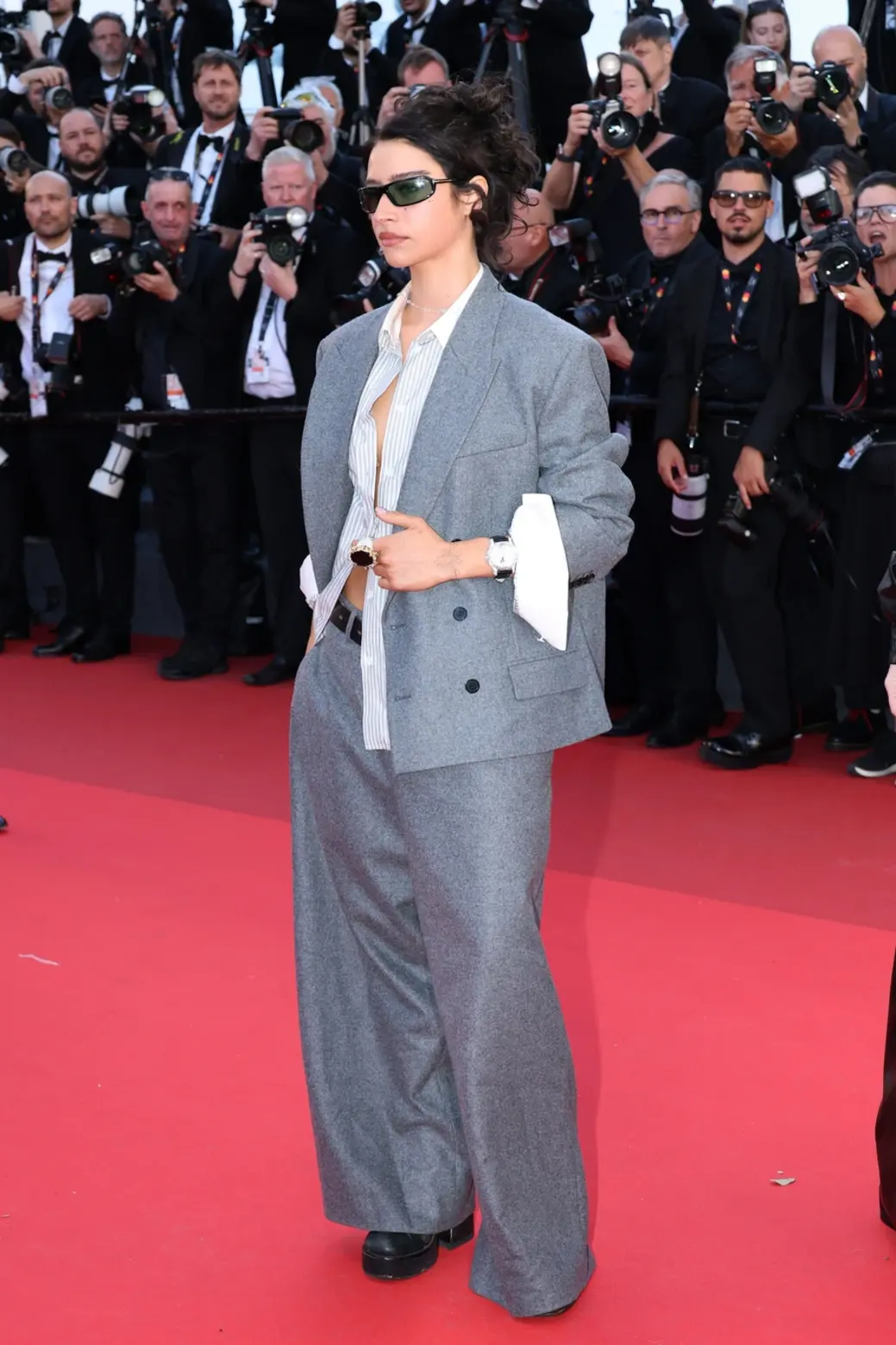
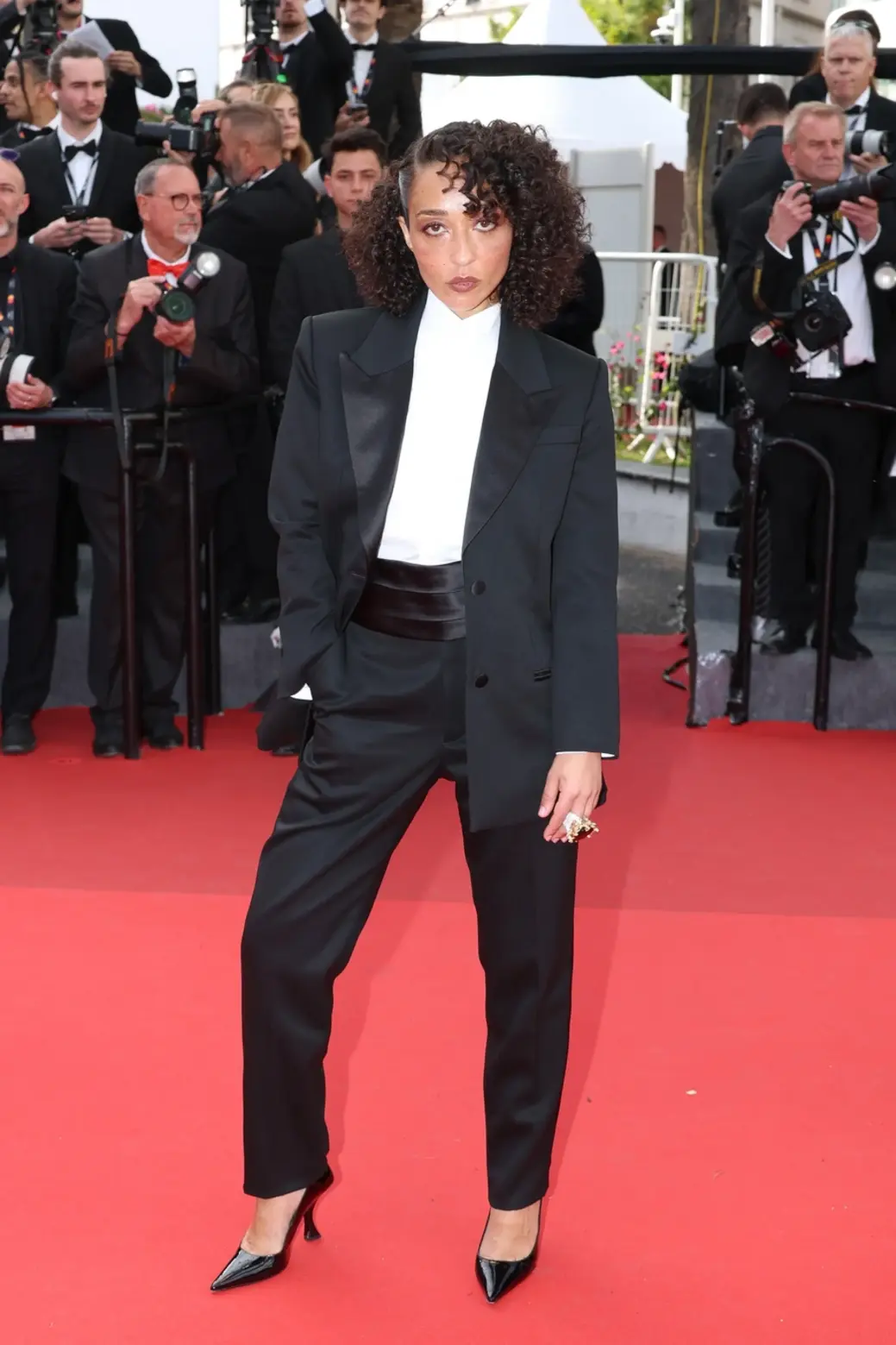
The suit is cut through the gown parade with a different kind of authority. Hence, power dressing entered Cannes like a controlled refusal. The suit gave the body a colder kind of glamour, one built from composure, distance, and the thrill of taking up space without asking for permission.
Sensuality at Cannes 2026 moved like a beautiful sin learning how to dress itself. The clothes carried appetite like a secret vice, pulling the body into a private spell where every line seemed enslaved to sensation. Bella Hadid in Prada used a strapless white gown to turn exposure into posture, with a neckline and body line that kept the effect clean and controlled. Kristen Stewart in Chanel by Matthieu Blazy brought more disruptive energy through transparency, layering, and fabric tension, making the look feel like a study in coverage and reveal. Ruth Negga in Dior gave the idea a softer finish, where sensuality moved through fabric placement, surface contrast, and the way the dress sat close to the body.
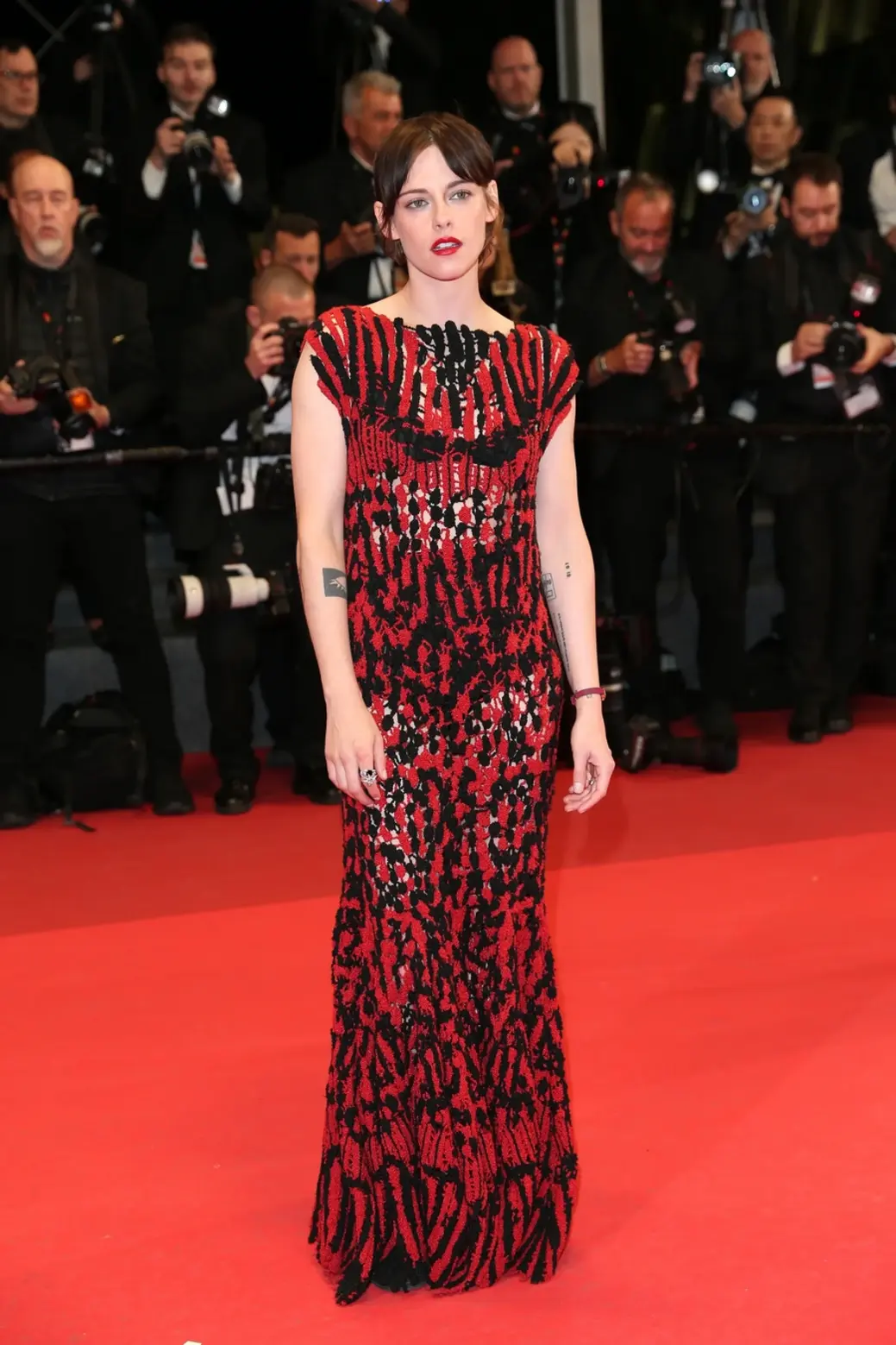
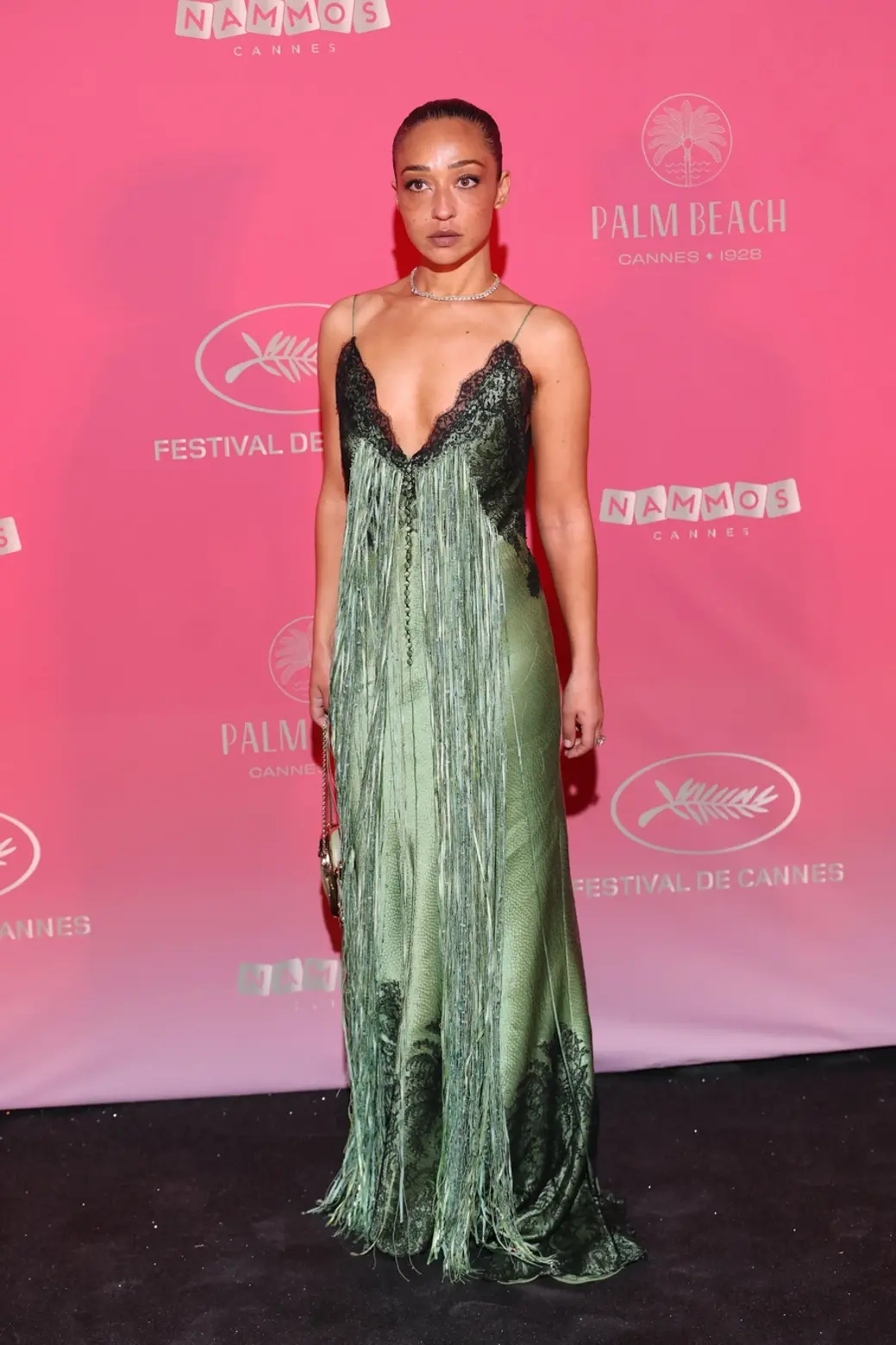
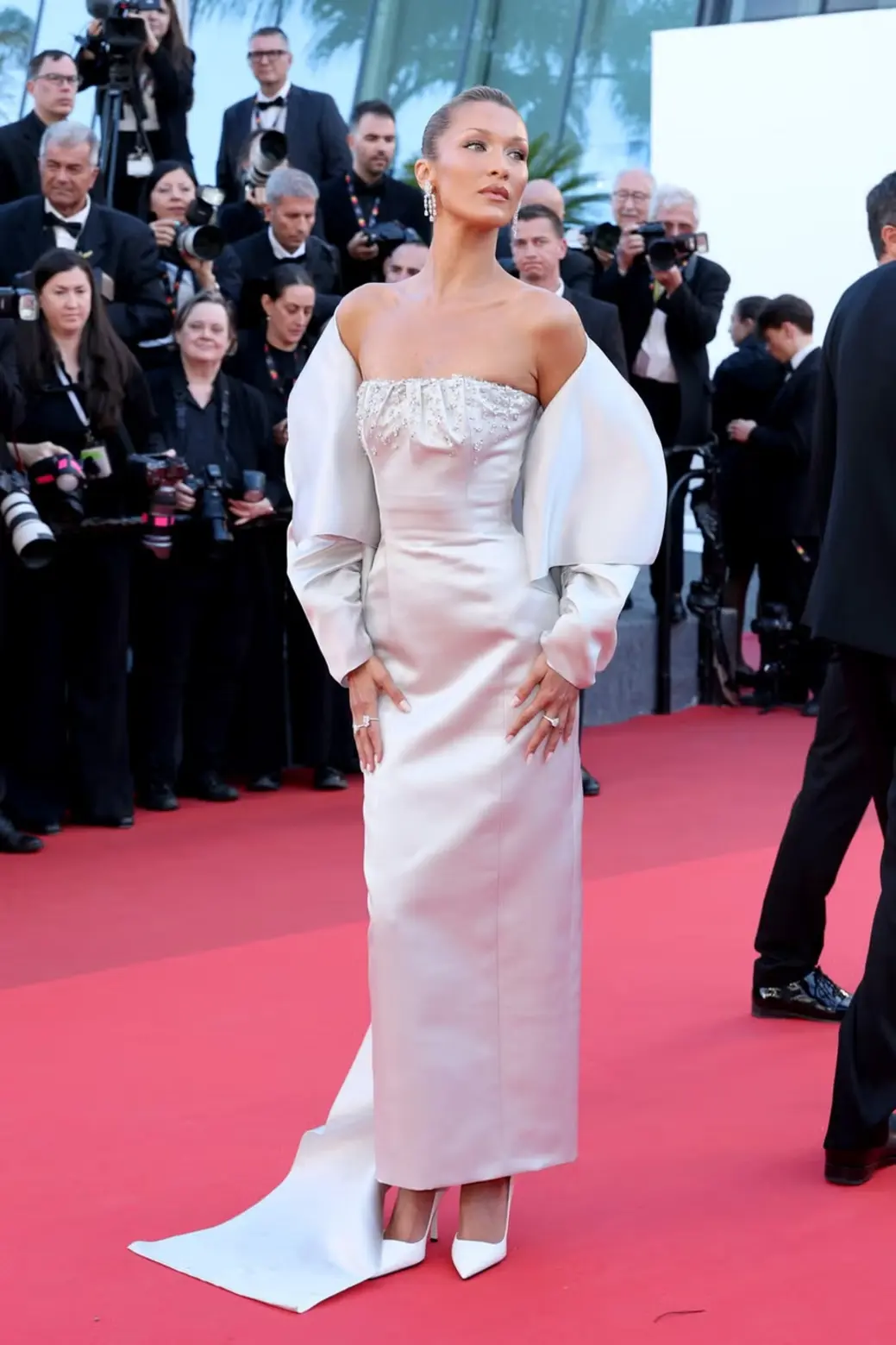
Desire became a matter of technique. The dress became a private voice. Its power came from restraint that still felt hungry, from fabric held so close to the body that glamour began to look like temptation under control. This was red carpet fashion at its most addictive, where sensuality arrived as discipline and surrender held just out of reach.
Every gown, suit, seam, and shadow seemed to understand the old hunger of the camera, then answered it with a colder kind of seduction. At Cannes 2026, red carpet fashion found its final seduction in clothes that turned restraint into a beautiful form of possession.
Advertisement