MENU
Close





When Big Tech can afford every luxury house on earth, why did tech executives wearing independent designers become the Met Gala’s most suspiciously tasteful power move?

When Big Tech can afford every luxury house on earth, why did tech executives wearing independent designers become the Met Gala’s most suspiciously tasteful power move?
May 15, 2026
Advertisement

Advertisement



At the 2026 Met Gala, tech executives wearing independent designers became one of the night’s most quietly loaded fashion signals. While several major tech figures skipped the red carpet walk, the ones who did appear on the steps chose smaller labels over the expected luxury giants, turning fashion’s biggest night into a sharp study of taste, access, patronage, and power.
At the 2026 Met Gala, several major figures from the technology world, including honorary co-chair and lead sponsor Jeff Bezos as well as Mark Zuckerberg, chose to avoid the red carpet walk. Yet the tech names who did appear on the steps made a noticeably specific fashion choice. Instead of relying on the major luxury houses usually expected at an event of this scale, many wore looks by independent or emerging designers, turning the night into a quiet but revealing shift in how tech power wants to present itself inside fashion culture. Instagram CEO Adam Mosseri wore Kartik Research, while Eva Chen, VP of fashion, appeared in Rachel Scott’s Proenza Schouler. Stewart Butterfield, the Slack CEO, and Selby Drummond, formerly of Snap and Bumble and now the founder of tech venture firm Plum Alley, both wore Conner Ives. Charles Porch, who recently joined OpenAI as VP of global creative partnerships after a long run at Instagram, wore Kallmeyer’s first-ever men’s look. These are executives with the money, access, and social currency to be dressed by nearly any brand in the world, which makes tech executives wearing independent designers more interesting than a simple styling decision. The obvious question becomes why, on fashion’s loudest and most inspected night, they chose indie designers over the biggest names in luxury.

The answer sits somewhere between taste, access, patronage, and image strategy. Everyone who steps onto the Met Gala carpet understands that the outfit becomes part of the public record within seconds, scrutinized by editors, fans, critics, and millions of viewers who treat the event like fashion’s annual courtroom. Choosing an emerging designer communicates a kind of investment in fashion’s next wave instead of simply standing beside the already powerful houses. It also arrives at a particularly telling moment for tech leaders, many of whom seem eager to emphasize taste as artificial intelligence becomes increasingly accessible, frictionless, and user-friendly. When machines can generate images, copy, and concepts at speed, human taste becomes a rarer and more valuable signal. The Met steps, surrounded by fashion’s most influential people, offer the perfect arena for a tech executive to suggest that they are inside the room culturally, wearing a designer whose name already carries approval among fashion insiders.
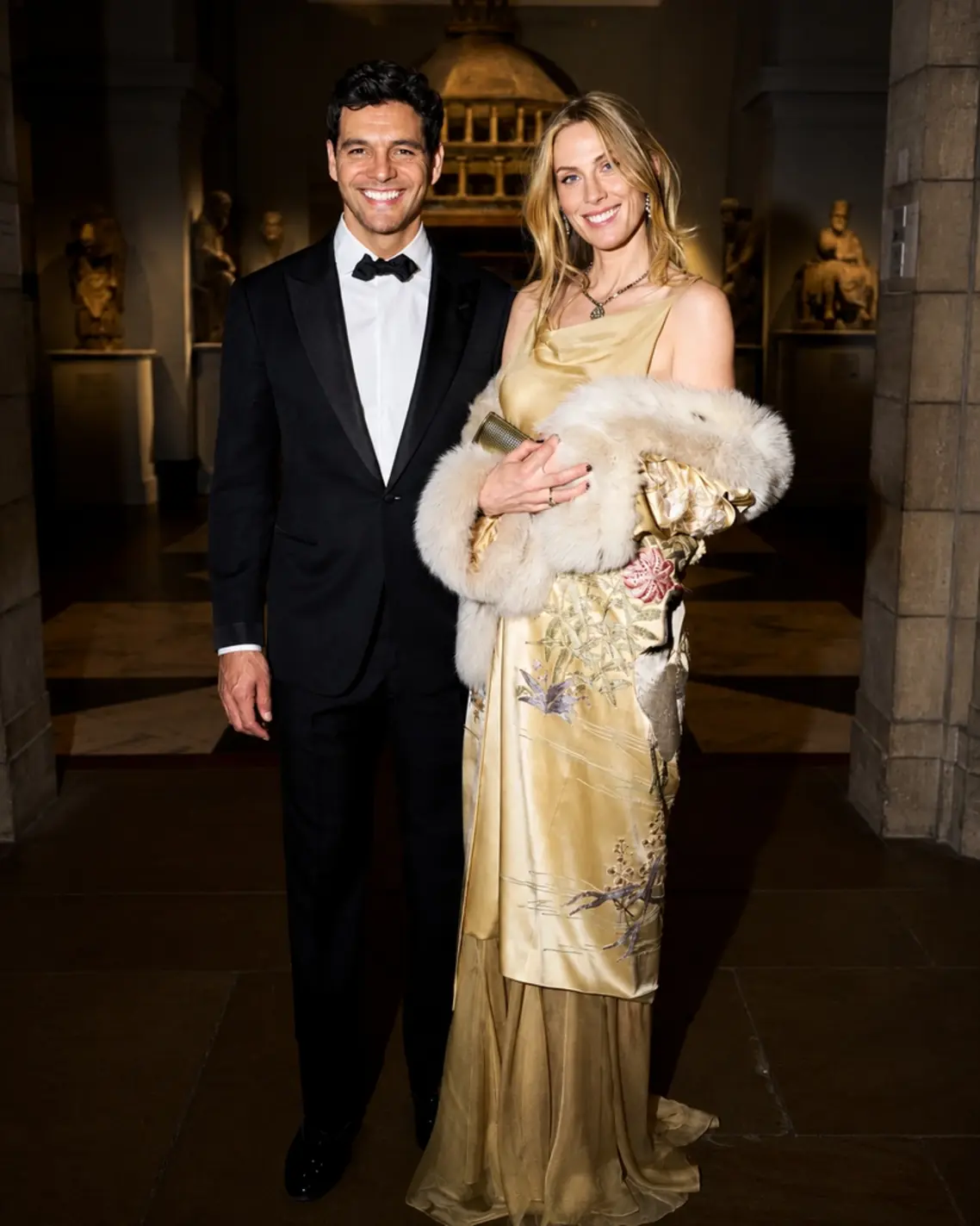
Designer Daniella Kallmeyer sees this as exactly where big tech money could carry more meaning. In her view, people with the greatest wealth, access, and power should use that position to support the arts, emerging labels, and independent designers, because otherwise they simply continue elevating the players already at the top. That point matters because independent designers need visibility and serious backing, especially at a time when fashion’s economic structure often rewards scale, celebrity access, and corporate muscle. The Met Gala gives a smaller label a level of exposure that can be difficult to achieve through a traditional runway show or press placement alone. For an executive, the choice offers individuality. For the designer, it offers attention, credibility, and the possibility of new clients.

Of course, many of the tech executives who chose independent designers already have established fashion credibility. Eva Chen and Selby Drummond both came from the magazine world, with Chen previously serving as editor-in-chief of Condé Nast-owned Lucky and Drummond spending years as a Vogue editor. Charles Porch has long operated between technology and culture through his work at Instagram and now OpenAI. Adam Mosseri has also built a history with independent designers, having worn brands such as Tanner Fletcher, Wales Bonner, and Bode to previous Met Galas. Zuckerberg, meanwhile, wore Prada after making his fashion week debut at the brand’s show earlier in the year, which still placed him inside a luxury-fashion narrative, even through a larger house. The pattern suggests that these choices came from people who understand fashion as a language of positioning, rather than a last-minute dressing problem.
There is also a more practical reason independent designers make sense on Met Gala night. The biggest fashion houses are often focused on dressing the highest-profile celebrities, meaning tech executives may have greater creative freedom, closer attention, and a more distinctive look when working with a smaller label. Porch explained that his decision to go custom for the 2026 Met came after wearing off-the-rack pieces from Celine, Tom Ford, and Prada in previous years, adding that his respect for major brands remained intact, but those houses were naturally focused on dressing stars such as Nicole Kidman. In that context, an independent designer can offer something more intimate and specific: a look developed around the person rather than a person fitted into a broader brand priority.
For Kallmeyer, this was her first time designing for the Met Gala, though she had already created custom looks for other major moments. She received several requests for the event but felt especially aligned with Porch. Her reasoning also connects neatly to the tech world’s own favorite vocabulary. Technology, as she sees it, is built around innovation, so it makes sense that people working in that field would want clothing that feels equally individual and forward-moving instead of broadly consumed. A custom independent look becomes almost couture in spirit, shaped to the wearer and carrying the sense of something made with intention rather than pulled from the obvious luxury machine.

Kartik Research, which avoids commenting on looks made for private clients, connected with Mosseri through Eva Chen, who is a familiar presence on the fashion week circuit. From that introduction, the brand worked with Mosseri’s Instagram team to style and source the full custom look, including the Manolo Blahnik shoes worn with the suit. Porch’s Kallmeyer look also grew from an existing relationship. He had known Daniella socially for years and became familiar with her through his time at Instagram. He wanted to support designers he felt connected to, especially cool queer designers, and that relationship gave the collaboration a personal foundation. After seeing Morgan Spector in a Kallmeyer jacket at the brand’s recent show, Porch asked about menswear. The jacket had actually been a women’s off-the-rack piece, but it stayed in his mind, leading him to message Kallmeyer and ask whether she would be open to creating his Met Gala look.
Tech founders and executives may also feel drawn to young fashion labels because they recognize the entrepreneurial drive behind them. Porch described this connection clearly, noting that tech people often appreciate independent designers because many operate like startups, building something from the ground up with a founder’s intensity. That shared idea of building, scaling, and creating a world around a product gives tech people a familiar way to understand fashion, even though creating a technology company and creating a fashion label involve very different kinds of labor, craft, and risk. Still, the emotional logic is easy to see: independent designers carry the energy of invention, and tech executives like to be near that energy.
The larger question is whether tech executives wearing independent designers could become a meaningful route for more smaller labels to appear on the Met Gala carpet. Porch, at least, seems interested in continuing. After his first custom Met experience with Kallmeyer, he said he has definitely caught the bug. That final detail may be the clearest signal of the whole shift: once tech leaders realize that independent fashion can give them originality, insider approval, and a more personal kind of prestige, the relationship between Silicon Valley money and emerging fashion talent may keep growing.
Advertisement