MENU
Close





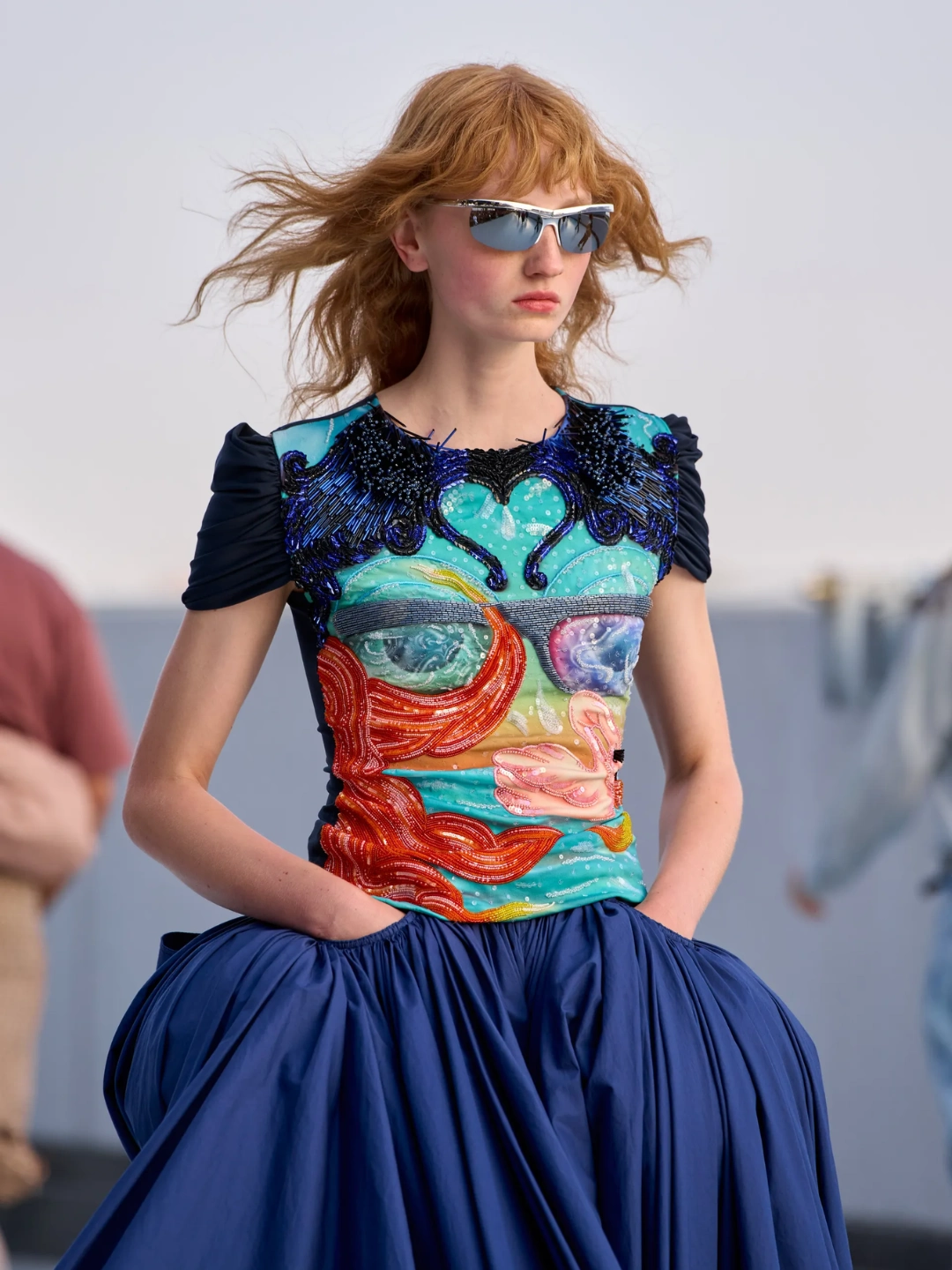
What makes the barrel silhouette feel so strange, sharp, and current? Its power begins in construction: curved side seams, widened volume, softened waistlines, and hems that pull the shape back into control.

What makes the barrel silhouette feel so strange, sharp, and current? Its power begins in construction: curved side seams, widened volume, softened waistlines, and hems that pull the shape back into control.
May 17, 2026
Advertisement

Advertisement


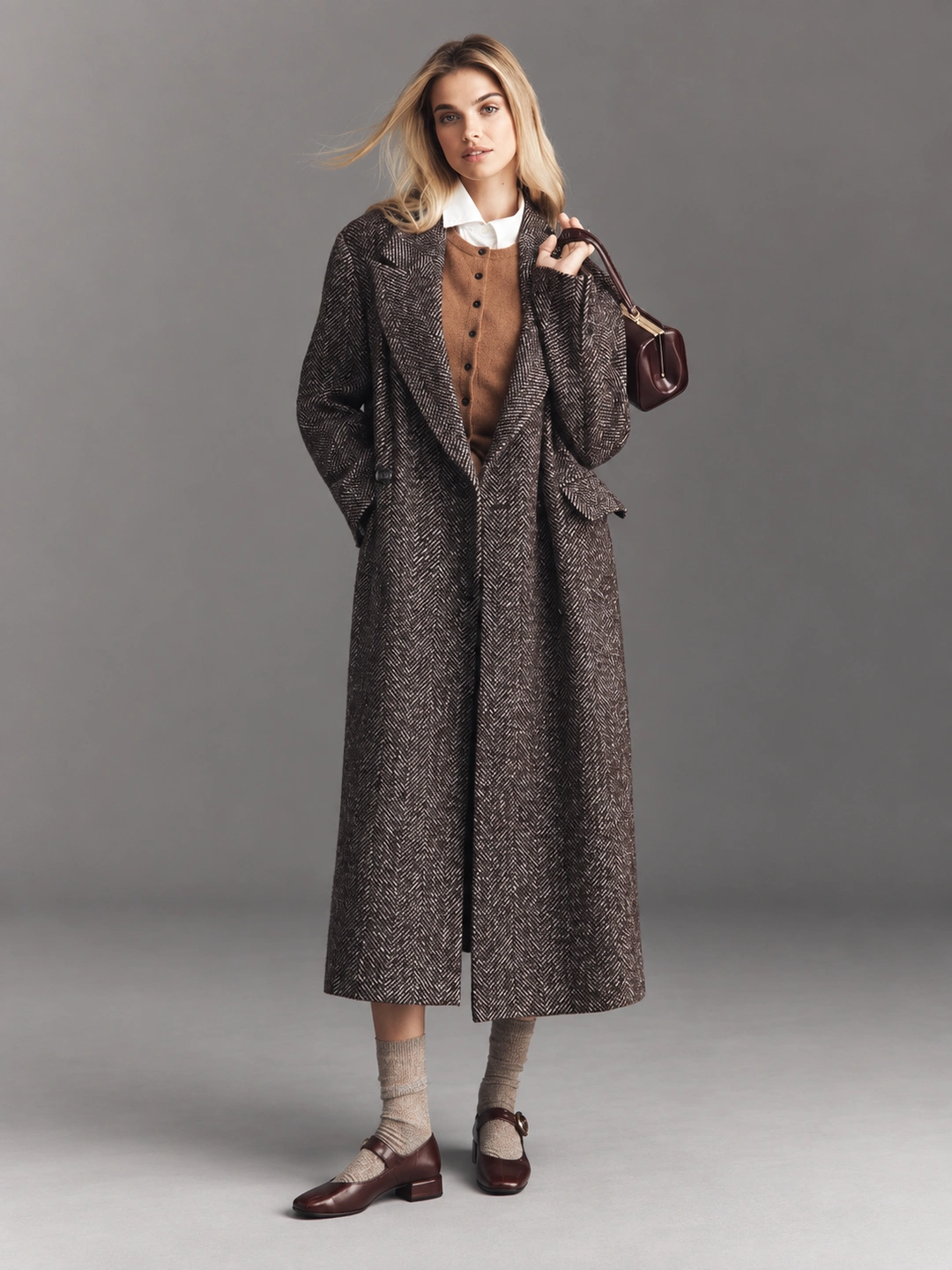
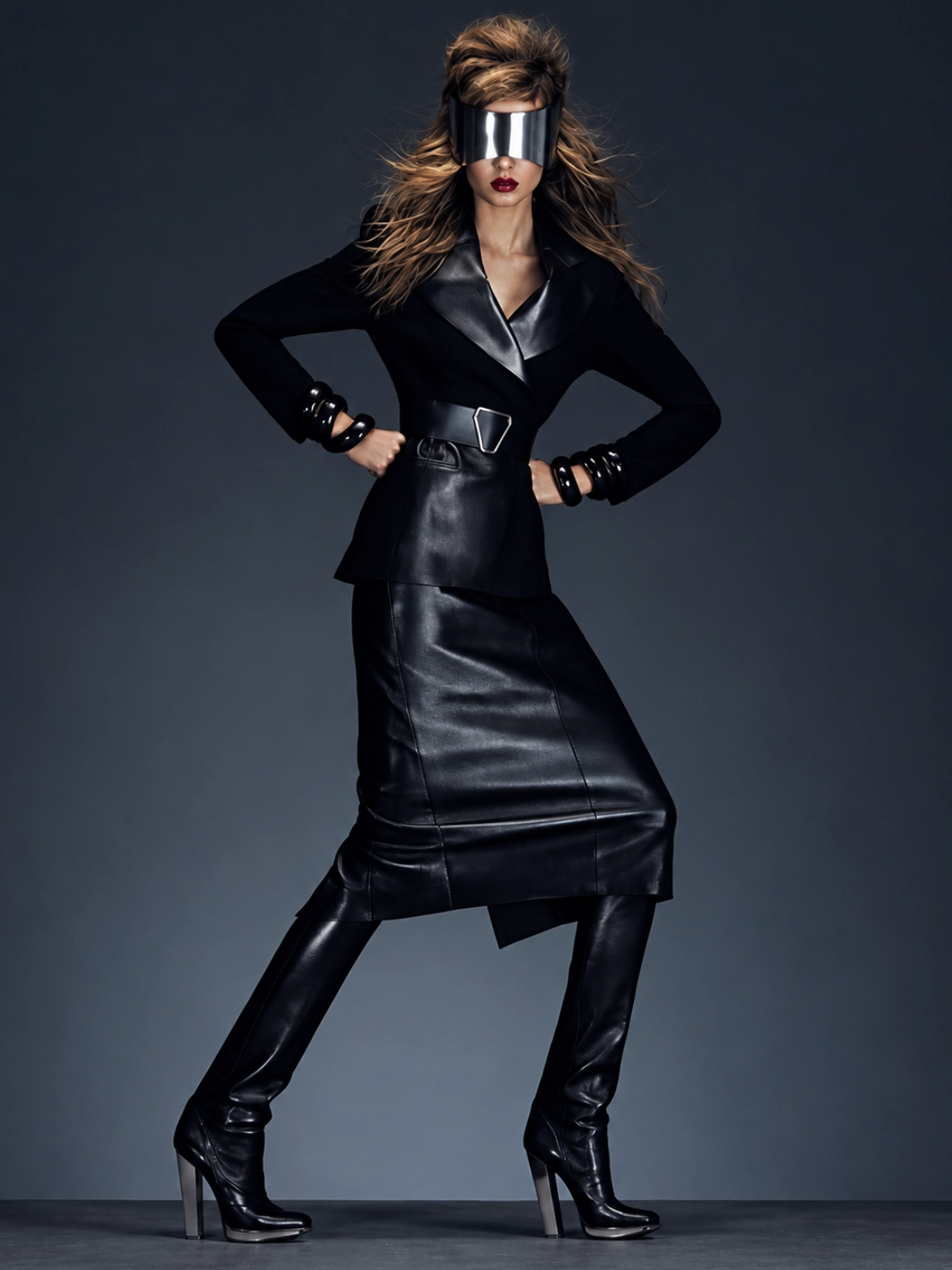
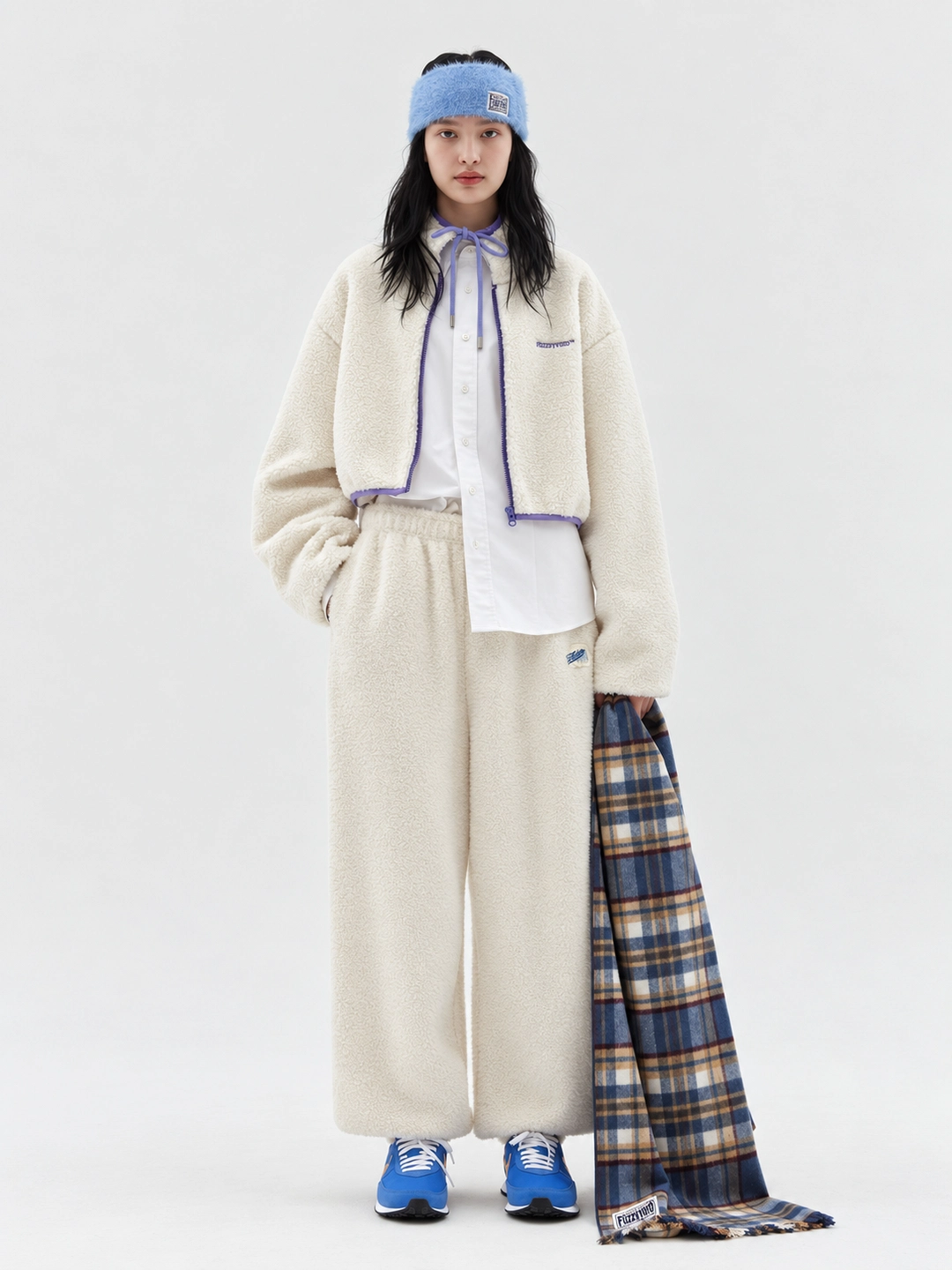
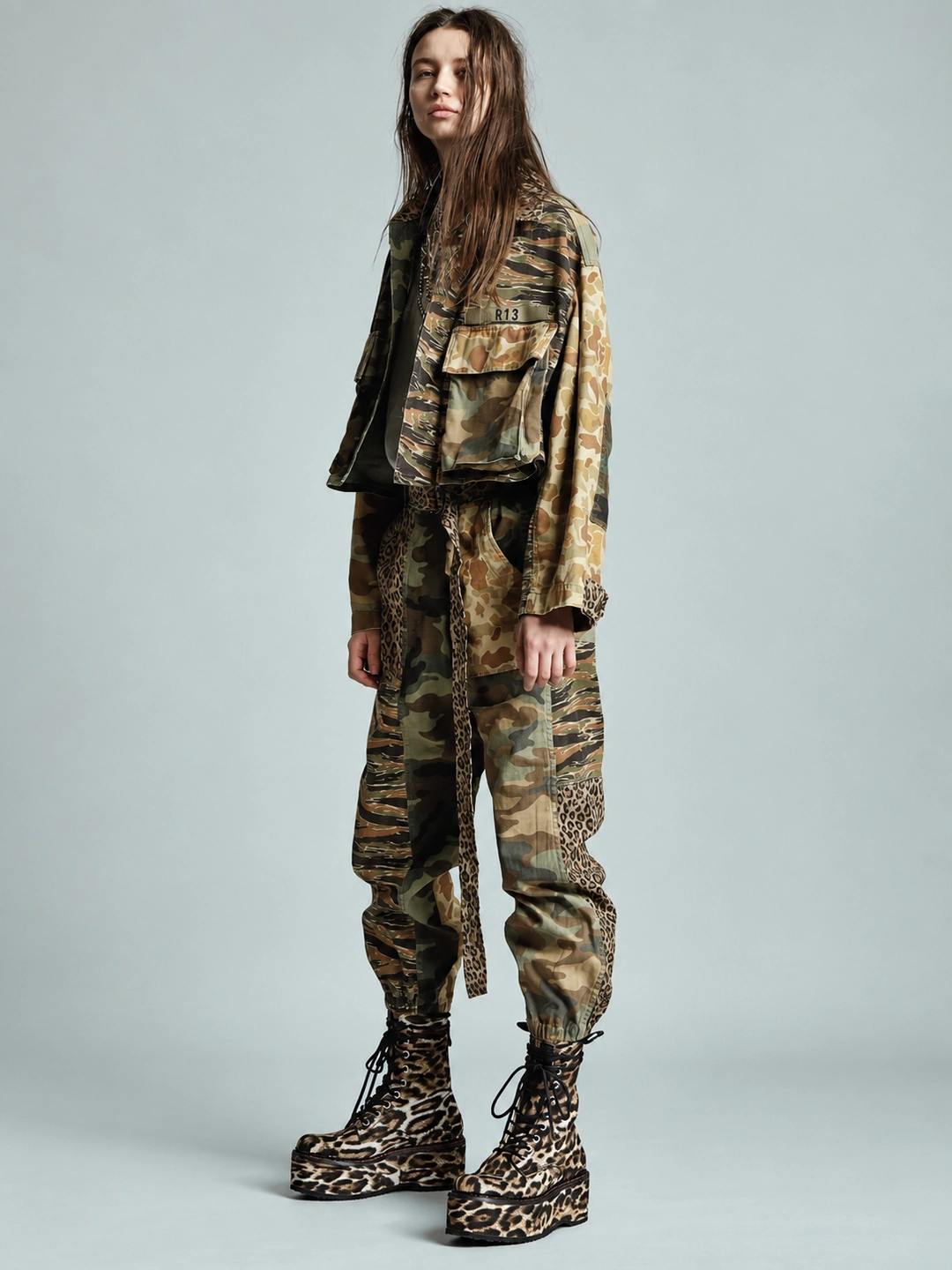
The barrel silhouette is a garment shape defined by controlled roundness: narrower or cleaner at the upper body, wider through the middle, then narrowed again toward the hem. Its structure depends on a curved outline rather than a fitted waist. The dress, coat, skirt, or trouser does not simply hang loose around the body; it is cut to expand outward through the torso, hip, or lower section, then return inward with intention. This outward-and-inward movement creates the barrel effect: a soft, rounded volume that looks full through the center but contained at the edges.
In construction terms, the barrel silhouette sits between looseness and architecture. A loose garment may fall away from the body without a clear shape, while a barrel garment has a deliberate curve built into the pattern. The widest point usually appears around the waist, hip, thigh, or lower body, depending on the design. The shoulder, neckline, armhole, or upper bodice often remains cleaner so the volume does not overwhelm the entire figure. The lower edge is then reduced, gathered, banded, tucked, or curved inward so the silhouette does not keep expanding like an A-line or trapeze shape.


The structure of the barrel silhouette usually begins with the side seam. In a standard shift dress or column dress, the side seam falls almost straight from the underarm to the hem. In a barrel shape, the side seam curves outward through the middle of the garment, then bends back inward near the hem. This curve is one of the clearest technical signs of the silhouette. It creates the rounded body volume and gives the garment its contained, slightly swollen outline.
The cut can be developed in several ways. A designer may add extra width to the side panels, lower bodice, skirt, or trouser leg, then reduce the hem circumference to control the volume. Some designs use panel cutting, where the front, back, and side pieces are drafted with curved edges instead of straight rectangular lines. Others use pleats, tucks, low gathers, elasticated hems, drawstrings, or internal shaping to pull the fabric inward at the bottom. The important point is that the garment expands first, then contracts. Without that contraction, the barrel silhouette becomes a sack, a tent, or a simple oversized shape.
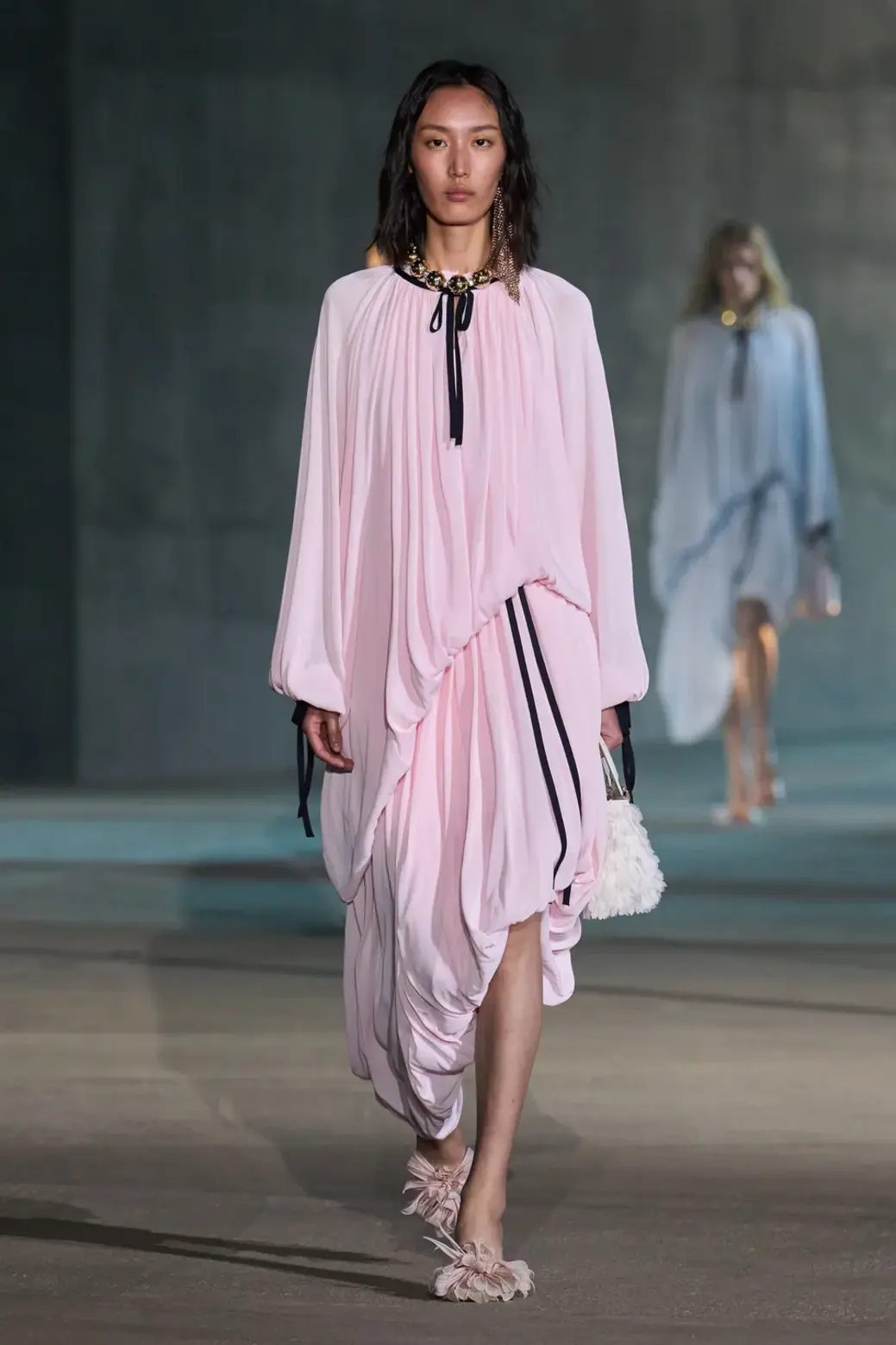
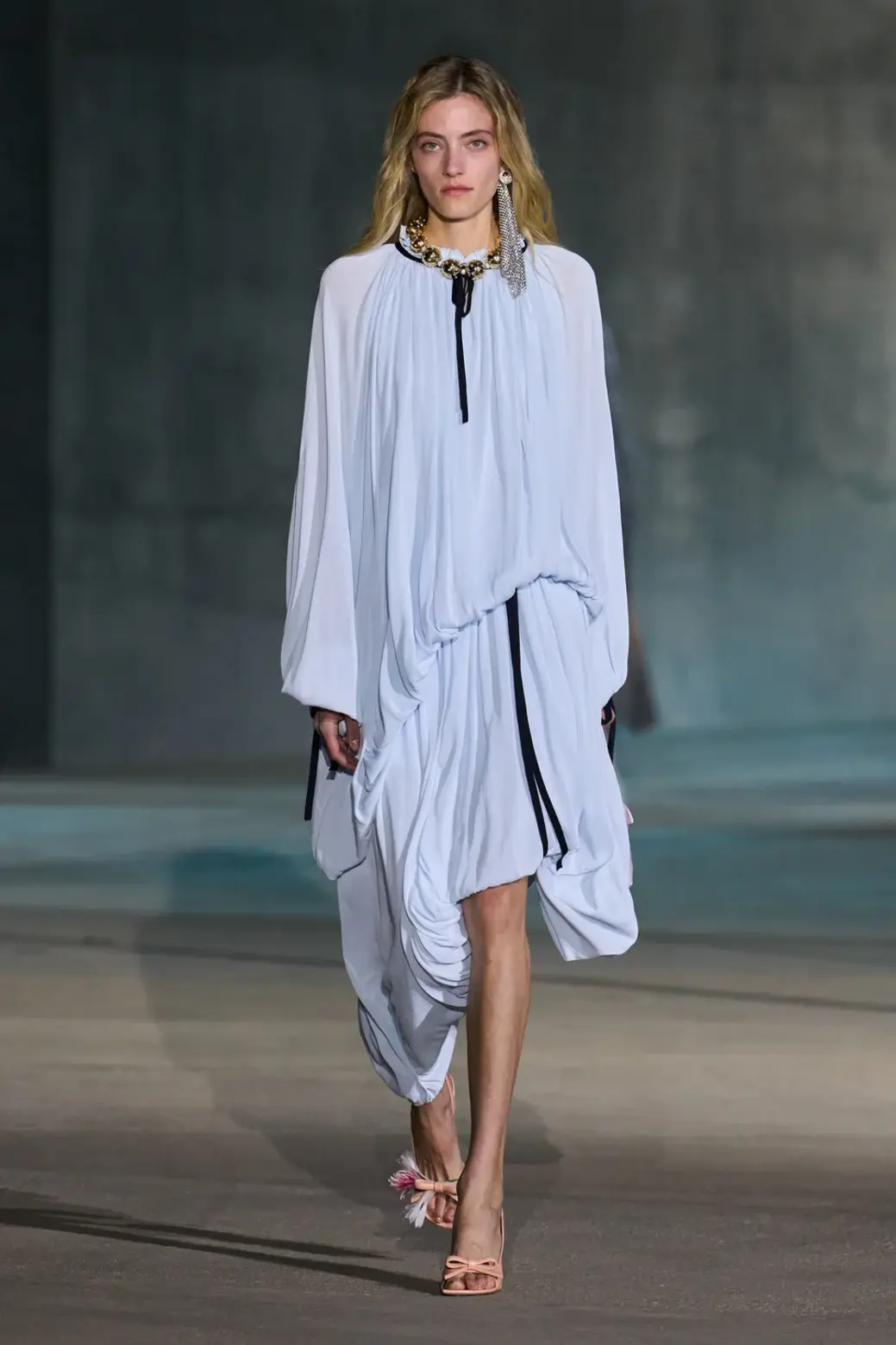
The hem is one of the most important parts of the barrel silhouette. A garment with a wide middle and an equally wide hem can look like a sack. A barrel shape needs the lower edge to pull back in, even slightly. This can be achieved with a narrowed pattern piece, a curved hem, a band, elastic, pleats, tucks, a drawcord, or hidden internal stitching. The hem does not need to be tight; it simply needs to be smaller than the widest part of the garment.
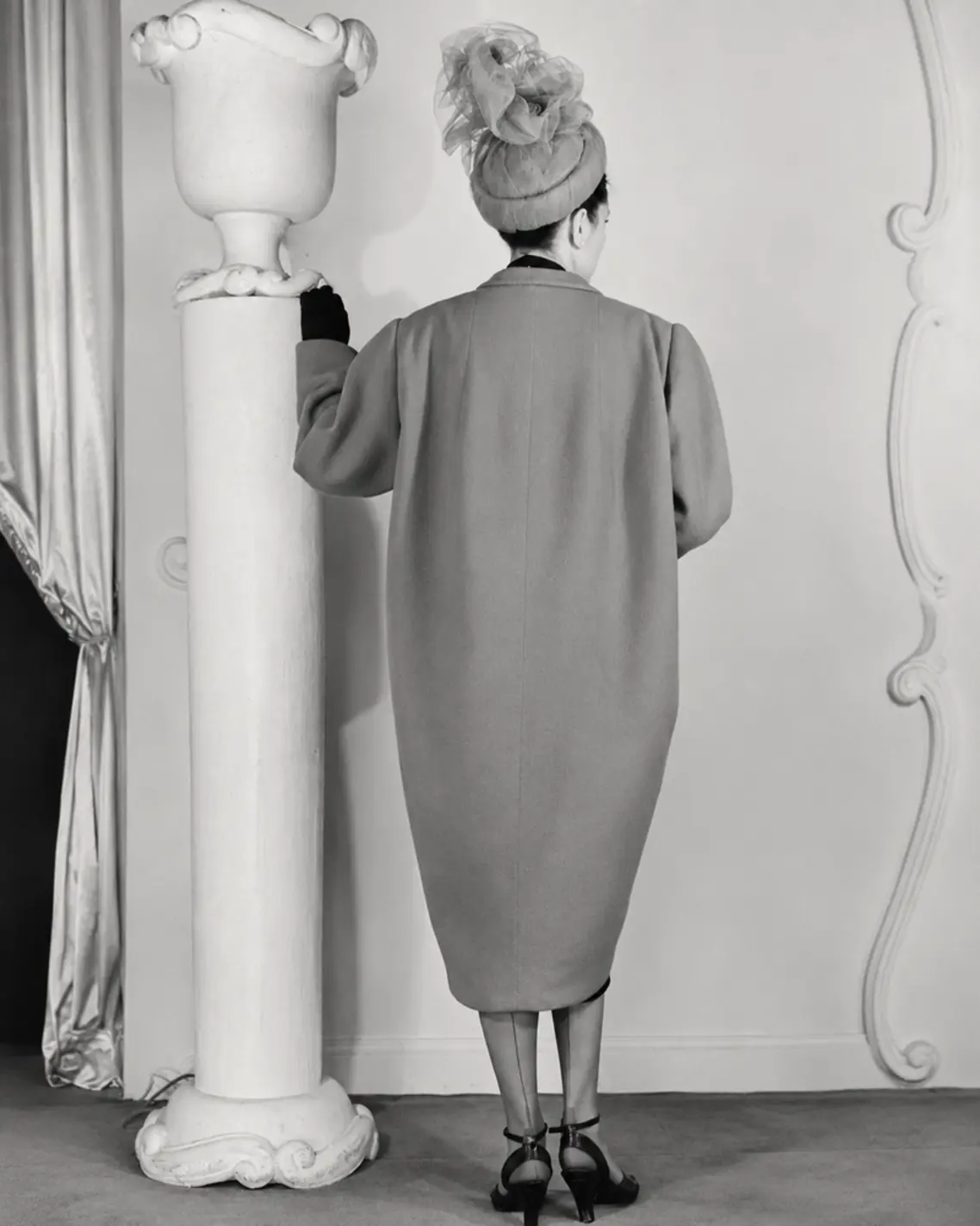
The barrel silhouette began most specifically with , introduced in February 1947. “Tonneau” literally means barrel in French, and the shape was a direct break from the tightly controlled, waist-defined ideal that dominated postwar fashion. While Dior’s 1947 New Look pulled the body back into a pinched waist and full skirt, Balenciaga moved in the opposite direction: he loosened the body, rounded the volume, and shifted structure away from the waist into the architecture of the garment itself. The early barrel silhouette was built through a wider, curved middle, often rounded at the hips or back, with the garment tapering or controlling itself toward the edges, so the body looked held inside a sculptural shell rather than carved into an hourglass.

By the early 1950s, this idea evolved into Balenciaga’s broader experiments with loose backs, curved coats, and waistless shapes; by 1955, it developed into the tunic dress, and by 1957, it became part of the famous sack dress / chemise conversation, where the dress skimmed and enveloped the body instead of enforcing the waist. In other words, the barrel silhouette did not appear as a random oversized shape: it came from couture pattern-making, from Balenciaga’s precise attempt to move volume away from the corseted waist and into the outer contour of the garment. Its evolution runs from the 1947 barrel line to the 1950s tunic, sack, cocoon, and egg-like shapes, then into modern runway dresses where curved side seams, rounded hip volume, dropped waists, balloon hems, and tapered lower edges keep returning as updated versions of that original Balenciaga idea.
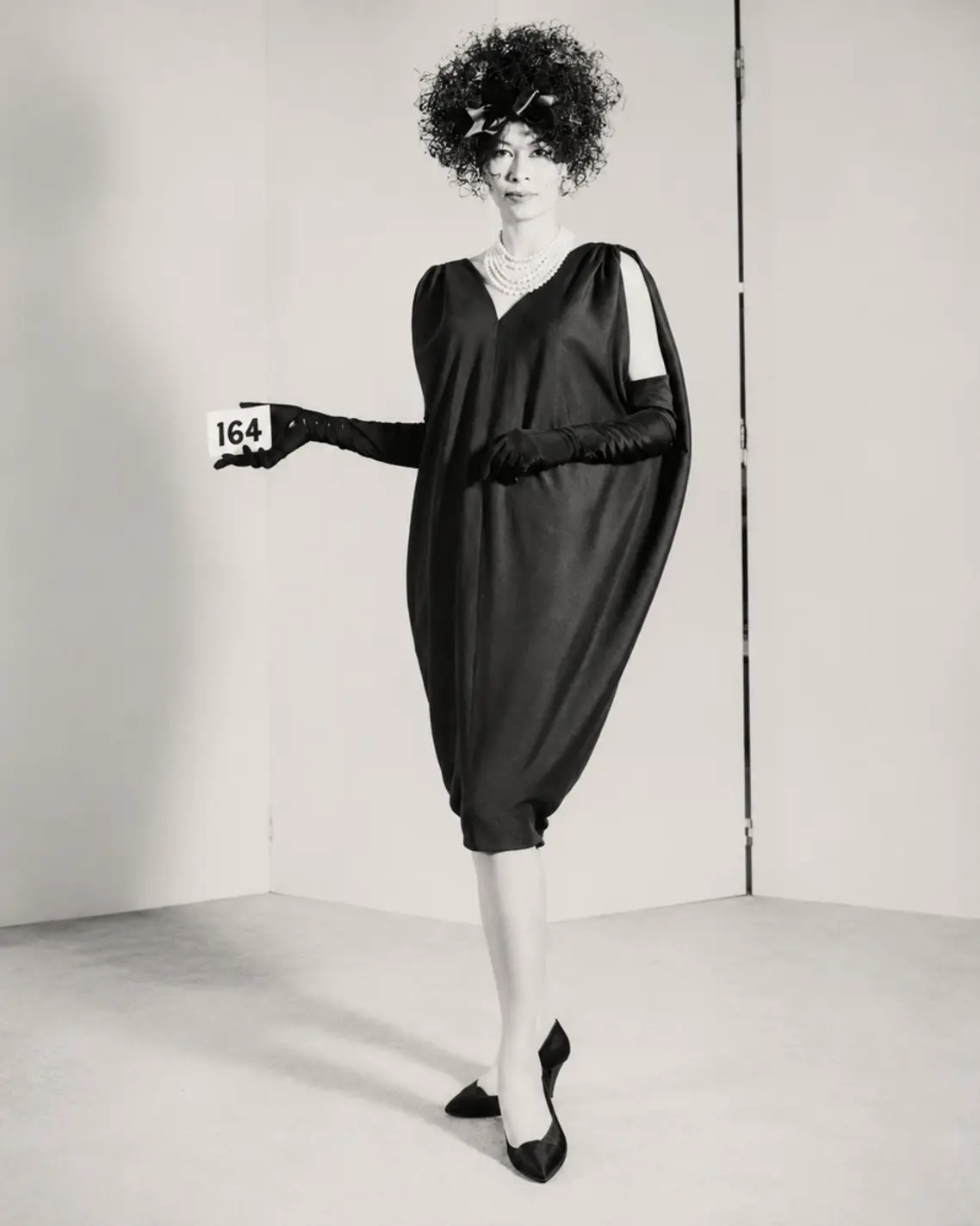
The barrel silhouette gives the body a second anatomy. Its roundness creates a visible shell, while the real body moves inside as an inner mechanism: shoulder turning, knee advancing, hip shifting, breath expanding the fabric for a second before the cloth settles again. The result is a silhouette based on delay. The eye receives the garment first, then senses the figure through pressure, motion, and proportion. Beauty comes from that small gap between body and outline, from the way the dress makes the body feel discovered through movement instead of announced through measurement.


The barrel silhouette also changes the politics of the waist. In much of fashion history, the waist acts like a control point, the place where desire, discipline, tailoring, and judgment gather. In a barrel shape, the waist becomes internal. It still exists, but the garment shifts the visual authority toward circumference, balance, and volume. The body becomes a center held inside a larger geometry. This creates a different sensuality: one based on orbit, weight, and concealment as design intelligence. The curve gives the wearer a kind of spatial command, as though the dress has drawn a private border around her and made that border beautiful.
What makes the barrel silhouette compelling is its treatment of the body as architecture in progress. The shape has an almost archaeological quality: part vessel, part shelter, part unfinished sculpture. It suggests a figure carrying her own room, her own climate, her own silence. The tapered hem is important because it gathers the volume back into intention, turning looseness into a controlled object. The wearer appears grounded, contained, and slightly unknowable. The dress gives her form, but it also gives her distance, and that distance becomes the most powerful part of the look.
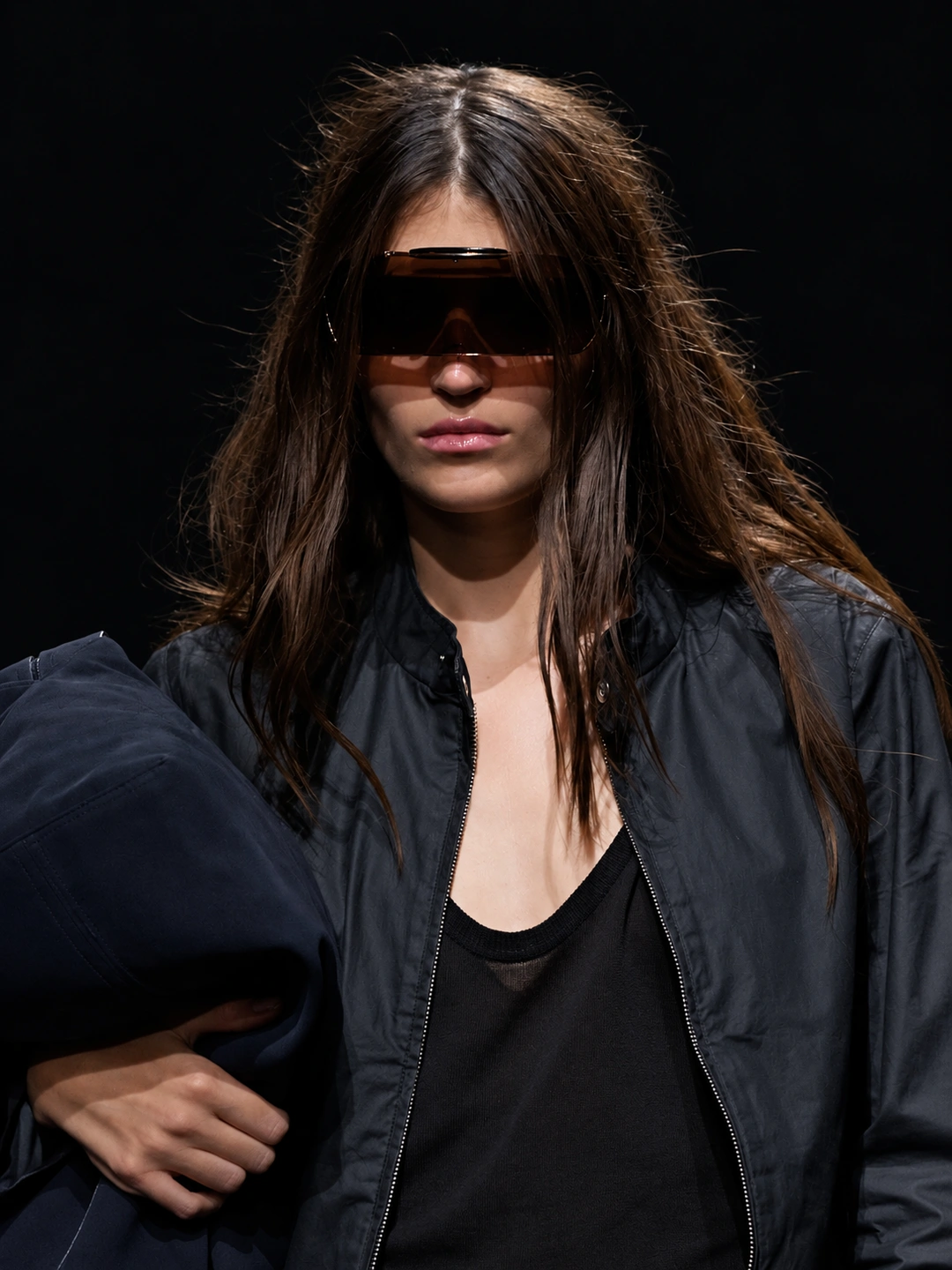
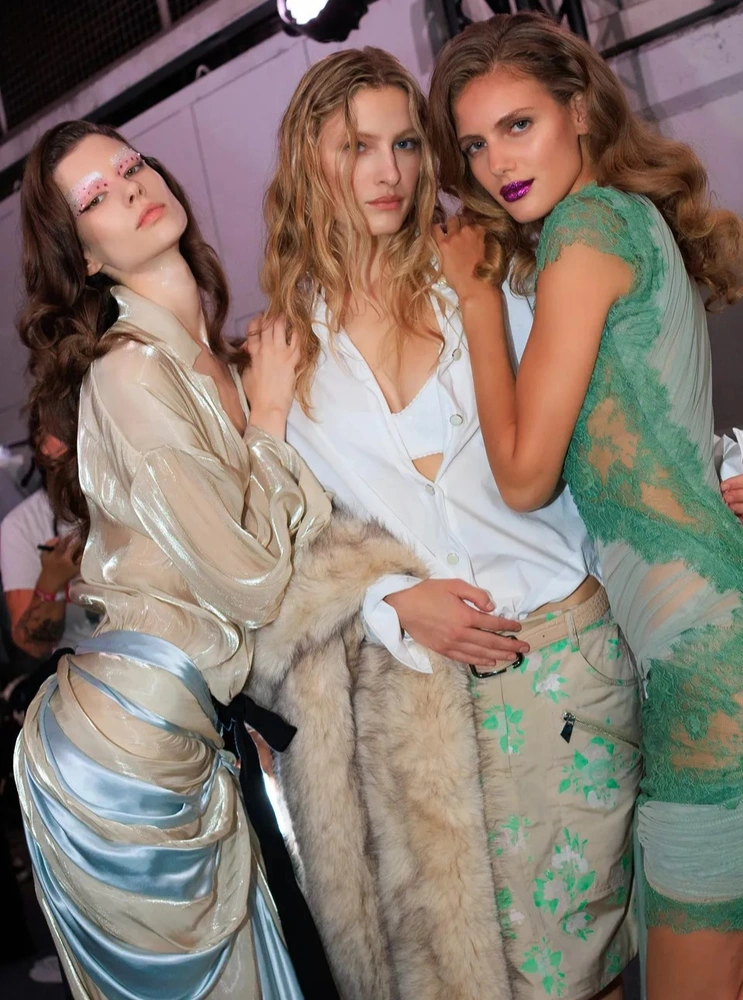
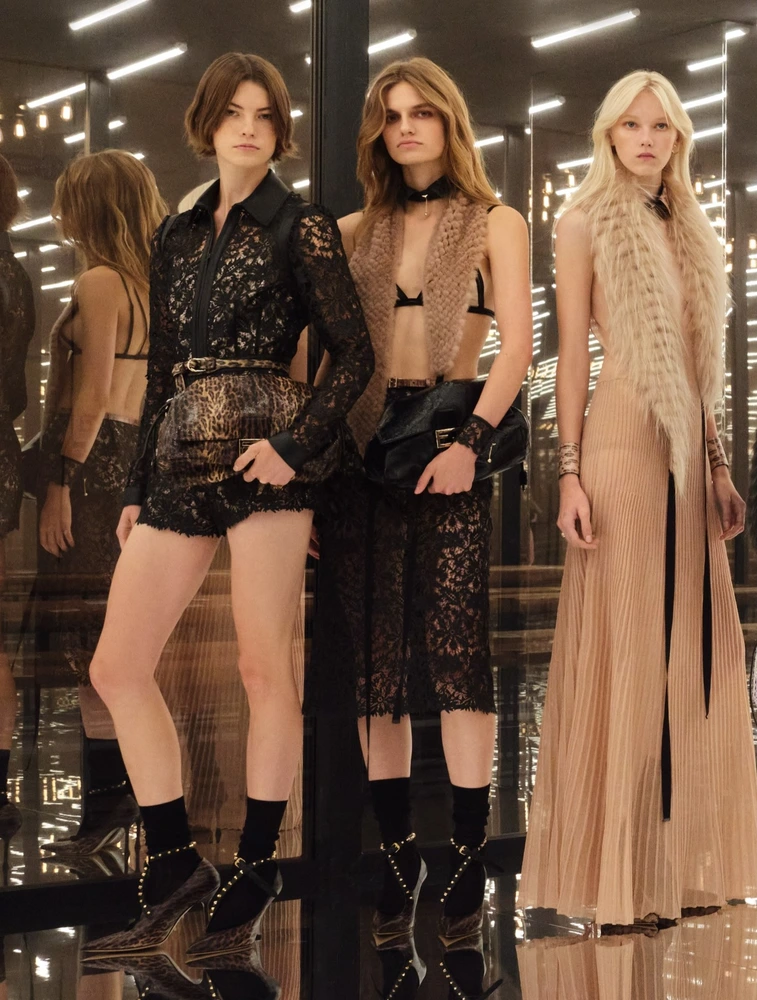
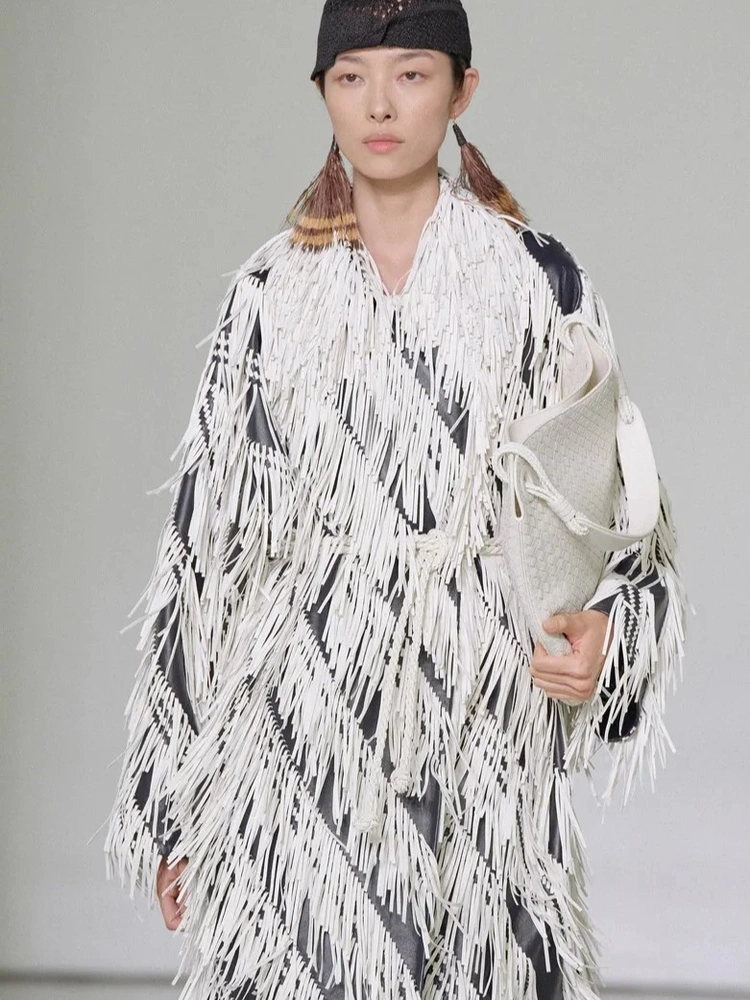
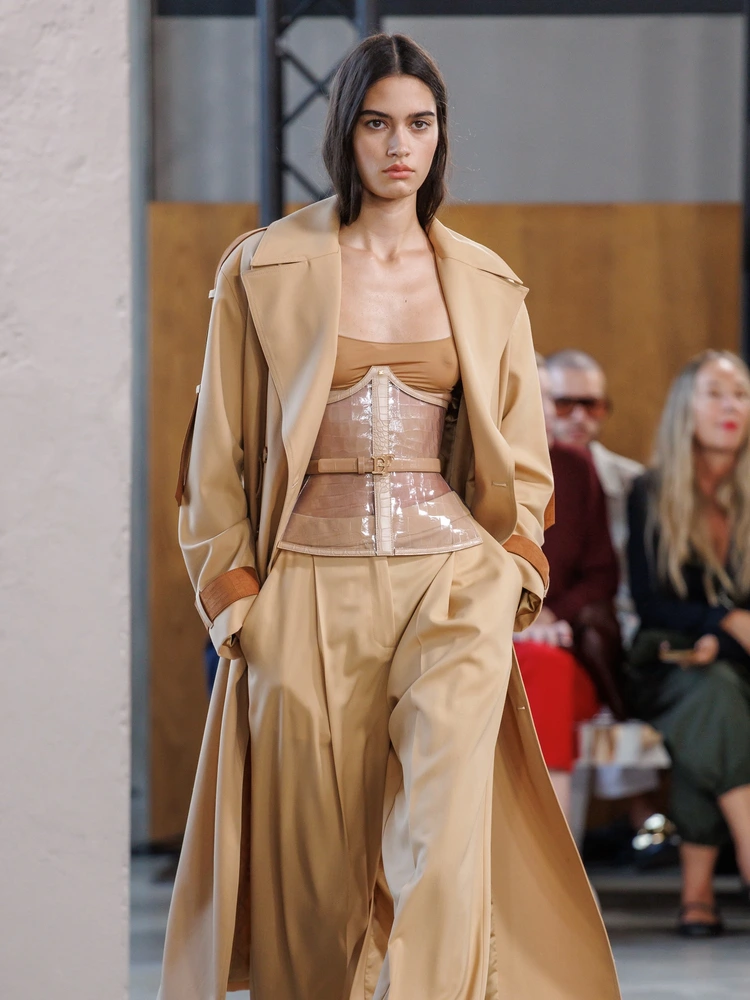
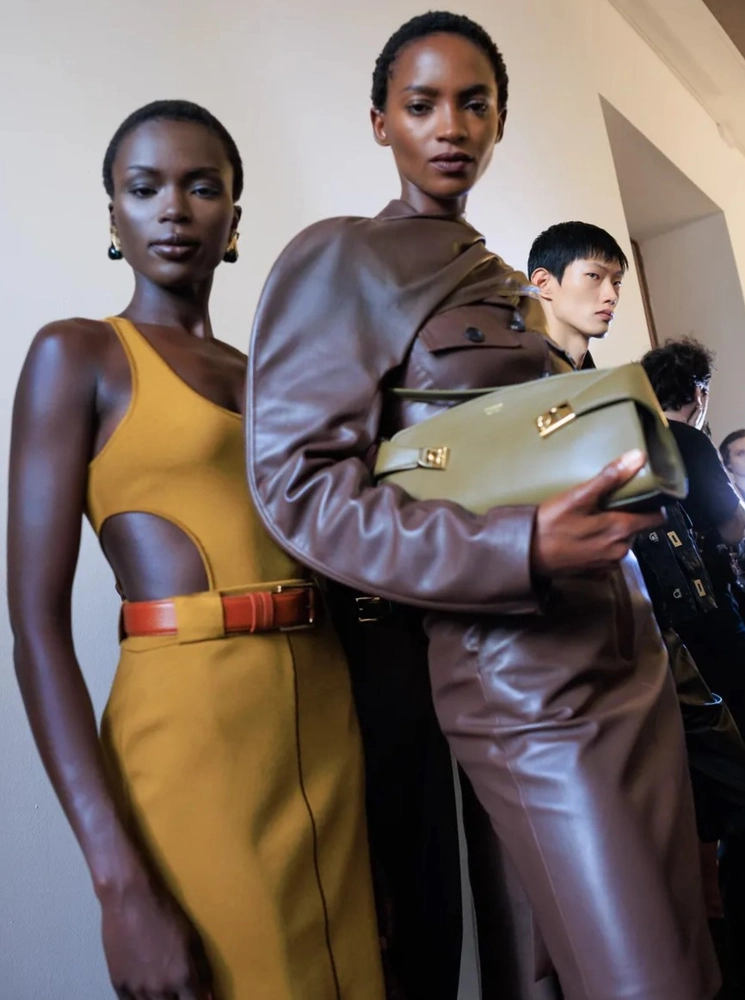
On the runway, the barrel silhouette changes character depending on the designer’s language.
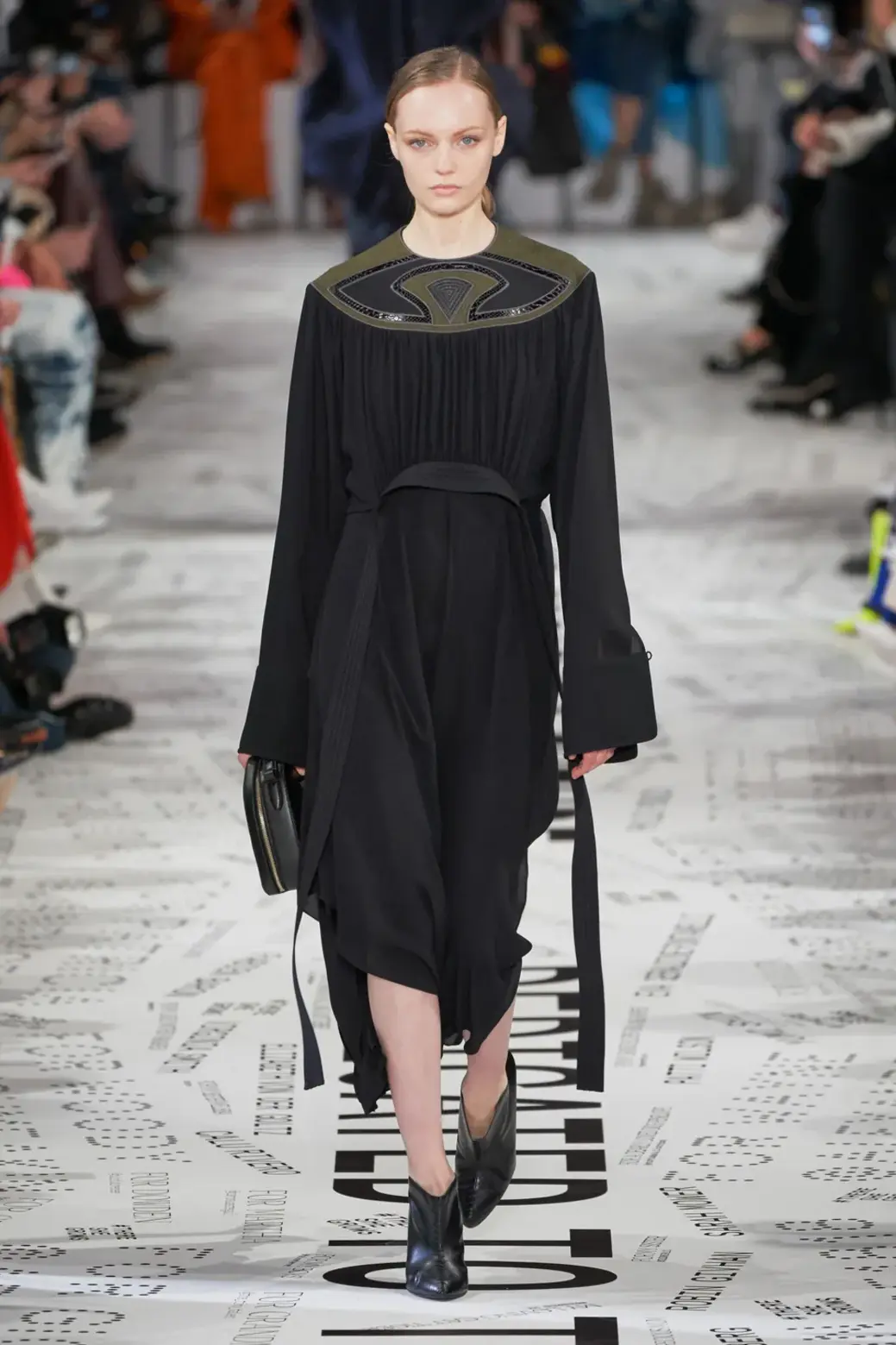


At Stella McCartney, it often becomes easy, sporty, and wearable, shaped through puffed hems, rounded dresses, relaxed tailoring, and pieces that hold air without feeling heavy. Her version usually treats barrel volume as movement-friendly: soft enough for real life, structured enough to keep the curve visible.

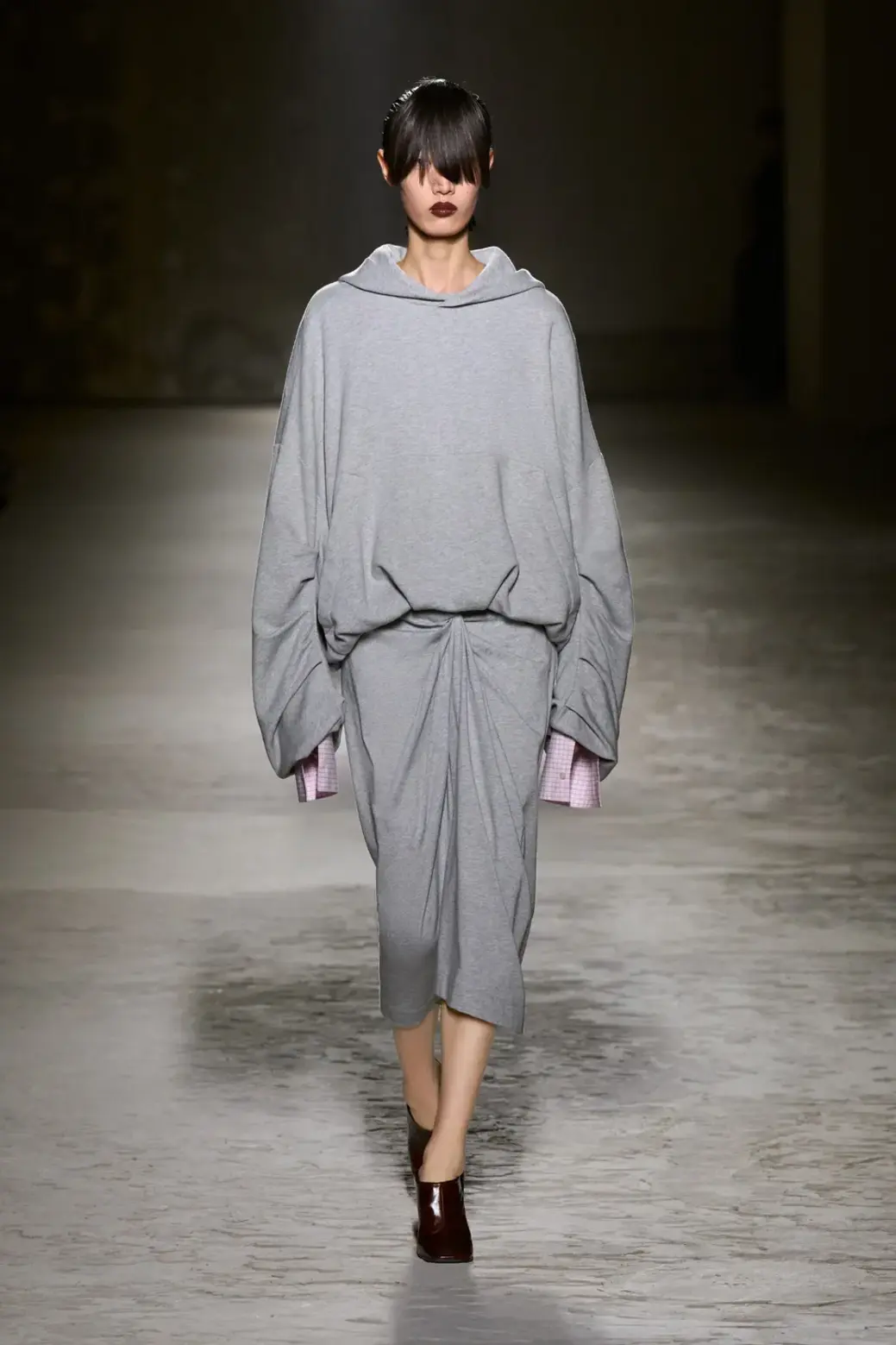
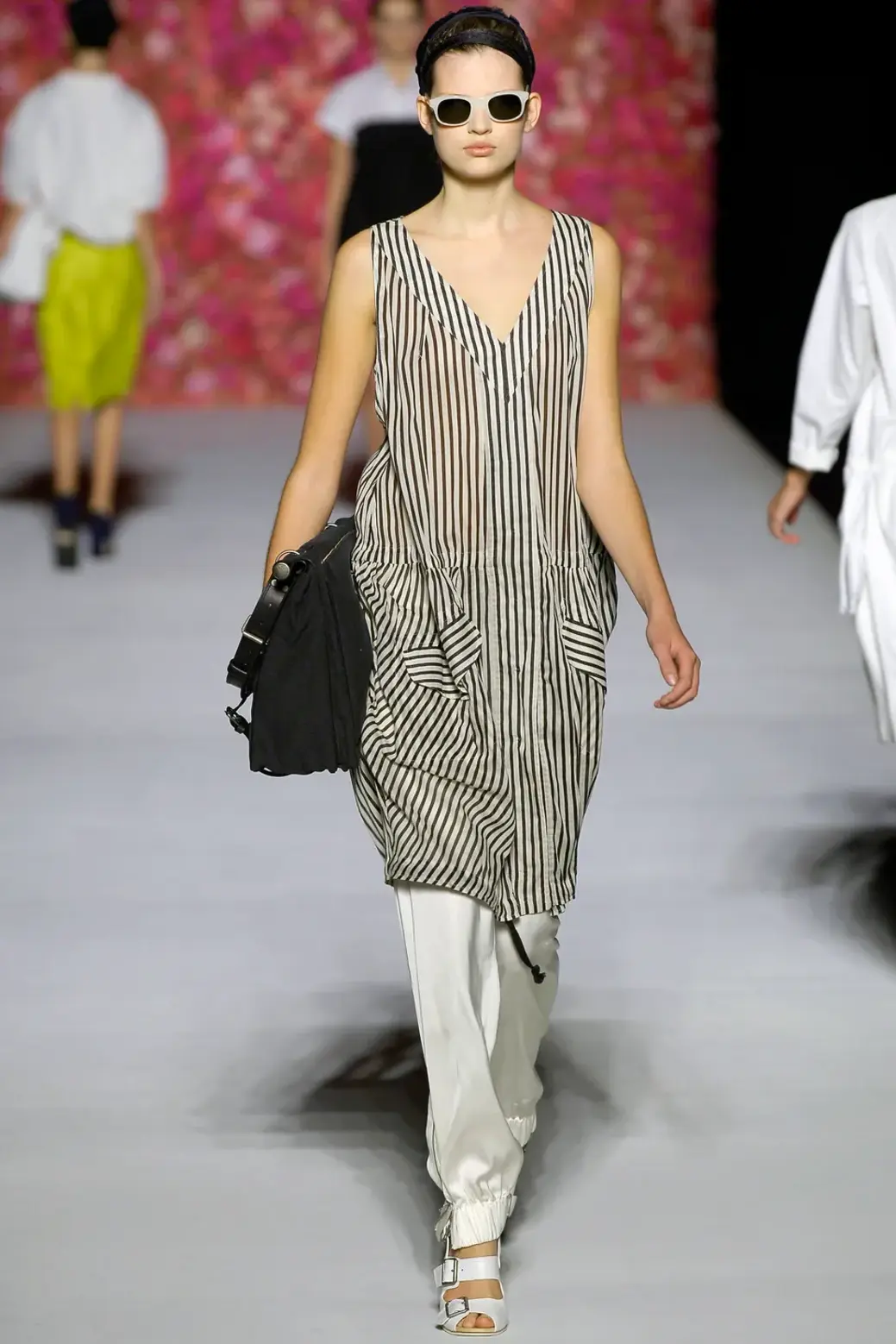

At Dries Van Noten, the shape feels more studied and painterly. He often turns the barrel into a quiet proportion game, using sack-like volume, tapered hems, layered textiles, and curved outlines that make the body look gently abstract rather than sharply sculpted.


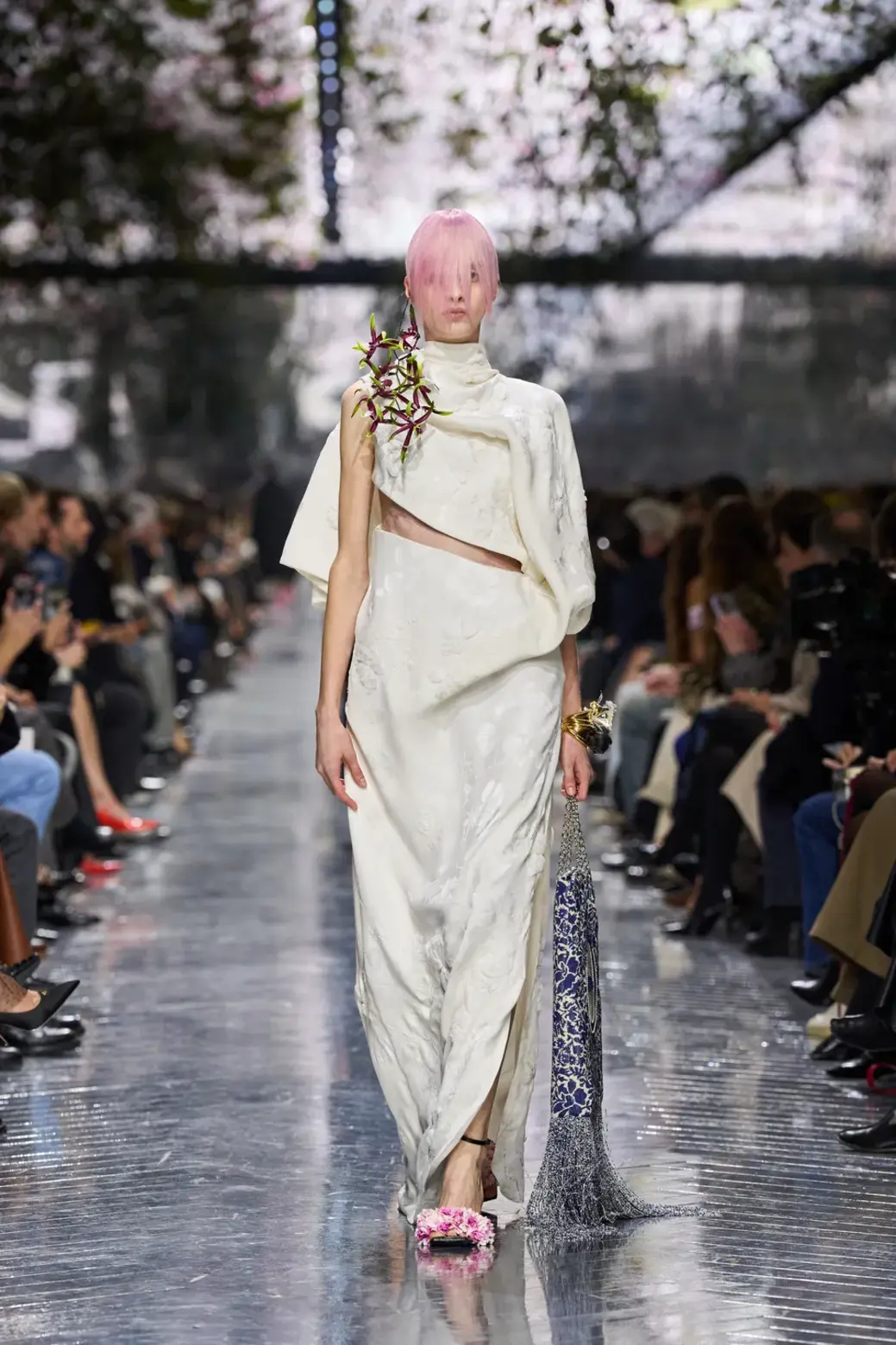
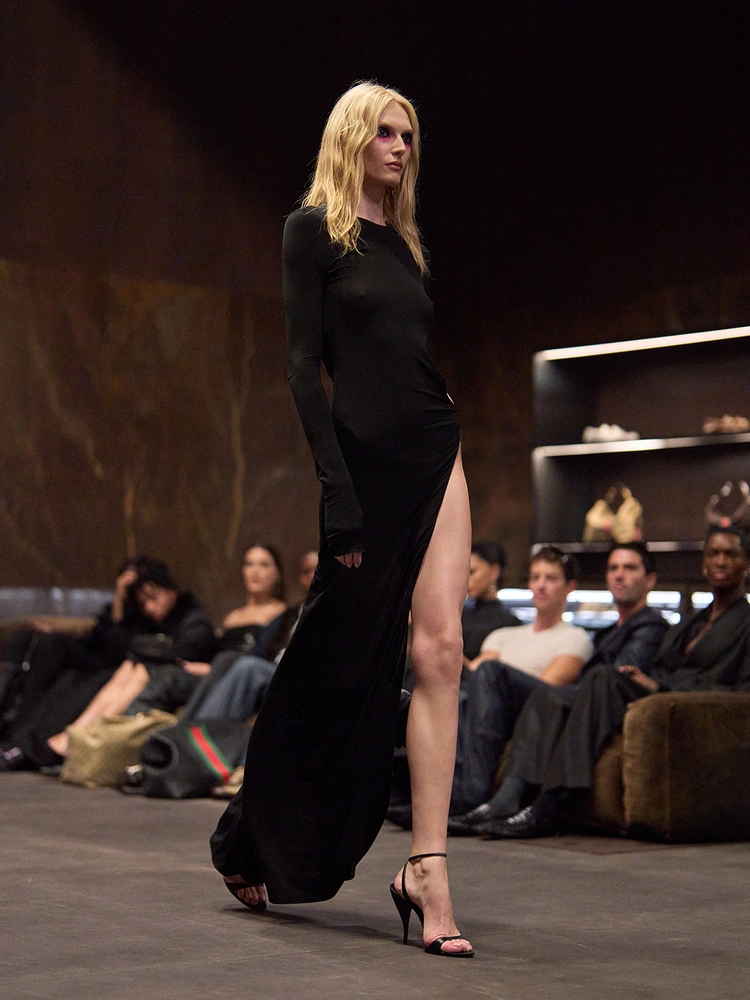
At Dior, the barrel silhouette becomes closer to couture architecture. The rounded form feels more deliberate, almost engineered, with volume treated as construction rather than casual looseness. A Dior barrel shape tends to hold tension between elegance and strangeness: the body is dressed with precision, but the waist gives way to curve, shell, and sculpted circumference.


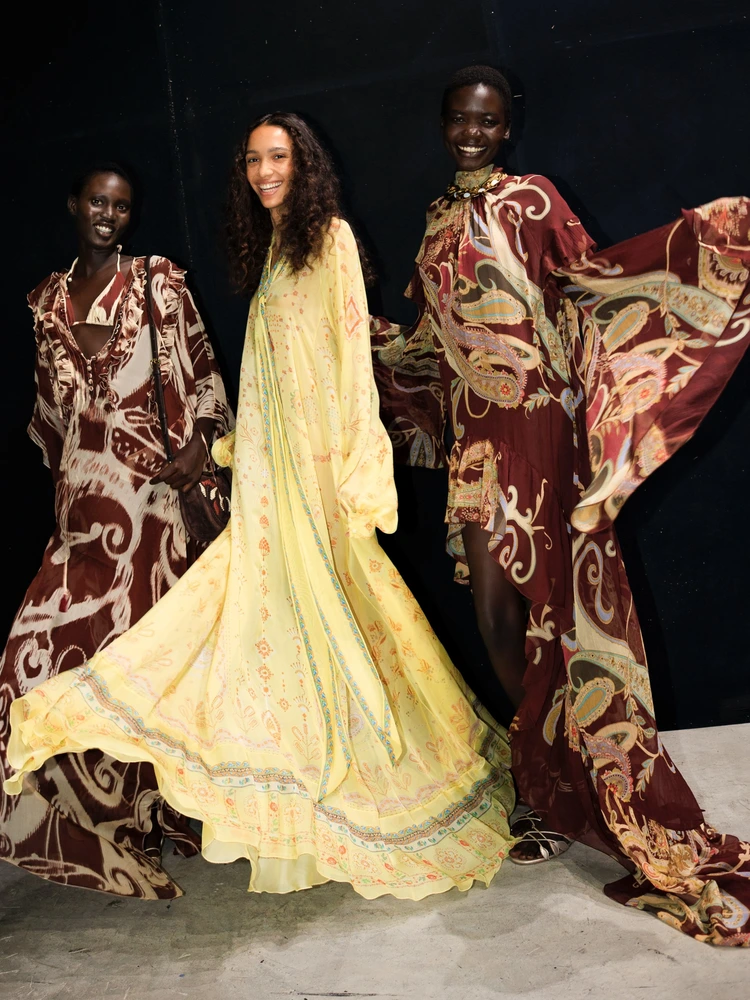
At Chloé, the same idea becomes lighter and more bohemian. The barrel appears through airy bloomers, ballooned trousers, gathered openings, and soft fabrics that create volume through looseness, breath, and motion. The silhouette feels less rigid there, more like fabric swelling around the body before being caught at the ankle or hem.

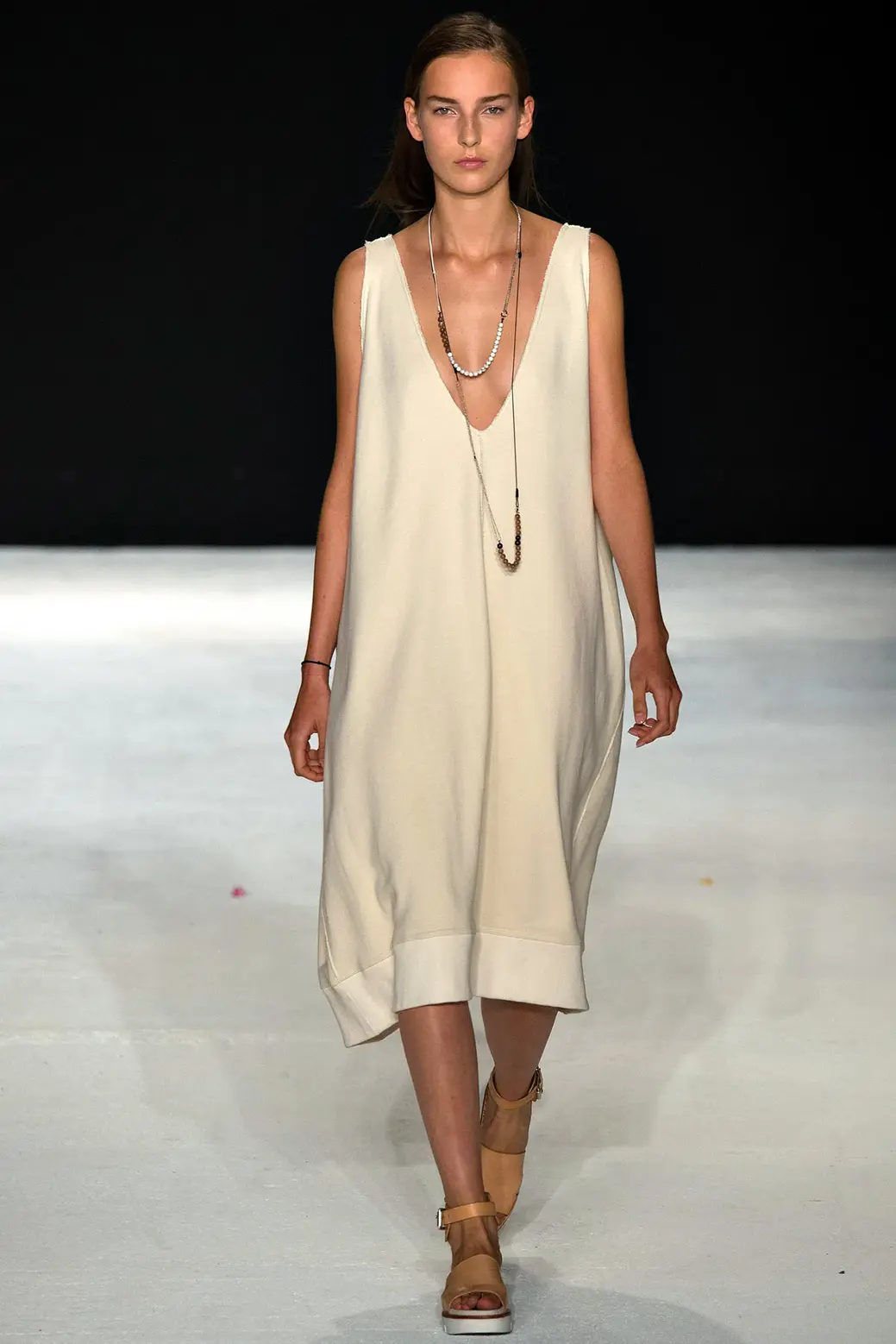


At Rag & Bone, the barrel silhouette moves into everyday utility, especially through denim and relaxed pants. The construction is more casual but still follows the same logic: room through the upper leg or knee, a curved outer line, and a tapered ankle that brings the shape back under control. This is where the barrel becomes truly modern, because it leaves the couture dress and enters daily dressing. Across these designers, the barrel silhouette proves that a single construction idea can shift from soft sportiness to textile poetry, couture volume, bohemian air, and street-level denim, all while keeping the same essential formula: expand the body’s outline, then discipline the curve.
Advertisement