MENU
Close





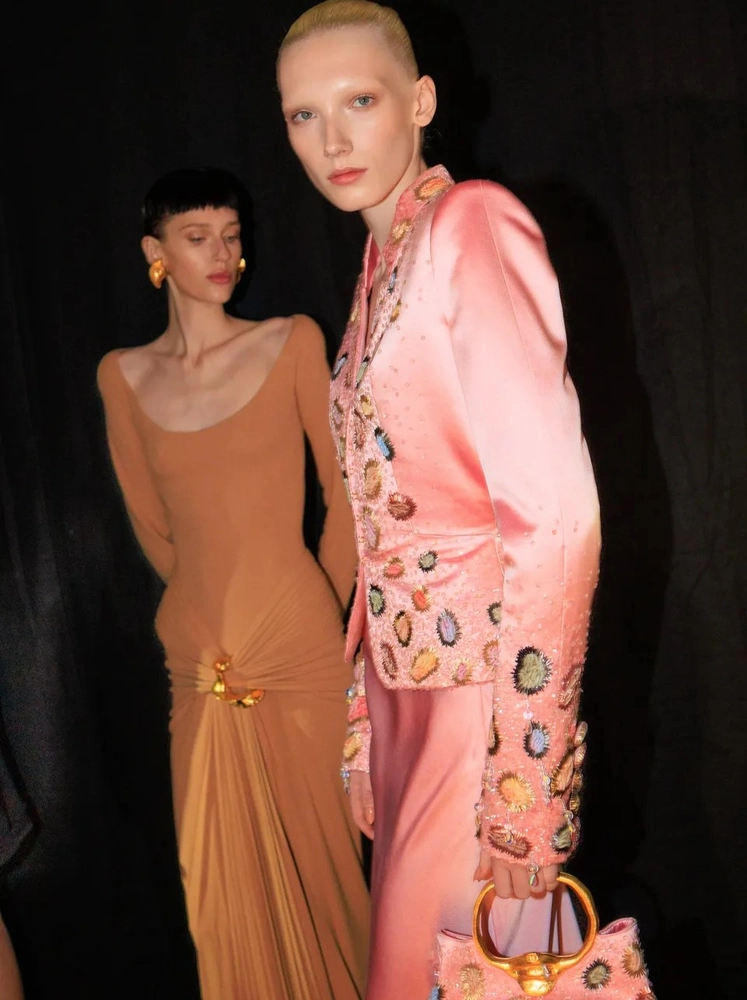
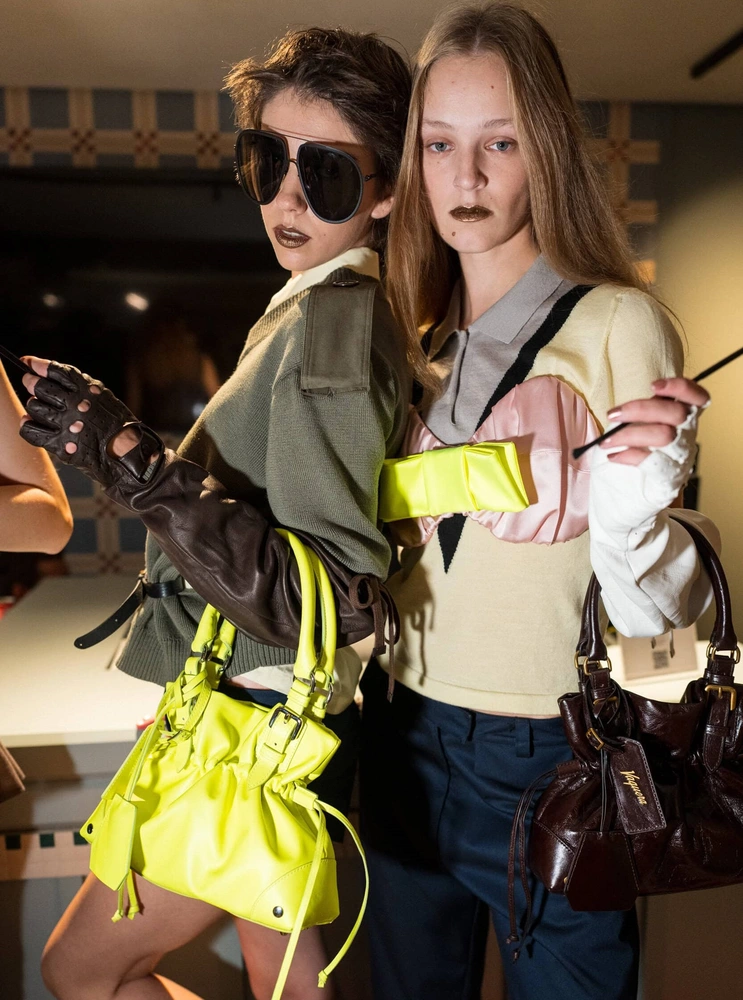
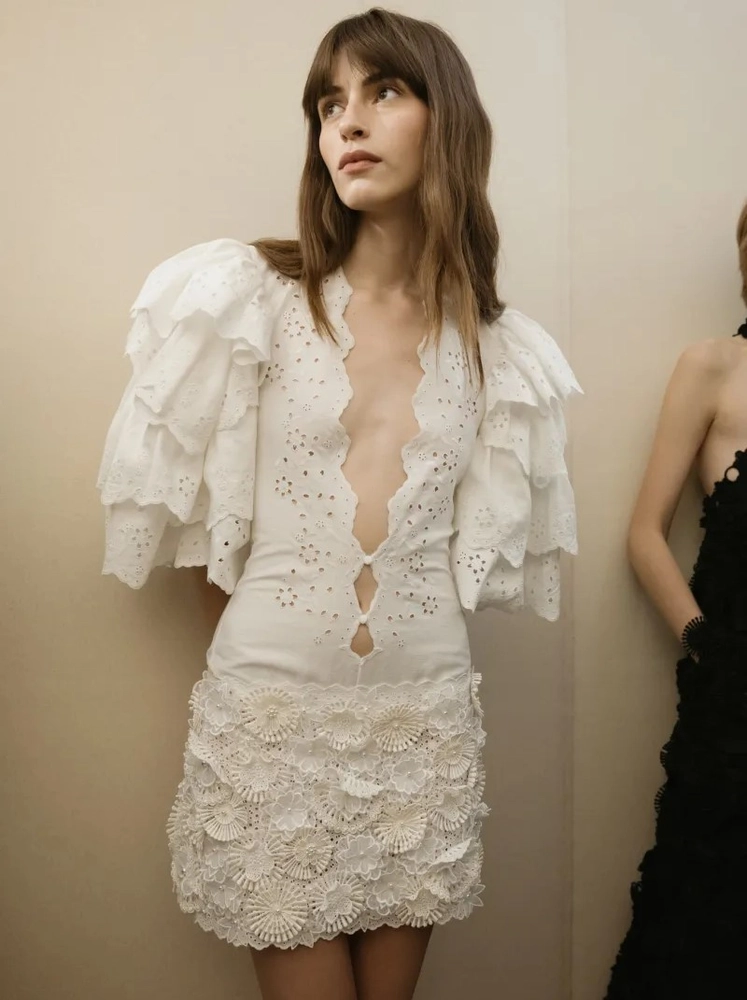
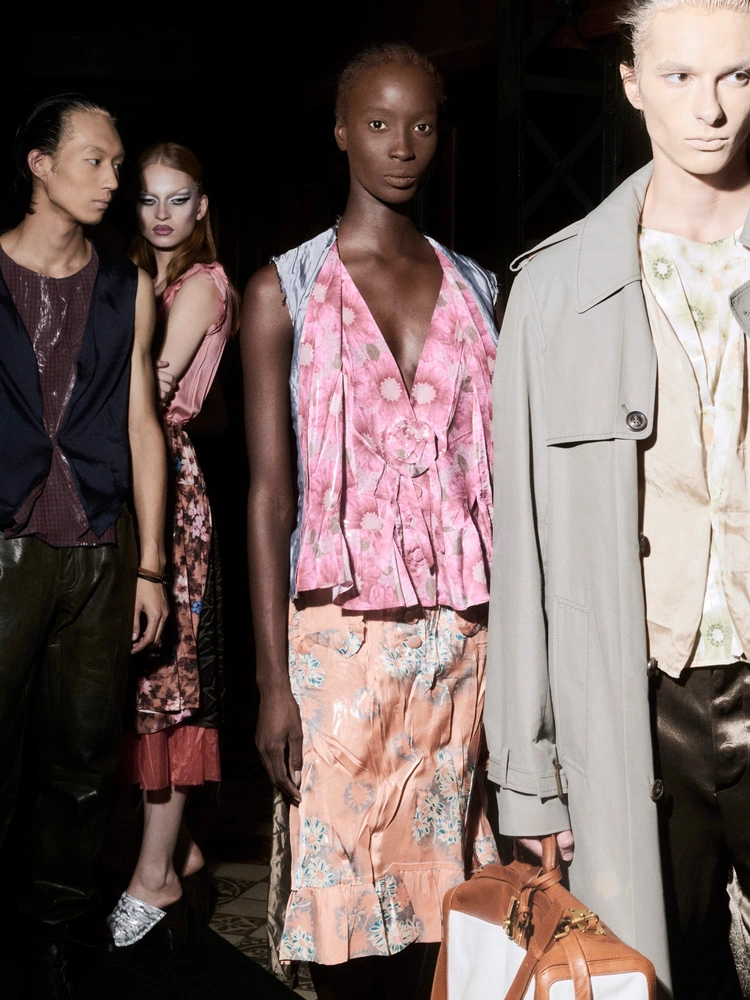
Fashion Week diversity now looks easier to photograph than to prove. Older models are returning to the runway, giving the industry a softer image of progress, yet size inclusivity remains trapped between token casting, sample-size loyalty, and the same old fantasy of control.
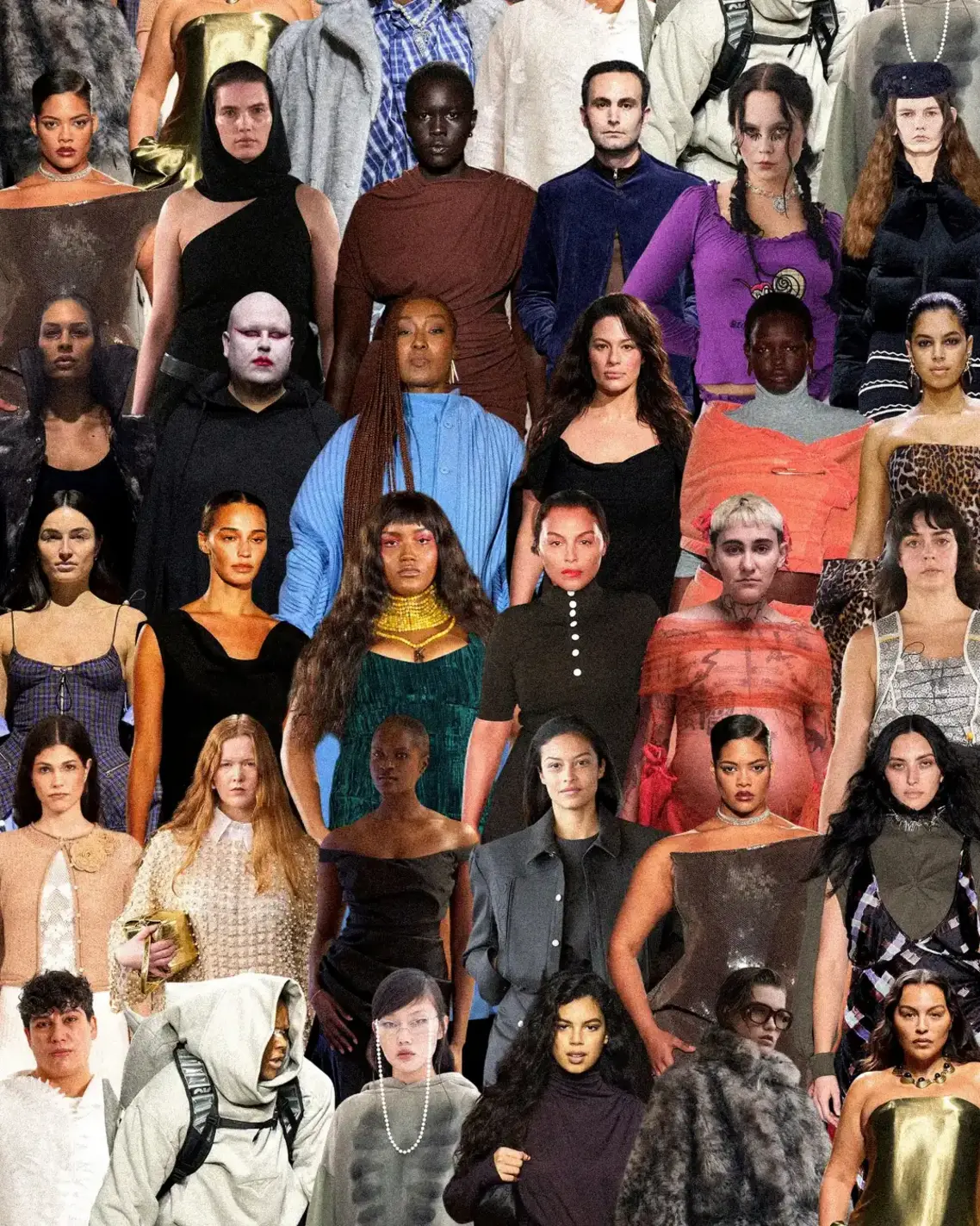
Fashion Week diversity now looks easier to photograph than to prove. Older models are returning to the runway, giving the industry a softer image of progress, yet size inclusivity remains trapped between token casting, sample-size loyalty, and the same old fantasy of control.
May 22, 2026
Advertisement
Advertisement


Before the runway can call itself diverse, one question has to be asked more carefully: what kind of difference is fashion willing to show, and what kind of difference is it willing to build around? Diversity looks generous when it appears as an image, especially under the perfect light of a major show. It becomes far more difficult when that image demands new patterns, new samples, new fittings, new production commitments, and a new idea of who luxury is actually for. The tension lies between visibility that flatters the system and visibility that forces the system to change.
Fashion loves a redemption arc, especially when it can be photographed under a thousand flashbulbs. Over the past few seasons, the runway has rediscovered age. Mature models, returning supermodels, silver hair, lined faces, women with careers longer than some creative directors’ résumés. The image tells the audience that fashion has grown up, that it has stopped worshipping youth as its only god, that the industry might finally understand beauty as something with memory.
Undeniable that is a truth in that shift, but it is a highly selective one. The current runway has suddenly become fluent in the language of age. With Chanel placing Stephanie Cavalli in a position of rare visibility and Gucci turning Kate Moss into a closing image of mature glamour. To Gillian Anderson at Miu Miu carried the same message: fashion can now admire a woman marked by time, as long as time arrives with discipline, poise, and cultural capital. But this is where fantasy starts to crack. Older models in fashion are in, but only the right kind of old.

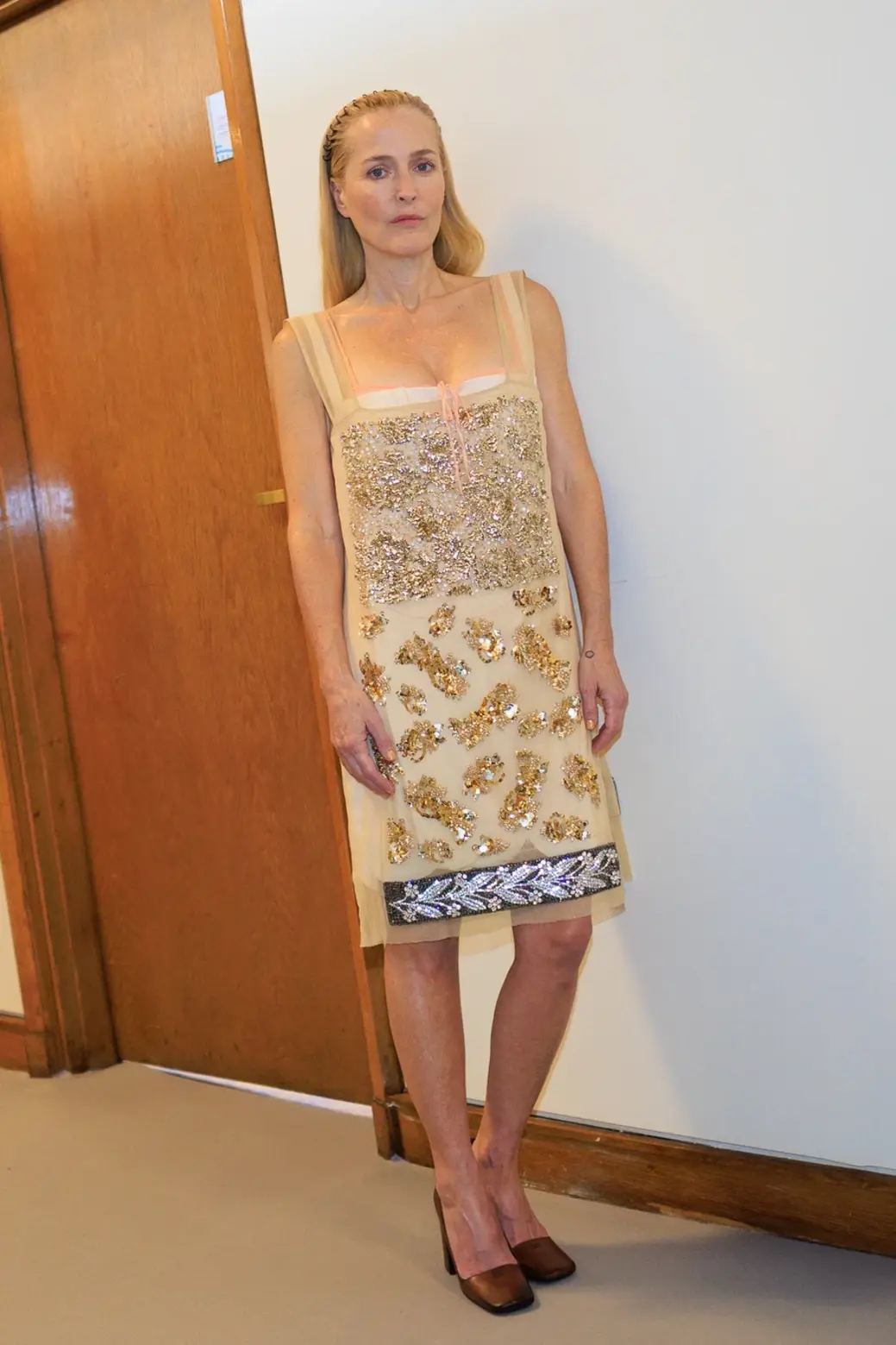
Inside that phrase is the quiet contract fashion keeps renewing with itself. The contemporary landscape is not suddenly welcoming age in all its forms but rather welcoming age when it can still perform elegance, wealth, restraint, and bodily control. The wrinkle has become acceptable because it can be styled as wisdom. Silver hair has become chic because it photographs like heritage. But the curve remains a threat because it asks the industry to do something more difficult than change the casting mood but to change clothes.
Age is where it appears to look generous; size is where that generosity begins to show its limits. The industry has found a diversity loophole: celebrate time, preserve thinness. The industry has learned to romanticize the passing of time, but it still panics in the presence of flesh.
The current affection for older models exposes one of fashion’s oldest habits: it chooses the rebellion that does not threaten production. Casting a model over fifty can be powerful, but it can also be operationally convenient. To create an image of progress without necessarily forcing a brand to rethink pattern-making, grading, fittings, retail orders, e-commerce photography, or sample development. Size inclusivity demands all of that.
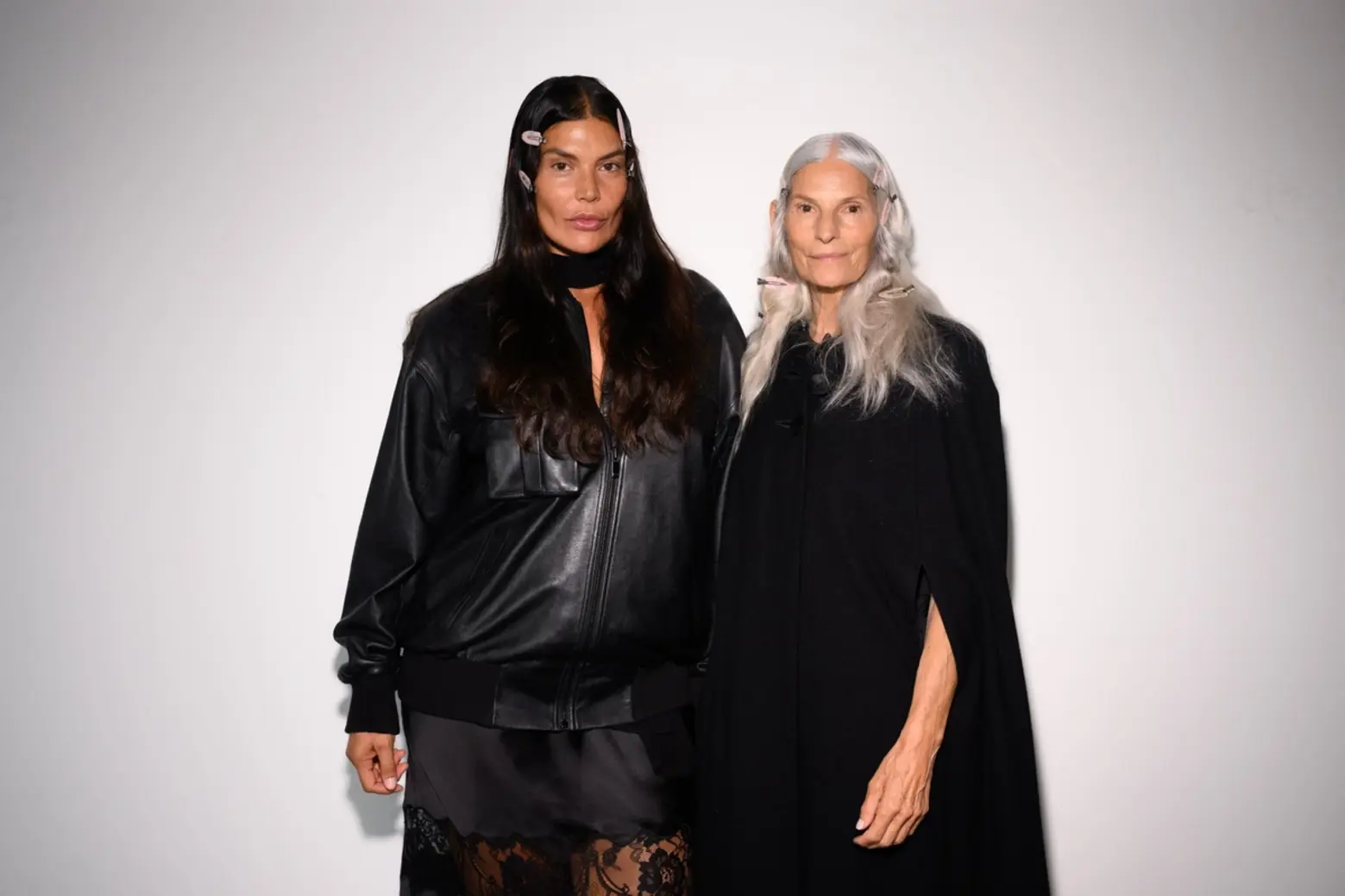
Is this where its morality starts to look suspiciously practical? A house can send an older woman down the runway and instantly gain cultural depth. The image suggests heritage, intelligence, authority, and a life lived beyond the mirror. But to send a truly size-diverse cast down the runway season after season, then actually produce those clothes in those sizes, requires infrastructure. It asks for different fit models, more technical knowledge, more fabric testing, more inventory risk, and a deeper respect for customers who have always existed outside sample-size fantasy.
Therefore, age becomes a convenient frontier. Fashion offers a brighter mask to the world: age is just a number, beauty can mature, glamour can outlive youth. On the surface, the message feels generous, yet underneath is the industry's oldest anxiety that remains almost untouched. Size inclusivity is still treated as a harder and less photogenic problem. The model can carry time, history, and experience, as long as the body beneath the story remains close to the familiar runway ideal. What looks like progress begins to resemble camouflage, as fashion lets time touch the face while still refusing to let flesh disturb the silhouette.
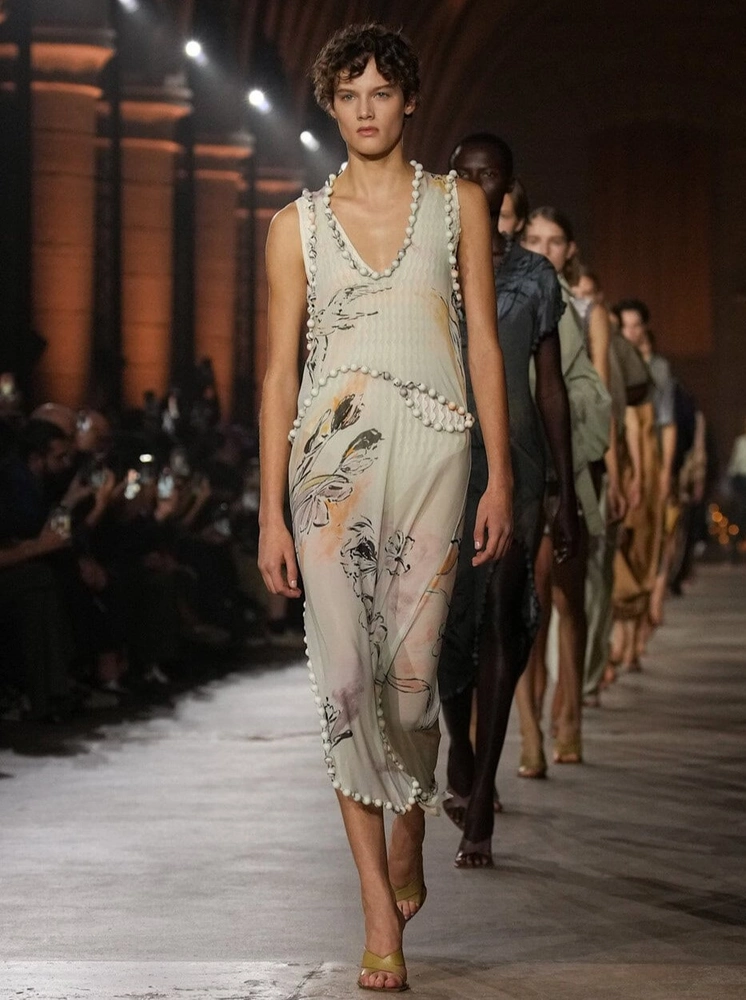
The fantasy of progress collapses when it meets the data. Recent runway size-inclusivity tracking across the major fashion capitals found that straight-size bodies still dominate almost the entire runway system. For one recent Fall/Winter 2026 presented 7,817 looks across 182 shows; 97.6 percent were straight-size, while plus-size representation fell to just 0.3 percent. Even London, the most size-inclusive city of the season, reached only 0.8 percent plus-size looks. That is not a movement. It is representation reduced to décor, a body placed in the room so the room can call itself changed.
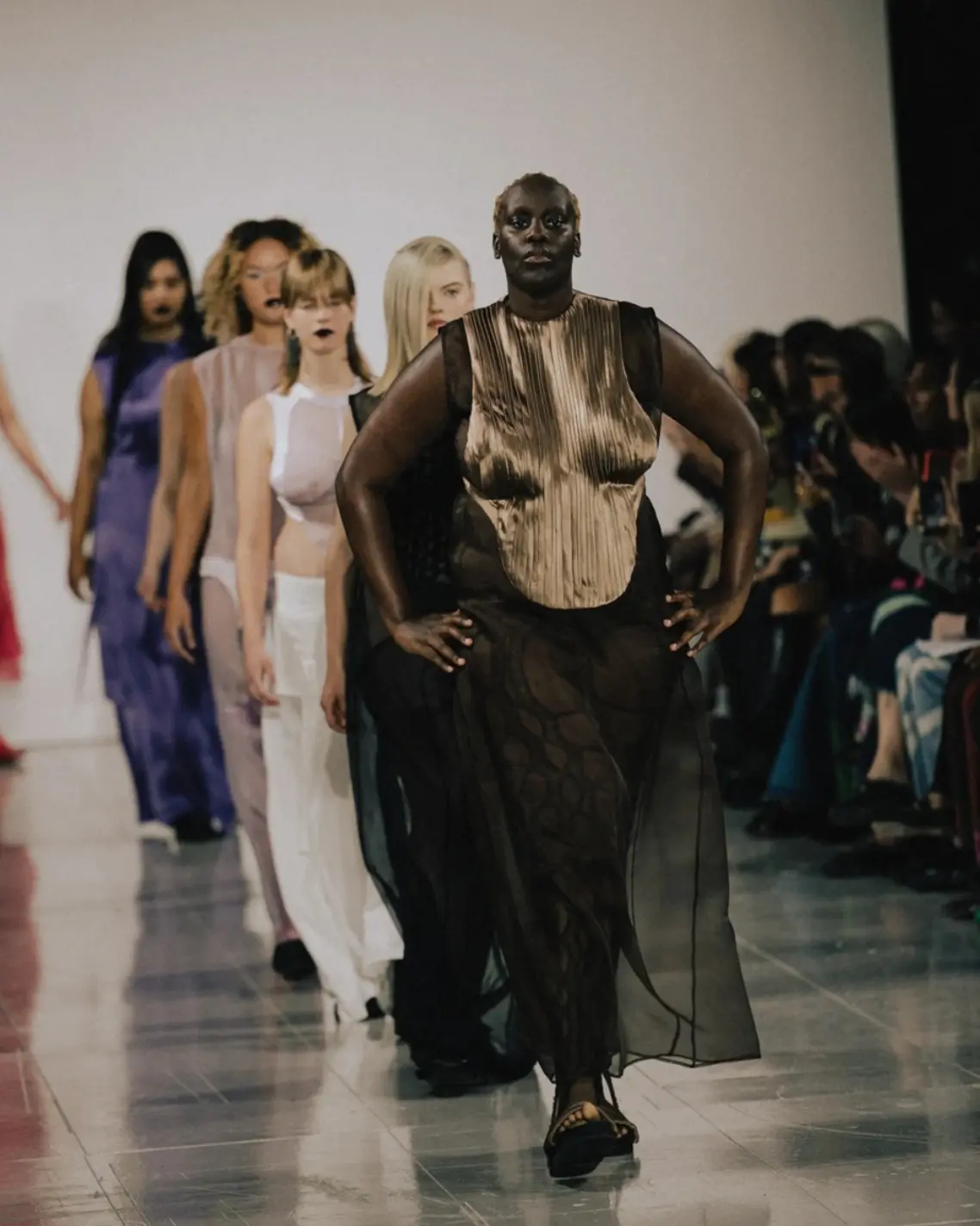
The season still had its exceptions, but even the exceptions revealed the limits of the system. Karoline Vitto’s return to the London runway became the rest of the schedule remained so narrow, while Brunello Cucinelli’s mid-size casting helped lift Milan’s figures without pushing the city into genuine plus-size territory. London still ended with only 0.8 percent plus-size looks; Milan, with 0.1 percent. The result is a strange kind of progress, where one brand can become evidence of possibility precisely because most of the industry continues to treat that possibility as optional.
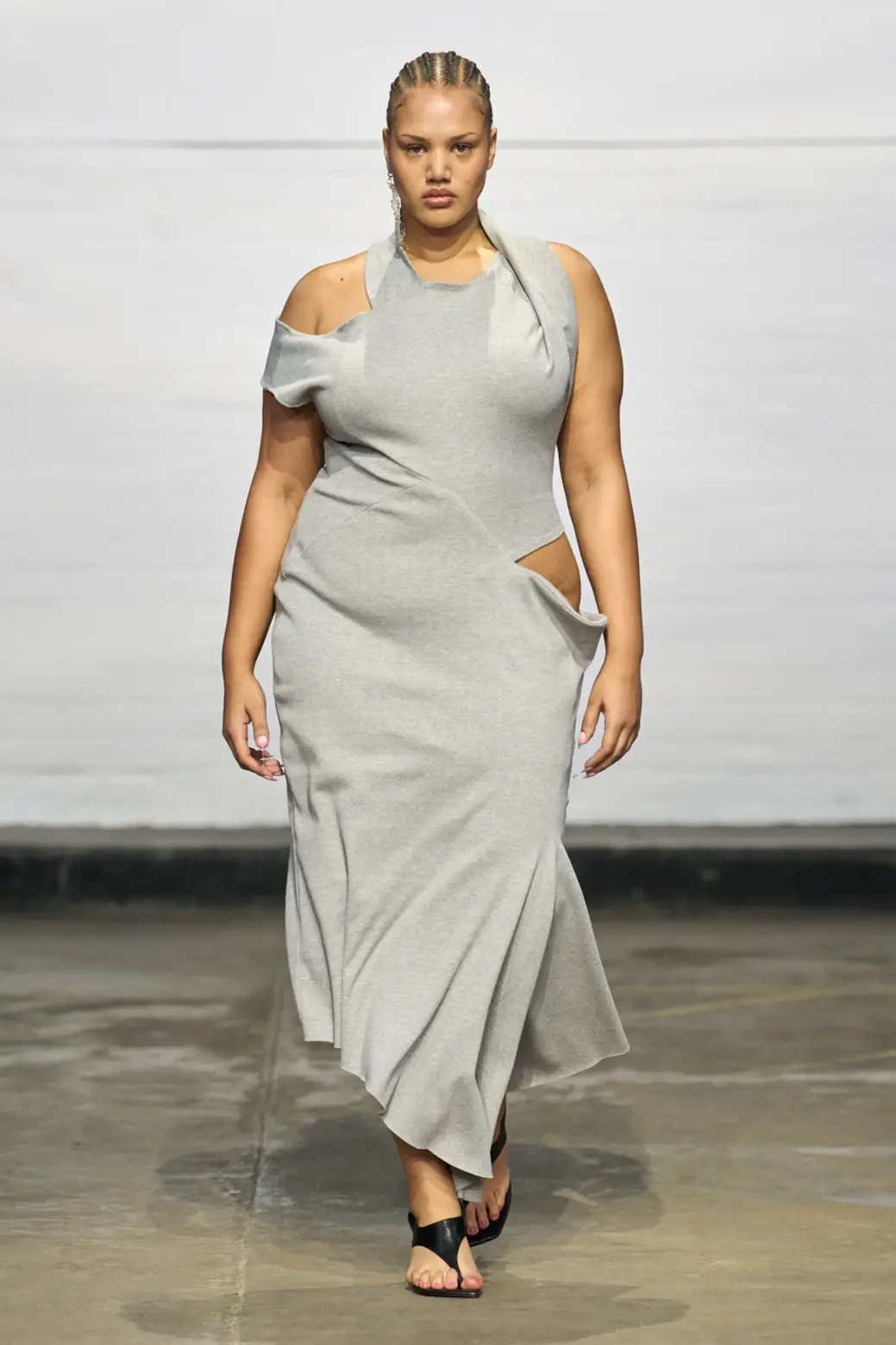

The problem is not only absence but it is the way presence is staged. One plus-size model appears in a show like a legal disclaimer. One mid-size body enters a lineup of extreme sameness, and the brand waits for the language of progress to gather around it. The model becomes a shield against criticism, not proof of transformation. She is positioned as a symbol before she is treated as a customer, a creative subject, or a body worthy of design.
The fashion world has mastered the optics of “we heard you.” It has been far slower to prove “we changed.”
Body positivity entered fashion as a promise of liberation, but the industry quickly learned how to turn that promise into campaign language. The movement gave people vocabulary for self-acceptance, visibility, and resistance against narrow beauty standards. It took that vocabulary and polished into something more sellable. Confidence became a slogan. “Real bodies” became a mood board. Inclusivity became an image strategy that could sit beside limited size ranges and the same old casting habits.
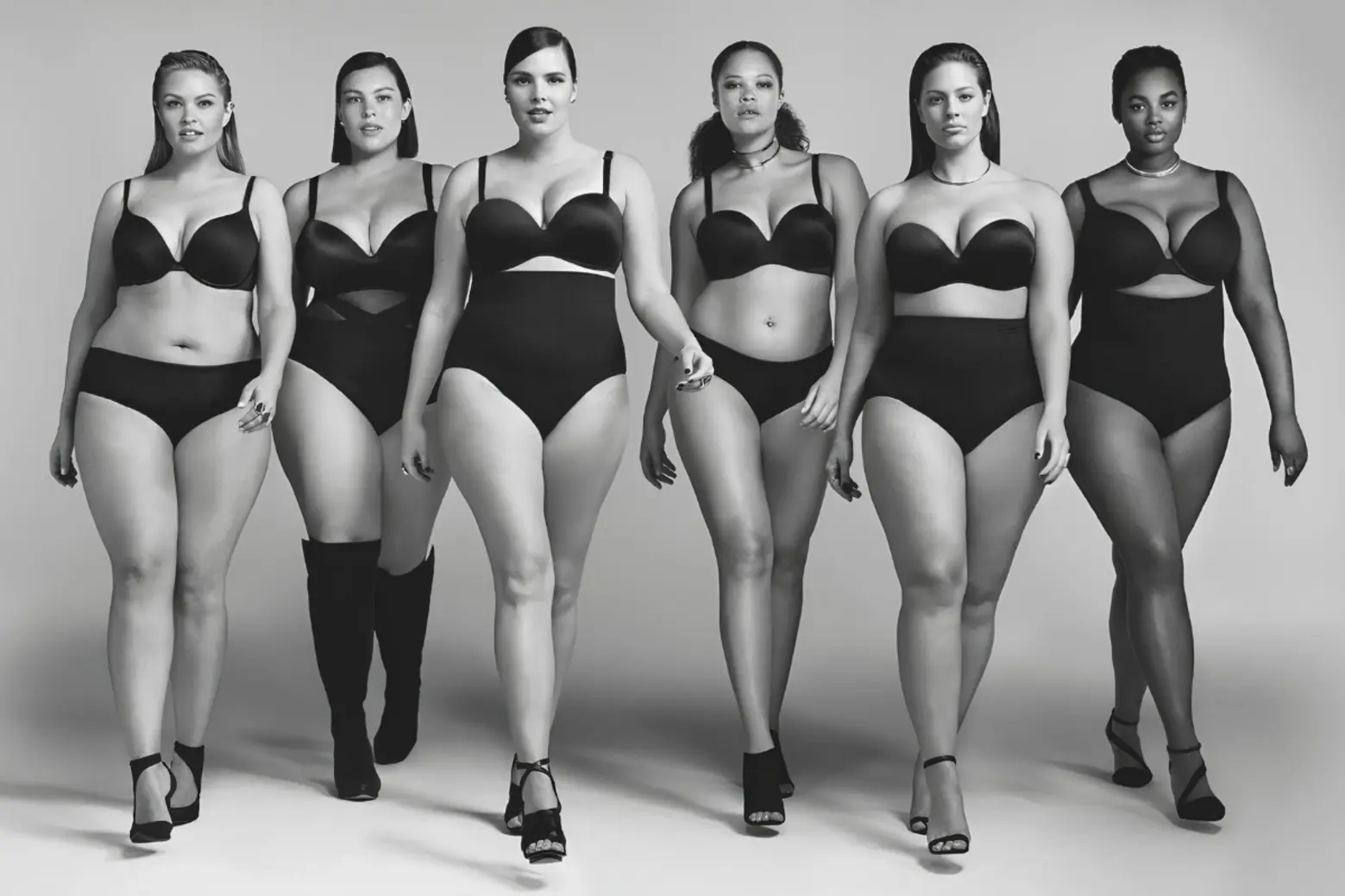
The hypocrisy sits on how easily brands marketing self-love while still managing to keep larger size out of reach. They can speak the language of body acceptance without expanding the size range, praise confidence while photographing only the most commercially convenient versions of difference, and turn “real bodies” into a campaign aesthetic that still decides which bodies are allowed to look soft, romantic, luxurious, or desirable. Nothing here is liberation. It is the same hierarchy with warmer lighting, softer copy, and a better marketing strategy.
The most revealing contradiction appears inside plus-size representation itself. Even when larger bodies enter the fashion image, they are often filtered through a new version of the old standard. The industry asks for a bigger body arranged in the least disruptive way. It may be larger, but it is still expected to remain controlled enough to protect the fantasy. If the body moves beyond that approved zone, it becomes too difficult, too real, too far from the version of inclusivity the industry is prepared to sell.
Body positivity was supposed to end the trial of the body, but fashion only expanded the list of defendants. The body invited to break the rule is still expected to obey another rule. Thinness is still treated like evidence in a case nobody should have been forced to answer, while larger bodies enter the same courtroom through another door, where visibility arrives with conditions and acceptance can be withdrawn the moment the body stops serving the image. The plus-size model is not freed from the old hierarchy, but placed inside its updated legal fiction: no crime was ever committed, yet everybody is still waiting for a verdict.
The body is no longer simply styled; it is optimized. Where the current beauty landscape feels quietly dystopian, people are being taught to assemble themselves from preferred parts until the body becomes less a home than a prototype. The industry feeds into those cultures, gives fantasy its first language, teaching the eye which bodies look worthy of desire before beauty culture arrives to make fantasy purchasable.
Size inclusivity can no longer be treated as a seasonal correction. Bodies are not hemlines, silhouettes, or color palettes that can appear for a few seasons and disappear when the mood board changes. When fashion treats size diversity as a passing visual code, it reveals the cruelty beneath the progress narrative: the industry is not only deciding which bodies are allowed to remain visible once the trend has moved on.
Model culture has always disguised brutality as discipline. Behind the clean walk and the blank face is a career built on elimination, where the body is not only looked at but constantly negotiated, reduced, and made available for judgment. The casting room turns beauty into a competition of fractions: a smaller waist, a sharper cheek, a body that can disappear into the dress without asking the dress to change. In that world, extreme dieting is a logic the industry has repeatedly rewarded, especially in the long shadow of heroin chic, where exhaustion itself was aestheticized until fragility began to look like fashion history.

The darkest irony is that the model is often asked to damage the body in order to become the perfect hanger for a garment. When appetite becomes the enemy, even the industry’s darkest jokes start to sound like instructions: smoke more, want less, shrink faster, fit the dress. At that point, the runway no longer looks like a celebration of clothes, but a selection process for those who can turn self-erasure into professionalism.
A wider-looking cast cannot redeem a system that still teaches the body to shrink first and appear later.
So, is Fashion Week diversity really changing? Only if diversity is understood as visibility without consequence, a casting shift that looks generous from the front row but leaves the deeper architecture untouched. The runway has become more willing to show age, memory, and selected forms of difference, yet it still decides which bodies can enter without disturbing the garment, the sample size, the fantasy, or the commercial image luxury has spent decades protecting. What appears to be openness is often a narrower form of permission: come in, but do not force the system to change around you.
Size inclusivity sits at the pressure point of the entire debate, exposing the difference between what fashion is willing to aestheticize and what it is prepared to rebuild. Age can be romanticized, individuality can be styled, yet size asks for something more material: different patterns, samples, fittings, production orders, retail commitments, and a different imagination of who luxury is for.
The question is not whether Fashion Week can place a few diverse bodies inside the spectacle. It is whether the spectacle is willing to lose its old hierarchy once those bodies arrive.
Until Fashion Week diversity can treat size inclusivity as a standard, the runway will remain fluent in the performance of progress while the bodies that disturb its fantasy wait outside the door.
Advertisement