MENU
Close





Ed Hardy is back, and fashion is acting shocked, as if it did not secretly miss the mess.

Ed Hardy is back, and fashion is acting shocked, as if it did not secretly miss the mess.
August 14, 2026
Advertisement

Advertisement



Once buried as the loudest shame of the 2000s, the empire has returned through Y2K nostalgia with a question: did the brand change, or did our taste get reckless again?
Ed Hardy entered fashion history wearing rhinestones, skulls, tigers, trucker caps, burning hearts, and the smell of a nightclub at 2 a.m. The brand became a cult classic because it carried every contradiction of the 2000s on one T-shirt: rebellion sold at the mall, tattoo culture sold to people scared of needles, celebrity worship sold as personality, and bad taste inflated until bad taste became destiny.
The deeper story begins with Don Ed Hardy, a serious artist whose name became louder than his face. Christian Audigier later turned that name into a global clothing phenomenon. Fame did the rest. Fame made Ed Hardy rich. Fame made Ed Hardy toxic. Fame also gave Ed Hardy the strange second life that only truly notorious brands receive.
Don Ed Hardy was born in Southern California in 1945 and completed a BFA in printmaking at the San Francisco Art Institute in 1967. That training matters because Don Ed Hardy entered tattooing with the discipline of an image-maker shaped by print, line, composition, and cultural memory. The official Don Ed Hardy biography also notes that Don Ed Hardy’s work became the basis of the global fashion line Ed Hardy, the same line that later made his name internationally visible through clothing.
Tattoo City opened its first incarnation in San Francisco in 1977, marking a permanent home for Don Ed Hardy’s visual universe. The imagery that later became mall mythology had already lived in tattoo shops, flash sheets, Japanese references, American military codes, biker culture, sacred hearts, koi fish, tigers, pinups, skulls, banners, and roses.
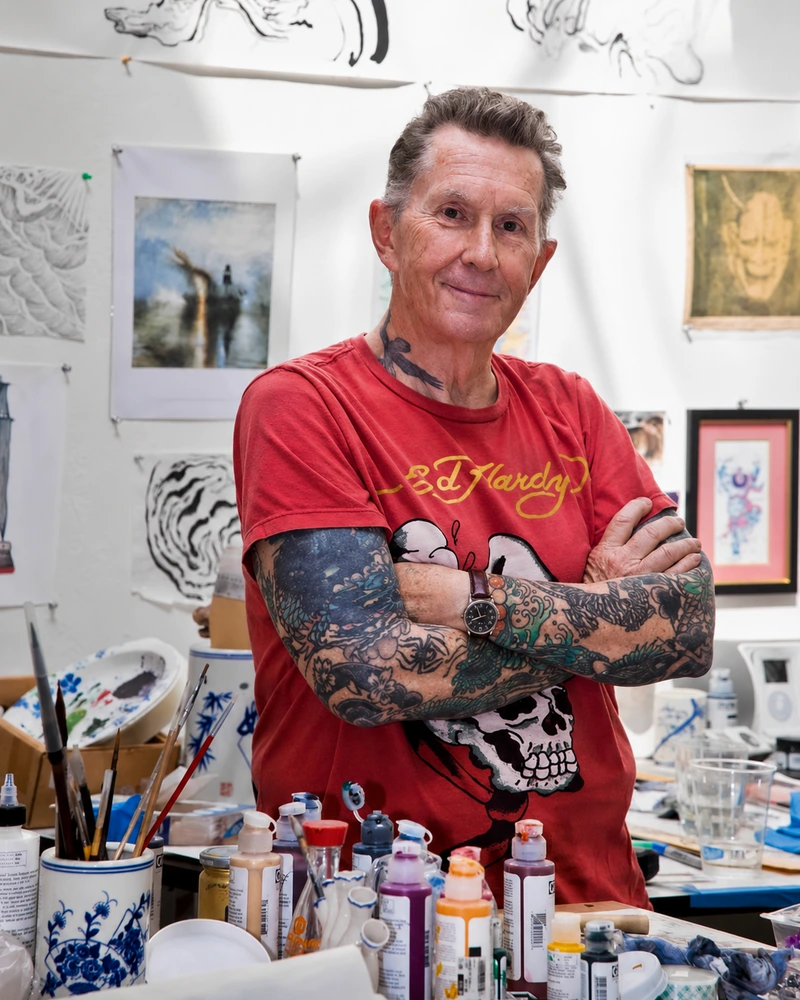
The cruel irony begins here. Don Ed Hardy spent decades helping tattooing gain legitimacy as an expressive art form. The Ed Hardy clothing brand later flattened that complexity into an instantly readable logo-world. The graphics looked simple on cotton because the commercial system needed them to be simple.
Don Ed Hardy’s own artist statement describes years of intense study of Asian art traditions, especially Japanese ukiyo-e culture, and frames Don Ed Hardy’s art as “dumb, funny, frightening and seductive.” That phrase almost predicts the future Ed Hardy brand by accident. The clothes became all four at once.
By the early 2000s, tattoo culture was moving toward mainstream visibility. Reality television, celebrity bodies, rock styling, and streetwear all helped tattoos shift from social stigma into desirable attitude.
Christian Audigier was born near Avignon, France, in 1958 and entered the denim trade as a teenager. Before Ed Hardy, Christian Audigier worked across labels such as Levi’s, Bisou Bisou, Guess, and American Eagle Outfitters, then became head designer at Von Dutch from 2002 to 2004. Christian Audigier was a principal architect of Von Dutch’s celebrity “carpet-bombing” strategy, the same strategy that pushed trucker hats and the flying-eyeball logo into the zeitgeist.
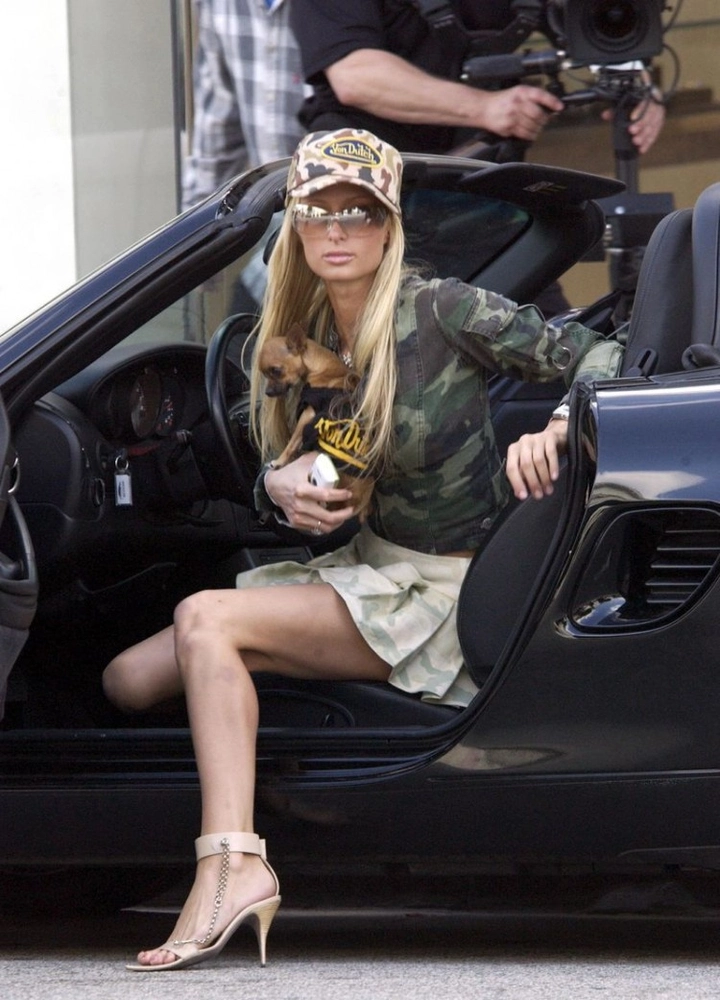
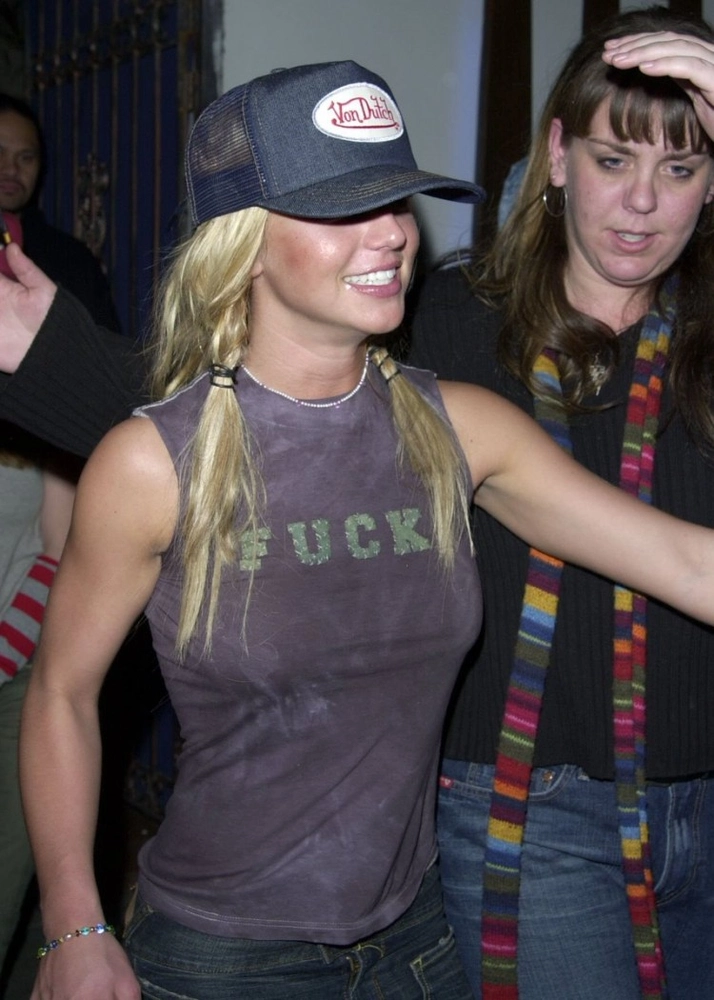
Christian Audigier understood one brutal rule before many luxury houses admitted it: visibility could beat design. Christian Audigier saw celebrities as trend engines and openly explained that when celebrities wore Christian Audigier’s products, the public would see them and follow. Christian Audigier treated paparazzi photos as free billboards, celebrity gifting as distribution, and fame as a retail channel.
After leaving Von Dutch, Christian Audigier needed a new mythology. In his own version of the origin story, Audigier bought a Melrose T-shirt carrying a tattoo image by Don Ed Hardy, wore it out, saw the reaction, tracked the artist down, flew him to Los Angeles, and licensed the work in fifteen minutes. There are, however, multiple competing versions of that origin story, which fits his larger talent for making perception feel stronger than chronology.
Ultimately, Audigier approached Hardy about licensing around 1,500 early tattoo images. From 2004 to 2011, Ed Hardy by Christian Audigier merchandise generated close to $4 billion worldwide, according to Hardy’s business manager, Dave Rosenberg. The resulting aesthetic was an unmistakable, unapologetic explosion of vintage tattoo art, rhinestones, and vibrant Americana that defined a highly specific era of maximalist streetwear.
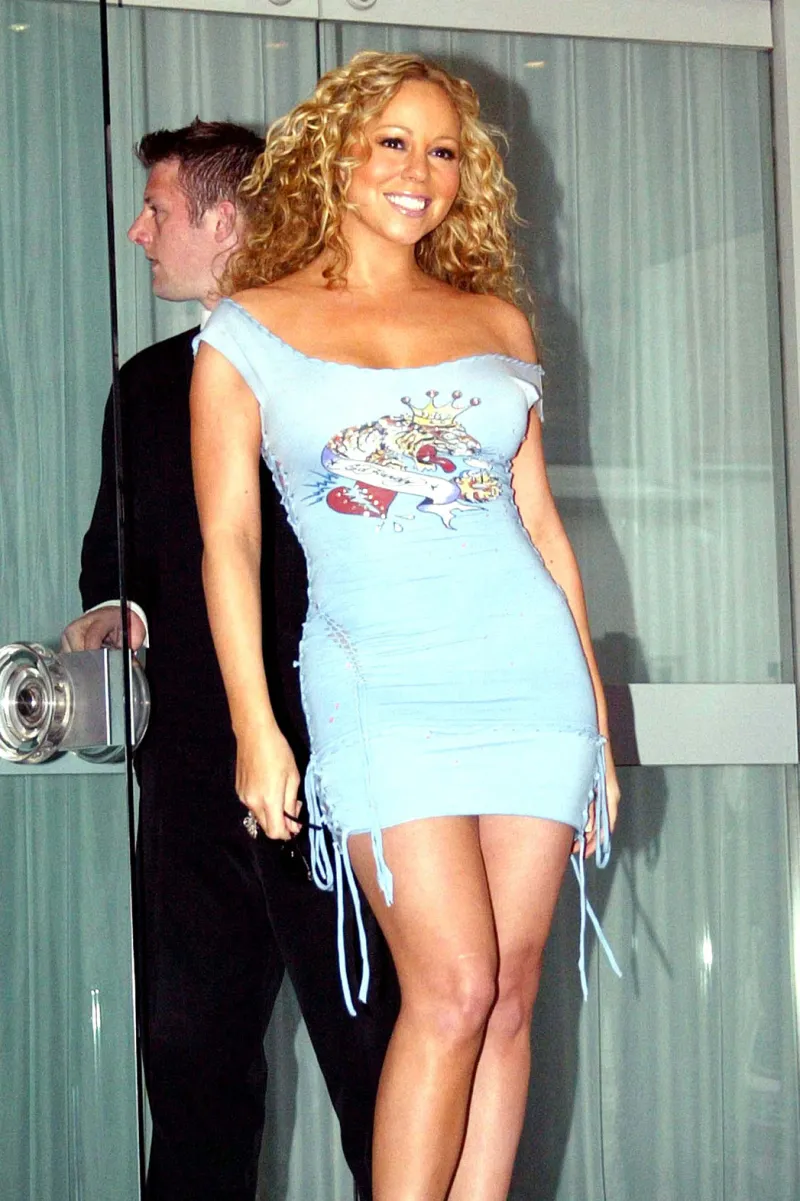



That deal was tiny in time and enormous in consequence. Fifteen minutes became years of fame, lawsuits, embarrassment, money, cultural hatred, and eventual resurrection.
The product was seductive because it sold tattoo identity with zero pain. A customer could wear the tiger, the skull, the heart, the banner, the koi, the geisha, and the outlaw pose, then remove the whole fantasy before laundry day.
By 2006, Ed Hardy Tattoo Wear had reached $36 million in wholesale business and opened 27 retail stores in that year alone. Christian Audigier planned 45 Ed Hardy runway looks across men’s, women’s, kids, pets, accessories, shoes, and almost everything else a licensing machine could touch.
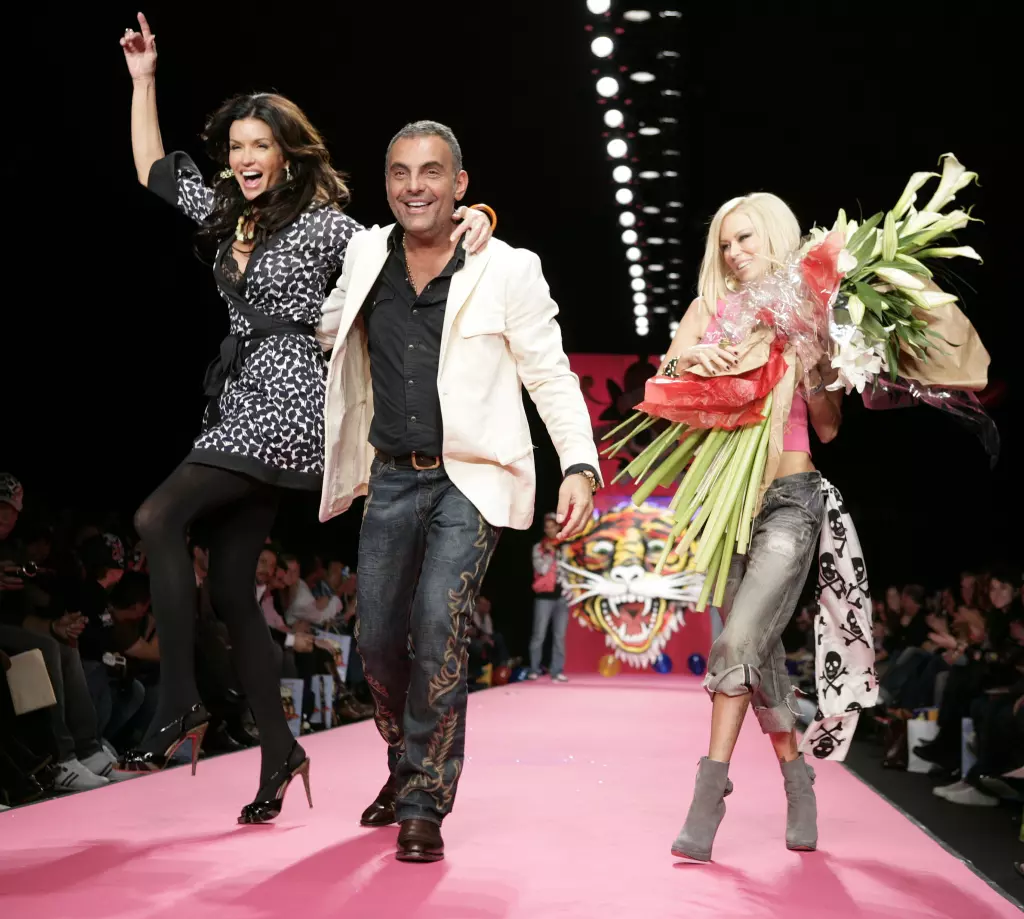
The fever then became absurd. Ed Hardy graphics appeared on T-shirts, hoodies, purses, perfume, socks, sunglasses, barware, bedding, swimwear, lingerie, and even wine. Christian Audigier’s conglomerate reached eight global brands and over 75 licensees, with branded toothbrushes, dental floss, and mouthwash also entering the picture.
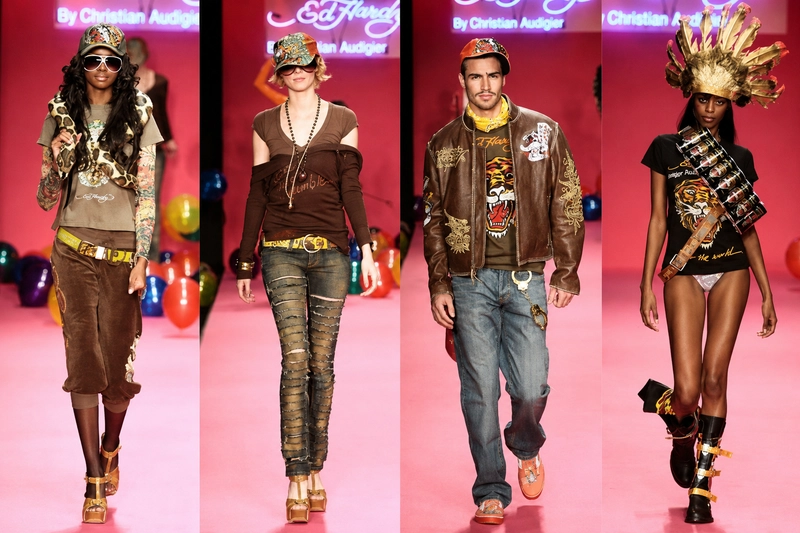
The money confirmed the madness. By 2009, Ed Hardy had expanded to 70 stores worldwide and reached over $700 million in sales. The brand turned a hyper-saturated aesthetic of skull motifs, tiger graphics, and heavy rhinestone embellishments into a global luxury-streetwear phenomenon.
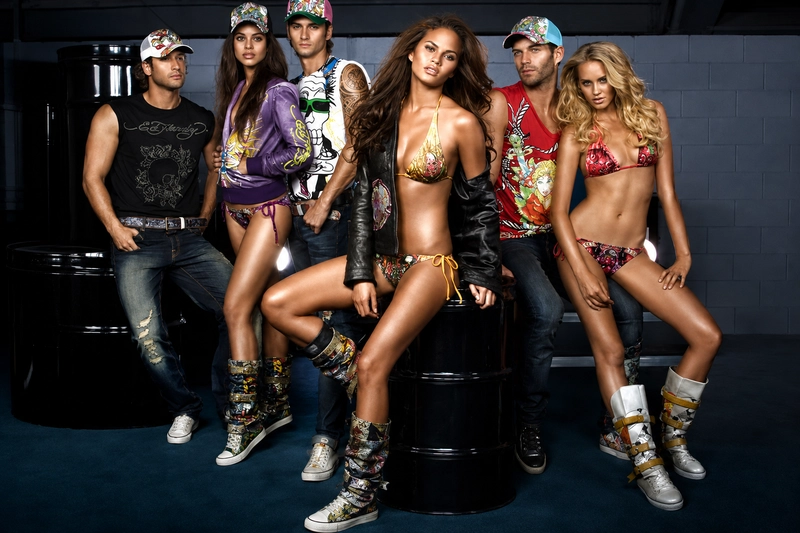
This was the high point and the collapse mechanism at the same time. Christian Audigier removed restraint from the system, then the system punished the brand for having none.
Celebrity marketing made Ed Hardy desirable. Celebrity marketing also made Ed Hardy culturally radioactive. The brand became linked with tabloid masculinity, reality-TV caricature, orange skin, nightclub posing, and the American douchebag uniform. Jon Gosselin sat at the center of this reputation crash, marking the moment Ed Hardy’s image moved from must-have to untouchable in a matter of months.
The legal conflict sharpened the founder tension when Don Ed Hardy’s Hardy Way LLC filed a $100 million claim against Christian Audigier and Nervous Tattoo, alleging underpaid royalties and underreported sales; the dispute was settled in August 2009. The brand's signature aesthetic, a loud synthesis of graphic trucker hats, heavily embellished denim, and tattoo-print graphic tees, ultimately became a defining relic of late-2000s hyper-pop style.
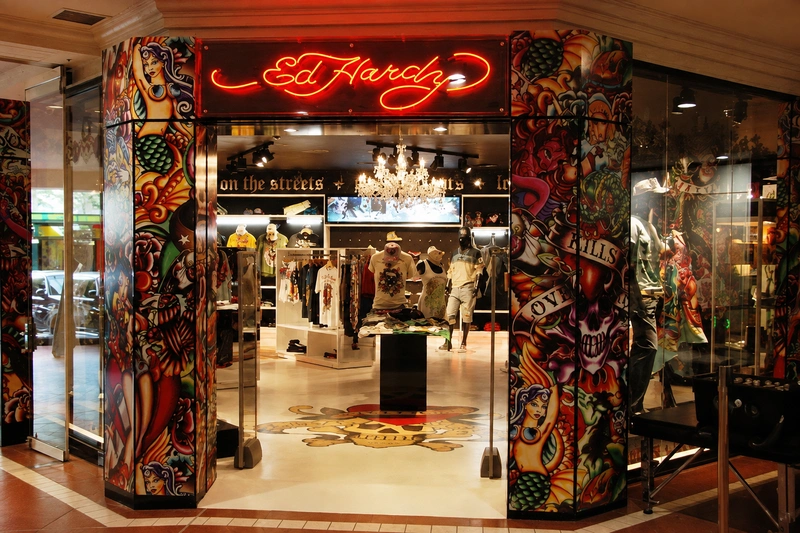
Ownership began shifting during the same period. Iconix acquired a 50% interest in Hardy Way in May 2009 for $17 million, with $9 million in cash and $8 million in Iconix stock. In April 2011, Hardy Way acquired substantially all licensing rights from Nervous Tattoo, and Iconix contributed $62 million, increasing Iconix ownership to 85%.
The brand died culturally through a cruel reversal.
Iconix announced in April 2011 that Iconix had acquired the worldwide master license for Ed Hardy from Nervous Tattoo, gaining control of licensing and marketing while increasing ownership to 85%. Iconix estimated annual royalty revenue of approximately $15 million to $16 million and described the brand as having high consumer awareness in the United States and strong international business.
The business still had value. The image had damage. That gap explains the hangover years. The Ed Hardy brand carried awareness, recognizability, and international reach, yet awareness had turned acidic. Consumers knew the logo instantly, and that instant recognition came loaded with mockery.
Christian Audigier died in Los Angeles in July 2015 at age 57 after cancer treatment, closing the most excessive chapter of the brand’s history.
This period matters because Ed Hardy had to survive its own caricature. The name remained famous. The fame needed cooling. A brand that becomes a joke needs distance before desire can return. Time became the only luxury strategy available.
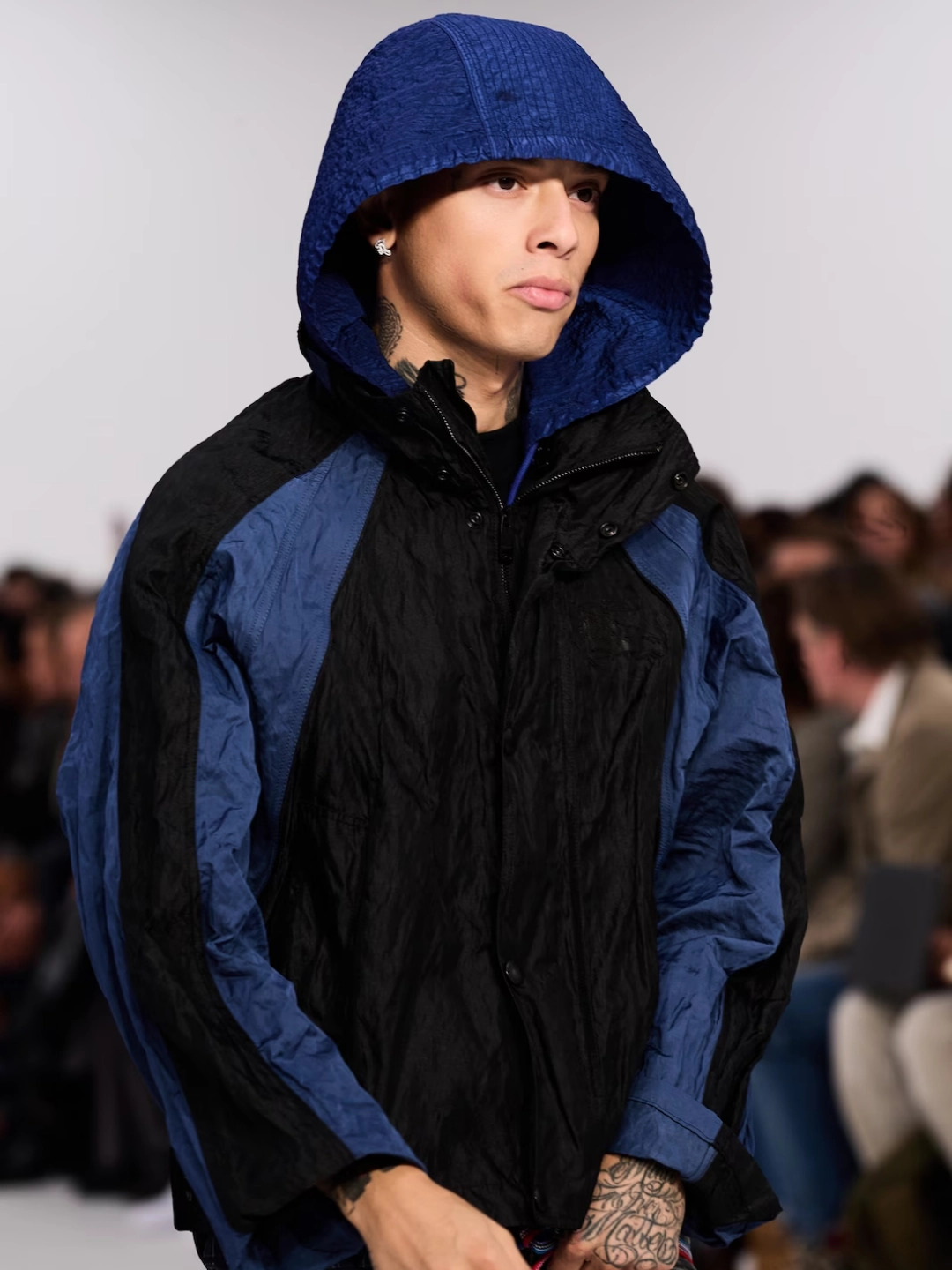
The comeback began when the embarrassment aged into artifacts. Kevin Christiana became creative director of the Ed Hardy brand in 2020, aiming to bring the label closer to Don Ed Hardy’s original tattoo art. Meanwhile, figures like Addison Rae and Bella Hadid helped carry the brand back into the contemporary fashion conversation.
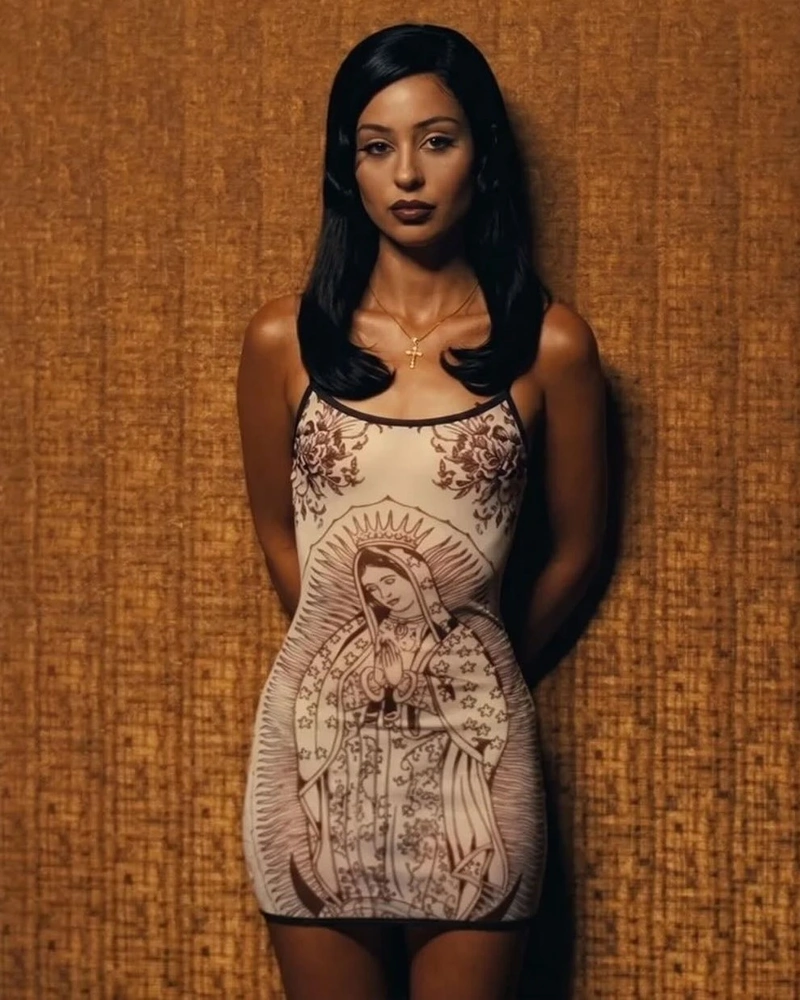
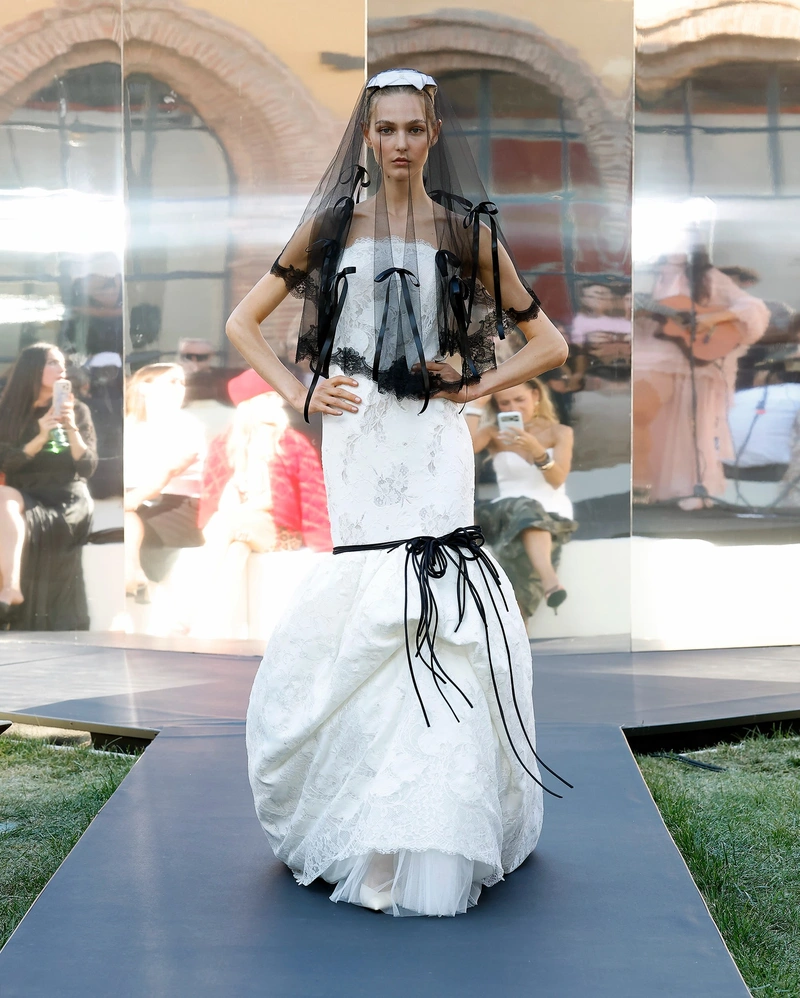
That revival gained runway-adjacent credibility in 2024, when Sinead Gorey collaborated with Ed Hardy at London Fashion Week Fall 2024. The collection marked a coming-of-age moment built from reworked archival garments, vibrant diamanté embellishment, classic tattoo motifs, tartans, and nostalgic Y2K streetwear codes.
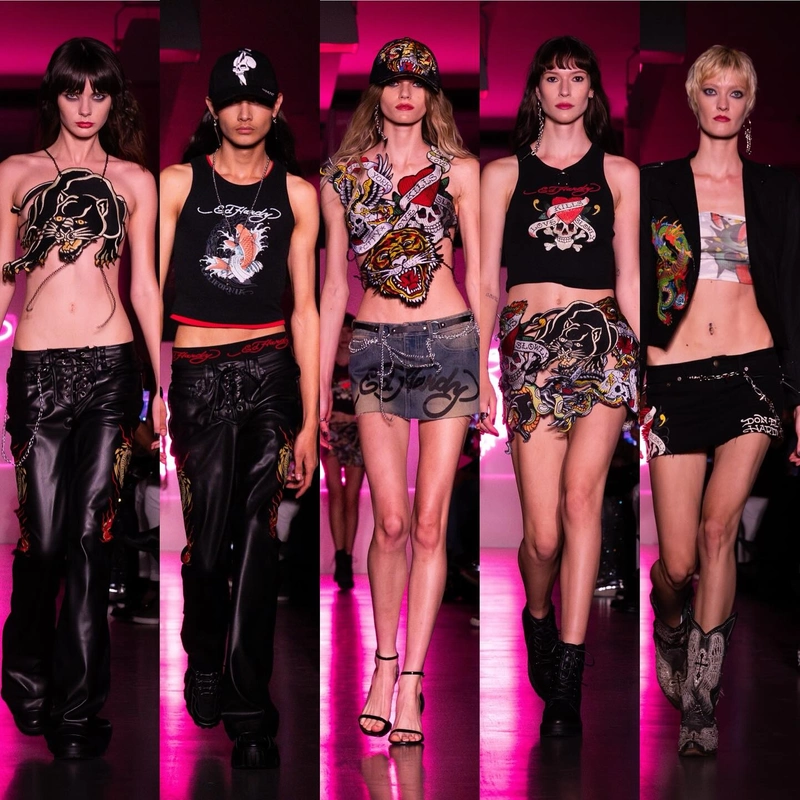
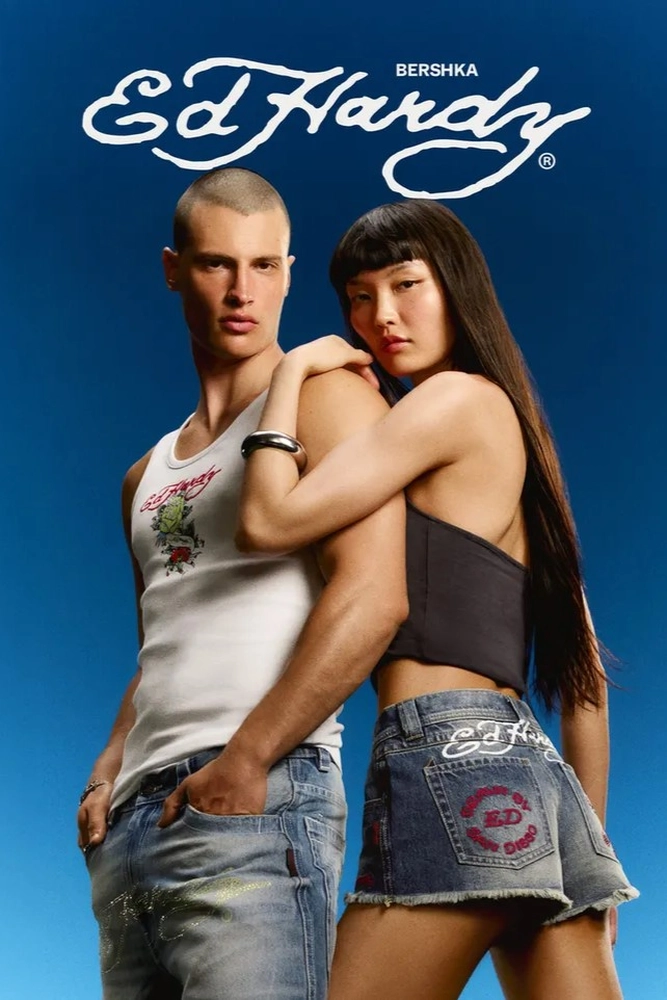
The 2026 Bershka collaboration pushed the revival into the mass-market present. Today, Don Ed Hardy retains a 15% stake in the firm bearing his name, with Iconix Brand Group as the majority owner. The Bershka x Ed Hardy release quickly became a viral Gen Z moment, powered by TikTok and designed for a new generation discovering the high-energy aesthetic of a previous era. The revived look balances nostalgic early-2000s maximalism, replete with bold flash-art graphics, shimmering crystal accents, and relaxed streetwear cuts, with a sleek, modernized sense of ironized luxury.
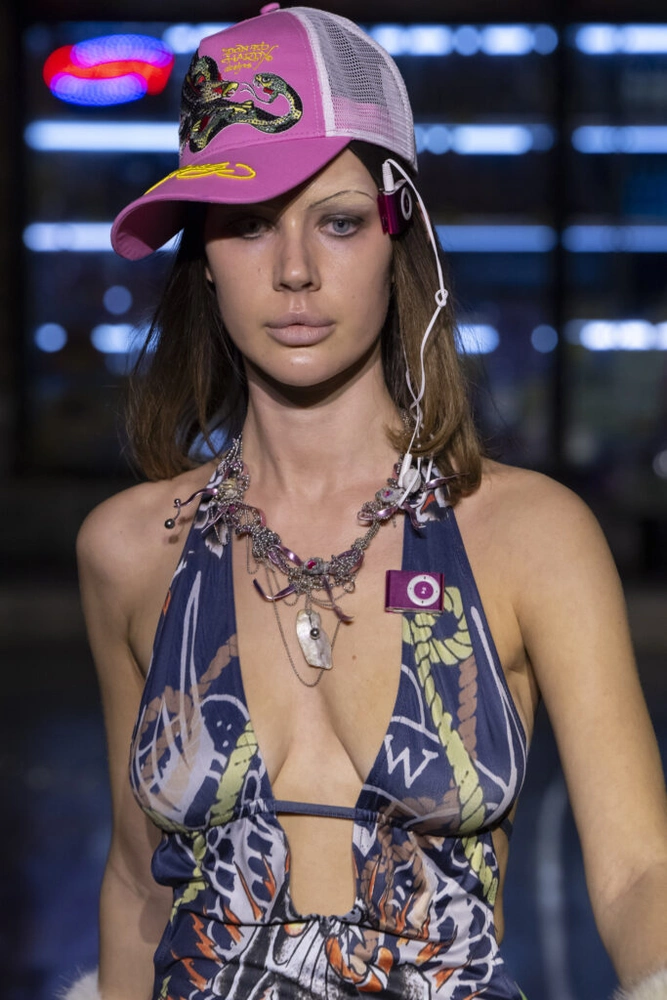
Ed Hardy’s story is the rise, fall, and resurrection of visibility itself. Don Ed Hardy gave tattooing a serious visual language. Christian Audigier turned that language into celebrity armor. Paparazzi made it global. Licensing made it ridiculous. Reality TV made it toxic. Time made it collectible. Gen Z made it fun again.
Advertisement