MENU
Close





If premium denim was worth $12.53 billion in 2025 and women’s Western wear reached $198.60 billion, why is luxury suddenly so obsessed with classic American style?
If premium denim was worth $12.53 billion in 2025 and women’s Western wear reached $198.60 billion, why is luxury suddenly so obsessed with classic American style?
June 4, 2026
Advertisement

Advertisement



Maybe the 2026 runway is chasing more than jeans, cowboys, prep, and workwear. Maybe it is chasing the one fantasy America still sells better than anyone else: reinvention.
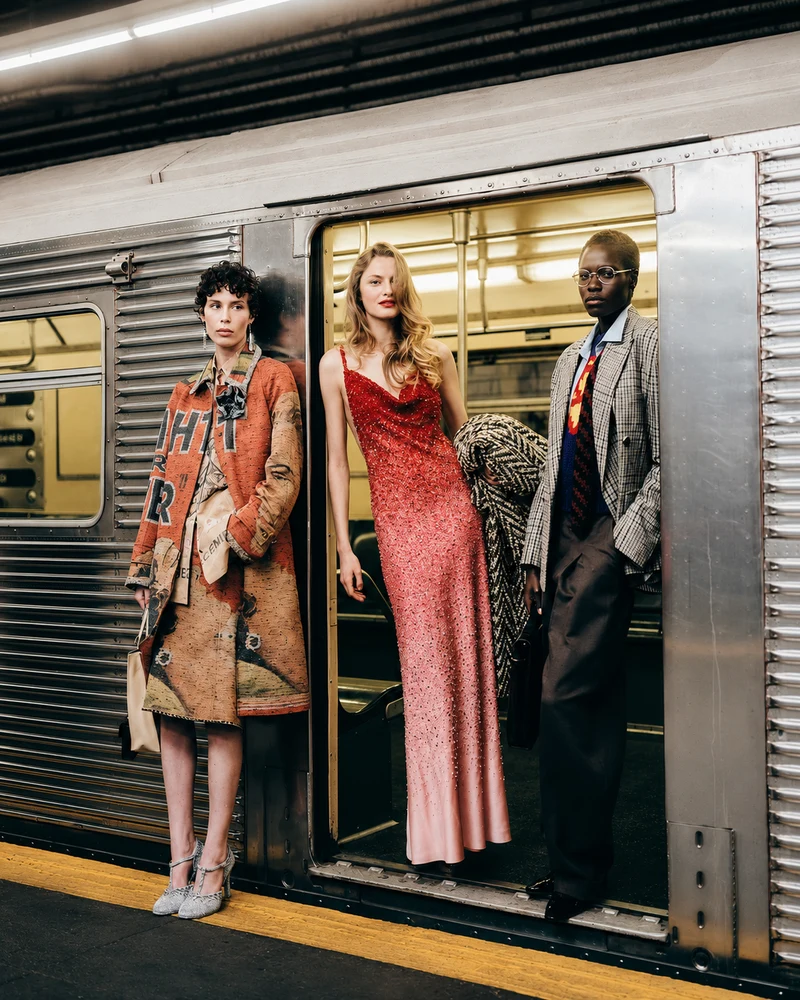
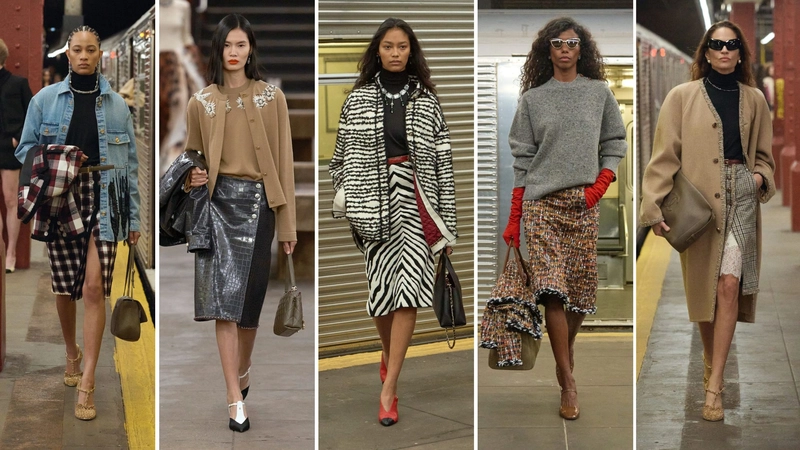
When Chanel’s Creative Director Matthieu Blazy transported the iconic French maison to a subterranean New York City subway station for the December 2025 Métiers d’Art 2026 presentation, the gesture operated as a cinematic homage to American pluralism. Models traversed the platform in workwear-inspired overshirts rendered in bouclé mimicking denim and plaid, alongside relaxed silk denim-effect trousers layered under trademark tweed jackets. Blazy’s sartorial choices served as a deeply nostalgic reflection on his tenure at Calvin Klein, while functioning as a rigorous analytical study of American practicality. This showcase underscored a macro-level paradigm shift pervasive across global fashion capitals: the systematic elevation and intellectualization of American archetypes. Within this shift, classic American style becomes a global luxury language rather than a purely national wardrobe code.
Designers consistently mine the visual lexicons of denim, workwear, prep, and Western aesthetics to communicate cultural shifts. During this exceptionally rich season, leading global houses, including Prada, Loewe, Dior, and Willy Chavarria, engaged in profound reinterpretations of these foundational categories. The current societal landscape features intense political fragmentation and economic volatility, prompting the fashion industry to revisit familiar silhouettes. By recontextualizing these archetypes, designers explore ownership, belonging, and subversion, proposing collections that redefine established hierarchies while driving massive commercial viability. Consumers actively seek authenticity and grounded reality, rewarding brands that elevate heritage aesthetics with premium execution and innovative materials.
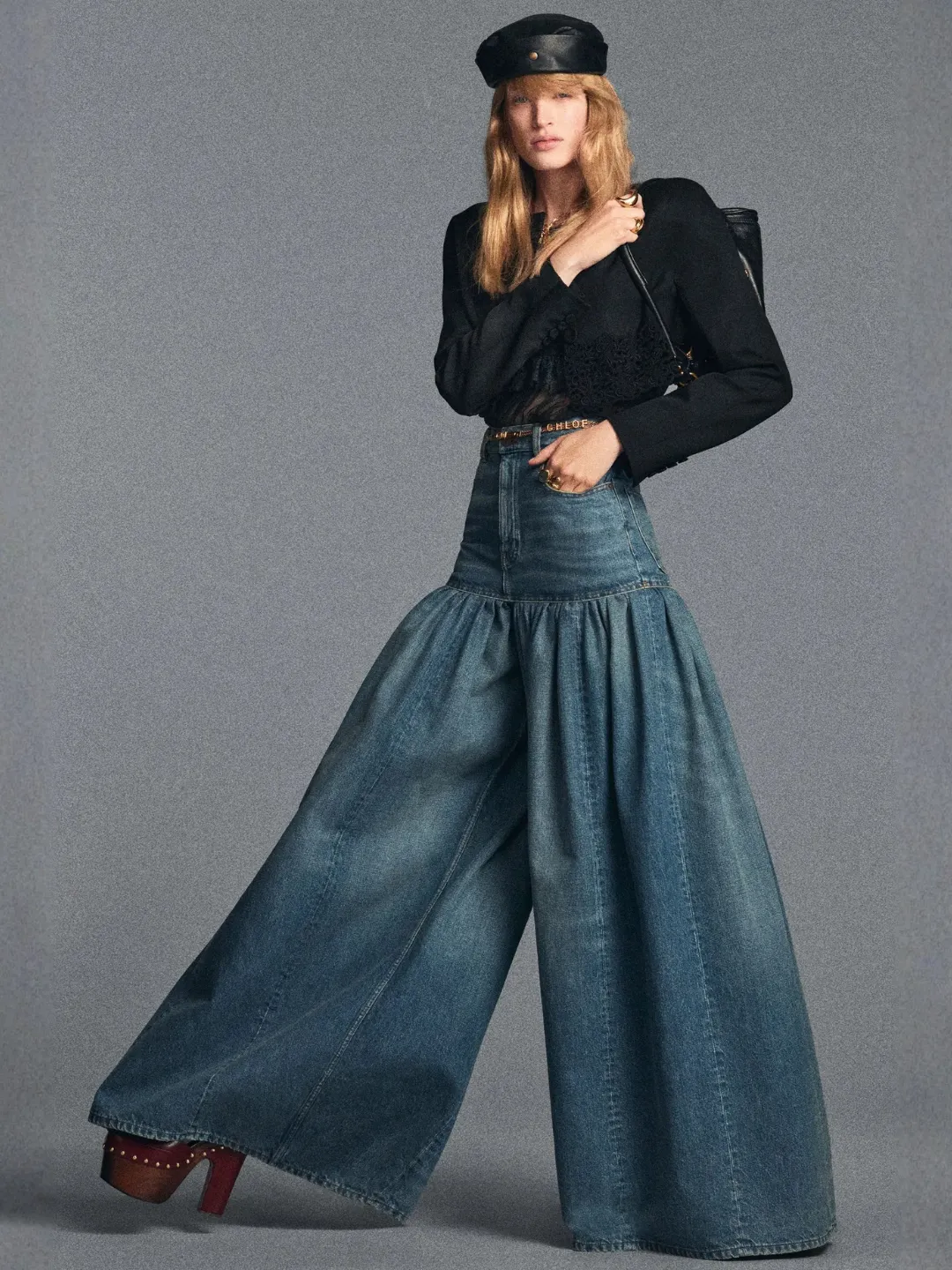
The financial architecture supporting the global rise of Americana exhibits immense structural strength across multiple core sectors. Market data sourced from Maximize Market Research and Dataintelo in 2026 highlights that the premium denim segment reached a global valuation of 12.53 billion dollars in 2025, driven by an accelerating demand for avant-garde silhouettes and sustainable material innovations. This segment maintains a projected compound annual growth rate of 6.74 percent over the coming years. Concurrently, the women's western wear market achieved a staggering global valuation of 198.60 billion dollars in 2025, expanding at a projected compound annual growth rate of 5.20 percent. This growth accelerates as e-commerce channels broaden global accessibility and consumers increasingly integrate hybrid professional-social attire into their daily wardrobes, preferring garments that marry durability with high-fashion status.
The global premium denim jeans market anticipates a robust trajectory, steering toward 19.78 billion dollars by 2032. This financial acceleration reflects a profound evolution in how consumers and designers perceive the fabric. Denim indelibly maps the trajectory of global youth culture, advancing from 1950s rebellion into the defining fabric of successive musical epochs. Today, collectors readily exchange six-figure sums for immaculate vintage specimens, while contemporary designers treat the material as a medium for avant-garde experimentation. In this context, denim remains one of the most powerful foundations of classic American style.
The Asia Pacific market alone projects a 38.4 percent growth rate in denim adoption, illustrating the massive global resonance of this distinctly American export. Furthermore, the push for sustainability leads to the commercial scaling of technologies utilizing polycotton waste and mechanically recycled cotton, with certain firms achieving massive reductions in operational emissions.
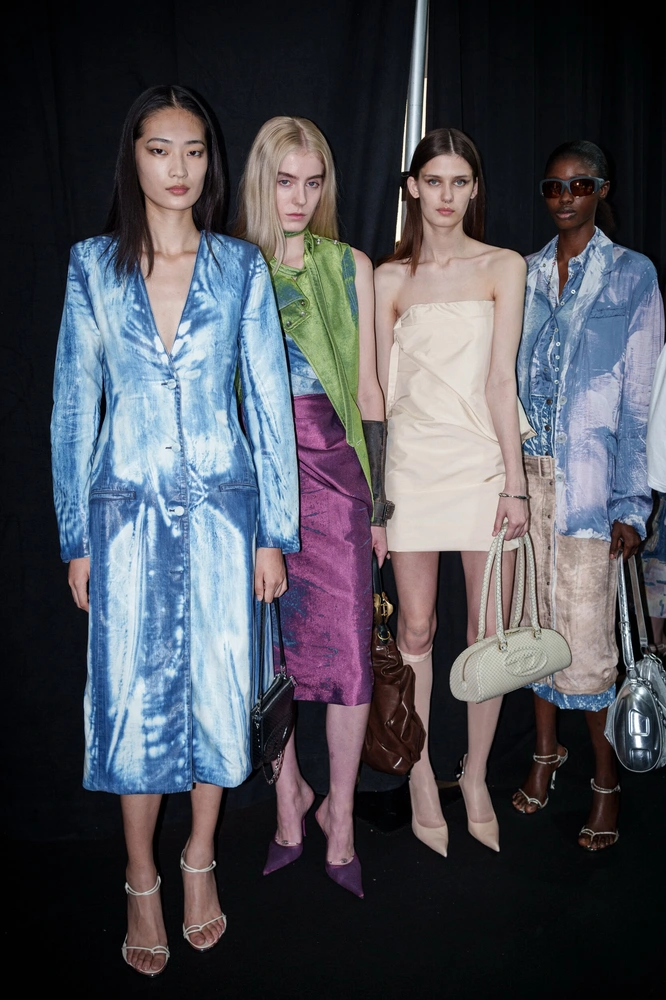
Glenn Martens catalyzed this elevation at Diesel by treating denim as pliably as jersey. He peels, twists, and molds the fabric into complex silhouettes, employing illusory surface treatments like trompe l’oeil effects or painted finishes resembling leather. This ingenuity permeates the wider industry. At Loewe’s Spring/Summer 2026 presentation, Jack McCollough and Lazaro Hernandez manipulated supple leather to imitate faded blue jeans, achieving a brilliant synthesis of American-inspired sportswear and Spanish artisanal craftwork.
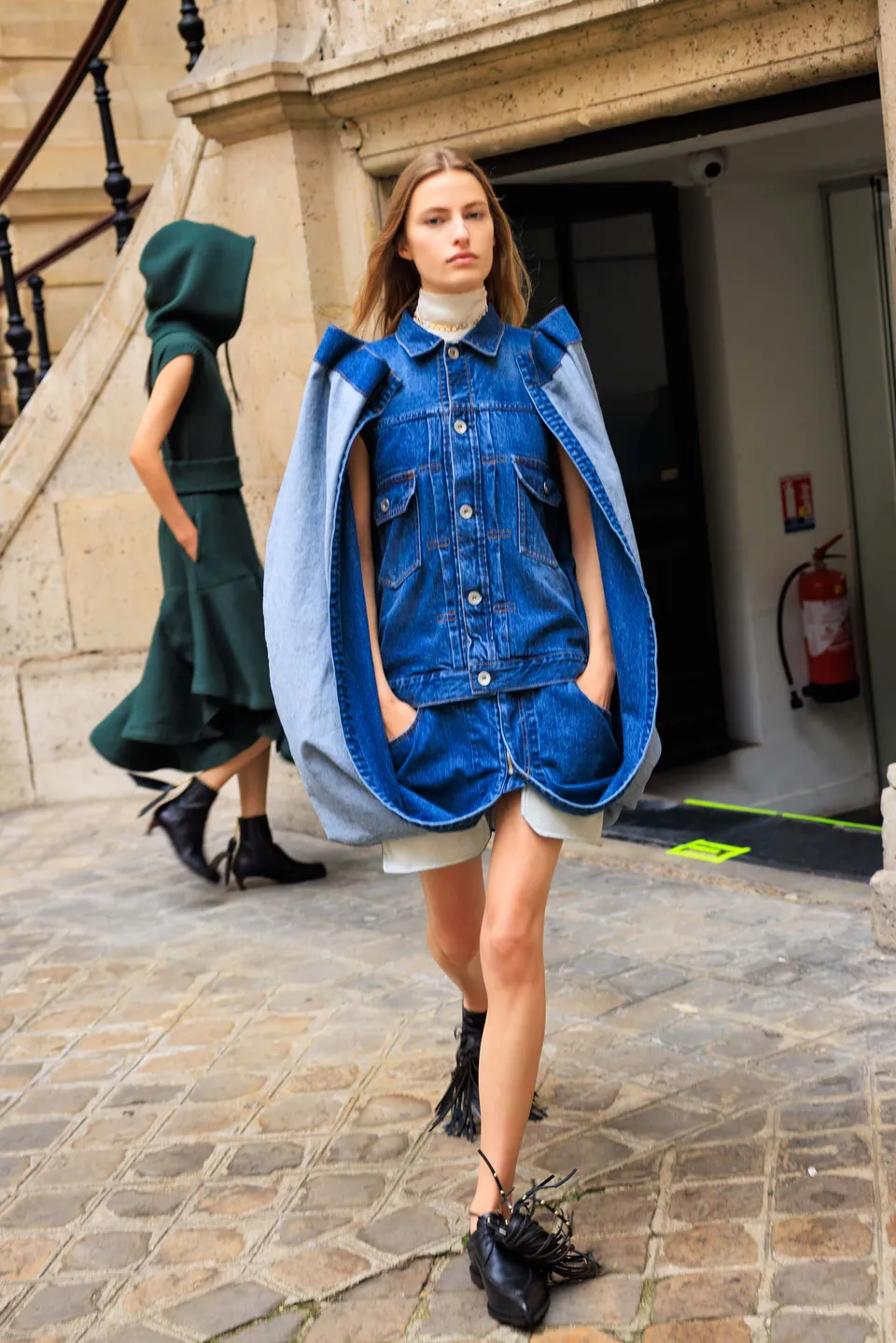
Simultaneously, Monse celebrated its tenth anniversary by introducing a double-jean mechanism, where one layer appears distinctly loosened, cascading away from the body. Chitose Abe at Sacai manipulated denim hems upwards toward the shoulders to construct voluminous capes. Versace injected the fabric with electrifying cobalt, kelly green, and intense lilac, presenting jeans with the precise tailoring of formal trousers. These collections communicate absolute self-expression, affirming that denim operates fluently in formal spaces while offering supreme satisfaction to the wearer. Through these transformations, classic American style becomes a high-fashion canvas for technical experimentation.
Historically, uniform-style workwear emerged as a utilitarian necessity during American industrialization and westward expansion. Hollywood subsequently romanticized these garments, establishing them as visual shorthand for authenticity and rebellion. Contemporary society primarily engages with digital interfaces, rendering manual labor aesthetics an ironic contrast to keyboard-centric professions. Yet, fashion’s fascination with workwear continually intensifies, driven by a desire for tangible, grounded garments in a hyper-digitized world. This paradox gives classic American style its contemporary tension, where utility becomes fantasy and labor codes become luxury signals.
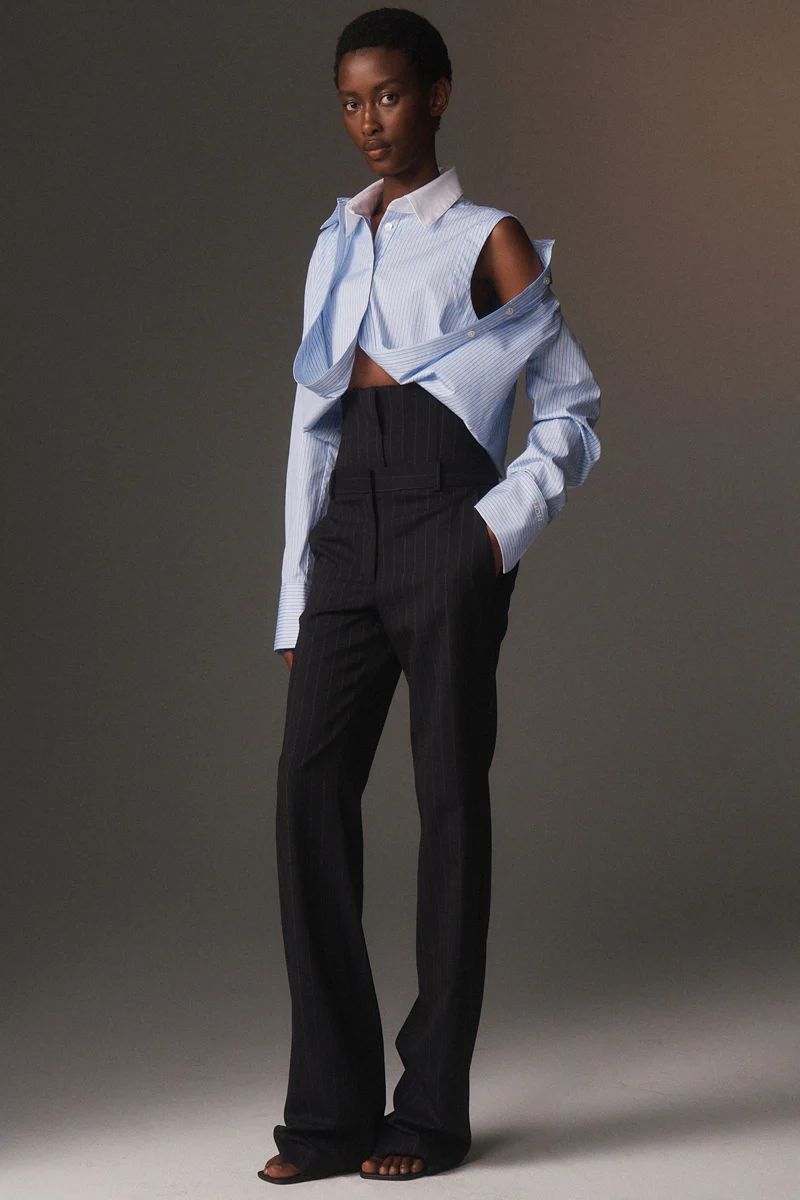
Miuccia Prada and Raf Simons masterfully addressed this paradox in Prada’s Spring/Summer 2026 collection. The runway featured workman jackets, utility shirts, and coordinating utilitarian separates offset by hyper-feminine accessories like elbow-length opera gloves and bejeweled earrings. By juxtaposing these rugged elements with taffeta bubble skirts and luxuriously disheveled patchwork fabrics, the designers effectively leveled traditional sartorial hierarchies.
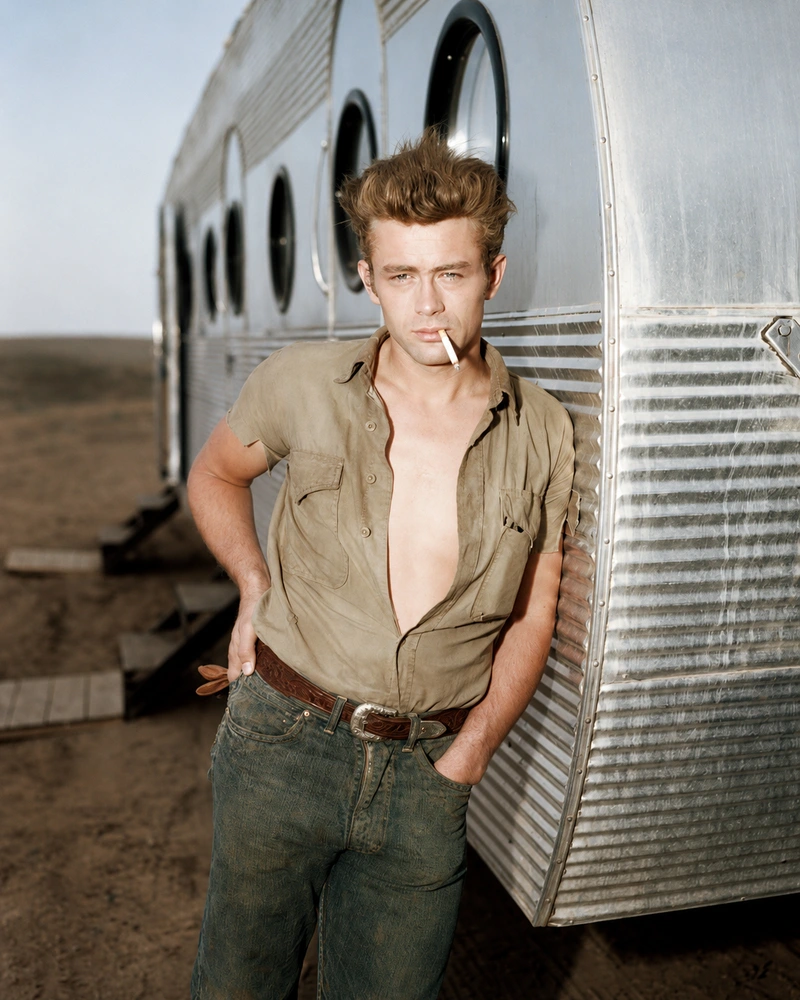
The enduring mythos of the American cowboy deeply permeates contemporary fashion, symbolizing ideals of freedom, frontierism, and robust individualism. As consumers navigate complex global challenges, they actively aspire to project these ideals. The market data overwhelmingly supports this aesthetic shift. This phenomenal growth is heavily driven by the rapid westernization of fashion preferences and the widespread normalization of versatile attire bridging professional and social environments. Western aesthetics therefore expand classic American style into a fantasy of independence, mobility, and self-authorship.
Furthermore, e-commerce platforms currently facilitate over 58 percent of global fashion purchases, allowing specialized Western silhouettes to reach historic international audiences. Urban professionals increasingly adopt these pieces to project a robust individualism contrasting with structured corporate environments.
Khaite’s Catherine Holstein adeptly channeled these Western nuances, infusing her distinctly urban aesthetic with oversized belt buckles, stalky straight-legged leather trousers, and decorative button-downs. This execution produced a sleek, subdued result, evoking nocturnal cowgirls, redefining the heavy, rugged interpretations seen in previous seasons. By refining Western elements for cosmopolitan environments, designers ensure the trend remains highly relevant and commercially successful across diverse global markets.
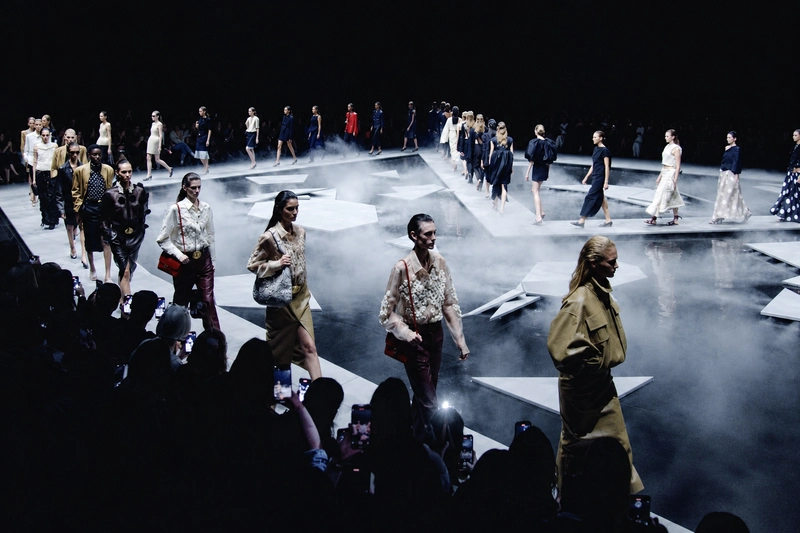
The resulting garments offer a sophisticated method to signal independence and self-reliance. Heritage brands and luxury houses alike increasingly integrate sustainable materials, such as organic denim and plant-based leather alternatives, aligning this frontier aesthetic with modern eco-conscious values.
Preppy style initially blossomed within the confined spaces of British boarding schools before evolving into the standard uniform of American Ivy League elites. Over the past century, this visual language has expanded significantly, incorporating Californian leisure sports culture and the vibrant styling of the Harlem Renaissance. Today, prep stands as a dynamically shapeable component of the American wardrobe. As part of classic American style, prep carries a particularly charged history of class, aspiration, and cultural ownership.
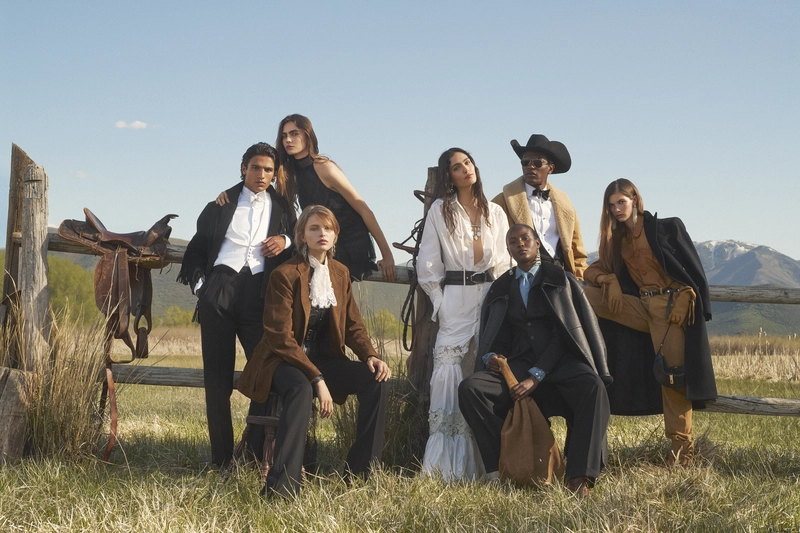
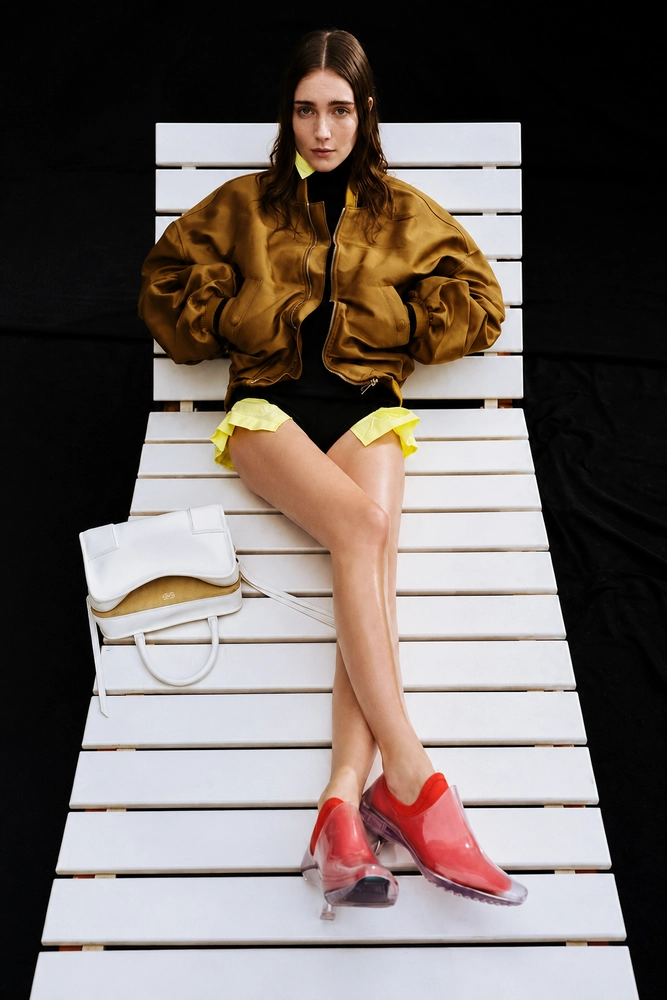
During the Spring/Summer 2026 season, Celine’s Creative Director Michael Rider elegantly merged reworked staples, such as rugby shirts, double-breasted blazers, and polo knits, with a distinctly French, bon chic, bon genre sensibility. Rider’s background at Polo Ralph Lauren allows him to seamlessly blend these cultural identities, showcasing prep’s inherent adaptability. At Dior, Jonathan Anderson similarly reconfigured the house’s iconic Bar jacket, applying a relaxed, cropped profile. Paired with preppy mini skirts, the ensemble clearly signaled Anderson’s vision for a fluid, highly adaptable iteration of Dior for the next generation.
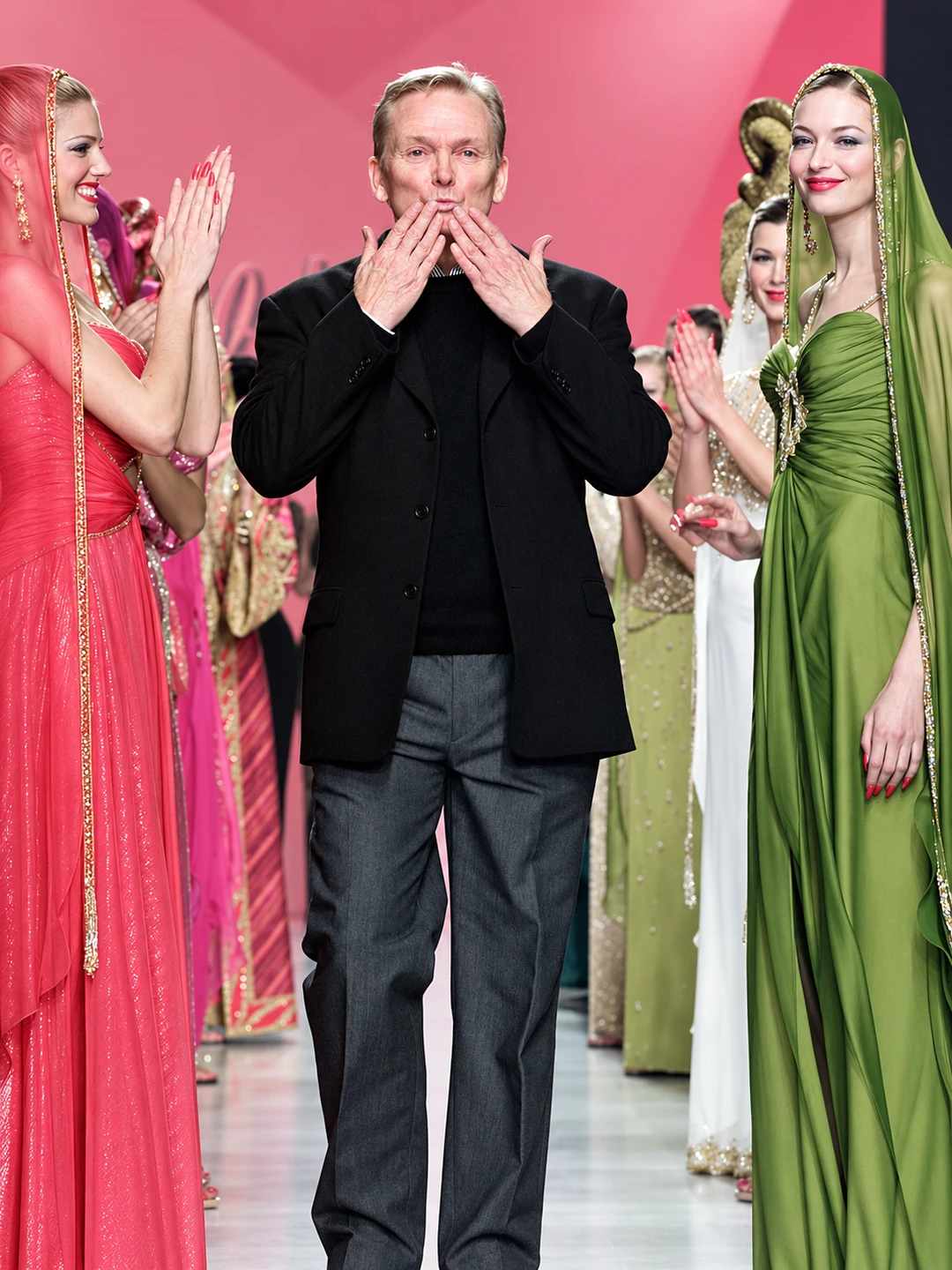
Willy Chavarria provided the most profound political rewriting of prep this season. His collection radiated exuberance, utilizing amplified pastels across tailored shorts, blazers, and loafers. Drawing from his upbringing in a working-class, Mexican-American community, Chavarria aims to explicitly reevaluate the ownership of prep style. His mission focuses on expanding these codes far beyond their historic upper-class associations.
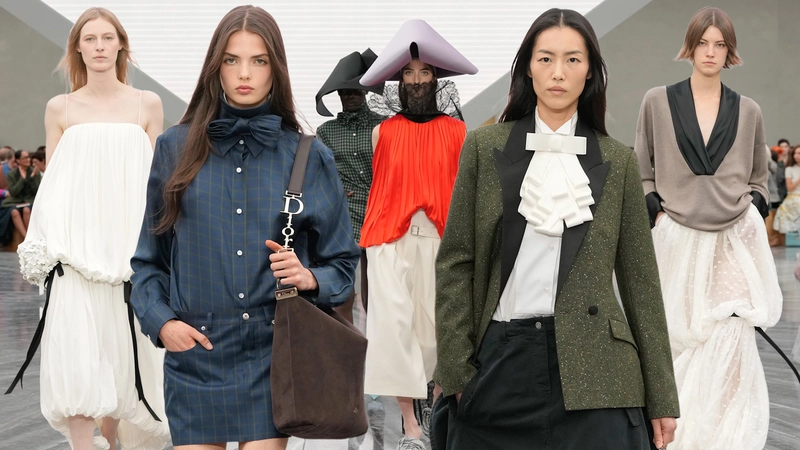
This ambitious reinvention embodies the core of American individualism, proving that style remains a powerful tool for claiming space and asserting identity. By democratizing these elite visual markers, Chavarria invites a broader demographic to participate in the prep narrative, enriching the aesthetic with fresh cultural perspectives and immense vitality. His work shows how classic American style can move from inherited privilege toward cultural reclamation.
The 2026 runway collections conclusively demonstrate that classic American archetypes possess infinite capacity for reinvention. From the hyper-elevated denim at Diesel and Loewe to Prada’s philosophical workwear, Khaite’s urban Western romance, and Willy Chavarria’s democratic prep, designers utilize these familiar codes to process contemporary anxieties. Together, these collections prove that classic American style remains one of fashion’s most elastic and emotionally persuasive vocabularies.
For immigrant designers like Monse’s Laura Kim and Fernando Garcia, America consistently serves as a boundless source of possibility and self-determination. As Kim observes, the true power lies in the freedom to shape one’s identity. Ultimately, this profound freedom ensures that American sartorial traditions will continually evolve, captivating the global imagination for generations to come. The intersection of heritage design, technological innovation, and sustainable practices guarantees the enduring supremacy of Americana on the international stage. In this continuing evolution, classic American style becomes less a fixed aesthetic than a living promise of reinvention.
Advertisement