MENU
Close





If cowboy style was born from dust, hard work, and wide-open land, why does it still pull us in so strongly, what is it about the boots, the hat, the denim, and the rodeo spirit that makes it feel like freedom?
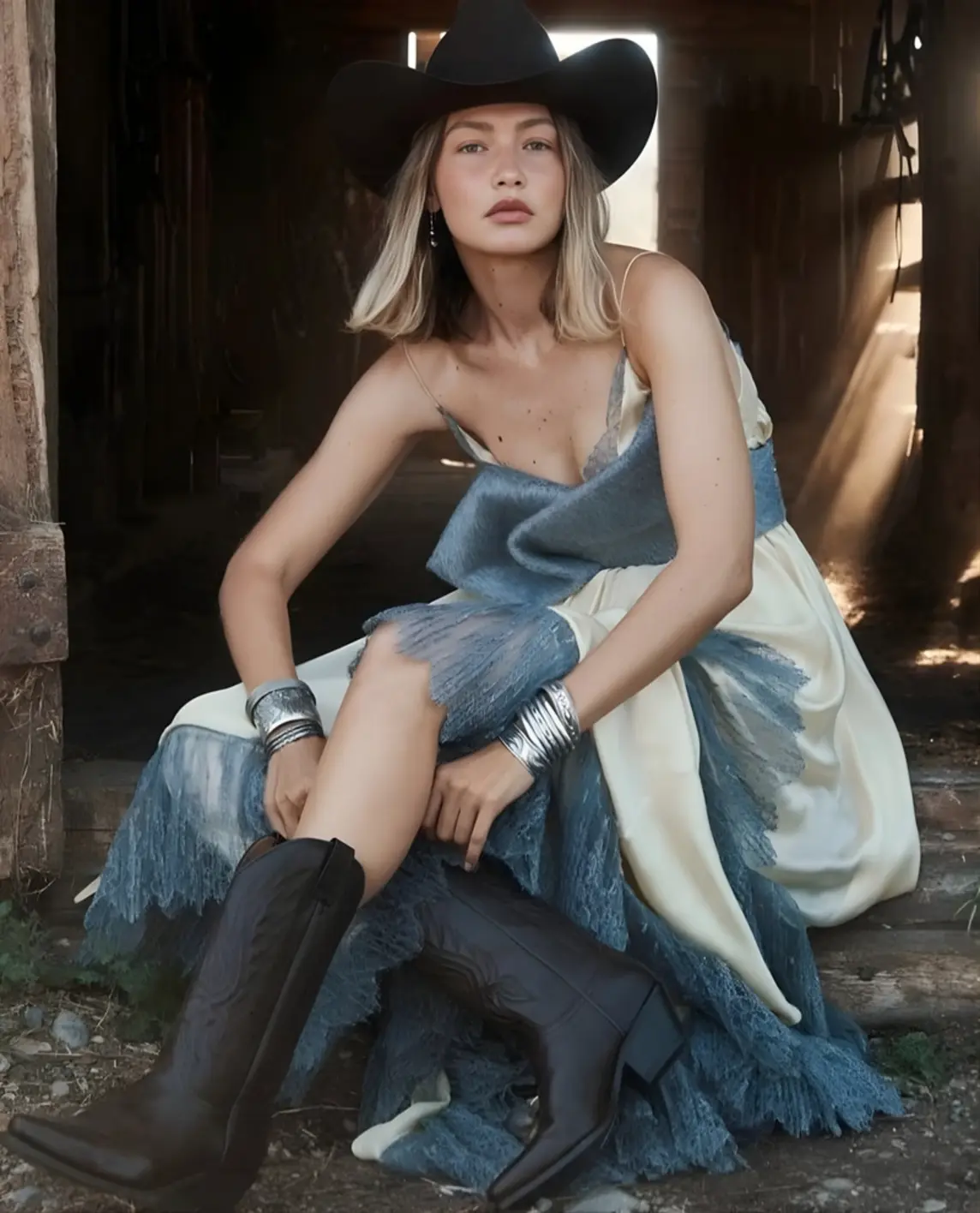
If cowboy style was born from dust, hard work, and wide-open land, why does it still pull us in so strongly, what is it about the boots, the hat, the denim, and the rodeo spirit that makes it feel like freedom?
February 27, 2026
Advertisement

Advertisement



The best fashion stories begin like desert legends, told in a low voice against the wind, with history drifting across the horizon like a ghost. Out here, where the land is scorched gold and the sun burns everything it touches, clothes carry memory. A sleeve remembers every hand that stitched it; a boot keeps the echo of each road it has known. And among all the silhouettes that wander these plains, none is as haunted, as restless, or as stubbornly alive as the American cowboy.
The West has always been a land of contradictions, silk brushing against steel, danger hiding inside beauty, tenderness flickering beneath toughness. Its style was forged by men: vaqueros riding through dust storms, ranch hands braving long winters, drifters chasing work across wide, unforgiving distances. Cowboy attire was born from fire, sweat, and survival.
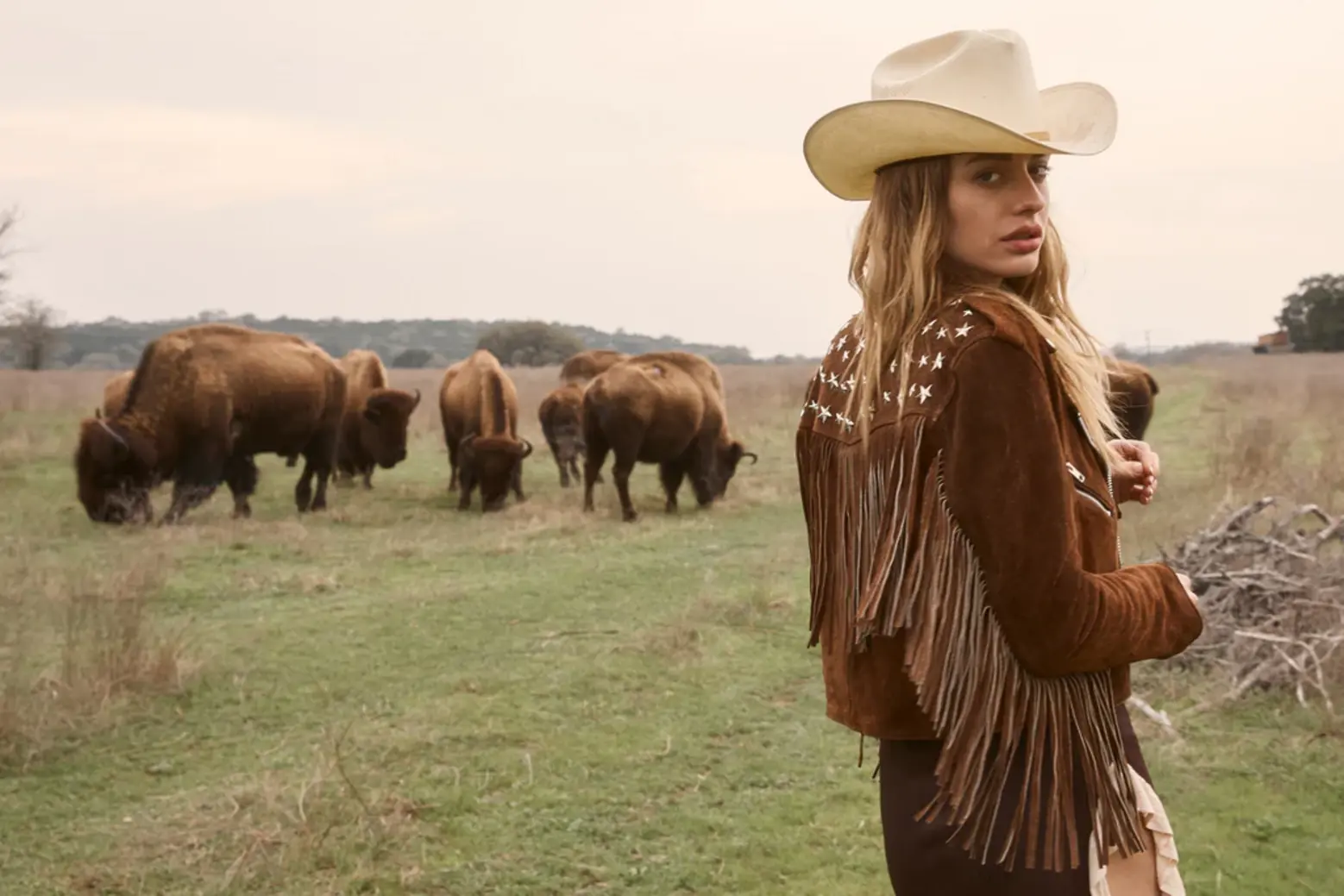
But this is not a tale of taking something away. The cowboy look has not been claimed or conquered, it has simply expanded. Women stepped into the frame, not to replace the cowboy, but to walk beside him. They picked up the same pieces—boots, hats, denim, leather, and bent them toward their own desires. They twisted the myth so it faced a new direction. They made the cowboy style their own without ever robbing it of its roots.
What emerged is something beautifully neutral, beautifully shared: a style shaped by weather, labor, and wandering, carried now by anyone who feels the pull of the open road.
Women take the grit and solitude of the cowboy and lace it with softness, with defiance, with longing. They weave a little vulnerability into the leather, a little rebellion into the fringe. They turn a garment built for survival into a language for freedom.
Before the cowboy became a figure cut from legend, before his silhouette hardened into an icon against the horizon, he was simply a rider shaped by the land itself, a land so vast and raw that every dawn felt like the beginning of the world, and every dusk felt like a promise that survival was earned, not given, in the dry, burning sun of the West.
Long before American settlers arrived with their dreams and their wagons, the first true cowboys were the Spanish vaqueros, men whose knowledge of horses and cattle came from centuries of skill carried from Spain to Mexico and then northward, drifting like dust along the old trails; they rode with a kind of grace carved from necessity, wearing wide-brimmed hats to shield their eyes from the relentless light, leather leggings to guard their legs from unforgiving brush, and boots molded by long hours in the saddle.
As these vaqueros worked across the lands now known as Texas, California, and New Mexico, their methods, tools, and garments gradually intertwined with the lives of the American cattlemen who followed, creating a new kind of rider whose style reflected a meeting of cultures, where Spanish craftsmanship blen, and where the early sombrero, tall and wide and endlessly practical, became the ancestor of the cowboy hat that would later symbolize the entire West.
And yet, even in this unforgiving world, something artistic began to flicker: cowboys, though bound to survival, carved small pieces of themselves into their gear, saving coins to buy boots with stitched patterns, carving designs into saddles, choosing hats with brims that curved just so, adding silver spots and conchas that glinted in the light, subtle signs that even in hardship, humans reach for beauty, and even in survival, style begins to take root.
Here, in the first quiet footsteps of hooves across the sand, in the long shadows cast by riders who were simply doing their jobs, the cowboy was born, and with him, unknowingly, the beginnings of a style that would wander through time, cross borders, shift identities, and eventually find new life in places and people the vaqueros could never have imagined.
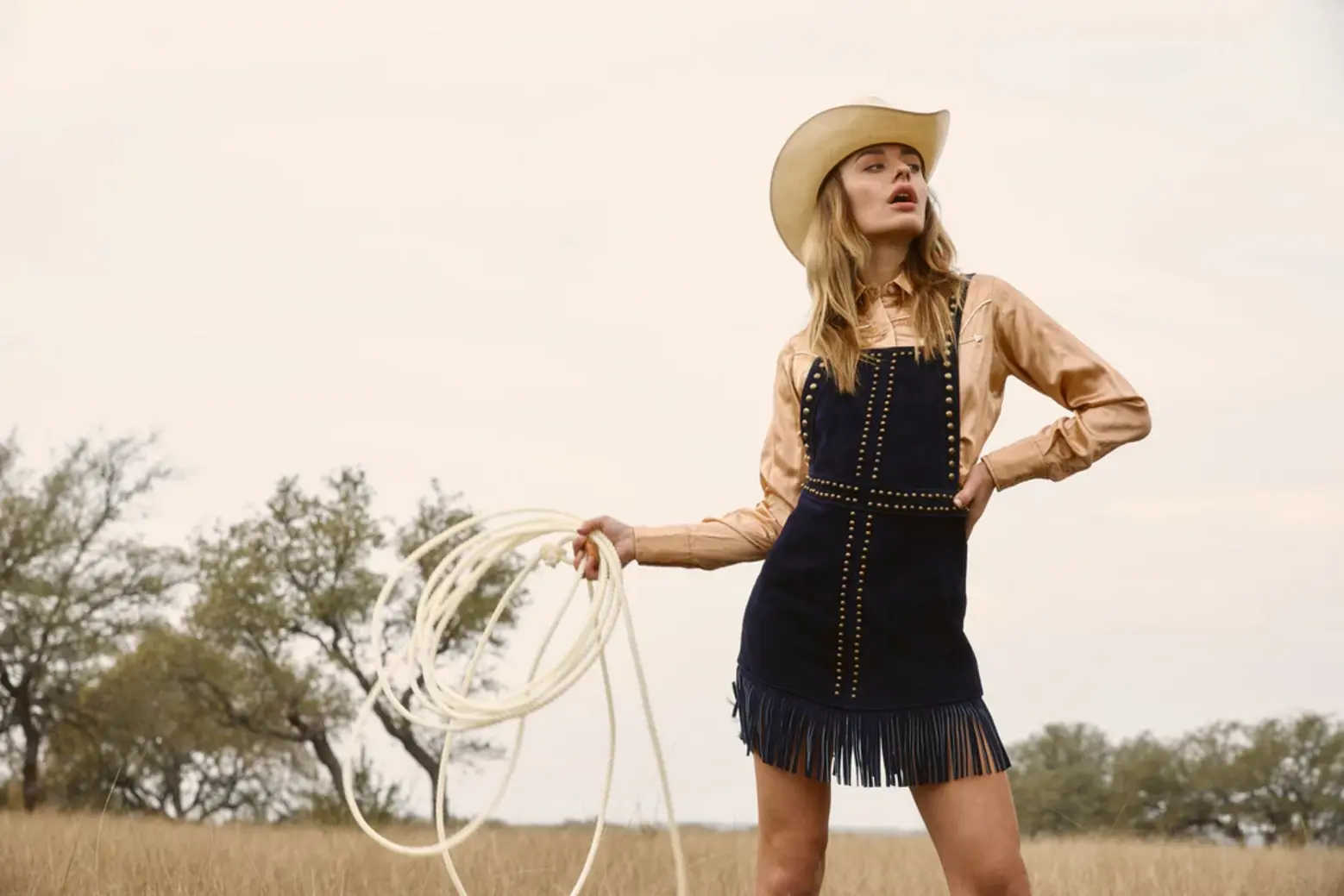
In the early days of the frontier, women walked through the same dust as men, breathed the same dry heat, and braced themselves against the same unforgiving winds, yet history let the cowboy ride into legend while the cowgirl moved quietly in the margins, her presence softened, her labor blurred, her clothing left unmentioned. But in reality, she was always there, shaping the landscape with her own hands.
These early women - the ranch daughters who learned to rope before they could read, the homesteaders who mended fences and hopes in equal measure, the vaquera wives who shared saddles and stories, the rodeo girls whose courage crackled like flint, did not step into westernwear because it was fashionable; they stepped into it because the land gave them no other choice. There were no dresses made for long rides or cattle drives, no catalog pages labeled “ladies’ ranch attire.” So they reached for what existed. They pulled on men’s wool coats, cinched them at the waist until they fit; they borrowed wide-brimmed hats that shaded their faces as they worked; and when riding side-saddle became an obstacle, they quietly invented the split skirt, a garment that let them mount a horse freely while still appeasing the delicate sensibilities of a watching society.
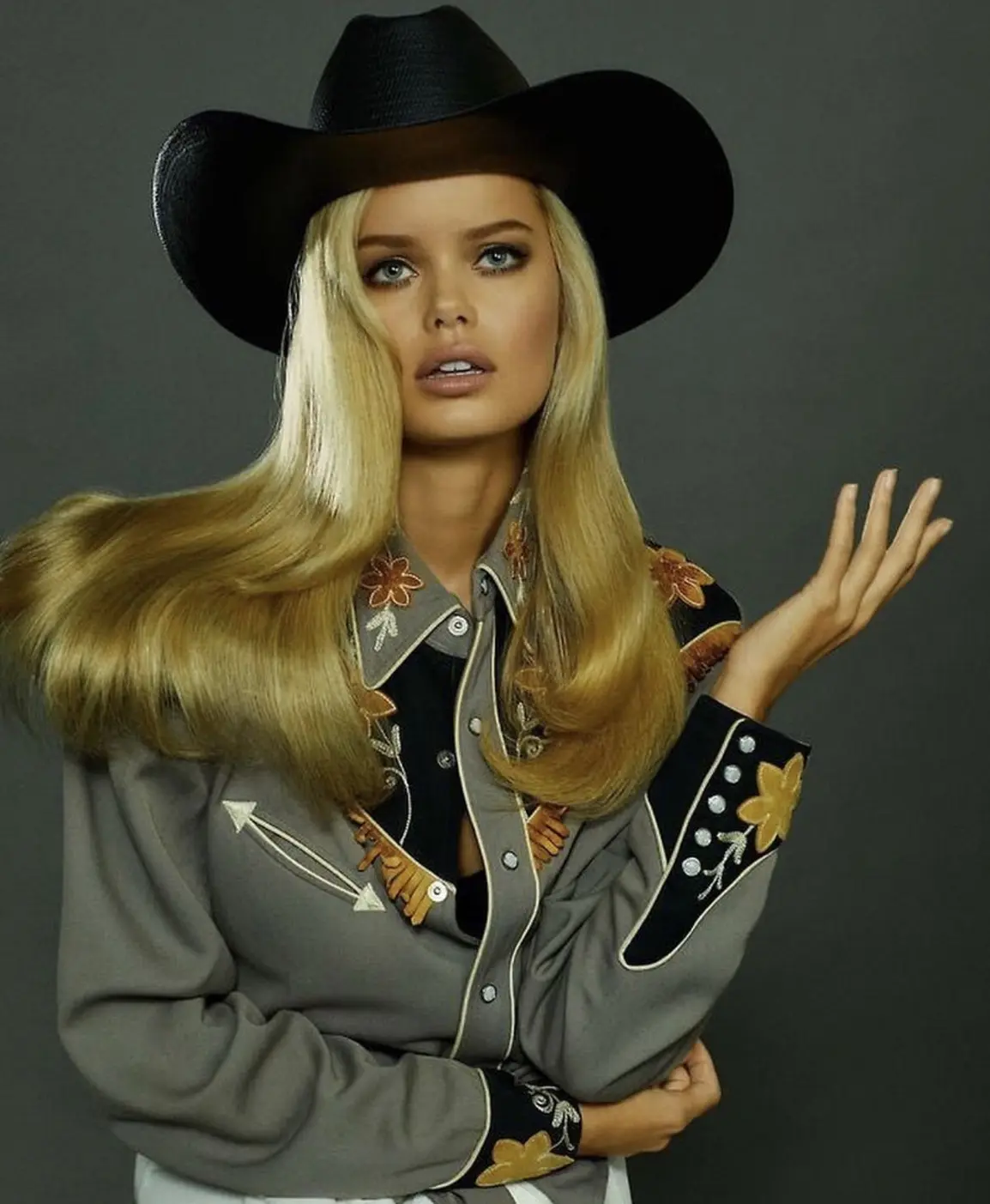
What is extraordinary is not that women adopted the cowboy image, but how they transformed its meaning, softening nothing, stealing nothing, replacing no one. Instead, they expanded the myth, letting the spirit of the cowboy merge with their own desires: the desire to roam, to stand unbent in a world that often asked them to bow.
Cowgirl style became a shared language, a space where the masculine and feminine dissolve into something freer, something wilder, something entirely its own. It gave women a way to embody strength without giving up softness, to carry mystery without surrendering honesty, to express rebellion not as rage but as presence.
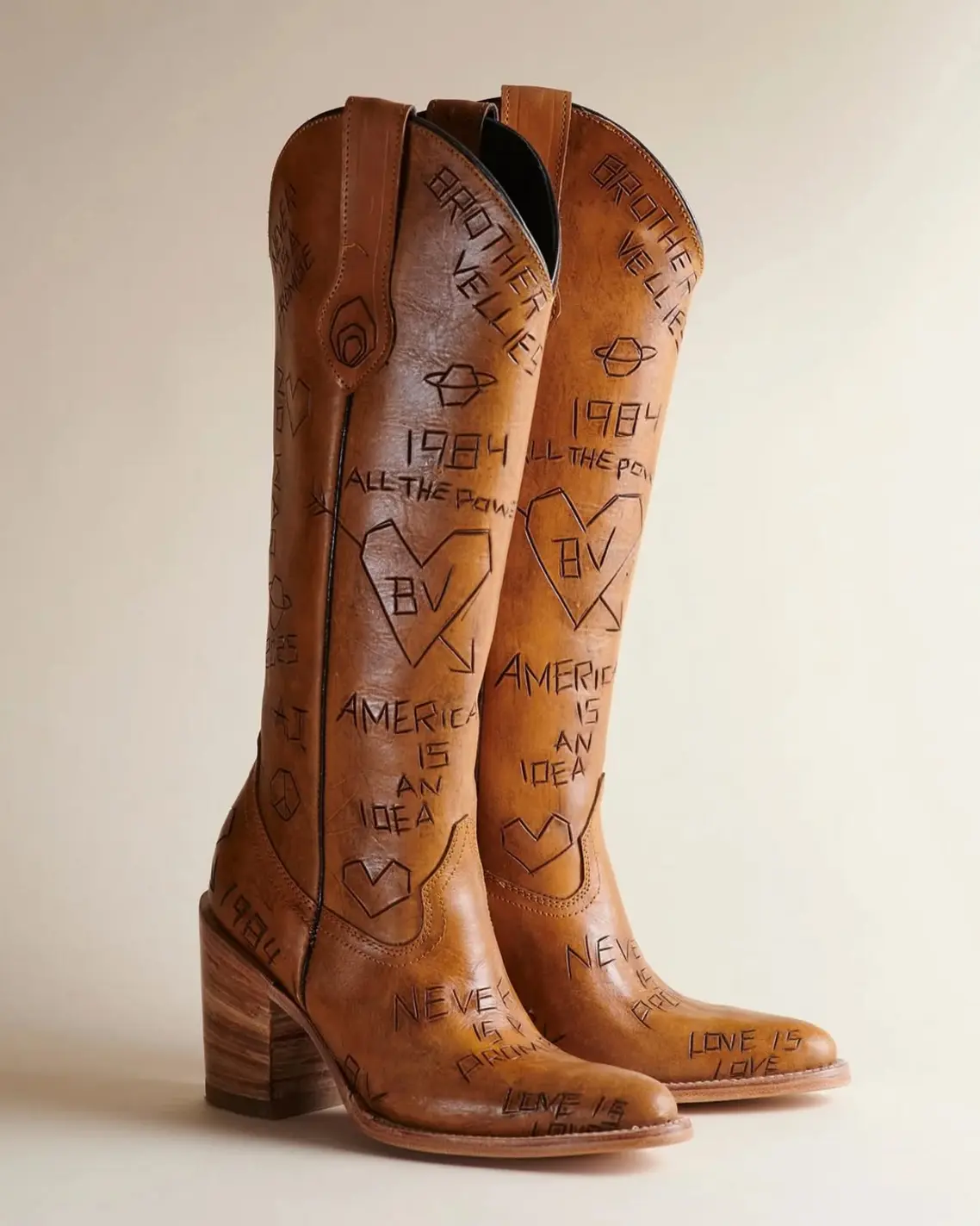
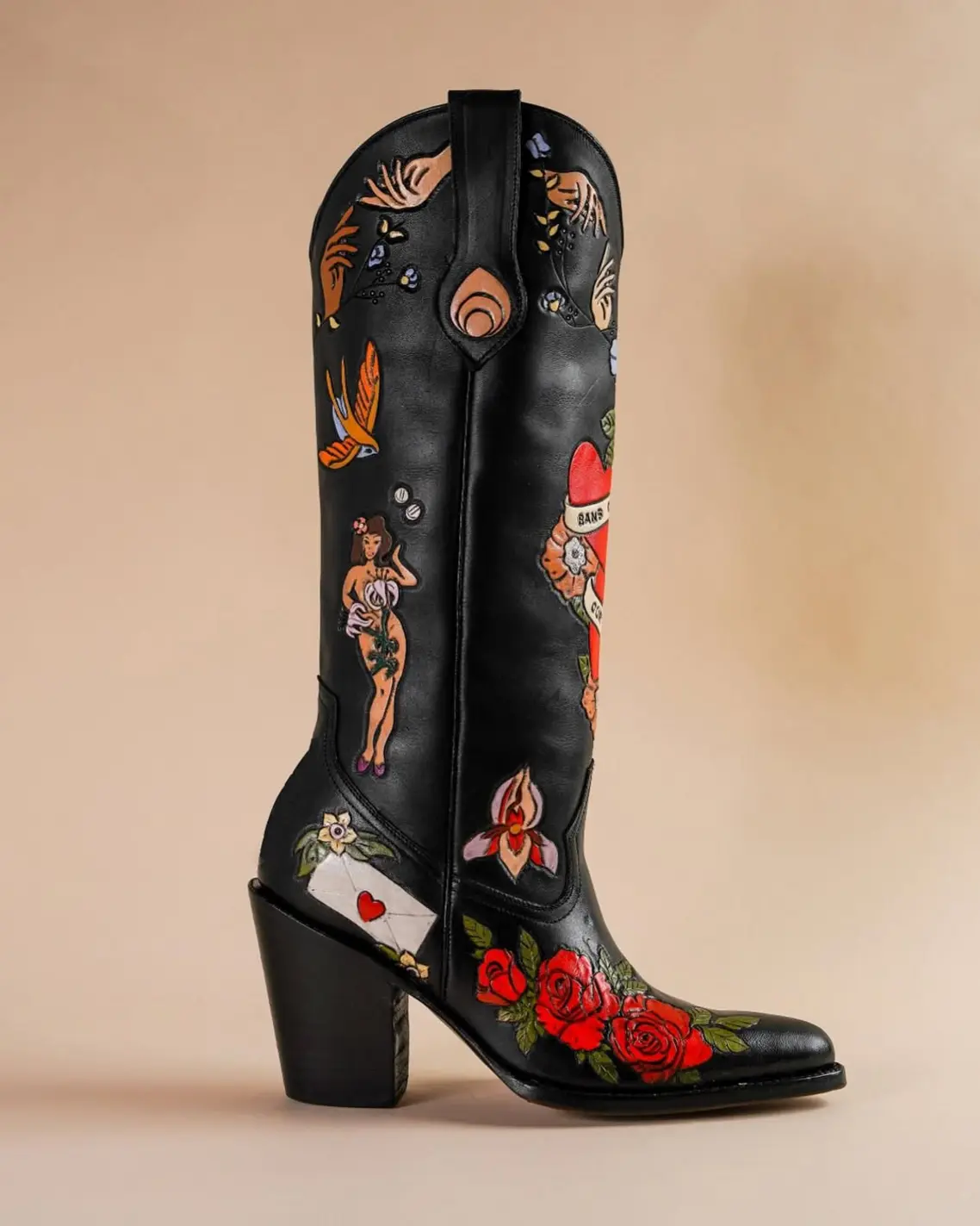
From the Spanish vaqueros to the long riders of the 19th century, the cowboy boot began as pure function: a pointed toe built for quick mounting, an angled heel to lock into the stirrup, and a tall shaft to guard against brush, rattlesnakes, and the unforgiving terrain. But when this boot entered womenswear, it shed its singular purpose and took on a new emotional role.
For women, the boot becomes a kind of grounded defiance. Paired with silk dresses, tailored suits, or distressed denim, it fuses the history of grit with the language of self-expression. Its presence adds weight, attitude, and quiet authority.
The cowboy boot once kept a man steady in the saddle.
The cowgirl boot helps her stand her ground, and walk away from anything that ever tried to limit her.
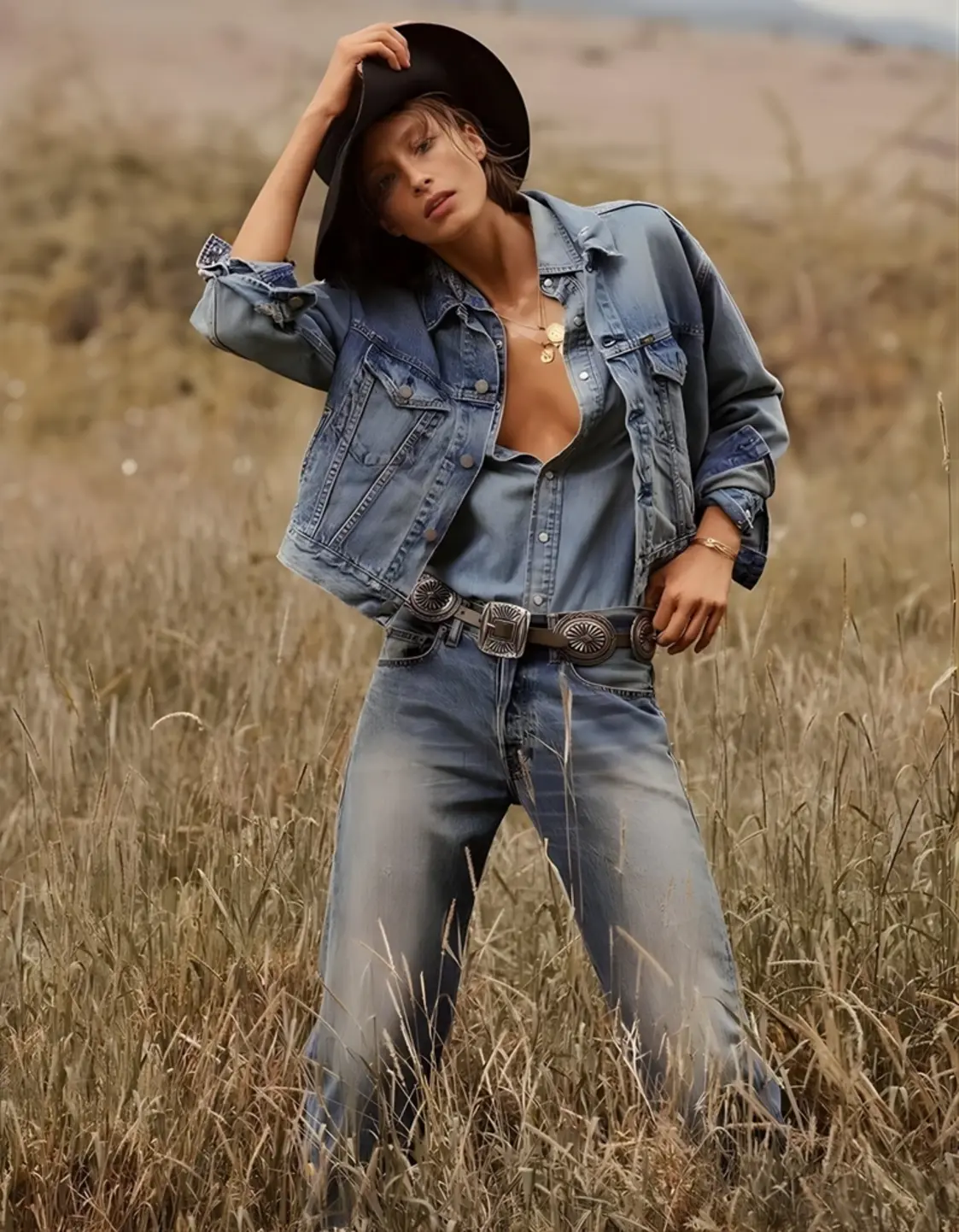
Denim is westernwear’s democratic backbone: durable, egalitarian, universal. From the earliest use by Gold Rush miners to the quintessential Levi’s $501$, denim has always symbolized work, movement, and survival. Every scuff, crease, and fade line was a record of labor, heat, and the weight of the day.
Fringe did not begin as decoration, it began as pure function. Indigenous tribes across North America developed fringe on leather garments so water could shed quickly instead of soaking into hides, a vital innovation in climates where storms could arrive without warning. Each strip acted like a channel, guiding water away and speeding the drying process, preventing the garment from becoming heavy, cold, or brittle. It transformed the simple act of moving forward into something fluid and expressive, capturing the air like a visual echo.
Today, fringe remains one of the most recognizable signatures of Western design because it embodies both origins at once, the cleverness of engineered survival and the poetry of motion.
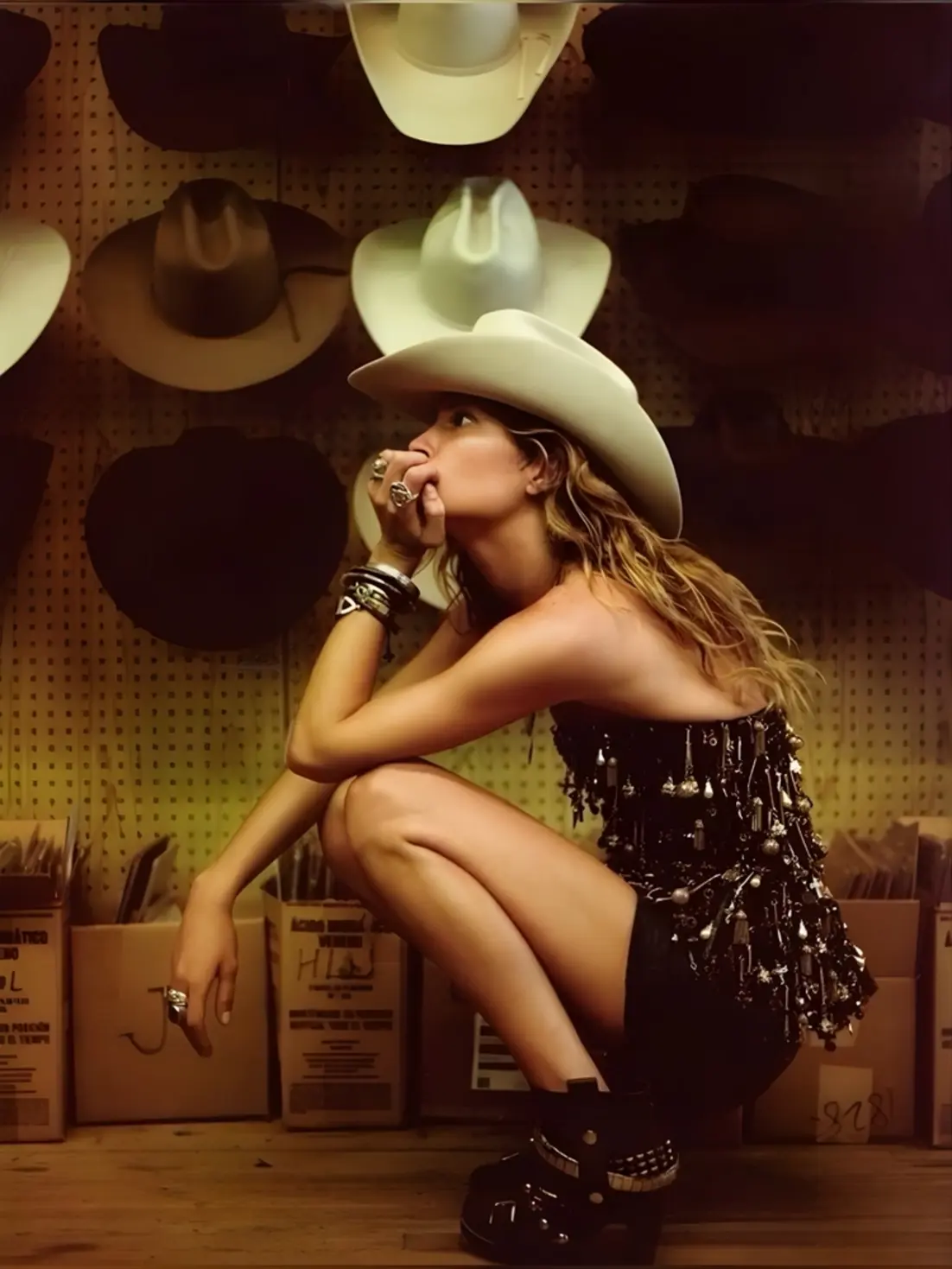
No item holds more symbolic weight. Its wide brim was born from searing light; its high crown from the need for air and shade; it felt hardened by storms that tested every rider who dared cross open land. In the early frontier, a hat was survival: it hid intention, carried water, honored respect, and warned strangers. A cowboy might lose a horse or a coat, but never his hat, it was the last thing a person surrendered.
Beyond function, the hat became identity. Its tilt revealed mood, its brim cast stories into shadow, its shape carved out a small circle of personal territory in a world with no fences. Even far from ranches or cattle trails, the cowboy hat still transforms the wearer. It sharpens posture, anchors presence, and carries a legacy of independence and horizon-wide calm.
Hollywood may have first carried the cowboy silhouette into the public imagination, but it was country music that kept it alive, dressed it, tuned it, and gave it a heartbeat that audiences could dance, cry, and dream to. After actresses like Jane Fonda and Sharon Stone cracked open the Western archetype on screen, proving women could stride, shoot, smirk, and steal the frame just as boldly, the style drifted off the film set and found its truest stage under spotlights and guitar strings.
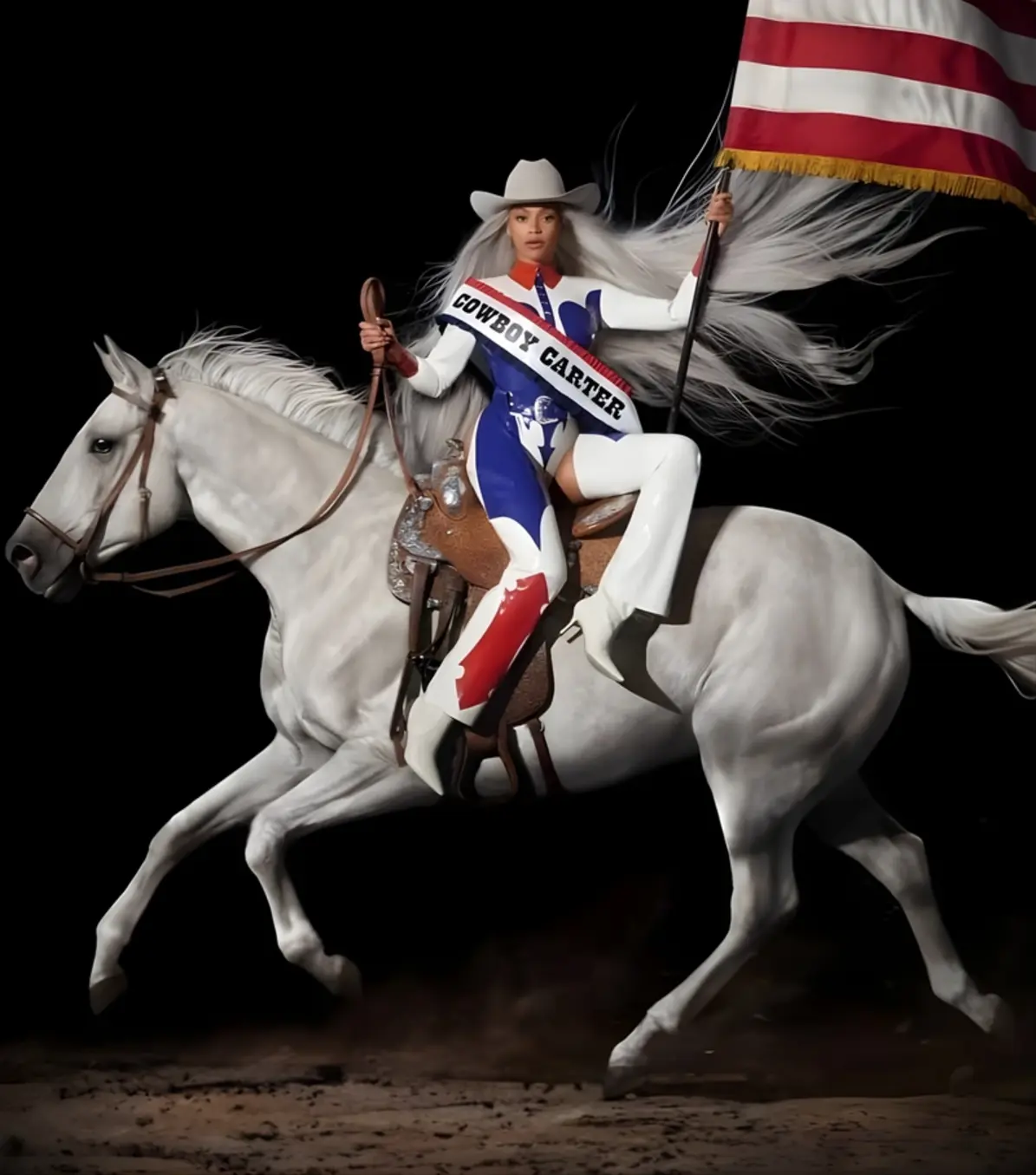
Country artists embraced cowboy attire not as costume but as autobiography: the hat, the denim, the boots, the fringe all belonged to the same world that shaped the music itself. Country was born from dusty roads, working hands, porch tales, and long stretches of land where people dressed for weather and work before they ever dressed for showmanship. So when singers stepped onstage in cowboy hats or boots, it never felt curated; it felt inevitable, a continuation of the terrain their songs came from. Dolly Parton elevated that lineage with sparkle and humor, turning the Western look into a dazzling language of self-definition, while still honoring its roots in labor, faith, and grit. And decades later, Beyoncé’s Cowboy Carter reminded the world that this style, and this music, carry deep, multicultural histories: Black cowboys, Mexican vaqueros, Indigenous riders, and countless unnamed laborers who shaped the West before Hollywood or Nashville did. That’s why cowboy style slips so effortlessly into country music’s wardrobe: both come from the same soil, the same struggle, the same longing for freedom, and the same wide-open promise of a horizon that always feels one mile out of reach.
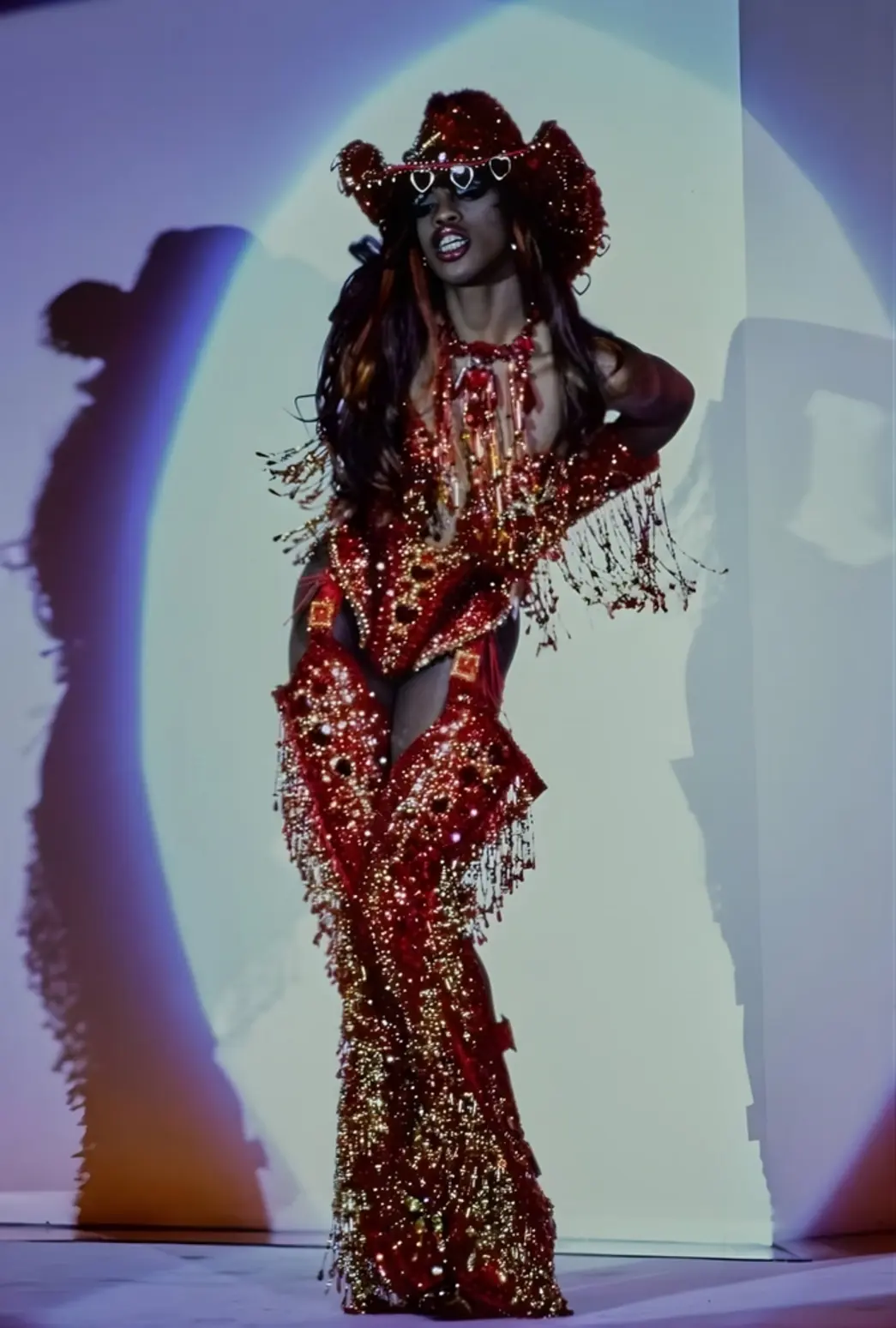
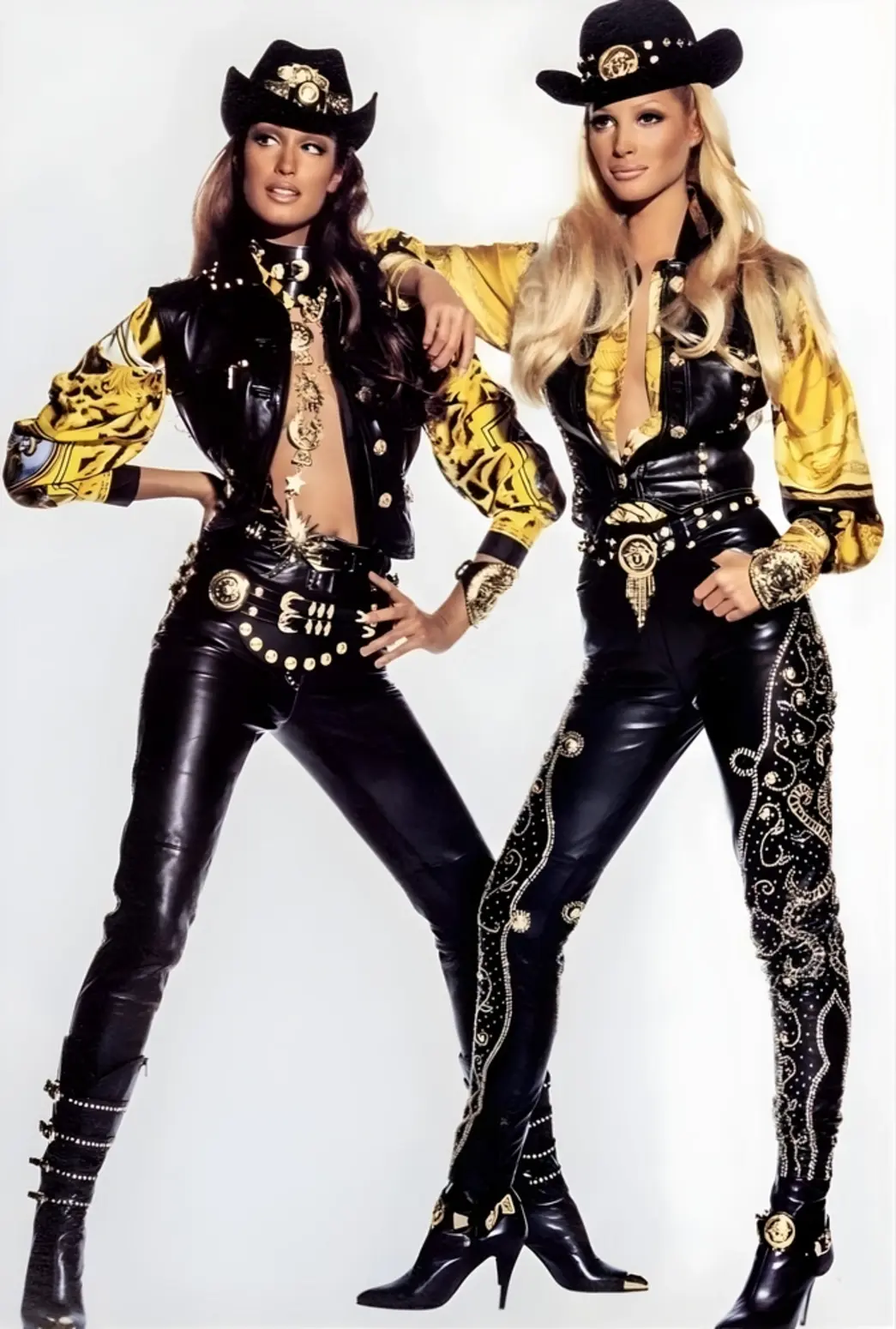
Cowboy style has become one of the most adaptable vocabularies on the runway, slipping effortlessly into the DNA of wildly different houses, each designer pulling a different thread from the Western myth and weaving it into their own world.
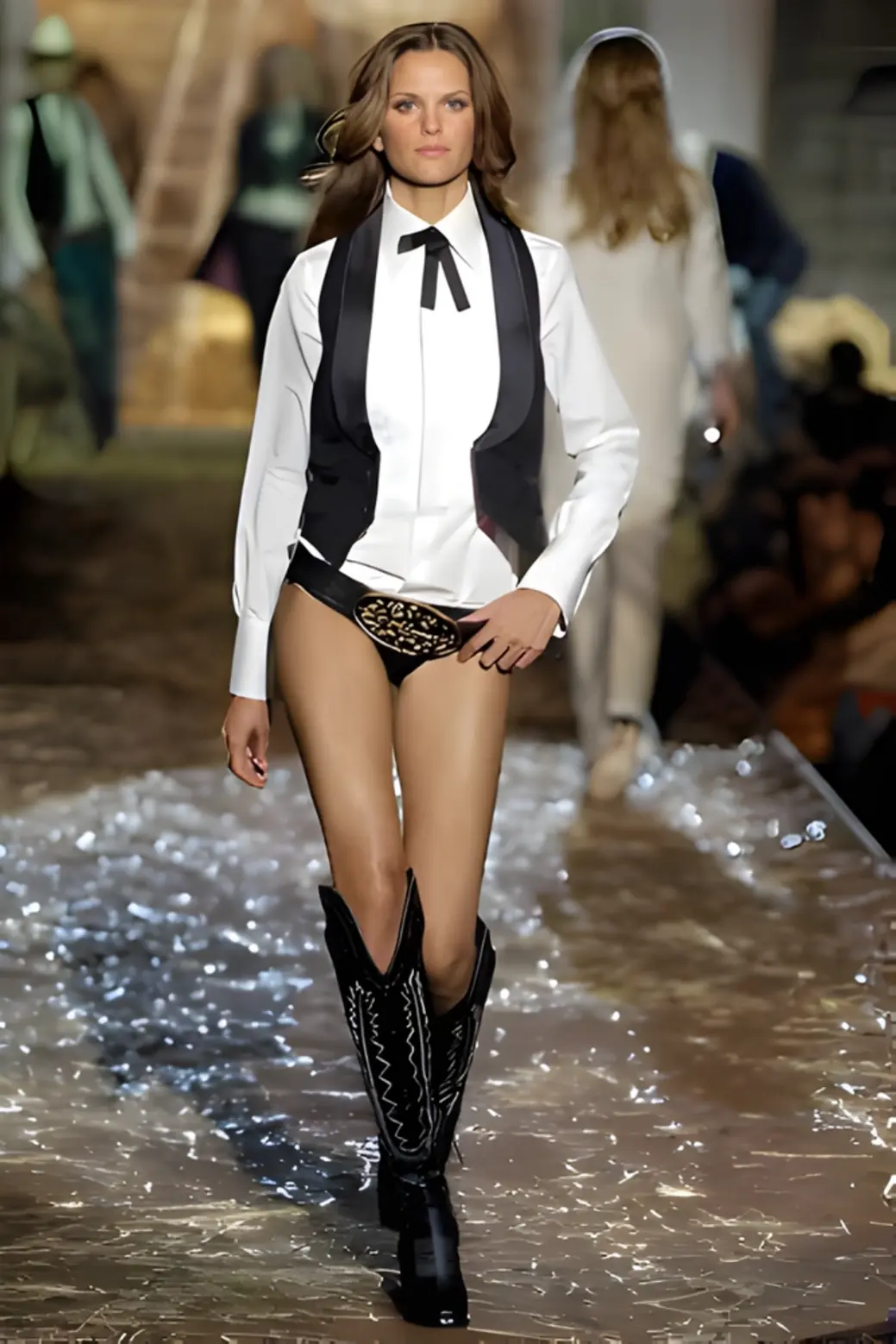
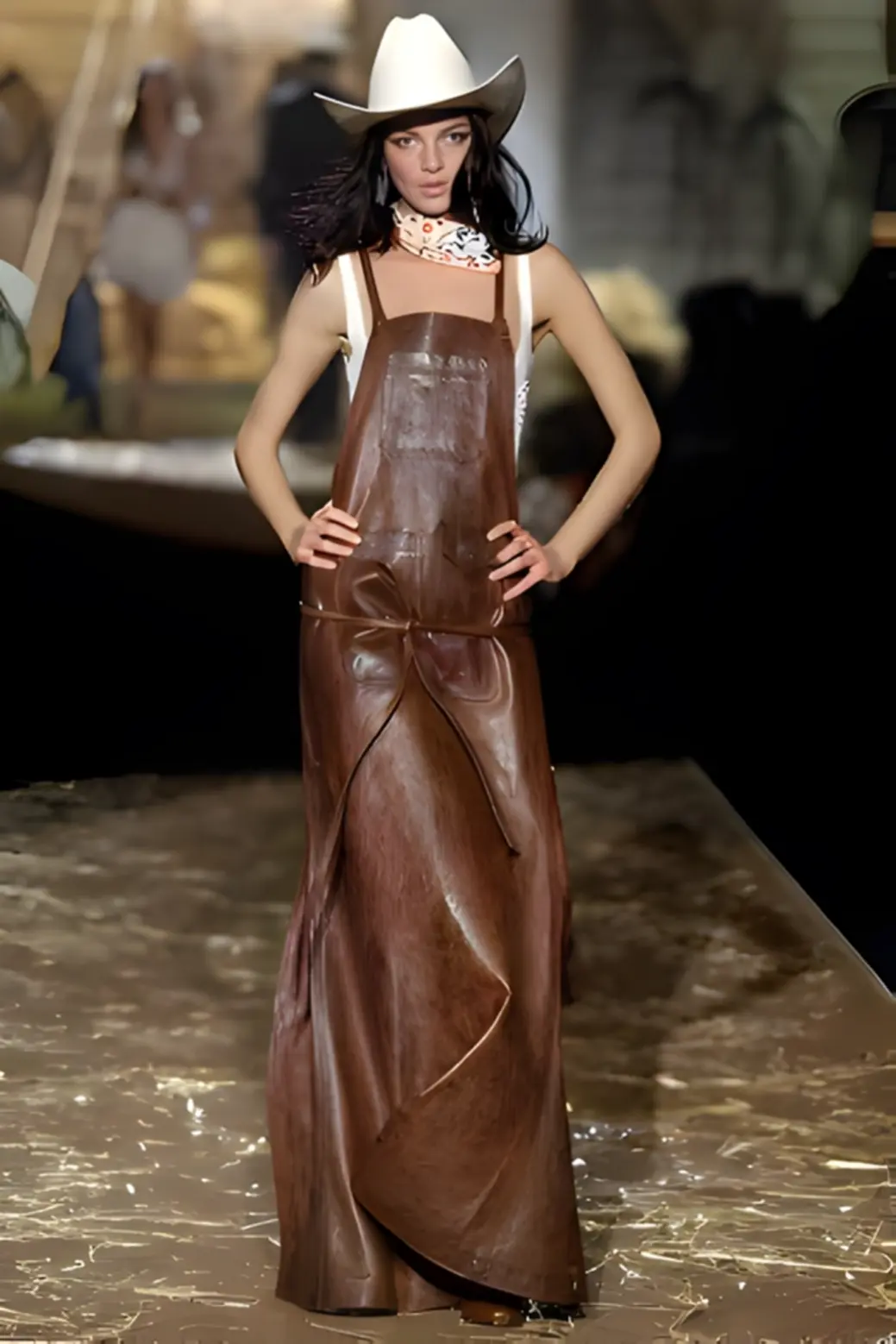
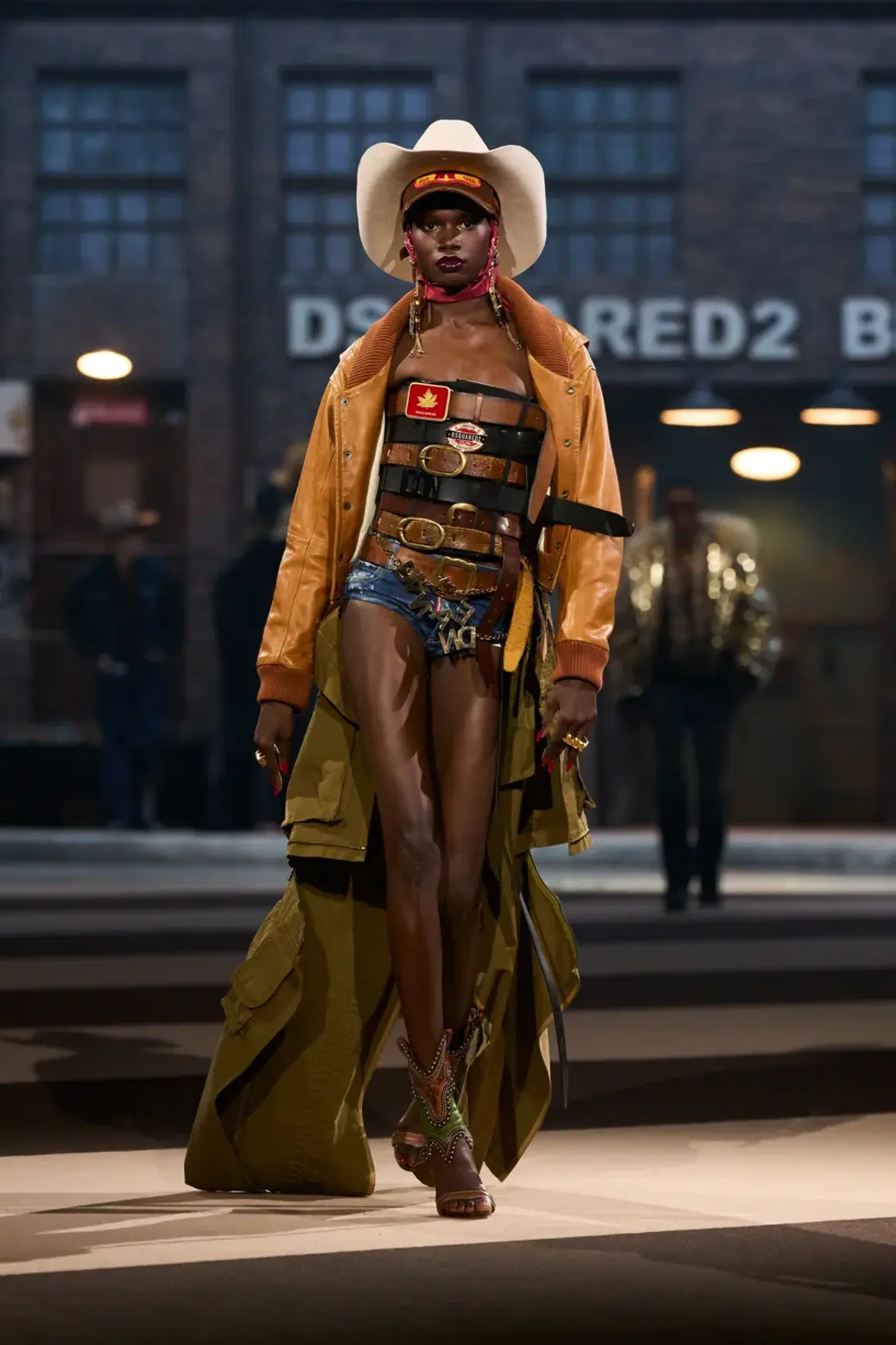
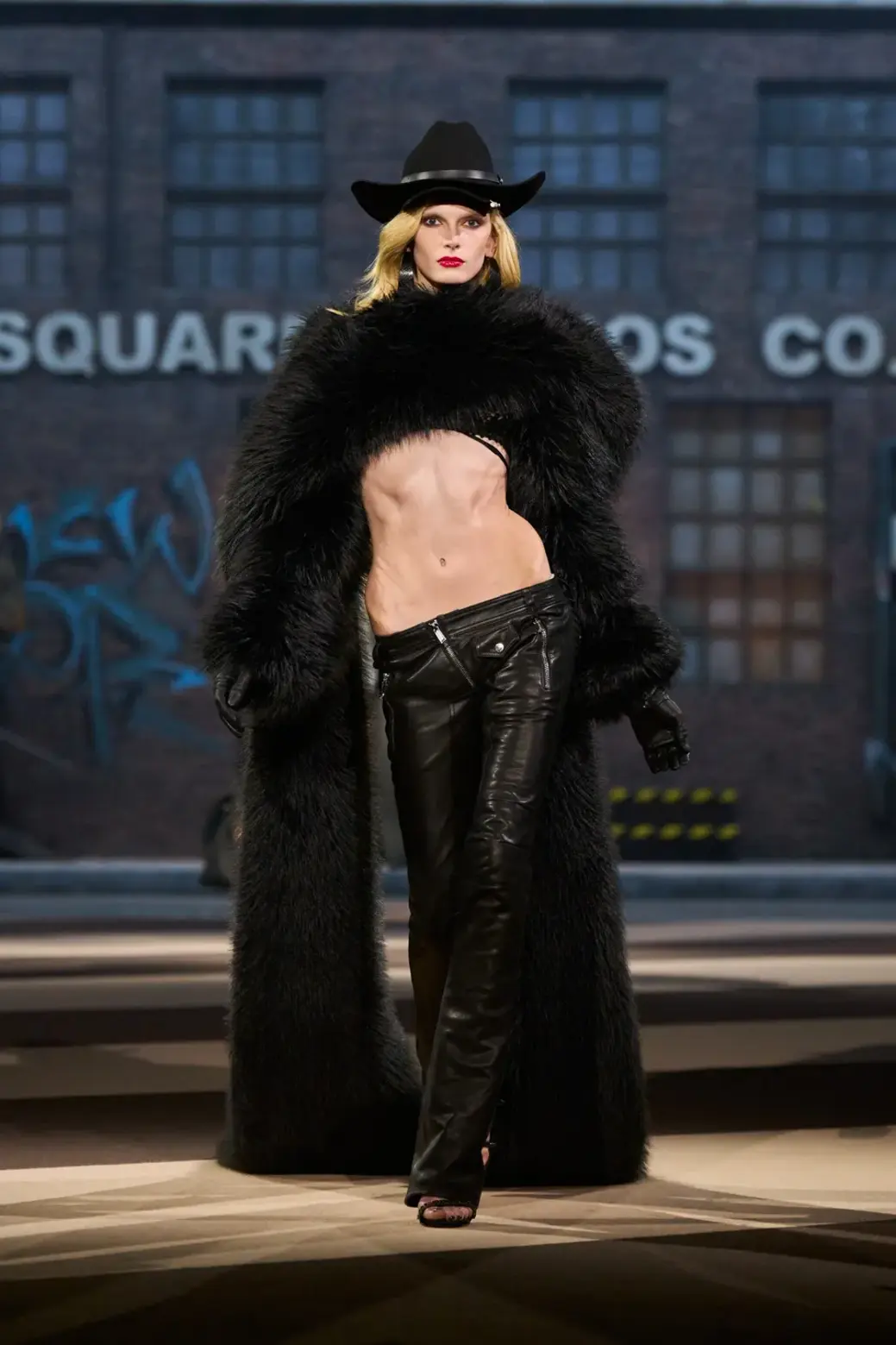
At Dsquared², the aesthetic arrives charged with androgynous sensuality, low-slung denim, leather chaps, glittering belts, and unbuttoned shirts that blur gender lines with deliberate swagger.
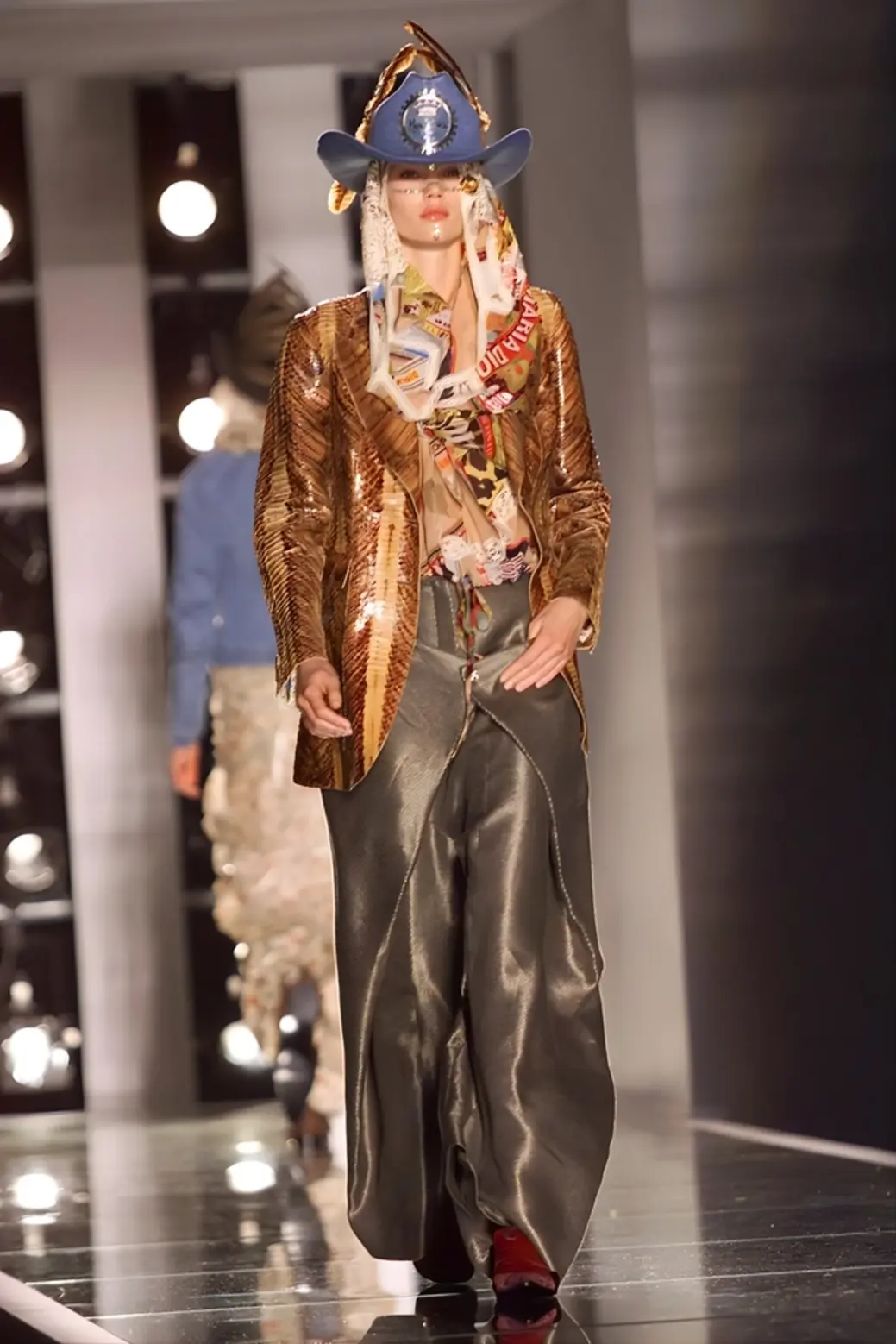
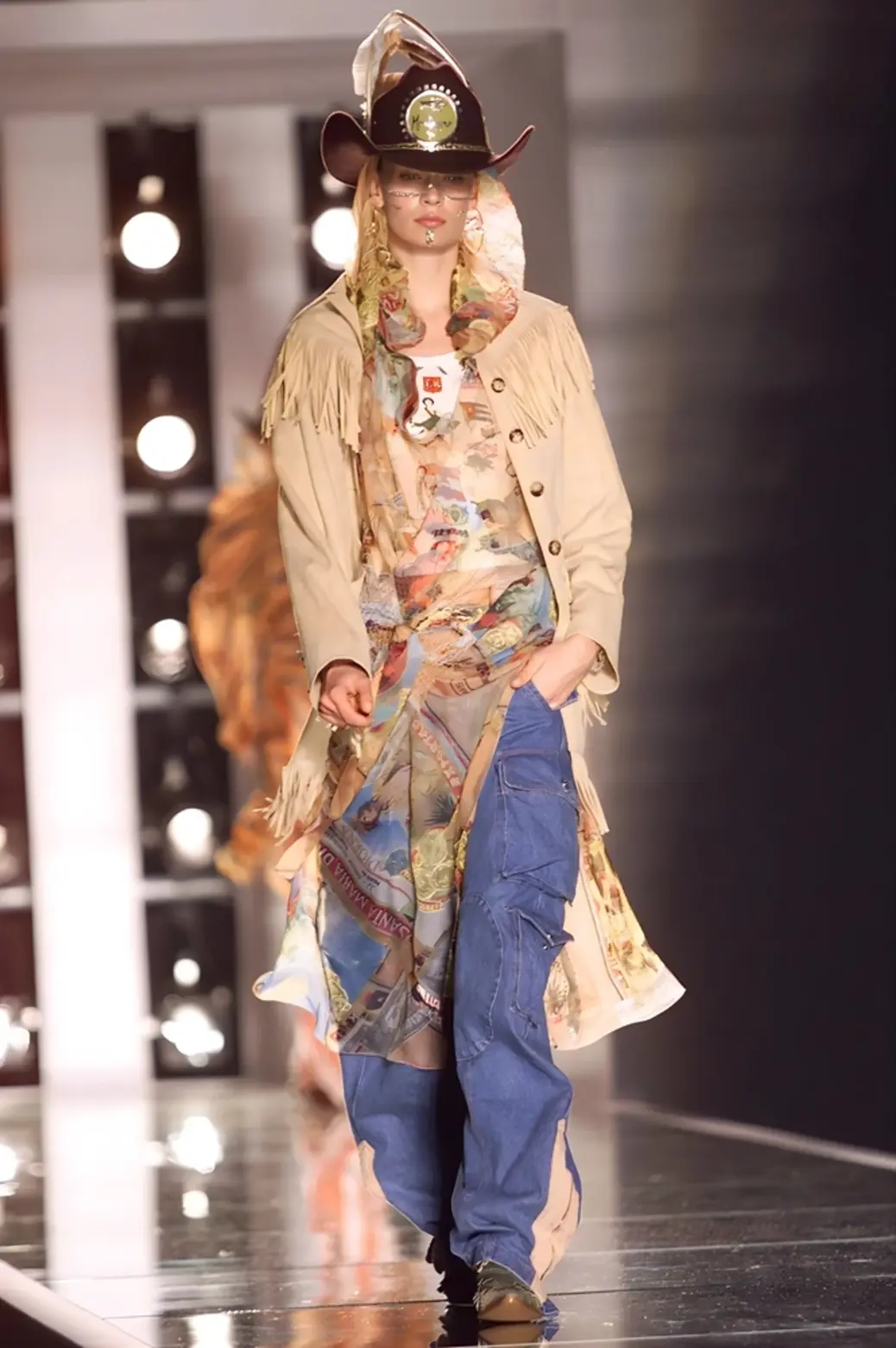
Dior filters the Western silhouette through its own cultural lens, fusing sleek cowboy boots, sharp jackets, and prairie dresses with streetwear and hip-hop inflections, creating a refined but urban cowgirl who walks between worlds.
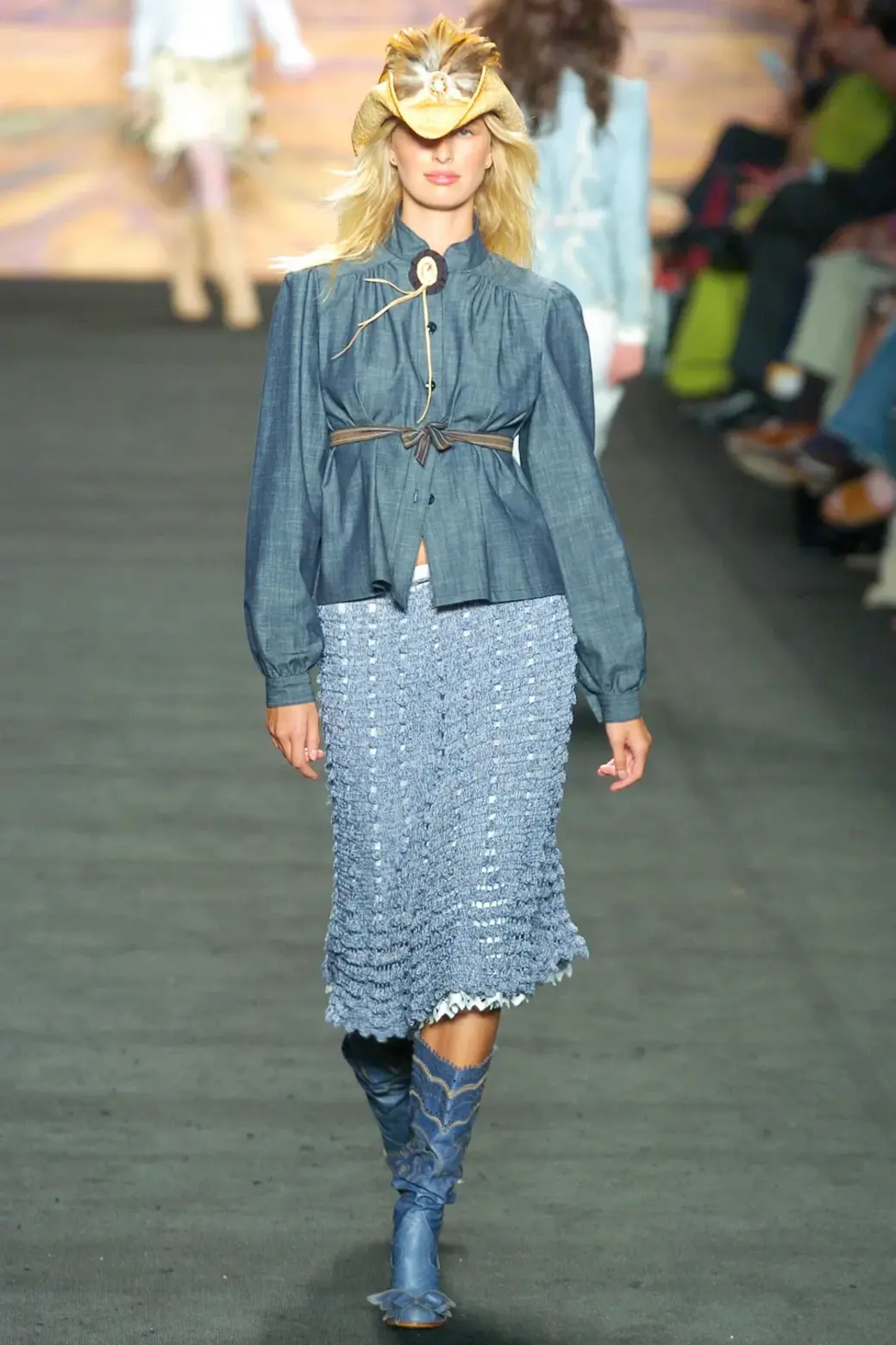
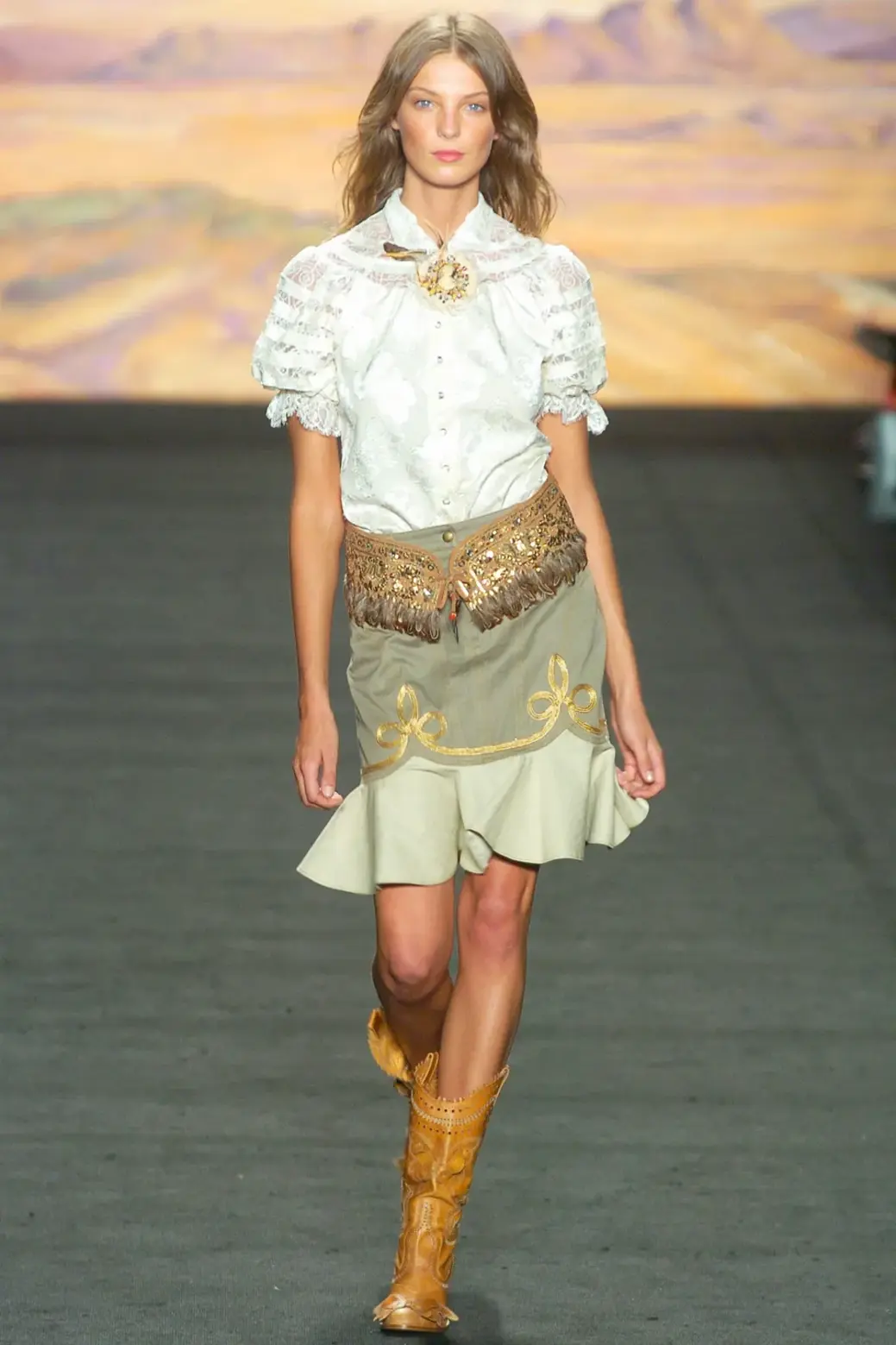
Anna Sui, meanwhile, transforms the motif into boho-chic fantasy: crochet, florals, suede, and gentle fringe designed for sunlit music festivals where every breeze becomes part of the outfit.
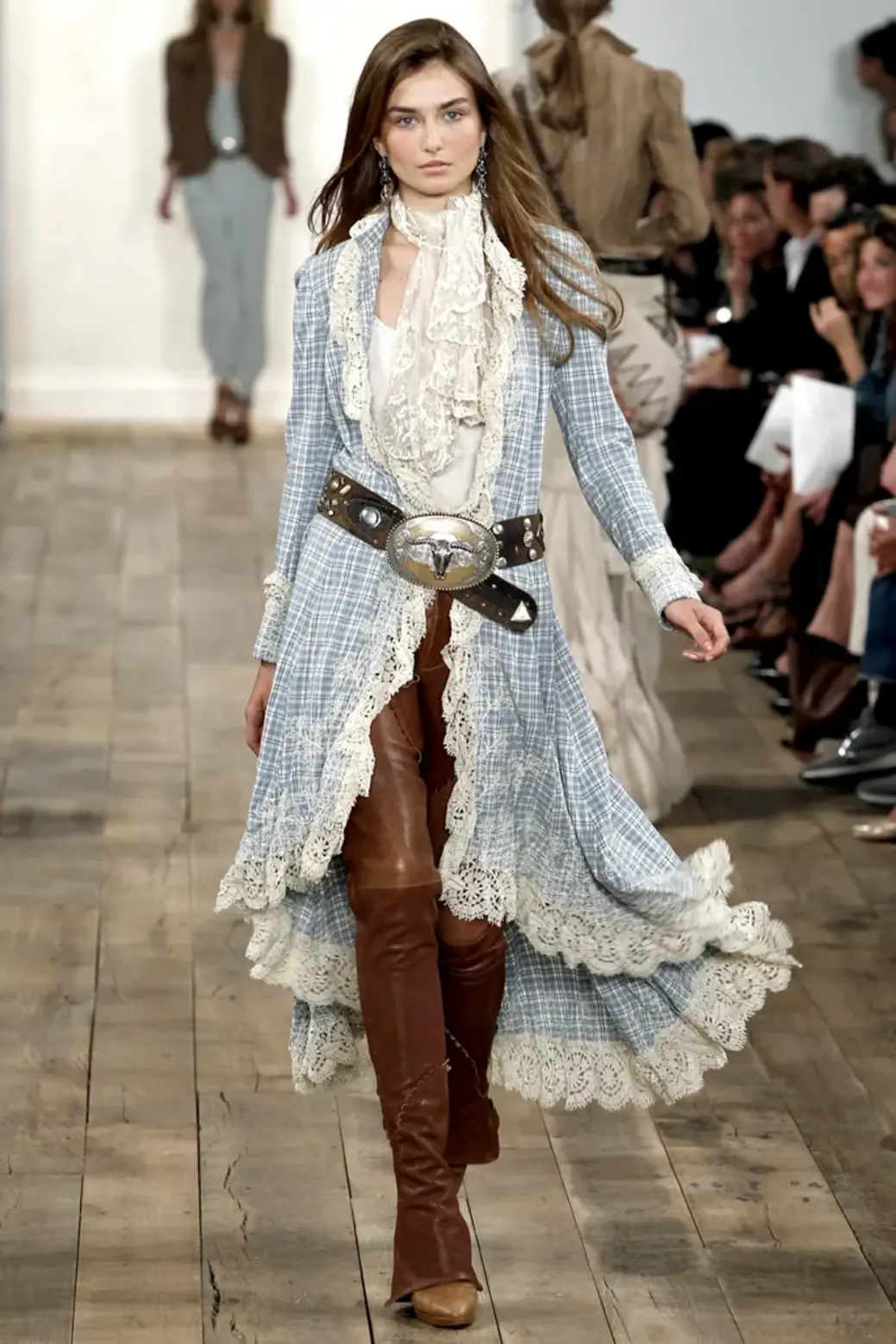
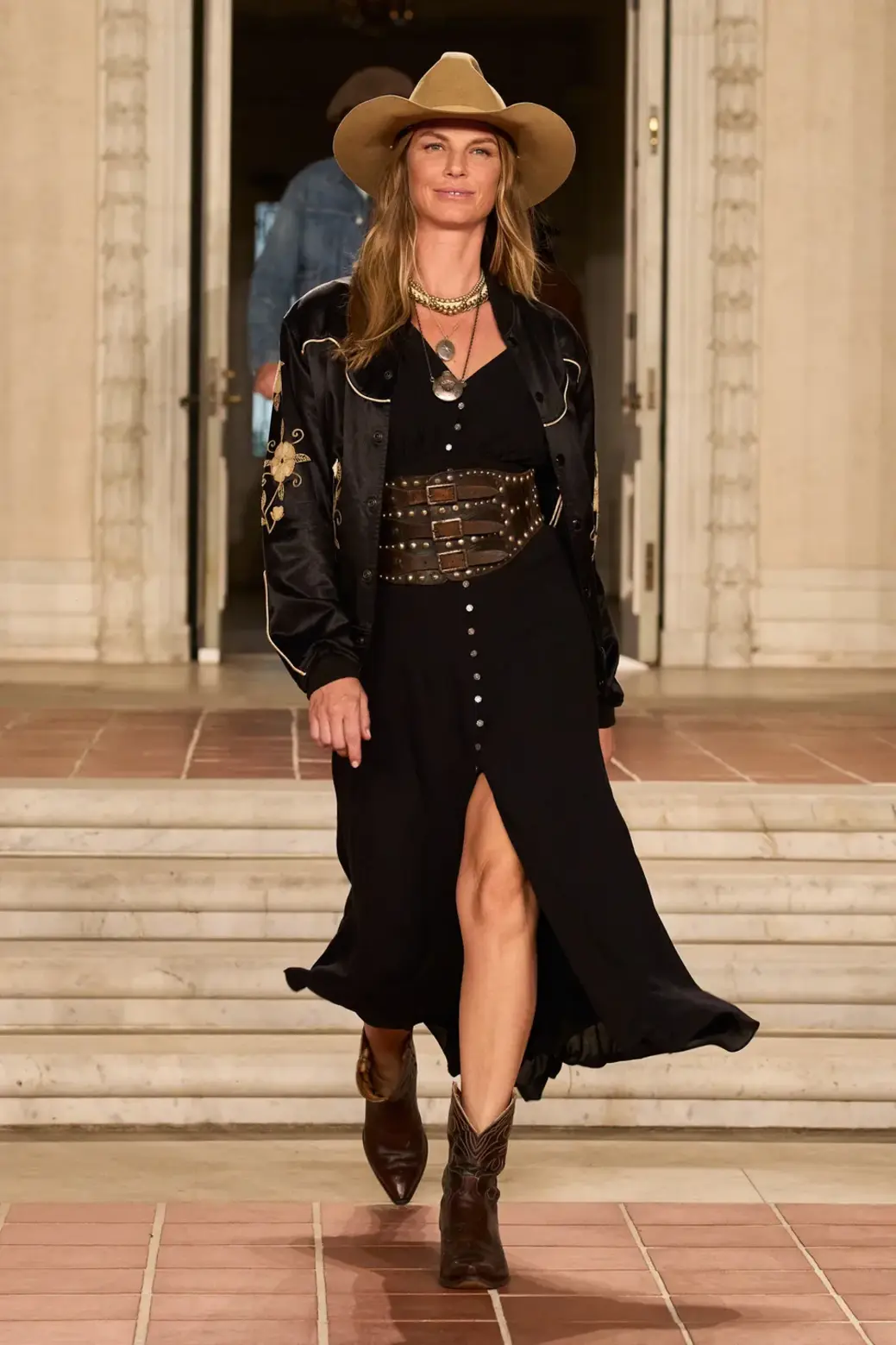
Ralph Lauren embraces the American countryside with timeless ease, rugged denim, suede jackets, concha belts, and prairie blouses that honor the quiet, pastoral romance of the West.
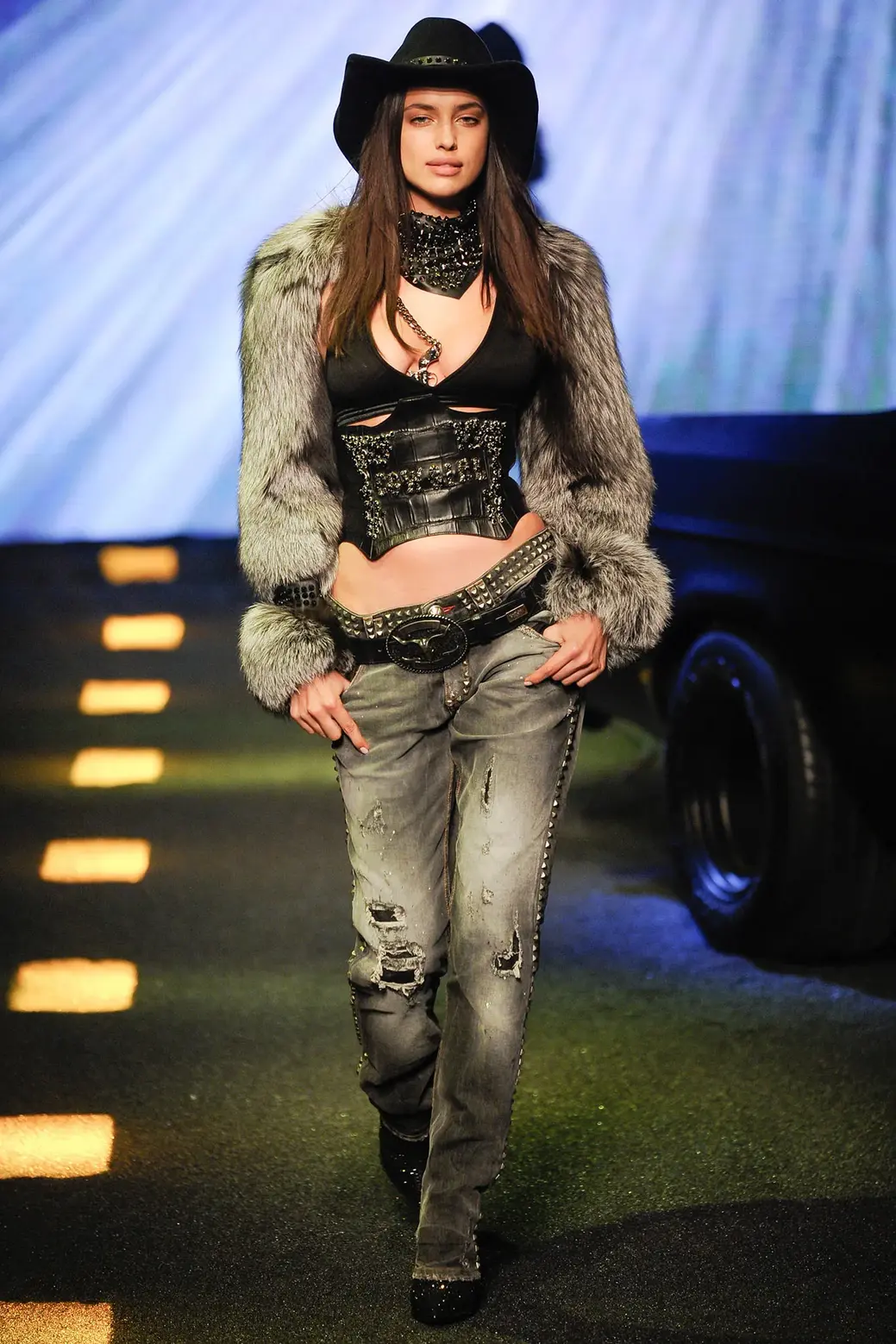
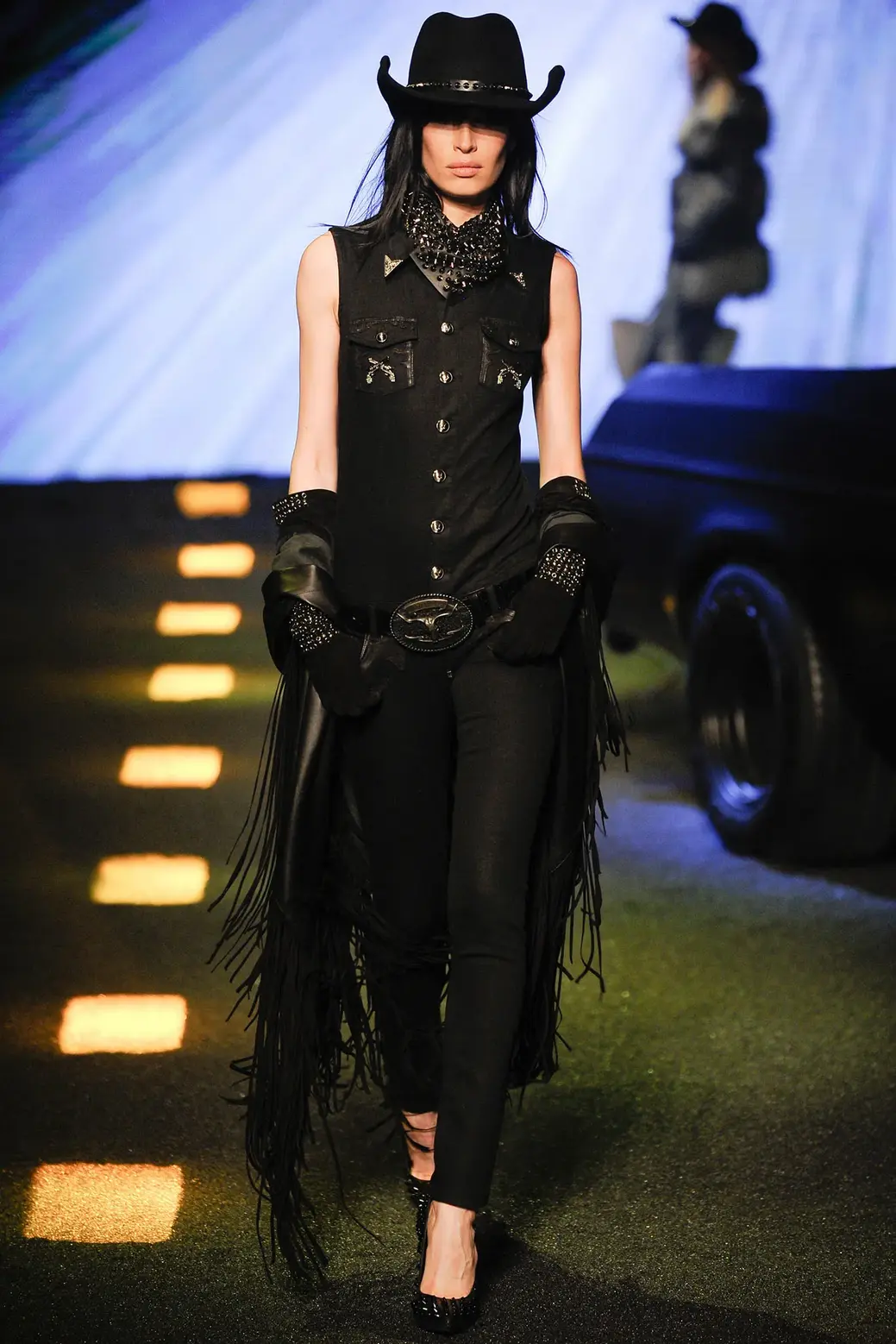
And then there is Philipp Plein, who takes Western codes and sets them on fire: studded boots, metallic leather, moto silhouettes, and punk-rock energy colliding with cowboy attitude until the whole runway feels like a desert rave. Across these brands, cowboy style becomes chameleon-like, sensual, rebellious, elegant, bohemian, rural, or rock-charged, proof that the West is not a single aesthetic, but a universe of possibilities for fashion to reinterpret again and again.
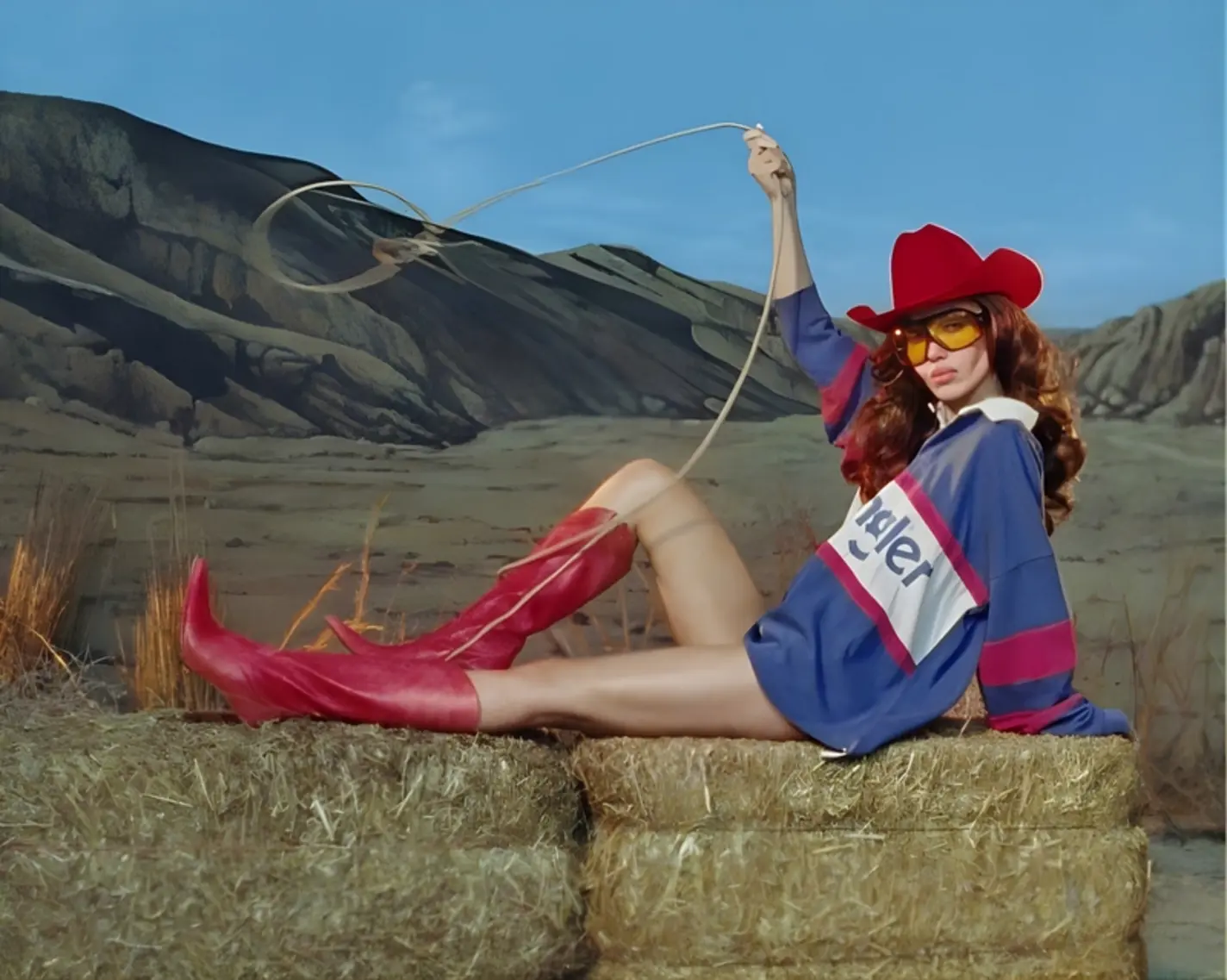
Cowboy style began as a men’s uniform, a durable, functional testament to physical labor and harsh, unforgiving landscapes. But fashion, with its endless desire for poetry and subversion, has a way of rewriting history.
Women stepped into that tough, wide-legged silhouette and changed its destiny forever.
Today, cowboy style is more than fashion; it is a definitive symbol of female sovereignty, claiming the right to be fierce and tender, a cultural remix across races, histories, and geographies, a fashion vocabulary with infinite, emotional dialects, an anchor for freedom, resilience, and the romance of the open road, a reminder that heritage is most powerful when it is lovingly, defiantly, and intelligently reimagined. The modern cowgirl doesn’t need a horse to ride. She wears leather and denim not to survive the frontier, but to survive herself, to face her own wild terrain, claiming every inch of ground she stands on. She is the protagonist of her own myth, forever riding toward the horizon she chose.
Advertisement