MENU
Close





In Tribeca, a new venue opens its doors with an artist who treats biology as both medium and metaphor. Running February 20 – April 18, 2026, “Michael Joo: Sweat Models 1991–2026” at Space ZeroOne gathers early-1990s works shaped by the AIDS-era information climate and pairs them with long-gestating concepts realized for the first time. The result is a survey that reads like a laboratory of emotion: precise, chemical, and quietly radiant.
In Tribeca, a new venue opens its doors with an artist who treats biology as both medium and metaphor. Running February 20 – April 18, 2026, “Michael Joo: Sweat Models 1991–2026” at Space ZeroOne gathers early-1990s works shaped by the AIDS-era information climate and pairs them with long-gestating concepts realized for the first time. The result is a survey that reads like a laboratory of emotion: precise, chemical, and quietly radiant.
February 20, 2026


Space ZeroOne arrives in New York with an ambition that suits its address: a global platform backed by the Hanwha Foundation of Culture, positioned to connect Korean and diasporic practices with the city’s contemporary art ecosystem. For its 2026 programme, space hands the keys to Christopher Y. Lew — guest curator of “Sweat Models”—for an exhibition that asks a deceptively simple question: what happens when the body gets translated into systems built for counting?
Joo’s answer comes “body-adjacent,” engineered through proxies: synthetic sweat, tears, salt, crystals, lab glass, and industrial hardware. His practice treats these materials as replenishable stand-ins, evidence of presence without portraiture, residue without confession. The show frames the body as a kind of shimmer, something that moves with more depth than measurement can comfortably hold.
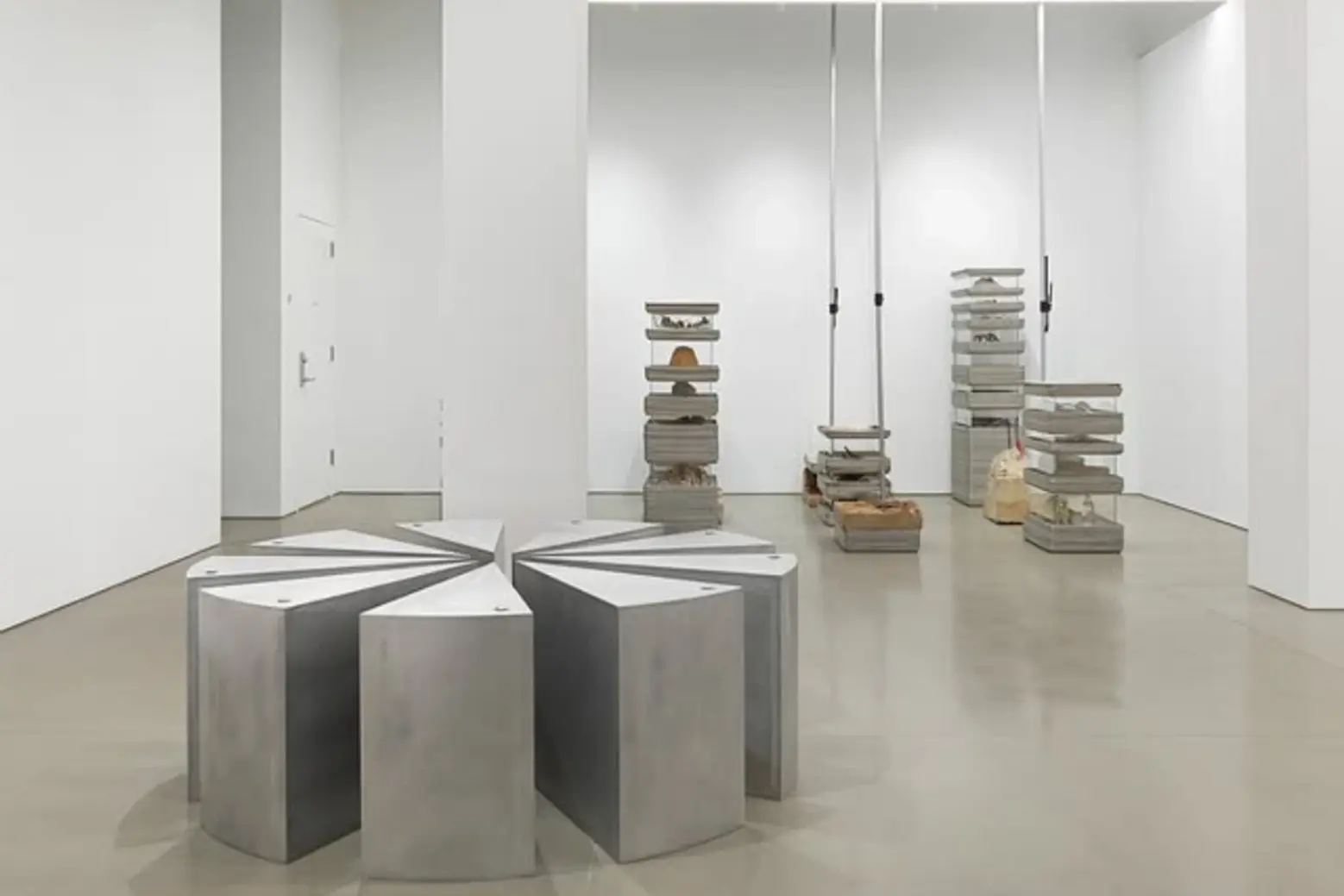
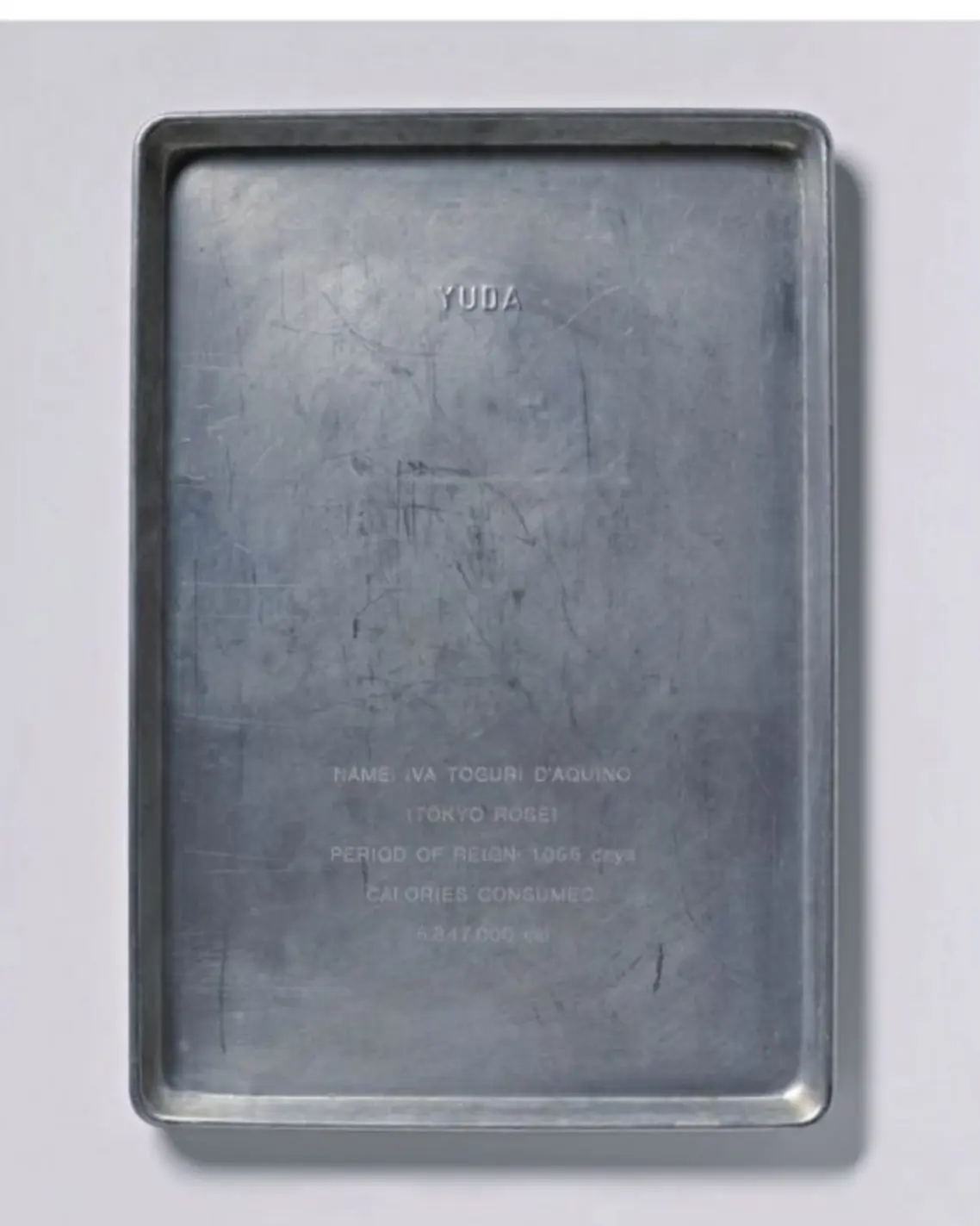
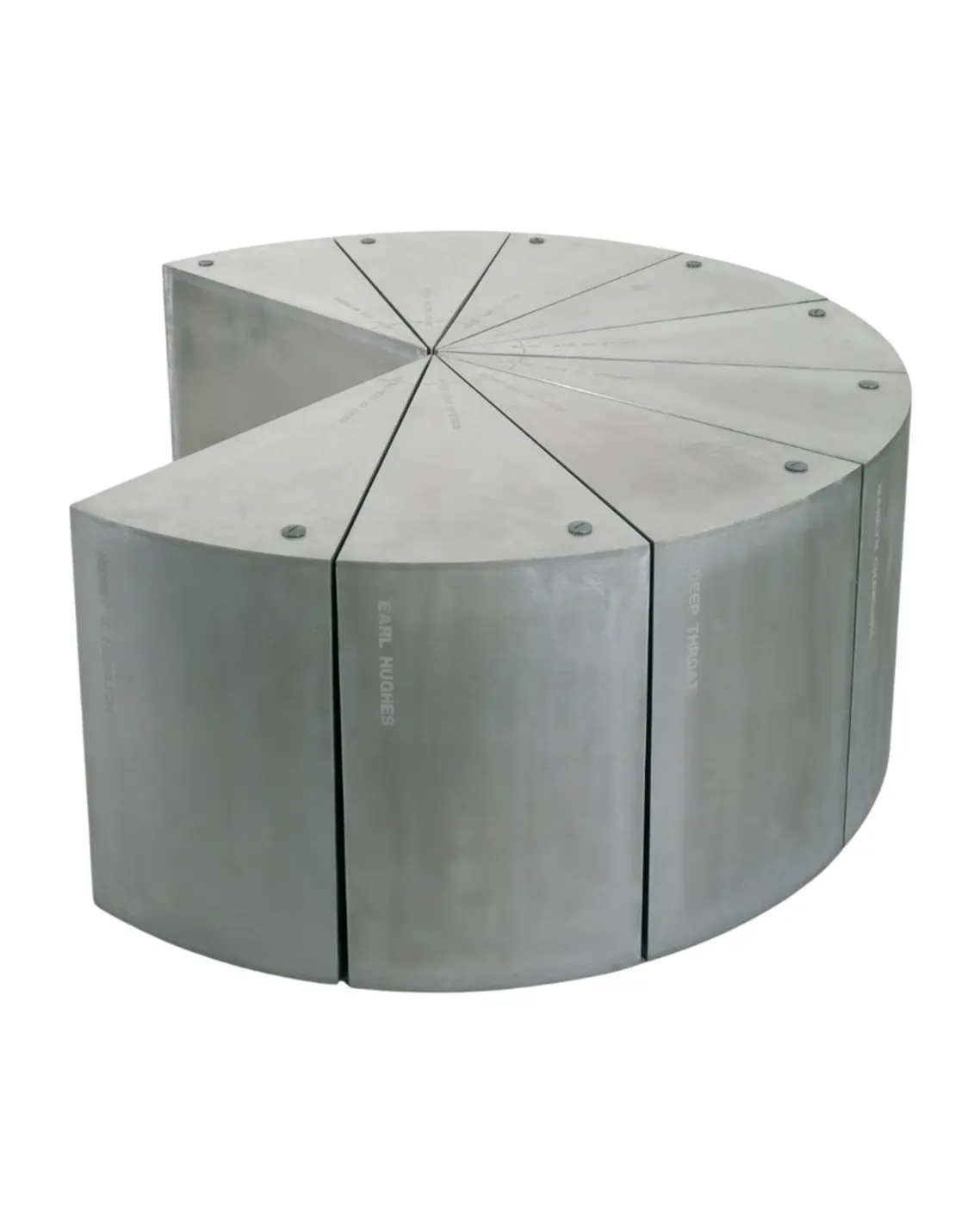
The exhibition’s gravitational center is “Concatenations” (2026) — a monumental installation conceived in 1990 and realized here as a stacked architecture of aluminum trays and archival objects. Joo likens it to a “physical” language model: a material system trained on decades of choices, habits, and formal problems. The trays read as shelves, screens, and specimen tables at once — an archive that refuses to stay purely historical, because it keeps performing in the present tense.
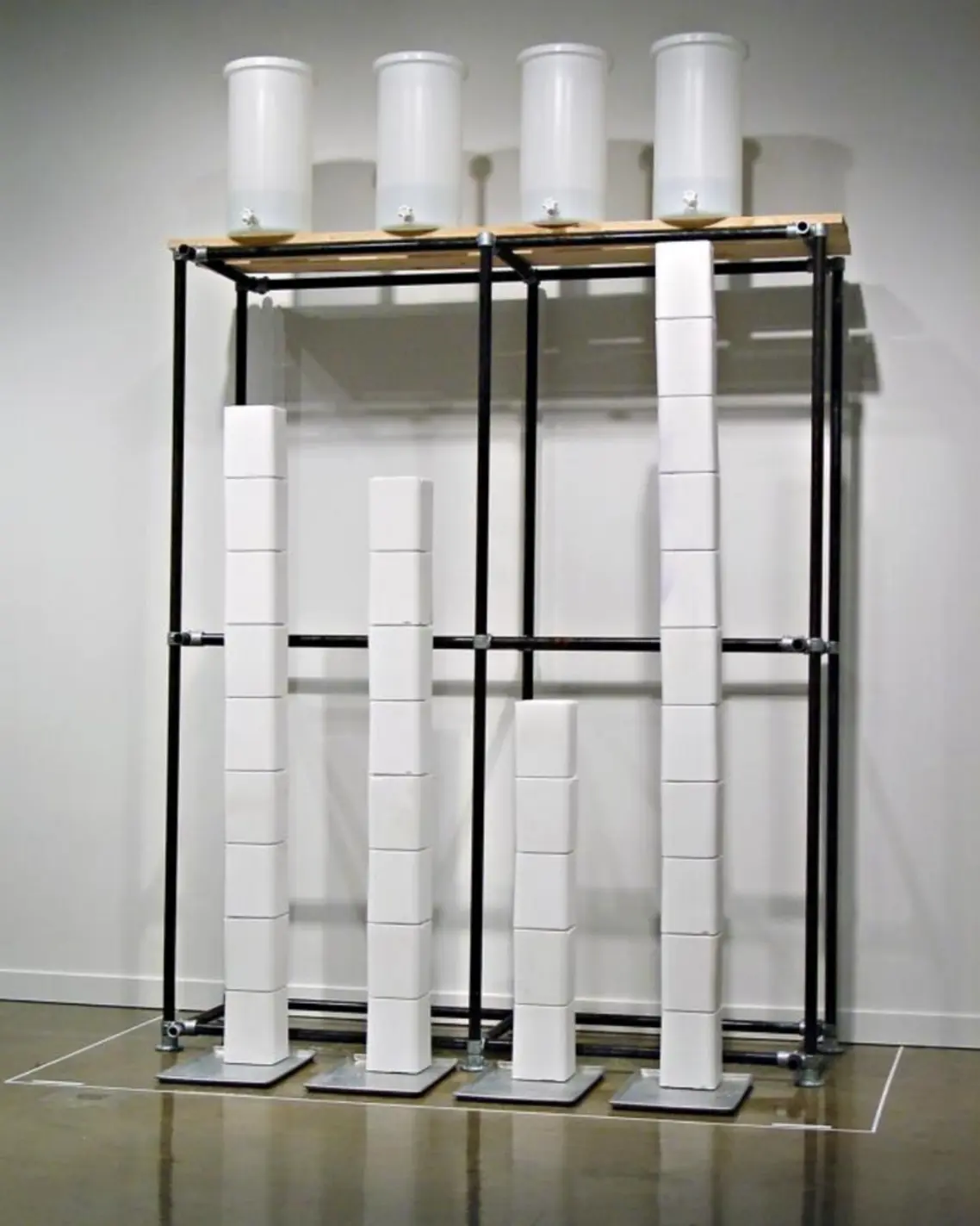
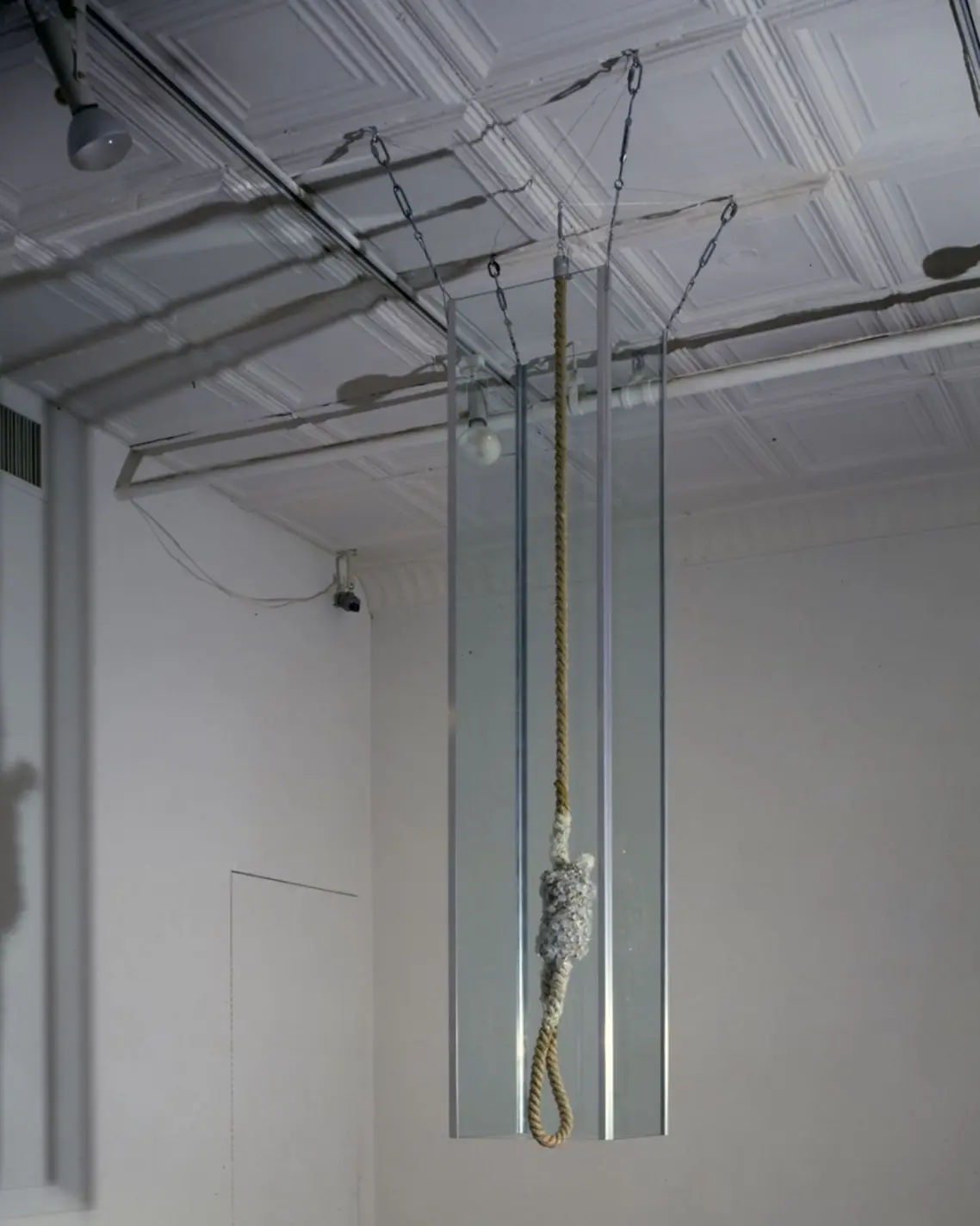
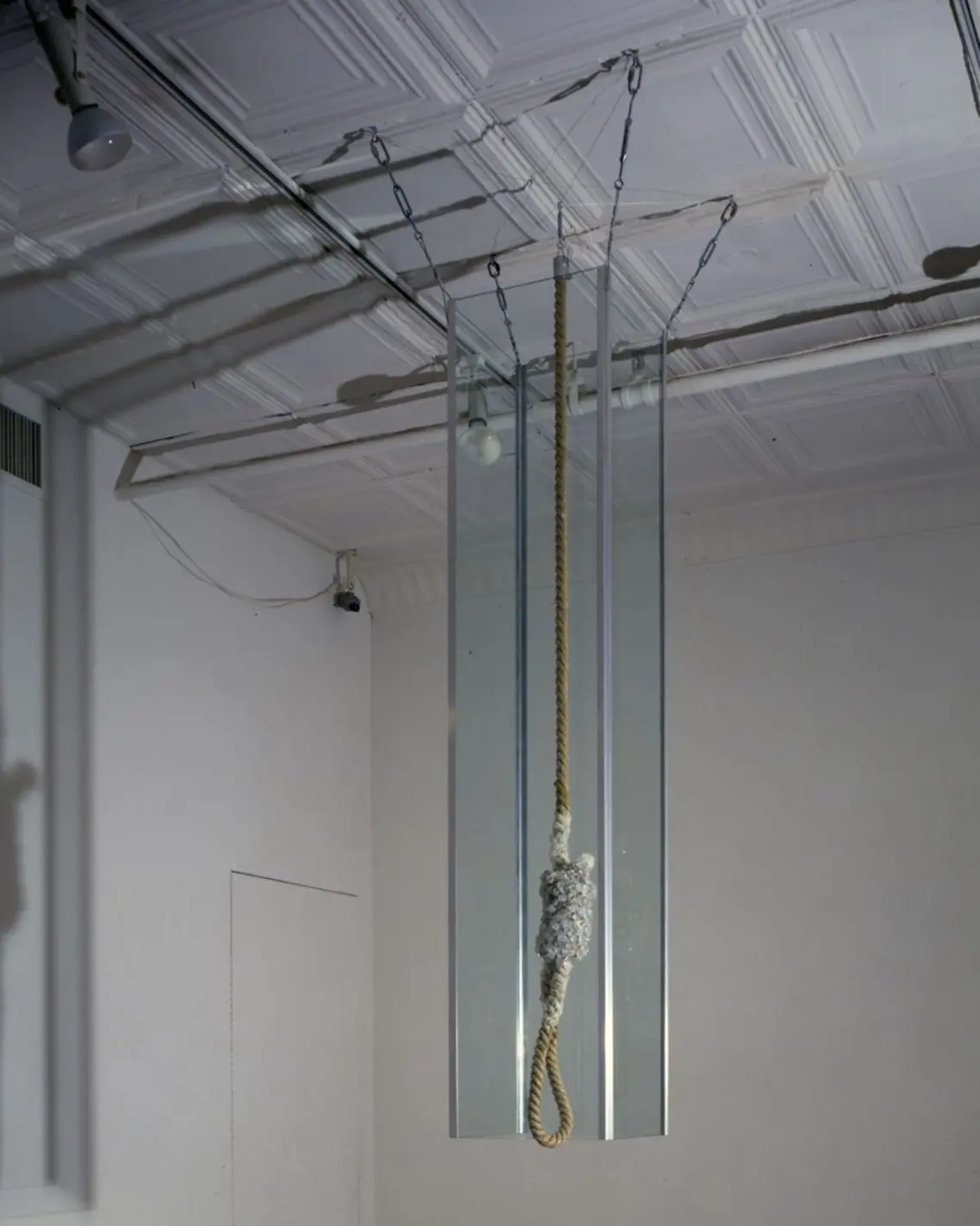
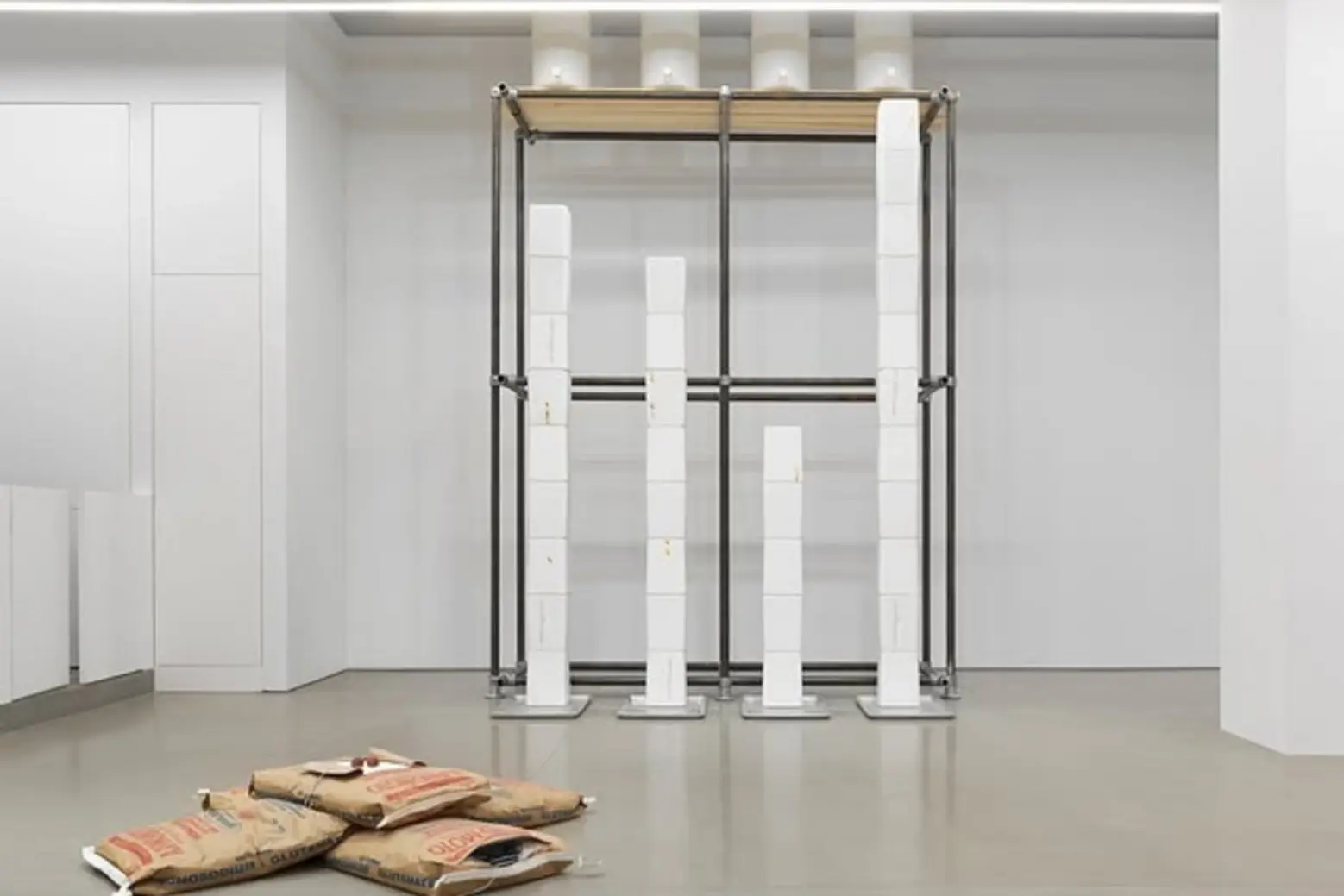
Around it, the 1990s works land with sharpened relevance. “Saltiness of Greatness” (1992) compresses salt blocks and synthetic sweat into a monument to exertion: ambition rendered as chemistry, achievement measured by what the body leaves behind. “Slanty” (1992) extends that logic into identity, using synthetic tears and aluminum as a cool, cutting metric for the era’s culture wars and the calibration of Asian-American visibility. “Crystal Noose” (1999) grows a fragile rope of flax and aluminum potassium sulfate, where domestic matter and chemical accretion share the same breath.
Time also becomes a co-author. Several works evolve through evaporation and crystal growth, shifting the exhibition’s surface from day to day. A return visit brings a new read — proof that “measurement” here stays alive, contingent, and human.
Space ZeroOne’s debut lands like a manifesto made of residue. “Sweat Models 1991–2026” shows Michael Joo has long understood that modern life translates bodies into metrics, yet his work insists on what measurement can’t hold: leak, change, afterimage.