MENU
Close





Within the realm of Van Cleef & Arpels Flower Automata, the Extraordinary Objects collection transforms the flower automaton into kinetic intimacy: a sealed dome, a held breath, then petals unfurling into music as a butterfly rises. Created with master automaton maker François Junod in Sainte-Croix, these blooms turn minutes into a private ritual of wonder.
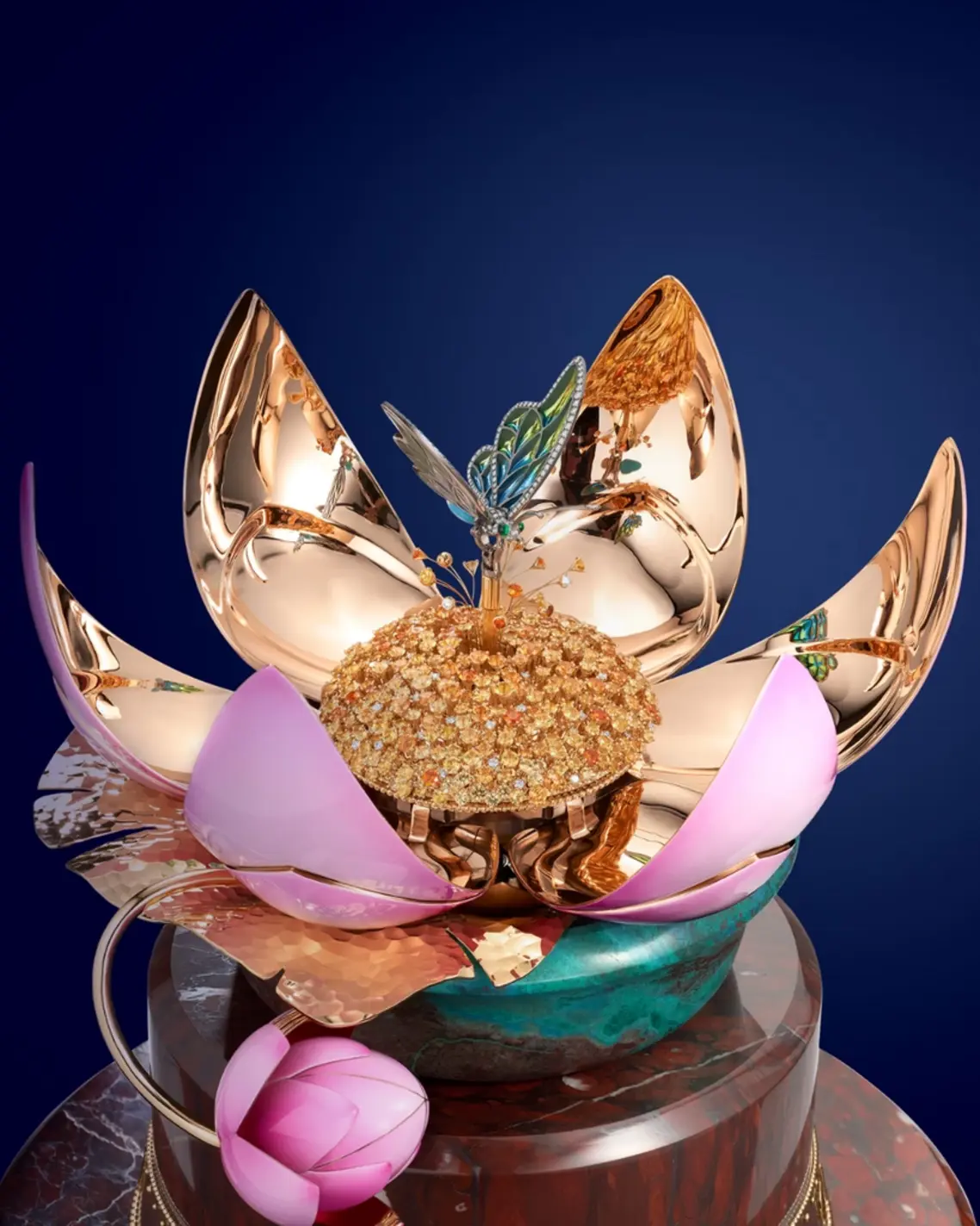
Within the realm of Van Cleef & Arpels Flower Automata, the Extraordinary Objects collection transforms the flower automaton into kinetic intimacy: a sealed dome, a held breath, then petals unfurling into music as a butterfly rises. Created with master automaton maker François Junod in Sainte-Croix, these blooms turn minutes into a private ritual of wonder.
February 3, 2026


Van Cleef & Arpels has long treated “precious objects” as a serious discipline, and the Extraordinary Object collection makes that philosophy literal: tabletop sculptures that merge jewelry craft, watchmaking, and métiers d’art into a single narrative. The house frames the collection as a continuation of objects created since 1906, yet its current chapter reads like a genre of its own, kinetic high jewelry designed for living spaces.
Inside this universe, the flower automaton carries a specific emotional script. Bird automatons flirt with courtship and song; floral pieces stage metamorphosis. They start as closed volumes, a bud, a dome, a bouquet held tight, then open on demand to reveal a hidden “life” (often a butterfly, sometimes a bird), accompanied by crystalline sound and a gentle return to stillness. That narrative has been refined through the series Van Cleef & Arpels introduced in 2022, shaped in close dialogue with Swiss automaton maker François Junod in Sainte Croix.
A flower seems soft, yet it forces hard engineering. Multiple petals must overlap cleanly, open in a believable rhythm, and close with a satisfying finality, all while keeping the mechanism visually seamless. Junod’s process begins with “an artistic vision” and a “magic effect,” then resolves into cams and gears finished with the care of high craft. The Maison’s role is to make that micromechanical truth feel like botany: synchronised movement that reads as one breath.
This format also suits collectors. The object sits as décor at rest, then performs only when invited. The time display, often a rotating ring at the base, anchors the fantasy to daily use, helping the piece belong on a desk or mantle.
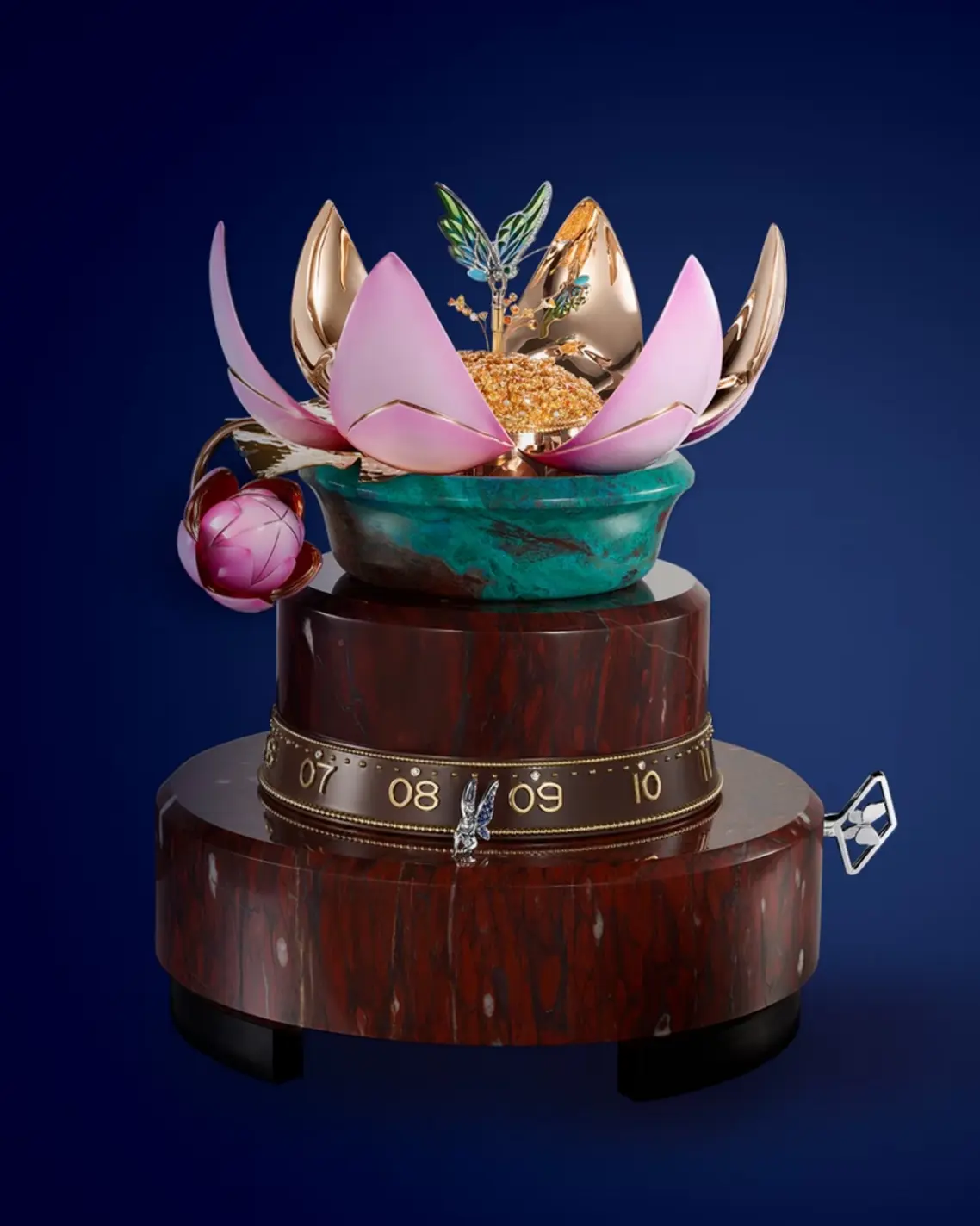
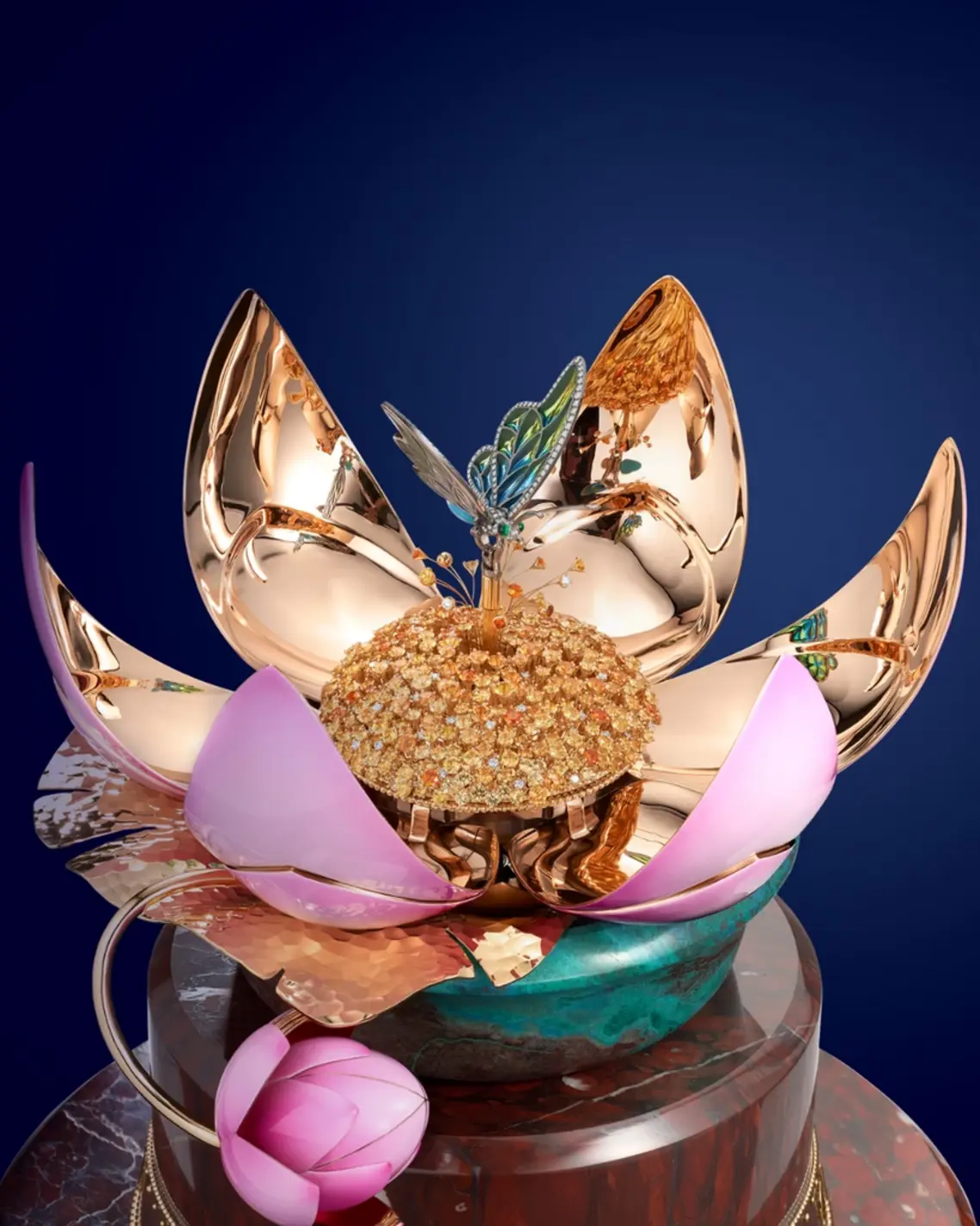
Floraison du Nénuphar crystallises the series’ promise: a flower that opens on demand to reveal a butterfly, accompanied by crystalline music. The butterfly rises above a yellow gold dome set with yellow sapphires, spessartite garnets, and diamonds, then beats its plique à jour enamel wings for a few seconds before returning to the flower’s center as the petals close.
Its base reads like landscape. Van Cleef & Arpels builds it from griotte marble and a shattuckite bowl, describing shattuckite as copper silicates with tones ranging from blue to green. Time becomes part of the story: a white gold fairy set with blue sapphires points to the hours on a rotating ring, turning timekeeping into theater.
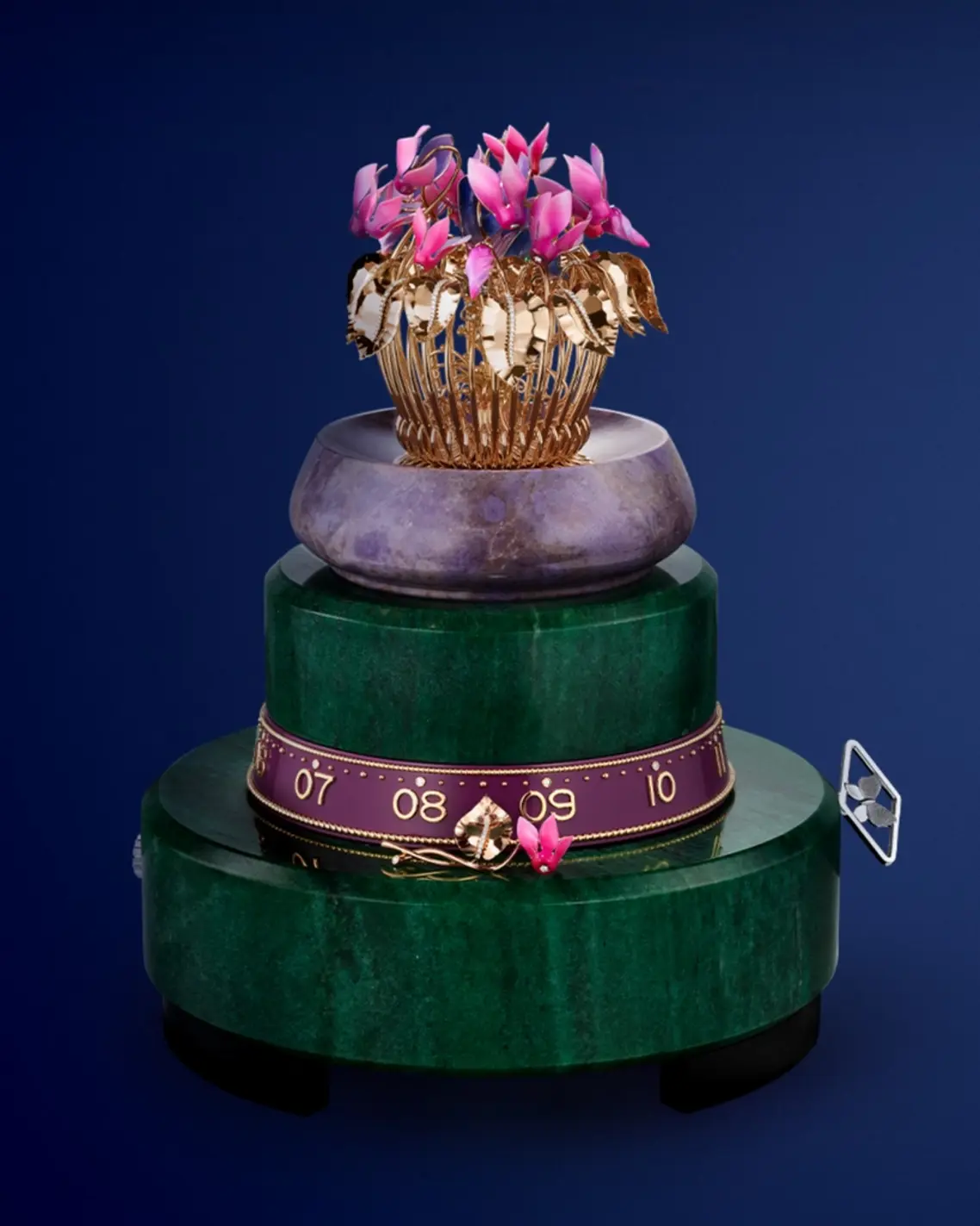
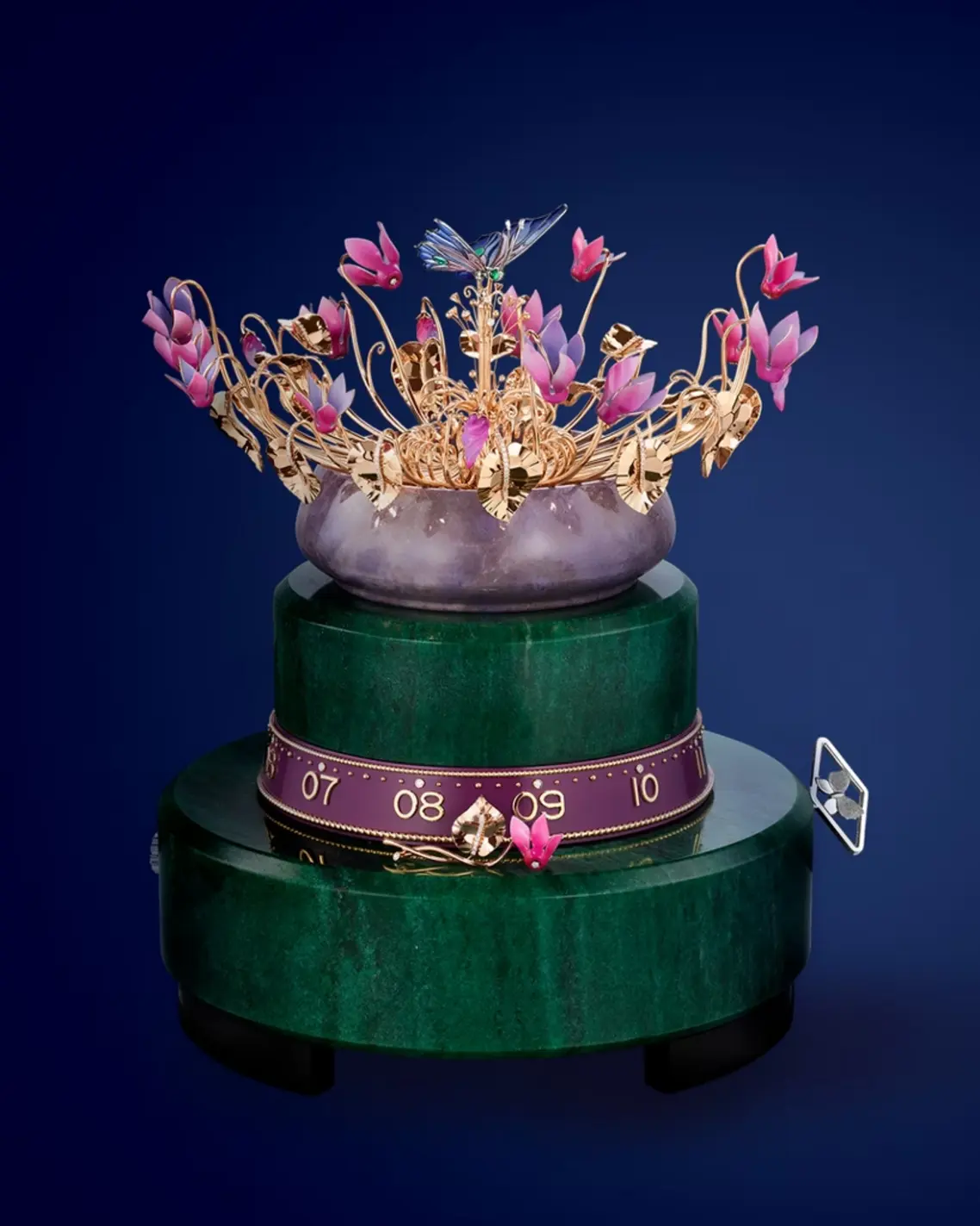
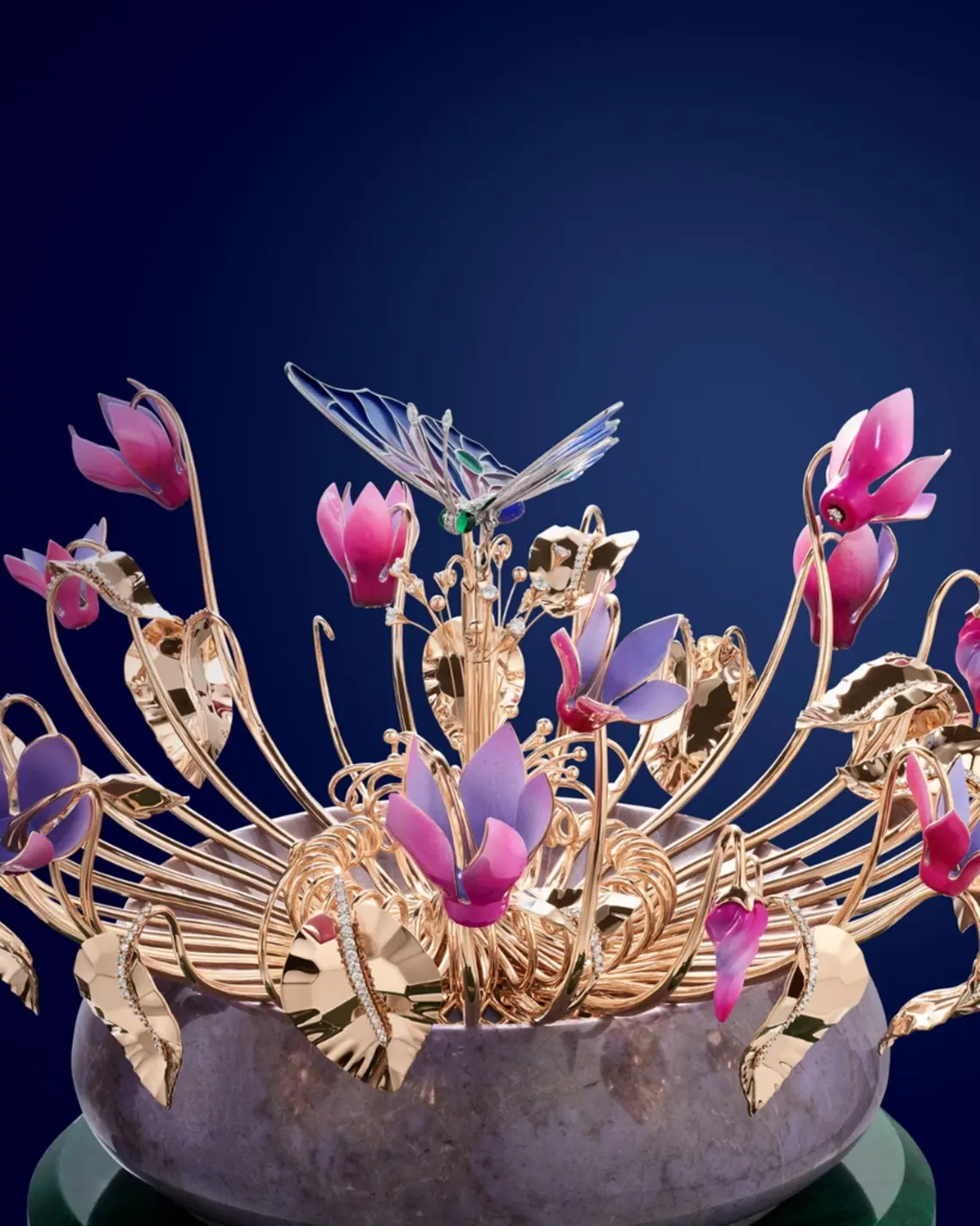
Éveil du Cyclamen shifts the flower automaton from a single bloom to a bouquet. At its center, a butterfly flaps above cyclamen, its body adorned with diamonds, emeralds, lapis lazuli, and plique à jour enamel. The flowers carry the illusion through surface work that reads almost painterly: each cyclamen is airbrush lacquered in successive layers, producing subtle pink and purple nuances that remain consistent from bud to bud.
The base deepens the “earth” effect: two pieces of green aventurine and a bowl of purple jade, chosen for polish and inclusions. The time display stays discreet: a small flower of rose gold, lacquer, and diamonds overlooks the rotating ring, “illuminating the course of the hours.”
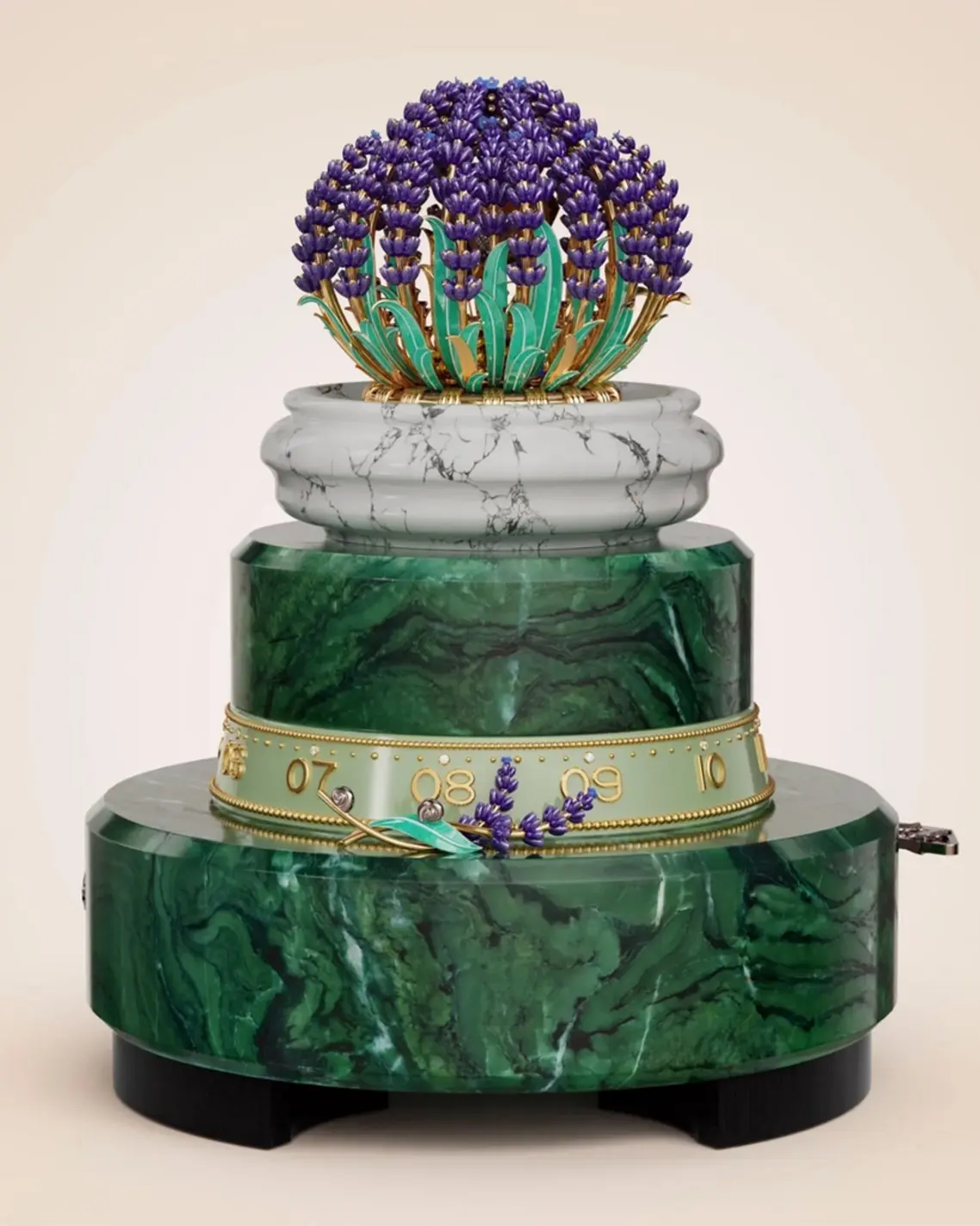
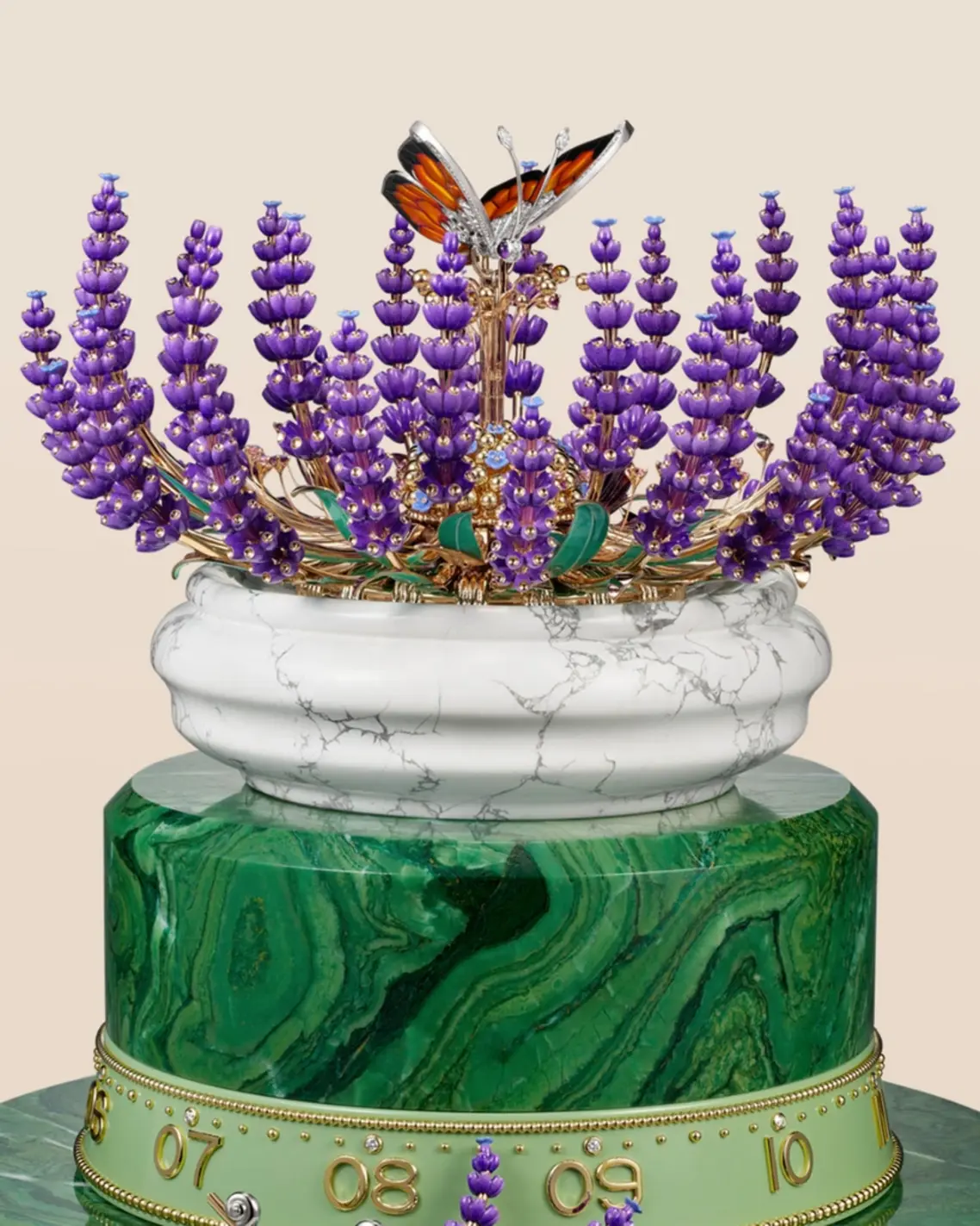
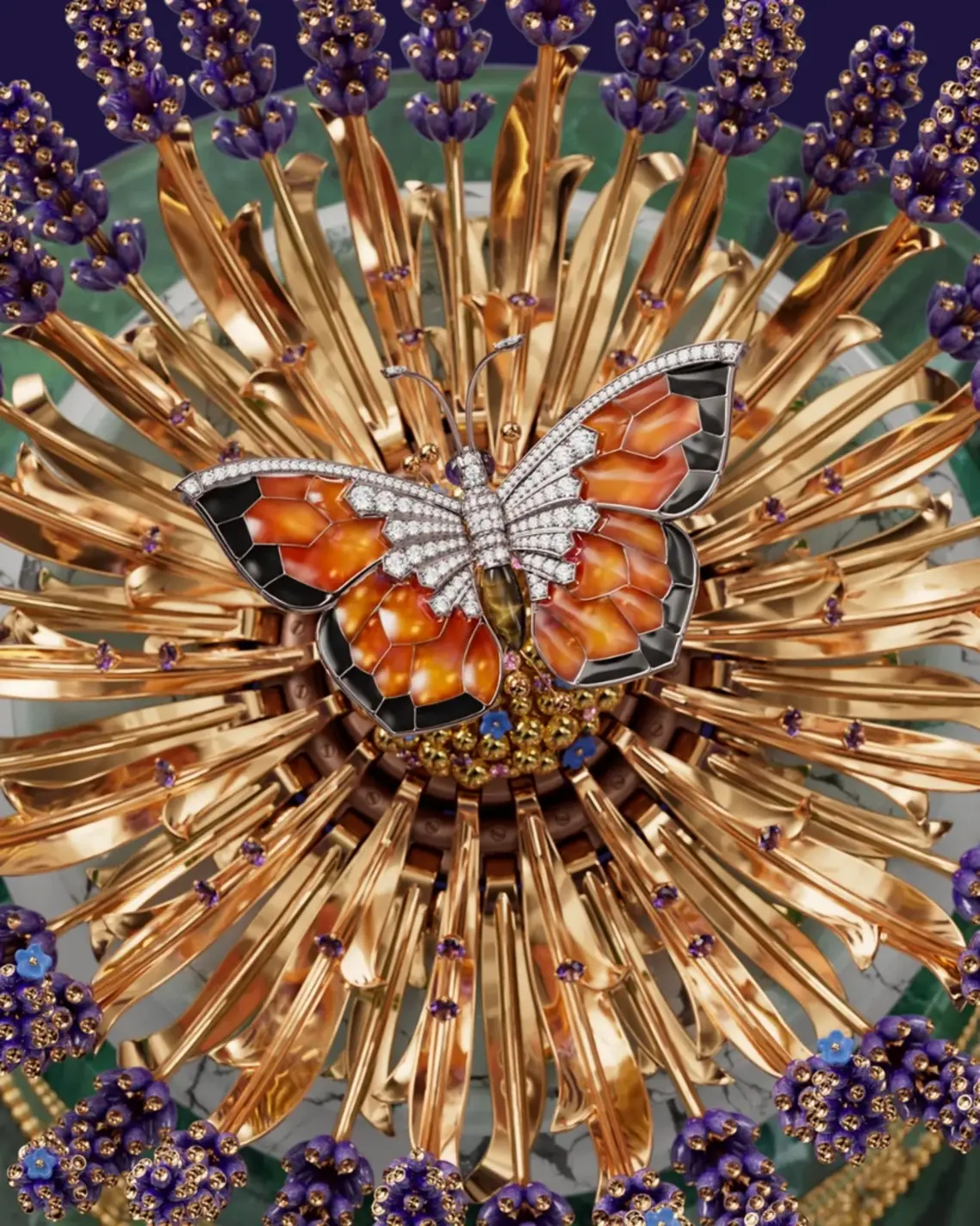
Brassée de Lavande, meaning “an armful of lavender,” pushes beyond the opening gesture into atmosphere. Its on demand animation sets 36 lavender sprigs in motion; the corollas slowly unfold to reveal a butterfly that flutters to a carillon. In an interview published by Monochrome Watches, the Maison describes the central challenge as achieving the effect of wind moving through the bouquet, movement that feels continuous, field like, and alive.
The numbers reveal the scale of labor. The same interview cites approximately 3,466 hours of production, split between High Jewelry work and movement and assembly. Fifteen layers of lacquer were applied to each of the 36 sprigs, and the butterfly’s plique à jour enamel wings gain warmth from tiger’s eye and amethyst details. The piece is assembled in Sainte Croix, Switzerland, linking the lavender “field” to the mountain town that anchors Junod’s practice.
A convincing bloom solves three problems at once.
Overlap: Petals demand ultra precise tolerances, so layers glide cleanly. Thin gold components and lacquered color help keep the silhouette botanical and light. The Cyclamen page even foregrounds the lacquer process as the key to naturalistic nuance.
Tempo: “Natural” opening requires easing, gentle start, fuller expansion, soft landing. Junod has highlighted synchronisation and the “opening system” of corollas as a core difficulty, especially when gold still needs smooth, lyrical motion.
Sound: These scenes often come with crystalline music “specifically composed” for opening and closing, delivered through chimes or a carillon. Sound scripts emotion and turns micromechanics into choreography.
Part of the magic is material contrast. The bases behave like geology, ornamental stones with grain, inclusions, and weight, while the moving elements behave like air: Lacquered petals and translucent enamel wings catching light.
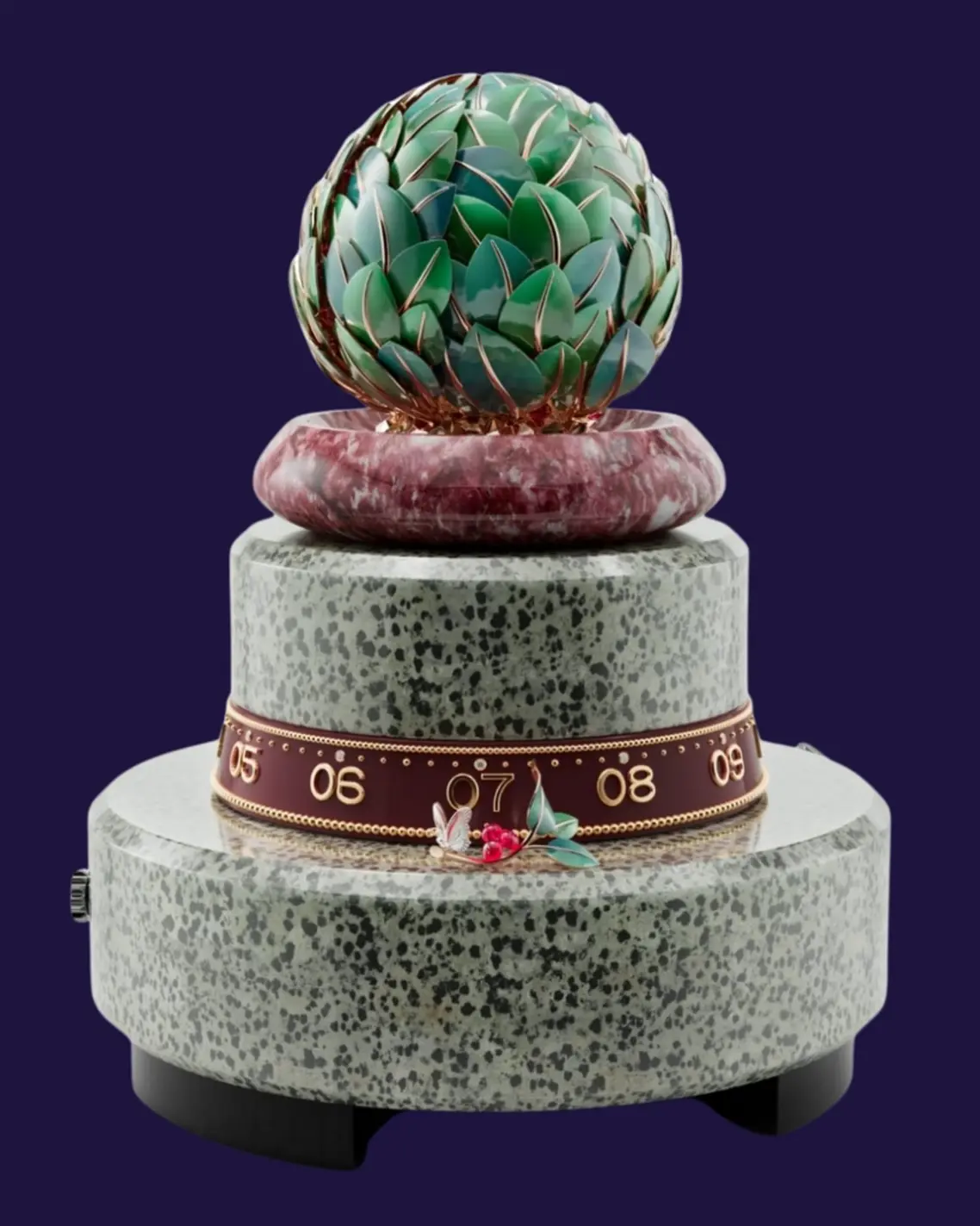
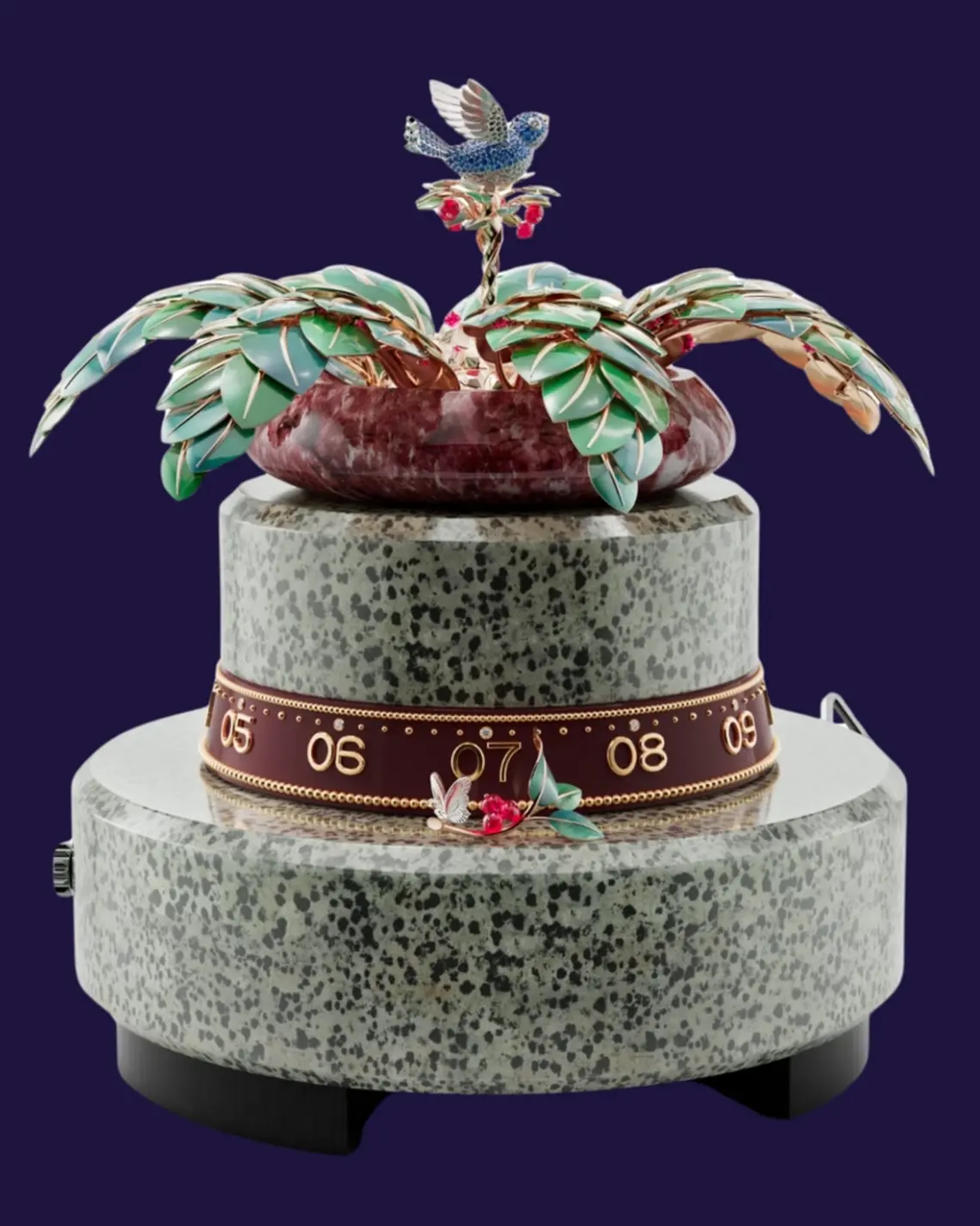
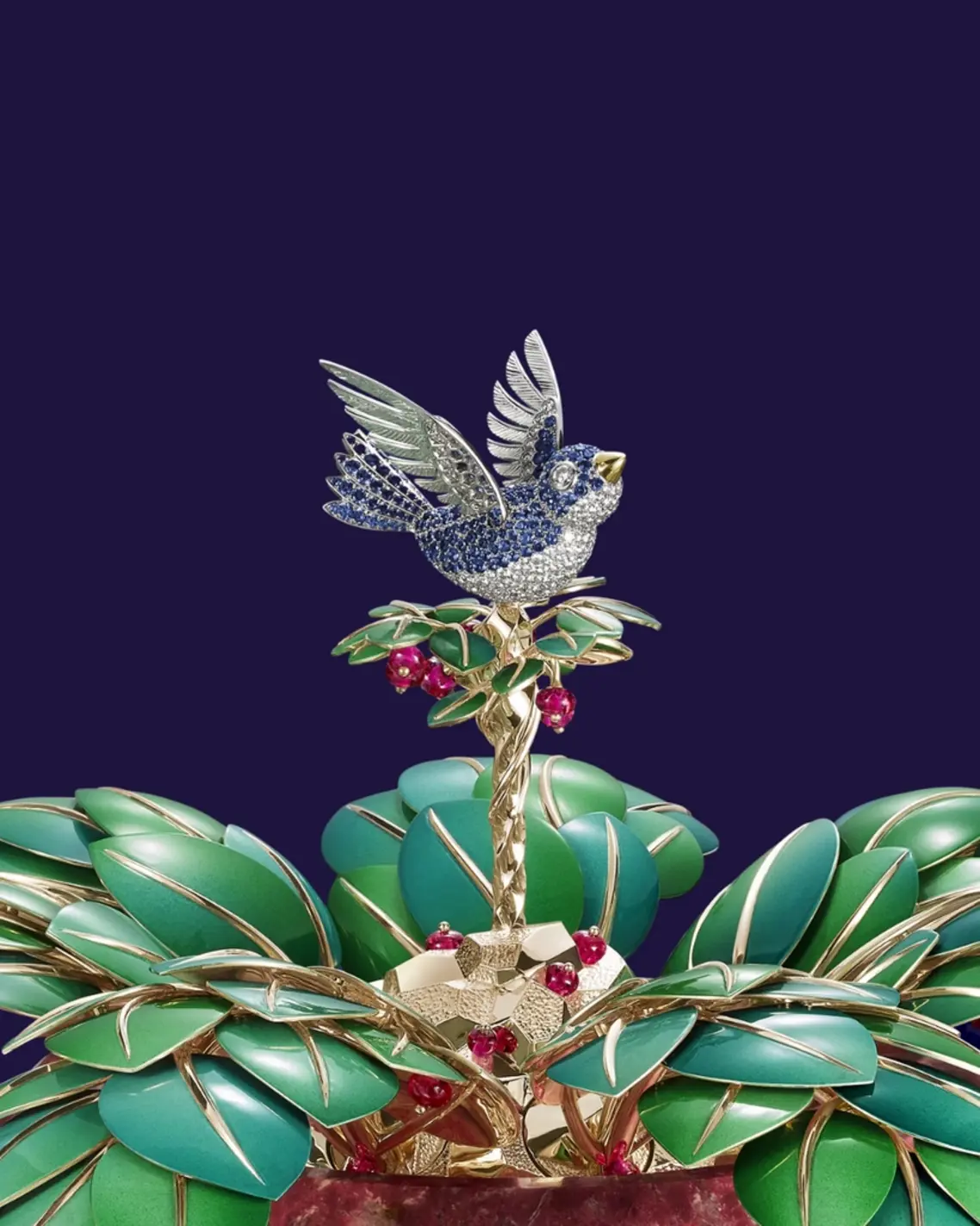
Van Cleef & Arpels’ own descriptions show how intentional this is. Floraison du Nénuphar sits on griotte marble and shattuckite; Éveil du Cyclamen rests on green aventurine and purple jade. Apparition des Baies, unveiled in 2024 as a new automaton created in partnership with François Junod, uses dalmatian jasper and thulite for the base, then stages a “delicate blooming” where lacquered rose gold leaves open to reveal a diamond and sapphire bird before folding back into a dome.
Material map:
Floraison du Nénuphar: Griotte marble and shattuckite base, butterfly surprise with plique à jour enamel.
Éveil du Cyclamen: Green aventurine and purple jade base; butterfly surprise with diamonds, emeralds, lapis lazuli.
Apparition des Baies: Dalmatian jasper and thulite base; bird surprise with diamonds and sapphires.
Brassée de Lavande: Verdite and howlite base; butterfly surprise with plique à jour enamel, tiger’s eye, amethyst.
A necklace performs in public. A flower automaton performs in private. It lives in the home, and its pleasure arrives through ritual: winding, activating, watching the bloom, letting the object settle back into stillness. That privacy turns spectacle into sanctuary, an experience closer to a music box, a small sculpture, a meditation prompt.
The category’s most intriguing direction now is “weather,” meaning movement that suggests an environment more than a single action. Brassée de Lavande’s wind effect signals that shift: a bouquet behaving like a landscape. In that sense, Van Cleef & Arpelsflower automata has become a modern domestic artwork, an object that measures hours, carries geology, and briefly, beautifully, learns to breathe.