MENU
Close





For a decade, Demna Gvasalia kept forcing Balenciaga into the same irritated question: are we looking at genius, a joke, or a very expensive test of how much luxury can get away with?

For a decade, Demna Gvasalia kept forcing Balenciaga into the same irritated question: are we looking at genius, a joke, or a very expensive test of how much luxury can get away with?
August 14, 2026
Advertisement

Advertisement



A red puffer jacket provides a surprisingly elegant place to start. When Demna Gvasalia presented his first Balenciaga collection for Fall 2016, it slipped from the shoulders around a crystal-covered turtleneck, translating Cristóbal Balenciaga’s treatment of the back and neck into an object associated with ordinary winter dressing. Years later, when asked to choose one piece to represent his decade at the house, Demna Gvasalia selected that puffer.
Its importance rested in the distance between reference and result. A construction principle inherited from one of the twentieth century’s greatest couturiers had survived inside something far more familiar, and that translation would become central to the decade ahead. Balenciaga gradually developed a visual language that pulled luxury towards the banal, awkward and occasionally ridiculous, placing familiar objects inside contexts that made their value unstable enough to provoke equal amounts of fascination and irritation.
Kering announced Demna’s appointment on October 6, 2015, giving the 34-year-old responsibility for Balenciaga’s collections as well as its broader image. His Fall 2016 debut quickly showed that the archive would be treated as a working language rather than a set of historical references to reproduce.
Over the course of his postwar career, Cristóbal Balenciaga repeatedly loosened fashion from the natural contours of the body. The barrel line loosened the waist and curved fabric around the torso; the semi-fitted suit kept structure at the front while releasing volume through the back; the tunic and sack dress removed the waist almost entirely. Cocoon coats, balloon shapes and the trapezoidal baby doll continued the same investigation, allowing fabric to create its own architecture around the wearer. By the end of his career, pieces such as the four-corner dress had pushed that abstraction towards something almost geometric.
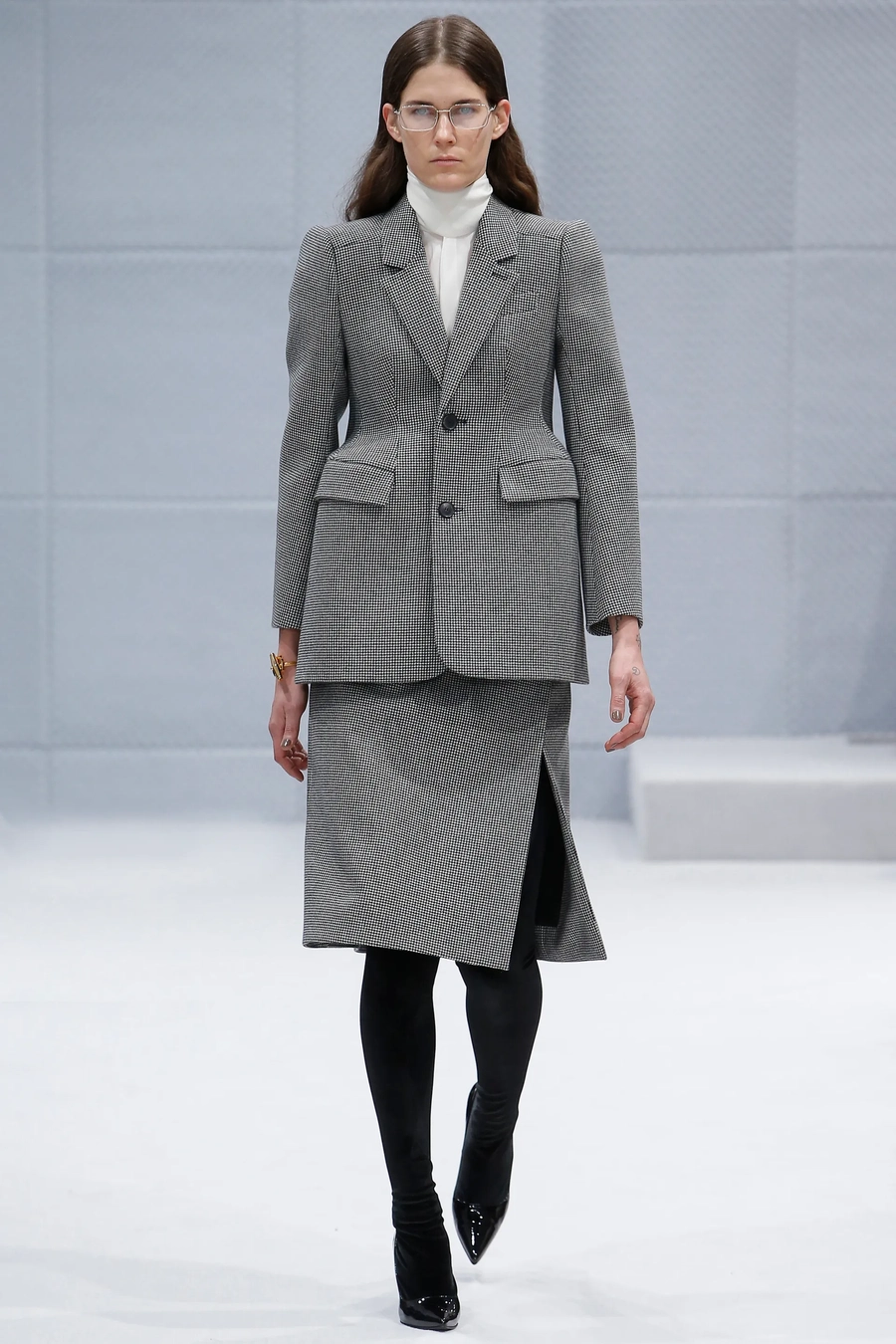
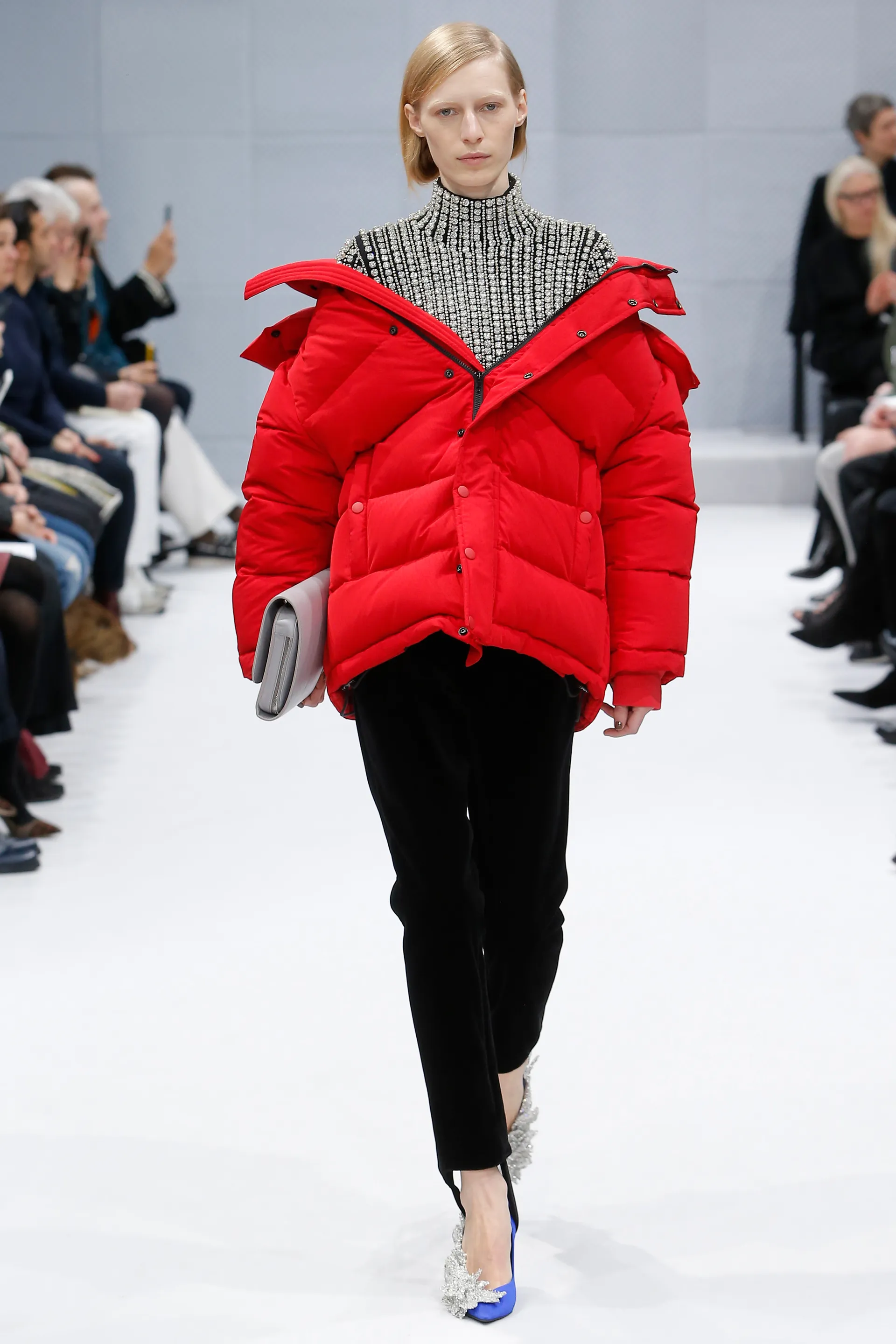
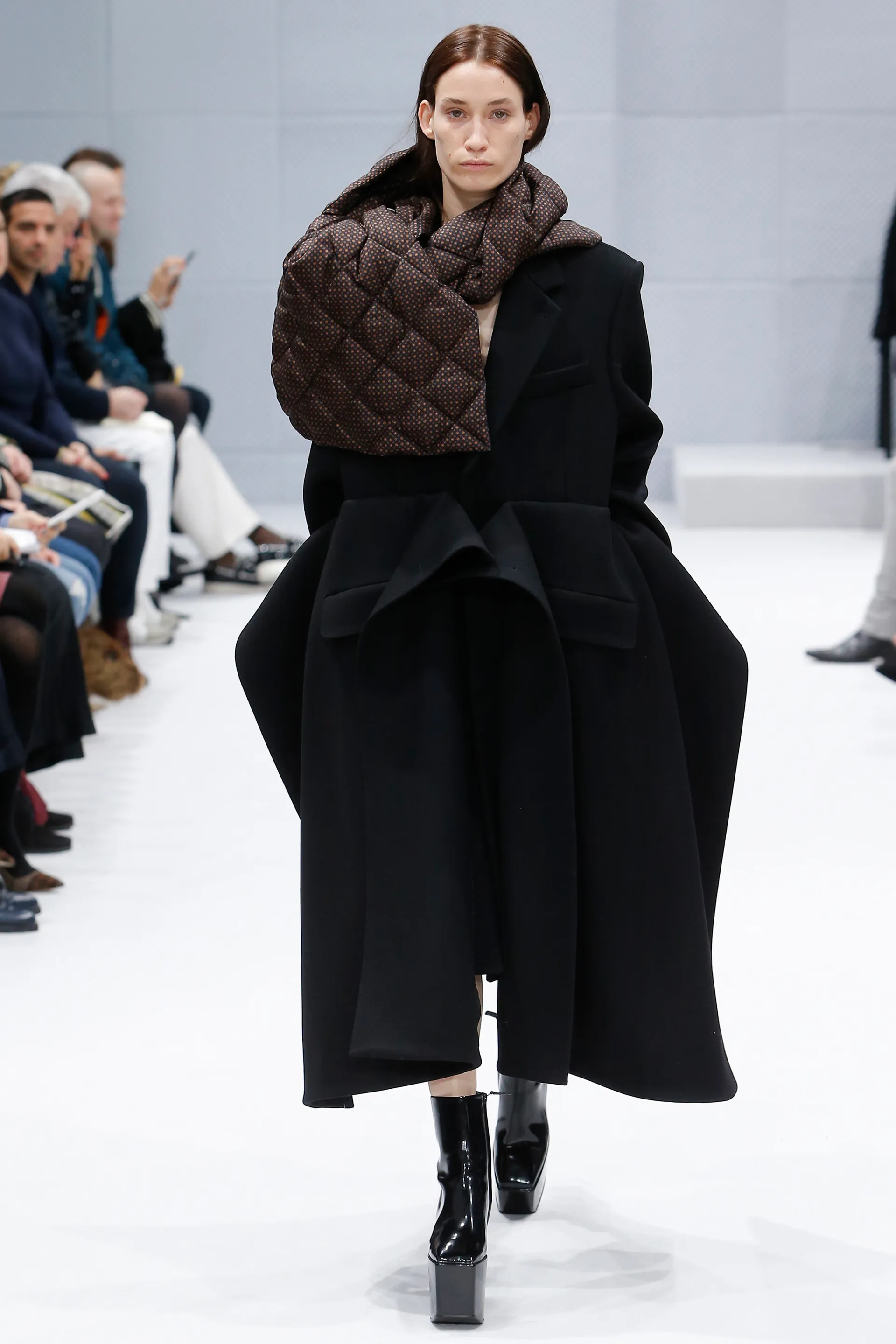
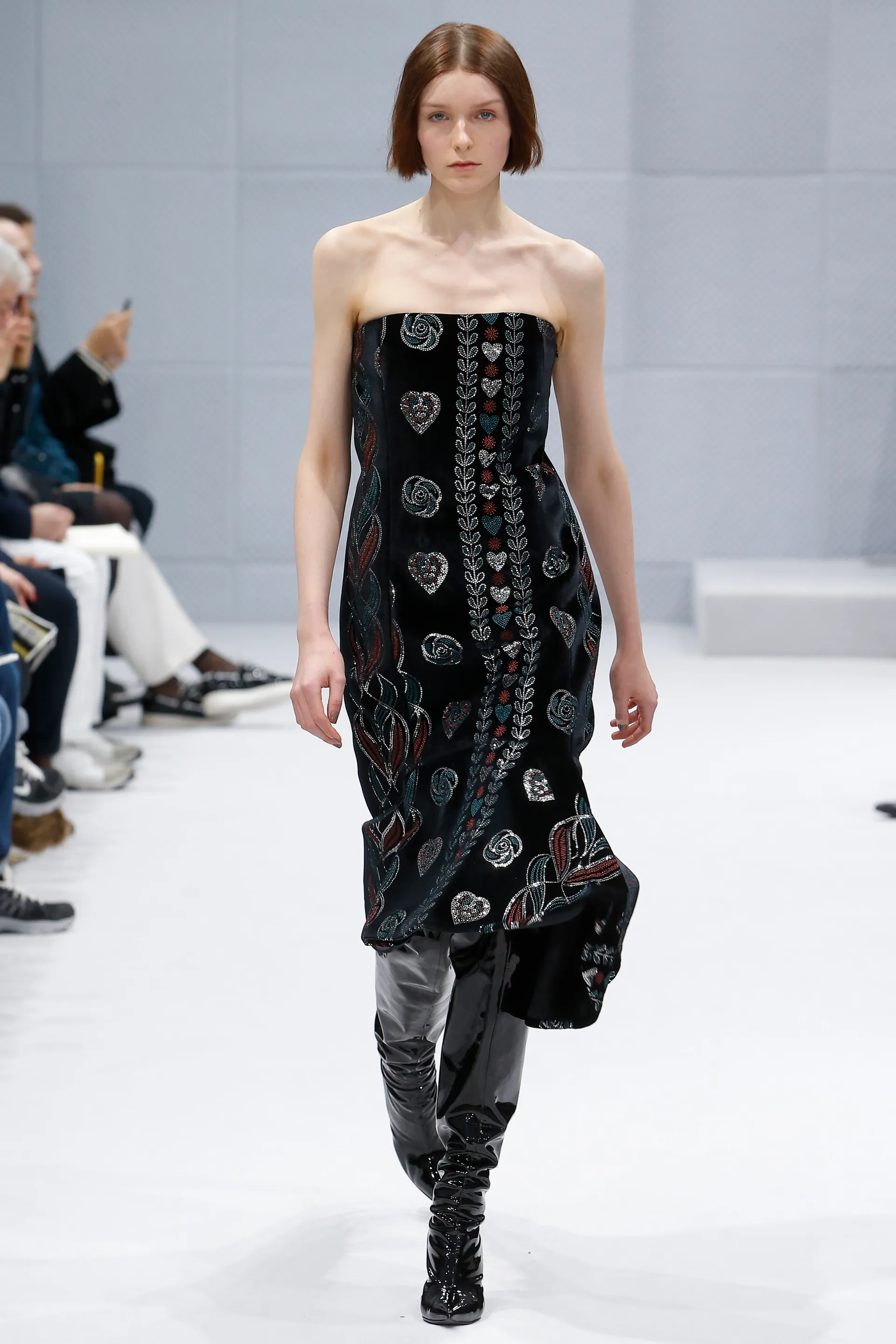
Demna Gvasalia inherited less a catalogue of shapes than a way of thinking about the space between garment and body. His opening grey suit on Eliza Douglas amplified the hips into an almost caricatured hourglass, while outerwear carried Cristóbal’s displaced necklines and back volume into the language of parkas and puffers. The architecture remained recognizably Balenciaga, but its new surface was deliberately more familiar, abrasive and kitsch, filtered through workwear, streetwear and the ordinary wardrobe that had already occupied Demna Gvasalia at Vetements.
That translation became one of the defining tensions of his tenure. Cristóbal had liberated the body through sculptural abstraction; Demna could take the same instinct for distorted proportions and make it look contemporary enough to be awkward, sometimes even ridiculous. The sophistication remained in the cut, while the visual message became louder, stranger and far easier to circulate through modern culture.
The Triple S sneaker made elegance almost beside the point. Its layered sole appeared oversized, heavy and deliberately graceless, yet the shoe quickly became one of the defining objects of the late-2010s chunky sneaker boom and helped establish a Balenciaga silhouette recognizable well beyond the runway.


The blue leather Arena bag pushed the same logic into an even simpler visual joke. Its resemblance to IKEA’s inexpensive Frakta bag made it instant internet material, while leather construction and a luxury price turned that resemblance into a practical demonstration of how drastically context could change perceived value.
Calling these products a critique of consumerism would give Demna Gvasalia too much distance from the system producing them. Balenciaga wanted consumers to buy the objects, and commercial success formed part of their significance. What Demna Gvasalia exposed more effectively was luxury’s ability to renegotiate value through image, material, recognition and institutional authority. An object could retain the appearance of something commonplace while its new context encouraged consumers to see it differently.


That tension proved exceptionally profitable. By May 2018, Kering was describing Balenciaga as its fastest-growing brand, with CEO Cédric Charbit noting that some areas were expanding by more than 100 percent. The Triple S had become such a commercial phenomenon that he joked about parents asking the company to stop releasing new versions because their children kept wanting them. Kering was already discussing €1 billion in annual sales as a medium-term target.
The threshold arrived faster than expected. By 2019, industry reporting placed Balenciaga above €1 billion in annual revenue, more than double the size of the business only a few years earlier. Demna Gvasalia had demonstrated that an aesthetic capable of provoking ridicule could simultaneously generate enormous recognition and commercial desire.
The social-media era rewarded an image that could survive outside its original context, and Balenciaga became unusually fluent in that form of circulation. Logos required almost no explanation, distorted familiar objects generated immediate arguments, and runway images could continue moving through memes and reposts long after the show itself had ended.
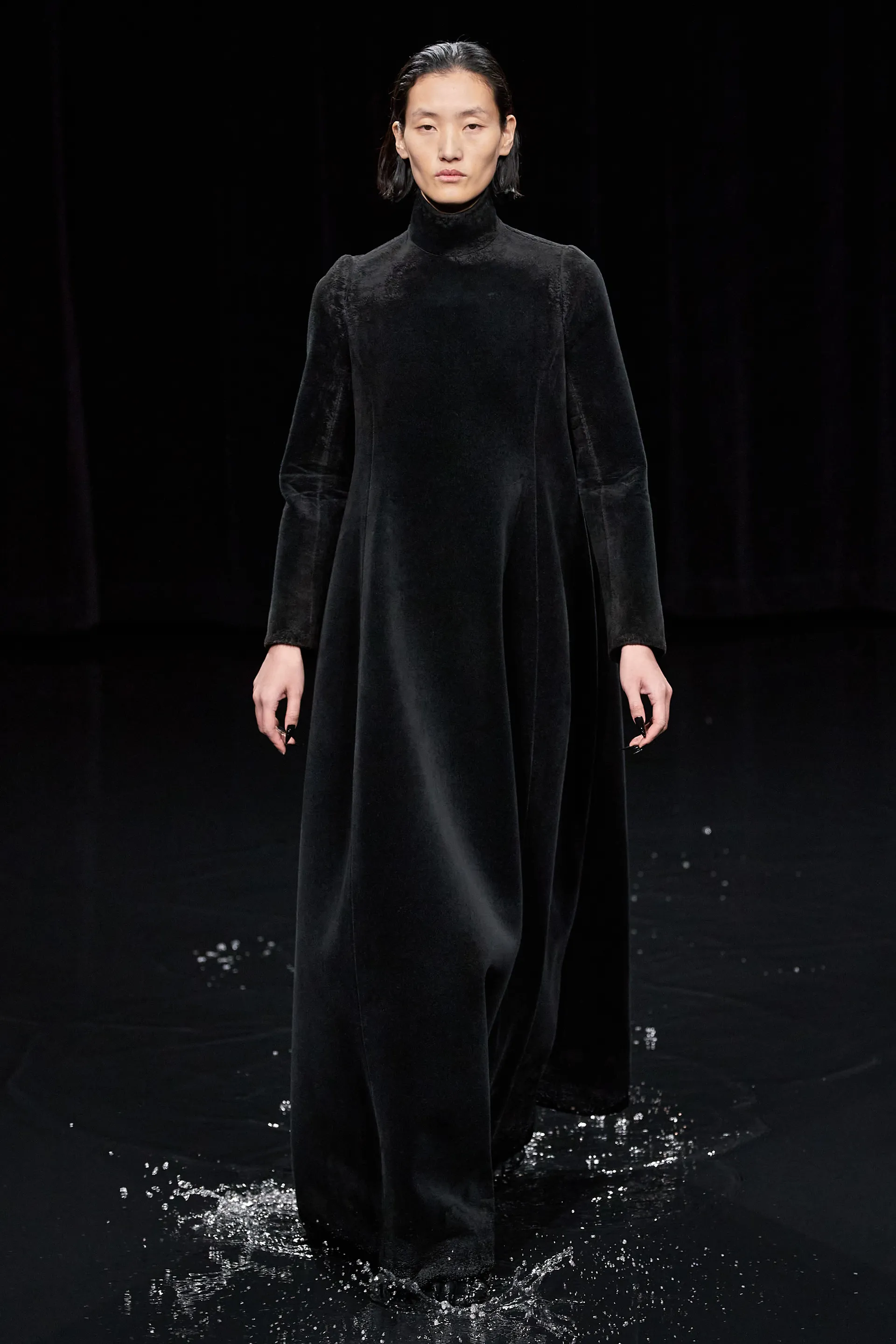
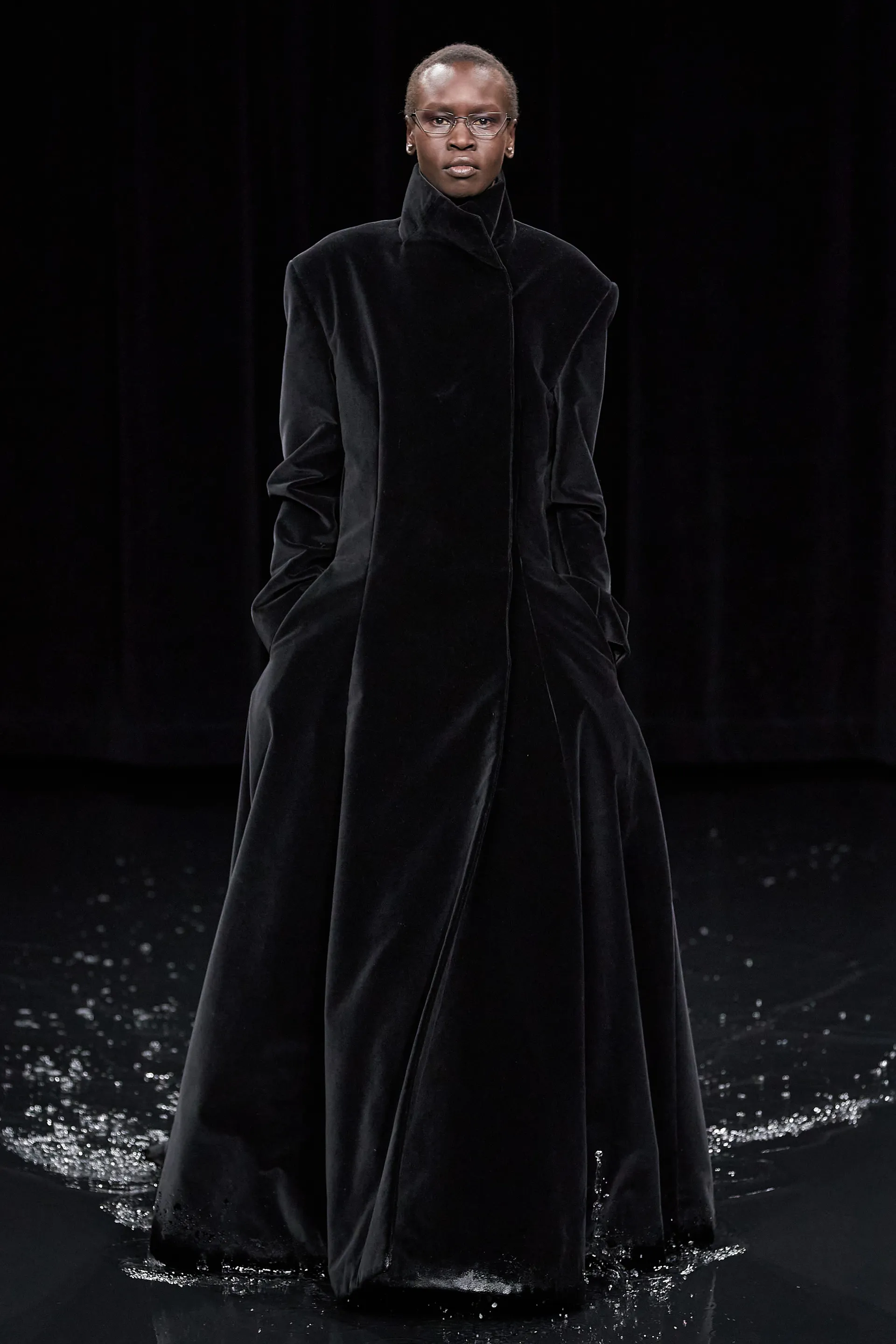
The collections increasingly behaved the same way. Fall 2020 submerged the first rows of its audience beneath water as models walked through an apocalyptic environment of dark skies and exaggerated silhouettes. Resort 2022, titled Balenciaga Clones, multiplied Eliza Douglas digitally across the entire presentation while constructing a fabricated audience around her, turning questions of copy, authenticity and image-making into the collection’s environment.
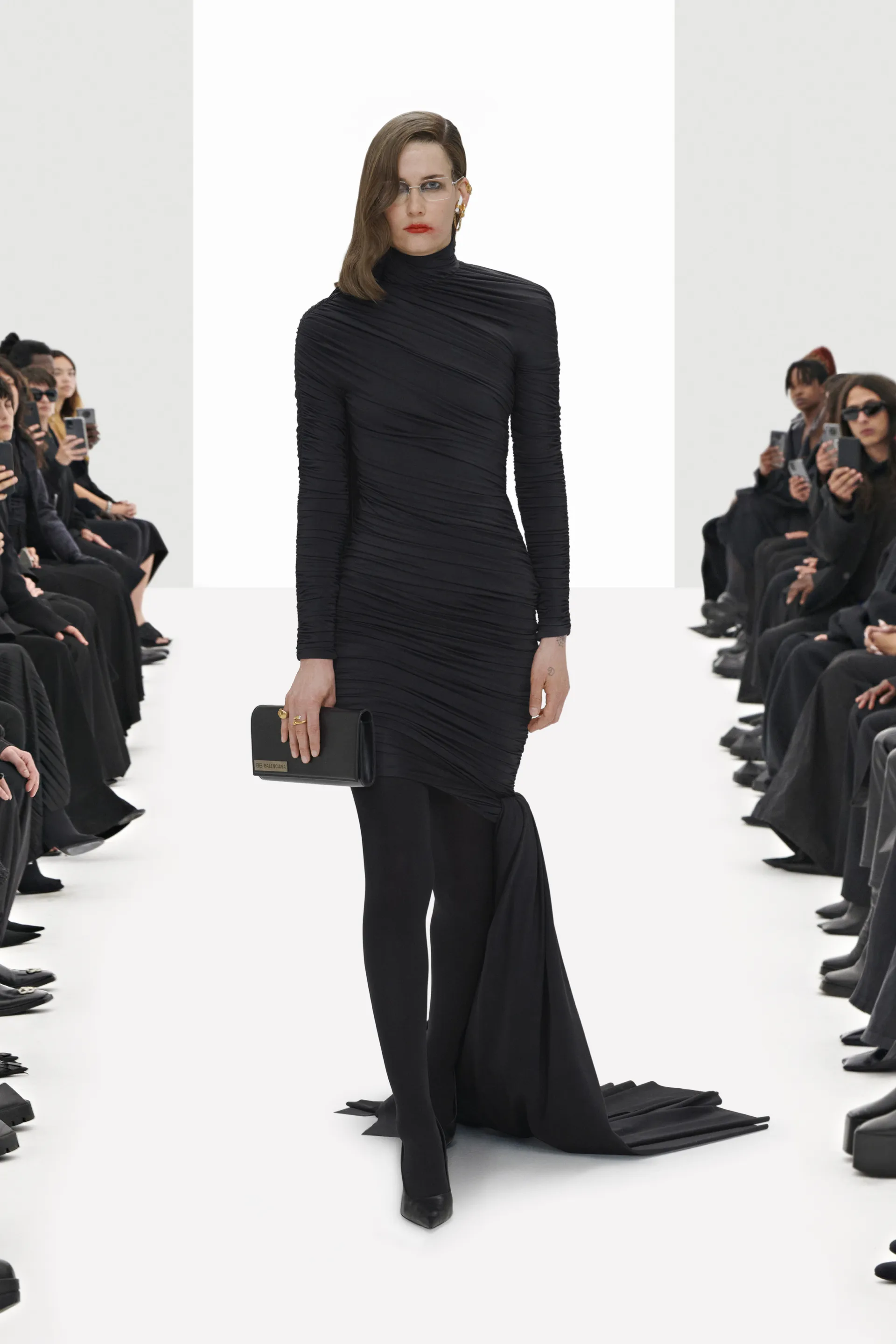
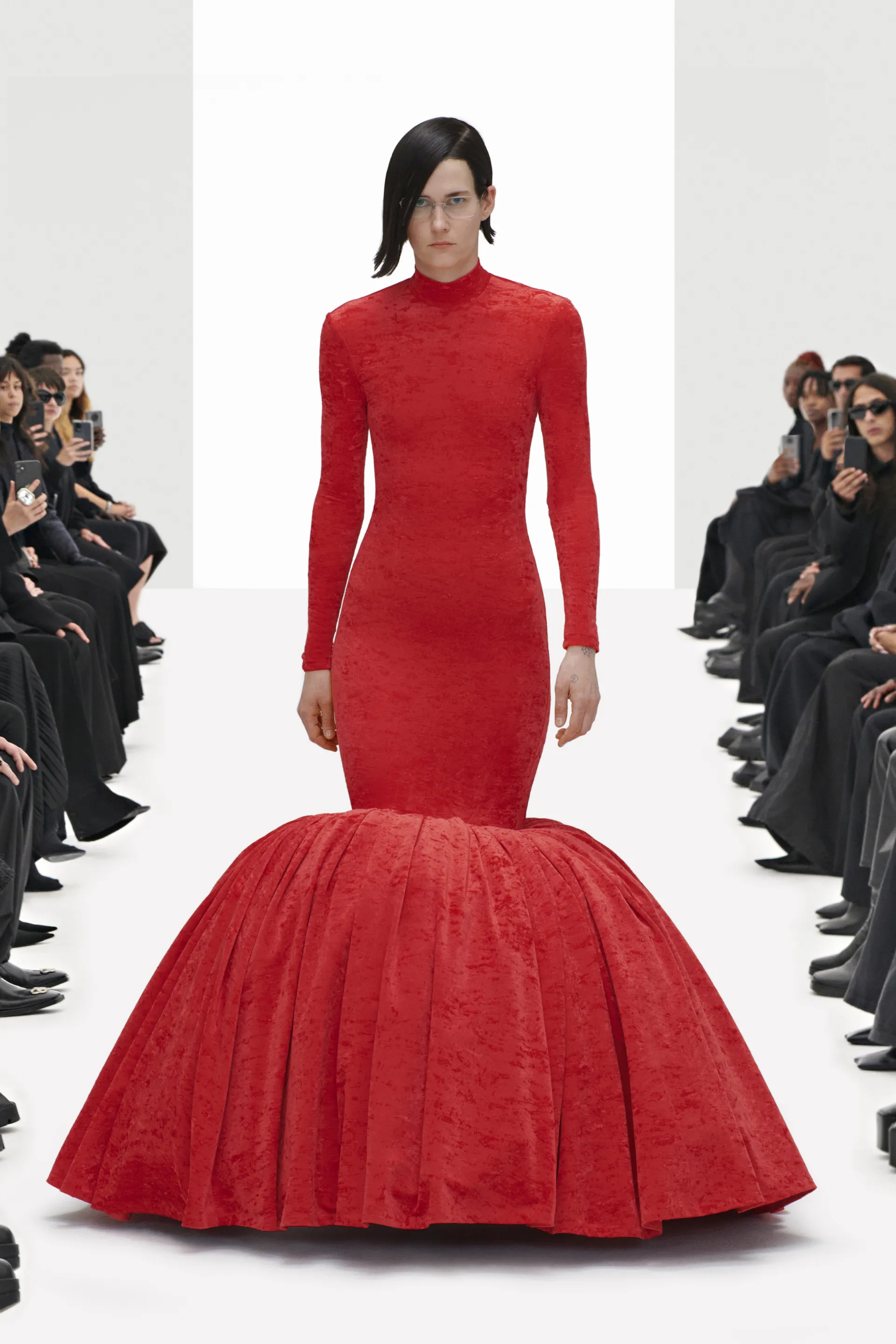
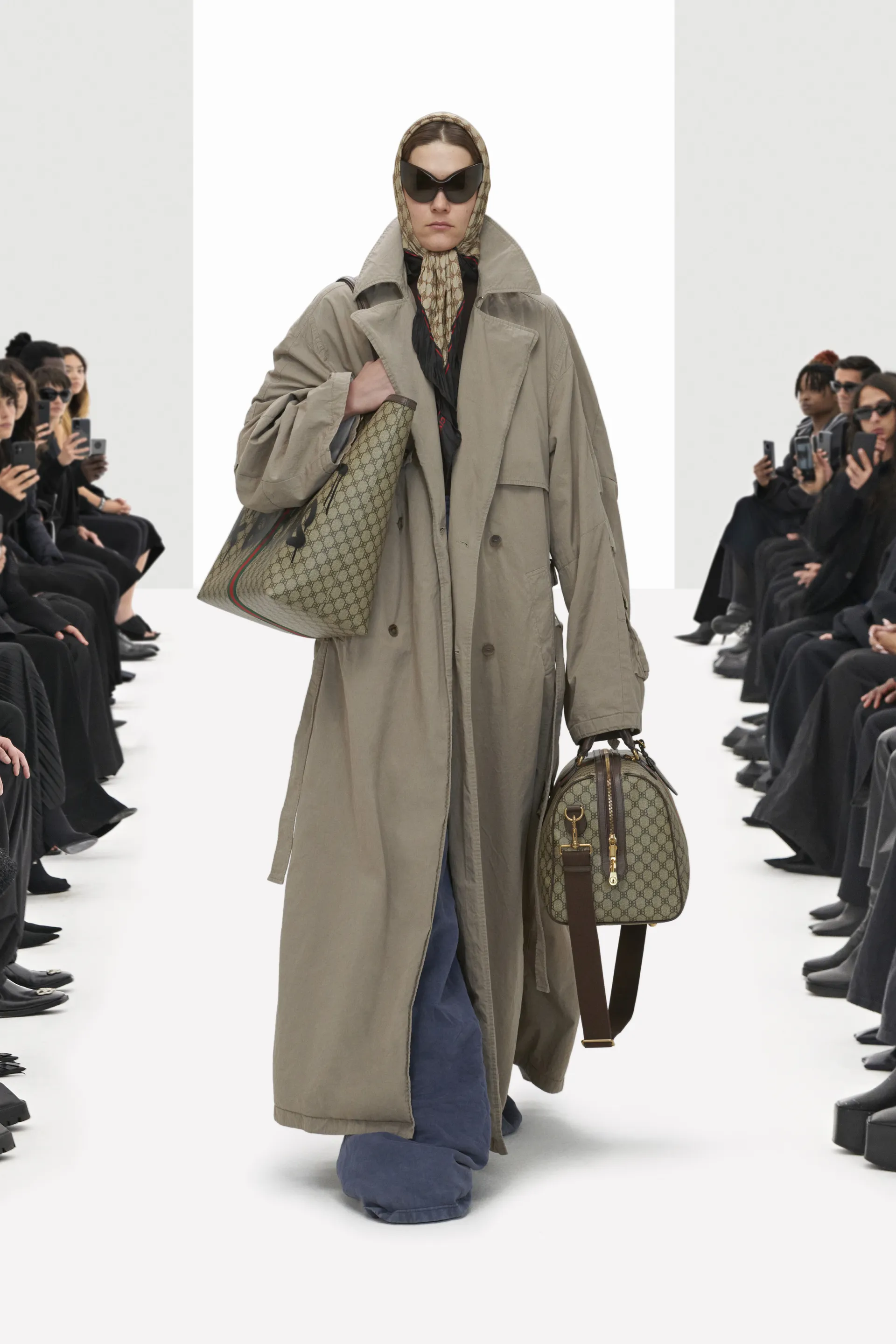
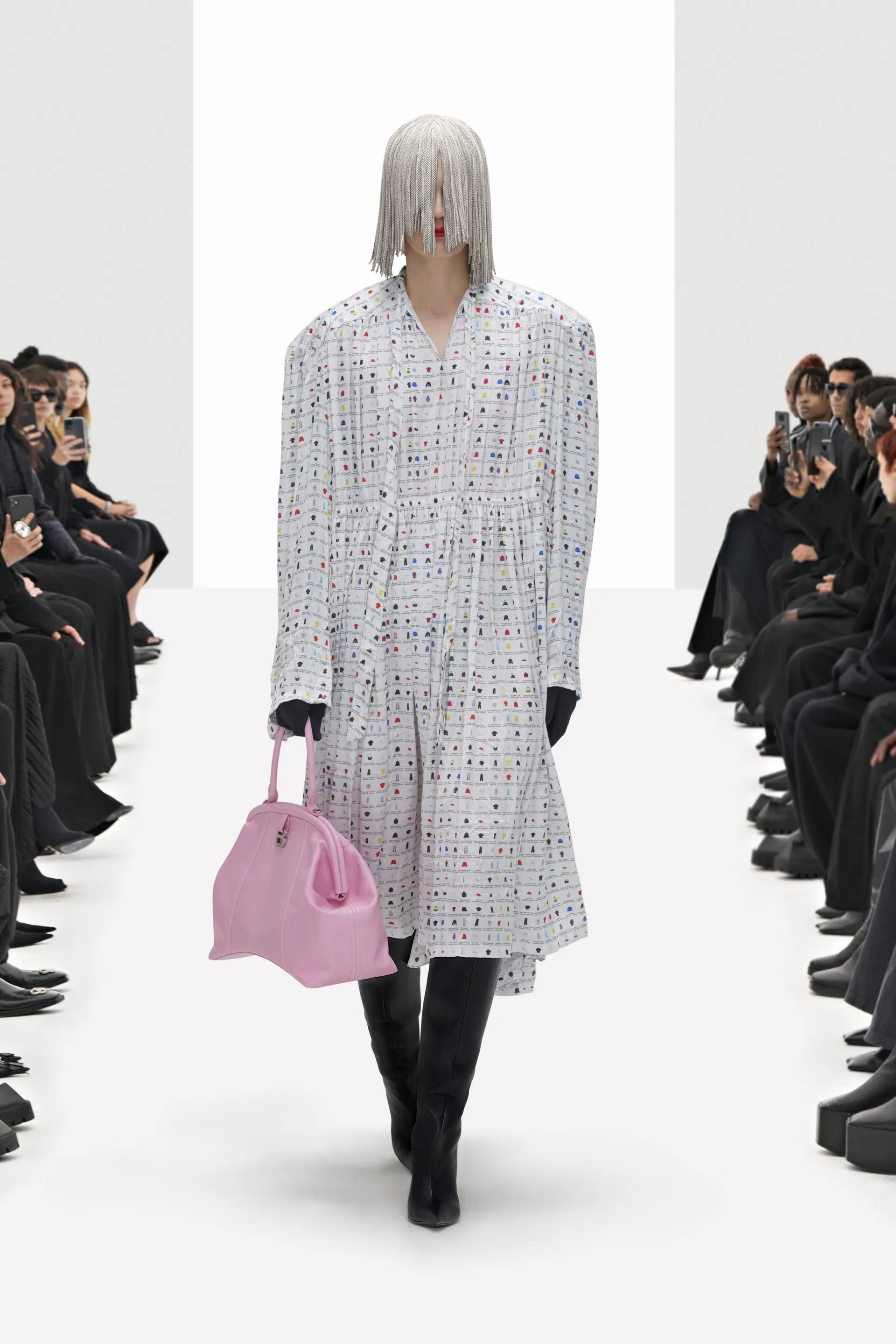
Spring 2022 pushed the format towards entertainment. Guests arriving at Paris’s Théâtre du Châtelet discovered that their red-carpet entrance was already part of the runway, with celebrities, models and staged celebrity personas merging under the same cameras before a specially created The Simpsons episode extended the Balenciaga universe into popular animation.
The strategy widened the house’s cultural reach far beyond customers entering a boutique. A Simpsons clip, a sneaker meme or an apocalyptic runway could circulate independently from the collection that produced it, allowing fascination, mockery and debate to contribute to the same economy of recognition.
Behind the chaos sat a surprisingly conservative obsession with dressmaking.
In 2021, Balenciaga reopened the couture salons at 10 Avenue George V and presented its first couture collection since Cristóbal Balenciaga retired in 1968. The return complicated one of the easiest readings of Demna’s success, because the designer most publicly associated with sneakers, logo products and internet provocation was suddenly operating inside one of fashion’s most technically demanding traditions.
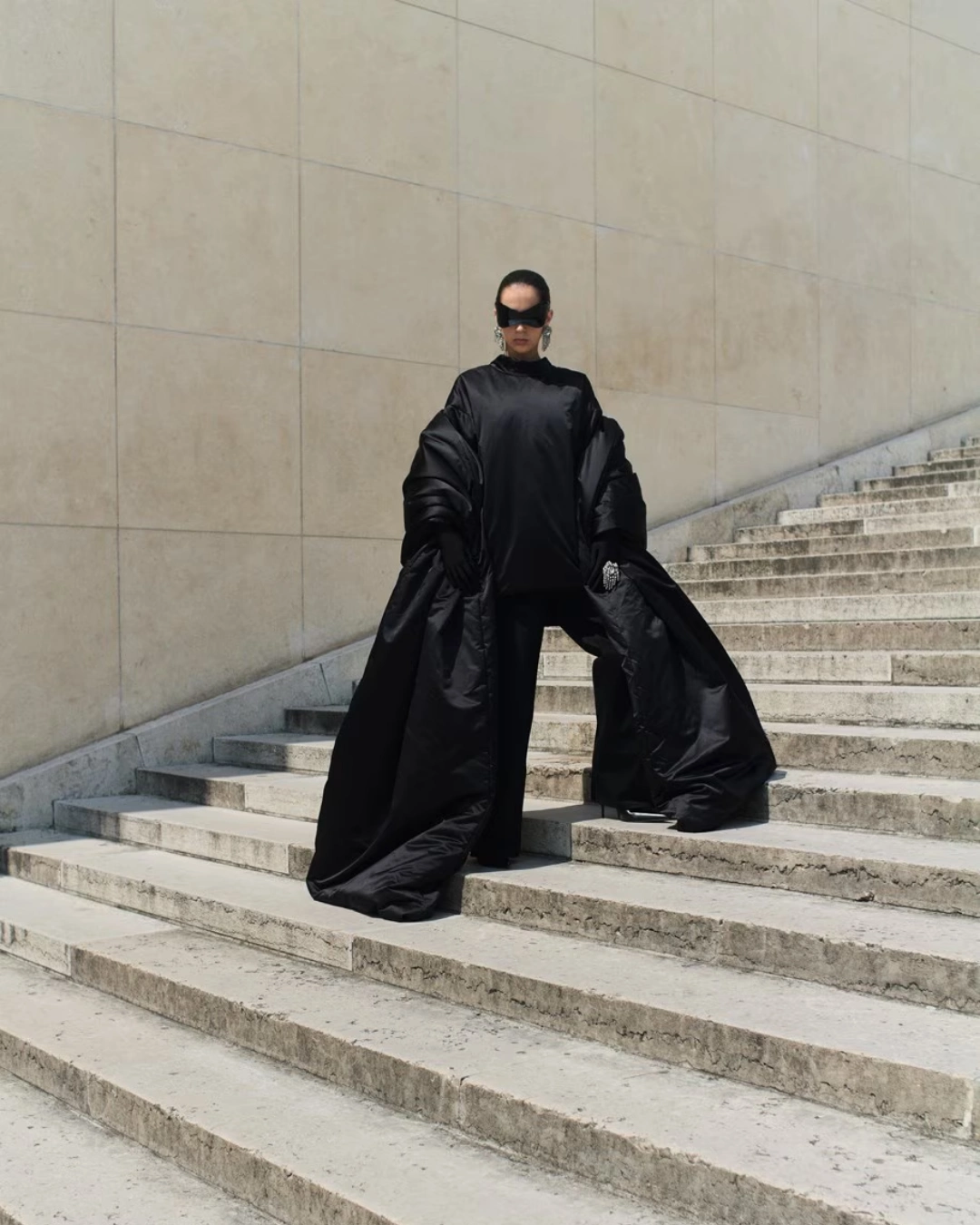
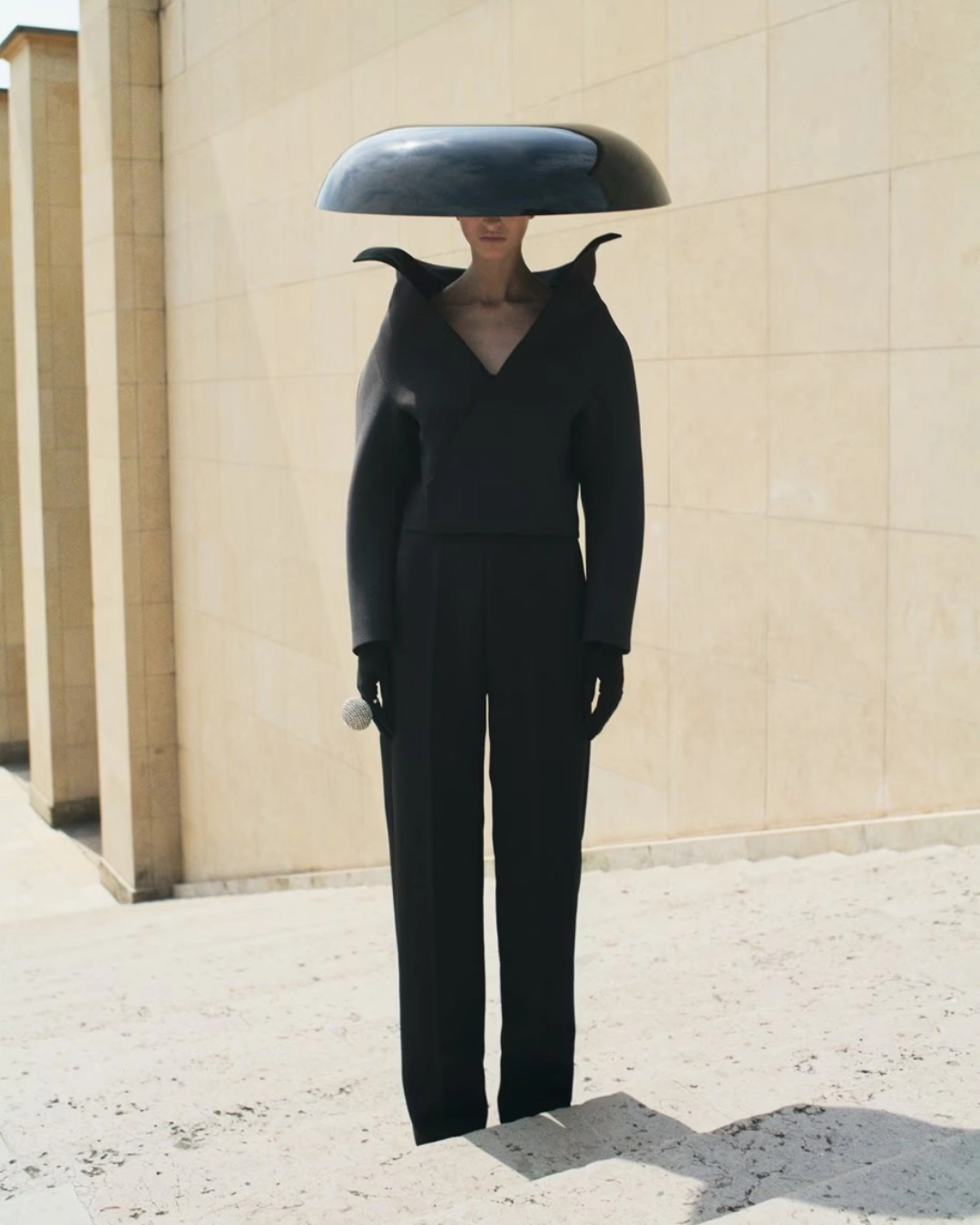
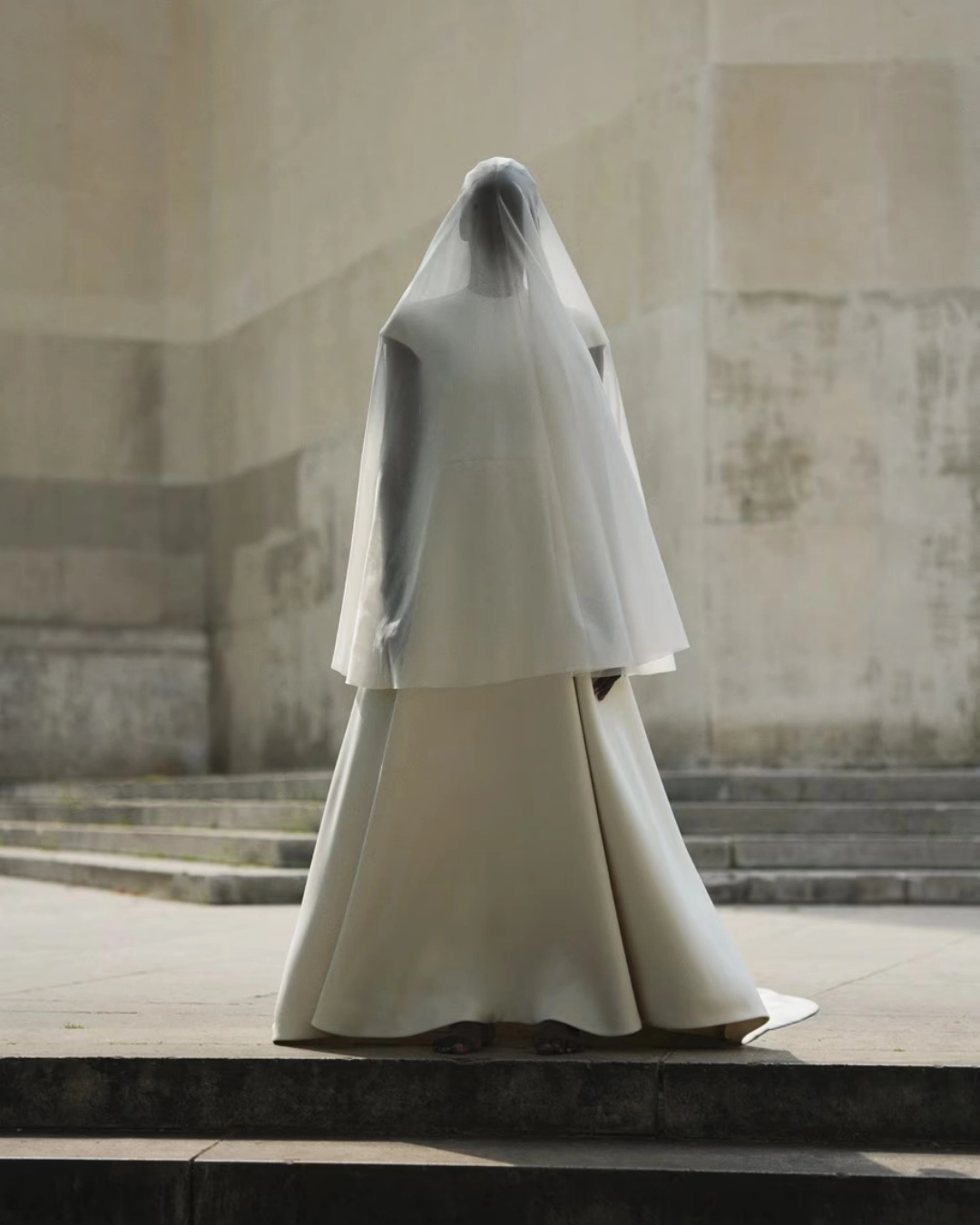
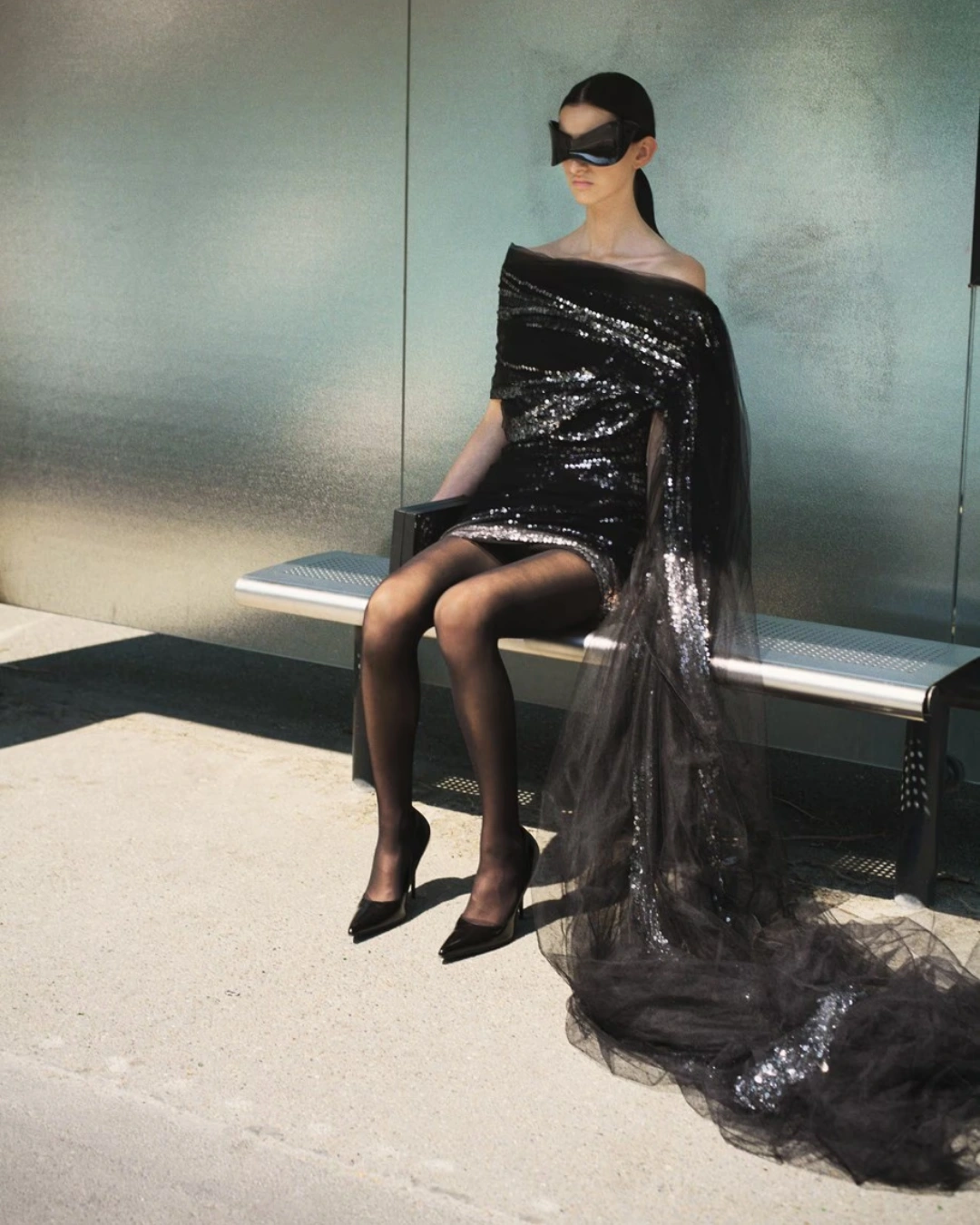
Tailored jackets, severe volumes and sculpted eveningwear revealed a technical foundation that had existed long before viral objects. Later couture collections brought Demna’s own wardrobe vocabulary into the salon, allowing denim, hoodies, parkas and other streetwear garments to pass through couture fabrication and construction.
The contrast sharpened what was already unusual about his Balenciaga. Deliberately banal commercial objects could exist within the same house as garments constructed by hand inside the historical couture salons of Avenue George V, giving the brand an unusually wide definition of what luxury was allowed to contain.
Couture therefore strengthened the decade beyond spectacle. Demna understood the hierarchy he was disturbing, along with the construction traditions beneath it, which made the provocations harder to dismiss as accidental ugliness or viral opportunism.
Kim Kardashian’s 2021 Met Gala appearance made recognition itself part of the design. Her entire body and face disappeared beneath black Balenciaga, yet silhouette, context and celebrity made her immediately identifiable. The look functioned almost like a logo without requiring one.
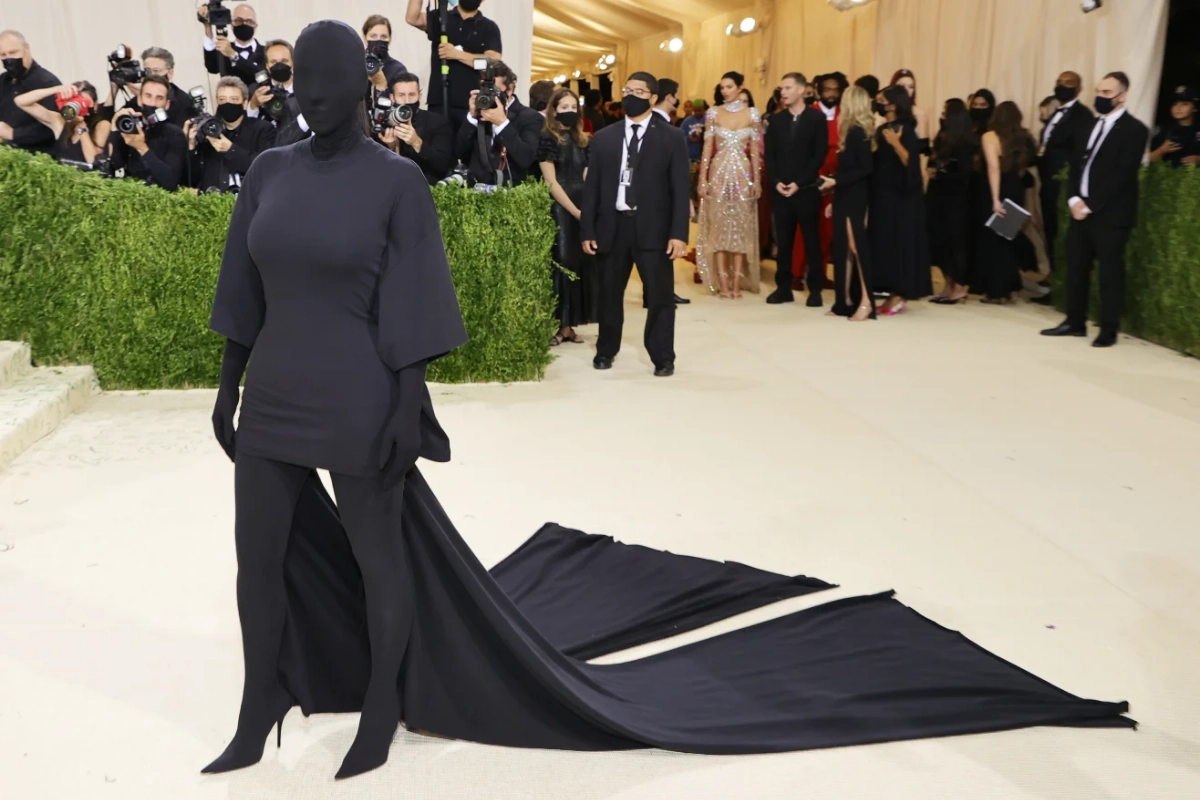
Her relationship with the house developed alongside figures including Isabelle Huppert, Nicole Kidman, Dua Lipa and Naomi Campbell, who appeared across campaigns, runways and couture presentations. Celebrity gradually became integrated into how Demna Gvasalia constructed Balenciaga imagery, extending beyond conventional endorsement into the visual concept of a show.
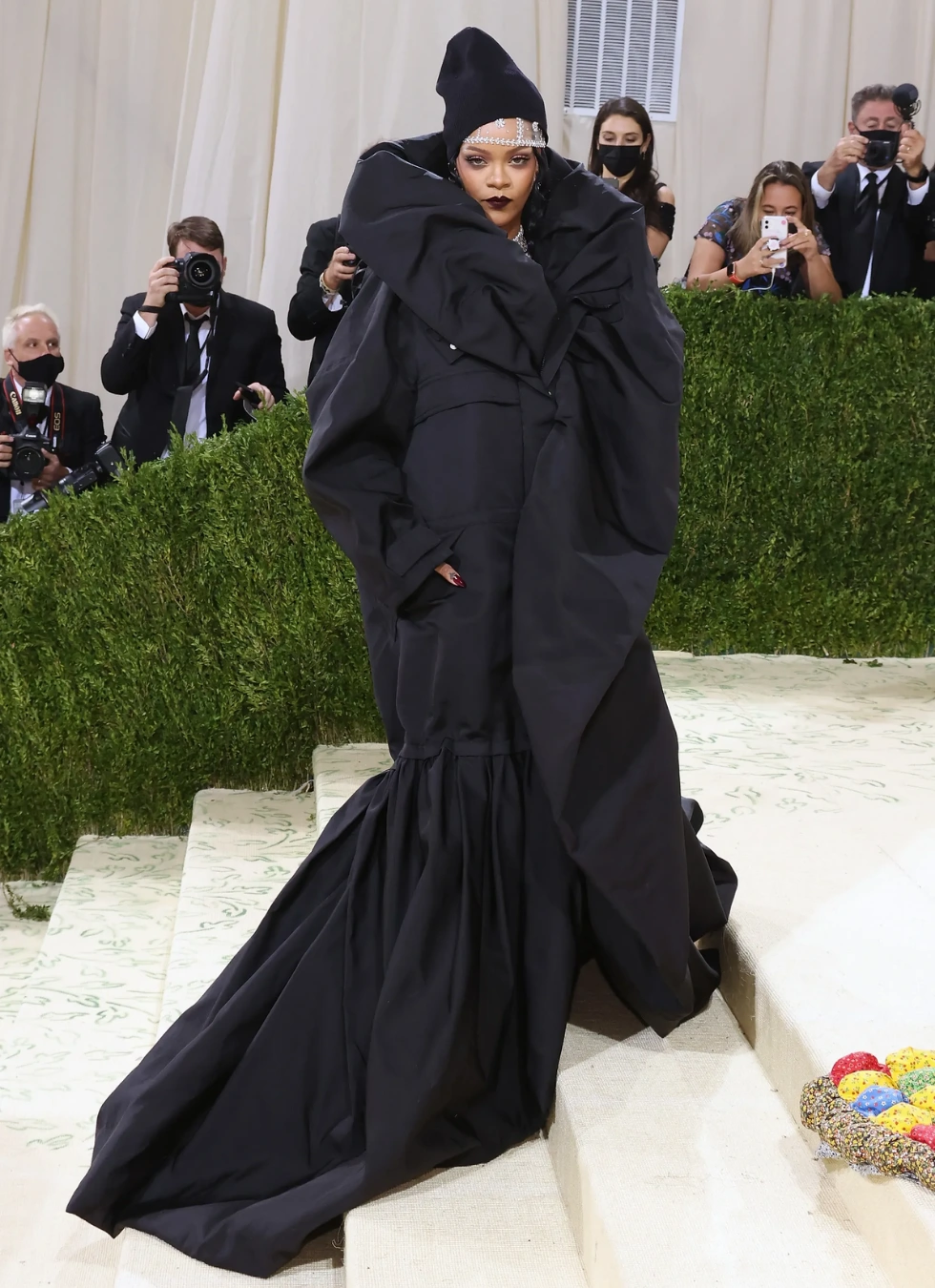


Commercial momentum moved alongside that saturation. Kering’s Other Houses generated €3.264 billion in 2021, up 44 percent on a comparable basis, with Balenciaga and Alexander McQueen singled out for strong performances. Analysts subsequently estimated Balenciaga itself above €1.5 billion in sales for 2021, while later industry estimates placed the business beyond $2 billion around 2022. Kering does not publish Balenciaga as a separate revenue line, so those house-level figures remain estimates, yet they indicate how much larger the company had become during Demna’s tenure.
Balenciaga had become a cultural machine with a substantial business attached.
The problem with machines built around attention is that attention can change direction very quickly.
Fall 2022 placed models inside artificial wind and snow, producing one of the strongest images of Demna’s decade. The show had initially been conceived around climate anxiety, but Russia’s invasion of Ukraine days before the presentation gave its landscape another meaning for a designer whose own family had fled war in Georgia. Months later, Spring 2023 sent models through thick mud beneath an oppressive atmosphere, continuing Balenciaga’s increasingly physical language of discomfort.
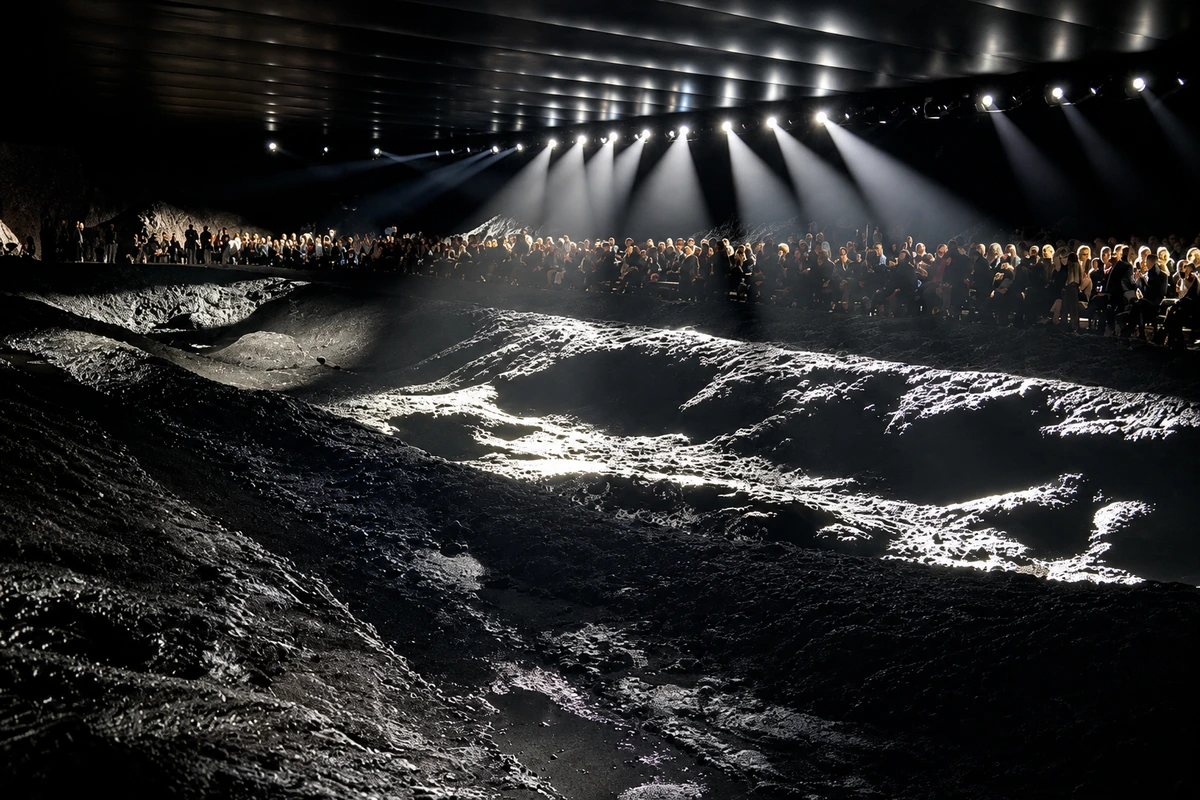
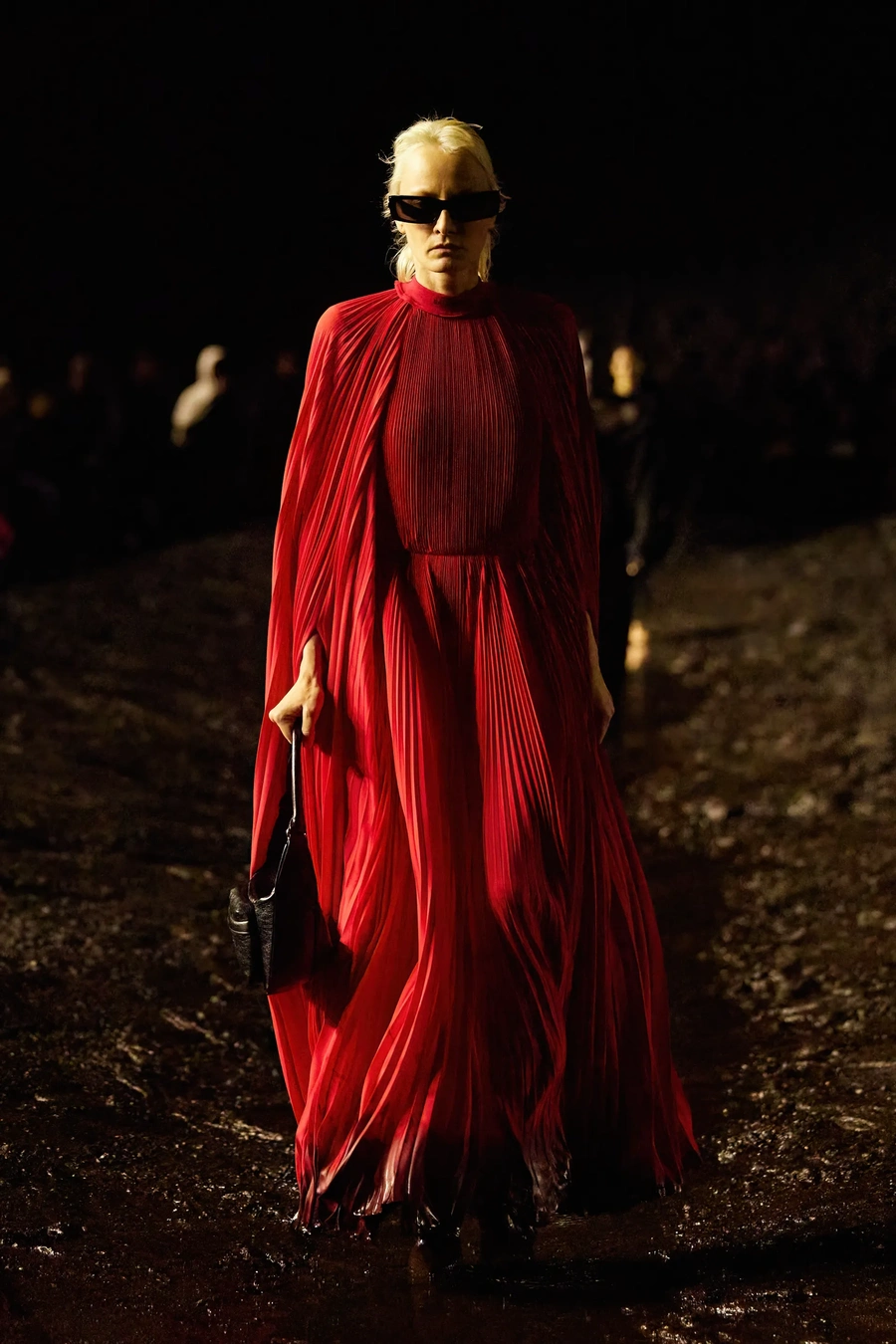
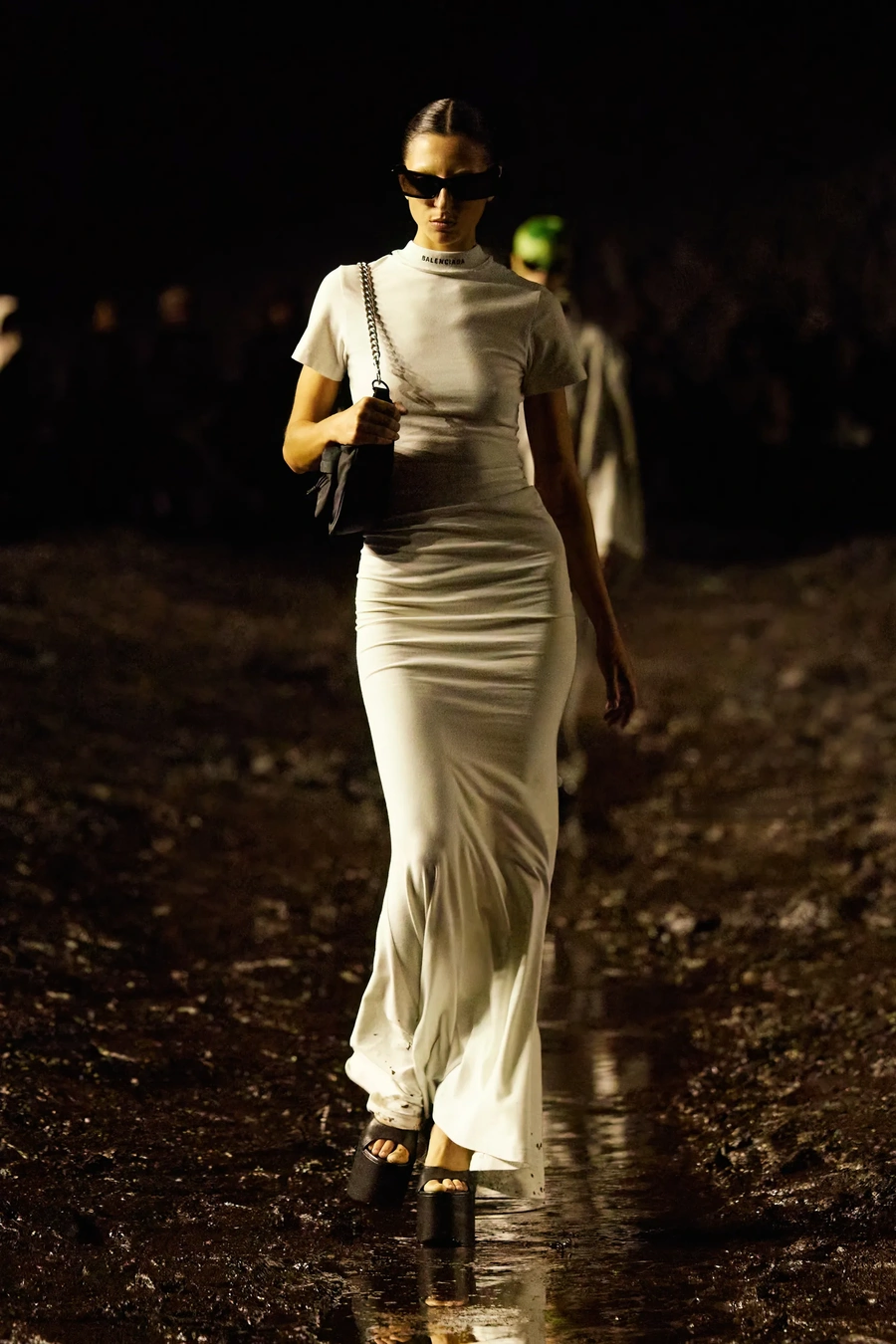
Months later, the Spring 2023 show placed models in thick mud beneath an aggressively dark atmosphere. Clothes looked distressed, bodies struggled through the set, and beauty acquired a layer of deliberate discomfort.
By this point, provocation had become part of what audiences expected from the house, which made the advertising controversy of November 2022 particularly damaging. One campaign showed children holding teddy-bear bags styled with bondage-inspired accessories, while another image included legal documents referring to a US Supreme Court case involving child sexual abuse material. Balenciaga withdrew the campaigns and apologized, and Demna Gvasalia subsequently issued his own apology while acknowledging that the episode had forced him to reconsider the role of provocation within his work.
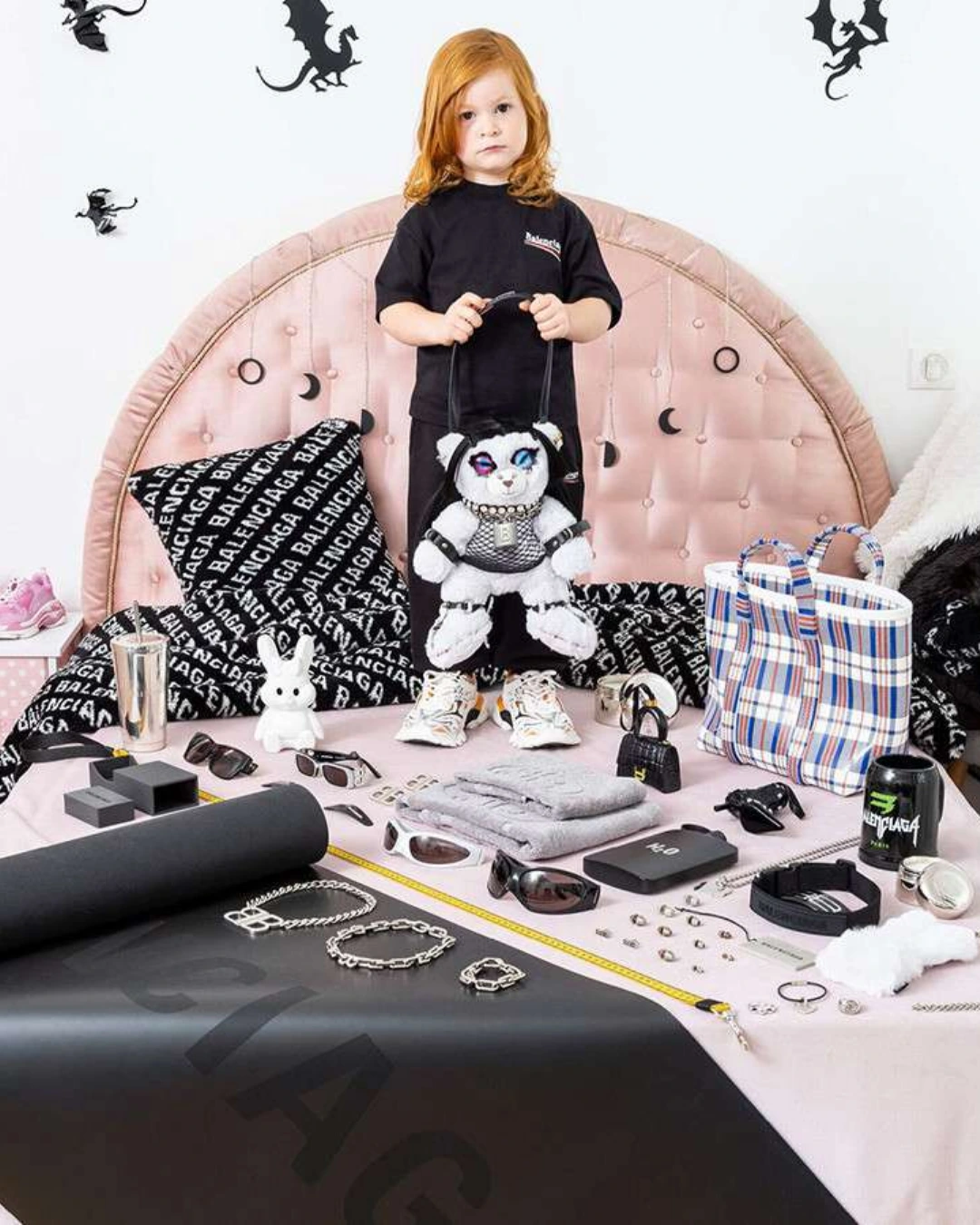
The crisis revealed the risk embedded in a communication strategy built partly around ambiguity. Debates over whether a sneaker was ugly or whether an expensive bag was clever could generate productive attention because interpretation became part of entertainment. Here, the same mechanism collided with material where ambiguity offered no useful creative value, while the speed that had previously amplified Balenciaga’s successes accelerated outrage just as efficiently.
The effect extended into business. Kering acknowledged that Balenciaga continued to experience consequences from the controversy in certain markets during the first half of 2023, although performance varied geographically and improved during the second quarter. After years of discovering how far the house could push an audience, he faced a different problem: how to maintain the identity he had built once provocation itself had become predictable.
Demna Gvasalia increasingly began speaking about clothes, construction and the relationship between garment and wearer as the house moved beyond the crisis. Provocation remained available, but tailoring, eveningwear and familiar wardrobe archetypes regained a larger share of the narrative.
Fall 2025 made that emphasis particularly visible by approaching the collection as a study of a complete wardrobe. Demna Gvasalia photographed internal fitting images on his phone and released them with the rough quality of working material, while the clothes revisited silhouettes that had accumulated across his decade at Balenciaga.
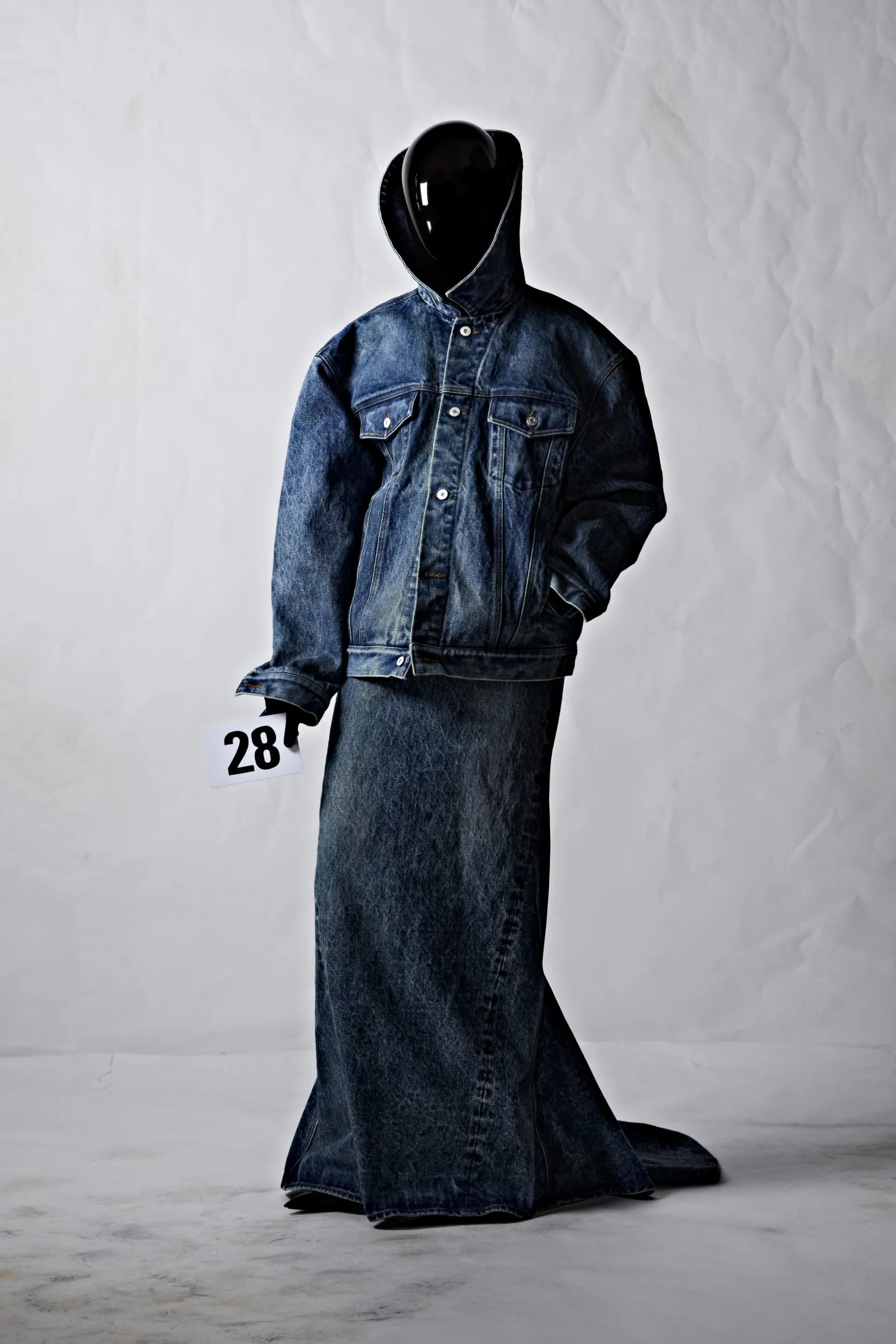
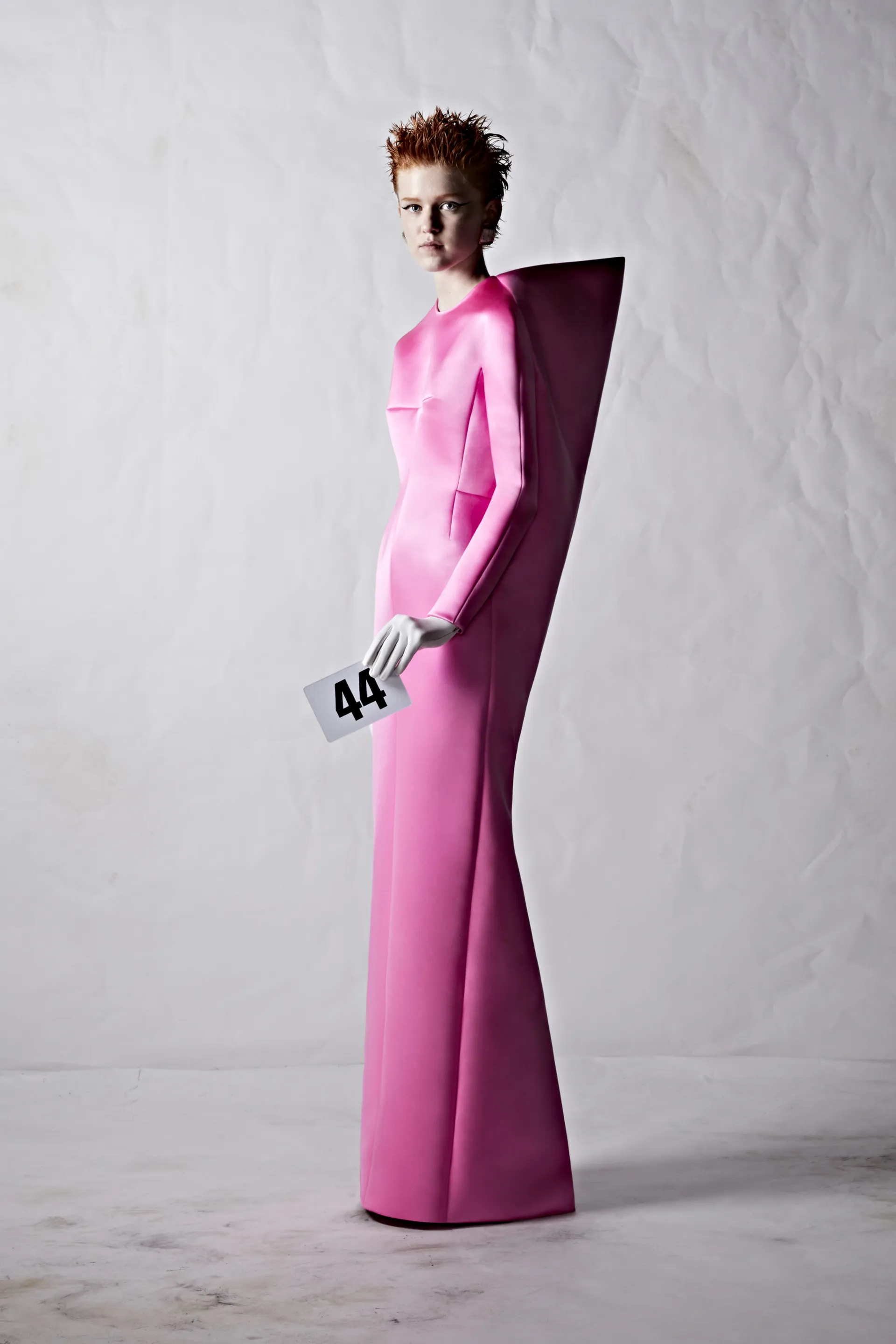

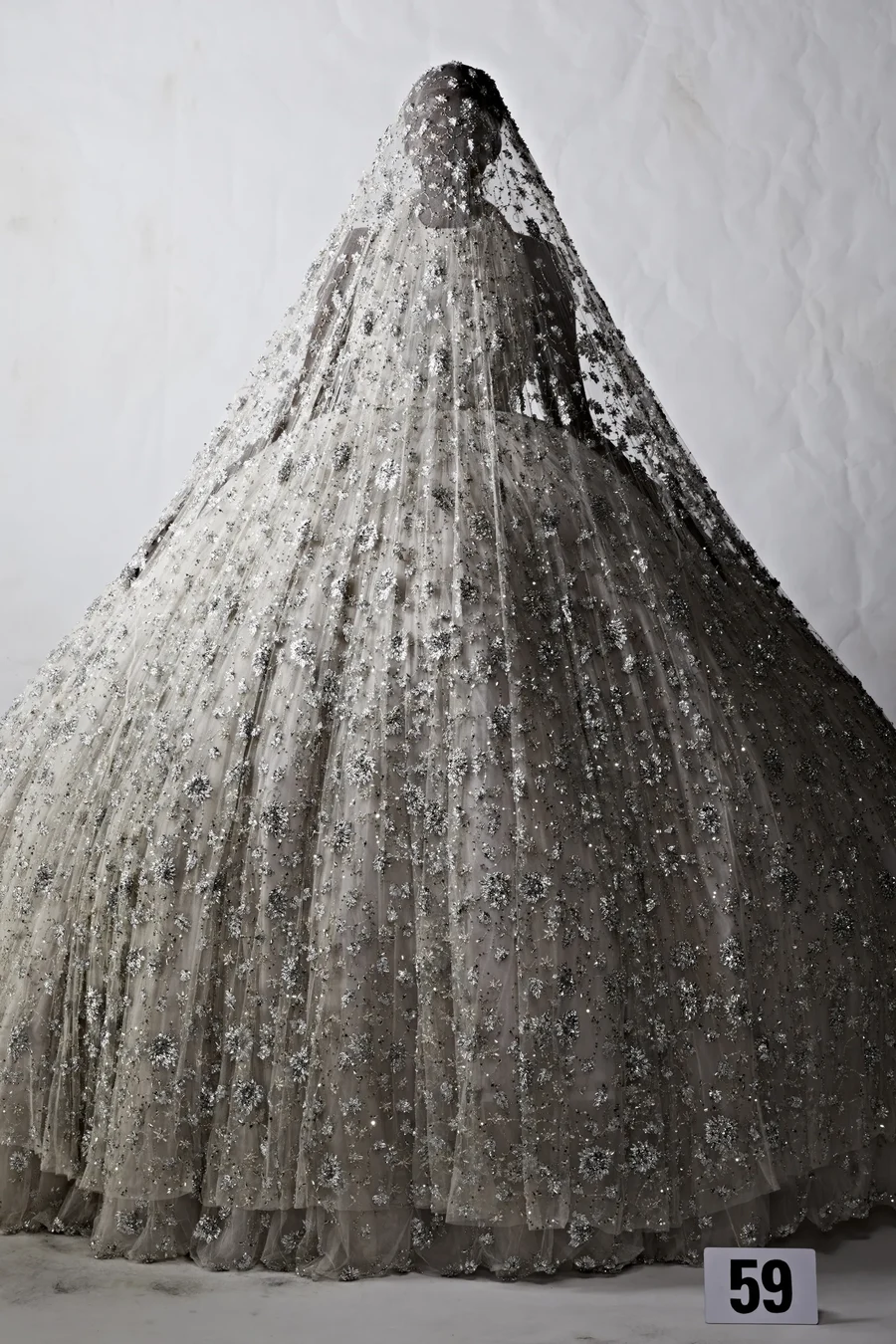
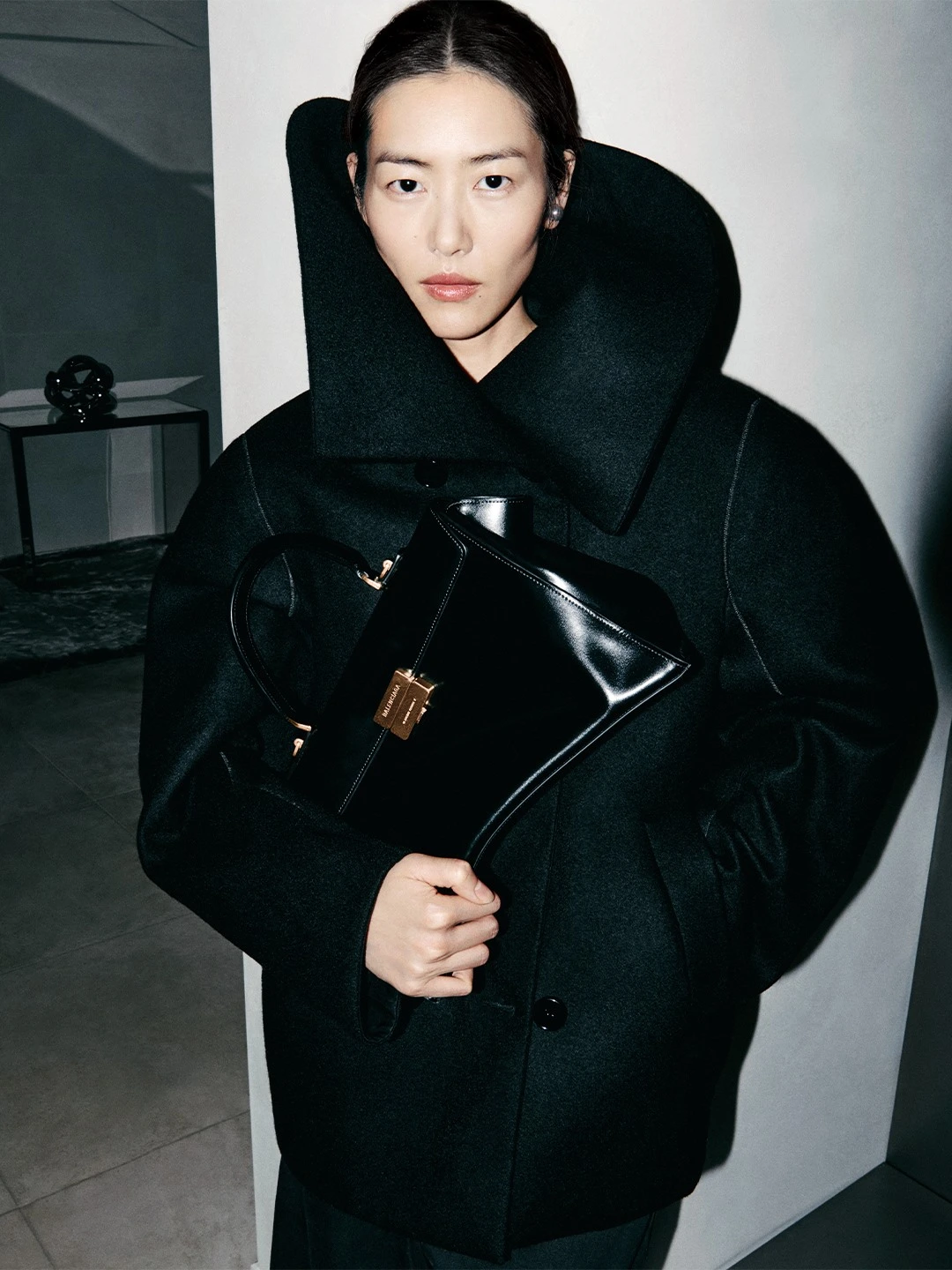
By this stage, several of those shapes no longer required a logo to identify their author. Hourglass jackets, enormous outerwear, panta-boots and distressed everyday garments had been repeated and adjusted until they functioned as house codes. Resort 2026 reinforced that sense of retrospective consolidation by remixing material from 35 collections into a wardrobe of Balenciaga archetypes.
The commercial picture had also matured beyond the spectacular acceleration of the late 2010s and early 2020s. Kering reported signs of improvement in some markets during 2024, while 2025 unfolded amid a more difficult environment for the wider group and luxury sector. Demna’s original disruptions had meanwhile become familiar enough to demonstrate an unavoidable cycle: a silhouette that once shocks eventually becomes recognizable, and recognition eventually turns experimentation into establishment.
The Balenciaga by Demna retrospective in 2025 began with an object long before his appointment: the 2007 rejection email denying him a menswear internship at the house. Eighteen years later, the letter sat among 101 objects selected to represent the decade he had eventually spent directing Balenciaga.
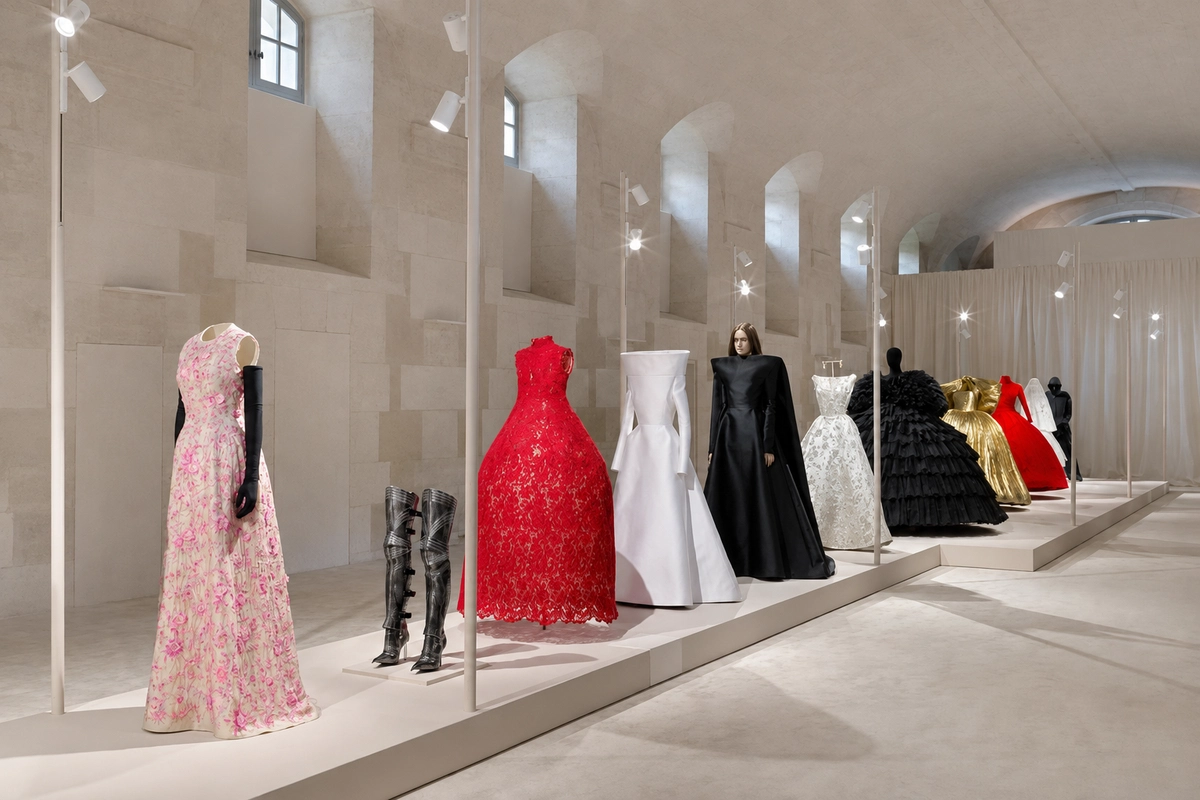
His final couture collection followed on July 9, 2025, reconnecting directly with Cristóbal through historical references while retaining the monumental shoulders, celebrity presence and exaggerated construction associated with Demna’s own tenure. The decade that began with a red puffer had reached a point where distinguishing inherited Balenciaga codes from Demna’s additions had become increasingly difficult.
That may be the most consequential transformation of the period. Balenciaga already possessed one of fashion’s greatest archives before his arrival, yet its public personality changed dramatically under his direction. The house became legible simultaneously as couture institution and internet object, capable of generating technical admiration, commercial desire and genuine irritation without requiring those reactions to agree with one another.
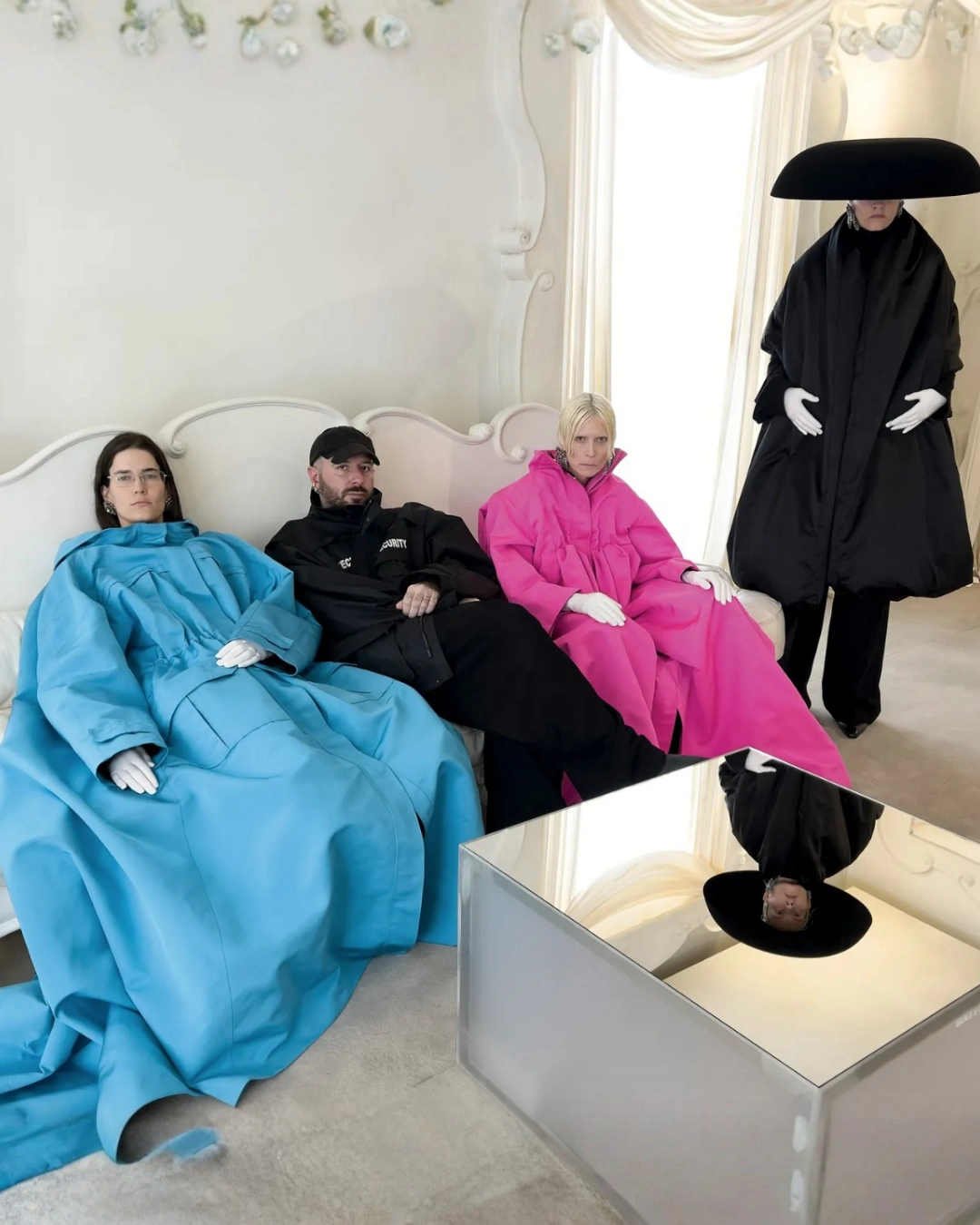
For anyone who spent those years looking at Balenciaga and wondering why an established maison appeared determined to make increasingly absurd things, the instinct to dislike the result remains perfectly compatible with recognizing the skill behind it. Demna understood how quickly an image could travel, how strongly a silhouette could become attached to a name and how willingly luxury consumers could reconsider an object once the right institution declared it valuable.
Calling the entire decade genius would give every provocation more significance than it deserves, while dismissing it as a joke would ignore the construction knowledge, business growth and cultural influence that allowed the joke to last ten years.
Love it, hate it, or keep arguing about whether the joke went too far, Balenciaga after 2015 became impossible to separate from the decade-long intervention of Demna Gvasalia.
Advertisement