MENU
Close





Pat McGrath never simply finished a John Galliano look; she gave his imaginary women the eyes, mouths, frost, shine and strange little souls that made them unforgettable.
Pat McGrath never simply finished a John Galliano look; she gave his imaginary women the eyes, mouths, frost, shine and strange little souls that made them unforgettable.
August 19, 2026
Advertisement

Advertisement



Pat McGrath’s first beauty school was home. Raised in Northampton by Jean McGrath, her Jamaican mother and a devoted fashion obsessive, Pat McGrath grew up watching color become an act of invention. Jean McGrath studied fabrics, mixed shades and searched for pigments that could come alive on Black skin, teaching her daughter to look at clothes, texture and makeup as parts of the same image.
As a teenager, Pat McGrath carried that appetite into London, fascinated by the theatrical faces of Boy George, Peter Robinson, known as Marilyn, and the New Romantic club scene, getting dressed on trains before chasing nights filled with painted eyes and impossible characters. An art foundation course at Northampton College gave her another visual vocabulary; encounters with stylist Kim Bowen opened the doors to shoots for The Face and i-D.
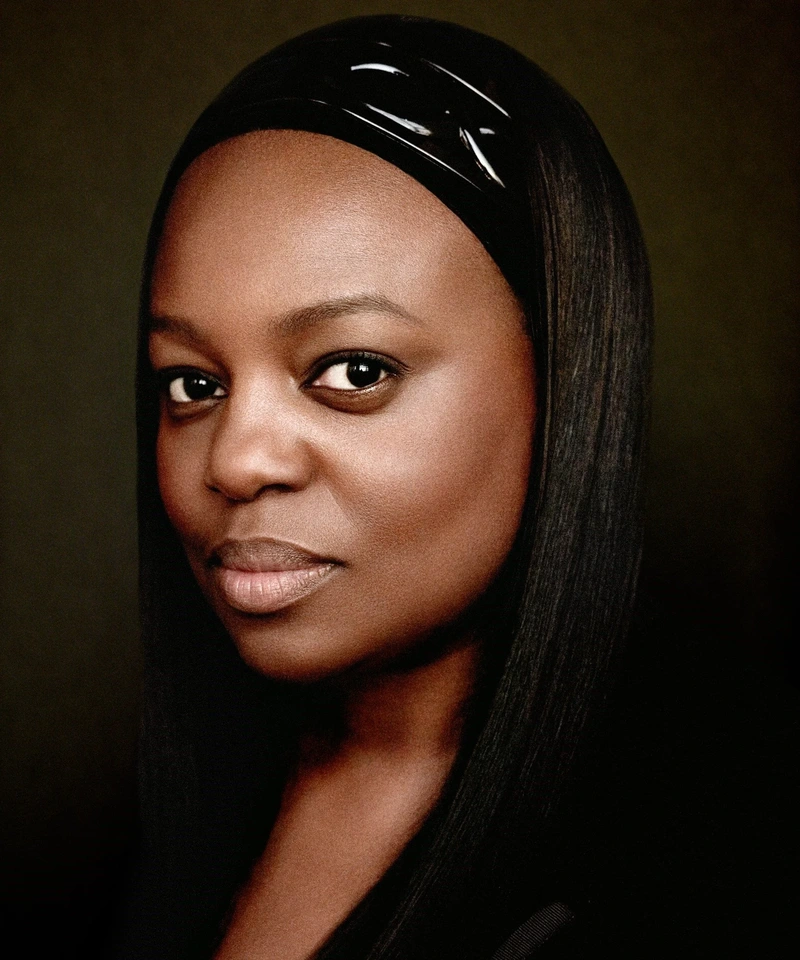
Then came a leap that sounds almost like the beginning of a fashion fairy tale: after doing Caron Wheeler’s makeup, Pat McGrath was invited to Japan with the Soul II Soul singer, left her day job and boarded a plane for the first time. That journey eventually led her toward Edward Enninful and i-D, where the young makeup artist developed an eye already hungry for books, clubs, textiles, found objects, faces and everything beauty could borrow from the wider world.
Their creative history reaches back into John Galliano's years at Christian Dior. Pat McGrath has recalled creating crystallized lips for Christian Dior collections during the 1990s, an embellishment that eventually became part of the visual vocabulary of Pat McGrath Labs. Crystal already revealed a central instinct in Pat McGrath's work. A mouth could become jewelry. Skin could carry objects. Cosmetics could escape the compact.
By January 2003, the mechanics behind that imagination had become gloriously physical.
Pat McGrath arrived in Paris with three assistants and 15 duffel bags weighing around 70 pounds each. Some held makeup. One was dedicated to lips. Six contained large art books filled with Federico Fellini, Otto Dix, André Kertész, and ritual art from India. The luggage reveals the architecture of Pat McGrath's mind. Pigment and imagery traveled together because she needed both to build a face.
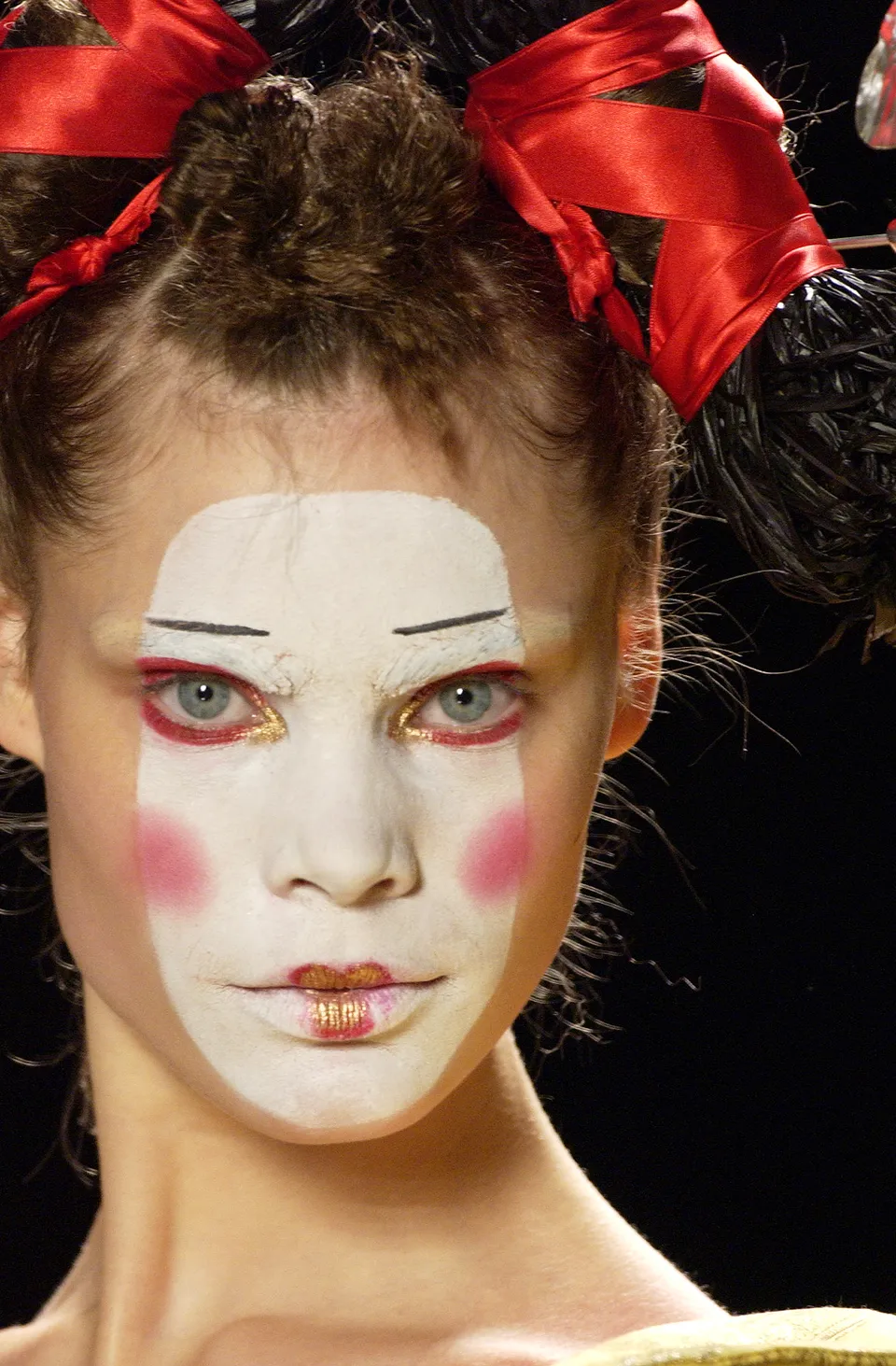
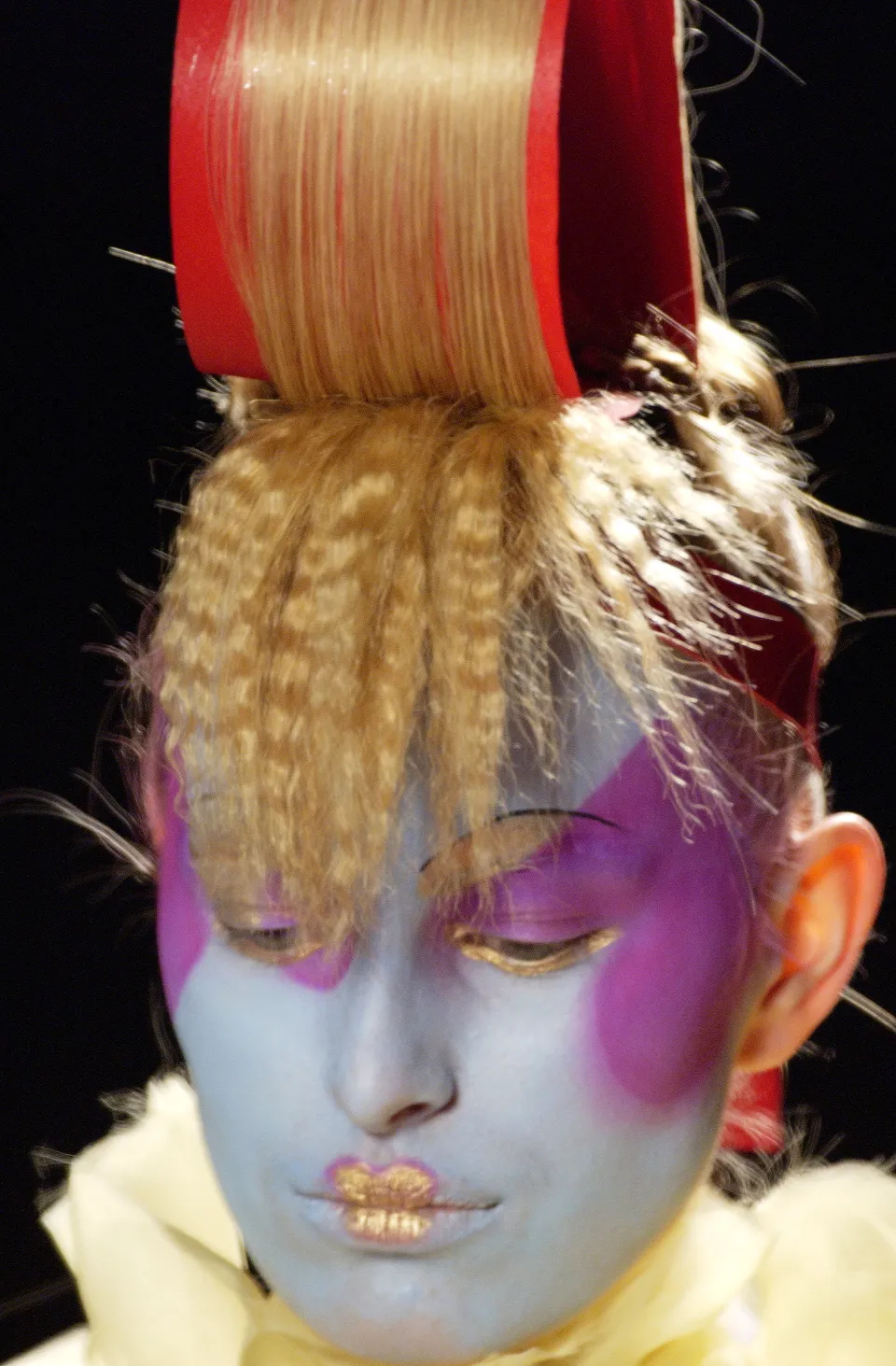
At Christian Dior, John Galliano unfolded a universe shaped by Peking Opera, Siouxsie Sioux, Queen Elizabeth The Queen Mother and scrapbooks gathered during travels through Asia. Pat McGrath absorbed the references and began producing responses.
Paper became makeup planning. Models became living sketches. Every test was photographed, drawn and annotated.
Across three days, Pat McGrath produced around 80 possibilities. Chinese characters crossed faces. White pigment climbed upward from the jaw like half-finished geisha paint. Feather eyelashes extended vision into costume. An Op Art target landed on a forehead. Sequins were placed individually. Black masking tape covered eyes with tiny openings cut for sight. John Galliano studied the Polaroids and selected roughly ten faces for the runway.
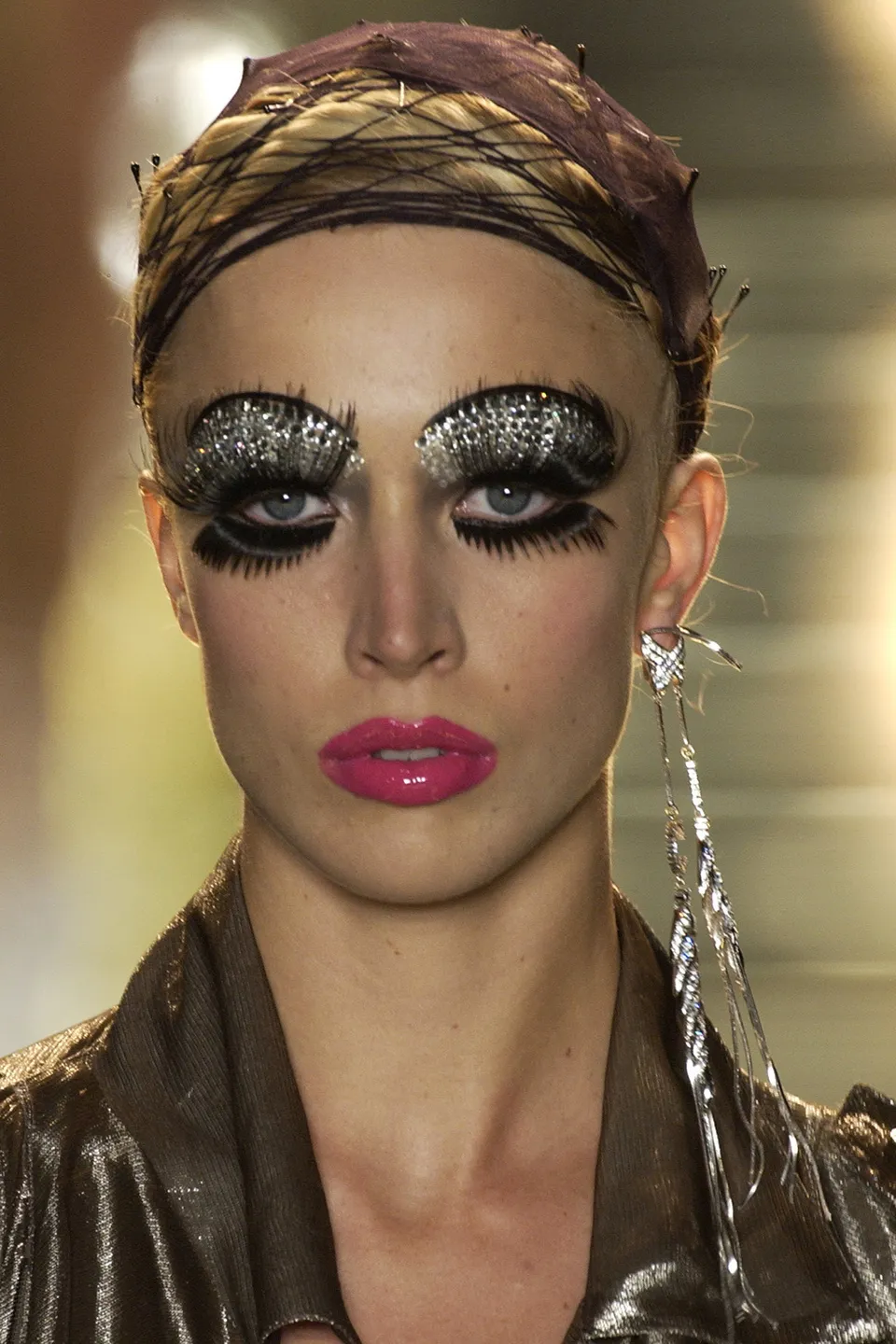
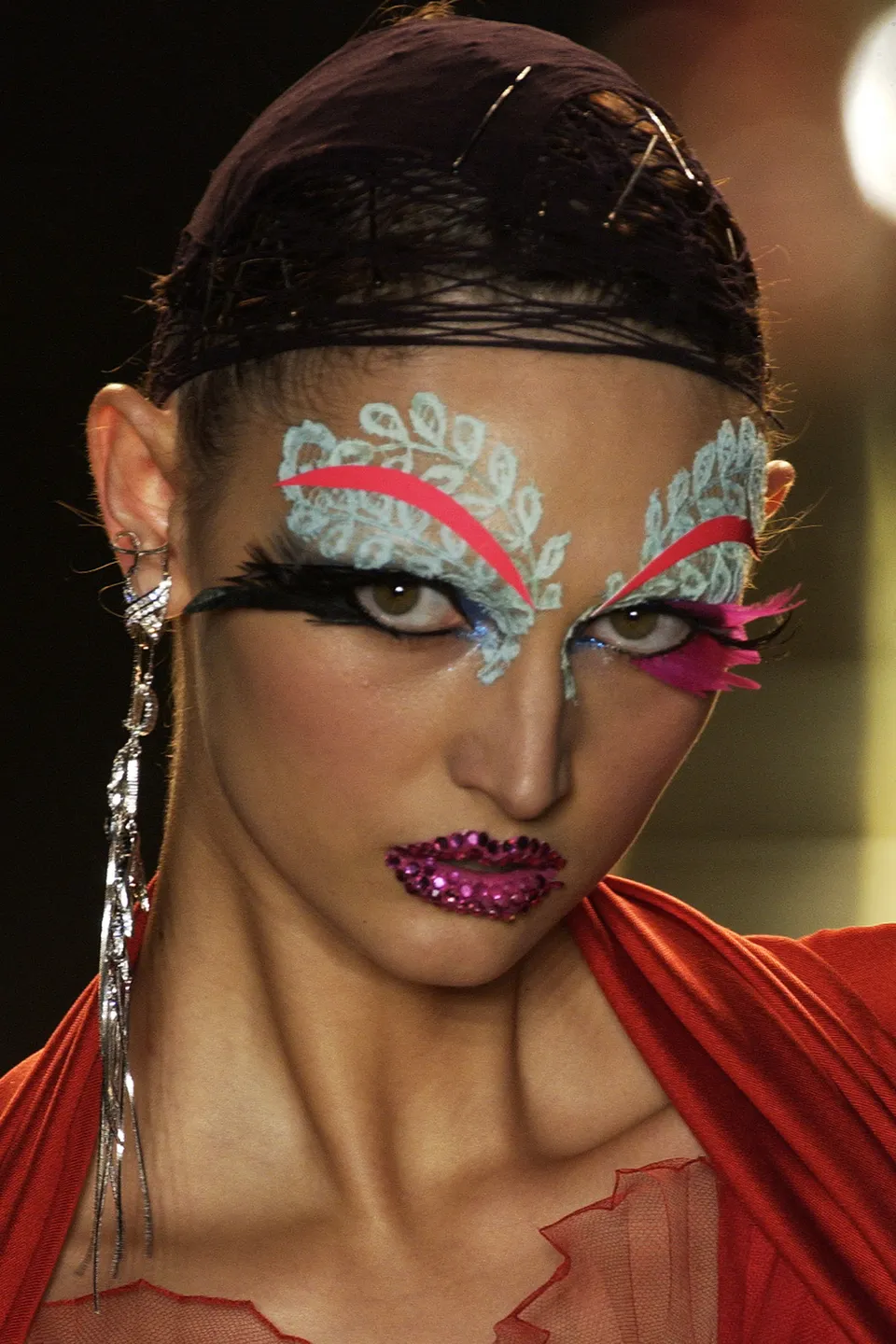
Here, the method that would sustain their partnership becomes visible.
John Galliano brought a story dense enough to wander inside. Pat McGrath wandered until she found characters capable of living there.
Their creative chemistry depended on permission. John Galliano could ask for theatrical madness because Pat McGrath possessed the technical appetite to discover its physical form. Pat McGrath could bring eighty answers because John Galliano understood that excess often contains the seed of one exquisite solution.
Backstage, romance met slapstick. Alek Wek wore enormous white feather lashes that restricted her peripheral vision. Stella Tennant waited beneath floating gold glitter while Pat McGrath painted her lips. Mariacarla Boscono accidentally struck Pat McGrath on the head with a parasol while hurrying toward the runway. Pat McGrath recovered, checked another face, and continued toward the next show.
Ancient Egypt arrived at Christian Dior Spring 2004 Couture covered in gold, color and ceremonial grandeur, and Pat McGrath answered John Galliano with a face that behaved almost like a garment.
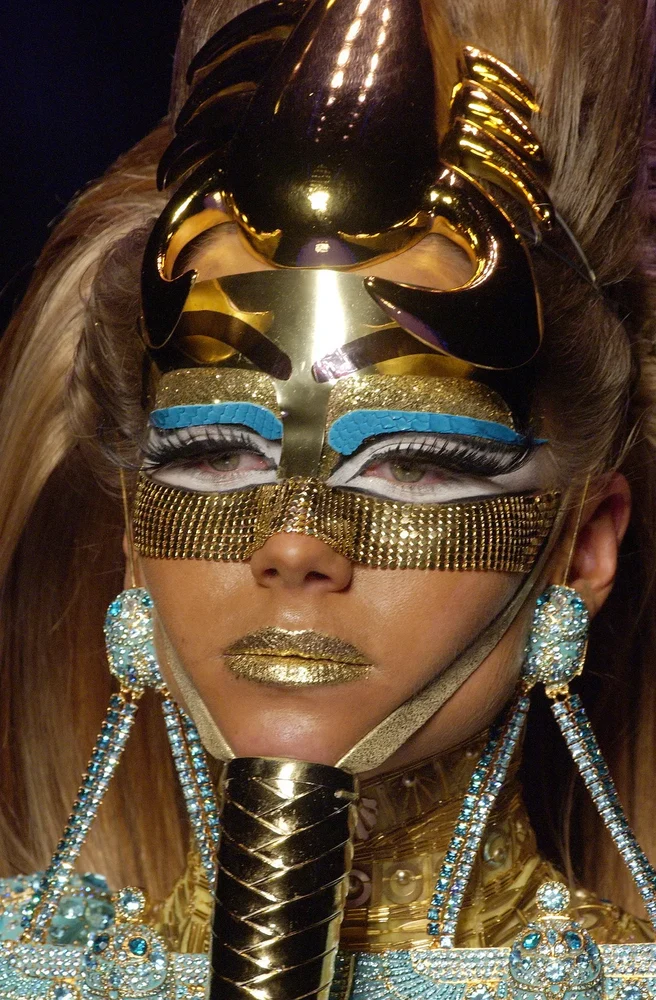
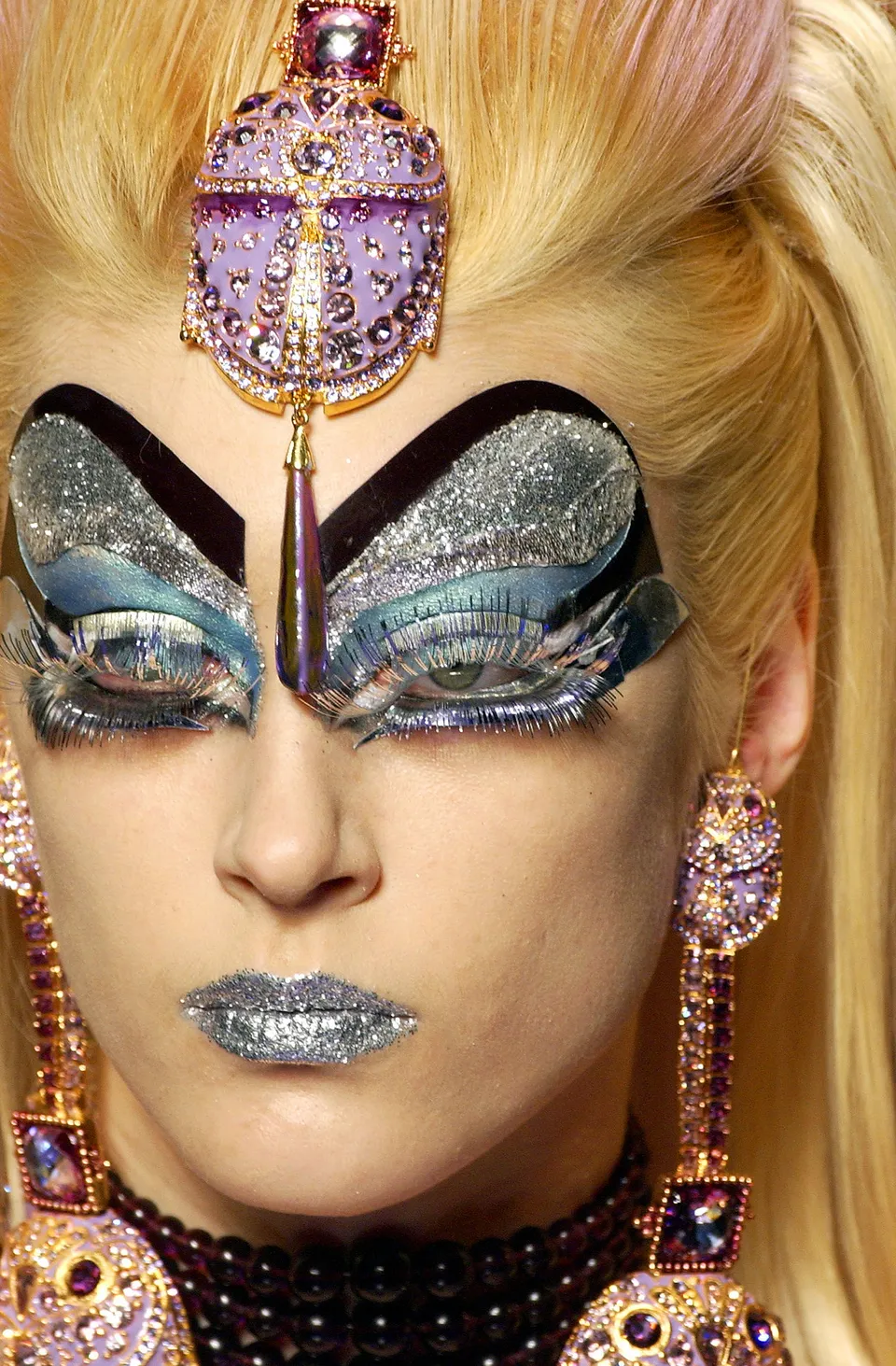
Pat McGrath constructed paper eyebrows, custom chain-lined appliqués, metallic lashes and layers of multicolored glitter. The materials carried weight, reflected light and altered facial architecture. Beauty acquired seams, ornaments and structure.
A traditional runway face could provide atmosphere through lipstick, shadow and complexion. Pat McGrath began giving makeup its own craftsmanship. A brow could require fabrication. An eyelash could function like metalwork. A lip could hold crystals. The makeup chair began resembling a tiny couture atelier positioned inches from the skin.
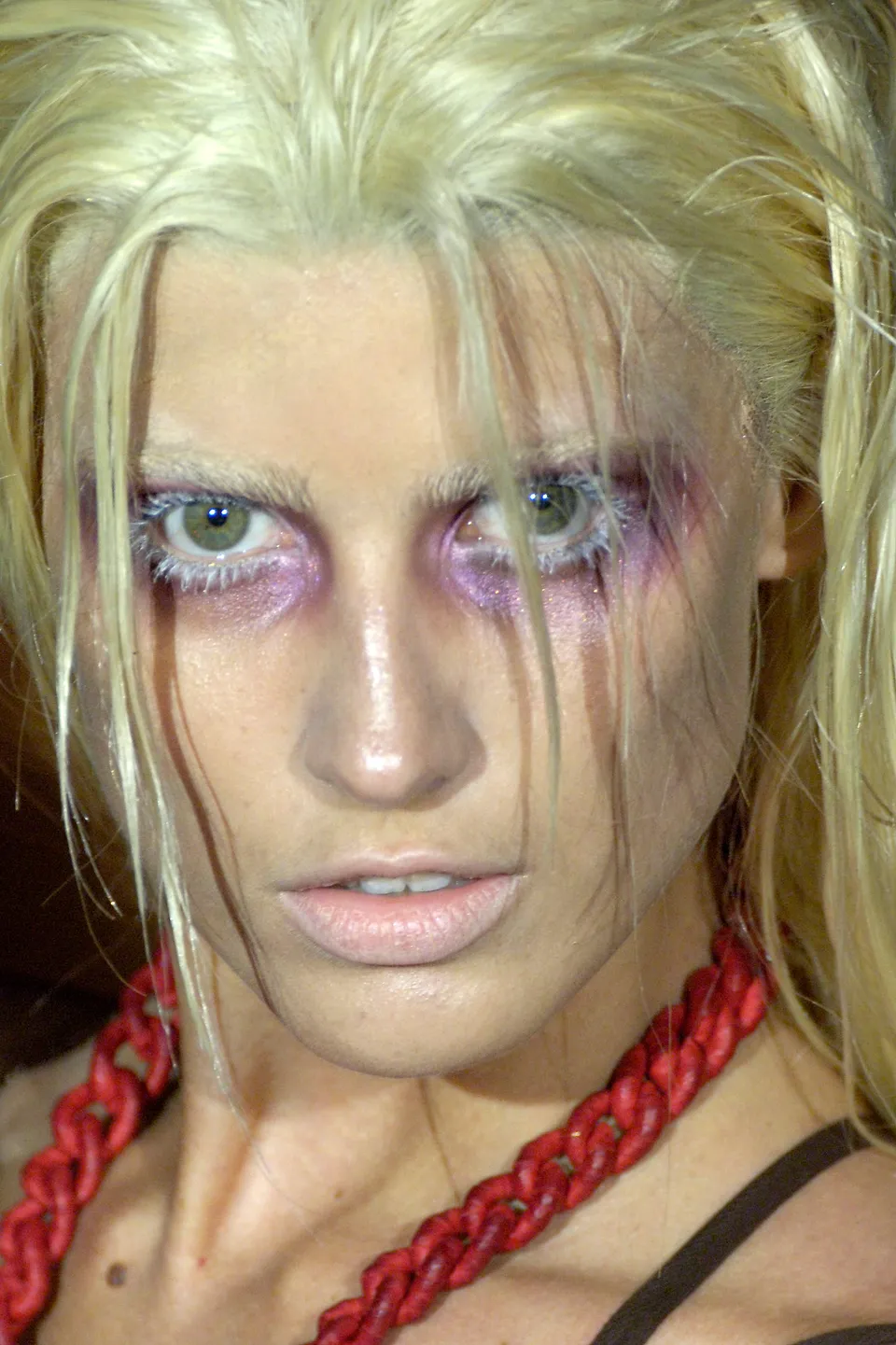
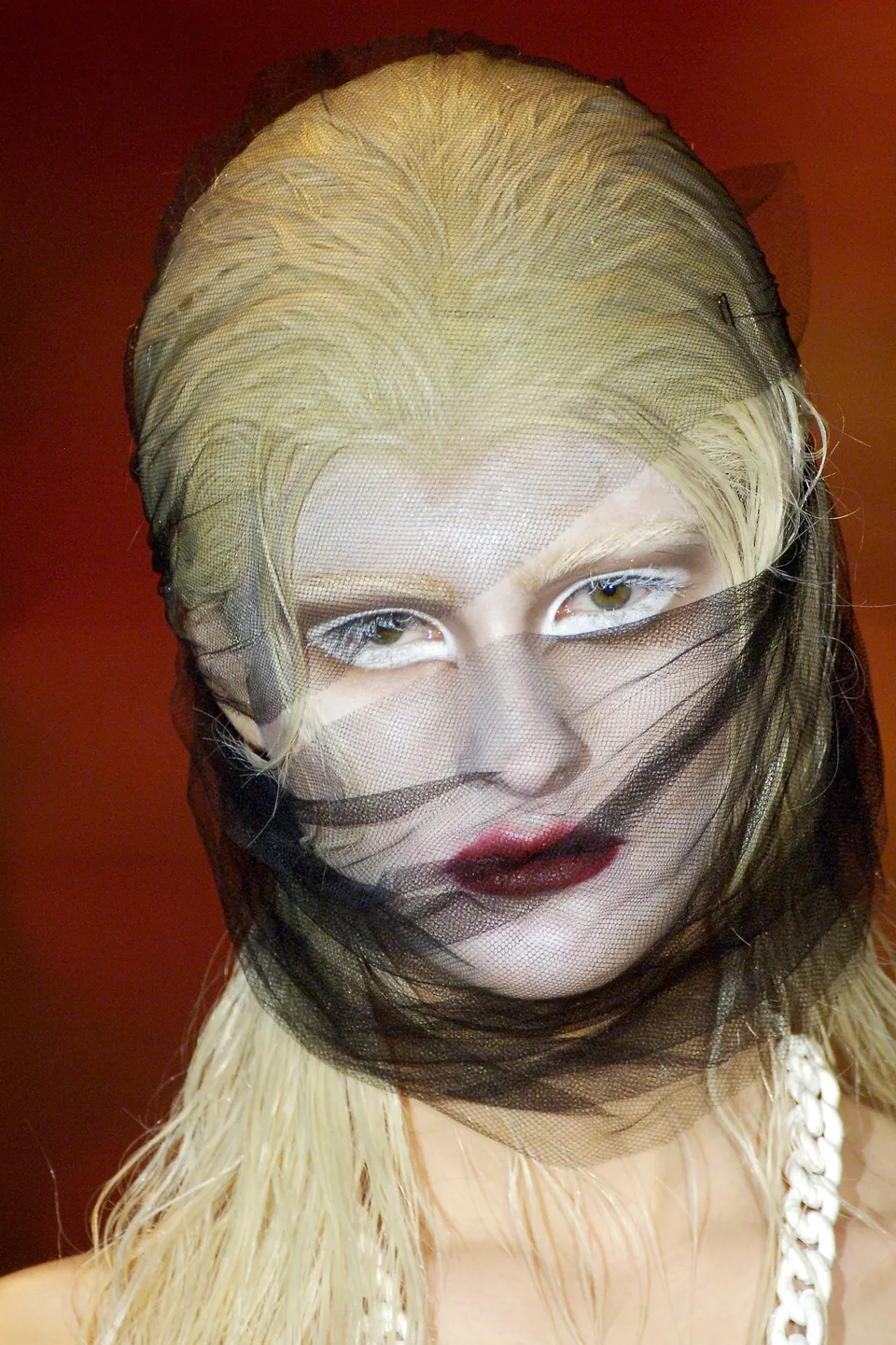
At Christian Dior Spring 2006 Couture, Pat McGrath gave John Galliano’s French Revolutionary fantasy a goth pulse, bruising the eyes with wine-dark pigment and draining the faces beneath Orlando Pita’s icy platinum wigs until the models looked like aristocratic ghosts wandering out of 1789.
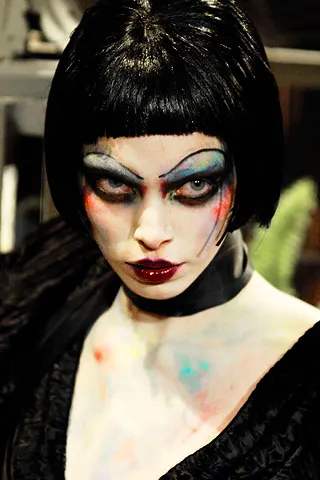
John Galliano Fall 2007 offered another kind of transformation.
John Galliano entered the world of interwar Paris, where Alice Prin, known as Kiki de Montparnasse, and the nocturnal characters photographed by Gyula Halász, known as Brassaï, supplied emotional texture. Pat McGrath painted thin brows and let purples, plums, yellows and oranges diffuse around the face like watercolor bleeding through old paper.
Pat McGrath's historical makeup rarely behaves like archaeological reconstruction. Memory passes through her hands and acquires exaggeration. A 1920s eyebrow becomes a delicate slash. Blush rises until it begins telling you something about the woman wearing it. Purple gathers around the eyes until fatigue, decadence and romance start sharing the same few centimeters of skin.

That instinct would become essential to everything Pat McGrath and John Galliano made together. History supplied a door. Pat McGrath decided which ghost walked through it.
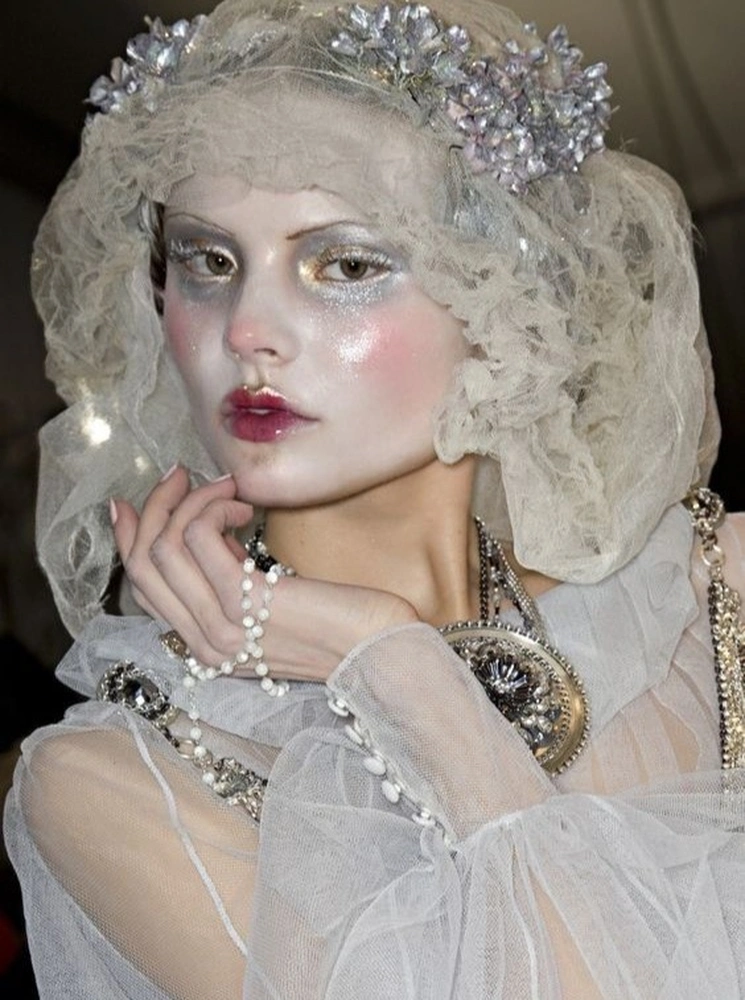
For John Galliano Fall 2009, a tunnel of artificial precipitation swallowed the runway. Alexandre de Betak used lasers to make the flakes sparkle while John Galliano drew from Russian and Balkan folklore, filling the collection with embroidered coats, folk costume references, elaborate headdresses and silvery dresses that seemed born inside some half-remembered winter tale.
Pat McGrath gave the models frostbitten cheeks and deep kohl around the eyes, drawing partly from Marchesa Luisa Casati, the eccentric Italian heiress whose dark-rimmed stare already belonged to the mythology of twentieth-century beauty. Pat McGrath called the models “beautifully iced maidens.”
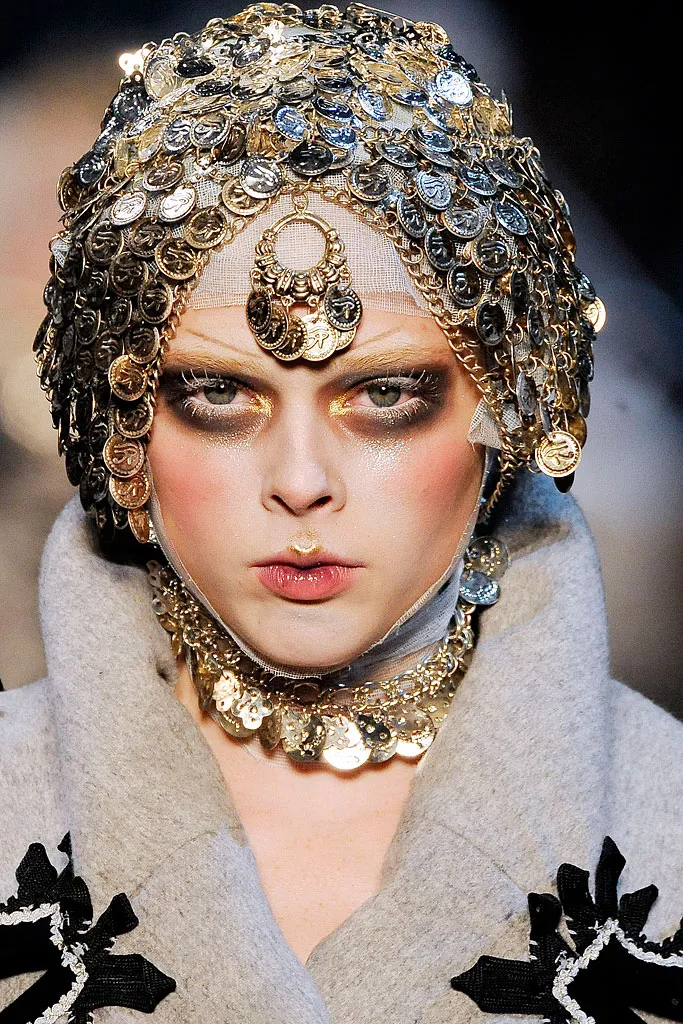
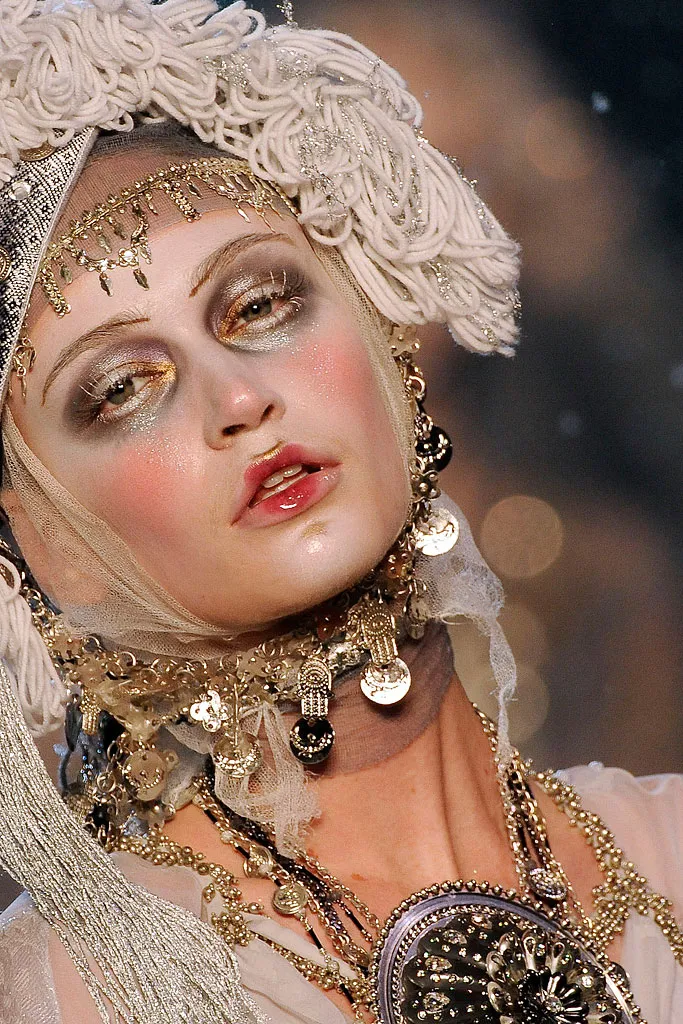
The cheeks look touched by cold because the women appear to have travelled through the same storm surrounding the runway. Kohl gives the eyes an almost haunted heat. Their makeup absorbs the set, the light and John Galliano's folklore until beauty becomes part of the weather system.
This became an important stage in Pat McGrath's development with John Galliano. Makeup could build a character. Makeup could construct an object. Now makeup could dissolve the boundary between model and environment.
Look closely at Maison Margiela Artisanal 2024 and that lesson returns. The final surface of the skin belongs to the entire world surrounding it. Light lands differently on those glazed faces. Shadows travel differently. A model becomes part human, part doll, part reflected room.
The friendship between Pat McGrath and John Galliano reveals itself beautifully through a story Pat McGrath later told about a makeup test.
Pat McGrath arrived with a model carrying an outrageous quantity of beauty: around ten sets of eyelashes, enormous eyeshadow and glossy, amplified lips.
John Galliano looked at the result and wanted the fantasy pushed further. The runway world in his head demanded theatrical voltage. Pat McGrath understood immediately.
The anecdote sounds deliciously absurd, yet it explains their creative alignment with unusual precision.
Across fashion, Pat McGrath can produce translucent skin, tiny gestures of liner and an almost invisible flush. With John Galliano, the invitation often moved toward transformation. He supplied history, cinema, nightlife, literature and characters. Pat McGrath metabolized those references through texture.
That relationship also reveals the intellectual side of Pat McGrath's maximalism. Ten eyelashes carry value when they make the character legible. Forty shadows earn their place when their color makes an imaginary woman feel real. A piece of foil earns its place when metallic fracture communicates the gesture John Galliano envisioned.
Pat McGrath has described entering fashion houses and encountering collections, lighting, music and teams capable of igniting ideas. The garment becomes an opening sentence. Her makeup continues the thought.
When John Galliano left Christian Dior in 2011, that particular playground disappeared from Pat McGrath's working life for a period. Speaking in 2013, Pat McGrath expressed how deeply she missed the scale of runway beauty that their partnership had encouraged. Then another house opened its doors.
John Galliano's arrival at Maison Margiela created a curious reunion.
Christian Dior had offered grandeur. Maison Margiela offered fragmentation, exposed process, strange materials and the beauty of things left partially unresolved. For Pat McGrath, this became fertile ground.
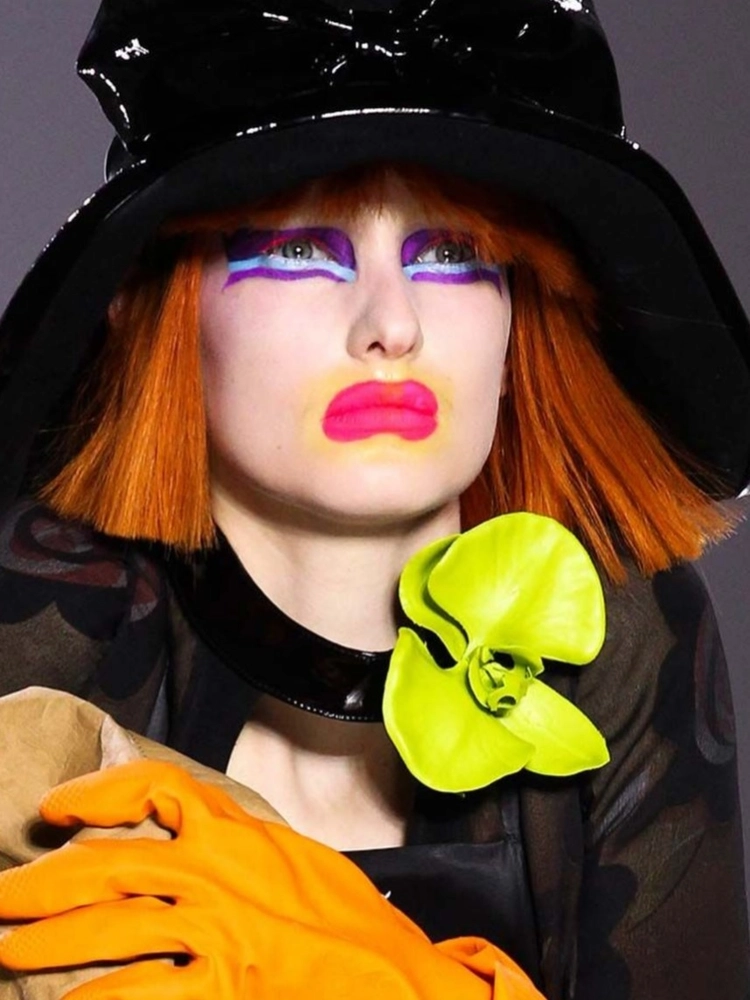
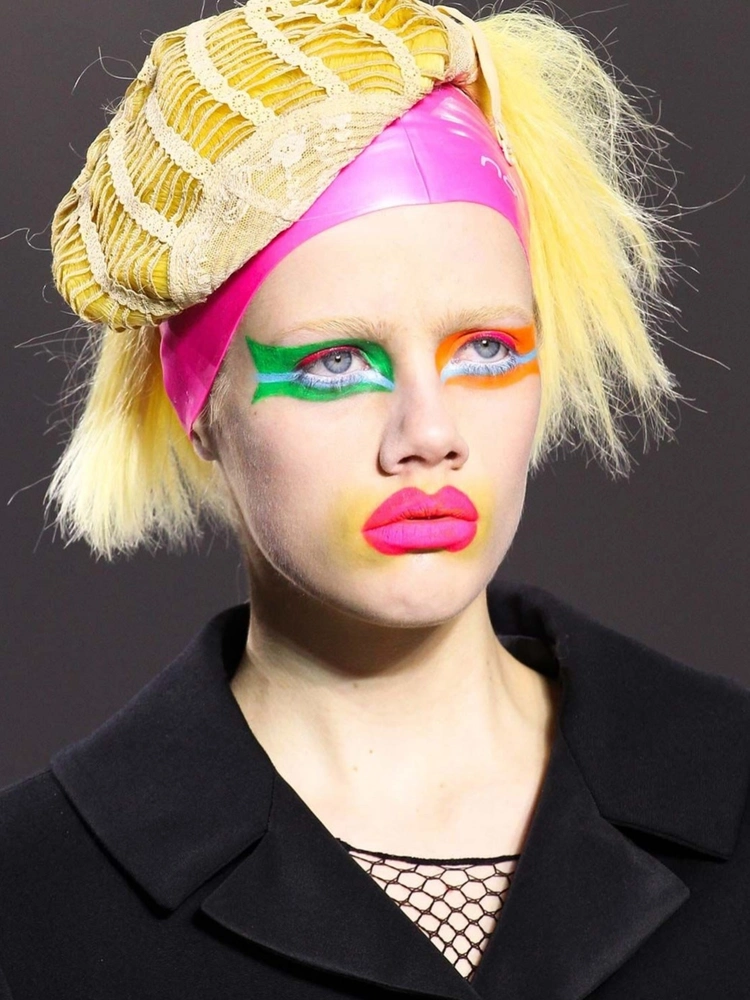
Around this period, another change had entered Pat McGrath's practice. Pat McGrath Labs had launched in 2015 with Gold 001. Backstage experimentation and product formulation could now feed each other directly.
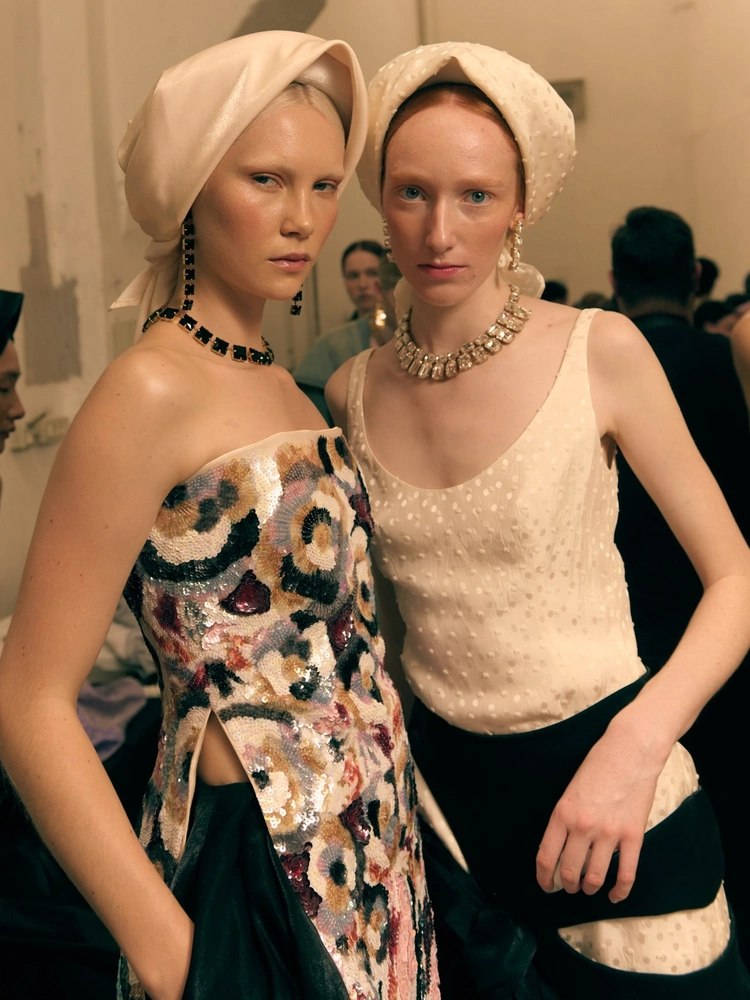
For Maison Margiela Artisanal 2024, John Galliano handed Pat McGrath a porcelain doll.
Pat McGrath had already spent years exploring the 1920s and 1930s with John Galliano. Pencil brows, rouged cheeks, dark mouths and painted femininity already occupied their shared archive. Pat McGrath later recalled asking herself how this familiar historical language could travel into the future.
Her team developed around fifty core ideas during the exploration. Then someone remembered a futuristic face-mask experiment from Pat McGrath's earlier work.
History and futurism suddenly touched.
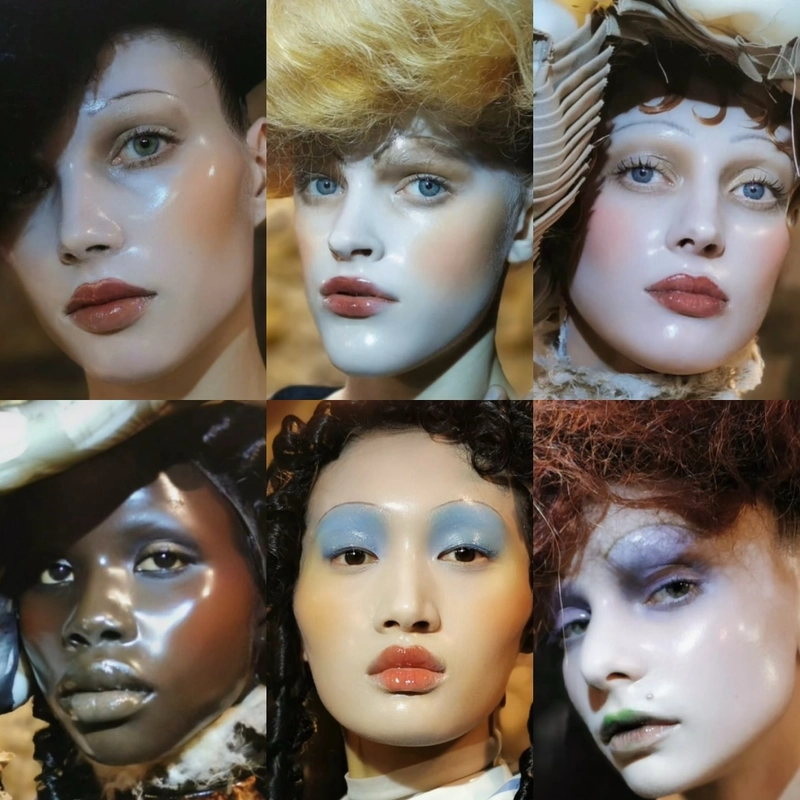
A model came downstairs wearing the combination. Pat McGrath remembered the room falling silent, goosebumps rising, and then applause erupting as the model walked back and forth. The creative problem had found its body.
Underneath the glass sat a deeply theatrical makeup.
Brows were concealed and replaced with fine pencil arches. Cream blush gathered at the centers of cheeks like paint on a doll. Jewel-toned, pastel and charcoal pigments created painterly eyes. Blood reds and dark tones shaped glossy mouths.
Pat McGrath and her team had been exploring versions of the glass technique for three years. Around 30 makeup artists worked backstage with roughly 15 airbrush machines. The final glaze involved distilled water, peel-off masks and professional materials, misted repeatedly across the finished makeup. During the live demonstration after the show, Pat McGrath described seven to eight layers, each dried carefully before the next arrived.
Pat McGrath later described herself as an alchemist while explaining how water, gel masks and technique created the reflective finish. The technical challenge centered on preserving the entire painted face beneath the glaze.
The backstage experiment eventually entered Pat McGrath Labs. In January 2025, Skin Fetish: Glass 001 Artistry Mask translated the runway idea into a commercial product, carrying a piece of Maison Margiela's porcelain dream into bathrooms and makeup kits.
Twenty years can vanish inside a face. Pat McGrath's lasting power comes from this accumulation. She remembers. Then she mutates the memory.
That is also what makes Pat McGrath and John Galliano such an enduring creative duo. John Galliano repeatedly hands Pat McGrath a universe full of characters. Pat McGrath studies its paintings, films, weather, fabric and ghosts, then asks what their faces have lived through. Sometimes the answer requires watercolor. Sometimes the answer requires forty eyeshadows. Sometimes it requires a snowfall. And sometimes it takes three decades of looking at faces before a porcelain doll can finally open her eyes.
Advertisement