MENU
Close





What if a dress could stare back? Before the eye learned to name it, Op Art style lived inside that strange little shock: a stripe that seemed to move, a checkerboard that bent the room, and a woman crossing the street like a signal from a sharper, stranger future.
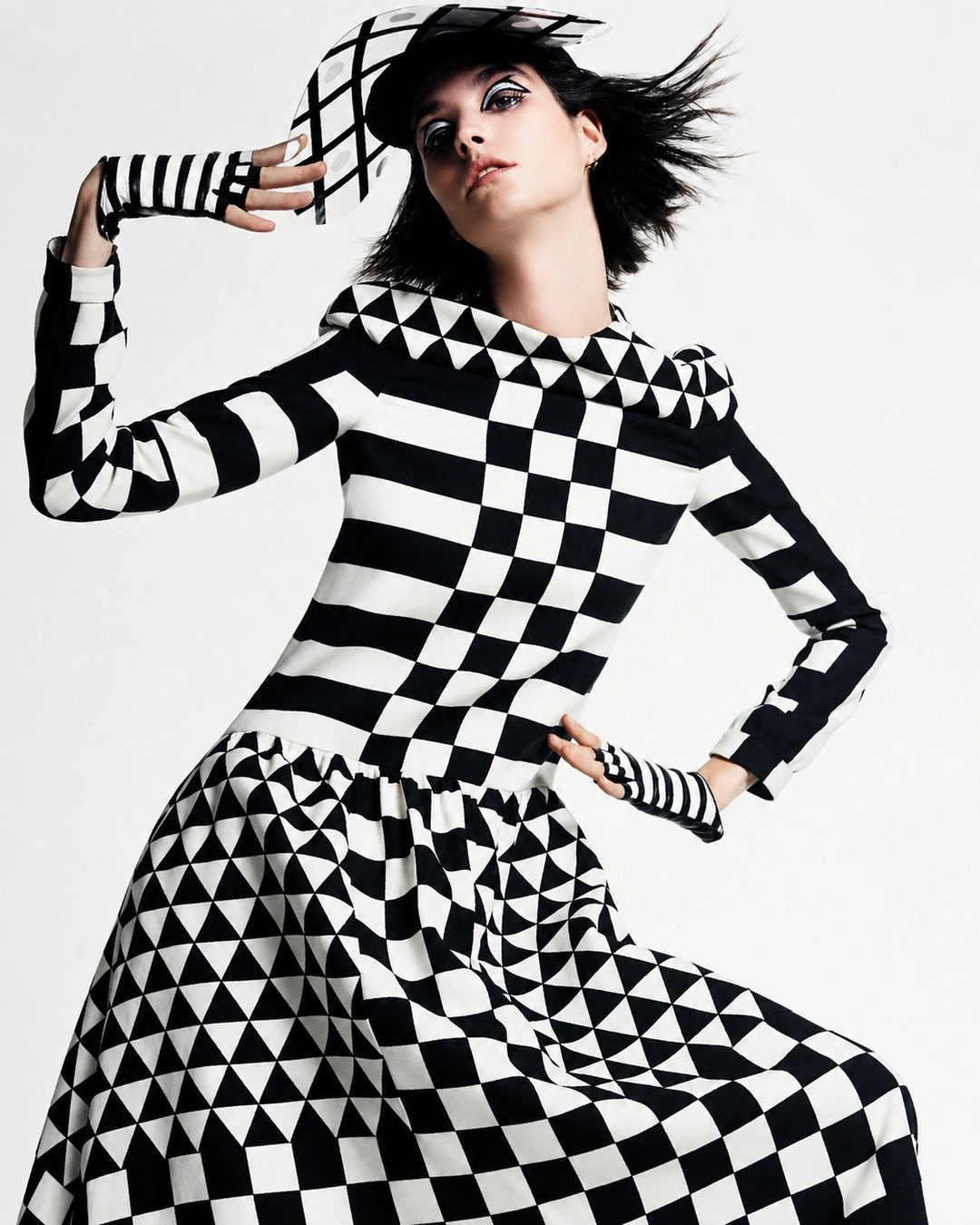
What if a dress could stare back? Before the eye learned to name it, Op Art style lived inside that strange little shock: a stripe that seemed to move, a checkerboard that bent the room, and a woman crossing the street like a signal from a sharper, stranger future.
June 17, 2026
Advertisement
Advertisement


Imagine a city seen through a television screen just beginning to flicker. London is electric, New York is restless, gallery walls pulse with new visual codes, and the street starts dressing like an experiment. Under the hard shine of shop windows and nightclub lights, a woman steps out in a black-and-white shift dress. The cut is clean, almost severe. The surface carries the charge. Stripes ripple across the body. Squares tilt against the eye. A simple walk becomes a graphic disturbance.
Op Art style entered this atmosphere with the rhythm of a world moving faster than its own reflection. Youth culture wanted sharper lines and stranger pleasures. And fashion slipped from the soft discipline of the postwar wardrobe, transending into something cooler, brighter, and more synthetic. The body began to look wired into the city.
In an Op Art dress, a woman became an optical event. Her clothes activate the space around her with every step, every turn, every sudden shift of light. What happens when a garment begins to move faster than the body inside it? A mini dress could flicker like a painting set loose from the wall, while a coat could turn the sidewalk into a temporary gallery and a bodysuit could make the body look almost unreal.
The pulse of the OpArt style came from precision with a mischievous edge: geometry with a little madness, beauty built from the moment the eye loses its footing. Its language carried the snap of Mod, the polish of Space Age design, and the fever of the psychedelic decade, all sharpened into black-and-white impact. Ornament moved into the pattern itself. The line became seduction. The grid became a trap.
Seen from a distance, it looked graphic and playful. Seen up close, it became stranger. The lines pulled the gaze inward, as though the dress contained a hidden current. In the right light, the wearer vibrated between woman and image, body and illusion, and street style and optical trap. Op Art style offers a colder kind of glamour: exact, electric, and quietly hallucinatory.
Op Art style takes its name from Optical Art, a movement built on the instability of vision, yet its fashion life began the moment geometry found a body to disturb. On canvas, a stripe could pulse inside a frame; on a dress, that same stripe moved through a room, followed the curve of the hip, broke across the shoulder, and changed rhythm with every step. The idea became physical, looking turned into a sensation.


The visual language had been taking shape through modern abstraction before the 1960s, with Victor Vasarely exploring spatial illusion, vibrating pattern, and the strange authority of repeated forms, while Bridget Riley pushed the effect into a sharper psychological register in Britain through works such as Movement in Squares from 1961, where a simple grid appears swollen, compressed, and almost alive under the eye. By 1964, when Time published “Op Art: Pictures That Attack The Eye,” and 1965, when The Responsive Eye opened at the Museum of Modern Art in New York, the movement had entered a larger cultural bloodstream; yet fashion had already begun to understand the seduction of optical impact, because the street offered a more immediate stage than the gallery wall. Op Art style could live on a mini dress, flicker under flash photography, and turn a woman walking through the city into a moving graphic image.

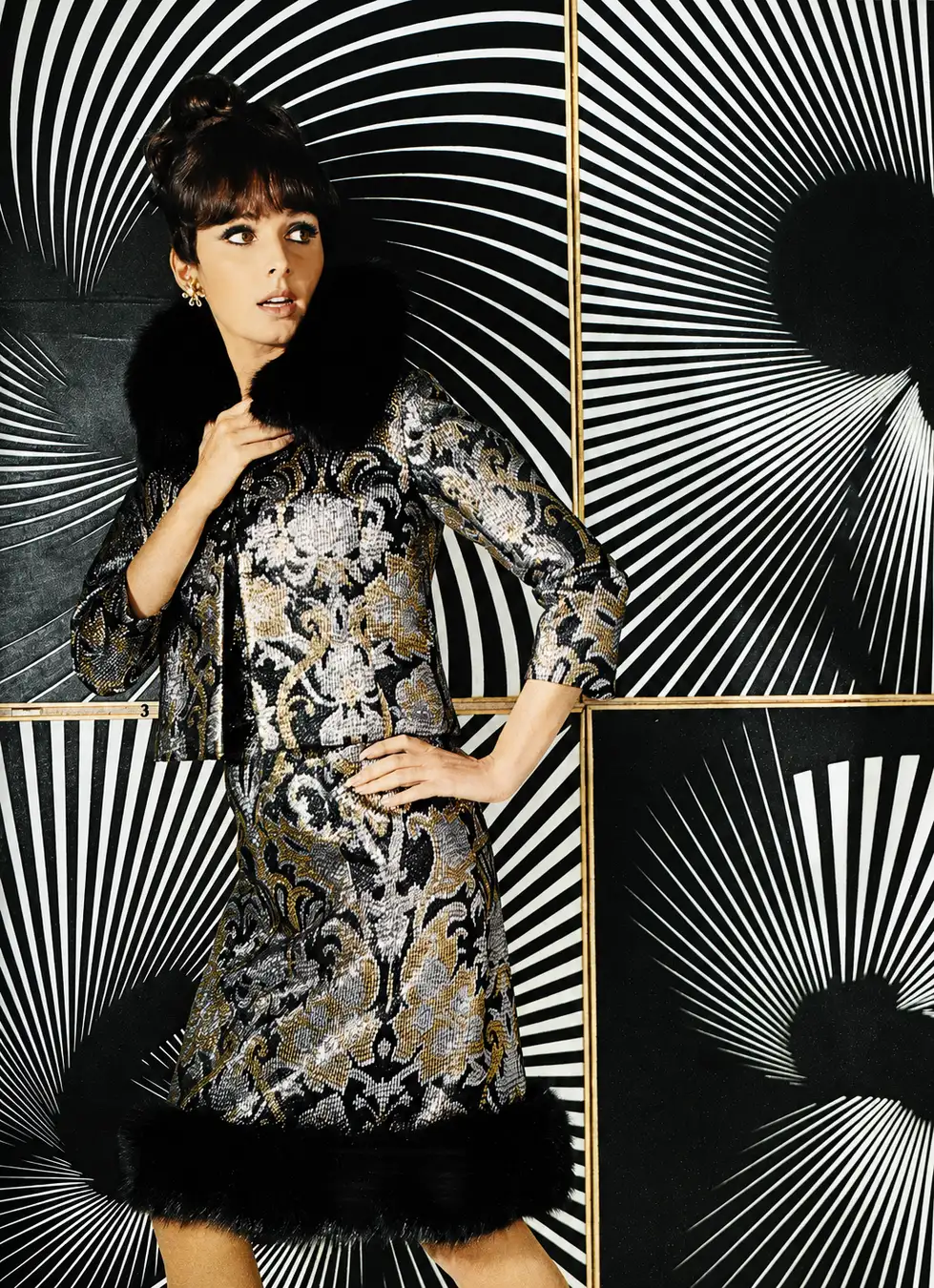
That shift belonged to the visual appetite of the Swinging Sixties. Mary Quant’s short, clean silhouettes created an ideal surface for hard-edged patterns, while André Courrèges and Pierre Cardin sharpened the decade with futuristic geometry, white boots, vinyl shine, and Space Age lines. Rudi Gernreich brought a body-conscious clarity that made optical pattern feel even more direct, as though the garment had been mapped onto the figure with a designer’s ruler and a hypnotist’s nerve. In this setting, the Op Art dress became one of the decade’s most electric fashion objects: neat in cut, wild in effect.
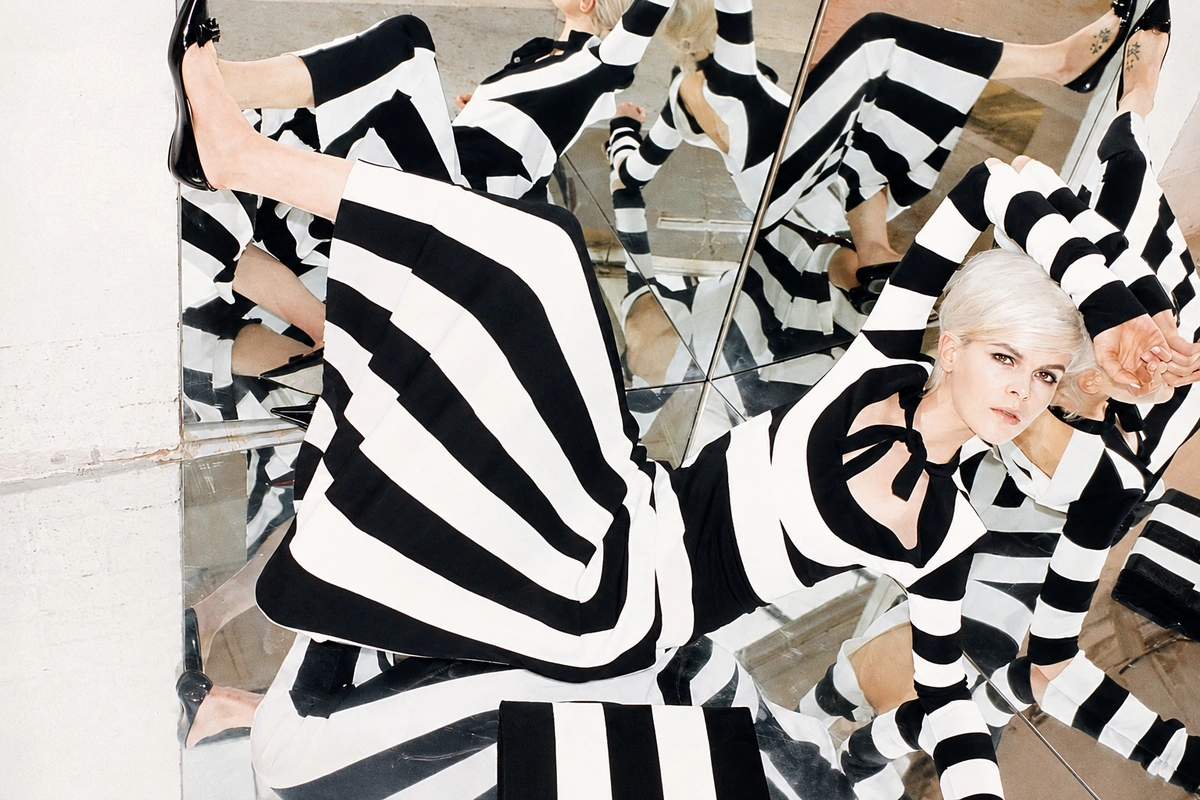
Once the language reached the boutique floor, Op Art style found its sharpest fashion surface in garments cut with enough discipline to let the pattern take control: the shift dress, the tunic, the narrow coat, the second-skin bodysuit. Across those clean planes, black and white could snap into stripes, warp into grids, break into checkerboards, or spiral toward the waist with a graphic intensity that made construction feel almost kinetic. The cut stayed precise around the shoulder, hem, sleeve, and side seam, while the surface carried the disturbance; a flat dress held a visual tremor, a straight coat bent on the sidewalk, and a tight bodysuit made the body appear coded, multiplied, and faintly unreal.
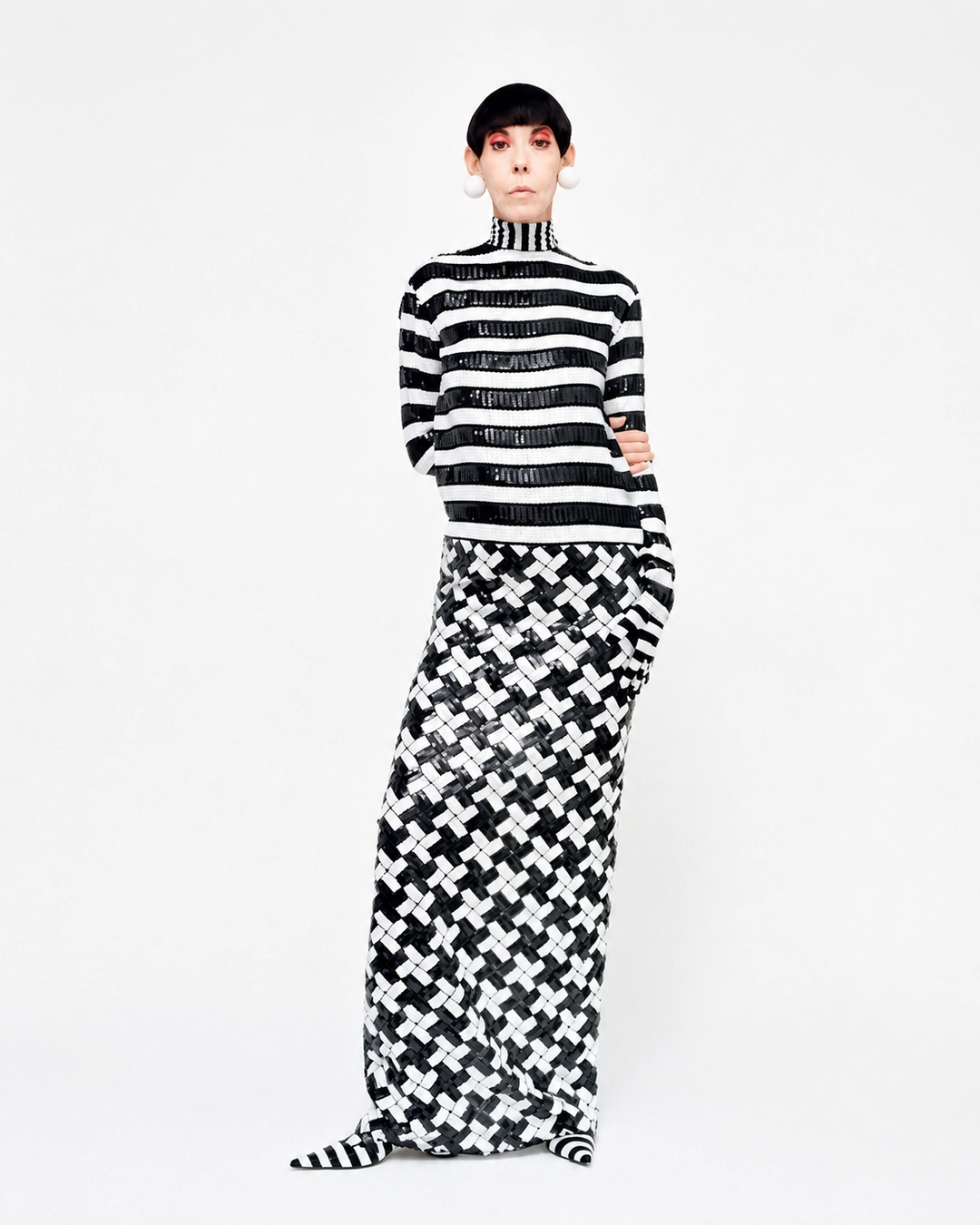
Fashion breathed new air into Op Art by giving geometry heat, movement, scale, and skin. Once the pattern left the canvas for fabric, every seam became a live current: a stripe snapped at the hem, bent around the waist, fractured across a sleeve, or slipped over the shoulder with the wearer’s motion. Op Art style entered fashion as a charged collaboration between discipline and distortion, where a precisely cut garment could keep its composure while the eye wandered into mischief.
The first shock of Op Art style usually begins on the surface, sharp enough to feel almost electric, yet real seduction begins where pattern meets cut. A stripe placed down the center of a dress can lengthen the body like a beam of light, while a curve drawn toward the waist can pull the gaze inward until the figure seems to turn on its own axis. The garment holds its line with discipline, then lets the print create the fever

.
Its silhouette tends to stay clean, compact, and graphic, allowing the optical surface to speak at full voltage. A shift dress gives the pattern a flat plane, a mini dress turns the body into a moving sign, a slim coat lets geometry travel from shoulder to hem, and a bodysuit brings the illusion close enough to feel almost anatomical. The shape carries a certain coolness, trimmed of softness, sharpened by the confidence of the 1960s.
Construction in Op Art style often feels calm at first glance, but the control is intense. Prints are engineered around the body rather than scattered across it. Lines must meet the seam with intention, grids must survive the curve of the hip, and circular forms must sit with enough tension to create a visual pull. A sleeve can interrupt a rhythm. A side seam can split an illusion. A neckline can frame the face like the top edge of a graphic poster. The technique lives in that exact negotiation between garment and eye.
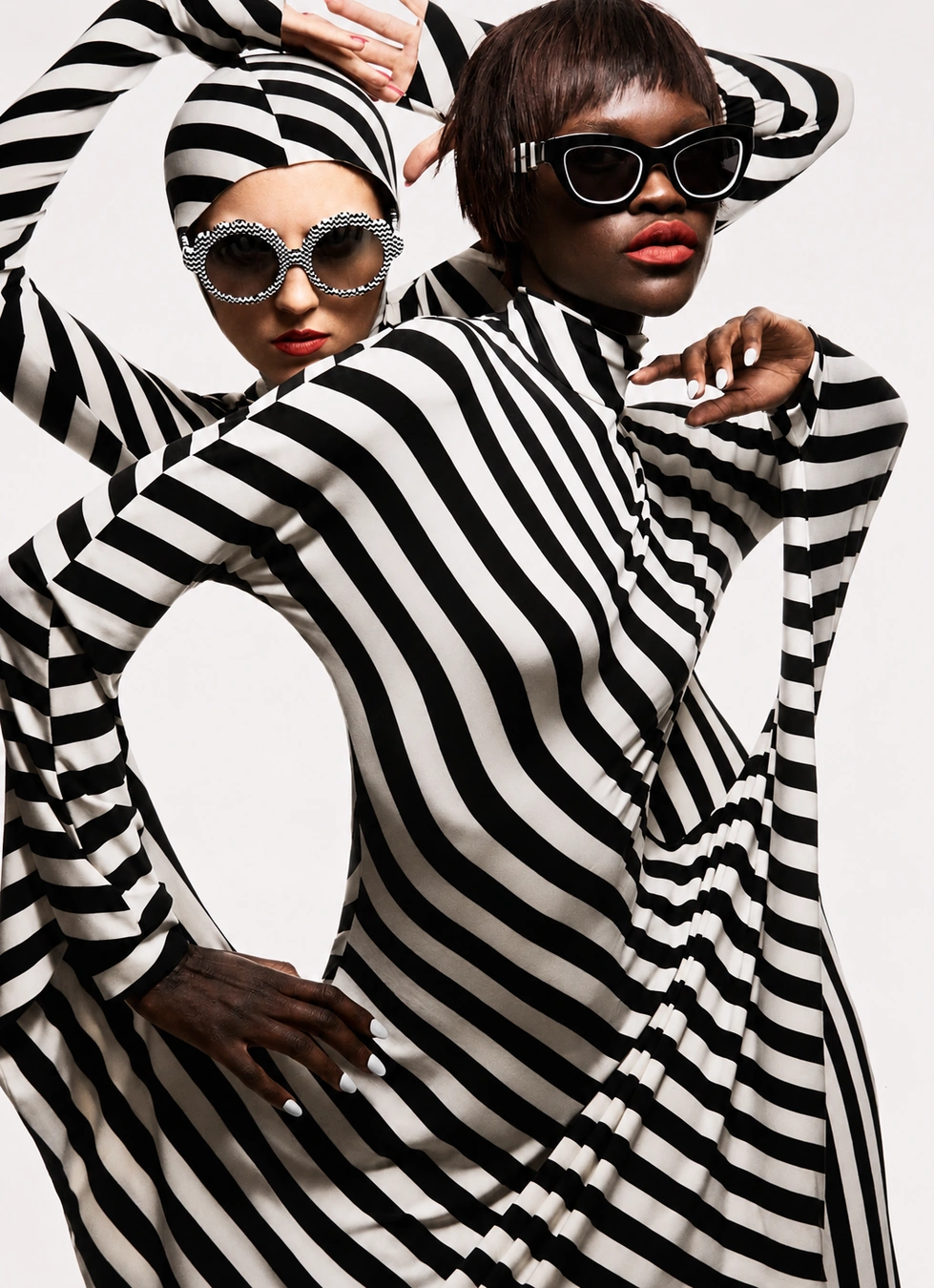
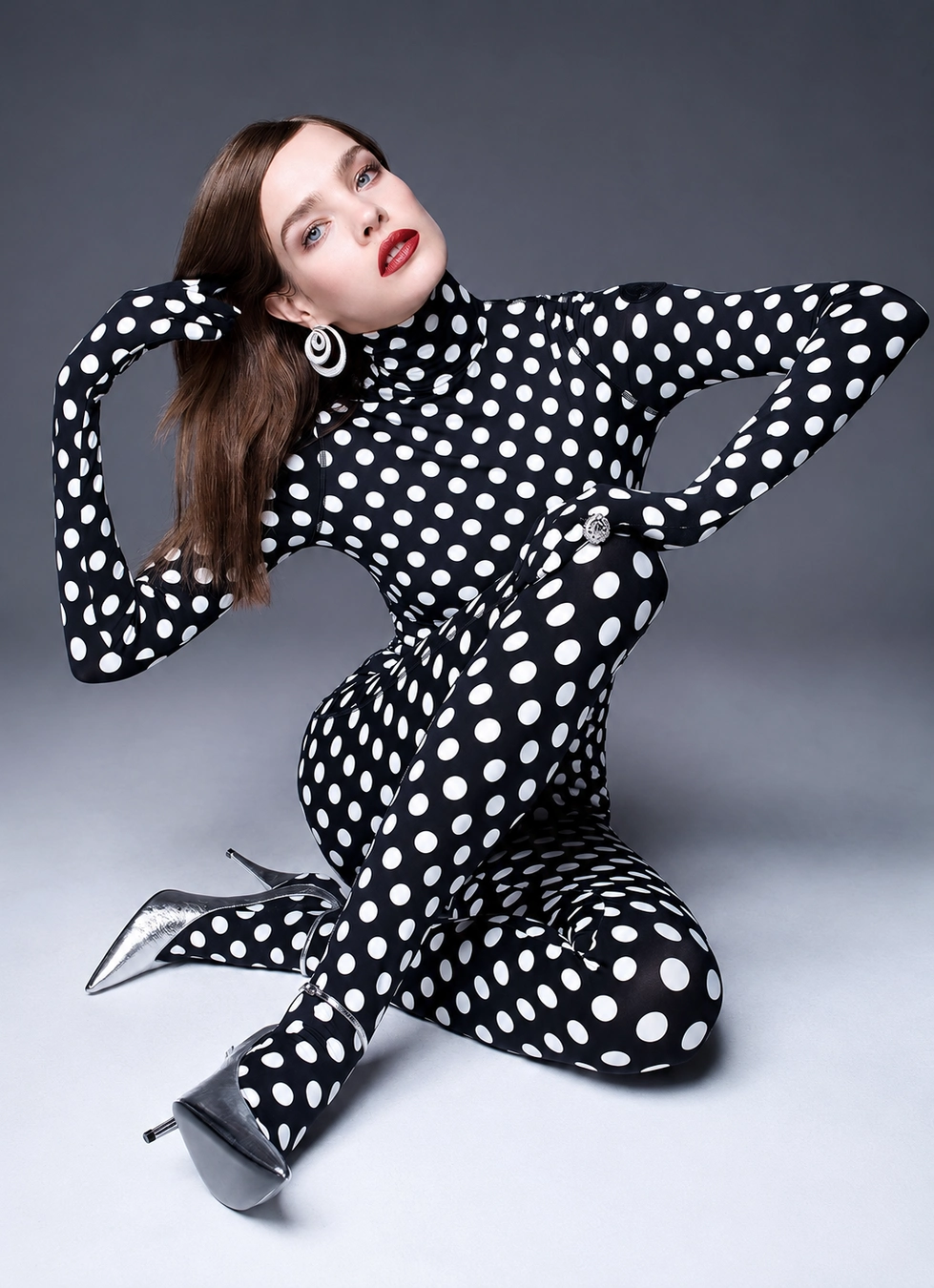
At the material level, the key lies in how sharply the surface can hold the illusion. Crisp fabrics keep the print clean enough for every stripe, grid, and curve to cut against the body with graphic force, while stretch materials pull the pattern closer to the skin, turning movement into subtle distortion. A harder finish adds another charge: vinyl shine, coated texture, or a polished synthetic surface can make the geometry feel colder, brighter, and more artificial, as though the garment has been lit from inside a futuristic shop window. In contemporary interpretations, the optical effect often moves beyond print into woven structure, raised texture, or sculptural pleating, giving the illusion weight, shadow, and a more physical pulse.

Black and white remain the style’s sharpest voltage, the combination that makes the eye react before the mind settles. From there, the palette can burn into red, cobalt, lemon, orange, silver, or other synthetic brights, each shade adding a different kind of pressure to the pattern. The color keeps the image tense, clean, and slightly unstable, as though the garment has been charged under artificial light.


In Op Art style, every design decision seems to guide the gaze somewhere slightly dangerous. The shoulder can become a starting point, the waist a vortex, the hem a sudden cut in the rhythm. A successful piece holds the body inside a precise structure, then lets the surface flicker, bend, and mislead with immaculate control.
A room changes when Op Art style enters it. The walls seem a little less certain, the floor appears to tilt to a secret degree, and the body begins to carry its own atmosphere of static. The wearer moves forward, yet the dress creates another motion beside her: a pulse, a drag, a flash of distortion that makes the eye chase something it can never quite hold.

Such glamour runs on voltage, its charm gathers around the body like a private frequency, flashing through chrome-lit rooms, camera glare, nightclub haze, and the synthetic glow of a city refusing to sleep. Beauty arrives colder here, exact and electric, touched by the strange pleasure of visual confusion.
The style belongs to the moment when fashion slips out of ordinary time. A striped dress can make the body feel longer than its shadow; a warped grid can pull the waist into false depth, while a checkerboard makes each step feel edited, looped, replayed. The drama sits inside the surface, flickering with such immaculate control that the air around the wearer begins to feel charged.
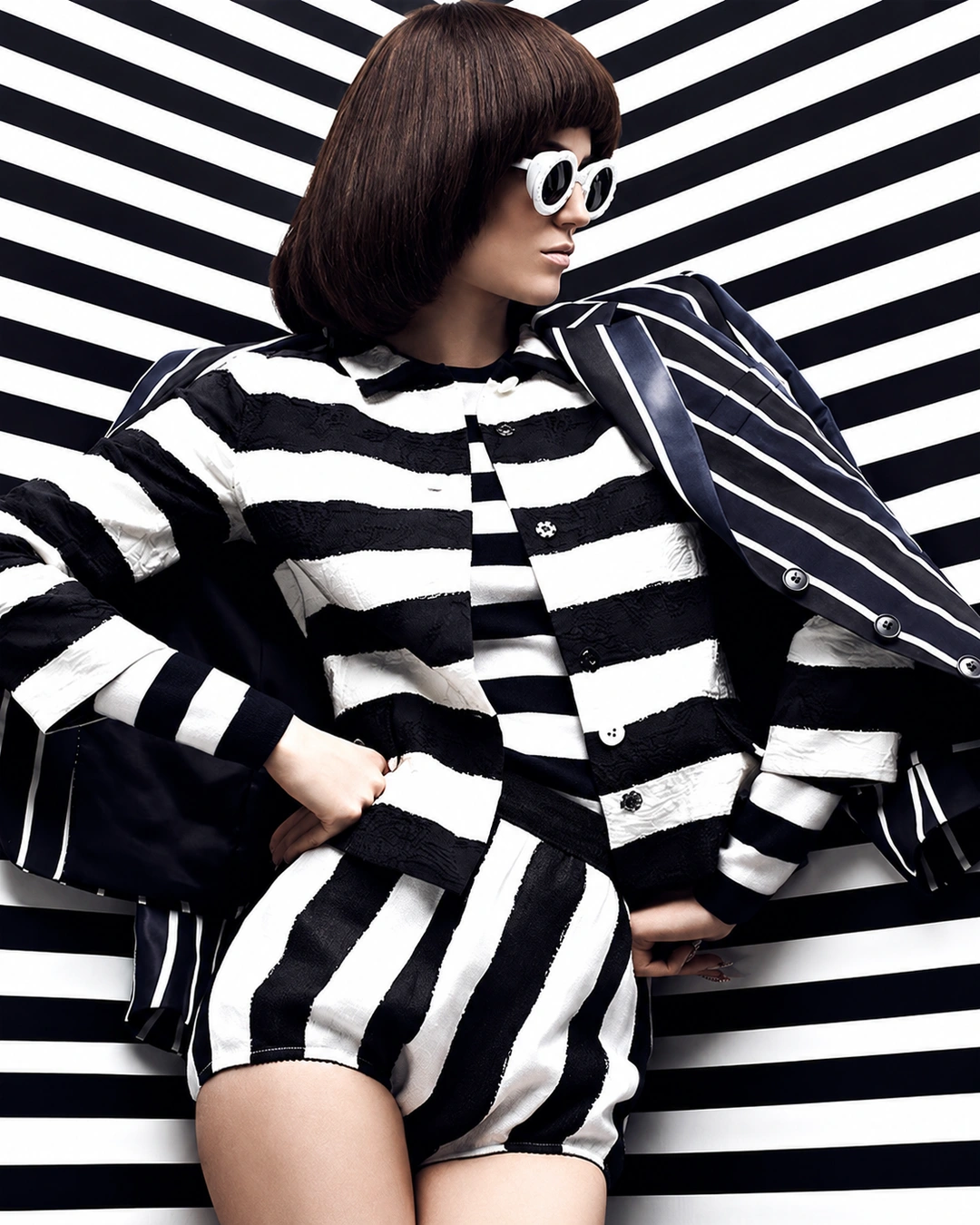

Op Art style gives the wearer a strange kind of distance, as if she had stepped half a beat ahead of reality and left the room trying to catch up. She becomes graphic, untouchable and almost transmitted. The dress holds the body, the pattern holds the gaze, and somewhere between them, fashion opens a portal.
Op Art style rising in contemporary landscape through interference with the body, the light, and the space around it. The model walks, the pattern answers, and the garment seems to carry a second motion inside its own surface.


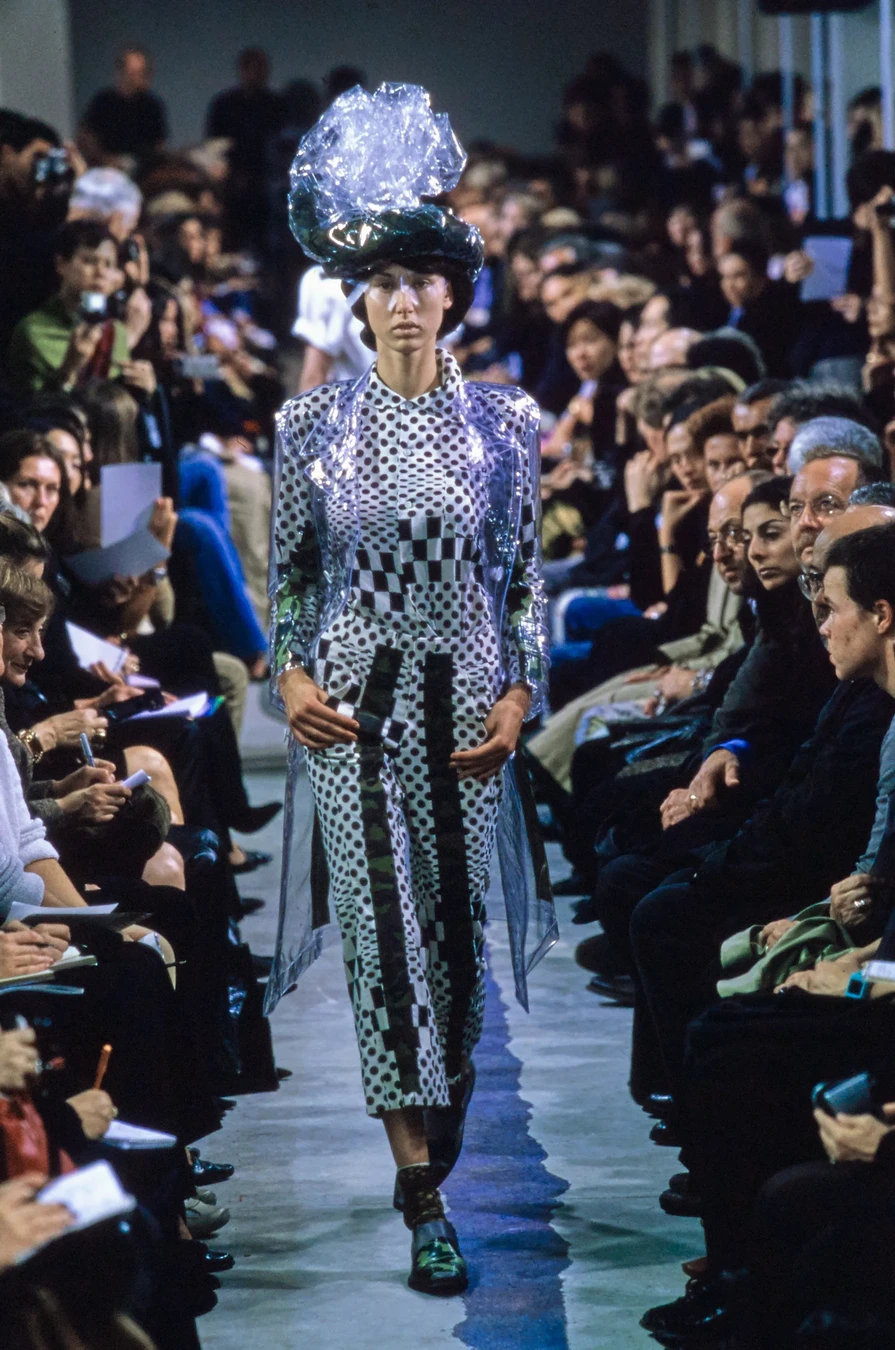

At Comme des Garçons, the optical language turns chaotic and slightly feral, as if geometry has been thrown into static. The outcome bleeds a beautiful visual disturbance, where Op Art style loses its polish and gains a sharper psychological charge.


Gareth Pugh drags the illusion into a darker, after-hours world, where black-and-white impact becomes armor, mask, and performance at once. His version of Op Art style feels nocturnal and severe, turning the body into a moving figure of rhythm, anonymity, and controlled menace.
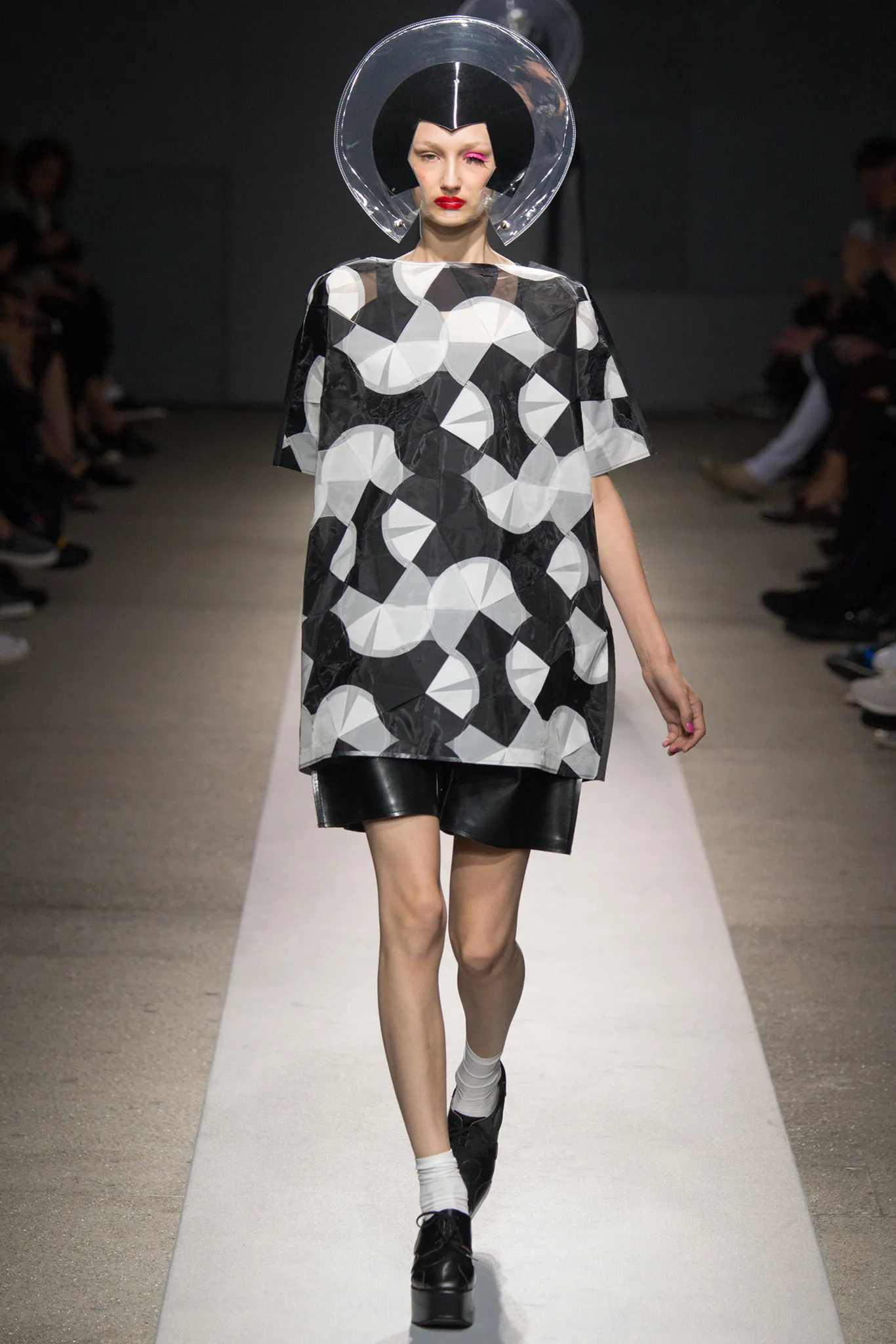


Junya Watanabe gives the optical effect a sculptural pulse, pushing geometry outward until it begins to occupy the air around the body. The looks become architectural and strangely playful, as if a flat pattern has escaped the surface and built itself into form.
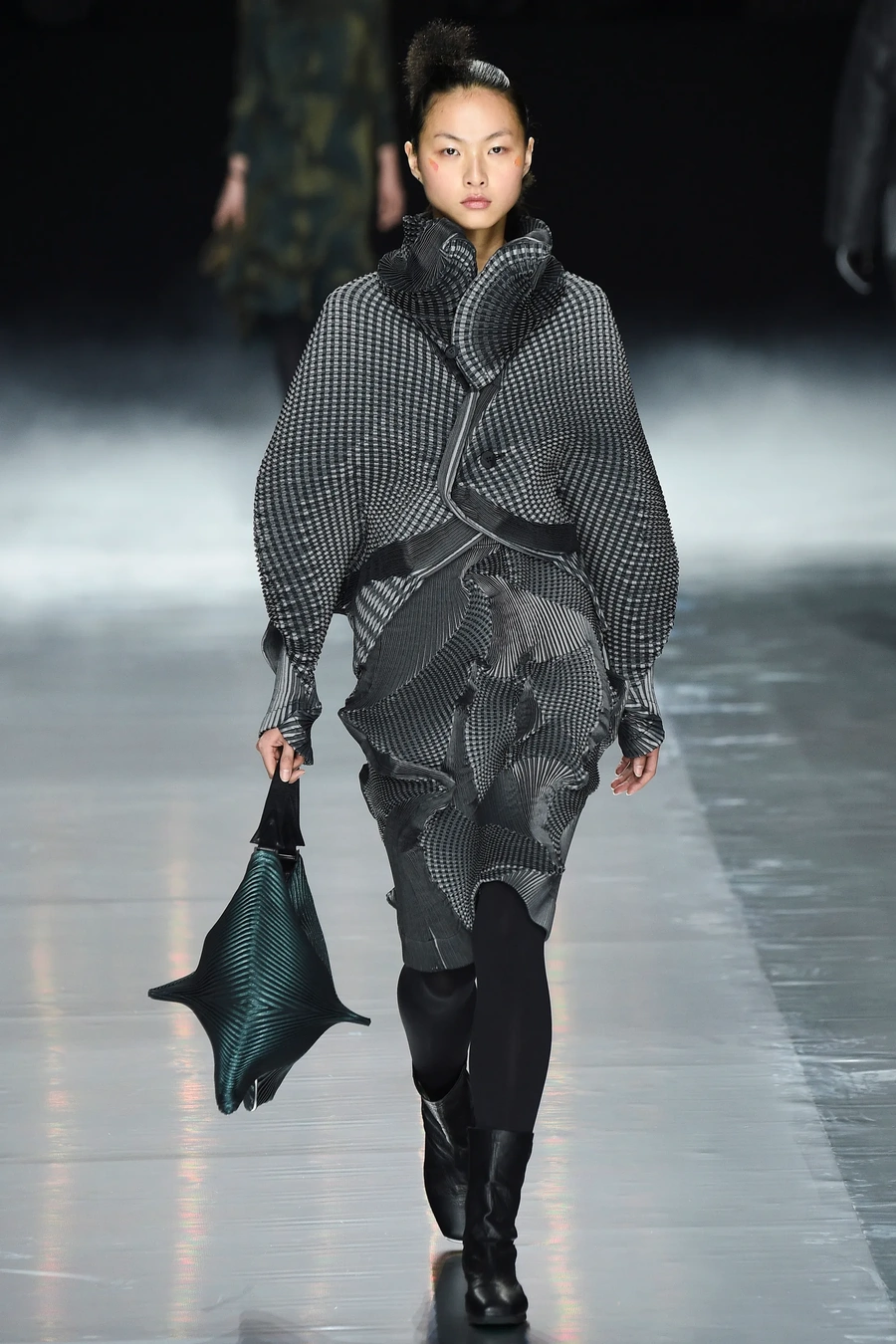

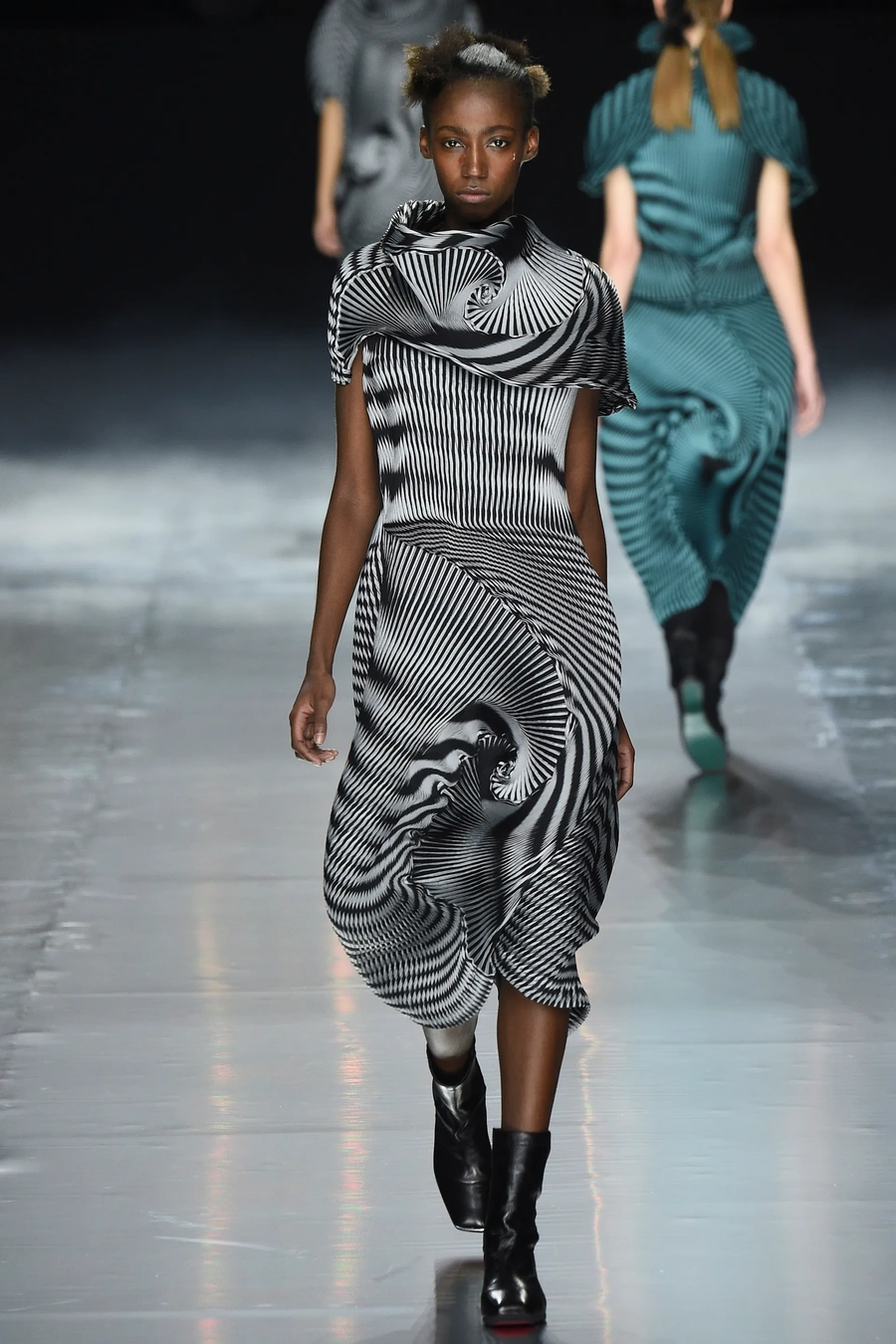

Issey Miyake brings the illusion closer to fabric technology, letting pleats, stretch, and dimensional structure carry the optical effect through movement. The garment seems to breathe, fold, and shift with its own internal logic, turning Op Art style into something tactile, futuristic, and quietly hypnotic.


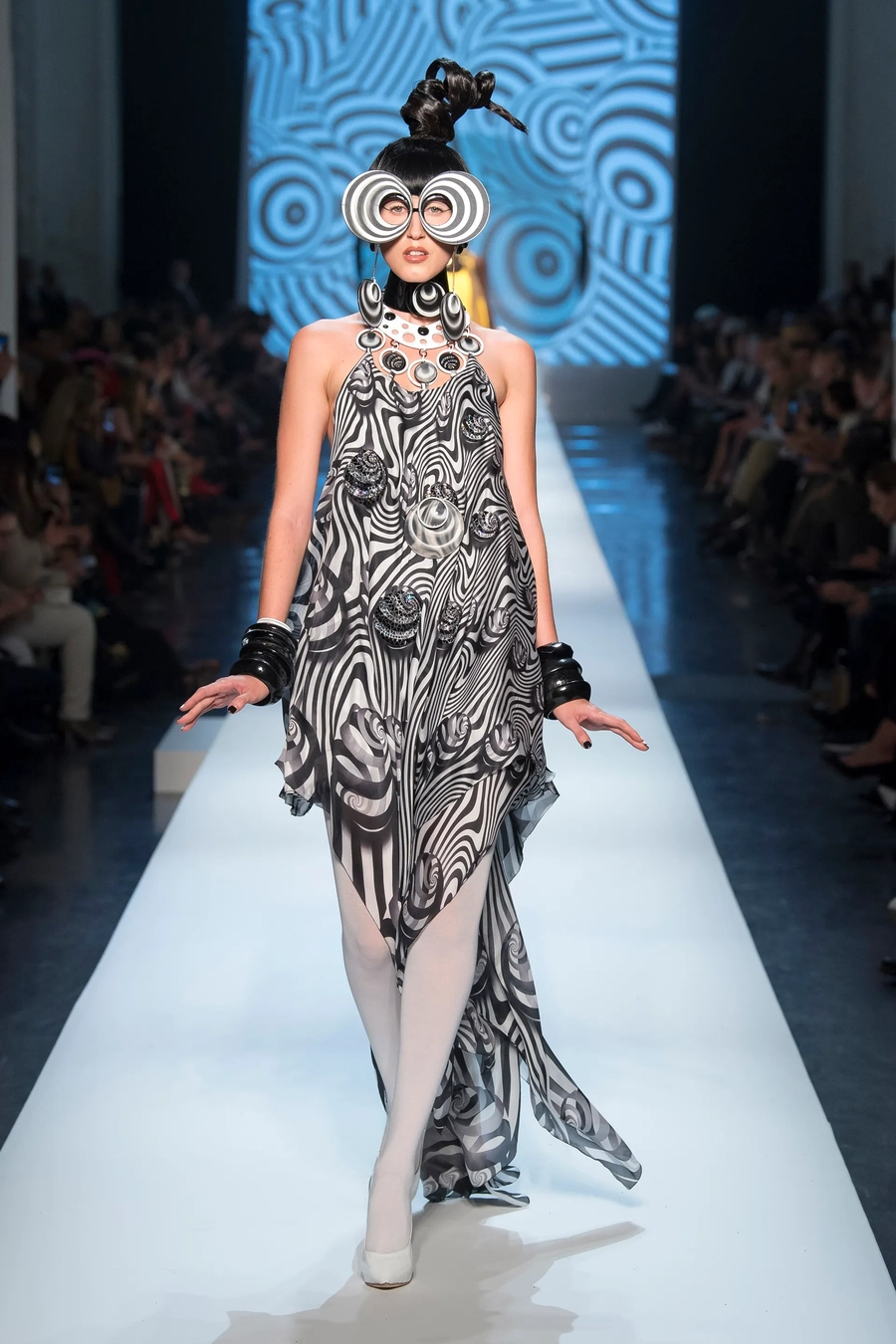

Elsewhere on the contemporary runway, the optical code keeps returning through stripes that bend the figure, checks that unsettle the floor, and engineered patterns that make the body appear slightly out of sync with reality. Its influence survives because fashion still loves that moment when precision begins to flicker and a garment looks as if it has slipped halfway into another dimension.
On the glowing screen, Op Art style found a larger and stranger chamber for its illusions, where bodies could pass through graphic interiors, futuristic costumes, mirrored rooms, and urban fantasies sharpened by artificial light. The female figure became part of the frame’s visual current, moving through pattern, surface, and spectacle until clothing seemed to flicker with the image itself.
In Who Are You, Polly Maggoo?, the fashion world appears as a sharp little fever dream, with the model caught between image, spectacle, and the gaze that keeps trying to define her. The film turns female presence into something glossy and unstable, making Op Art style feel close to satire, seduction, and visual control all at once.

In Modesty Blaise, Monica Vitti moves through a world of spy fantasy, mod glamour, and artificial color with the cool detachment of a woman who knows she is being watched. The film’s graphic interiors, sharp styling, and playful surface tension make it a natural companion to Op Art style, where femininity feels coded, theatrical, and always a little out of reach.

Through these women on screen, Op Art style becomes a luminous trap of surface and motion, where the female image glows with distance, danger, and the strange glamour of something never fully caught.
The strange afterimage of Op Art style lingers long after the dress has left the room. A stripe continues to pulse somewhere behind the eye, a grid keeps its quiet pressure on the floor, and the body seems to have passed through space while leaving a small disturbance in the air.

Its seduction lingers in the trace, the flicker, the fraction of a second when fashion feels slightly detached from gravity. From the gallery wall to the boutique window, from the 1960s street to the contemporary runway, Op Art style has carried the same electric instinct for bending perception through clothing. It gives the body a surface that refuses silence, then lets movement complete the illusion.
A woman in an Op Art dress carries pattern as current, signal, and apparition. She becomes a sharp little apparition of escapism, walking through the world with the cool confidence of something misread in flashes.
Advertisement