MENU
Close





No one knew whether she had travelled from the future or escaped from another dimension. Iris van Herpen Fall 2026 dressed her in cosmic matter, transforming the runway into the site of fashion’s first contact.
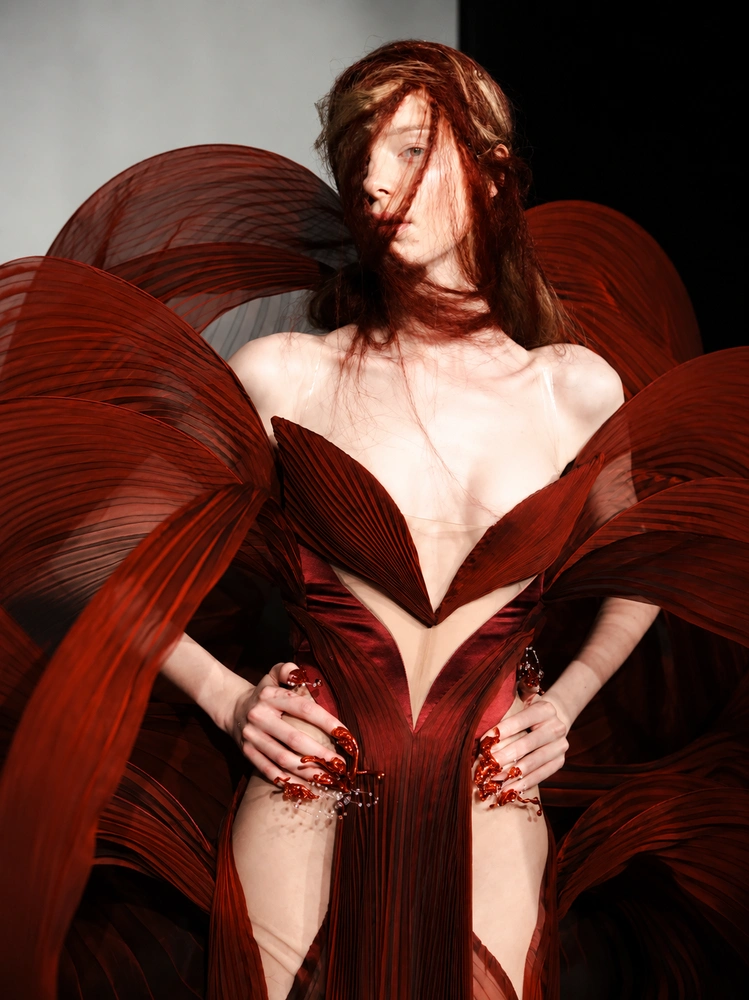
No one knew whether she had travelled from the future or escaped from another dimension. Iris van Herpen Fall 2026 dressed her in cosmic matter, transforming the runway into the site of fashion’s first contact.
July 14, 2026
Advertisement

Advertisement



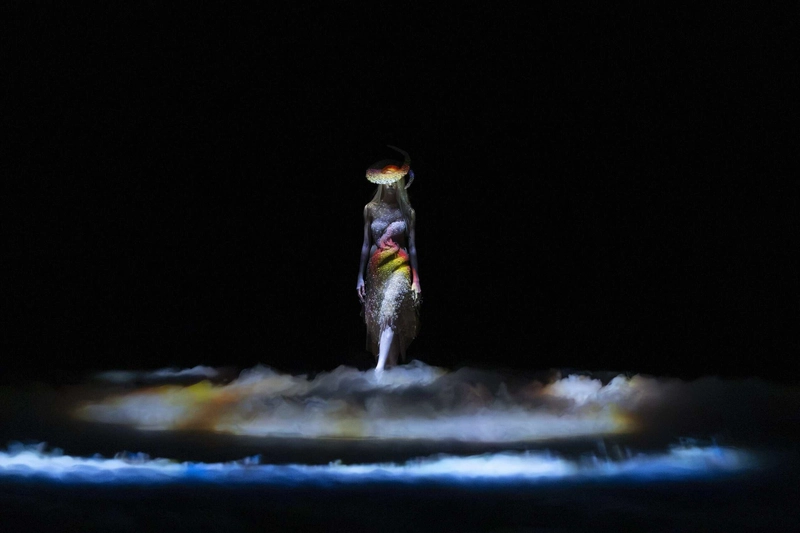
Open inside the Élysée Montmartre, where artificial fog drifts heavily across the floor and the models appear resembling signals briefly acquiring human bodies.
Iris van Herpen Fall 2026, titled Sonic Starquakes, attempts to make hidden energy entirely visible. The collection draws deeply from stellar oscillations, sound frequencies, electrical discharge, plasma, and the hidden geometries produced when vibration passes through matter. This breathtaking display establishes a central contradiction immediately.
Iris van Herpen Fall 2026 arrives from a seemingly distant future, yet beneath its plasma, particles, and cosmic engineering waits a silhouette the house has worn many times before. This introduces the governing question for the season: Has Iris van Herpen invented an entirely novel kind of couture body, or merely placed revolutionary science around an already familiar one?
Begin with starquakes: massive pressure waves travelling through stars and producing frequencies residing far beyond ordinary human hearing. Iris van Herpen treats the universe as a vast orchestra whose music exists autonomously from human perception. The collection moves far past broad space inspiration. Its real subject focuses intimately on the relationship between a hidden force and the physical evidence it leaves behind.
A frequency possesses absolute transparency. An electromagnetic field exists as a continuous whole. A vibration resists ordinary cutting, pleating, or fitting onto a mannequin. The collection begins exactly where traditional fashion vocabulary reaches its absolute limit.
Enter Victorian artist and inventor Margaret Watts Hughes, who developed the Eidophone. By singing into a tube connected to a membrane covered with fine powder, Hughes caused her voice to produce intricate visual patterns. Sound became a tangible image. This historical reference creates the collection’s conceptual bridge.
A woman’s voice moves particles; stellar vibrations move through plasma; electricity draws patterns through synthetic matter; fabric and glass respond dynamically around the body. Iris van Herpen retrieves a woman working brilliantly between science, music, and visual art from the margins of Victorian history, expanding her experiment to a cosmic scale. This gives the collection profound cultural depth.
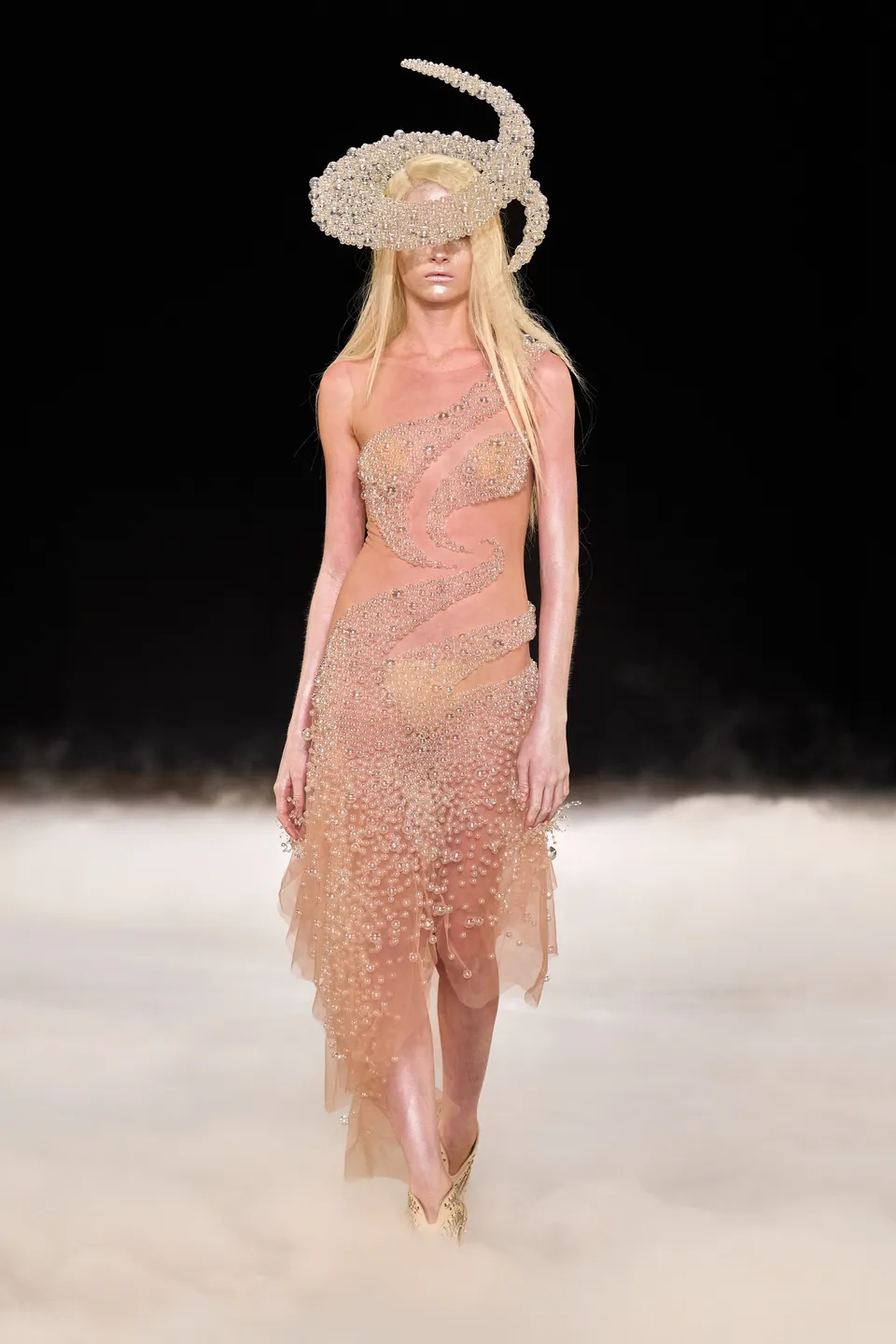
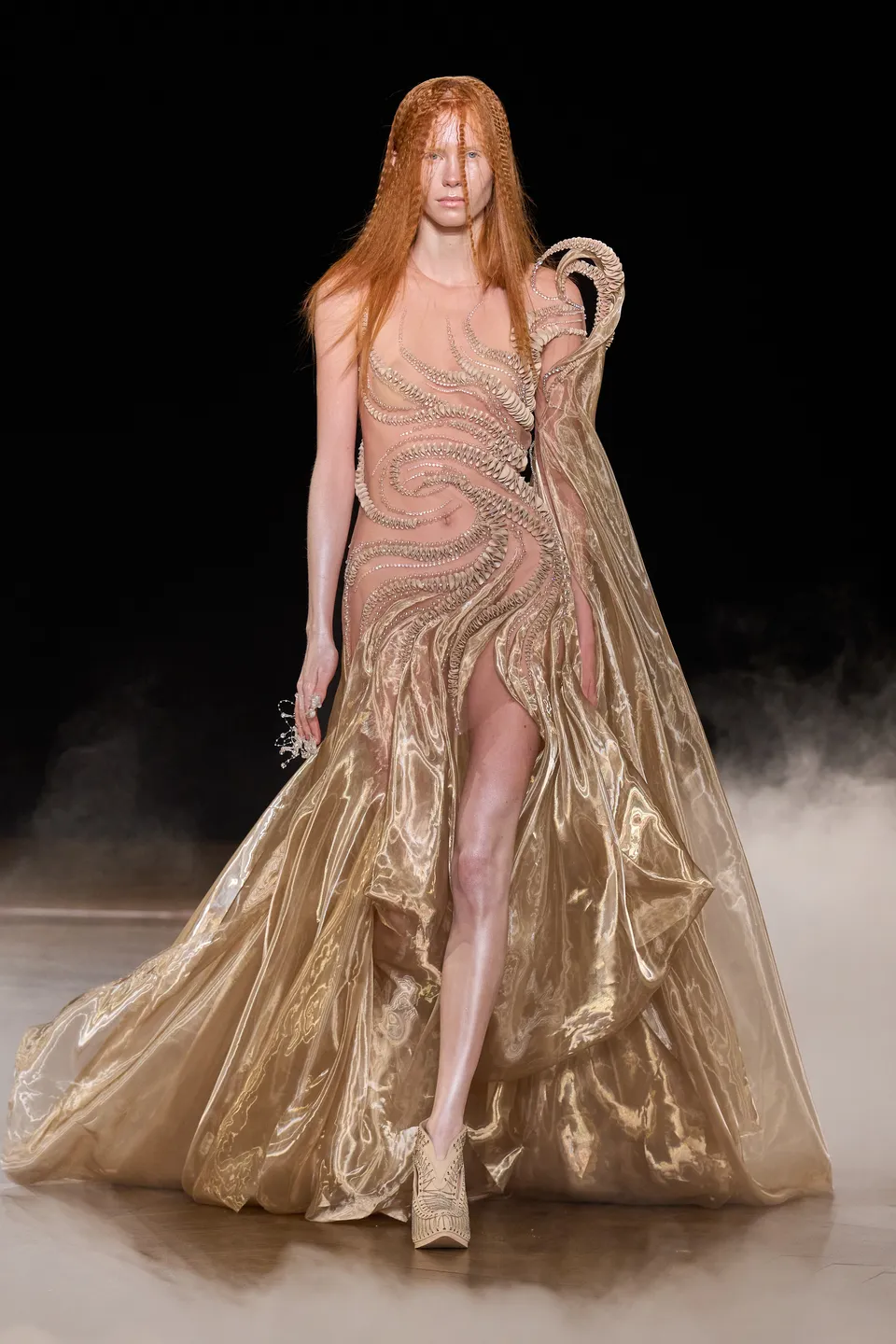
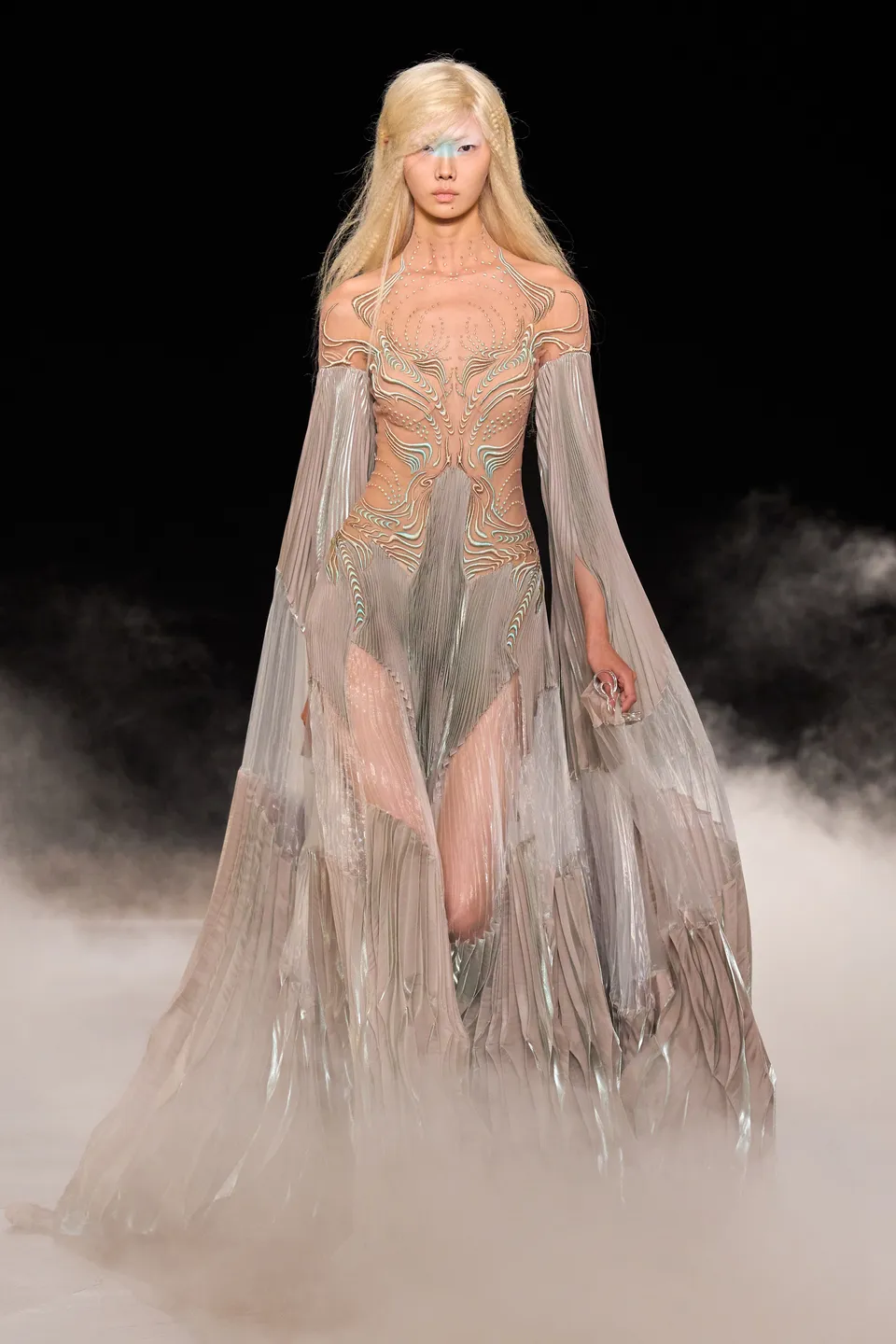
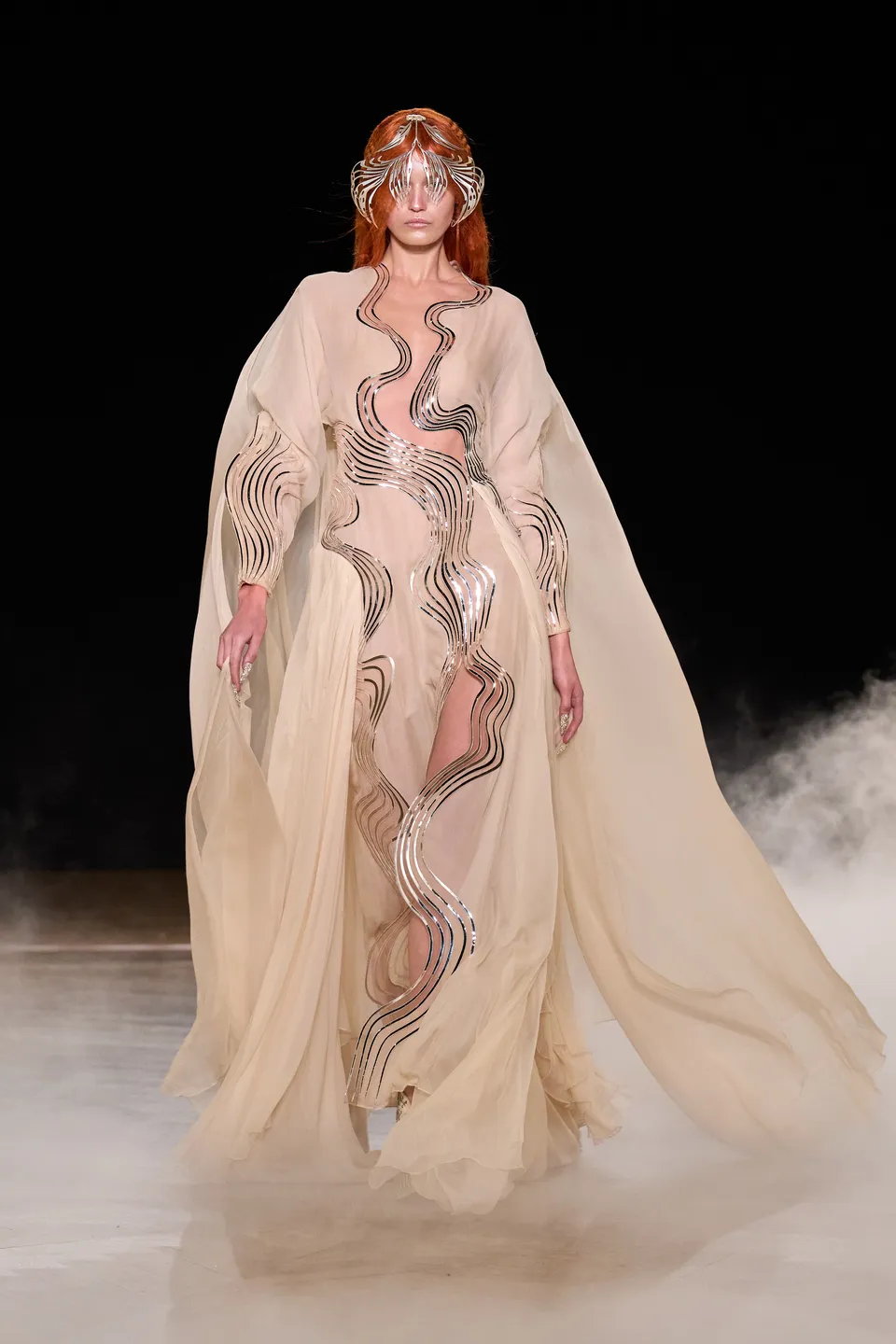
Sonic Starquakes connects logically to the designer’s recent trajectory. Following the successful introduction of bioluminescent algae into couture, Iris van Herpen Fall 2026 progresses from living material toward plasma and electrical energy. The progression suggests she is actively attempting to strip away the garment’s physical mass, moving gracefully from organism to electricity to pure atmosphere. The clearest embodiment of this idea emerges in the Fractal Universe dress. The piece received a massive charge inside a particle accelerator, storing billions of electrons.
The planned runway discharge happened prematurely, causing lightning-like Lichtenberg patterns to burn themselves directly through the synthetic structure. This accident matters deeply because couture usually worships complete control. Here, Iris van Herpen builds the pristine conditions, letting raw electricity finish the design. The garment transcends representing a cosmic event; it becomes literal, physical evidence confirming the event actually occurred.
The body experiences a complete rewrite through velvet. Consider the laser-cut velvet dresses, where dark motifs travel vertically across nude foundations and continue beyond the garment through embroidery applied over visible skin. The lines elongate the body while making its borders wonderfully ambiguous. Velvet absorbs light, giving the patterns a dense, almost carnal darkness. The embroidery extends the garment past its fabric edge, making the body appear tattooed by its own clothing.
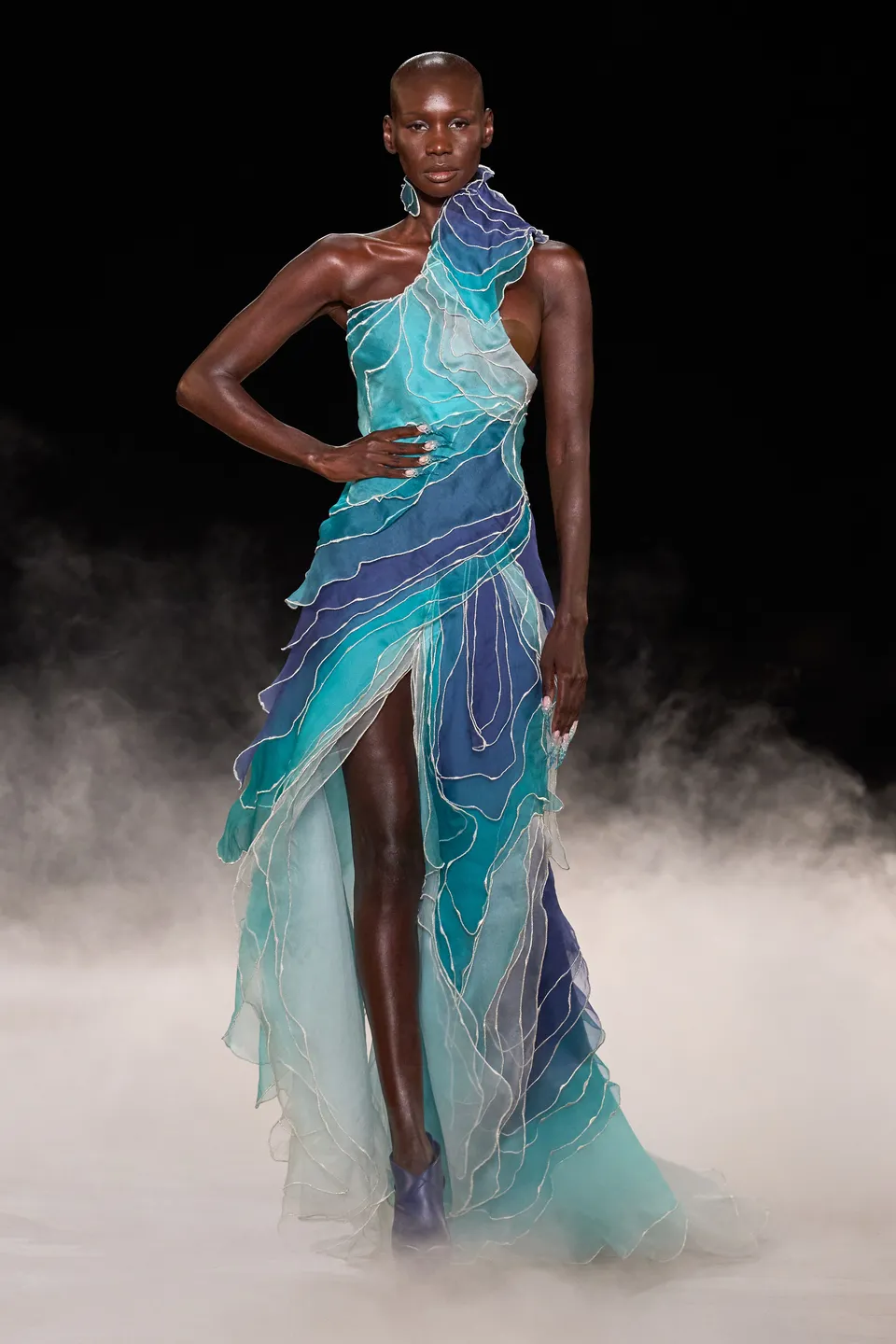
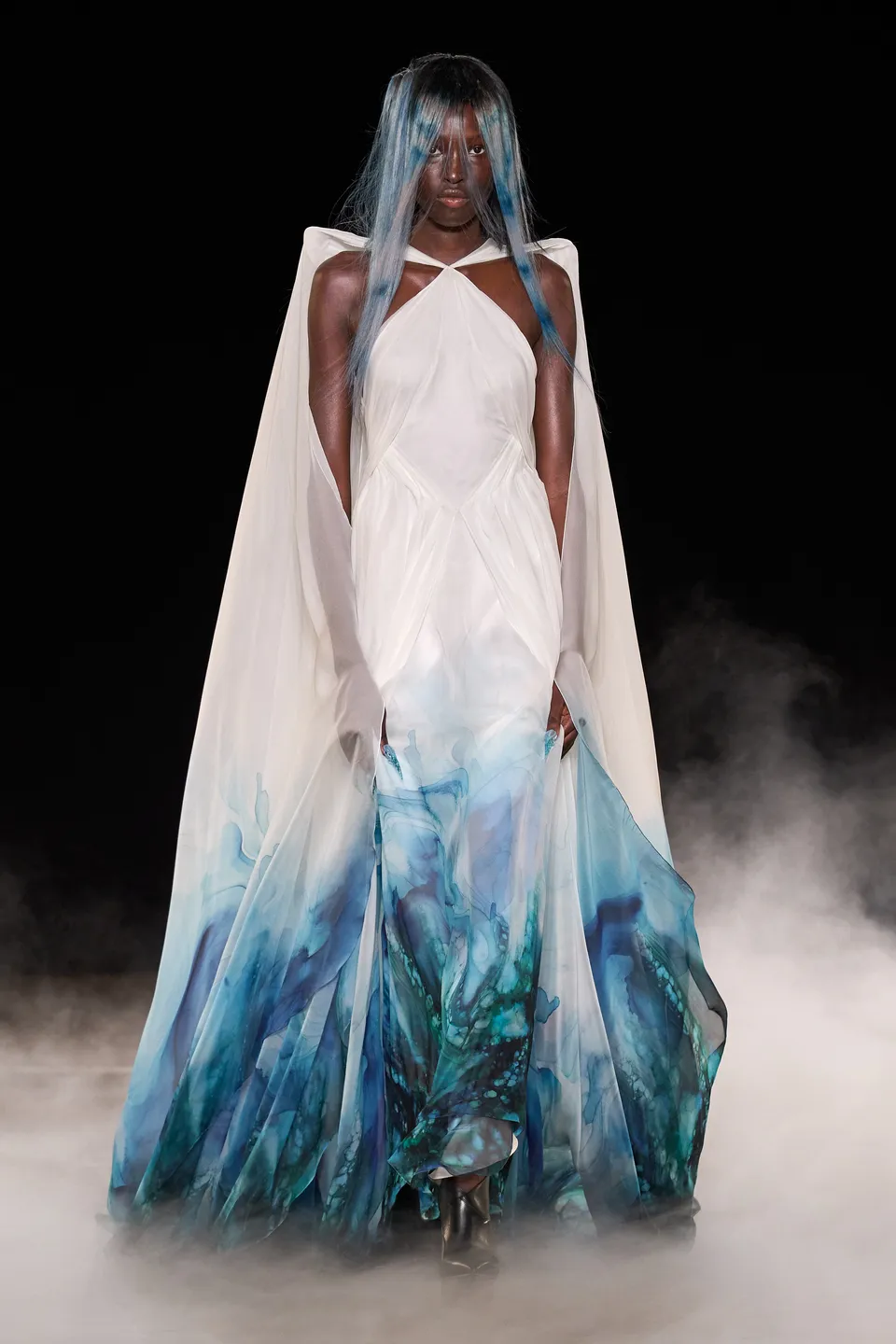
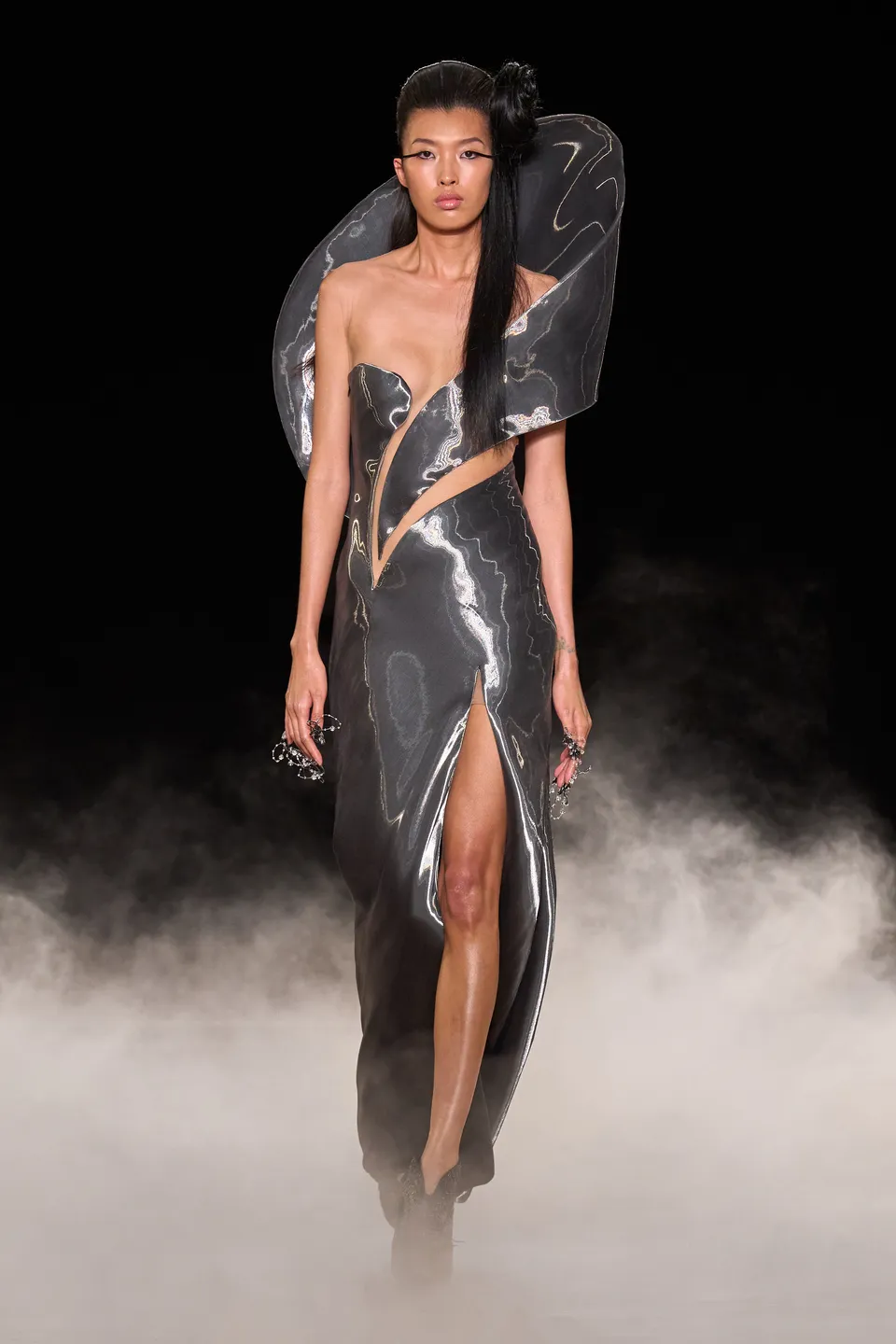

These looks capture an important contradiction within Iris van Herpen Fall 2026: the surface pretends to expose a hidden inner anatomy, while actively adding another artificial skin. The silhouettes remain narrow, elongated, and symmetrically organised. They resemble nervous systems, skeletal structures, marine organisms, and mysterious internal organs, merging all these forms into a singular, mesmerizing vision.
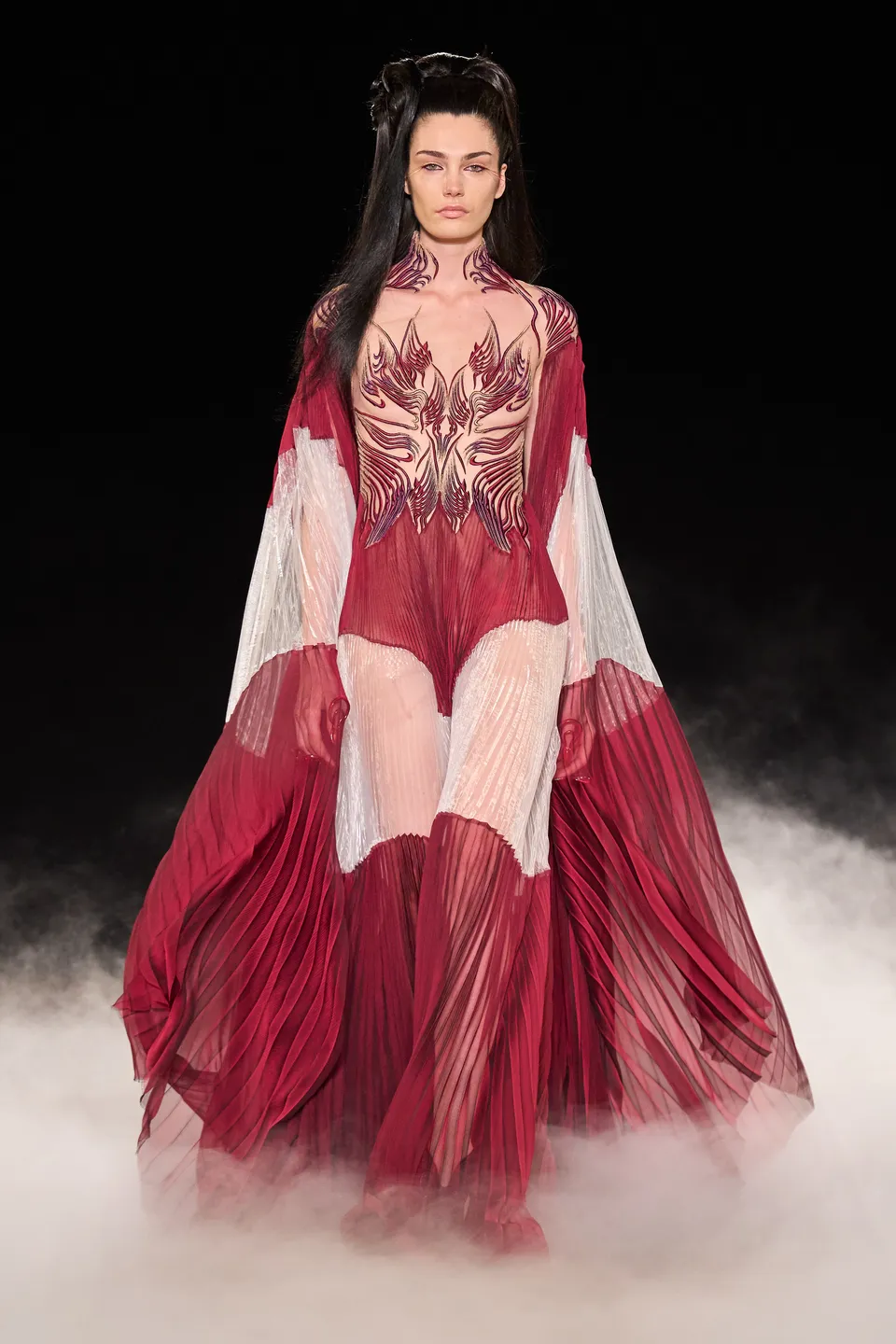
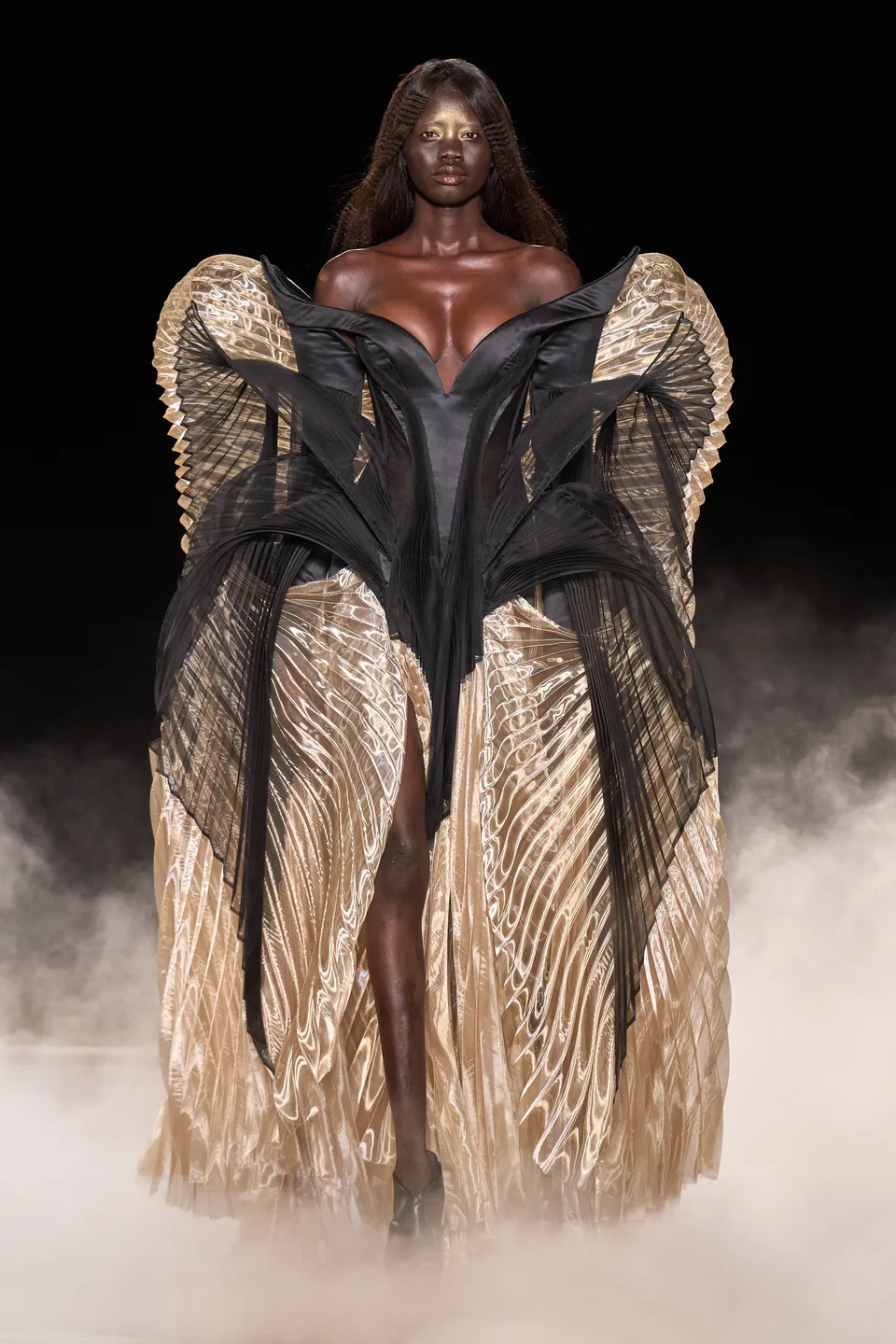
Hand-pleated chiffon and organza form sweeping half-wheels held by laser-cut carbon-fibre boning. Instead of falling naturally, the fabric appears suspended beside the body, resembling sound waves frozen in motion. The construction remains perfectly clear. The torso stays narrow, displacing volume entirely into the surrounding air. Crescent structures curve beautifully around the shoulders, hips, and back. Carbon fibre supplies rigidity while maintaining visual lightness. The pleated fabric continues moving long after the model passes by. These forms function as pure abstractions rather than literal wings, resembling frequencies, orbital paths, or magnetic fields. This engineering shows Iris van Herpen sculpting the woman alongside the empty atmosphere around her, proving her mastery over space itself.
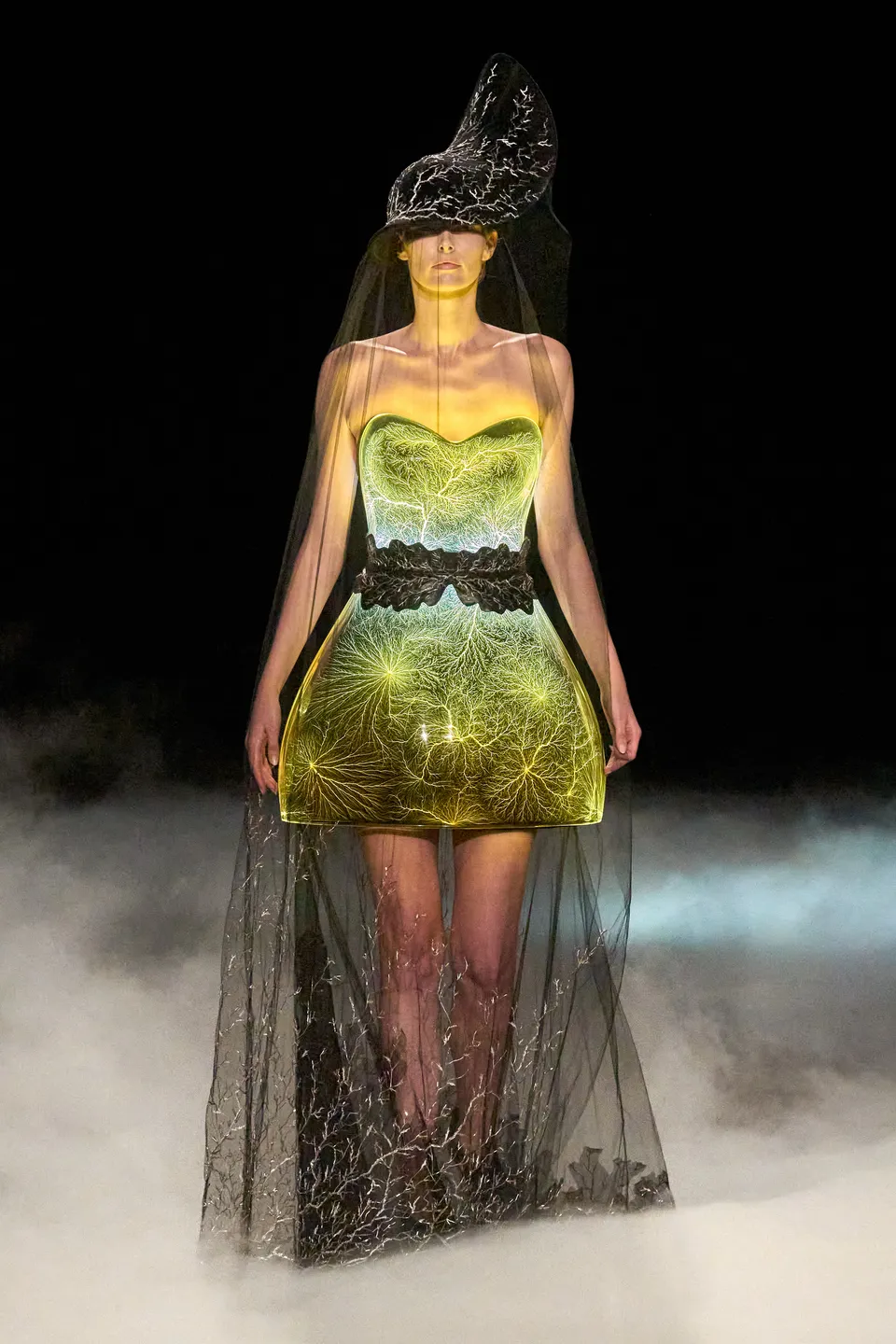
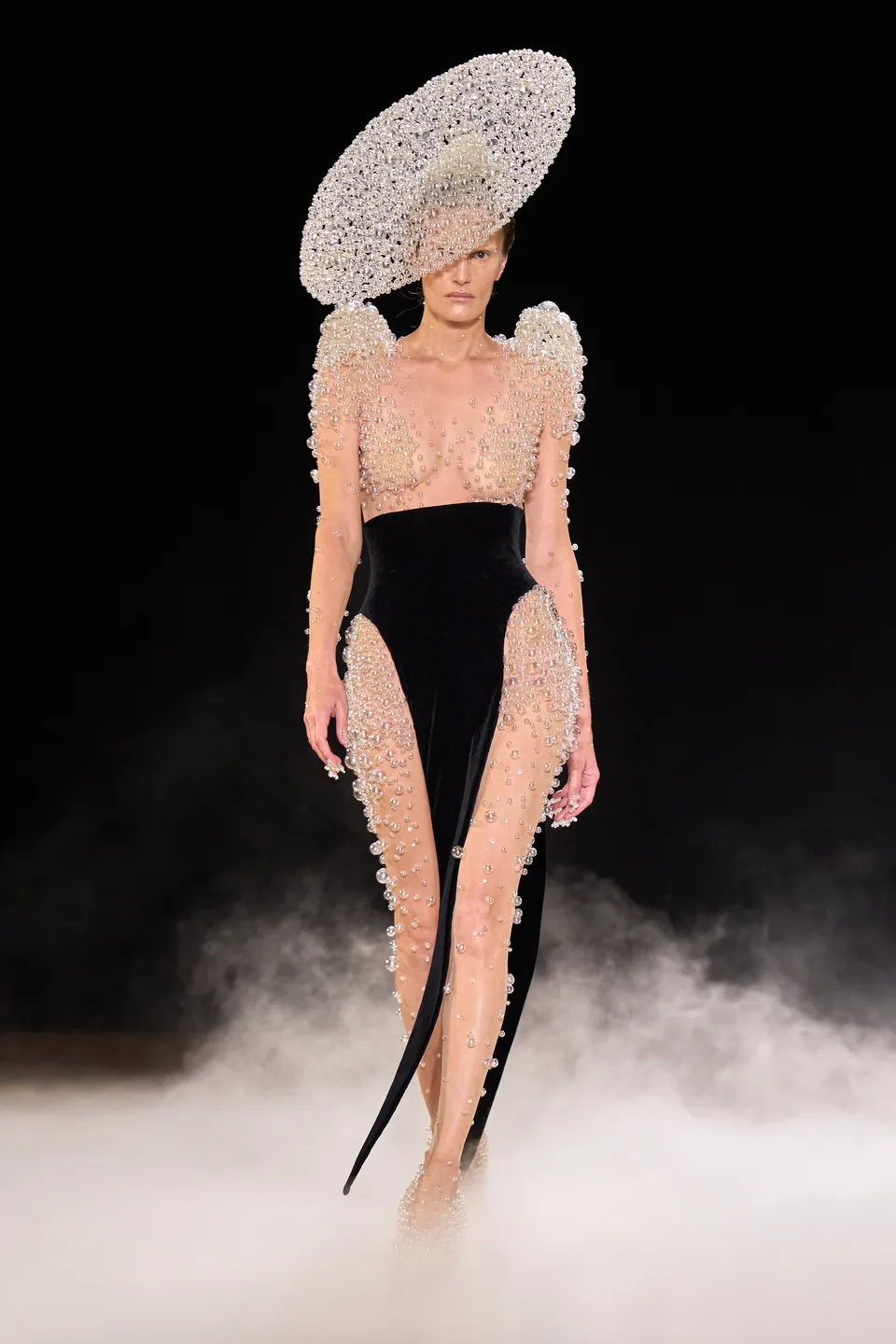
The body dissolves into glass particles through illusion-tulle pieces covered with thousands of individually hand-blown iridescent glass spheres. The graduated spheres shift from dense clusters into scattered, floating particles. Their transparent foundations fade into the skin, breaking the outline of the body into droplets, cells, planets, or bubbles.
The surfaces become hypnotic because they resist a stable reading. Forms appearing microscopic from one angle become astronomical from another. The glass remains superficial in the most literal and intelligent sense: the body’s identity exists on an unstable exterior layer. The surface completely transforms the figure using minimal conventional mass, offering a masterclass in delicate illusion.
The Helix Nebula look serves as the technical and emotional climax of Iris van Herpen Fall 2026. Curved hand-blown glass structures hover around the shoulders, containing plasma glowing deep red and orange. As a hand approaches, electrical filaments respond instantly to the body’s electromagnetic field. Thousands of glass spheres scatter the glow across vanishing tulle. The form operates beautifully. The shoulders anchor the electrical structure, glass crescents frame the head and collarbone, and the torso remains lean and exposed. The plasma enlarges the upper silhouette relying entirely on scientific phenomena instead of conventional fabric.
The processes of Iris van Herpen Fall 2026 are astonishingly novel, yet several forms remain securely within Iris van Herpen’s established language. That rich language includes narrow anatomical dresses, translucent second skins, symmetrical organic patterning, wing-like extensions, sculpted shoulder halos, and women transformed into aquatic, celestial, or hybrid creatures.
These signatures give the house a powerful visual identity, although they can also become a limiting framework. The same equation repeatedly returns: slender body plus anatomical surface plus radiating structure. True innovation invites a difficult question. Does a gown achieve true novelty simply because its material appears entirely fresh in couture, or must that material produce a silhouette that eluded previous existence?
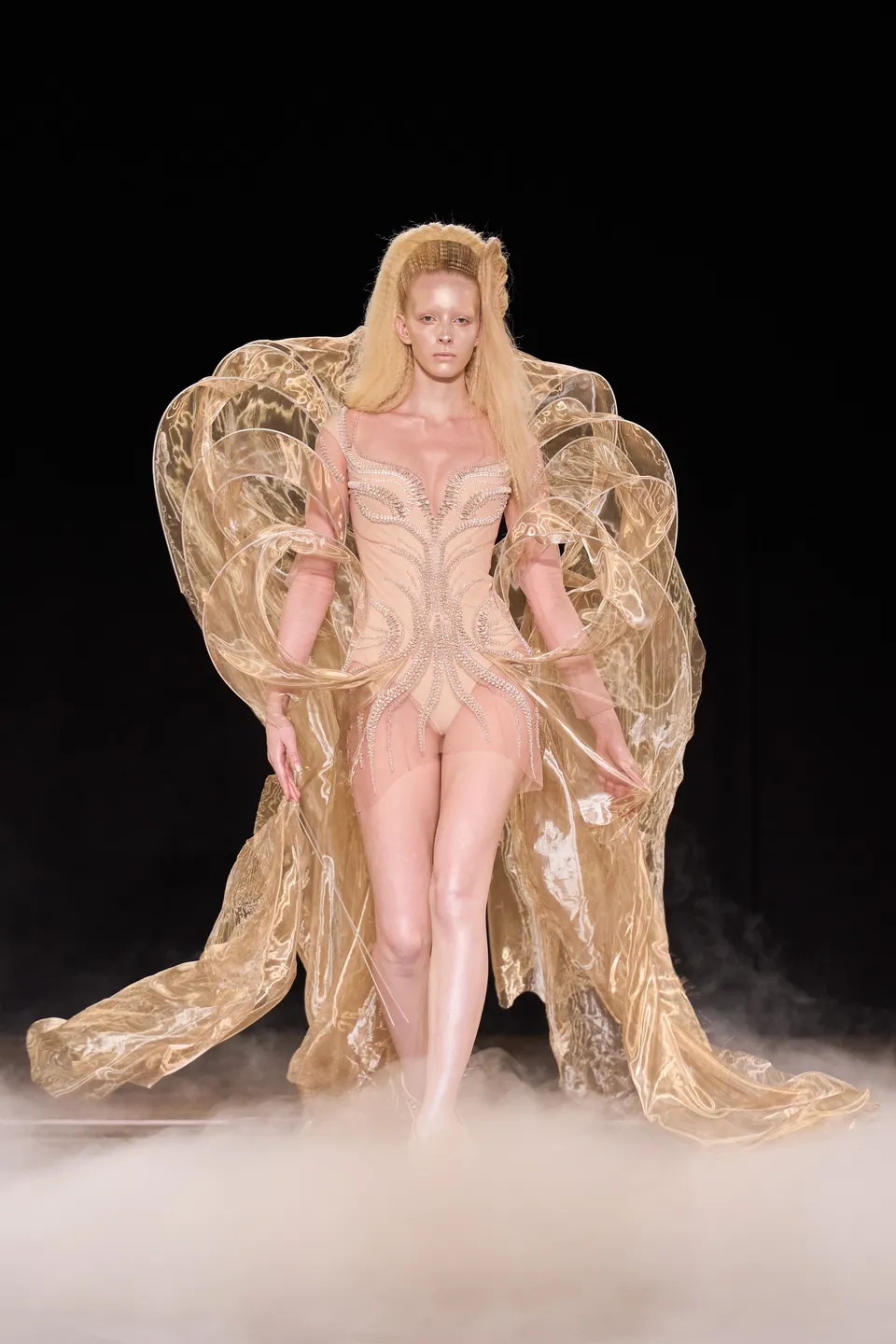
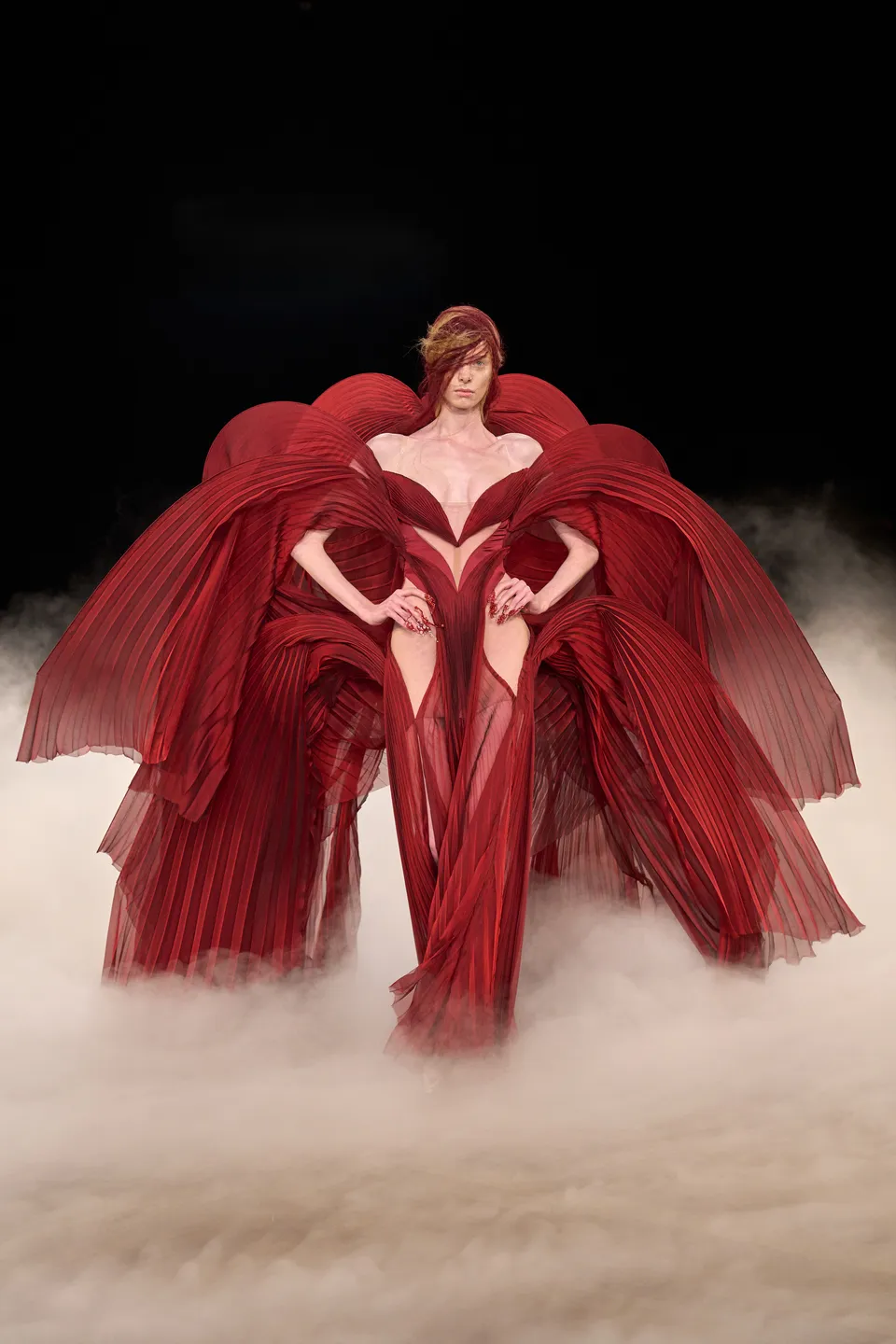
The plasma garment and electrically scarred Fractal Universe dress answer this question convincingly. Their processes are inseparable from their final forms. The material genuinely changes how the clothes behave and how the body participates in them. Elsewhere, the scientific biography feels far more radical than the cut itself. An anatomical mini dress demands more than particle physics on its surface to achieve formal revolution.
Consider the body-politics question. Iris van Herpen Fall 2026 presents the woman as a meeting point between cellular and astronomical systems. Her electromagnetic field activates the plasma, granting her an active role beyond passive display. Yet she also serves as necessary infrastructure. Her skin supports the illusion. Her body gives the experiment scale. Her narrow beauty makes difficult science emotionally legible. The universe becomes increasingly strange while femininity remains remarkably controlled.
Iris van Herpen Fall 2026 succeeds brilliantly when its technology creates a fresh physical relationship among garment, body, and atmosphere. The futuristic language feels most convincing when the technology alters the garment’s behaviour. It becomes somewhat predictable when extraordinary materials are arranged inside familiar house formulas. The collection’s next challenge lies in discovering an entirely novel woman to wear these revolutionary substances.
Return to the plasma finale of Iris van Herpen Fall 2026. The model disappears, leaving charged particles continuously moving inside the glass. The scientific event survives the runway performance. Perhaps the woman served as a mere vessel, and for several electrified seconds, the universe was wearing her. The light curved toward her body and trembled against the glass. Everything appeared extraordinarily fresh, until the eye adjusted, discovering a deeply familiar silhouette glowing brightly beneath it.
Advertisement