MENU
Close





Stone does not usually bend, yet Michael Stewart's debut Couture collection cinched it close to the body and made something prehistoric look unnervingly alive.
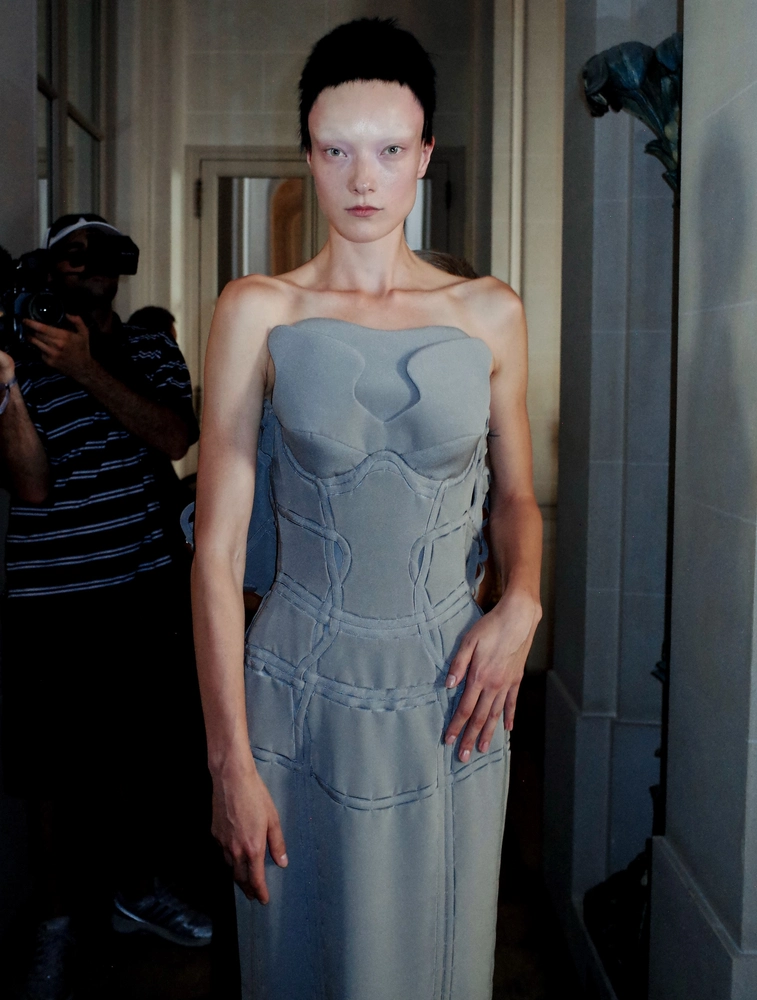
Stone does not usually bend, yet Michael Stewart's debut Couture collection cinched it close to the body and made something prehistoric look unnervingly alive.
July 13, 2026
Advertisement

Advertisement



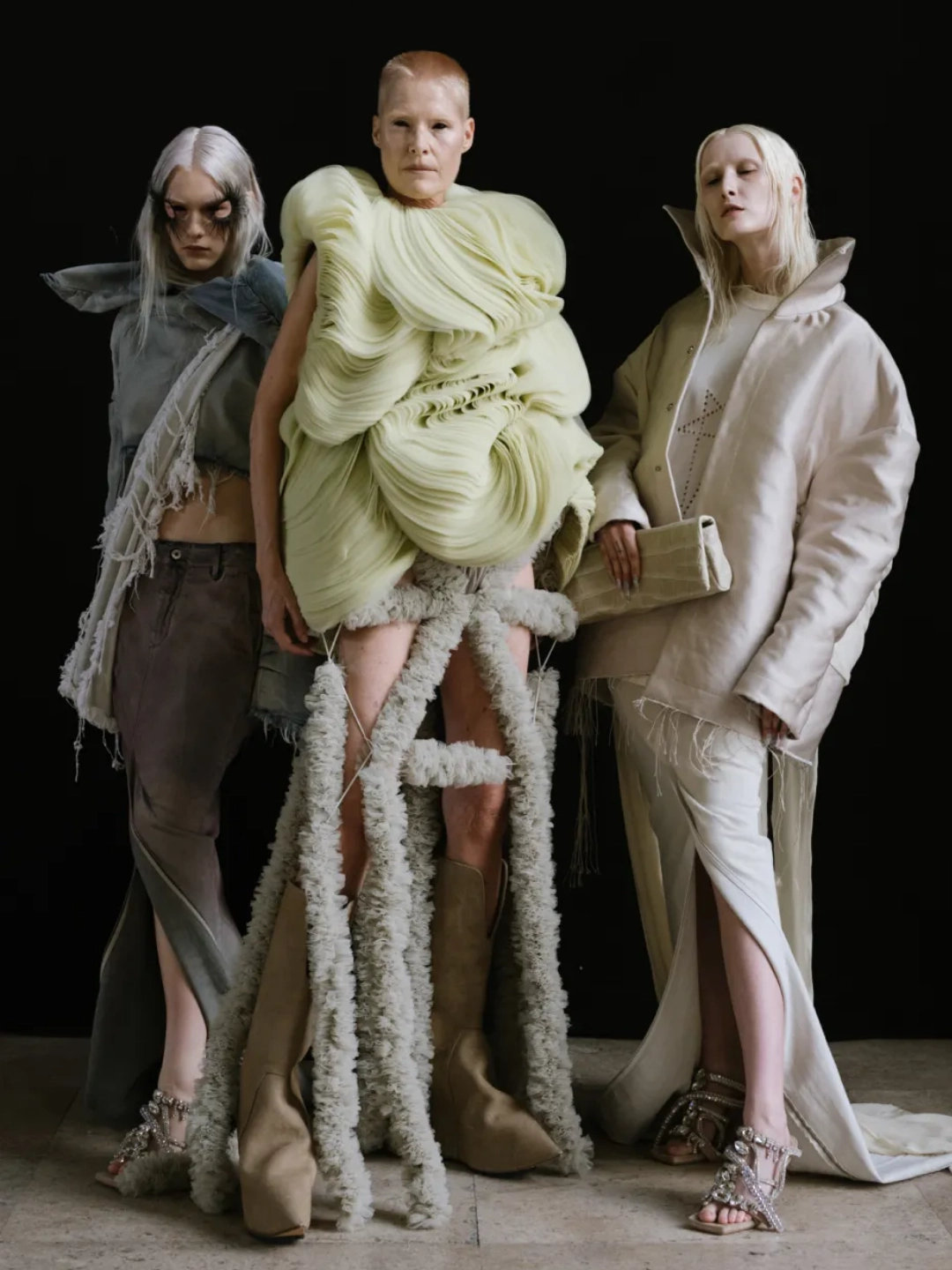
Guests gather inside the gilded salons of the Irish Embassy. Attendees sit closely as narrow figures pass through the rooms like ceremonial objects carried between witnesses. The setting of the Standing Ground Fall 2026 Couture runway offers Parisian grandeur, yet the clothes introduce an older authority: standing stones, buried landscapes and bodies shaped as though time had polished them.
Michael Stewart's debut Couture collection arrives as a debut feeling entirely like a consecration. Stewart asks Paris to recognize the sacred technical world he has already created. The women transcended the appearance of mere new designs. They appeared as if they had been standing there for several thousand years.
Stewart’s connection to Ireland's ancient standing stones serves as the spiritual foundation of Standing Ground. He transcended conventional reference-heavy mood boards, letting the stones provide an emotional idea of permanence, verticality and mysterious human intention. They influence elongated silhouettes rising from the floor and bodies held upright through extreme corsetry. Narrow column and trumpet gowns occupy space while retaining strict slenderness, featuring surfaces resembling cracks, sediment or geological veins.
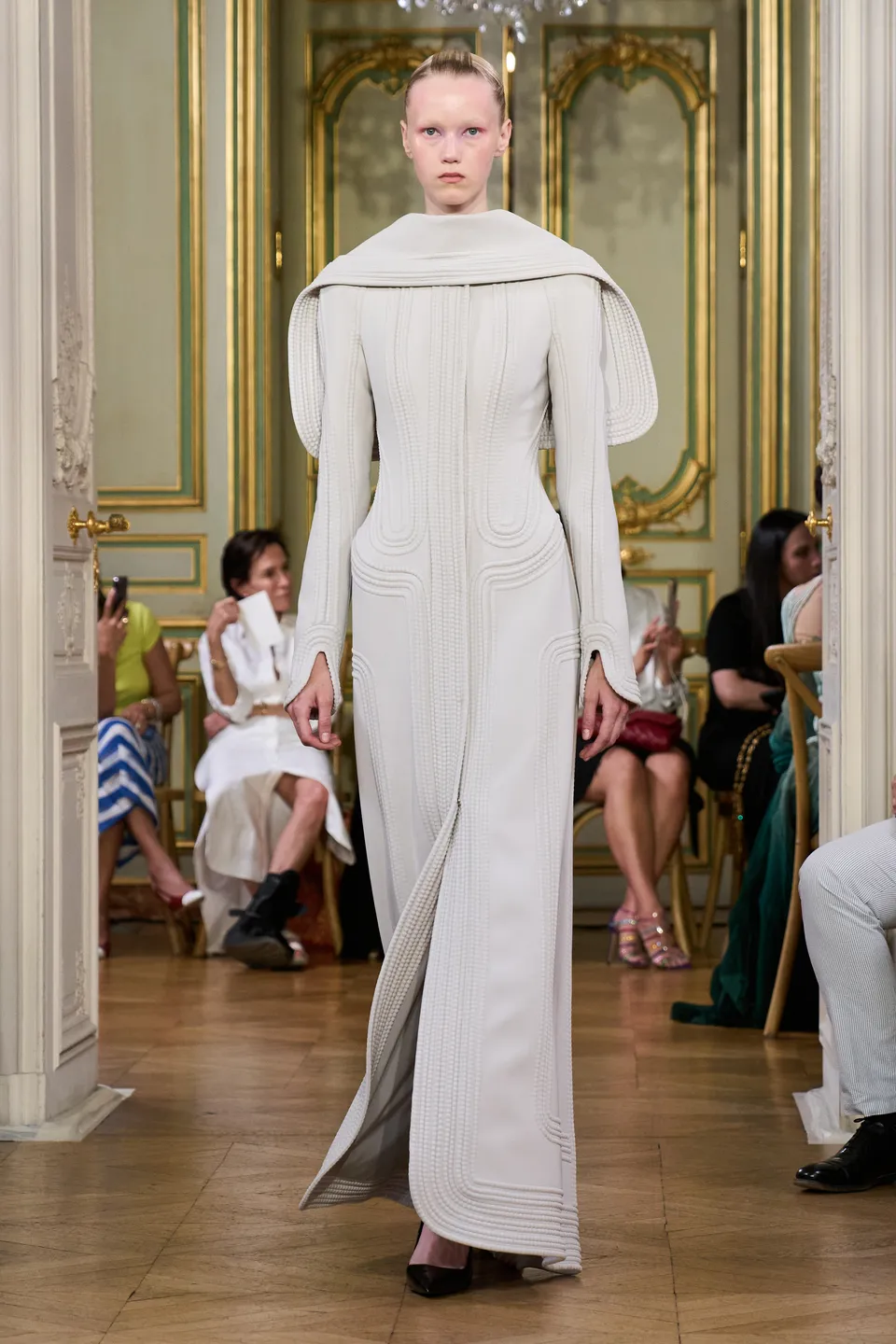


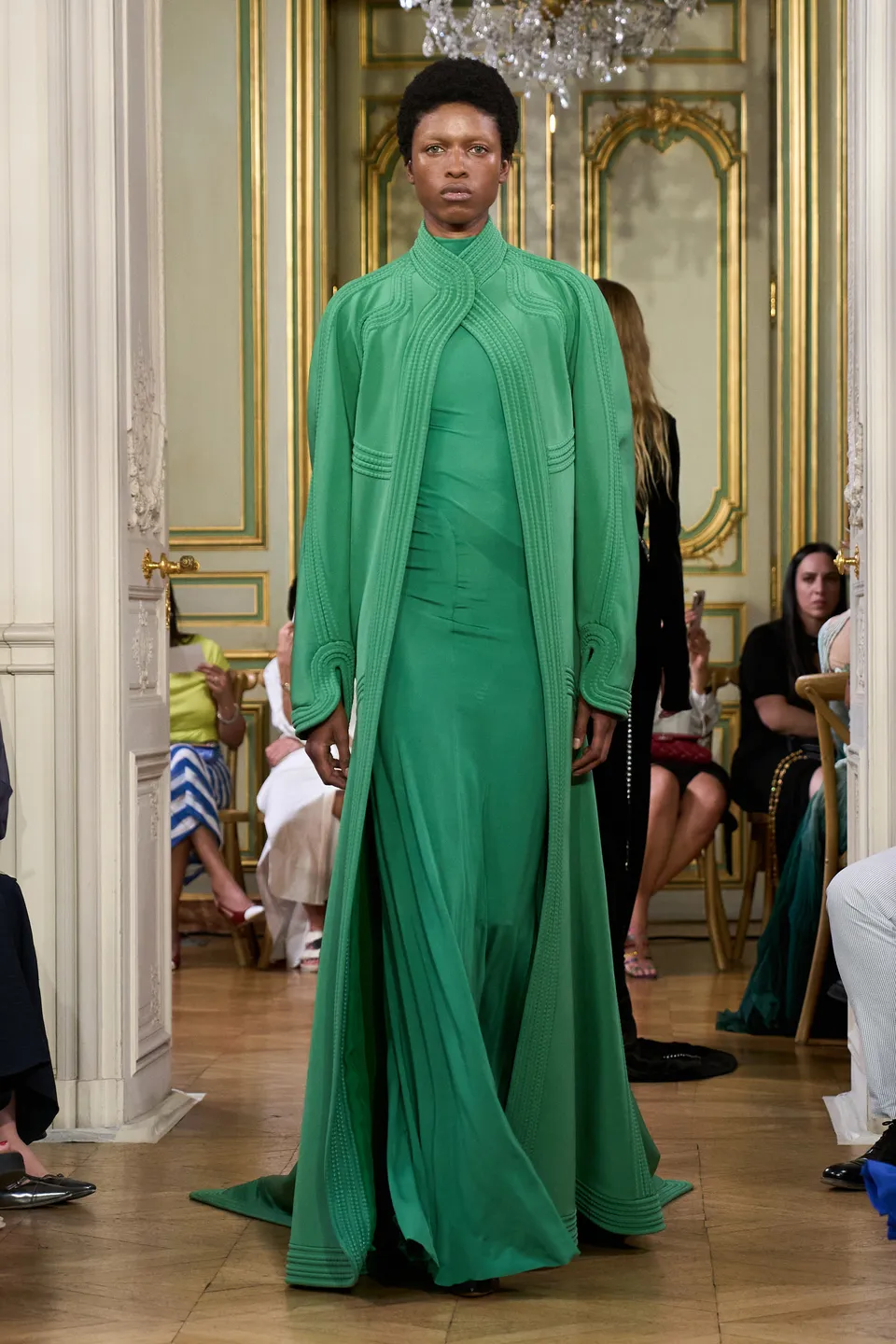
The collection transcends a simple Celtic-romantic reading. Severe corsets, white contact lenses, robotic greys and sculpted cloak-like gowns introduce a science-fictional edge. Bubblegum pink, fluorescent orange, periwinkle and pale butter yellow rescue the collection from remaining a sombre archaeological exercise. The historical and futuristic qualities meet because both obscure ordinary time. Stewart uses that ambiguity to create women resembling ancestors, priestesses or visitors from a civilisation yet to exist.
Through Michael Stewart's debut Couture collection, Stewart champions development over seasonal reinvention, withstanding the pressure to jettison established ideas. He argues that repeated work reveals further richness. Repetition manifests as the fashion equivalent of returning to a sacred site and finding that the stone has changed because the observer has grown.
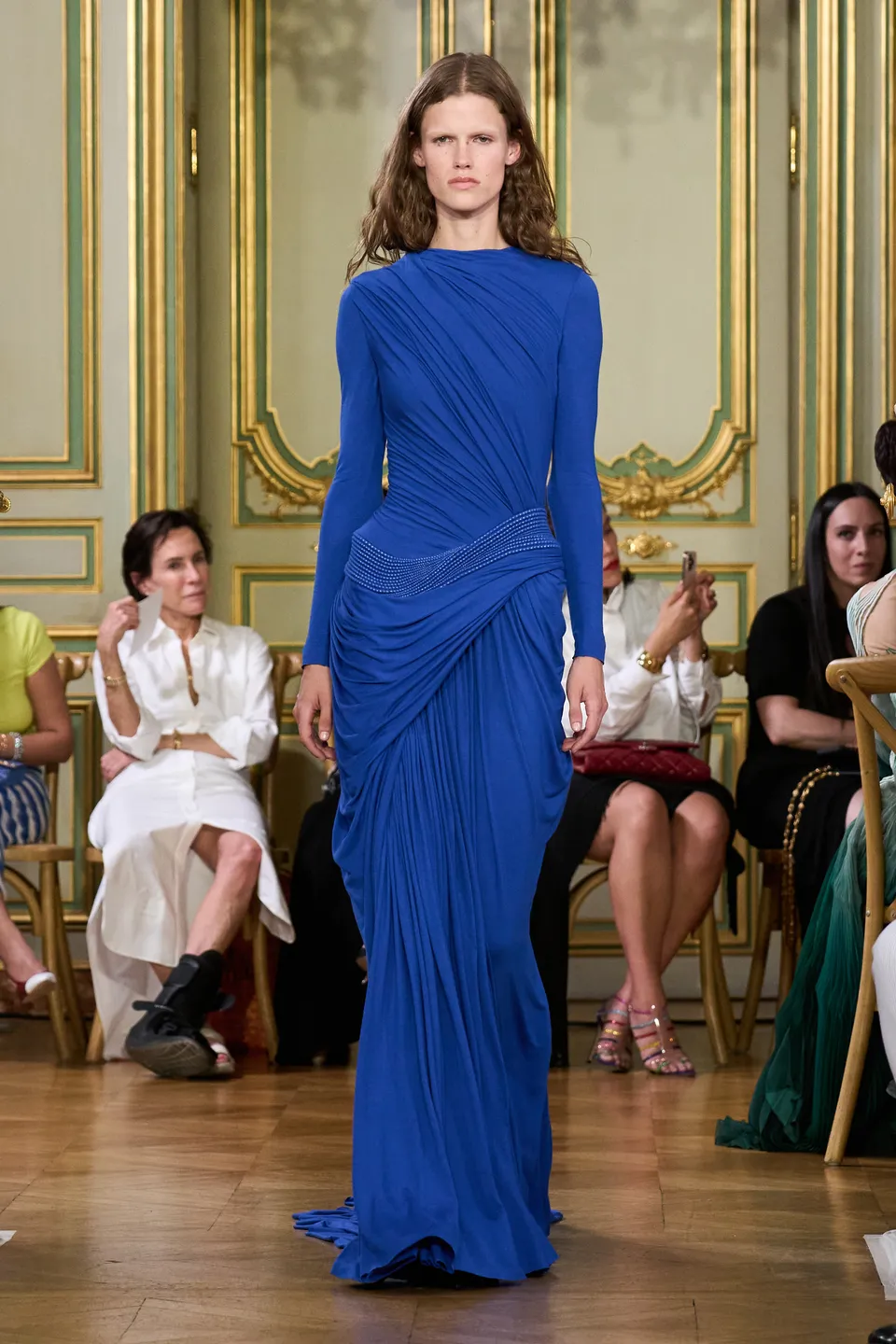
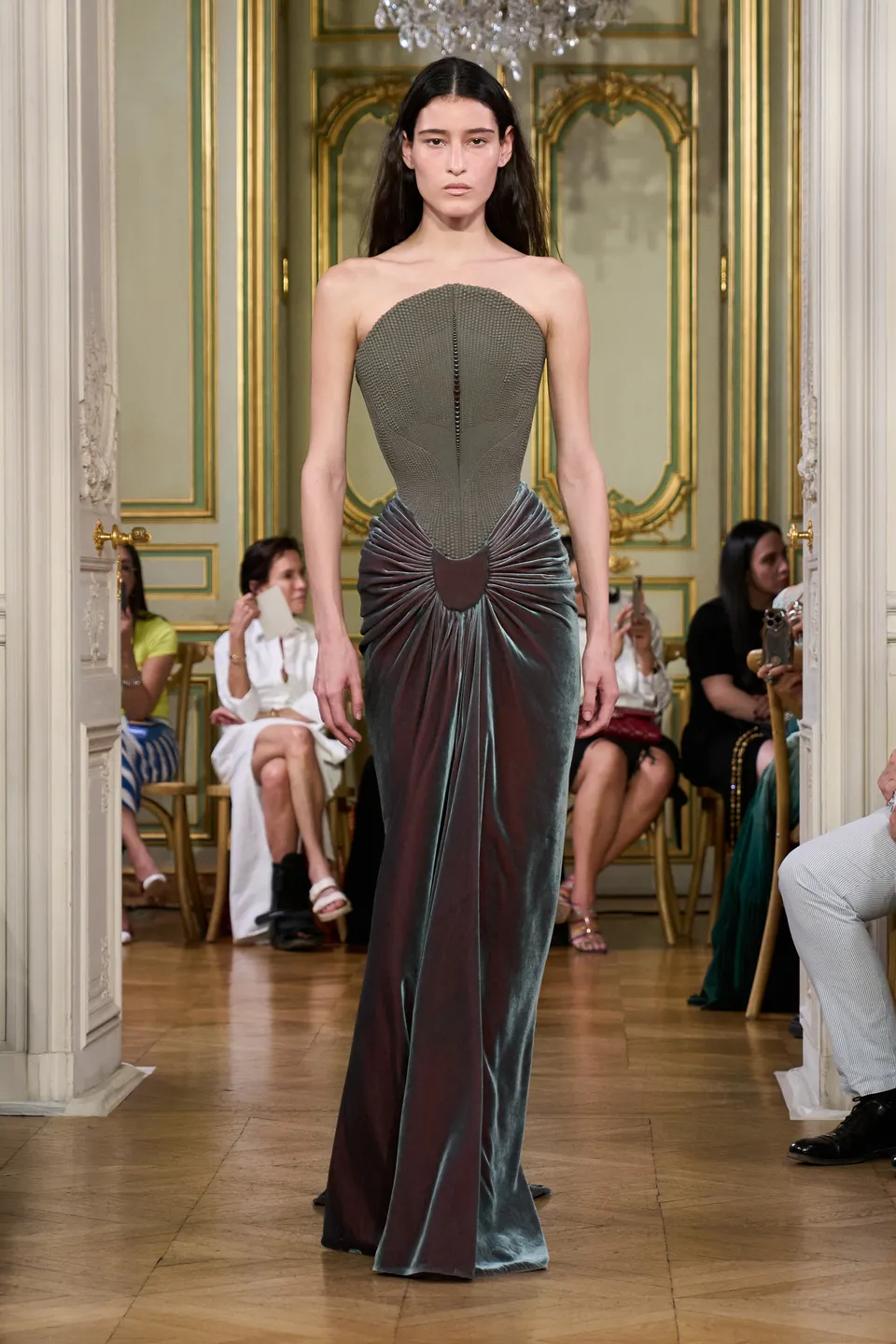
For Standing Ground Fall 2026 Couture, Stewart collaborated with legendary corset-maker Mr Pearl to create extreme foundations beneath the clothes. The corsets narrow and lengthen the torso, producing a severe vertical line before jersey, velvet or silk begins to move around it. The corset freezes the body; the drape restores movement; the upper torso resembles carved architecture; the skirt behaves like liquid surrounding stone.

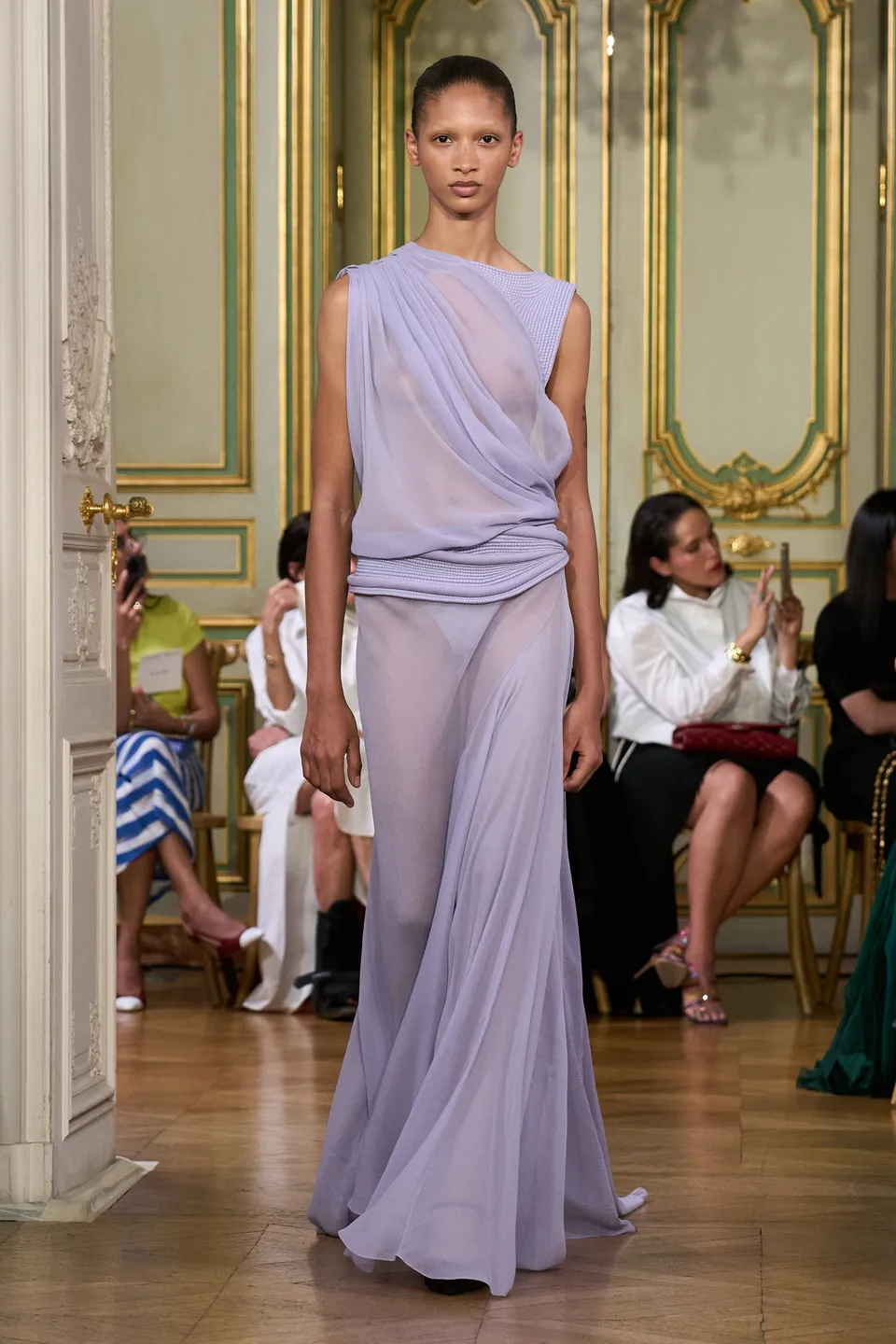
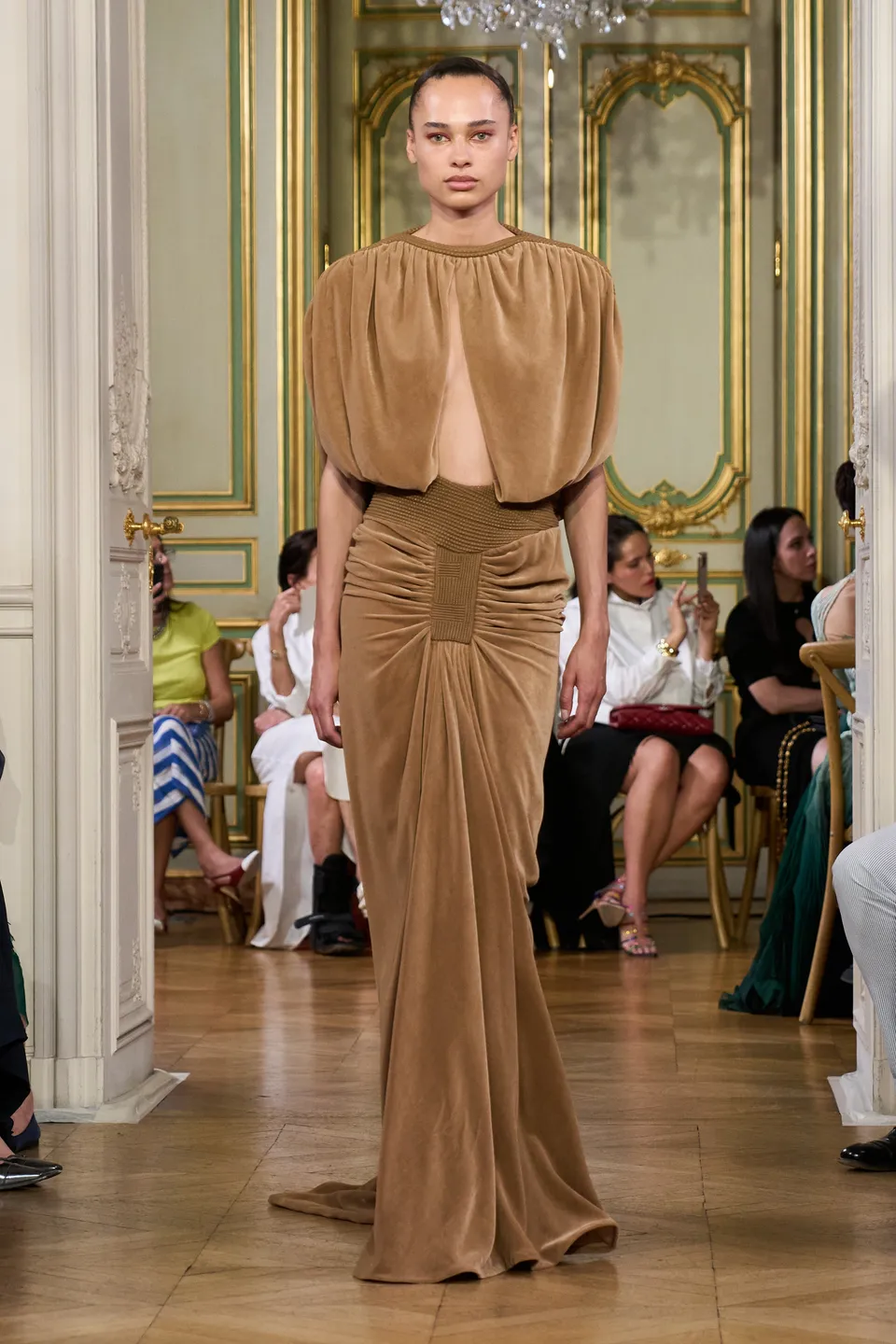
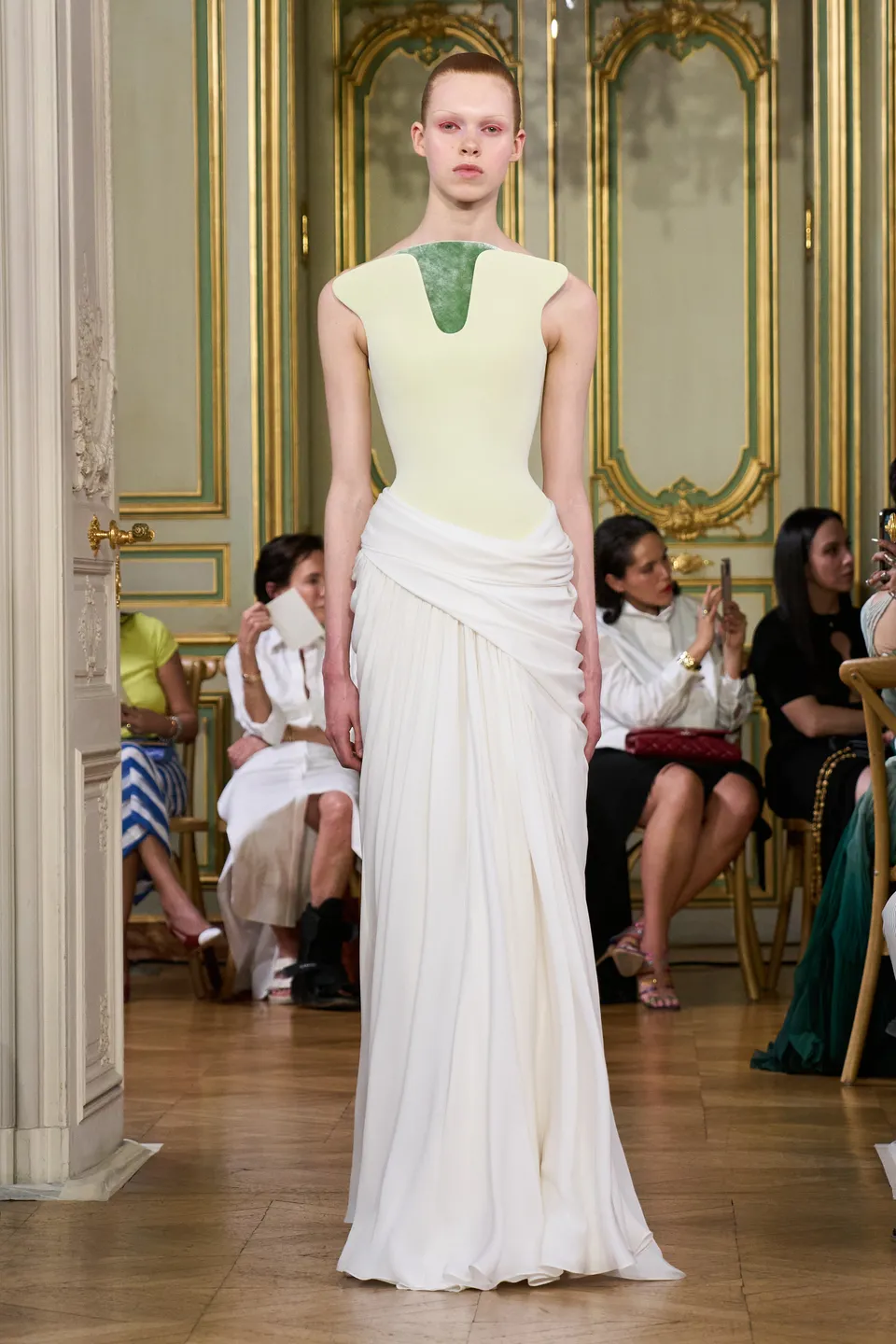
Suede-effect breastplates in sand and beige tones intensify the archaeological mood. They resemble excavated armour, fragments of sculpture or surfaces coated with chalk. A sudden burst of periwinkle fabric, sorbet colour and fluorescent tones pushes them toward an avant-garde palette.
The principal forms demonstrate stages of monumentality. Narrow columns stretch the figure vertically. Hip-draped gowns feature jersey gathered around the hips, suggesting fabric eroded by movement. Architectural tailoring brings stone-coloured coat dresses, high sculpted collars and black jackets with peplums shaped by internal beads. Cloak forms give the wearer the remote authority of a ritual figure. Expanded skirts in mandarin taffeta and bubblegum trains interrupt the slender procession.
Peaty brown and stone grey evoke landscape and sediment. Black gives surfaces the depth of fissured rock. Vermilion and mandarin orange appear like subterranean heat, while butter yellow and periwinkle operate as strange mineral blooms.
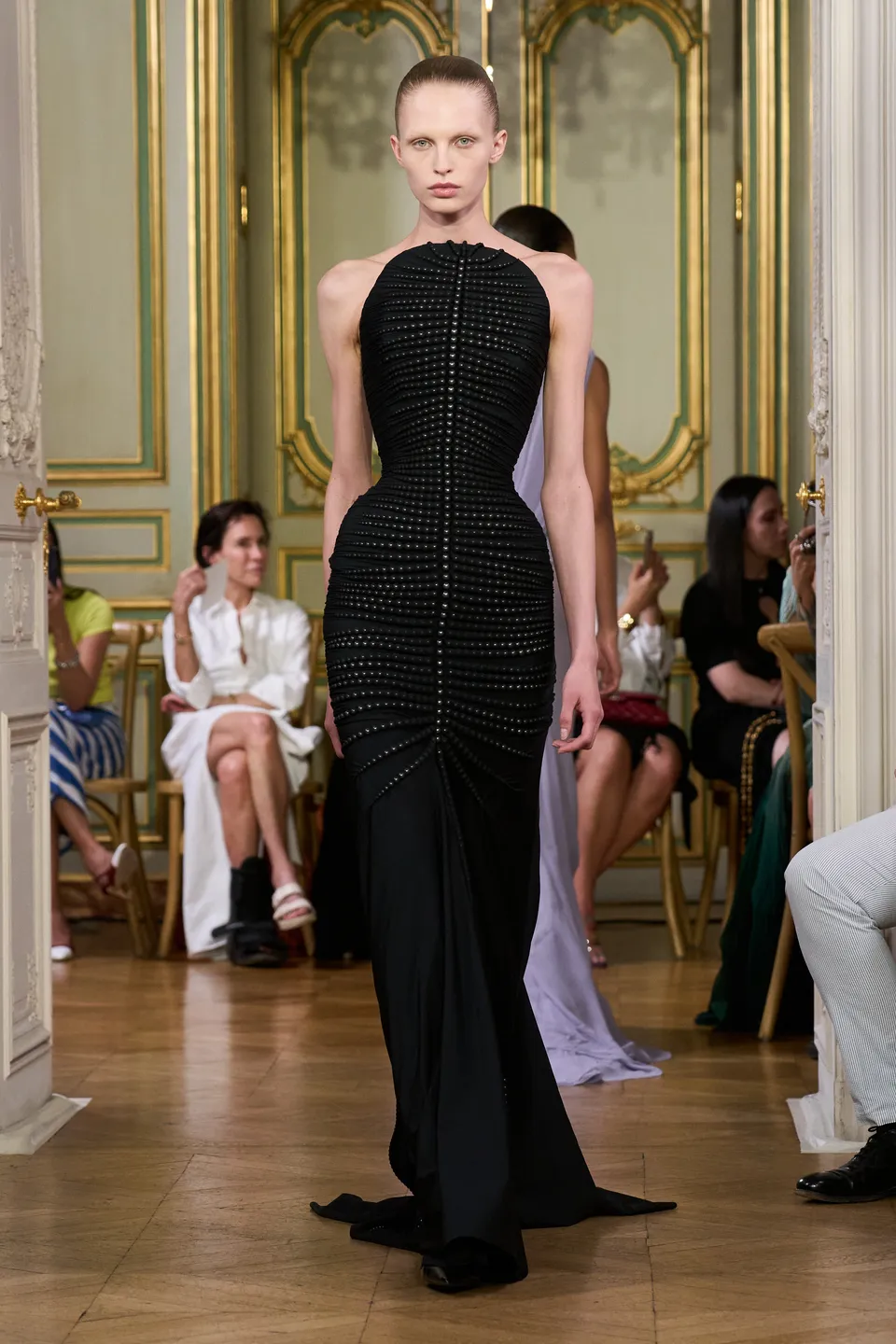
The beadwork stands as the technical genius of Michael Stewart's debut Couture collection. Artisans fed thousands of beads individually into narrow fabric channels, adding weight, holding curves, shaping peplums and determining how fabric falls. A black jacket’s projecting front maintains its shape because the beads operate as internal architecture. Decoration performs several jobs simultaneously: embellishment, ballast, seam-like drawing, internal support, contouring, and movement control. The ornament actively constructs the dress.


A long black gown features streams of beads emerging through apparent cracks, resembling mineral veins or water moving through broken rock. Bead sizes change gradually along the body, creating shifts in weight and relief. These surfaces appear grown, deposited or pressurised into existence. The handwork resembles the accumulation of time itself: one bead, then another, until repetition produces a monument.
Silk jersey provides fluidity and keeps complex draping close to the body. Velvet absorbs light, giving darker gowns mineral depth and physical gravity. Taffeta holds expanded shapes and introduces dramatic volume. Deadstock textiles supply surprising colours while reflecting Stewart’s resource-conscious atelier practice. Sheer fabrics reveal the bead channels and expose construction as a visible system.
A faggoting technique imitates the interlocking rhythm of Celtic knots, bringing Irish visual heritage into seams while transcending literal symbolism.


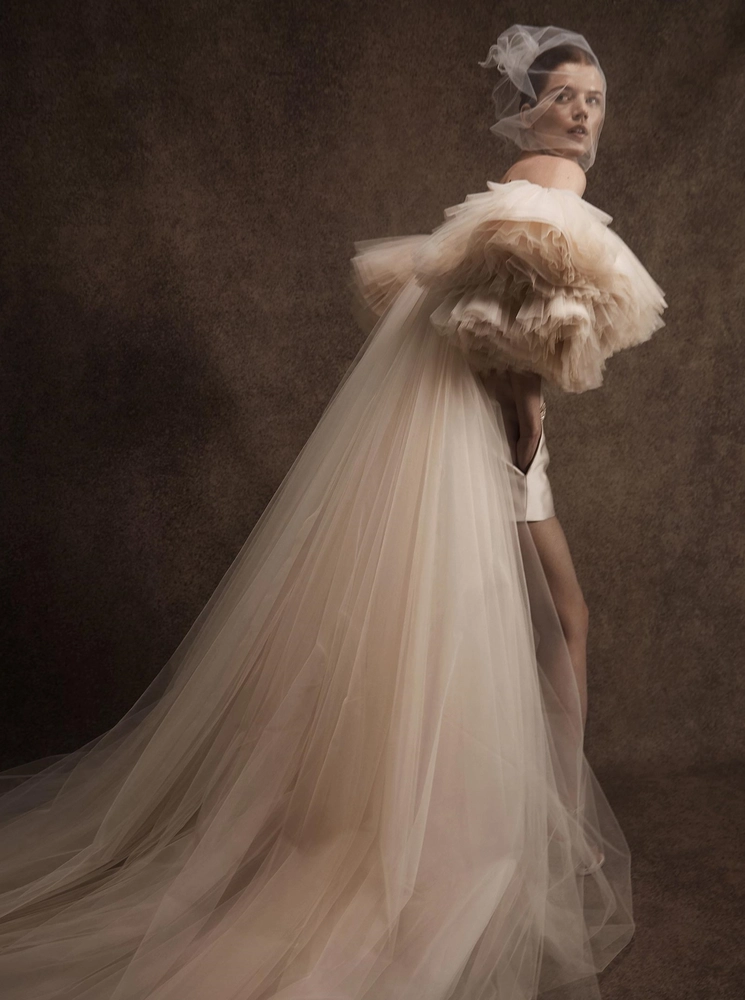
Kristen McMenamy appeared barefoot in a sheer white Carrickmacross-lace gown handmade in Ireland. Twenty-six artisans contributed approximately 4,000 hours over nine months. Within Standing Ground Fall 2026 Couture, the lace dress functions as a living archive of collective hands, making labor beautifully visible through delicacy.
Michael Stewart's debut Couture collection feels mature because Stewart brought a fully formed system: standing bodies, extreme corsetry, controlled draping, structural beadwork, archaeological surfaces, surprising colour, and Irish craft framed through technical intelligence. The intimate presentation allowed observers to examine the workmanship at close range.
Couture itself depends on repeated gestures: stitches, fittings, lacemaking and knowledge transferred through practice. Returning to a bead channel or sculpted column becomes a test of precision and possibility. A signature becomes ritual when repetition accumulates knowledge.



This Standing Ground collection’s strength creates its future narrative demands. The industry will watch to see how the bead channels generate radically different volumes, how the standing-stone body adapts to sitting or collapsing, and how Irish craft enters future collections in varying forms. Stewart has the opportunity to introduce greater softness while retaining monumental authority. Paris has recognized the monument; future collections will reveal what happens when weather, desire and time begin acting upon it.
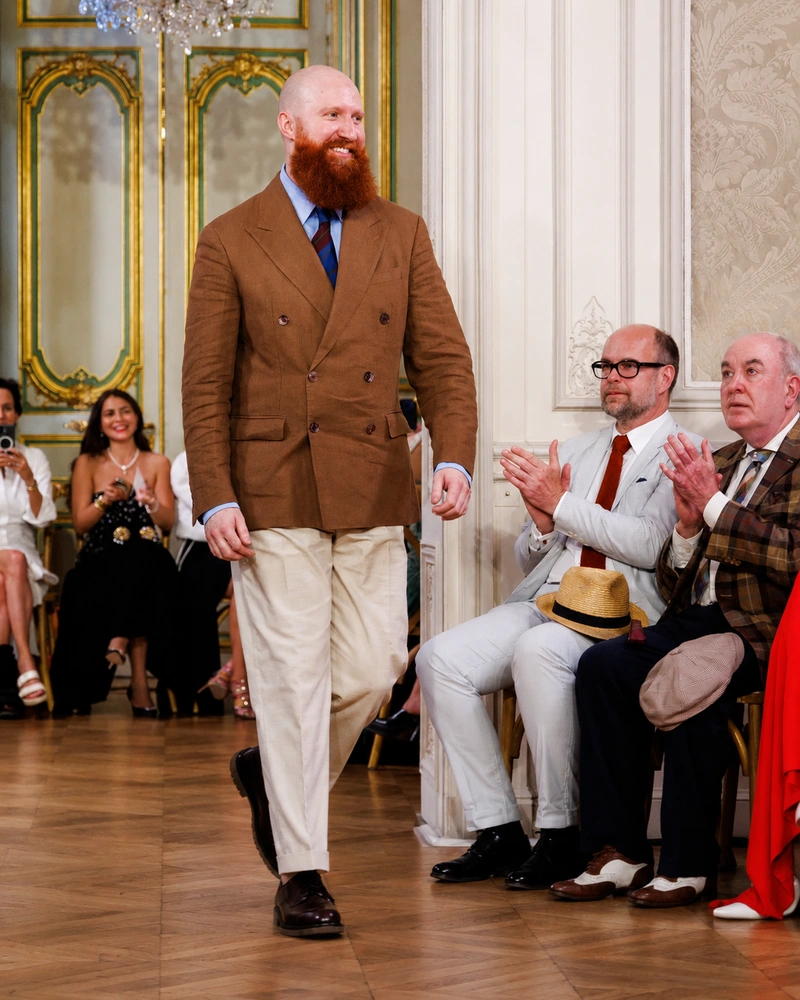
Michael Stewart's debut Couture collection proves that technical restraint masks extraordinary excess. Its gowns appear elemental because Stewart edits thousands of decisions out of sight. The collection demonstrated how a language becomes powerful when its maker returns to it with greater patience, sharper control and deeper historical consciousness.
Return to the embassy after the guests leave. The white lace vanishes through a doorway. The velvet rests quietly. Thousands of beads remain concealed inside their channels, quietly holding the garments in shape. Michael Stewart's debut Couture collection entered Paris couture keeping the earth firmly beneath its feet. Michael Stewart made stone flexible, drapery monumental and repetition sacred. The debut cemented an established language. It proved that the old vocabulary had finally accumulated enough weight to become history.
Advertisement