MENU
Close





The trumpet silhouette moves with the soft insistence of a melody finding its way through the room, stitched from familiar forms yet rising as something startlingly original, that hums before it blooms.
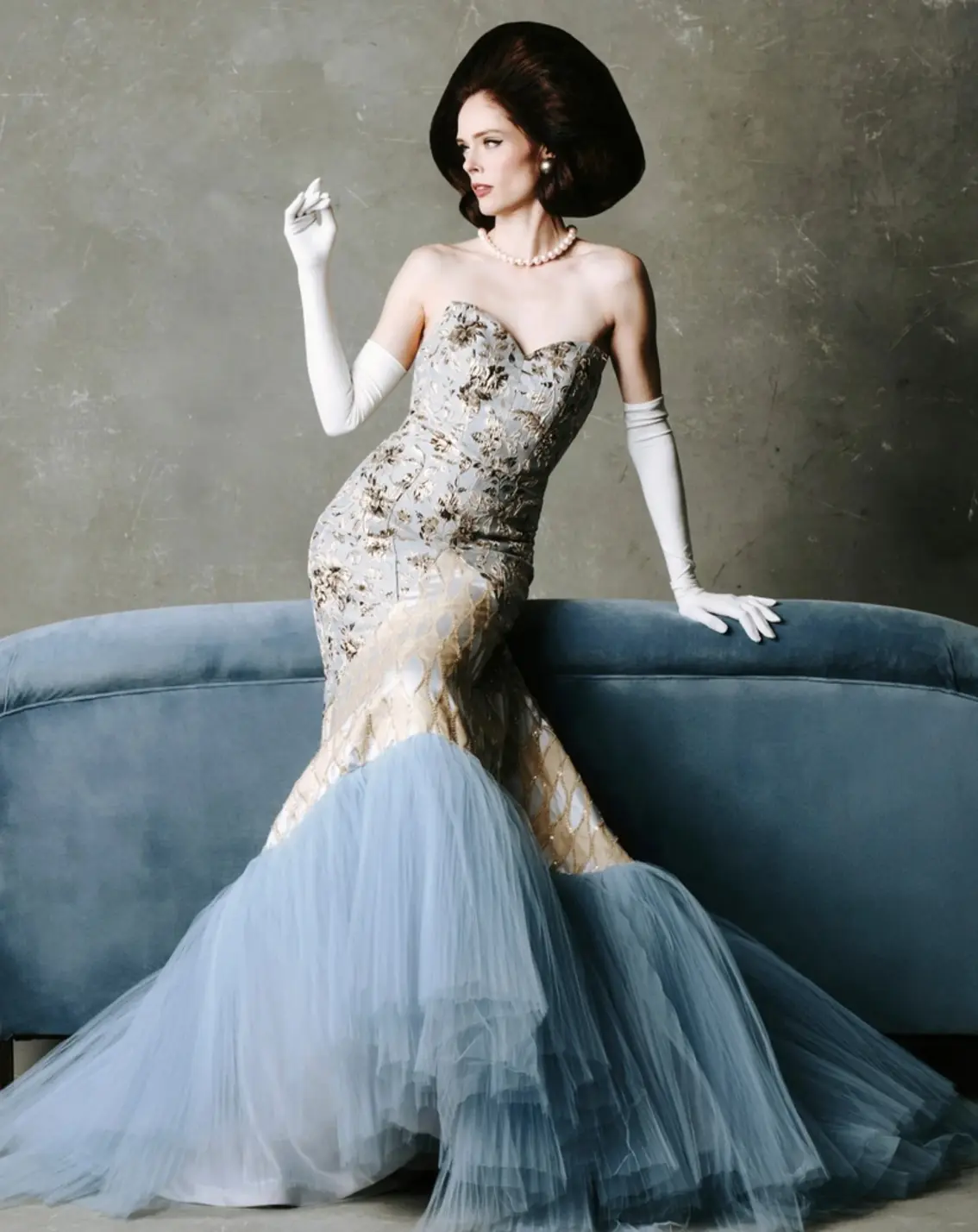
The trumpet silhouette moves with the soft insistence of a melody finding its way through the room, stitched from familiar forms yet rising as something startlingly original, that hums before it blooms.
February 23, 2026
Advertisement

Advertisement



The history of the trumpet silhouette begins not with scissors or pattern paper but with a sound, a faint vibration rising from the past, because every great silhouette carries its own frequency, and this one first hummed into existence in the era of Vionnet’s bias-cut gowns, where silk moved not like clothing but like a low, trembling note sliding along the body’s contours, tracing hips and thighs with a softness so fluid.
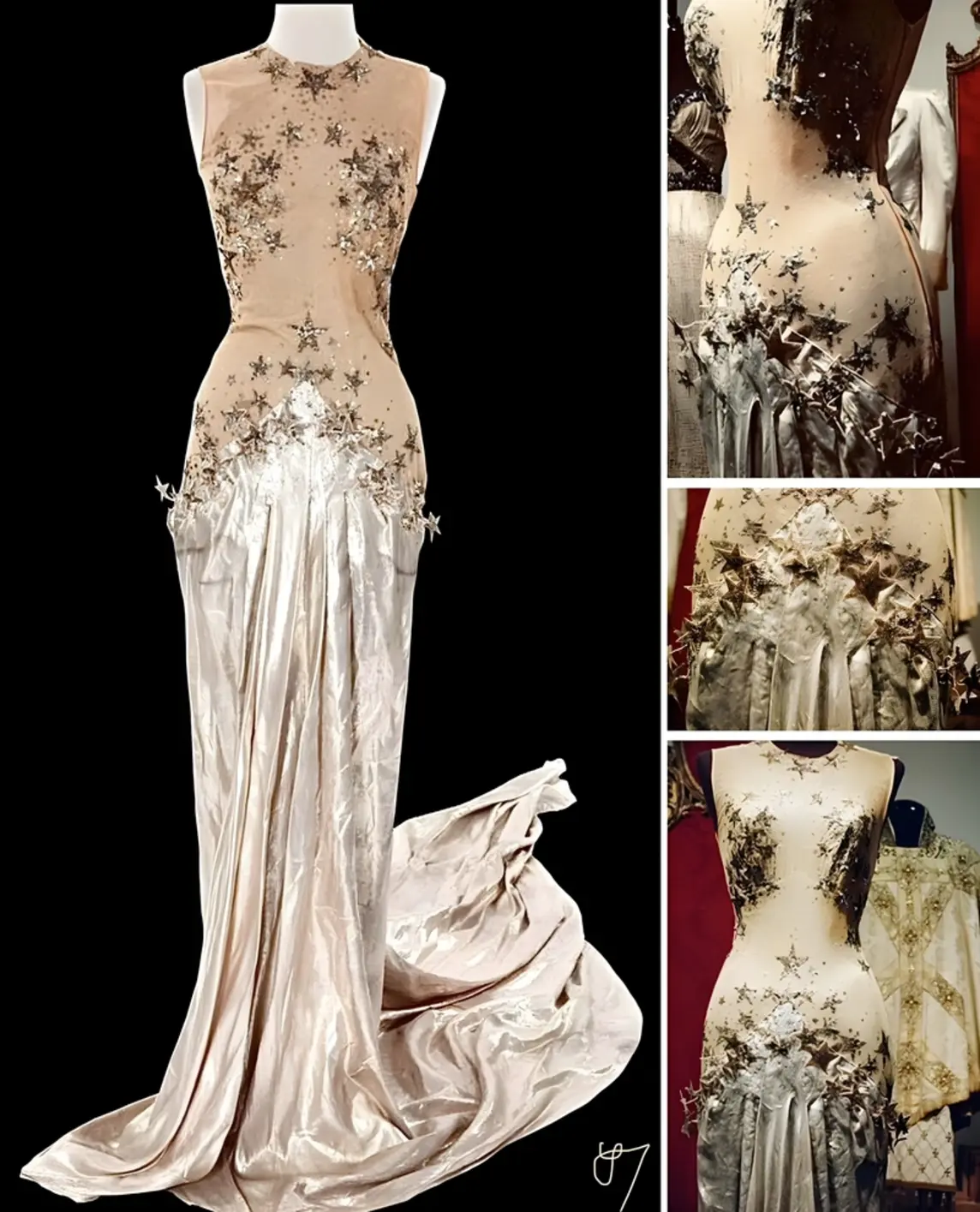
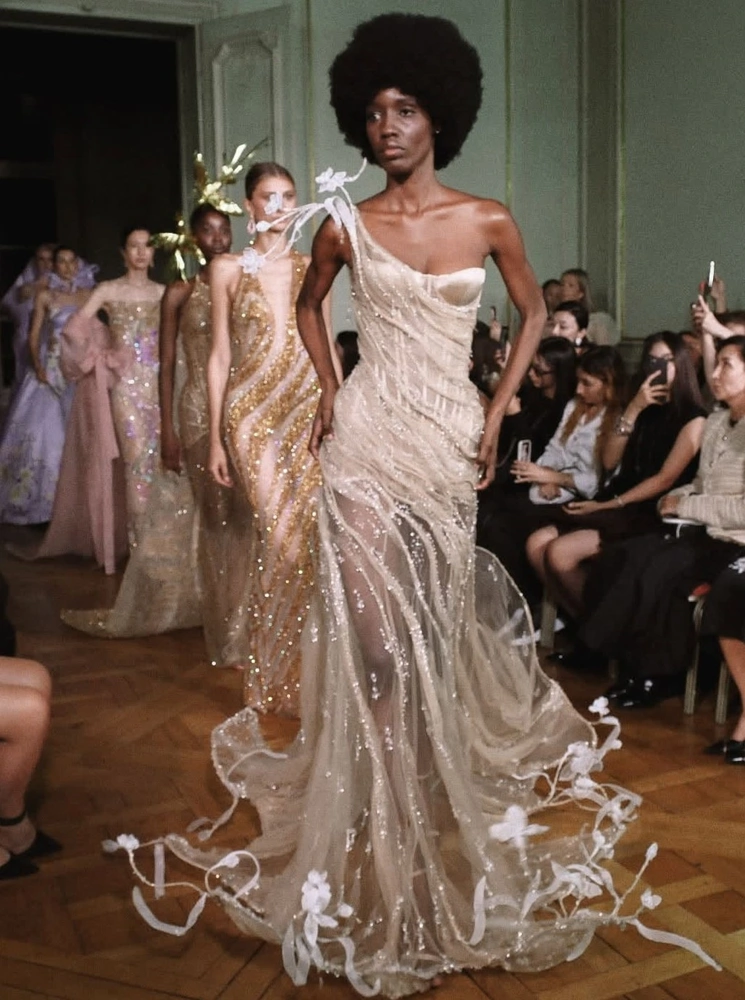
The anatomy of a trumpet dress unfolds like a quiet lesson in precision and grace, beginning with a bodice fitted close to the body, often strengthened with the delicate scaffolding of boning, sliding into a waistline that is defined yet never strangled, and tracing the hips with a fidelity that honors the body’s natural curve before releasing, at mid-thigh, into the signature flare that lifts the silhouette from restraint into movement, shaping a gentle bell that widens with the soft inevitability of a breath being released; and within this architecture lie the design details that give the trumpet its unmistakable character, the long vertical seams that stretch the eye upward, the panels and godets that control the swell of volume like a composer guiding a crescendo, the subtly firm hem that keeps the flare articulate rather than unruly, and the bias-cut inserts that allow the dress to move with a fluidity impossible to imitate, creating not just elegance but an elongated, melodic fluidity that distinguishes it from the mermaid’s rigid theatricality and grants its wearer a silhouette that glides instead of constricts.
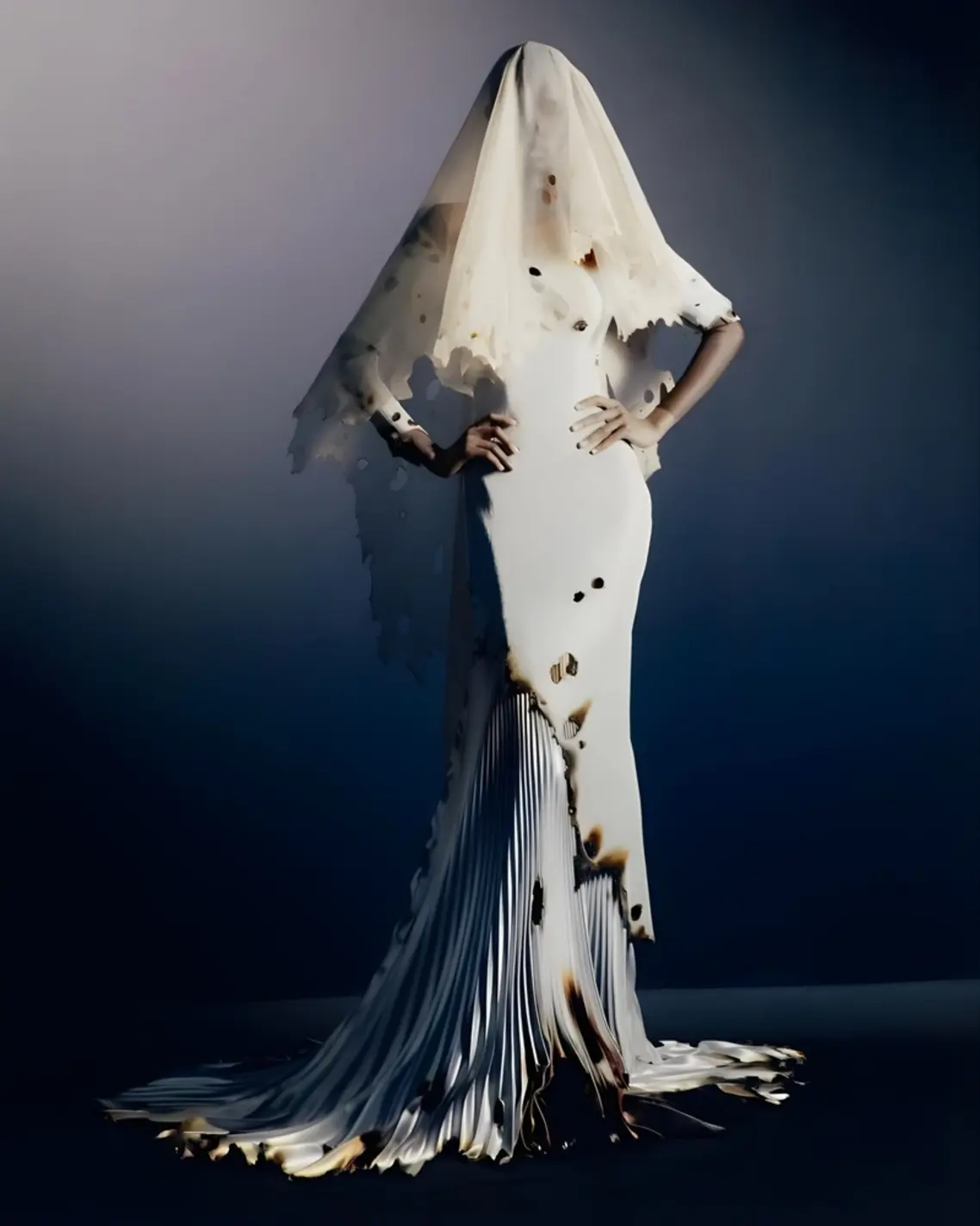
It was in the 1970s, though, with their improvisational jazz energy and their hunger for spontaneity, that the trumpet silhouette finally found its voice.
When red carpets glittered like orchestral halls and bridal gowns drifted down aisles like slow-moving arias, the trumpet silhouette achieved full musical consciousness; it wrapped itself around bodies with the intimacy of a violin pressed against the collarbone, and its flare perfectly timed, perfectly placed, broke open like a chorus swelling beneath the ceiling of a cathedral, allowing actresses and brides and dreamers to move through the world as though they carried their own soundtrack, composed in silk. Its structure became the invisible score: fitted bodice like a metronome, waistline like a quiet verse, hips like a rising bridge, and the flare like the irresistible crescendo that lifts the song into its most luminous octave.
In the trumpet silhouette’s movement one can hear everything, the soft swish of silk like a hush of cymbals, the rise and fall of hemline like a tide keeping time, the gentle pulse of fabric catching air like a breath before a high note, and thus the dress becomes not merely worn but performed, not merely shaped but sung.
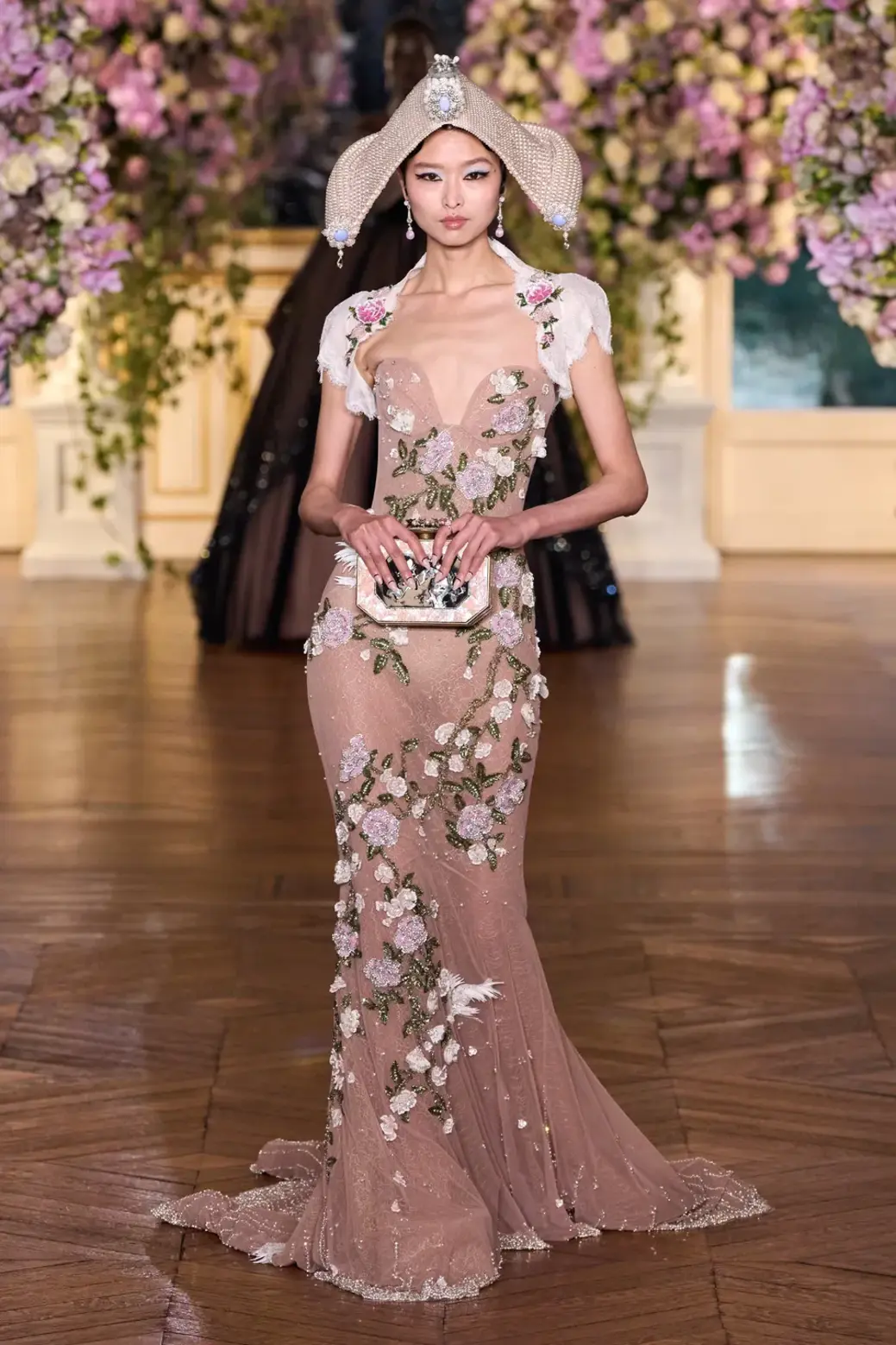
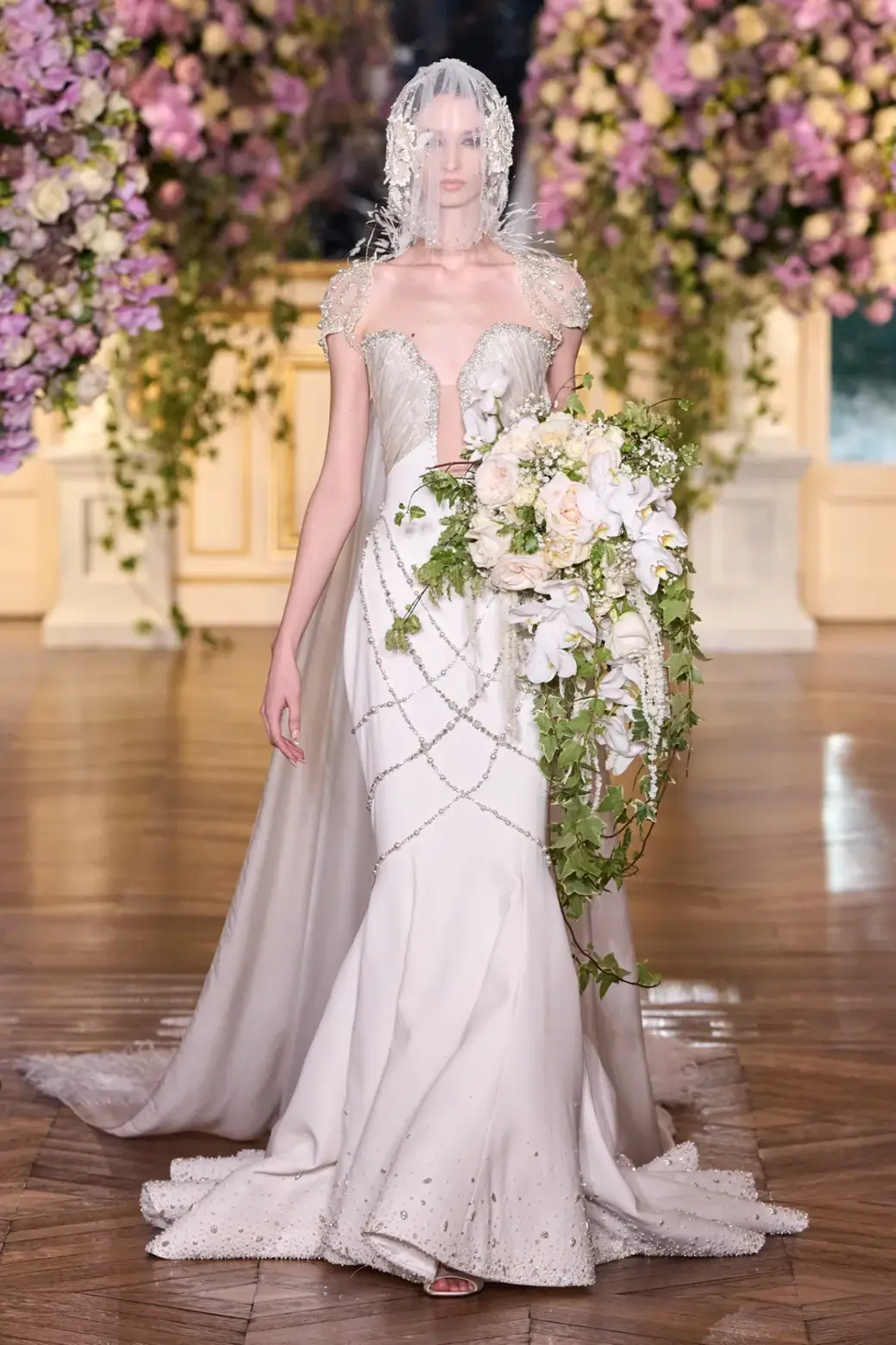
With Miss Sohee, the trumpet becomes a fairytale aria, a tender rise of delicate lace and hand-embroidered whispers, so graceful it feels as though it were made for a princess who has just stepped out of a dream; her silhouettes bloom like soft crescents of moonlit femininity, impossibly precious.
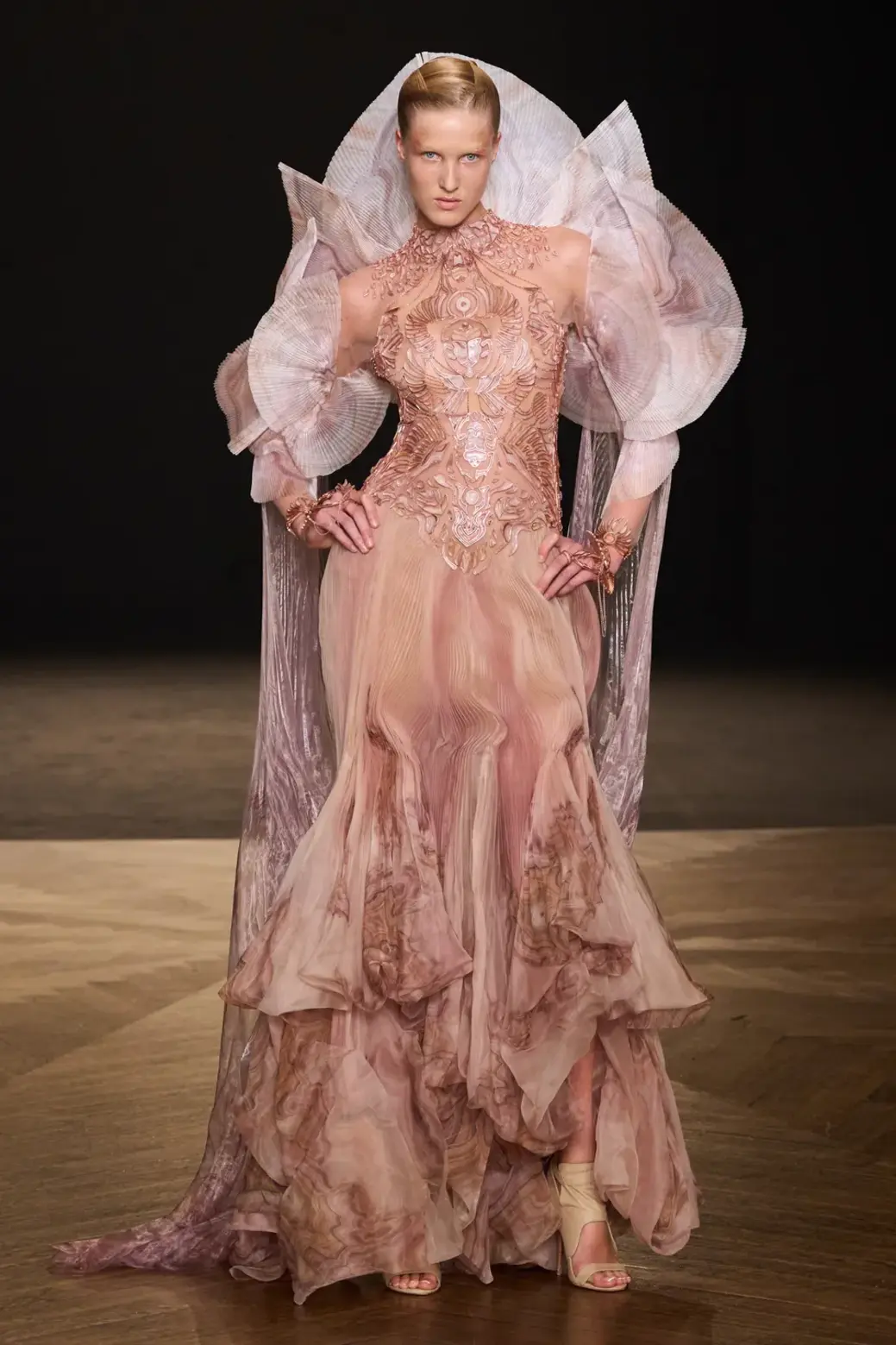
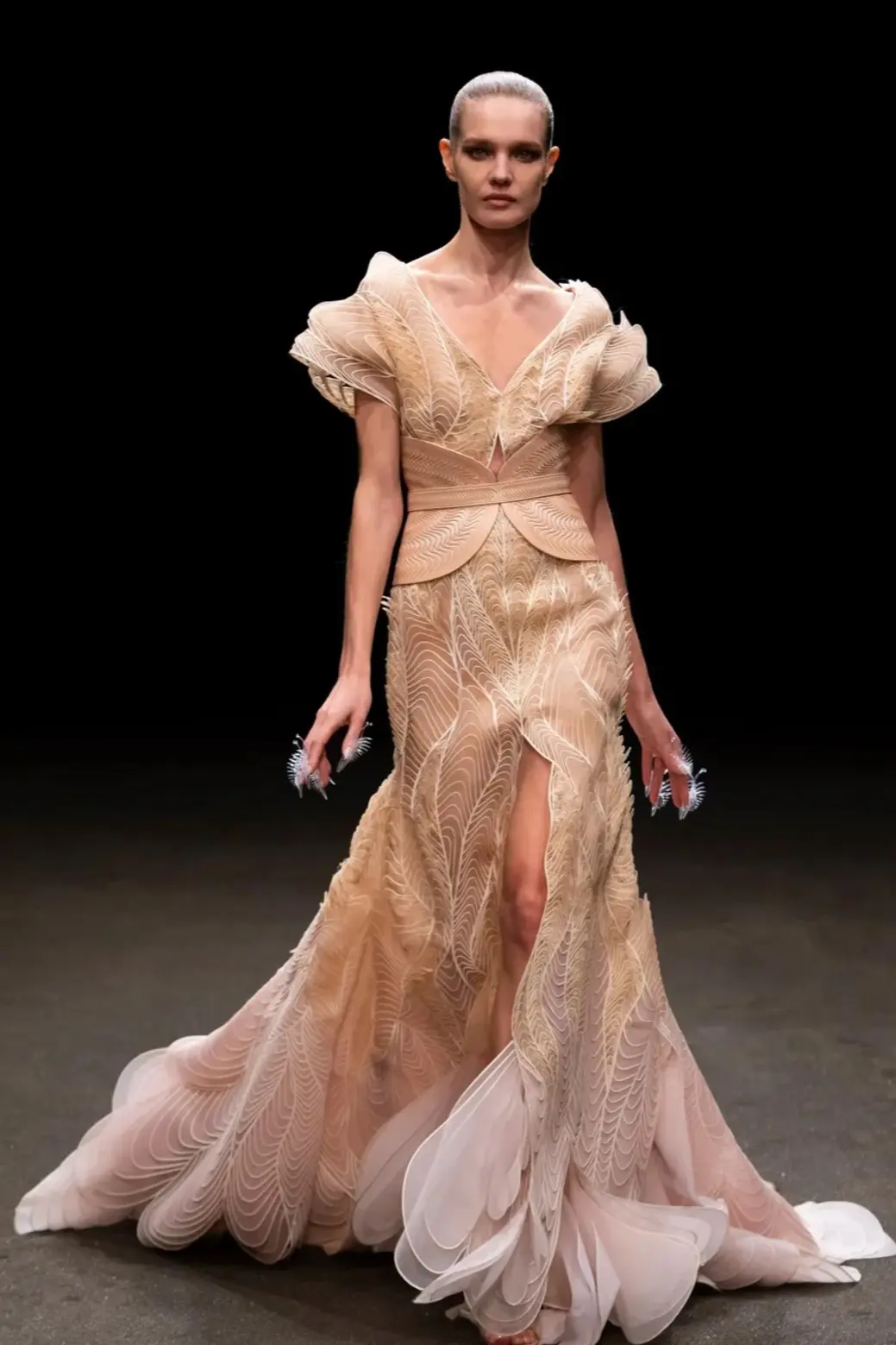
At Iris van Herpen, the trumpet becomes otherworldly, a speculative sculpture shaped by 3D-printed ripples and reptilian illusions, as though the silhouette were evolving before our eyes, shedding one skin for another; her version of the flare feels alive, scientific, extraterrestrial.
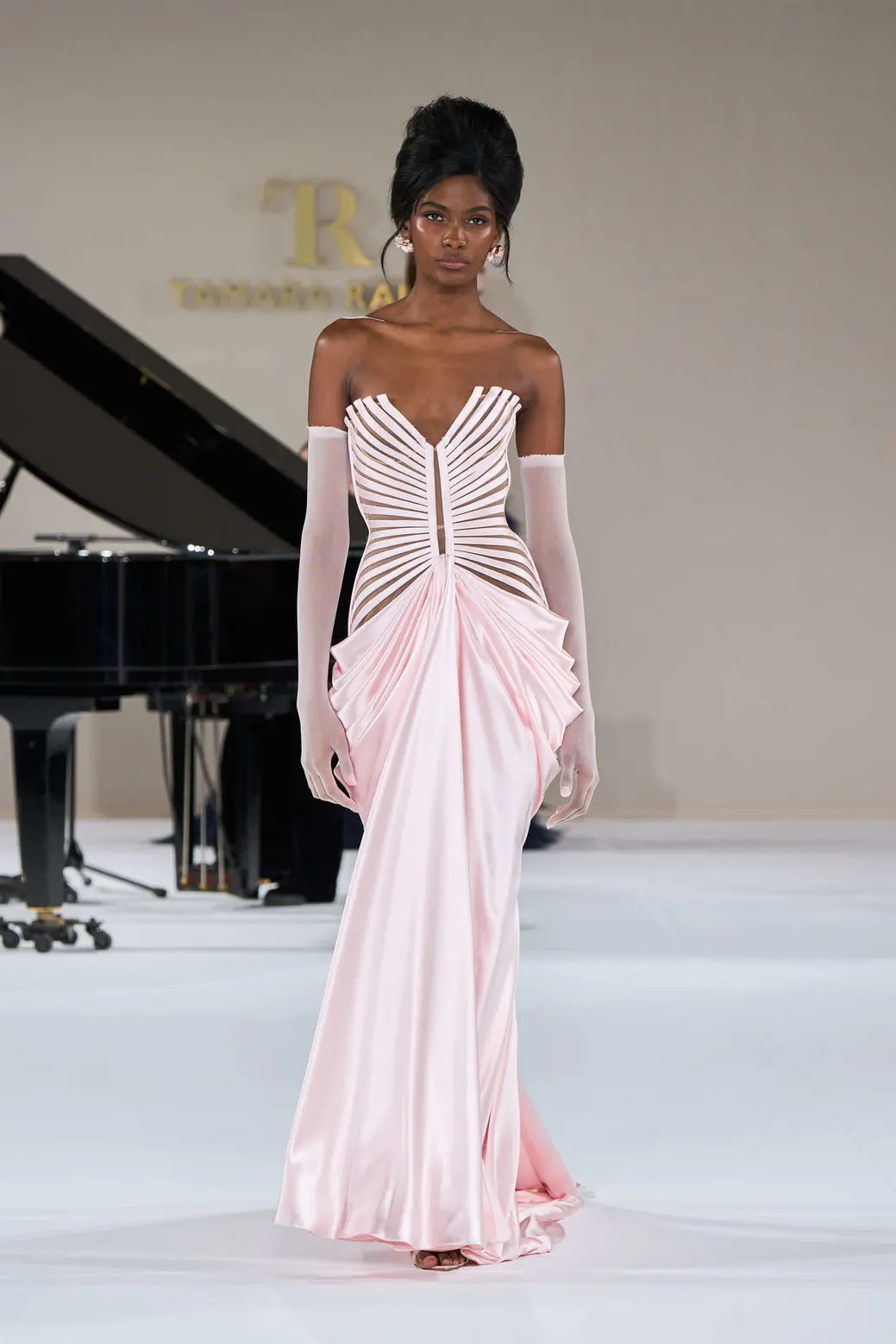
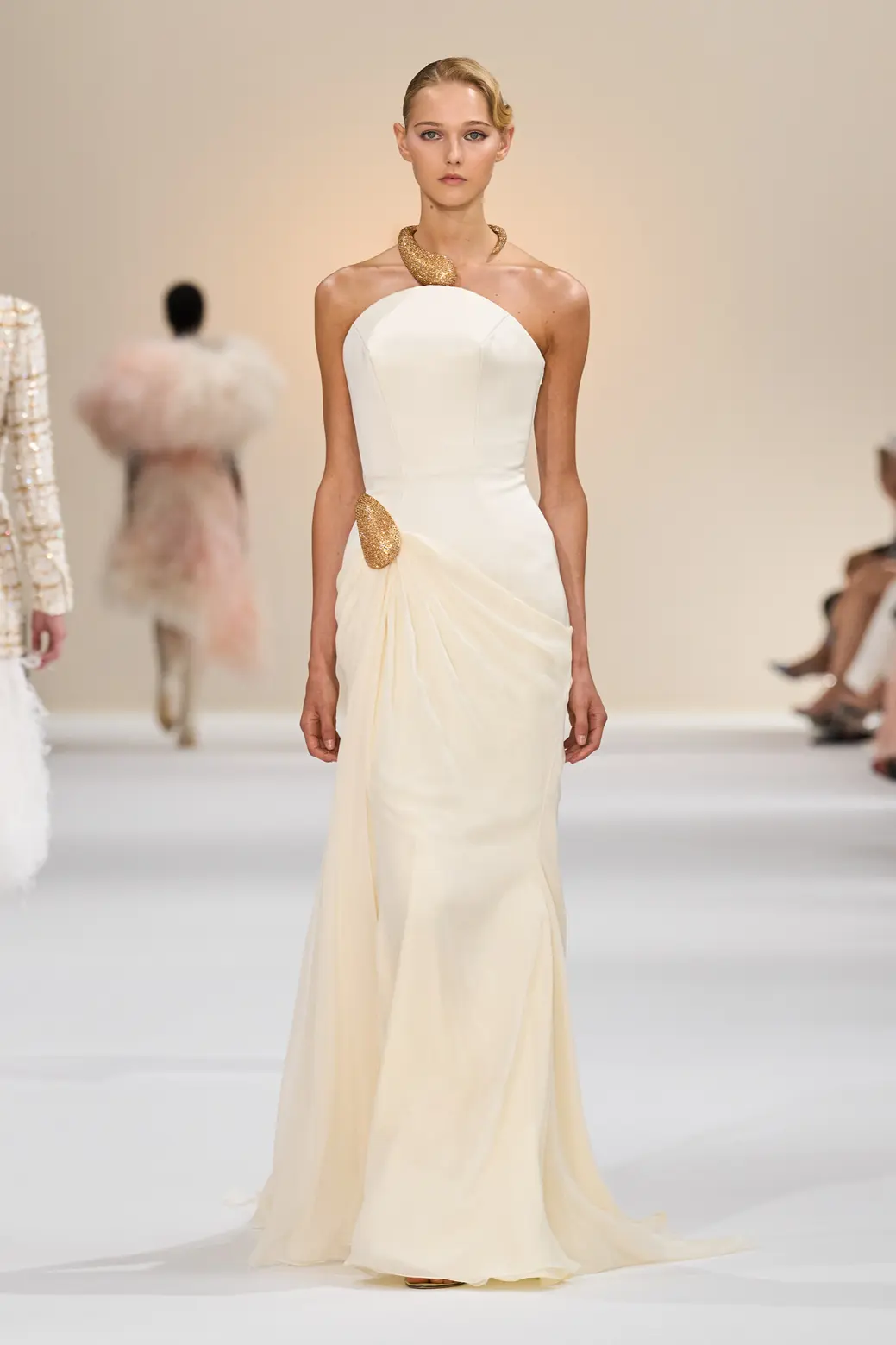
With Tamara Ralph, the trumpet returns to softness, a confectionery vision spun from the delicacy of womanhood, pure, innocent, sweet as cotton candy dissolving on the tongue, draped with a grace so gentle it feels airborne. Her flares melt softly, creating silhouettes of pastel serenity and quiet bloom.
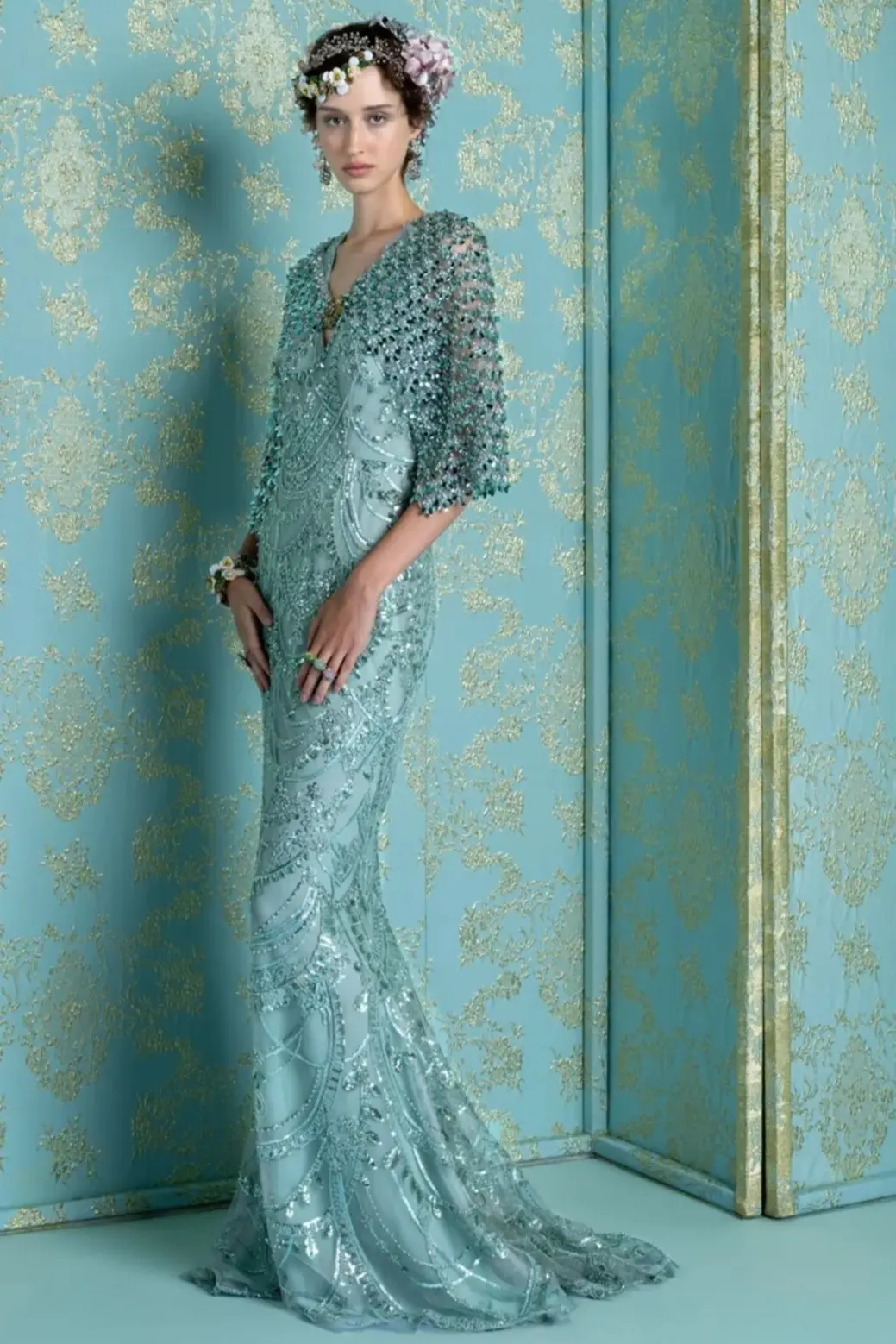
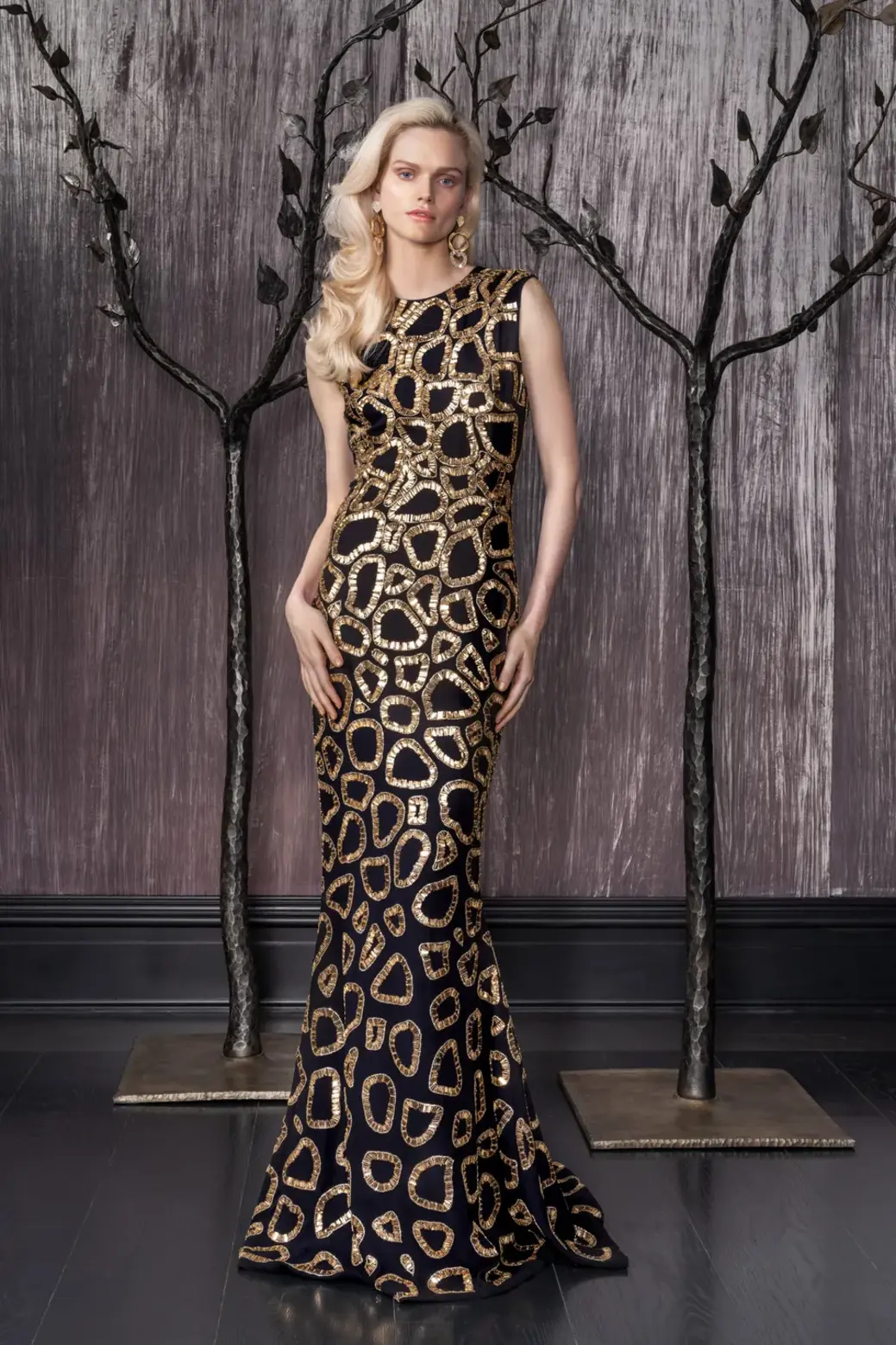
At Reem Acra, the trumpet is luminous, a glimmering constellation of beadwork and lightplay, where every step refracts a different shade of radiance; her beadwork is not decoration but choreography. She transforms the silhouette into a prism of movement, a woman shimmering in her own galaxy.
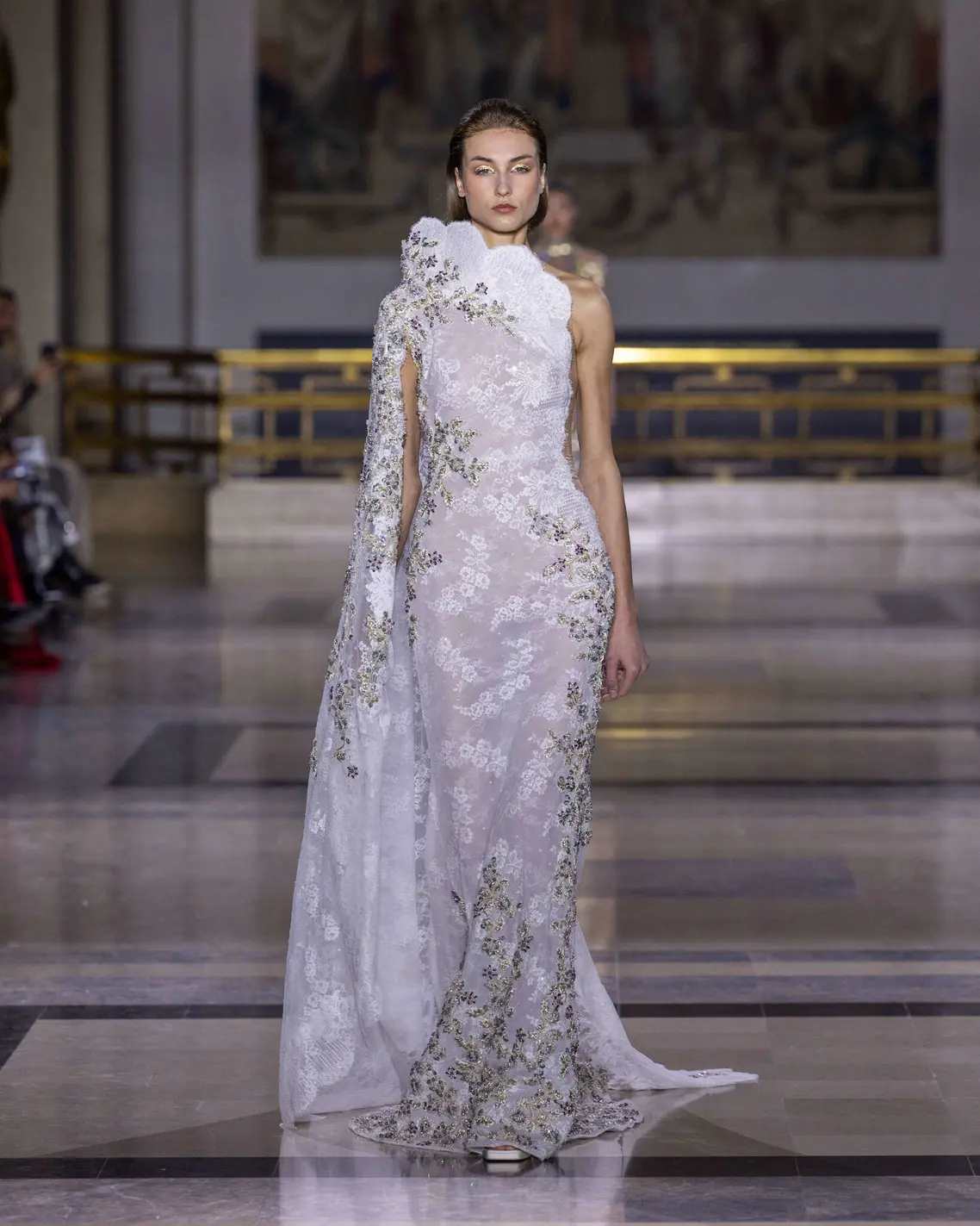
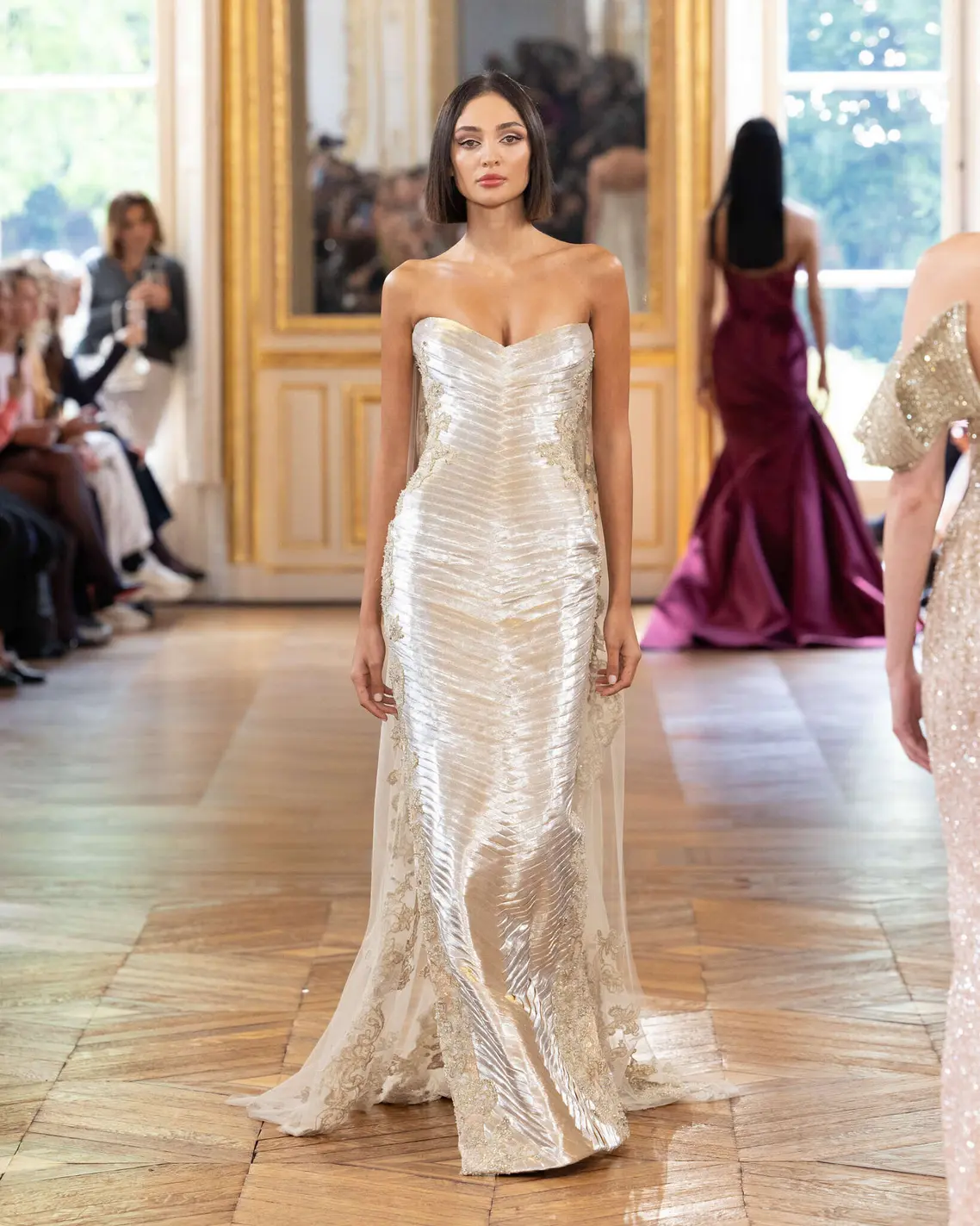
For Tony Ward, the trumpet silhouette is crafted in layered creativity, lace stacked like whispered secrets, embroideries folded in soft waves, and the gleam of organza, catching light as though the dress had swallowed a star.
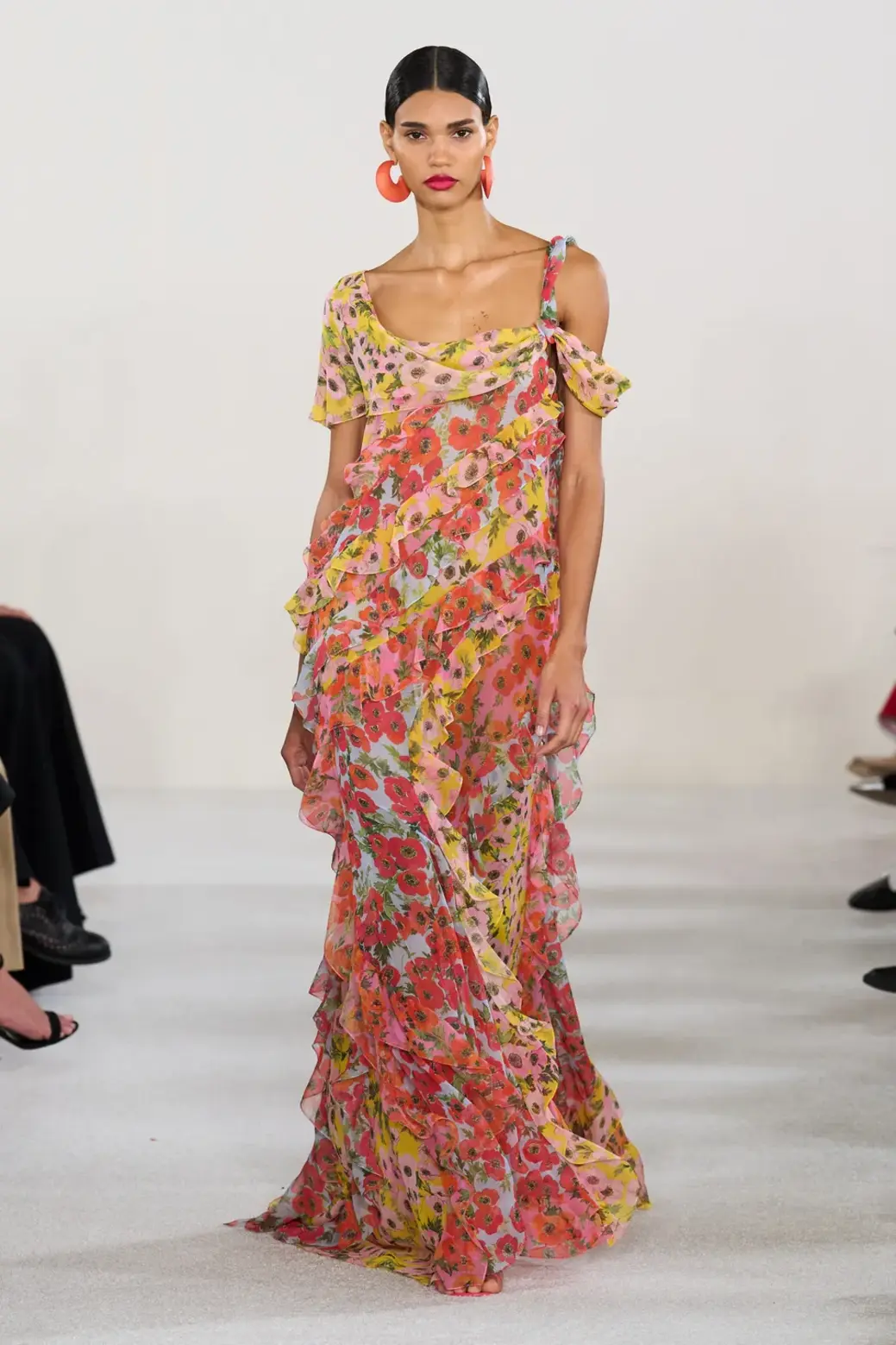
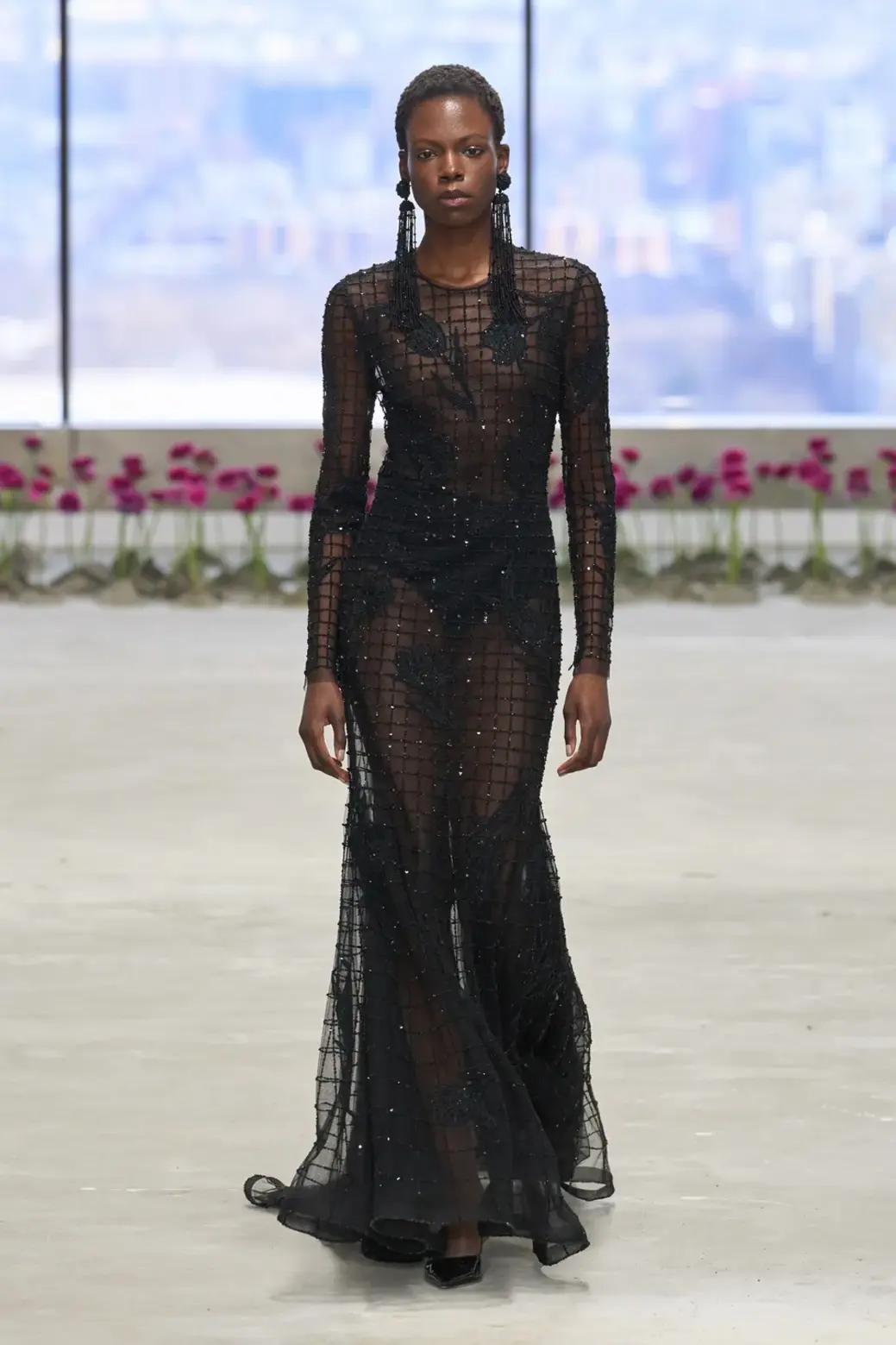
And at Carolina Herrera, the trumpet silhouette becomes the anthem of a modern, confident woman: crisp, chic, and assured, shaped by bold flowers or tiny beads that glisten like dew; hers is a silhouette that speaks in clean, sculpted lines. Herrera’s trumpet dress breathes sophistication: unfussy, and polished.
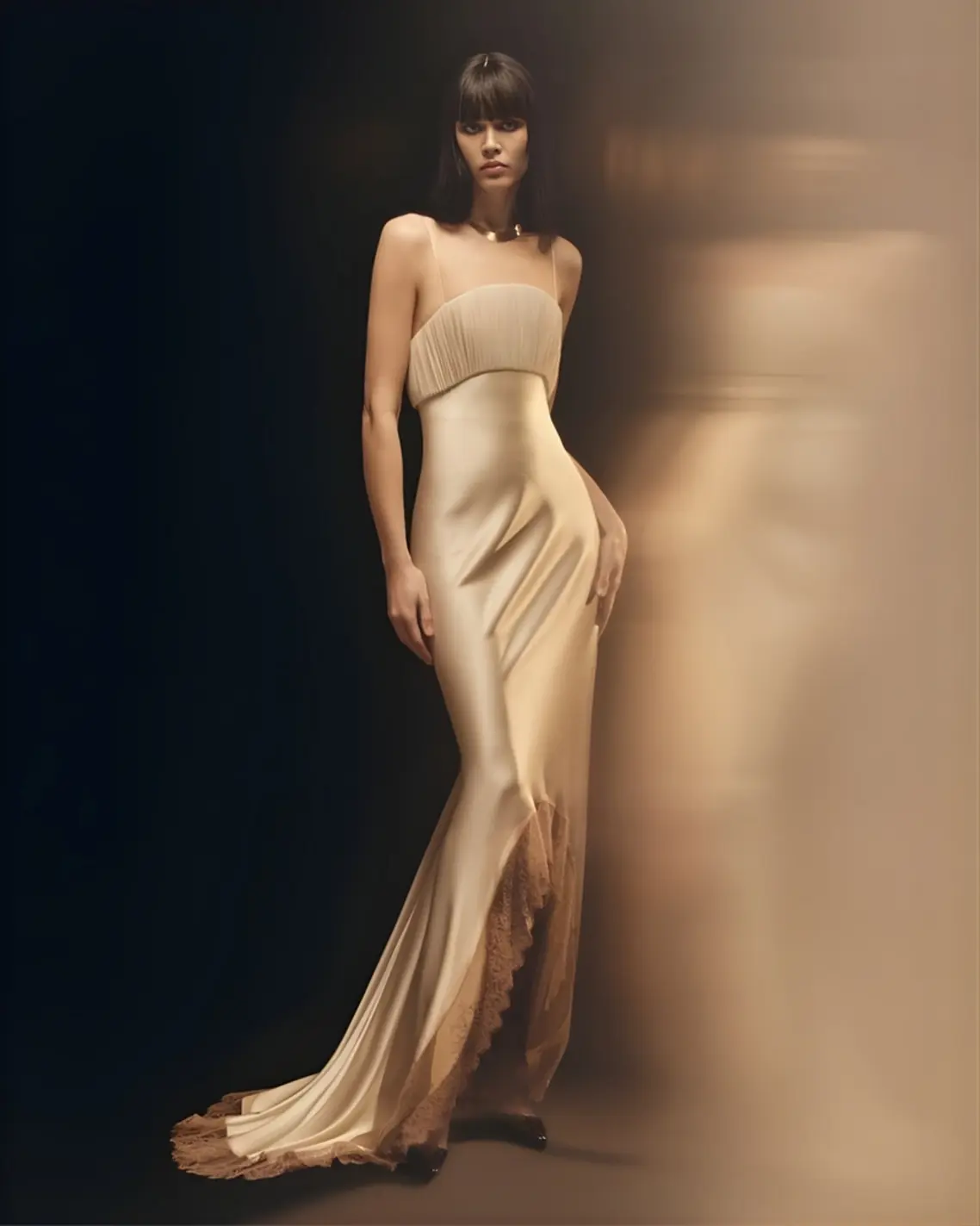
There is a philosophy hidden in its construction, a creative audacity in the decision to take silhouettes that were already beloved, the sweeping safety of the A-line, the extravagant constriction of the mermaid, and reinvent them not through shock but through refinement, through the soft, deliberate rearrangement of proportions, the subtle shifting of the flare’s placement, the quiet decision to let the dress breathe earlier, sing earlier, release earlier, and in doing so to create a silhouette that feels not like a compromise but like harmony itself. This is creativity at its most poetic: the courage to take what the world already knows, what the world already loves, and coax from it a new melody, something familiar enough to soothe, but new enough to awaken.
The trumpet silhouette is symbolic not because of the body it shapes but because of the rhythm it awakens; it makes the wearer feel as though she is writing her own soundtrack with every step, as though her movements are notes and her emotions the instruments that guide them.
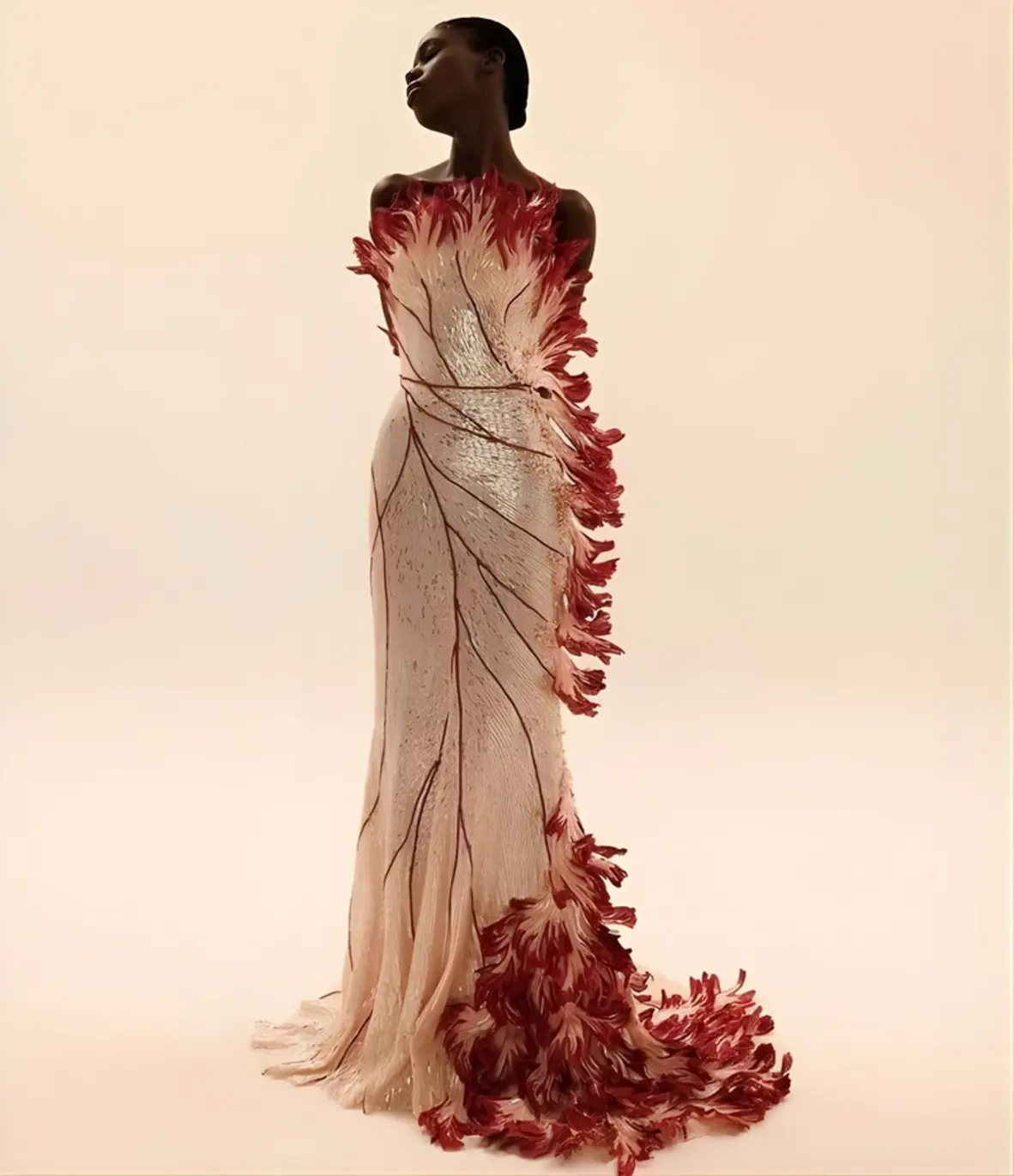
The trumpet silhouette remains relevant because true melodies never expire; they linger in the mind, echo in the chest, return unexpectedly like memories that refuse to quiet themselves, and the trumpet dress is exactly this kind of melody, timeless not because it resists change but because it evolves with it, adapting its rhythm to every decade, every cultural shift, every new interpretation of femininity and power.
It flatters the body because its music understands anatomy; it lengthens the leg because its rhythm understands motion; it embraces the hip because its harmony understands desire; and it opens into a flare because every good song needs a moment of climax, a sweeping, breath-stealing release that reminds the listener, or the viewer, why beauty matters.
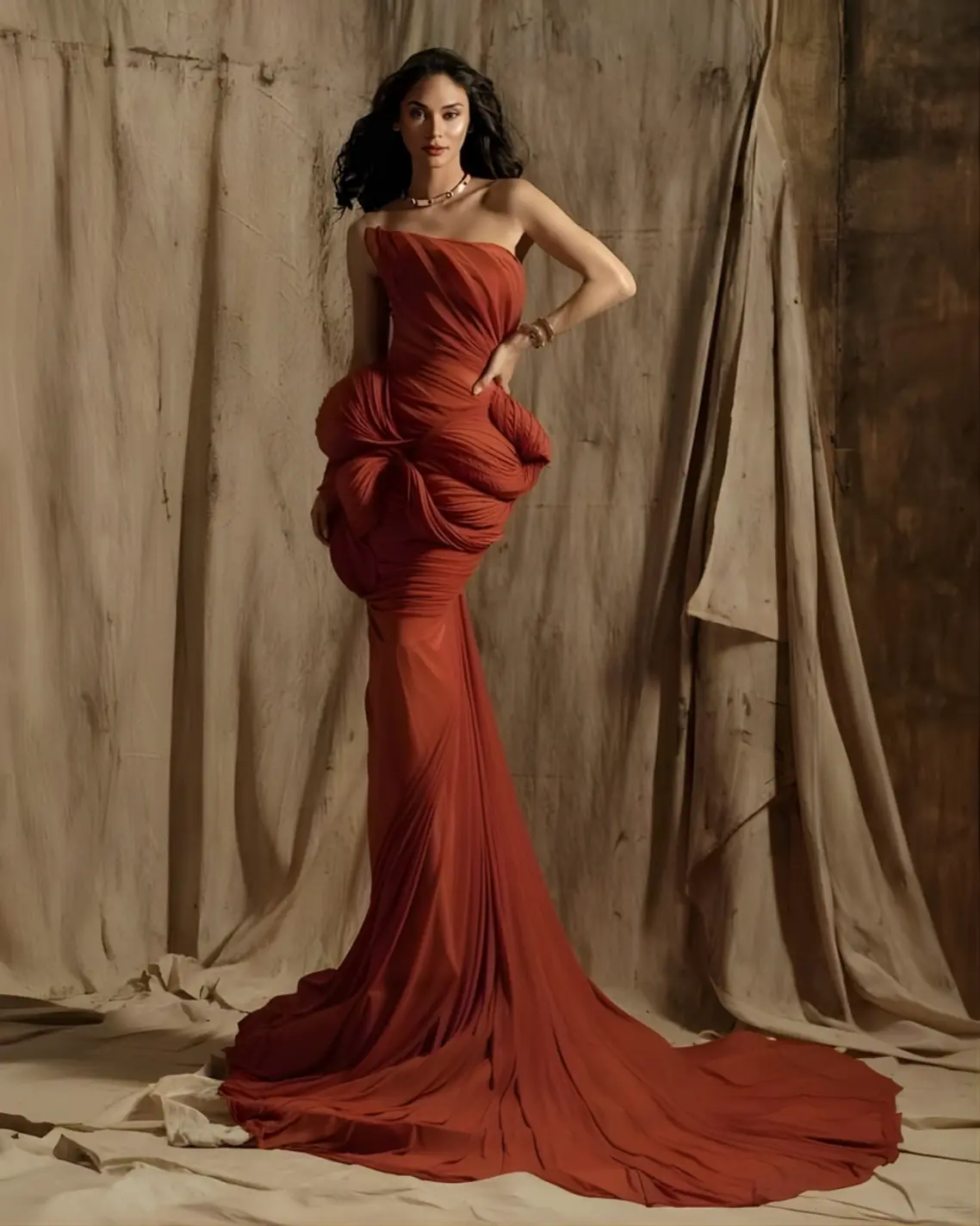
Women love it because it gives them the feeling, rare, sacred, that they are both the performer and the composer of their own lives, that the dress is not dictating their movement but amplifying it, not containing their voice but harmonizing with it, not shaping their identity but giving them a stage upon which to express it.
And so the trumpet silhouette remains iconic because it is not simply a dress but a rhythm woven into fabric, a song disguised as a silhouette, a quiet symphony that walks beside the woman who wears it, inviting her to sway, to step, to turn her life into choreography, to write her own melody with her own body.
Advertisement