MENU
Close





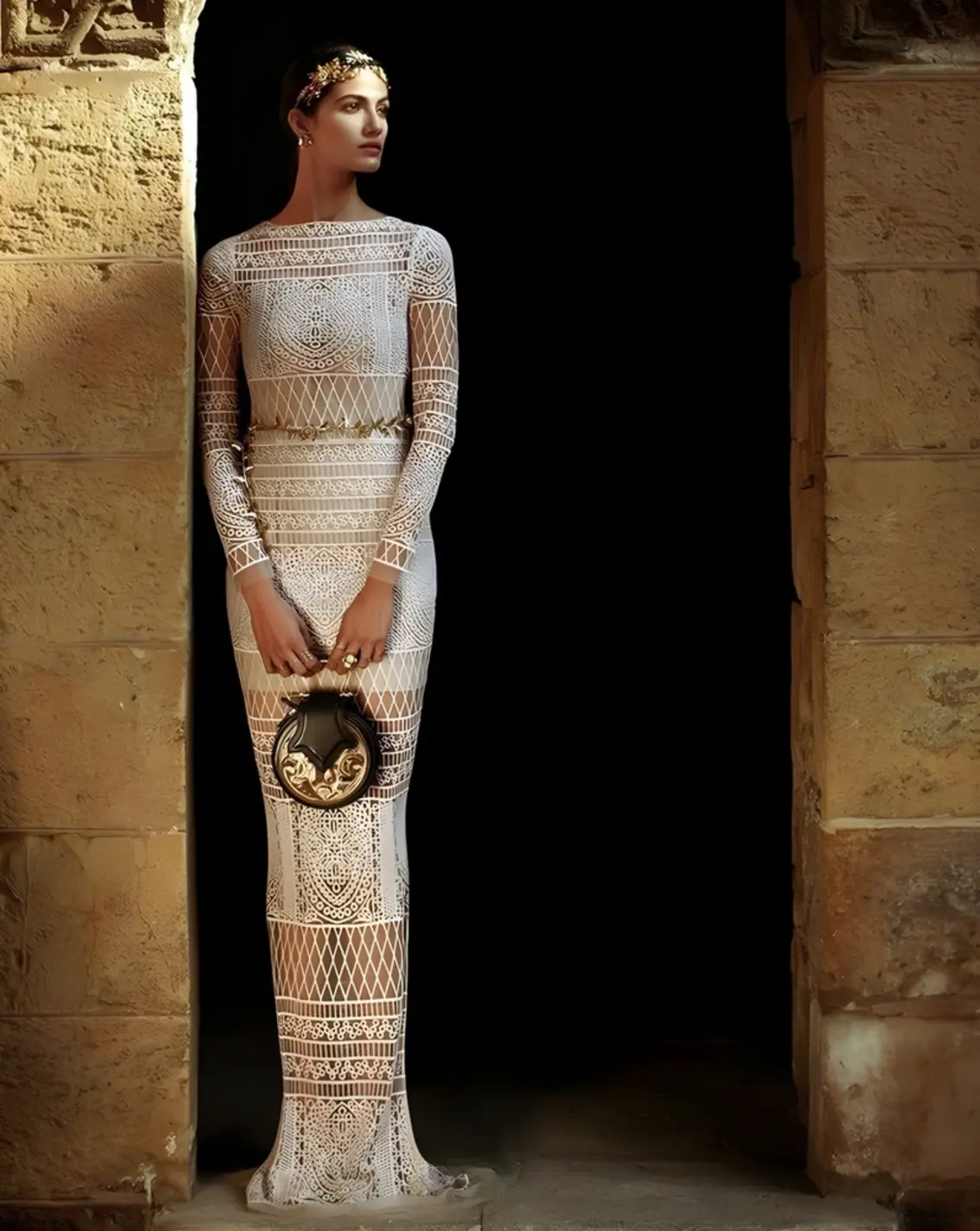
Can Egyptian style become a theology, when worn by emperors who believed their bodies were instruments of cosmic balance?
Can Egyptian style become a theology, when worn by emperors who believed their bodies were instruments of cosmic balance?
February 13, 2026
Advertisement

Advertisement



The desert begins as silence, then becomes a cathedral, wind-polished, star-lit, and vast enough to make the human voice feel like a small offering. We travel by moonlight across dunes that shift their shape like sleeping animals, following a track that exists more by faith than certainty, until a pyramid rises ahead of us with the calm authority of something built for eternity, its edges cutting the night as if geometry itself learned how to pray. A guide speaks in a low register, the kind used around sacred places and sealed doors, and when the entrance finally reveals itself, dark seam in stone, a narrow invitation into the unknown, the air changes, cooler, denser, charged with the feeling that time has been waiting for company.
Inside, history does not sit politely behind glass. It stands in relief. Dust turns into memory. A beam of light slides along carved walls where bodies appear in profile, disciplined and luminous, draped in linen that falls with a precision modern minimalism still tries to imitate, crowned by collars that flare like solar halos, guarded by gods with falcon heads and cobra brows, each symbol a sentence in a language older than any fashion house, yet instantly legible in the way it makes the heart speed up.
Fashion begins here, long before catwalks learned spectacle, because ancient Egypt offered a complete system: climate intelligence, social hierarchy rendered in pleats and polish, spiritual protection worn as amulet and gold, and an aesthetic so myth-heavy that the modern world keeps returning to it as if drawn by a magnet buried under sand.
We came searching for a style. We found a worldview.
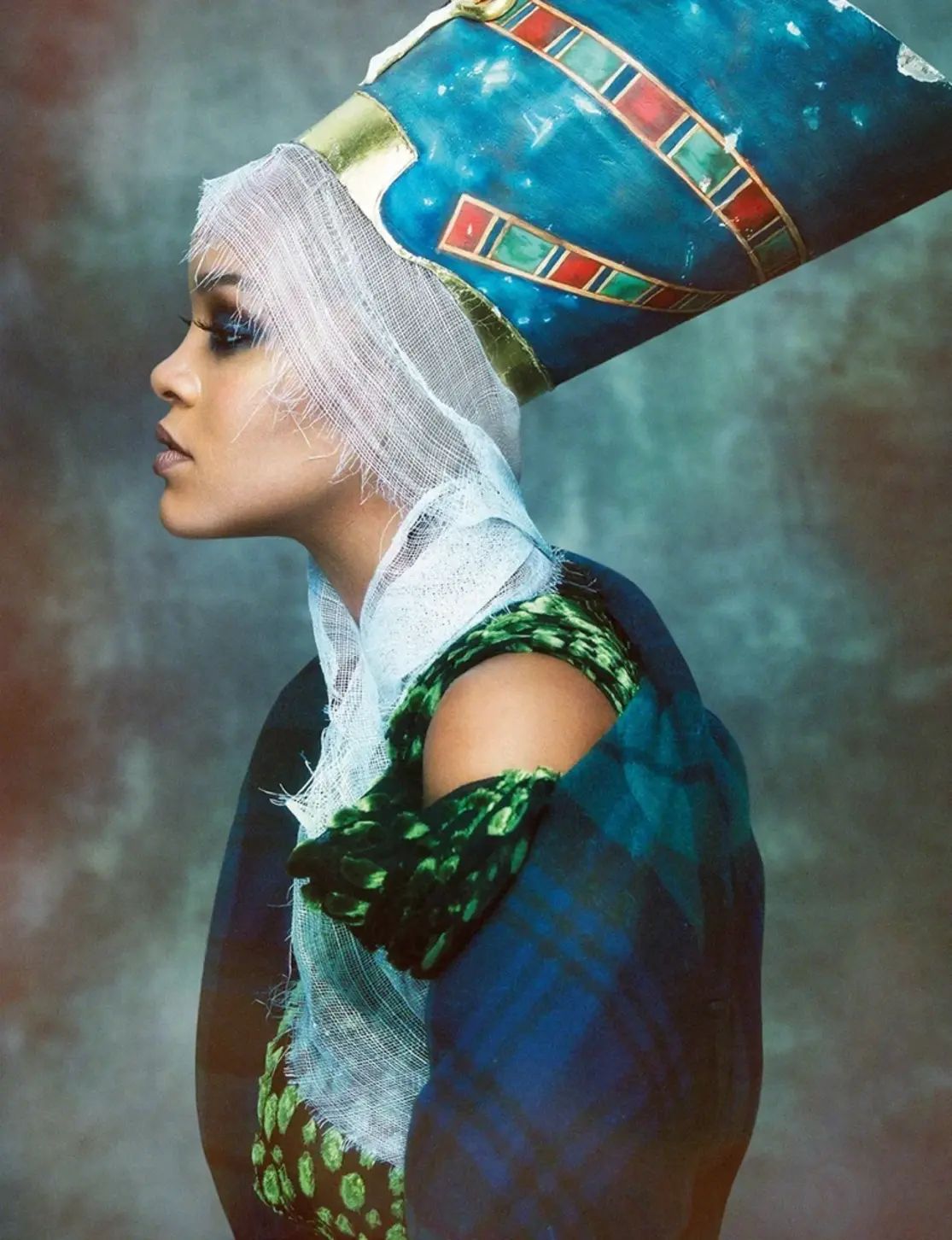
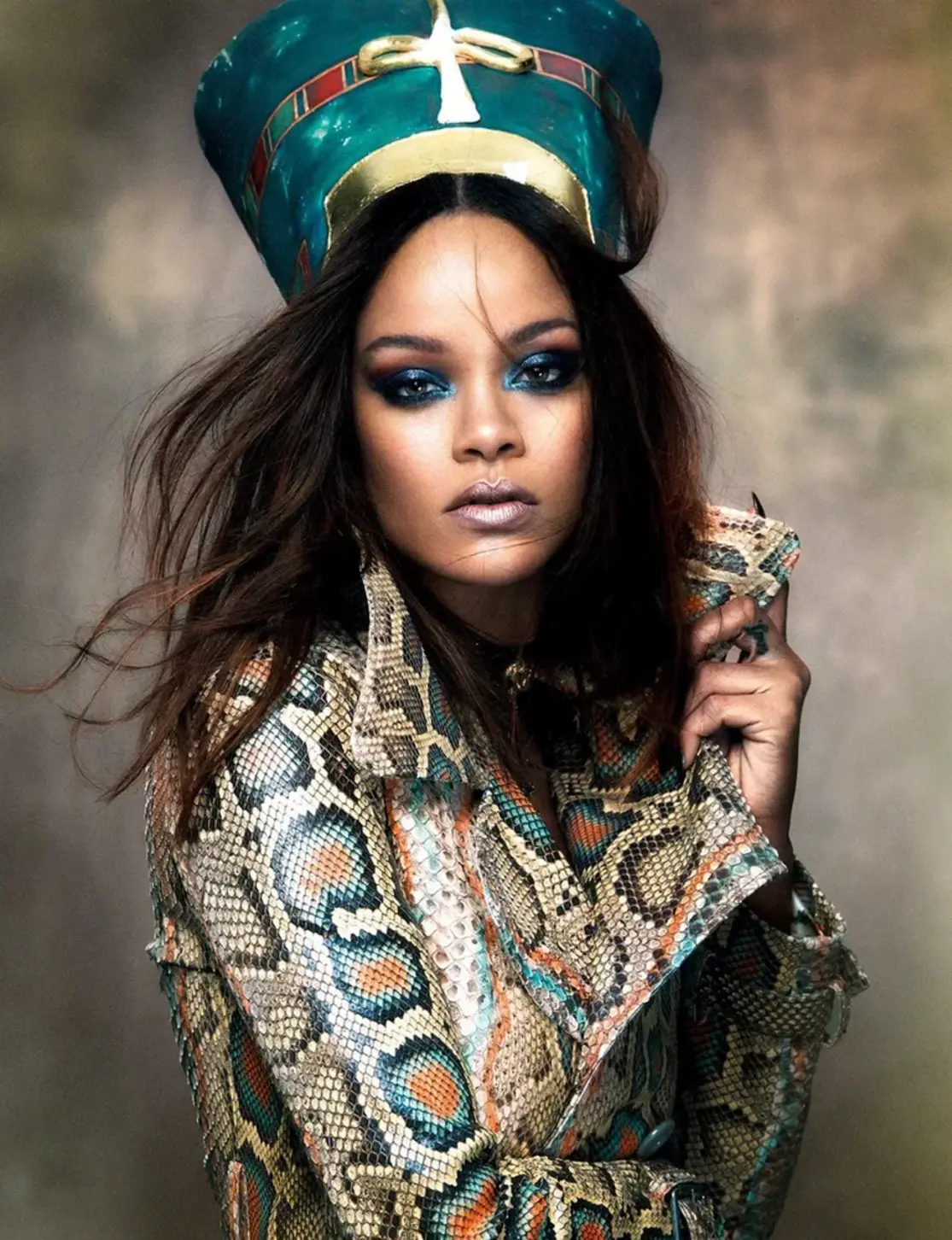
Egyptian style in fashion reads like sacred design: linen as light, gold as sun, geometry as law, symbolism as protection, a visual language where the body becomes a temple, the silhouette becomes architecture, and adornment functions as both status and spell.
At the heart of the look lives linen, woven from flax, prized for its breathability in the desert heat and elevated into refinement through finish, pleating, and purity; it carries an almost spiritual clarity, especially when cut into long lines that follow the body the way a column follows a sky. In ancient dress, the simplest forms often held the greatest power: a sheath, a wrap, a panel of cloth placed with intention, then transformed by craftsmanship and the codes of class.
The silhouette language favors two master shapes.
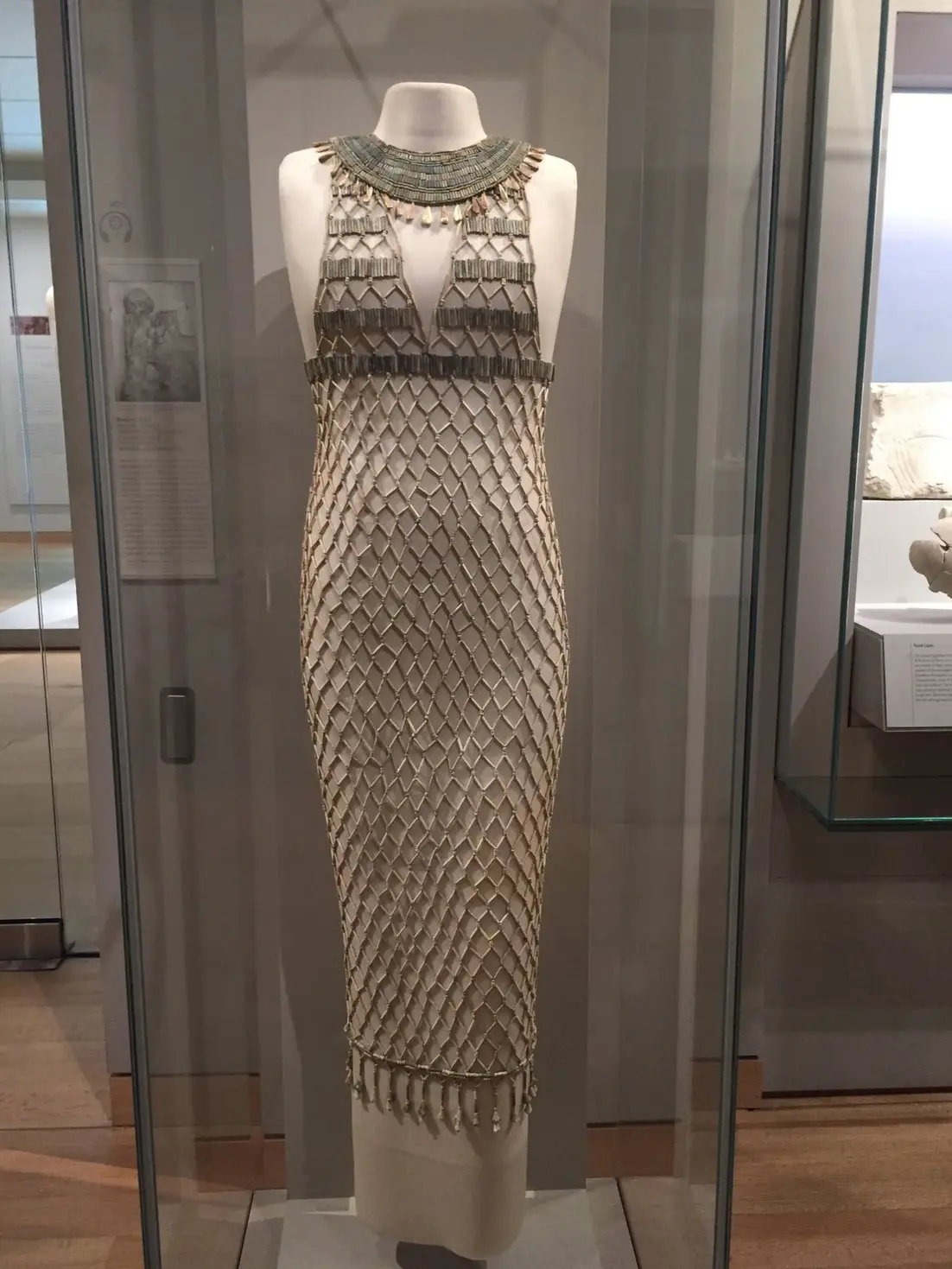
First, the column, seen in garments like the kalasiris, the long linen dress associated with women, a form that can appear plain in outline yet turns astonishing when pleated, beaded, layered, or paired with a capelet that moves like a soft veil of authority. Second, the wrap, seen in garments like the shendyt, the kilt-like wrap for men, where the quality of linen, the crispness of pleats, and the refinement of belt and collar become declarations of rank rather than casual choices.
Then comes Egypt’s most recognizable punctuation: jewelry as architecture. Broad collars that sit like a sunrise on the chest, cuffs that frame the wrist like a promise, belts that anchor the silhouette, beads that shimmer like coded messages, these elements turn clothing into a complete presence. Symbols appear as guardians rather than decoration: the ankh for life, the Eye for protection, the scarab for rebirth, the falcon for divine kingship, the lotus for renewal, each motif carrying the kind of meaning fashion craves when it wants to feel larger than fabric.
The deeper we move, the more the story arrives in layers, each chamber a new era, each artifact a new clue, each relief a reminder that design survives when it carries belief.
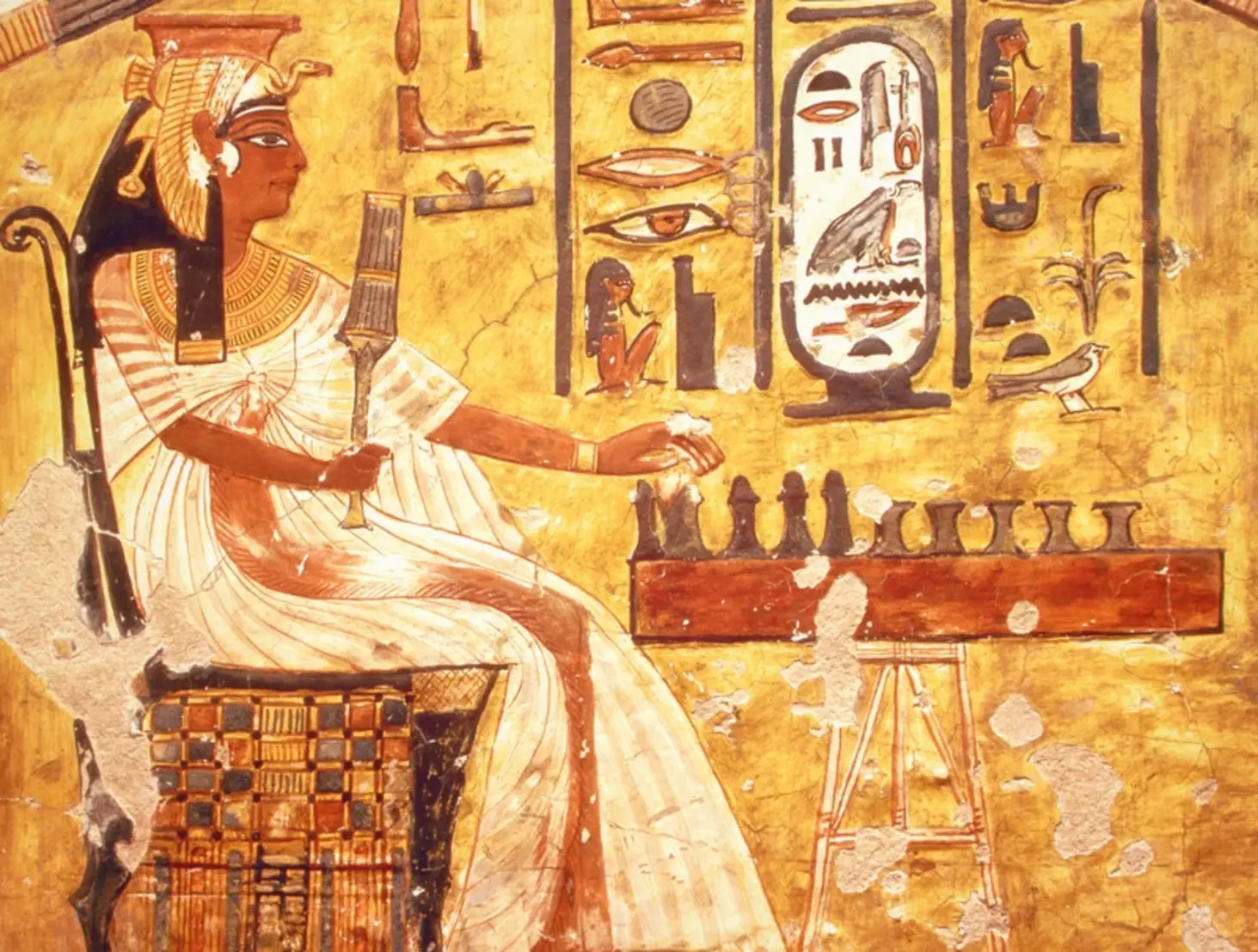
Ancient Egyptian dress begins with an honest reality: heat shapes everything. Breathable fabric becomes survival, loose construction becomes comfort, and linen becomes the material that holds both practicality and prestige in the same palm. Yet Egypt never leaves function alone; it refines it, disciplines it, elevates it, until the simplest garments start to read as intentional beauty rather than mere necessity.
Here, class shapes the surface. Common life often favors straightforward wraps and minimal layers, while elite life turns fabric into statement through pleating, ornamentation, and jewelry that announces rank before a single word is spoken. The desert teaches economy, yet the court teaches grandeur, and Egyptian style emerges as a balance between the two: streamlined silhouettes paired with deliberate, symbolic, luminous adornment.
A carved figure appears on the wall, shoulders squared, torso aligned, linen falling in a controlled line, an outline so modern in its clarity that it feels like the future has been quietly borrowing from the past for centuries. This is where Egyptian style becomes unmistakably sacred: clothing operates as ritual, and the body becomes a site of meaning.
In periods such as the New Kingdom, dress and adornment grow more complex in elite contexts, incorporating ornamentation that includes beaded garments and sheer layers, creating a visual language that feels ceremonial, luminous, almost priestly in its devotion to craft and symbolism. The silhouette remains disciplined, yet the surface becomes richly coded, beads, collars, capelets, metallic shine, each addition turning the wearer into a moving emblem of status and spiritual alignment.
Egypt’s brilliance lies in how it uses restraint as power. The line stays clean, the drape stays purposeful, the shape stays composed, and the meaning multiplies.
Even before modern museums framed “fashion history” as a discipline, Egypt offered evidence that clothing held advanced construction, sophistication, and enduring design intelligence. The famous conversation around the Tarkhan dress, often discussed as among the oldest surviving woven garments, functions like a shock of perspective: while many cultures leave fragments, Egypt leaves form, structure, craft, and the suggestion of a wardrobe system that already understood the body as both practical and symbolic.
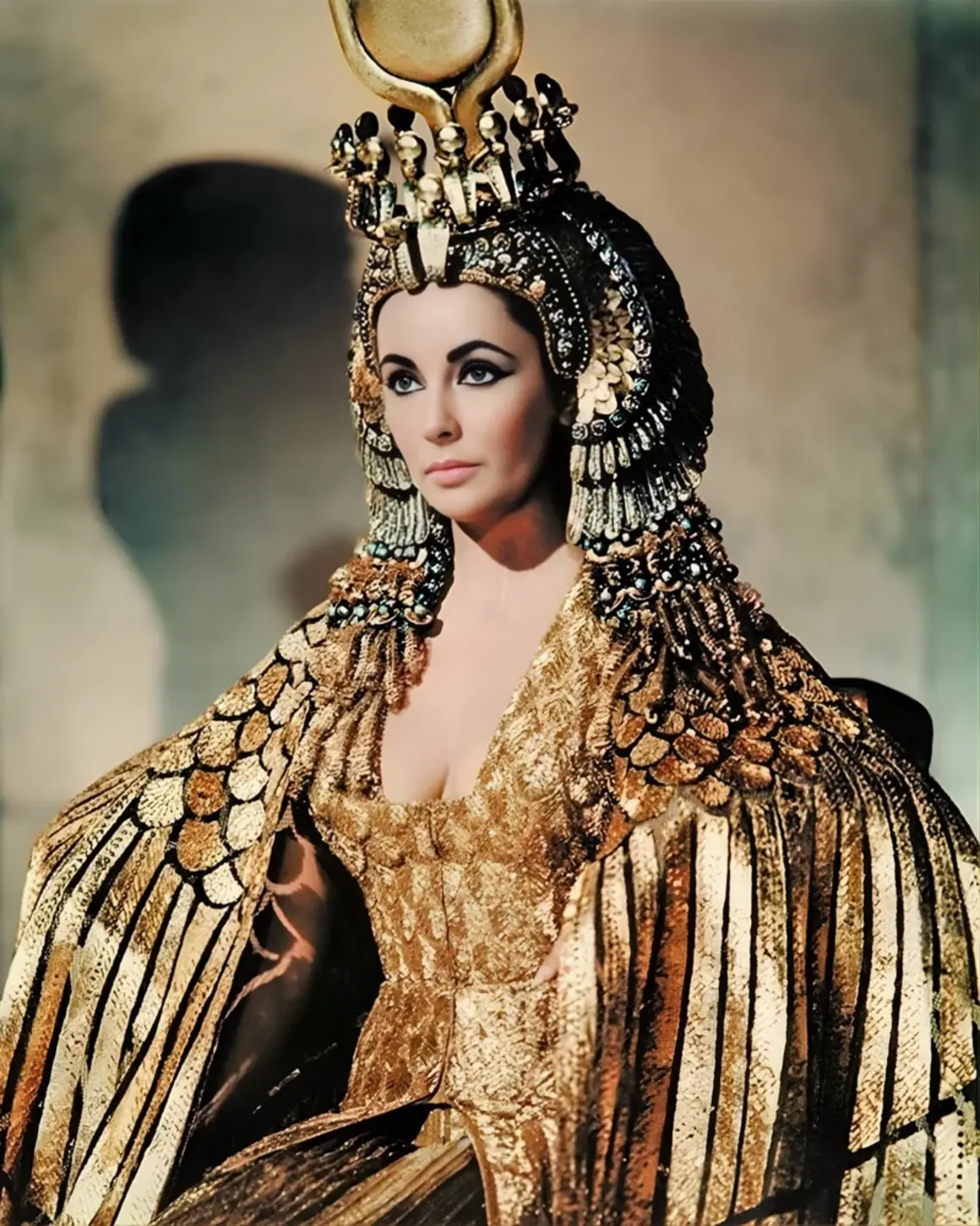
When modern archaeology and popular culture reintroduced Egypt to Western imagination in waves, through discoveries, exhibitions, film, jewelry, and luxury, the result became a repeating phenomenon: Egyptomania, a fascination that treated ancient Egyptian aesthetics as a shortcut to sophistication, mystery, and immortality.
One story captures the pattern with perfect clarity: after the discovery of Tutankhamun’s tomb, Egyptian motifs surged through luxury design, including iconic objects like Cartier creations that echoed tomb architecture and ancient ornamentation, translating ancient geometry and jewel tones into modern glamour. In this era, Egypt’s symbols became portable drama: lapis blue and gold, scarabs and lotus, temple symmetry and sunburst energy, an ancient vocabulary spoken in modern materials.
The obsession keeps returning because it offers what fashion always wants: a visual language that feels instantly powerful, instantly mythic, instantly larger than a season.
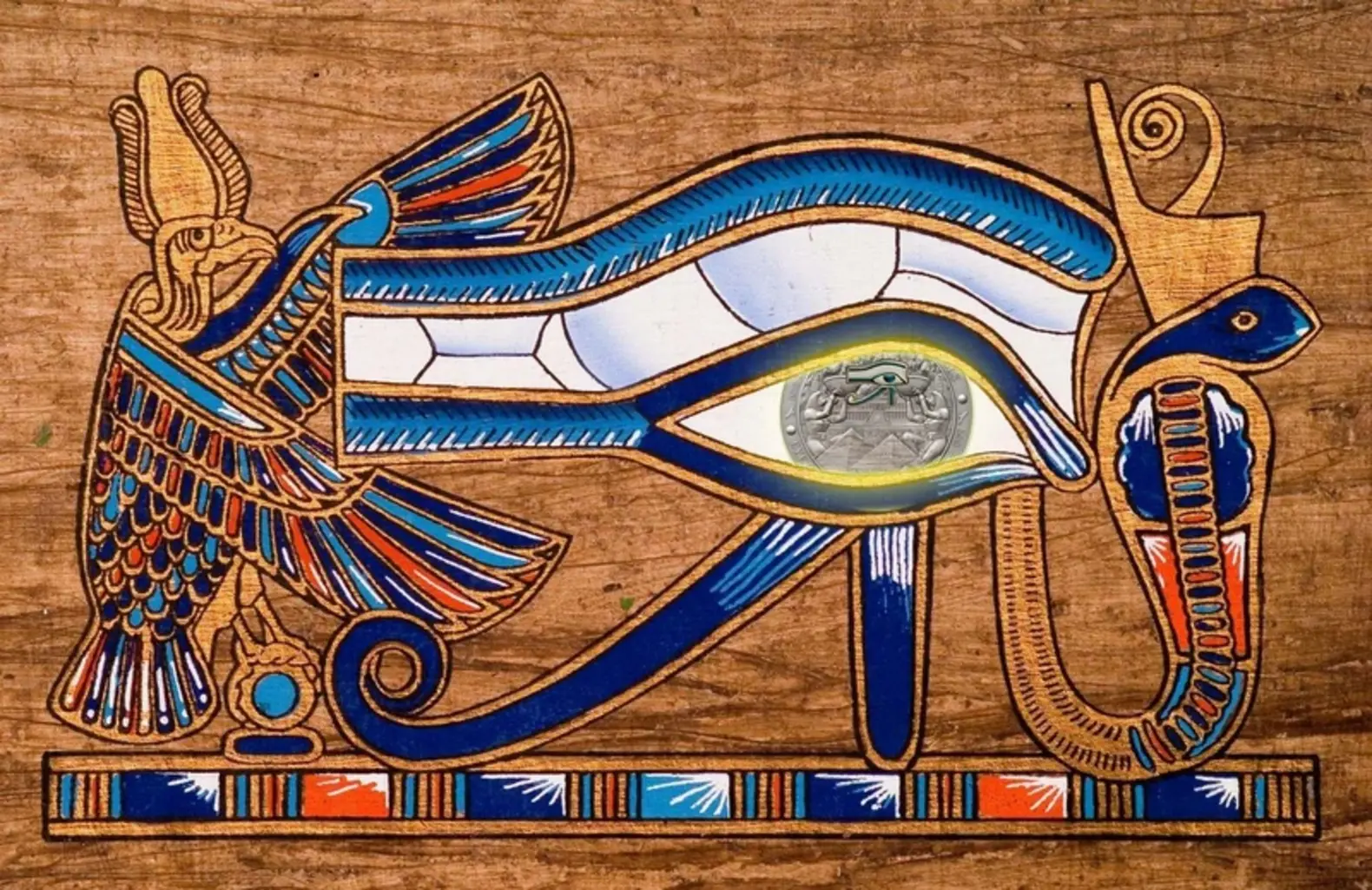
To step into Egyptian style is to wear a philosophy of permanence. It is a story written in gold and linen, one that began when the first shadow fell across the Nile and refuses to end.
Imagine a beauty built to outlast empires. When you drape yourself in the Egyptian silhouette, you aren’t just choosing a shape; you are adopting a language of monumental stillness. Like the pyramids that anchor the horizon, this style rejects the fleeting whims of the modern world. It is the quiet confidence of gold, a metal that knows no decay, offering the wearer a sense of being anchored in time rather than swept away by it.
In this world, a necklace is never just an ornament; it is a prayer. To wear the Ankh or the Eye of Horus is to wrap yourself in a protective embrace. The ancient spirit understood that our clothing participates in our spiritual life, turning the simple act of dressing into a sacred ritual of intention. You are not just decorating the body; you are fortifying the soul, carrying symbols that have guarded humanity for millennia.
Against the chaos of the world, Egyptian style offers the calming rhythm of divine symmetry. It is wearable architecture, temple lines distilled into cloth. Every pleat and every gemstone follows a celestial geometry that suggests the world is, and always will be, in balance. This is sensuality refined by discipline; it is the allure of the ceremonial, where the body is honored through sheer linen and structured collars, creating a presence that feels less like a person and more like an apparition of light.
Ultimately, Egyptian style endures because it offers us something novelty never can: a myth that can be worn. It is the glint of the sun on the river, the contrast of sand against shadow, and the enduring belief that we are all, in some small way, luminous.
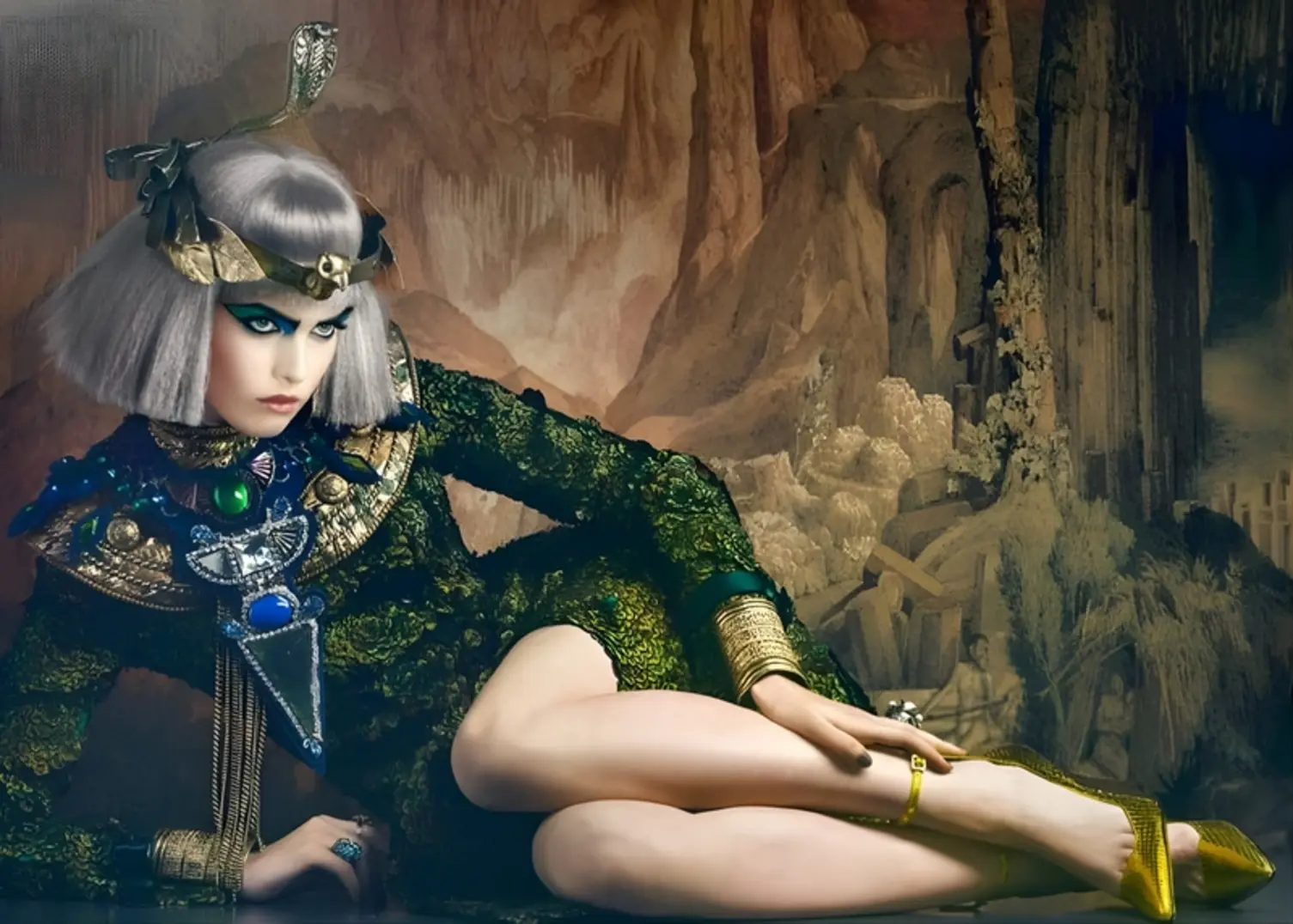
Egypt remains one of fashion’s most recognizable references because its symbols communicate instantly, scarab, ankh, striped headcloth silhouette, temple geometry, gold-and-lapis color language, each element conjuring an entire civilization in a single glance. That recognizability creates temptation: the ability to turn history into surface, to use a sacred vocabulary as mere pattern, to transform cultural memory into a quick aesthetic payoff.
Here, the modern conversation sharpens.
Ancient Egypt functions as heritage, as identity, as spiritual history, as living cultural pride, and when global fashion borrows from it, the relationship carries weight. Museums and curators increasingly frame Egyptomania as a complicated obsession, an arena where admiration and misunderstanding can sit side by side, especially when references slip into caricature or reduce a civilization into props.
A sacred way to navigate this topic in fashion writing focuses on practice and intention, how a designer references, how a brand credits, how a story is told, how communities benefit.
Reclamation changes the entire landscape. Modern Egyptian creators, councils, and platforms work to shape heritage as living fashion rather than distant inspiration, building ecosystems that carry textile history forward through contemporary design, craft development, and cultural authorship. When Egyptian voices lead, the story shifts from borrowing to dialogue, and the aesthetic regains its sacred center.
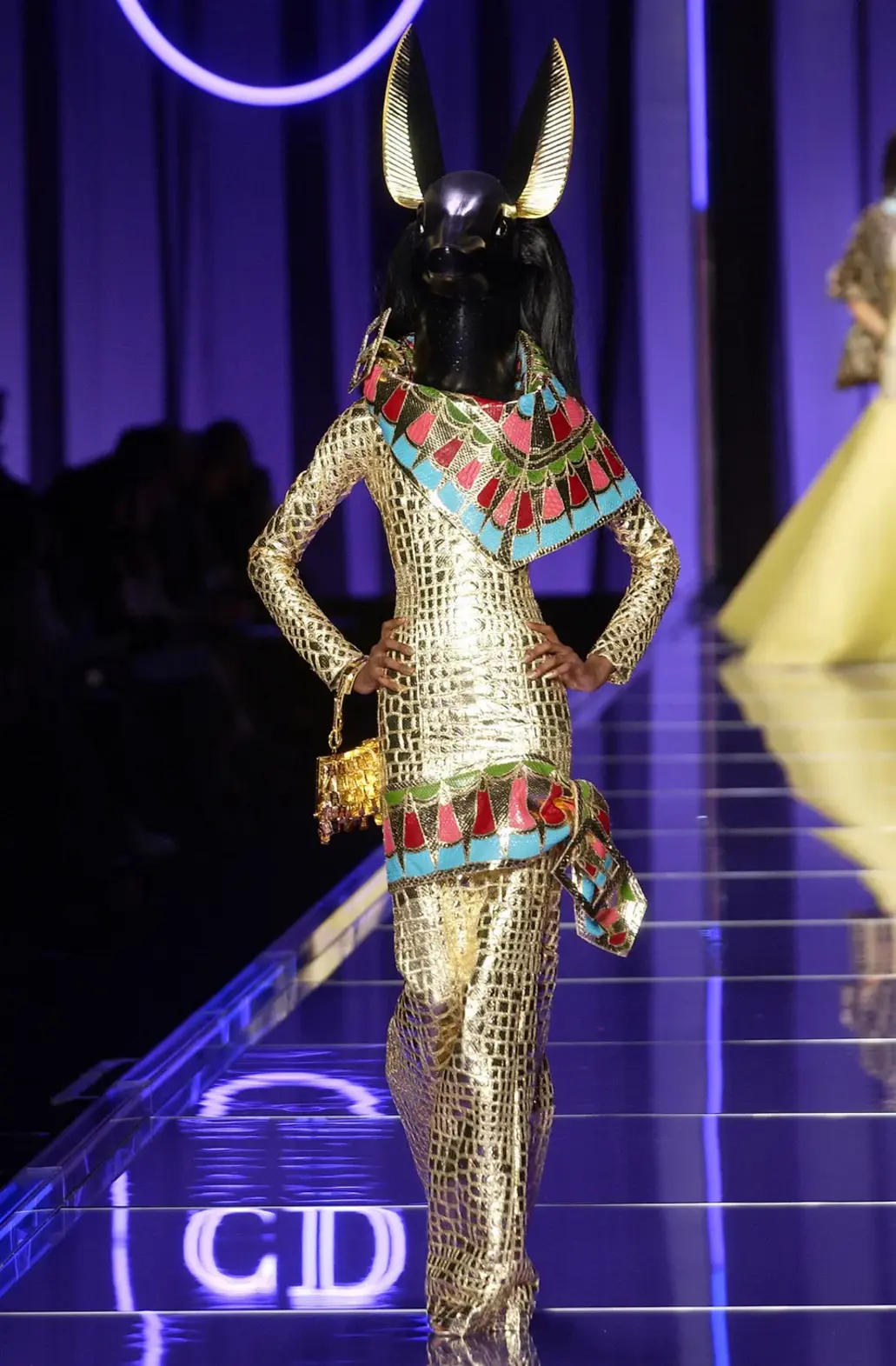
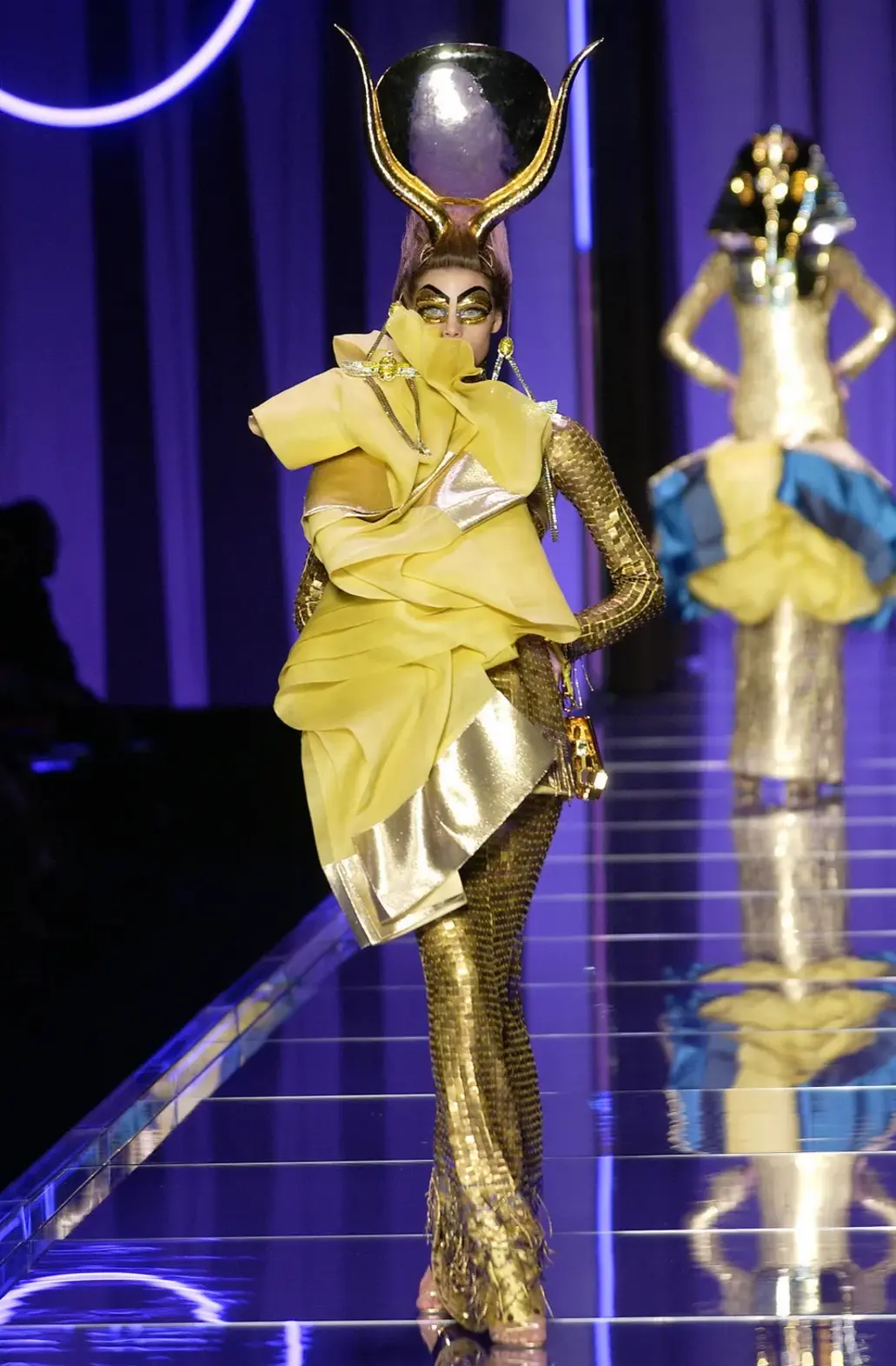
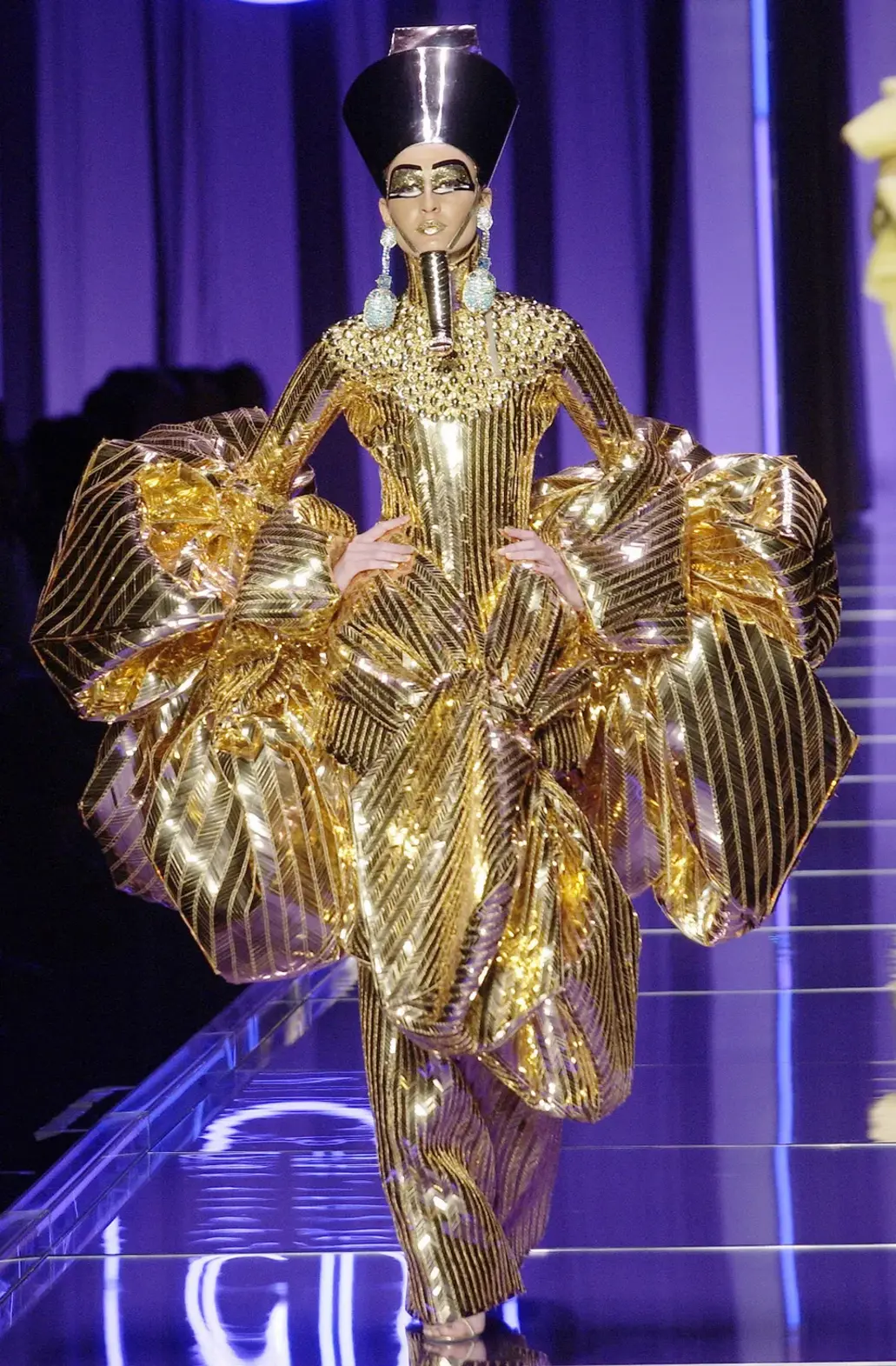
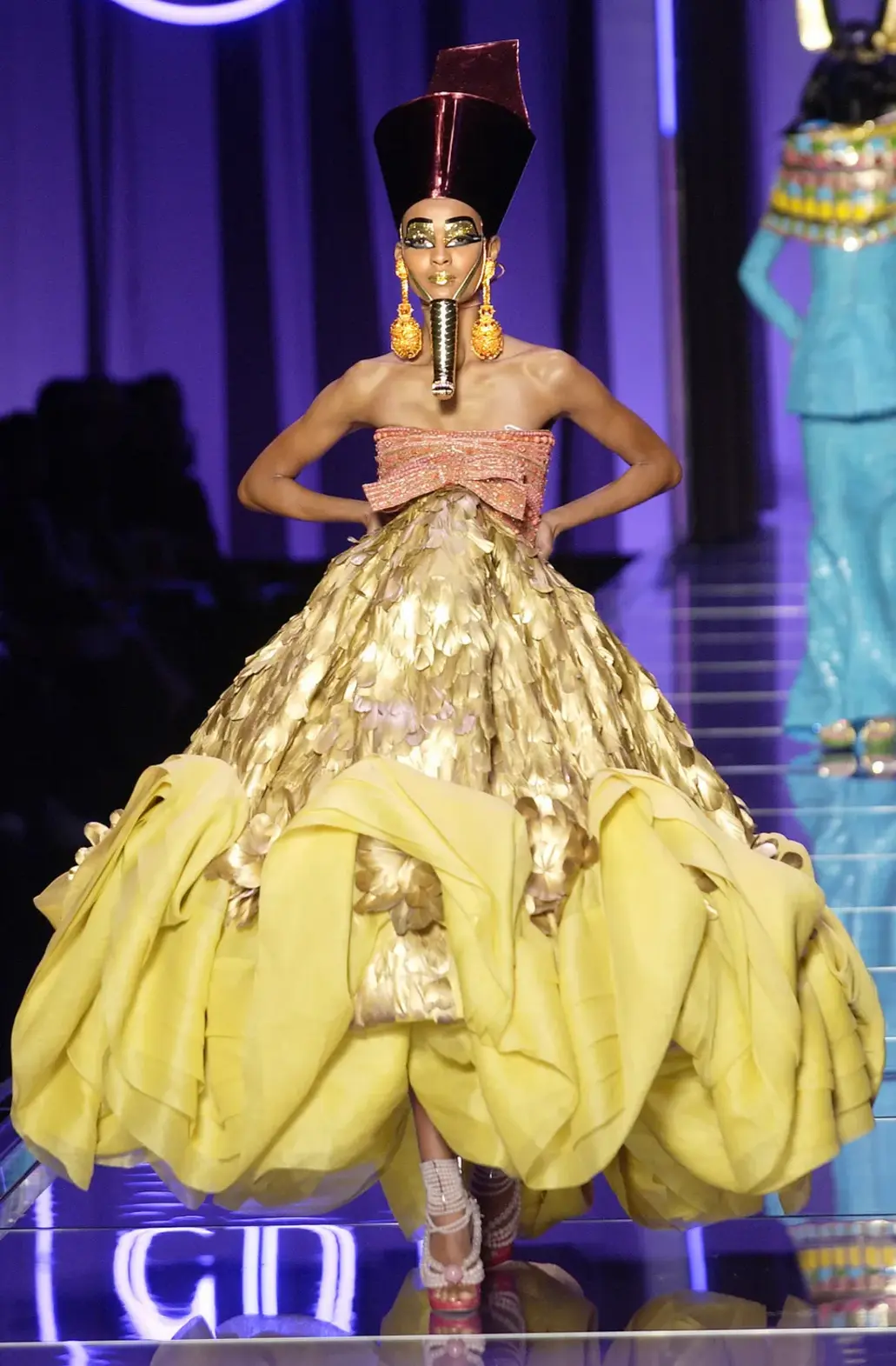
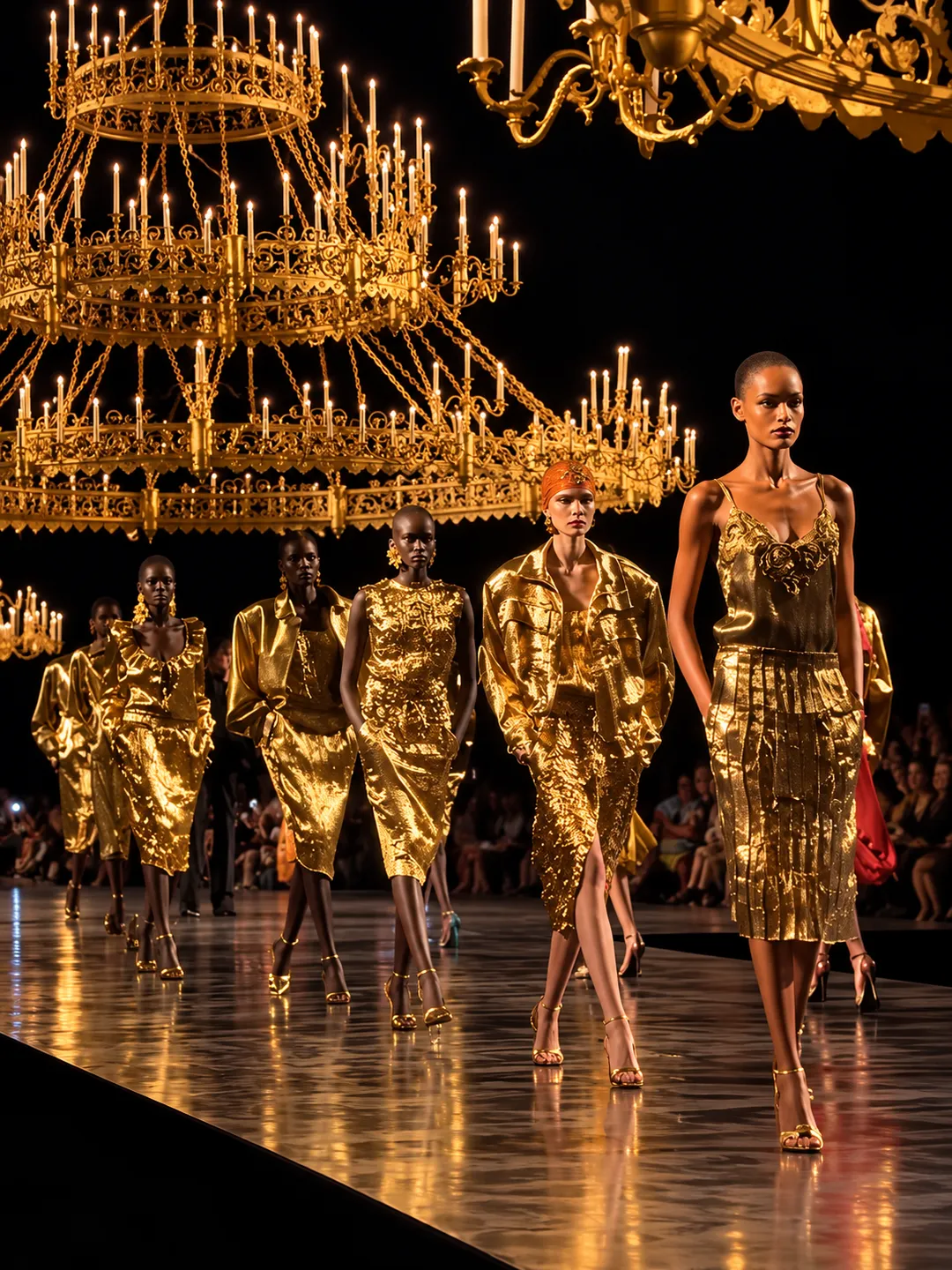
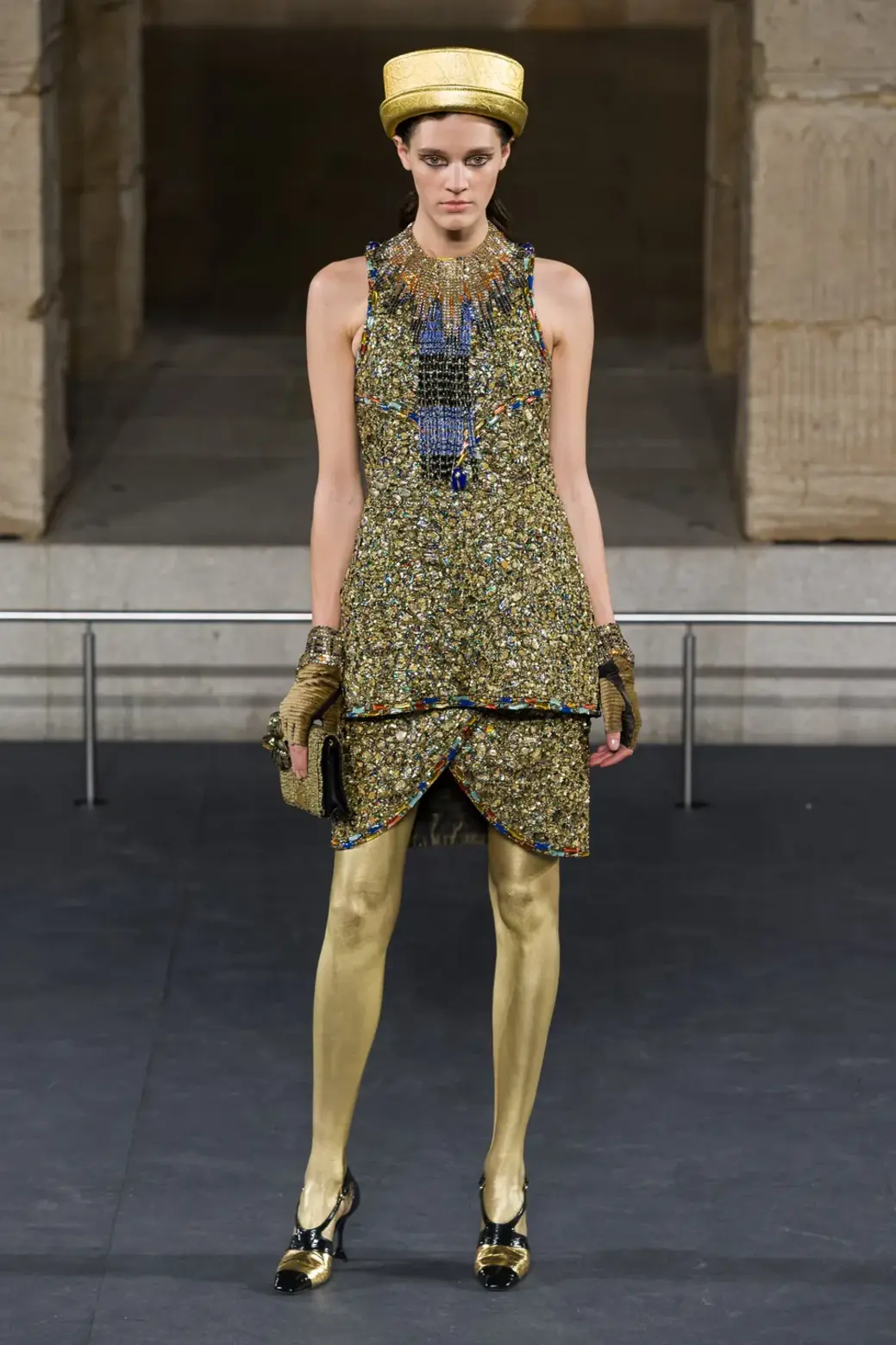
Under Galliano, Egyptian style becomes high ritual, crown-like headpieces, gilded hieroglyphic fantasy, and silhouettes staged like a procession through a temple of light. The drama feels sacred and theatrical, as if couture turns into ceremony and the runway becomes a myth told in fabric.
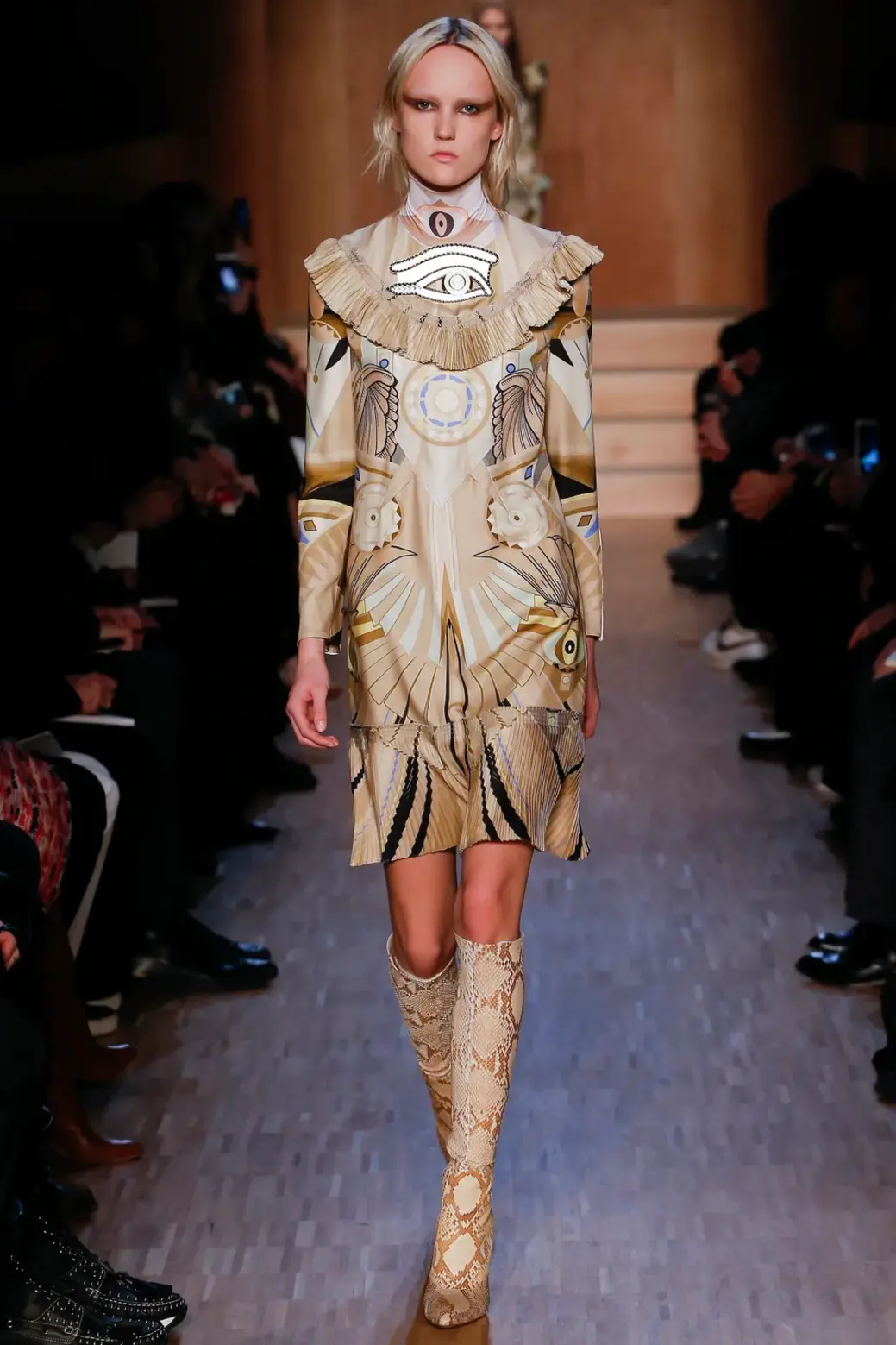
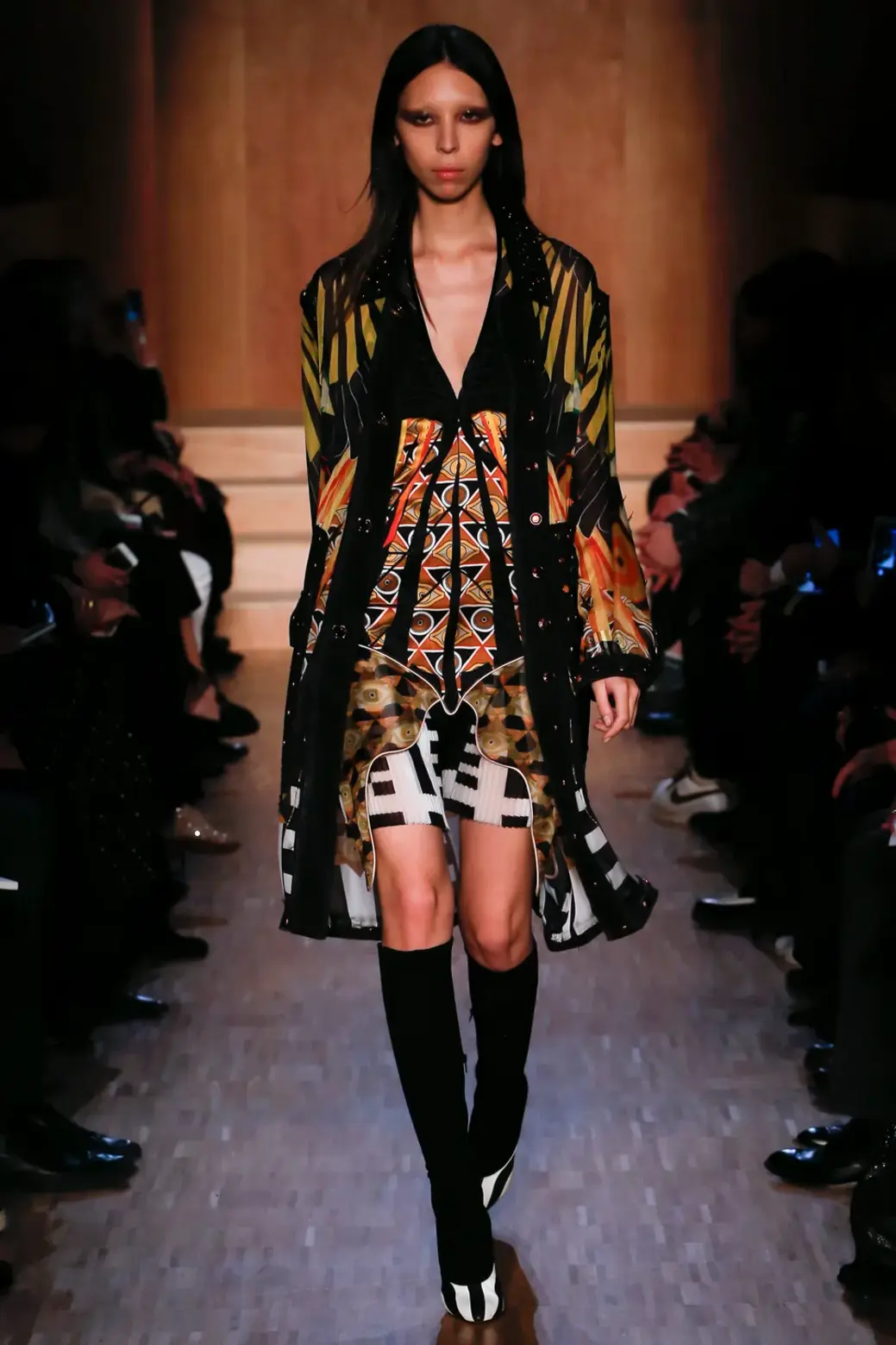
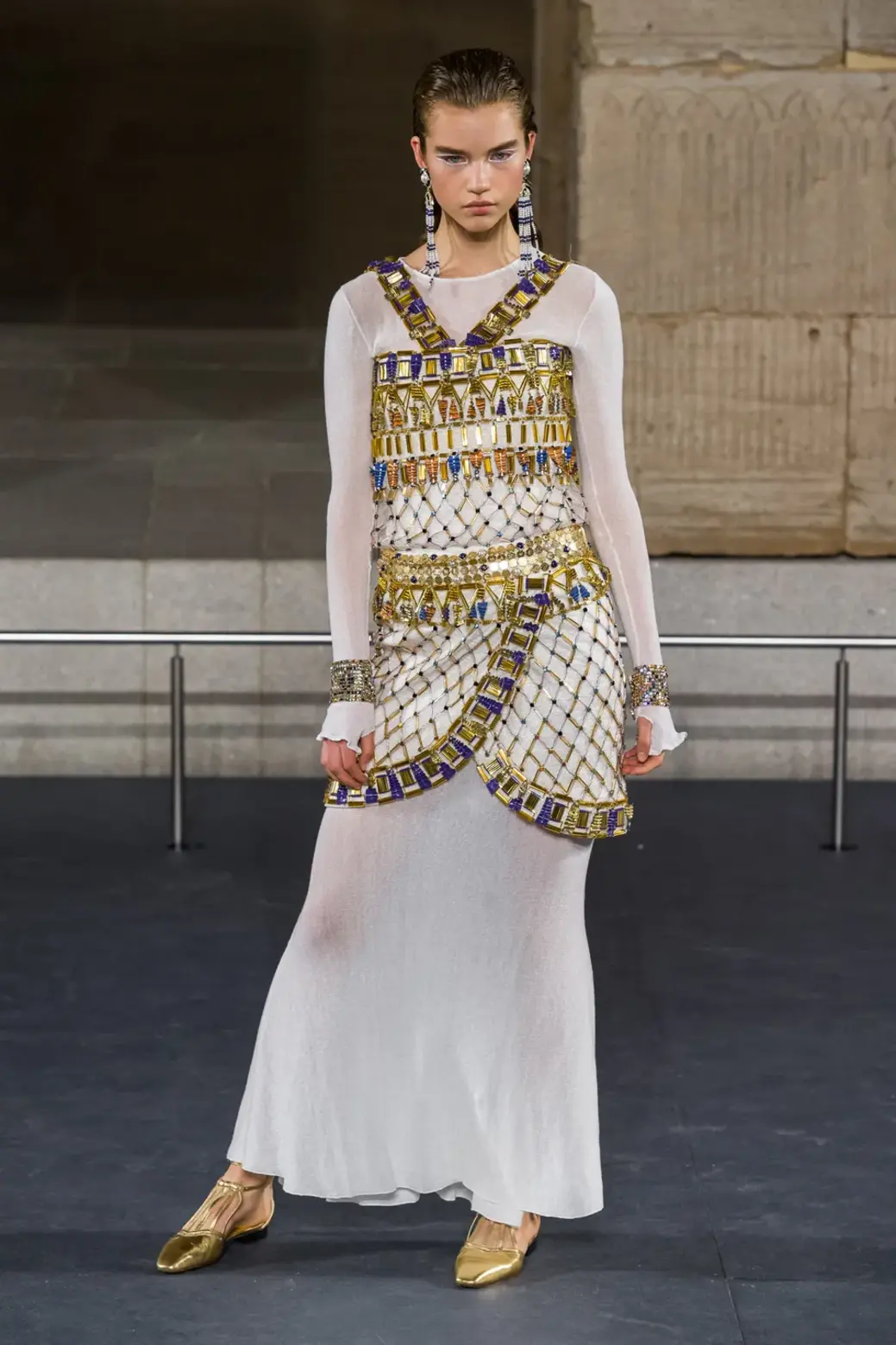
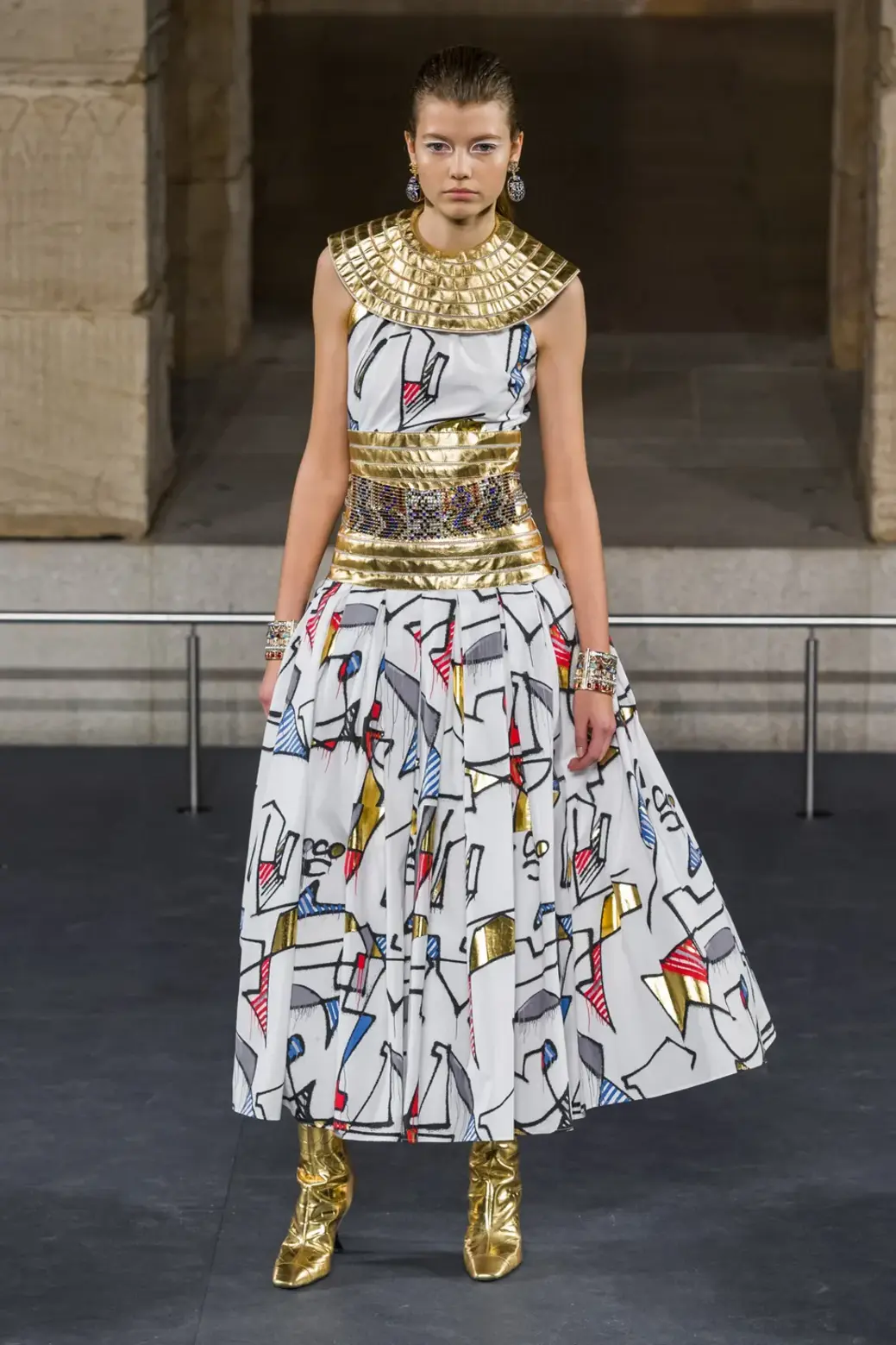
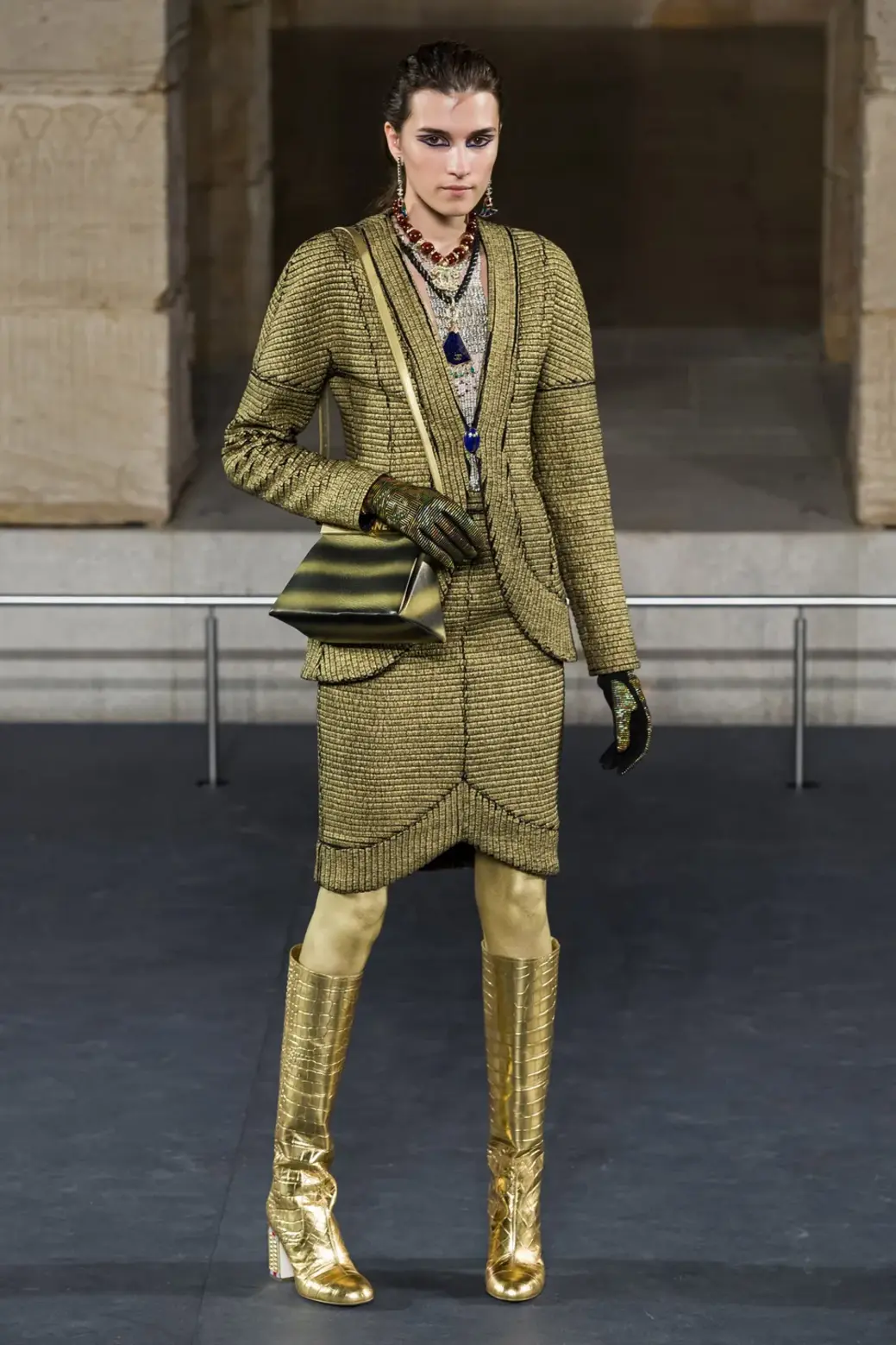
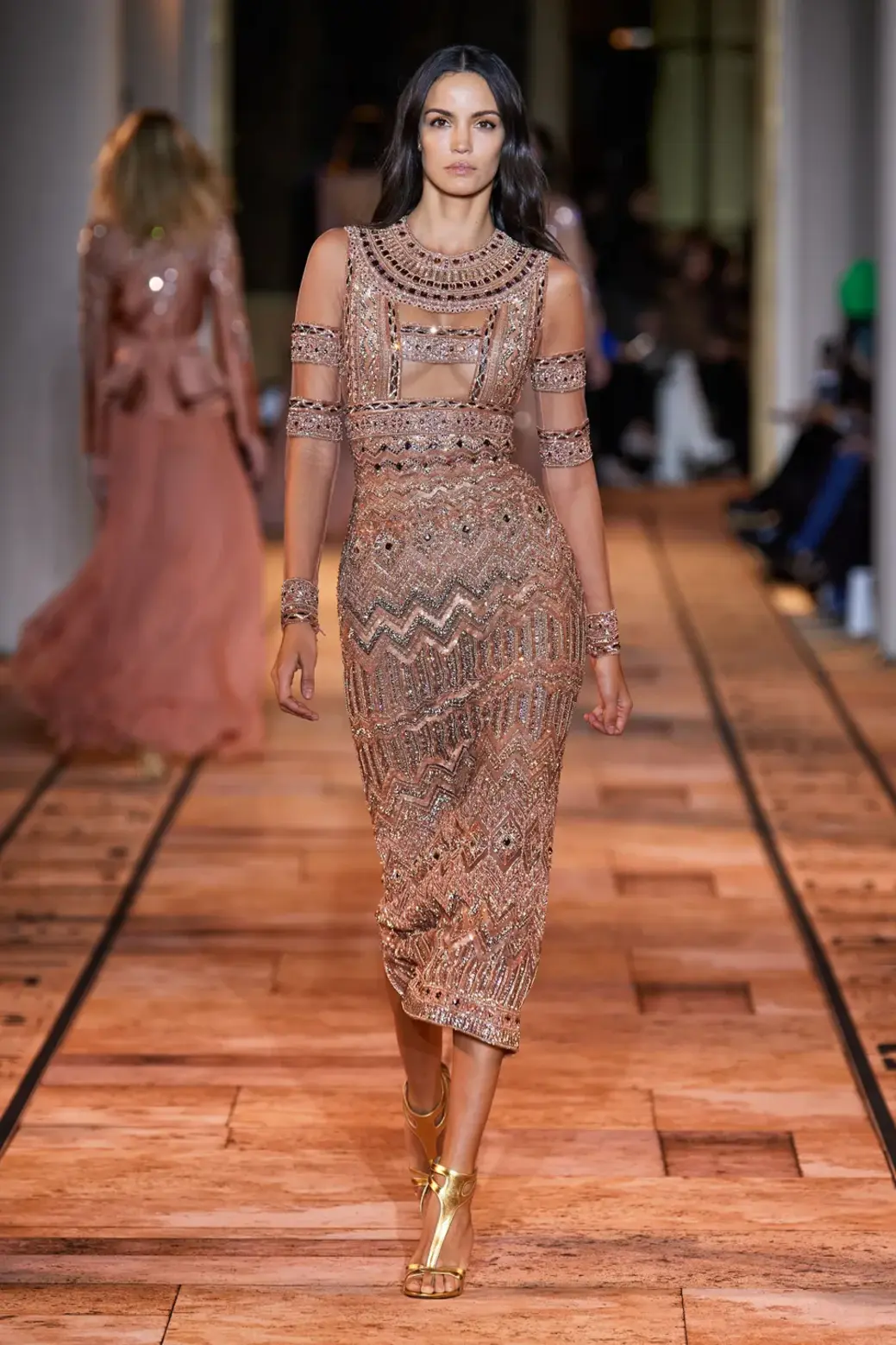
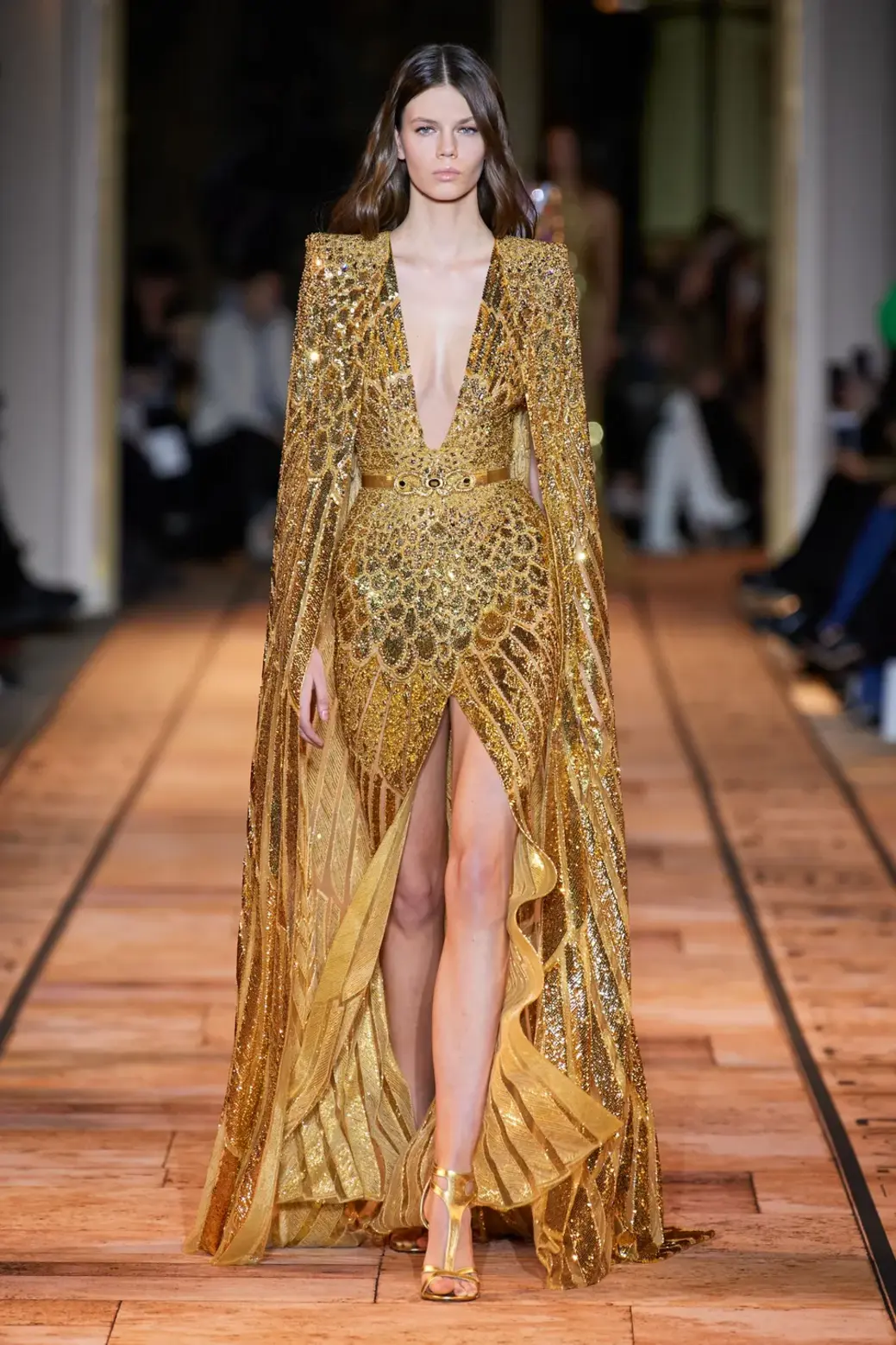
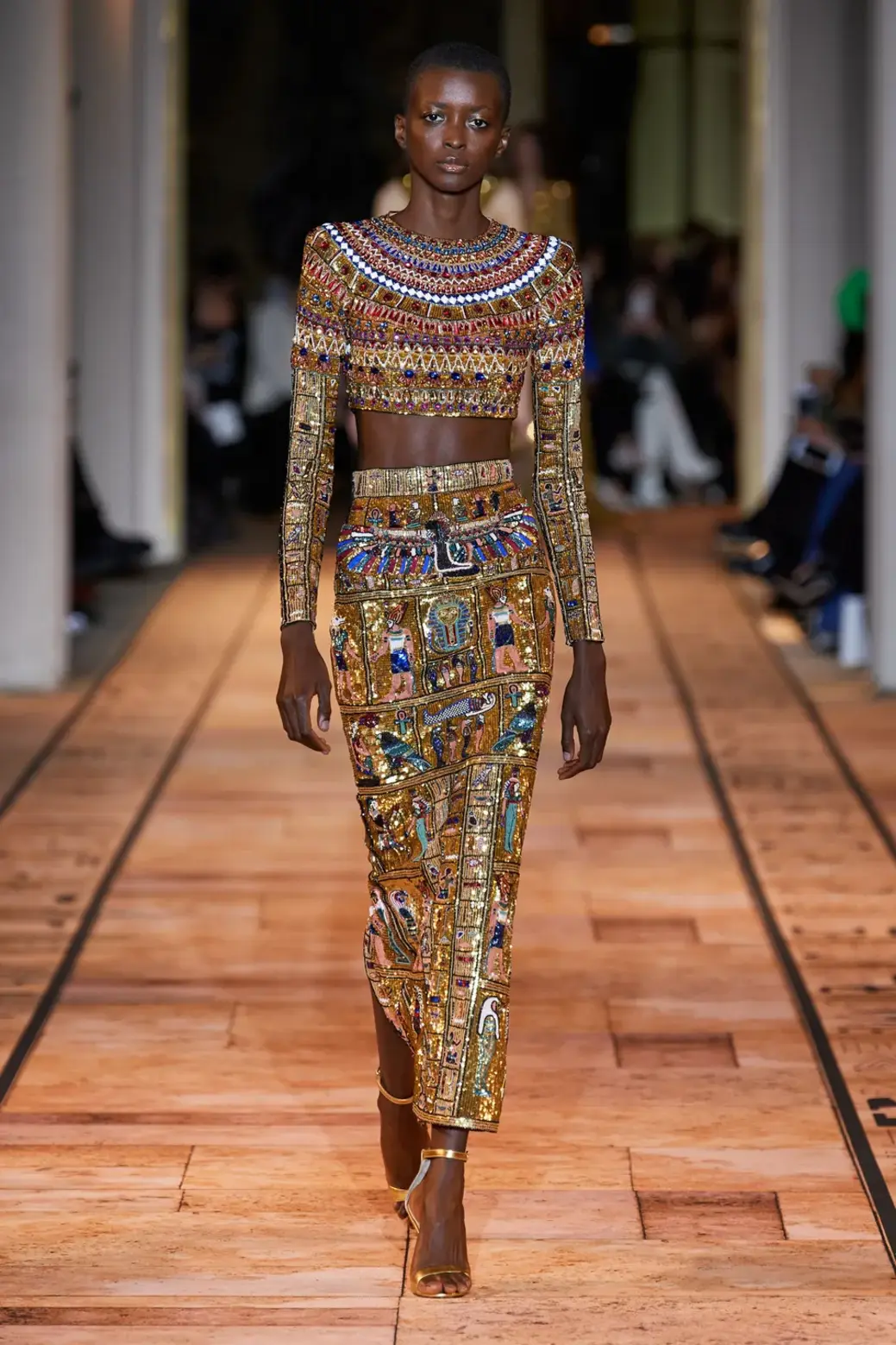
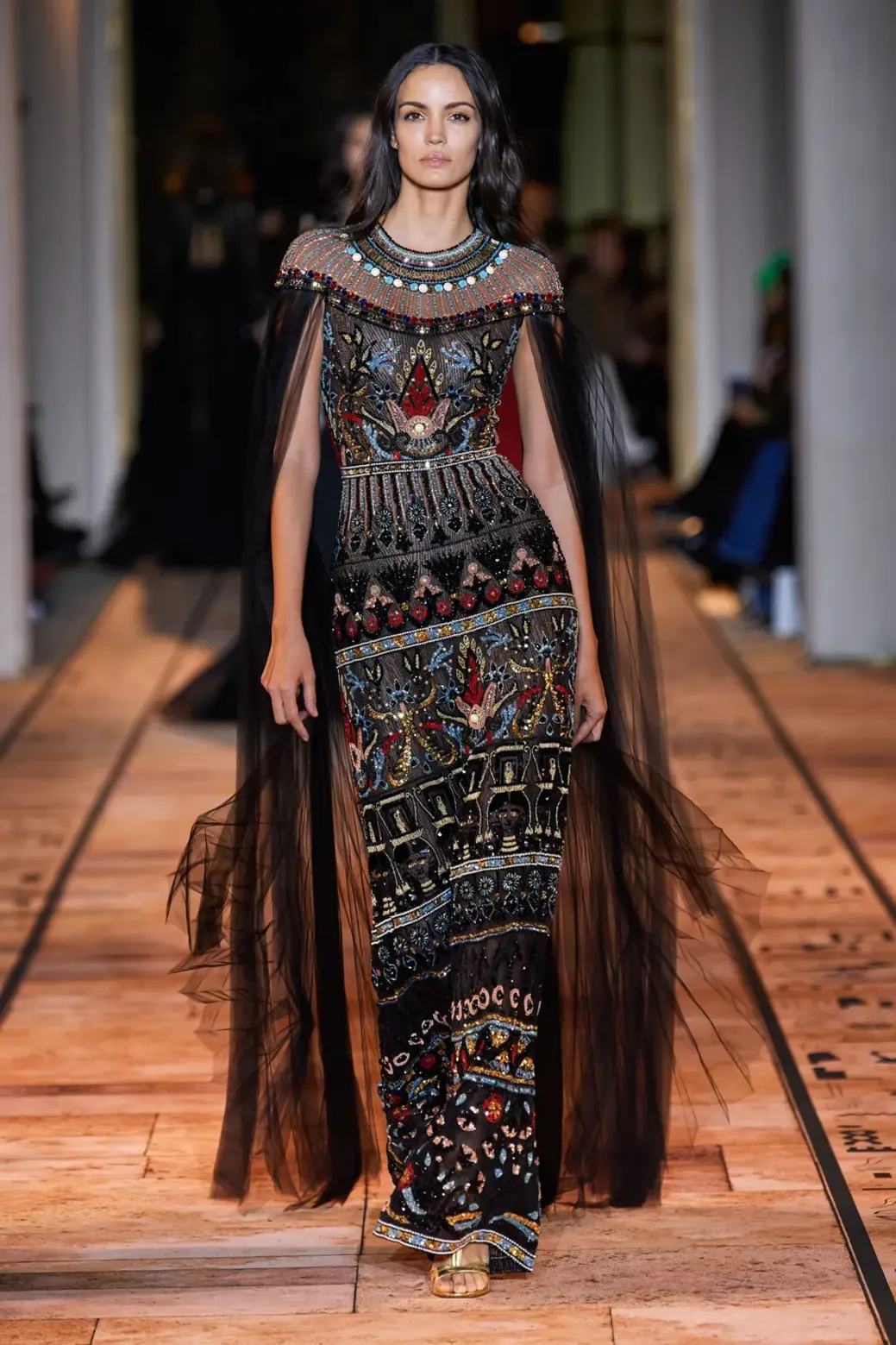
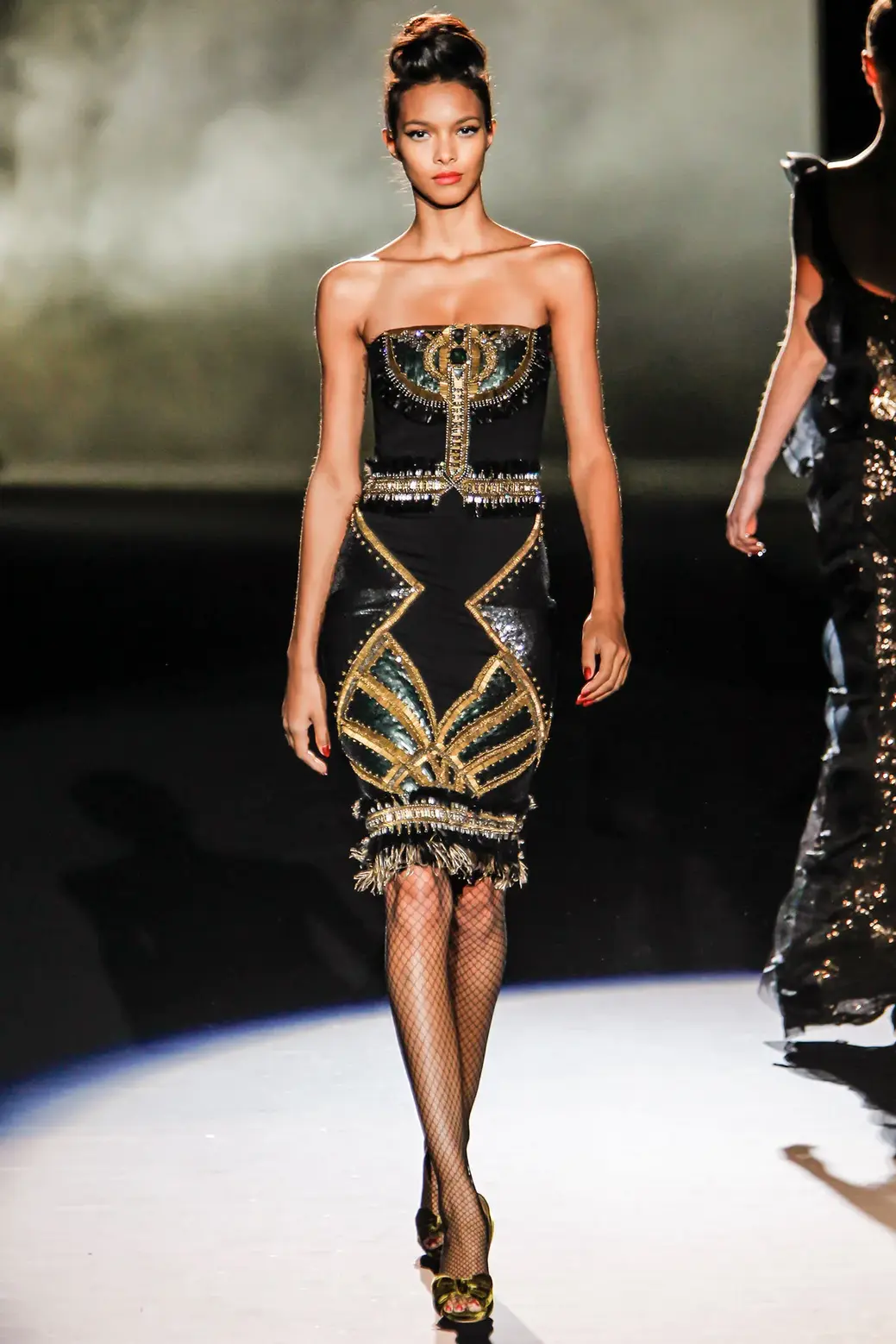
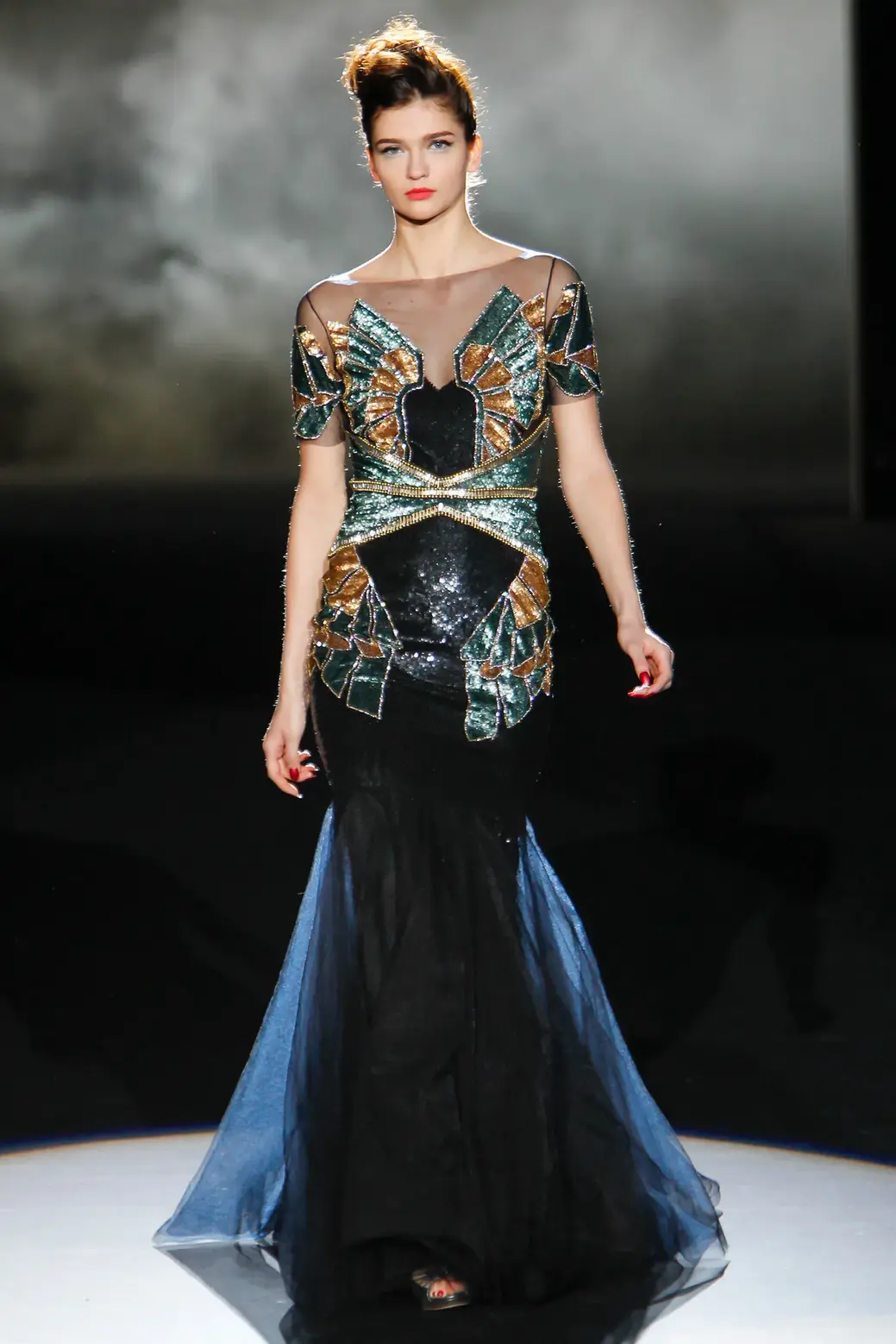
Zuhair Murad, Badgley Mischka, and Roberto Cavalli translate Egypt into evening mythology, beaded treasure, molten gold, and goddess silhouettes that glow like dunes under moonlight. Each house chases grandeur in its own dialect, from red-carpet regalia to feral sensuality, yet all keep the same promise: Egypt as radiance, seduction, and status.
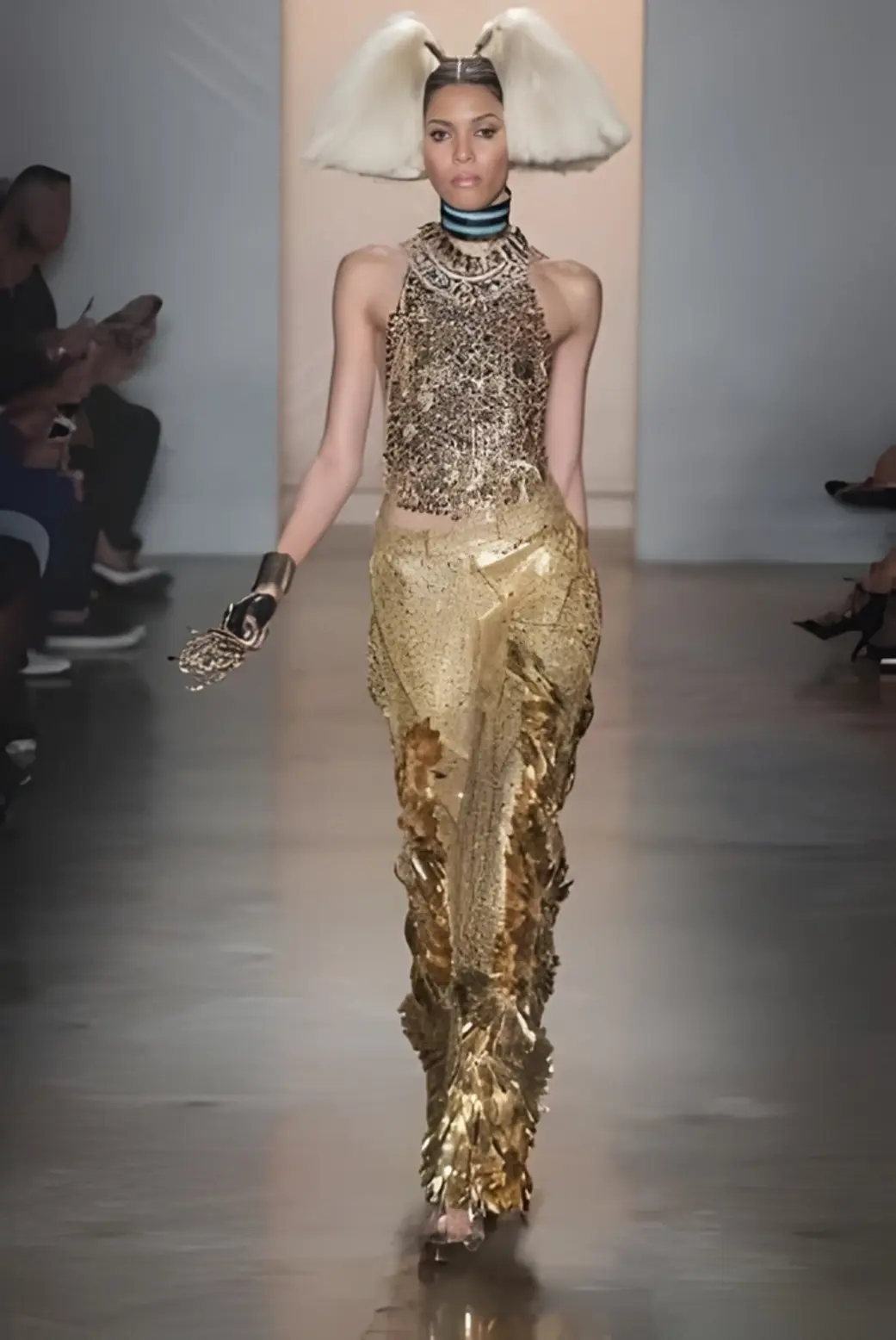
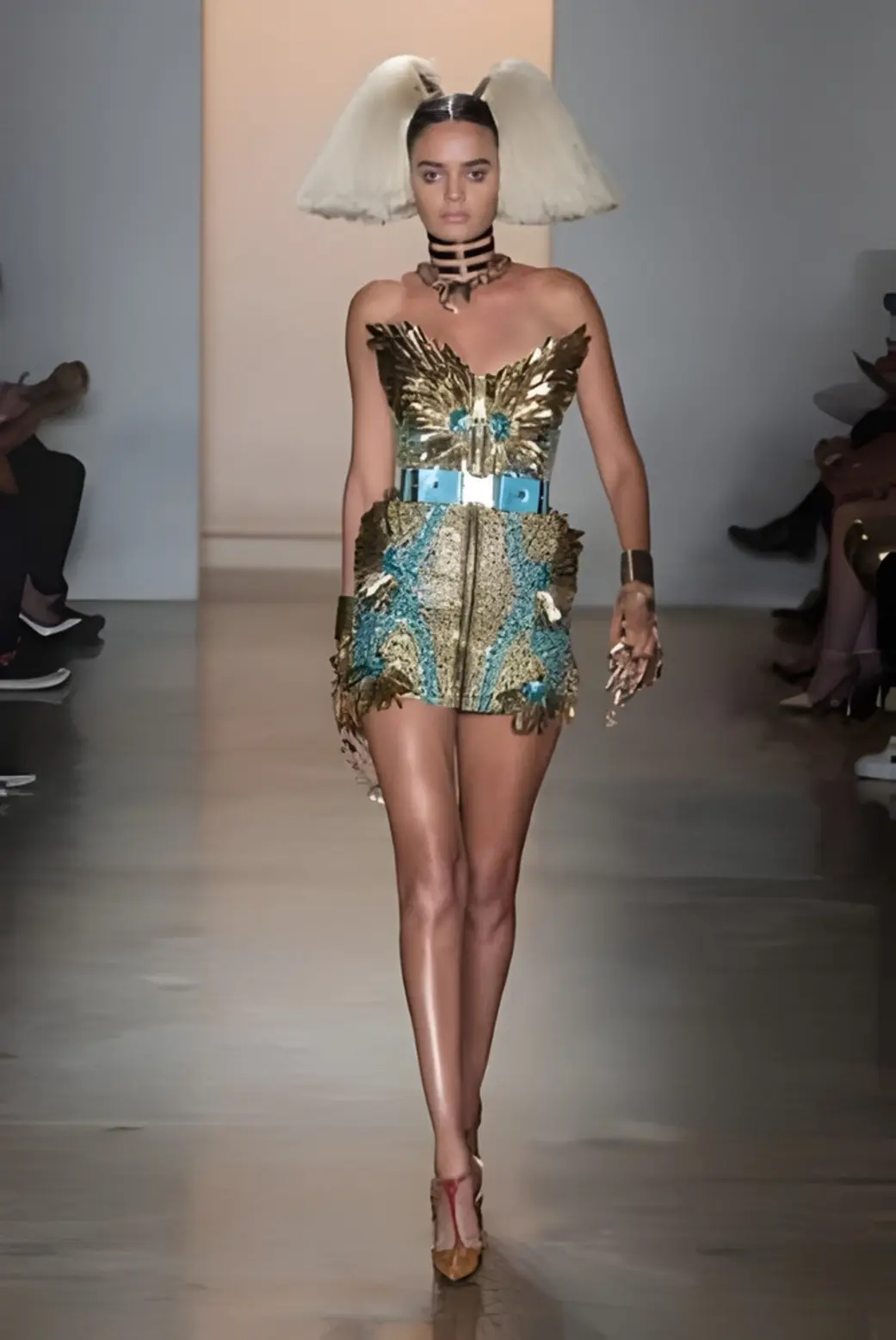
The Blonds pull Egypt into pop culture, one through glittering stage spectacle, the other through wearable motif and trend-friendly shine. Egyptian iconography becomes instant drama, designed to catch the eye fast and keep the fantasy moving.
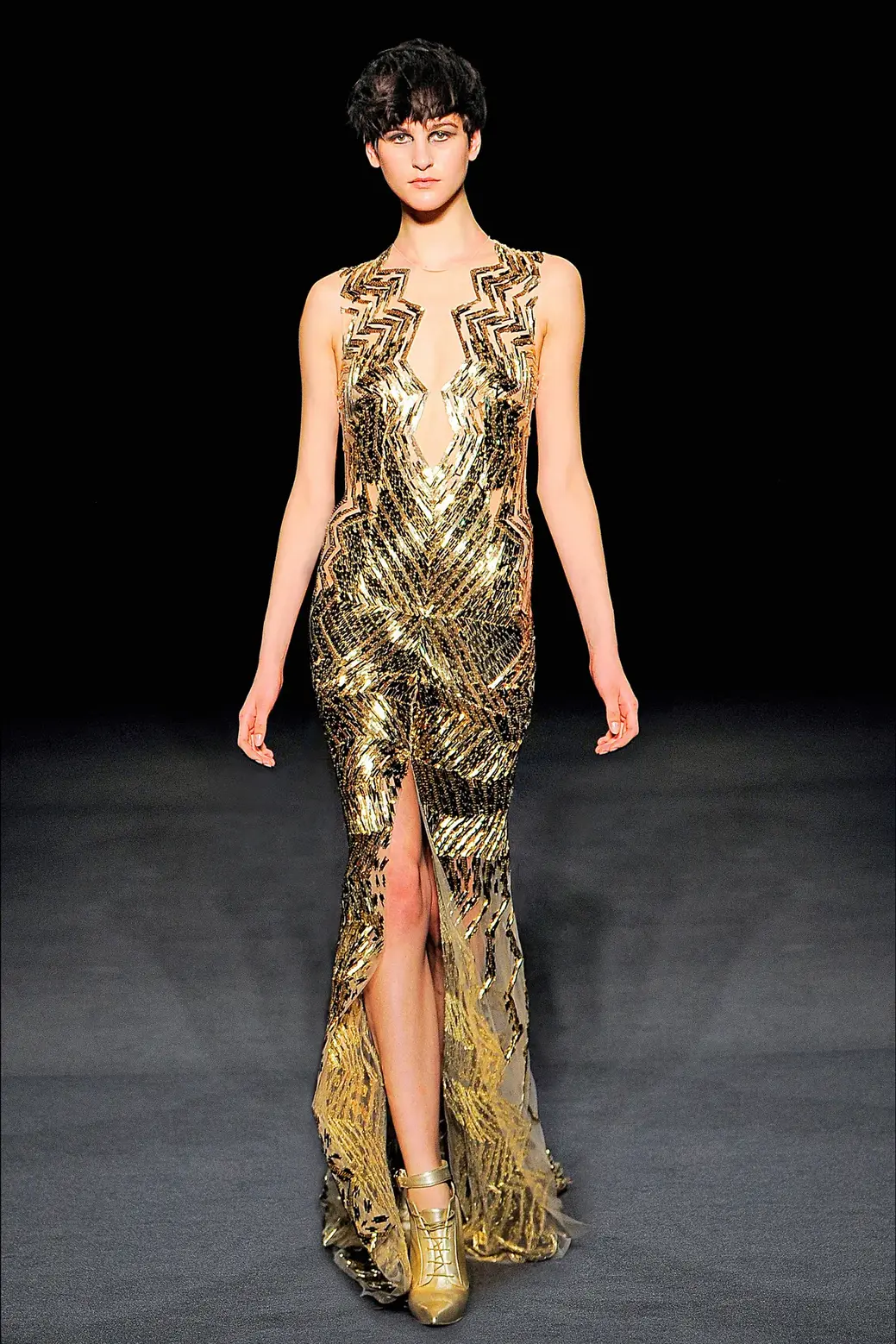
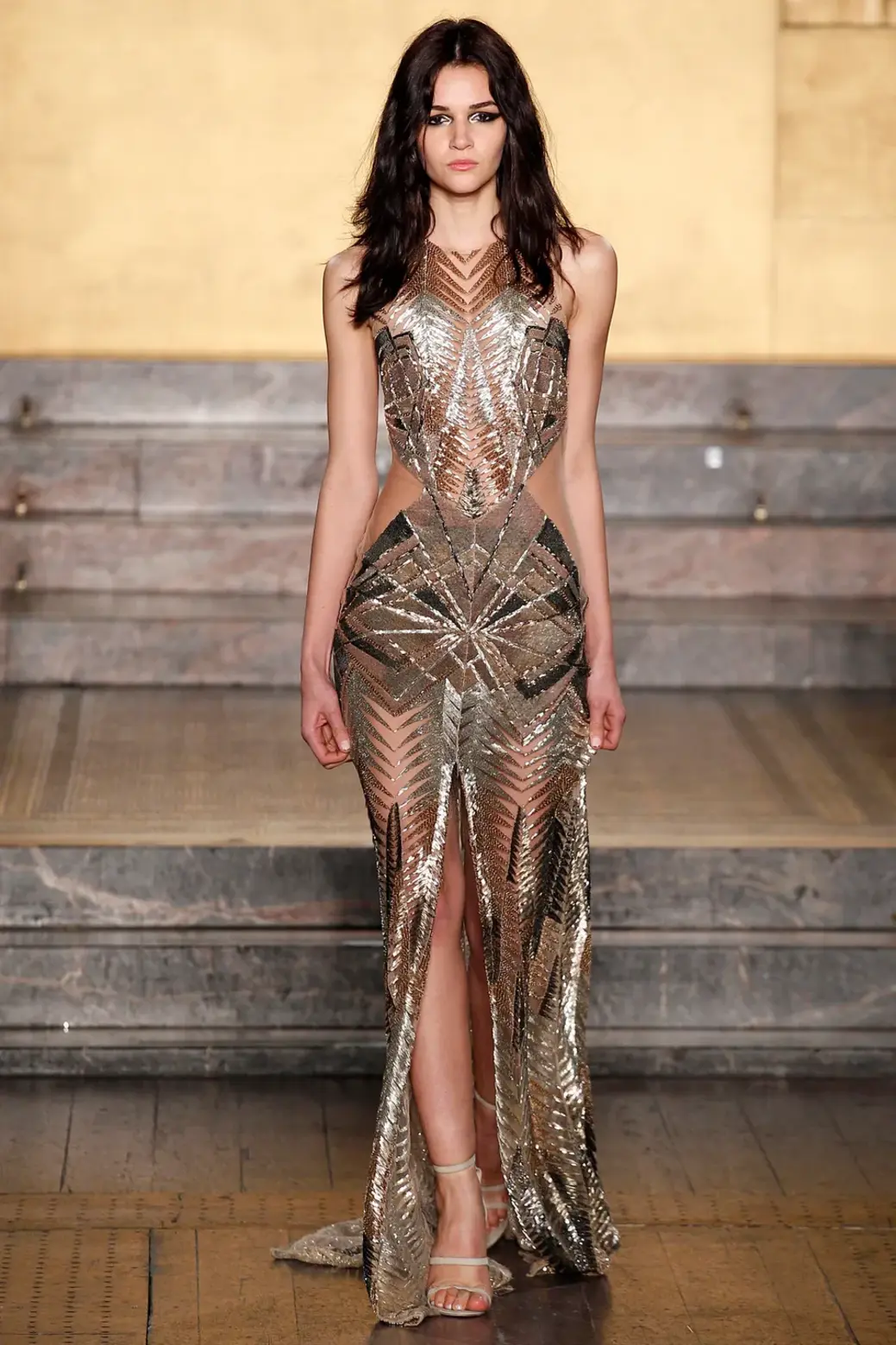
Julien Macdonald channels Egyptian influence into sheer seduction, liquid drape, skin-forward shimmer, and Cleopatra energy rewritten for spotlight heat. The effect feels daring and direct, ancient glamour distilled into pure sparkle and desire.
We return to the desert with sand still in our shoes, as if the place insists on staying with us, and the future begins to look clearer: Egyptian style will endure through material, craft, and meaning.
The next era of Egyptian influence in fashion will likely deepen through textiles and technique, linen and cotton, pleating and weaving, jewelry craft that treats metal and stone as narrative rather than sparkle, design that honors the original logic of climate and silhouette while translating it into modern life. Storytelling will sharpen as well, because fashion increasingly sells meaning; Egypt offers meaning in abundance, yet meaning demands responsibility, so context, credit, and collaboration will shape which references feel luminous and which feel hollow.
Egyptian style survives because it holds a rare duality: wearable simplicity paired with monumental symbolism, a clean line that the modern eye loves, and a mythic aura that the modern heart still craves.
At the edge of the excavation site, we kneel and brush away sand until something small catches the moonlight, metal, stone, a curve of ancient intention, an object that feels like proof that beauty can outlive the hands that made it. For a moment, the desert becomes a temple again, and the distance between ancient and modern collapses into a single shimmer: linen in light, gold against skin, geometry holding the world steady.
Egyptian style endures for this reason: it dresses the body like a myth, radiant, protected, disciplined, destined, and it reminds fashion of its oldest ambition, the ambition that survives every trend cycle and every decade of reinvention: to turn human life into something that feels eternal.
Advertisement