MENU
Close





Why are hairstylists putting foam into the hair before the real styling even starts? Styling mousse has become a way to program movement early, giving roots, curls and layers a structure they can keep carrying.
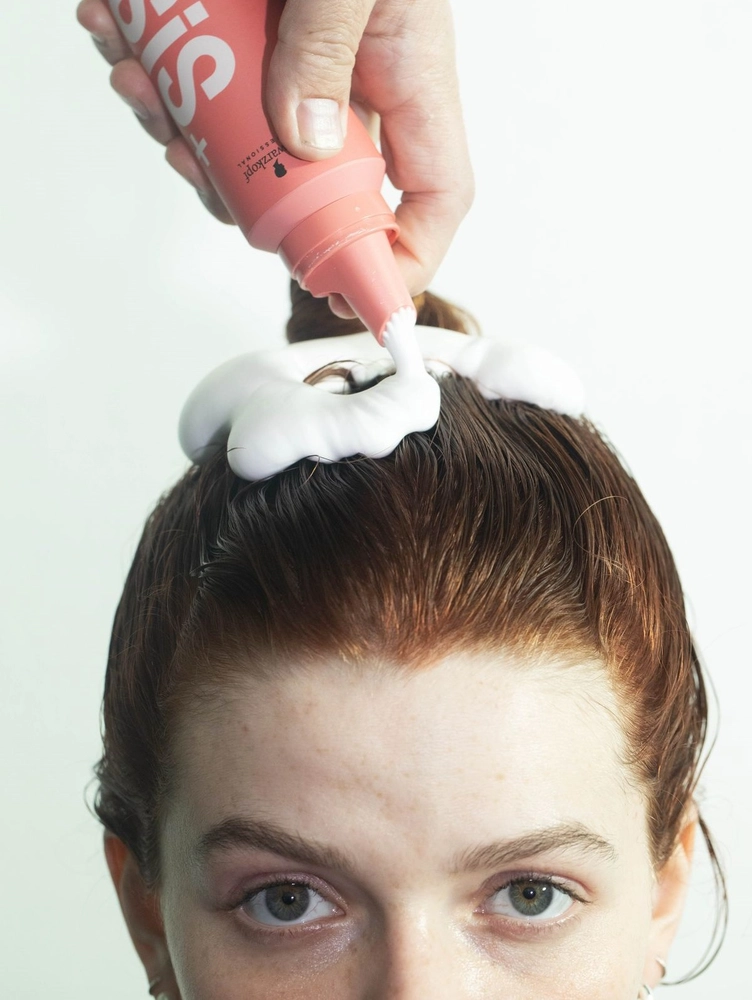
Why are hairstylists putting foam into the hair before the real styling even starts? Styling mousse has become a way to program movement early, giving roots, curls and layers a structure they can keep carrying.
August 19, 2026
Advertisement

Advertisement



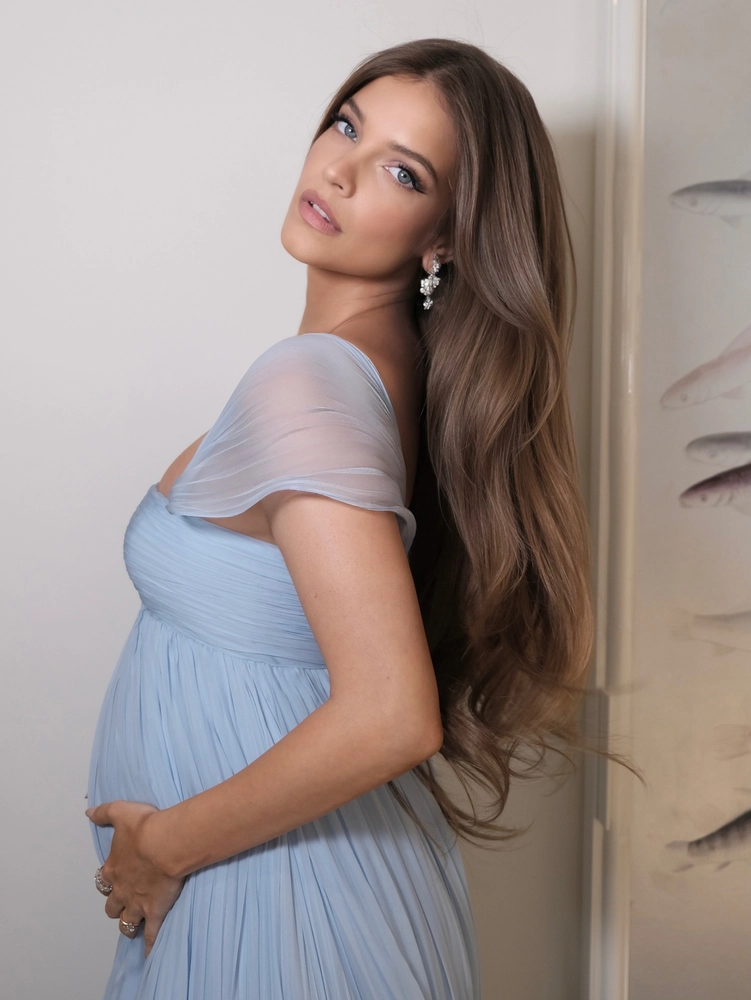
A blow-dryer was already roaring backstage when Owen Gould worked through Barbara Palvin’s hair for Cannes 2026. Before the curls, before the polish, before the finished golden lengths met the cameras, styling mousse went into the roots and crown. By the time Palvin stepped outside, the product itself had disappeared into the hairstyle.
That sequence captures the current appeal of styling mousse. Hairstylists increasingly use styling mousse during the construction stage, planting volume and memory into damp hair while there is still time to manipulate its behavior. The finished result can bounce, swing, collapse slightly, recover, and respond to a hand passing through it. The hold exists inside that movement.
In 2026 alone, hairstylists have reached for styling mousse on Emma Stone, Sabrina Carpenter, Demi Moore, Barbie Ferreira, Barbara Palvin, and Zoey Deutch, using foam to build everything from Oscars blowouts and airy Grammy updos to Cannes volume and softly structured waves.

A towel leaves hair in a particularly useful state. Water still surrounds the strands, yet the surface has enough space to receive styling ingredients at a workable concentration. Adam Reed, hairstylist and founder of Arkive, has described mousse as a source of lightweight structure, volume and flexible hold, and his technique starts with distributing the foam through damp hair before combing it into place.
The hands become the first styling tool. Foam is worked through roots when elevation is the goal, then drawn through the lengths when the whole shape needs support. A wide-tooth comb can distribute it through waves. Fingers can squeeze it upward into curls. A round brush can stretch a section into an exaggerated direction that hair would rarely choose on its own.
Overdirection is where the method becomes surprisingly architectural. A stylist pulls a section past its natural resting point, dries it there, then allows it to fall back. The root retains part of that elevated trajectory. Gould used the principle for Palvin’s Cannes blowout, turning a simple brush movement into an internal support system.
Larry King takes the same idea into fringe styling. He has recommended applying styling mousse directly onto a round brush before working through curtain bangs, loading the tool with product exactly where the curve will be created. Another method adds mousse to the fringe, pins the intended bend into position and uses a diffuser to dry the temporary geometry into the hair.
The hairstyle is essentially being programmed while wet.
Modern styling mousse products help preserve that program through film-forming polymers. As moisture evaporates, these polymers create a fine network around the strands. A curl remembers where fingers scrunched it. A fringe remembers the arc of the brush. A root remembers the direction in which it was dried. Once the temporary cast is softened through brushing or scrunching, the shape remains while the surface regains movement.
Curls make the mechanism especially visible. Celebrity hairstylist Adir Abergel has discussed mousse as a way to encourage curl formation while supplying definition, moisture and hold. Damp curls receive foam, hands push the pattern upward, and a diffuser dries from below. The polymer cast develops around the shape created by those gestures.


Then comes the satisfying second act. Fingers return to the dried curls and scrunch them again. The cast breaks into softness while its internal memory survives.
The first scrunch establishes the curl. The second releases its personality.
Fine hair asks for another technique. Foam expands before it ever touches a strand, which allows a palmful of product to spread through a surprisingly large area. A stylist can distribute structure across the roots and internal layers, allowing individual hairs to contribute to the total volume. Blow-drying then turns that distributed support into lift.
Natural and textured hair has opened another path for the category. Hairstylist Susan Oludele has spoken about clients embracing natural patterns, lower-tension techniques, and styling that lets texture participate in the final look. Styling mousse fits comfortably into braids, twists, stretched curls, and wash-and-go routines because foam can be pressed, combed, or scrunched through broad sections before drying.
Professional styling frequently layers it too. Mousse can establish body throughout the hair, then gel can enter selected areas requiring sculptural control. Cream can bring slip through dry ends. Hairspray can preserve the final silhouette once the brush, diffuser, or hot tool has completed its work. The foam occupies the foundation.
Look closely at a can of mousse and the aesthetic connection becomes almost literal. A very small quantity of formulation expands into a cloud capable of covering a large portion of the head.
Many contemporary mousses start with water and film-forming styling polymers. Color Wow Xtra Large Bombshell Volumizer uses VP/DMAPA acrylates copolymer and Polyquaternium-22. Oribe Grandiose Hair Plumping Mousse uses VP/VA copolymer alongside a structure-forming starch polymer, with panthenol, glycerin and sunflower oil supporting the hair around that styling framework.


Once an aerated formula collapses across the strands, those styling materials remain distributed through the hair. Heat removes water. Polymers settle into a fine support network. The eye sees hair occupying space, while the product itself becomes difficult to locate.
The hairstyle gains a skeleton without announcing where the skeleton lives.
Hairstylist Ericka Verrett shows how widely that hidden structure can travel across moods. On Sophie Thatcher, mousse helps rough up the layers into youthful grunge, giving the shag enough lift for its broken fringe and flicked lengths to hover around the face. With Winona Ryder, the same styling logic feeds a rock-and-roll retro shape, fuller through the crown and deliberately tousled around the bangs, as though a 1970s backstage photograph had been shaken awake. Ella Purnell takes mousse somewhere softer. Her airy fringe, curved face-framing pieces and loose lengths carry a romantic whimsy, with the volume floating around her features instead of sitting heavily against them.
The foam itself already behaves like the desired hairstyle: expanded, weightless-looking and full of air.


A bathroom trend can travel a long way before financial data notices it. Mousse has already reached that stage.
The global premium hair mousse segment was valued at approximately $1.07 billion in 2024, with projections placing it around $2.12 billion by 2033. That trajectory represents an estimated 7.9% compound annual growth rate from 2025 to 2033, giving the revival commercial weight alongside its red-carpet and salon visibility.
The broader styling market still contains enormous gel, cream, and wax businesses. In Europe, those three formats collectively accounted for around 77.85% of styling-product revenue in 2025. South America recorded a similar combined share at approximately 77.02%. Sprays and mousses, meanwhile, carry projected annual growth of roughly 4.18% in Europe and 6.39% in South America through 2031.
Those figures reveal something useful about beauty trends. Cultural heat can emerge within a growing segment long before an entire category reorganizes itself around it.
The professional conversation already points toward that heat. Dimitris Giannetos has highlighted bouncy blowouts and naturally moving hair among the major directions shaping 2026. Across red carpets, salons and social feeds, volume increasingly appears with visible softness. Curls retain their spring. Layers separate when the head turns. Fringe falls into place after being touched.
A can releases its brief hiss. Foam expands in the palm, disappears into damp strands and leaves the spotlight to brushes, fingers, rollers and heat.
By the time the hairstyle starts moving, styling mousse has already done its most important work.
Advertisement