MENU
Close





A pair of scissors becomes an unlikely instrument for negotiating history in the hands of Bùi Thanh Tâm. Cutting through Đông Hồ, Hàng Trống and Kim Hoàng folk prints, the Vietnamese artist turns inherited imagery into mutants, fractured bodies and searching sunflowers—asking how culture survives when memory itself must continually change shape.
A pair of scissors becomes an unlikely instrument for negotiating history in the hands of Bùi Thanh Tâm. Cutting through Đông Hồ, Hàng Trống and Kim Hoàng folk prints, the Vietnamese artist turns inherited imagery into mutants, fractured bodies and searching sunflowers—asking how culture survives when memory itself must continually change shape.
August 14, 2026


The first time Bùi Thanh Tâm cut into a handmade Vietnamese folk print, he felt guilty. Decades later, that incision has become one of the clearest metaphors for his practice.
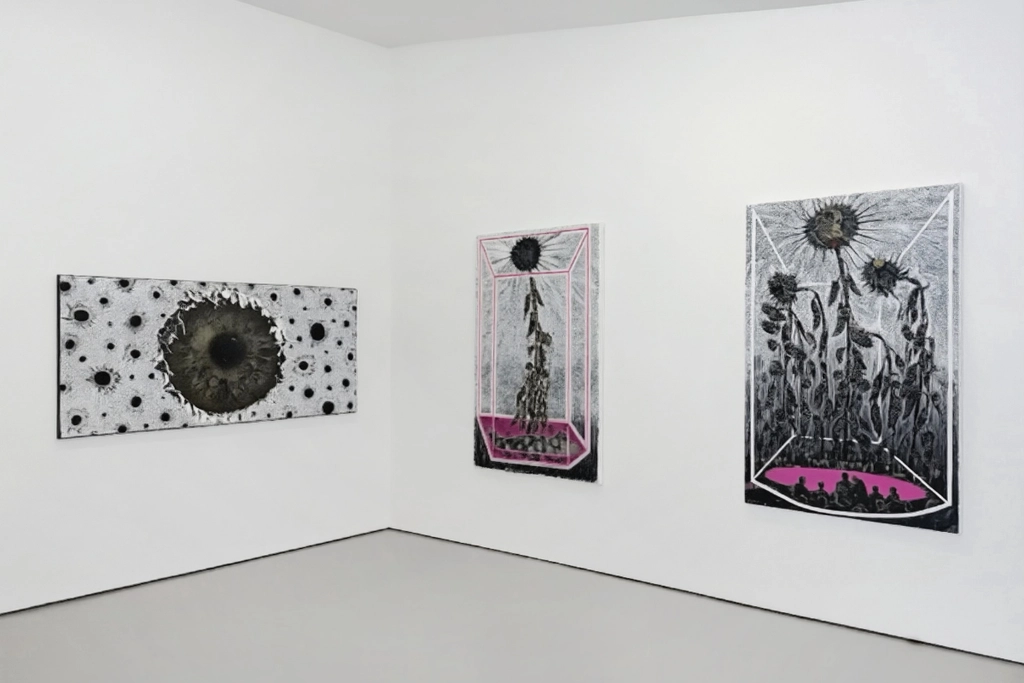
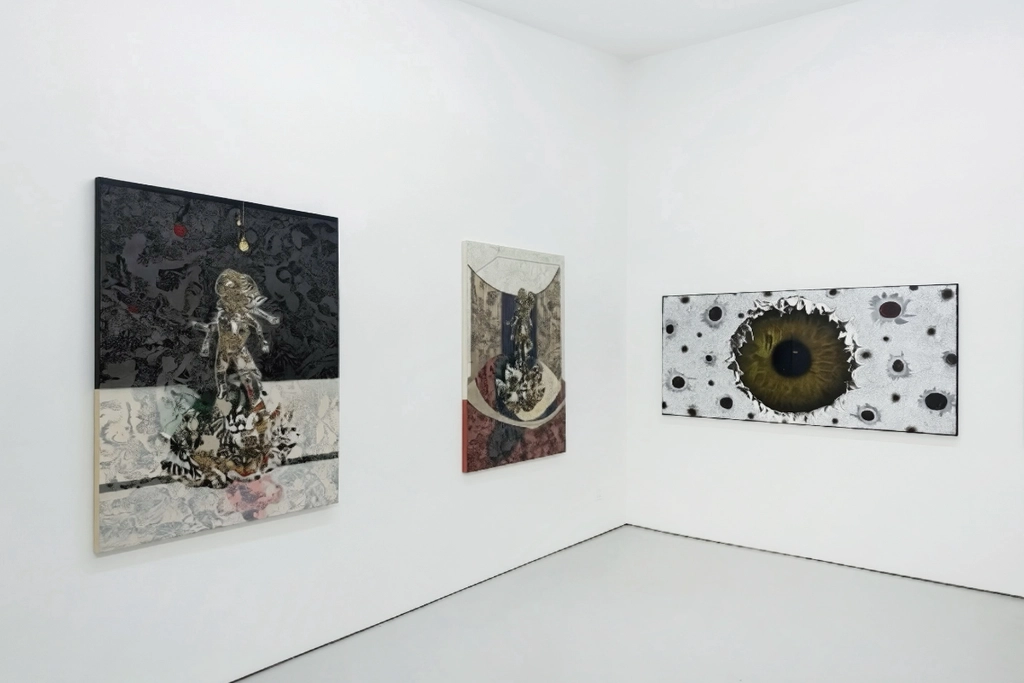
Traditional images are severed, layered with acrylic and gold leaf, placed beside religious and historical symbols, then rebuilt into figures carrying several centuries at once. In Here on and after, his first U.S. solo exhibition in New York in 2026, works including Mutant, Utopia, Hello. God is here and Searching for the Sunflower push this process toward a larger question: what happens to identity when history refuses to remain in the past?
The answer emerging from Tâm’s canvases is neither preservation nor erasure.
The Transnational Dialogue: "Your current solo show in New York is titled 'Here on and after', dealing with the afterlife of Vietnam's history and memory. When you exhibit pieces deeply embedded with Northern Vietnamese folklore to an international audience who may not know the cultural source material, what kind of 'misunderstandings' or new interpretations are you hoping to spark?"
I do not expect international audiences to fully understand what Vietnamese folklore is. If they see the paintings as a lecture on Vietnamese culture, that would perhaps be too narrow for art.
I believe that art begins from encounters, not from statements. Images of Đông Hồ, Hàng Trống, or Kim Hoàng folk prints in my works serve as both cultural metaphor and creative medium. The usage of cutting, layering, collage techniques then juxtaposed with imageries of wartime or contemporary life deliver a new message: they no longer exist as a collection of symbols but as entities in a continuous state of transformation.
“Misunderstandings,” in this context, can be quite fascinating. For example a foreign viewer links a folk tiger with a symbol of power, whereas a local eye would associate that with spiritual belief of childhood memories. Both readings are valid because meanings are created from moments when the artworks and the public meet.
My intention is not to convey a fixed narrative about Vietnam, but to build a space for people to engage with their own memory. There, Vietnamese history is a point of departure, a device to reflect on war, colonialism, memory, loss, and the capacity for rebirth-something inherent in all cultures.
Perhaps that is why “Here on and after” speaks not only to what comes "after" for Vietnam, but also to the "after" that every society must face: after war, after upheaval, after historical ruptures-how do human beings continue to live, and in what way do we carry our memories forward?
Universal vs. Specific Anxieties: "In your new series ‘Mutant’ and ‘Utopia’ (2026), you use hybrid figures and fragmented folk icons. Do you see the psychological 'mutations' you paint as uniquely Vietnamese struggles with rapid modernization, or are they universal symptoms of the globalized world?"
Struggles or universal symptoms, it is coexistence.
First of all, I want to share some details about the “mutants” in my paintings as they originate from a very specific lens in regards to Vietnamese history. We are a population who have lived through war, colonialism, Đổi Mới (translated as “renovation,” a radical economic reform period after the American War in Vietnam), globalization, as well as rapid technological advancements–all within a few decades. What happens when a community is confronted with so much novelty is a crash between the old and the new. Inevitably, they coexist, collide, or even overlap. In other words, people find themselves in a constant state of adapting and redefining who they are.
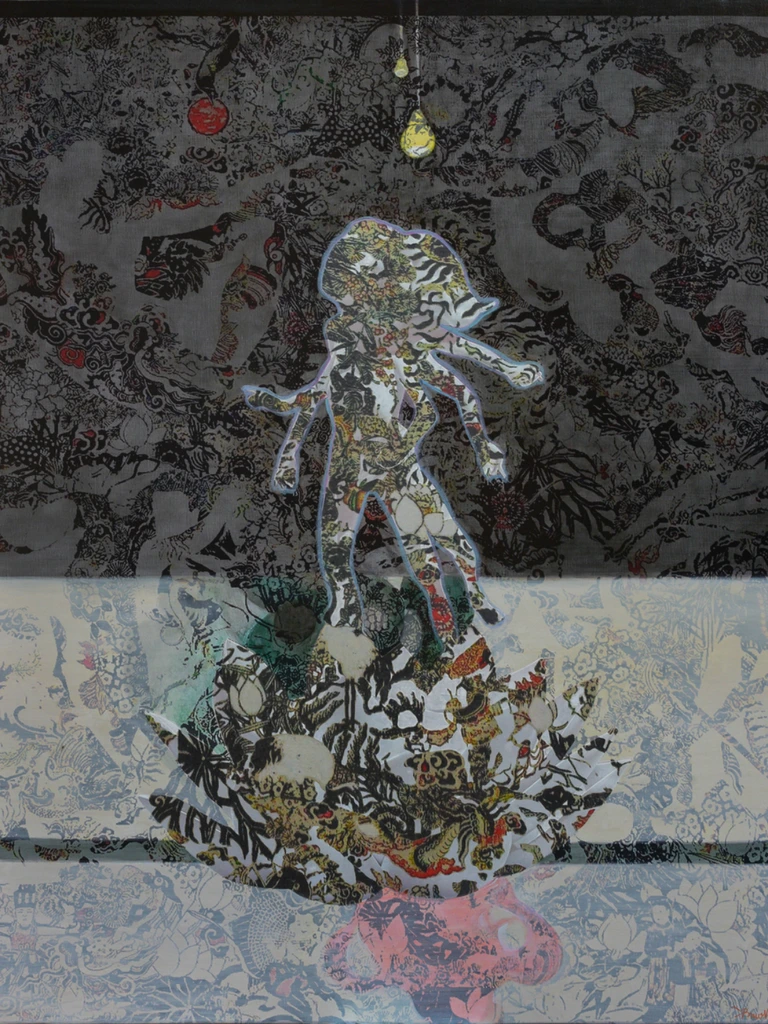
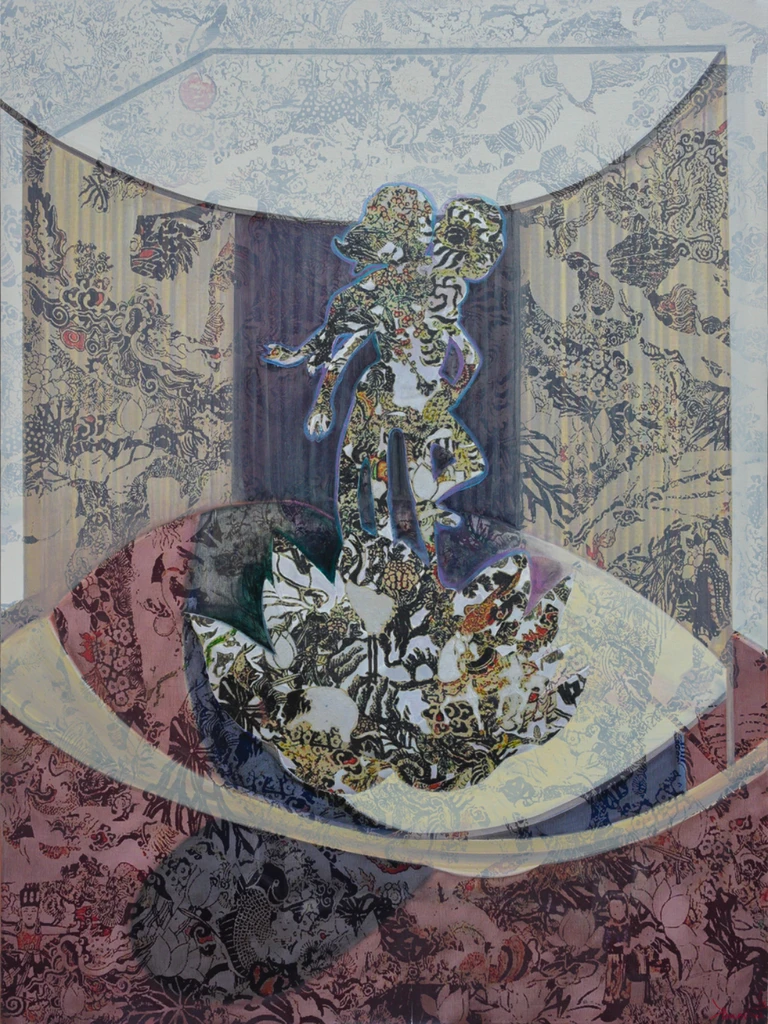
Having spent an extensive amount of time with this topic, I came to an understanding that this condition is not exclusive to Vietnam. As the world becomes increasingly interconnected, people from all parts of the world live with a fragmented sense of identity. We belong to multiple cultures, multiple systems of values, and multiple spaces. The “mutants” in my paintings are not strange creatures but reflections of contemporary human beings–forever carrying layers of memory, voice, and contradiction.
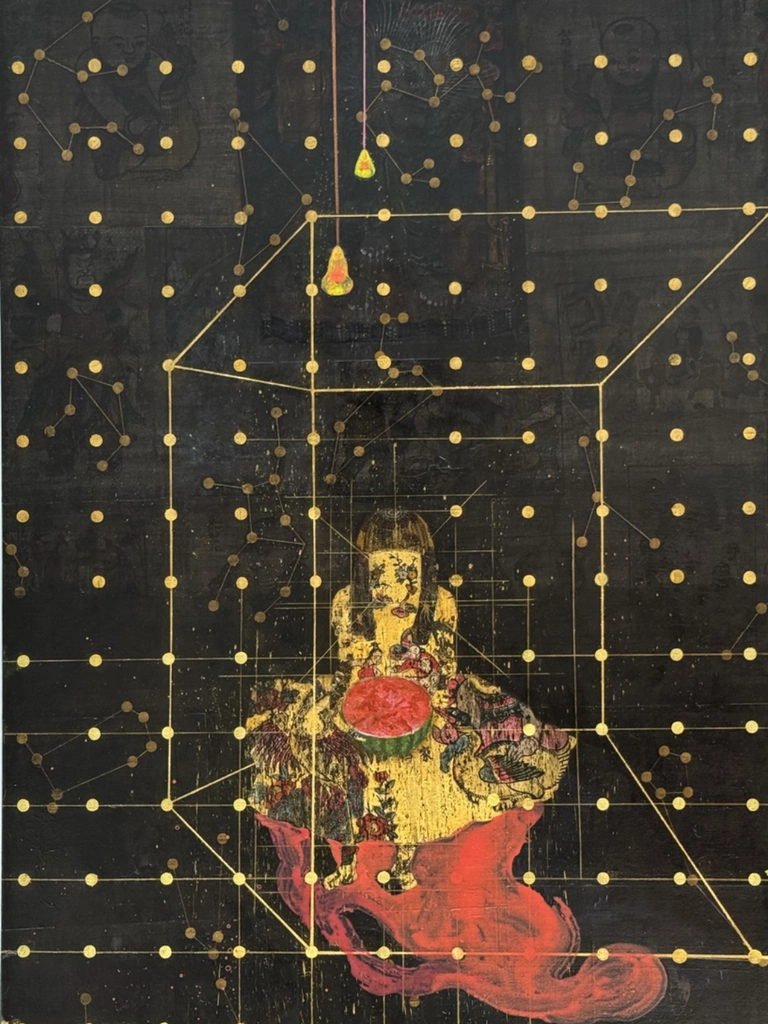
I see this hybridity as a potential disadvantage, because in nature or in communal life things evolve through a process of absorption and transformation. Vietnam sits at the crossroads of Asian, European, and Western cultural influences, and even the folk art materials I draw upon are byproducts of that ever changing process spanning centuries.
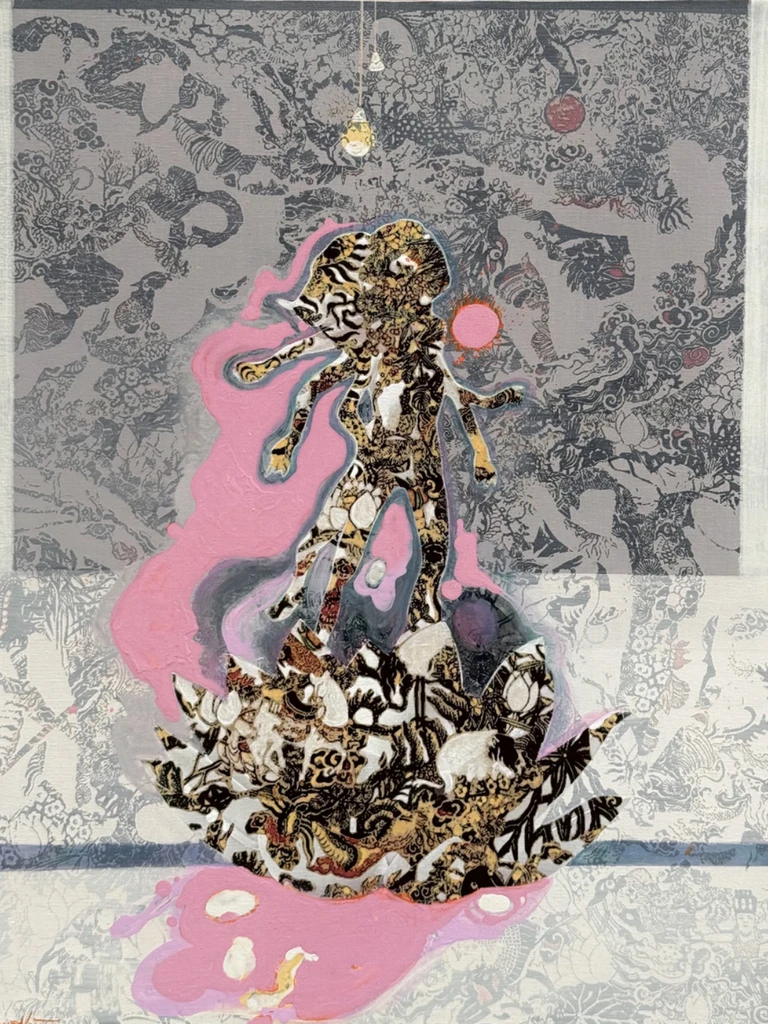
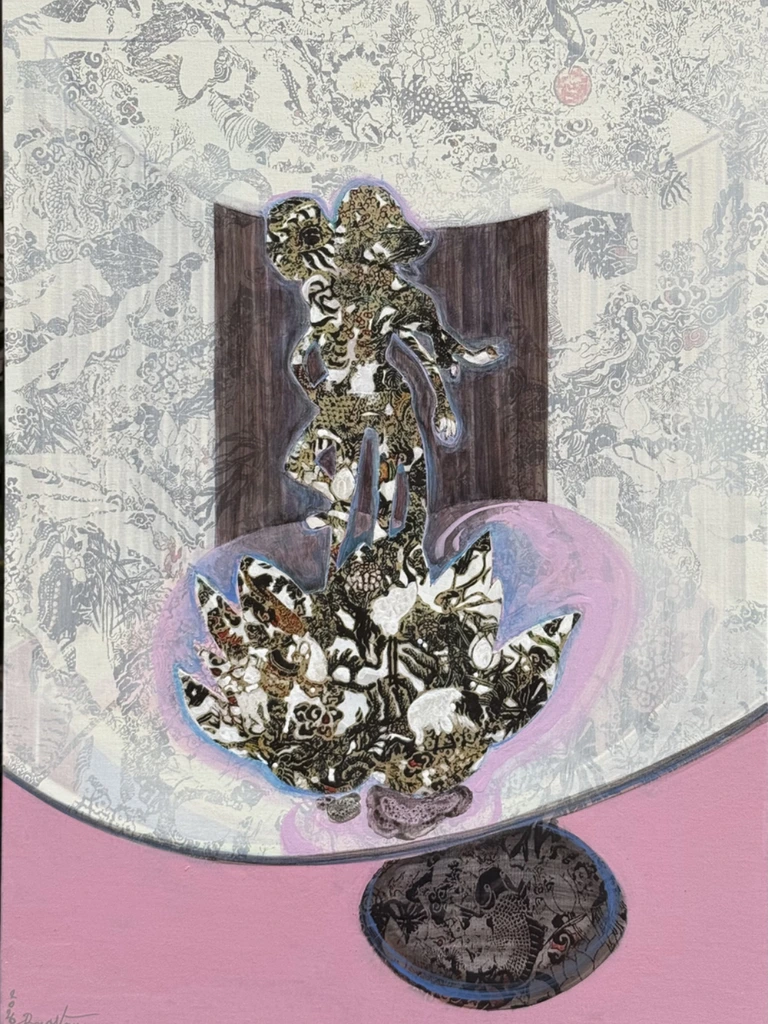
The “mutants” do not represent decay nor destruction, they carry the capacity for adaptation, the wounds of history. Their bodies visualize the undergoing adaptive process. I believe this serves as a metaphor for us—not only in Vietnam but anywhere in the world.
The Sacred and the Decoupled: "In your 2026 works like 'Hello. God is here', you place traditional spiritual/folk iconography into heavily stylized, almost secular contemporary backdrops. Walk me through your psychological process when you take an actual, physical print made by a traditional artisan and physically cut it apart. Does it feel like a destructive act, or a resurrection?"
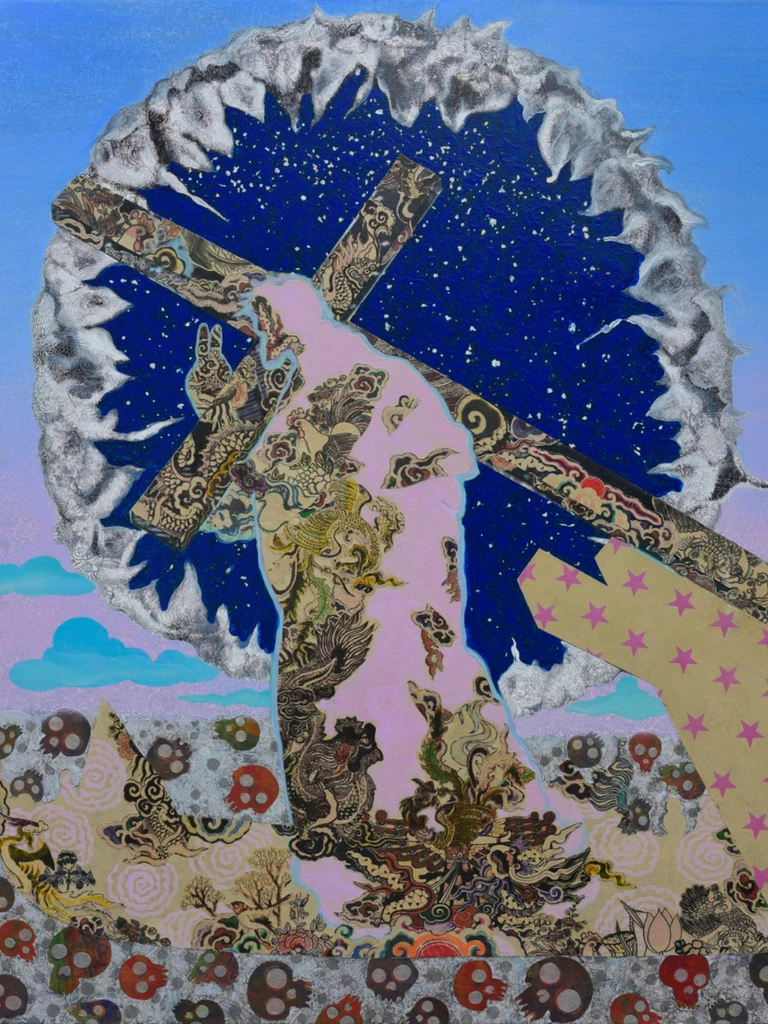
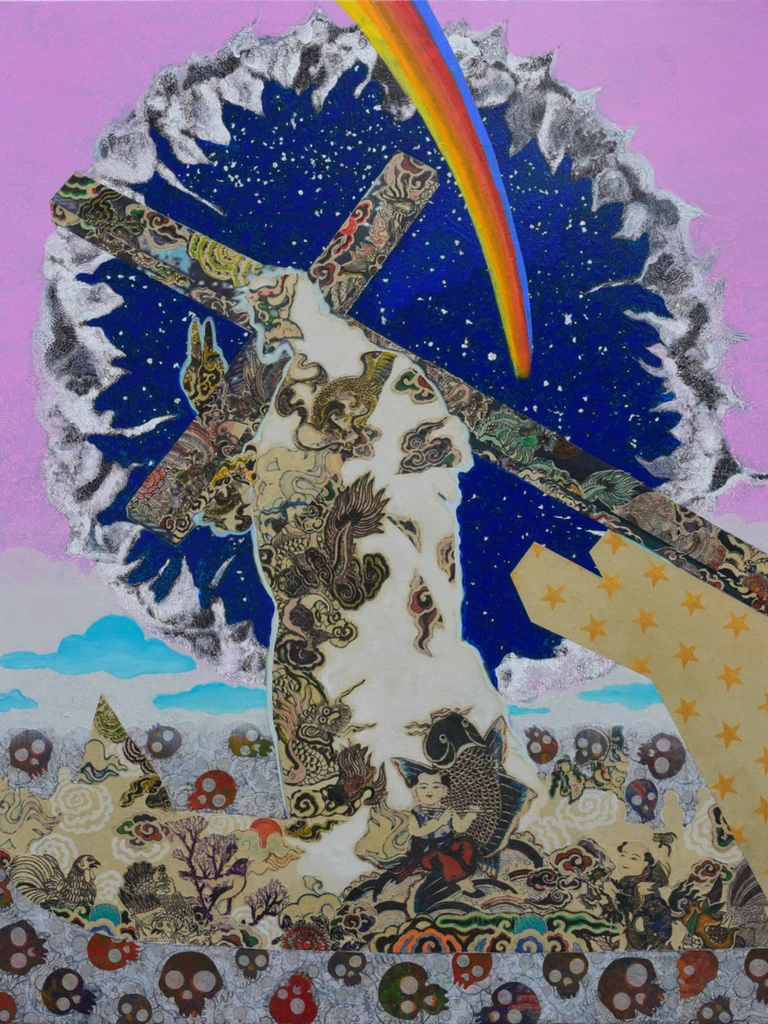
The first time I took a pair of scissors to cut handmade folk prints made by local artisans, I hesitated, even felt a touch of guilt because they were not some simple easy-made mass copies but the crystallization of cultural memory, of artisanal craftsmanship, and of a heritage passed down through generations.
It was a long time ago. Now that I have spent decades working on this technique, I understand tradition is not limited to a static artifact needed to be preserved in its original state. Historically, traditional woodblock printmaking crafts like Đông Hồ, Hàng Trống, or Kim Hoàng were always changing, technical-wise or compositional-wise. They took inspiration from folk beliefs, they responded to local events and geographies. Art functions in a similar way, it is only living when it is used, engaged in dialogue.
Therefore, the act of cutting, collaging, and restructuring is not destruction to me. It is a process of resurrection. I am not cutting away memories but guiding them into new paths. When folk images are placed alongside religious, historical, or political symbols, they ignite new relationships, new narratives, and new layers of meaning.
For "Hello. God is here", I wanted to create a space where the sacred and the profane coexist. In today's society, the boundaries between spiritual belief, mass culture, and everyday life have become increasingly fluid. It is precisely this overlapping structure that I wish to express.
I believe art is much like life itself: for something to endure, it needs to transform. Severing, in this context, is not an ending, it is the beginning of another form of existence.
The Evolution of 'The Eyes': "Early in your career (Mona Lisa, Crazy People), your figures were famous for their startled, vacant, wide eyes looking at the viewer. In your newer 2026 series like The Value of Freedom, the characters are highly complex, layered collages. How has the 'gaze' of your characters evolved over the last decade?"
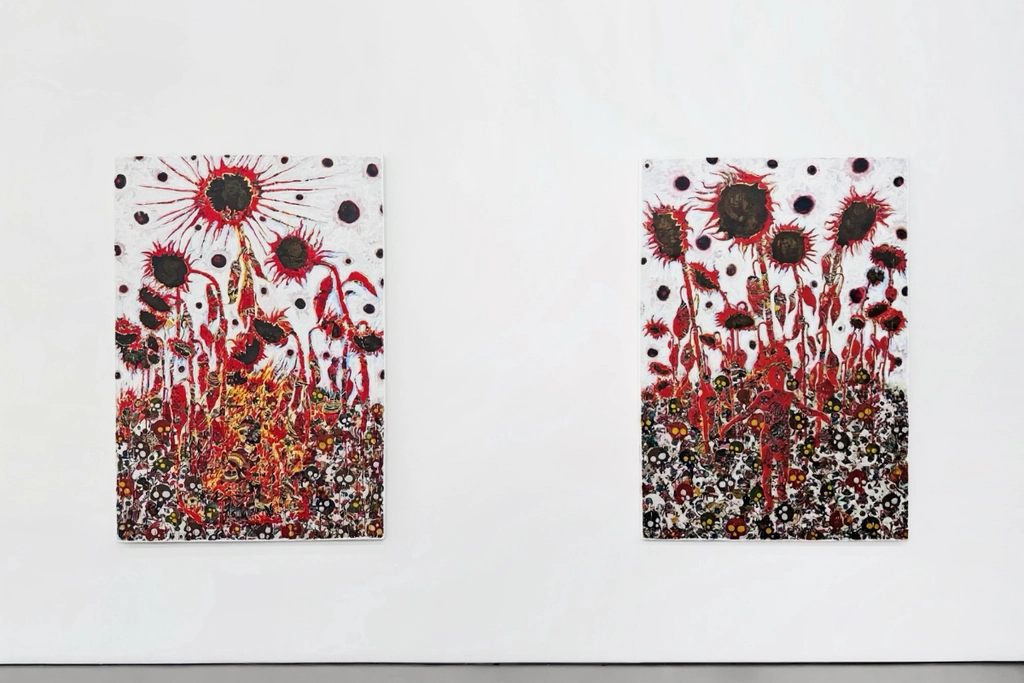
I believe that evolution reflects the shift in how I see the world and the human condition.
In my early stage, the wide-open eyes in “Mona Lisa” or “Crazy People” conveyed feelings of astonishment, disorientation, and sometimes emptiness. That was a time when I was observing Vietnamese society amid the radical shifts of a market economy and rapid globalization. People were confronted with overwhelming changes and choices, yet they also felt a sense of lost direction. Back then, those wide eyes were my inquiry to the world.
Over time, I came to realize that we are not defined solely by the present moment, but by multiple strata of memory, history, and distinct cultural influences. As a result, the figures in my recent works are no longer singular forms. They are constructed from fragments of folk art, historical imagery, religious symbols, and overlapping layers of materials.
If the gaze was once a direct outward-facing vantage point, today it has become a multi-layered space where past and present coexist. I am no longer concerned with who the character is looking at; rather, I am interested in what they carry within themselves.
Perhaps that reflects my own internal transformation: moving from questioning society to reflecting more deeply on memory, identity, and the human capacity to continually reinvent oneself after historical upheavals.
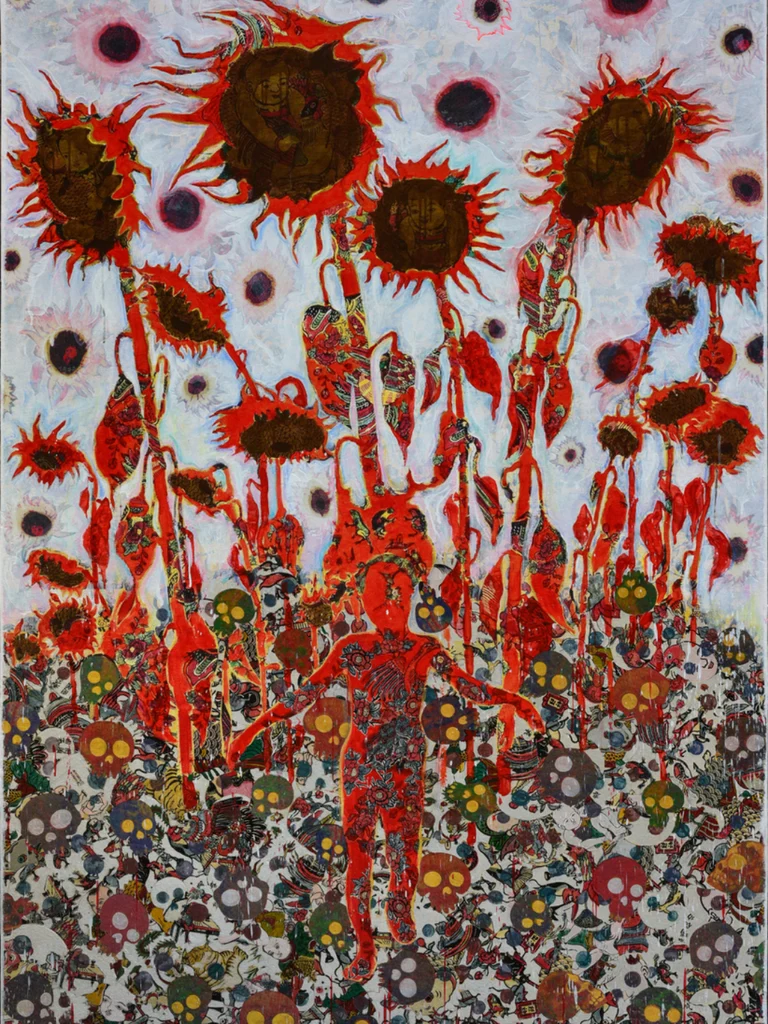
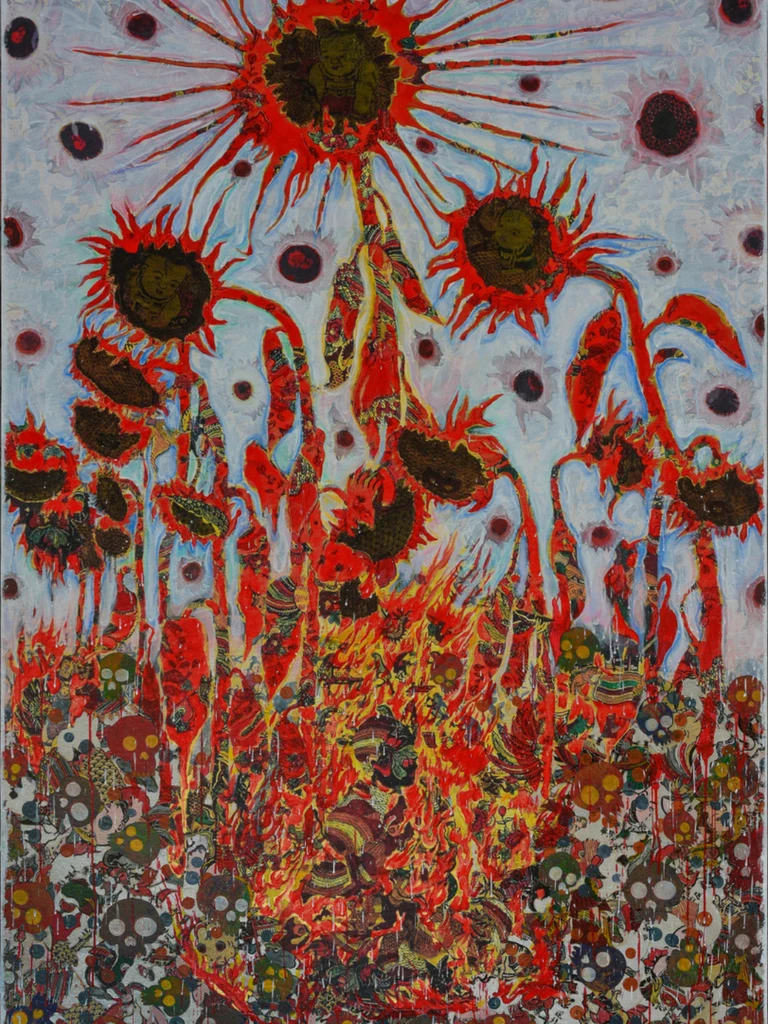
The 'Sunflower' Metaphor: "Your new large-scale, horizontal diptychs Searching for the Sunflower I & II (2026) suggest a quest for light or ideology. What does the sunflower symbolize in the modern Vietnamese context you are dissecting?"
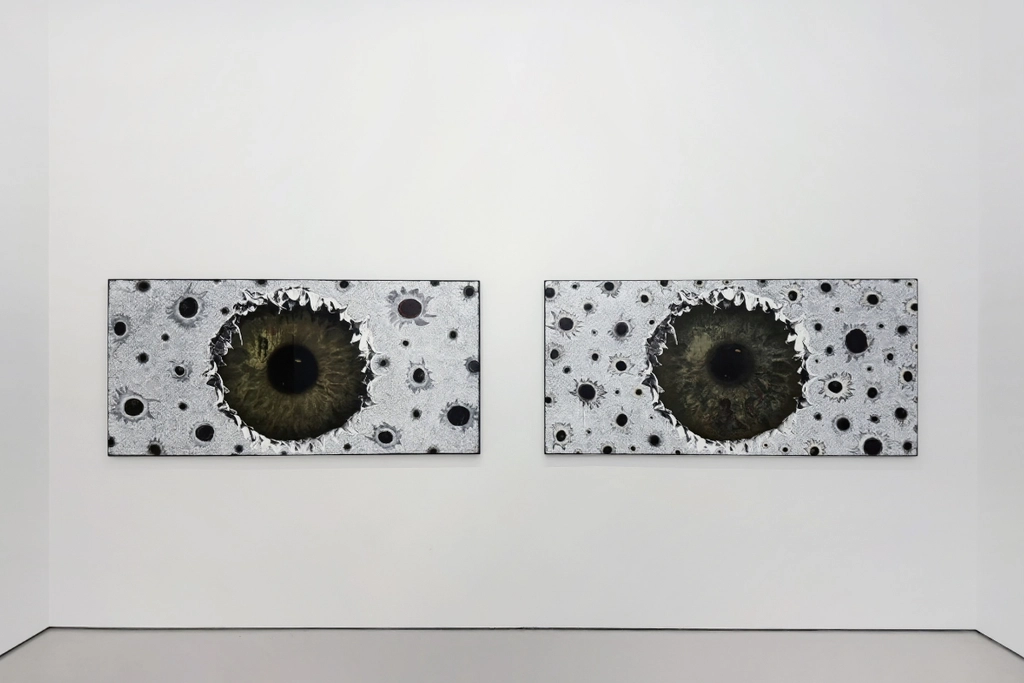
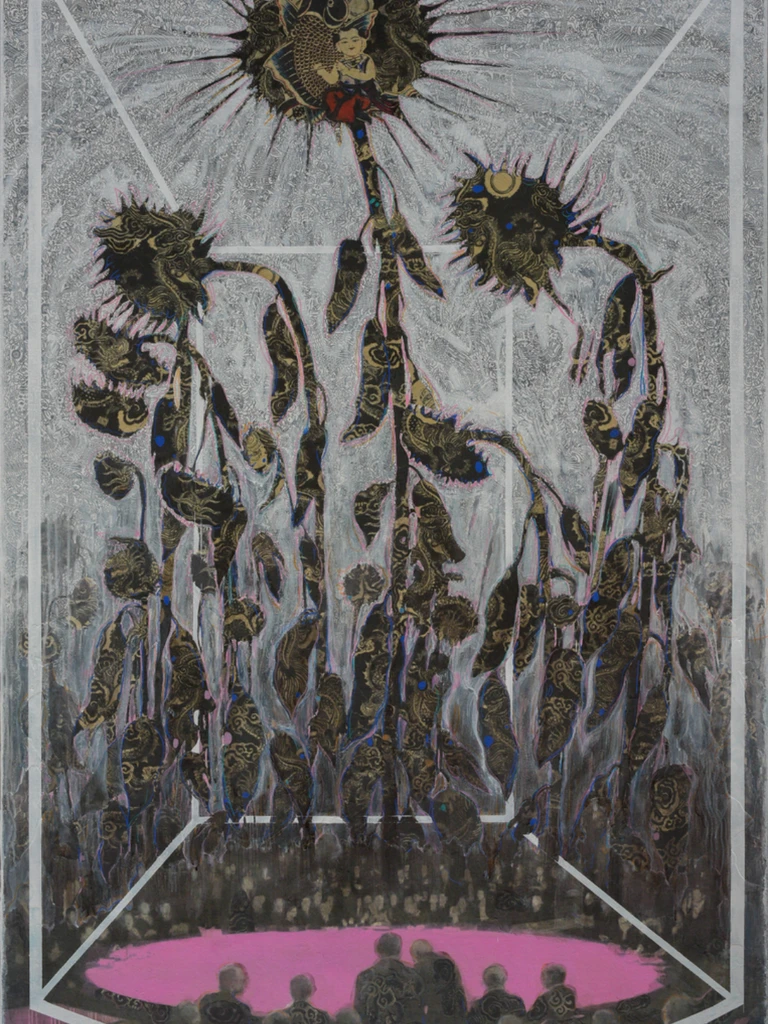
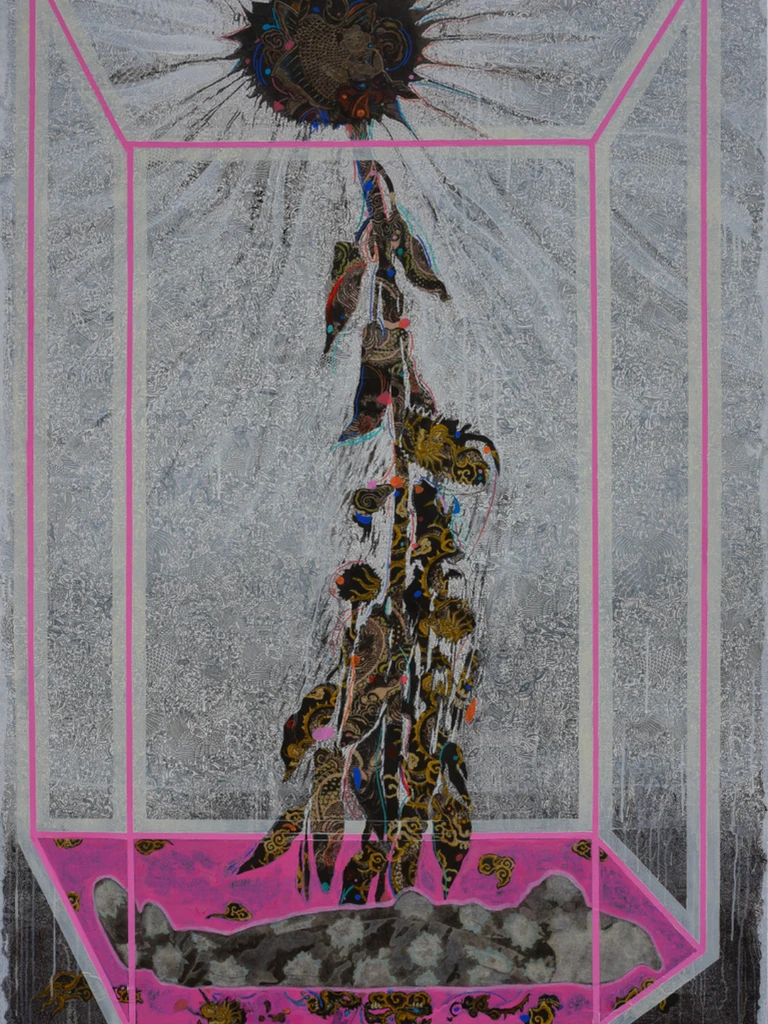
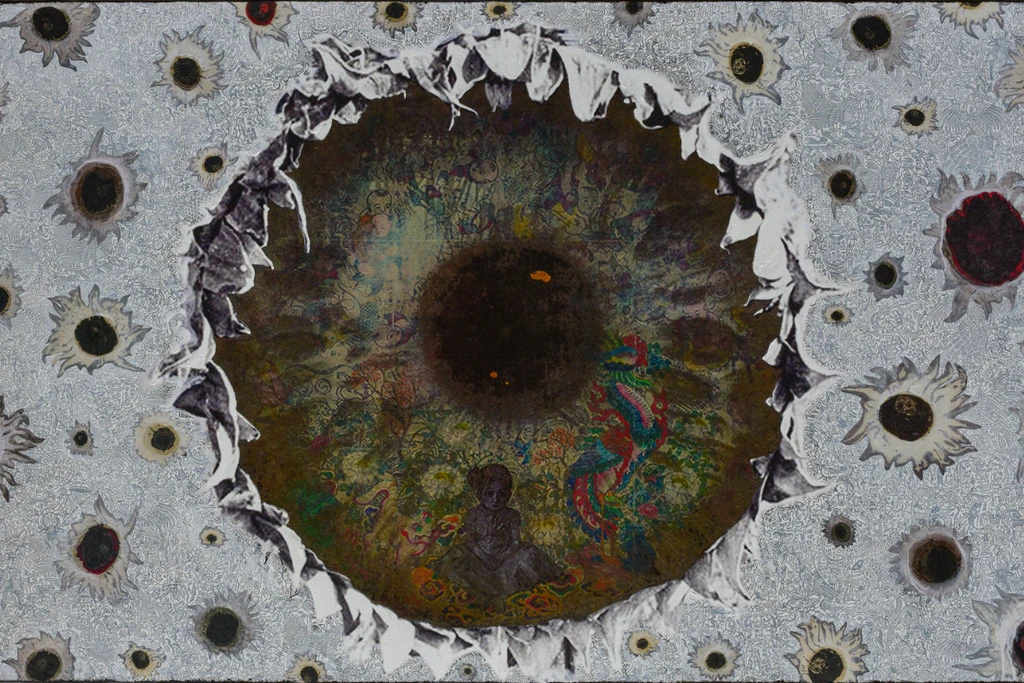
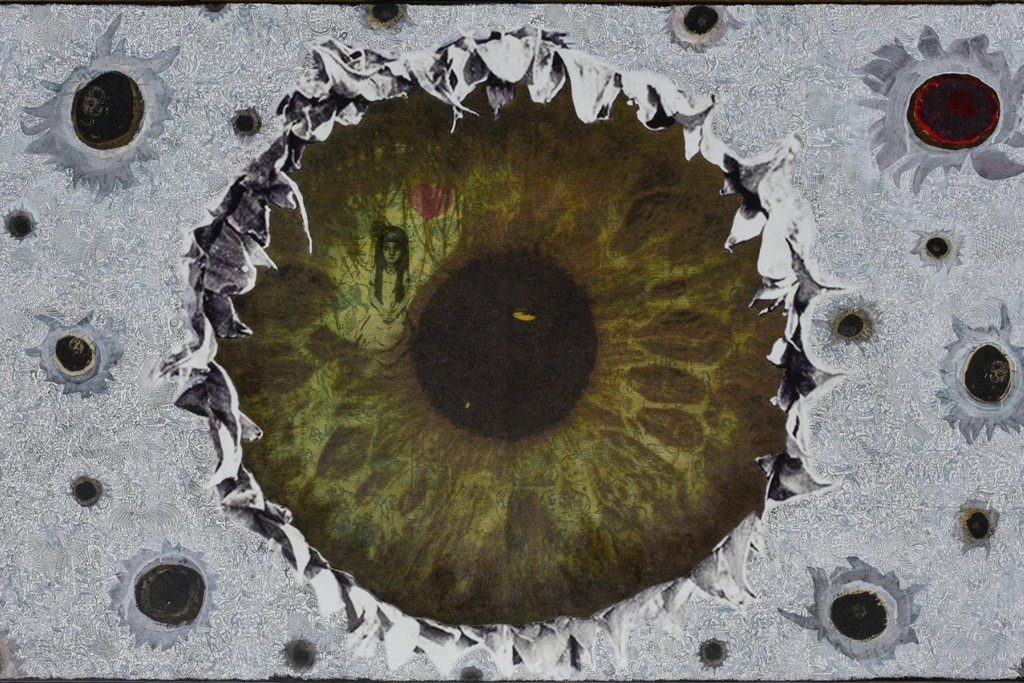
First and foremost, the sunflower in my paintings is a symbol of life—of the capacity to turn toward light and experience rebirth after turbulence. What really caught my attention is its act of "searching" itself. In an ever-shifting world, we seem perpetually in search of an anchor: faith, freedom, identity, or spiritual values that can help us comprehend who we are.
In the context of Vietnamese contemporary life, this process is particularly poignant. We live in a fast-paced society where traditional values, global influences, and personal aspirations continuously intersect and collide. The sunflower, therefore, is not a static emblem of light or hope but an embodiment of an unceasing quest.
I also take inspiration from the sunflower fields in the work of Anselm Kiefer. In Kiefer’s practice, sunflowers are not mere nature; they are imagery fraught with historical memory, loss, and the yearning to rise above devastation. That resonates strongly with Vietnam history—a country that has endured war and is constantly in the process of rebuilding itself.
In “Searching for the Sunflower I” and “Searching for the Sunflower II”, the blooming flowers are not complete nor static symbols. They resemble signals, fragments of memory, or sparks of light emerging amidst overlapping strata of history and culture. Perhaps the essential point is not finding absolute light, but maintaining the capacity to continuously turn toward it.
That is why I called them “Searching for the Sunflower”—because we as humans, in any era, are always engaged in a journey to seek meaning for our own existence.
Dismantling Nostalgia: "For a long time, Vietnamese art on the international market was dominated by romantic, nostalgic images of silk, lacquer, and idealized rural life. You broke that mold completely. Do you view your work as an anti-romantic manifesto? Is nostalgia a trap for contemporary Vietnamese artists?"
I don’t think my practice is breaking any mold. I hold deep respect for the Indochina Fine Arts School generation and the masters who came before me. They laid a critical foundation for the development of Vietnamese contemporary art.
What I am concerned about is the need for each generation to find a language that speaks to its own time. While earlier generations expressed the beauty of Vietnam through the realities and experiences of their historical moment, our generation faces a different set of questions: What traces has war left in our collective memory? How has globalization reshaped our sense of identity? And how can tradition endure and remain meaningful in a society that is constantly changing?
Therefore, I do not see my work as an “anti-romantic manifesto.” Rather, I seek to approach history in its complexity. History carries not only beauty, but also rupture, loss, contradiction, and experiences that resist easy categorization. If we preserve only its most idealized or visually appealing fragments, we risk reducing the richness of memory itself.
For me, nostalgia is not inherently the problem. It is a natural, and perhaps necessary, part of how we relate to the past. The concern arises when nostalgia becomes a fixed image, shaped to meet the expectations of the market or the viewer. At that point, art risks becoming trapped in repetition, reproducing familiar representations rather than opening new ways of understanding the past.
I want tradition to function as living material rather than as a static symbol. This is why I cut, collage, deconstruct, and reconfigure folk imagery in my work. These gestures are not a rejection of the past, but a way of bringing it into an ongoing dialogue with the present.
The Duality of Identity: "You have a fascinating personal contrast: your artwork is intensely chaotic, crowded with centuries of folk history, and raw—yet you are known for your highly organized, polished lifestyle and immaculate tailored suits. How does this strict internal discipline serve the chaotic narratives on your canvas?"
I do not see this apparent duality as a contradiction at all.
My paintings bring together multiple layers of imagery, historical references, and overlapping visual relationships. Without a certain discipline in the creative process, these elements could easily dissolve into chaos.
Each work is built through a meticulous, multi-stage process: selecting traditional folk prints, cutting and collaging individual details, developing the composition, working with paint, acrylic, and gold leaf, and continually adjusting the spatial relationships between layers. What may appear spontaneous on the surface is, in fact, supported by a highly considered process underneath.
I approach daily life in much the same way. I value order not because I want to control everything, but because it allows me to preserve my energy for the creative process. When my daily life has structure, I have greater freedom to venture into more complex realms of imagination.
I also do not see my everyday self and the artist I become in the studio as separate identities. The tailored suits I wear and the attention I give to how I conduct myself are simply ways of showing respect for the people around me and for my profession. On the canvas, however, I allow myself to enter another space, one where history, memory, belief, and human contradictions can collide freely.
I have always believed that art is not simply a matter of impulse. Freedom gains meaning when it is grounded in discipline. It is precisely this discipline that allows me to create works that may appear fierce and intense on the surface while still maintaining an underlying structure, rhythm, and internal balance.
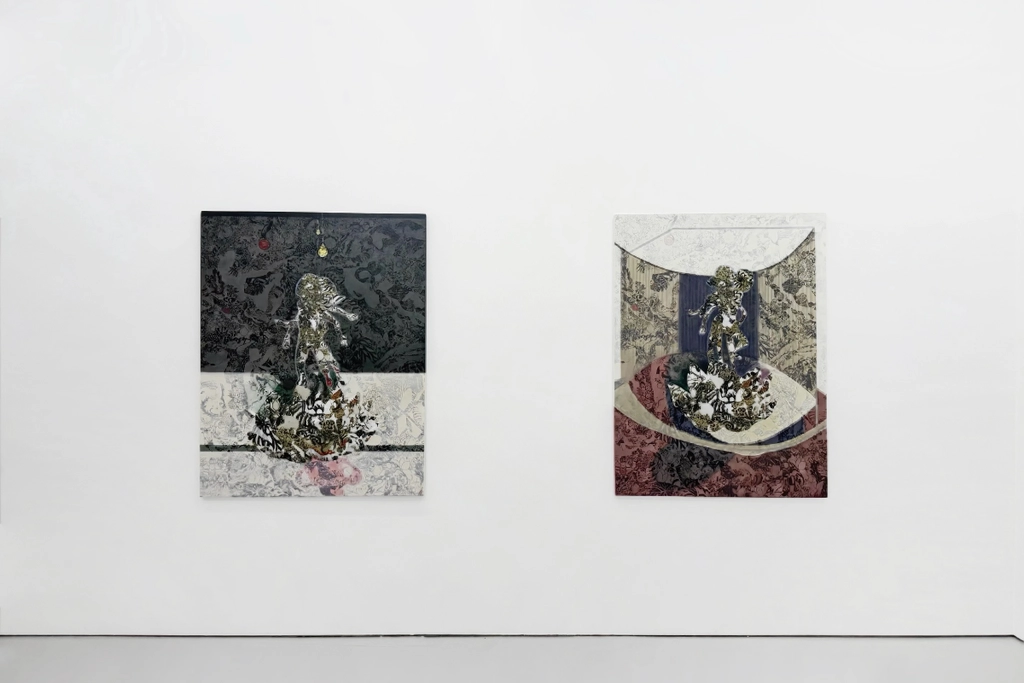
For Bùi Thanh Tâm, tradition survives through movement. A folk print can be cut, a sacred image can enter a secular frame, and a familiar face can fracture into several histories at once without losing its cultural memory. Tâm’s work ultimately leaves us with a question larger than Vietnam itself: after war, after upheaval, after every rupture that redraws who we are, what do we choose to carry forward, and what must change shape in order to survive?