MENU
Close





By the time the room knew who was performing and who was watching, the night had already gone too far. Diesel SS27 was never going to leave quietly.
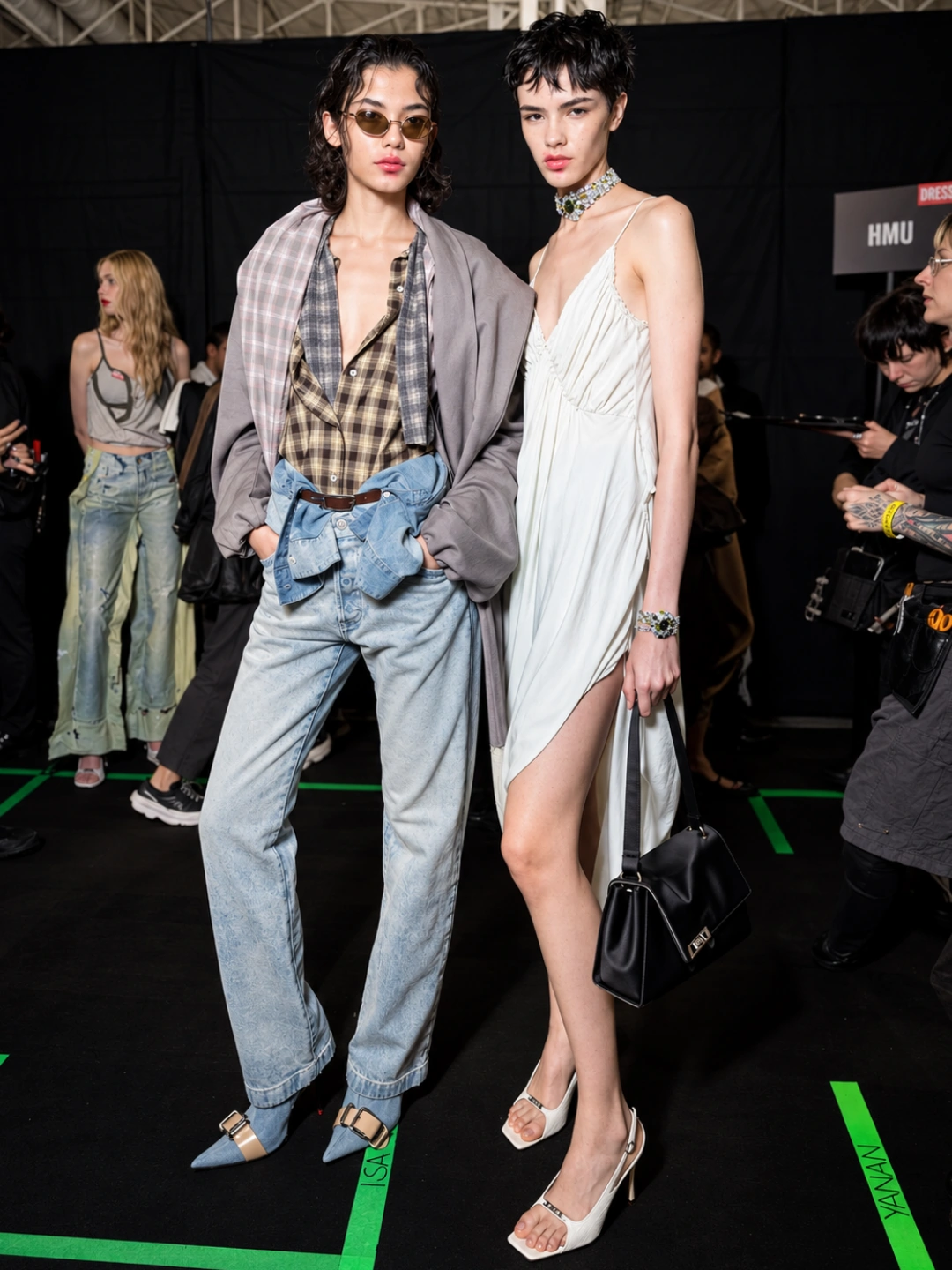
By the time the room knew who was performing and who was watching, the night had already gone too far. Diesel SS27 was never going to leave quietly.
September 23, 2026
Advertisement
Advertisement



Heavy breathing came first. Then techno began to rise through the room until Donna Summer’s Love to Love You Baby revealed itself somewhere inside the noise. Around 200 performers from (LA)HORDE had already been planted among the guests, indistinguishable from everyone else until bodies started moving, kissing, touching and dissolving the comfortable distance between audience and spectacle.
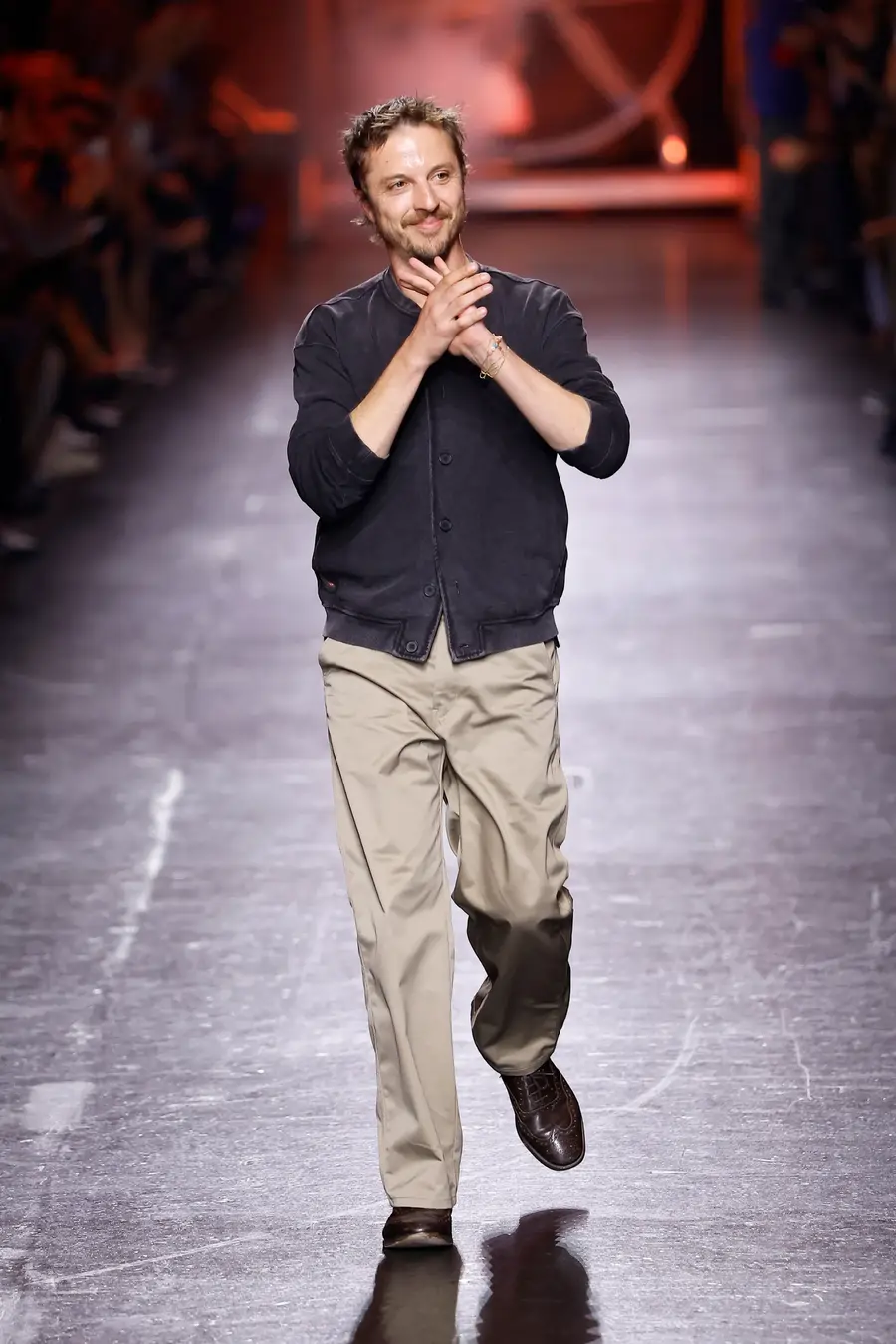
“At Diesel, the party always comes first,” Glenn Martens said of the show. For his final collection after six years at the house, he described the clothes as “disruptive, sexy, fluid, fun” and invited everyone to take “one last ride together.”
The night carried another charge, too. The show arrived following Glenn Martens’s departure from Diesel, turning SS27 into the final chapter of his six-year run at the house.
Sexual tensionhad long existed inside Martens’s Diesel, but here it became almost atmospheric. Clothes appeared caught in varying states of undress, surfaces cracked open, layers twisted away from their expected position and skin gradually occupied more of the silhouette. After Fall 2026 explored the walk of shame, Spring 2027 seemed interested in the night responsible for it.
The farewell was already in progress. Nobody had any intention of behaving.
Leather seems to consume the wardrobe before the eye starts questioning exactly what it is looking at.
Long coats stretch the body into narrow vertical lines, belted shapes tighten around the waist, while shorter jackets break that severity with exposed legs and slouchier proportions underneath. Brown and black surfaces carry the worn-in richness expected of leather, yet Glenn Martens keeps their character restless through wrinkling, distressing and construction that rarely settles into pristine luxury.
Across Diesel SS27, denim was coated and treated with laser techniques until it could convincingly impersonate leather, extending one of Martens’s favourite tricks: making Diesel’s most familiar material behave like something else entirely.
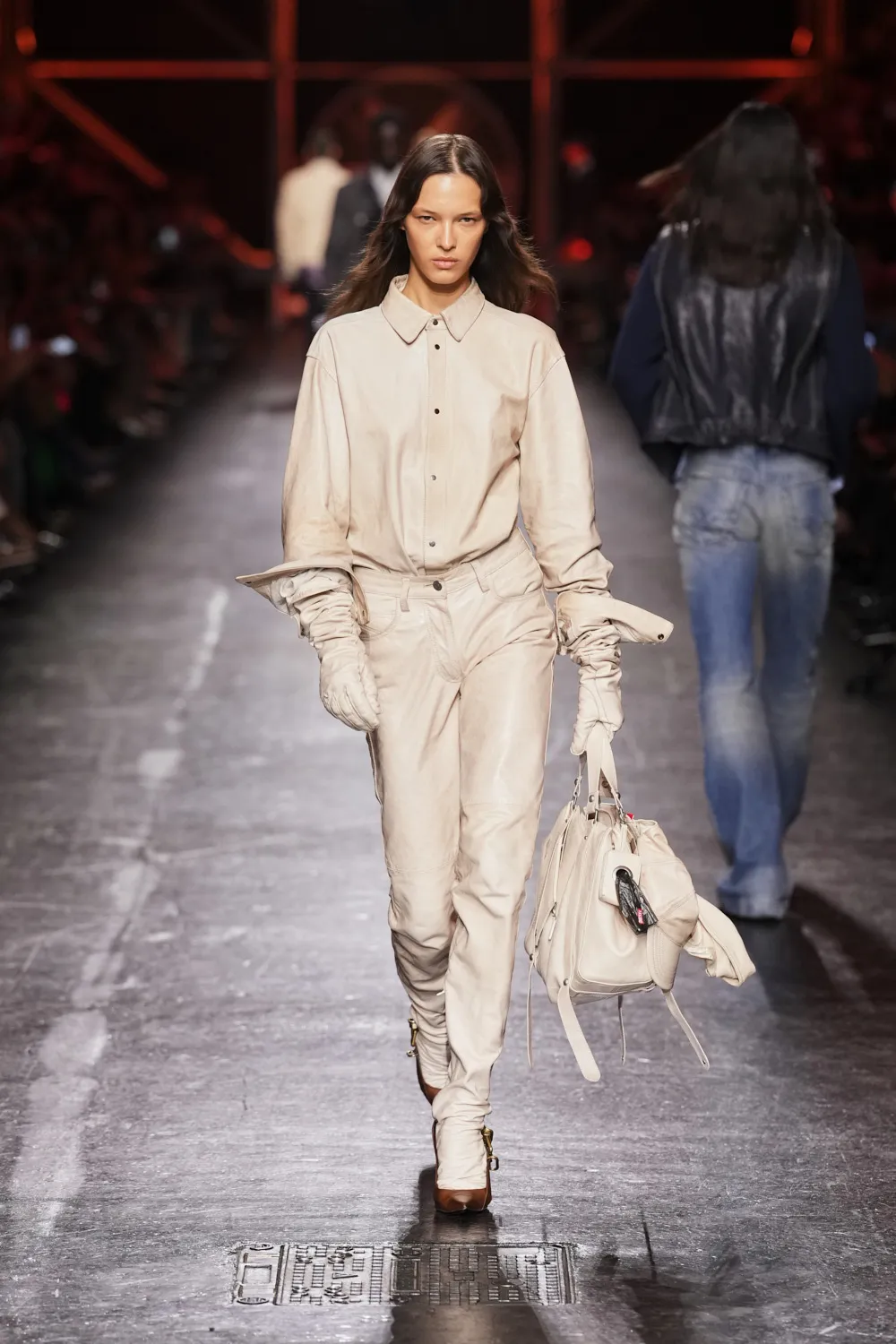
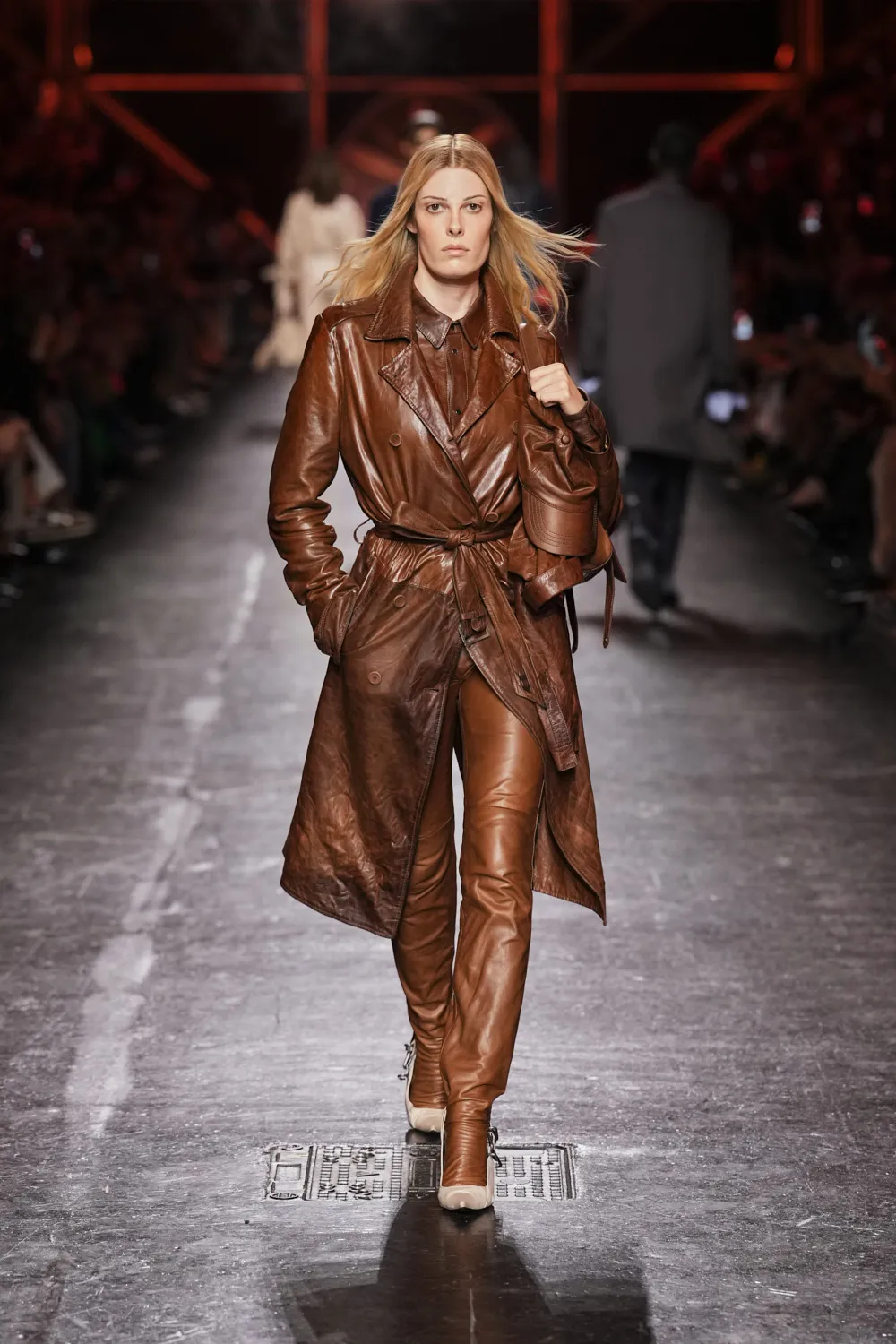
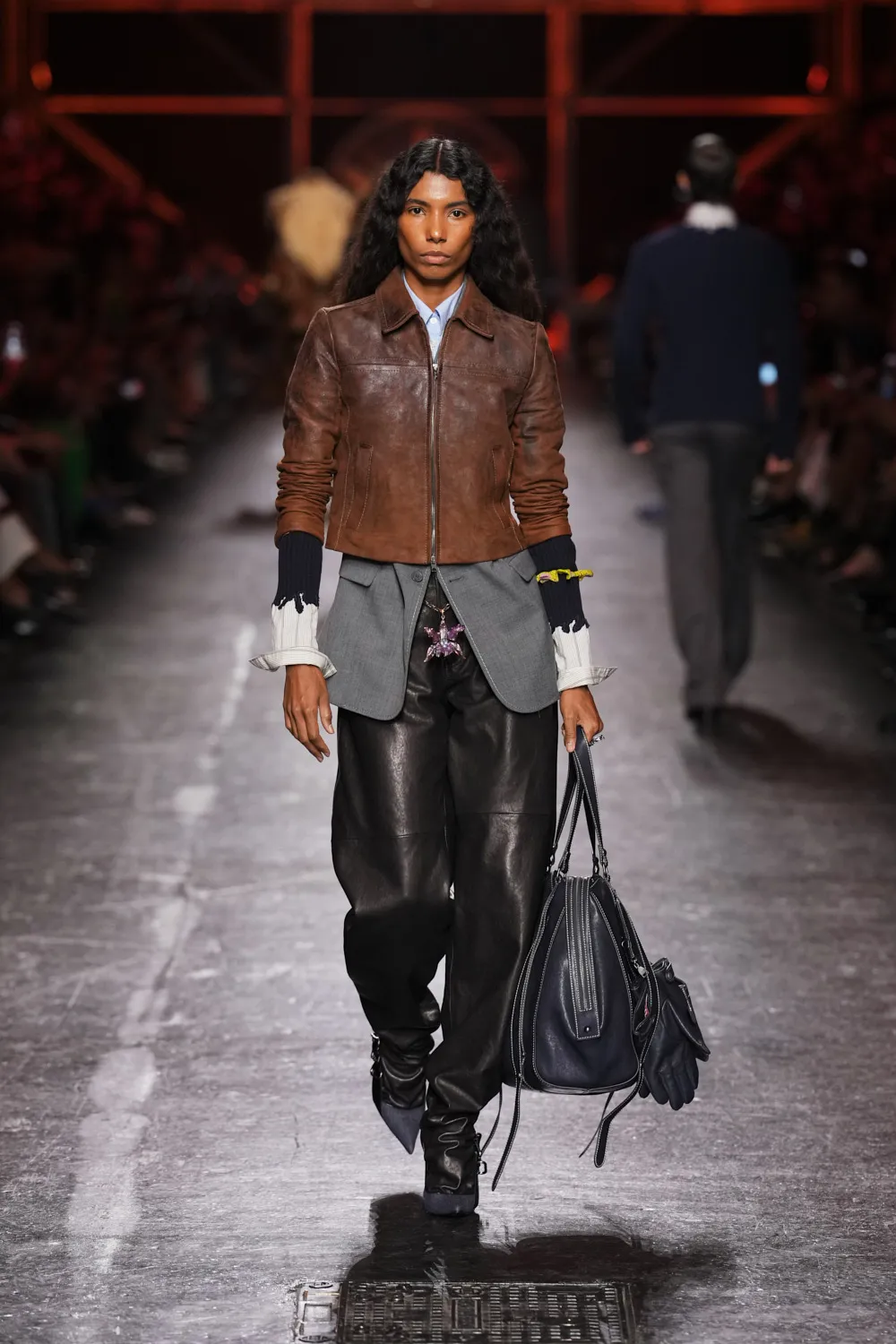
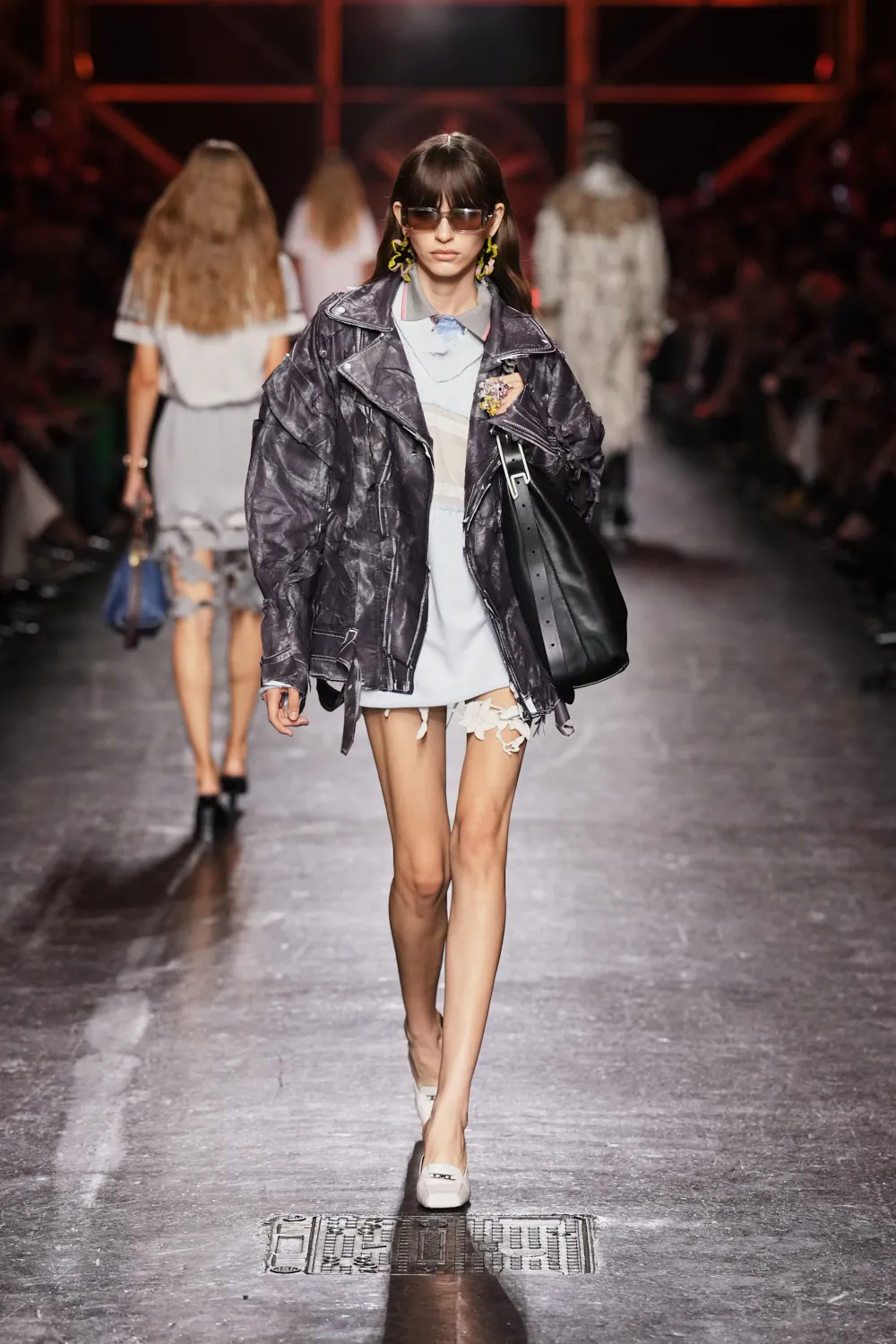
That ambiguity gives head-to-toe dressing more interest than simple leather domination. Trench coat can appear authoritative from a distance and reveal a rougher, almost fatigued surface up close, while fitted jacket sharpens the torso while the bottom half loosens away from it. Coverage itself keeps changing temperament, moving between protective shell and second skin.
Leather has often carried the language of rebellion, and Glenn Martens pushes it into something already creased, already lived in, almost as though these clothes have survived the night before the party has officially ended.
For several looks, Diesel appears to have discovered good manners.
Hemlines drop toward the knee. Shirts button up. Cardigans and neat jackets sit beside pencil skirts and softer, more conventional proportions. Even the pastel palette seems unusually polite after years of Martens cutting, shredding and exposing almost everything within reach.
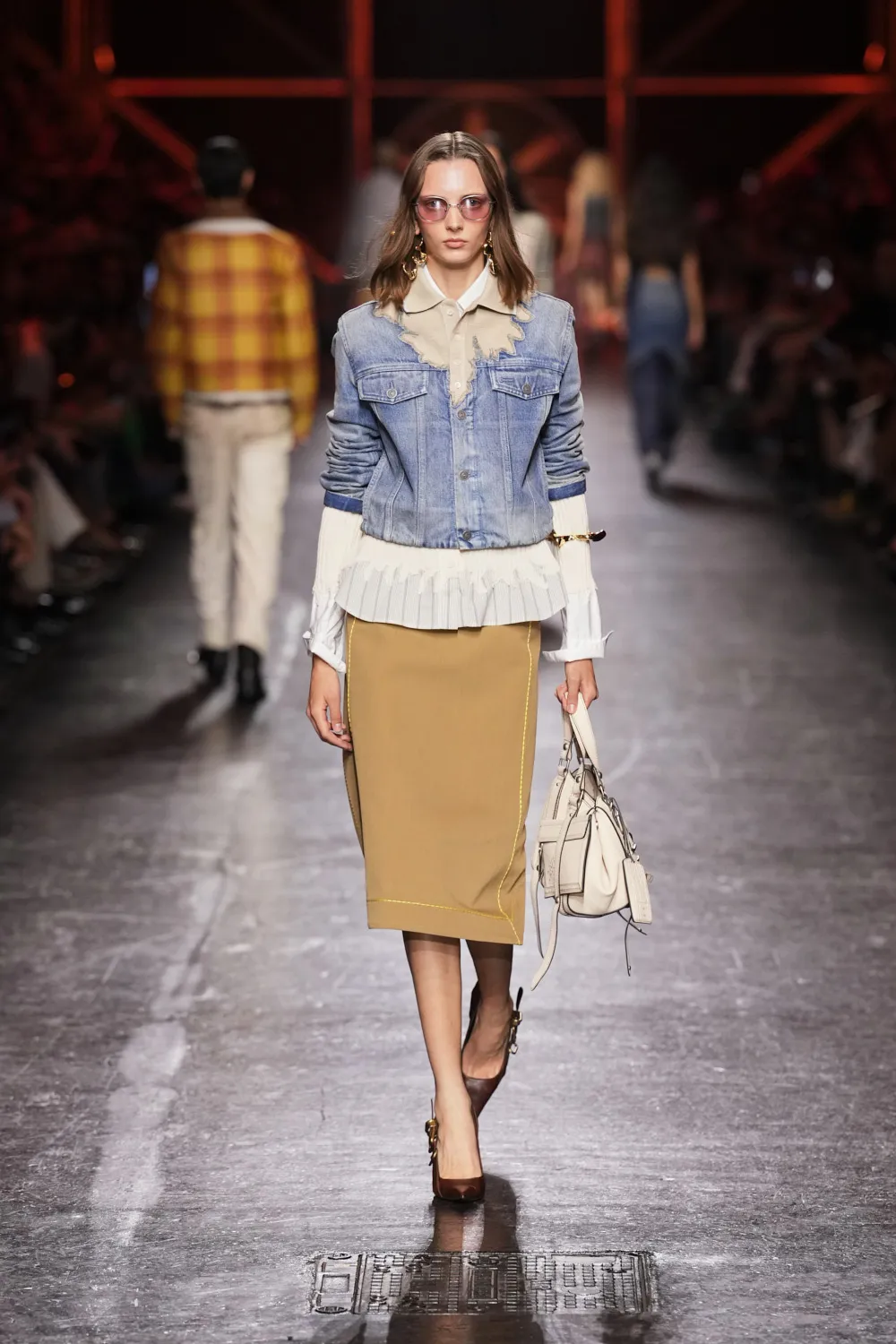
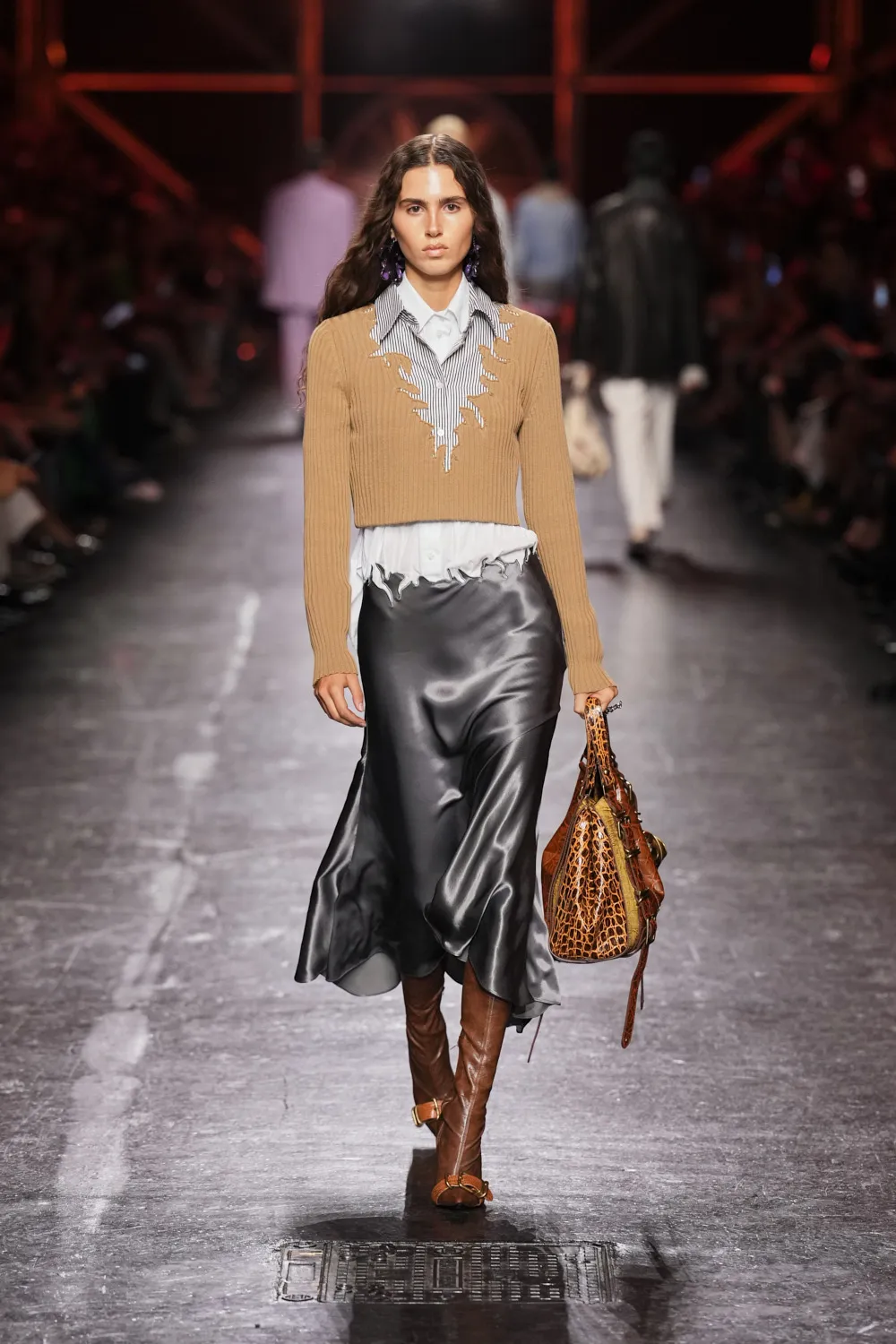
The illusion lasts only as long as Diesel allows it.
Transparency begins interfering with restraint. Glossy surfaces catch light with an almost lacquered quality, allowing pastel jackets and skirts to hover between something prim and something faintly synthetic. Martens used trompe-l’oeil treatments across organza and technical nylon elsewhere in the collection, continuing his fascination with fabrics that refuse to identify themselves at first glance. Here, that uncertainty makes modest dressing look increasingly unreliable.
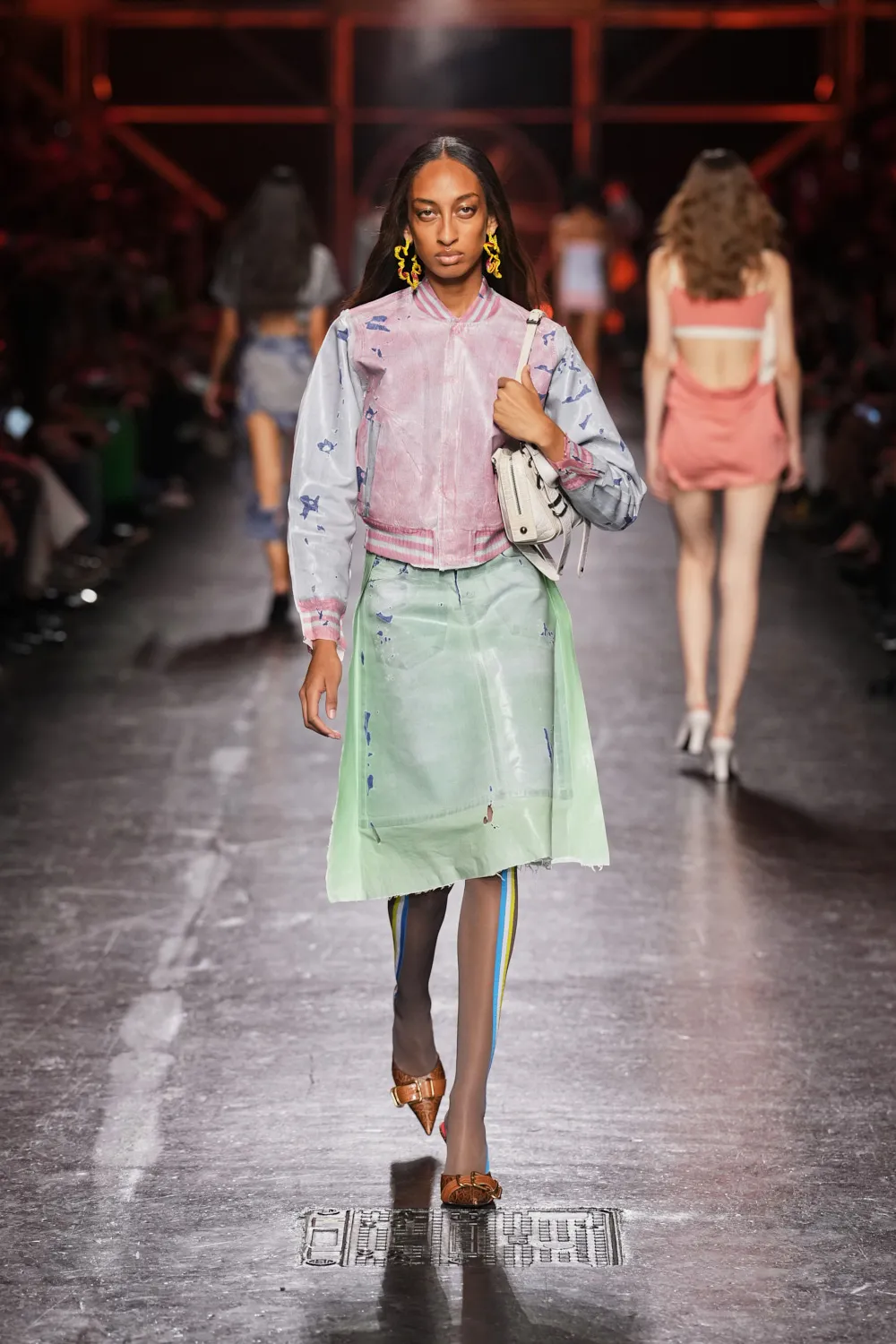
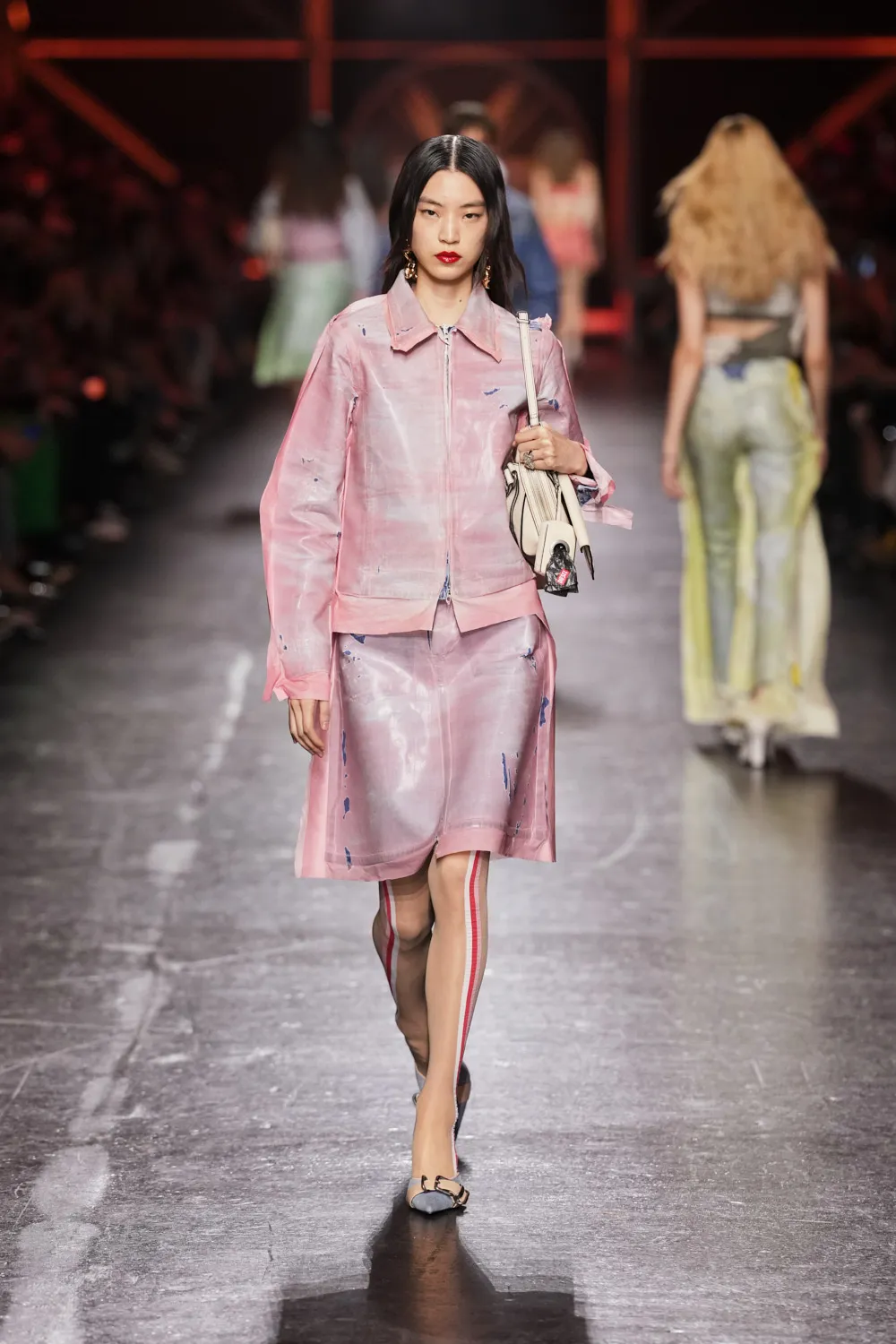
Silhouettes remain relatively composed, though the polish never stays untouched for long. Transparency interrupts proper skirts, layering drifts subtly out of place, and glossy surfaces give the clothes an almost synthetic finish, as if familiar wardrobe pieces have been distorted by memory.
Diesel’s modest girl is convincing from across the room.
Getting any closer is where trouble starts.
Glenn Martens could hardly leave Diesel without taking denim apart one final time.
The early looks allow it to retain some familiarity, appearing in clean column shapes and straightforward blue surfaces before the material gradually starts slipping out of its expected form. Volume grows softer, pieces loosen around the body, and what began as recognisable denim dressing becomes progressively harder to classify.
Then Martens starts removing the fabric itself.
In the most radically cut look, denim survives in fragments, tracing sections of the body while the spaces between them become part of the pattern cutting. The technique moves beyond conventional distressing. Fabric has been carved away until absence carries as much visual weight as what remains, leaving straps, borders and torn botanical shapes to hold the silhouette together.
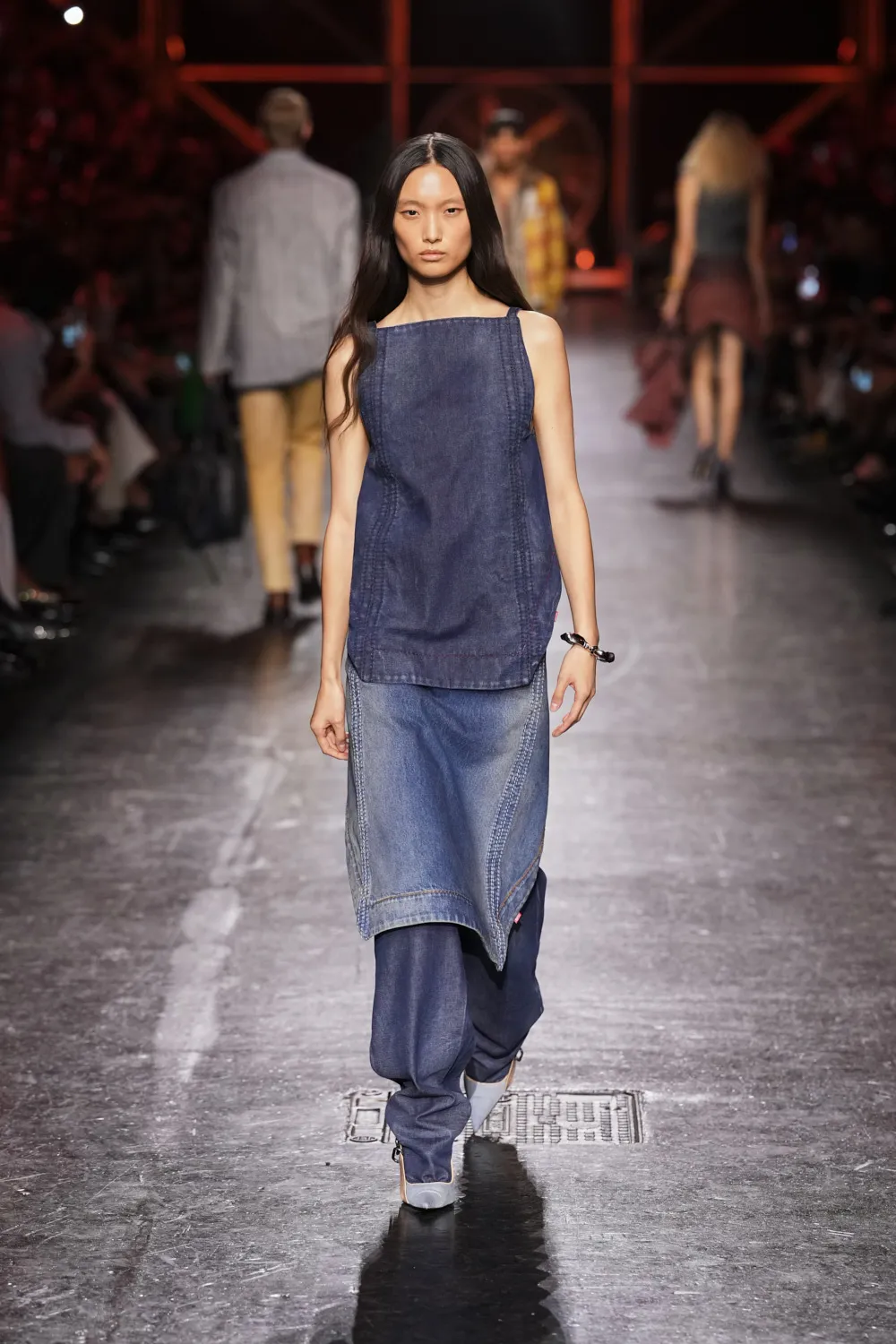
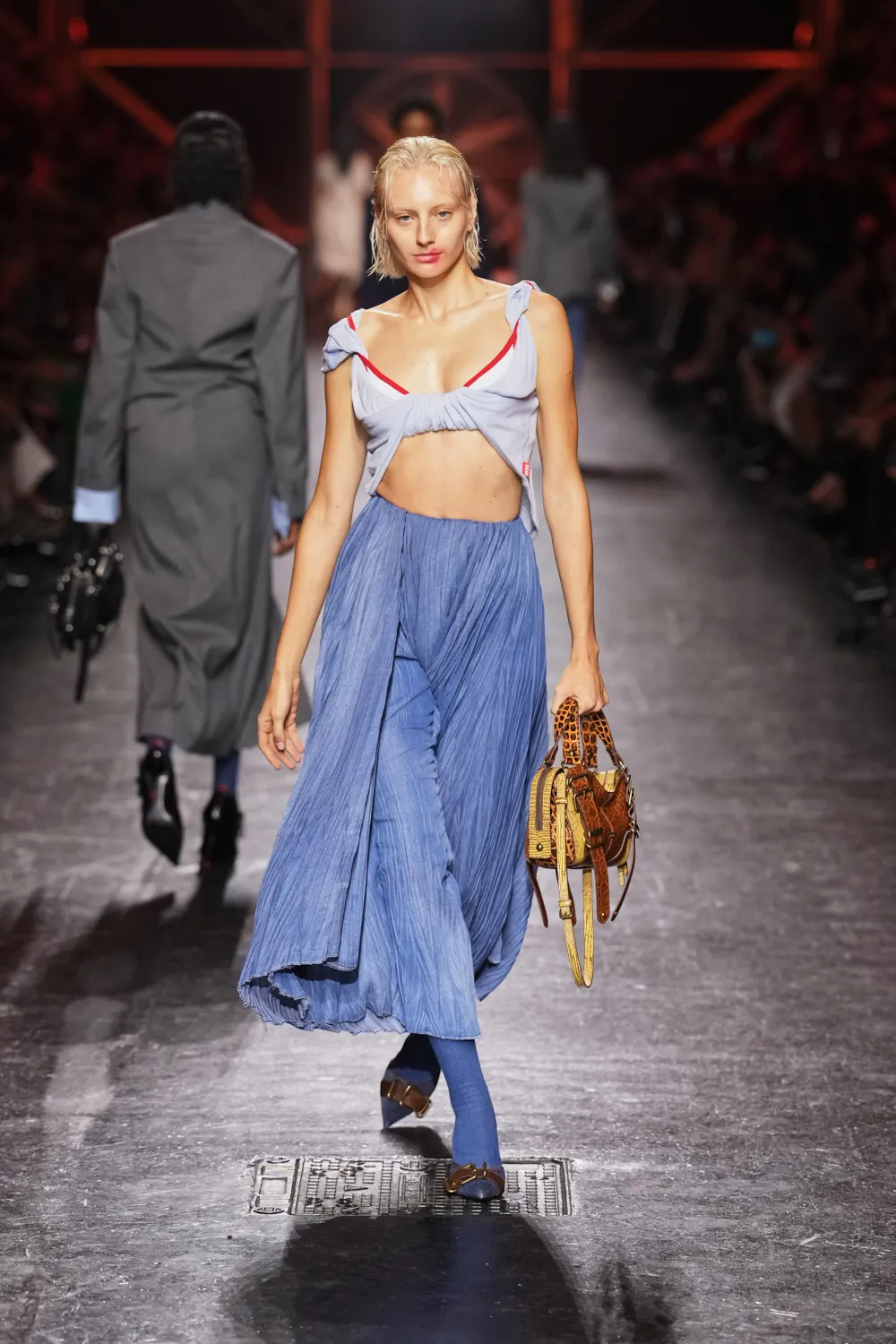
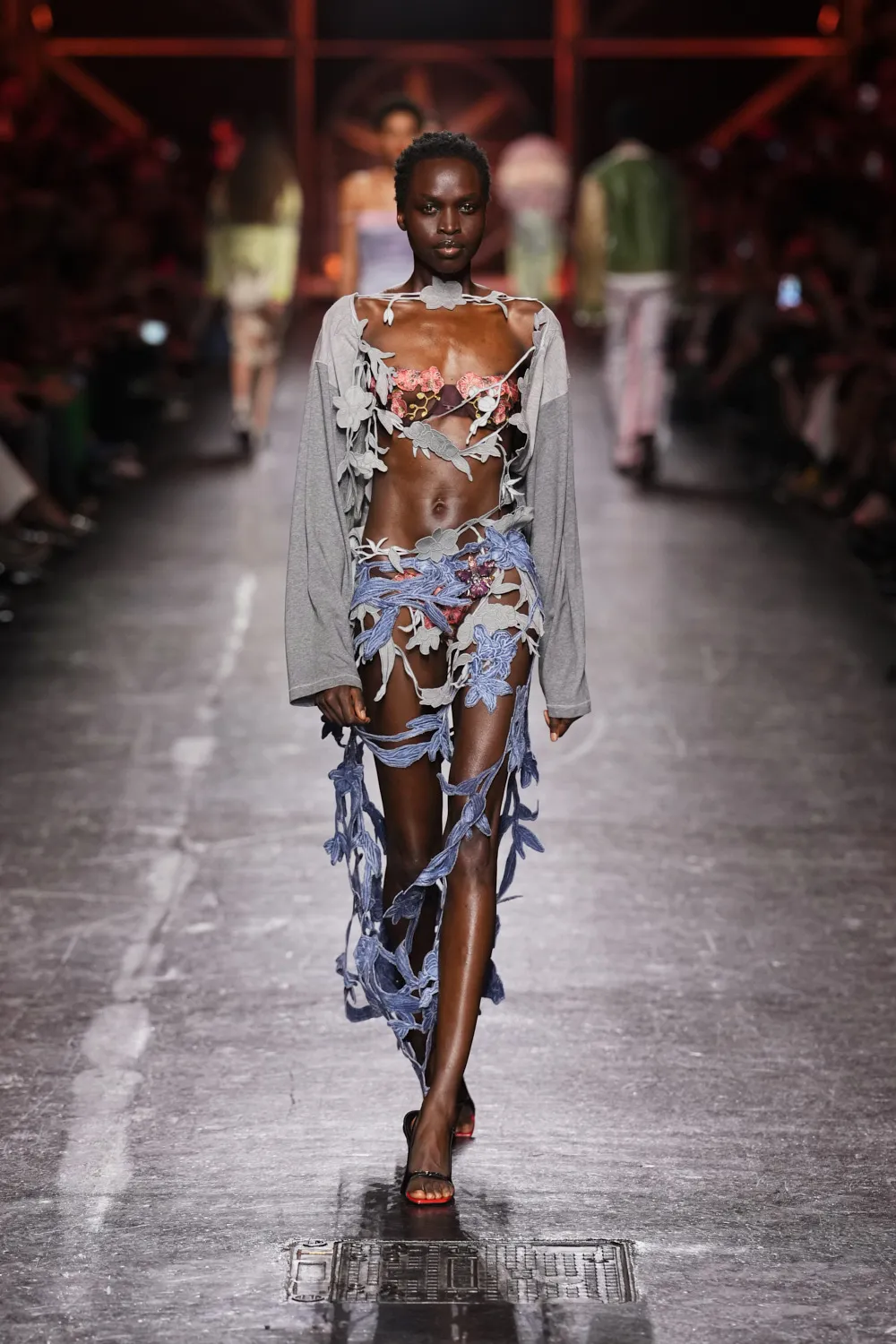
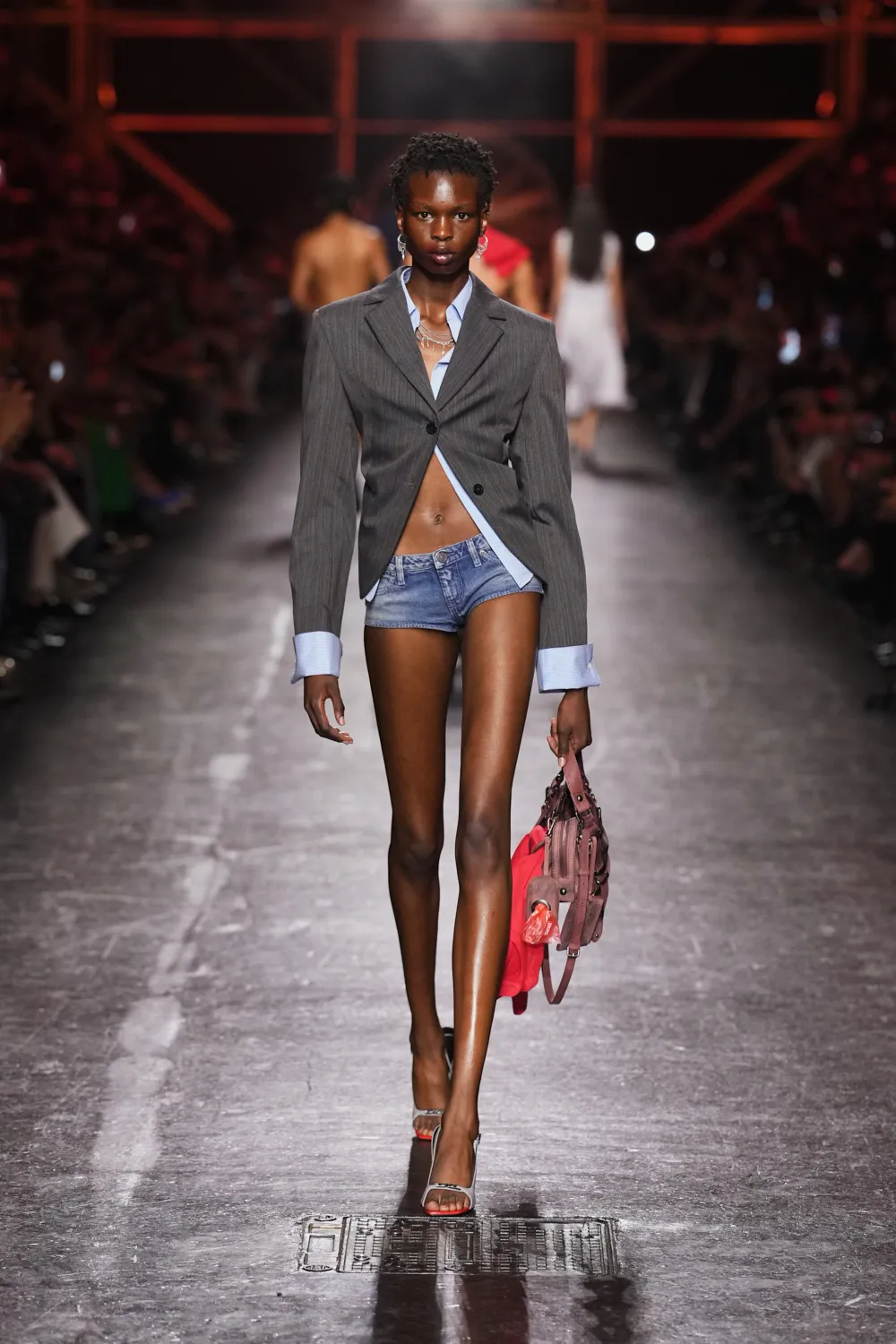
Martens has spent six years treating denim as an experimental medium, coating, lasering, printing and shredding it until the material could slip into entirely different identities. That history runs through Spring 2027, from disrupted blue surfaces to brutally abbreviated shorts that pull attention back toward the hips and legs. Martens once described denim as a “never-ending source of inspiration.”
And within his final show, that phrase was almost literal. Even after six years of dismantling it, the material still gives him something else to destroy.
Eventually, modesty finishes its shift.
Fabric begins slipping around the body as though the night has physically rearranged the clothes. Necklines drift from their expected position, hems climb higher, layers twist across torsos and lingerie peeks through openings that appear accidental only until one notices how precisely everything has been constructed.
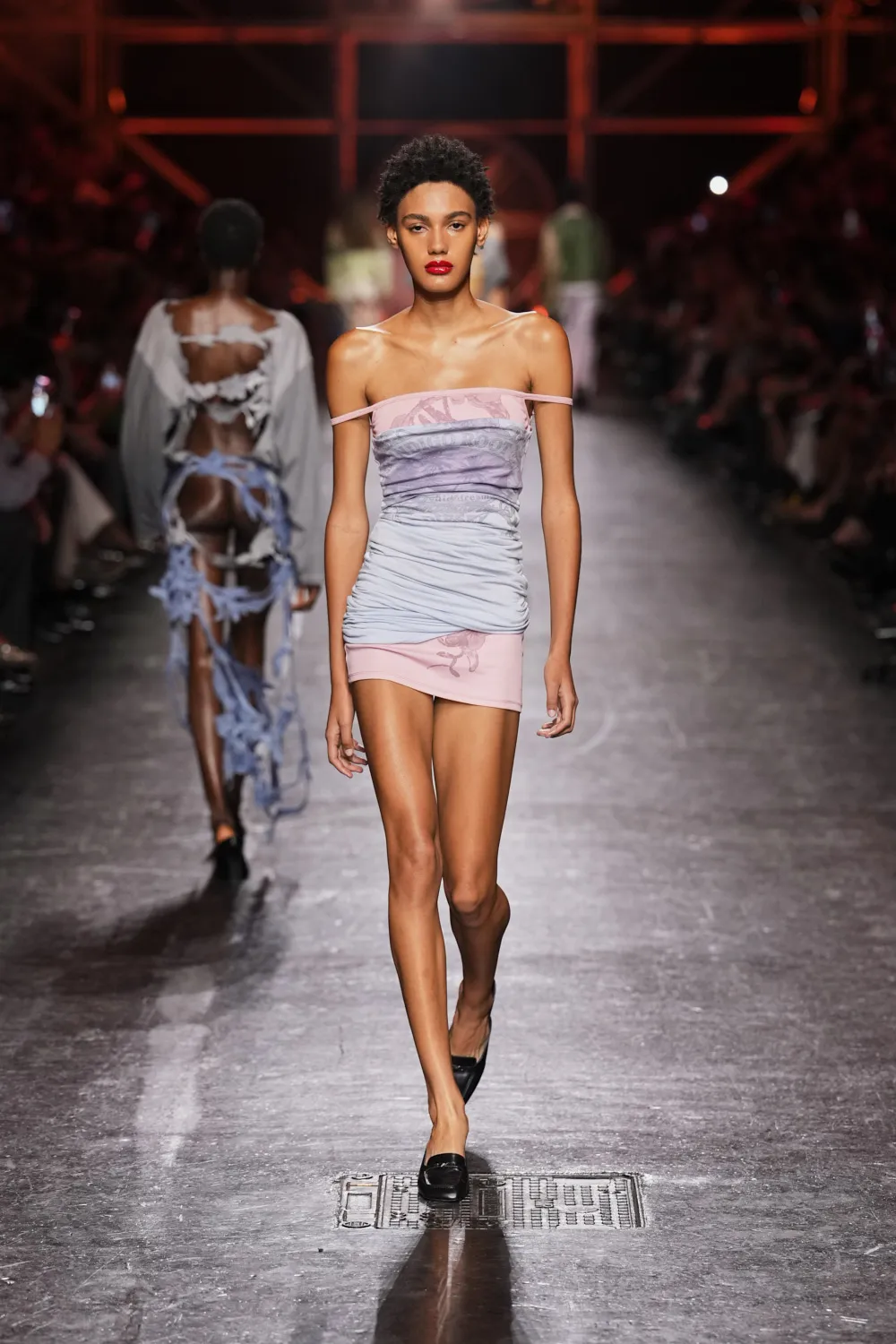
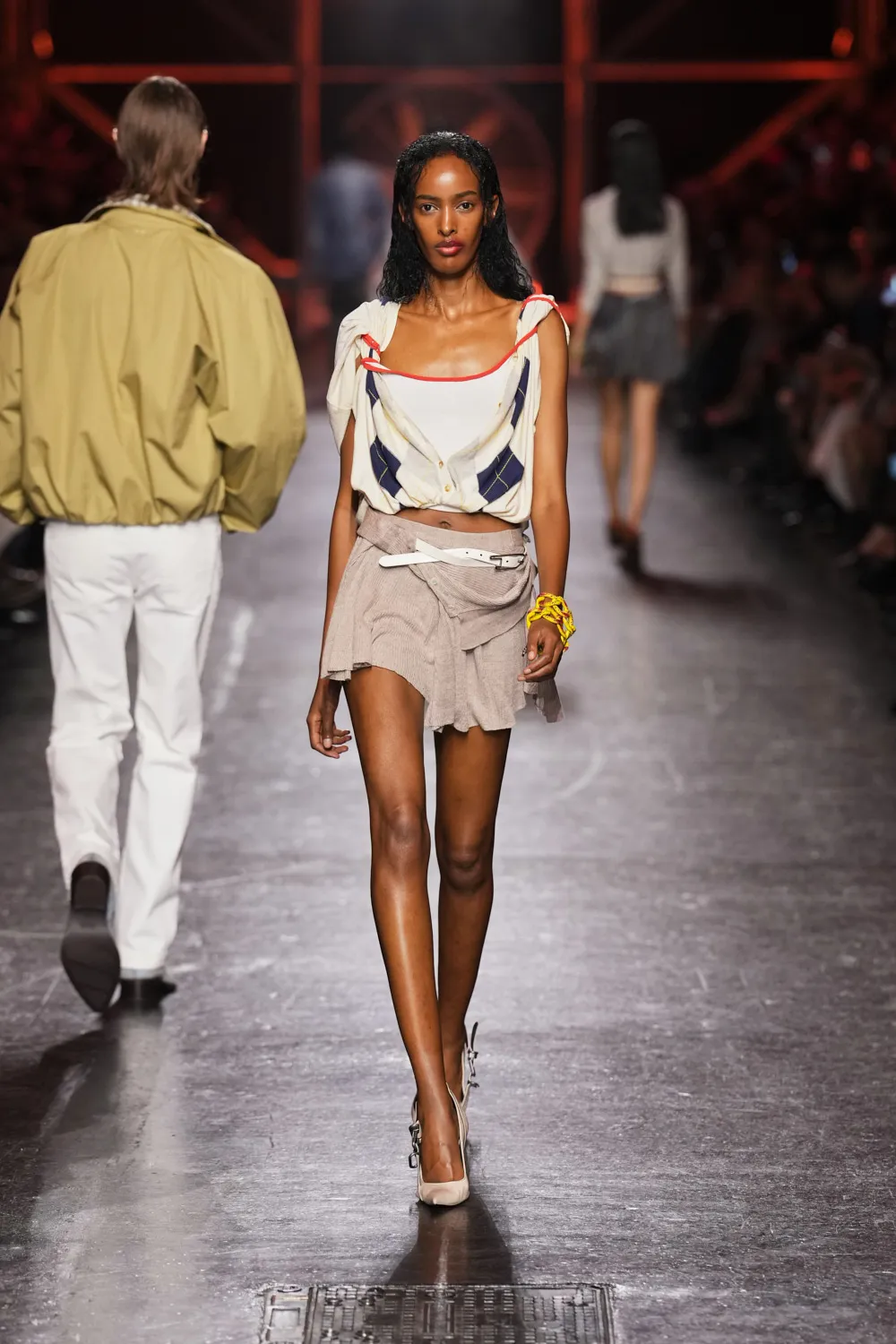

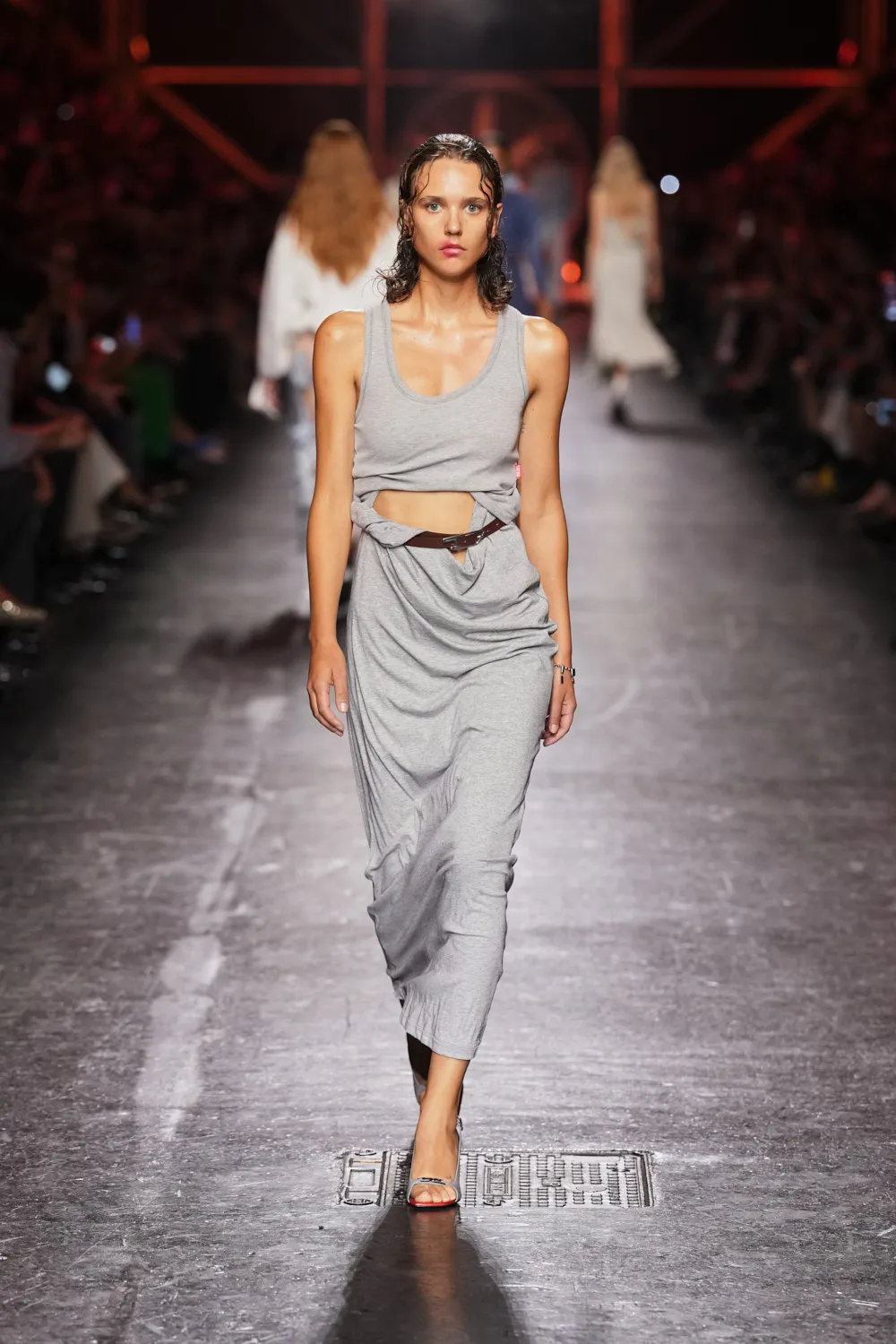
Soft jersey becomes especially effective in this state of controlled collapse. Draping gathers around hips and waists without fully smoothing itself out, preserving the impression that someone has pulled, tied or twisted the garment in a hurry. The body remains central, yet exposure rarely comes through a single obvious cut. It appears through displacement.
Sexy has rarely meant simply removing fabric. Glenn Martens prefers making clothes look as if something has happened to them.
Shirting and tailoring are caught halfway through transformation, while shredded surfaces approach the condition of remnants. The silhouettes carry post-party instability even while their engineering remains exact. What looks spontaneous has already been calculated down to the place where fabric should fall away.
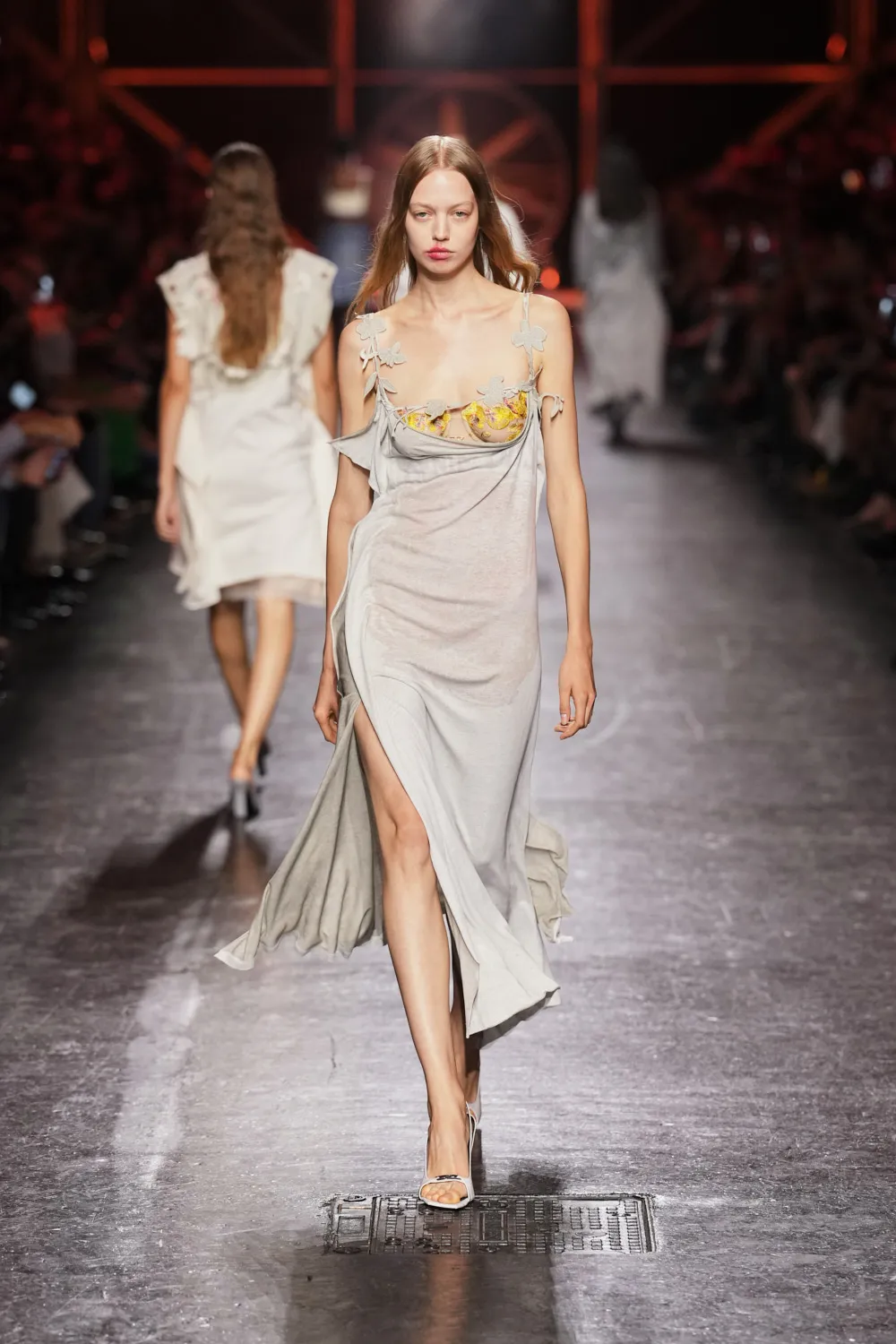
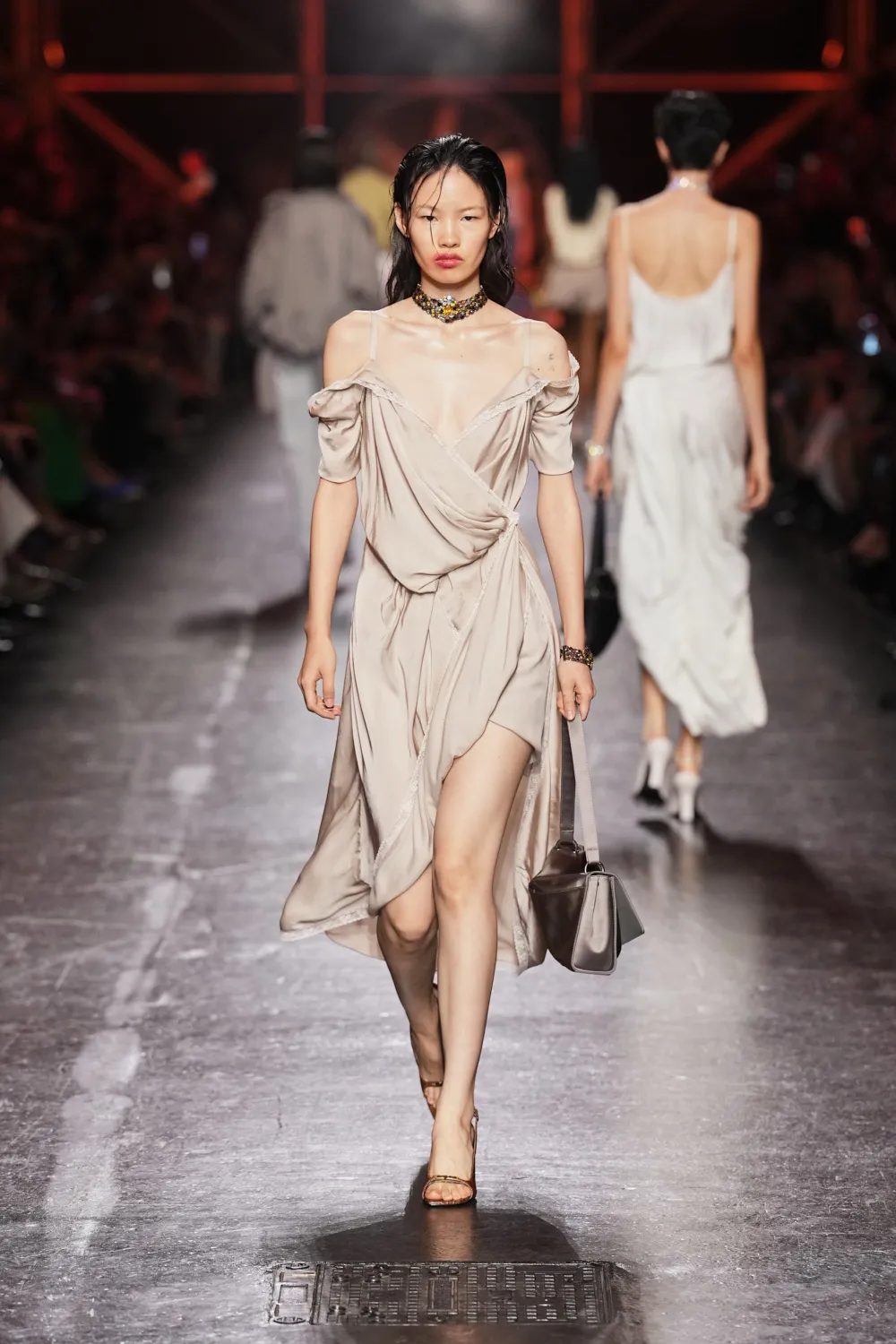
Here, the Diesel woman reaches her true color. She has no interest in perfect composure, nor in pretending the night ended earlier than it did. Skin, sweat, twisted clothes and a little chaos belong to the same wardrobe.
The wildness was never introduced halfway through the collection.
It had simply been waiting for everyone else to catch up.
When Glenn Martens arrived at Diesel in 2020, he inherited a brand whose denim heritage was enormous and whose fashion identity had far more room to move. Looking back on those first months, he recalled a company focused largely on “T-shirts and five-pocket trousers.” Six years later, Diesel had recorded its strongest performance in a decade and returned to fashion’s cultural conversation with a vocabulary that reached far beyond the basic jean.
He never achieved that by running away from denim but rather pushed further into it.
Under his direction, the material became illusion, experimentation, humour, decay and provocation. Diesel shows grew into collective experiences, from monumental sets to open-access presentations and crowds treated as active participants rather than decorative spectators. The clothes followed the same philosophy. Luxury could be distressed. Technique could be vulgar. Sex could be funny. A pair of jeans could still contain another idea after everyone assumed denim had already said everything.
Even the casting of his final moment carried quiet symmetry. Ella Snyder, who opened Martens’s first Diesel show for Spring 2022, now returned to close his last.
No grand memorial was necessary. A club full of bodies, Donna Summer in the air and clothes gradually coming apart were far closer to the legacy he built.
Glenn Martens leaves behind a Diesel whose name once again triggers an immediate fashion association before the logo even appears. Denim remains at the centre, only now its possibilities have been stretched almost beyond recognition.
The party may be over for him, but Diesel SS27 leaves the engine running.
Advertisement