MENU
Close





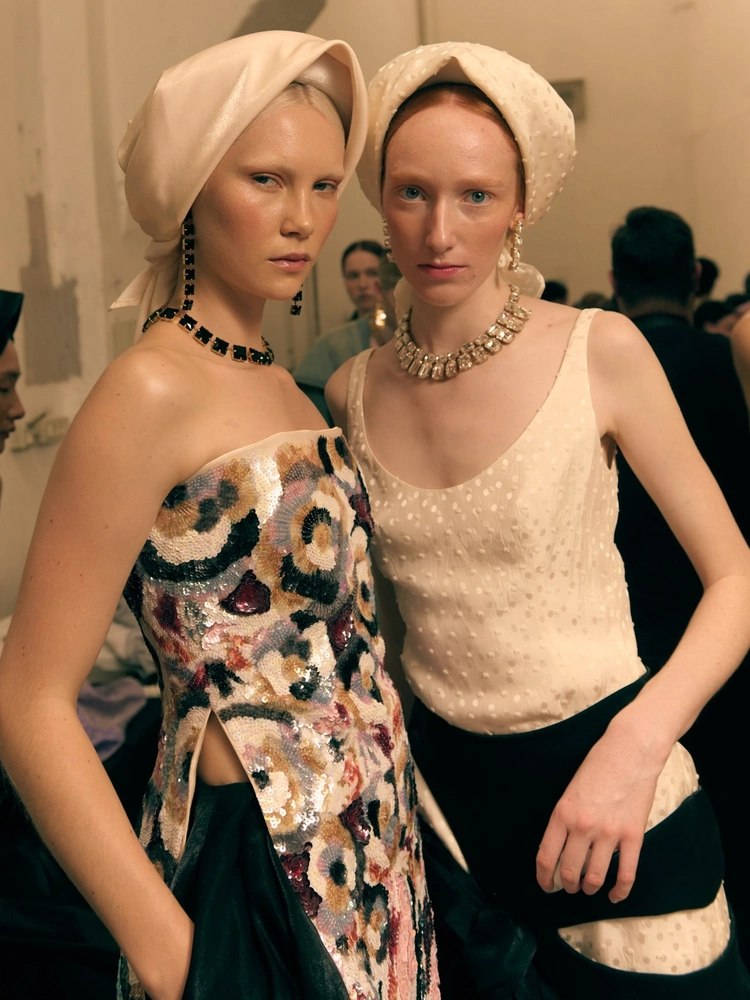
Vietnamese fashion is stepping onto the global stage, but the opportunity is not only about beautiful products. From manufacturing capacity and logistics to international buyers, wholesale systems, sizing, compliance and national support, Vietnam now needs to move from instinctive flexibility to a fashion system capable of going the distance.
Vietnamese fashion is stepping onto the global stage, but the opportunity is not only about beautiful products. From manufacturing capacity and logistics to international buyers, wholesale systems, sizing, compliance and national support, Vietnam now needs to move from instinctive flexibility to a fashion system capable of going the distance.
July 3, 2026


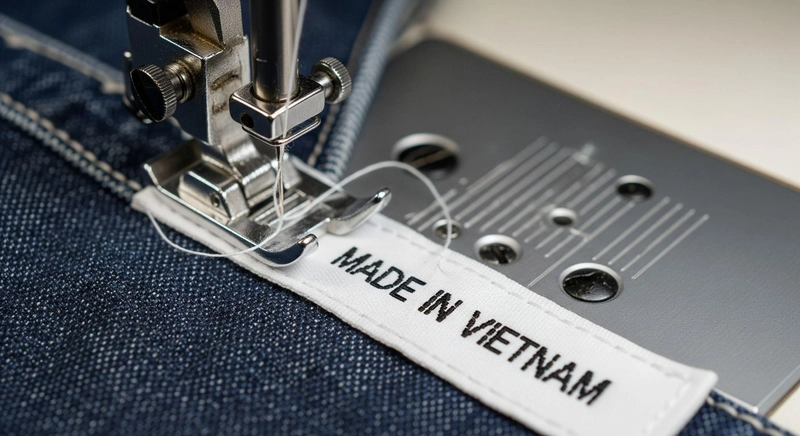
At a department store like Macy’s in New York, one only needs to turn over the label on a few garments to come across the words “Made in Vietnam” on products from international brands. Sometimes it is a shirt, a piece of knitwear, or a mass-market fashion item; sometimes it may be an item bearing the Karl Lagerfeld label, as the writer has personally seen on the retail floor. The list changes by season, product line and SKU, so it should not be treated as a fixed inventory of brands. But the impression it leaves is clear: Vietnam is no longer an unfamiliar name in the global fashion supply chain.
This is not merely an observation from the sales floor. In 2024, Vietnam’s textile and garment industry reached around USD 44 billion in export turnover, an increase of more than 11 percent compared with the previous year, with Vietnamese textiles and garments exported to more than 100 markets. In its FY2025 annual report, Nike stated that factories in Vietnam produced approximately 51 percent of total Nike Brand footwear and 31 percent of total Nike Brand apparel.
In other words, “Made in Vietnam” has long had a place on the global fashion map. The question for the next stage is no longer: Can Vietnam manufacture for the world? The new question is: Is the world ready to buy brands that are designed, made, built and operated by Vietnamese people?
For many years, the barrier facing a Vietnamese fashion brand selling overseas has not only been design. It has also been the question of how to deliver products to international customers or buyers quickly, accurately, safely and with reliable tracking. A dress may be beautifully photographed on Instagram, but without a solid system for shipping, documentation, tracking, returns and fulfillment, it will struggle to become a truly global product.
This is where logistics becomes an understated but crucial part of the Vietnamese fashion story. It is no coincidence that promotional content from international logistics providers such as FedEx has increasingly appeared on Facebook alongside images of Vietnamese fashion products being delivered to different countries around the world. This is more than an advertisement for a courier service. It reflects a new reality: Vietnamese fashion needs logistics partners strong enough to turn a cross-border order into a trustworthy buying experience.
FedEx has stated that it has been operating in Vietnam since 1994. In 2025, the company launched a new flight route connecting Vietnam with the United States via Singapore, operated by Boeing 777 freighters six times a week, while running a total of 42 flights per week from Vietnam to the world.
This detail matters because it shows that Vietnam’s cross-border commercial infrastructure has changed. Today, a Vietnamese brand can sell to customers in Dubai, Doha, Kuwait, Shanghai, New York or London not only through design inspiration, but through an express-shipping system that is becoming increasingly familiar to small and medium-sized businesses.
In other words, if factories once helped Vietnam enter the global supply chain, logistics is now helping Vietnamese brands enter the game of global selling.
A few years ago, when people spoke about Vietnamese fashion, the world often thought first of manufacturing capacity. Today, however, several Vietnamese brands have begun appearing within international stockist networks.
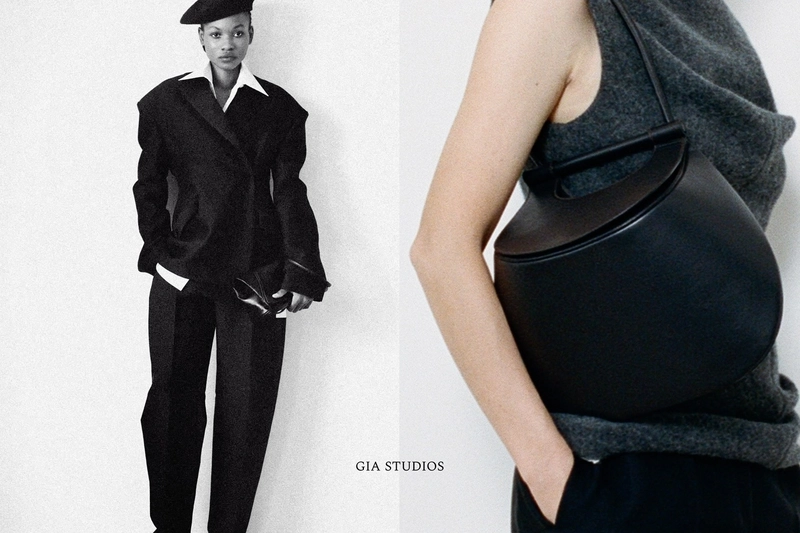
GIA STUDIOS has published a stockist list spanning China, Hong Kong, South Korea, Kuwait, the UAE, the United States, Japan and other markets, including names such as Lane Crawford, 10 Corso Como, Harvey Nichols, Bloomingdale’s, Ounass and Nordstrom. MONTSAND has also published a network of stockists across the Middle East, Asia and Europe, including Galeries Lafayette in Doha, Harvey Nichols in Kuwait and Hong Kong, along with boutiques in Qatar, Kuwait, the UAE, Saudi Arabia, Bahrain and China.

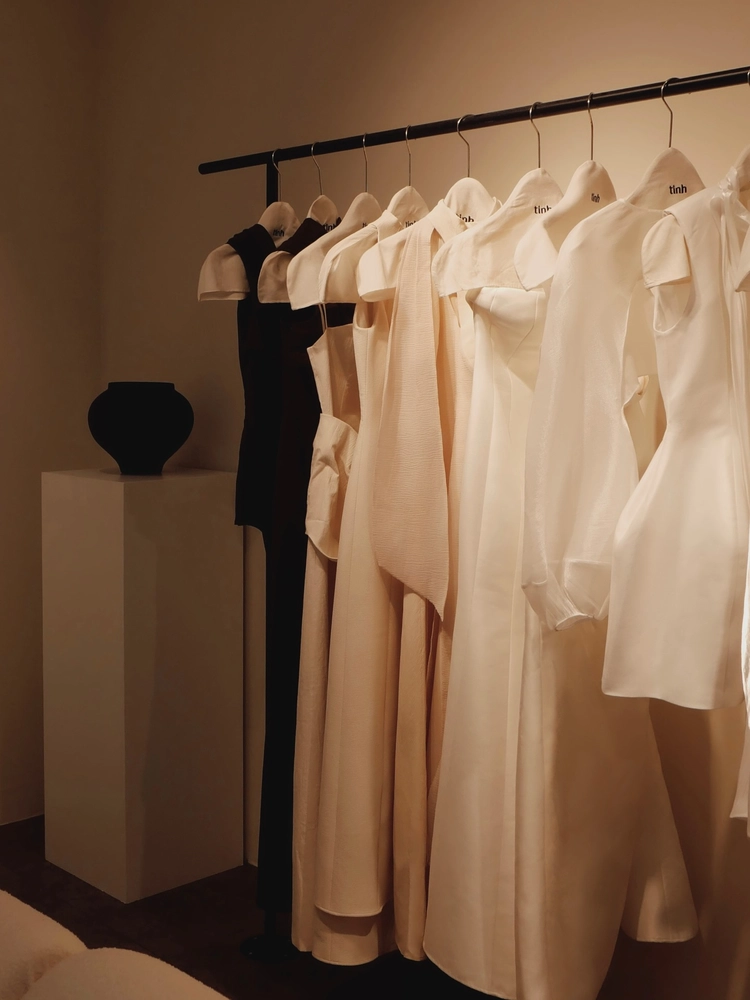
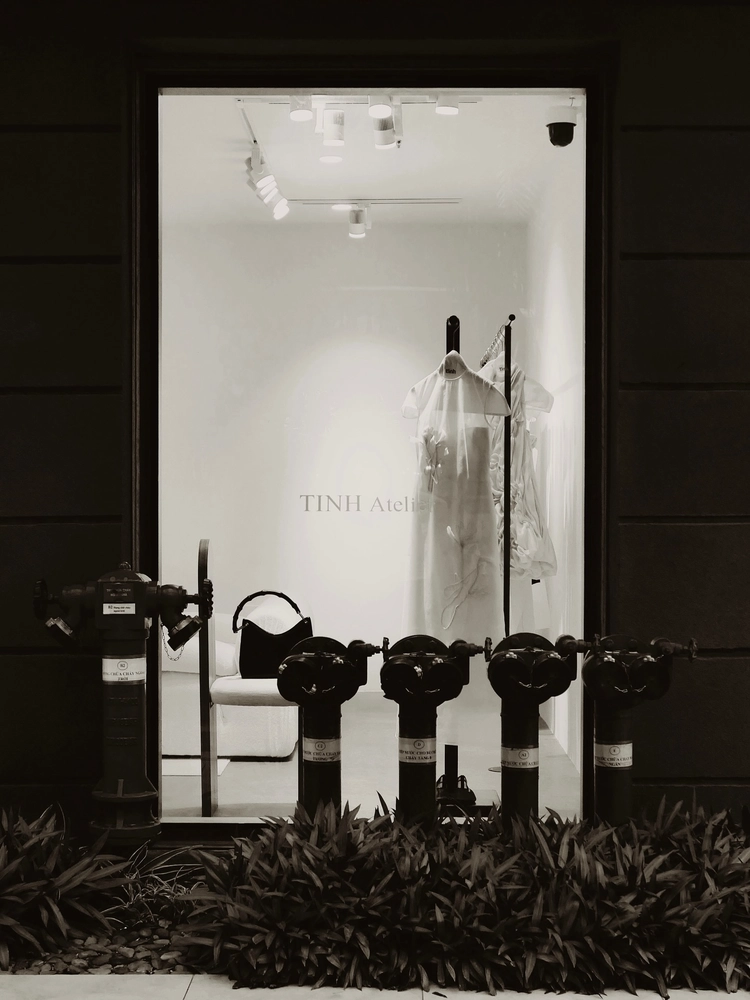
Alongside them, names such as Mirer, Tinh Atelier and Rebecca Tom also show how a new generation of Vietnamese brands is entering international markets through more specific routes. Mirer and Tinh Atelier are connected with stores and buyers in the Middle East, where demand for eveningwear, occasionwear, modest luxury and formal dressing remains strong. Rebecca Tom is positioned for stores in the United States, a market shaped by very different expectations around fit, sizing, buying calendars, delivery schedules and customer service.
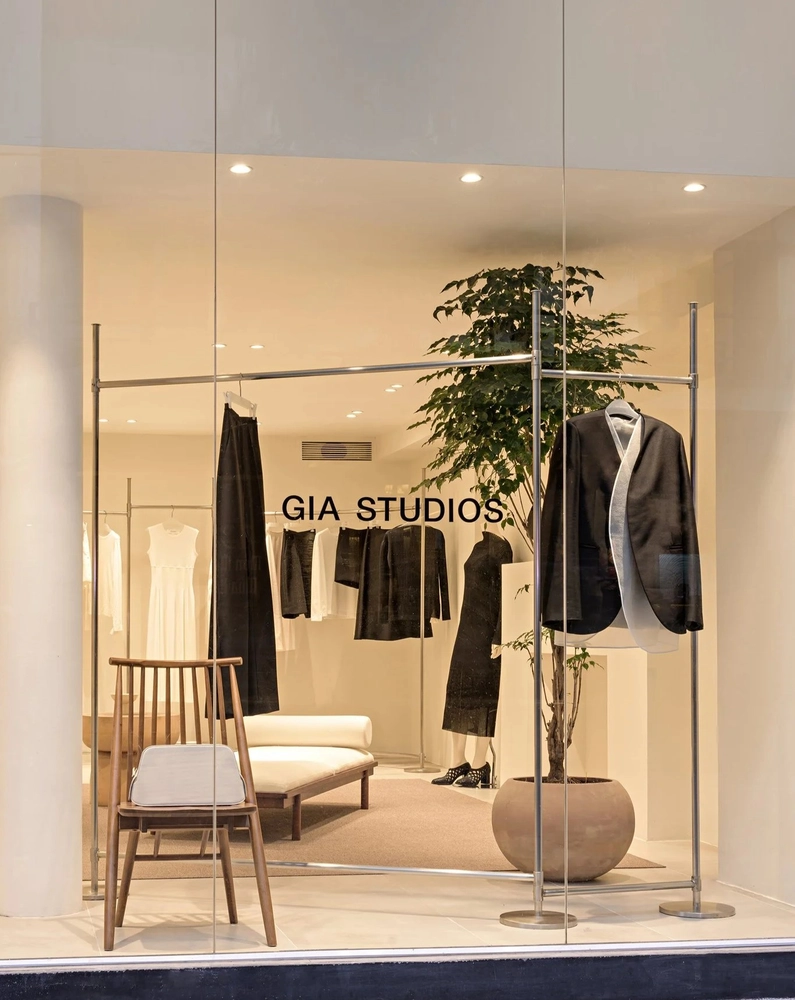
What matters is that these brands are not going global through a single formula. Some enter department stores. Some move through boutiques. Some work through showrooms. Others build direct relationships with buyers. But they share one important shift: Vietnamese fashion is no longer merely the production source behind international labels. It is beginning to appear as a source of design, a source of product and a group of brands capable of entering real retail systems.

This is no longer the story of a few personal orders being shipped overseas. It is a sign that Vietnamese brands have entered, or are moving closer to, international retail systems where products must compete on real sales floors, with real buyers, real customers, real margins and real pressure to reorder.
But this is precisely why the challenge becomes clearer. Going global is not simply about appearing in a showroom, a department store or a prestigious boutique. Going global means surviving across multiple seasons, achieving solid sell-through, generating reorders, creating products suited to each market and building an operational system strong enough for buyers to keep placing orders.
Buyers in the Middle East, China or the United States are not looking at Vietnam only because of price. If they only wanted low prices, they could source from many places, including China, India, Bangladesh and other major manufacturing centers. What makes Vietnam more interesting is a different combination: a sense of freshness, relatively good quality, an evolving aesthetic and, above all, flexibility.
In today’s market, many retailers need two groups of products at the same time. On one hand, they need distinctive, elevated brands with visual appeal to differentiate their stores. On the other, they also need brands with better prices, stable quality and easier sellability to fill the space between luxury and mass market. This is the territory where brands from Vietnam, China, India and other emerging markets can compete.
But Vietnam has one very particular advantage: flexibility.
One practical example is the story of an Indian factory that approached a Vietnamese brand while the brand was exhibiting for wholesale in the United States. The factory required a minimum order quantity of 100 pieces per style. That MOQ may be suitable for brands with large scale, dozens of stores or a broad distribution network. But for a brand testing a market, that number can represent a major risk: capital locked in inventory, broken size runs, colors that do not sell, buyers who do not reorder and stock that must be discounted the following season.
By contrast, many Vietnamese brands and suppliers are able to produce small batches, capsules, made-to-order pieces or adjust designs more quickly. This is a real advantage. But the advantage only matters if it is turned into a professional system. Buyers may appreciate flexibility, but they still need clear deadlines, standardized size charts, packing lists, invoices, reliable delivery and the ability to reorder.
Vietnam can win not because it is the cheapest, but because it is the most flexible. Yet to win in the long term, that flexibility must be standardized.
The weakness of many Vietnamese brands is not necessarily aesthetic. Vietnam has many brands with taste, craftsmanship, good materials and the ability to create beautiful products. The deeper problem is that many brands still do not truly treat the international market as a distinct market with its own logic.
The common approach is still this: design for Vietnamese customers, sell well in Vietnam, then bring those same pieces to a trade show, a showroom or an international buyer, hoping that beauty will cross borders by itself.
But international fashion does not work that way.
Each market has a different body, climate, dress culture, price structure, sales channel and service expectation. The Middle East has its own requirements around modesty, length, coverage, material, occasion dressing and luxury aesthetics. The United States demands fit, size inclusivity, return policies and stable delivery. China has its own trend rhythm, digital platforms, styling preferences and buyer systems. Europe often places greater emphasis on materials, origin, compliance and sustainability narratives.
For that reason, a dress that sells well in Vietnam does not automatically become an international product. To sell to the world, a brand must begin with the question: What does this market truly need?
One highly practical issue that is often underestimated is fit and sizing. Many Vietnamese brands still treat the size chart as a simple measurement table. But in international fashion, fit is an entire system: mannequins, body blocks, grading rules, fitting models, target customers, occasions and market destinations.
A brand that wants to sell to the Middle East cannot simply take a Vietnamese block and lengthen the sleeves. A brand that wants to sell to the United States cannot mechanically add size L or XL. A brand that wants to sell to China also needs to understand body proportions, styling preferences, skirt lengths, silhouette balance and the customer’s perception of trends.
At a professional level, investing in mannequins suited to each market — including specialized mannequin lines such as Stockman, is not a luxury cost. It is product infrastructure. A brand cannot claim to sell to the world if its entire fitting process is still based only on the body of the domestic customer.
This is where many Vietnamese brands remain vague. They want international orders, but they do not want to invest deeply in each market. They want one size chart to apply to the whole world. But the world does not wear one body.
Another weakness among Vietnamese brands is the uneven development of wholesale capability. Selling retail domestically and selling to international buyers are two very different games.
When selling directly in Vietnam, a brand can control its final retail price, handle promotions, communicate directly with customers, adjust delivery timelines and manage inventory on its own terms. But when it enters wholesale, the brand steps into another system: buyers need margin, stores need markdowns, showrooms need commission, logistics needs budget, and goods need packing lists, commercial invoices, HS codes, care labels, country-of-origin labels, size charts, barcodes, delivery calendars and return policies.
Many Vietnamese brands move straight from production into retail, without building a clear pricing architecture for wholesale. When an international buyer appears, they only then realize that their price must absorb many additional layers: wholesale discounts, shipping, duties, packaging, returns, showroom fees, markdown allowances, sample costs, shooting costs, PR costs and the operating expenses of the next season.
If this is not calculated from the beginning, a brand can easily fall into a paradox: selling internationally, but with margins too thin to continue.
A brand may win the media moment by entering an international stockist in its first season. But if every sale erodes the margin, if there is not enough money to produce the next season, if there is no budget to develop a new collection and no cash flow to support reorders, then that victory is only a beautiful moment, not a sustainable business.
A beautiful dress may open the first conversation. But invoices, Certificates of Origin, packing lists, HS codes, fiber-content labels, shipping terms and customs clearance determine whether a buyer will continue working with a brand.
For the writer, this is not a theoretical issue. In one shipment to the Middle East, a fashion order worth around USD 20,000 ended up carrying a penalty of nearly USD 2,000. That single incident was enough to reveal a hard truth about international fashion trade: a beautiful product may create the order, but a small failure in logistics, documentation or compliance can erase a significant part of the margin.
In wholesale, mistakes are rarely abstract. They arrive as storage charges, penalty fees, delayed delivery, customs complications, buyer frustration and, sometimes, the quiet loss of trust. For a young brand, USD 2,000 is not simply an operational cost. It can be the budget for a photoshoot, a sample set, a showroom assistant or part of the next production cycle.
Some Vietnamese brands already have international customers and may even be selling outside Vietnam, but still operate at the scale of a family-run business. This may not be a serious issue when selling domestically or through Instagram. But with department stores, international showrooms or professional buyers, it quickly becomes a barrier.
Buyers need to know they are working with a partner that has legal capacity, clear documentation, commercial responsibility and the ability to meet import standards. They are not only buying the product; they are buying certainty.
This is the unglamorous part of fashion, but it is what determines whether a brand can move from “beautiful” to “reliable.”
Many Vietnamese brands step onto the international stage with an understandable dream: to appear in a showroom, attract buyer attention, secure the first order and be present on a respected retail floor. But in international wholesale, the first season is often only a test.
In the first season, buyers order lightly to gauge reaction. In the second season, they learn whether the product truly sells. By the third season, trust begins to form. Only when there are reorders, continuity, best-sellers and good sell-through does a brand truly begin to enter the market.
Vietnam is strong in small batches, customization and quick adjustments. But when a style sells well, buyers will ask practical questions: Can it be reordered? Can the brand deliver 100 to 300 pieces? Will this color still be available next season? Does this fabric have continuity? Is the sizing stable? Can the brand develop this story further next season?
If a brand is only strong at making small drops but lacks a best-seller strategy, inventory planning, a production calendar and the ability to analyze sell-through, its international journey can easily be interrupted.
Going global is not an explosion. It is a rhythm of repetition.
If we look only at individual brands, we see many problems: a lack of market intelligence, wholesale systems, international sizing, compliance, pricing strategy and scale. But from a wider perspective, there is an even larger issue: Vietnam lacks export infrastructure specifically designed for designer brands.
In some countries, brands do not go global alone. They go with governments, associations, collective showrooms, buyer networks, trade missions, country pavilions, support funds and a national story behind them.
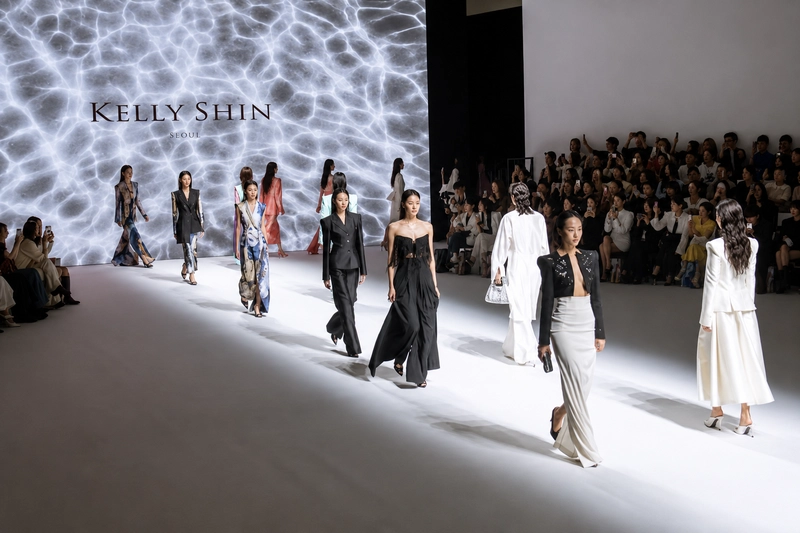
Turkey has programs such as Brand Support and TURQUALITY, designed to help brands build international competitiveness, including support related to promotion, trade fairs, consultancy, rental spaces, warehouses, architectural concepts, franchising and market research. South Korea uses Seoul Fashion Week as a business platform: for the 2025 S/S season, the Seoul Metropolitan Government stated that 95 domestic fashion brands would be connected with 120 global buyers from 24 countries.
Italy is the classic example of a national ecosystem. Camera Nazionale della Moda Italiana is a non-profit association that coordinates, promotes and protects the image of Italian fashion both domestically and internationally. The Italian Trade Agency also operates programs such as OpportunItaly to connect international buyers, distributors and entrepreneurs with Made in Italy. At Dubai Fashion Week, the Italian Trade Agency previously organized “La Moda Italiana: Dubai Edition,” featuring 25 Italian brands across categories such as clothing, textiles, footwear, leather goods and eyewear.
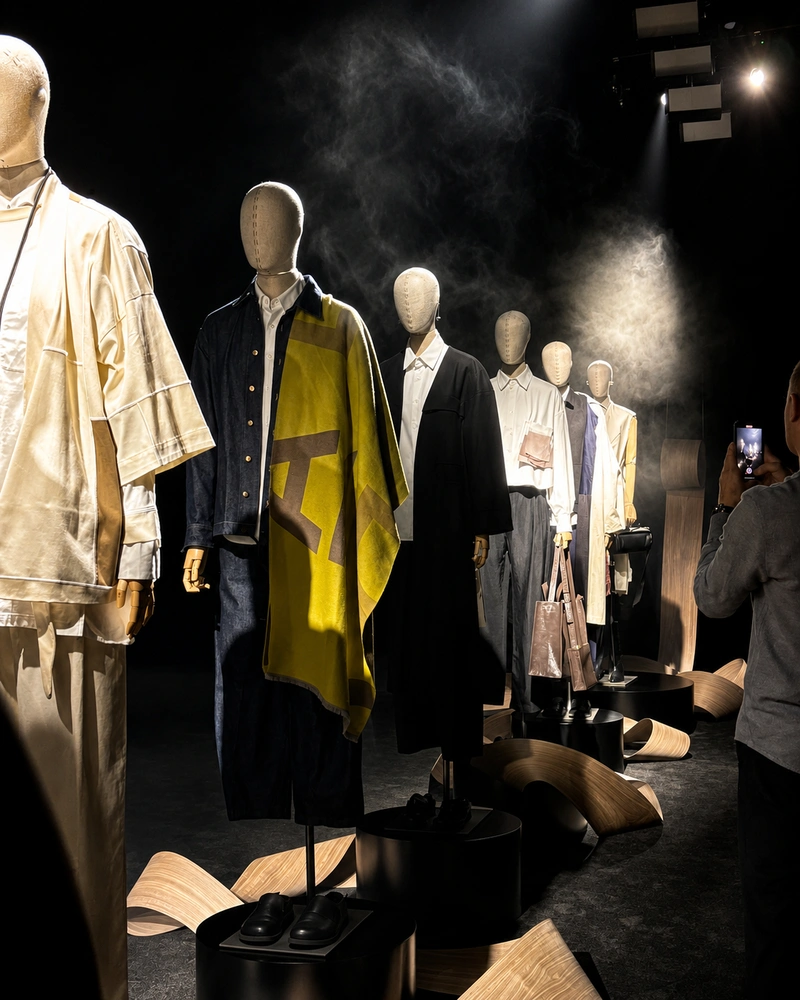
This shows a major difference. A South Korean brand does not only sell clothes; it goes out into the world alongside the wave of K-fashion. An Italian brand does not only sell products; it is supported by the aura of Made in Italy. A Turkish brand can enter international markets within an export system supported by policy.
Many Vietnamese brands, by contrast, still go abroad with the founder’s own money, individual risk-taking, a few self-built buyer relationships and the belief that a beautiful product will persuade the world on its own.
That belief is admirable. But it is not enough.
If Vietnam wants to move from “Made in Vietnam” to “Designed and Made by Vietnamese,” the story cannot rest solely on the shoulders of individual designers. It needs a layer of soft infrastructure for designer brands: support funds for international showrooms, buyer-matching programs, market intelligence for each region, wholesale consulting, compliance support, logistics support, documentation guidance, international PR and seriously curated collective showrooms.
A country pavilion or collective showroom could help share the costs of venue rental, sample shipping, PR, buyer invitations and sales staff. A market-intelligence program could help brands understand the differences between Dubai, Riyadh, Doha, Shanghai, New York and Paris. A wholesale advisory system could help brands rebuild pricing from the start instead of discovering after the first season that their margins have collapsed. A compliance desk could help small brands standardize invoices, Certificates of Origin, HS codes, packing lists and product labels.
More importantly, a well-curated Vietnamese fashion alliance could create a cllective image: Vietnam is not only a place that manufactures for the world, but an emerging design market with its own aesthetic, craftsmanship and operational capability.
Fashion does not go global through one beautiful collection alone. It goes global through a system.
Vietnamese fashion has a very real opportunity. Vietnam already has manufacturing credibility through “Made in Vietnam.” Several Vietnamese brands have appeared in international stockist networks. Names such as GIA STUDIOS, MONTSAND, Mirer, Tinh Atelier and Rebecca Tom show different routes through which Vietnamese fashion is approaching the world: from Asia to the Middle East, from department stores to boutiques, from showrooms to stores in the United States.
Buyers in the Middle East, China and the United States are looking for new sources of products that are flexible, well-made and design-driven. Cross-border logistics is becoming more convenient. The space between luxury and mass market is opening up for brands from emerging markets.
But opportunity does not automatically become position.
The greatest weakness of many Vietnamese brands is not that they lack the dream of going global. In fact, they have plenty of that dream. What is missing is long-term vision, market intelligence, operational discipline and a support system strong enough to turn that dream into a truly international business.
Going global is not about taking a beautiful collection overseas and hoping for luck. Going global means understanding each market, designing for each body, pricing for each sales channel, standardizing every document, delivering on schedule each season and being resilient enough to move through the first, second and third seasons until buyers do not merely test the brand, but trust it.
Vietnam does not lack flexibility. It does not lack craftsmanship. It does not lack designers with taste. What it needs now is to turn that flexibility into a system, to turn beautiful products into a trustworthy promise, and to turn “Designed and Made by Vietnamese” into a concept clear enough in the minds of international buyers.
Because the greatest challenge for Vietnamese fashion today is no longer to prove that the world can manufacture in Vietnam.
The greatest challenge is to make the world want to buy Vietnam, as an aesthetic, a capability, a partner and a future