MENU
Close





Something curious kept happening at Fall 2026 Couture: the eye often arrived at the image before it understood what it was actually seeing.
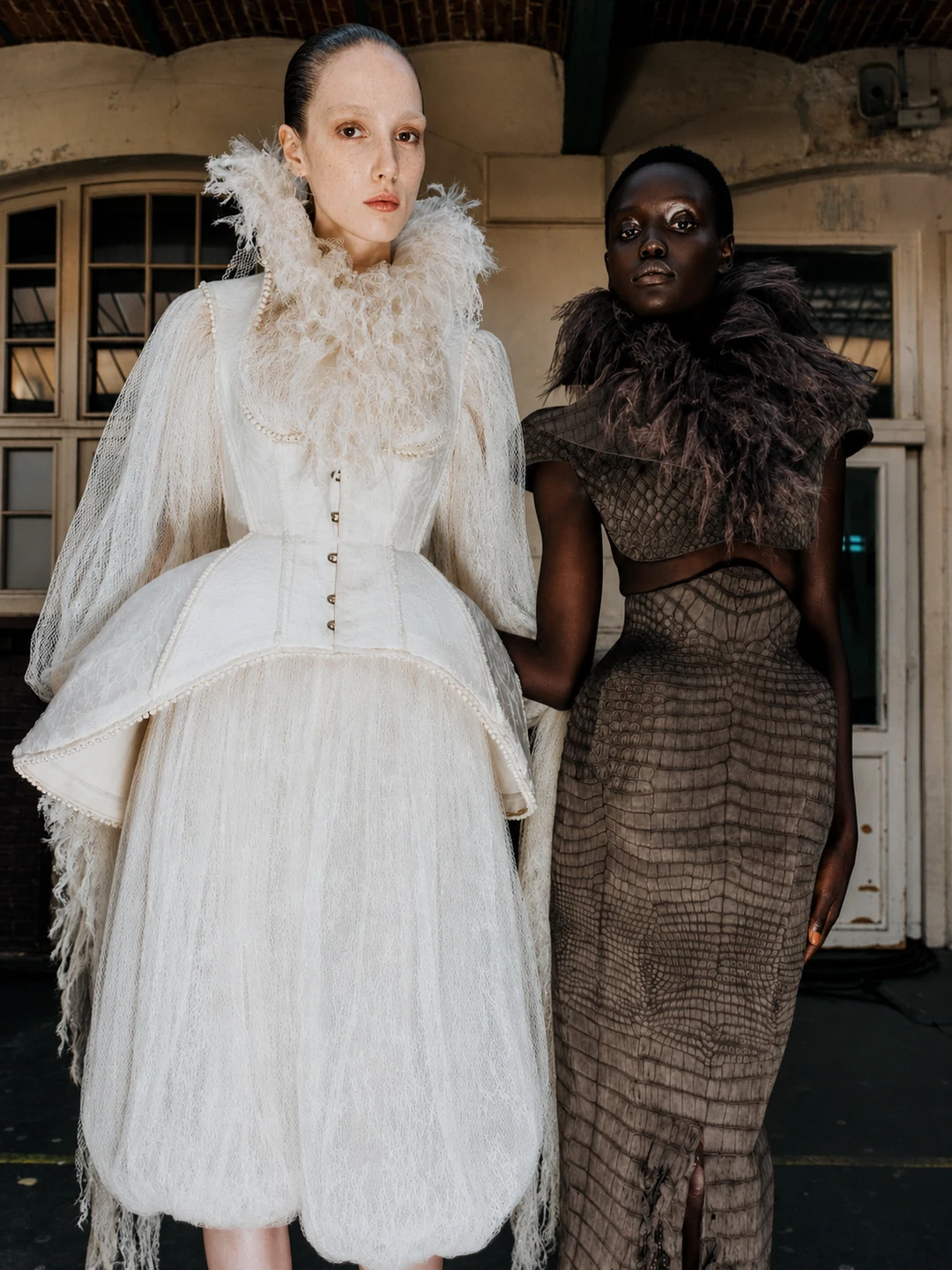
Something curious kept happening at Fall 2026 Couture: the eye often arrived at the image before it understood what it was actually seeing.
August 25, 2026
Advertisement
Advertisement
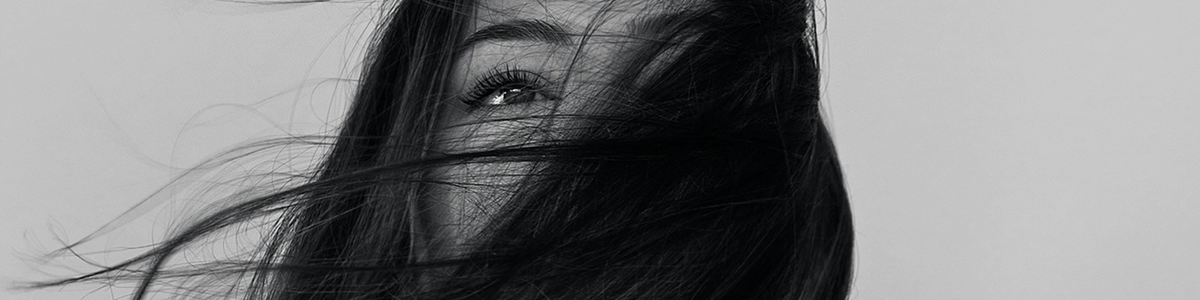


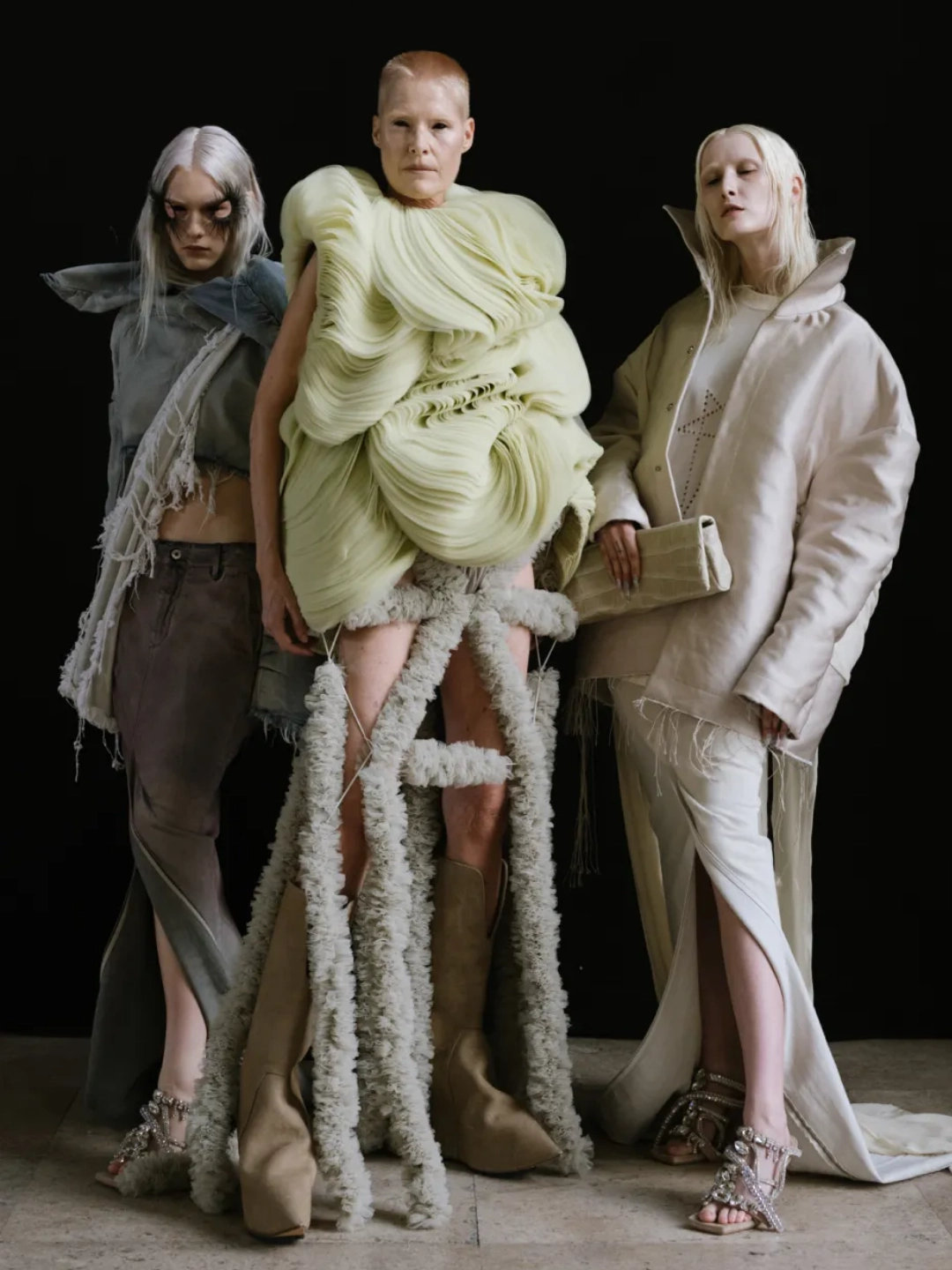
A curious visual tension ran through Paris. Familiar forms of handcraft repeatedly produced images that felt anything but familiar. Embroidery acquired the visual density of carved relief, feathers expanded into monumental volume, beadwork dissolved into colour and light, while manipulated textiles began resembling porcelain, membrane or organic matter.
The shift remained rooted in the runway image. The interest lay in what the eye encountered first, how a garment registered from several metres away, and how that first impression changed once its material reality became apparent.
A single bead immediately announces itself as ornament. Once thousands gather across a body, that clarity begins to disappear.
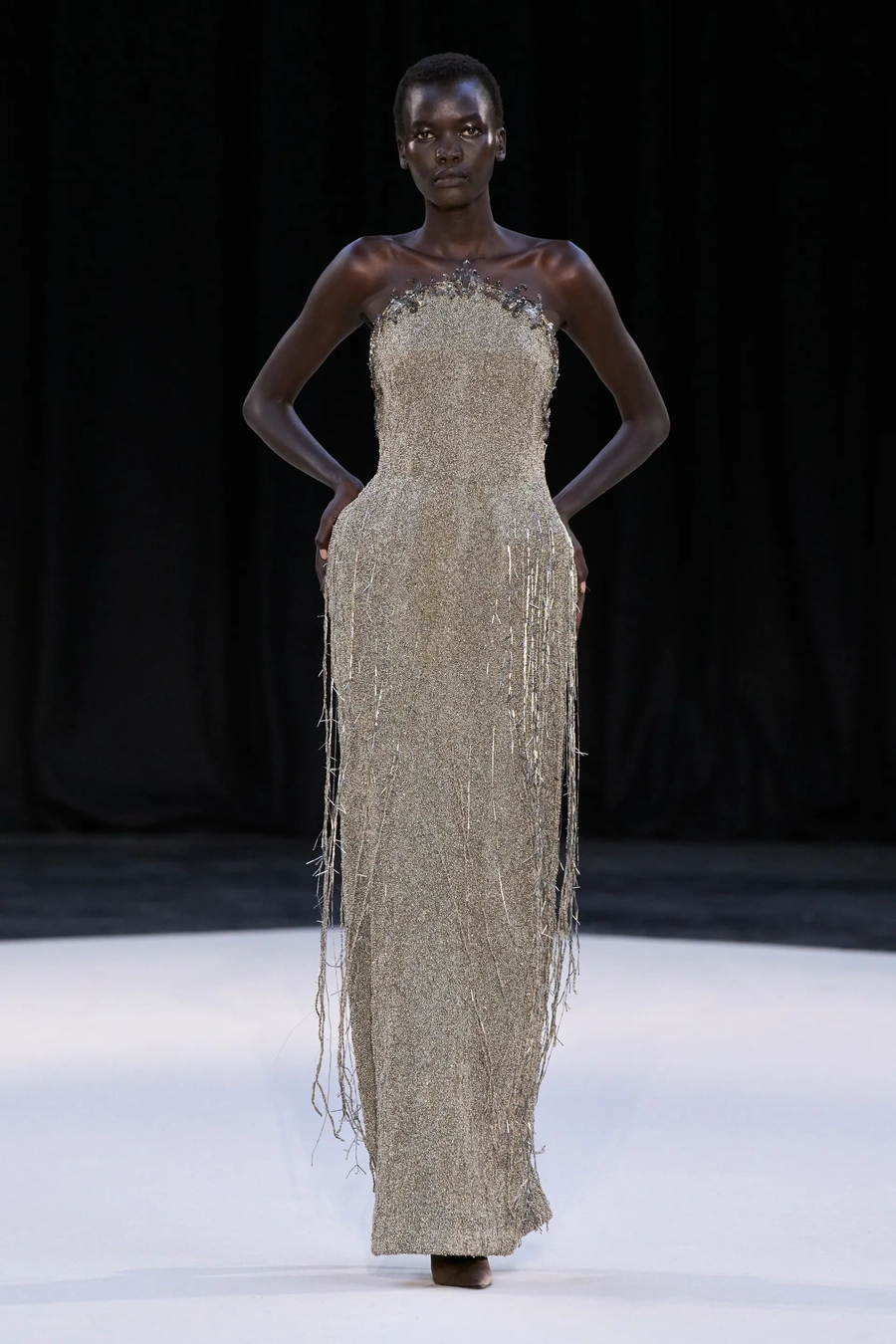
Rahul Mishra’s Devi pushed embroidery toward the visual territory of carved relief. Zardozi, dabka, crystals and beadwork accumulated across garments until the surface seemed weathered, mineral and almost archaeological. From the runway, thread could register as stone before the eye began separating individual elements.
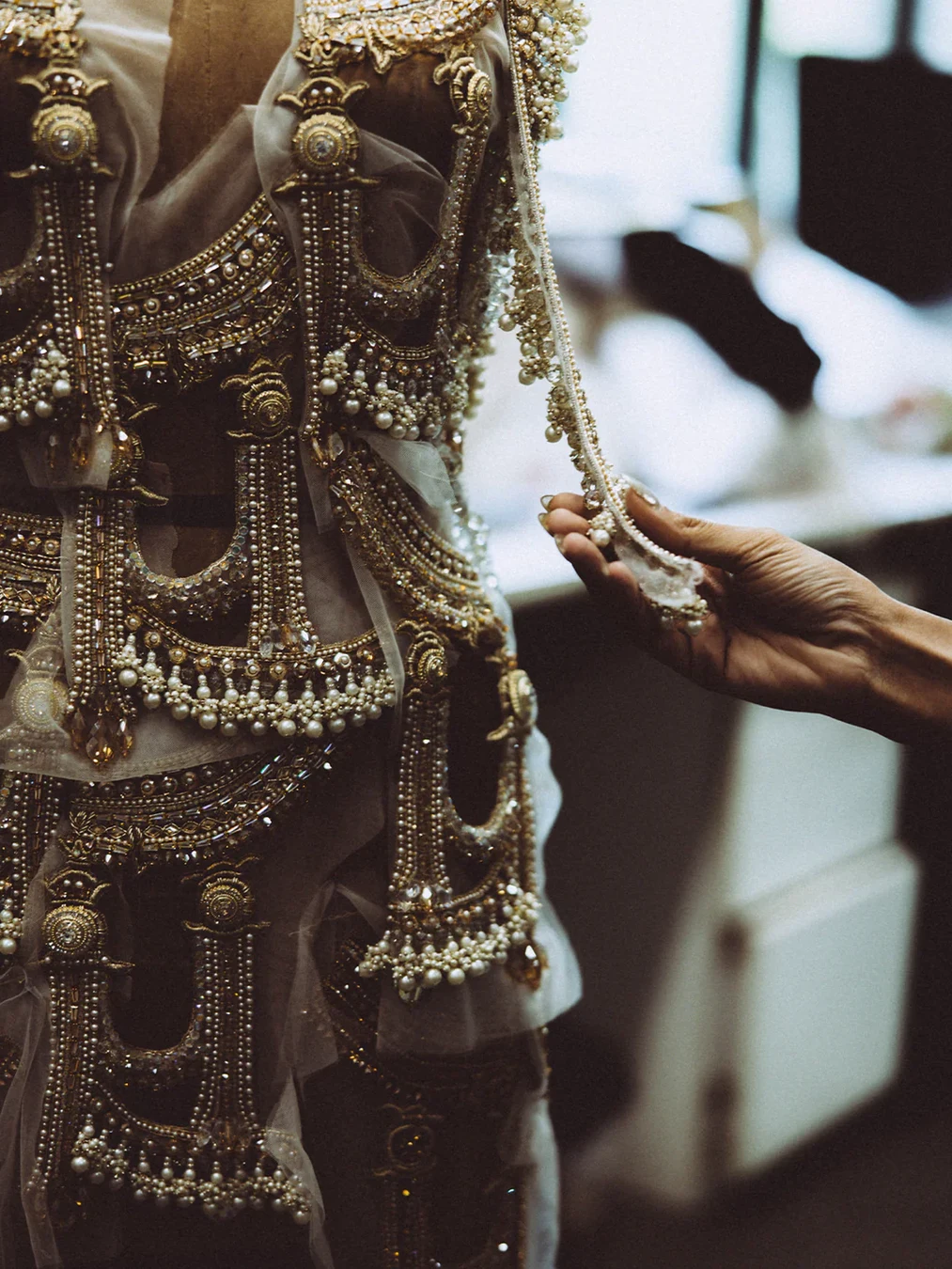
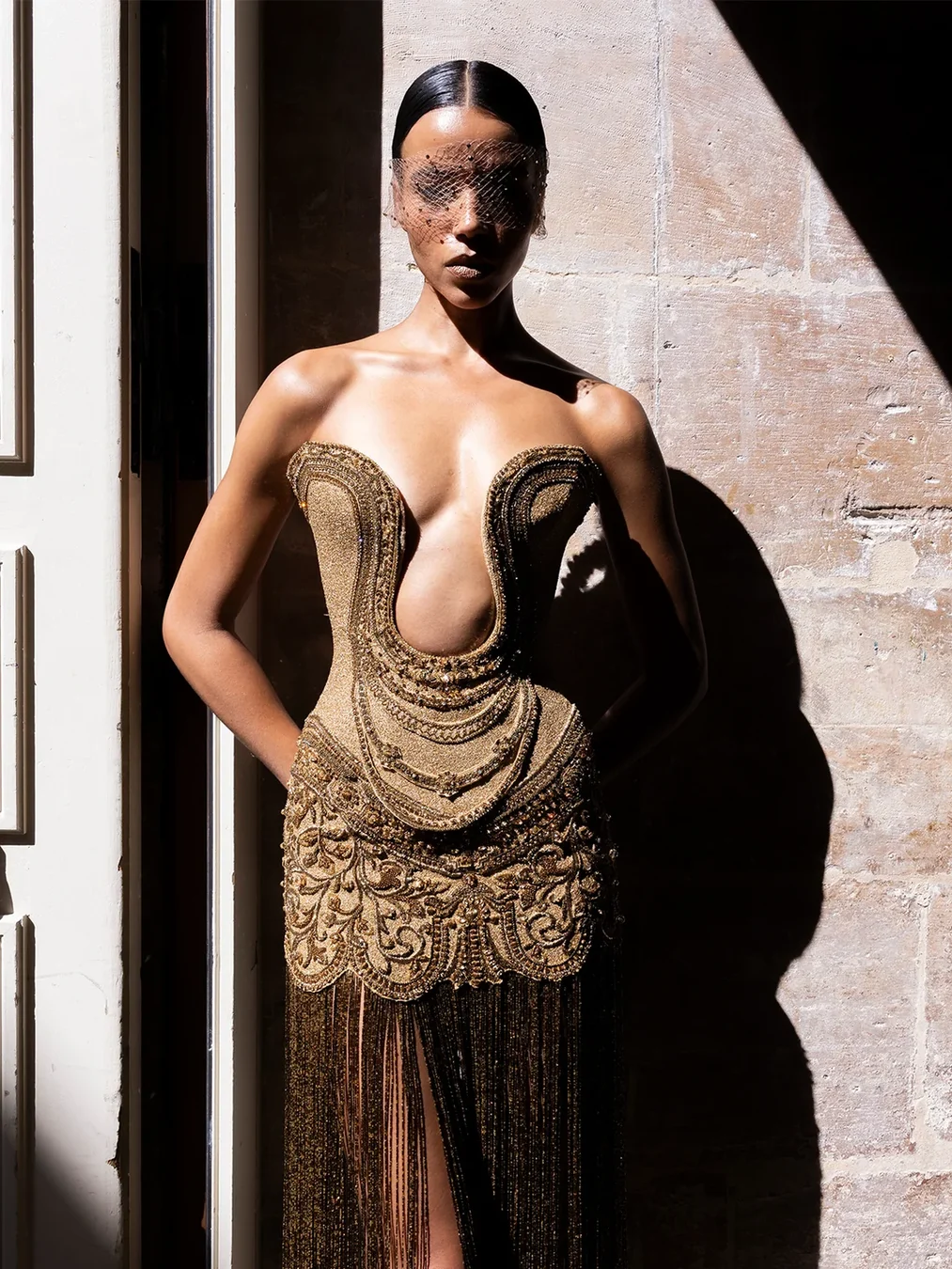
His collections continually connect Indian artisanal knowledge with nature, mythology and spiritual imagery, giving extreme handwork an almost meditative intensity. In Devi, embroidery seemed to carry the memory of ancient sculpture while still producing an image firmly rooted in the present.
Manish Malhotra approached surface through exuberance. Maa brought salli embroidery, taban sequins, zardozi, resham, crystals and dense embellishment into rounded forms, mosaic-like textures and monumental florals. Ornament extended far beyond a decorative finishing gesture and began determining the entire visual presence of the garment.
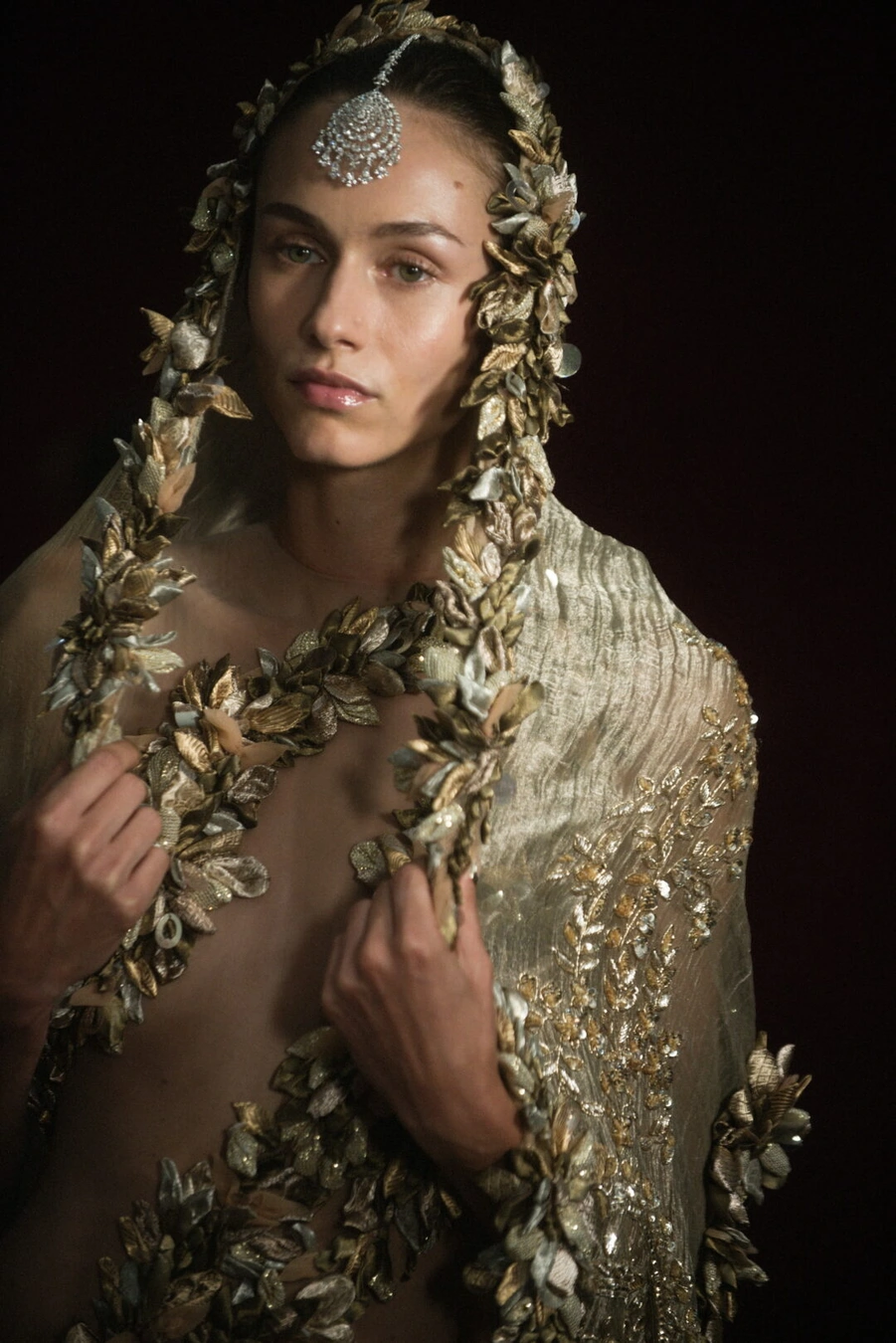
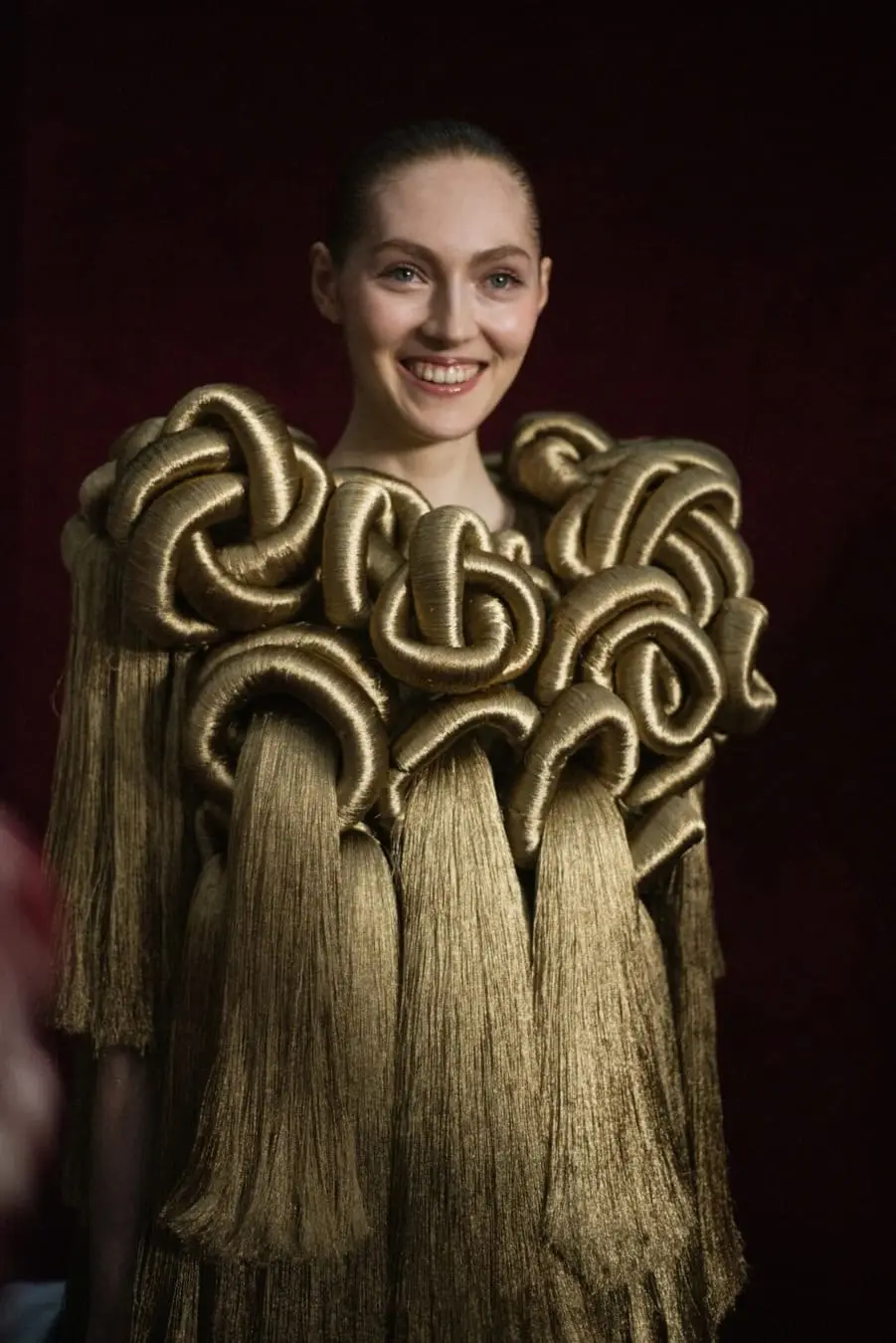
The embodiment still belonged to Malhotra’s own language of Indian glamour. His couture thrives on luminosity, abundance and cinematic scale, so highly worked surfaces arrive with an immediate sense of spectacle. Rahul Mishra gave embroidery the gravity of excavated matter; Manish Malhotra allowed it to radiate like jewellery enlarged across the body.
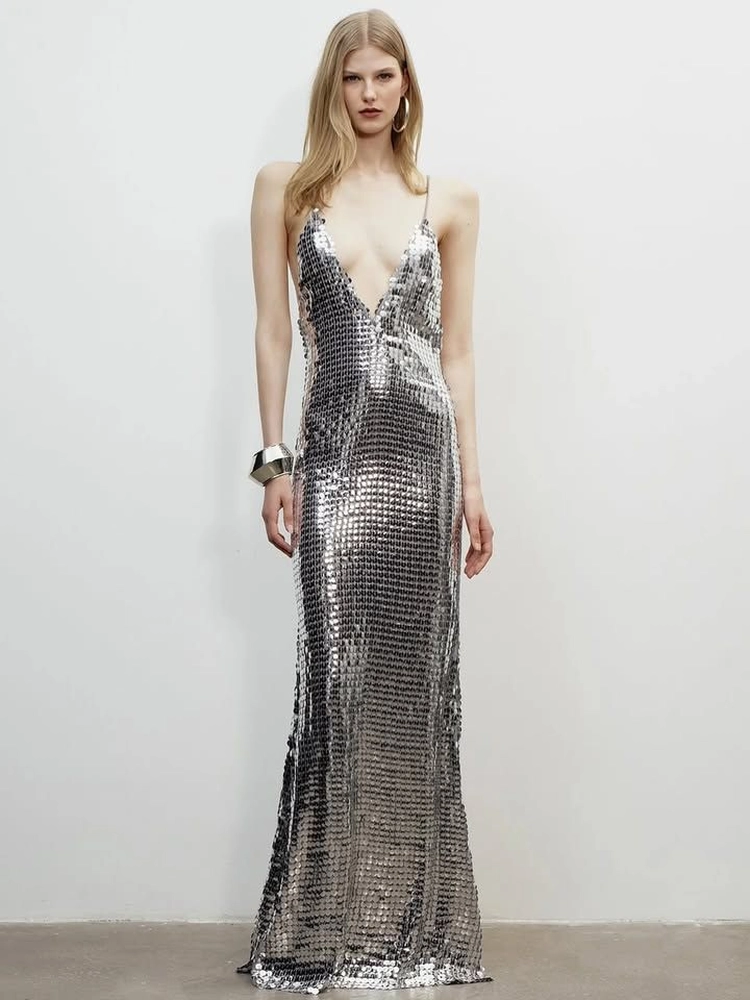
Elie Saab offered another interpretation. Beading could merge gradually into colour, creating surfaces where individual crystals disappeared inside ombré gradients. Floral motifs sometimes widened into shapes recalling wings or stained glass, allowing the eye to receive light and colour before registering embellishment.
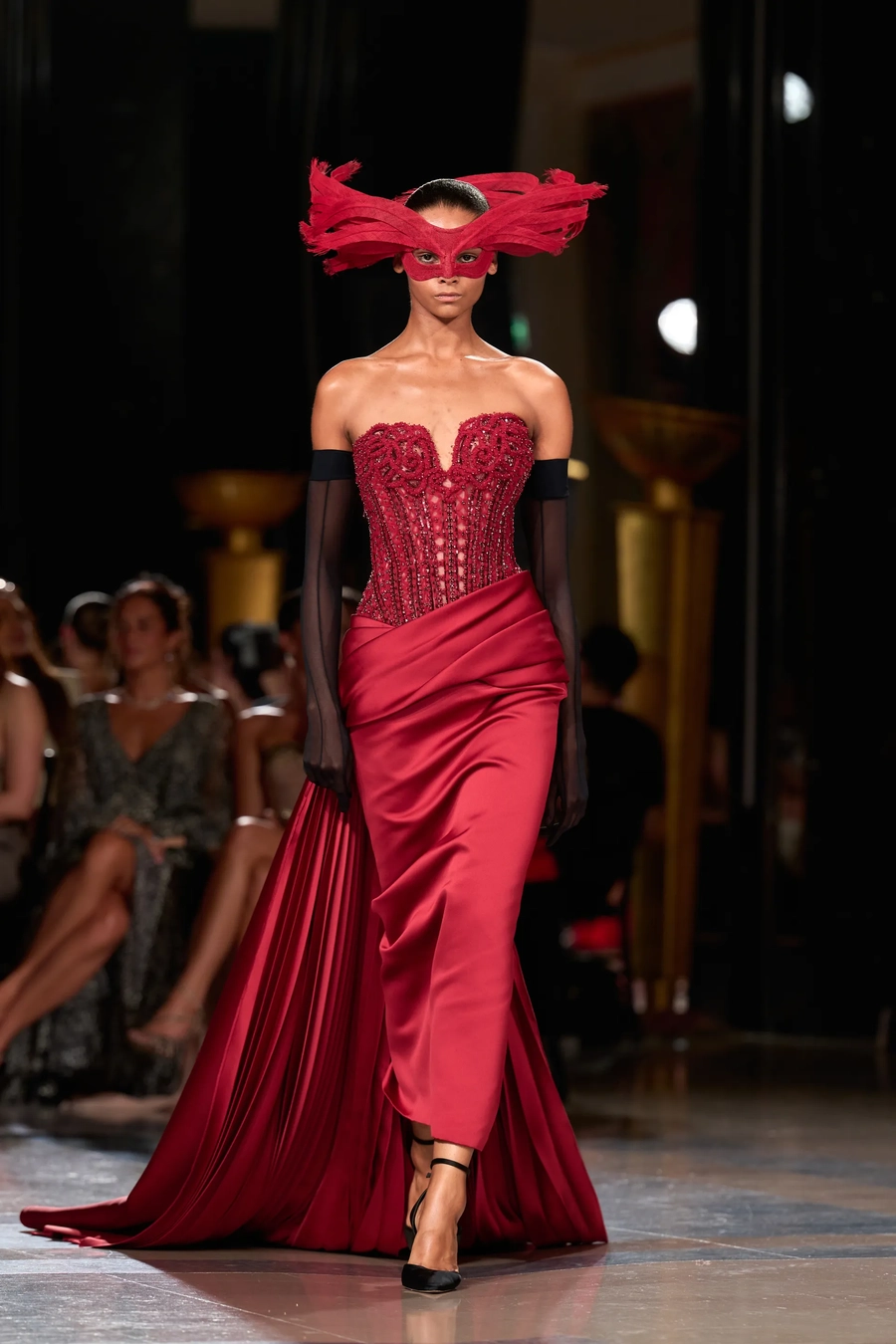
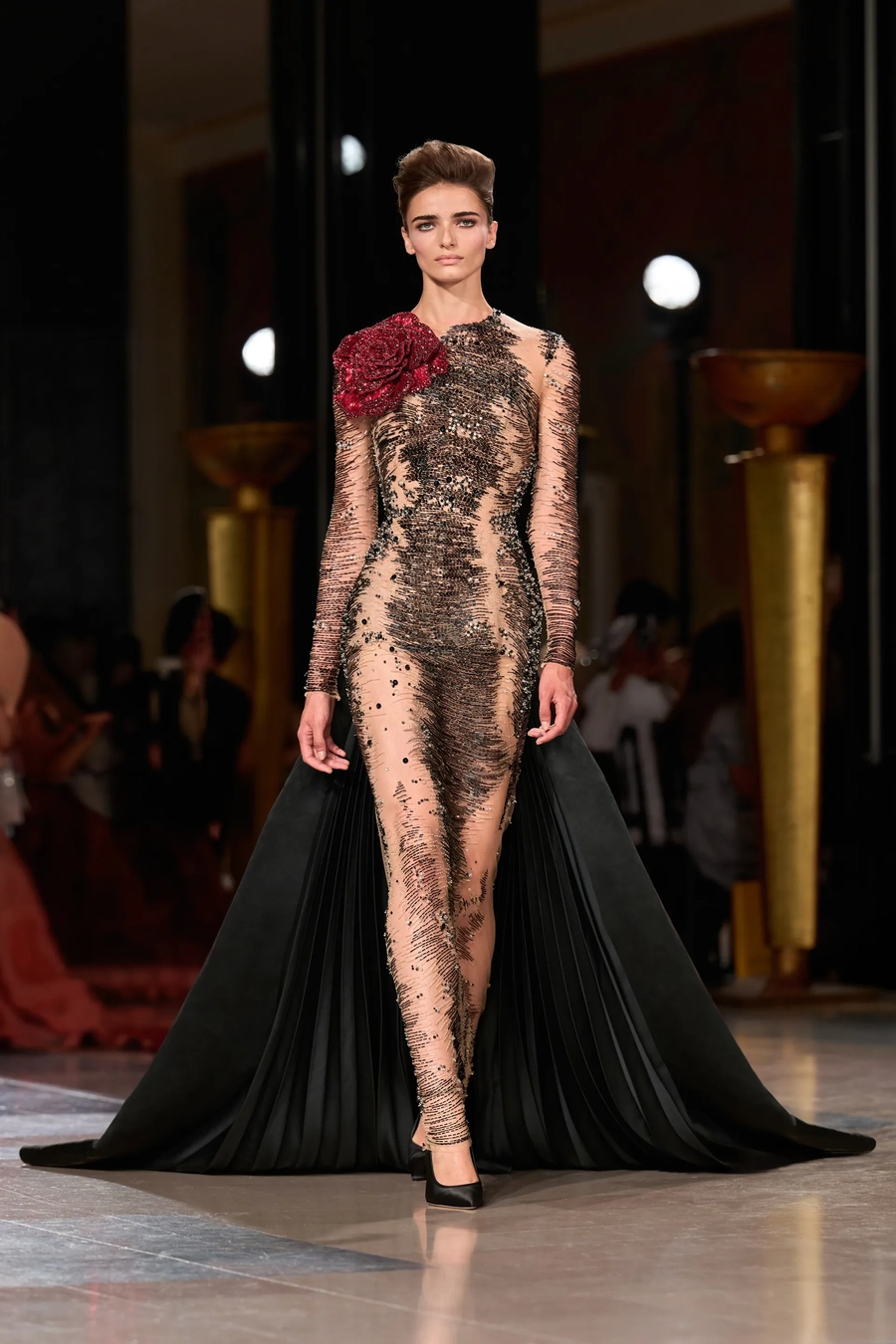
That transformation suited a house built around polished femininity. Elie Saab’s craftsmanship frequently serves atmosphere, creating shimmer, transparency and controlled glamour around the wearer. Even as the beadwork became visually abstract, the house retained its recognisable sense of elegance.
Across these collections, the surface often arrived first, while the handwork revealed itself only on closer inspection.
Feathers already carry movement inside their form. Their softness, fragility and association with glamour have made them one of couture’s most familiar visual materials. Fall 2026 Couture repeatedly gave them a different kind of physical authority.
At Balenciaga, Pierpaolo Piccioli incorporated feathers into volumes that surrounded and extended the body. Plumage could occupy enough space to behave almost like part of the silhouette itself, giving softness a monumental scale.
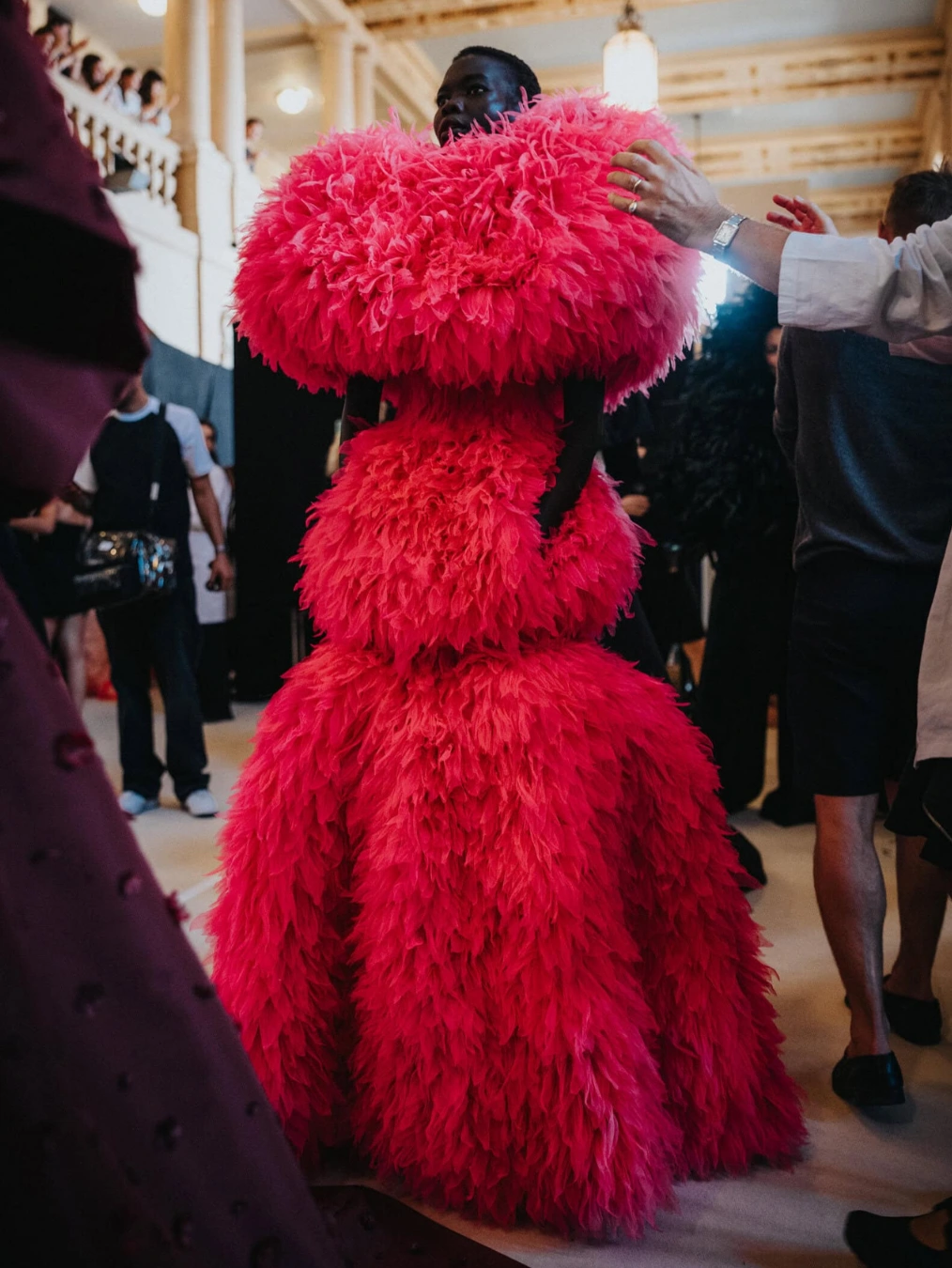
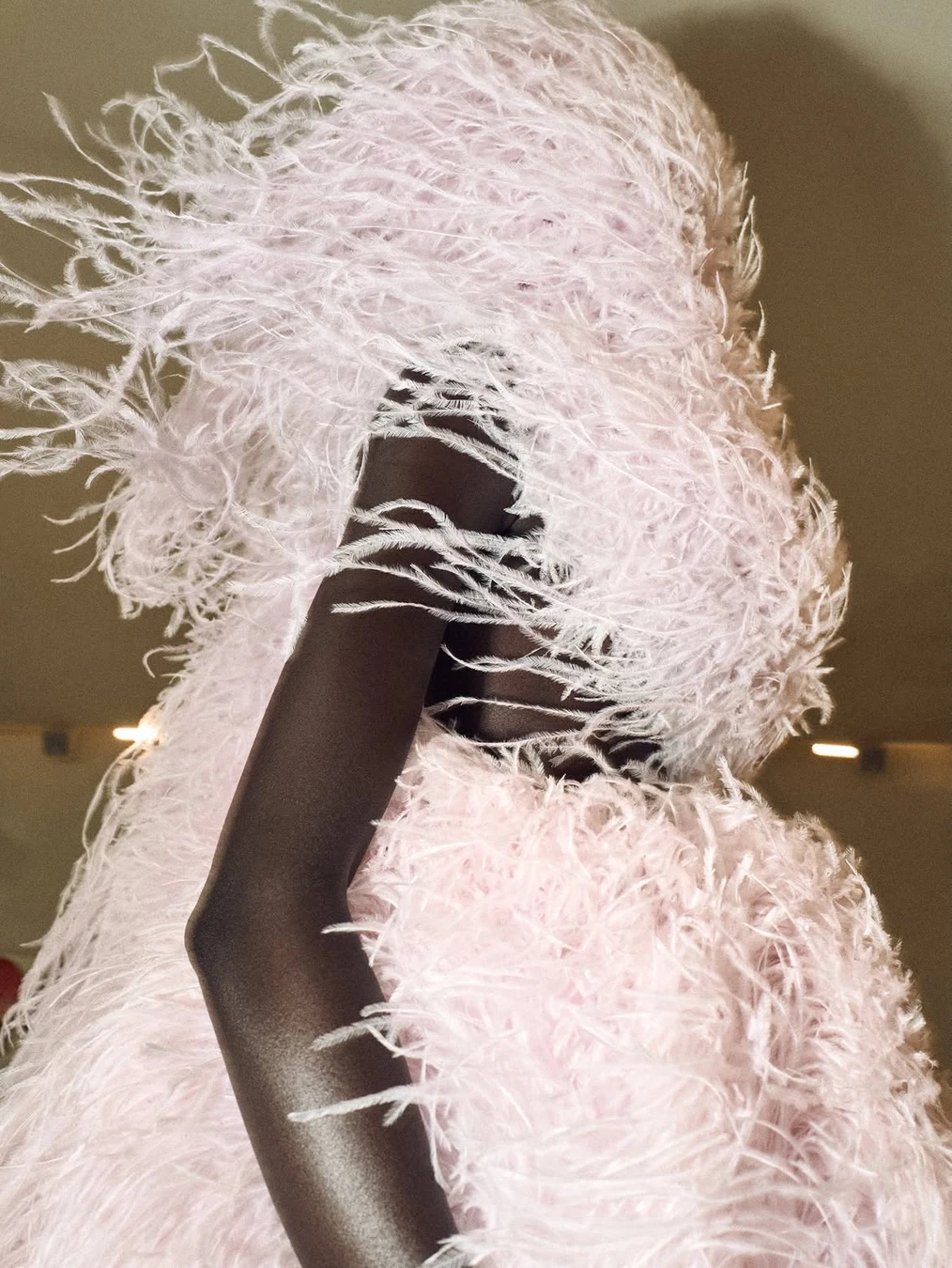
The effect remained connected to Balenciaga’s long relationship with volume. Cristóbal Balenciaga established a language built around the space between cloth and body, and Piccioli continues to explore that spatial tension through a contemporary eye. Even when feathers introduced movement and delicacy, the garment retained the architectural presence associated with the house.
Zuhair Murad approached feathers through romance and theatrical abundance. Plumage appeared among flowers, sequins, crystals and densely worked surfaces, sometimes softening a sharply defined form and sometimes extending it outward until decoration seemed to become an environment around the wearer.
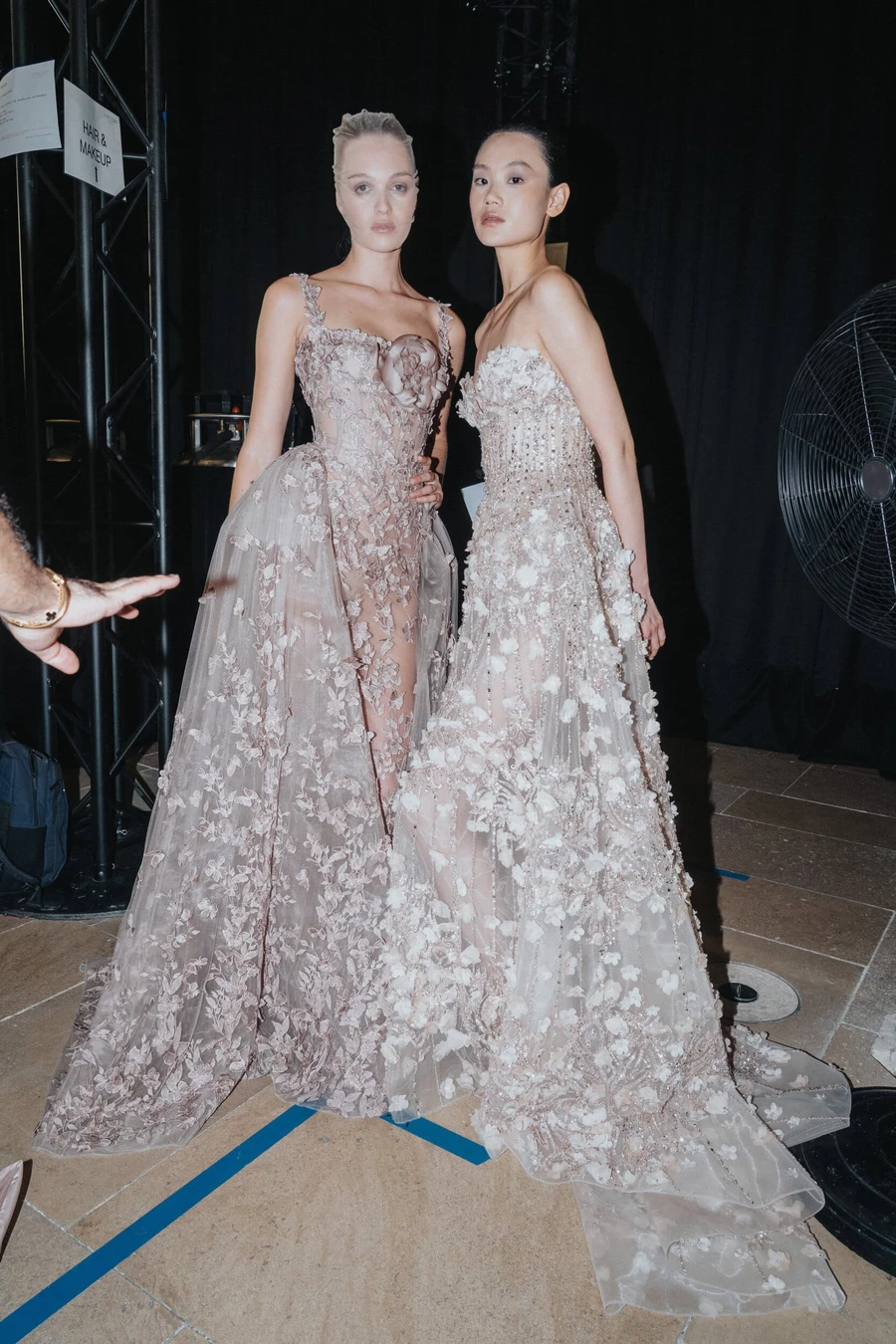
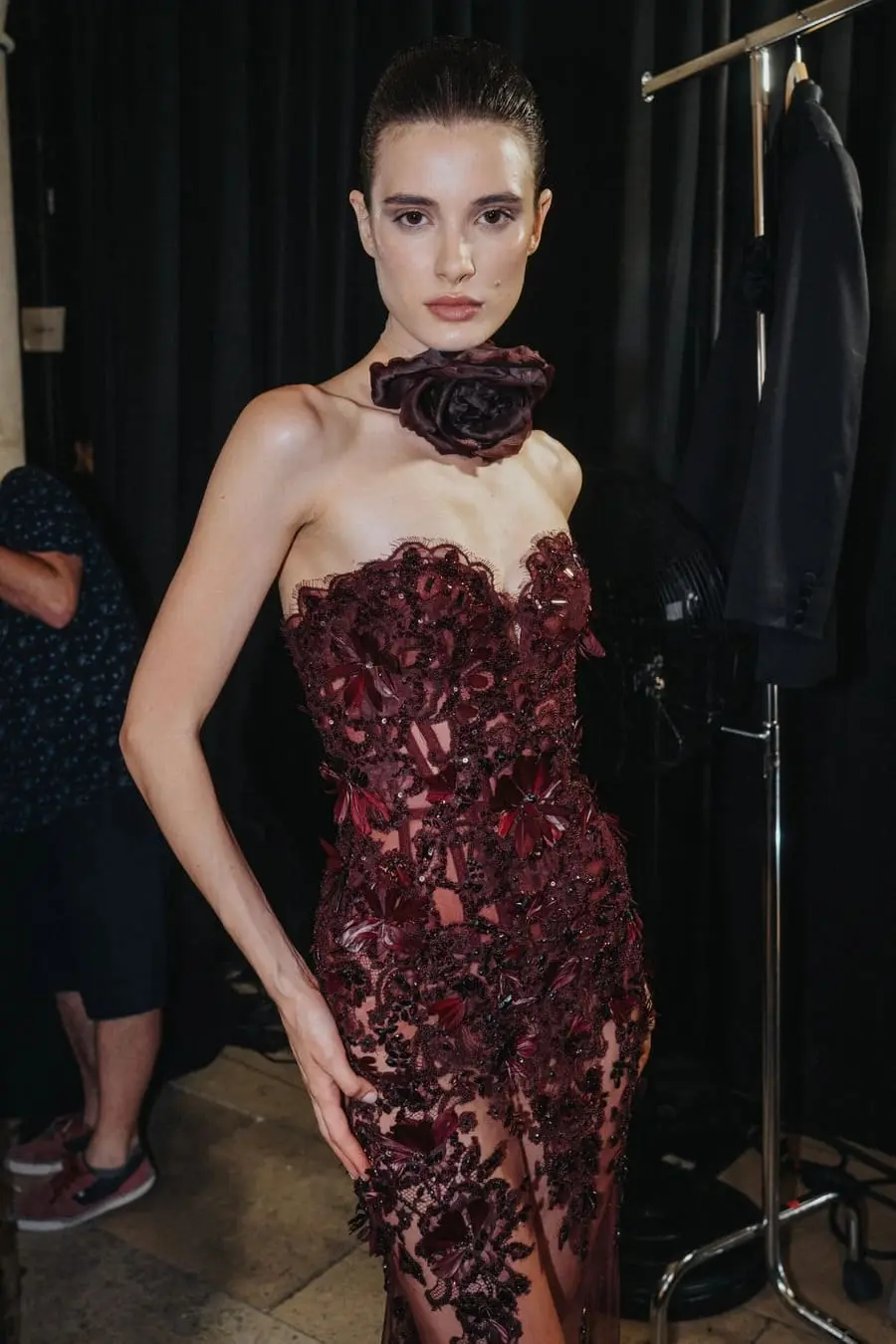
Murad’s visual identity remained immediately legible. Botanical imagery, sensual glamour and an almost nocturnal richness continue to define his couture, allowing intricate craft to feel dreamlike without losing the house’s polished sensuality. Featherwork gained volume while still belonging to a world of fantasy and seduction.
Ashi Studio pushed softness toward a more severe register. Mohammed Ashi combined feathers with corsetry, lacquered leather, sculpted satin and metallic elements, creating bodies that moved between fragility and protection. Peacock feathers could enter forms with the visual authority of armour, while tightly controlled silhouettes transformed delicate material into something unexpectedly imposing.
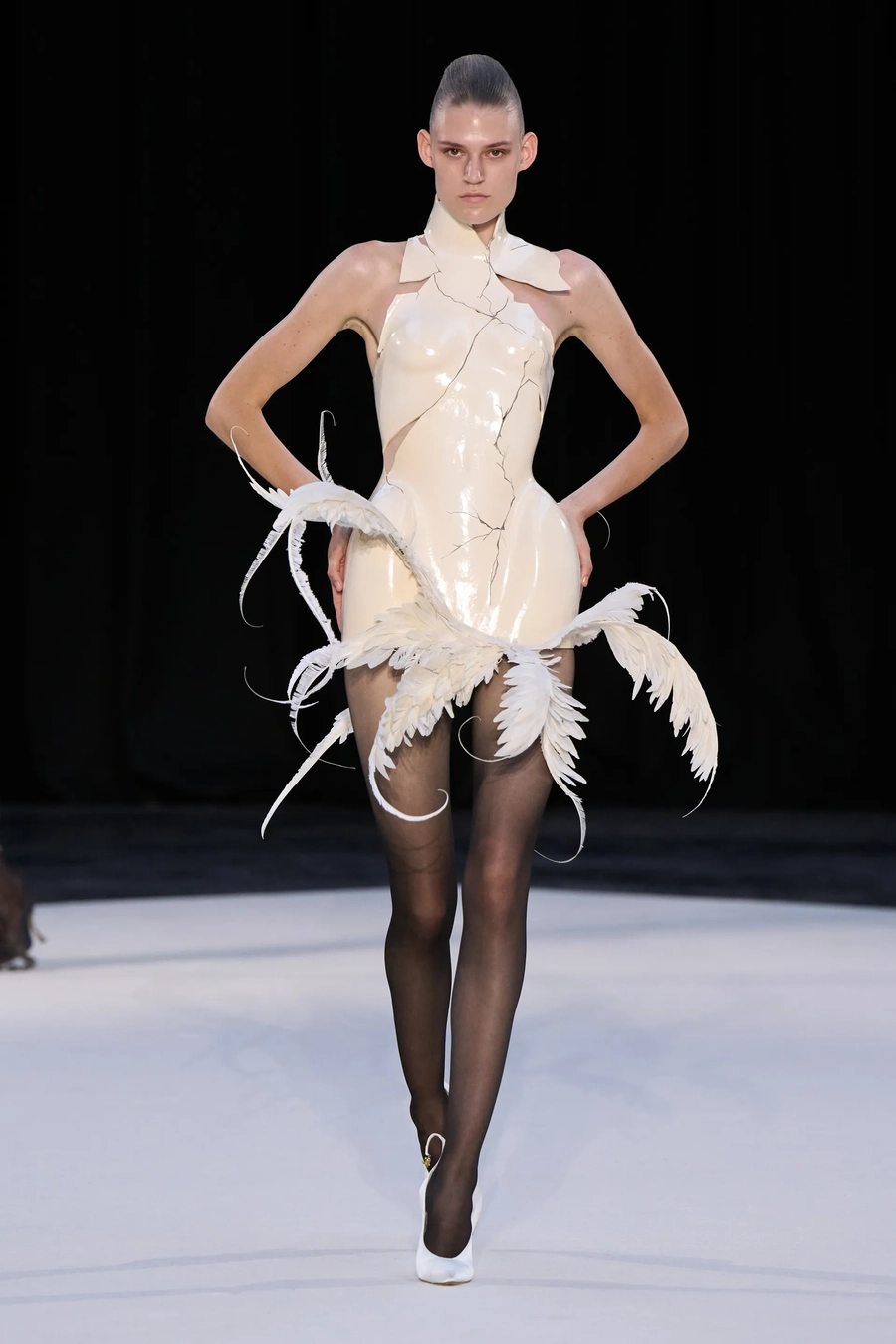
That tension belongs deeply to Ashi Studio. Mohammed Ashi’s couture often carries a dark elegance built through elongation, restraint and controlled drama. In A Different Skin, soft and hard materials seemed to participate in the construction of an altered anatomy.
The material stayed soft. The image became architectural.
Recognition frequently arrived a moment after the garment.
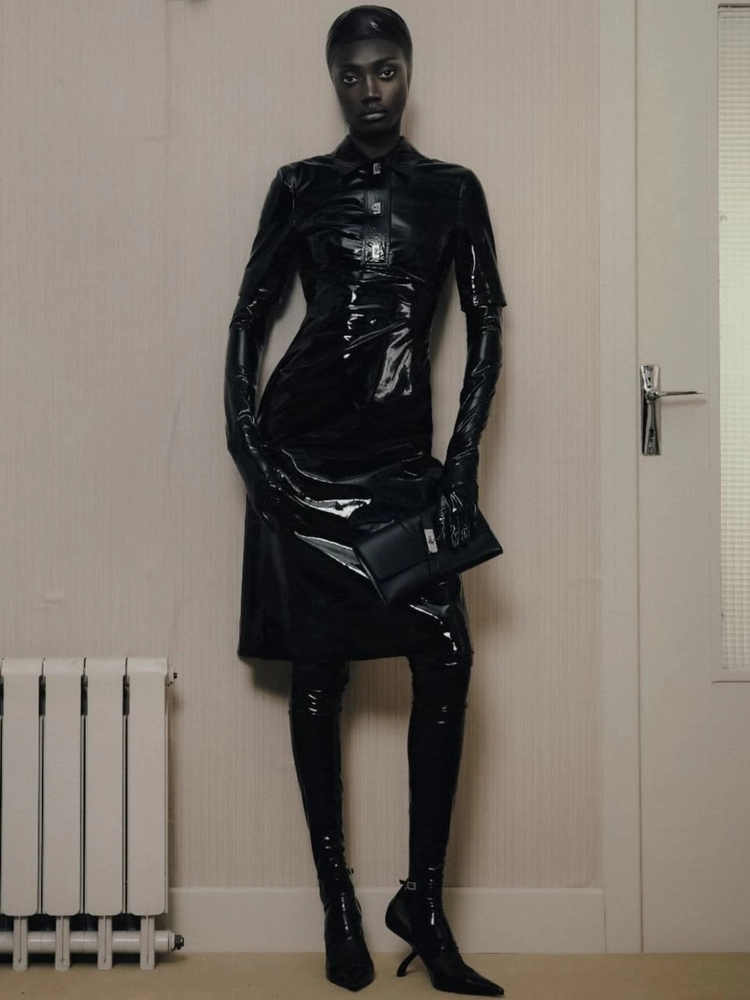
Ashi Studio made that delay central to A Different Skin. Leather could resemble cracked porcelain, manipulated textiles could approach shell or skin, and reflective surfaces shifted between garment and object.
The ambiguity strengthened the house’s identity. Ashi’s controlled silhouettes and dark theatricality held these unfamiliar surfaces inside a consistent visual world, allowing material transformation to intensify authorship.
Rahul Mishra reached similar ambiguity through a completely different aesthetic. Dense embroidery suggested carved stone and organic growth, yet the image remained linked to the natural and spiritual references that continually shape his practice.
Iris van Herpen pushed material uncertainty toward the celestial. Sonic Starquakes drew on cosmic movement, scientific phenomena and structures that seemed suspended between organism and energy. Iridescent elements, translucent forms and surrounding volumes allowed the body to appear caught inside an event.
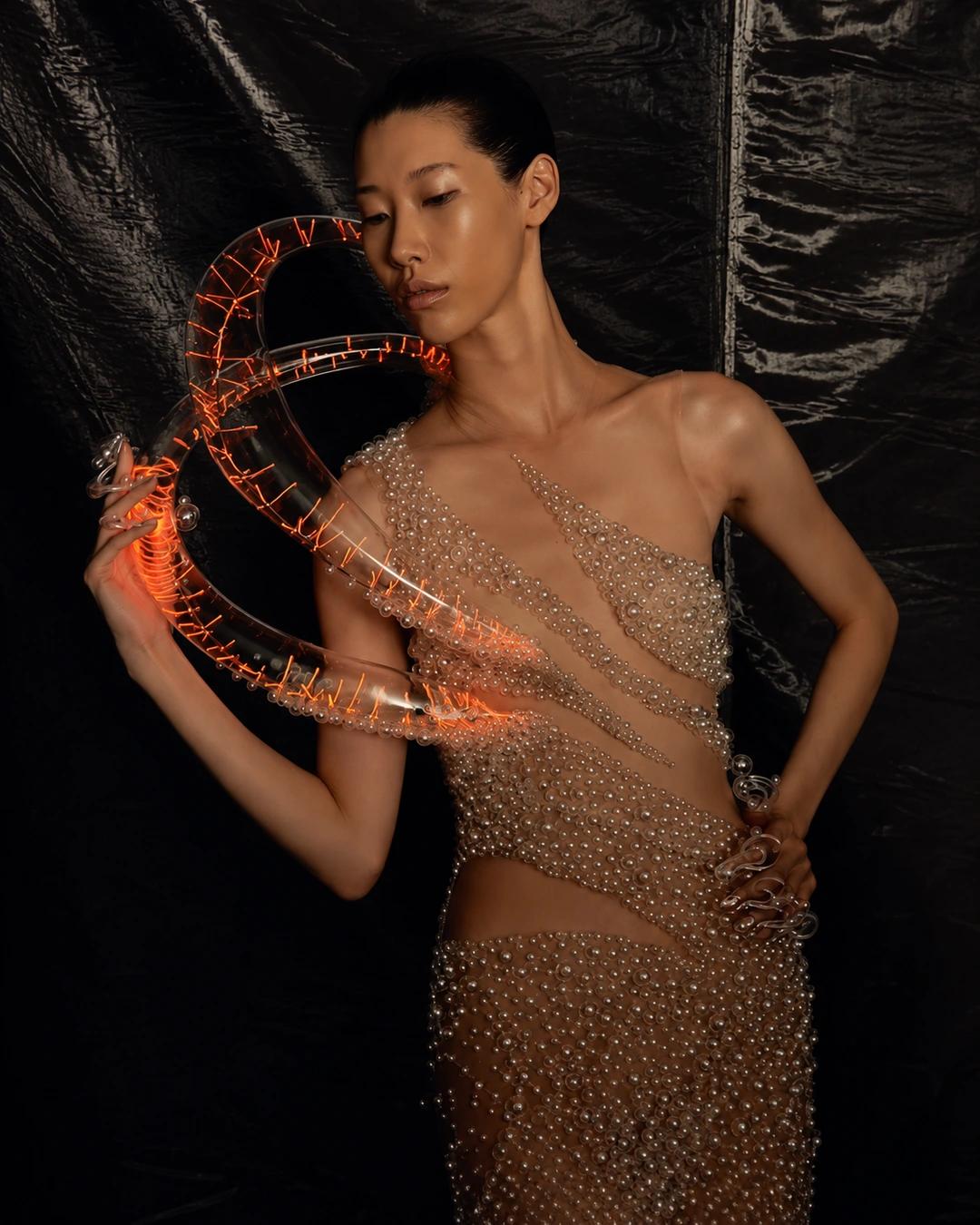
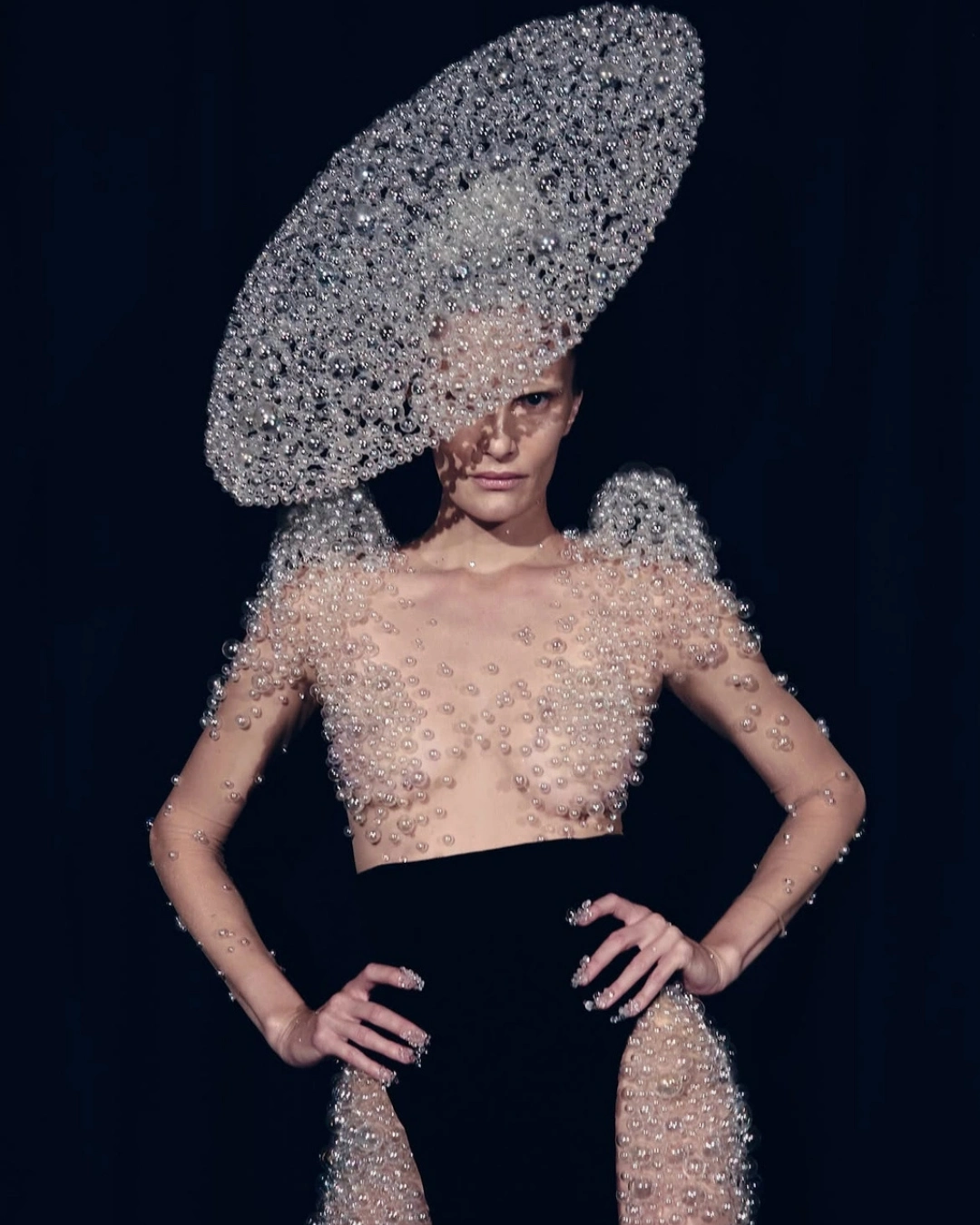
Van Herpen’s work remains instantly identifiable because this intersection of body, nature, science and movement has developed into a mature language of its own. Her futuristic quality comes through the way garments appear to occupy several states at once, somewhere between textile, organism and phenomenon.
Standing Ground offered another route into unfamiliarity. Michael Stewart’s draping, elongated proportions and sculptural manipulation created bodies that could appear ceremonial, elemental and faintly otherworldly. The visual effect grew from cloth itself, shaped through a vocabulary of controlled lines and bodily tension.
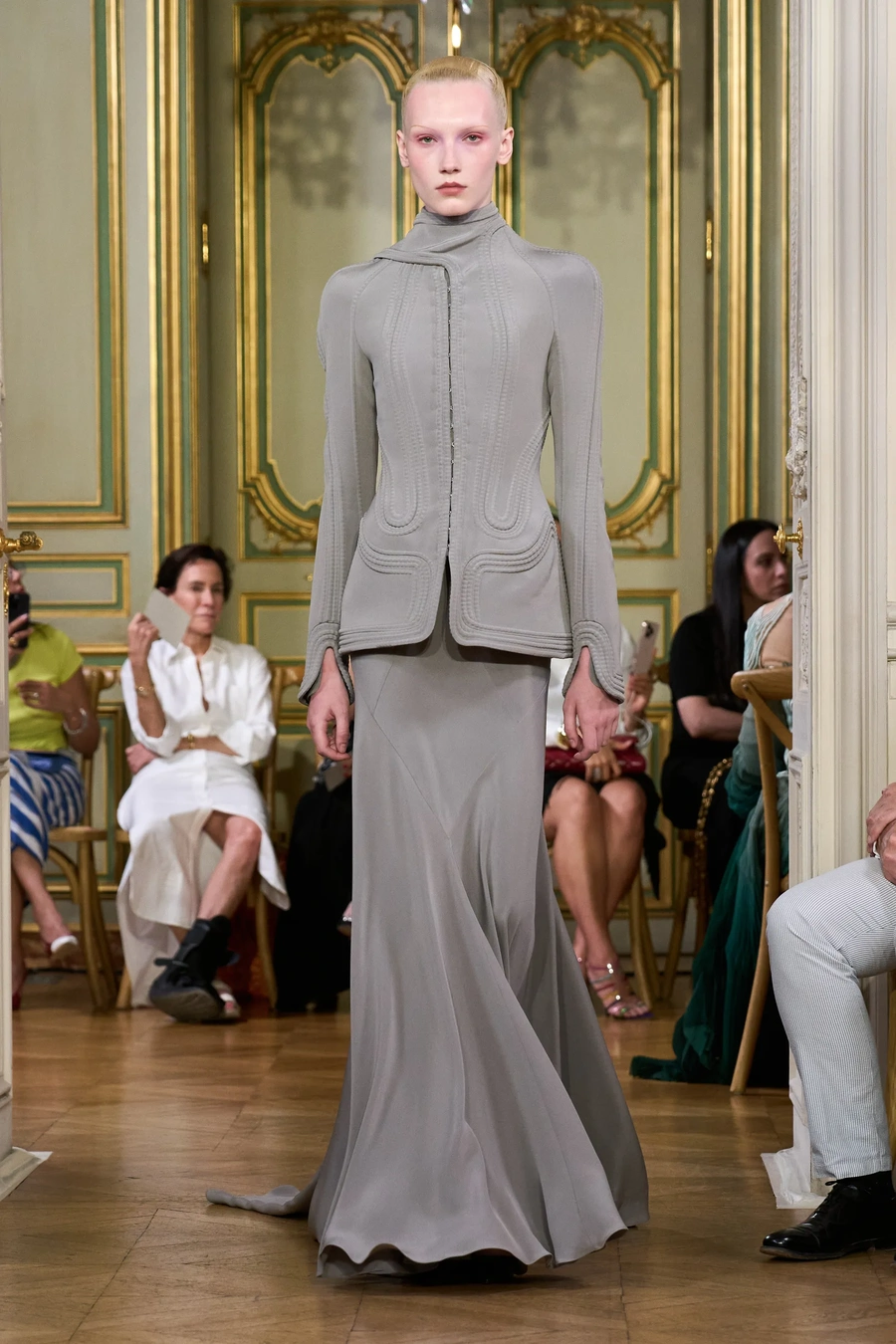
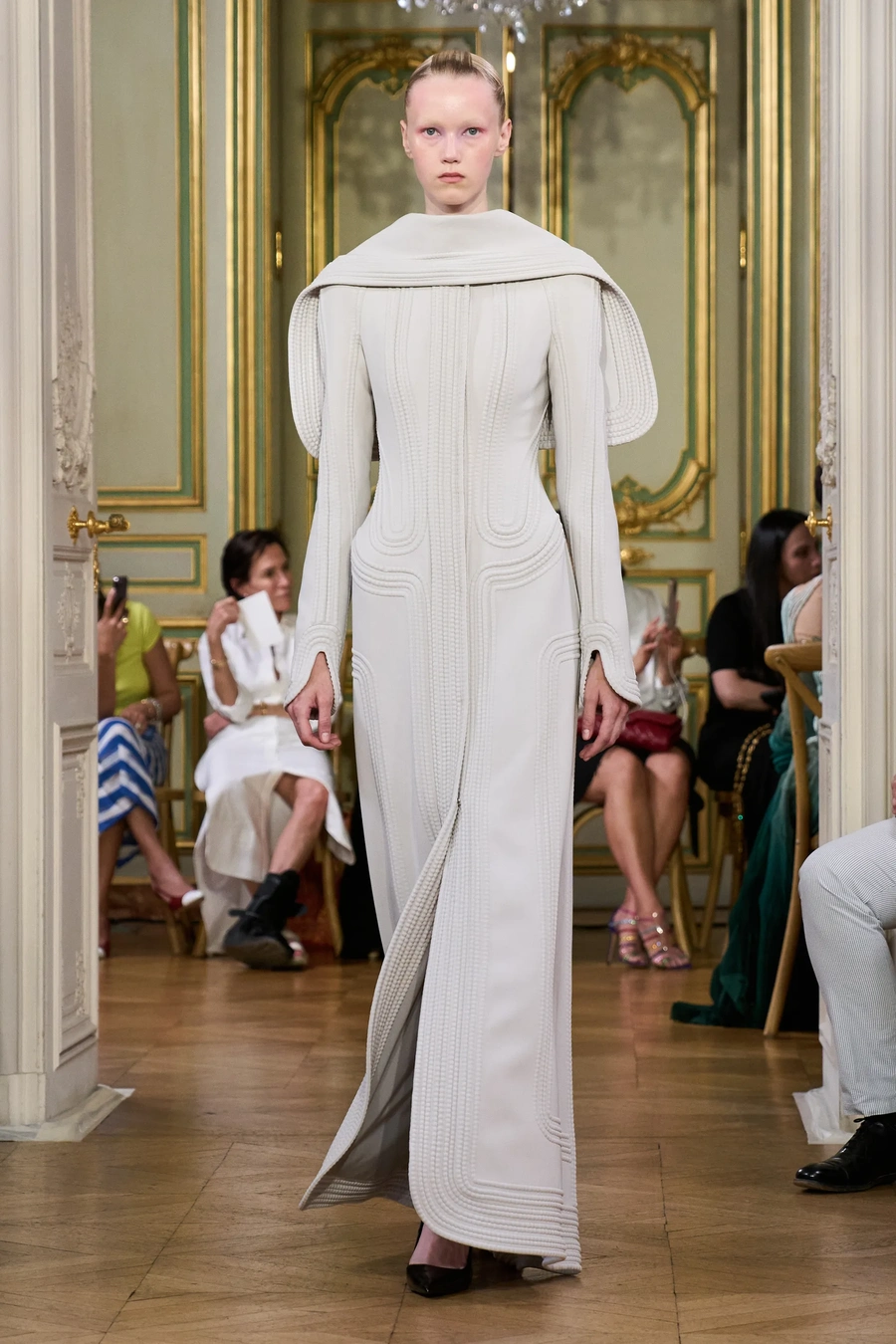
Where other houses filled the surface, Stewart allowed form and drape to carry the transformation. The result demonstrated how an unfamiliar image could emerge from a comparatively quiet material language.
Across Fall 2026 Couture, fabric often seemed to become something other than itself, with the first impression arriving before the eye could fully recognise the textile underneath.
Futuristic fashion has accumulated an instantly recognisable set of symbols. Metallic finishes, synthetic surfaces, technological precision and space-age imagery can communicate tomorrow before a garment has begun to reveal much about itself.
This season expanded that vocabulary considerably.
At Manish Malhotra, the future could arrive through the exuberance of Indian embroidery, where centuries-old decorative knowledge acquired sculptural scale and jewel-like density. Rahul Mishra reached another kind of newness through equally rooted handwork, allowing embroidery to evoke ancient stone while creating surfaces that looked almost unreal in their complexity.
The difference between the two remained clear. Malhotra’s world is luminous, theatrical and celebratory; Mishra’s carries a quieter relationship with mythology, nature and accumulated human labour. Both moved familiar craft into unfamiliar visual territory without flattening their identities into the same idea of futurism.
The Lebanese houses travelled elsewhere. Elie Saab allowed craftsmanship to dissolve into light, transparency and controlled glamour, keeping the house’s refined femininity visible through every transformation. Zuhair Murad let flowers, feathers and embellishment spread through a darker romantic imagination, where the surface could become almost immersive while retaining his signature sensuality.
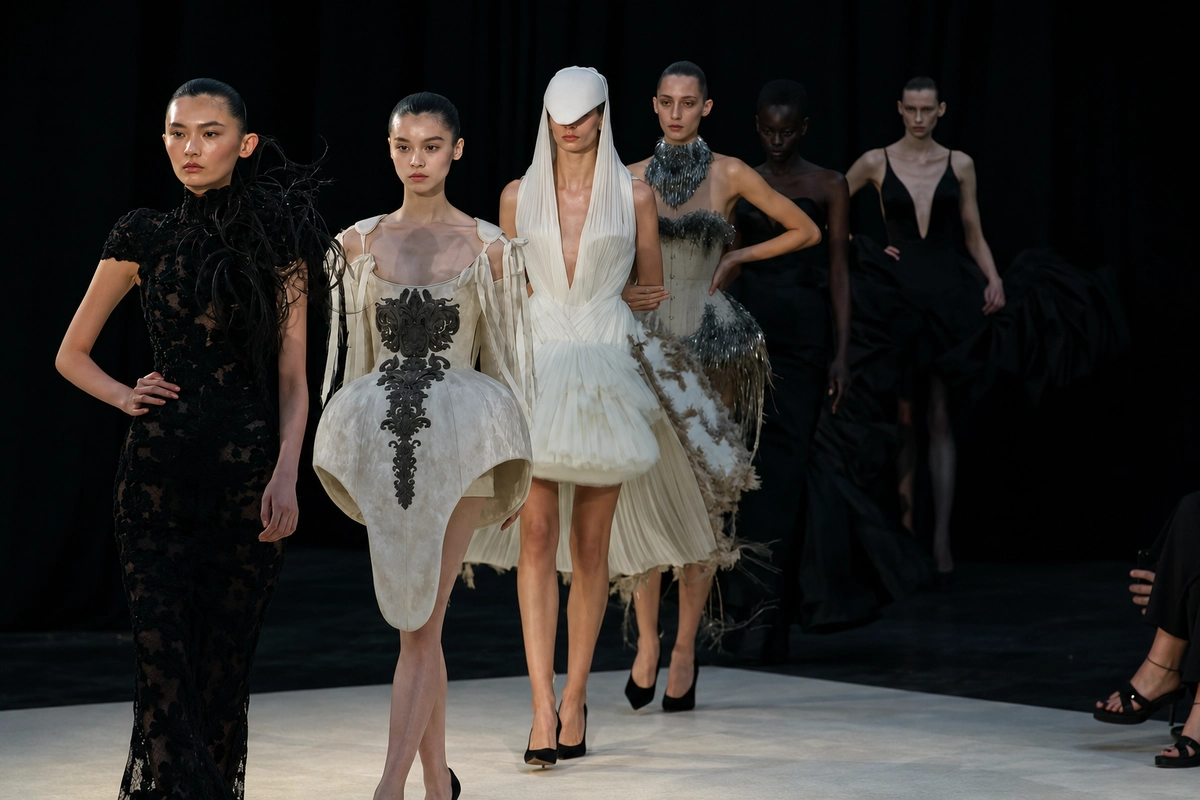
Robert Wun brought another register altogether, using cinematic fantasy, distorted characters and improbable images that still had to acquire weight and presence on a physical runway.
Wun’s identity thrives on that meeting between beauty and unease. His clothes often carry the tension of an image captured at the instant something extraordinary has happened, giving couture the atmosphere of a film still turned into matter.
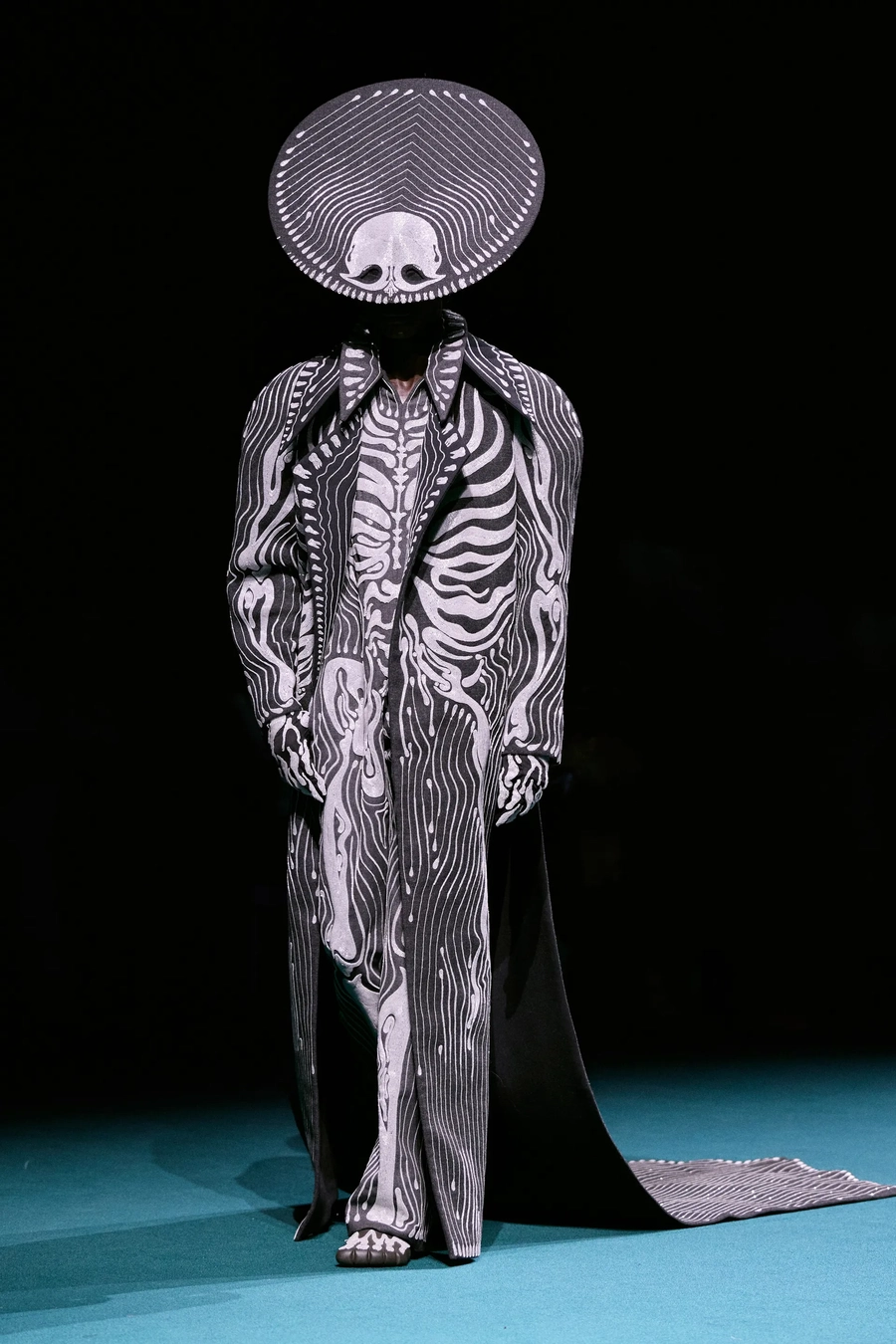
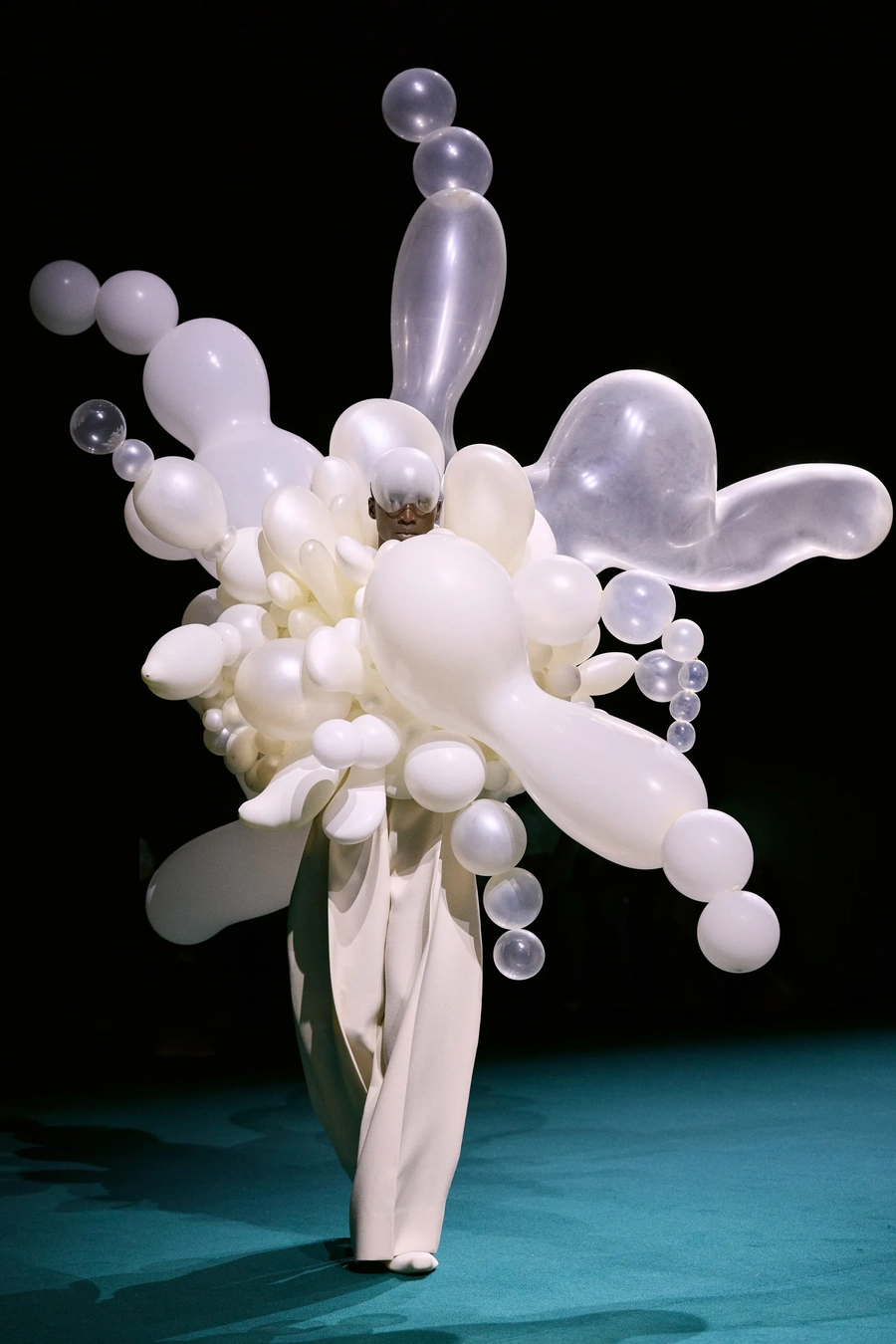
Fall 2026 Couture showed that a contemporary image can emerge from highly traditional forms of making while remaining unmistakably connected to the identity of each house.
Six months can be enough to alter the mood of an entire couture calendar. Spring/Summer 2026 arrived under the weight of succession, with several major houses asking audiences to watch new creative directors negotiate institutions whose identities had already been written over decades. The fascination naturally gathered around authorship: who had inherited what, how much would change, and which parts of a house would survive the transfer.
By autumn, that introductory tension had begun to loosen, and Fall 2026 Couture is now more willing to inhabit one. The visual language grew sharper within familiar ideas of what handmade luxury should look like. Craft could recede beneath the image, material could lose its obvious identity, and the runway often asked the eye to trust its first impression only long enough for that impression to unravel.
Something else had shifted around the edges of Paris as well. Rahul Mishra had already established anIndian presence on the official couture calendar, while Manish Malhotra arrived this season with a Paris debut backed by an enormous embroidery ecosystem in Mumbai. Their presence carries more than just geographical novelty. Indian craftsmanship, so often embedded invisibly within the production of European luxury, increasingly arrives under the authorship of Indian designers themselves, bringing its own cultural memory and visual ambition onto couture’s most visible stage.
The question consequently begins to drift beyond what couture can make by hand. It reaches toward who now gets to shape the image of couture in the first place.
Paris still hosts the ritual, but more of the world is beginning to write the image of Fall 2026 Couture.
Advertisement