Paris was already burning when Pierpaolo Piccioli placed his hand on Balenciaga’s coldest architecture. Balenciaga Fall 2026 Couture held the unease of a house being gently possessed, its familiar severity altered by a presence that never fully revealed itself. Pierpaolo Piccioli never forced the door; he left it open just long enough for another season to slip inside.

Balenciaga Fall 2026 Couture Lets Summer Haunt the Fall
Paris was already burning when Pierpaolo Piccioli placed his hand on Balenciaga’s coldest architecture. Balenciaga Fall 2026 Couture held the unease of a house being gently possessed, its familiar severity altered by a presence that never fully revealed itself. Pierpaolo Piccioli never forced the door; he left it open just long enough for another season to slip inside.
July 14, 2026
Advertisement

Advertisement


Presented under the blazing midday sun at the Cité Internationale Universitaire de Paris, the 55th Balenciaga Couture collection marked Pierpaolo Piccioli’s first haute couture statement for the house. The setting offered nowhere to hide. Stone, hedge and hard daylight exposed every proportion with almost cruel precision, turning the runway into a test of cut, volume and control.
Pierpaolo Piccioli approached Balenciaga through the house’s obsession with space, then unsettled it with movement, color and surfaces that seemed to breathe beyond the body. The collection held the tension of a new hand touching an old monument, careful enough to preserve its scale and bold enough to disturb the air around it.
Summer Lingers in the Width of a Trouser
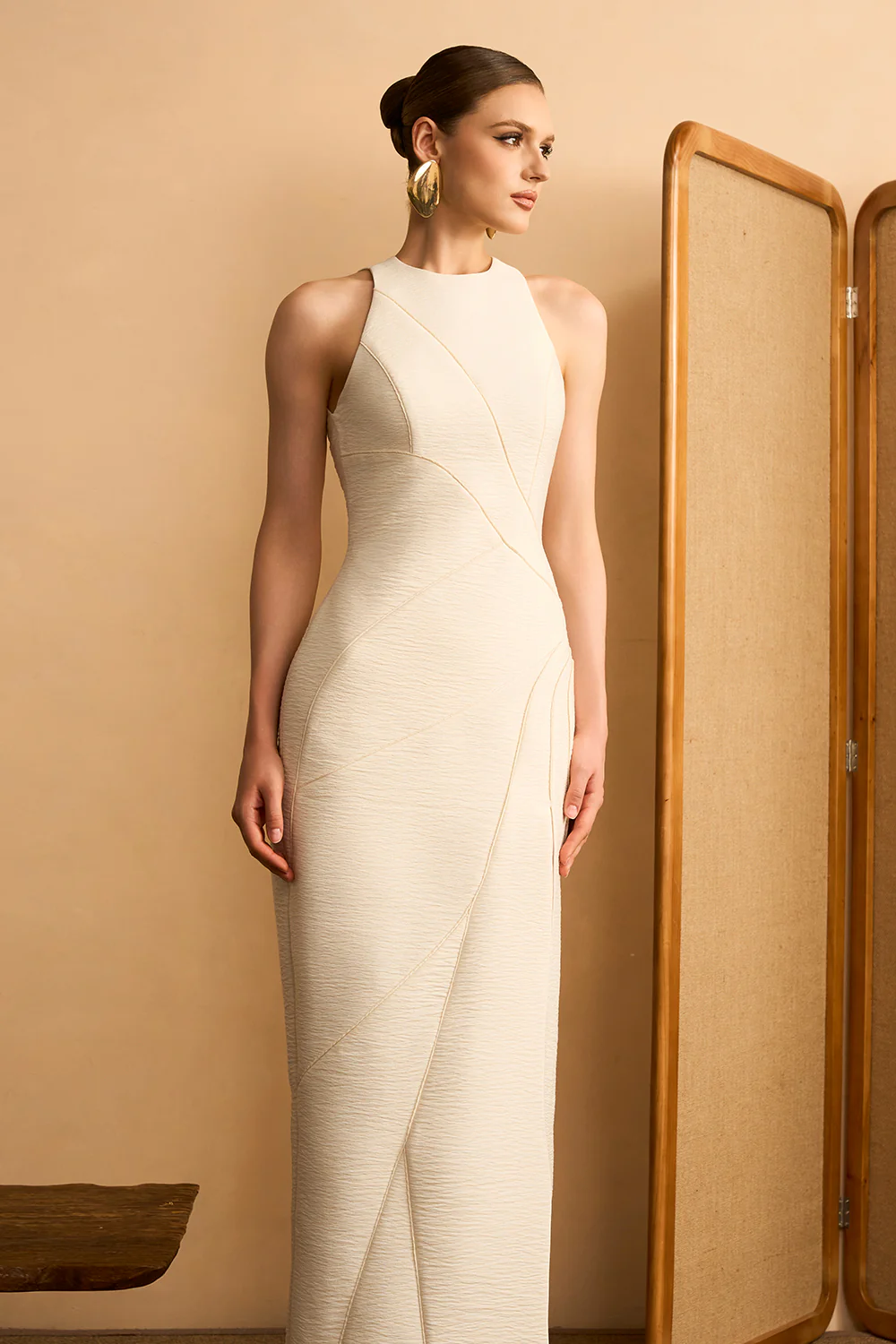
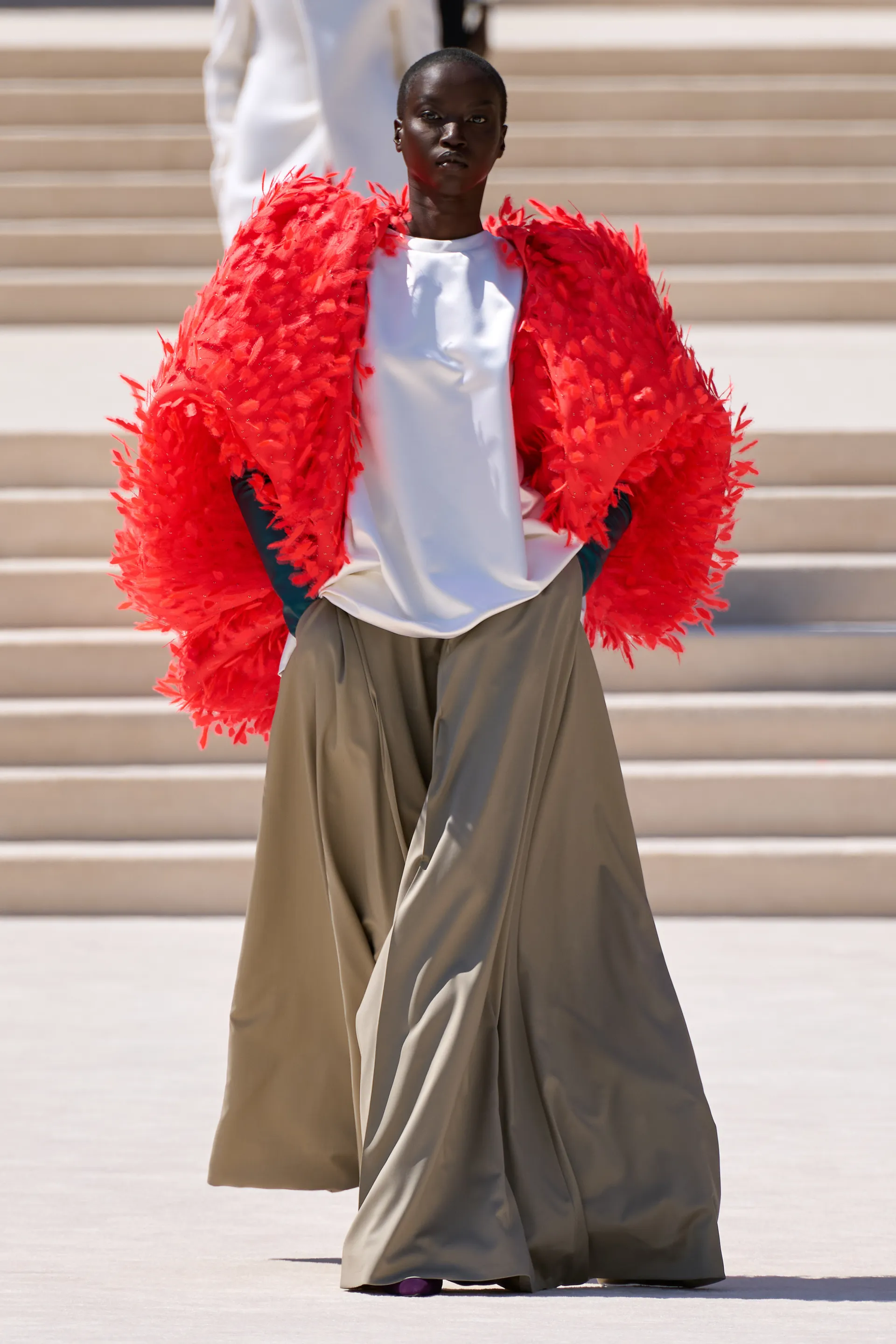
The trousers introduced the collection with the nonchalance of clothes that had wandered its way into couture. Their exaggerated width carried the breeze through the lower body, allowing fabric to move in long, relaxed planes while compact shapes and concentrated texture gathered above. The contrast unsettled the ceremonial expectations attached to haute couture. Grandeur arrived through proportion, yet the attitude remained loose enough for a warm afternoon.
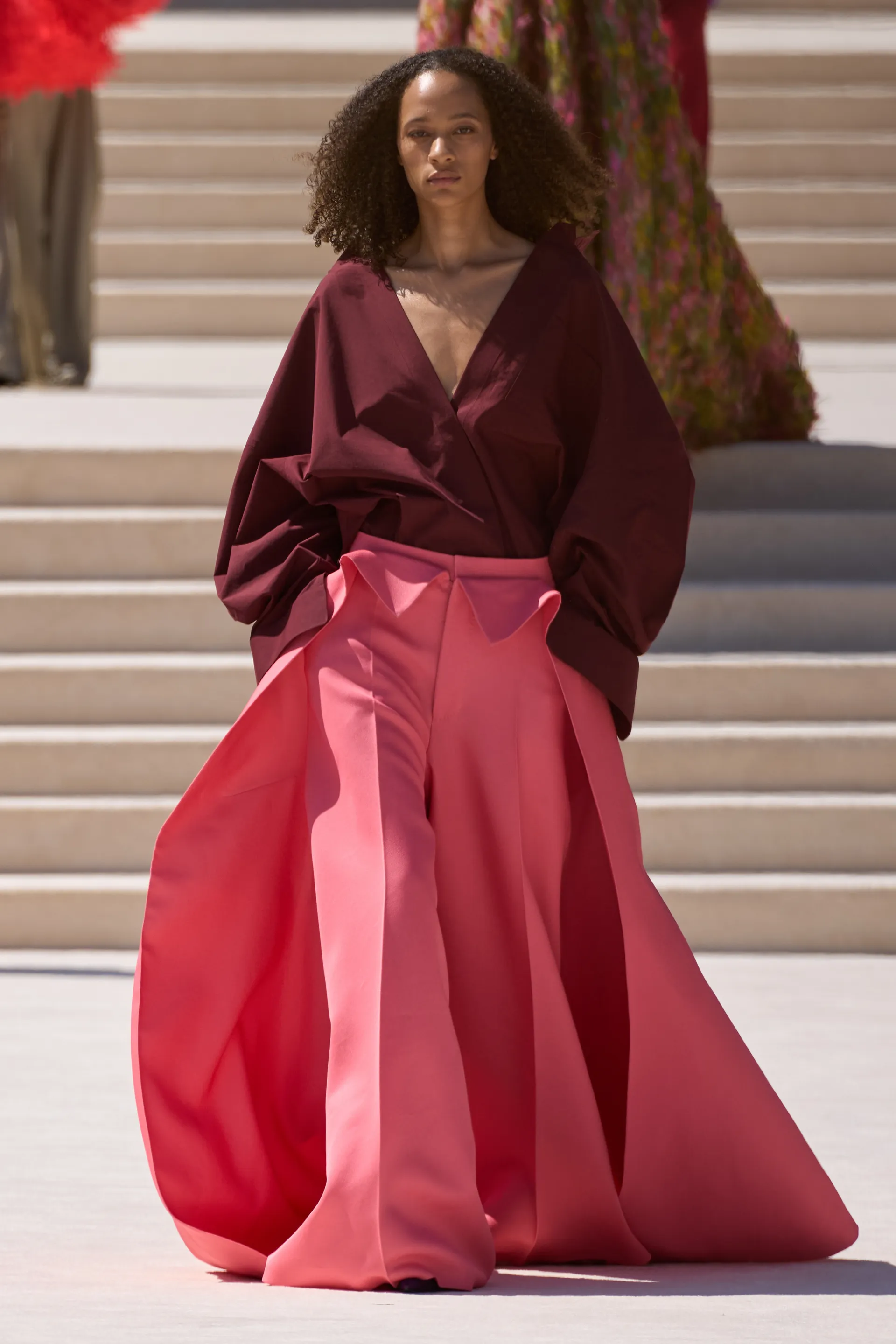
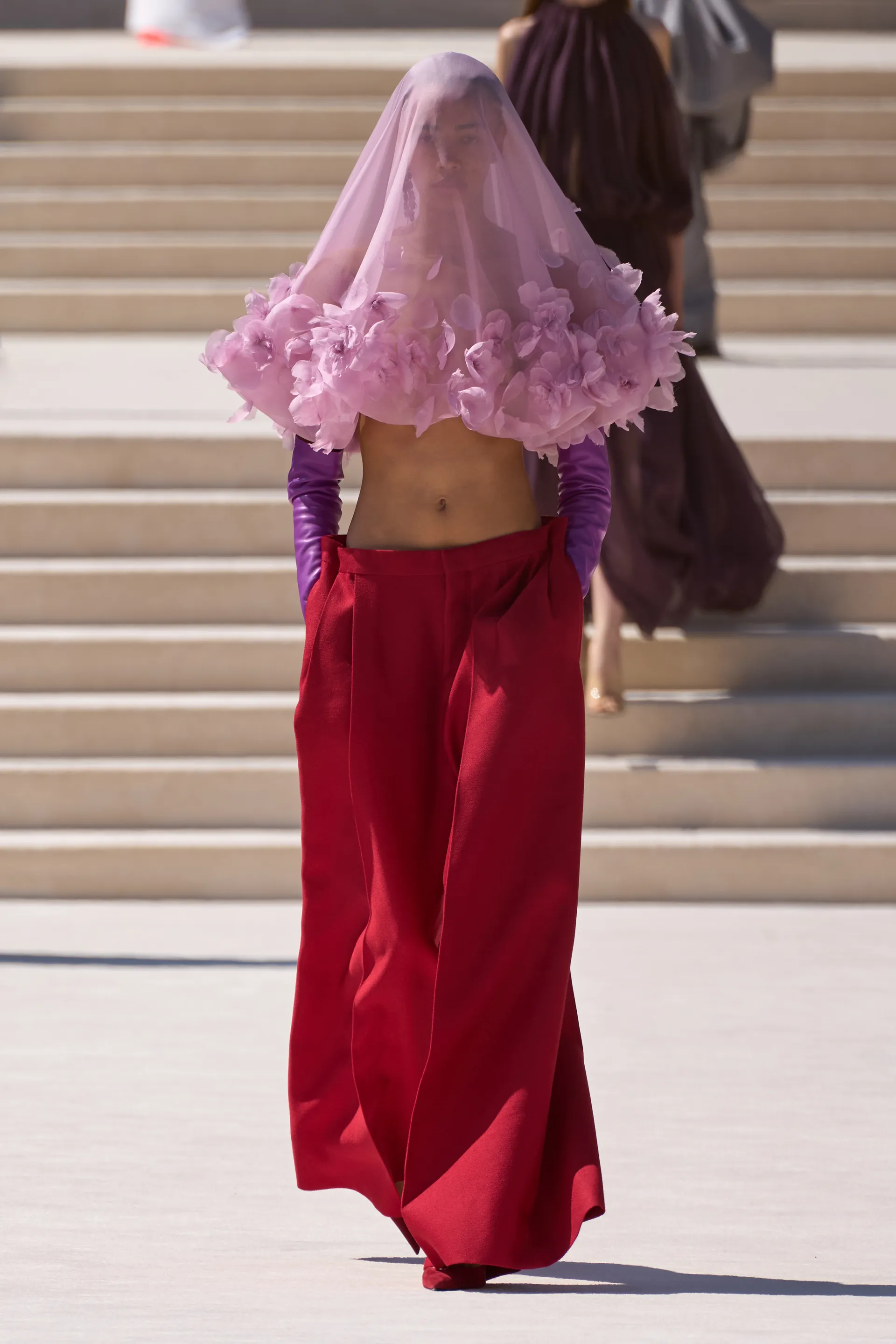
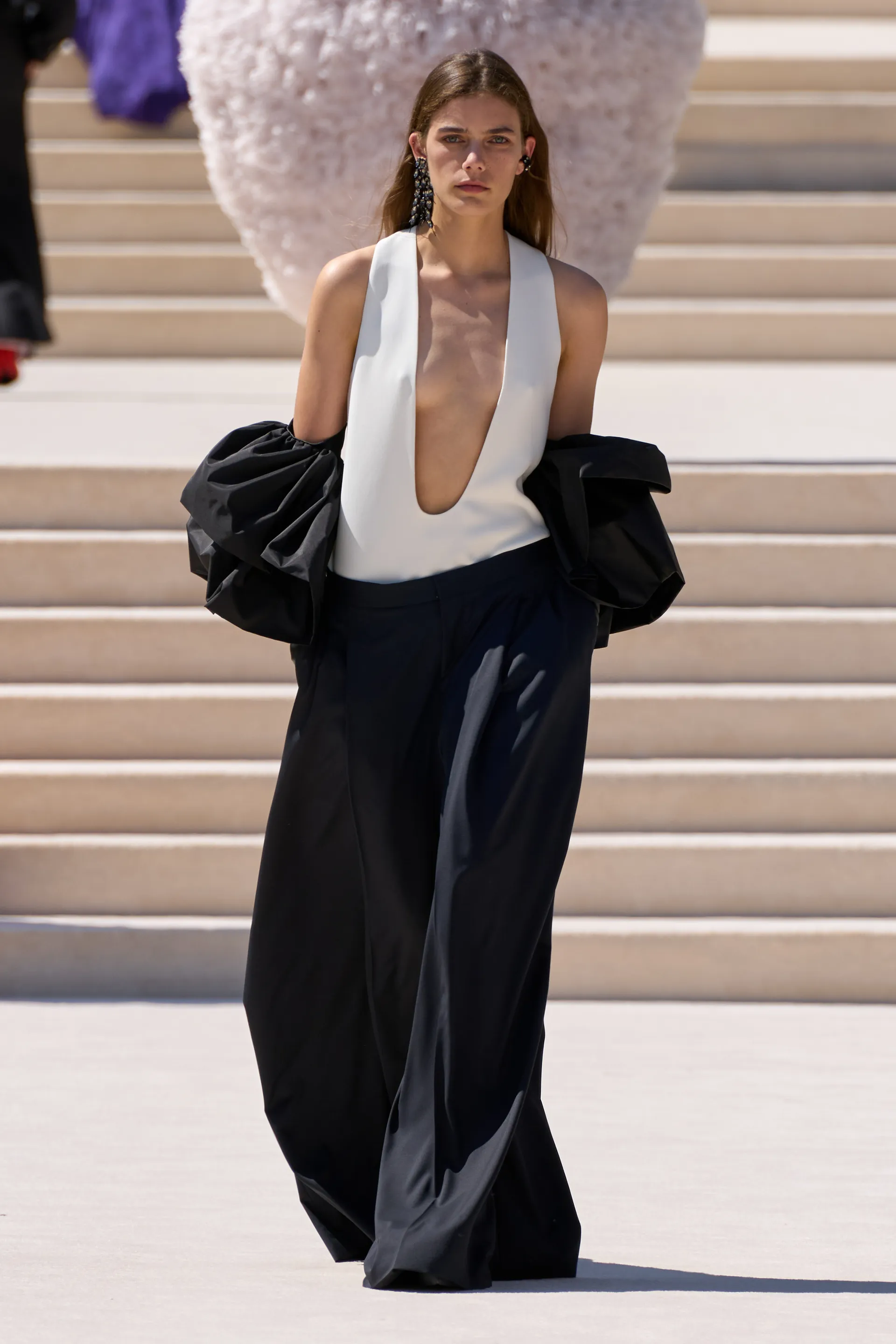
Autumn entered through tone before it entered through weight. Raspberry deepened towards wine, soft pink acquired a dusty chill, and black began to interrupt the brighter passages like shade crossing a sunlit garden. Bare shoulders and exposed midriffs kept those seasonal colors from settling into conventional cold-weather dressing.
The collection occupied the brief moment when summer started losing its sharpest brightness, though nobody had packed away its clothes. Pierpaolo Piccioli used that uncertainty well. Wide trousers seemed capable of holding both seasons at once, their movement still summery, their palette already anticipating shorter days.
A lilac veil drifted into view, because couture houses seem incapable of letting autumn pass without checking the wedding calendar. Pierpaolo Piccioli kept the romance, then gave the bride enough trouser volume to make the ceremony feel wonderfully mobile.
Where Color Pauses, the House Takes Over
Pierpaolo Piccioli serves the color pallete with immediate confidence, though black remained the place where Balenciaga could speak most clearly.
Stripped of chromatic distraction, the collection revealed its underlying grammar. Shoulders extended beyond their anatomical obligation. Waists tightened with graphic precision. Sleeves swelled, necklines hovered and fabric stood away from the body as though an invisible pressure had formed between skin and cloth. Black turned each gesture into a legible sentence.
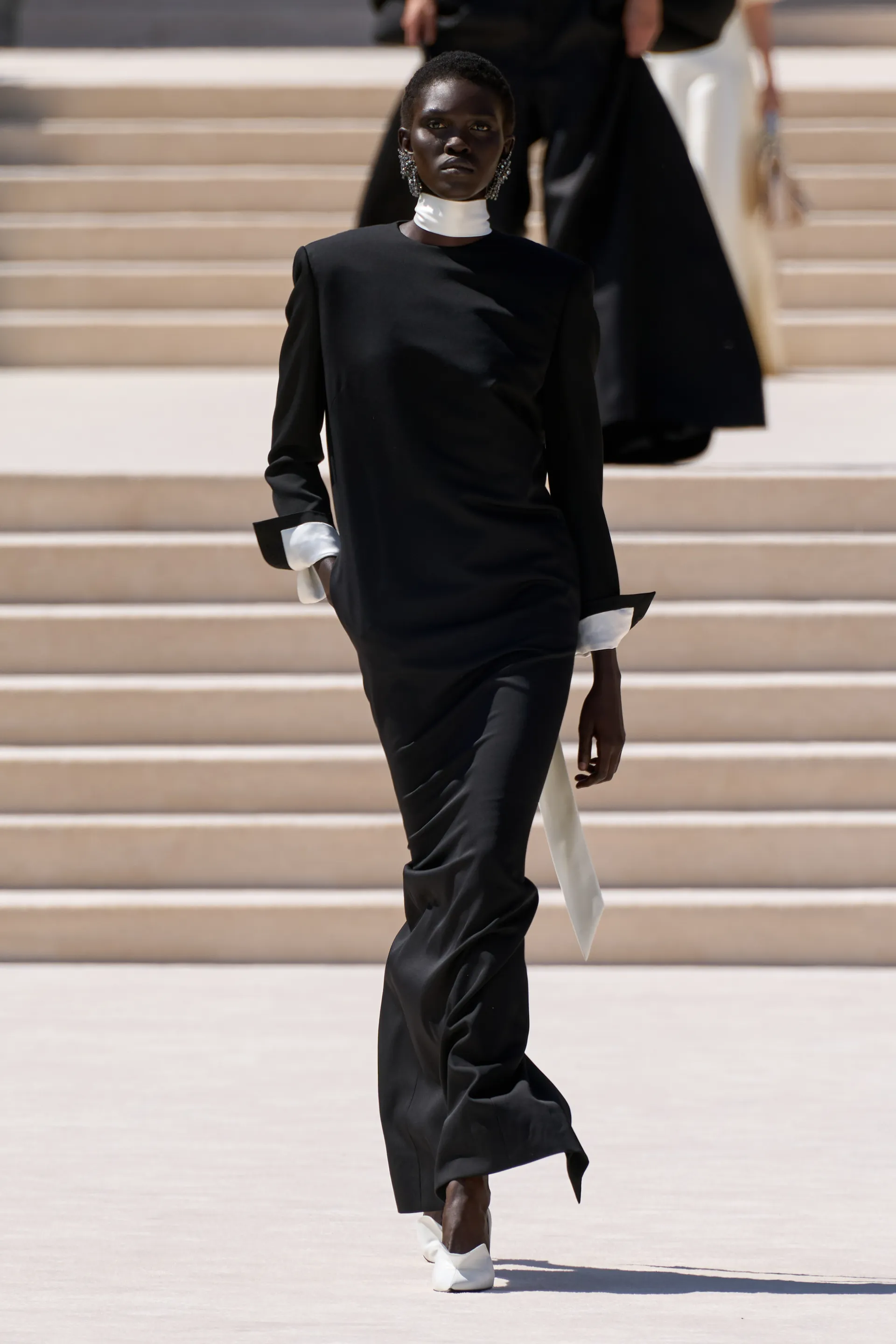
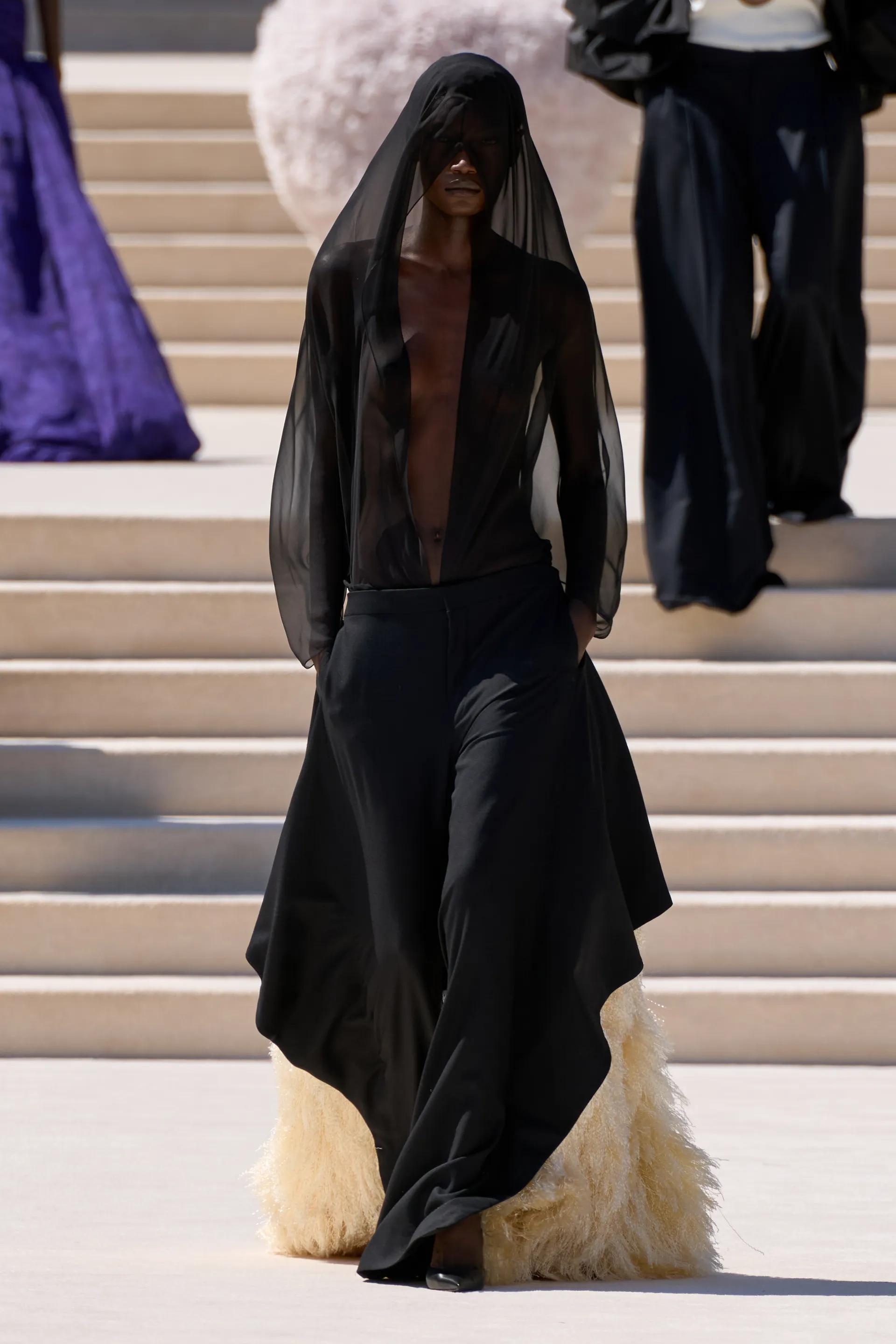
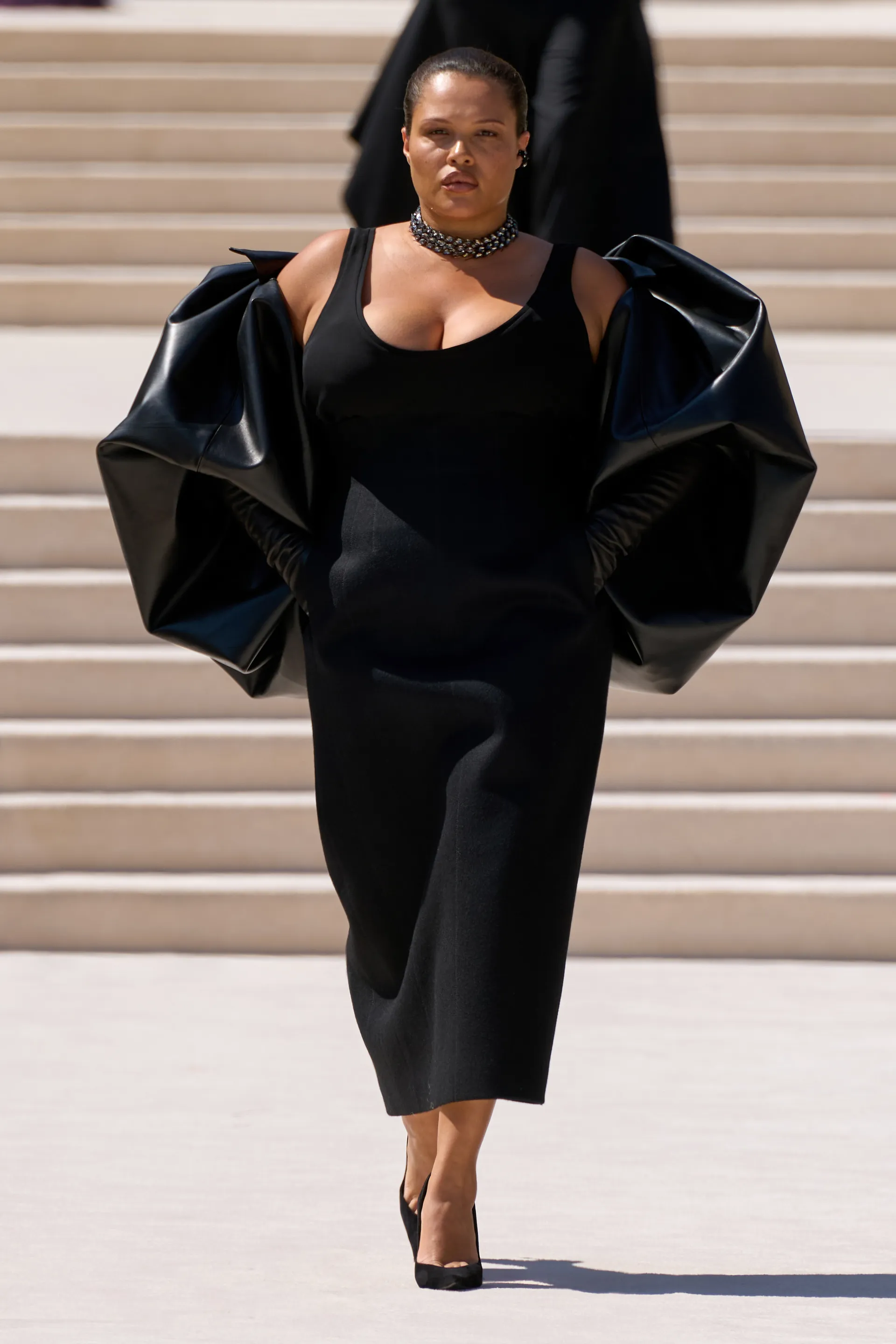
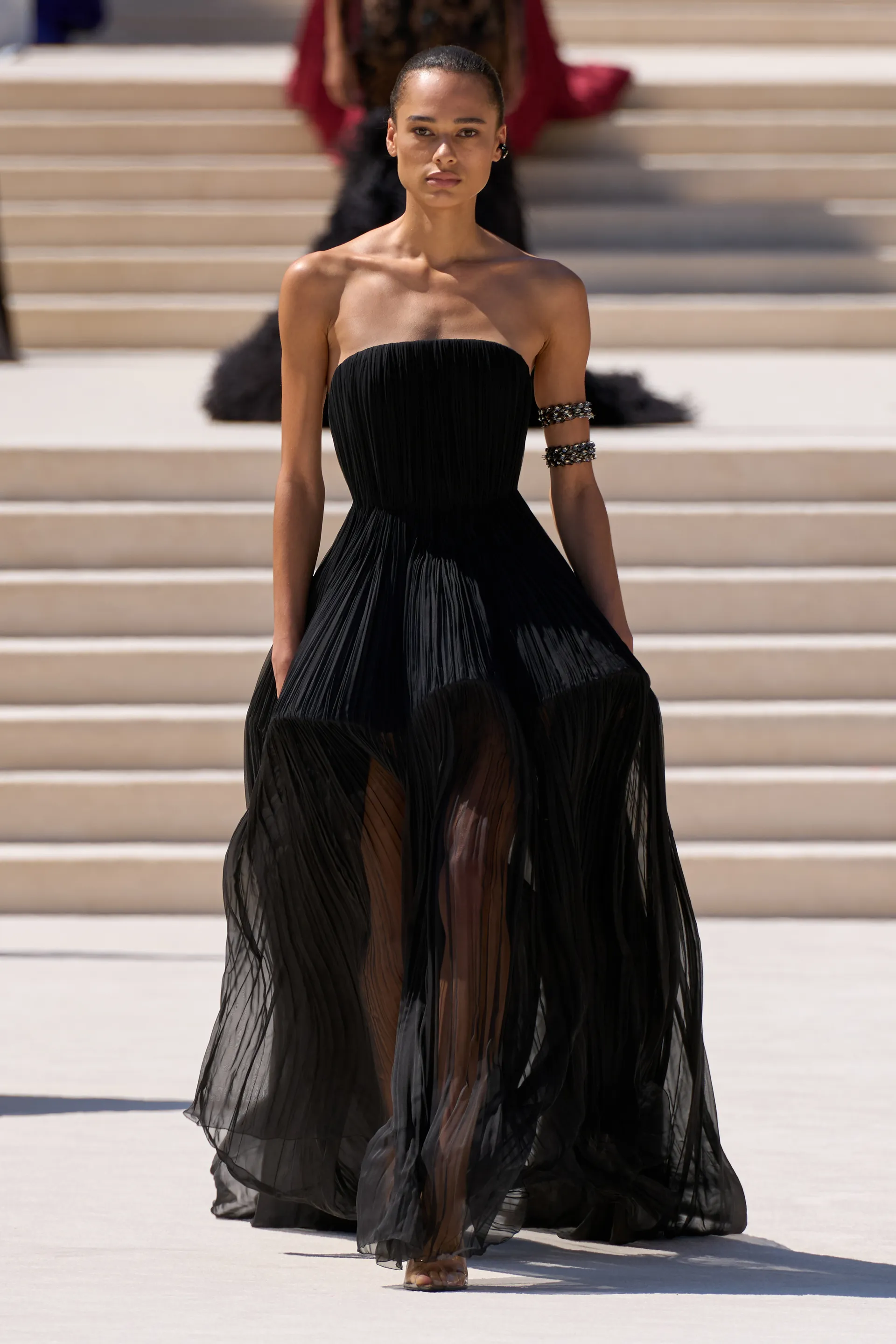
The house deliberately repeated certain silhouettes in black, reducing them to near-shadow versions so that the eye could reset and concentrate on form. It was an intelligent curatorial device within the show. Color stimulated the senses; black returned attention to construction.
That alternation sharpened Piccioli’s reading of Balenciaga’s heritage. Black reduced the clothes to line, proportion and the charged space between body and fabric, where the house’s authority has always lived. Feather, transparency and trailing fabric gained a cooler edge in darkness, tempering romance with Balenciaga’s characteristic severity.
Then the City bag caught the light, because does it ever leave the stage?
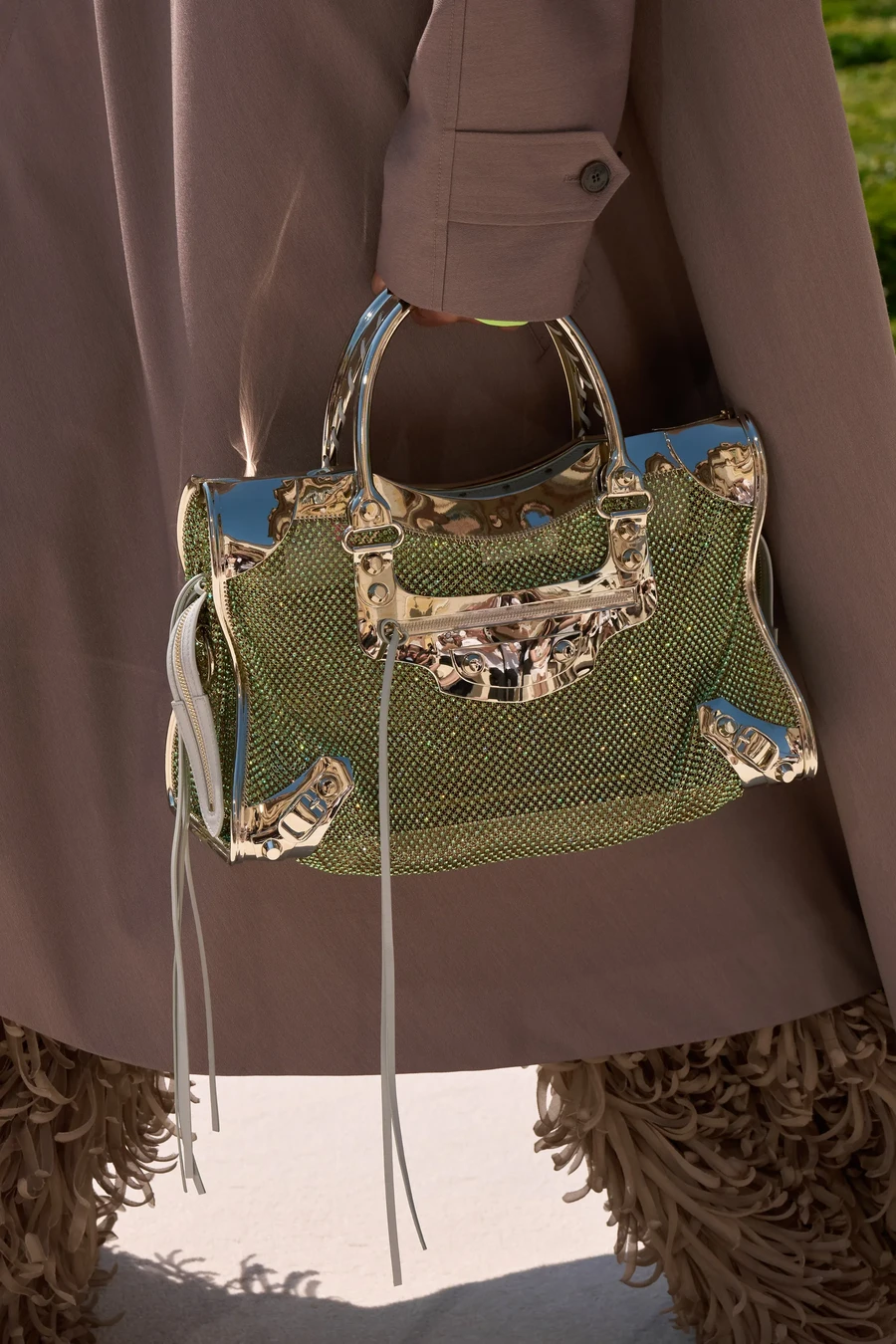
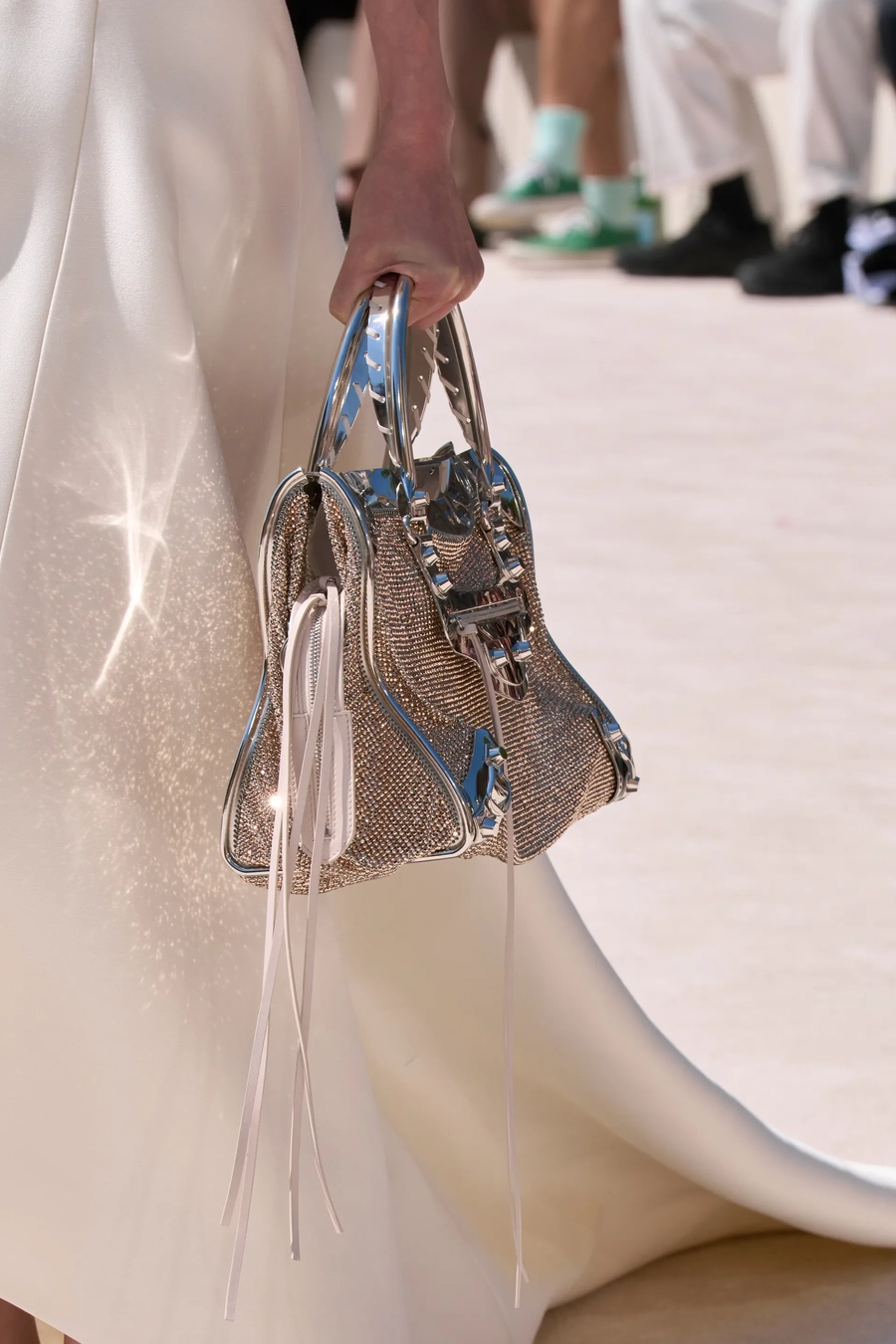
Balenciaga’s early-2000s icon returned in silver and rose-gold crystal mesh, its relaxed biker shape translated through approximately 40,000 Swarovski crystals. The transformation did more than elevate an It-bag with expensive surface work. It folded a later chapter of Balenciaga history into the couture atelier, acknowledging that a house’s identity is also built by objects people have carried obsessively through real cities.
Even the City bag appeared to have absorbed the Paris weather, returning to molten hardware and crystal glare. On that runway, it may have been the only thing competing successfully with the heat.
The Softest Surfaces Carry the Greatest Weight
Feathers blurred the hard perimeter of a shoulder, enlarged the space around the head and allowed a garment to continue moving after the body beneath it had slowed. Shredded gazar accumulated into surfaces that appeared botanical from a distance, while dense embroidery gave softness an unexpected structural role. Texture began where fabric construction usually ended, extending silhouette outward through tremor, shadow and movement.
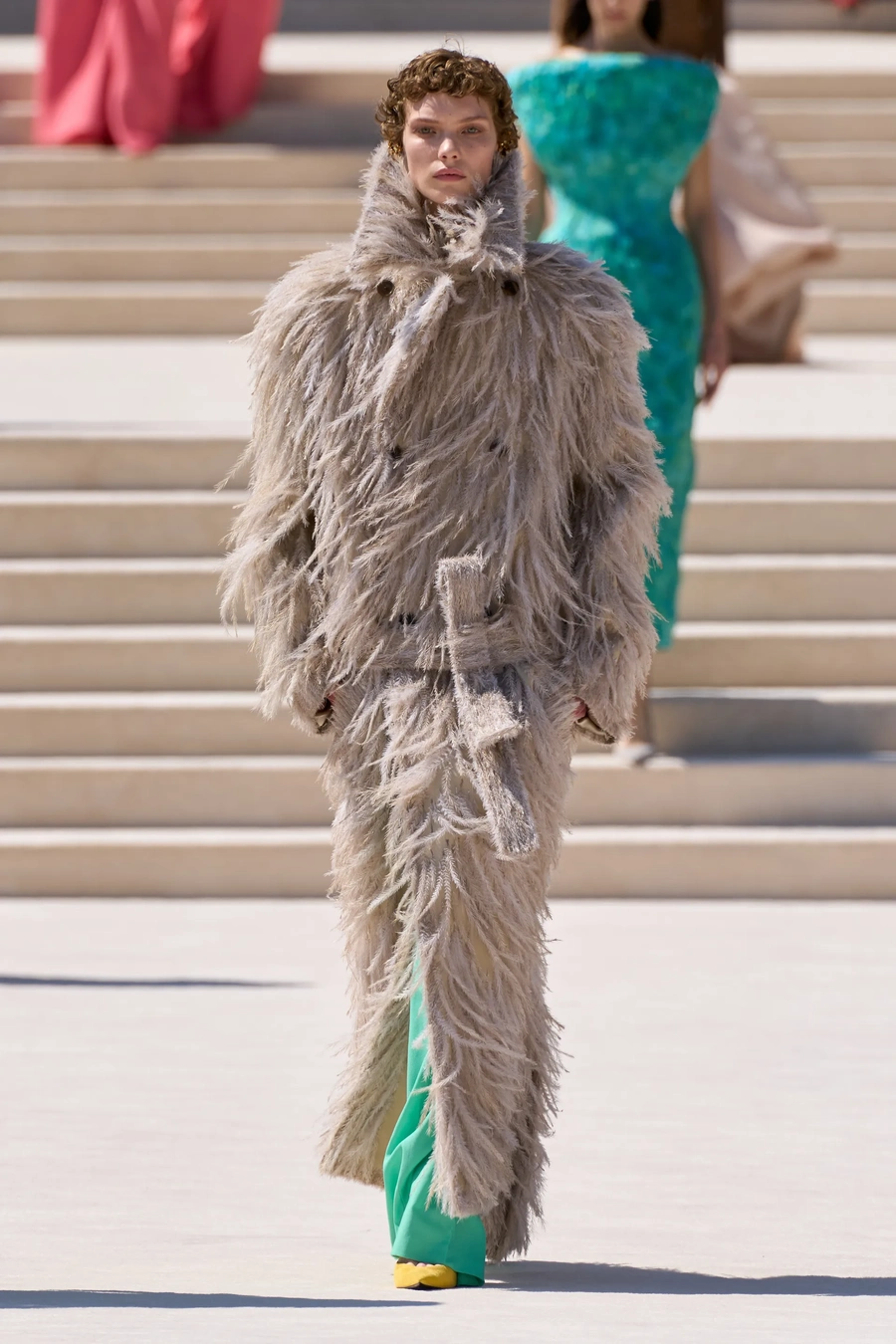
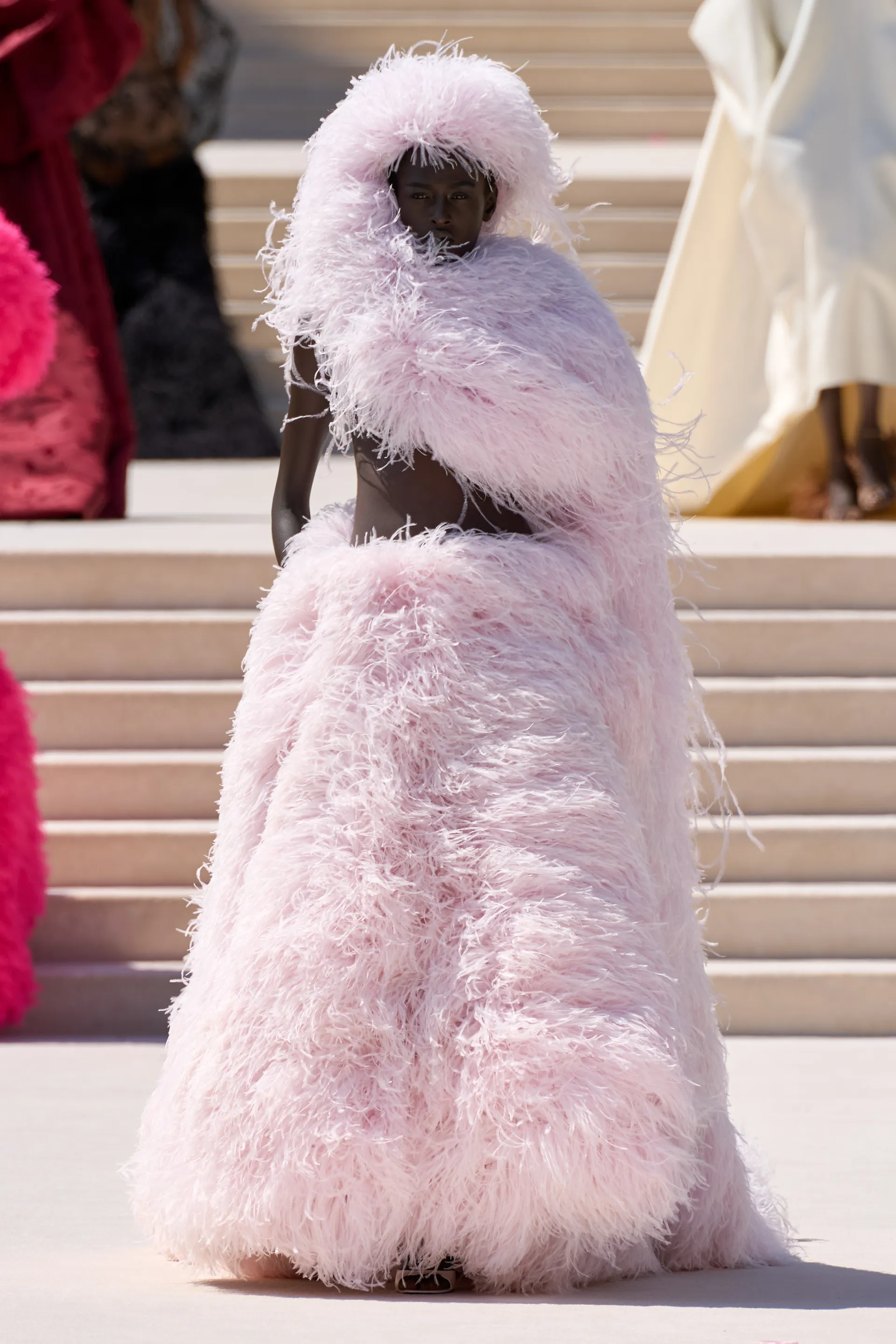
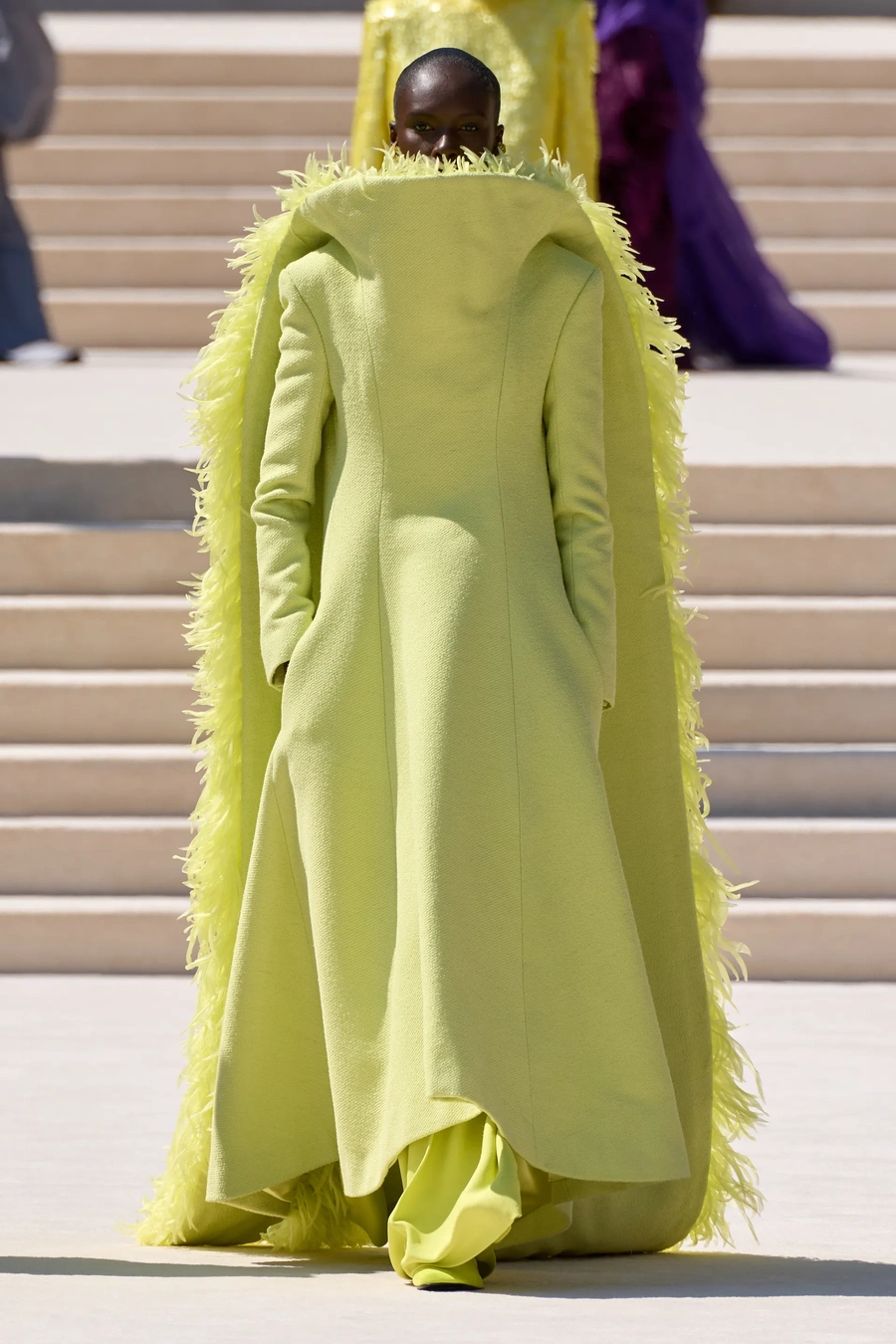
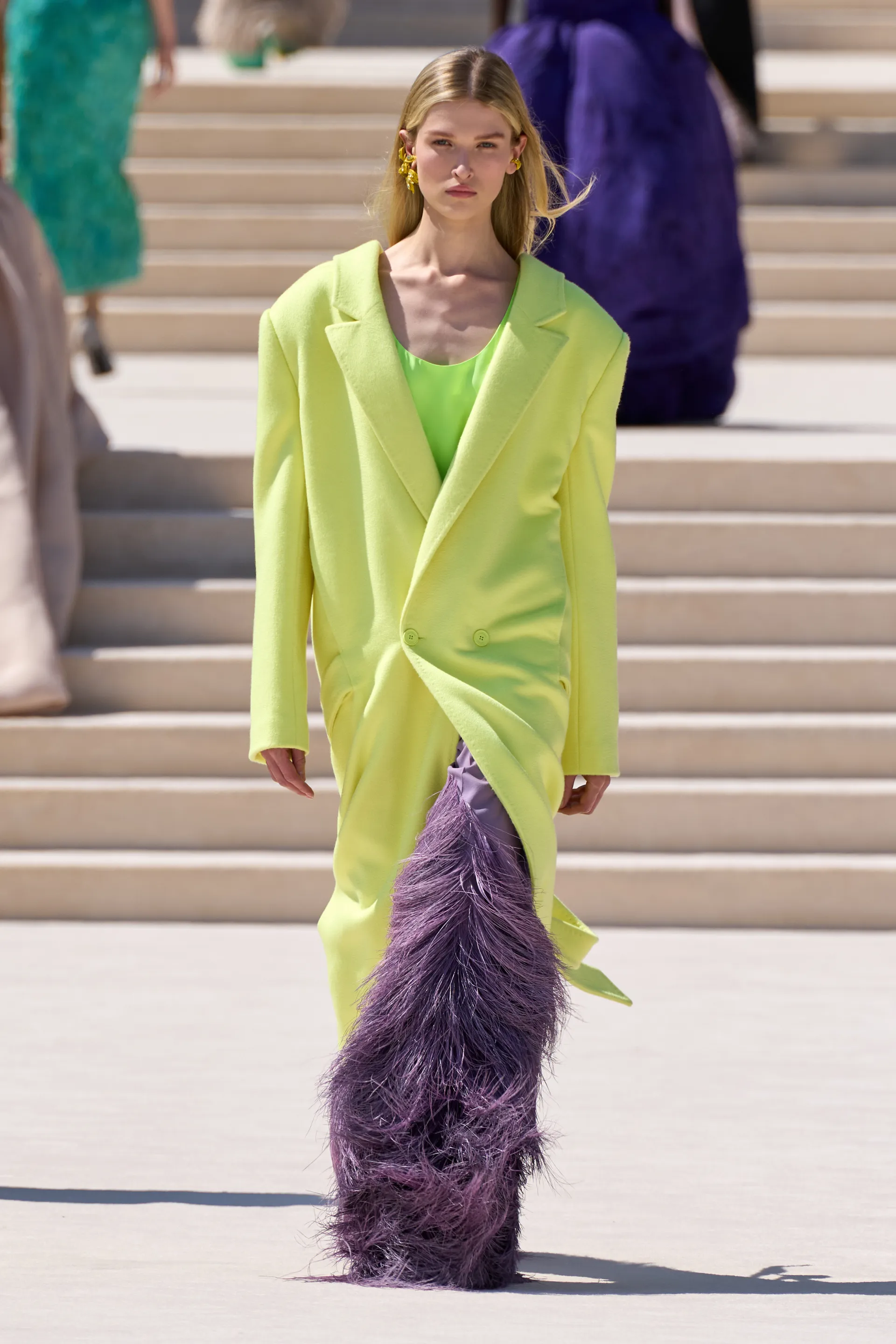
Balenciaga Fall 2026 Couture made those hours serve a larger visual purpose. The labour disappeared into the atmosphere. Thousands of repeated gestures eventually produced one soft disturbance in the air. A gown covered with roughly 24,150 individually shredded gazar petals demonstrated the scale of that work, yet the number alone says little about its final effect. How come so many separate pieces stop reading as pieces but merge into a moving field whose color and texture shift with distance.
Across the collection, texture and technology worked as one system. Feather constructions developed with Philip Treacy, neo-gazar, molded internal supports and bioengineered silk all helped surface become structure, allowing the clothes to hold dramatic volume with an unexpectedly light presence. None of this innovation announced itself through a futuristic costume. Technology remained behind the image, helping a coat resist gravity or a volume retain its calm. Couture reached its most convincing point when engineering vanished and the fabric appeared to have made the decision on its own.
Silhouette Moves Inward, Then Bursts Into Space
Every couture house eventually returns to the formal instinct that secured its place in fashion history. At Balenciaga, that instinct resides in the space surrounding the body.
Pierpaolo Piccioli explored it through two opposing movements. The hourglass compressed the figure towards a controlled centre, while the balloon released fabric beyond the body’s natural limits. One silhouette gathered tension. The other dispersed it.
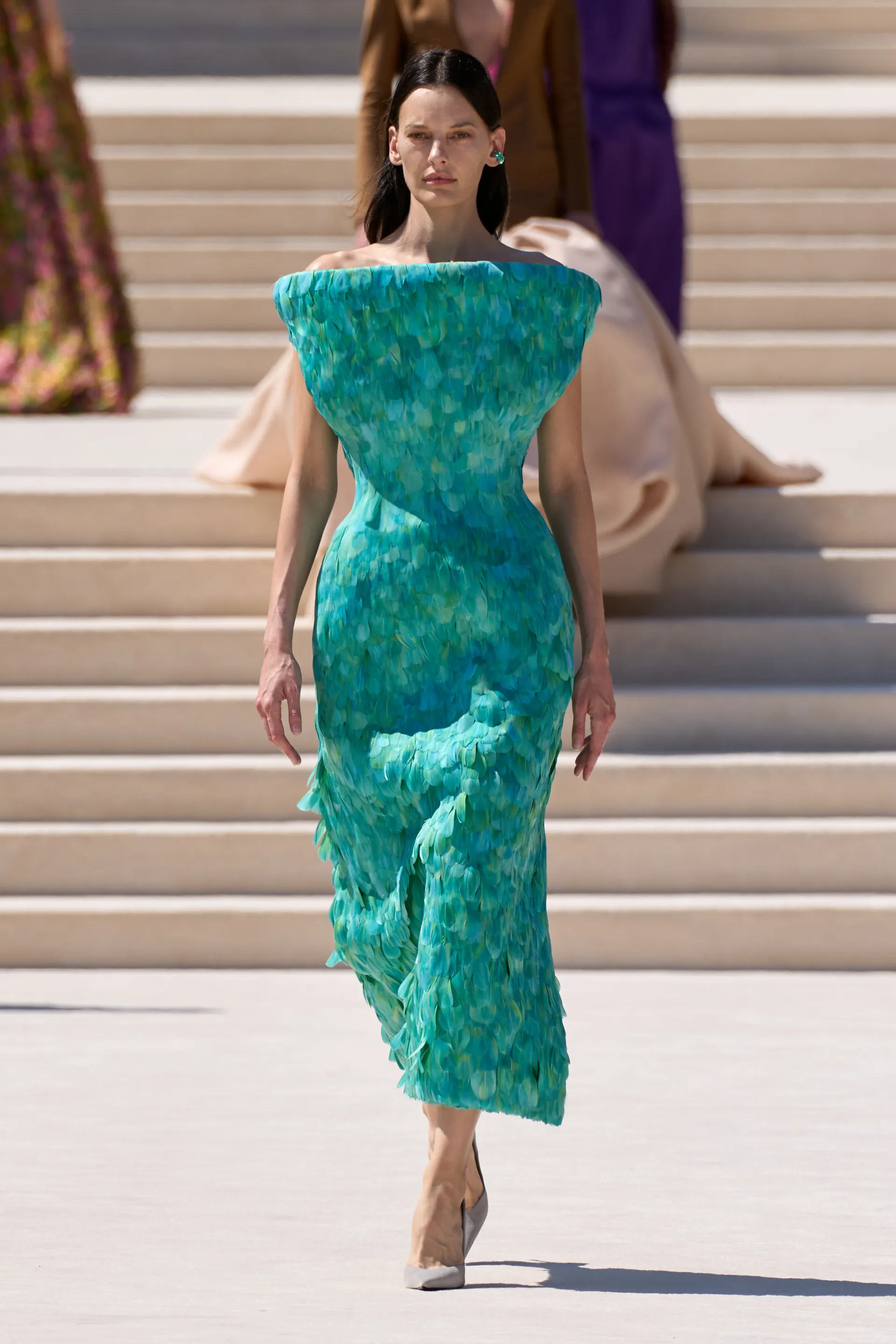
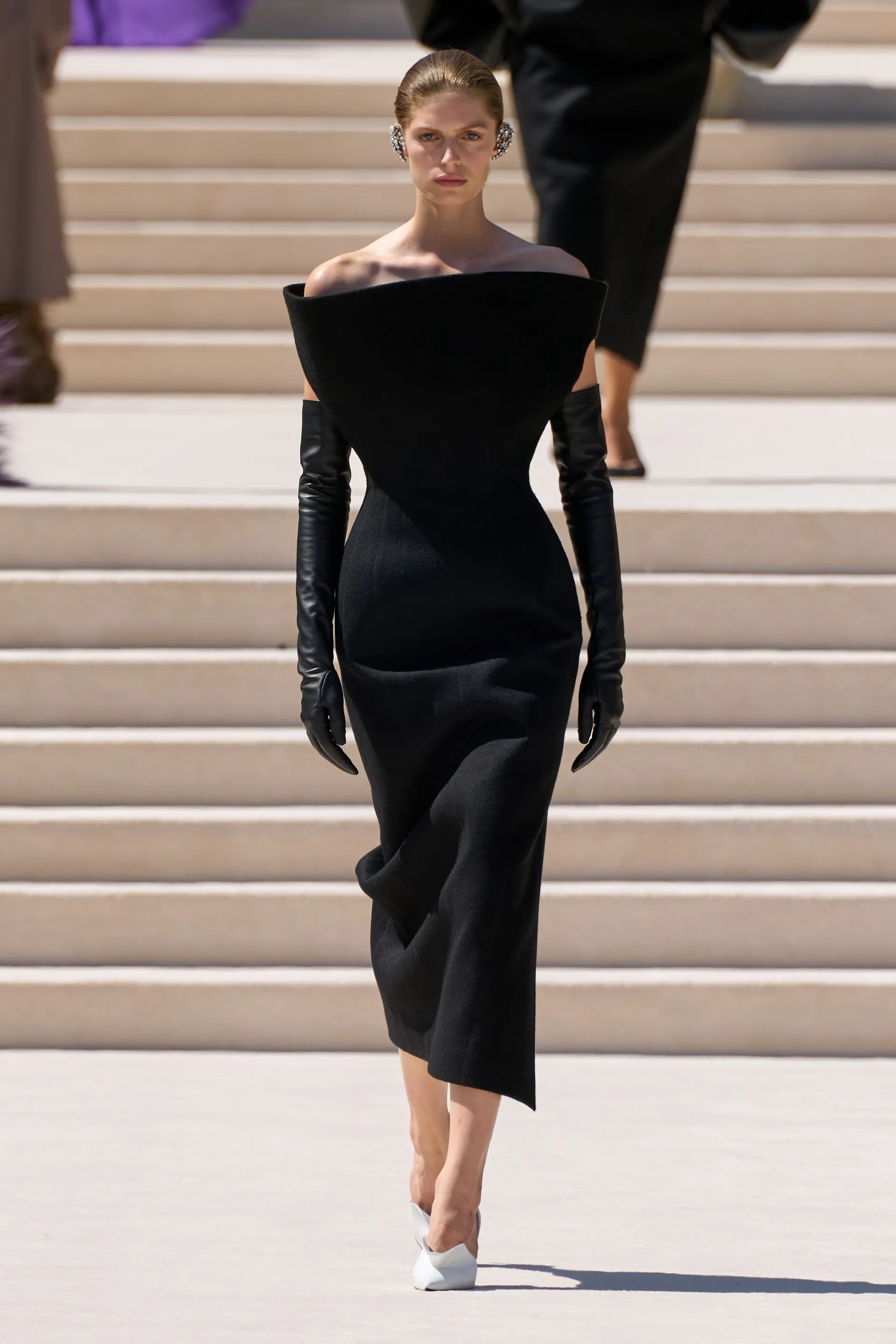
The hourglass placed unusual pressure on the waist, sharpened by the visual distance between an expanded shoulder line and projected hips. Its effect came from more than classical femininity. The proportion made the centre of the body appear almost impossibly narrow, as though the garment was drawing its own anatomy over the wearer.
The balloon silhouette pushed Balenciaga’s volume to its most expansive point. Fabric swelled around the hips, shoulders and back, creating rounded forms that seemed to float around the body, monumental in scale yet unexpectedly light in motion.
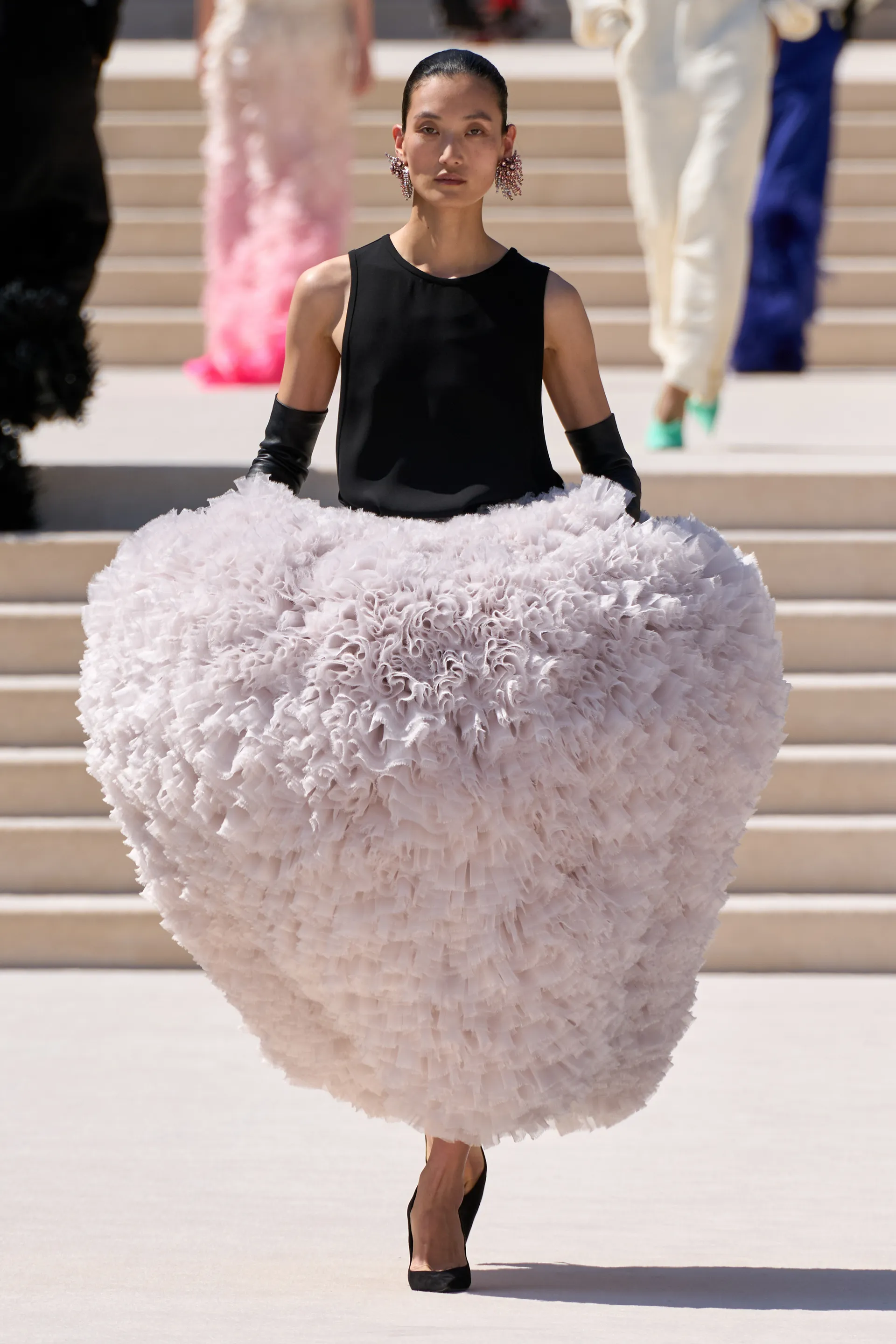
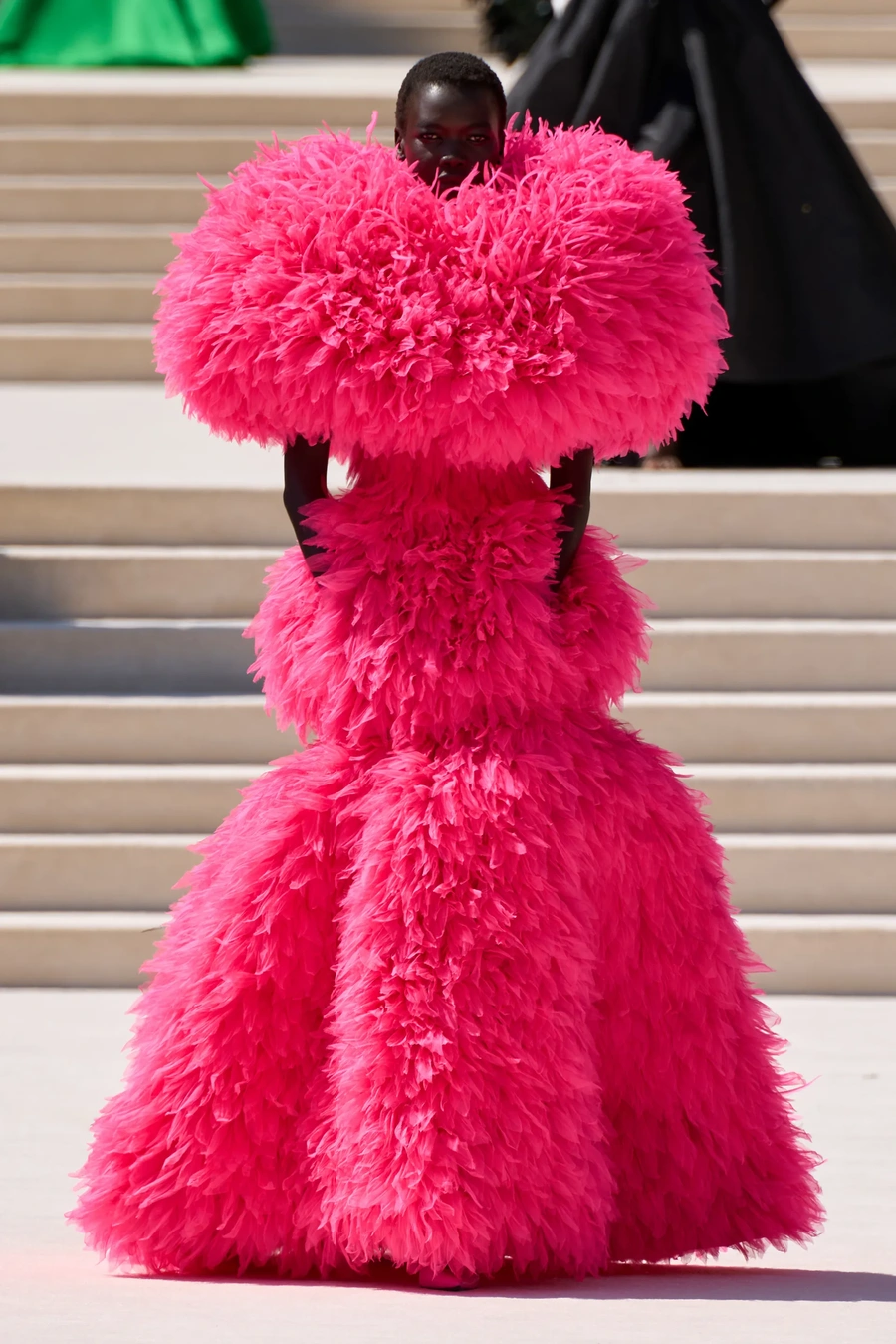
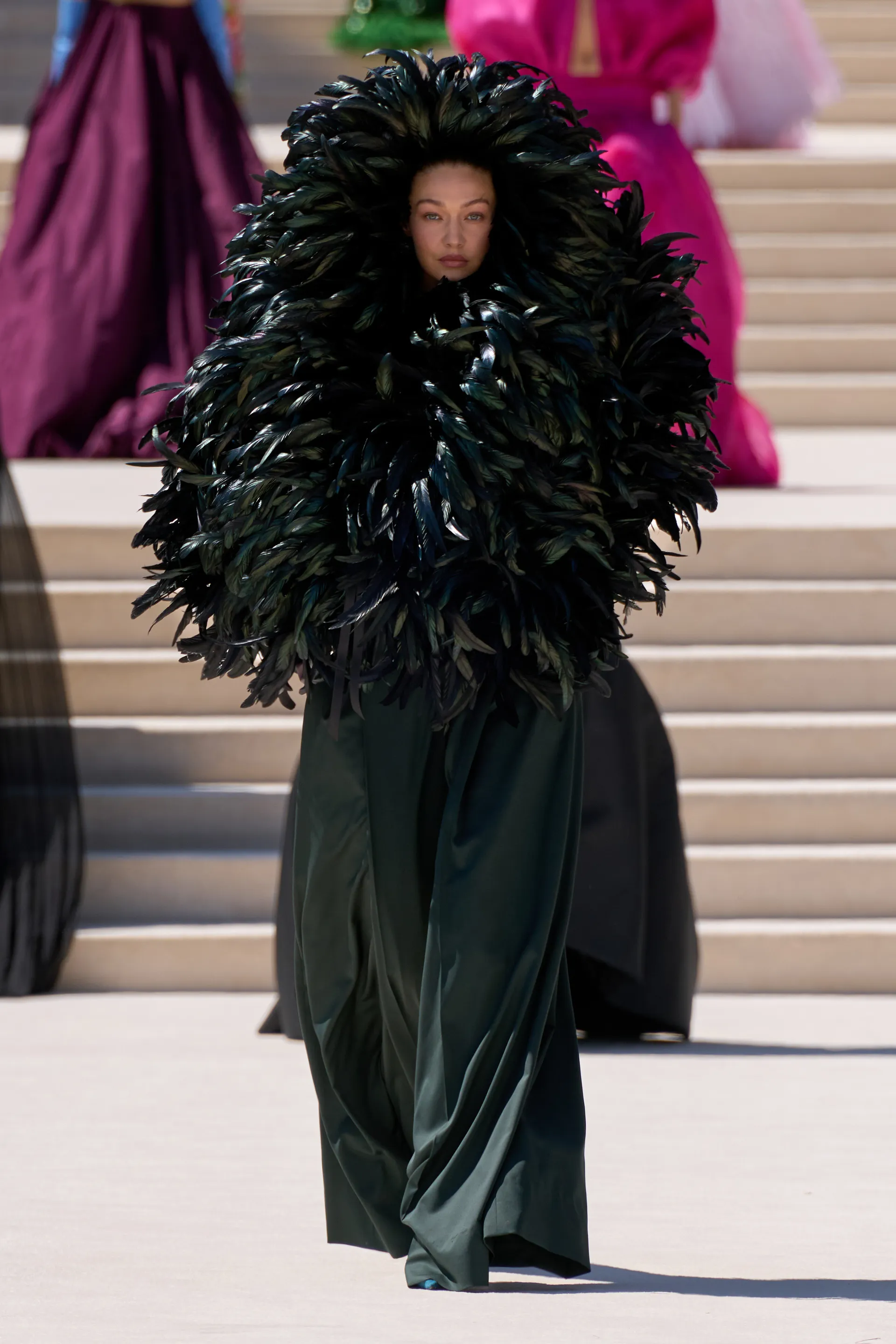
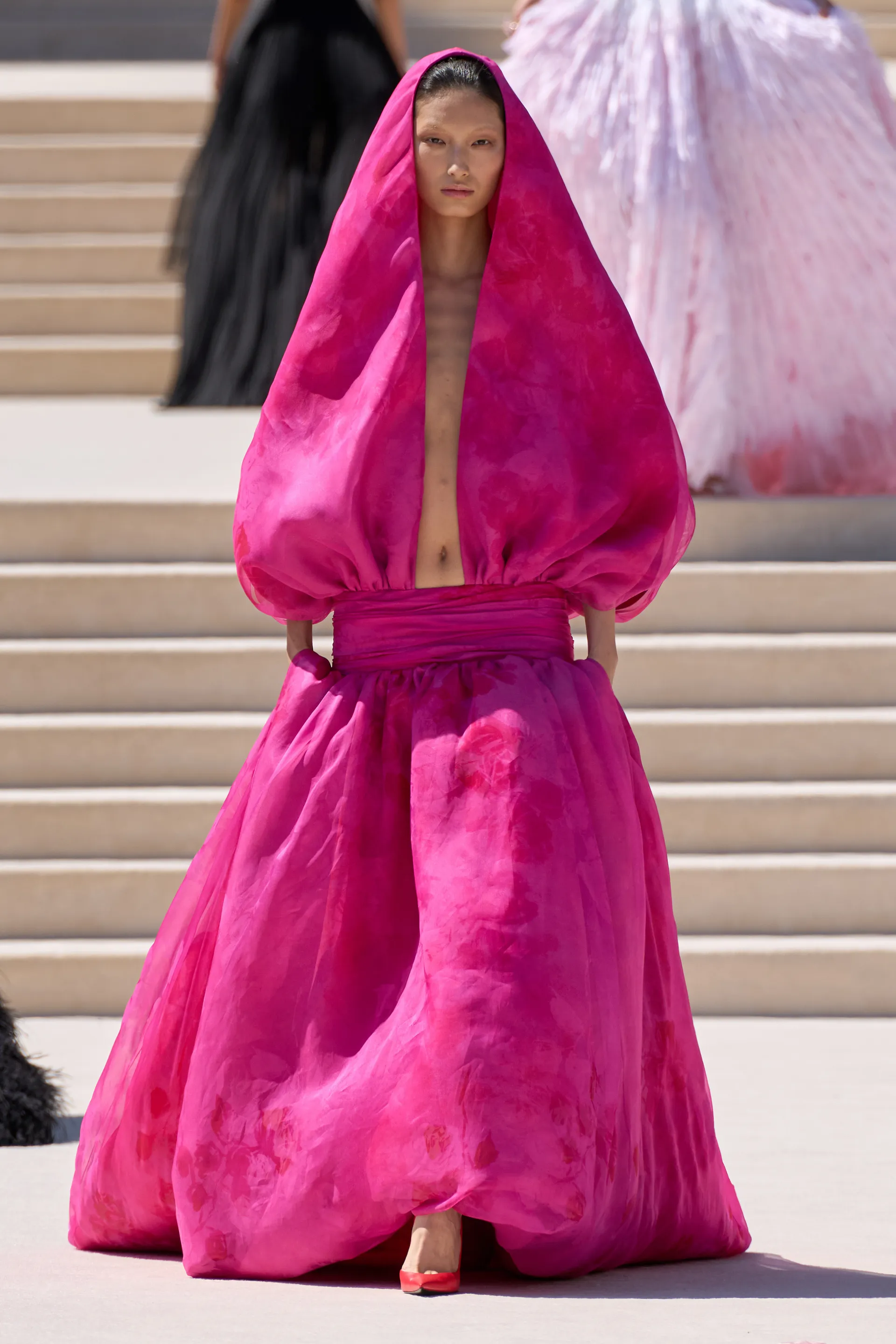
From one angle, the shape appeared as a single sculptural mass; from another, folds, openings and shifts in proportion disrupted its outline. The volume revealed itself gradually, making space part of the design.
The hourglass draws the body inward; the balloon releases it into space. Between those two impulses, Pierpaolo Piccioli found the most productive tension in the Balenciaga archive.
Where Balenciaga’s Grandeur Meets Piccioli’s Color
The gowns bring Piccioli’s hand into clearest view, with color moving through Balenciaga’s architecture like a change in weather. His Valentino years surface only once, in the instinct to use color as a force that can lighten volume, stretch the eye and soften severity without weakening the form. Autumnal depth still anchors the palette, while brighter tones keep summer alive at its edges, giving the collection a cool, transitional glow. Romantic surfaces meet firmer spatial logic, and the result feels generous without losing tension, luminous without disturbing the house’s bones.
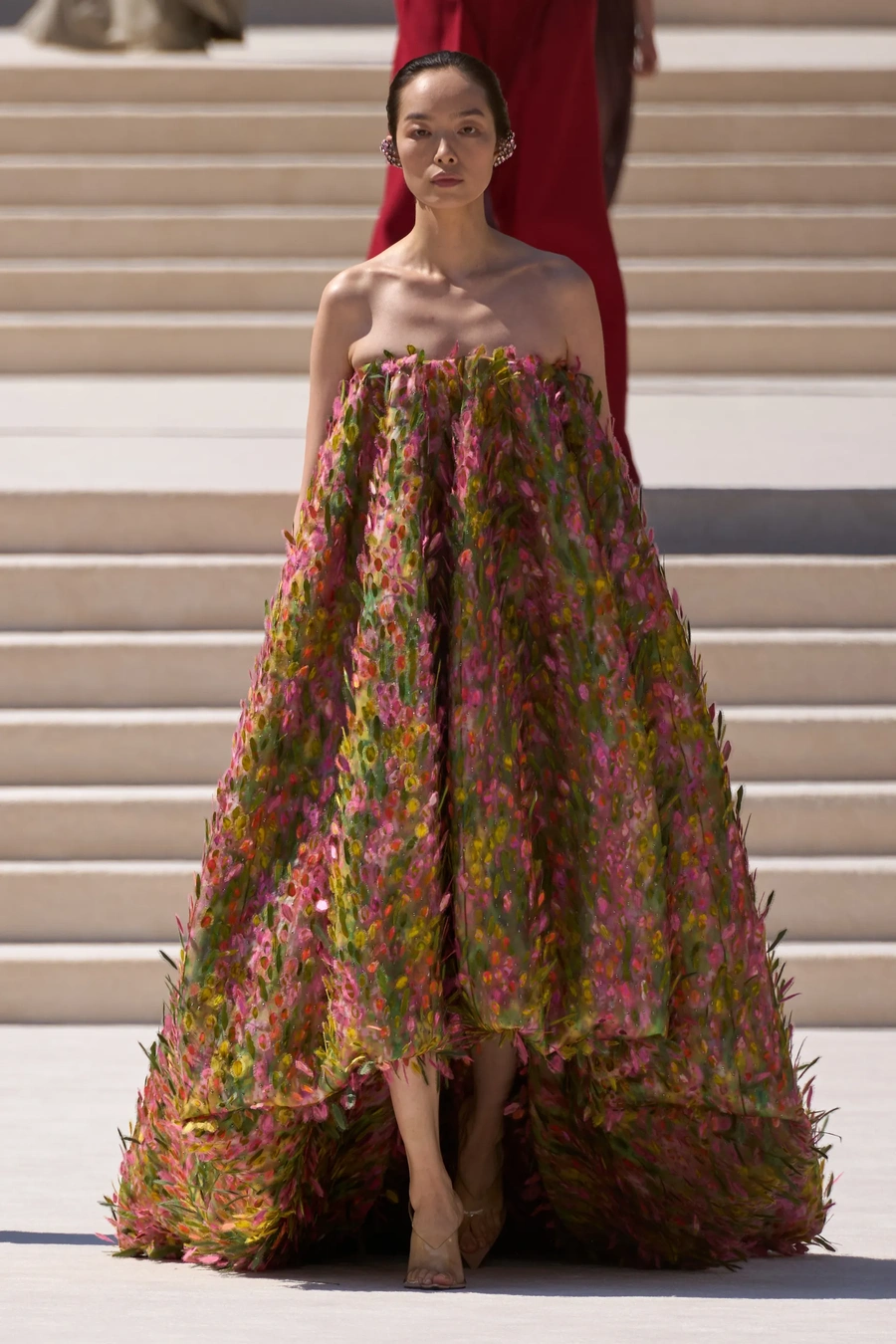
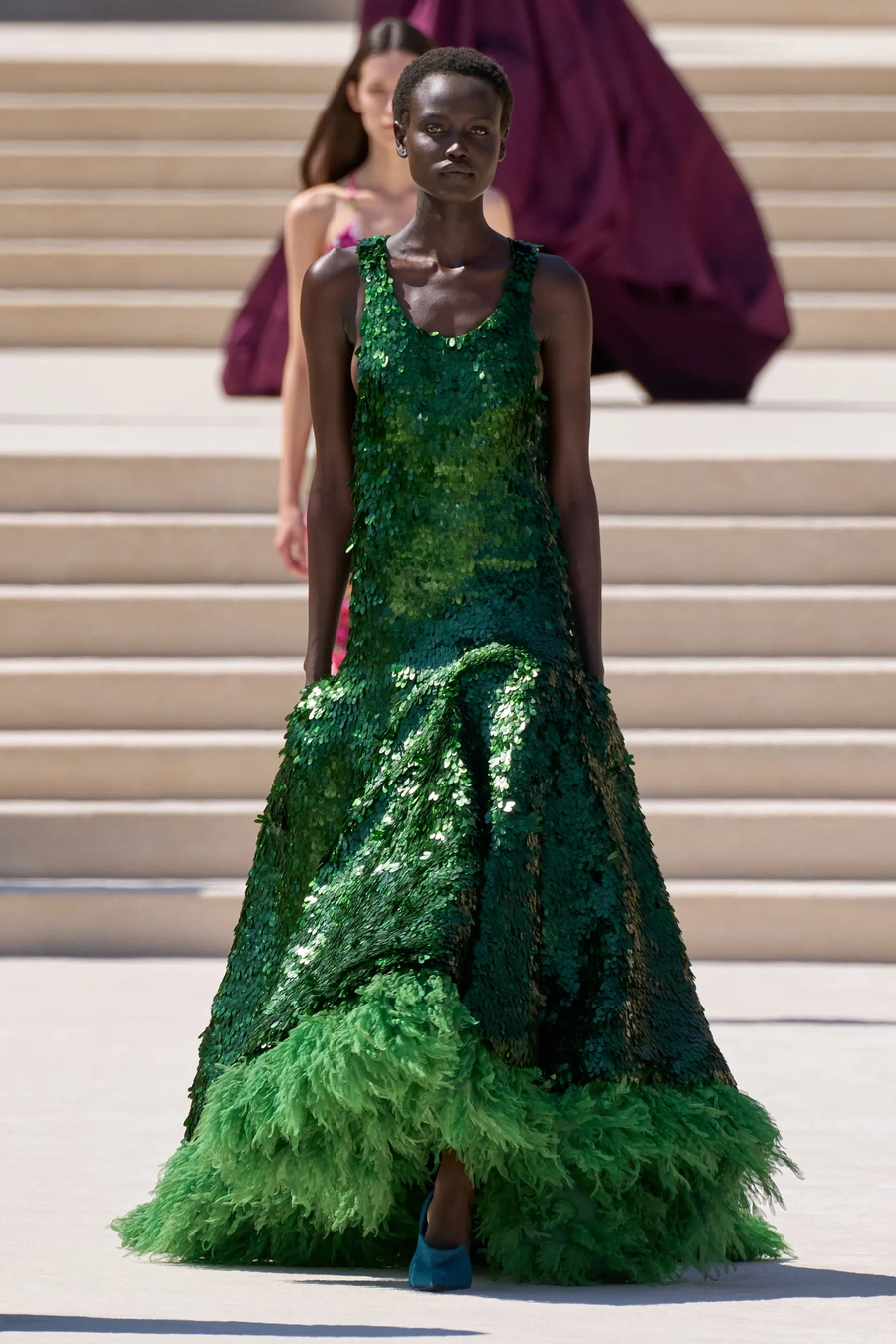
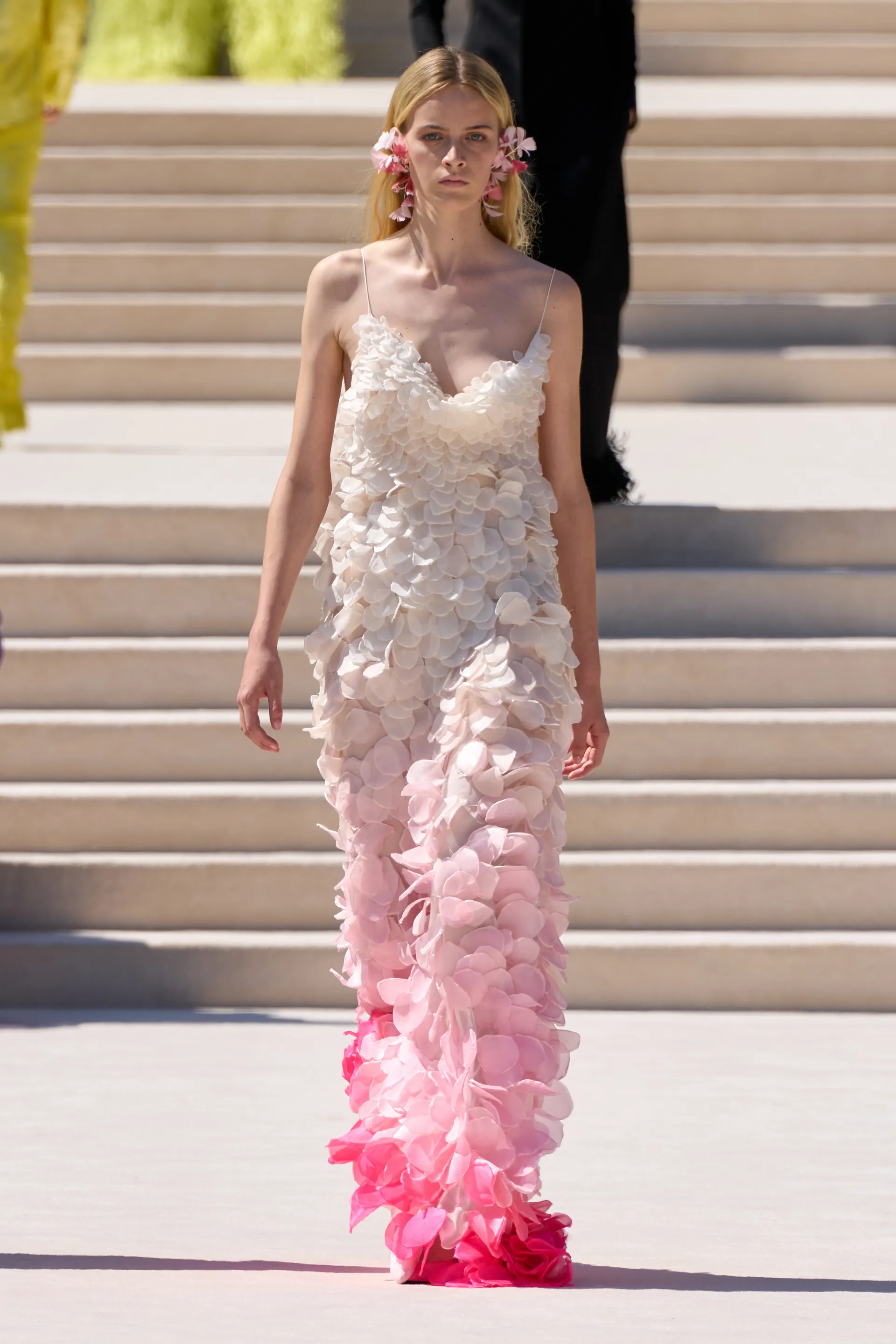
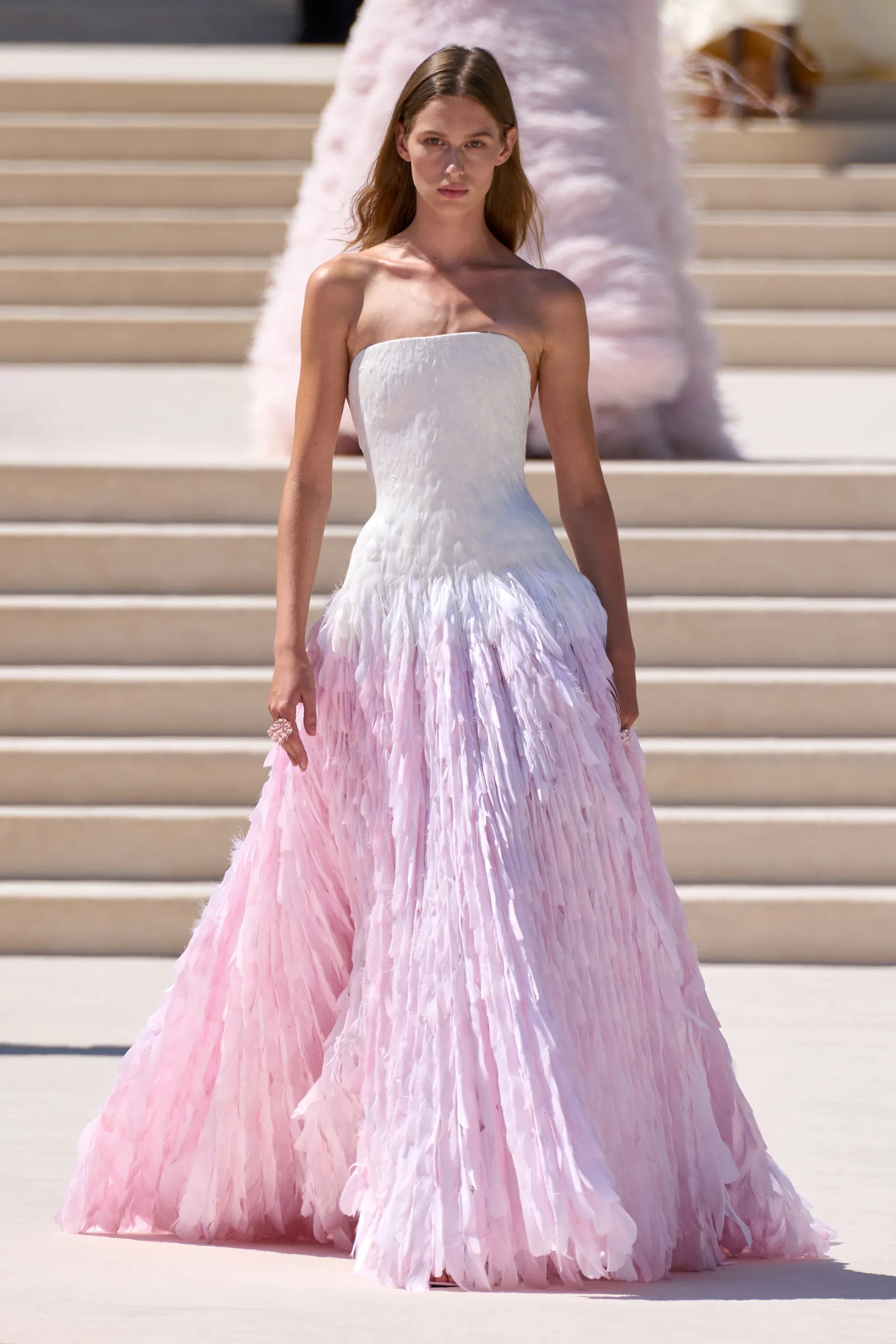
Pierpaolo Piccioli has introduced color as a new temperature inside a house still governed by space.
The gowns brought that negotiation to its most expansive conclusion. Their petals, feathers and translucent layers carried a sense of abundance, yet the silhouettes beneath remained calculated. Even at their most lyrical, they were never permitted to drift away from construction.
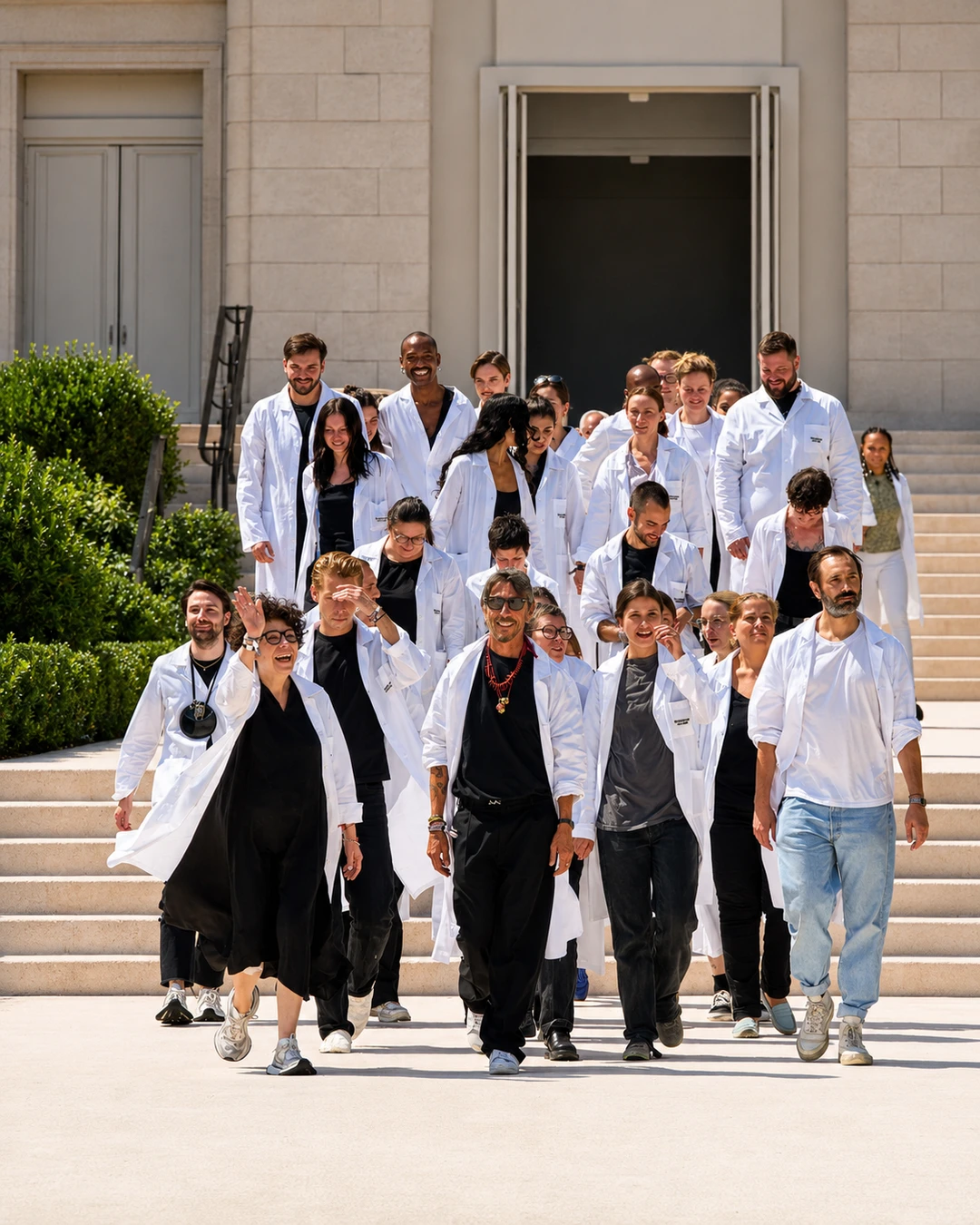
The finale widened the meaning of couture beyond the designer’s hand. Pierpaolo Piccioli brought the atelier team onto the runway, acknowledging the pattern cutters, tailors, embroiderers and makers whose specialised knowledge had shaped his first couture collection for Balenciaga. The gesture aligned with a collection built on the belief that technique is never abstract; it belongs to particular hands, habits and relationships formed over time.
Balenciaga Fall 2026 Couture finds its authority where Pierpaolo Piccioli’s chromatic instinct meets the house’s command of space. A trace of Rome remains absorbed into silhouettes that now speak with distinctly Balenciaga grandeur. Autumn settles over the collection with quiet force, cooling the light, deepening the color and reminding us that few houses can make fabric feel this monumental.
Advertisement