MENU
Close





Mohammed Ashi invited couture’s ghosts back onto the dance floor for Fall 2026, wrapping them in sculpted corsets and surrealist relics from an aristocratic world too beautiful to remain buried.
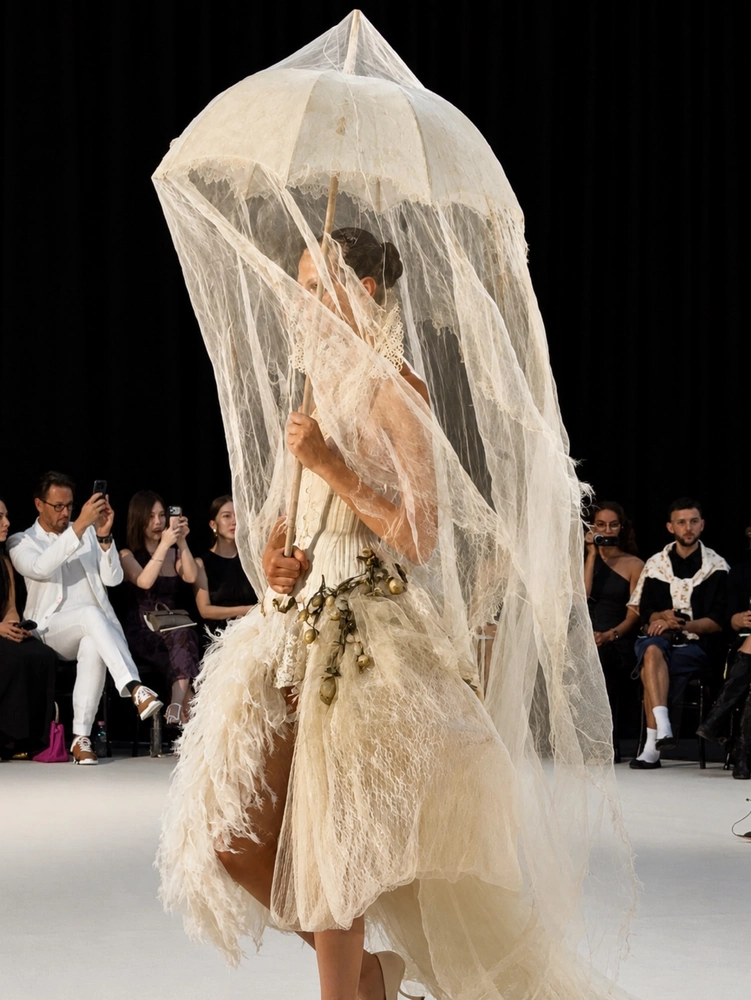
Mohammed Ashi invited couture’s ghosts back onto the dance floor for Fall 2026, wrapping them in sculpted corsets and surrealist relics from an aristocratic world too beautiful to remain buried.
July 10, 2026
Advertisement
Advertisement



A woman crosses a white runway dressed like the ghost of an aristocrat who died with her corset permanently fastened. Another carries miniature glass vessels where pockets belong. An antique mirror gleams fiercely from a passing back. Bells tremble beneath stilettos, ringing out a haunted cadence. Insects rest on silk dresses, and crustaceans hide deep within the linings. Everything is beautiful. Everything appears suspended in a deathly slumber.
Marking Mohammed Ashi’s twentieth year in fashion, A Different Skin operates on the principle that behind every mask waits another mask, establishing disguise as a potent vehicle for profound metamorphosis. Clothing grants the wearer absolute permission to usurp another posture, century, social rank, and personality.
Mohammed Ashi designs an entire haunted ecosystem: a decaying château, an aristocratic masquerade, a woman wandering endlessly through its opulent rooms, historical characters escaping from oil portraits, and a wardrobe functioning simultaneously as armor, furniture, taxidermy, and psychological camouflage. At Ashi Studio, getting dressed promises a complete escape from the self. The delicious problem remains that every escape leads directly into another exquisitely decorated trap.
The previous Ashi Studio couture collection remained enclosed within a Victorian interior, preoccupied entirely with restraint, secrecy, and the immense psychological weight of rooms. Fall 2026 forces those doors wide open. The woman leaves the private chamber and enters the ballroom, finding the outside world equally claustrophobic. Spring represented the locked room; Fall presents the forbidden party waiting beyond it.
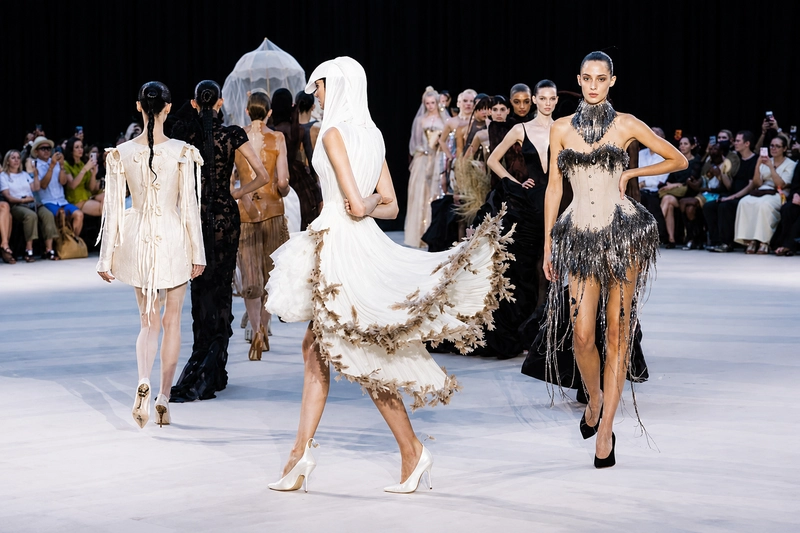
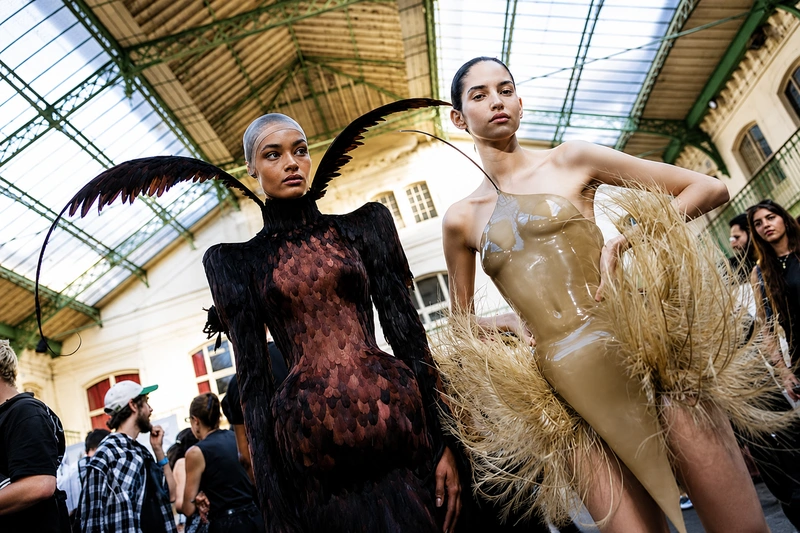
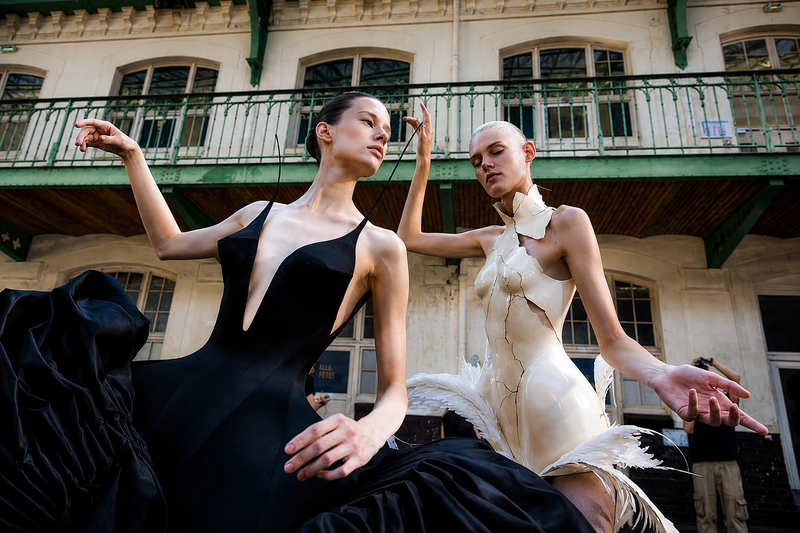
The ballroom allows Mohammed Ashi to expand one Victorian heroine into a sprawling, ghostly cast: the Napoleonic officer, the court ambassador, the cracked porcelain doll, the forest creature, the veiled widow, and the aristocratic guest who has remained at the party long enough to absorb the décor.
Mohammed Ashi’s world combines several distinct spectacles of European wealth and fantasy, creating a deeply intoxicating atmosphere. The collection layers the public festivity and courtly display of Renaissance Florence, where dress transformed human flesh into rank and controlled spectacle. It summons the aristocratic nostalgia of Carlos de Beistegui’s 1951 Ball of the Century at Palazzo Labia, filtering antique textiles, crystal vessels, and Venetian mirrors through an atmosphere of cultivated unreality. It channels the poisonous currents of the Rothschild Surrealist Ball of 1972, where the aristocracy performed nightmare, absurdity, and visual transgression. Salvador Dalí’s association with this milieu provides Mohammed Ashi with the lobster, the distorted objects, and the immense pleasure of making refinement behave badly.
These historic parties offered the wealthy temporary permission to embody the grotesque while retaining absolute class protection. Their madness was carefully curated, photographed, served with champagne, and returned safely to its jewellery box by morning. Mohammed Ashi’s couture similarly allows disorder to manifest only after thousands of hours of absolute, flawless control. Mohammed Ashi states that a mask lets its wearer inhabit another skin, viewing dressing as profound, psychological roleplay.
The silhouettes journey through distinct stages of haunted transformation, beginning with the ghosts of authority. The early language relies on sharpened shoulders, long coat lines, rigid collars, hourglass silhouette, sculpted peplums, and hips extended far away from the body. Traces of military uniforms appear stripped of literal insignia, presenting narrow vertical silhouettes interrupted by abrupt architectural volume.
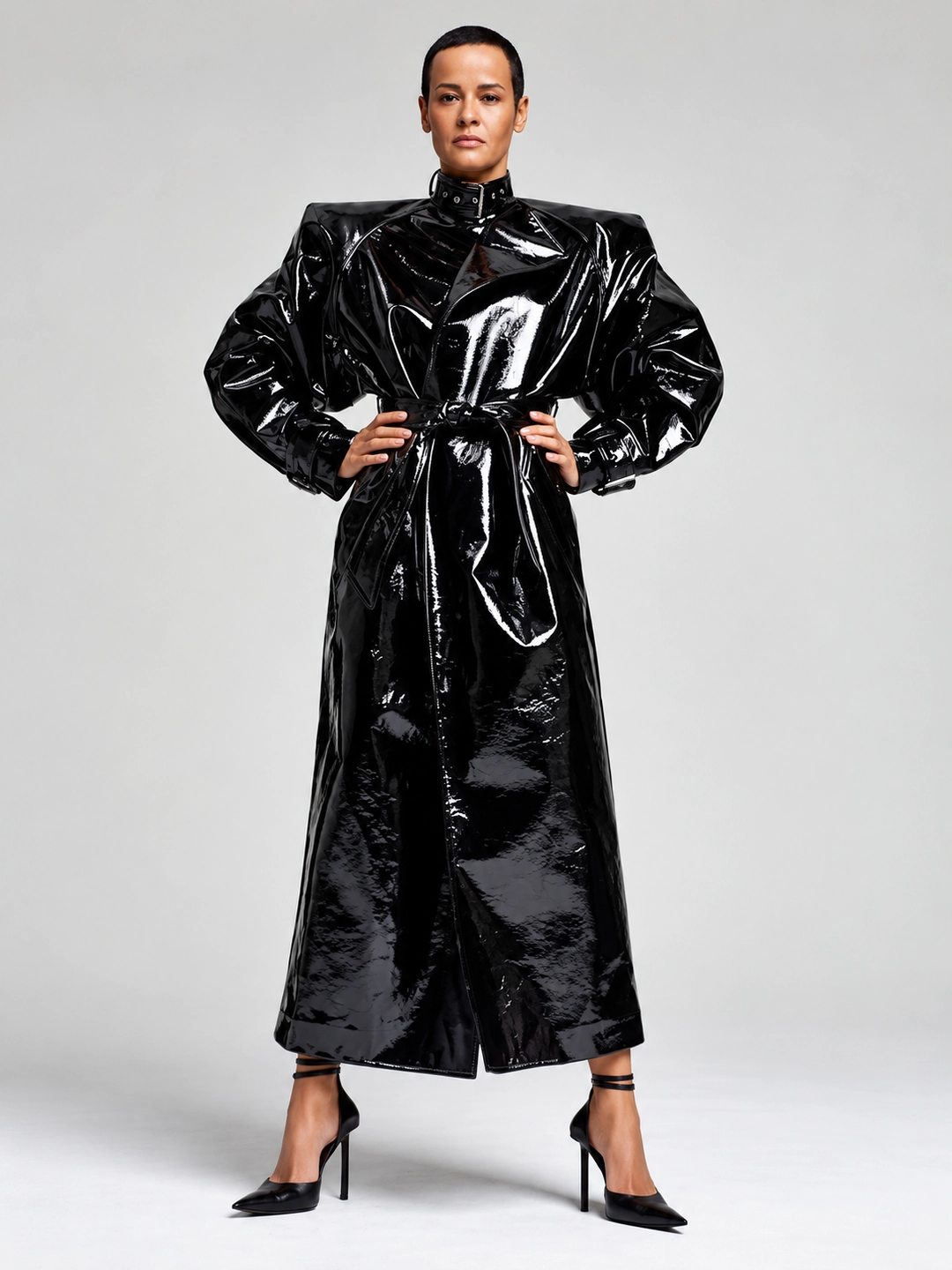
The Napoleonic officer appears as a lingering, ghostly residue, leaving behind the authoritarian geometry and the severe stance. Tailoring functions as a psychological command. These jackets issue strict orders to the body, forcing the wearer to stand differently because the garment has already decided her identity. The patinated bronze-leather peplum jacket makes this authority archaeological, as the leather resembles excavated metal preserved after a collapsed empire.

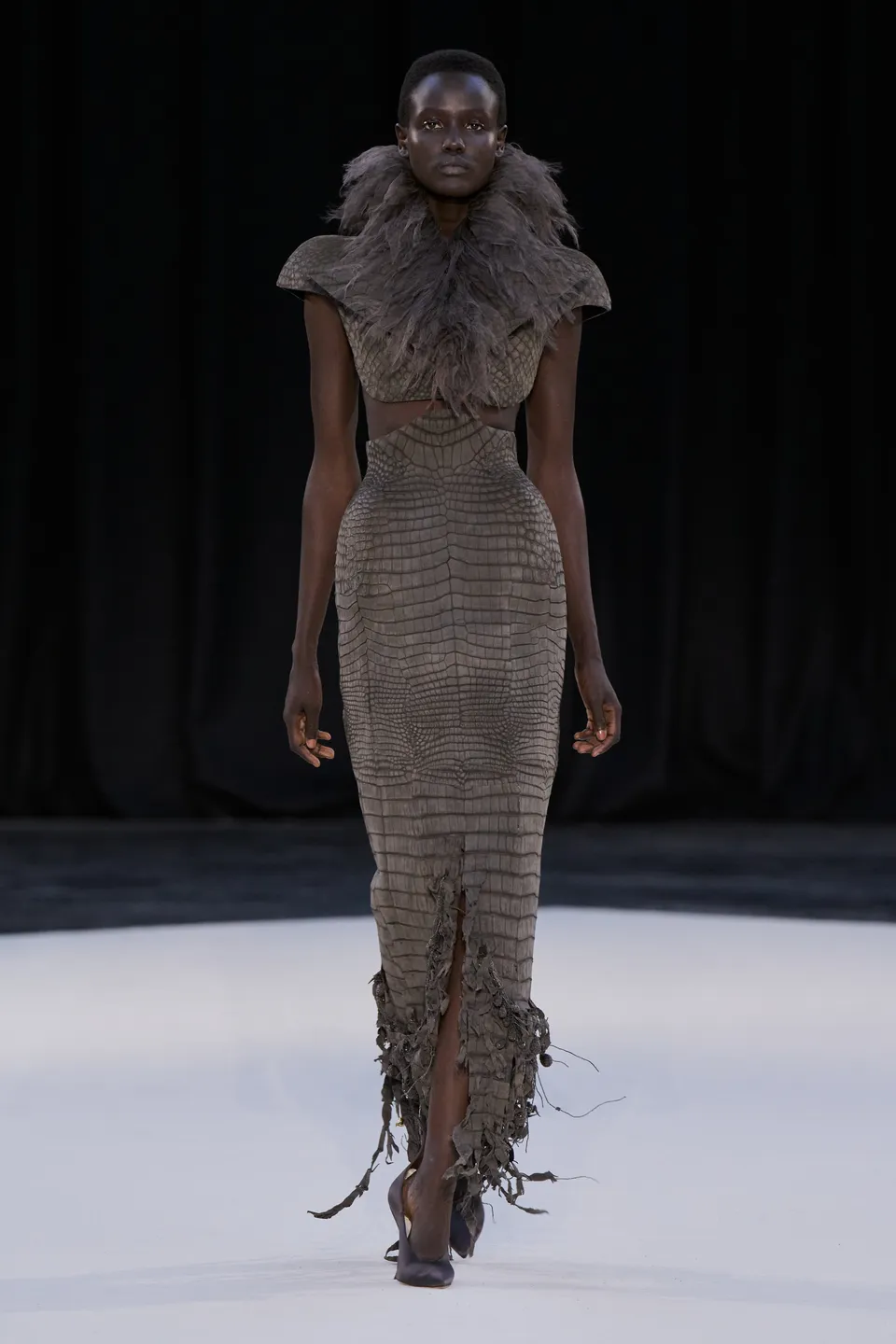
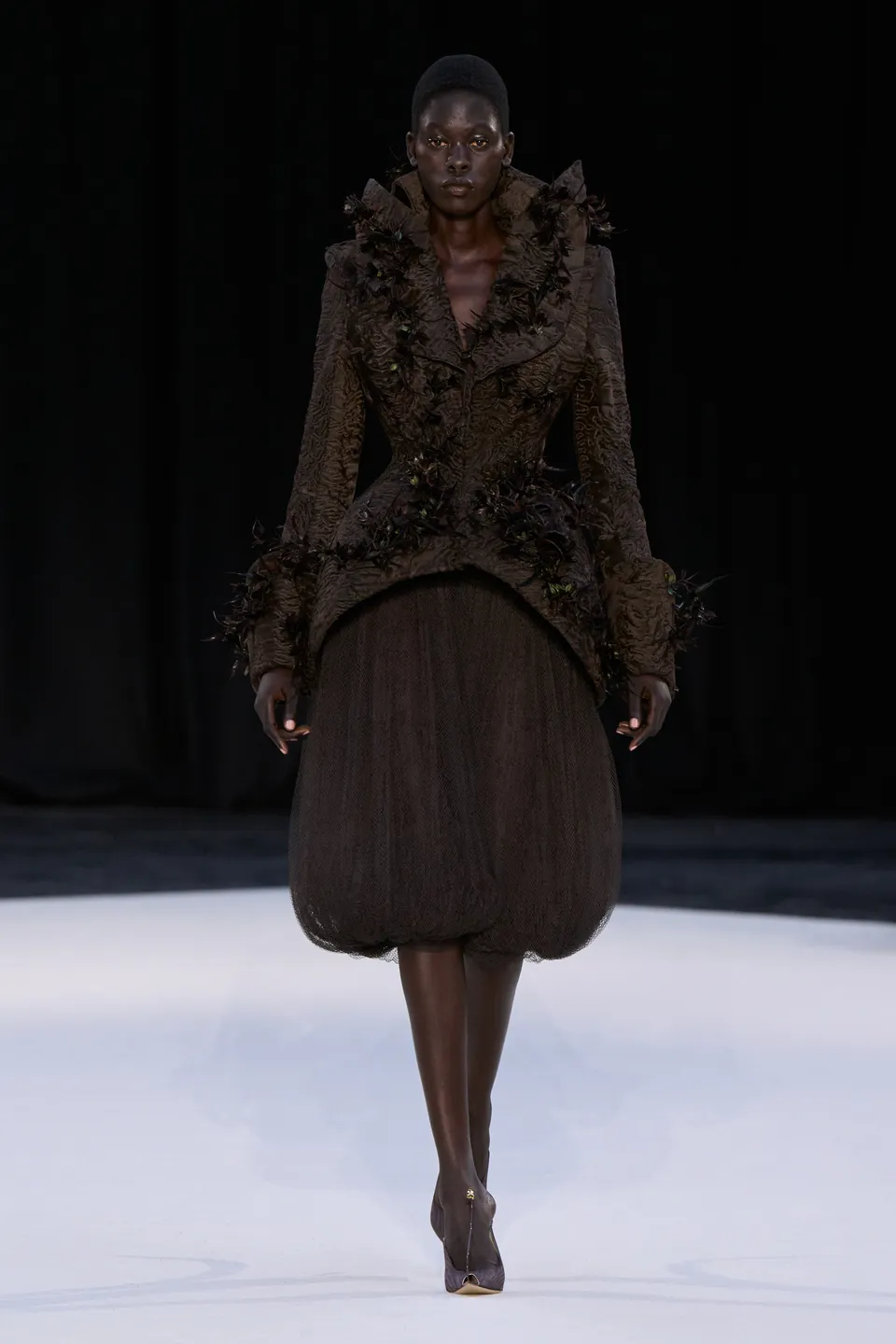
The eggshell-white lacquered-leather corset, sculpted and feathered, resembles a porcelain doll splitting open. The surface looks hard, smooth, and fiercely expensive, yet the cracked-doll reference implies profound damage beneath its perfection. Mohammed Ashi utilizes constricted torsos, lifted bust lines, exaggerated hips, bell silhouette, rigid bodices, and pale surfaces that make the models resemble collectible objects, with feathers placed at edges like softness growing from a fracture.
The short white halter dress with its bell-shaped skirt and embroidered strawberry vines radiates an unsettling prettiness. It resembles a confection or a child’s ceremonial dress, but the severe construction ensures the innocence remains entirely corrupted. Mohammed Ashi offers sweetness with its teeth still bared, turning ideal femininity into something preserved, posed, and inherently breakable.
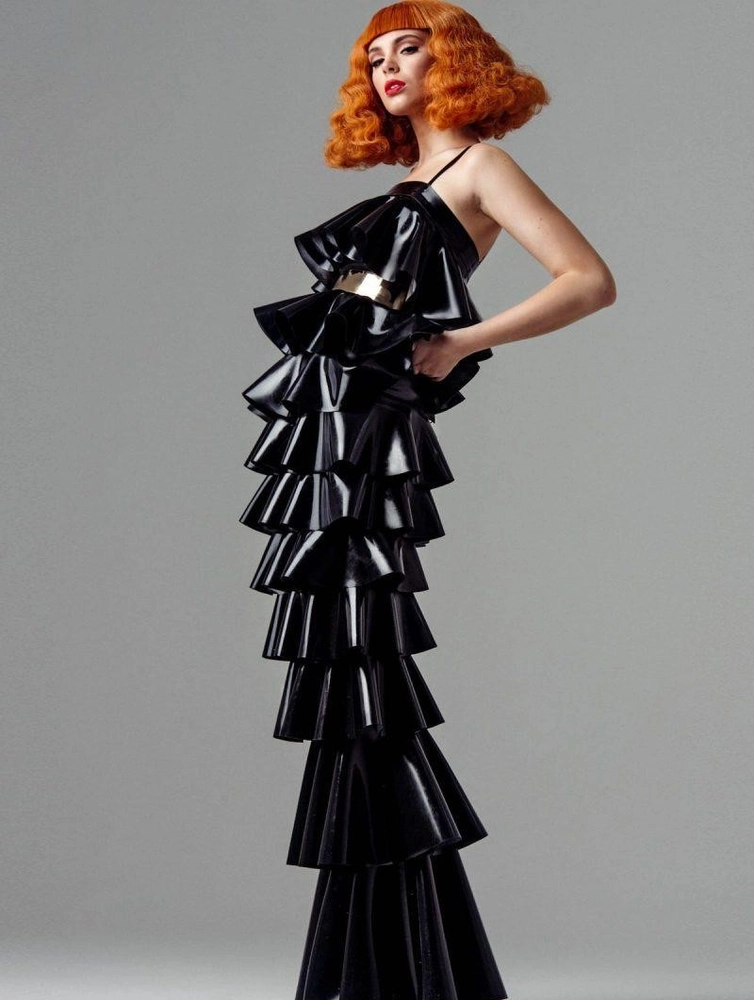
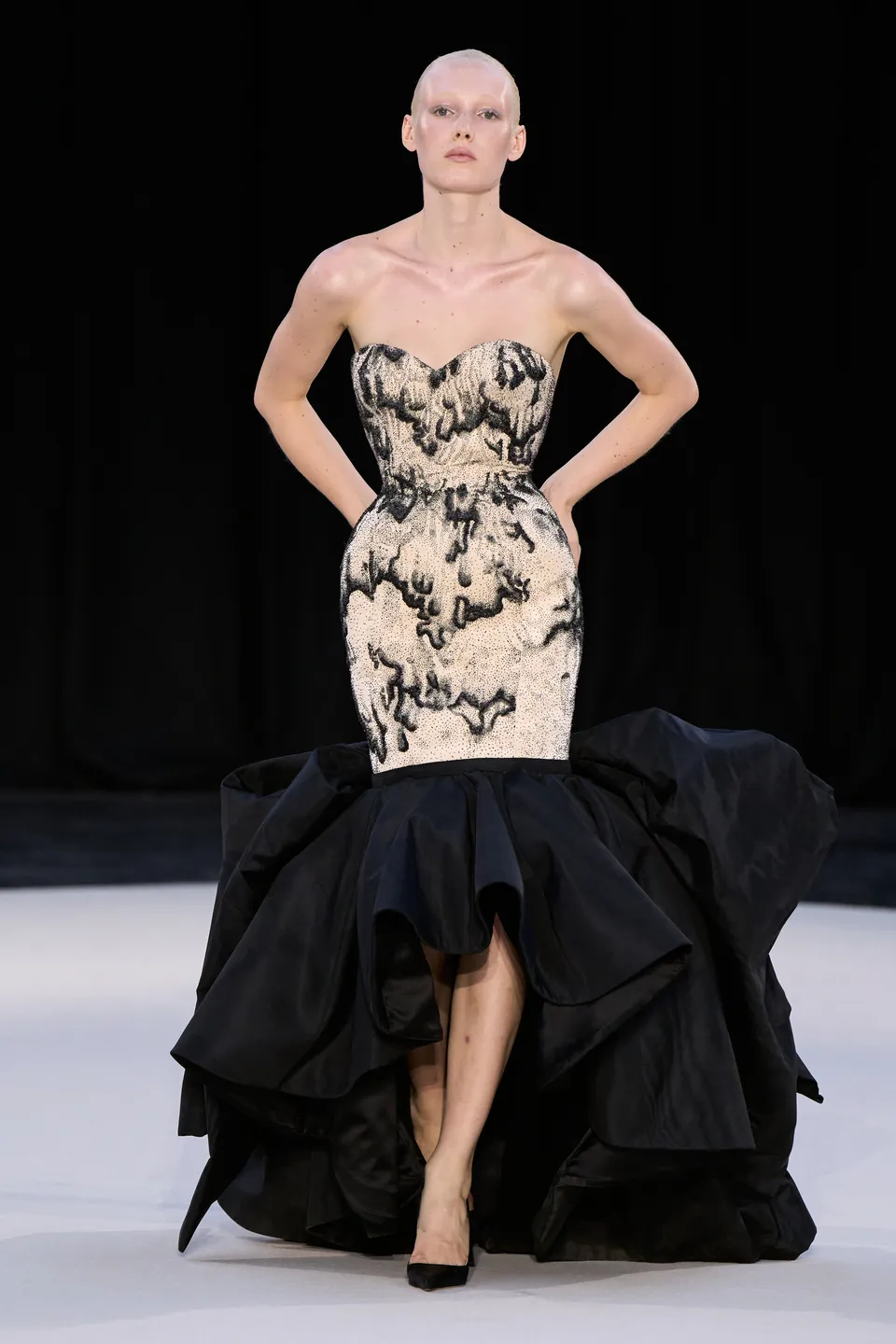
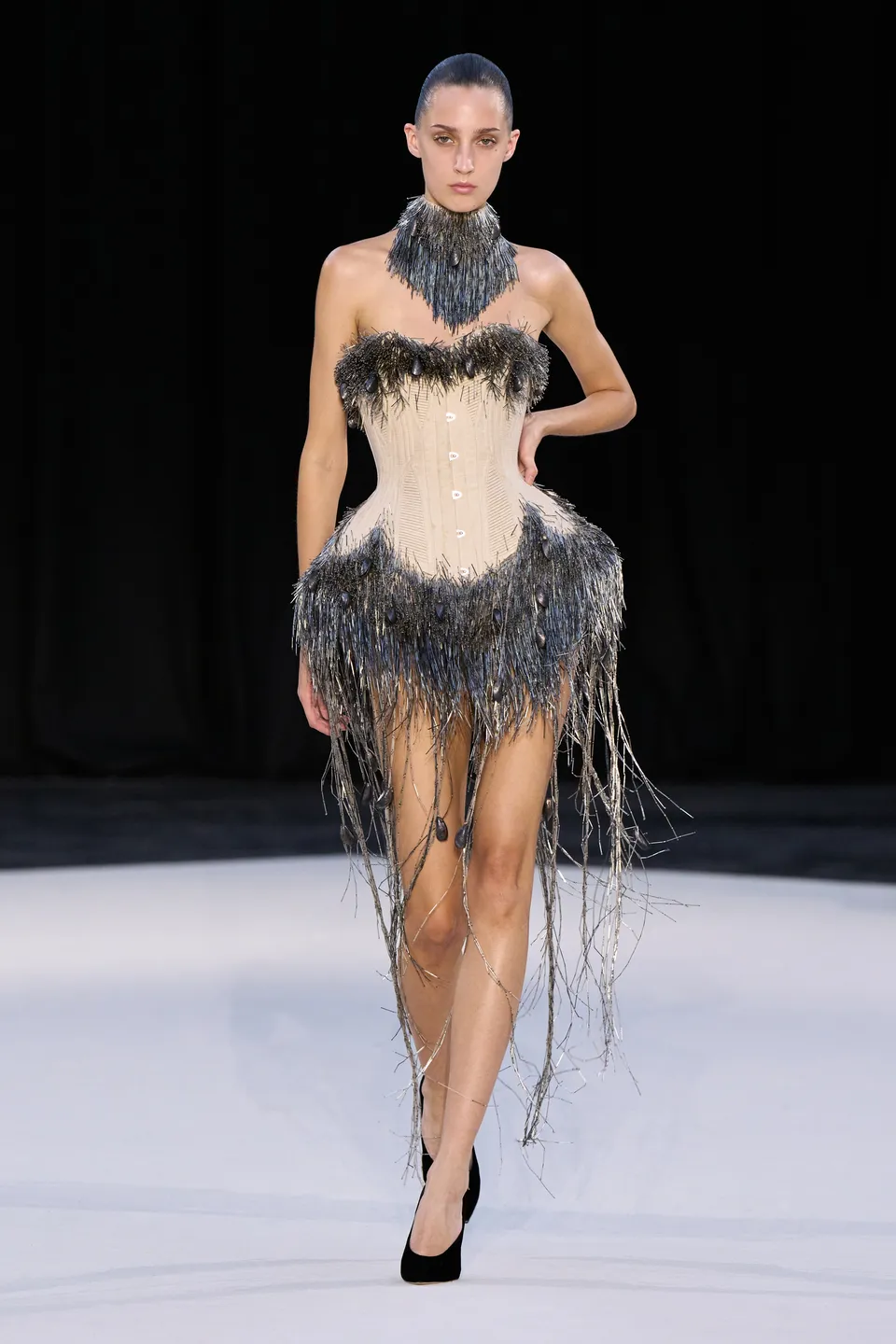
The body then mutates into a creature exoskeleton, shifting fluidly between woman, bird, insect, crustacean, and apparition. Glossy moulded bodices curve like shells, corseted jackets extend the hips beyond ordinary anatomy, high collars imprison the throat, and feathered edges soften the armor while maintaining its threat. Mermaid skirts drag the body toward marine territory, and narrow torsos erupt into sweeping volume.
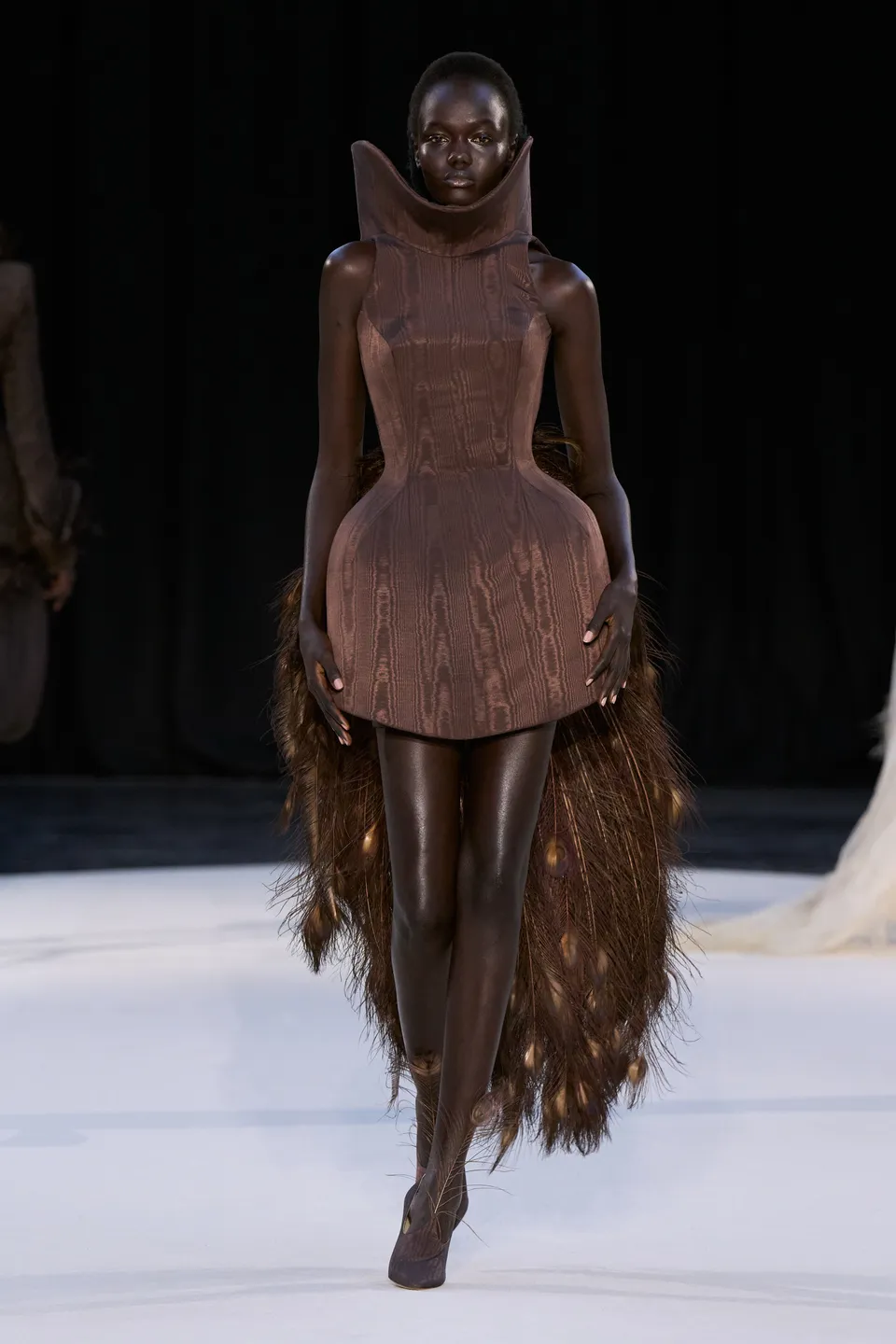
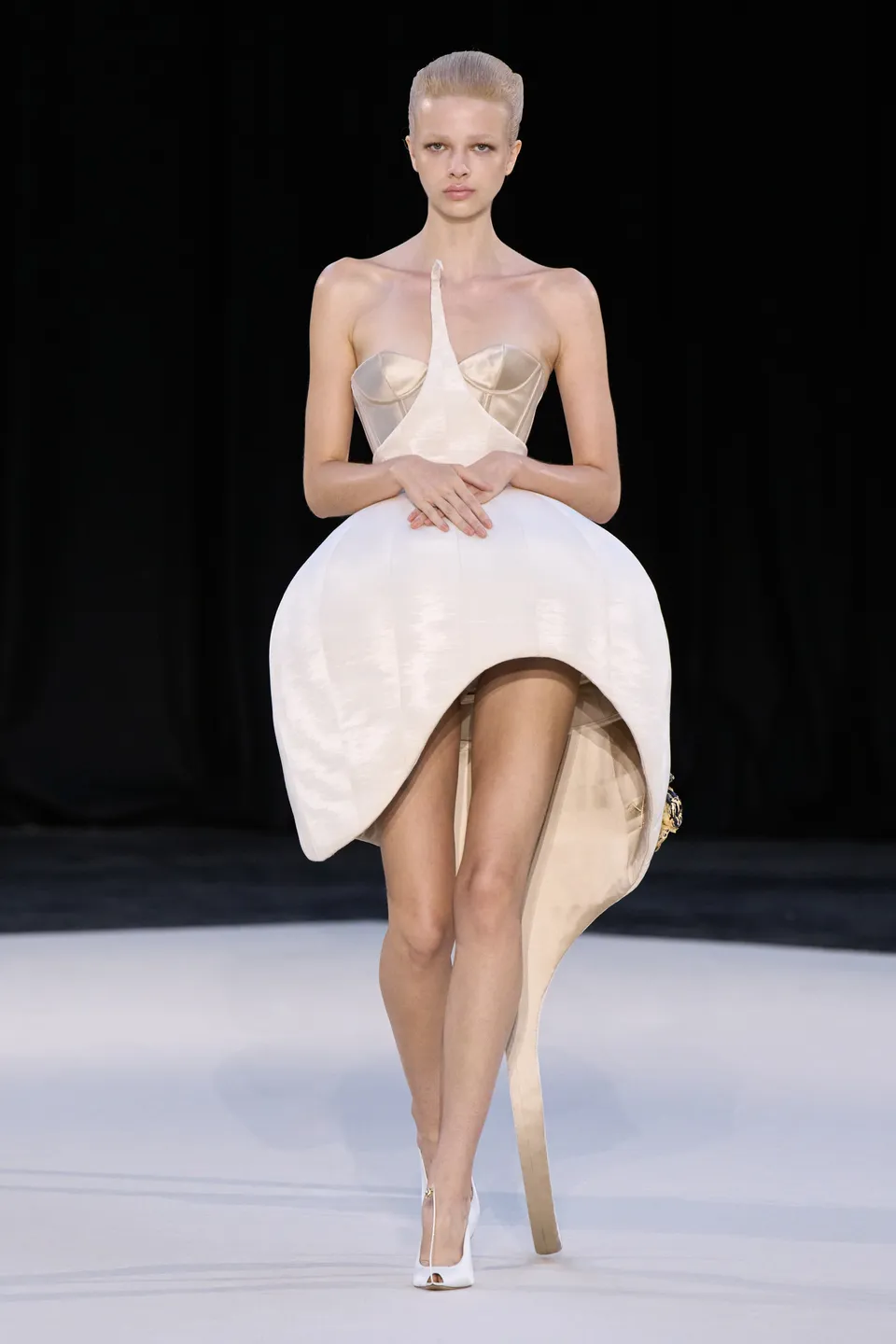
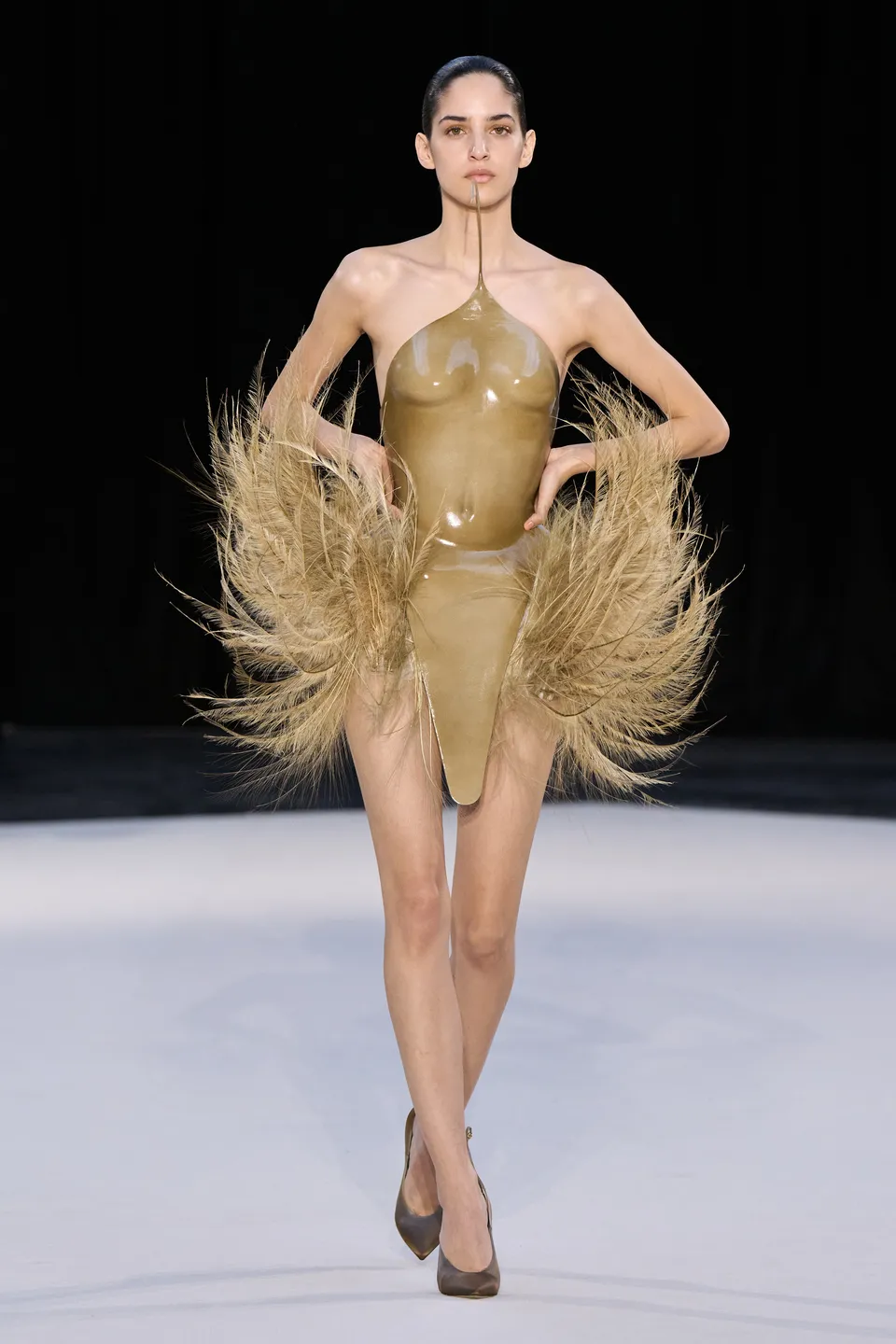
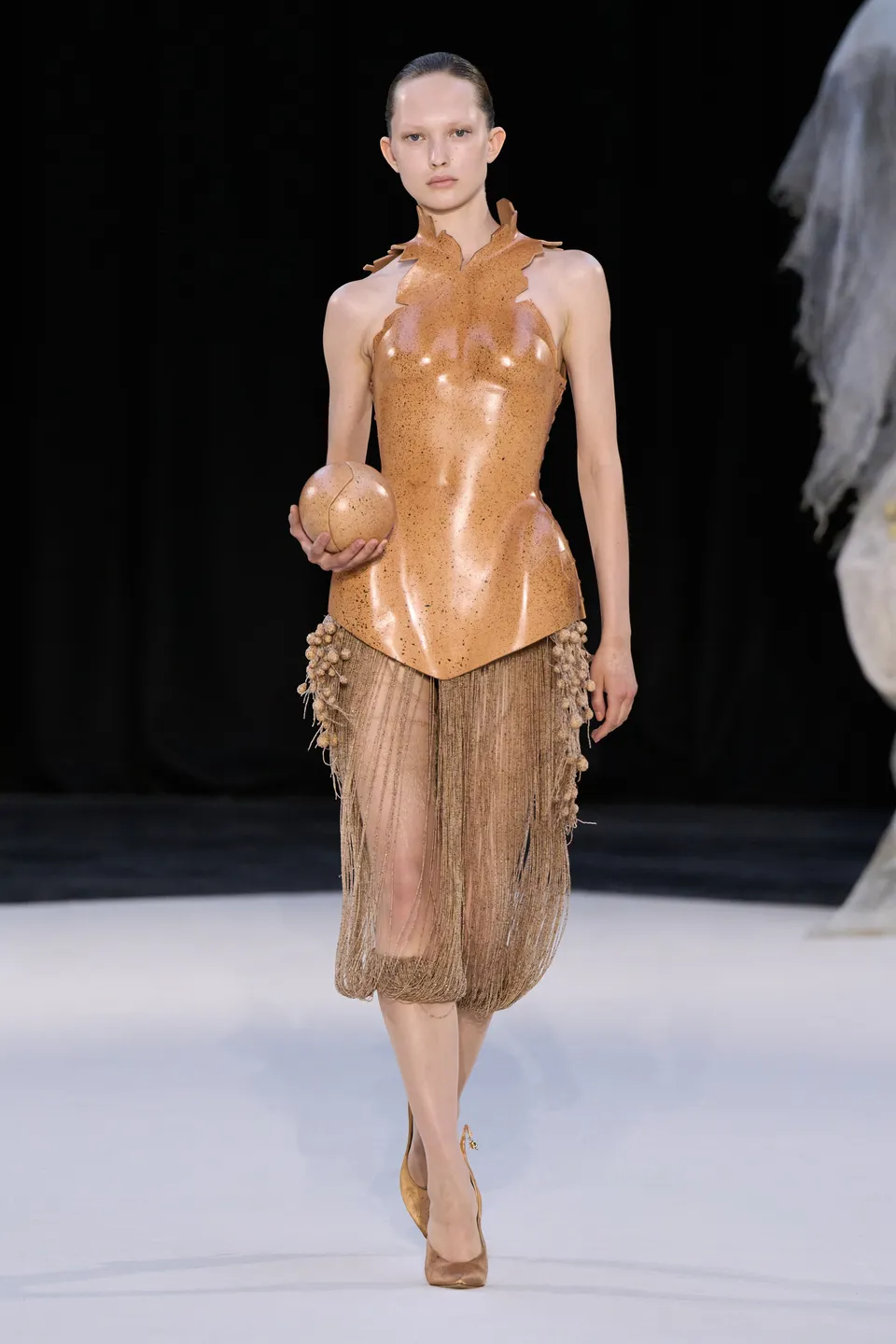
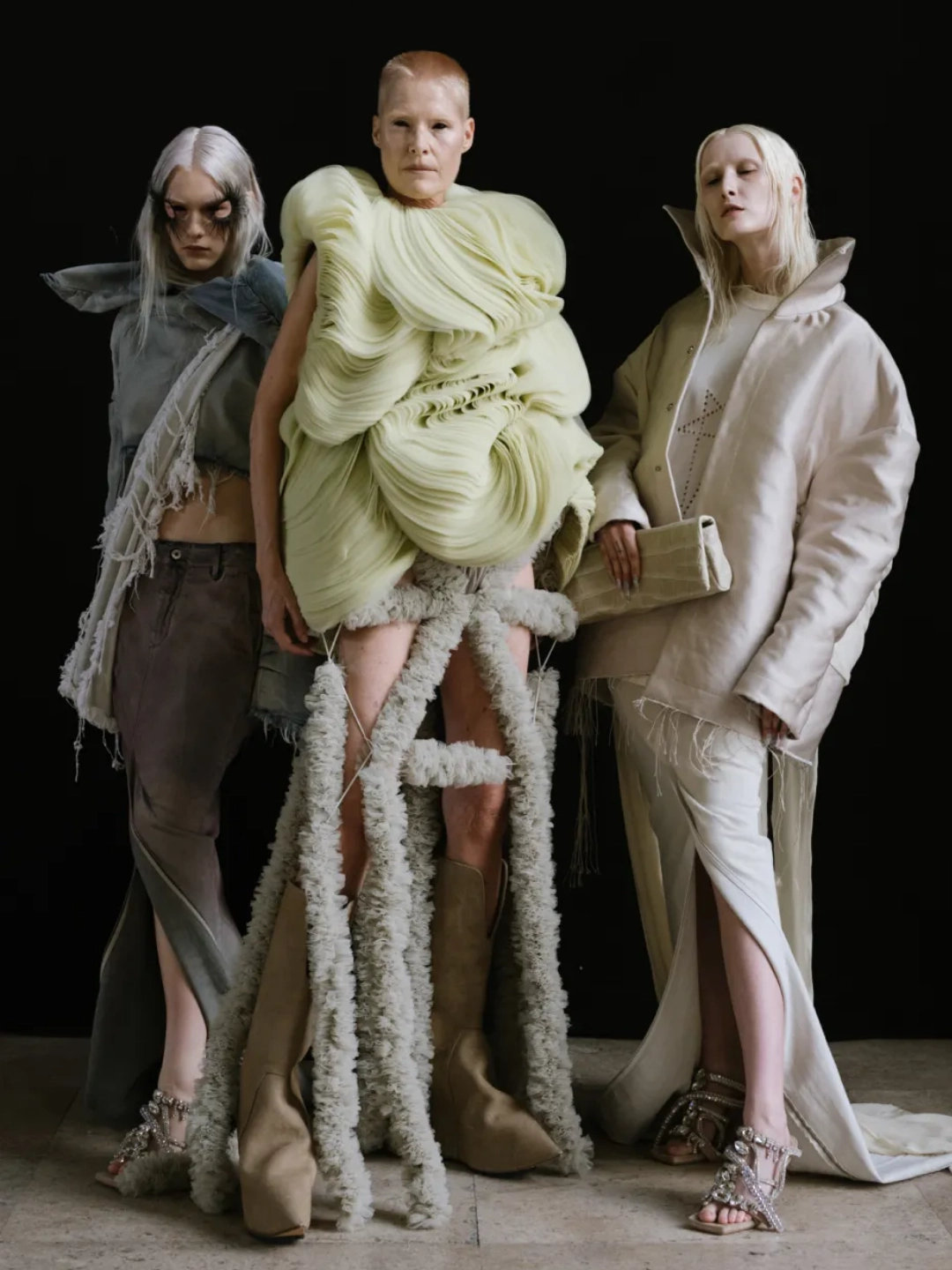
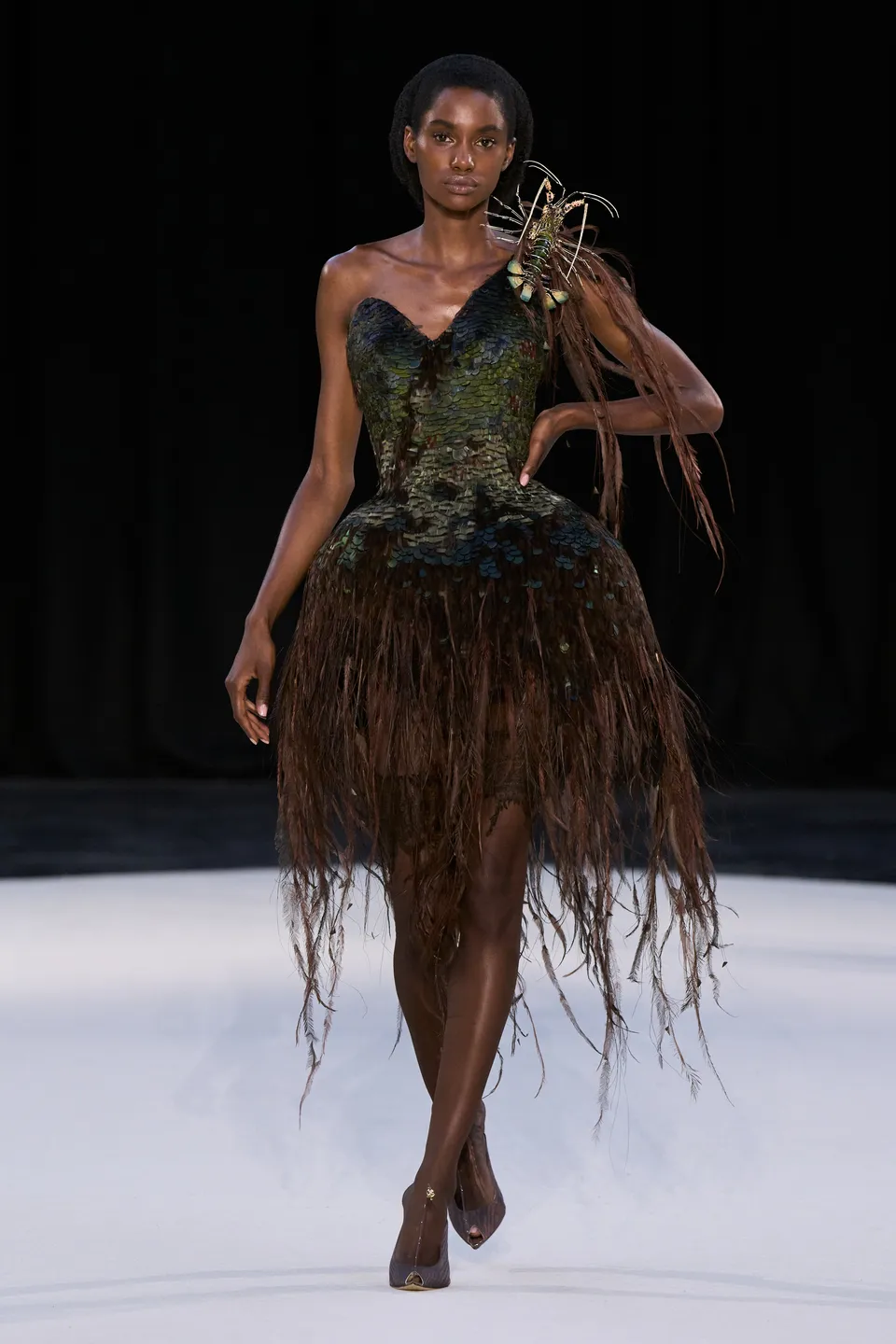
The strongest design tension exists between rigid architecture and moving surface, as fringe shivers around a controlled torso and plumes respond to the air while the corset remains immovable. Mohammed Ashi fashions armor entirely out of vulnerability itself. The peacock-feather and fringe bustier gown carrying the lobster motif presents red-carpet glamour where animal matter appears to slowly consume the wearer.
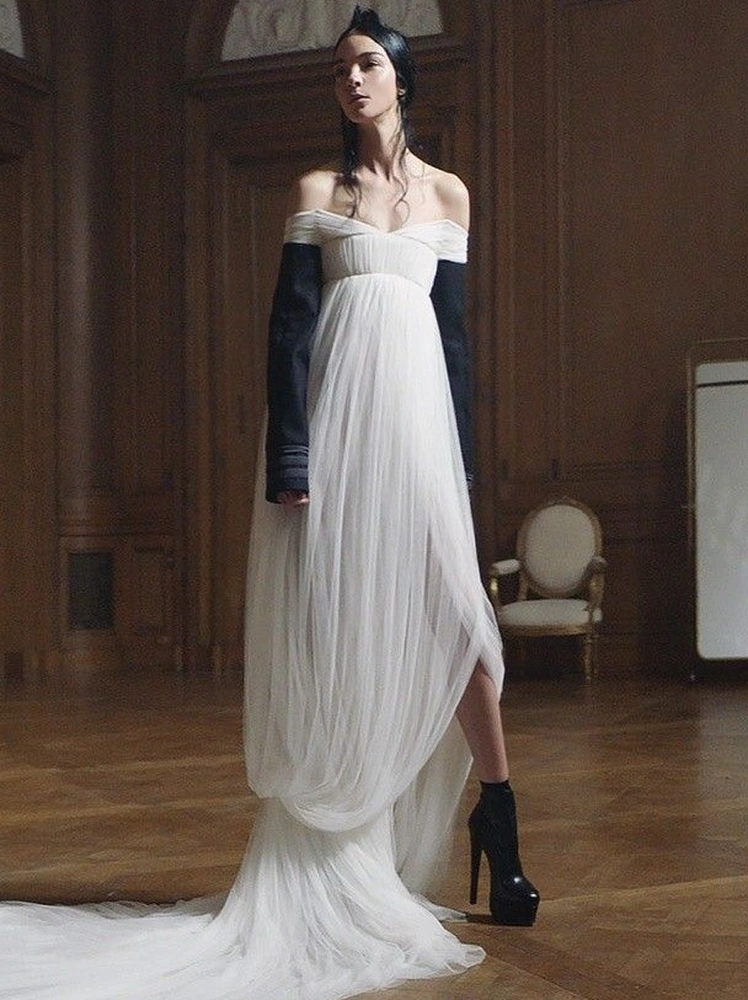
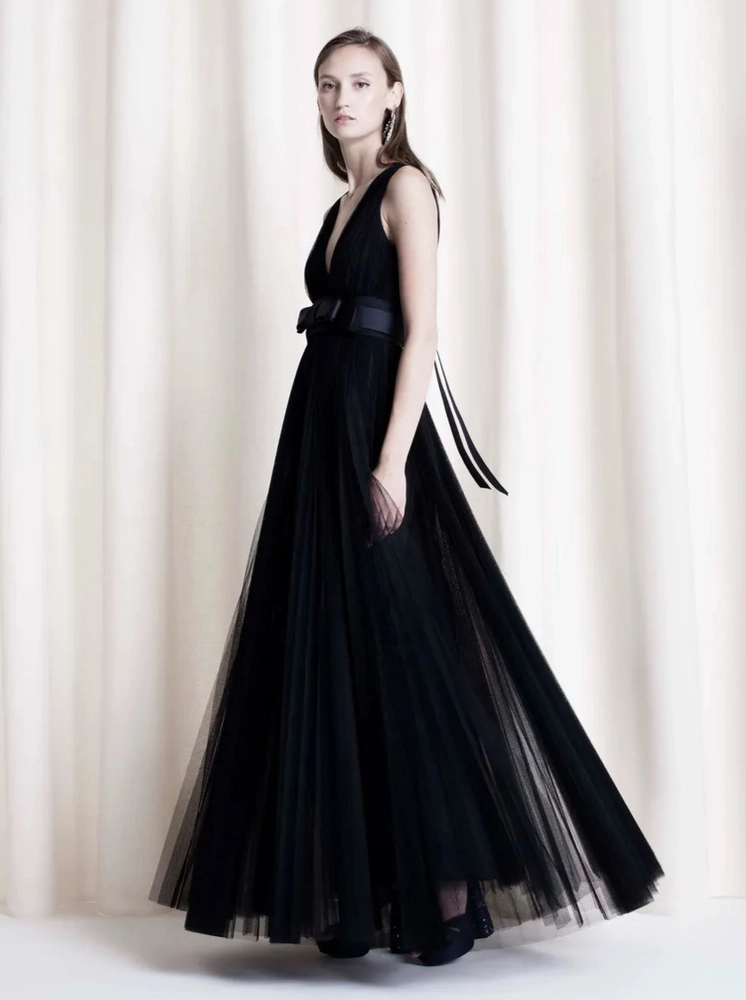
Gravity soon surrenders to this madness, offering outrageous evening silhouettes. The gravity-defying black custom duchesse-satin dress presents a couture argument about frozen motion, holding drapery at the exact, dramatic second of its fall through intense internal engineering. The entirely python gown collapses the distinction between body, predator, and luxury object, serving as a literal second skin. His front row contained numerous women already wearing his work, confirming his commercial reality.
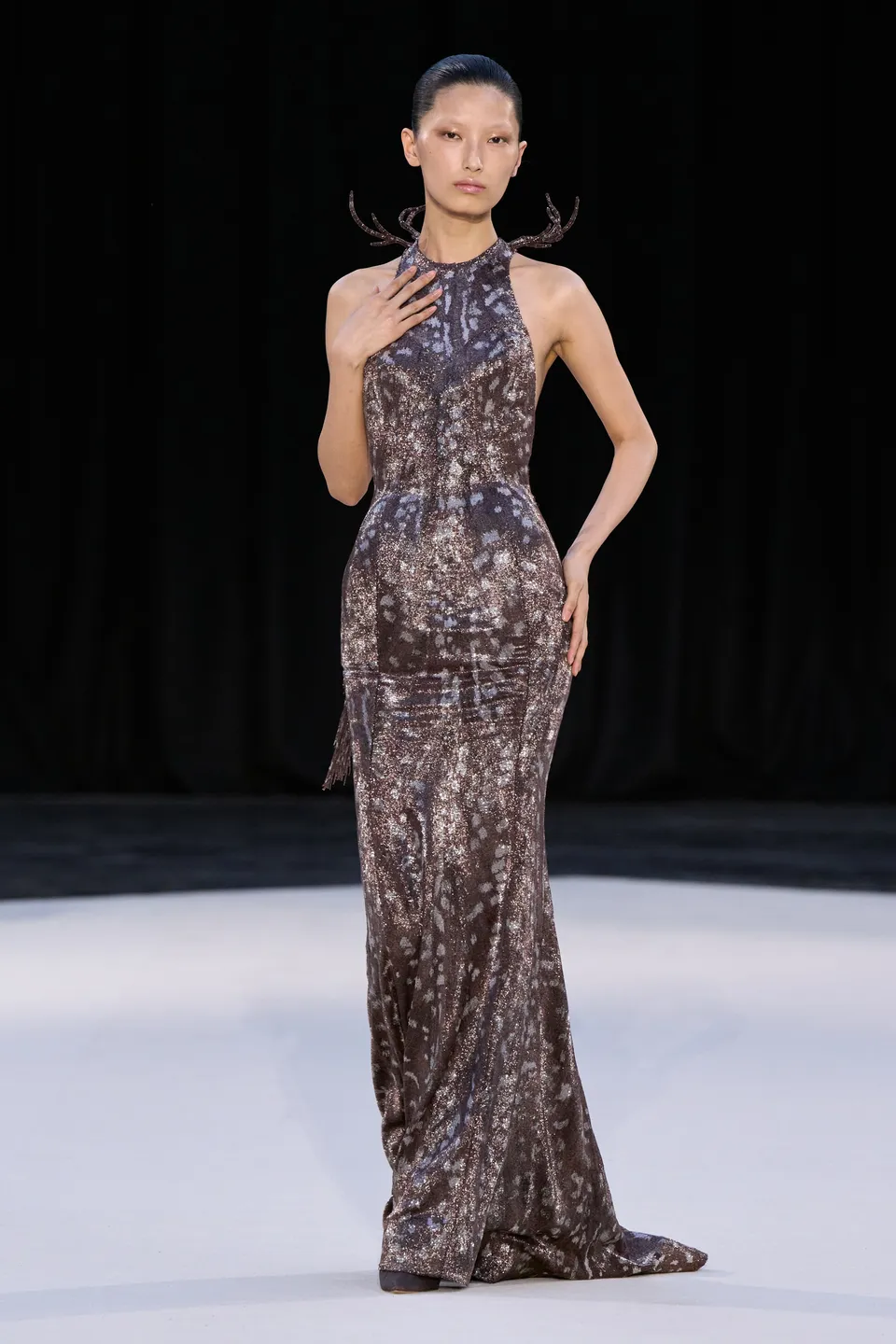
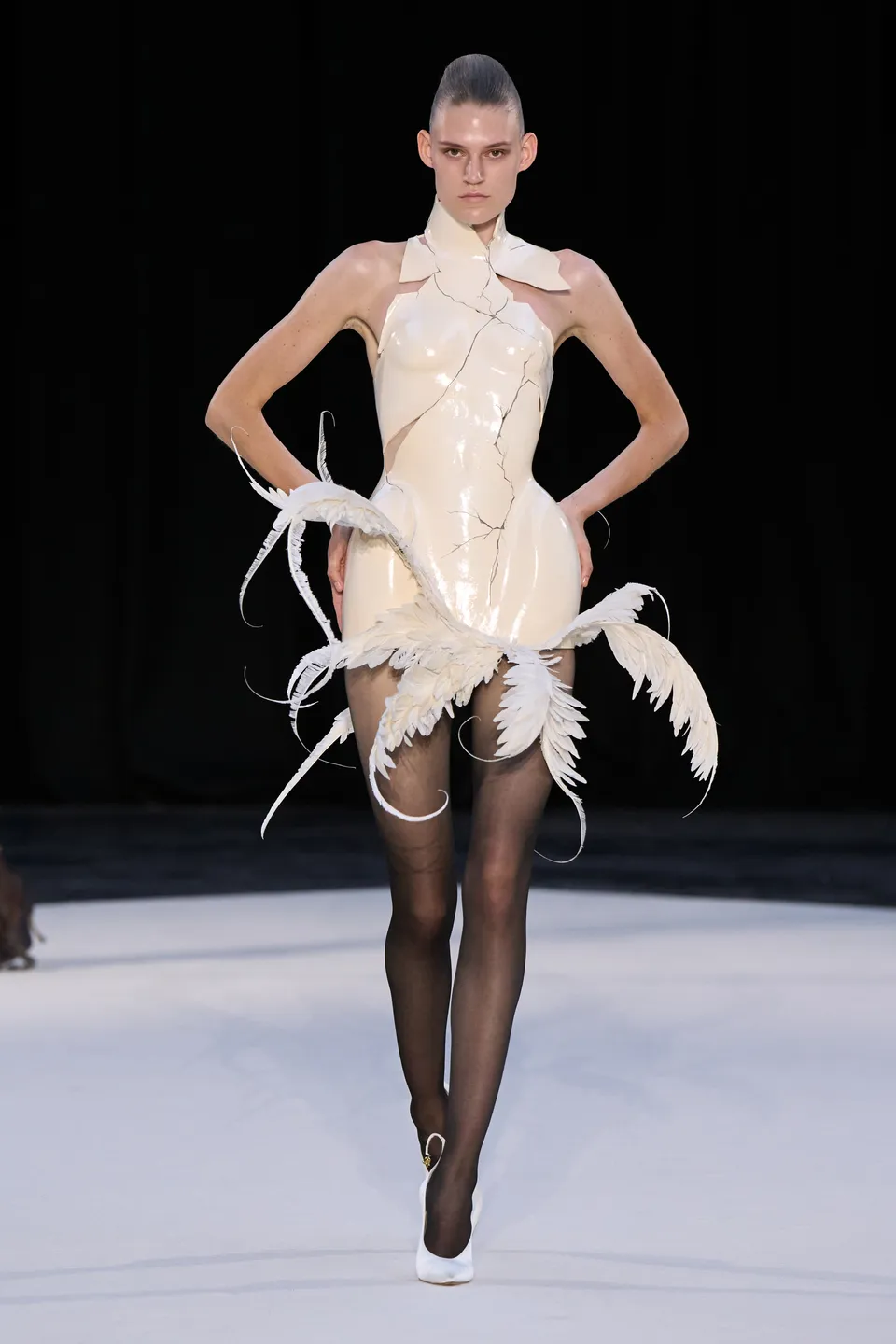
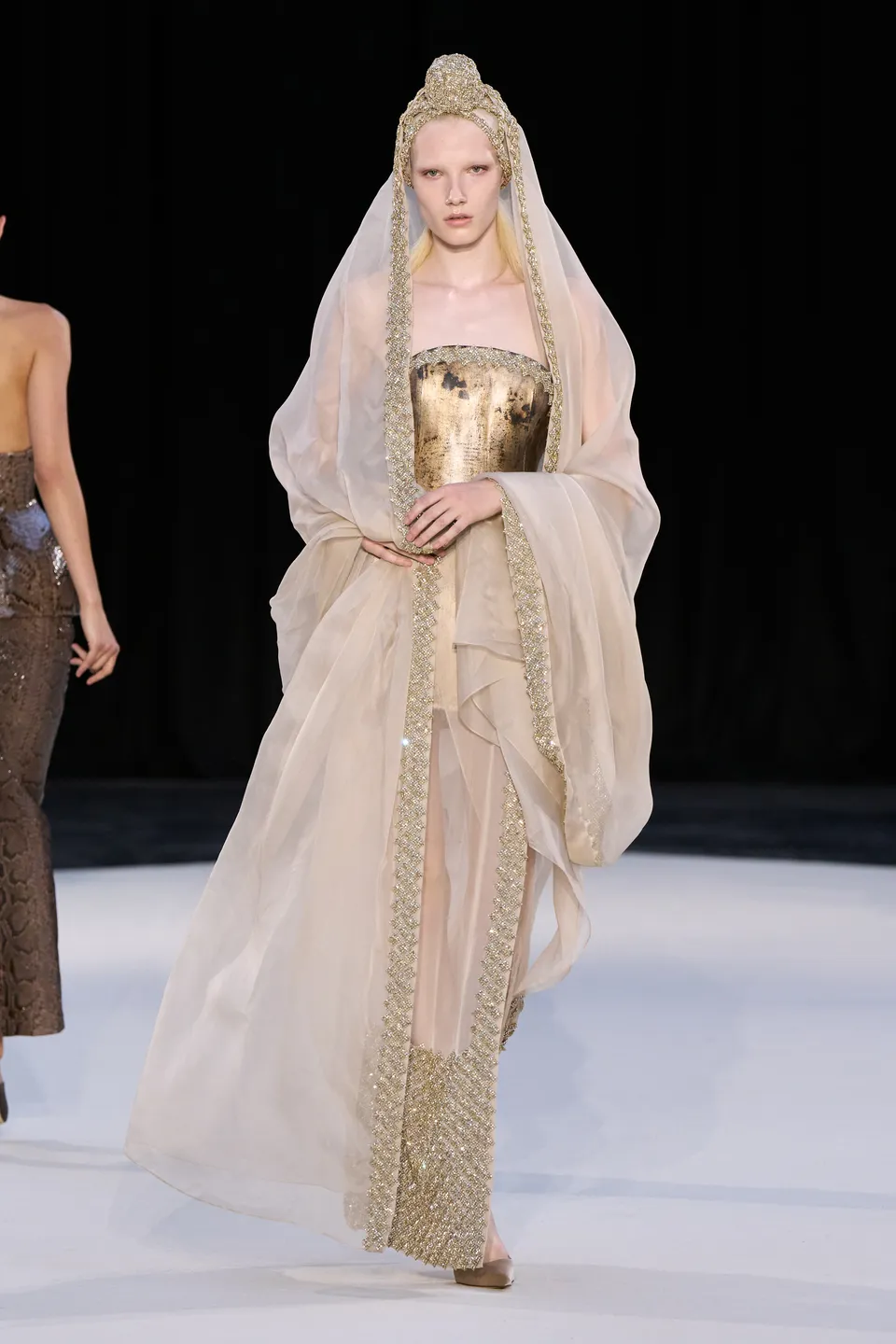
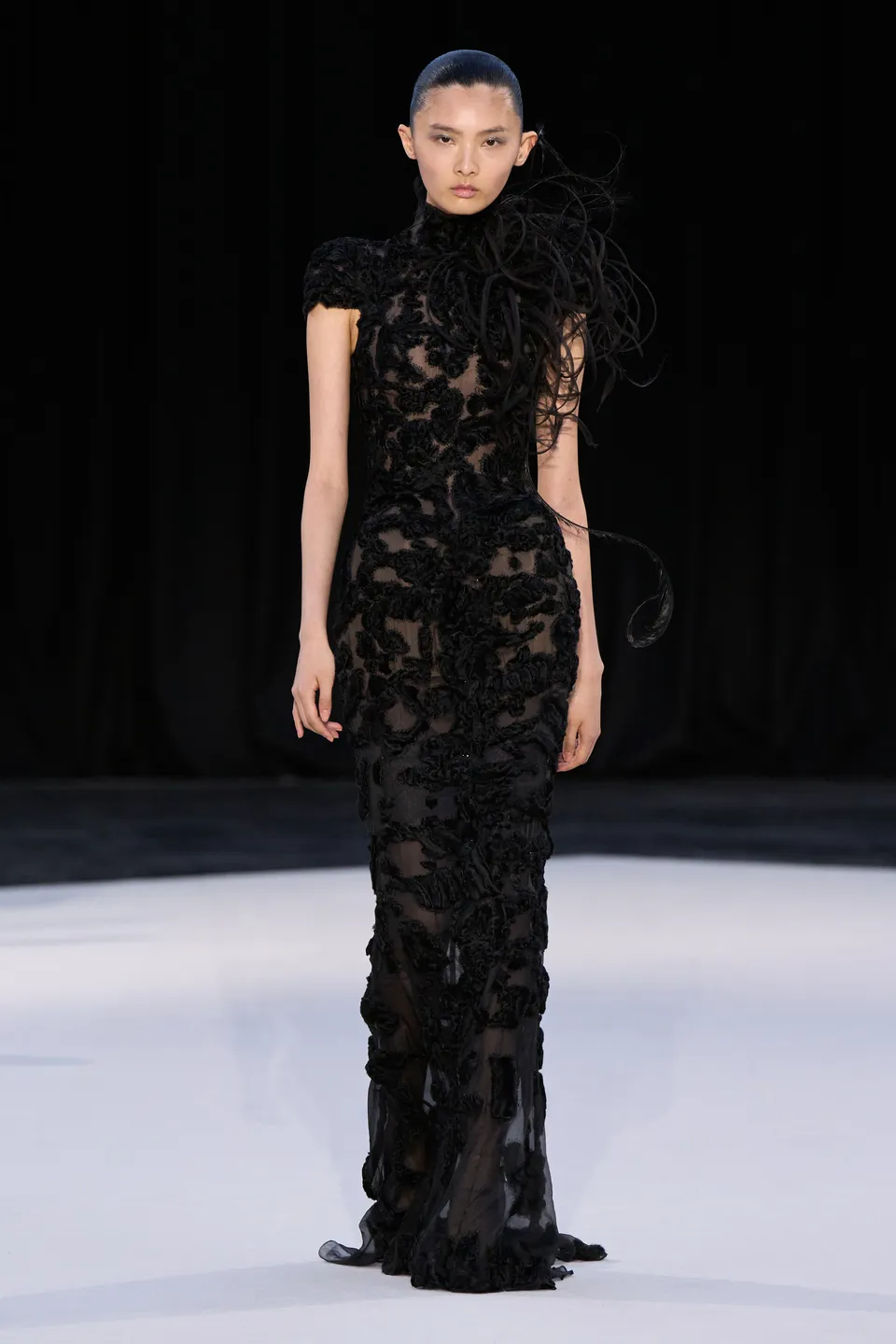
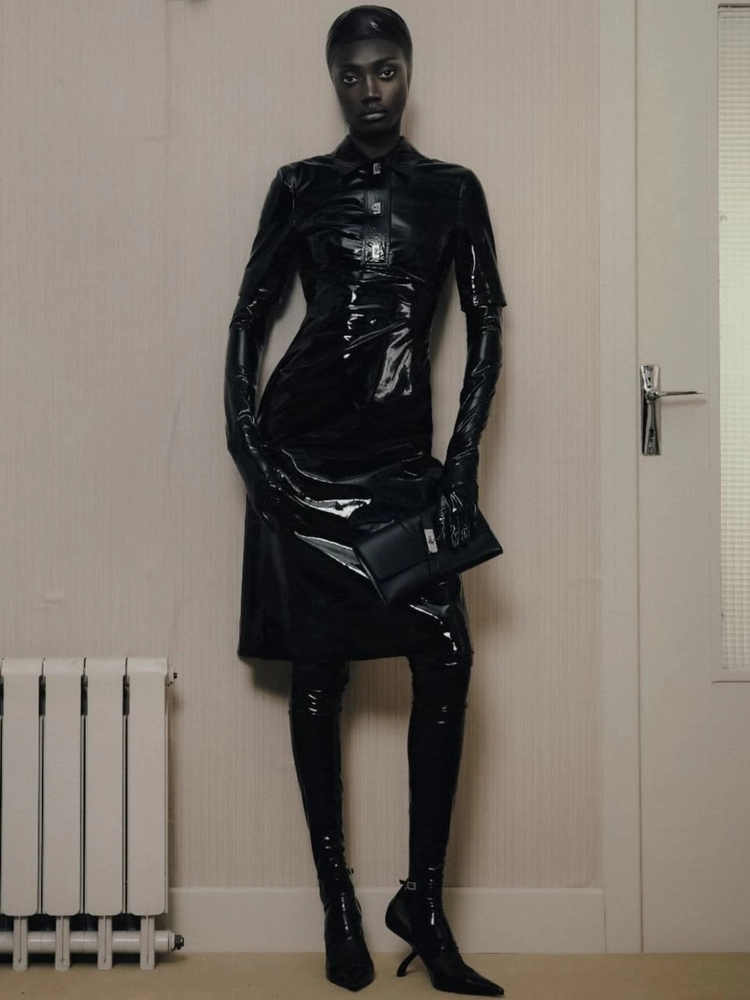
Leather serves as the collection’s central instrument of beautiful deception. It is lacquered to resemble cracked porcelain, patinated to suggest aged bronze, moulded into hard bodily shells, treated to resemble glazed ceramic, and utilized as rigid architecture. The material aggressively rejects its natural state, impersonating pottery, metal, and museum artifacts, proving that every material wears a mask.
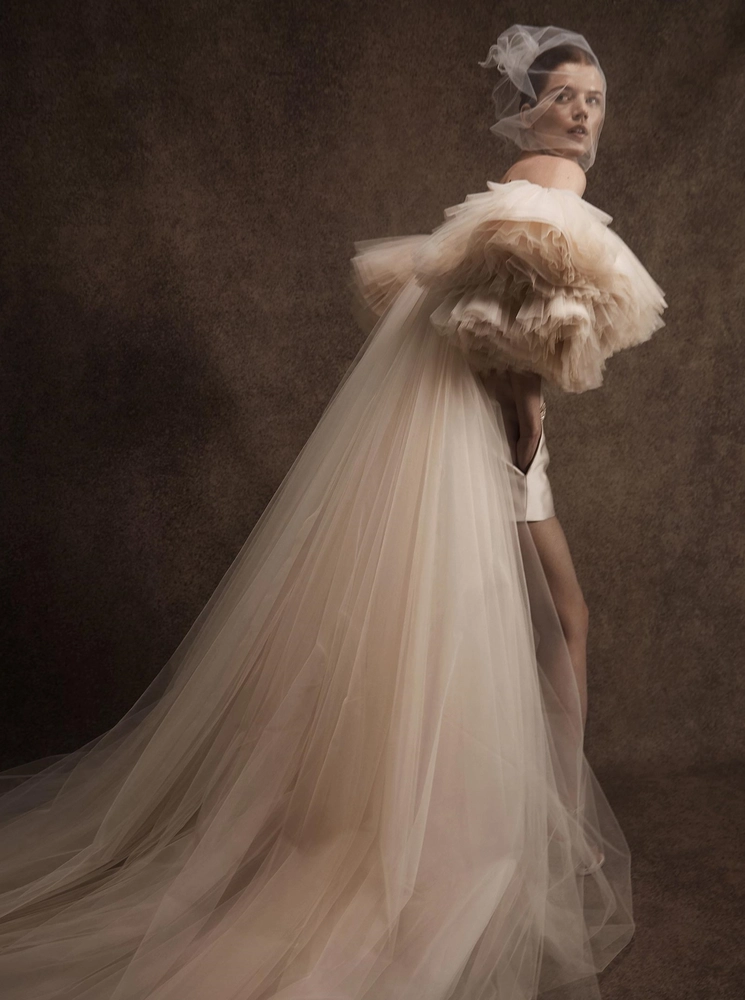
Oyster-toned moiré resembles liquid trapped inside upholstery; custom duchesse satin achieves impossible suspended drapery; tulle and sheer veils bring breath around rigid bodies. Frayed lace suggests decaying aristocratic fabric, while peacock feathers turn eveningwear into plumage and Japanese paper painted into fallen leaves attaches around hems.
Paper is fragile, disposable, and flat, yet Mohammed Ashi turns it into botanical residue clinging to expensive garments, implying the woman has crossed a dead garden before reaching the ballroom. These garments have traveled through woods, cabinets, bedrooms, dining rooms, and a minor aristocratic exorcism.

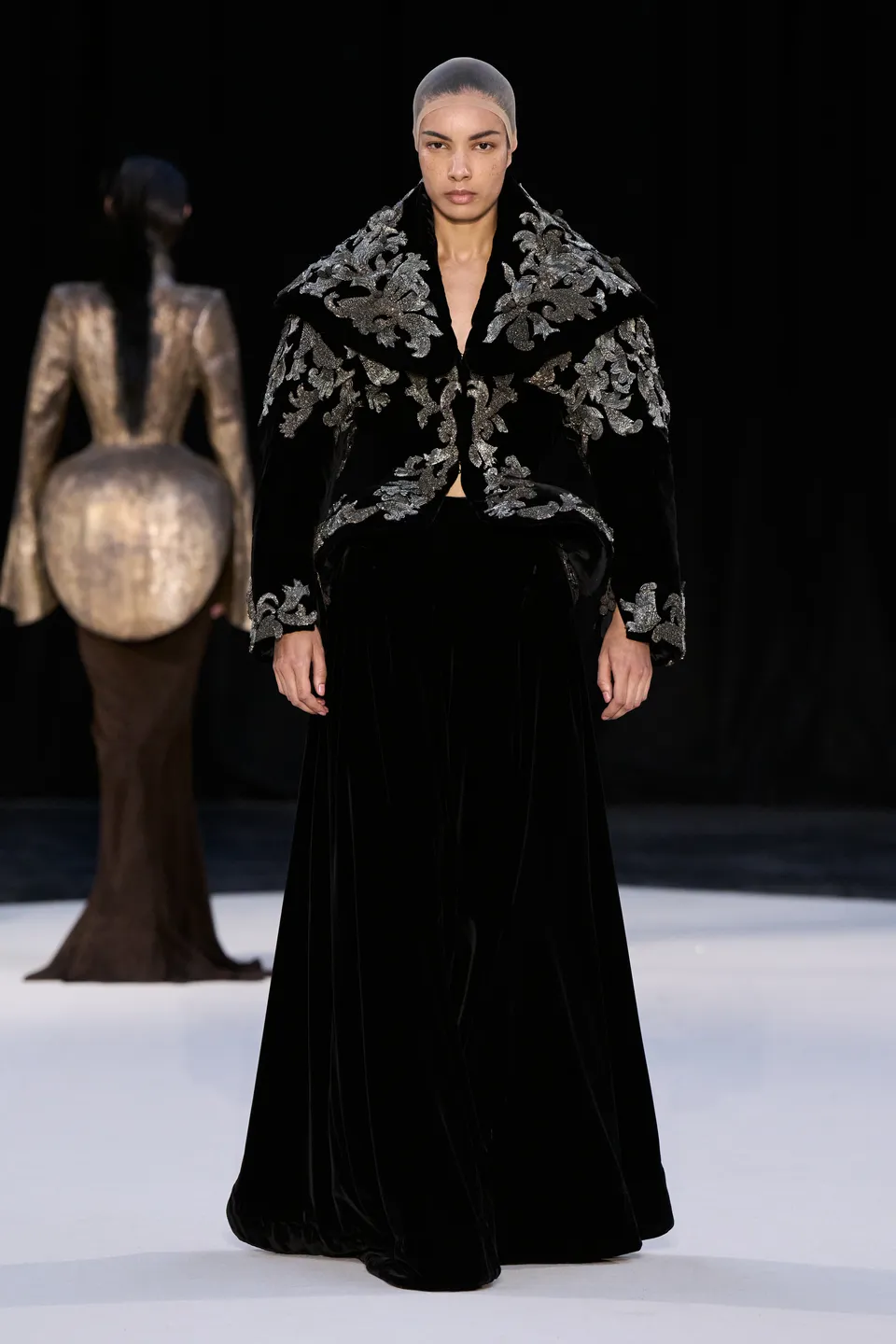
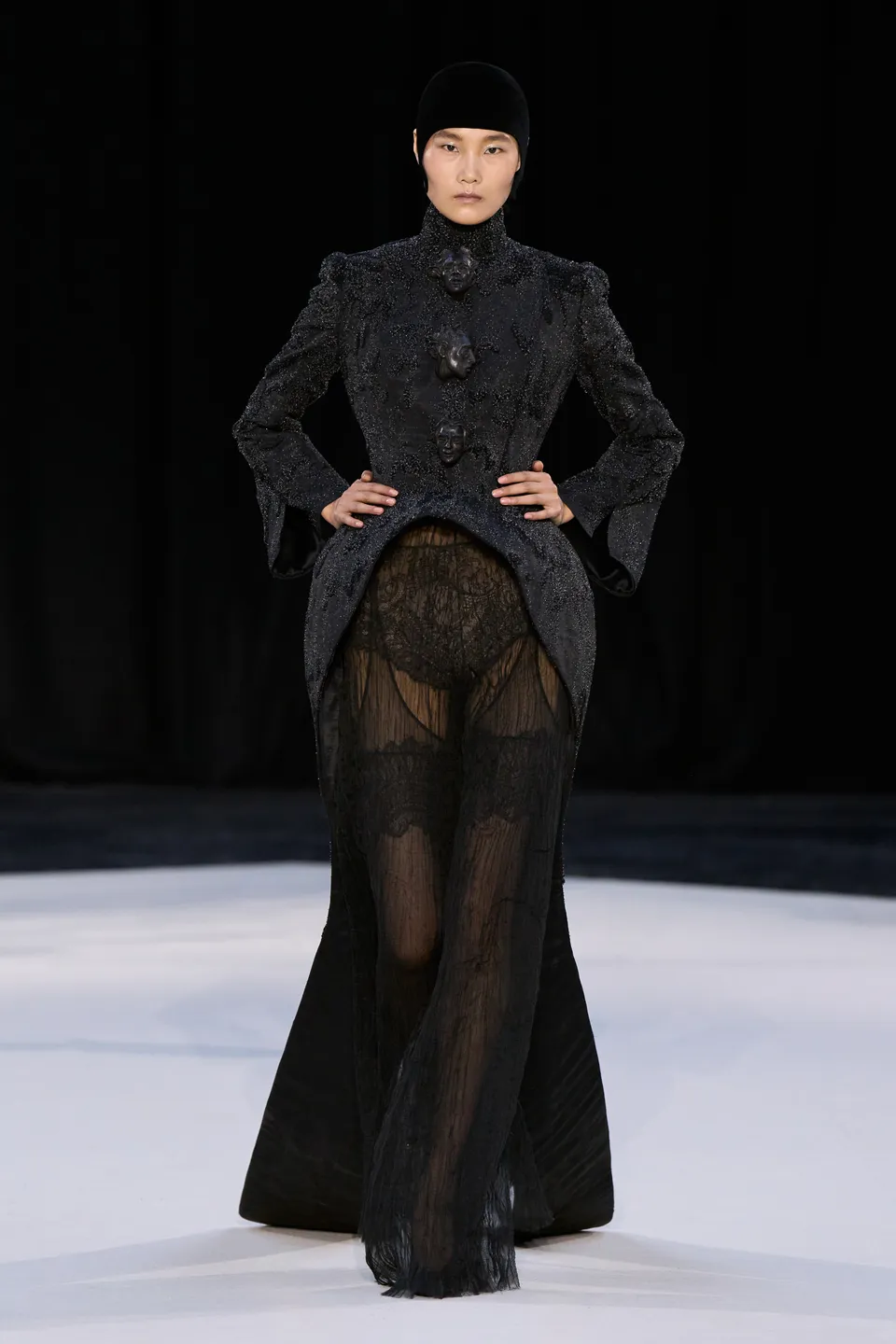
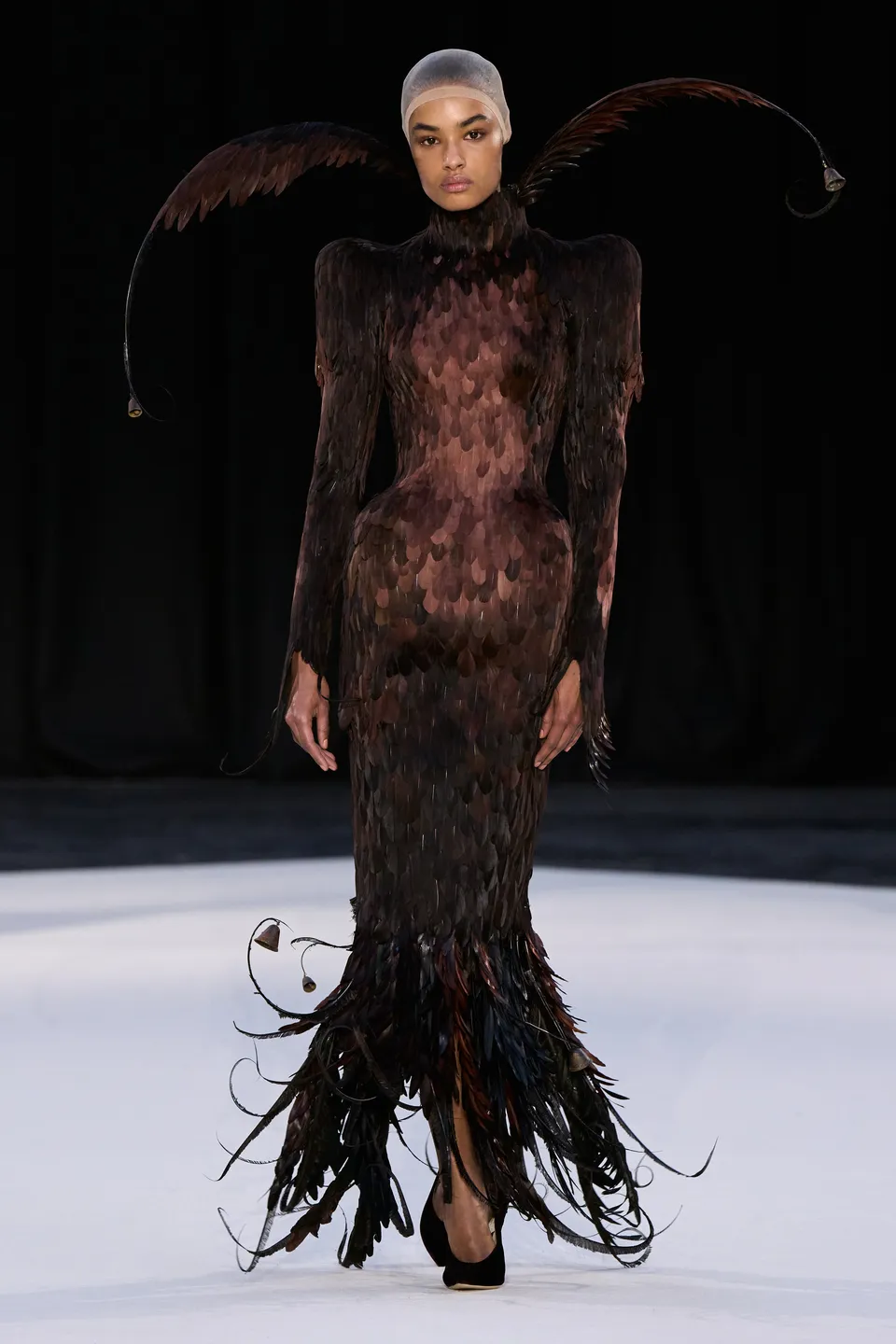
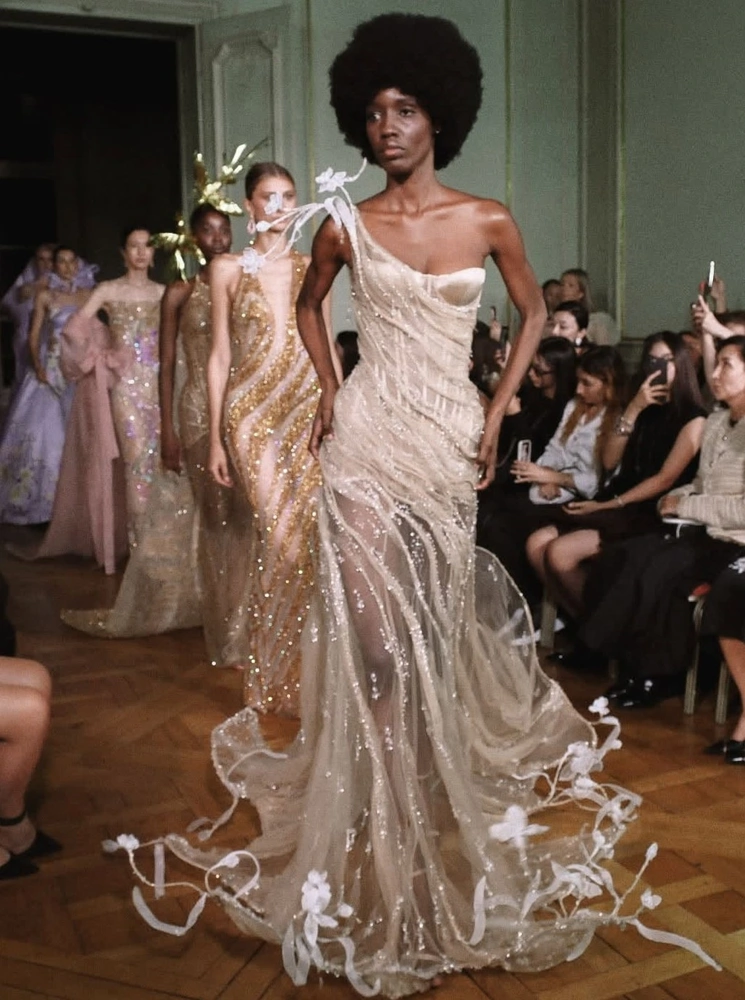
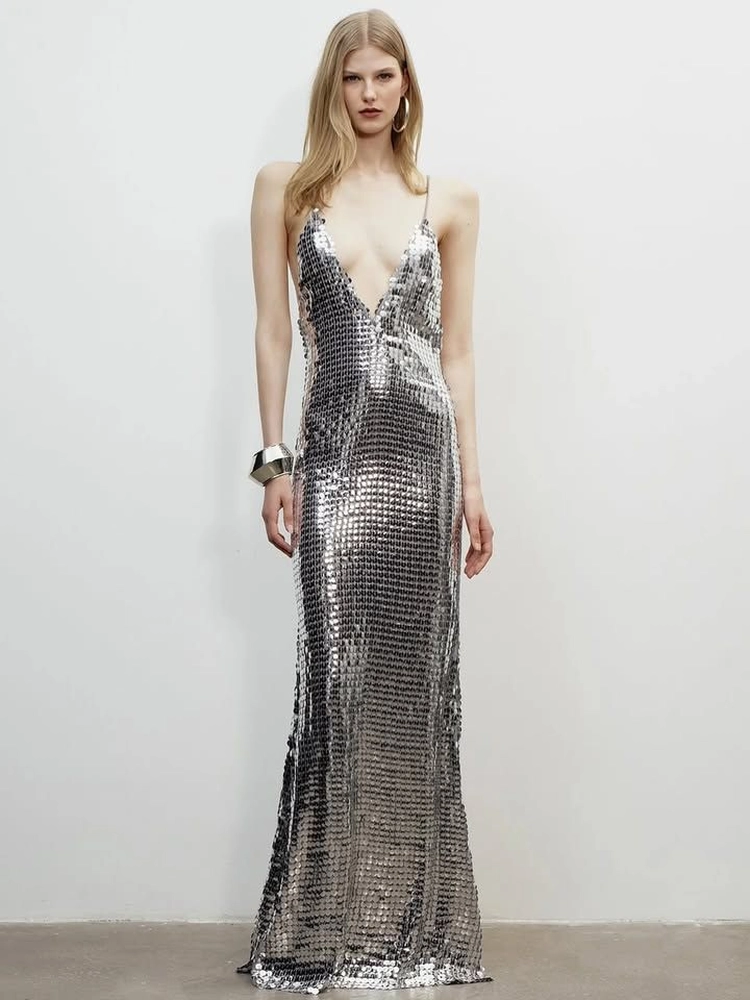
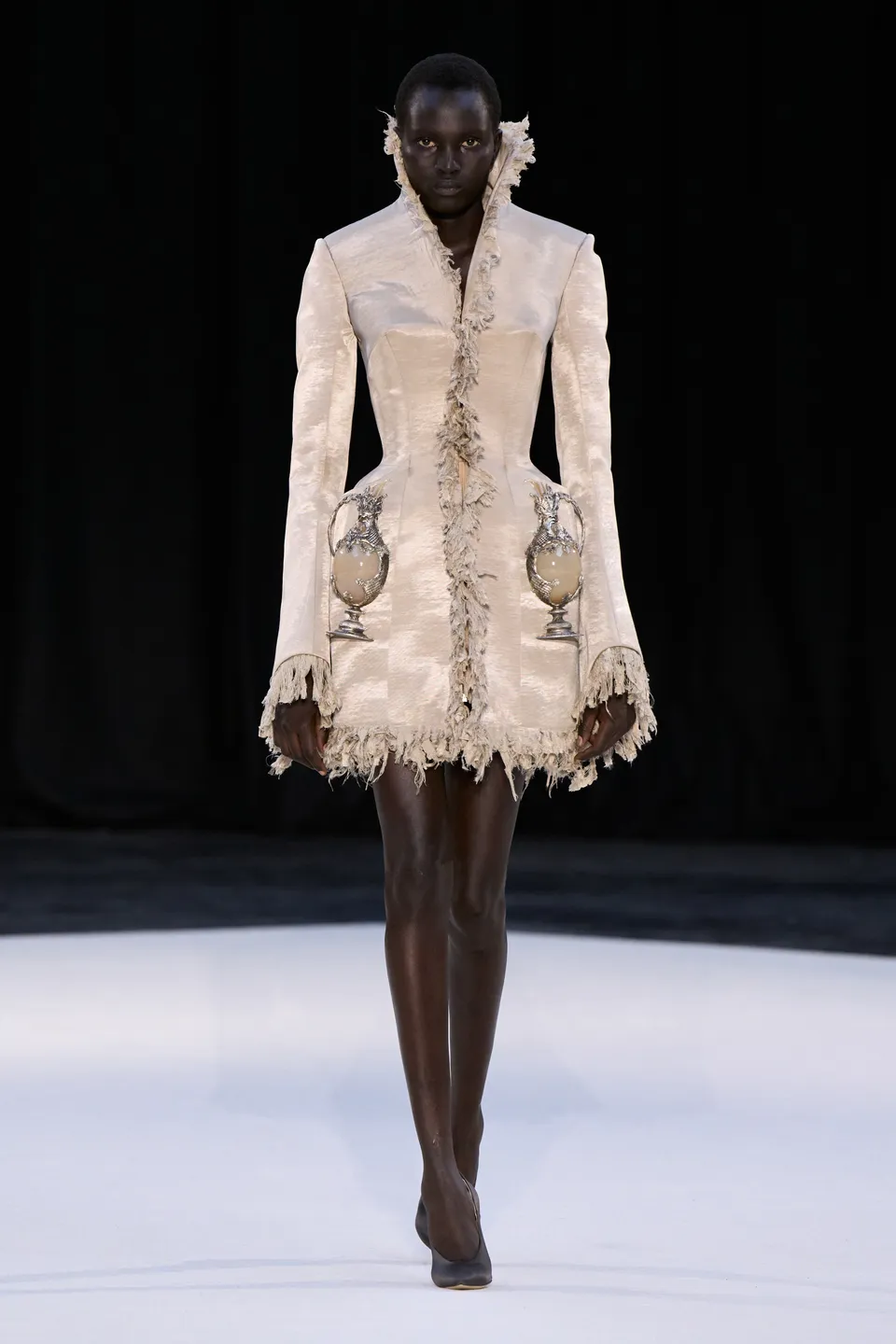
Mohammed Ashi replaces expected fashion details with 3D-printed metal structures, hand-blown opaline carafes where pockets belong, a Venetian mirror embedded into the back of a sequined bustier gown, miniature dinner bells moving beneath the wearer, gilded pomegranates, hand-painted insects resting in fabric folds, crustaceans concealed within linings, and topaz cascading like mineral rain. The oyster-coloured moiré jacket with metal-and-opaline carafes removes the privacy of a pocket, replacing it with fragile vessels.
Utility becomes ceremony; the jacket becomes furniture; the wearer becomes a mobile drinks cabinet from a wealthy fever dream. The mirror faces outward, forcing everyone behind her to encounter themselves, representing vanity turned entirely inside out. Hidden crustaceans create private jokes between client and garment, ensuring the secret knowledge of a hand-painted creature concealed against her body remains part of the purchase.
These garments shield the body through corsetry, enlarged hips, moulded leather, tall collars, hard bodices, feathered barriers, veils, sweeping trains, and touch-discouraging surfaces. The woman becomes powerful because she is difficult to approach, making seduction and defense the exact same gesture. The collection’s armor also heavily restricts physical movement, forcing the wearer to surrender her comfort to the structure. The women look incredibly dangerous, yet their danger depends entirely on structures that physically control them.

Mohammed Ashi’s handling of material deception and his Gulf position within Paris inject the language with specific intelligence. He enters a shared couture vocabulary, contaminating it with his obsession for surface, red-carpet architecture, and private luxury. When the reference becomes overly obvious before the construction reveals its own logic, Mohammed Ashi appears to be attending a legendary party in an exceptionally expensive disguise. A Different Skin remains compelling because Mohammed Ashi understands exactly how to breed familiar species into increasingly exquisite mutations.
The collection confirms Mohammed Ashi as a serious architect of couture fantasy, maintaining formidable technical execution and original material experimentation. His next chapter requires pushing beyond mastering spectacle to ask what remains when the armor is finally stripped away.
Advertisement