MENU
Close





The temple held its breath as stone began to move. Rahul Mishra Fall 2026 Couture summoned a goddess from ancient memory, dressing her in the sacred weight of hands that refused to be forgotten.

The temple held its breath as stone began to move. Rahul Mishra Fall 2026 Couture summoned a goddess from ancient memory, dressing her in the sacred weight of hands that refused to be forgotten.
July 11, 2026
Advertisement
Advertisement


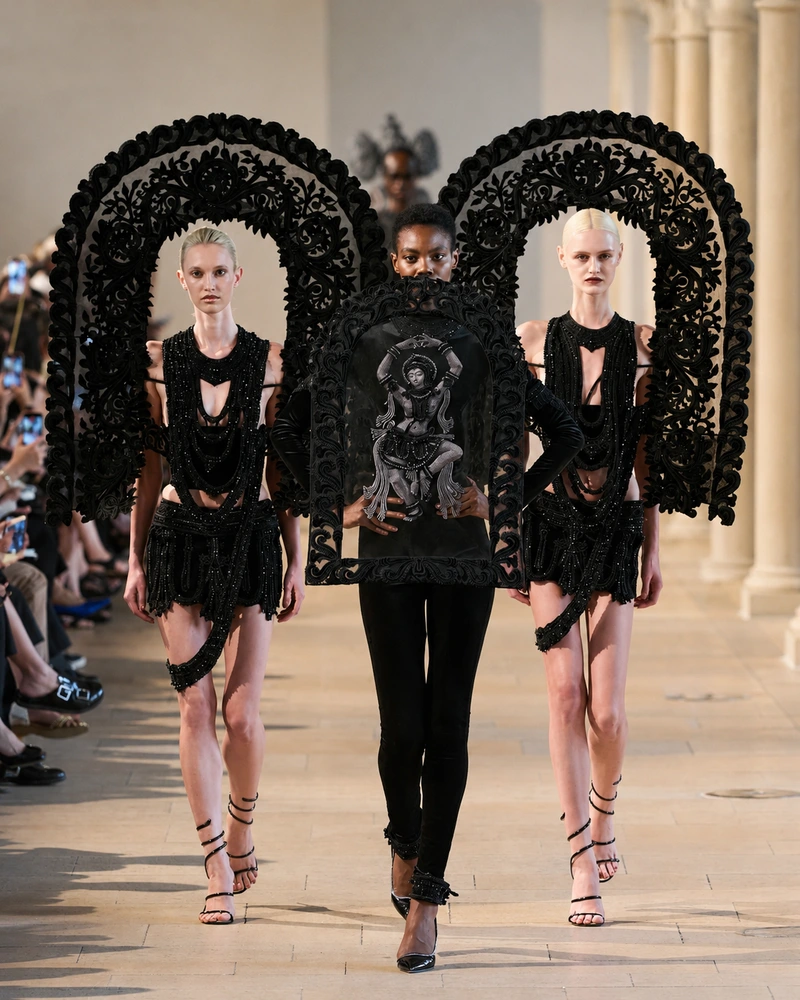
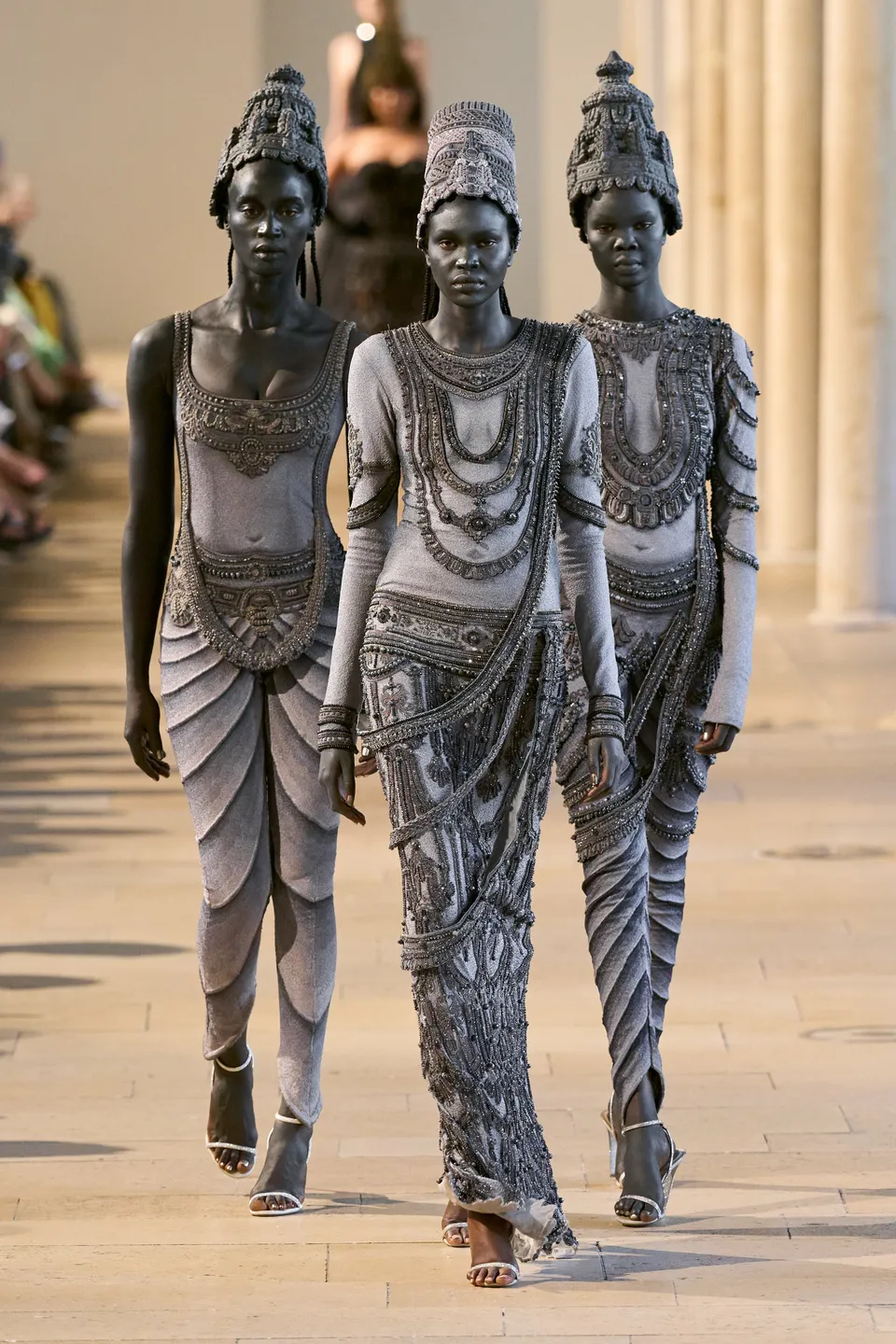
Open beneath the Gothic vaults of the Collège des Bernardins. The models emerge like figures waiting inside temple walls for centuries, suddenly remembering how to move. Skin appears painted in shades of basalt, sandstone, and granite. Grey embroidery follows the body like weathered relief. Layered necklaces, girdles, and ceremonial crowns seem carved rather than fastened.
The first illusion approaches completion: stone acquires a pulse. Rahul Mishra Fall 2026 Couture, titled Devi: The Eternal Muse, stands as the designer’s most explicitly India-centred collection. Its visual world draws heavily from the cave sanctuaries of Ajanta and Ellora, Gandharan drapery, temple architecture, apsaras, celestial attendants, and the sculptural traditions of Indian sacred sites.
Indian temple sculpture transcends mere decoration. Temples preserved rituals, devotional practices, ideas of beauty, bodily proportion, jewellery, draping, and ornament. They recorded dance gestures and musical performance, allowing sensuality to exist beside spirituality. These structures hold the labor and imagination of anonymous artisans.
Spaces like these operate as records of entire civilizations, where stone bodies continued preserving cultural memory long after their kingdoms faded. Rahul Mishra Fall 2026 Couture treats the temple as a living archive, elevating it above a mere archaeological ruin. The figures belong equally to the present, continuing to shape how femininity, divinity, adornment, and movement remain imagined today.
The apsara serves as the collection’s emotional center. These celestial figures embody several identities simultaneously: dancer, muse, attendant, erotic presence, devotional symbol, and a bridge between earthly beauty and divine order. Their draped peplums, curved waists, layered girdles, and elaborate jewellery allow Mishra to explore femininity while keeping the body unified with spirituality. The atelier re-created their apparently fragile drapery through tonal grey embroidery, producing the illusion of weathered carved relief. The devi stands as an active force. She controls the gaze just as powerfully as she receives it.

Devi represents a significant departure from the botanical exuberance strongly associated with the house. Flowers previously allowed Mishra to explore growth, fragility, ecology, and the slow labor of embroidery. Stone creates a different emotional rhythm. Flowers bloom and decay, suggesting organic movement. Stone appears permanent, preserving a movement after the body stops. Where flowers spread across the garment, sculpture defines the garment’s entire anatomy. The shift allows Rahul Mishra to transition from embroidery representing life toward embroidery imitating permanence. Yet stone eventually surrenders to time. Temples weather, surfaces erode, and figures lose details. The grey palette carries time within it, making the garments look monumental and fragile at once.


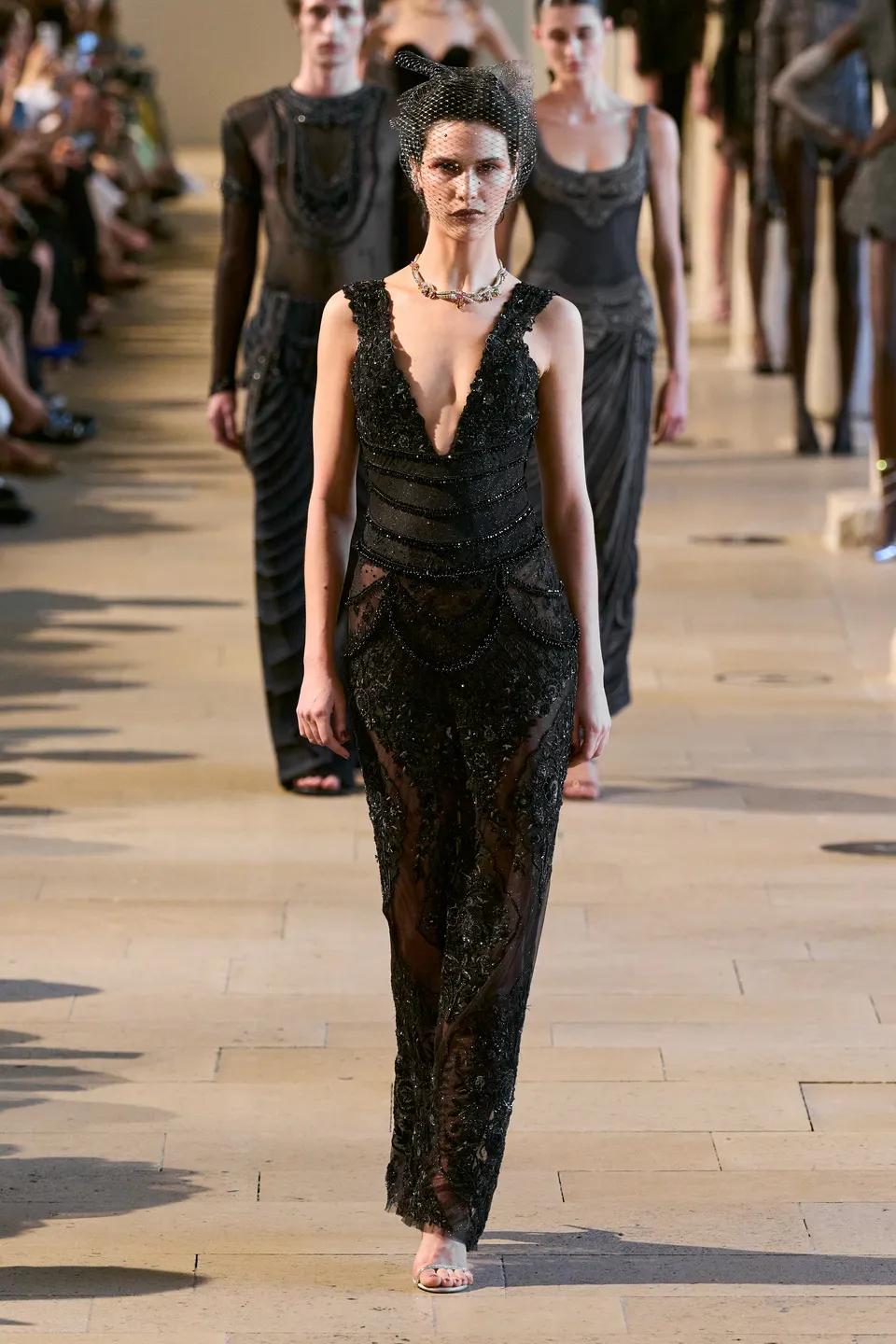
Traditional sculpture operates as an act of removing material until the hidden figure emerges. Mishra pursues the reverse process. His atelier adds thread, beads, crystals, stones, and metallic embroidery until a textile body begins to resemble sculpture. The sculptor subtracts stone; the embroiderer accumulates matter. This contrast gives Rahul Mishra Fall 2026 Couture profound intellectual depth. He translates one system of labor directly into another, elevating the work beyond mere printed reproductions.
The collection begins with the leanest silhouettes, where illusion matters more than monumental volume. Skin-toned foundations dissolve into body paint beneath long, sinuous columns. Grey embroidery follows the torso like shallow relief, leading into draped peplum effects around the hip. Closely fitted skirts preserve the body’s verticality, while jewellery-like bibs extend from neckline to waist. Embroidered girdles define the hips.
These garments rank among the strongest looks in Rahul Mishra Fall 2026 Couture because the body, fabric, and carved illusion remain inseparable. The woman moves while the stone around her retains the memory of stillness. The color palette of charcoal, mineral grey, ivory, bronze, and antique gold keeps the visual language restrained enough for the surface technique to dominate.
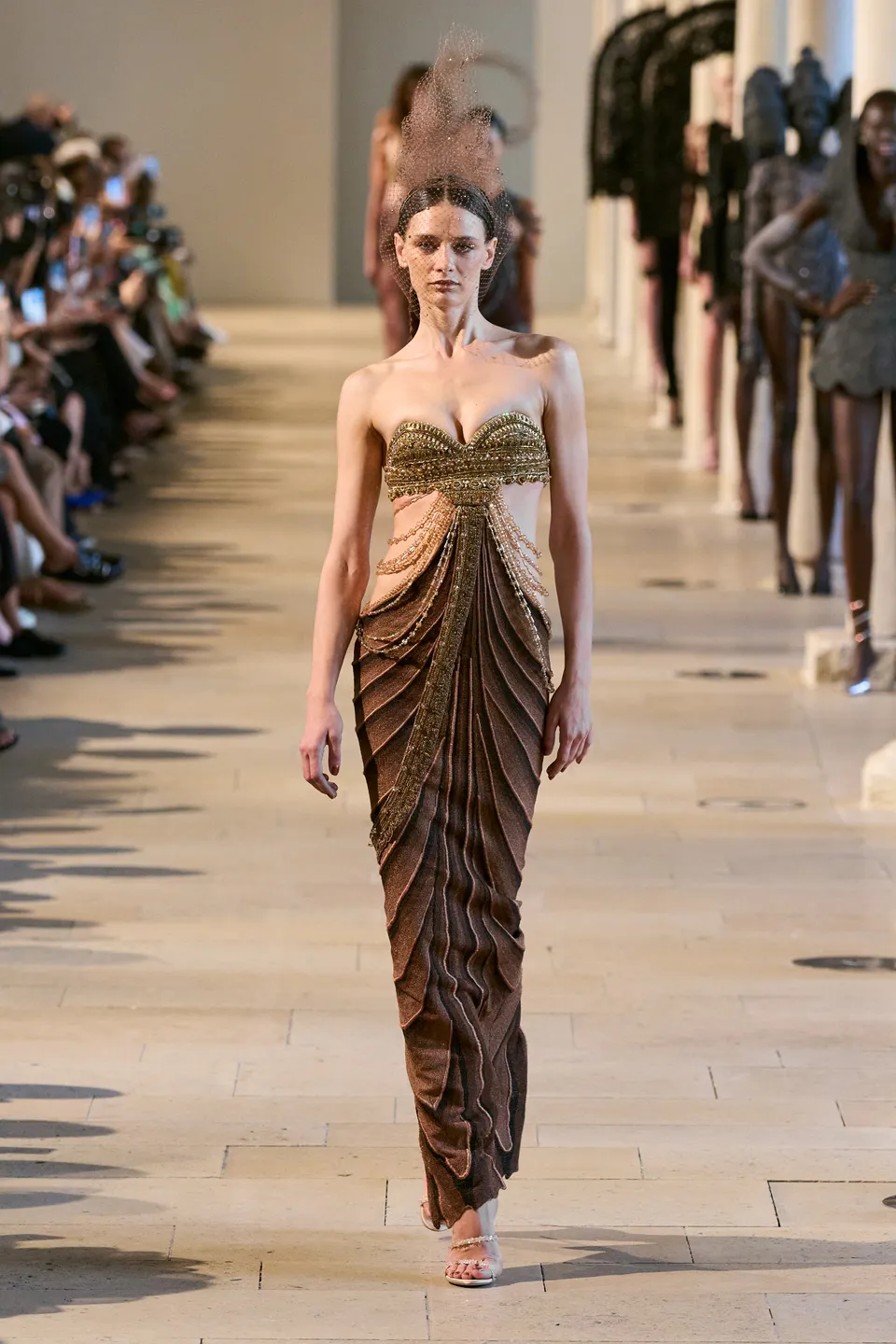
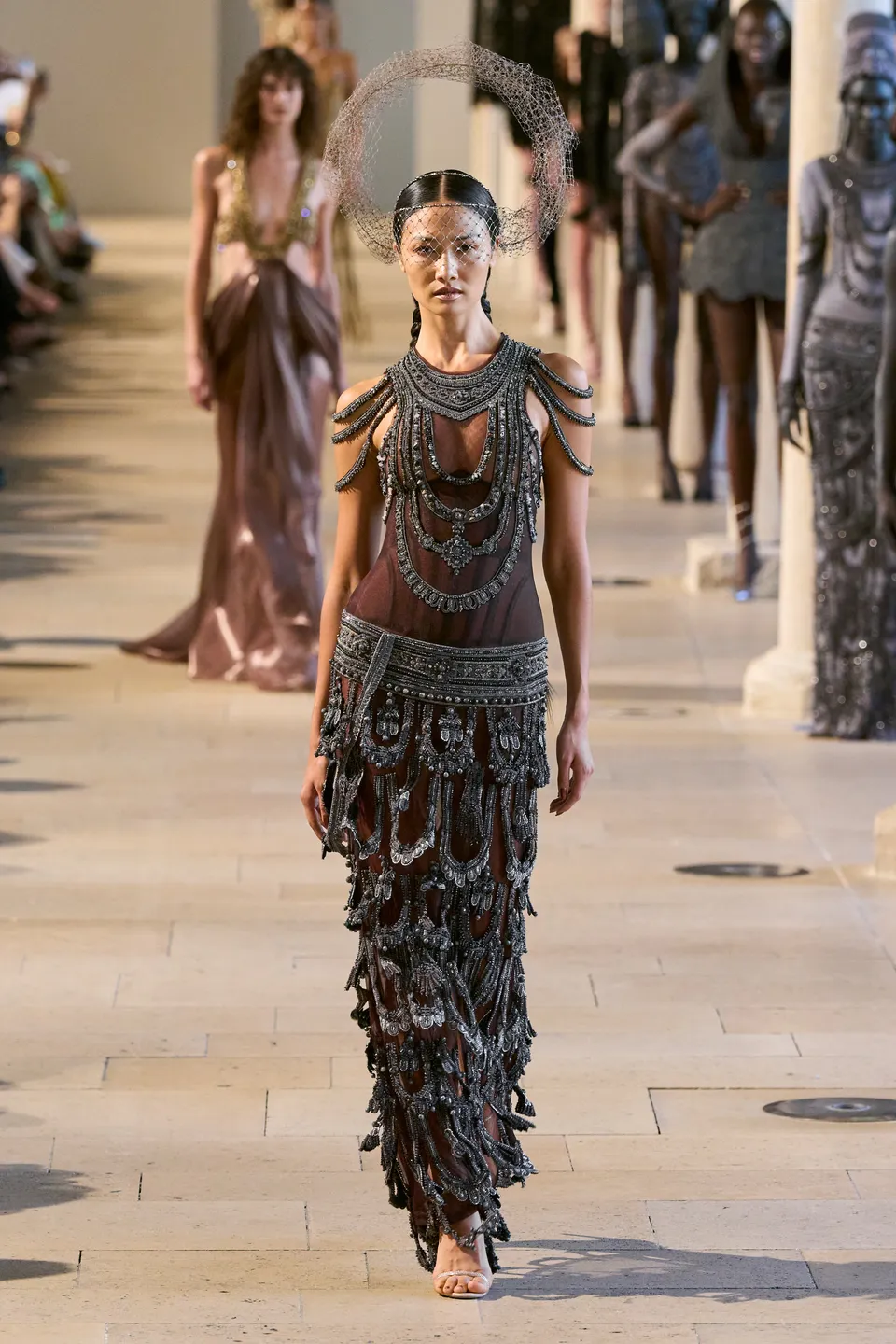
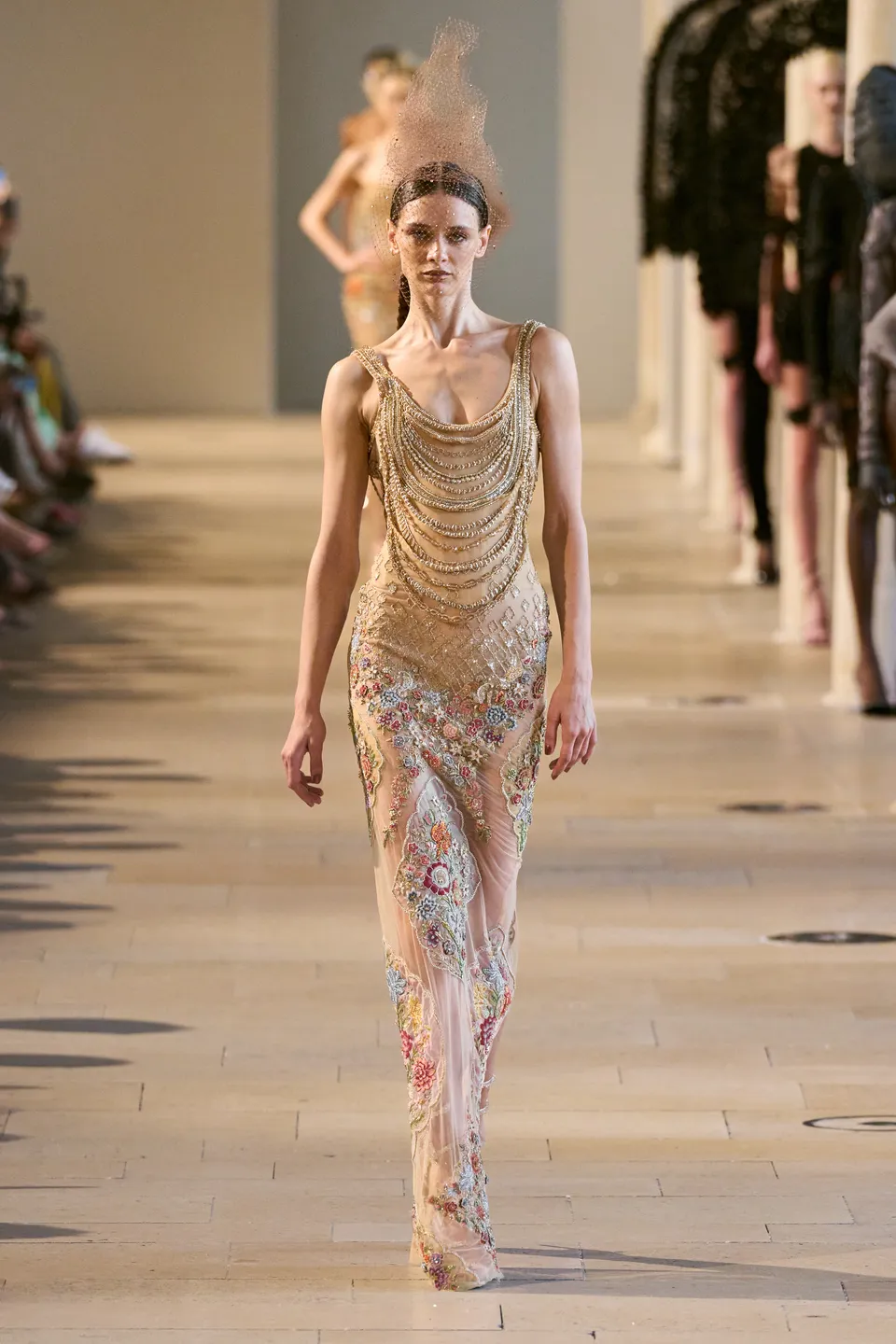
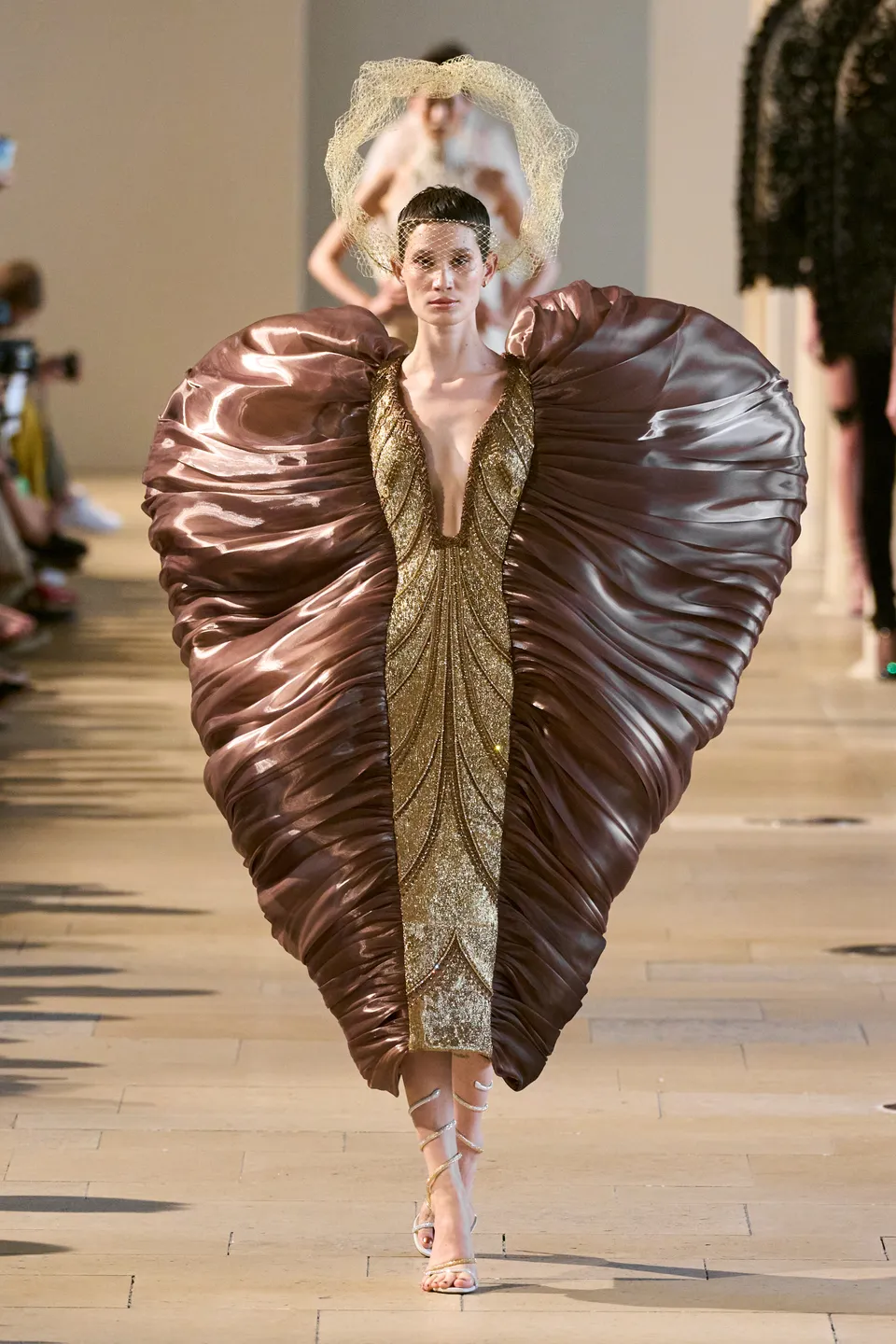
Drapery soon learns to become archaeology. A beautifully draped saree form transformed through dense tonal beadwork proves that monumentality operates independently of immense physical scale. Fabric wraps diagonally across the torso above narrow, elongated skirts. Cascading panels recall carved drapery, featuring gathered folds rendered rigid through embroidery. Soft textile movement meets interruption from jewellery-like surfaces, while asymmetric lines keep the sculpture physically alive. The genius lies in contradiction. The drape appears soft because of its form, yet its embroidered surface gives it the visual density of rock.
Temple sculpture often gives jewellery equal visual importance to clothing. Rahul Mishra Fall 2026 Couture translates this hierarchy directly onto the body. Broad collars expand into chest pieces, layered bibs, and embroidered garlands. Girdles and belts emerge built entirely from beads and stones. Corseted tops resemble carved breastplates, and strands of natural stone beads replace conventional fabric borders. Shoulder and hip structures take shape entirely through ornament. Jewellery becomes the primary anatomy. Adornment in Indian visual traditions signifies power, divinity, status, and cosmic order. This translates into immense physical weight, making the goddess appear protected by ornament and encased beneath it simultaneously.

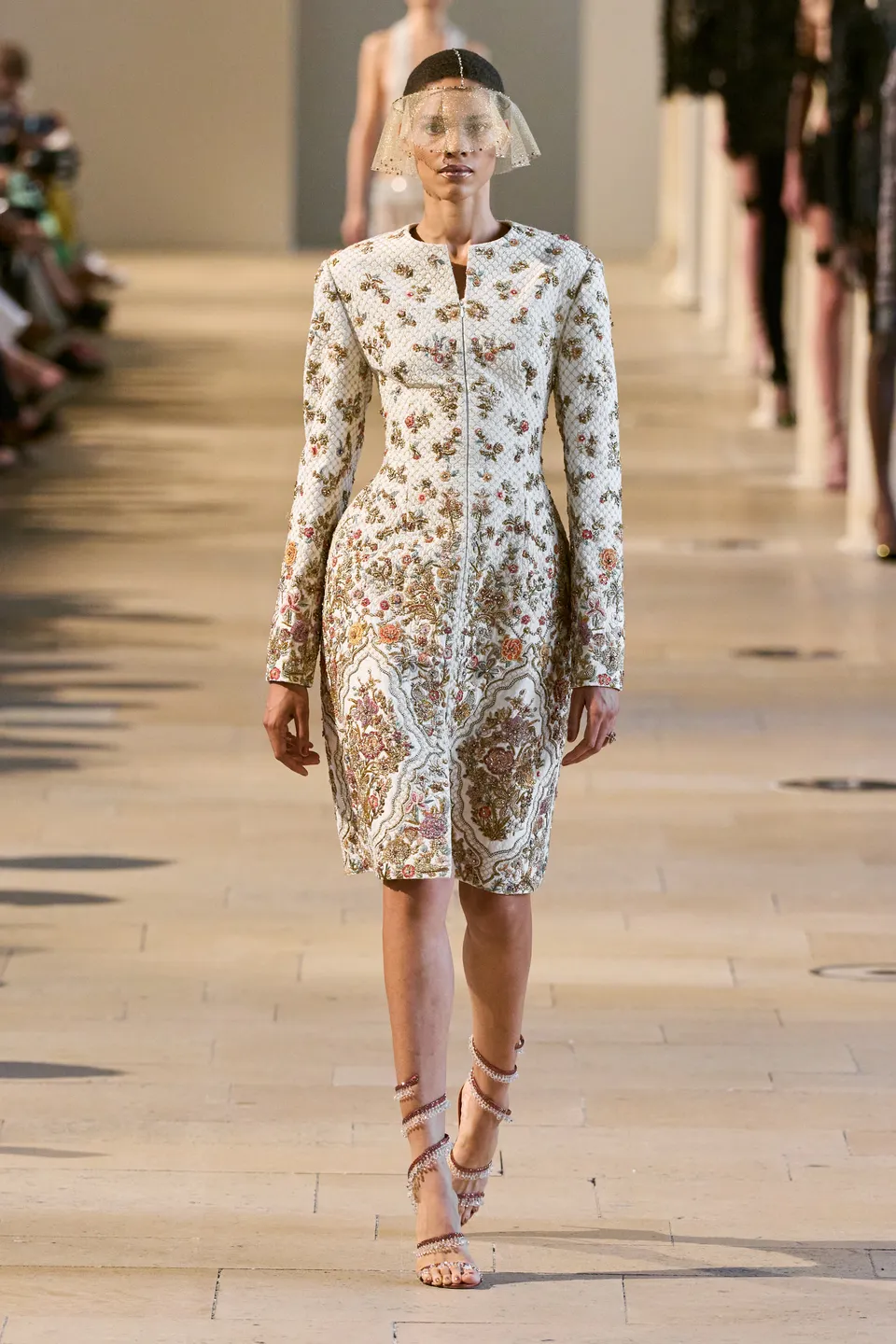

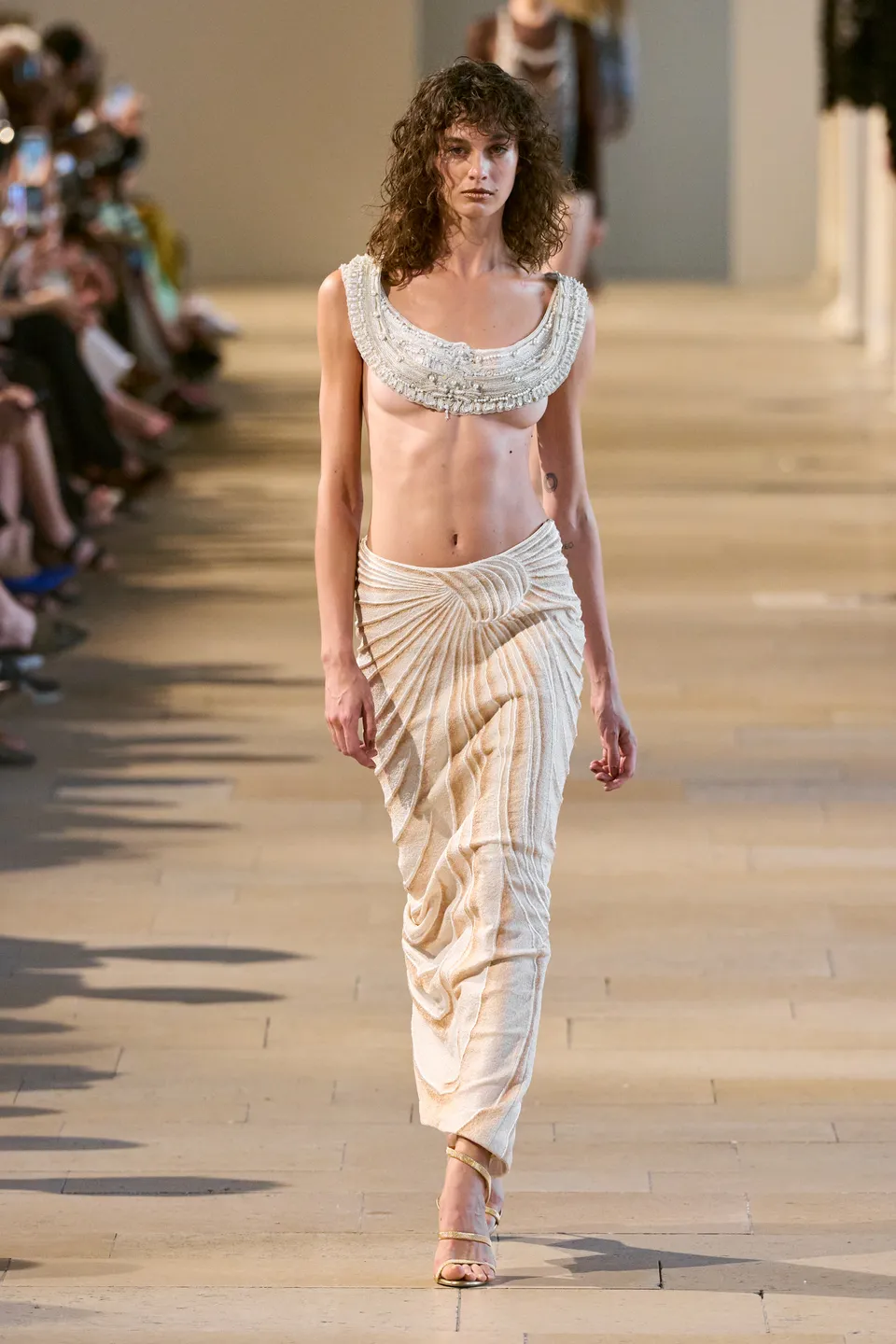
The body eventually transforms into a moving shrine. Widened crowns, multi-faced headdresses, garlanded canopies, and floating sculptural heads extend far beyond the shoulders. Vertical structures turn the model into an architectural axis. The ceremonial clay headpieces, developed with traditional artisan Sumant Kumar, along with specialist contributions from Stephen Jones, transform the runway into a moving frieze. These pieces produce striking images, prompting the question of whether the headpieces intensify the garments or compete with them. When the crown becomes the principal event, the woman below it resembles transportation for an installation.
The atelier achieves the central material miracle of Rahul Mishra Fall 2026 Couture by forcing thread to impersonate stone. Tonal silk embroidery, metallic zardozi, dense dabka work, bugle beads, crystals, and natural stones layer over skin-colored foundations. Zardozi creates raised metallic density. Dabka introduces coiled texture and catches fragmented light. Bugle beads create hard linear accents resembling incised stone, while crystals interrupt the matte grey surfaces with points of sacred radiance. Natural stones give embroidered jewellery literal mineral weight. Tonal silk produces subtle depth, preserving the archaeological illusion. The achievement delivers trompe-l’œil alongside profound tactile reality. These garments possess weight, stiffness, and textured surfaces that reproduce the physical authority of sculpture.
Mishra allows embroidery itself to generate structure. Dense embellishment changes the behavior of fabric, holding peplums outward, stiffening bodices, weighting drapes, and creating architectural surfaces. A single bead serves as decoration, weight, support, contour, historical reference, and evidence of labor. In Rahul Mishra Fall 2026 Couture, the surface becomes the construction itself.


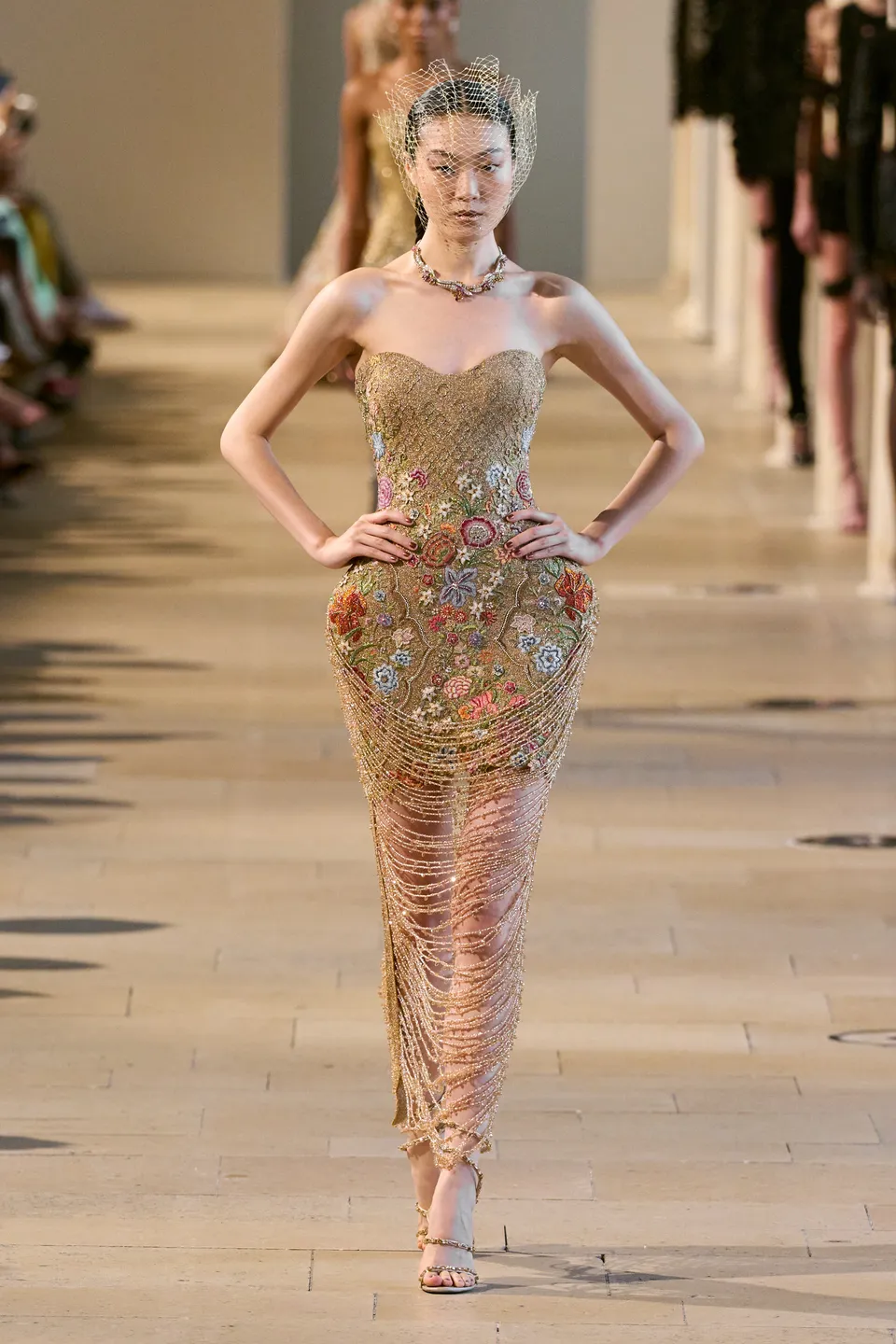

The stone appears ancient; the garment arrives newly made. Erosion requires careful embroidery, and apparent damage demands immaculate precision. Geological accident becomes human design. Thousands of deliberate acts create the illusion of natural weathering. The artisan manufactures time.
Indian artisans have long executed embroidery and embellishment for European luxury houses while waiting in the shadows of those brands' public mythologies. Rahul Mishra Fall 2026 Couture places an Indian designer’s name above labor that Paris historically consumed quietly. Indian authorship becomes increasingly visible to Paris. A collection centered on anonymous ancient sculptors intensifies the responsibility to recognize the contemporary hands performing its miracle.

Extraordinary craftsmanship must remain subject to rigorous evaluation. A garment requiring astonishing labor may still suffer from overbearing proportion, excessive symbolism, visual confusion, or accessories overwhelming construction. We must admire the handwork most fiercely where it performs a clear design function. Labor earns deep respect alongside sharp design editing.
For a few minutes on the runway, stone walked. Temple jewellery moved with the rhythm of a living chest. Drapery preserved for centuries loosened to follow the human body again. Rahul Mishra Fall 2026 Couture revealed how the devi always held a pulse; she remained inside stone, memory, and the hands of artisans, waiting for another material to carry her forward. Devi becomes sacred when thread allows her to move. It becomes fashion when, beneath the monument, we see the woman taking the next step.
Advertisement