




At Maison Margiela, anonymity was practically a dress code. Matthieu Blazy followed it until the spectacle became far too interesting to remain unsigned.

Matthieu Blazy: Before the World Knew His Name
At Maison Margiela, anonymity was practically a dress code. Matthieu Blazy followed it until the spectacle became far too interesting to remain unsigned.
November 24, 2026


Paris, July 2014. An original Paul Poiret coat, created for the couturier's extravagant Orientalist party in 1911, found itself participating in another fashion spectacle more than a century later. Its richly patterned fabric had survived changing tastes, the disappearance of its original social world and the peculiar journey into Maison Martin Margiela's Artisanal atelier, where historical garments were treated as materials with lives still worth extending. Nearby, a white shirt carried vintage jewelry by Line Vautrin, while silver coins, reconstructed textiles and extraordinary handiwork gave discarded objects another existence.
Behind the collection stood Matthieu Blazy, thirty years old and largely unfamiliar to the public, despite having spent three years directing one of Paris fashion's most inventive creative operations.
Suzy Menkes revealed his identity following the presentation, disrupting a house tradition that placed collective authorship above the individual designer. The irony was exquisite: Matthieu Blazy had acquired public recognition precisely by succeeding inside an organization that preferred its creative talents to remain anonymous.
An Eye Trained on Art and Unusual Objects
The Belgian side of Matthieu Blazy's family offered an unusual introduction to the possibilities of objects. Born in Paris in 1984, he was raised by a father specializing in pre-Columbian art and a mother whose interests encompassed history and ethnology, creating an environment where artifacts carried geographical, social and historical identities extending far beyond their immediate appearance.
His school years were considerably less distinguished. A restless and academically disengaged child, Matthieu Blazy was sent to a Marist boarding school in the Ardèche region of France, followed by a British boarding school, Pangbourne College, whose military traditions provided another distinctly regimented environment for a boy fascinated by freedom and adventure.

An interest in archaeology might have offered one respectable destination for his curiosity. Fashion eventually provided another, combining the research of cultural history with the possibility of physically reconstructing the objects under examination.
At La Cambre in Brussels, Matthieu Blazy encountered a demanding five-year education where fashion developed alongside drawing, art history, experimentation and rigorous garment construction. His internships at John Galliano and Nicolas Ghesquière's Balenciaga provided early exposure to professional studios, while his graduation work explored the figure of French astronaut Claudie Haigneré.
There was already something revealing about choosing an astronaut as a fashion subject: the human body considered through unfamiliar environments, protective surfaces and the relationship between clothing and movement. The practical education, however, was just as consequential. La Cambre demanded precision in converting imaginative research into properly constructed garments, a distinction that would become important throughout his career.
Inside Raf Simons's Independent Studio
During the selection process for the International Talent Support competition in Trieste, Matthieu Blazy's work attracted the attention of Raf Simons. Shortly after graduating in 2007, he joined the designer's independent menswear studio, entering a world where clothes frequently carried the emotional and cultural vocabulary of music, photography, architecture and adolescent rebellion.

Simons had built his reputation upon a fascination with youth culture and the complicated relationship between individual identity and collective belonging. His garments could evoke the atmosphere of a particular musical movement or subculture through proportion and styling, giving the designer's research an existence beyond mood boards.
For Matthieu Blazy, the work involved considerably more than learning to recognize good references. An independent label had to maintain an identifiable creative position from season to season while operating with limited resources, requiring its designers to distinguish between an interesting intellectual proposition and one that could survive the demands of construction.

His relationship with Simons also established an enduring professional connection with Pieter Mulier, whose involvement in the studio extended across design and the wider realization of collections.
The three would eventually reunite inside a very different organization, where the financial consequences of ambitious creative ideas were far less forgiving.
The Anonymous Atelier of Maison Margiela
When Matthieu Blazy arrived at Maison Martin Margiela in 2011, the house was already confronting an unusual problem of succession. Its founder had withdrawn from the company in 2009, leaving behind an artistic vocabulary rooted in deconstruction, anonymity and the transformation of existing garments.
The Artisanal line gave Matthieu Blazy an extraordinarily permissive laboratory. Vintage clothes could be dismantled and reassembled, old decorative objects could acquire new functions, and conventional distinctions between couture materials and found objects became opportunities for technical invention.
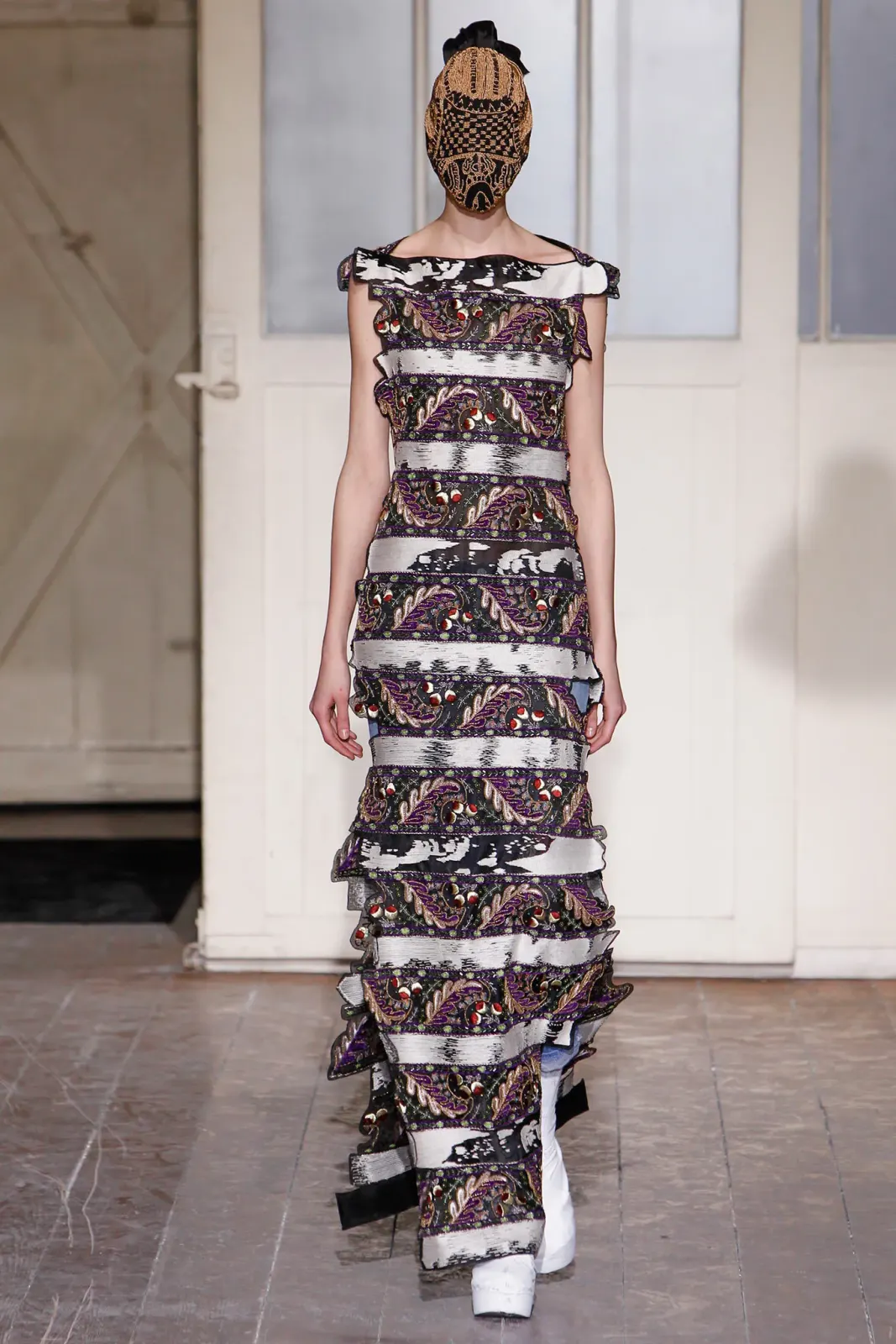
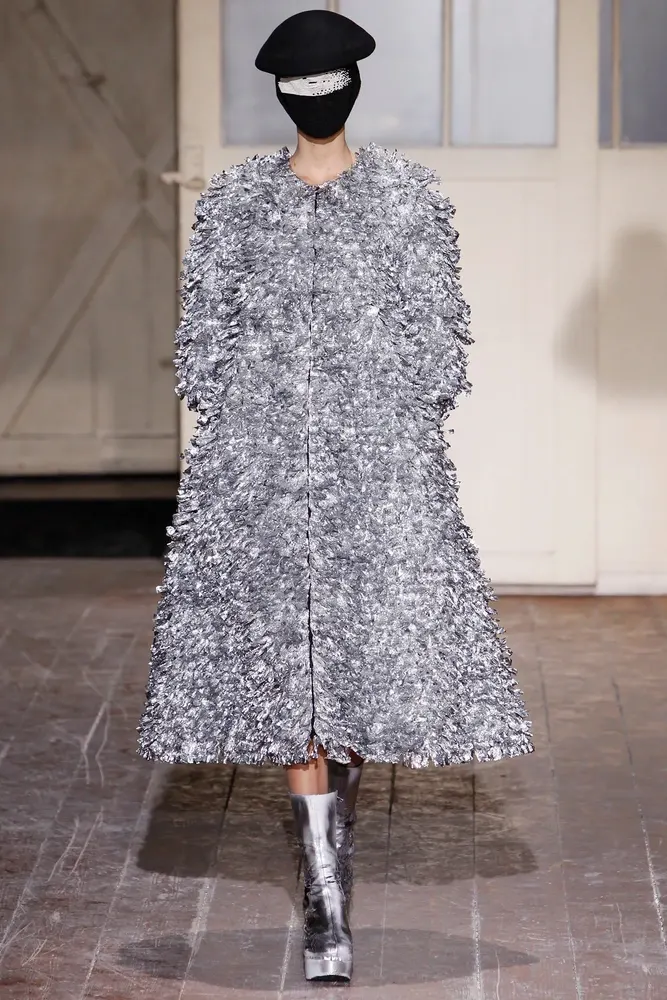
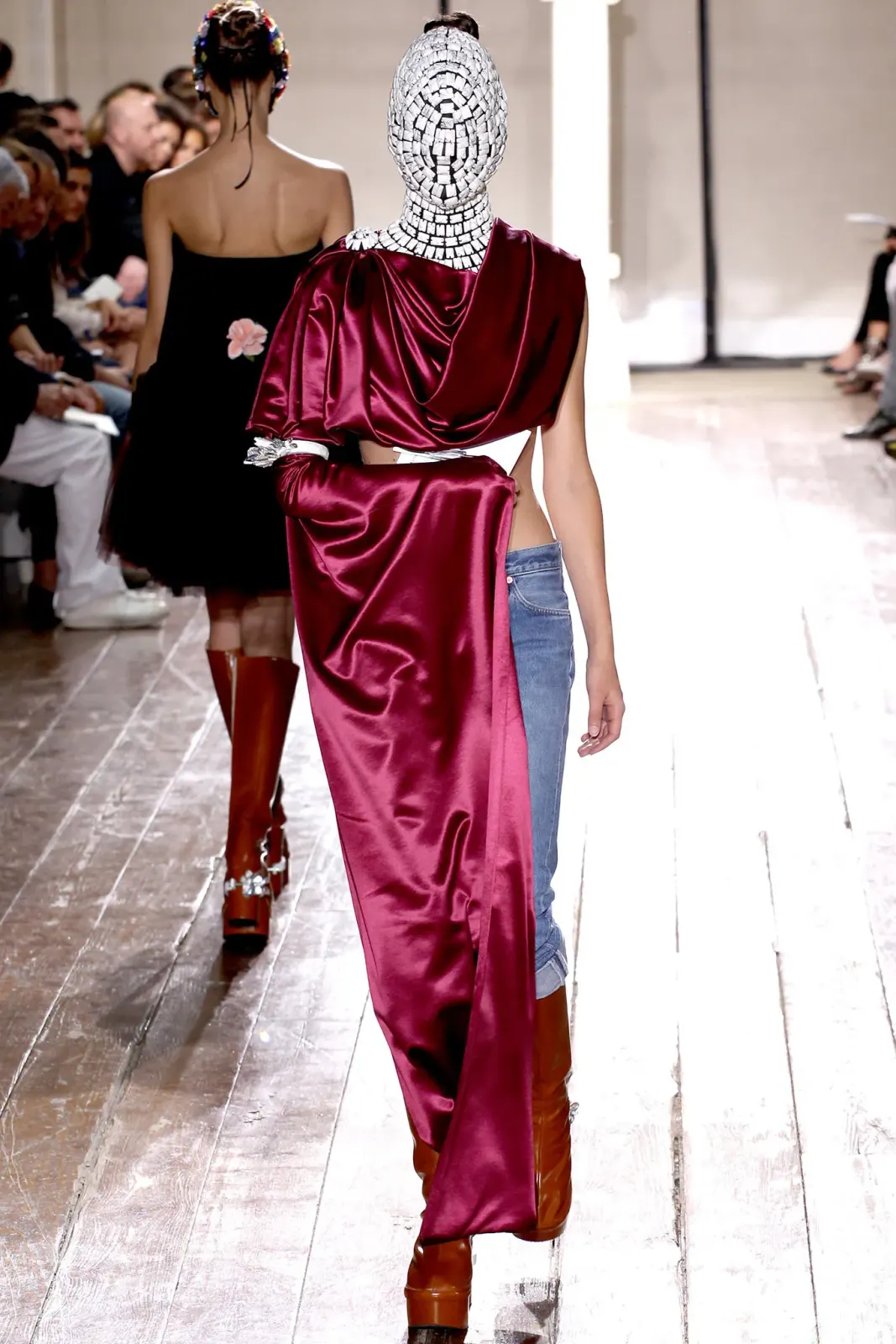
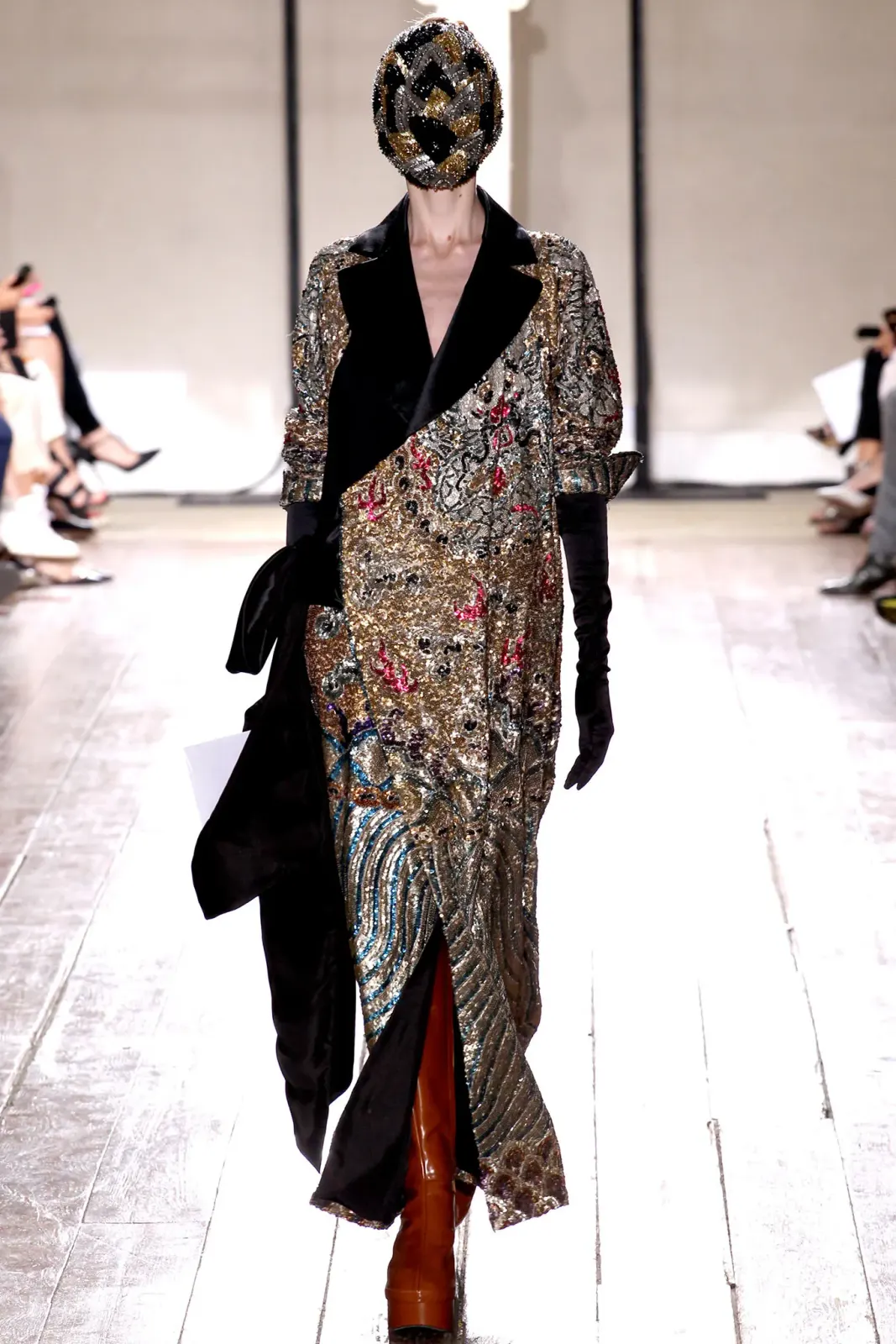
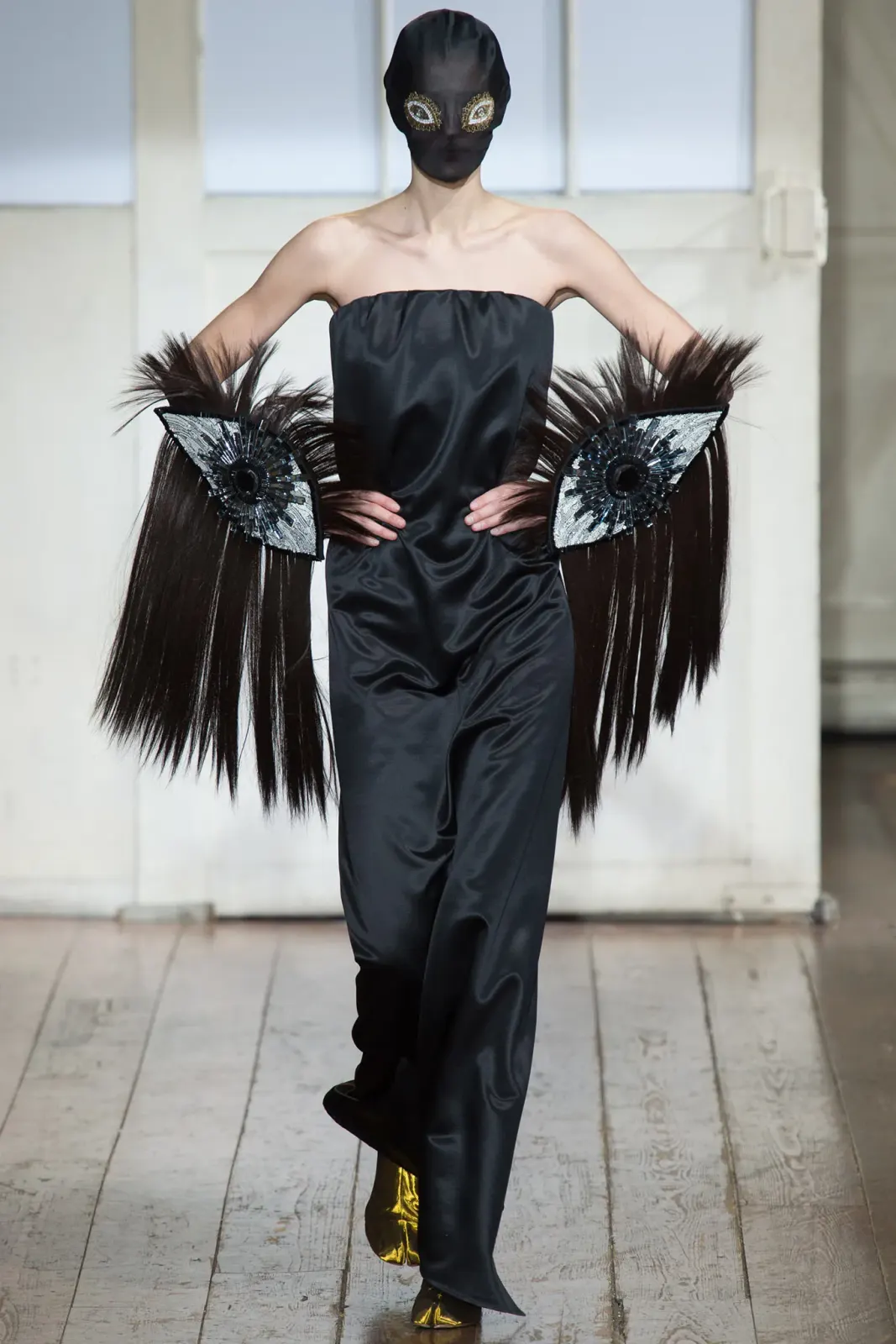
One of his most recognizable contributions involved masks constructed from tulle and embellished with crystals, beads and other ornaments, their elaborate surfaces concealing the models' faces. Several became part of Kanye West's visual identity during the 2013 Yeezus tour, carrying the work of an anonymous Paris atelier into an immense popular-cultural spectacle.
The masks were especially characteristic of Margiela because they transferred attention from the wearer's celebrity to the object itself. Their subsequent appearance on a world-famous musician introduced an entertaining contradiction, particularly for a house whose own creative leadership remained largely invisible.
The July 2014 Artisanal collection took this fascination with physical history even further. Matthieu Blazy's treatment of the Poiret coat reflected a practice in which historical fashion became part of contemporary production, rather than remaining a collection of untouchable museum references. Material provenance, elaborate handwork and the accidental beauty of objects from different periods established a sophisticated visual language under circumstances that offered little personal publicity.
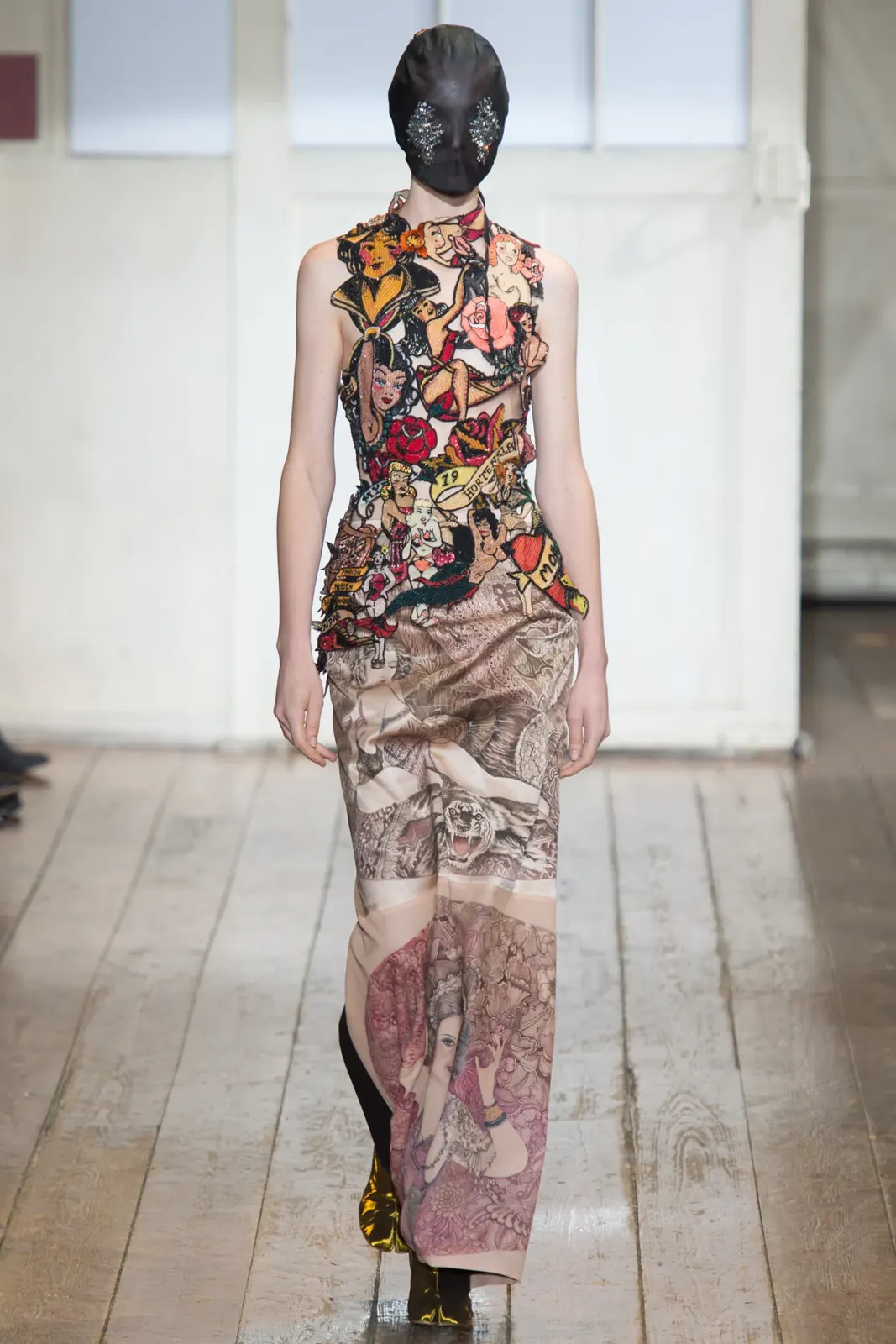
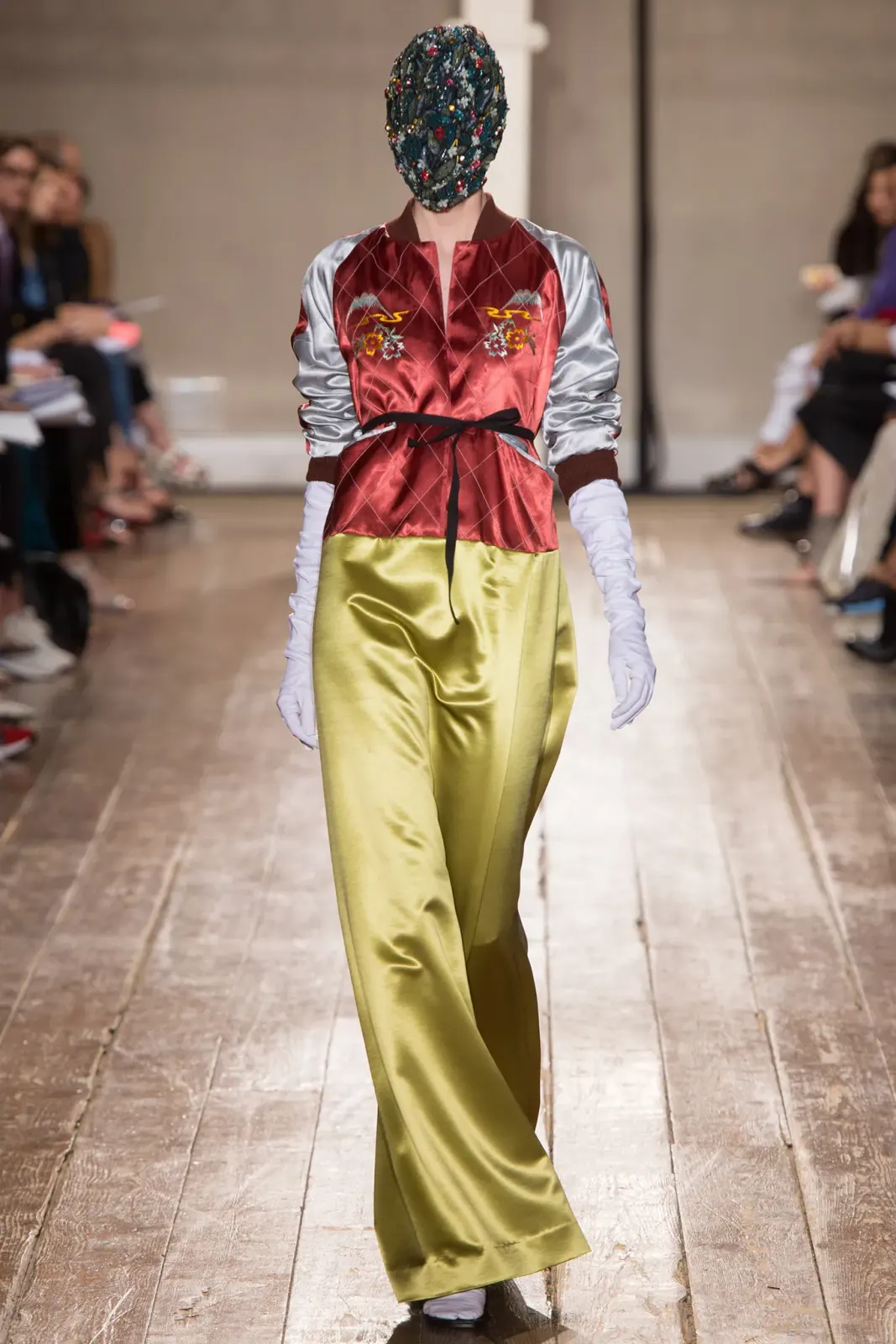
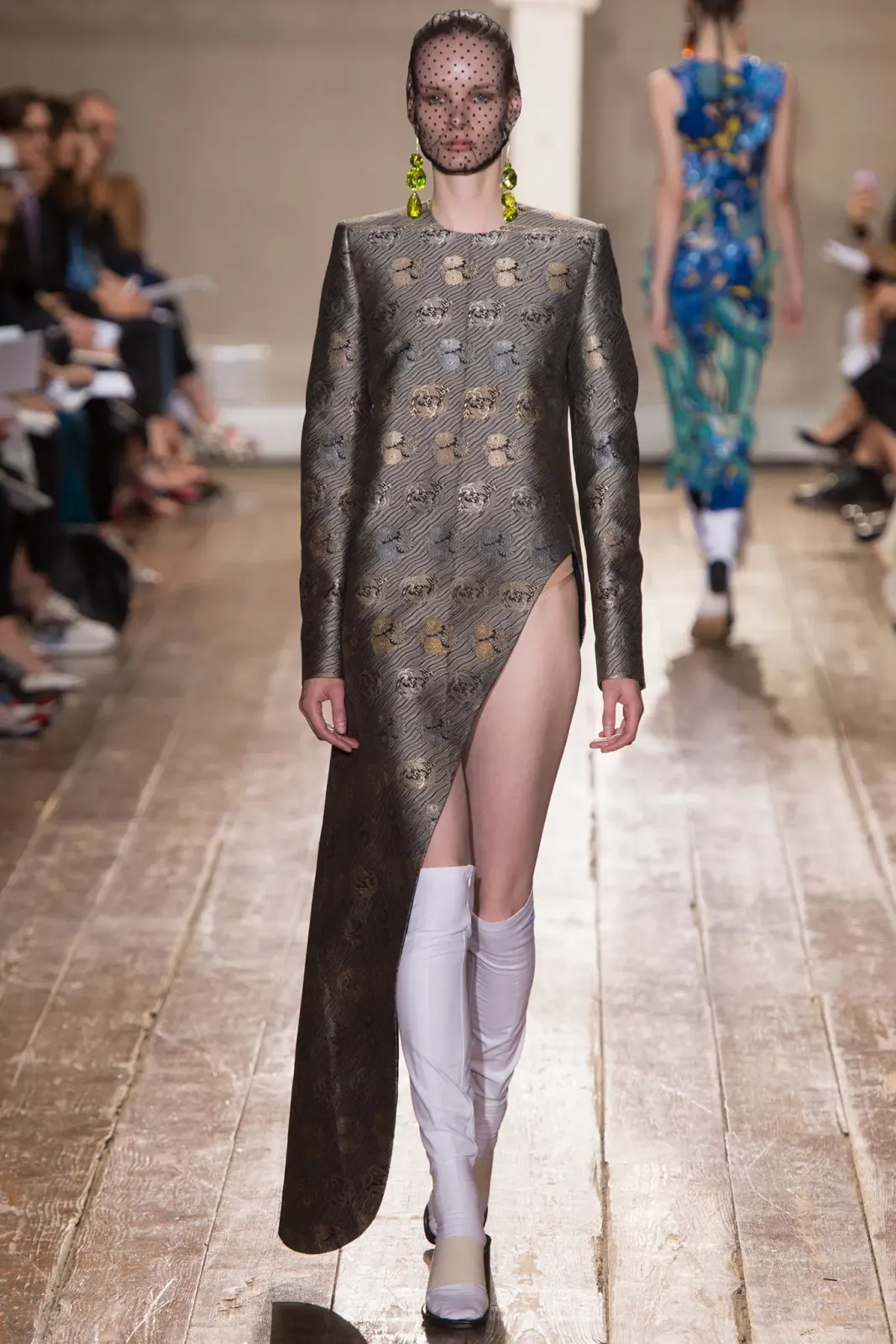
The arrangement exposed an interesting weakness in fashion's cult of authorship. Maison Margiela continued producing culturally influential work after Martin Margiela's departure, while the growing curiosity surrounding Matthieu Blazy demonstrated how readily the industry searched for another individual to whom that creativity could be attributed.
By the time John Galliano was appointed the house's creative director in October 2014, Matthieu Blazy had already departed for Céline, carrying several years of unusual artistic freedom into one of luxury fashion's most disciplined commercial studios.
The Commercial Education at Céline
The pre-collection calendar rarely receives the cultural excitement reserved for major runway presentations, although its role in sustaining a luxury company's retail operation can be immensely important. Merchandise must arrive at appropriate intervals, continue selling between headline collections and accommodate the practical demands of customers whose relationship with a brand extends well beyond fashion week.
Matthieu Blazy joined Phoebe Philo's Céline in 2014 as a senior designer working principally on pre-collections, placing him inside a business whose cultural influence arose from a remarkably coherent understanding of women's wardrobes.
Philo's clothes possessed intellectual ambition without requiring the theatrical treatment associated with experimental fashion. Their appeal depended upon cut, proportion, material, functionality and a precise understanding of how garments existed in daily life.
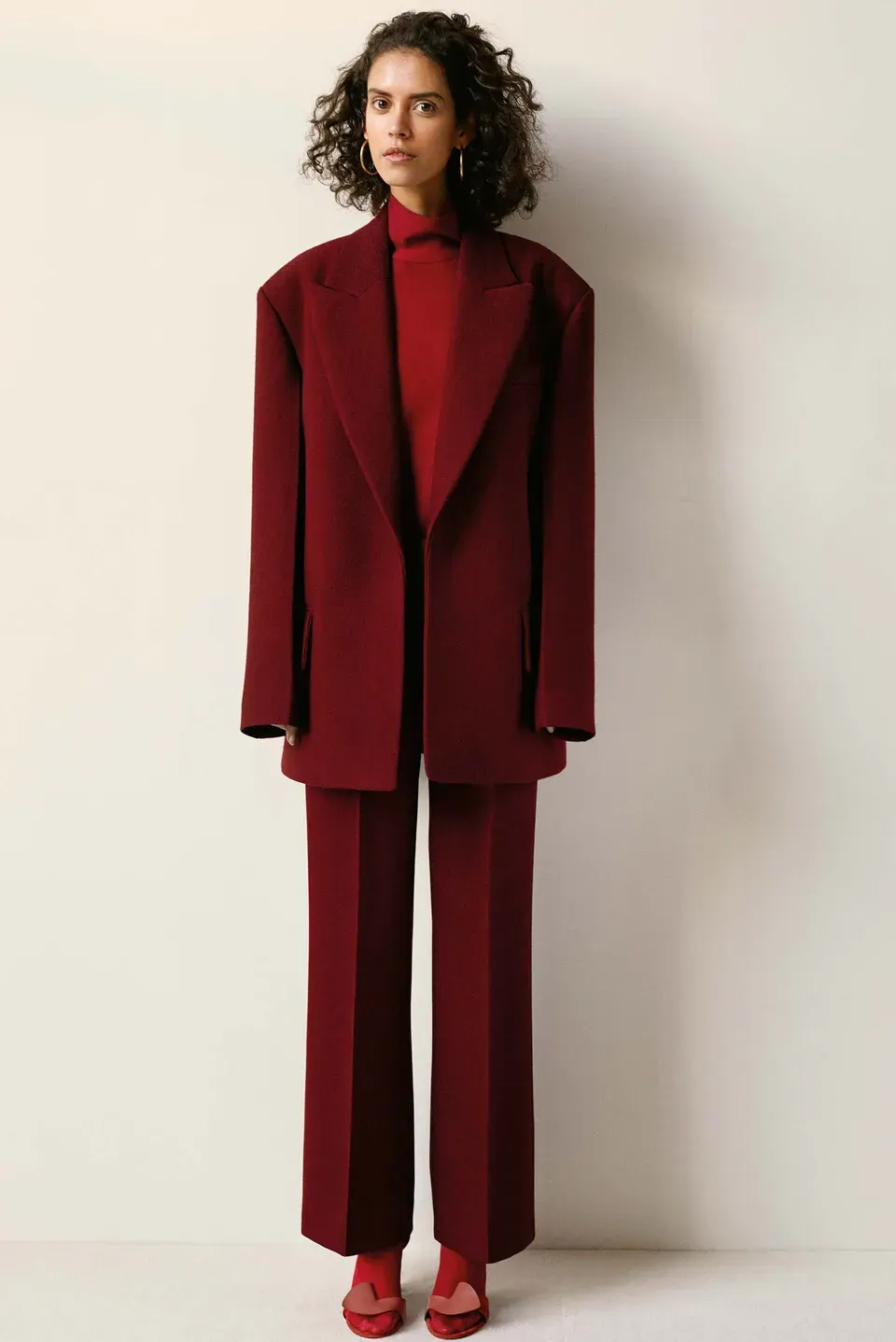
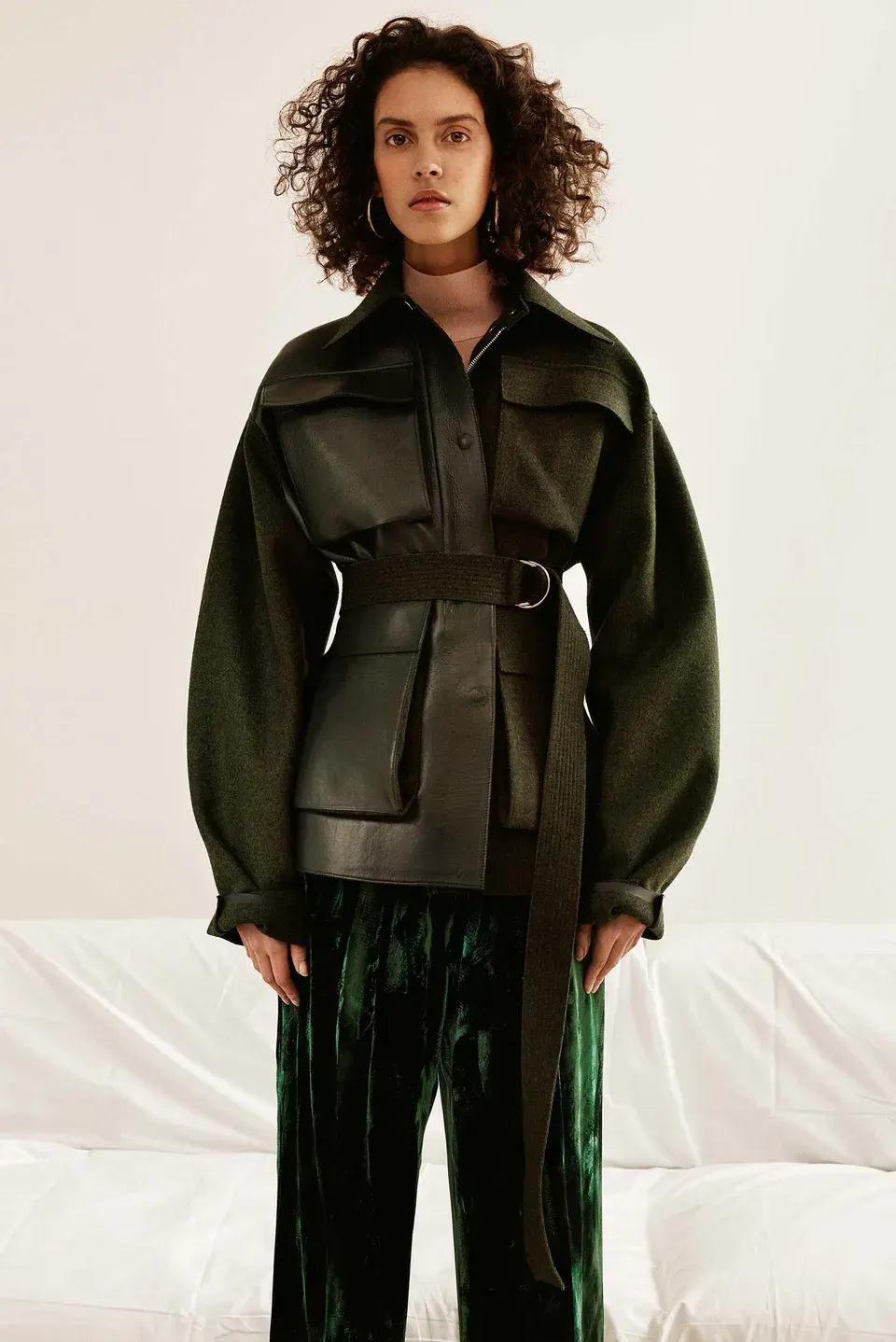
For someone accustomed to Margiela's elaborate transformations of historical clothing, the demands of developing a commercially viable luxury wardrobe offered a different kind of complexity. A coat had to justify its construction through fit and continued desirability. A blouse needed to belong to the same visual world as the trousers, jackets and accessories delivered alongside it.
Matthieu Blazy would later recall the importance of the atelier and the education he received in making excellent clothes. Such lessons involved the practical discipline of fit and finishing, alongside the less visible commercial logic connecting individual garments to a recognizable luxury identity.
At Céline, the distance between an accomplished design and a desirable product became unusually small, an invaluable experience for a designer whose earlier work had often depended upon the sheer surprise of what an object could become.
The Expensive Experiment at Calvin Klein
New York presented Matthieu Blazy with a corporate experiment of almost absurd ambition. In 2016, Raf Simons became chief creative officer of Calvin Klein, bringing Matthieu Blazy and Pieter Mulier into an organization whose business extended from designer fashion to denim, underwear, accessories and globally distributed licensed products.
The artistic project was intoxicating. Under the Calvin Klein 205W39NYC identity, Simons explored American culture through the imagery of Andy Warhol, Western clothing, horror cinema and suburban life. The Fall/Winter 2018 runway, scattered with popcorn and watched over by enormous barn-like structures, suggested a country whose mythology was being examined with both fascination and unease.

For Matthieu Blazy, who held a senior design role, the spectacle unfolded within a corporation accountable to shareholders and financial targets. Calvin Klein's owner, PVH, needed the prestige generated by its high-fashion collections to support a much wider commercial enterprise, an expectation complicated by the distance separating runway experimentation from its enormous mainstream customer base.
Simons departed in December 2018. Matthieu Blazy left in 2019, having witnessed a creative operation dismantled despite the intellectual conviction of the people responsible for its design.
An Unexpected Vacancy at Bottega Veneta
Daniel Lee's appointment at Bottega Veneta in 2018 had begun another experiment in transforming the image of an established luxury house, this time through accessories, assertive proportions and a visual identity capable of attracting a younger international audience.
Matthieu Blazy joined the company in 2020 as ready-to-wear design director, entering a business whose commercial momentum was already substantial. Bottega Veneta generated €1.21 billion in revenue that year despite the pandemic, with the brand's leather-goods heritage providing an especially valuable foundation for its expansion.
The role placed him inside a highly organized Italian luxury operation where creative decisions had to coexist with manufacturing expertise, accessories development and a global retail network.

Then, on November 10, 2021, Kering announced Daniel Lee's abrupt departure. Five days later, the group appointed Matthieu Blazy creative director with immediate effect, selecting a designer who had spent his career mastering the demanding work of developing collections under other people's names.
The decision carried considerable commercial weight. Bottega Veneta's revenue would exceed €1.5 billion for 2021, although that performance largely reflected the business established before Matthieu Blazy assumed its creative leadership.
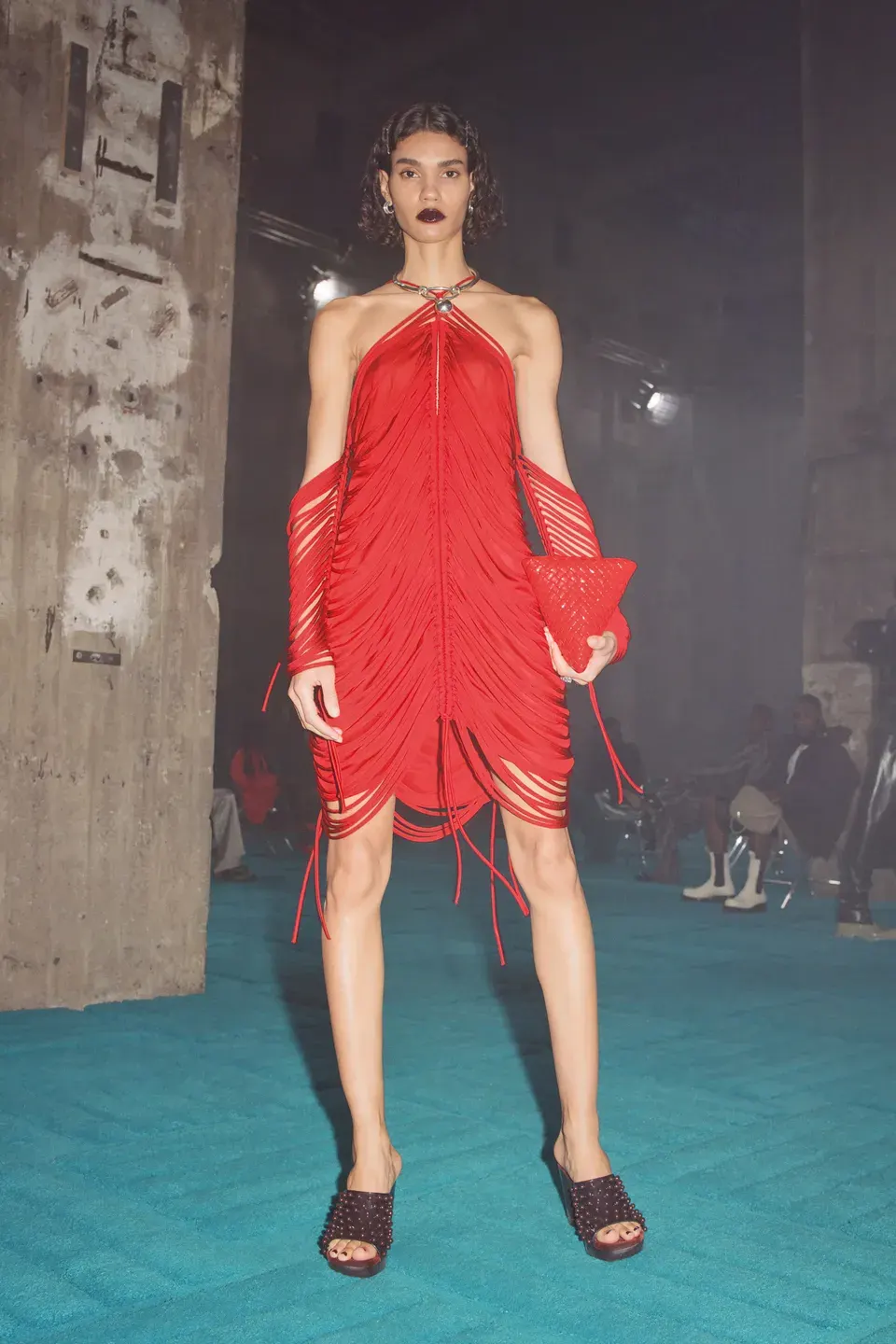
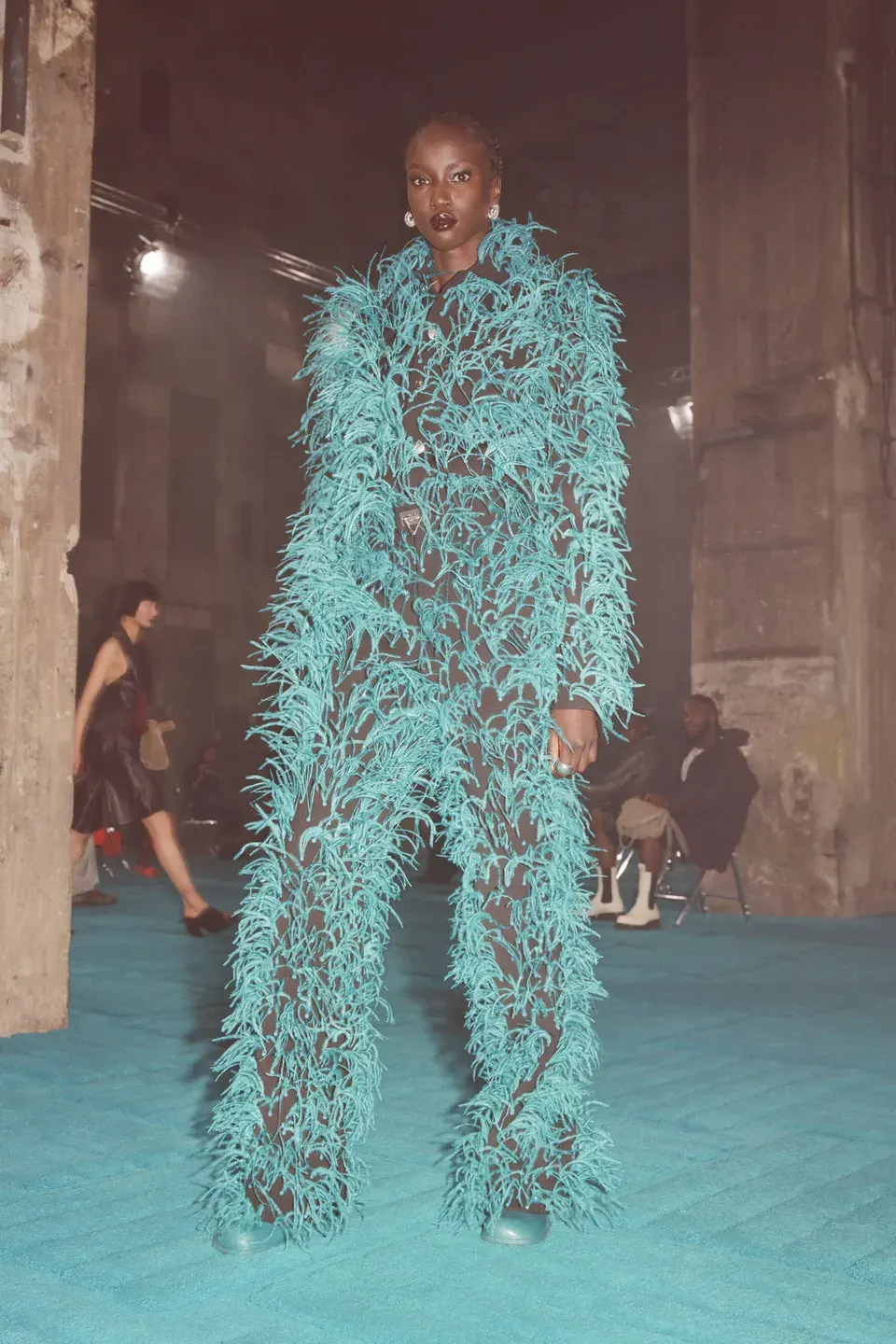
Kering had chosen an internal successor at a moment when the house was enjoying considerable momentum, making continuity of execution as important as the promise of a new artistic identity.
There was something almost mischievous about the appointment. The designer whose identity had once been exposed against the wishes of an anonymous Paris atelier was now expected to supply a publicly recognizable creative vision for a billion-euro luxury house. For the first time, the commercial expectations, institutional resources and artistic decisions surrounding Matthieu Blazy would converge under his own name.