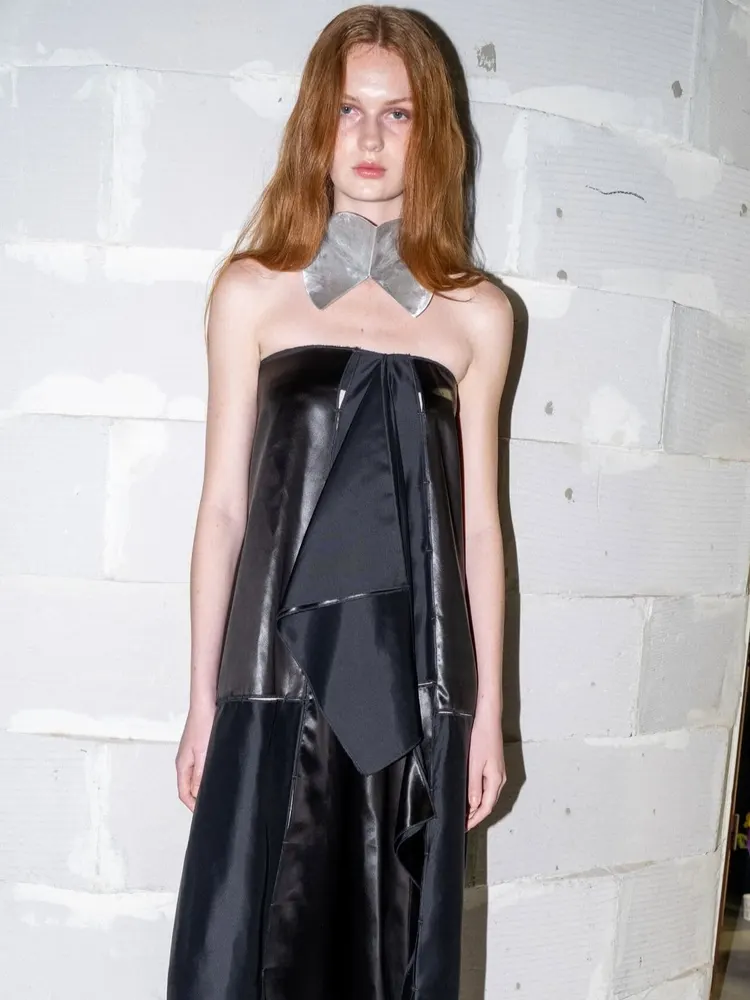





On November 19, 2026, Marc Jacobs Daisy Violet arrived with flowers that looked as though they had been coloured in after dark. Against deep purple glass, their neon petals brought a familiar fragrance fantasy into a rather mischievous new light.

Marc Jacobs Daisy Violet Paints the Town Purple
On November 19, 2026, Marc Jacobs Daisy Violet arrived with flowers that looked as though they had been coloured in after dark. Against deep purple glass, their neon petals brought a familiar fragrance fantasy into a rather mischievous new light.
November 19, 2026


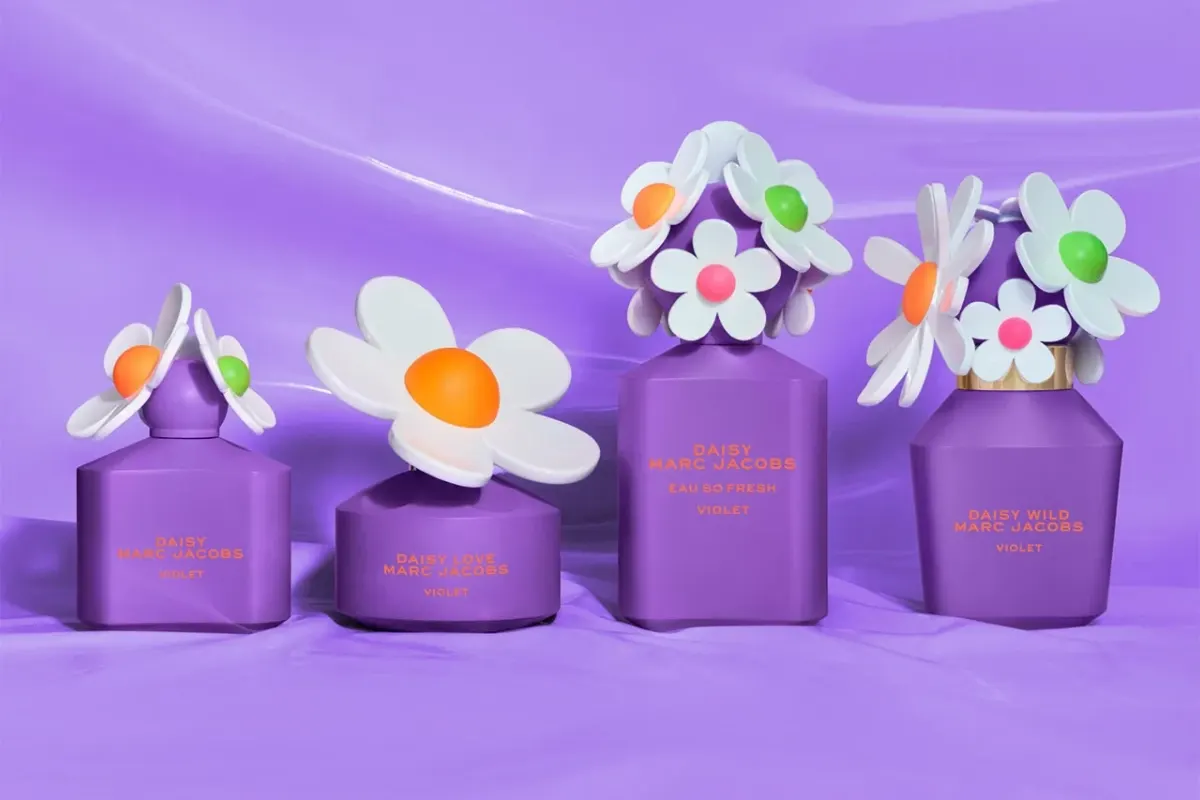
Since its debut in 2007, Marc Jacobs Daisy has occupied a distinctive place in contemporary fragrance, recognised as much for its oversized floral cap as for its youthful olfactory identity. Now, the house introduces the limited-edition Daisy Violet collection, reimagining four fragrances through an exuberant palette inspired by Marc Jacobs' runway creations. The new quartet comprises Daisy Violet, Daisy Eau So Fresh Violet, Daisy Love Violet and Daisy Wild Violet, each presented as an individual interpretation of the collection's playful character.
The bottles provide the most immediate transformation. Familiar transparent glass gives way to rich, matte purple, while the sculptural daisy petals acquire fluorescent accents of pink, orange and green. The unexpected colour combinations introduce an almost cartoonish quality to the original designs, reflecting Marc Jacobs' longstanding affection for exaggerated proportions and unconventional decorative details.
The fragrances themselves explore a more indulgent interpretation of the Daisy universe. Created by perfumer Alberto Morillas, Daisy Violet combines violet candy with a floral heart of violet, rose and jasmine, before settling into cedarwood and soft musk. Daisy Eau So Fresh Violet introduces blackberry, pear and geranium, with white woods and praline lending warmth to its fruity composition. Both reinterpret the familiar lightness of their predecessors through a sweeter, more textured sensibility.
Daisy Love Violet moves further into gourmand territory, pairing cloudberry and blackcurrant sorbet with praline. Daisy Wild Violet, developed by perfumers Sonia Constant and Adriana Medina, explores a more unconventional combination of muscat grape, banana blossom and blueberry, grounded by sandalwood and creamy macadamia. Together, the compositions suggest a deliberate expansion of the collection's sensory vocabulary, introducing edible accents to fragrances historically associated with youthful floral freshness.
The collection is available through selected retailers, including Sephora, with Daisy Violet and Daisy Love Violet priced at $112 for 50ml in the United States. Daisy Eau So Fresh Violet is listed at $129 for 75ml. All four fragrances arrive in Eau de Toilette concentration, maintaining the accessible, everyday character associated with the Daisy family.
Beyond the compositions, Marc Jacobs Daisy Violet reflects the growing importance of collectability within the fragrance industry. Limited-edition variations allow established perfume lines to renew their appeal through colour, packaging and seasonal exclusivity, encouraging customers to approach fragrance bottles as decorative objects worthy of display.
This approach holds particular relevance for Daisy, whose floral cap has become an instantly recognisable design signature. Its identity is sufficiently established to accommodate dramatic visual reinterpretations without losing its association with the original fragrance. The neon editions capitalize on that familiarity, offering novelty through an object whose silhouette remains unchanged.
Yet the collection also exposes a delicate commercial balance. Repeated reinterpretations can sustain interest in an established perfume, but their appeal increasingly depends on convincing consumers that another variation deserves a place on the dressing table.
For Marc Jacobs, the daisy has become more than a fragrance emblem. It is a visual asset capable of changing colour, character and personality while remaining unmistakably familiar. The challenge ahead may be ensuring that creativity invested in its ever-changing appearance continues to find an equally compelling expression inside the bottle.