




A hint of honey, a trace of espresso, and something borrowed from a vintage dressing table. Tortoiseshell nails have an old-world charm worth exploring.

Tortoiseshell Nails This Winter Are Vintage at Heart
A hint of honey, a trace of espresso, and something borrowed from a vintage dressing table. Tortoiseshell nails have an old-world charm worth exploring.
November 20, 2026


There was something wonderfully familiar about those little brown markings on your tortoiseshell nails. Tortoiseshell has decorated eyewear, hair accessories and jewelry for generations, carrying associations with understated luxury. Its return to the beauty conversation feels particularly appropriate for winter, when dark wardrobes and warm accessories invite richer colors. Behind the glossy appearance of tortoiseshell nails, however, lies a fascinating history of craftsmanship and an unexpectedly demanding nail-art technique.
Tortoiseshell Nails Have a Vintage History
Long before tortoiseshell became an instantly recognizable eyewear pattern, the material occupied a privileged place in decorative craftsmanship. Its distinctive amber translucency and dark mottled markings came from the shells of hawksbill sea turtles, which were historically processed into elaborate ornamental objects.
In Japan, this tradition developed into bekkō, a decorative craft associated with intricately fashioned hair combs, hairpins and accessories. During the Edo period, artisans refined techniques for heating, shaping and polishing the material, revealing its characteristic honey-colored transparency.

European craftspeople similarly incorporated tortoiseshell into jewelry, decorative boxes and luxury accessories. Its appearance eventually inspired imitations using celluloid and later synthetic plastics, allowing the familiar pattern to enter everyday fashion through sunglasses, hair clips and costume jewelry.
The historical material also carries a serious environmental legacy. Hawksbill turtles became endangered through exploitation for their shells, and international commercial trade is now heavily restricted. Contemporary tortoiseshell-patterned accessories generally recreate the appearance through synthetic materials.

Japanese nail artistry developed its own interpretation through bekkō nails, or bekkō neiru. By the mid-2010s, Japanese salons were already experimenting with translucent amber manicures that reproduced the layered appearance of polished tortoiseshell.
The connection makes particular sense. Both traditional ornamental craftsmanship and modern nail artistry require careful control of transparency, color placement and surface finishing. Tortoiseshell nails reproduce the visual character of a treasured decorative material through pigments and light.
The Nail Artists Who Perfected Tortoiseshell Nails
A regular client arrived at British nail technician Amy Rickaby's appointment in 2017 with an unusual challenge: could she recreate the appearance of tortoiseshell on fingernails?
Rickaby began experimenting with orange, yellow and brown pigments, gradually refining the transparent layers needed to create a convincing pattern. Her breakthrough came through combining translucent yellow gel with chocolate-brown and black shades.
By 2020, her work had gained sufficient recognition for professional nail company The GelBottle to collaborate with her on a dedicated tortoiseshell nail-art kit. The project transformed years of salon experimentation into a technique that other nail professionals could reproduce.
Rickaby later developed a blonde tortoiseshell variation, introducing lighter honey tones and softer markings. The design demonstrated how small adjustments in pigment concentration could change the entire character of a manicure.

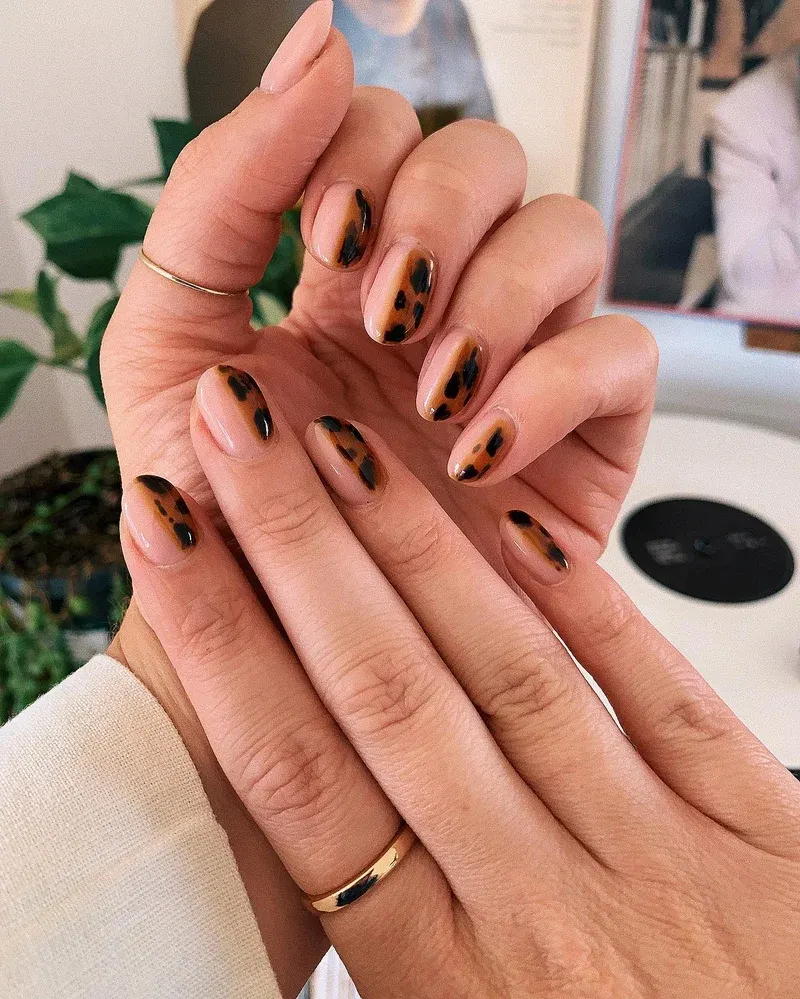
Across the Atlantic, California-based nail artist Katie Masters had been pursuing a similar fascination. Working from her private Santa Monica studio, Masters began experimenting with tortoiseshell nails around 2015.
The greatest challenge was achieving the correct translucent foundation. Opaque brown pigments made the pattern appear flat, while excessive yellow created an artificial-looking finish.

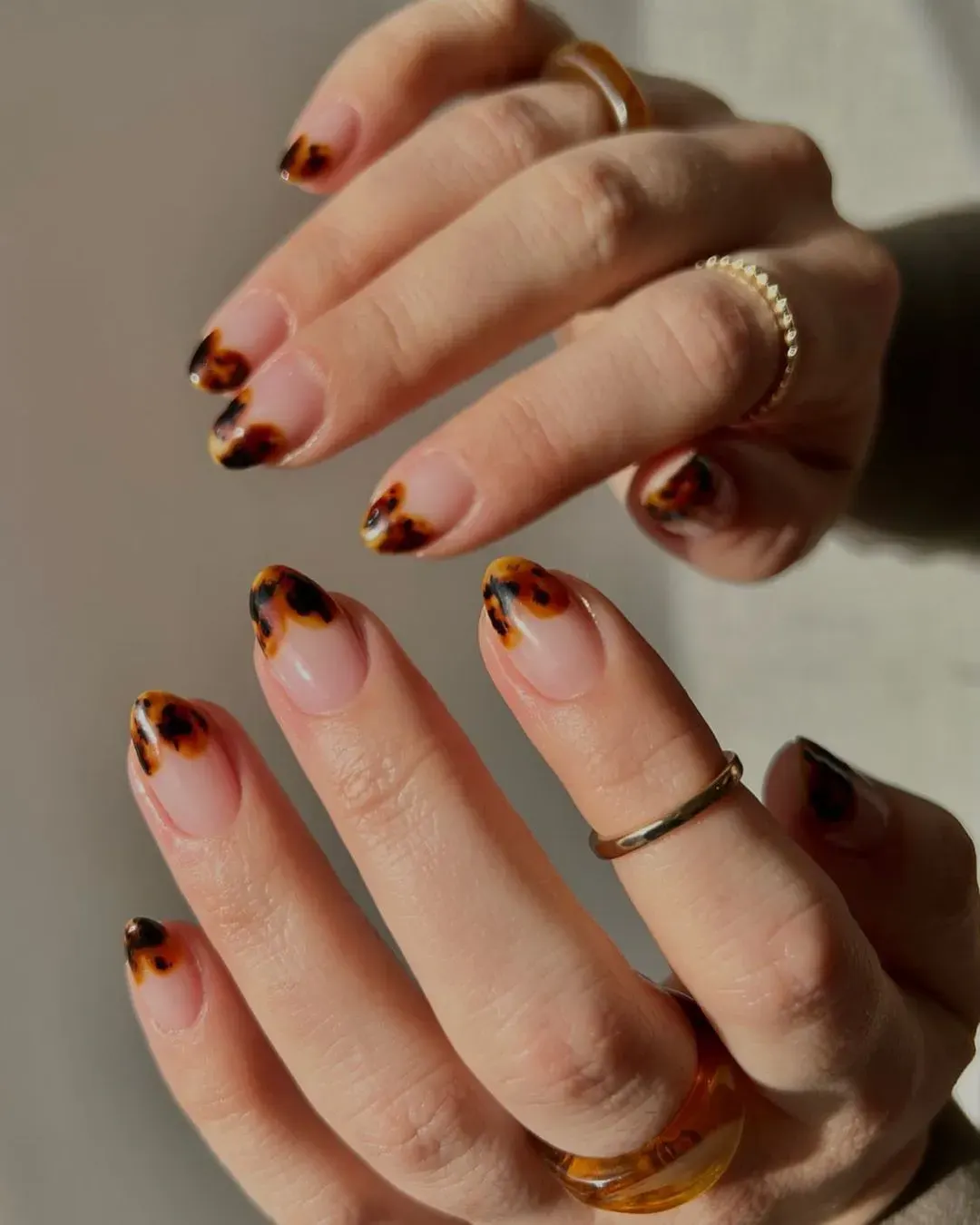
Masters eventually developed her own approach to the amber base and layered markings, later collaborating with Japanese professional gel company KOKOIST through her Nail Thoughts brand. Her specialist tortoiseshell system became an extension of the technique she had refined through years of appointments.
Their stories reveal a particularly interesting dimension of contemporary beauty. Successful nail trends frequently emerge through sustained experimentation by independent artists, whose technical discoveries eventually influence the wider industry.
How Tortoiseshell Nails Achieve Their Amber Effect
The illusion begins with transparency. A convincing tortoiseshell manicure should resemble irregular markings suspended beneath polished amber, allowing light to travel through different colored layers.
Nail technicians typically start with a sheer yellow, honey or caramel gel applied over the prepared nail. This translucent foundation establishes the warm appearance associated with vintage tortoiseshell accessories.

Once the base has been cured, the artist introduces irregular patches of chocolate-brown pigment. The markings vary in shape, size and concentration, with selected edges gently softened to suggest naturally occurring patterns.
Another translucent amber layer can then be applied over the cured design. This partially veils the brown markings, creating the impression that they sit beneath the surface.
Darker espresso or black details are added strategically, introducing greater contrast and depth. The technician may repeat the layering process until the pattern achieves the desired complexity.
Some artists incorporate blooming gel, which allows pigments to spread through an uncured layer, producing softly diffused markings. Others prefer precise brushwork, controlling each irregular shape individually.
A smooth glossy topcoat completes the effect. Its reflective surface intensifies the appearance of polished resin, while the transparent layers beneath create the distinctive richness of tortoiseshell nails.
The process can be surprisingly demanding. During the trend's earlier popularity, intricate salon applications sometimes required approximately ninety minutes, with several layers contributing to the finished design.

Color selection also changes the visual result. Deep espresso and black create a dramatic antique appearance, while honey and caramel produce a softer amber effect. Smaller markings work beautifully on short oval nails, while elongated shapes provide space for elaborate patterns.
Professional gel application requires appropriate curing equipment and careful product handling, particularly because contact with uncured gel can contribute to allergic sensitization.
For winter 2026, tortoiseshell nails possess an enduring appeal rooted in craftsmanship and the pleasure of recognizing a familiar material in an unexpected place. Their glossy surfaces invite a closer look, revealing the patient layering and precision behind each tiny design.