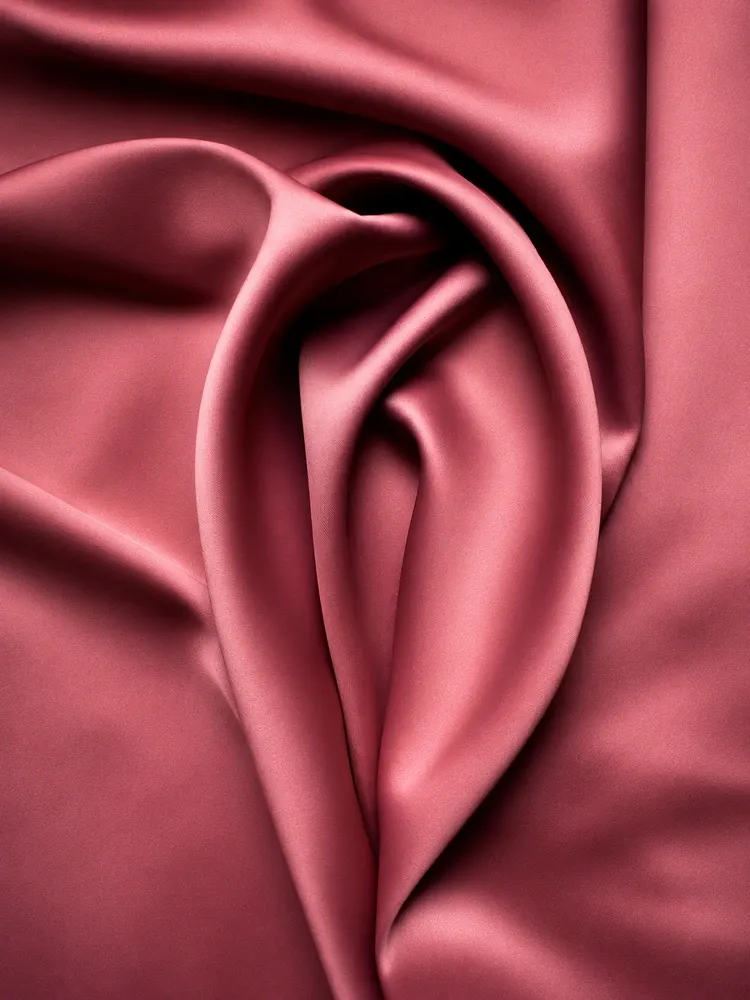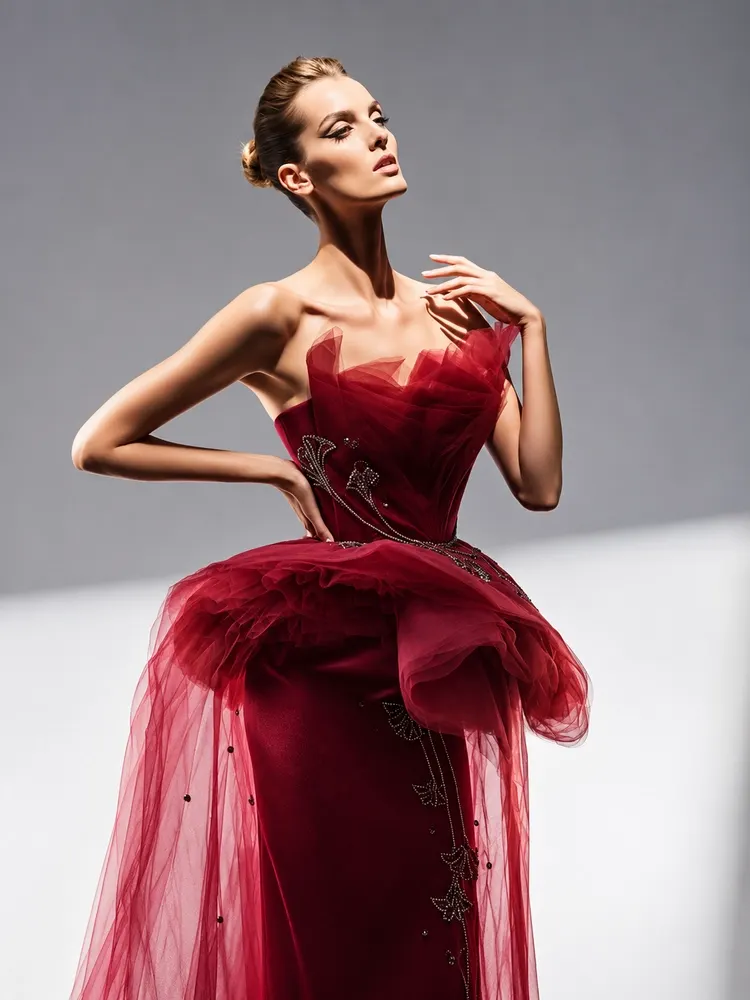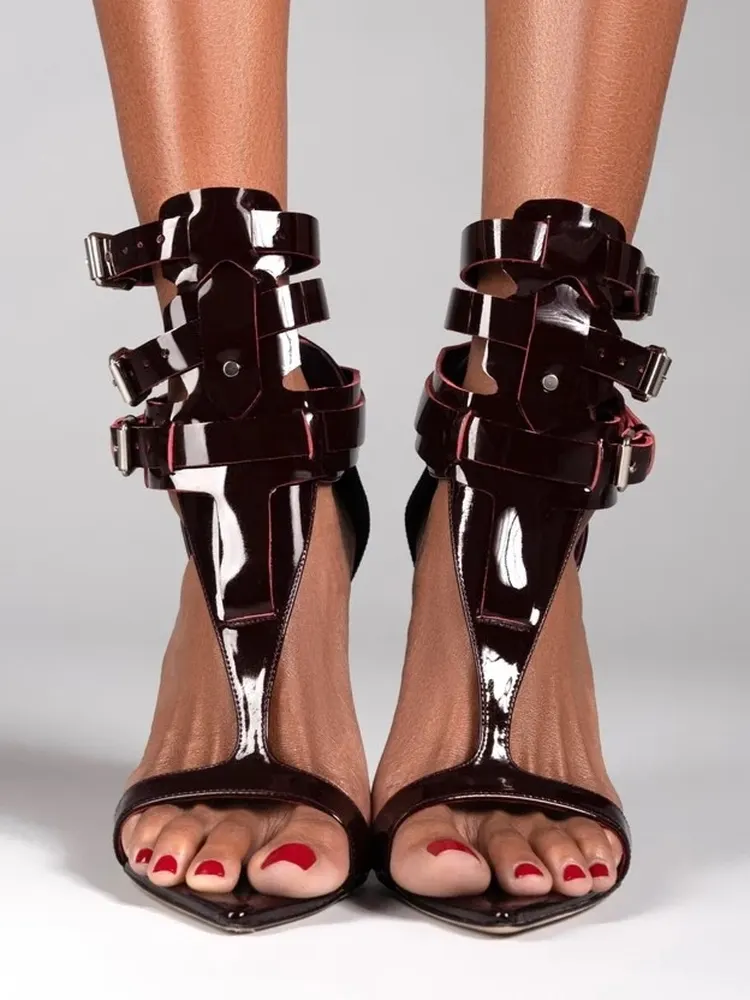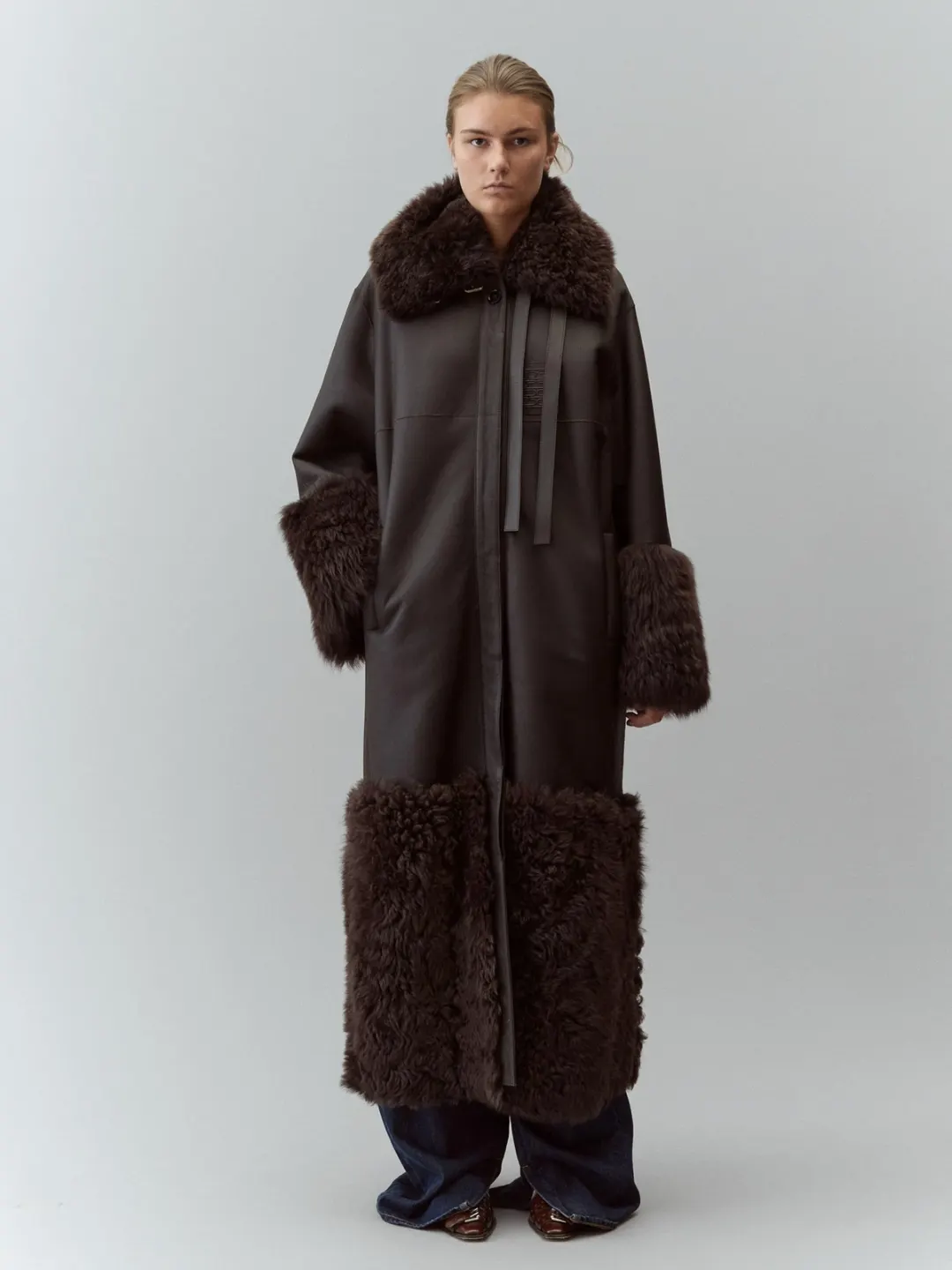





At Niccolò Pasqualetti SS27, flat fabric turns into sculptural forms, and clothing seems to shift with the body. What happens when geometry learns to move?
Niccolò Pasqualetti SS27: Form Follows Feeling
At Niccolò Pasqualetti SS27, flat fabric turns into sculptural forms, and clothing seems to shift with the body. What happens when geometry learns to move?
November 18, 2026


A rectangle folds around the waist, a triangle collapses into an unexpected drape, and an ordinary pair of trousers expands into a sculptural volume. At Paris Fashion Week Spring/Summer 2027, Niccolò Pasqualetti explored the possibilities of transforming abstract geometry into clothing, allowing the human body to become an active participant in the design process.
Presented on October 4, 2026, the 38-look collection drew inspiration from Brazilian artist Lygia Clark, whose participatory sculptures challenged the relationship between objects and their surroundings. For the Italian designer, this artistic philosophy offered a new way to examine how fabric responds to movement, physical contact and individual interpretation.
When Niccolò Pasqualetti Meets Lygia Clark
Brazilian artist Lygia Clark approached sculpture as an interactive experience, inviting participants to manipulate objects and explore their relationship with physical space. Her Relational Objects investigated how simple materials could acquire different meanings through bodily engagement.
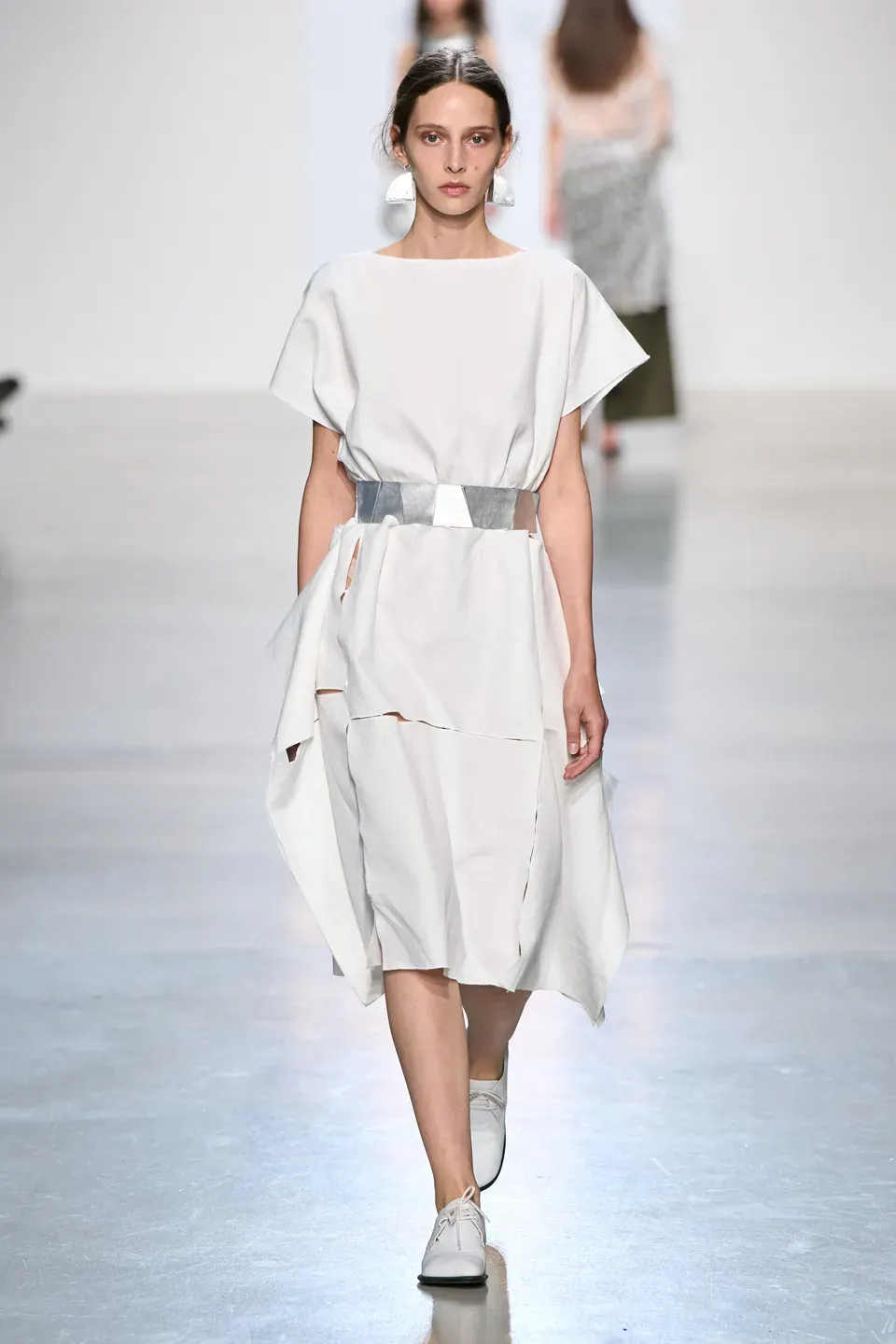
Niccolò Pasqualetti translated this philosophy into fashion through the manipulation of geometric forms. Squares, rectangles and triangles became starting points for garments whose final proportions emerged through folding, draping and strategic tension.
The designer explored these ideas through hands-on experimentation with physical objects, investigating how flat surfaces might collapse, bend or expand around the human figure. Clothing became an exercise in spatial transformation, with the body determining how each construction would ultimately behave.
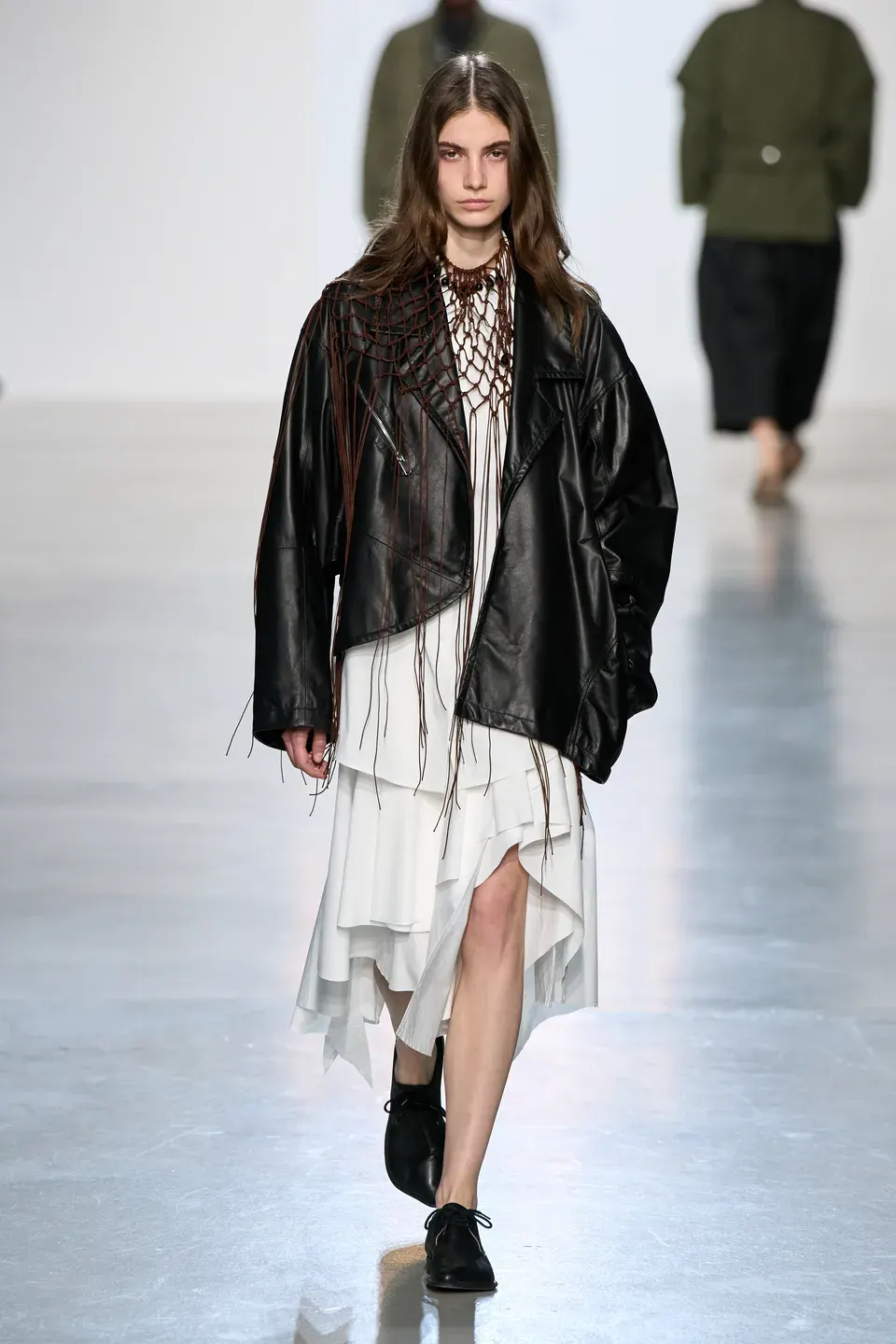
The runway maintained a restrained atmosphere, directing attention towards the garments themselves. Asymmetric dresses, sculptural trousers and unconventional tailoring appeared in an understated palette, punctuated by saturated red and reflective metallic surfaces.
The Silhouette Refuses to Stay in Shape
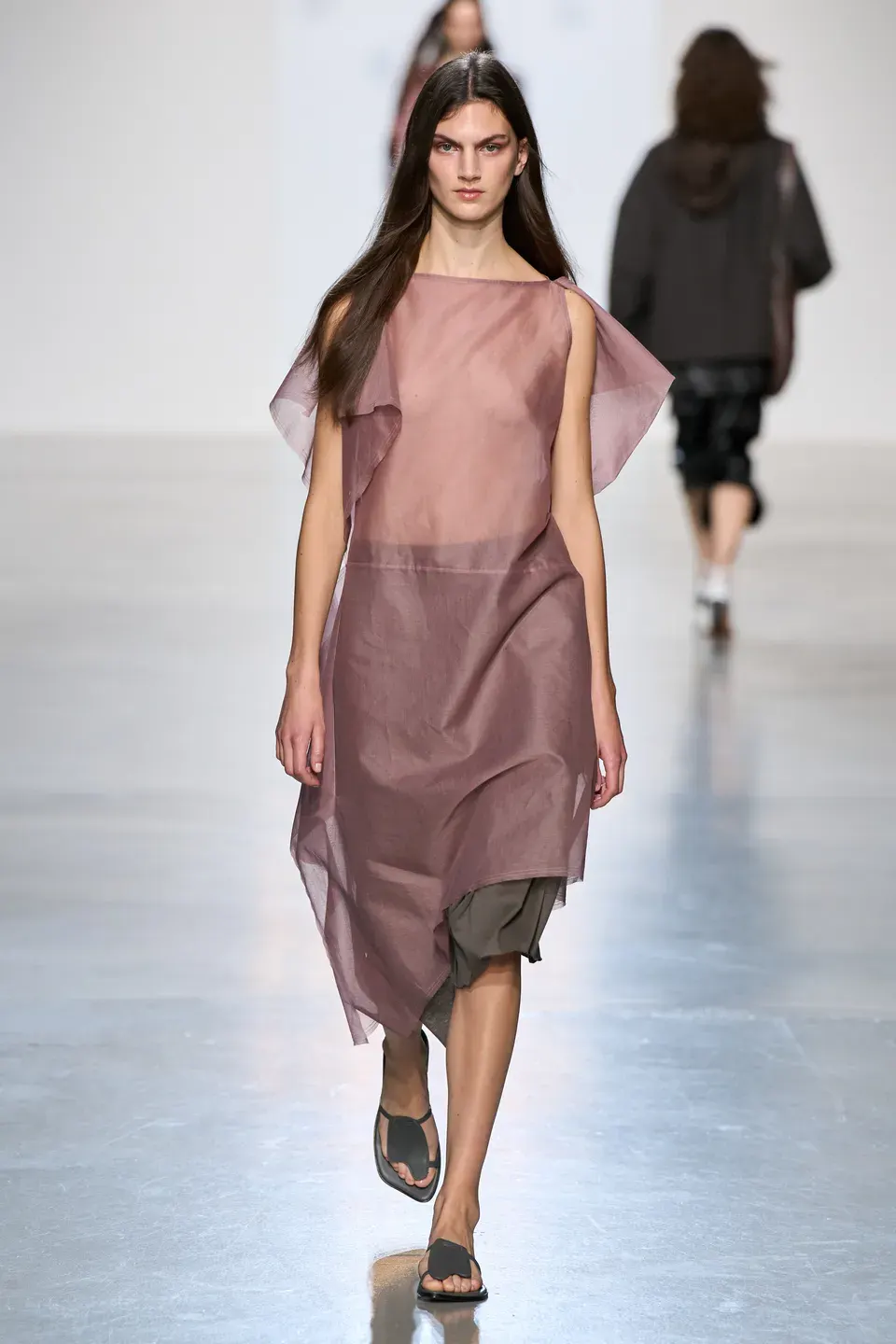
The collection's most compelling experiments emerged through the manipulation of proportion. Niccolò Pasqualetti approached familiar silhouettes as flexible geometric arrangements, allowing fabric to extend, gather and project beyond the body's natural outline.
A sleeveless red midi dress featured a relatively narrow bodice before expanding into an asymmetric projection around one hip. Its irregular draping created a sculptural interruption within an otherwise elongated silhouette, demonstrating how concentrated volume could transform the overall proportions of a garment.
Balloon trousers offered another distinctive construction. Developed in substantial canvas, their rounded legs expanded around the thighs and knees, creating inflated silhouettes that maintained their shape through the material's inherent stiffness. The generous volume contrasted with relatively restrained upper-body styling.
Cotton poplin tops and crepe dresses incorporated strategically positioned cords, allowing fabric to gather into adjustable folds. Pulling these elements changed the arrangement of material around the shoulders, waist and hips, giving the wearer a degree of control over the garment's silhouette.
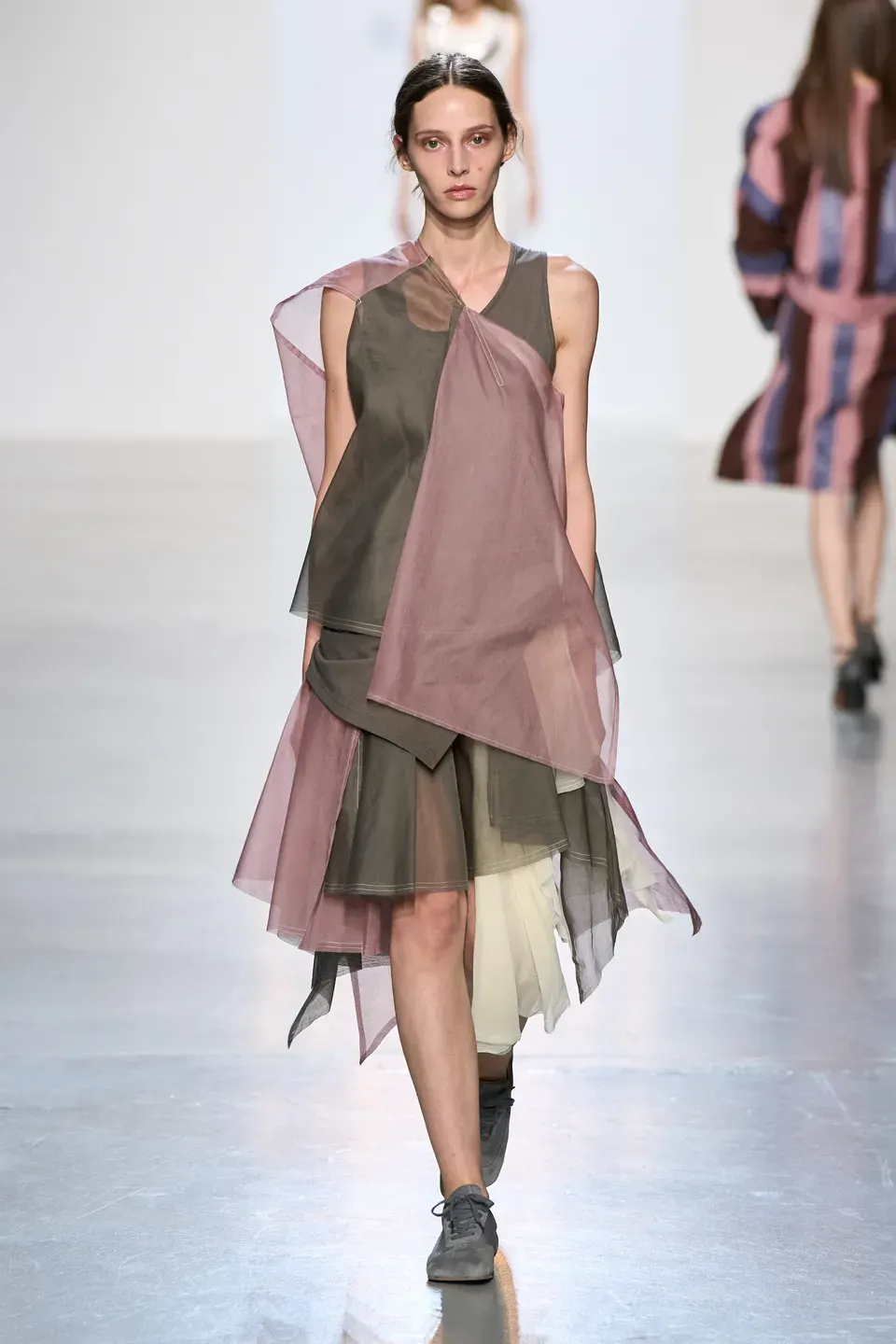
Elsewhere, elongated column dresses featured irregular hems and draped sections formed from rectangular panels. Sculptural skirts introduced angular layers and exaggerated hip proportions, creating unexpected relationships between flat fabric and dimensional form.
Fabric Has a Few Tricks Up Its Sleeve
Material experimentation introduced another dimension to the Niccolò Pasqualetti vocabulary, particularly through the transformation of familiar textiles into unexpected surfaces.
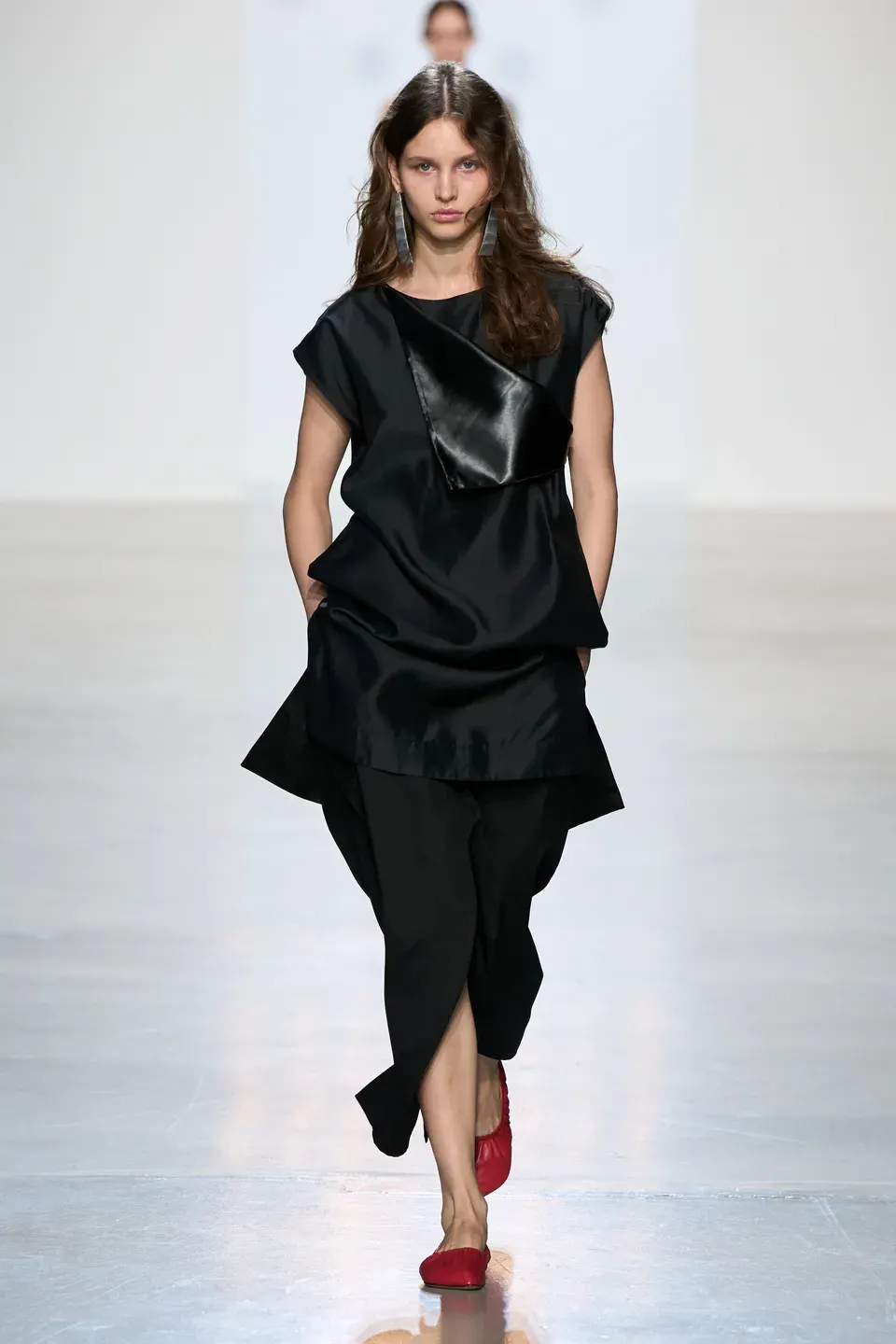
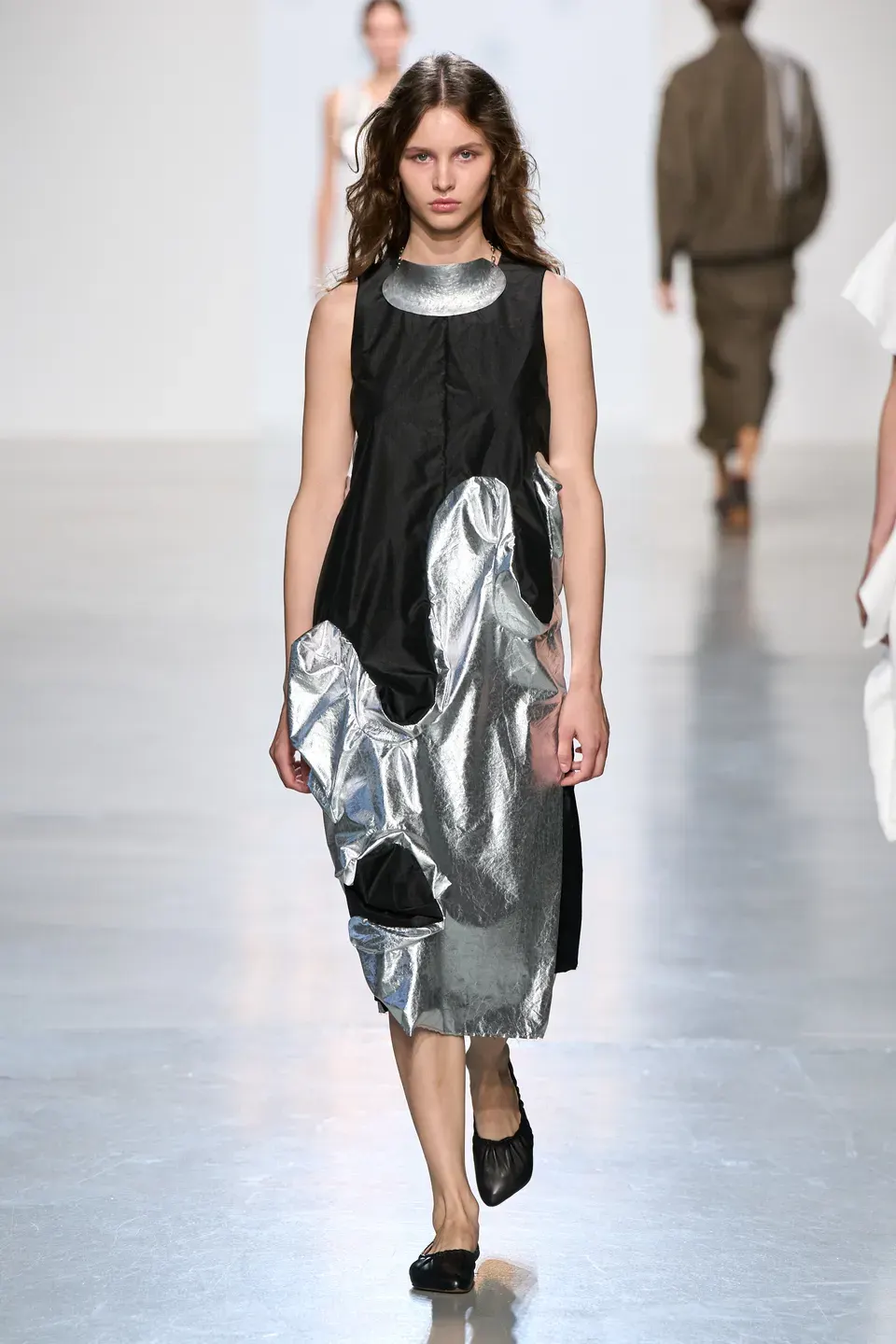
Laminated silk produced one of the collection's most striking effects. Its crumpled, reflective finish resembled sheets of silver foil, introducing metallic brilliance into otherwise fluid garments. The treatment created an intriguing relationship between the visual appearance of rigidity and the underlying flexibility of silk.
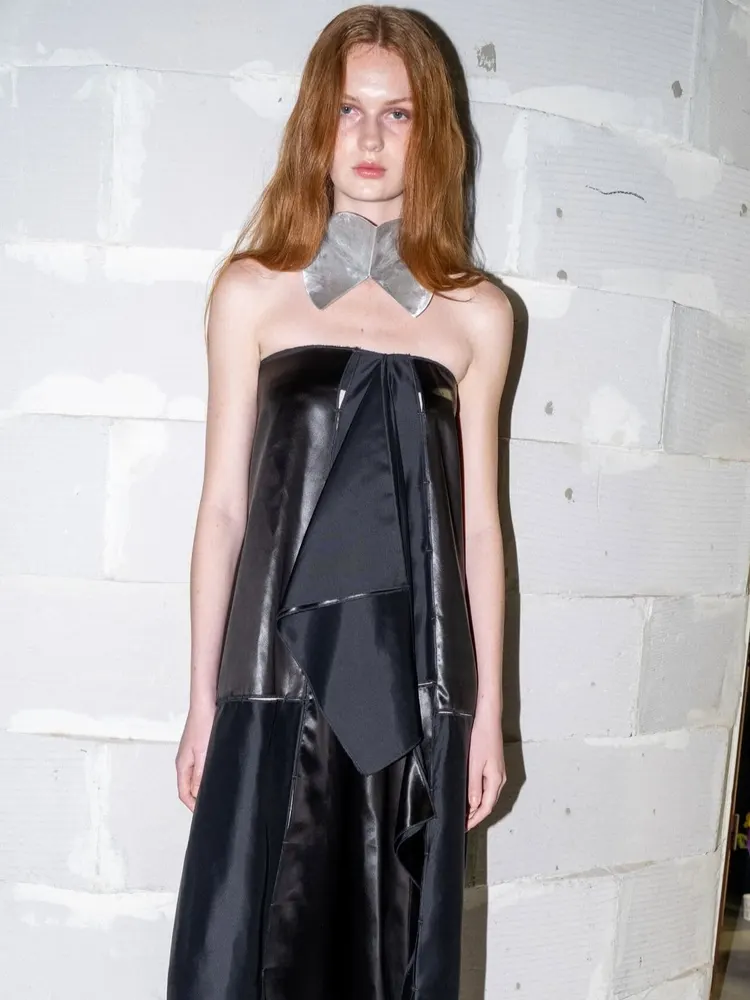
A sleeveless black dress incorporated irregular silver sections, allowing the reflective material to interrupt the garment's dark surface. As the fabric moved, its creased texture produced changing patterns of light and shadow.
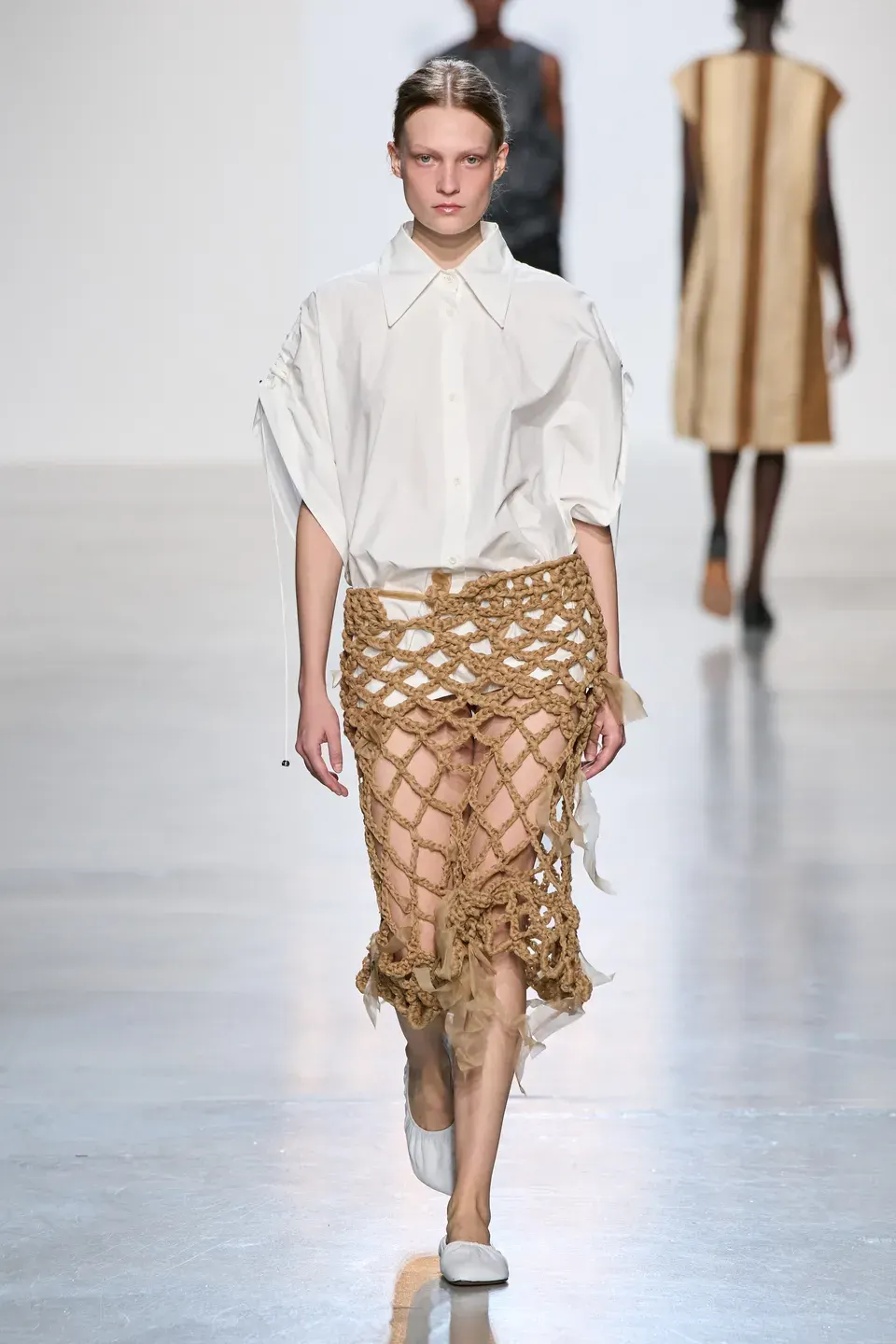
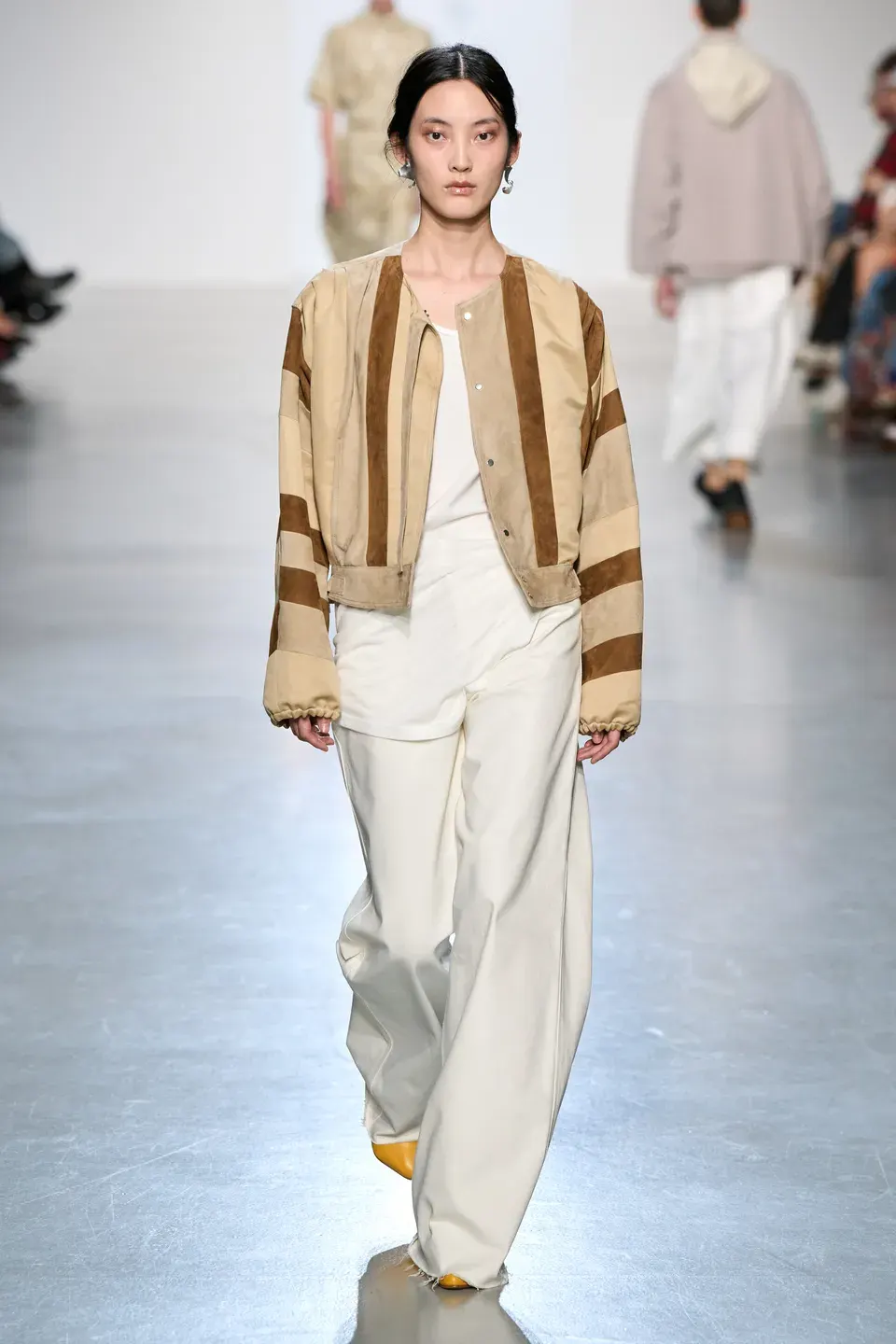
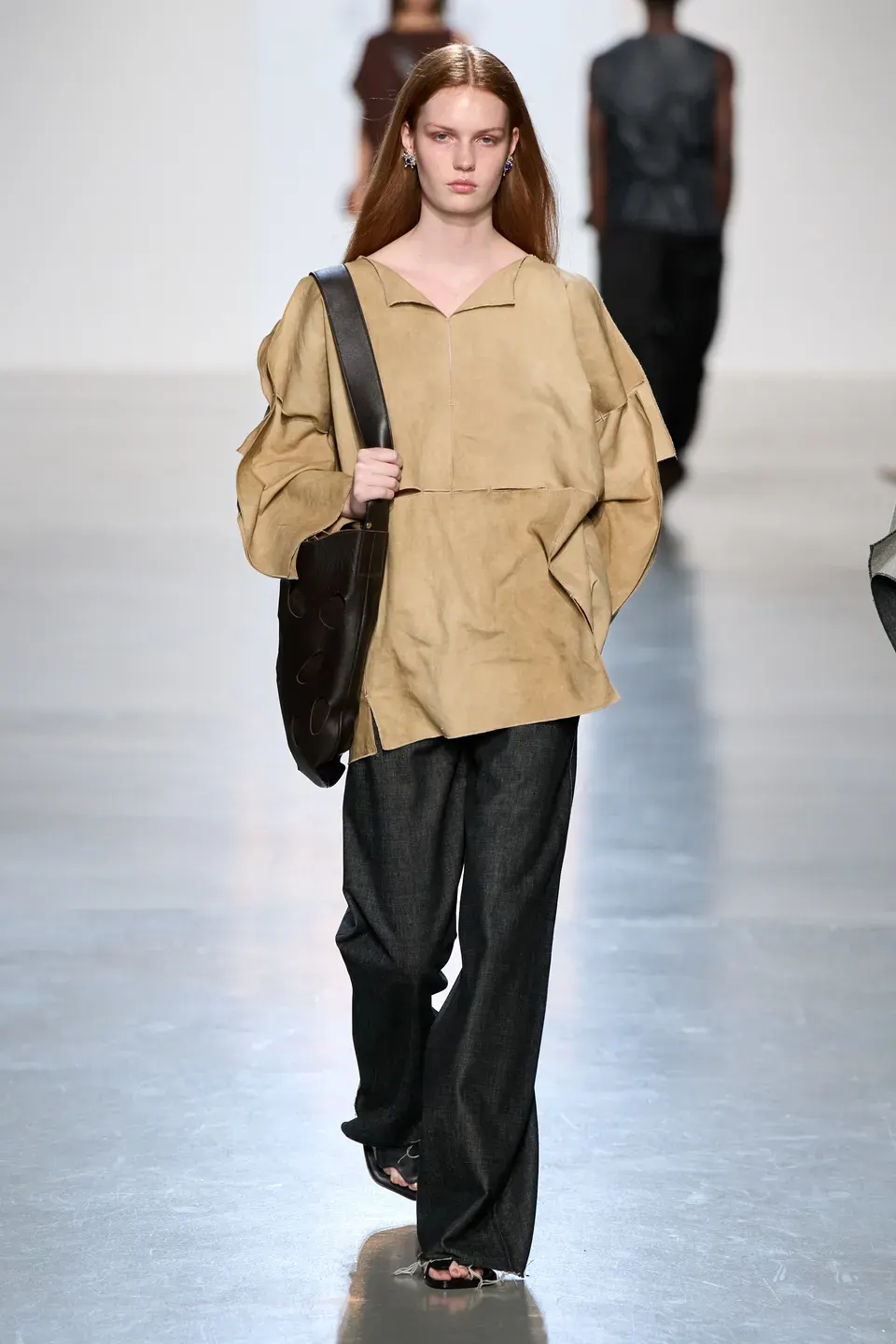
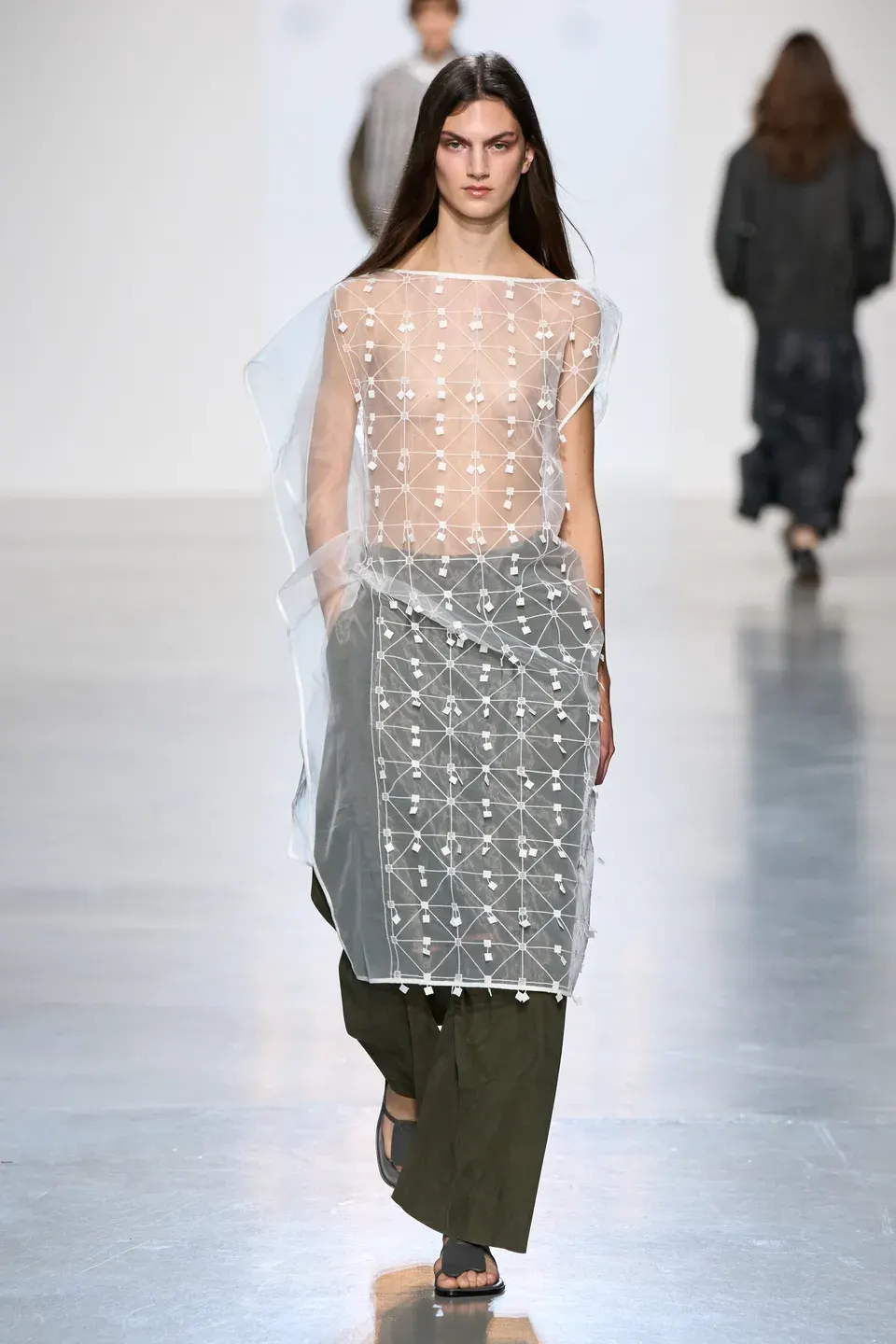
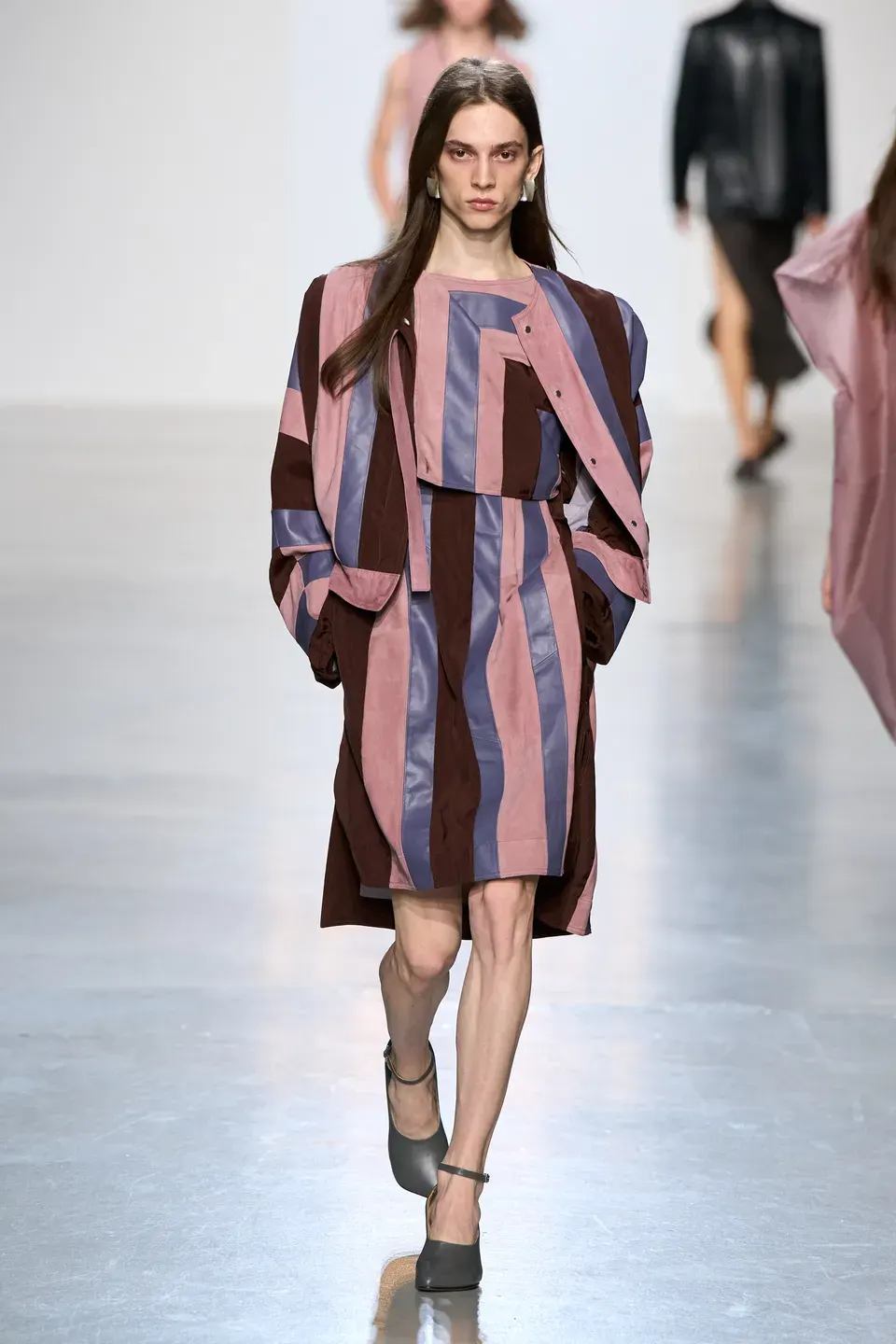
Elsewhere, multicoloured strips of leather, suede and translucent viscose were assembled into a patchwork jacket. Their contrasting weights and degrees of transparency created a tactile composition, with individual materials retaining their distinctive surface characteristics.
Knitwear underwent similar experimentation. A cardigan combined sections knitted in different directions and gauges, producing variations in density, stretch and texture. These changes subtly disrupted the garment's otherwise familiar construction.
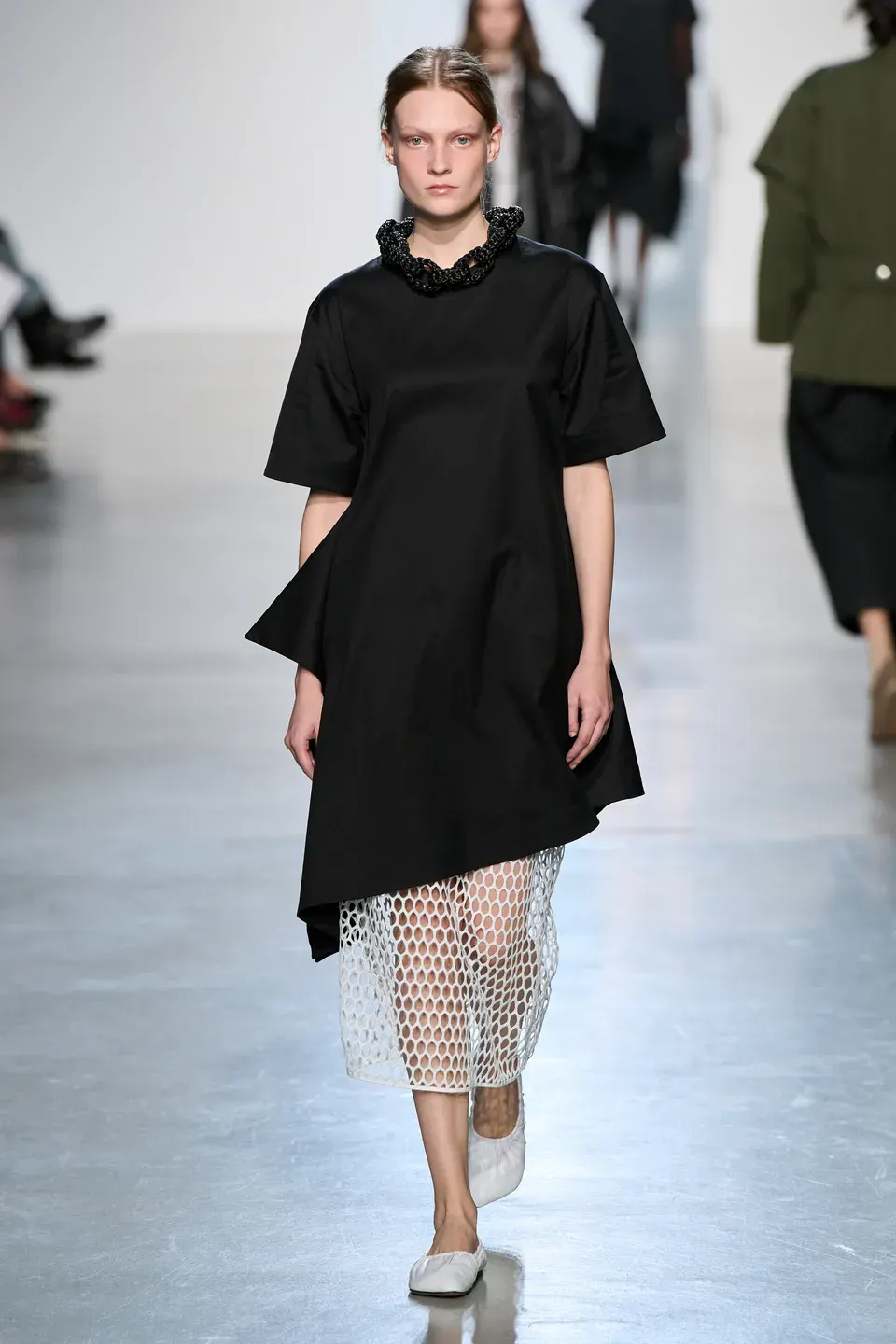
Raw linen, denim and structured gabardine introduced utilitarian references, while gauze and satin provided softer draping qualities. Transparent mesh appeared beneath tailored layers, revealing the relationships between different textile surfaces.
Niccolò Pasqualetti Rewrites the Rules of Menswear
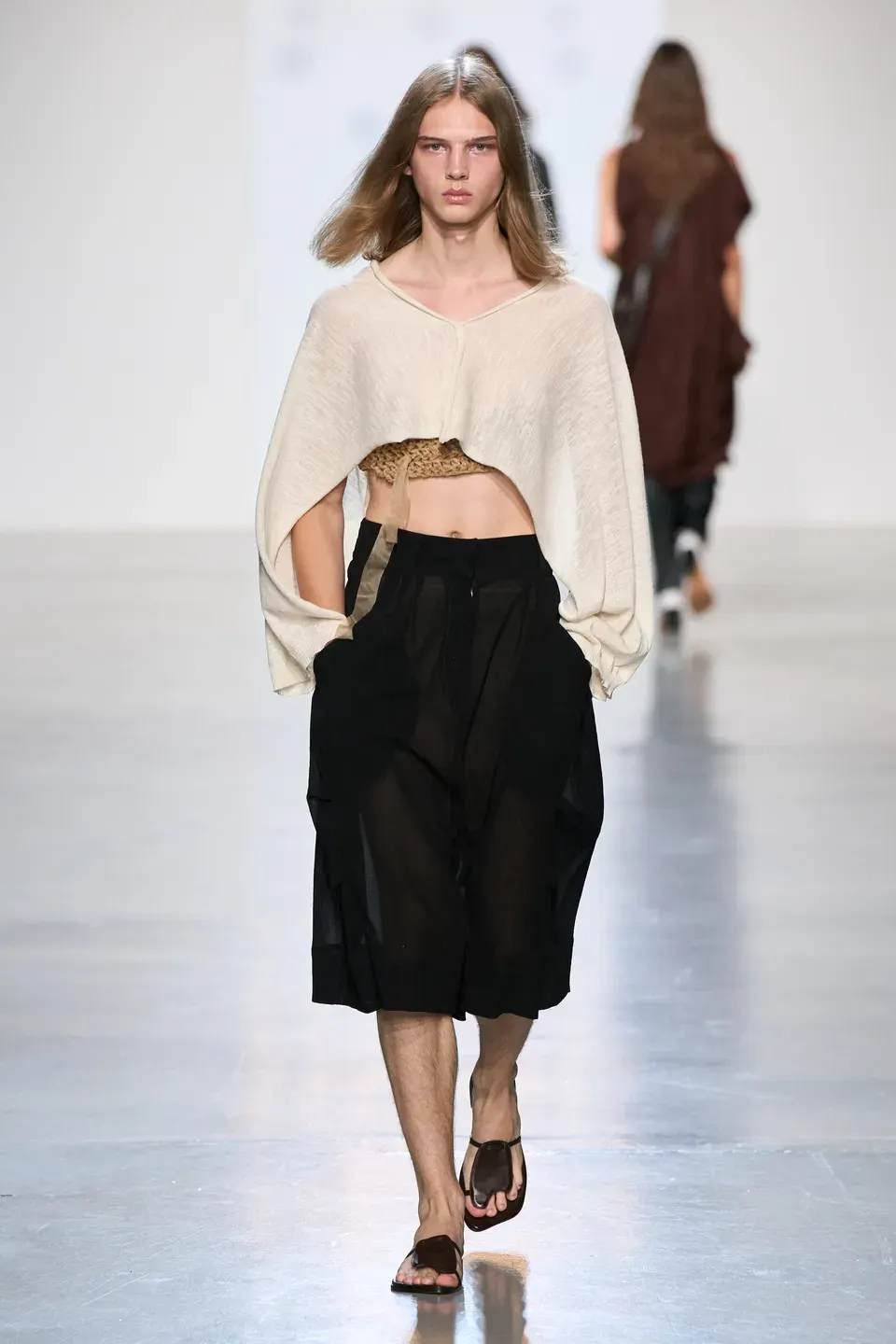
Menswear occupied an essential place in Niccolò Pasqualetti SS27, extending the designer's sculptural vocabulary into relaxed tailoring and utilitarian dressing. Traditional masculine garments underwent subtle distortions, with proportion, fabric weight and unconventional construction redefining familiar silhouettes.
An olive suede jacket appeared with a black shirt and matching wide-leg trousers, establishing an elongated, relaxed profile. Elsewhere, a cropped khaki utility jacket featured oversized flap pockets and an asymmetric zipper, paired with generously cut trousers. Its shortened proportions introduced an architectural contrast between the compact torso and voluminous lower half.
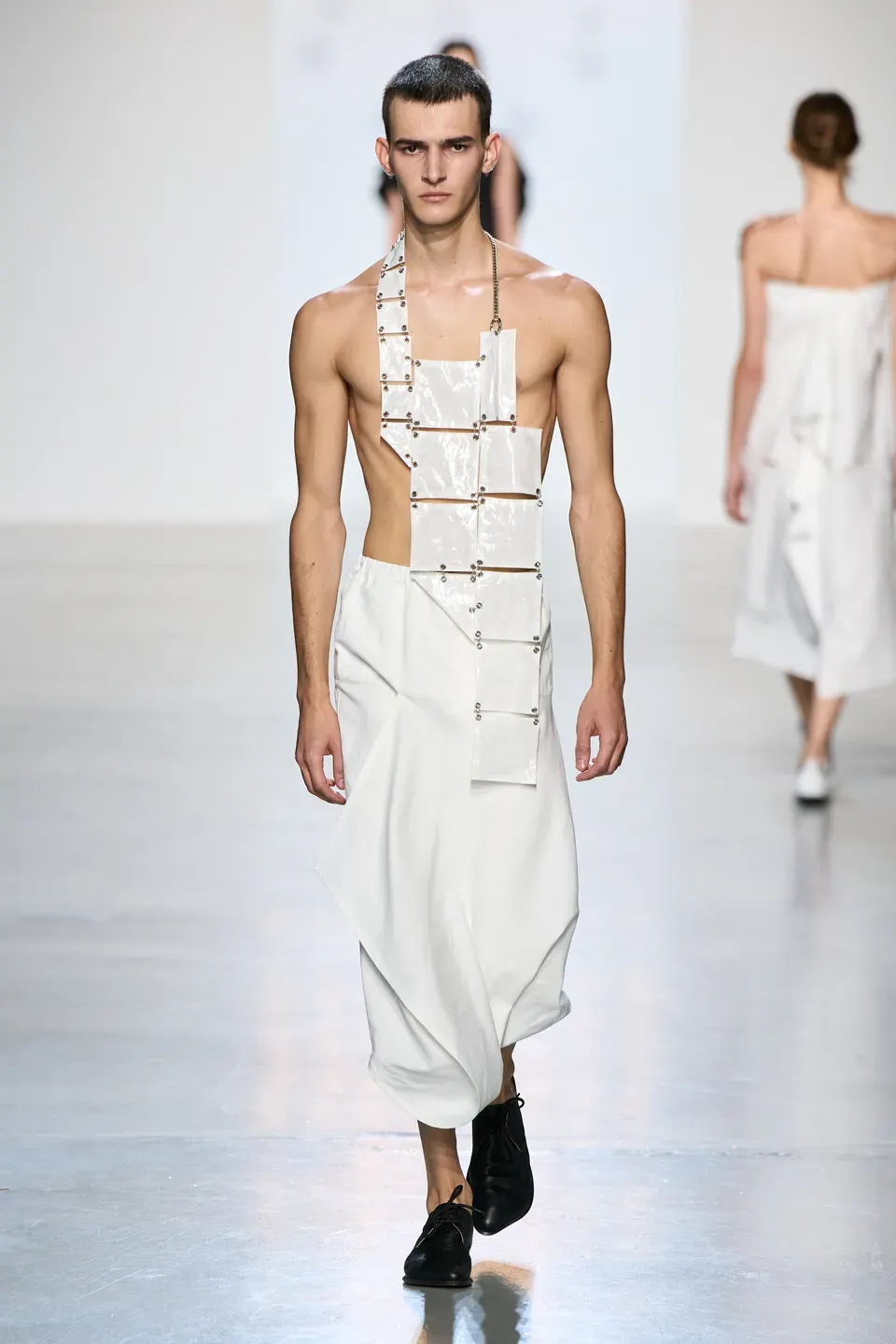
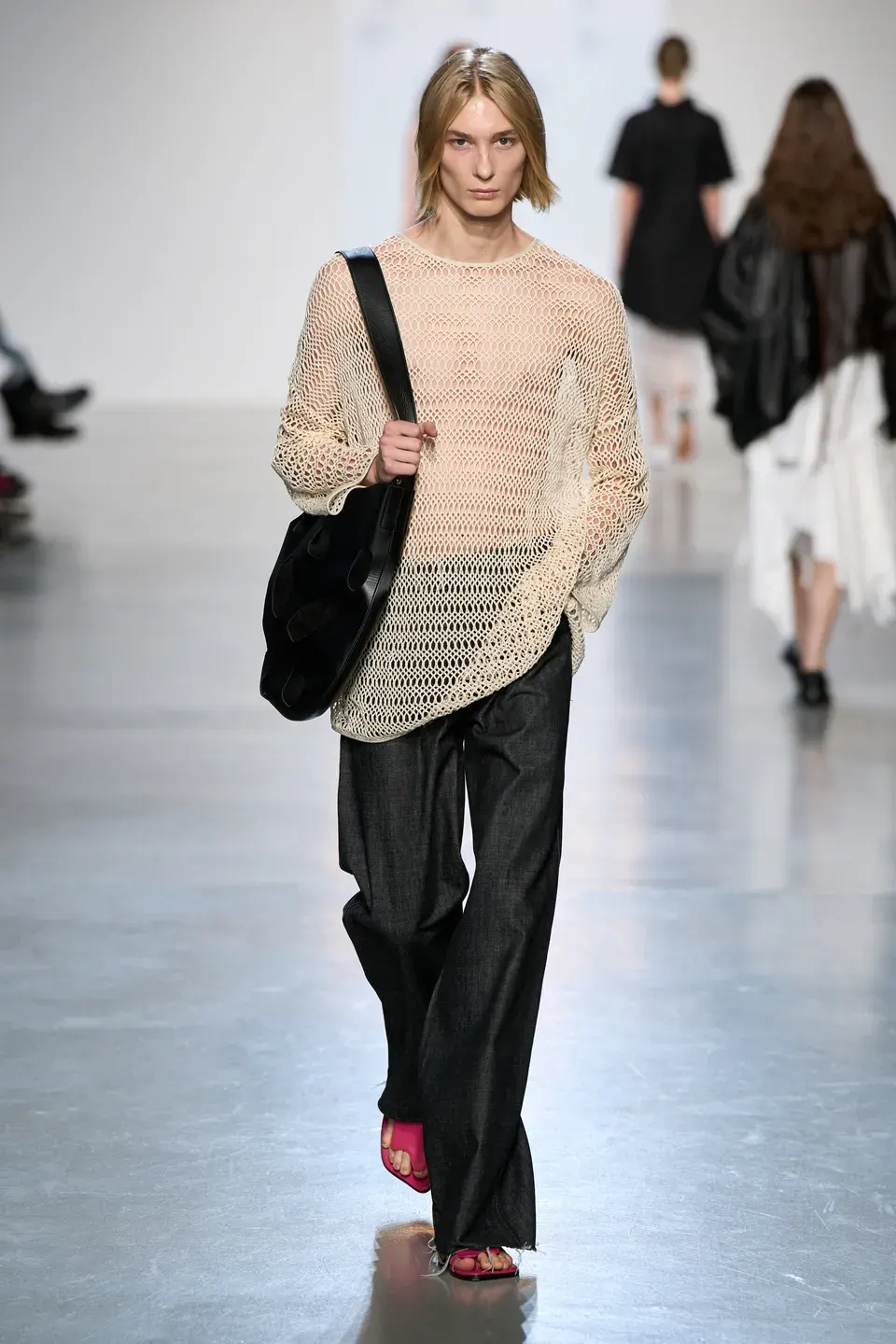
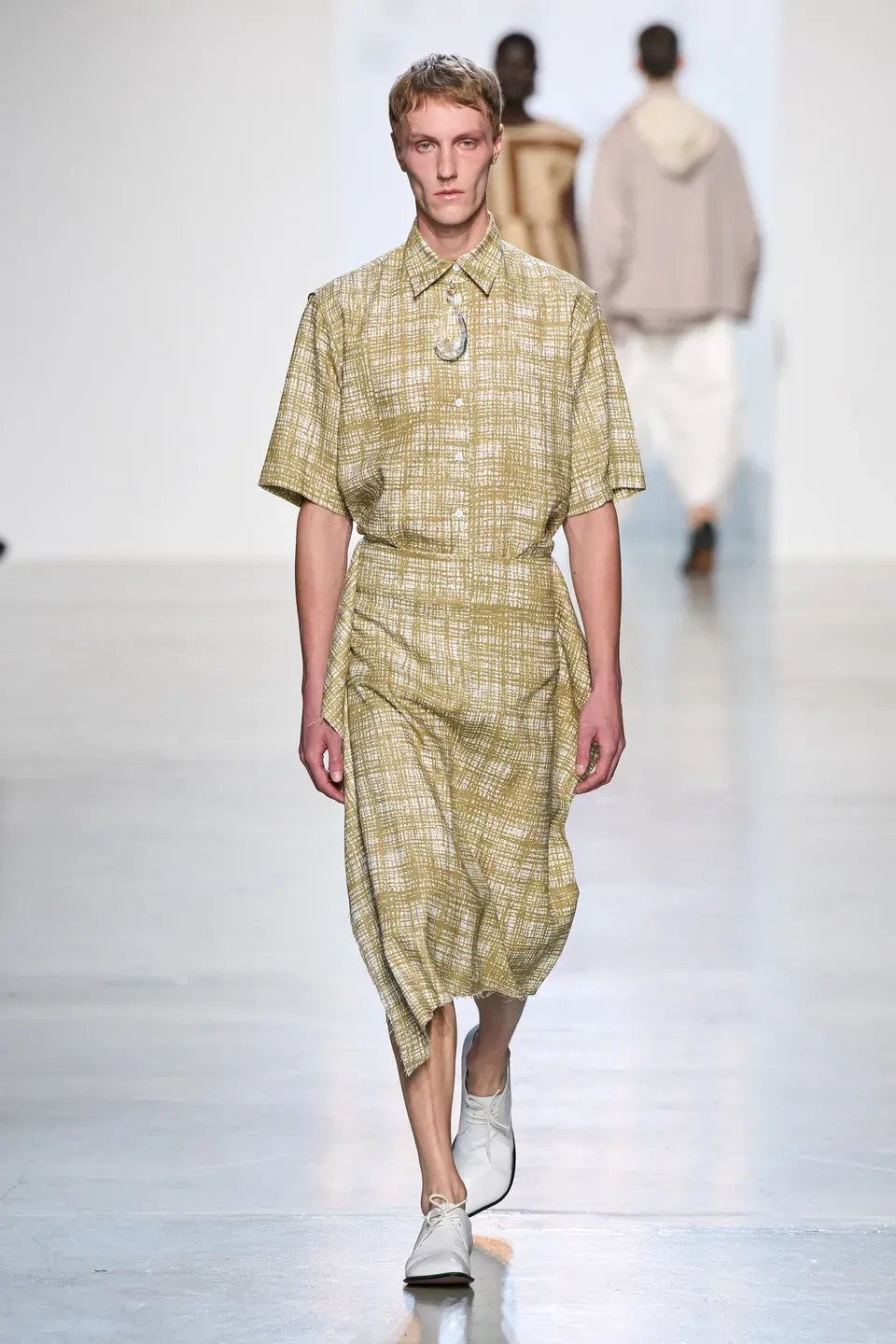
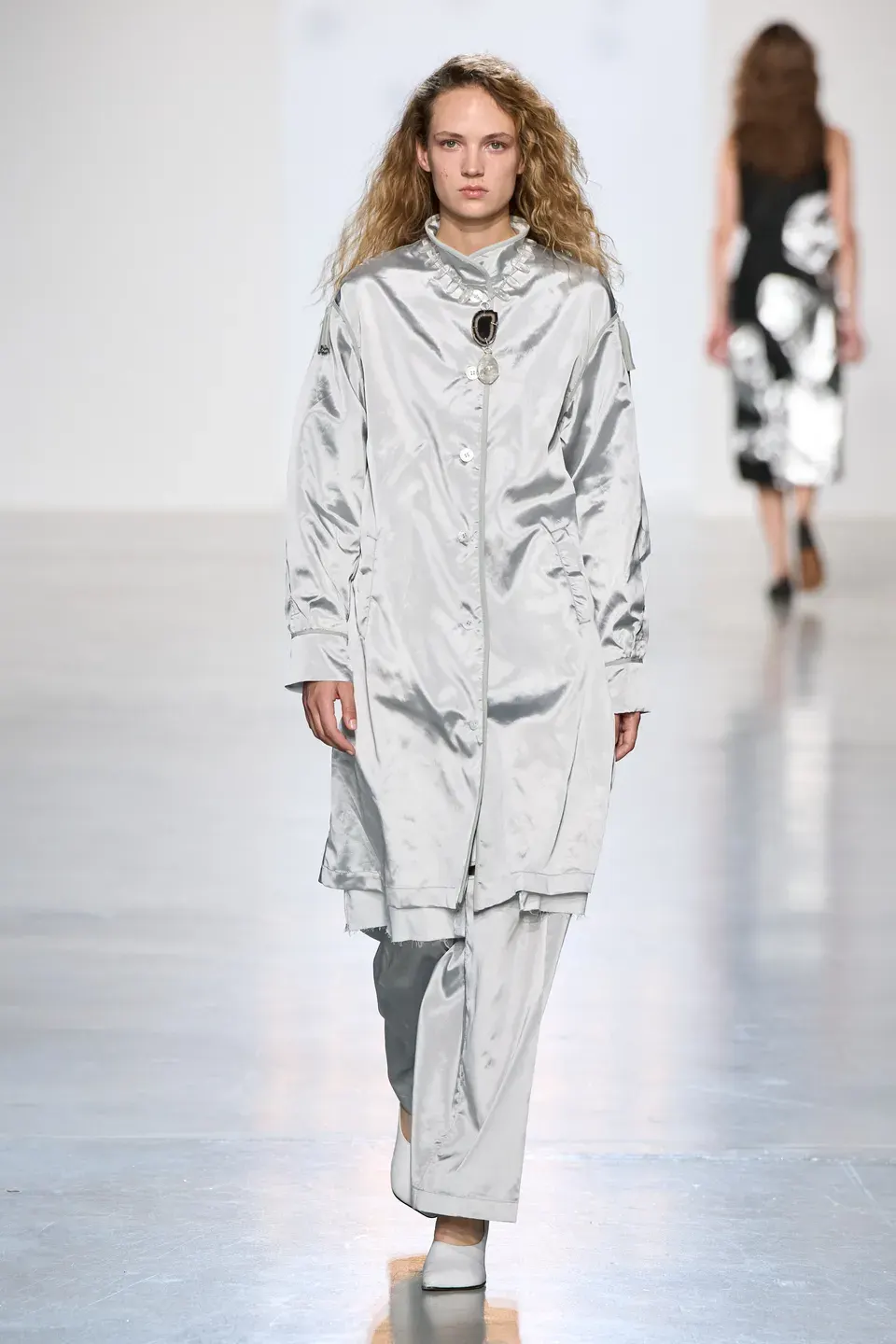
A charcoal and brown ensemble combined a cropped, stand-collar jacket with patch pockets and decorative lacing, while a silver-toned satin-like coat introduced a fluid alternative to structured outerwear. Its extended length and softly falling fabric gave traditional menswear an almost ceremonial elegance.
Through these designs, Niccolò Pasqualetti imagined masculinity beyond rigid tailoring conventions. The collection proposed a wardrobe where utility, fluidity and sculptural experimentation coexist, allowing familiar garments to acquire more expressive proportions.
Jewelry Becomes a Sculpture of Its Own
Accessories extended Niccolò Pasqualetti's exploration of geometric form into an intimate relationship with the body.
Oversized silver collars curved around the neckline, sometimes resembling crescent-shaped metal sculptures. Their rigid surfaces introduced concentrated visual weight above the collection's softer garments.
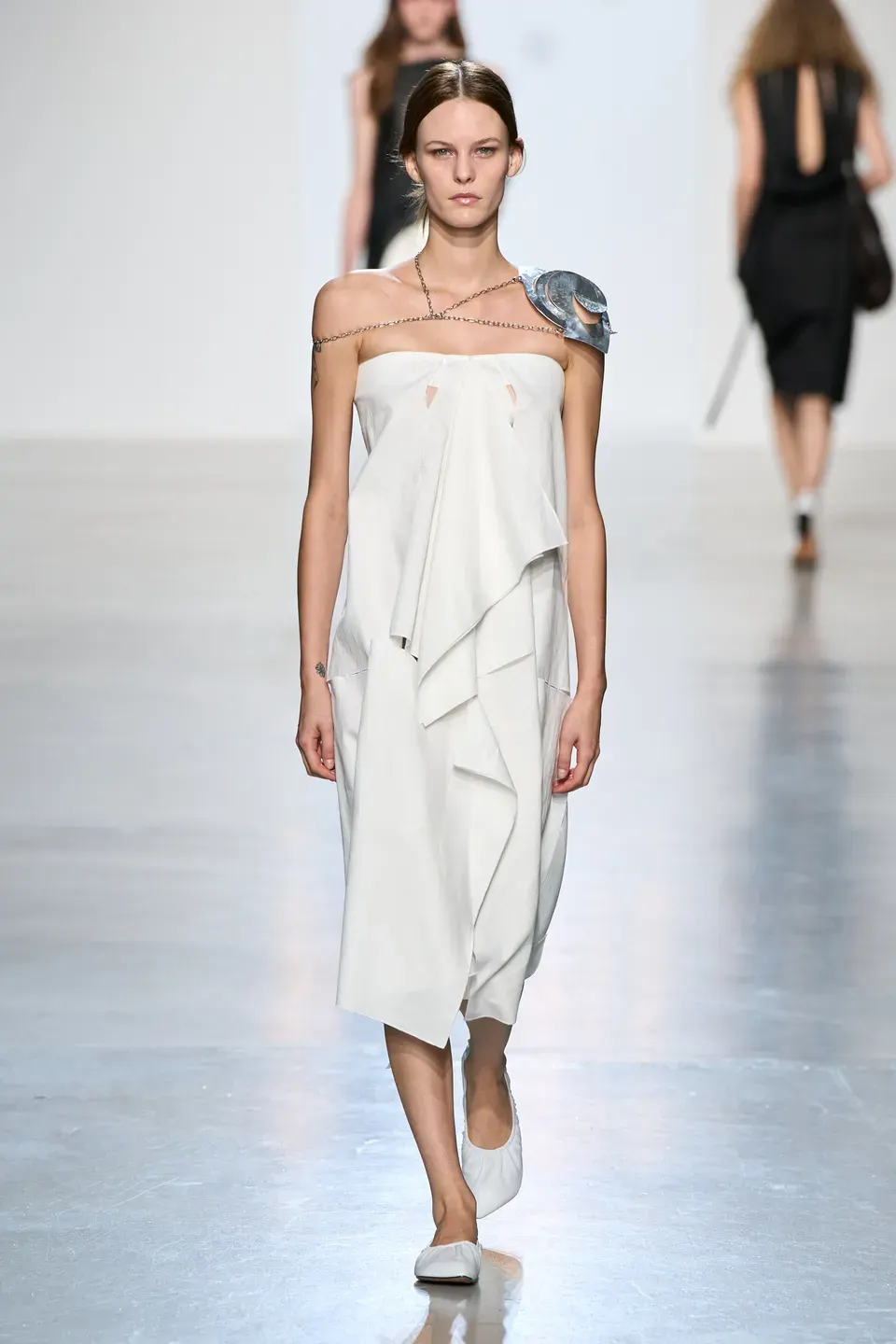
One white strapless dress featured a substantial metallic ornament positioned across the shoulder, supported by a delicate chain arrangement. The accessory altered the visual balance of the silhouette, creating an asymmetric composition between the exposed shoulder and the suspended metal form.
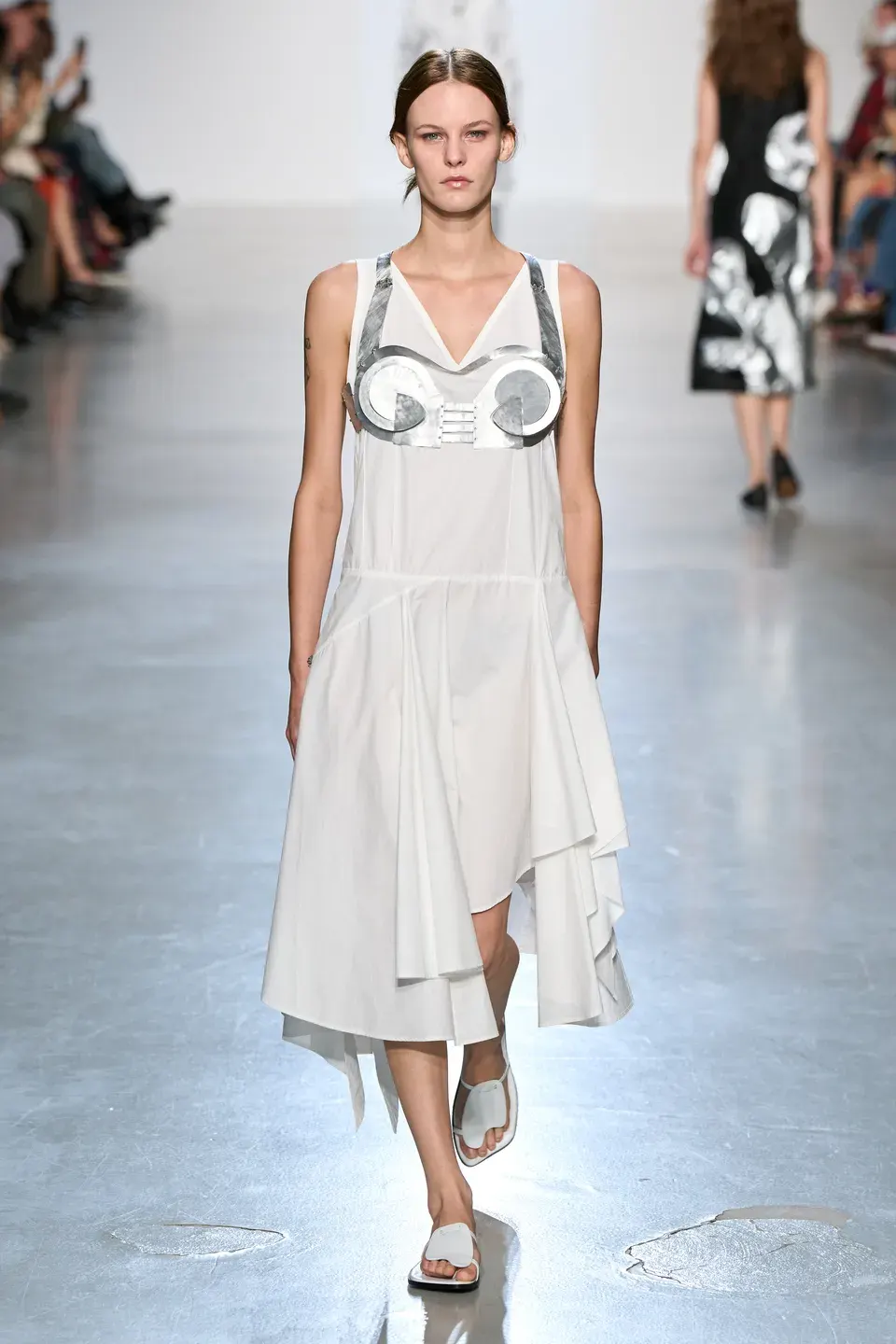
Bent metallic sheets and irregular sculptural elements appeared alongside gemstone compositions with an almost geological character. Their organic contours suggested objects shaped by natural processes, introducing a different interpretation of geometry through jewelry.
Styling remained relatively understated. Flat shoes, simple sandals and relaxed hair allowed the garments' unusual proportions and metallic accessories to dominate.
The restrained colour palette of ivory, grey, black, brown and dusty rose provided a quiet foundation for these sculptural interventions. Occasional saturated red introduced greater intensity without overwhelming the collection's material experimentation.
Niccolò Pasqualetti Lets the Body Decide
The Spring/Summer 2027 presentation arrived during a period of significant development for Niccolò Pasqualetti, whose independent label was founded in 2021. Recognition as a finalist for the 2024 LVMH Prize and a guest designer appearance at Pitti Immagine Uomo in June 2025 strengthened the brand's international visibility.
The most convincing achievement of Niccolò Pasqualetti SS27 lies in its ability to transform geometric experimentation into clothing with a discernible relationship to the body. Adjustable folds, asymmetric draping and sculptural trousers demonstrate how unconventional construction can produce new possibilities for movement and personal expression.