MENU
Close





Bottega Veneta SS27 shows Louise Trotter at full technical power, while the cleanest dresses suggest her most exciting Bottega may come from doing less.
Bottega Veneta SS27 shows Louise Trotter at full technical power, while the cleanest dresses suggest her most exciting Bottega may come from doing less.
September 27, 2026
Advertisement

Advertisement



A year in Milan taught Louise Trotter to watch the city change clothes.
Winter demanded protection. Spring loosened the layers. Summer pulled fabric away from the body until dressing became lighter, freer, and increasingly tactile. For Bottega Veneta SS27, that seasonal transition gave Trotter a clear question: how can a house defined by exceptional craft make all that workmanship breathe?
The craft remains extraordinary. The weight starts to lift. Yet the most revealing moments appear when Trotter stops proving how much Bottega can make and simply lets a beautiful silhouette exist.
Trotter describes summer as an in-between condition.
City gives way to sea. Office hours loosen into holiday. Covered bodies gradually reveal more skin. Clothes respond through movement, fabric and behavior.
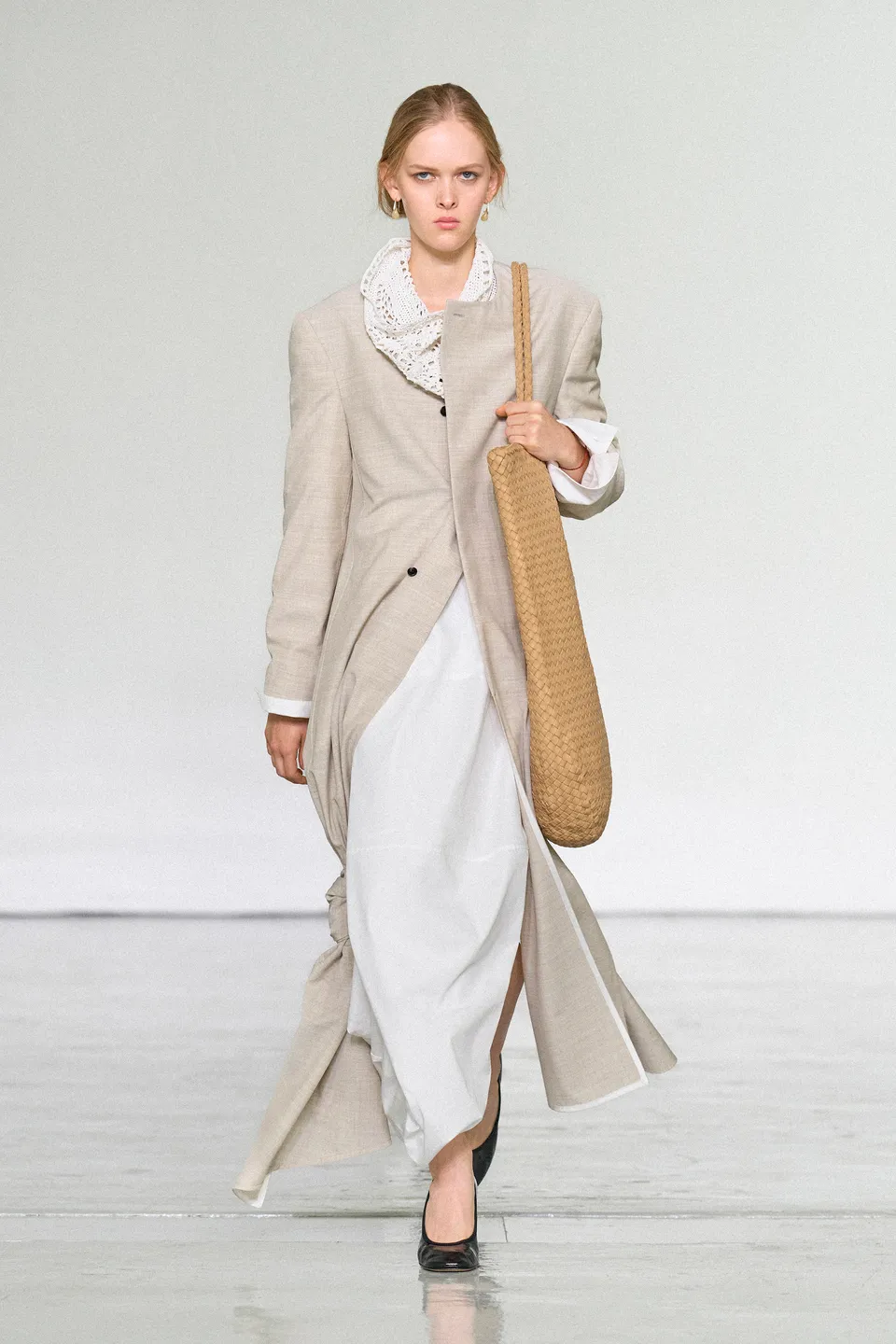
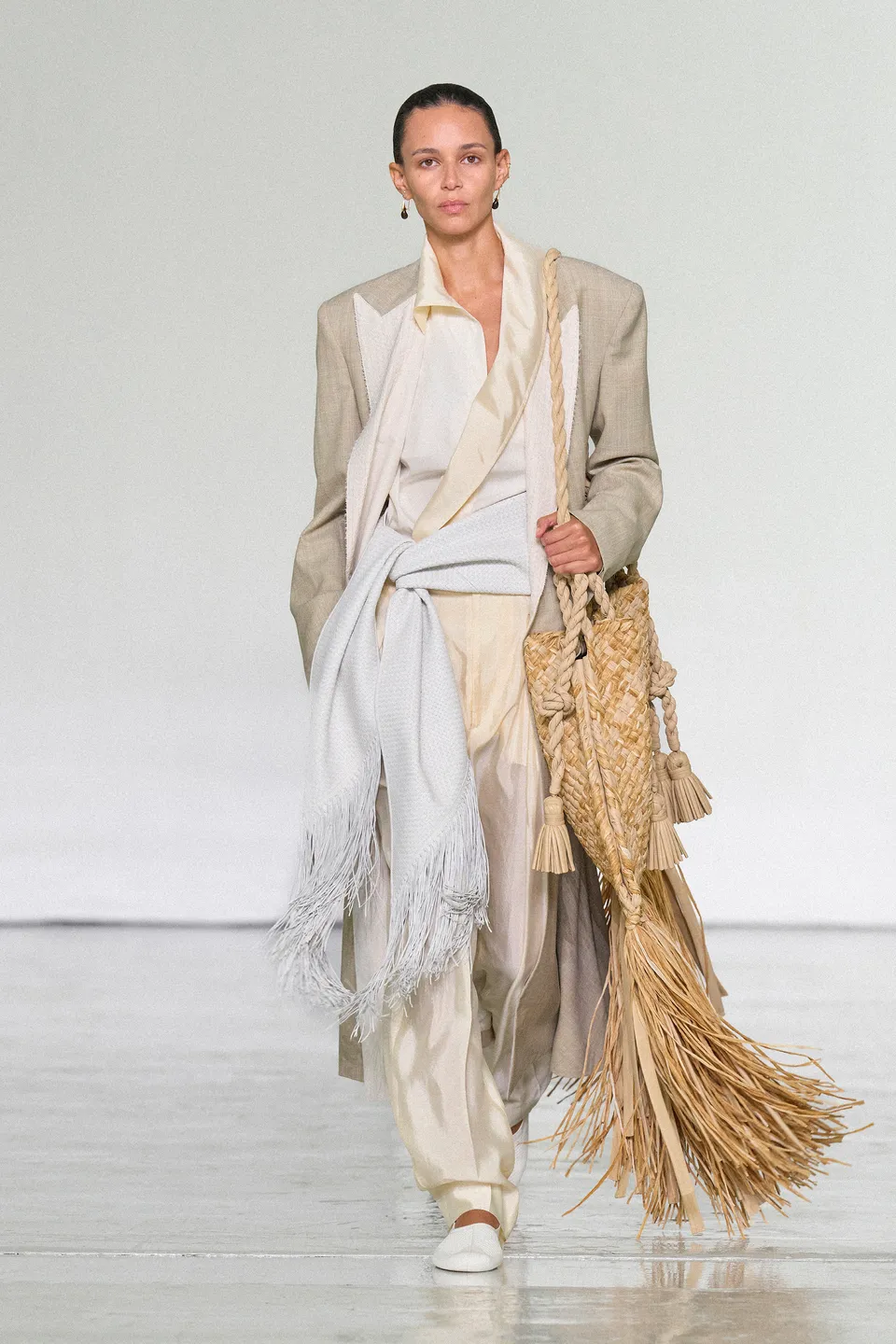
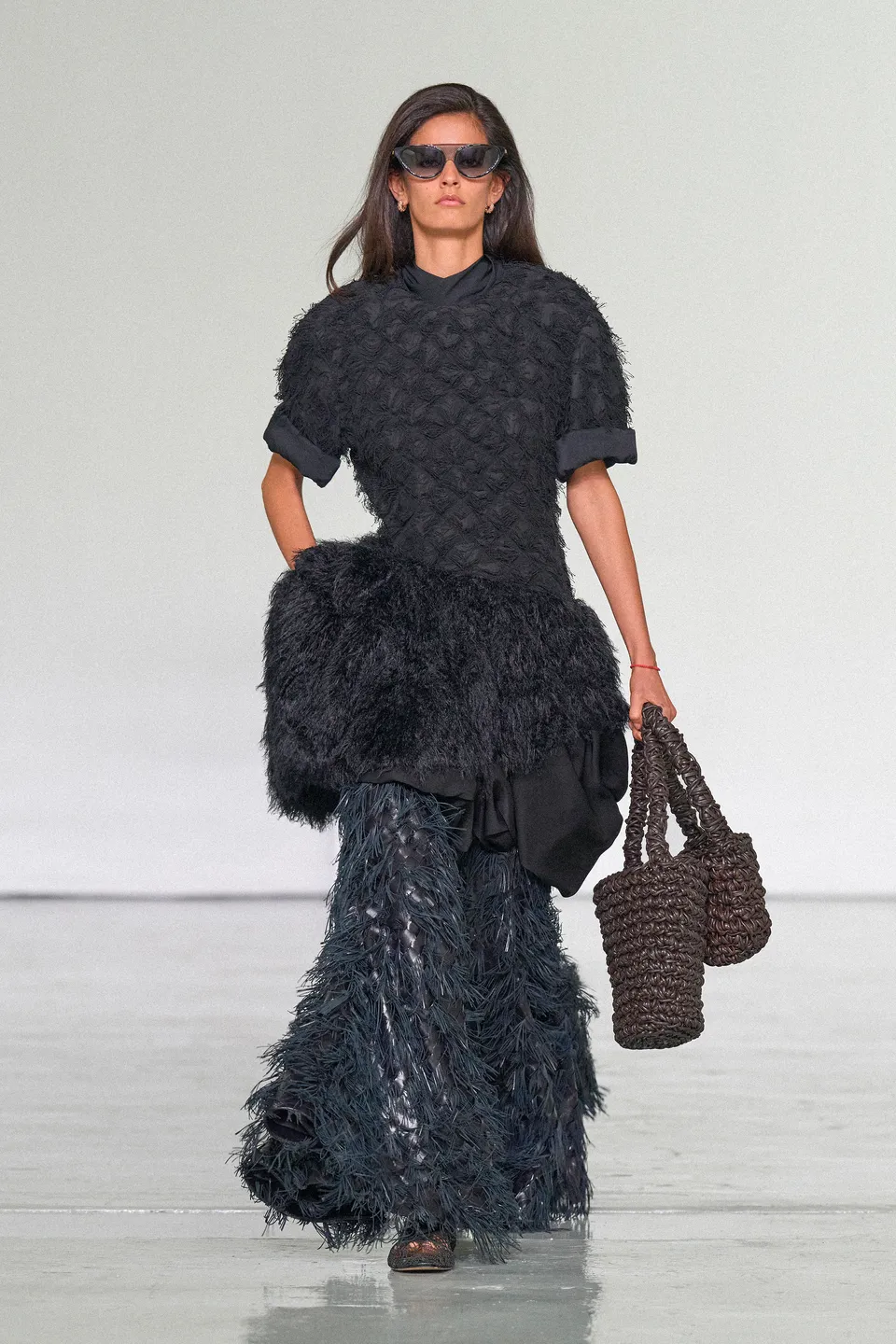
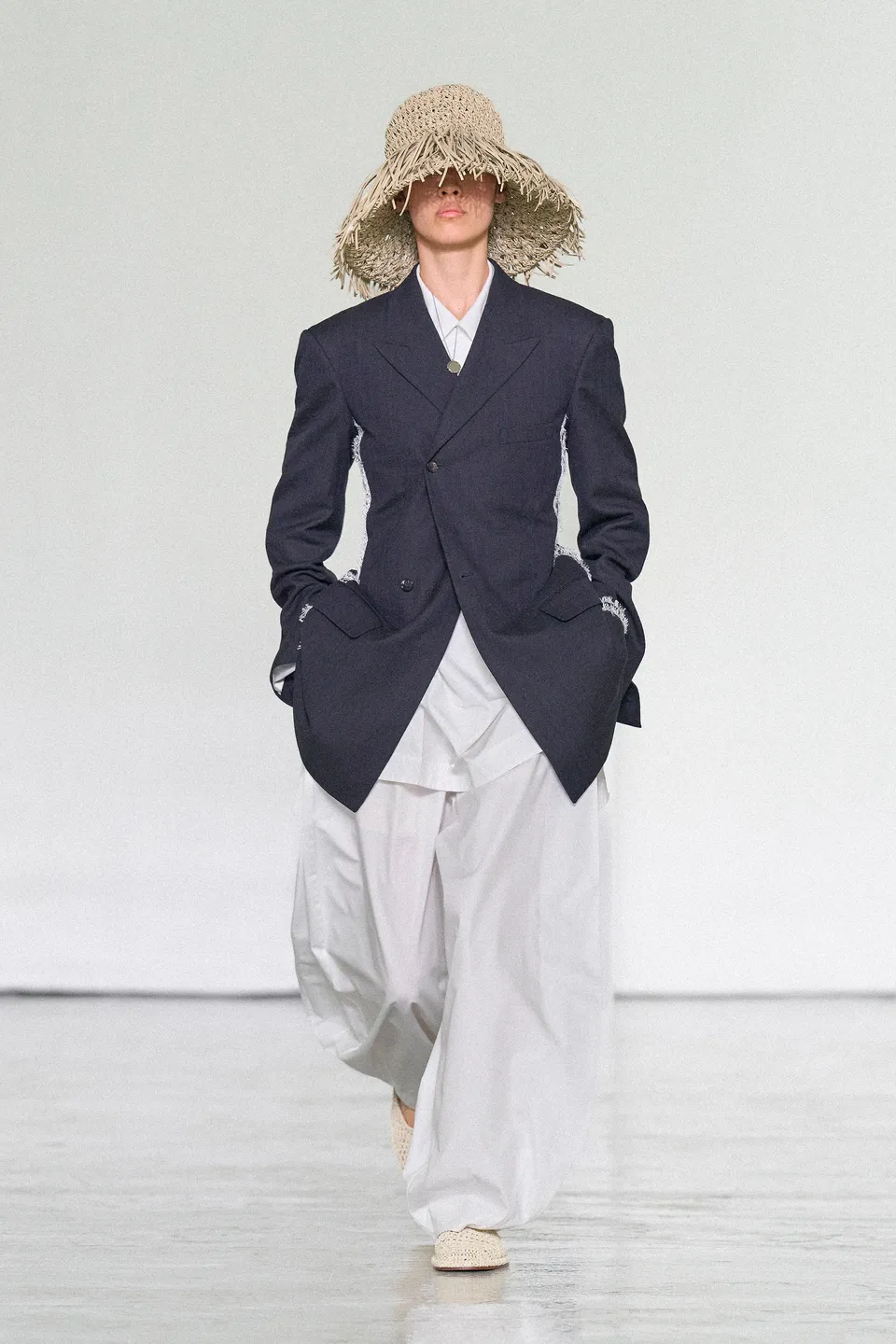
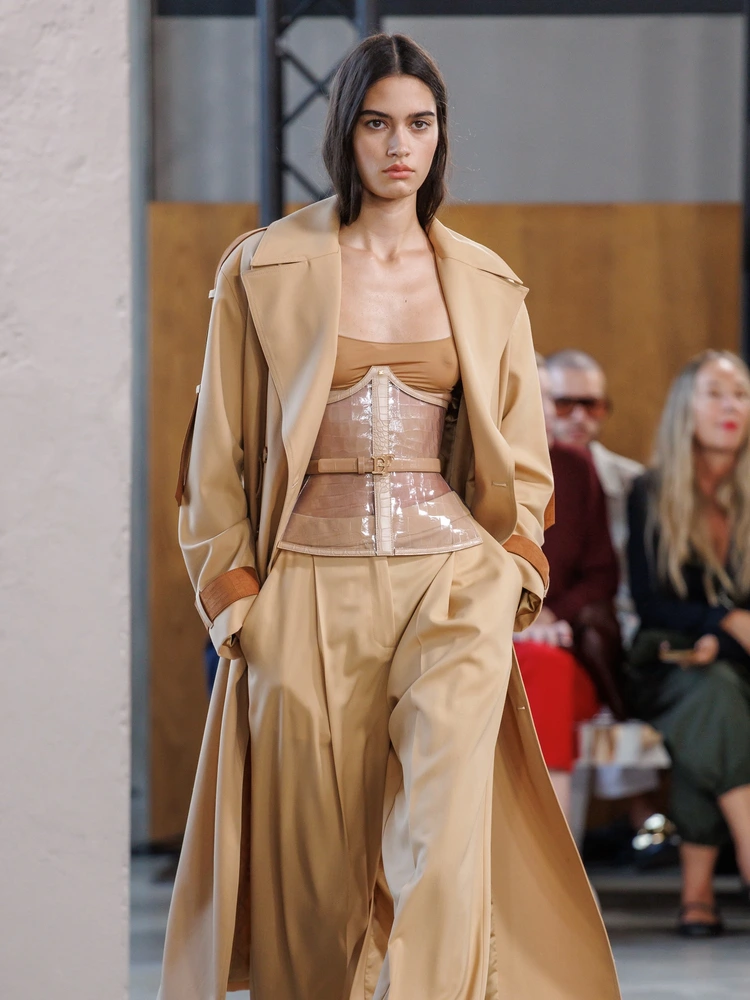
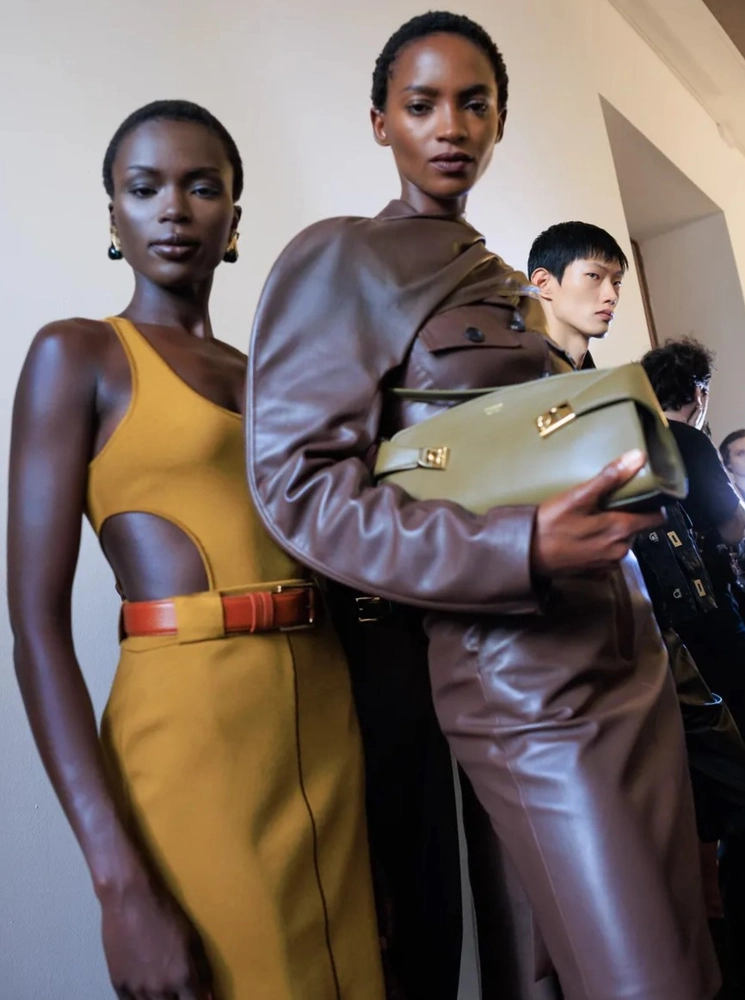
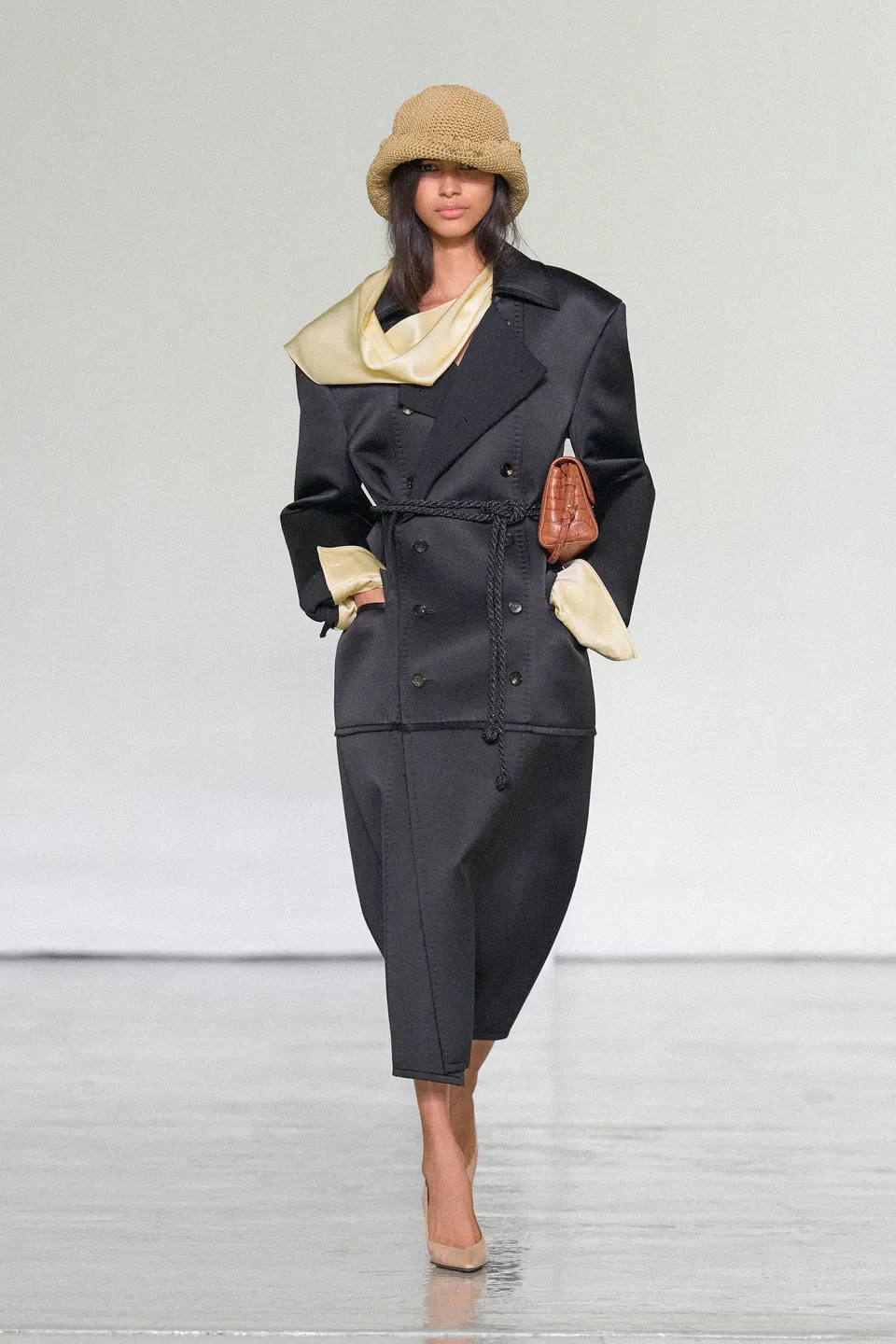
The runway follows that progression. Early looks retain the protective attitude of colder weather through elongated coats, power shoulders, and weathered neutrals. Several hems appear lifted, knotted, or gathered upward, evoking somebody approaching water and physically pulling clothing away from the ground.
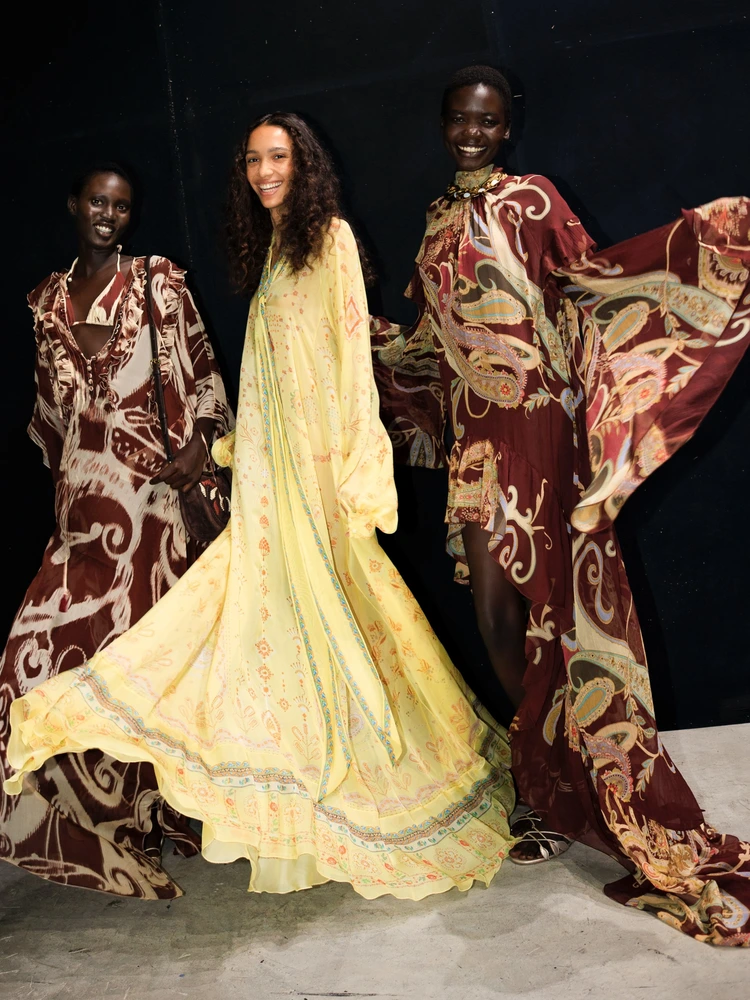
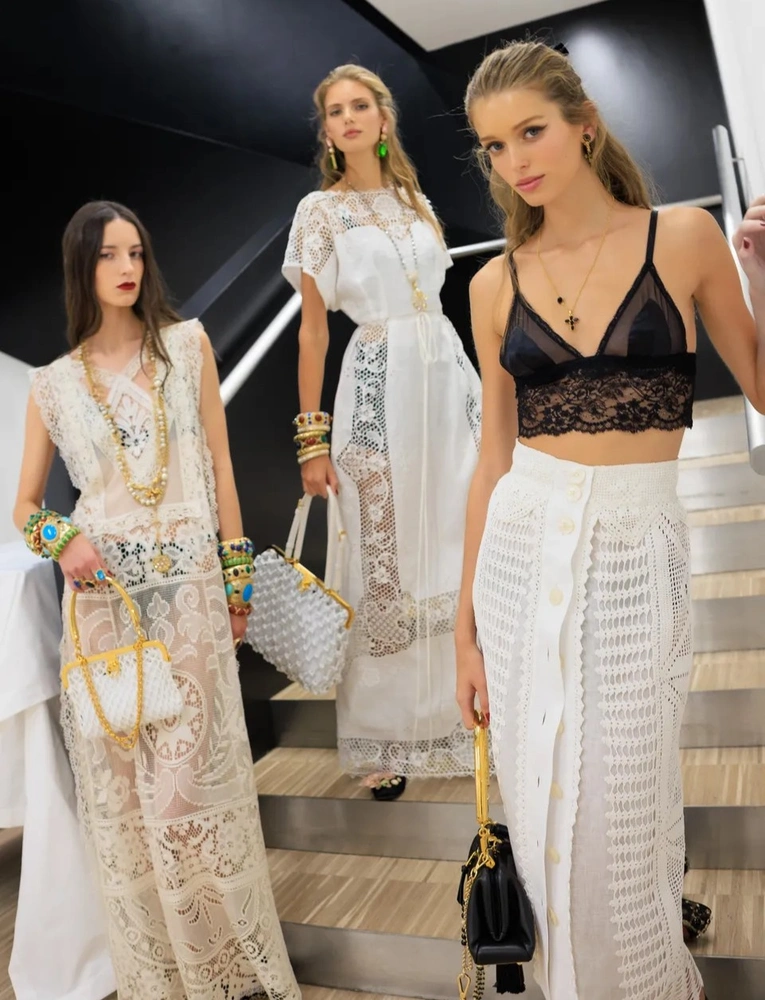
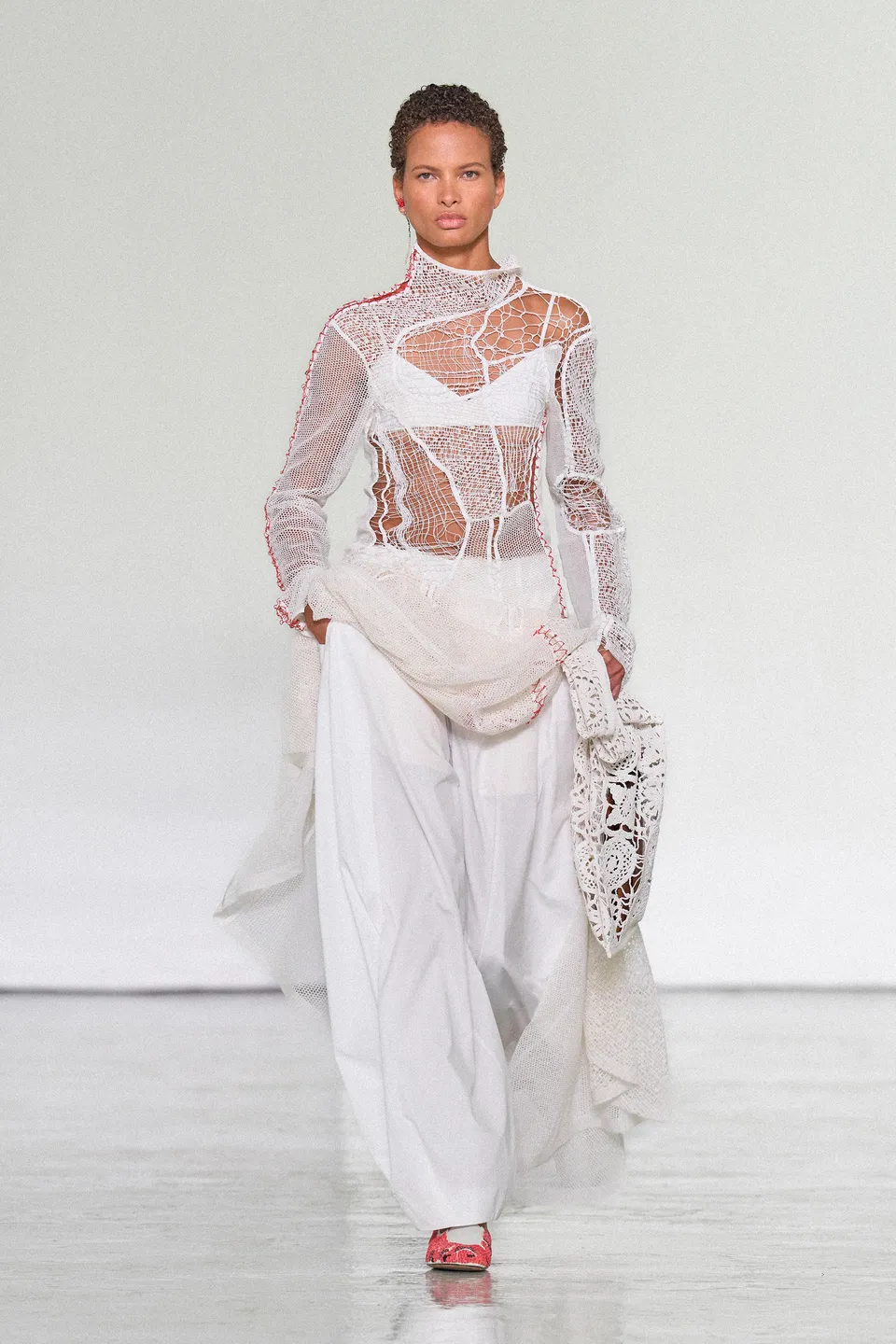
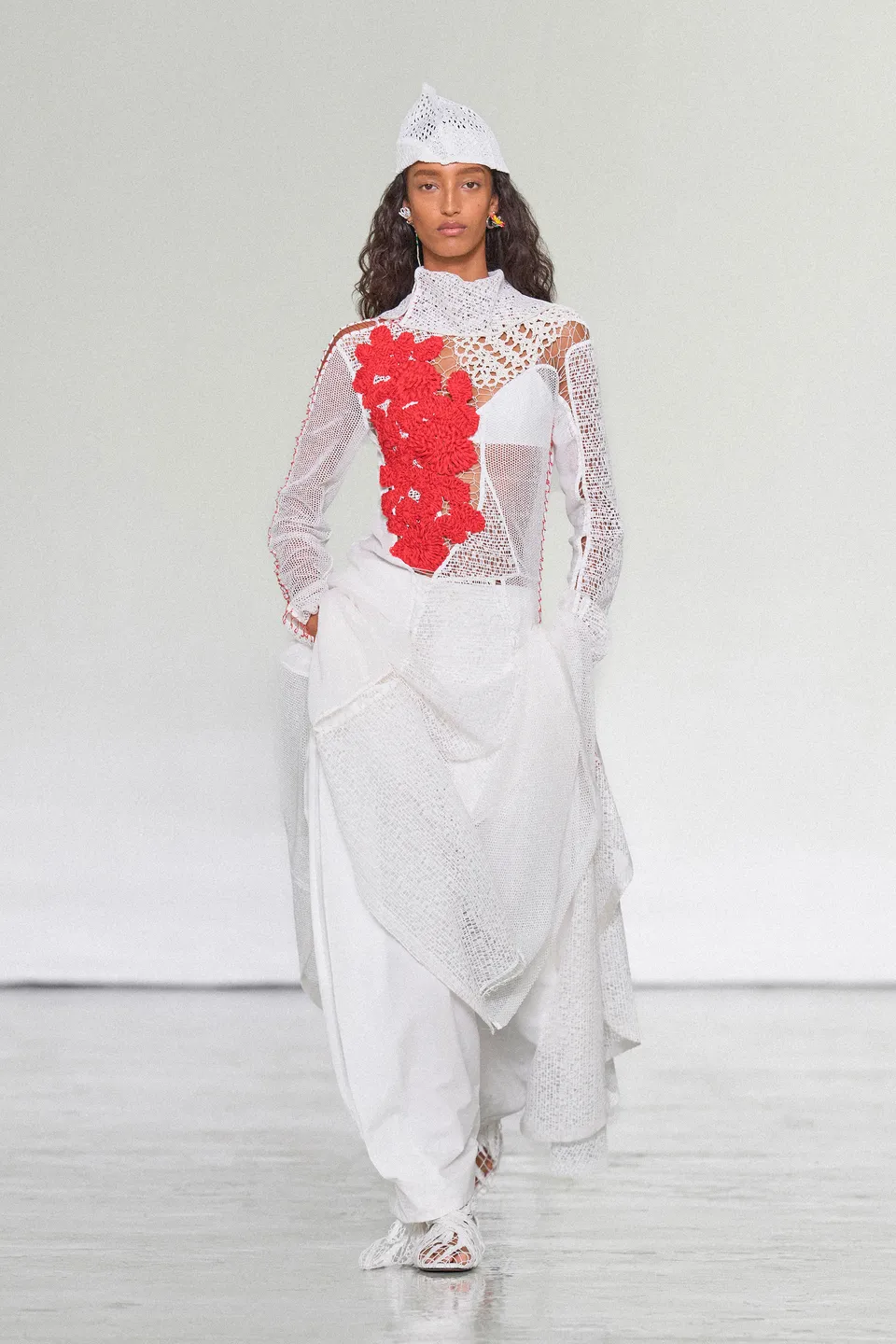
Then spring enters through softer color. Lilac, butter yellow, pink and pale blue interrupt the darker beginning. Layers become more open. Crochet introduces visible skin. Lace creates negative space. Raffia and oversized weaving bring the collection fully toward summer.
Bottega’s signature intrecciato reached its 50th anniversary in 2026, giving Trotter an unusually important house code to handle.
Her previous collection pushed leather workmanship toward monumental labor, including a woven cape reportedly requiring thousands of hours of handwork.
SS27 changes the physical expression.
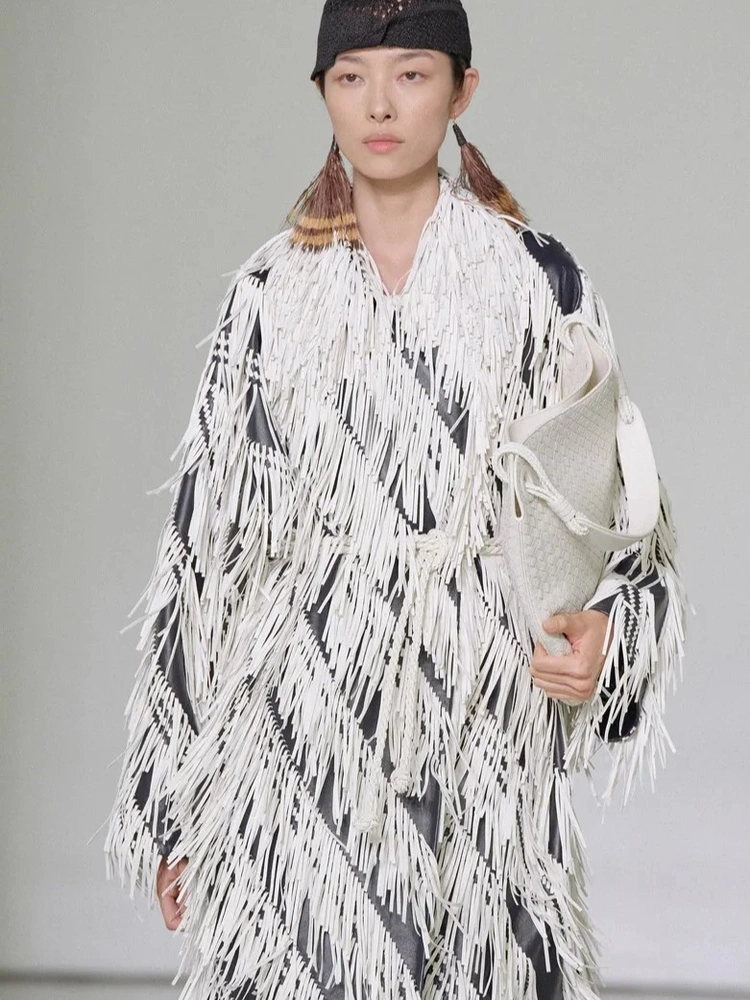
Leather is shaved thinner. The weave opens. Large-scale intrecciato becomes supple enough to behave almost like cloth. Scarves, belts, and bags use the technique with greater looseness. Raffia-like surfaces extend its visual logic into summer materials.
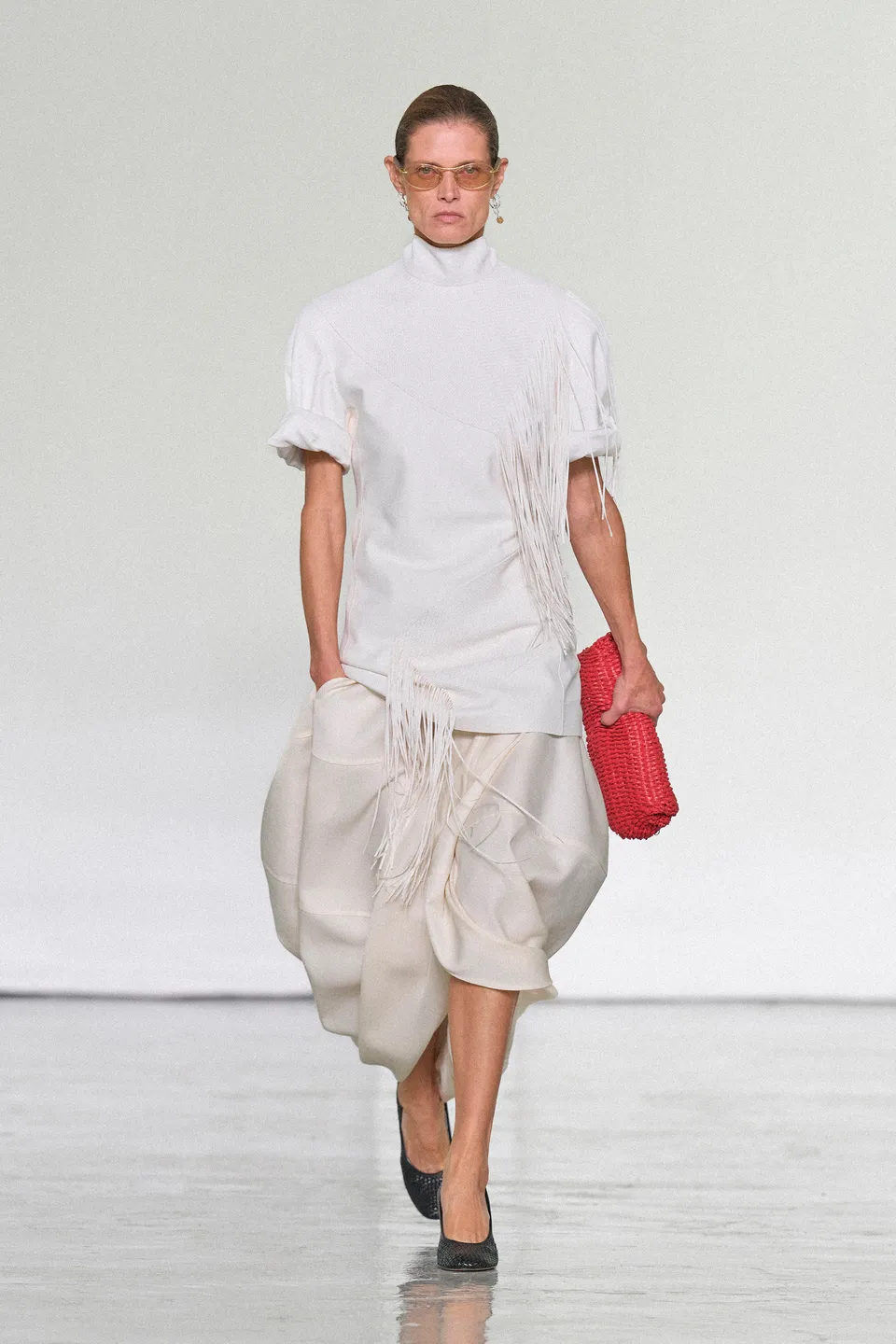
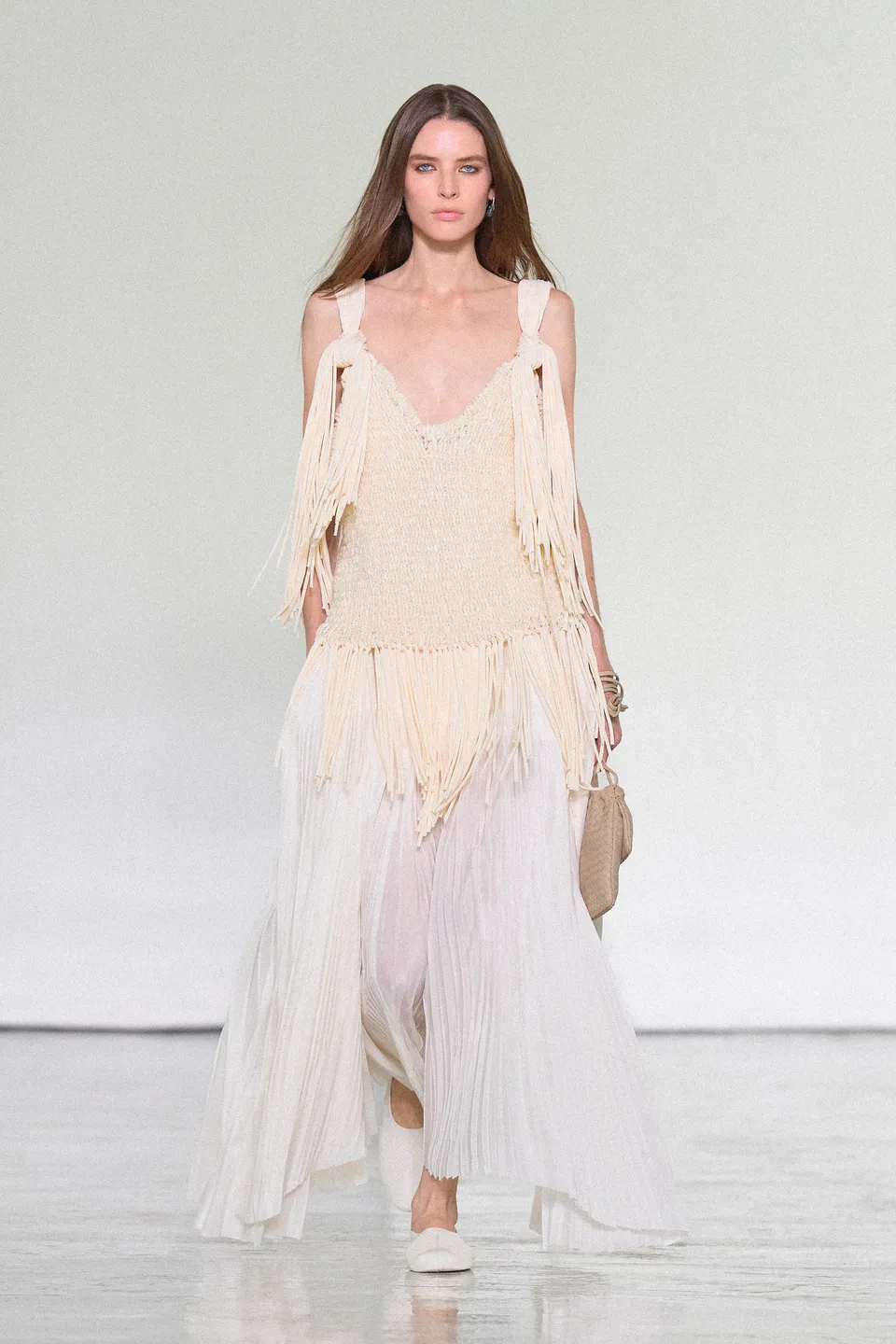
One sack dress carries this experiment to an extreme, using an intricate weave so fine that leather begins to resemble textile.
The broad hanging volume swallows the body and drains the look of the sensual ease found elsewhere. Craft dominates silhouette, creating a garment that commands admiration at atelier level while offering far less attraction on the body. That tension runs through much of Bottega Veneta SS27.
The material research becomes more convincing as the collection moves away from dense leather.
Ultra-light unlined silk trousers drift around the legs. Linen and cotton introduce natural dryness. Silk-ribbon crochet creates tactile surfaces while leaving generous spaces between stitches.
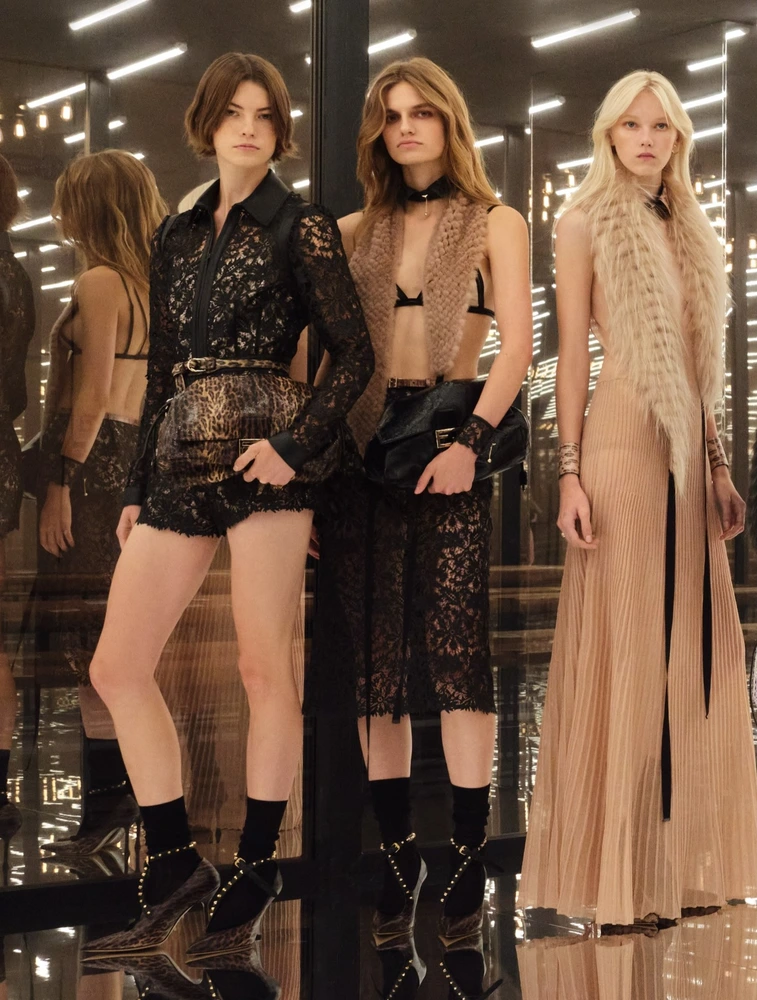
Lace inserts soften tailored pieces. Macramé introduces handwork with a looser rhythm. Open knits stretch around the body with visible air running through them.
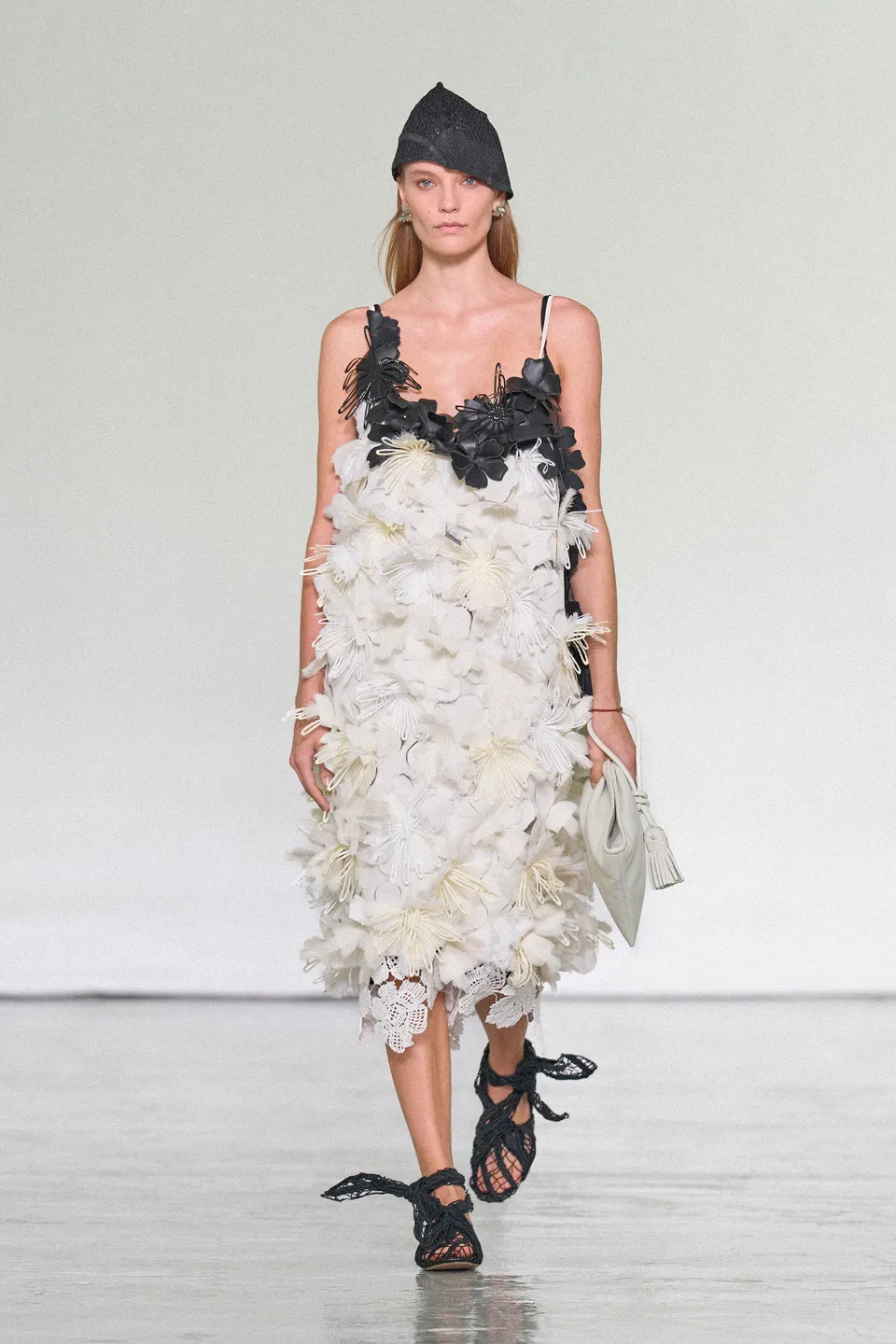
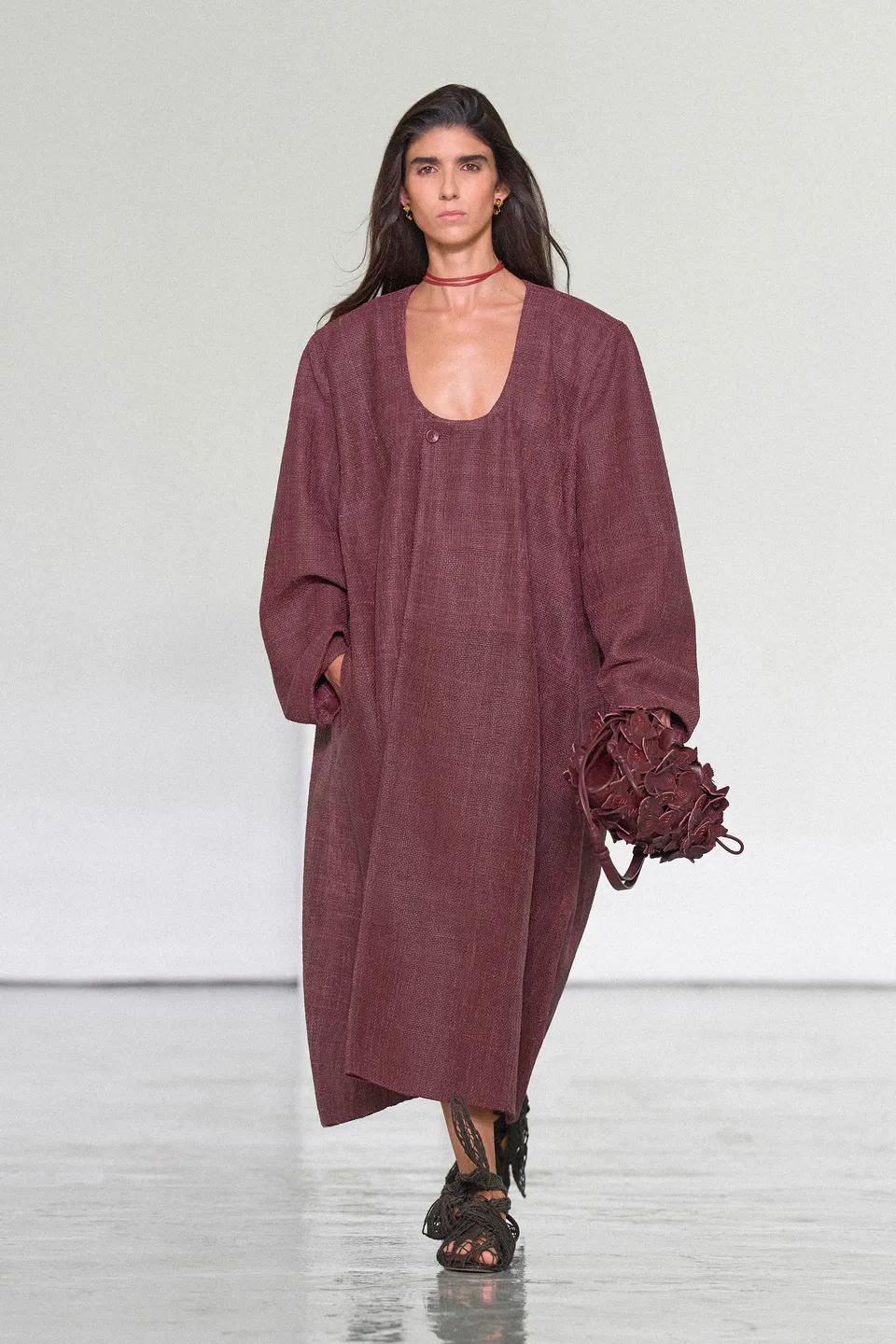
Raffia brings another texture entirely. Oversized bags appear almost beach-bound in scale, while their finishing keeps them firmly inside the Bottega vocabulary. Leather macramé sun hats extend craftsmanship upward around the face. Handmade leather flowers appear throughout the collection as tiny demonstrations of atelier skill.
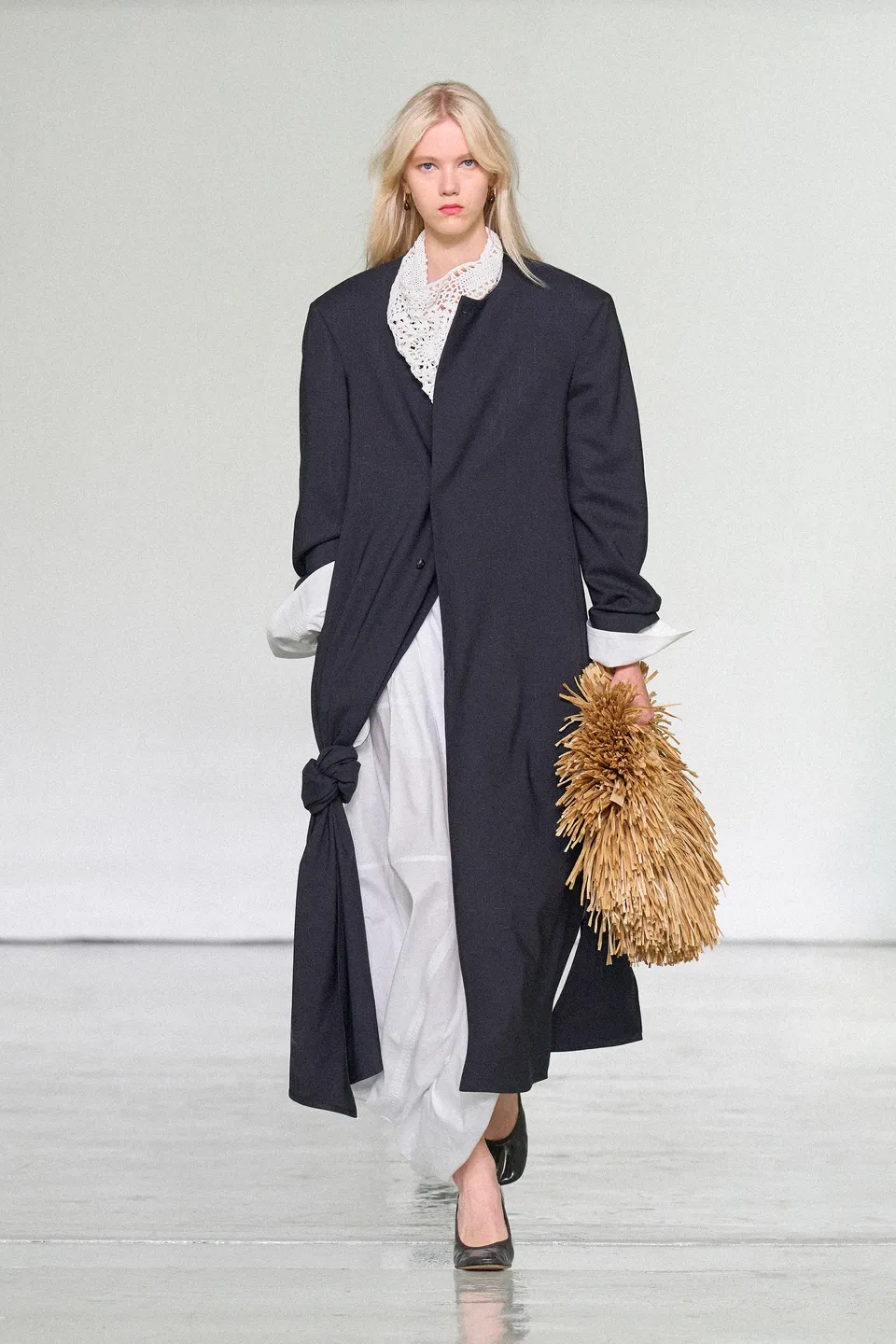
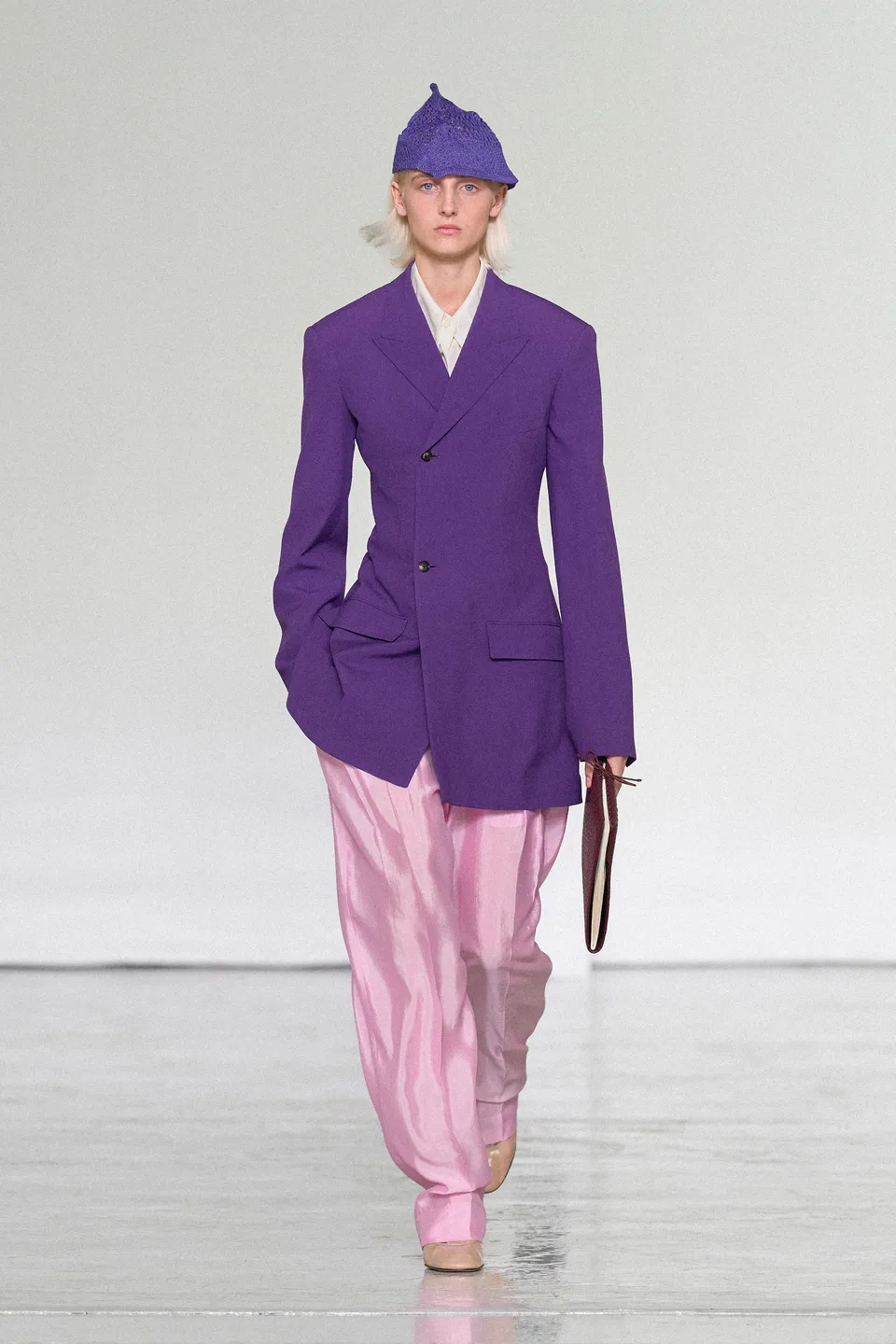
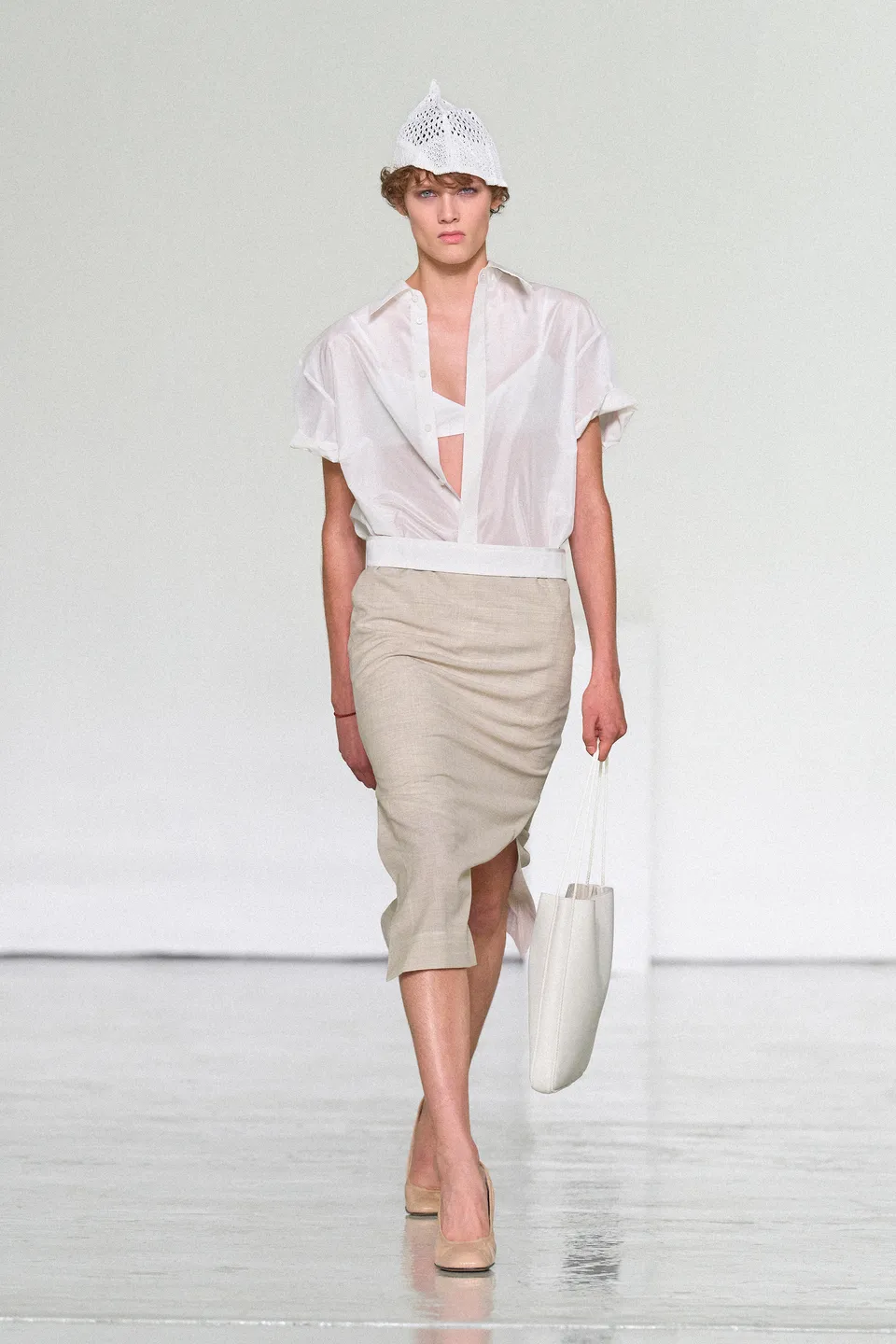
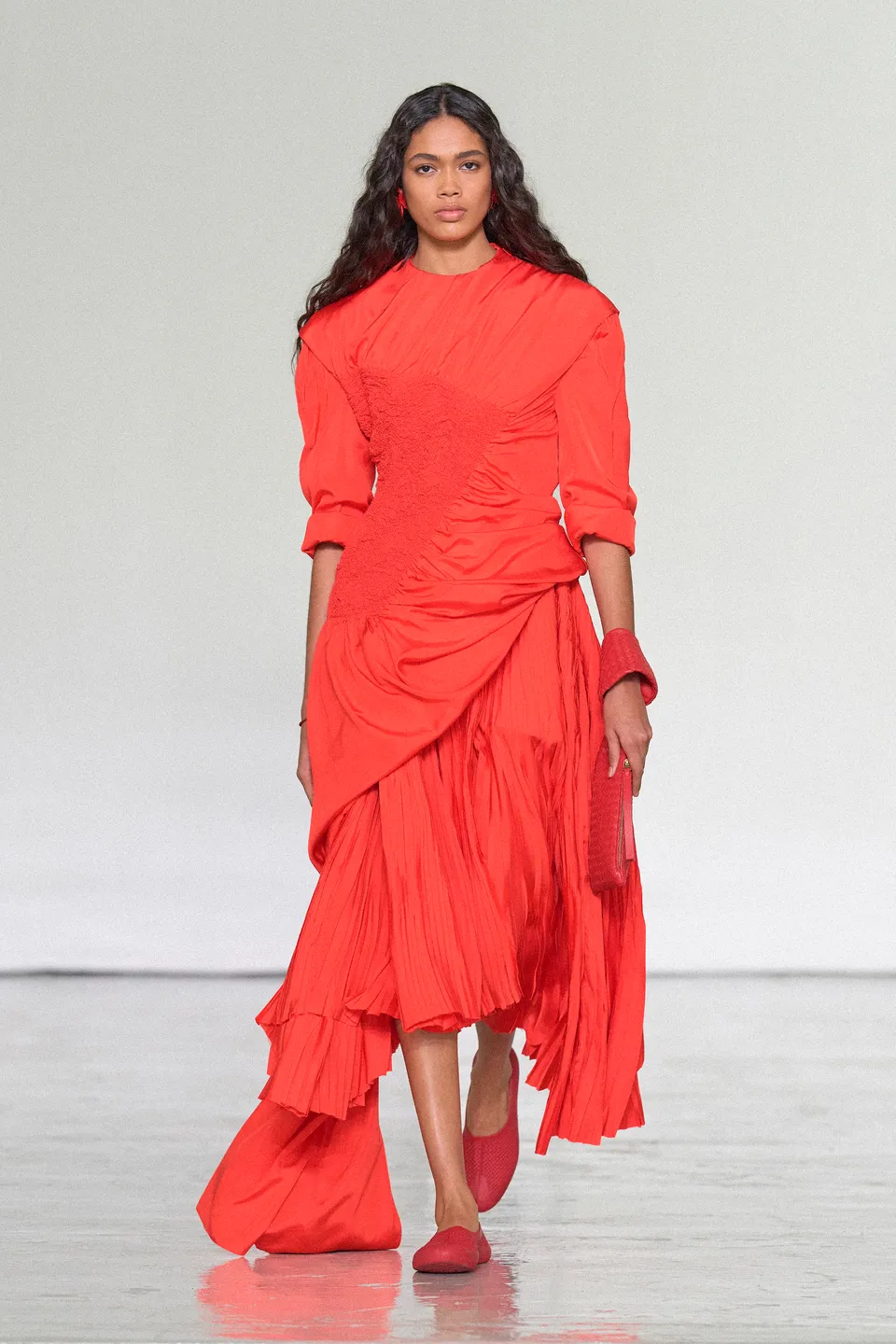
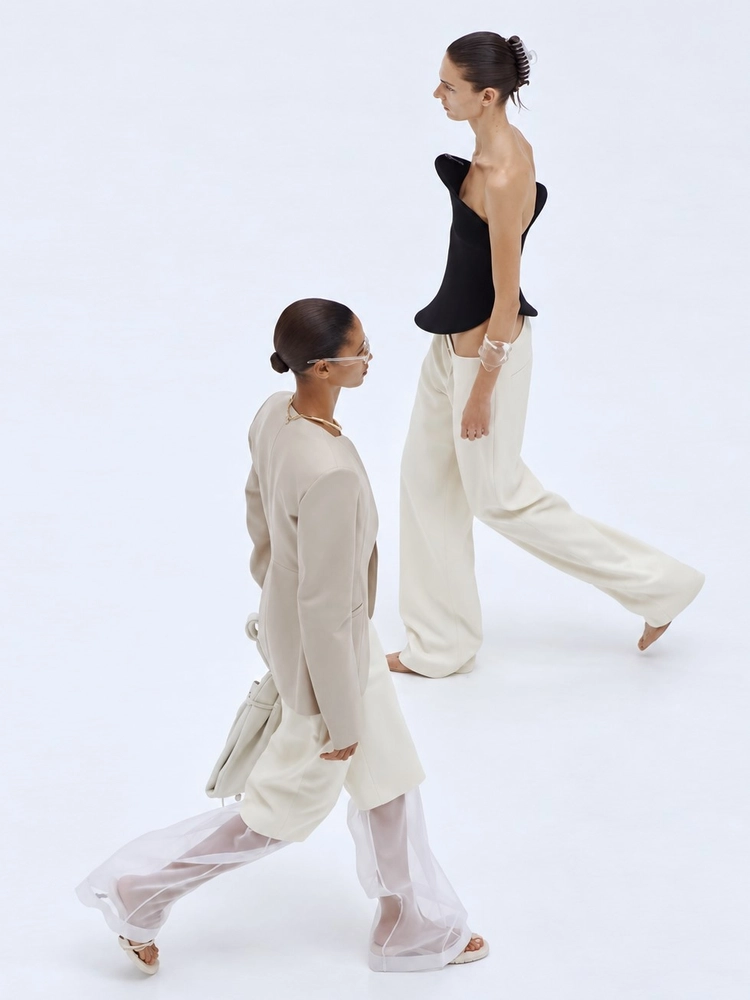
Several of the strongest silhouettes rely on space between garment and body. Wide trousers move freely around the leg. Full skirts create volume through air. Asymmetriccolumn dresses extend the figure vertically. Gathered dresses shift across the torso through controlled ruching.
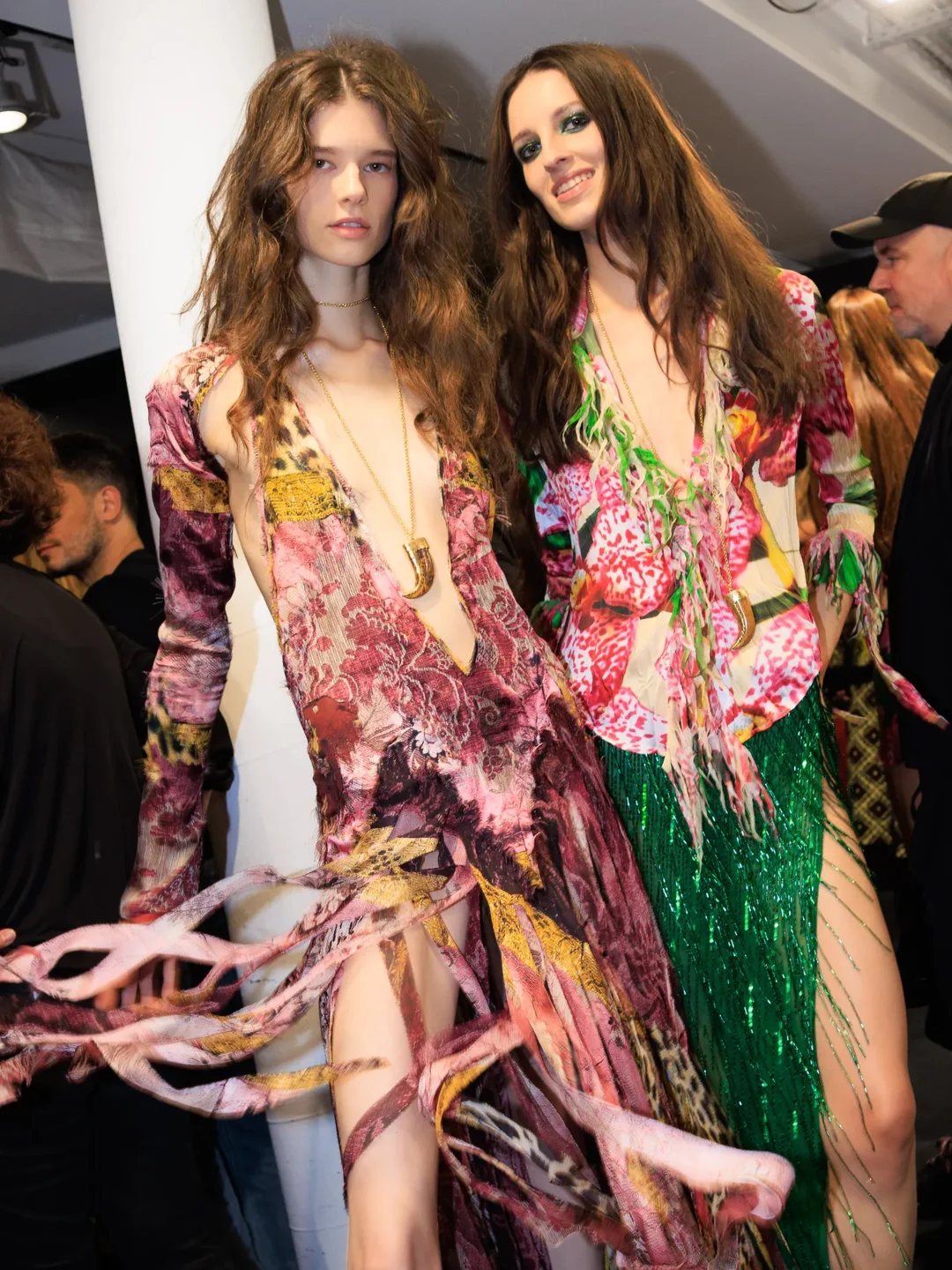
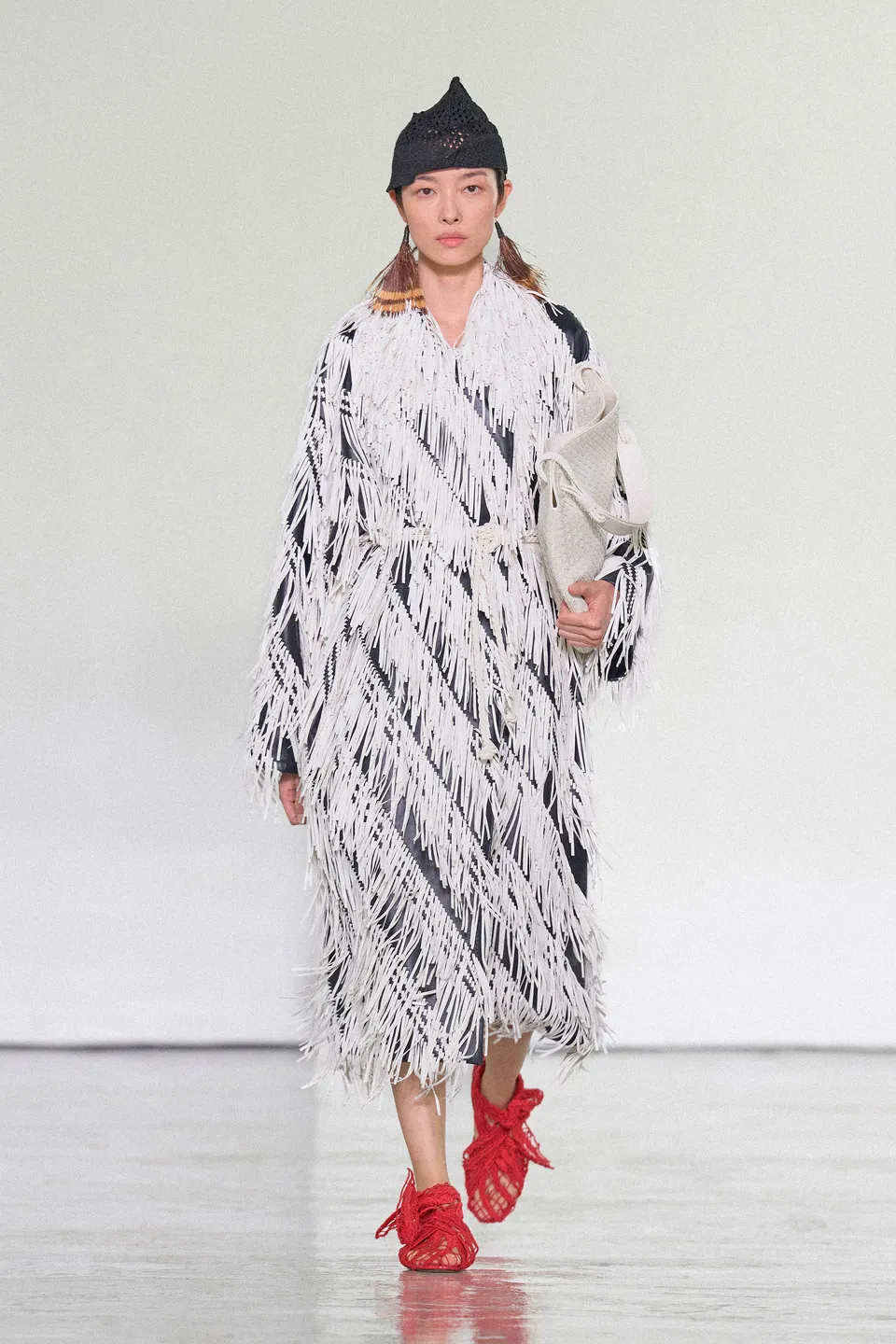
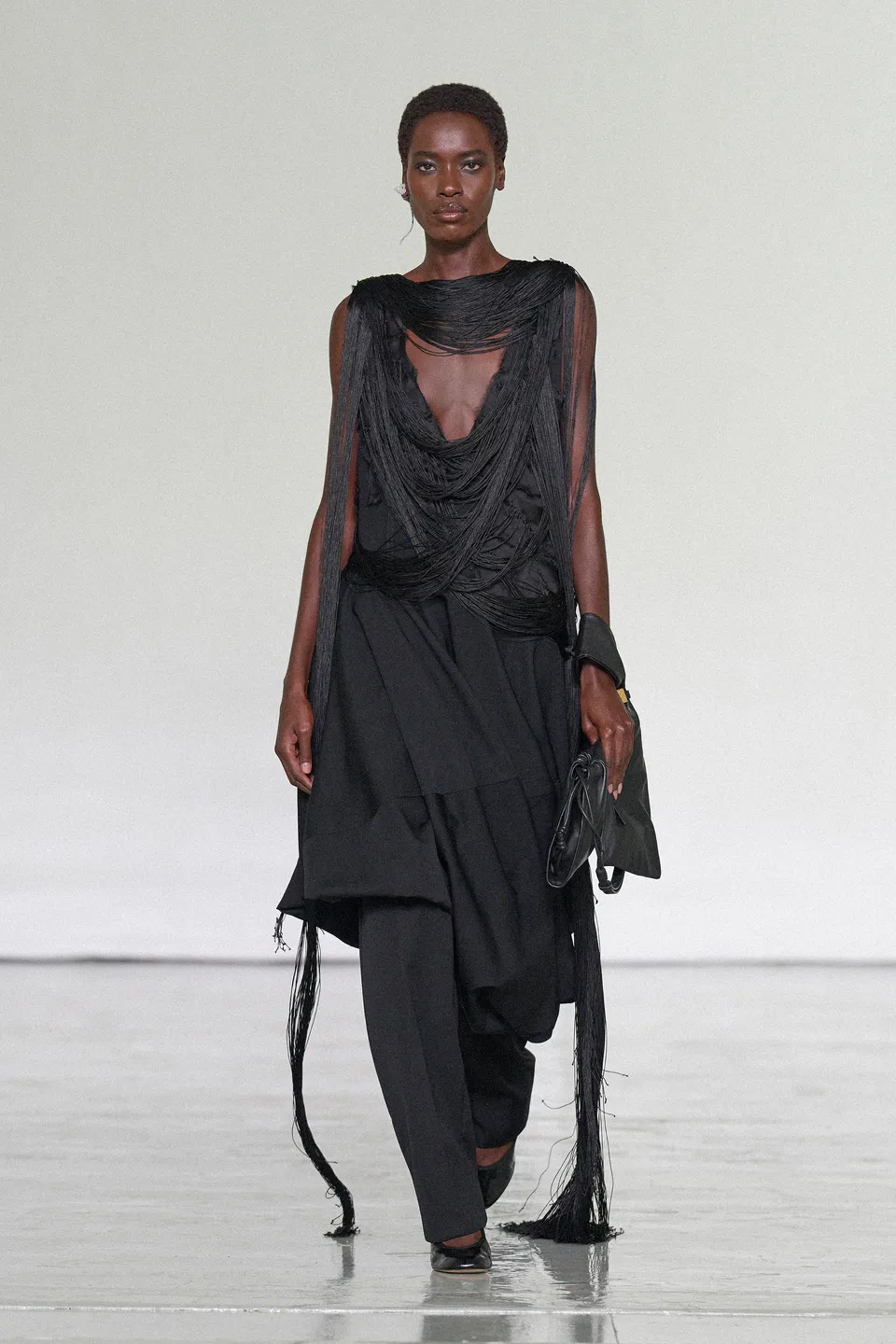
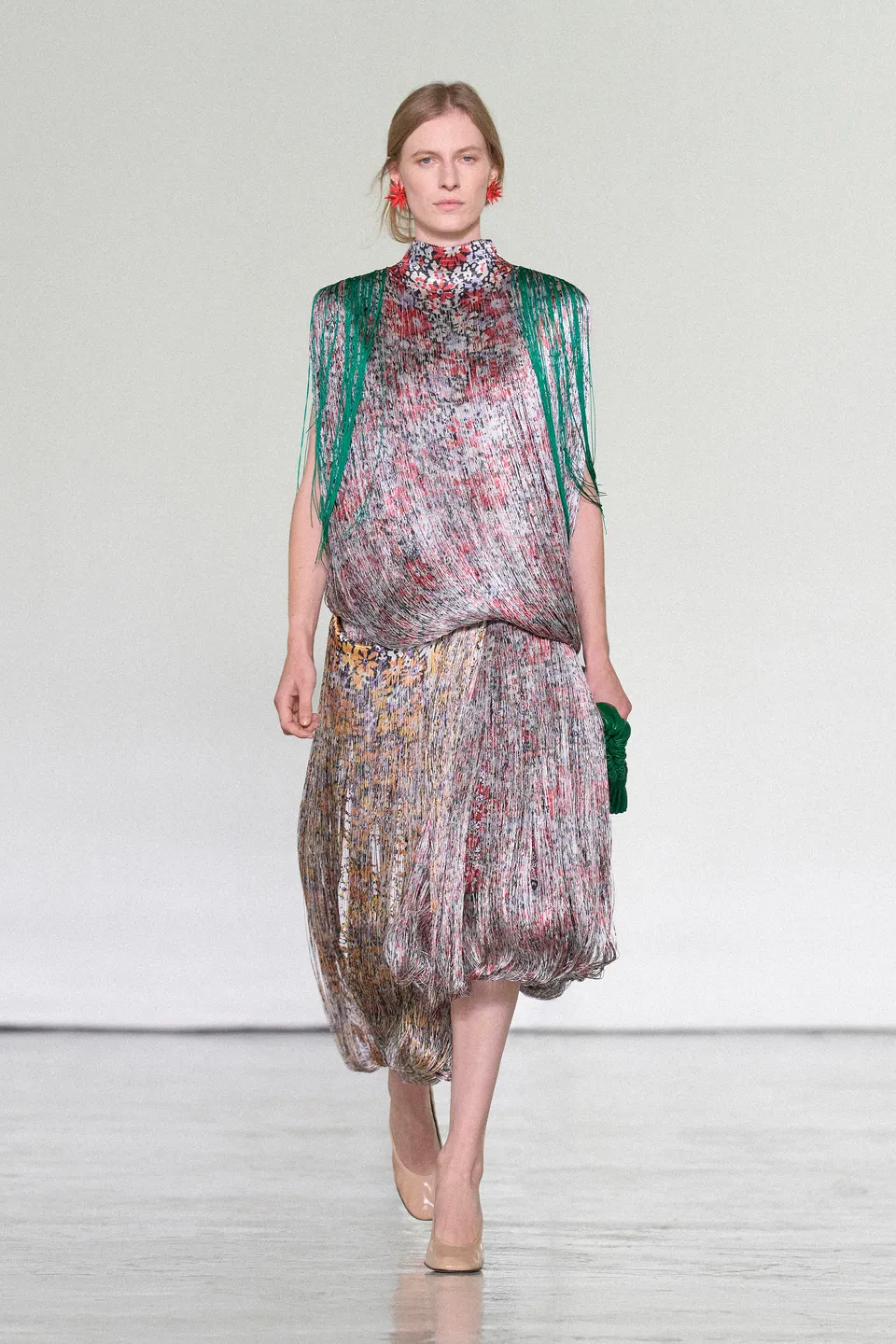
Fringe becomes particularly important. On floral pieces, strands build rounded volume around the body, almost creating a surface through movement itself. On darker evening looks, long fringe travels diagonally and vertically, stretching the figure while continuing to move after the wearer has passed.
The construction becomes kinetic. Thin woven belts and scarf-like leather pieces wrap around the body with similar looseness. Hems lift. Fabric twists. Shoulders stay broad while lower sections relax.
Oversized woven bags swell into almost absurd proportions. Macramé ballet flats keep the foot close to the ground. Leather scarf-belts twist across the body. Large earrings interrupt clean silhouettes.
Then come the hats. Some take on exaggerated, almost medieval bycocket-like points, introducing eccentricity into a collection otherwise governed by serious craft. They give the Bottega woman humor, character, and unpredictability.
Every guest received a handmade Bottega leather flower. The gesture carried the season’s central idea in miniature: a familiar material manipulated by hand until it becomes something delicate, emotional, and almost fragile.
The seating extended the same logic. Guests sat on stools by Ukrainian artist Illya Goldman Gubin, formed from cardboard physically crushed and shaped before being hardened into permanent objects.
Louise Trotter once again places craftsmanship at the absolute center of Bottega Veneta. The coherence is impressive. The transition from protected winter body to exposed summer body moves logically across the runway. Three collections into her tenure, though, progress still looks careful and heavily managed.
Too many looks carry the energy of a designer treating every garment like an exam.
The weave becomes intricate. Then flowers enter. Then fringe. Then volume. Then knots. Then an eccentric accessory. The technical intelligence is clear, yet some looks become serious to the point of strain.
The clothes occasionally project a strange sense of professional pressure, as if Trotter is still proving she deserves access to one of fashion’s greatest ateliers.
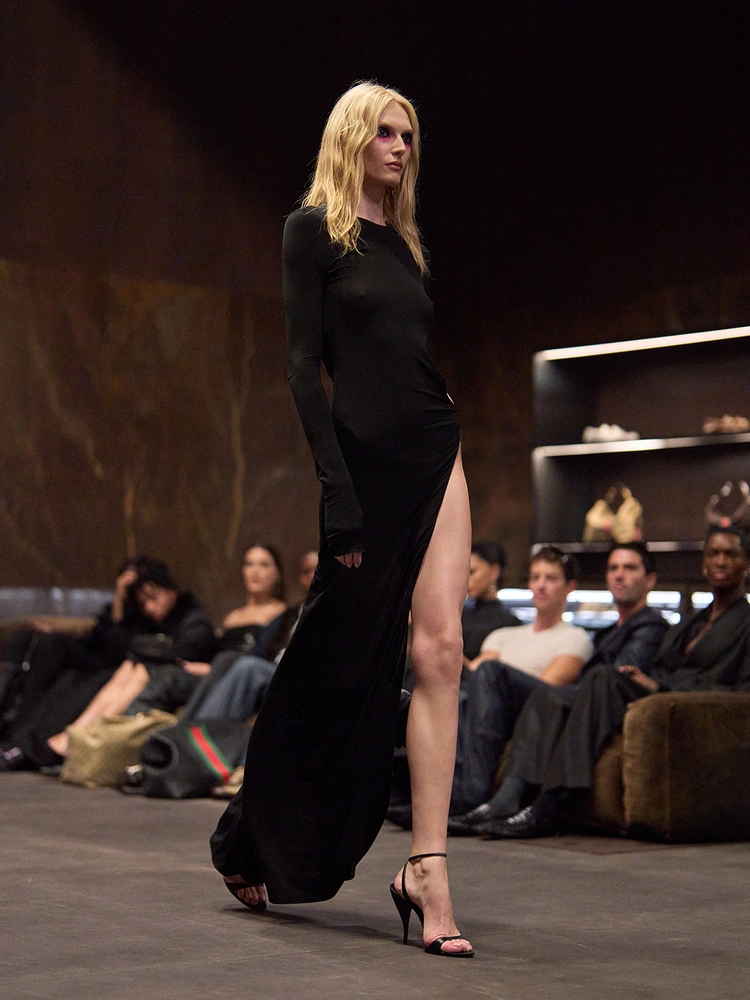
The sack dress shows the problem clearly. Kendall Jenner’s closing look carries dramatic asymmetry and substantial visual weight, and even on her the proportion lands cumbersome and heavy. Meanwhile, the plain black one-shoulder dress looks effortless.
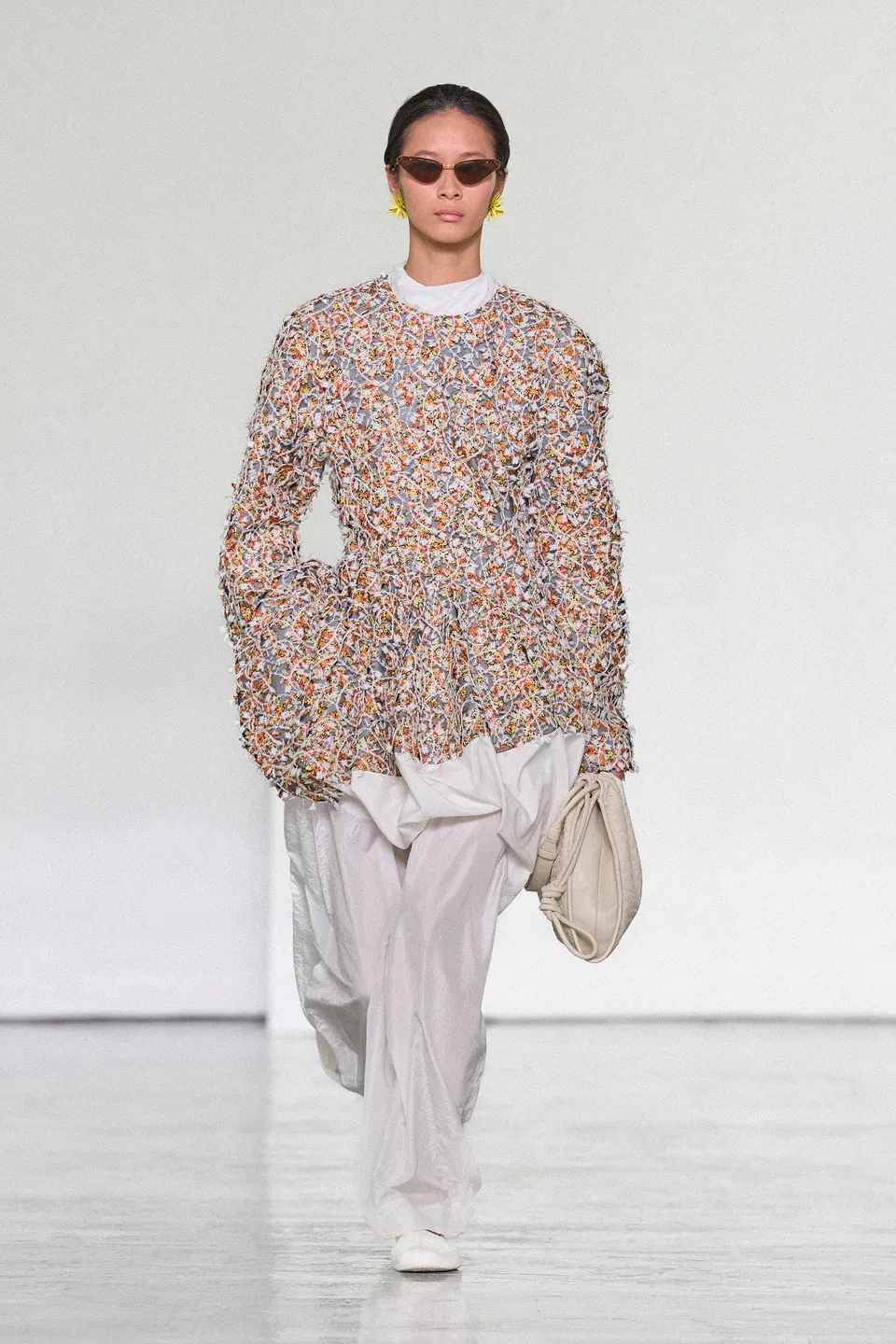
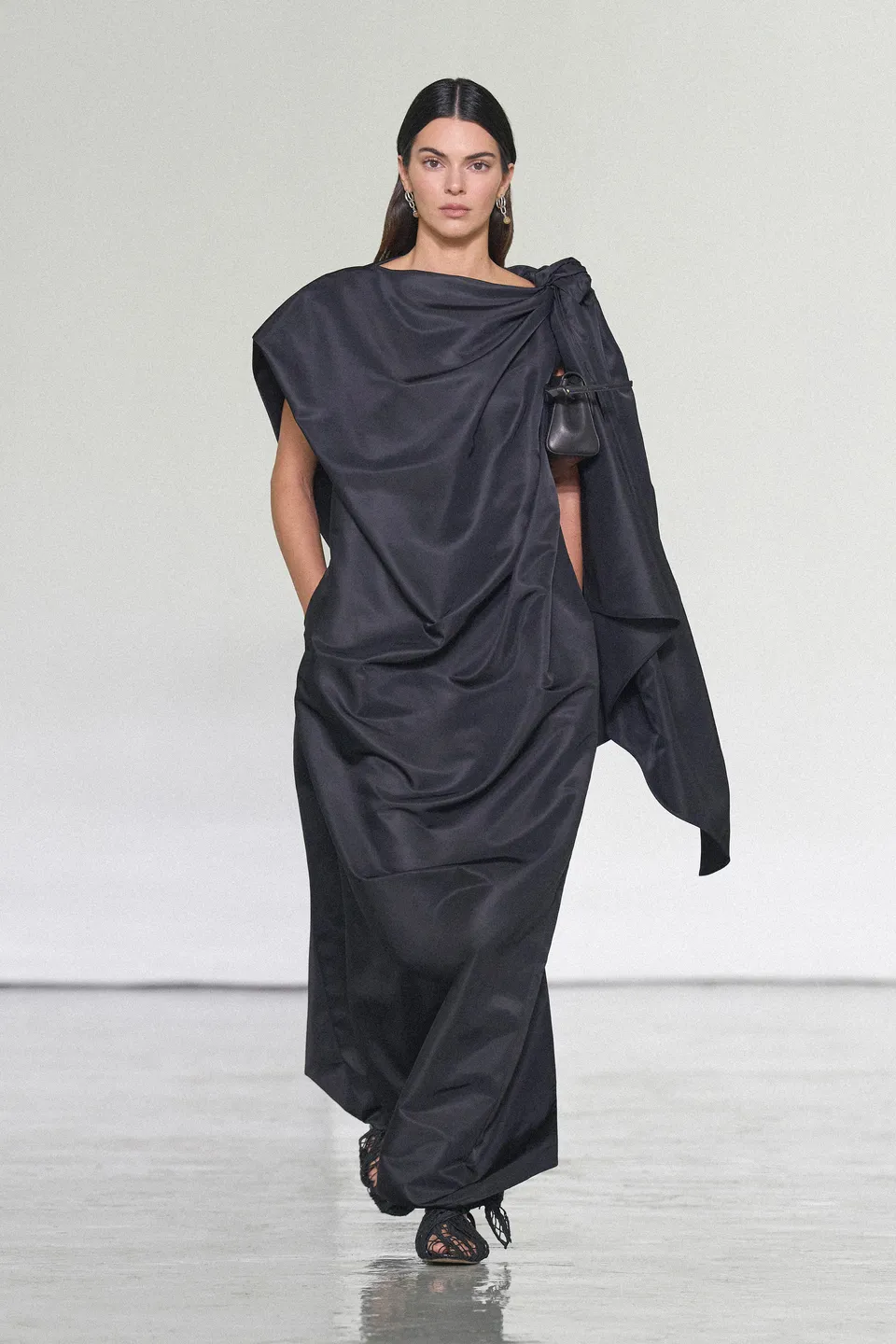
That contrast tells the whole story. Trotter’s career has always been grounded in intelligent clothes, controlled proportion and strong instinct. At Bottega, the extraordinary craft resources seem to tempt her toward constant demonstration. Her next step could come through greater trust in the first gesture, the first cut, the first silhouette.
The company itself enters the season during another transition. Romain Spitzer became Bottega Veneta CEO on September 1, 2026, while Kering continues positioning the house as one of its strongest growth engines. Bottega generated roughly €1.7 billion in 2025 revenue, and current plans include developing jewelry, gifting and broader lifestyle categories alongside its powerful leather-goods business.
Bottega Veneta SS27 proves the craft, the quality and the coherence once again. The next breakthrough may be surprisingly simple: fewer ideas fighting for attention, cleaner silhouettes, more instinct and a designer giving herself permission to enjoy the job she already earned.
Advertisement