MENU
Close





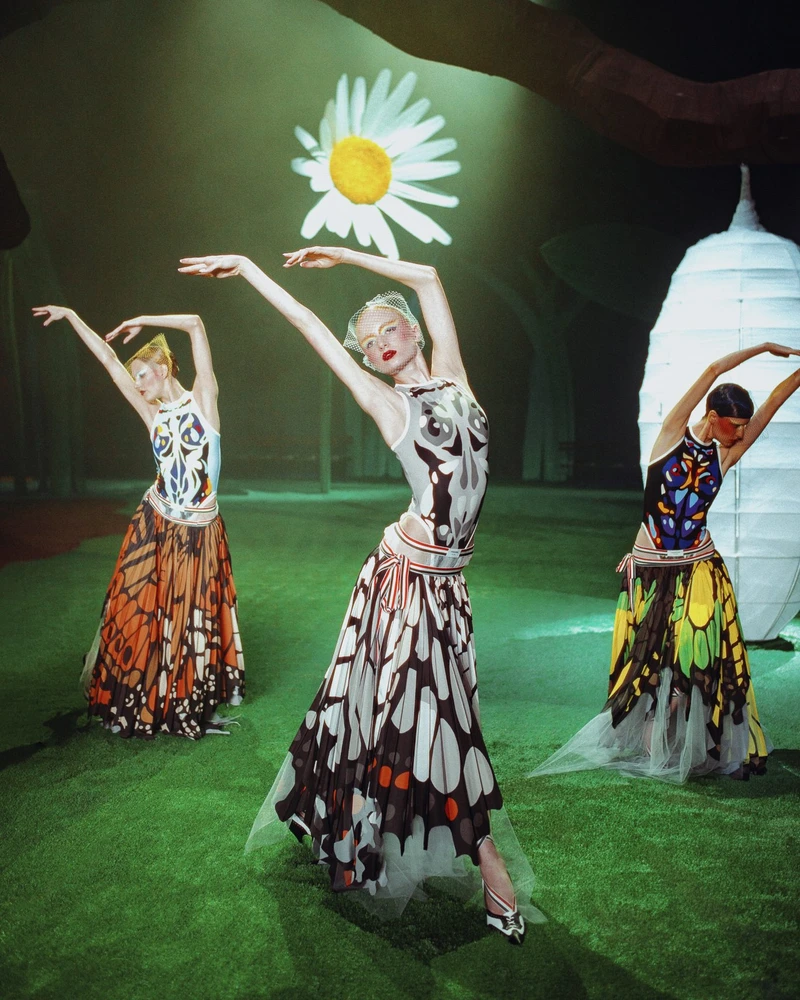
Thom Browne SS27 begins in gray discipline and ends in full butterfly fantasy, with every stage of transformation stitched into the clothes.
Thom Browne SS27 begins in gray discipline and ends in full butterfly fantasy, with every stage of transformation stitched into the clothes.
September 21, 2026
Advertisement

Advertisement



Thom Browne closed New York Fashion Week by shrinking everyone in the room.
Inside The Shed, grass towered overhead. Leaves swelled to impossible dimensions. A giant flower rose from the darkness, and at the center of this oversized garden sat a chrysalis large enough to hold a human body. Caterpillars danced around it while buzzing filled the space.
For a designer who has spent more than two decades perfecting the gray suit, Spring 2027 began with an irresistible proposition: what happens when something so disciplined enters a cocoon? The answer eventually came with wings.
Browne’s September 15 show occupied the final slot of NYFW, carrying extra symbolism for a designer who currently serves as chairman of the Council of Fashion Designers of America. Yet the closing ceremony contained very little institutional solemnity. This was a world of moths, grasshoppers, ladybugs, beetles, bees, spiders, and butterflies, rendered through some of the most serious tailoring and textile work in American fashion. Playtime had begun.
The seed for Spring 2027 came from an unexpectedly innocent place: Pixar’s 1998 film A Bug’s Life.
Thom Browne watched it on a flight and became captivated by its miniature universe. The reference first surfaced during his Spring 2027 menswear show in Milan, where bees, gardens, flowers and insect details began colonizing his tailoring. Womenswear became the next act of the story.
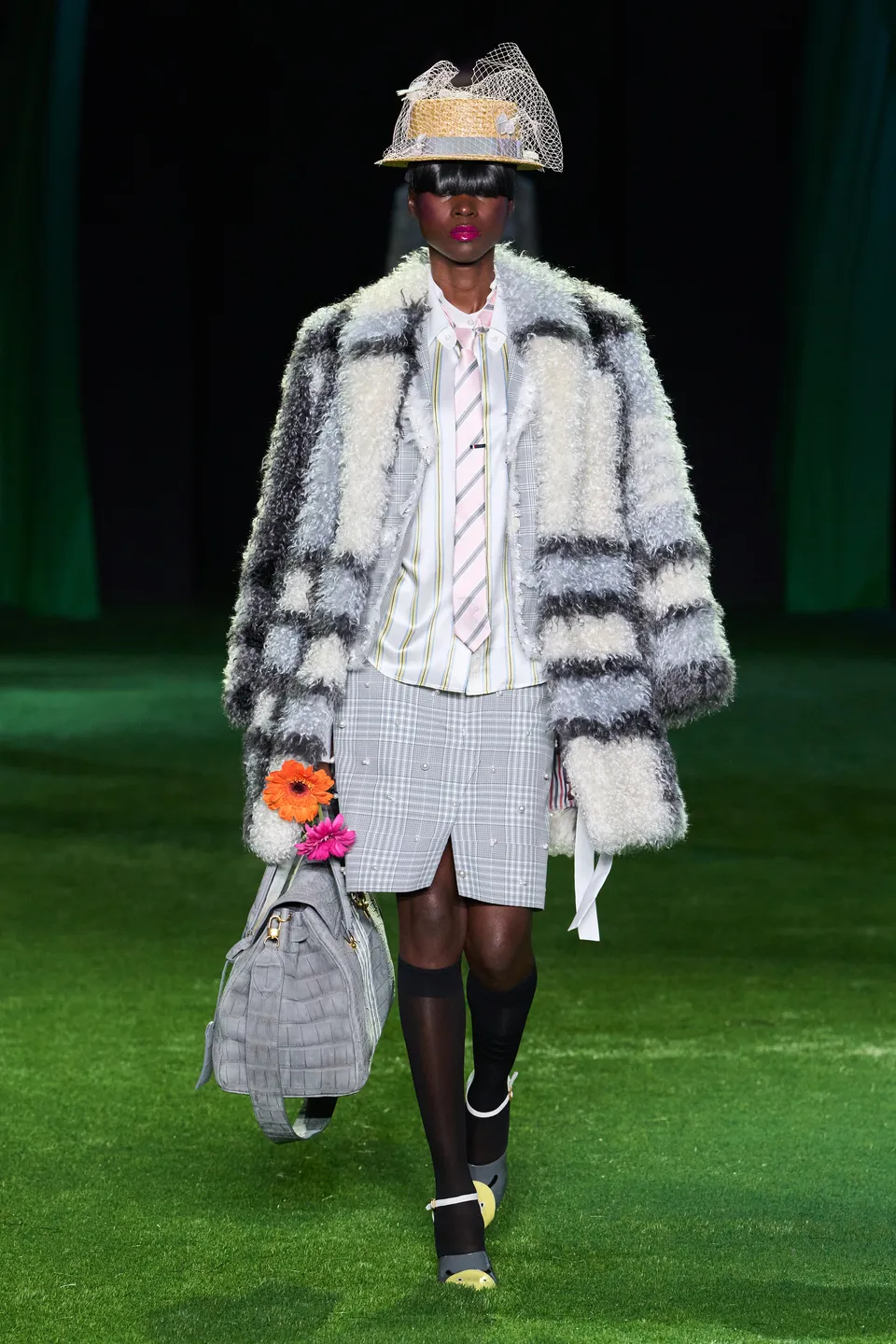
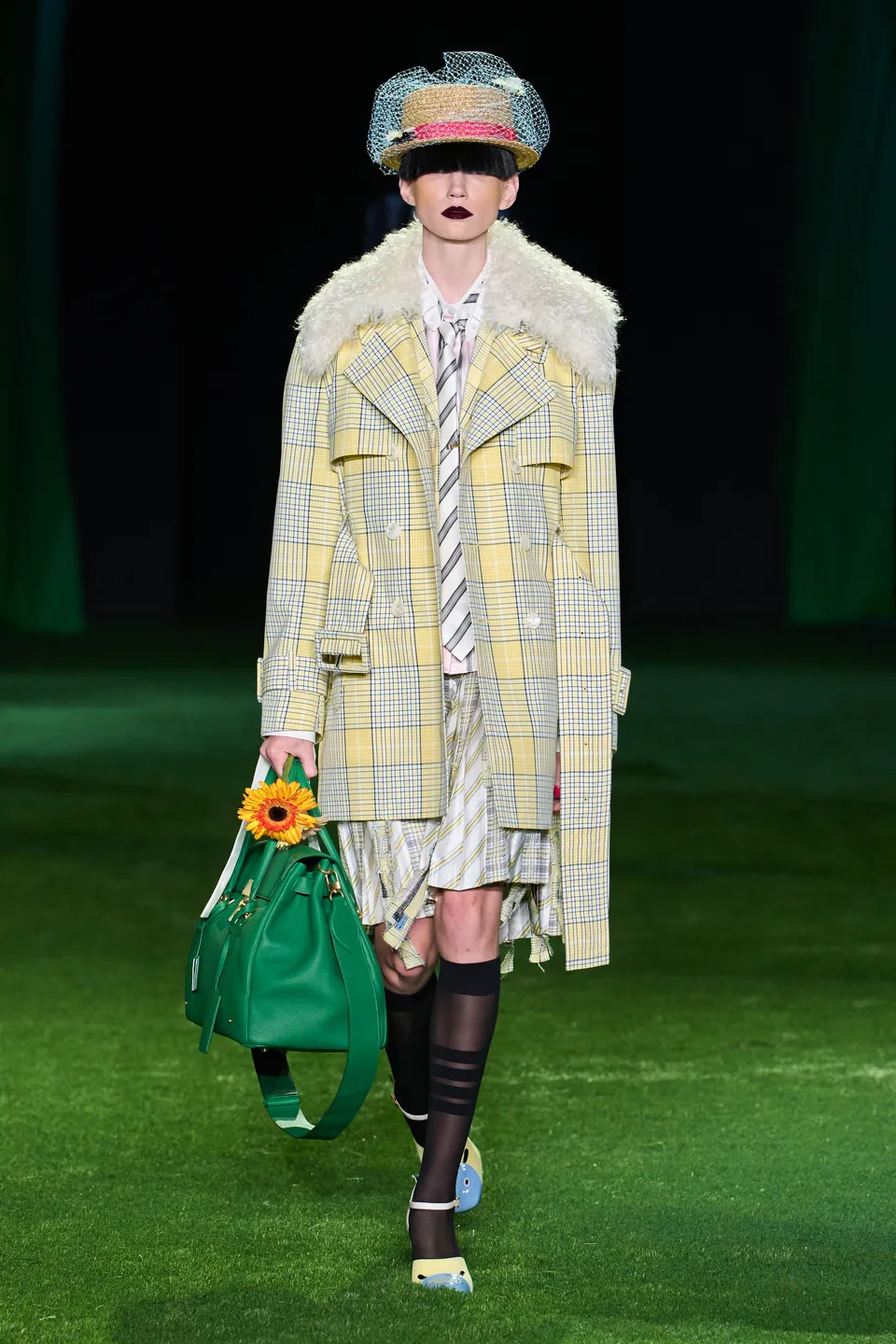
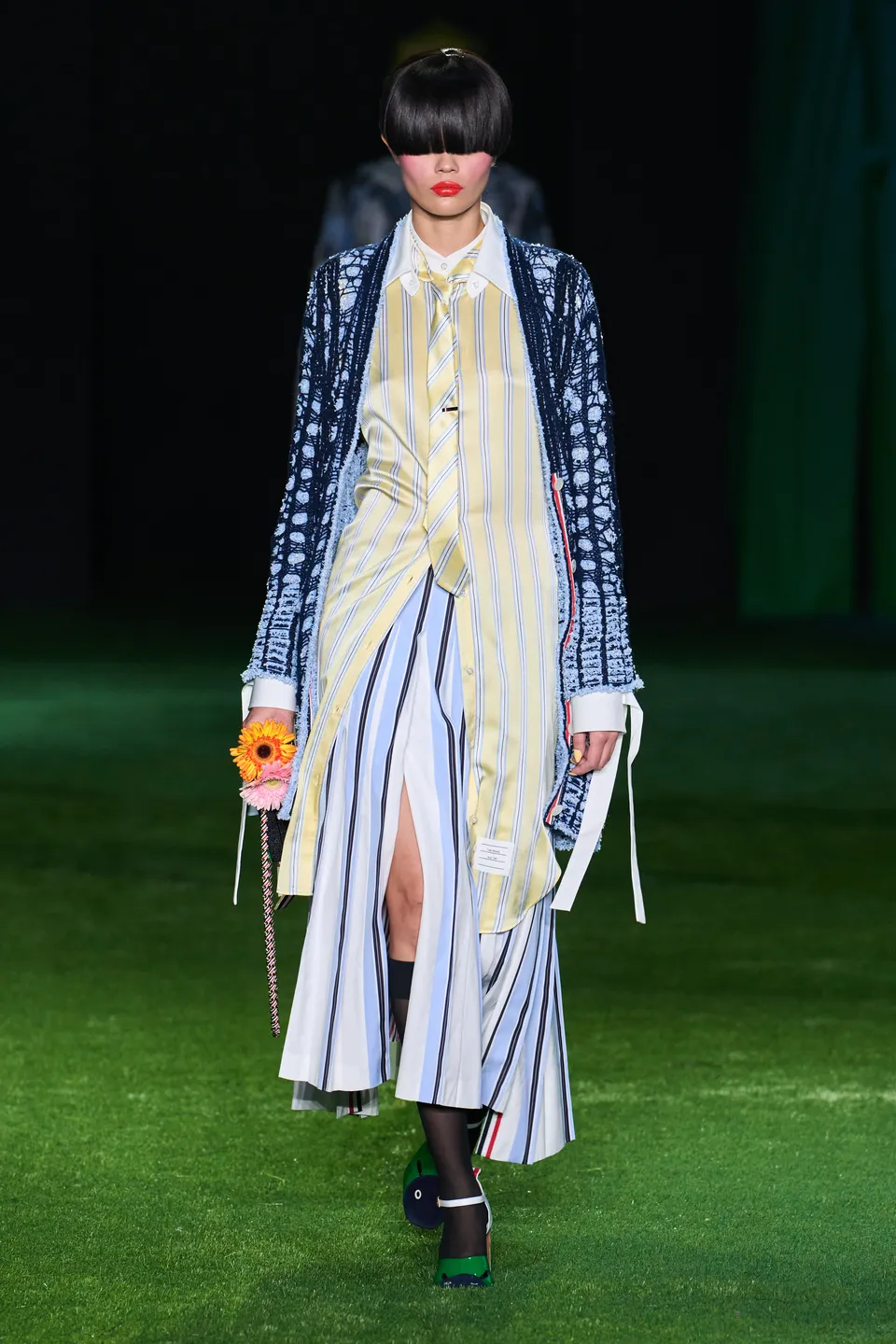
The garden was already alive. Now something inside it needed to transform.
That gave Thom Browne one of fashion’s most useful narrative devices: metamorphosis. An insect changes through stages while remaining the same living thing. Browne has effectively been doing that to tailoring since launching his label. The jacket gets shortened. The trouser loses length. Proportion becomes strange. Familiar gray flannel enters increasingly theatrical worlds.
His Spring 2027 universe simply made that process biological. Thom Browne spoke about wanting people to smile.
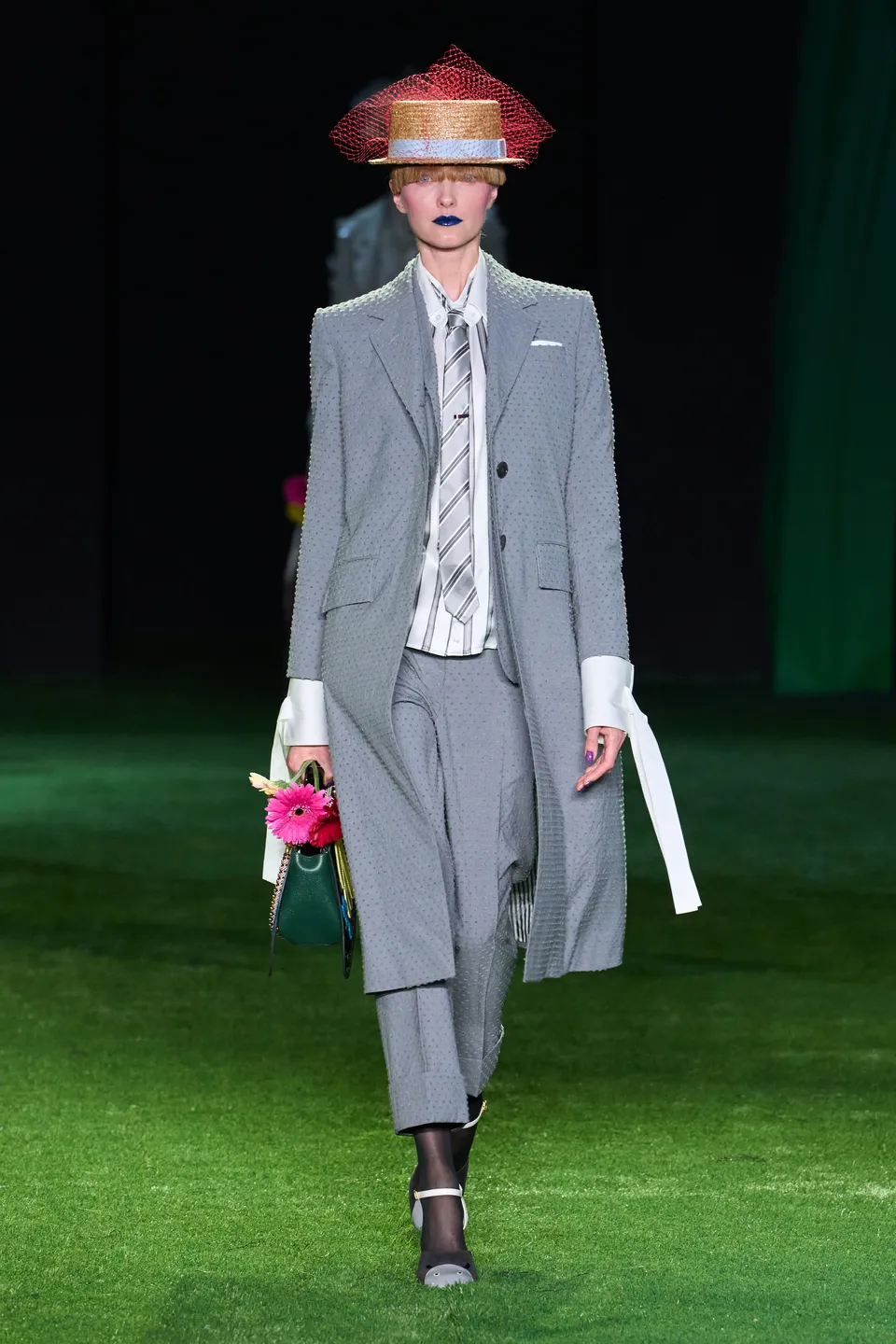
At the foundation of the collection sat Browne’s established architecture.
Jackets stayed compact. Coats lengthened the body. Pleated skirts retained their school-uniform precision. Power shoulders carried control. Corsetry pulled the torso into firm shapes.
Then biology started interfering.
Rounded outer forms suggested cocoons. Segmented pleats echoed insect anatomy. Corseted shapes hardened around the torso like shells. Certain coats curved outward into protective bodies, while halter constructions and layered skirts redirected familiar tailoring toward the silhouettes of crickets, moths, and beetles.
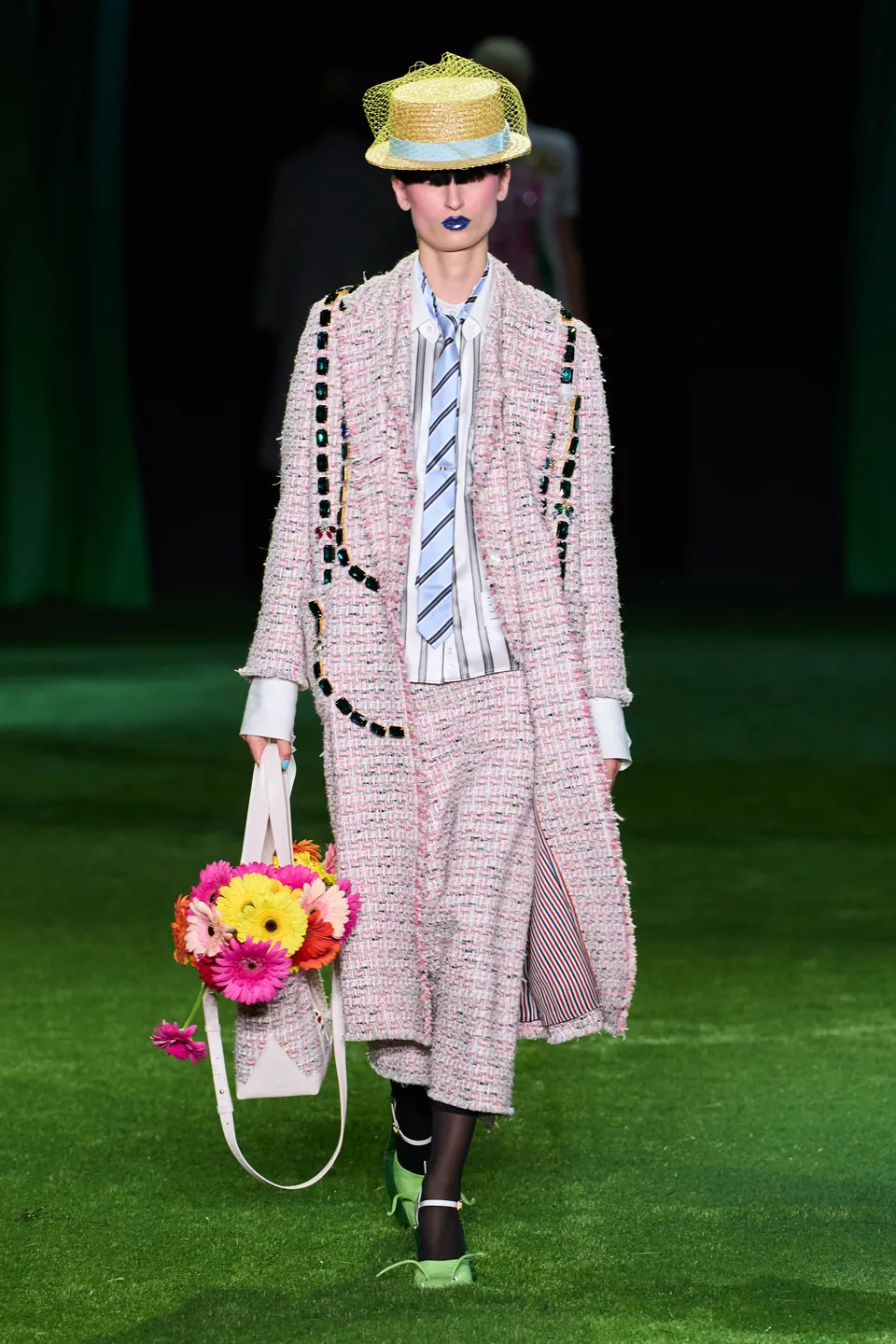
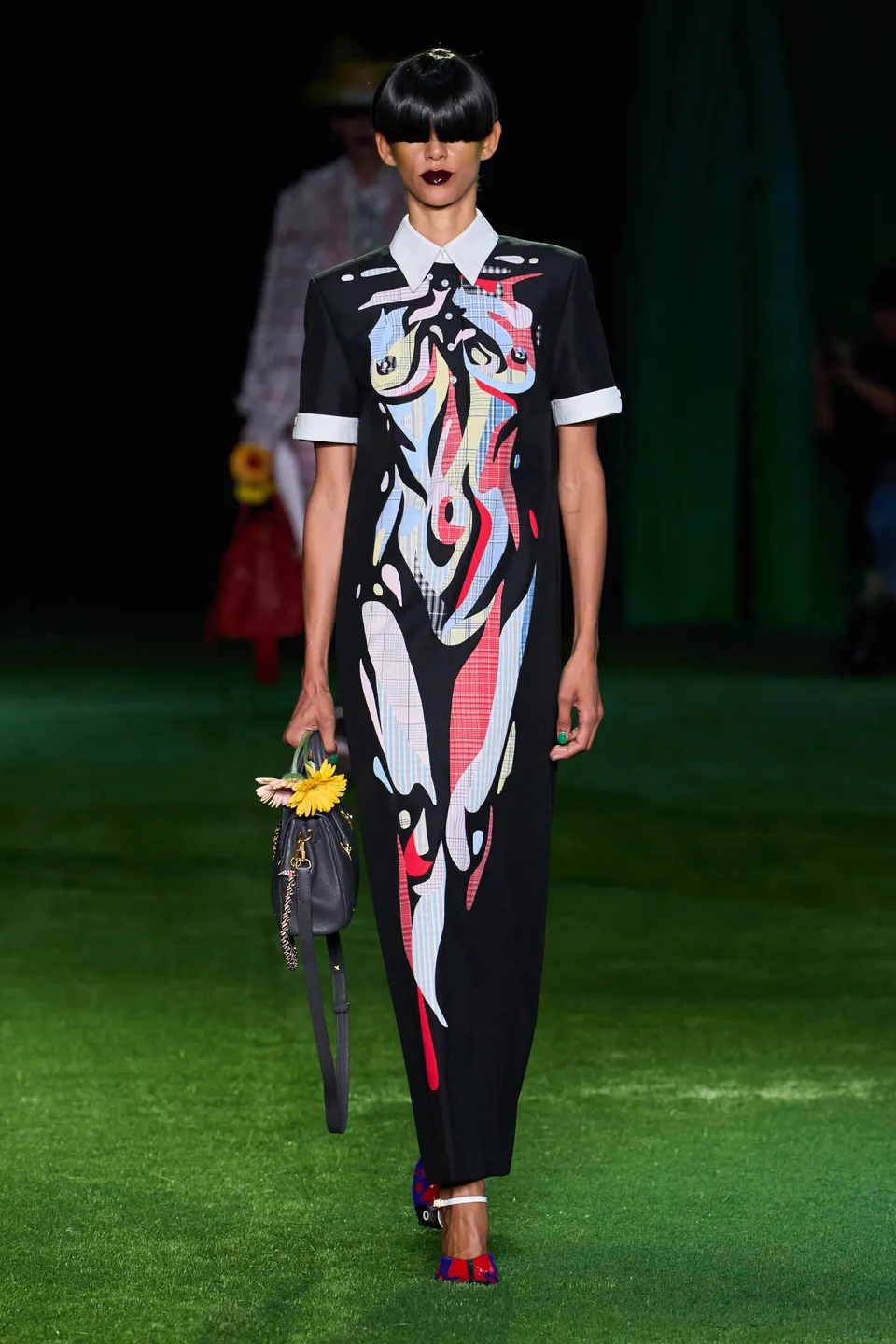
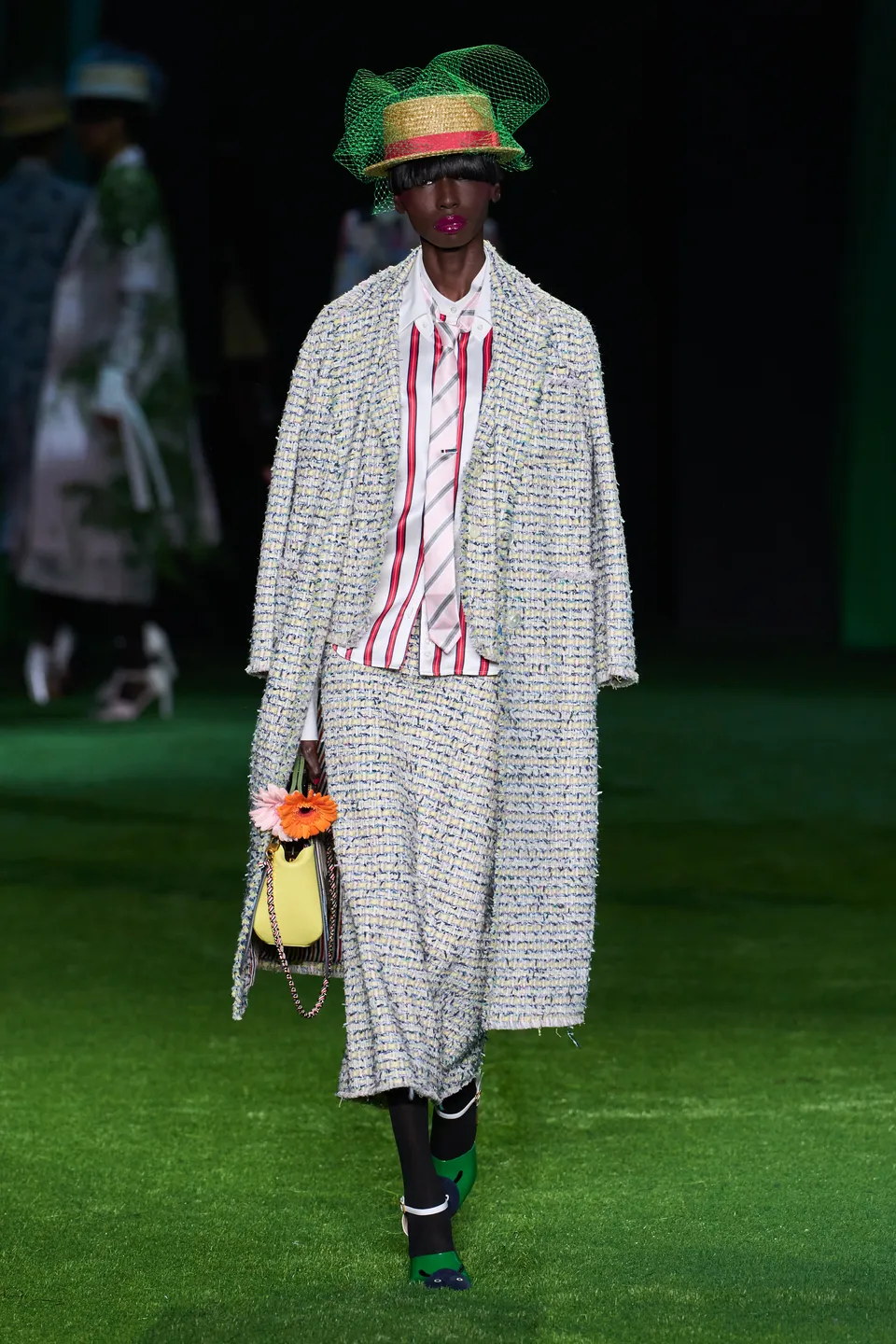
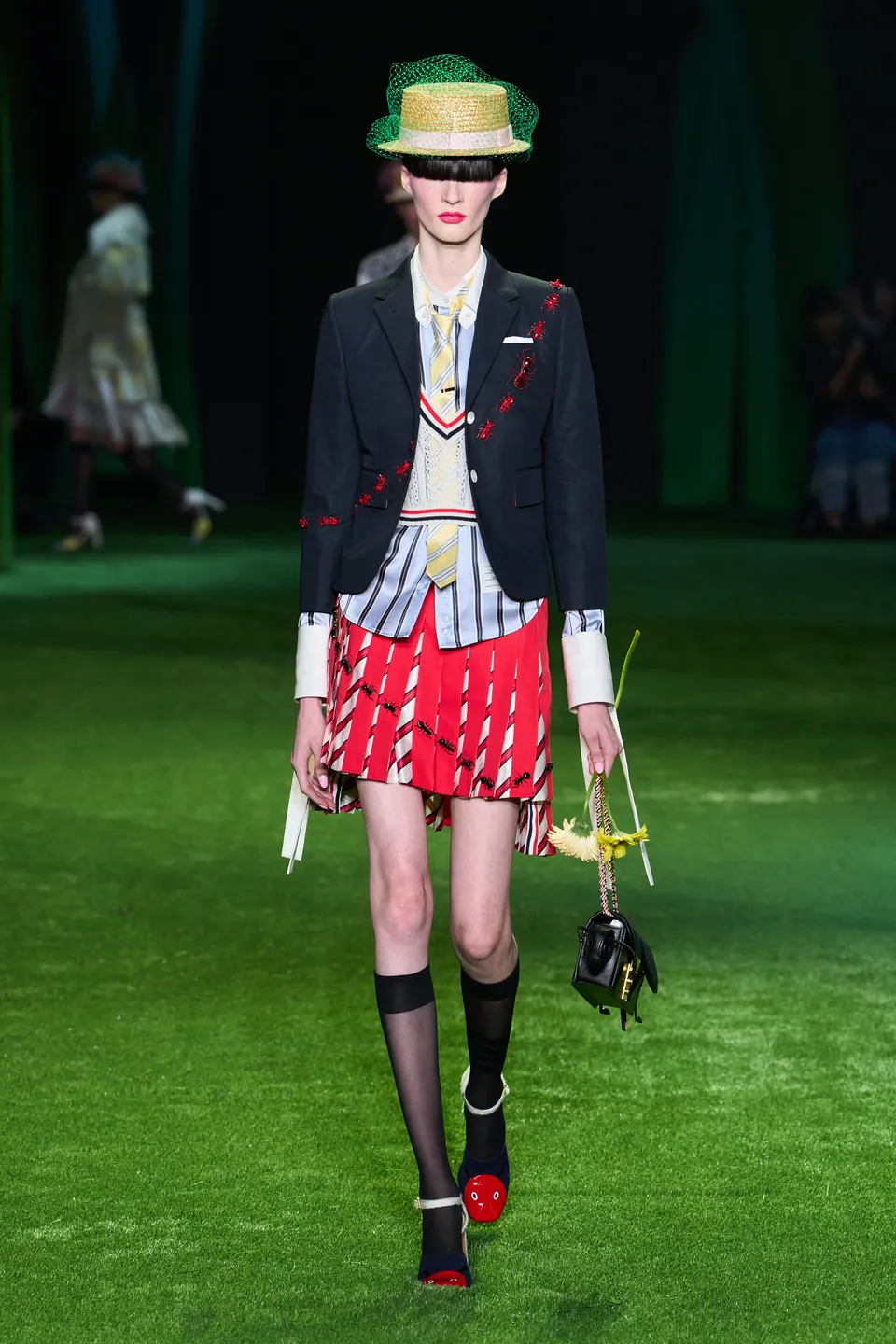
This is the operating system behind Thom Browne. He keeps a recognizable grammar and changes its pronunciation.
Twenty-five years of tailoring have given him an unusually stable design vocabulary. That stability creates room for increasingly strange experiments. A jacket can grow insect anatomy while retaining enough Browne proportions to remain identifiable from across the room.
The craftsmanship becomes almost absurd once the collection is seen close up.
Browne’s garden expanded across madras plaid, grid-check piqué, checked cashmere, Swiss-dot wool, silk, organza, mohair, alpaca and faux-fur intarsia. Raffia tipping created dry botanical edges, while grosgrain and exaggerated yarns added raised texture.
Then the insects arrived.
Grasshoppers were woven into jacquard beneath embroidered vegetation. Flies and moths appeared through sequins. Ants were worked in gold bullion thread. Bees climbed across a Chesterfield coat toward their hive. Butterfly-wing embroidery broke into elaborate mosaic surfaces.
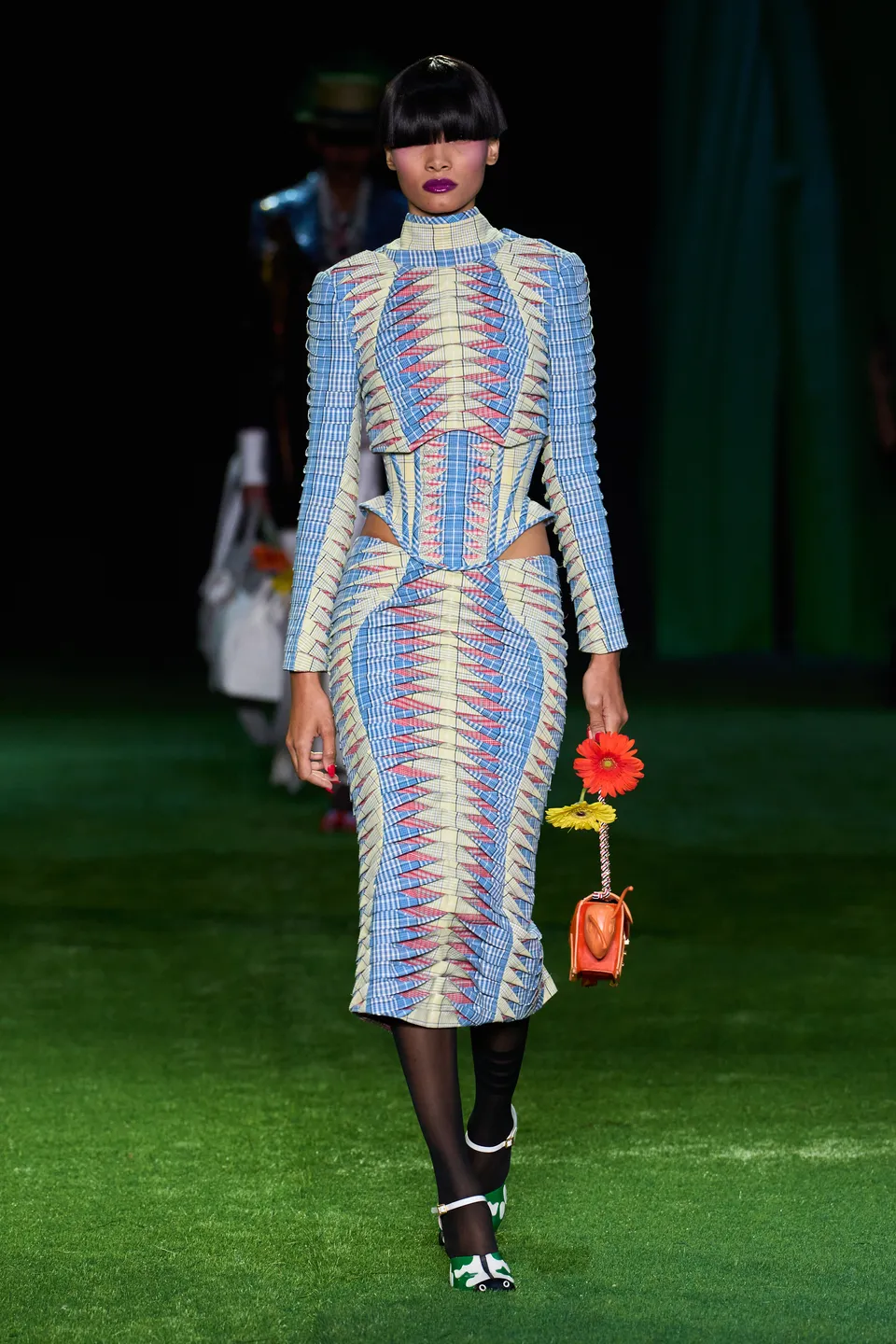
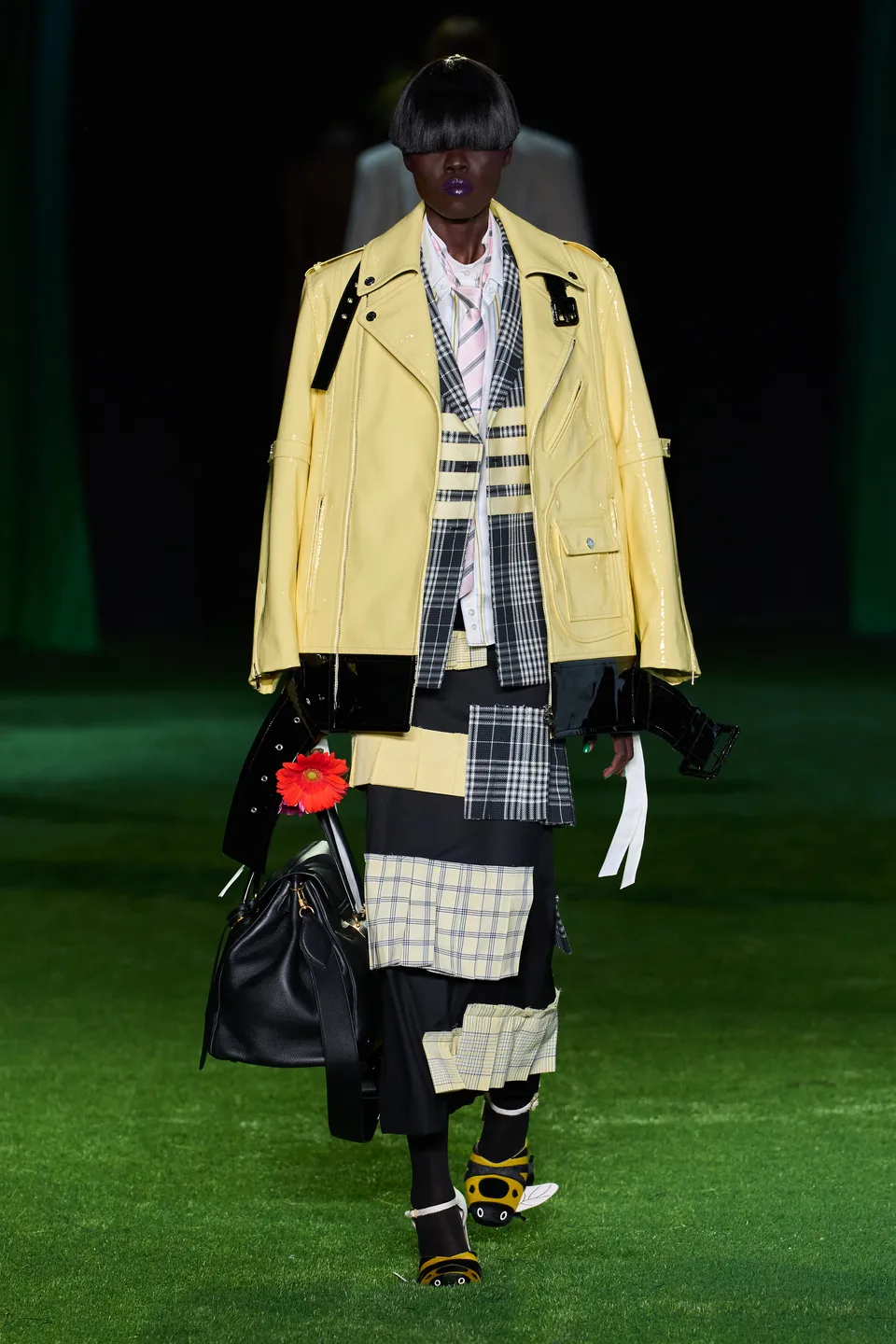
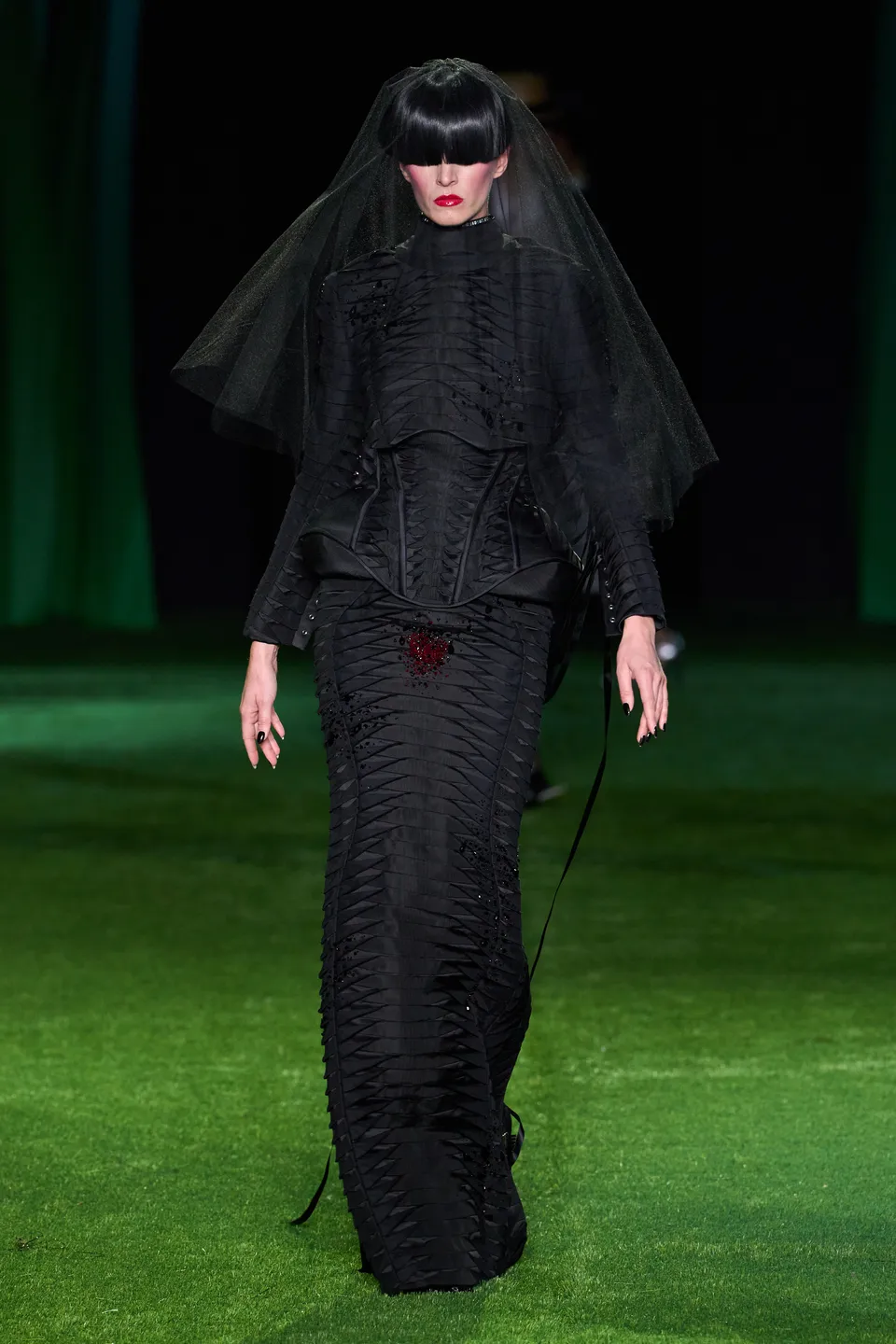
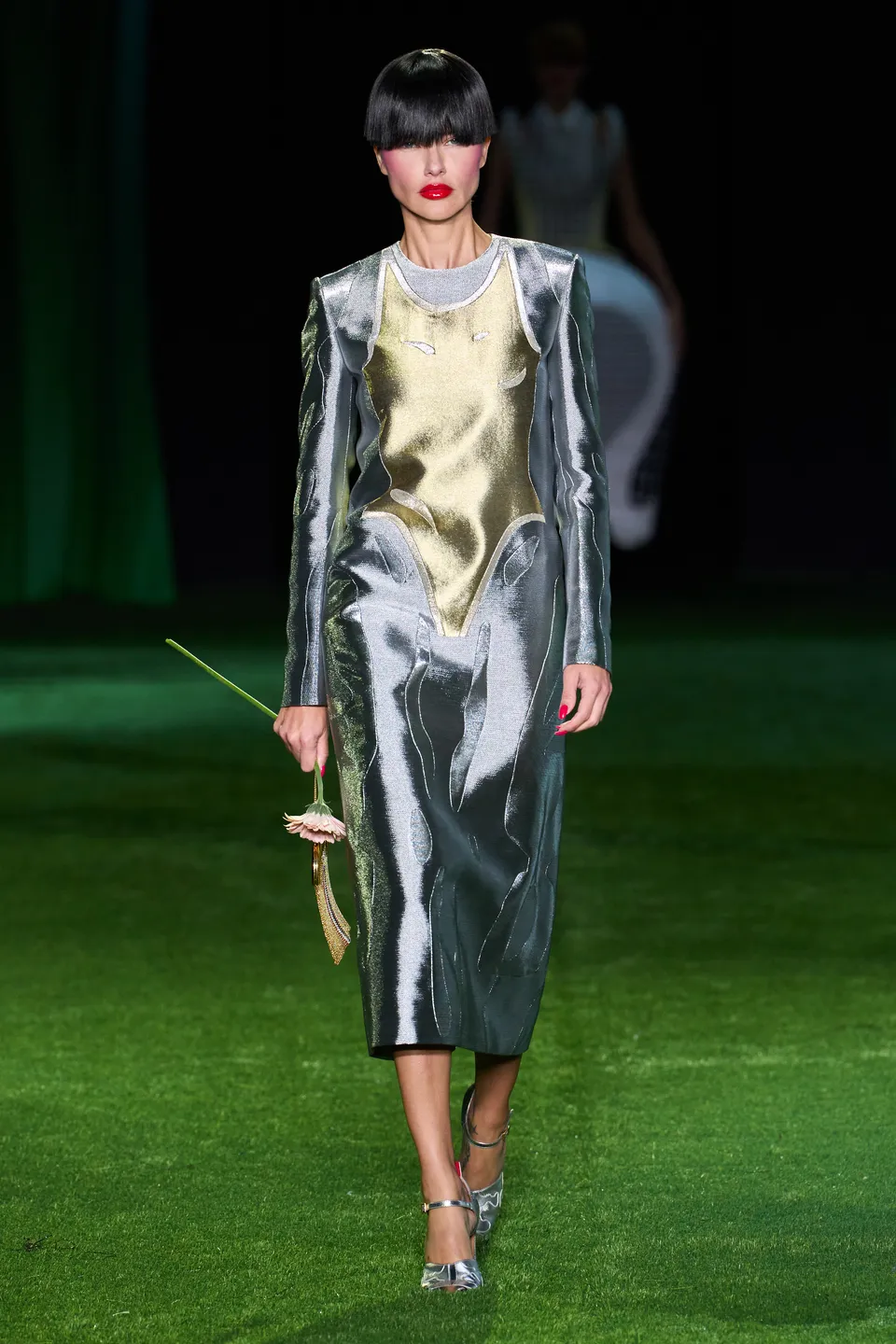
The fabrics themselves became landscapes. Tweed resembled fields and flower beds. Patchworks of mesh, oxford cloth, silk, plaid, and textured wool assembled beetle-like shells. Embroidery supplied markings usually created by nature: spots, wings, veins, eyes, and segmented bodies.
As the runway progressed, surface imagery gave way to full anatomical transformation.
Some looks became carapaces. Ladybug and beetle bodies rounded outward from the torso. A cricket appeared through sculptural construction. Color blocking borrowed from poison dart frogs and tree frogs, translating nature’s warning colors into graphic tailoring.
One fly found its body through an oiled leather moto jacket, giving its exoskeleton a slick urban surface. Brushed white alpaca created the strange softness of a silkworm.
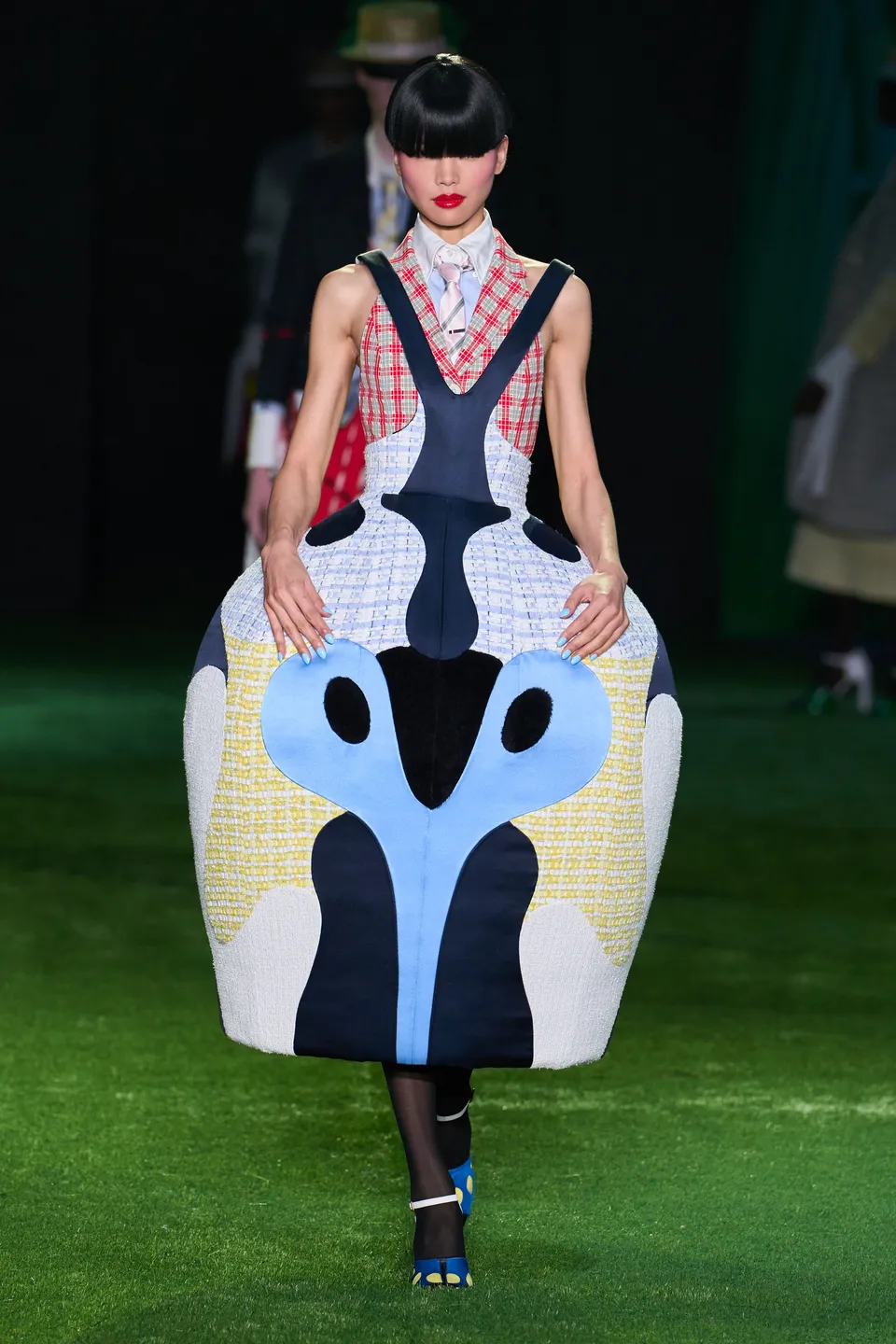
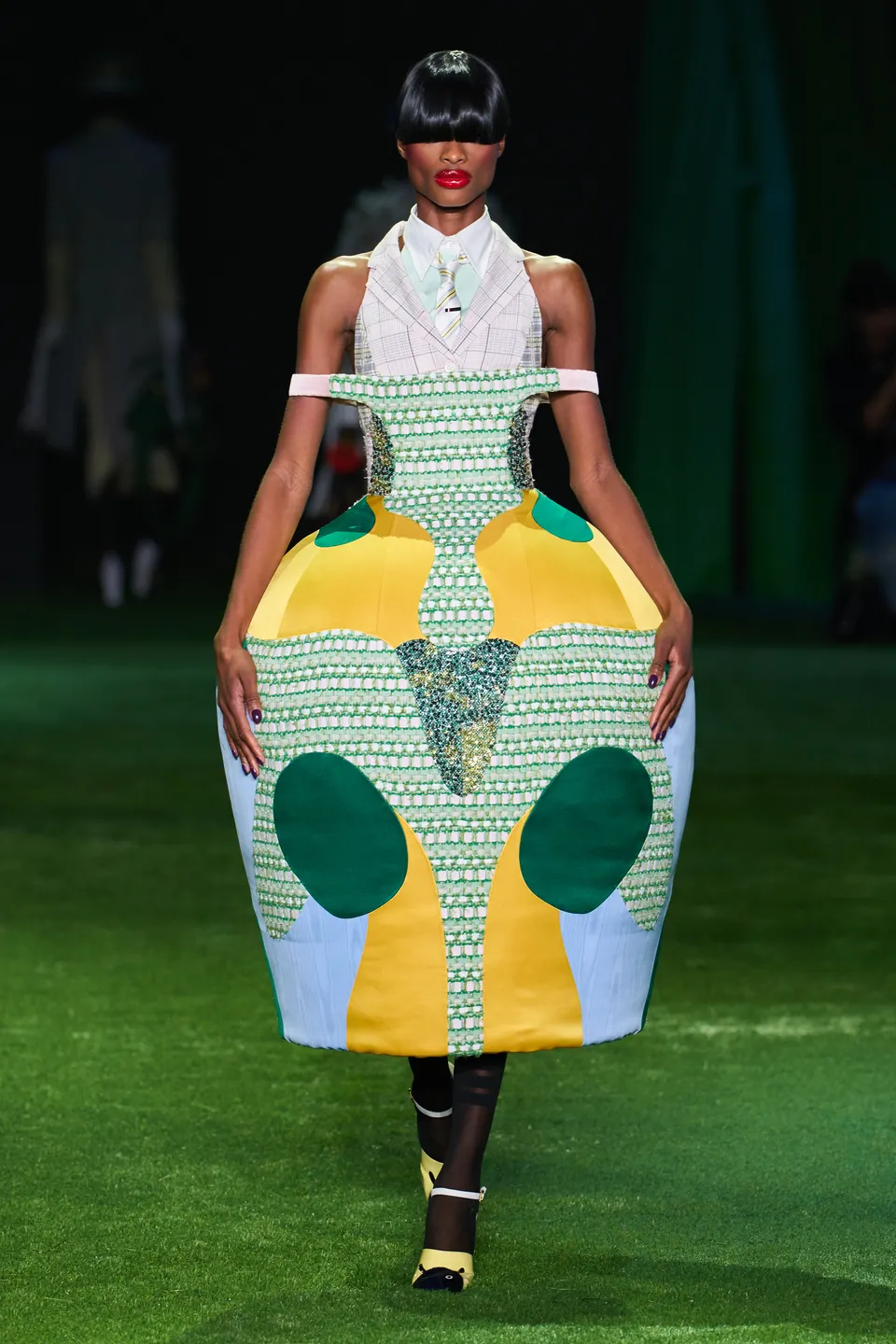
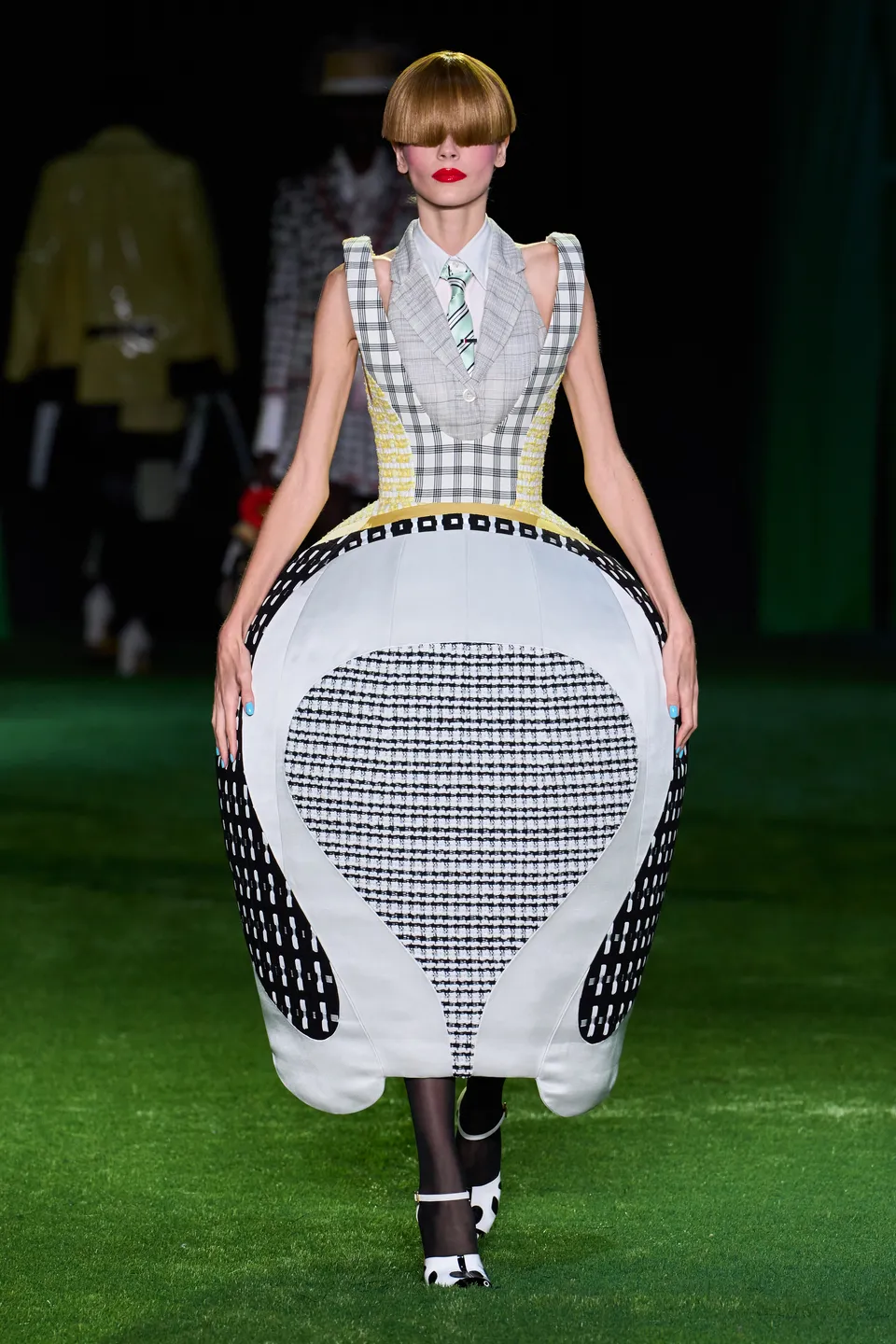
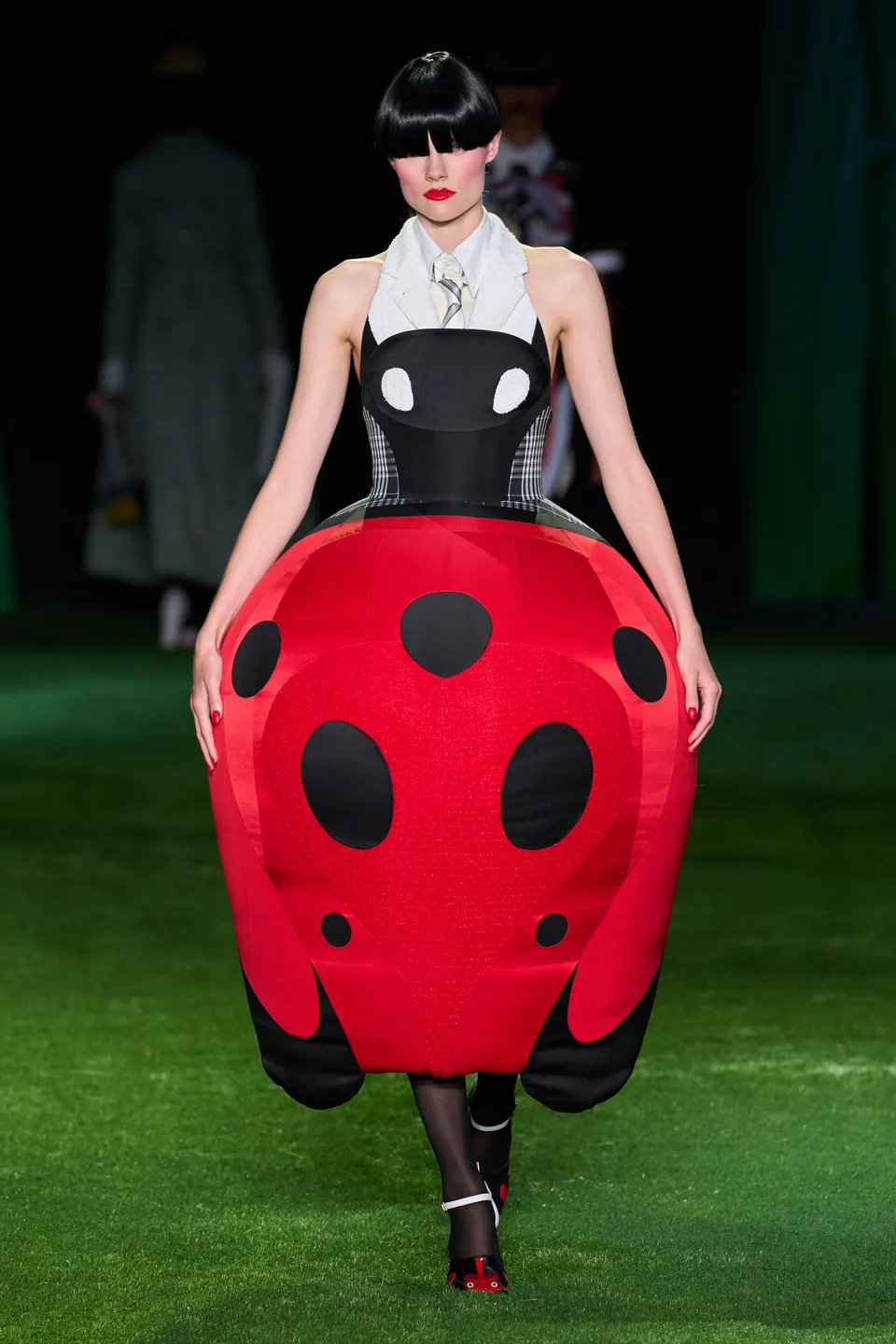
Then came the black widow. Black silk duchess satin, silk moiré and mohair built a dark architectural body marked with the spider’s recognizable flash of red. The familiar Browne discipline suddenly carried something predatory.
Here the runway started feeling like a cabinet of specimens imagined by a tailor.
Each creature had its own material logic. Hard insects received structure. Soft larvae received brushed texture. Winged creatures gained layered surfaces. Venomous ones acquired warning color. Browne’s fantasy remained playful because its craftsmanship stayed so exact.
At the center of all this was seventeen-year-old Kai Schreiber, whom Browne personally selected for the show’s principal transformation.
Her background in ballet and dance made her especially suited to the performance. She entered the giant chrysalis as part of the caterpillar world and later emerged in butterfly form.
Her parents, Naomi Watts and Liev Schreiber, watched from the audience.
Around her, the set made human scale feel temporary. Grass reportedly stretched around 20 feet high. An enormous daisy rose above the runway. The chrysalis became architecture, costume, and stage prop all at once.
Eight additional butterflies joined the transformation.
This is where Thom Browne operates beyond a conventional runway designer. Models become performers. Clothing becomes narrative information. Scenery explains what the tailoring is doing. A collection unfolds through acts.
The show began close to Browne’s familiar gray world and gradually opened into richer coloration as metamorphosis progressed.
By the butterfly passage, pleated handkerchief skirts swiveled around the body over high-neck swimsuits, behaving like mobile wings. The controlled repetition of Browne’s pleating suddenly became kinetic.
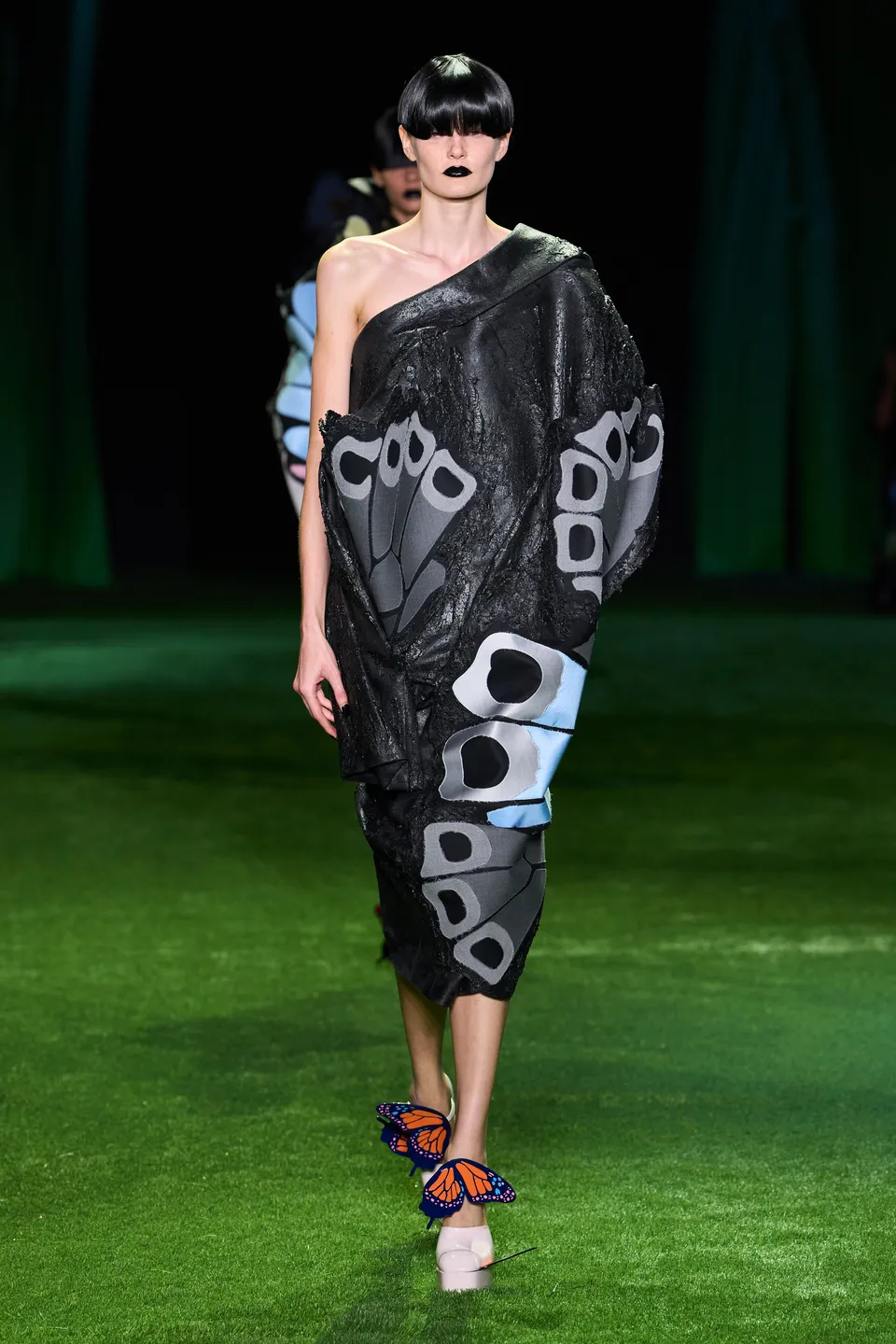
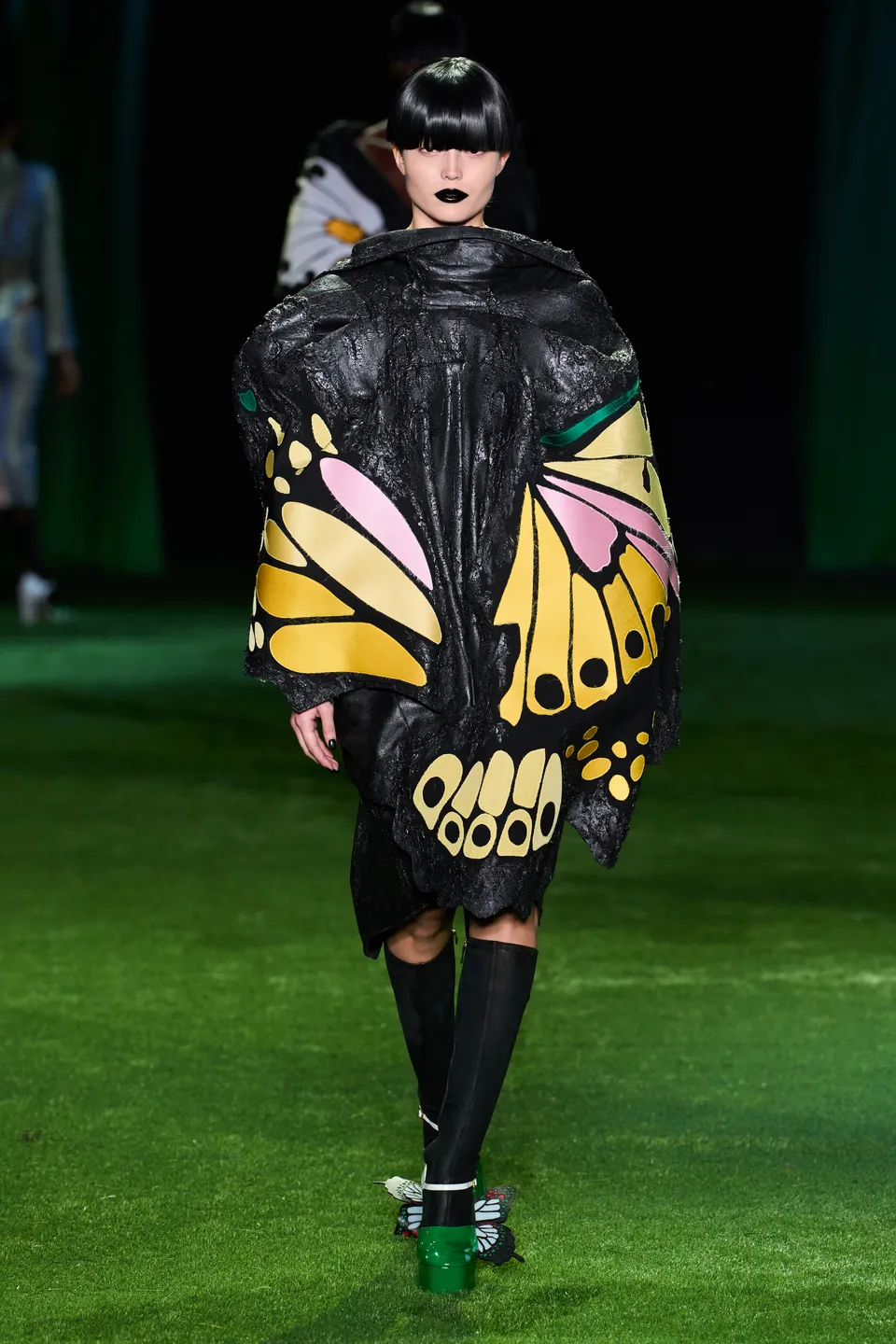
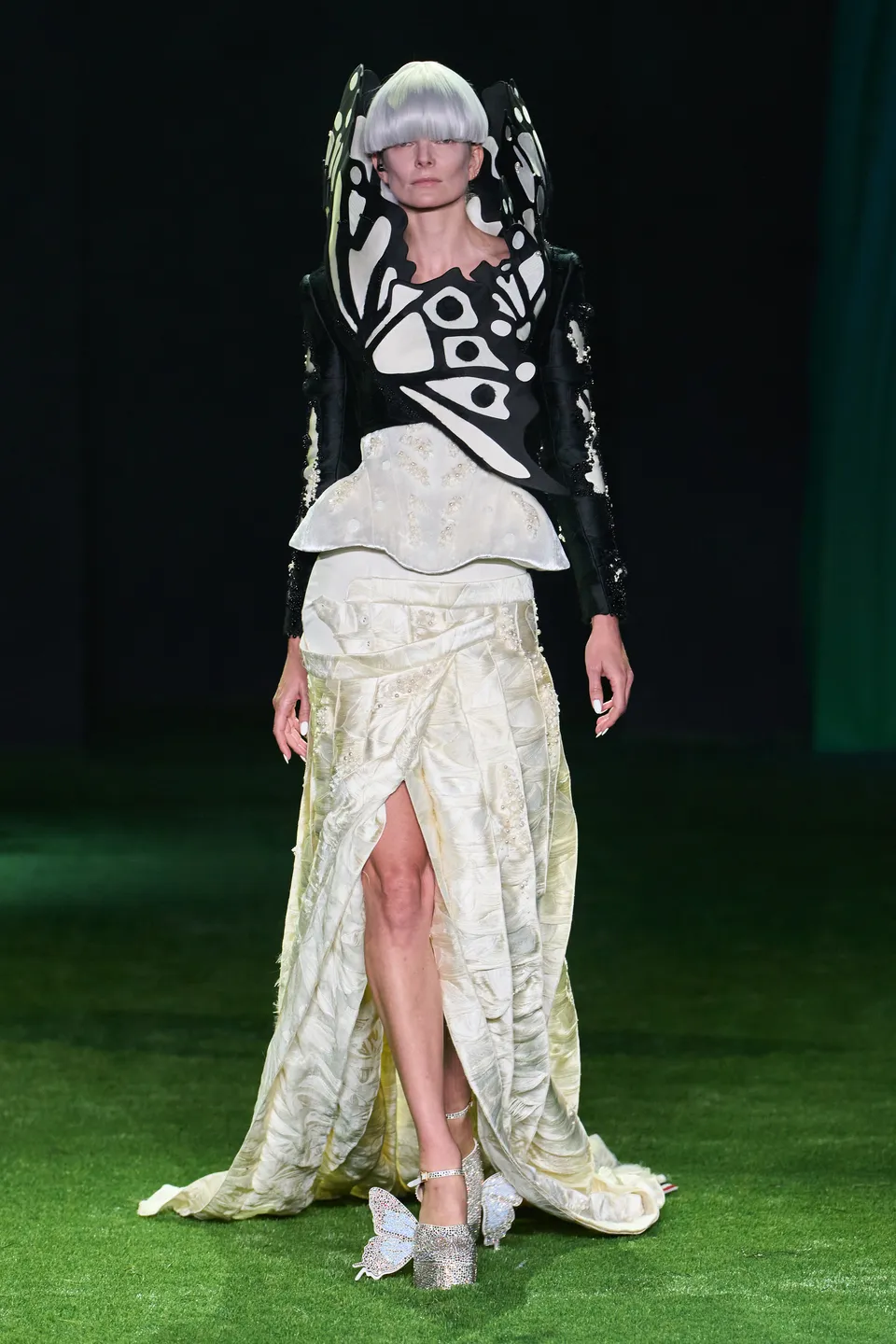
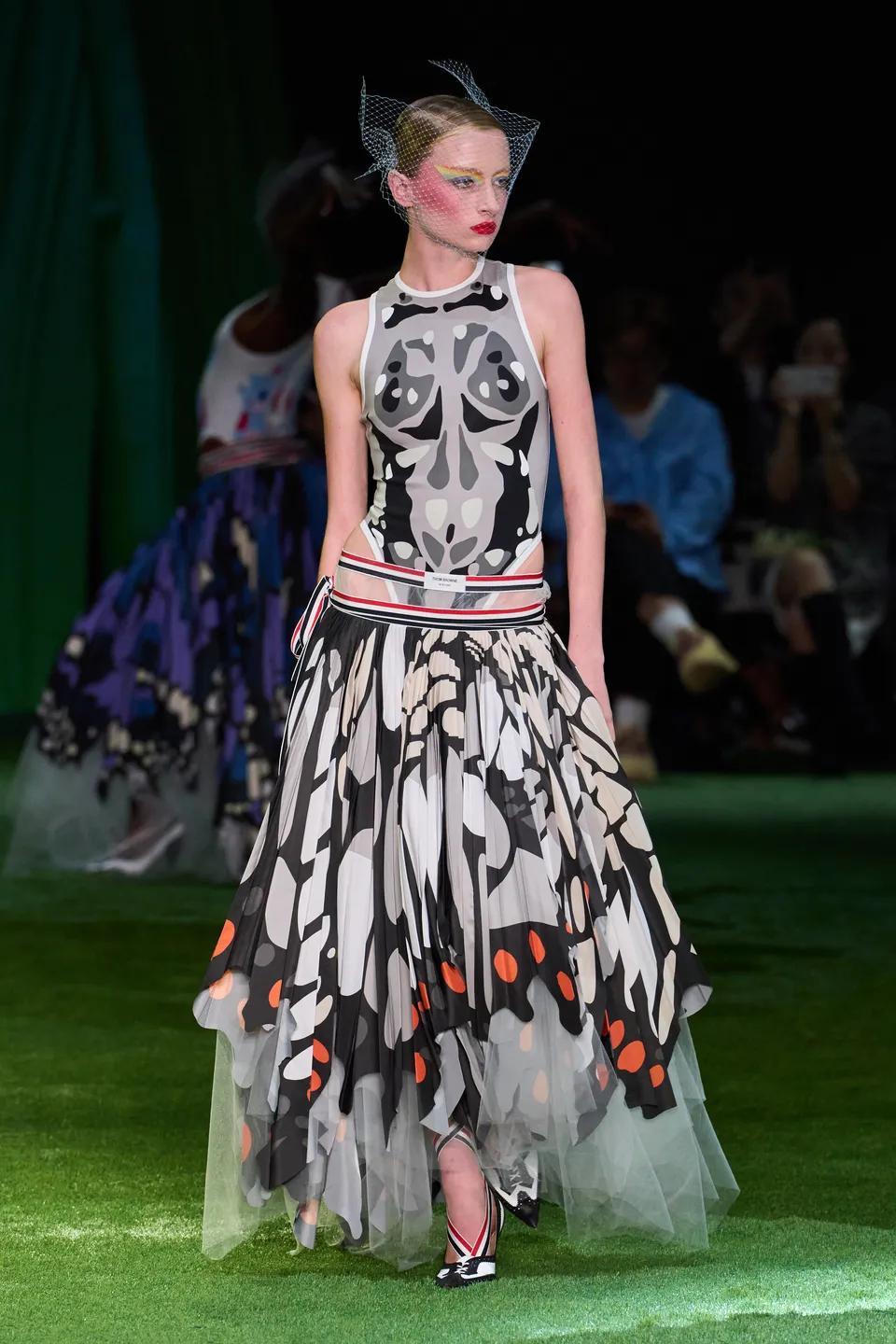
Then came the bridal finale. Face-framing intarsia panels rose around the wearer like butterfly wings. A cropped double-face silk duchess satin jacket sat above padded silk velvet corsetry, while an asymmetrical skirt extended the transformation through movement.
The creature had reached its final form. And underneath all the theater sat the skeleton Browne has spent decades developing: precision, proportion and tailoring.
That is perhaps why metamorphosis feels so natural in his world. Transformation requires something stable enough to transform from.
A company working to discipline distribution and rebuild momentum sends out one of its most labor-intensive and fantastical collections. Operationally, the business is becoming tighter. Creatively, Browne is allowing ants to crawl through gold thread and teenagers to emerge from giant cocoons.
Recognition. A gray suit can become a moth, a beetle, a spider or a butterfly and still carry the same hand behind it. Twenty-five years into that experiment, Thom Browne keeps the uniform alive by allowing it to molt.
Advertisement