MENU
Close





Ferragamo SS27 takes good taste straight into fetish territory, and Maximilian Davis keeps the whole thing remarkably elegant.
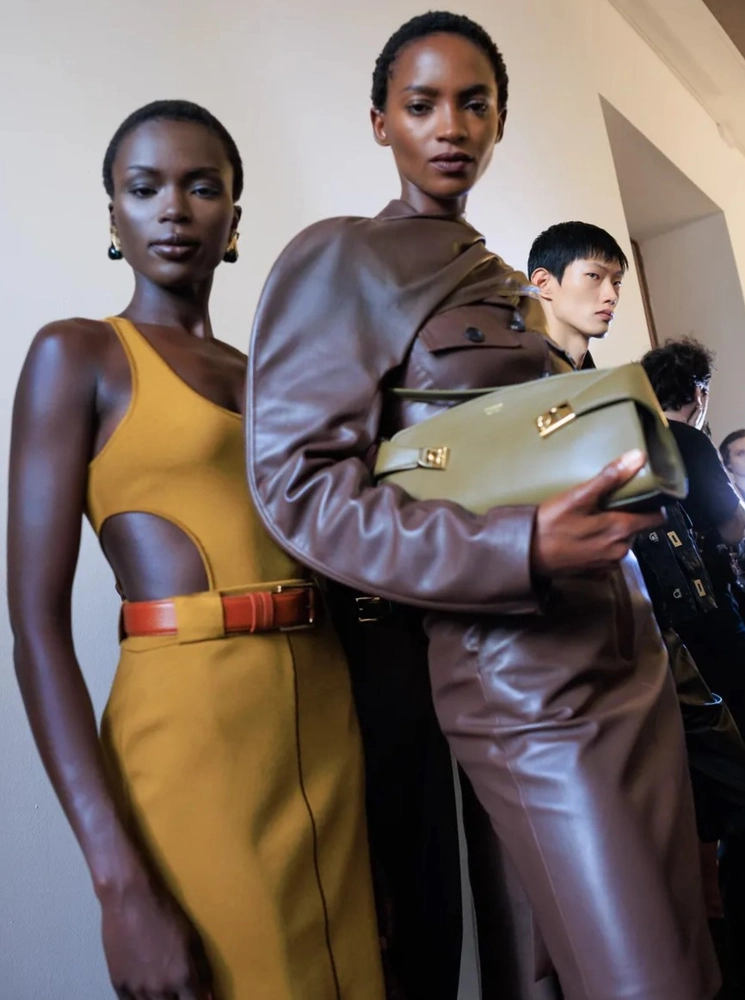
Ferragamo SS27 takes good taste straight into fetish territory, and Maximilian Davis keeps the whole thing remarkably elegant.
September 27, 2026
Advertisement

Advertisement



At Triennale Milano, Ferragamo opened Spring/Summer 2027 with a woman held firmly at the waist. Then Maximilian Davis started loosening everything.
The historical reference remained present, yet SS27 placed it behind the clothes. The 1940s provided the skeleton. Davis spent the runway experimenting with everything that could happen around it.
History has become one of Davis’s most consistent creative tools at Ferragamo. Recent collections repeatedly returned to the 1920s through speakeasy dressing, artistic rebellion, Harlem Renaissance references, and the cultural circles surrounding Salvatore Ferragamo’s early career. SS27 advances the timeline into a decade shaped by uniform, utility and sharply defined roles.
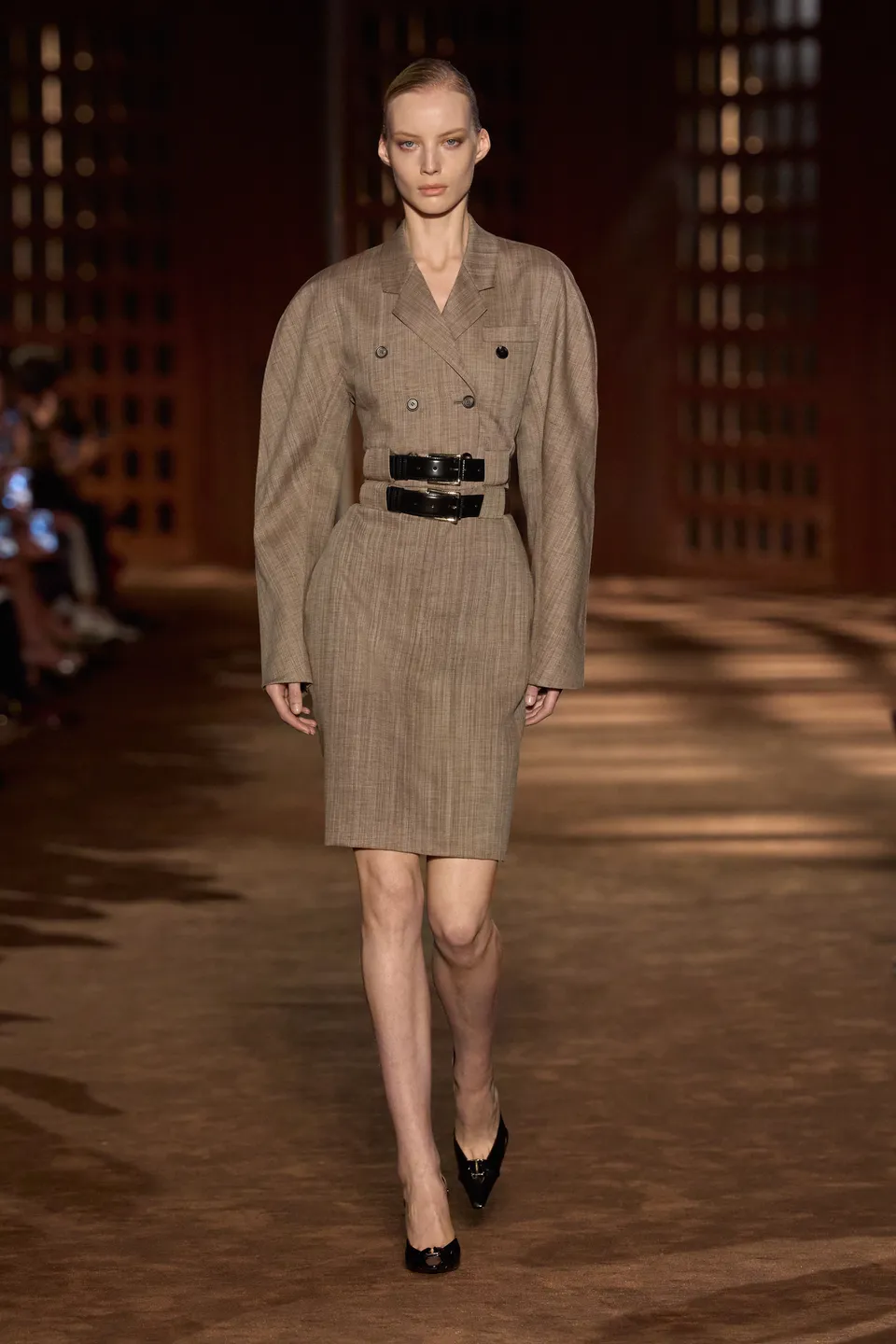
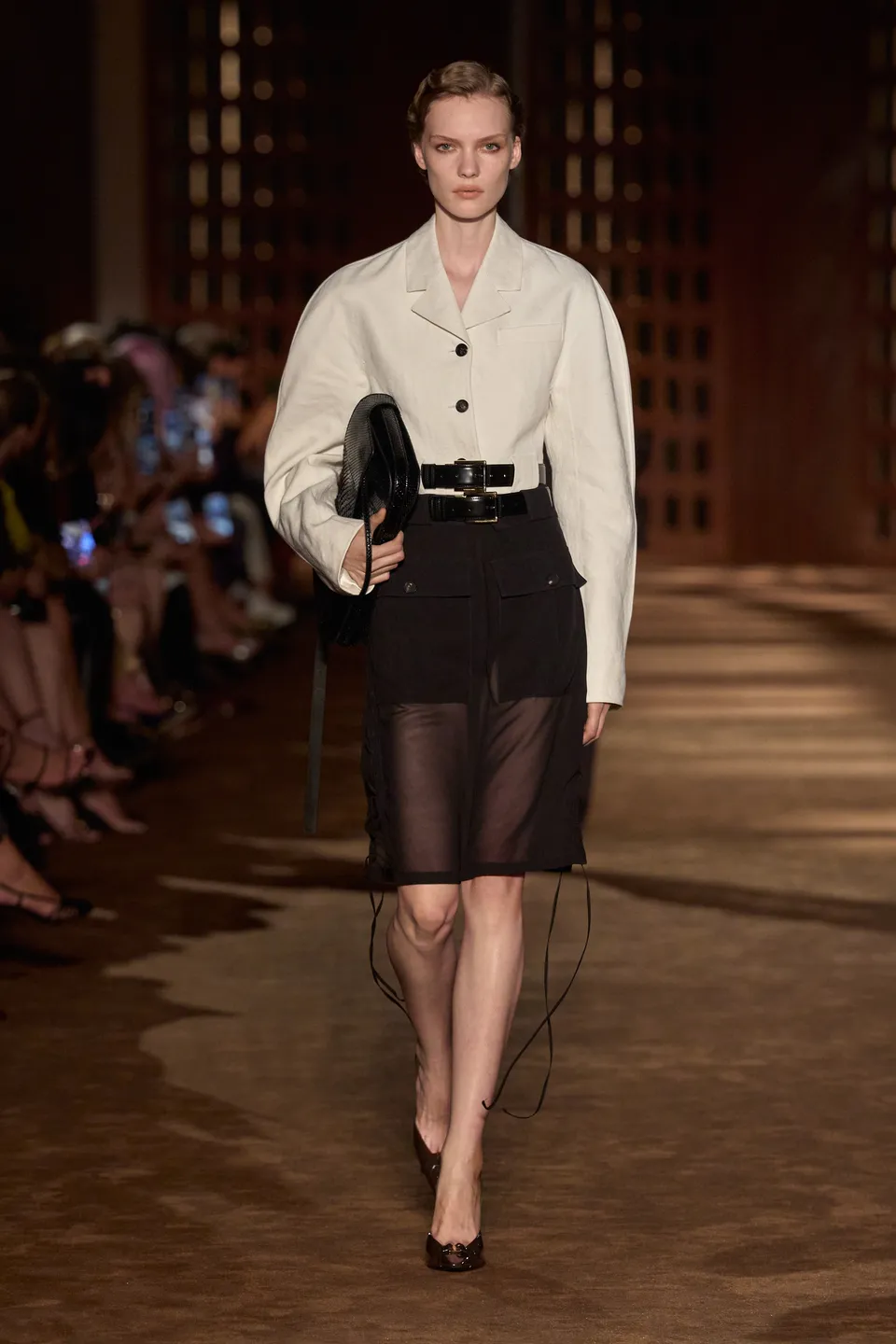
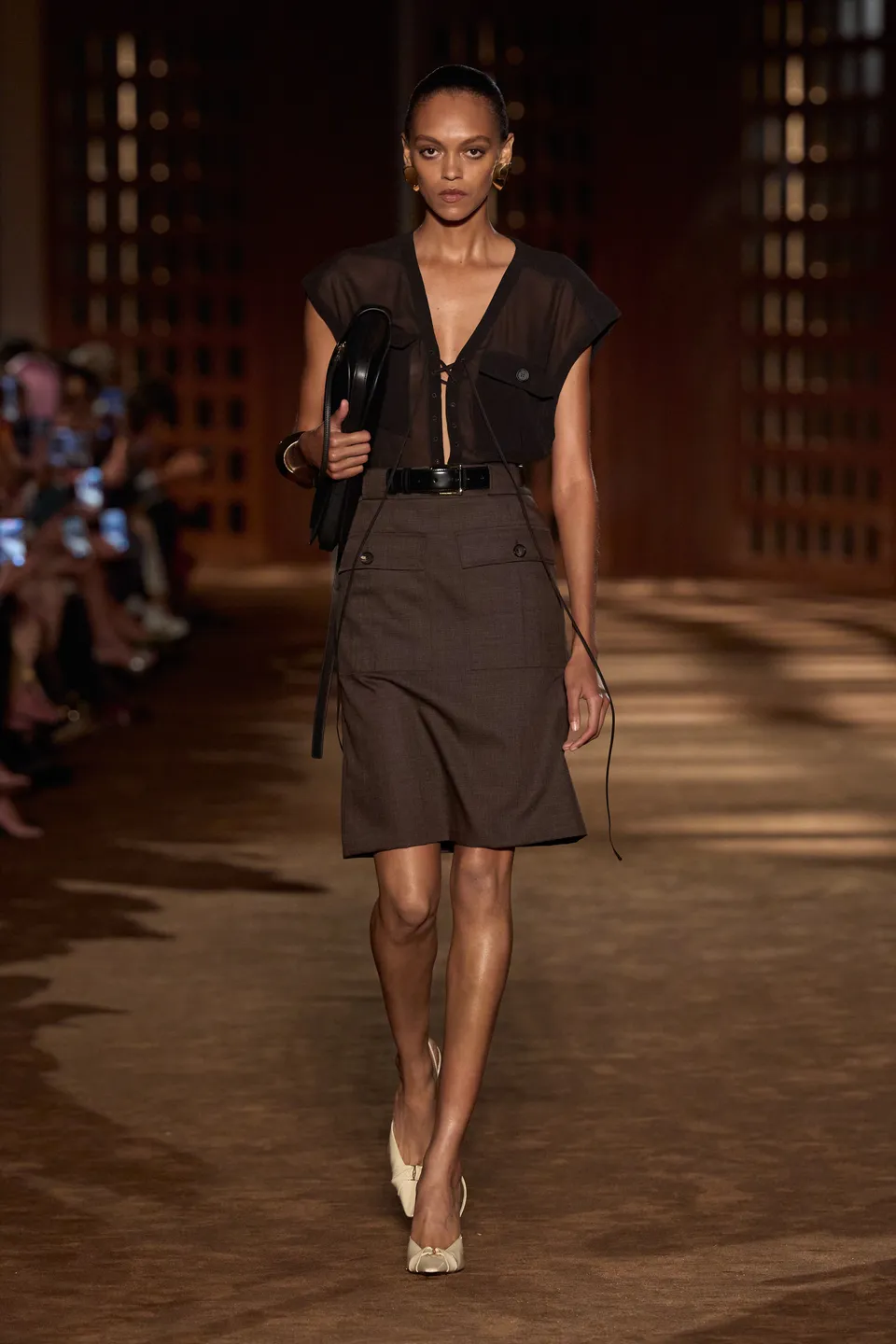
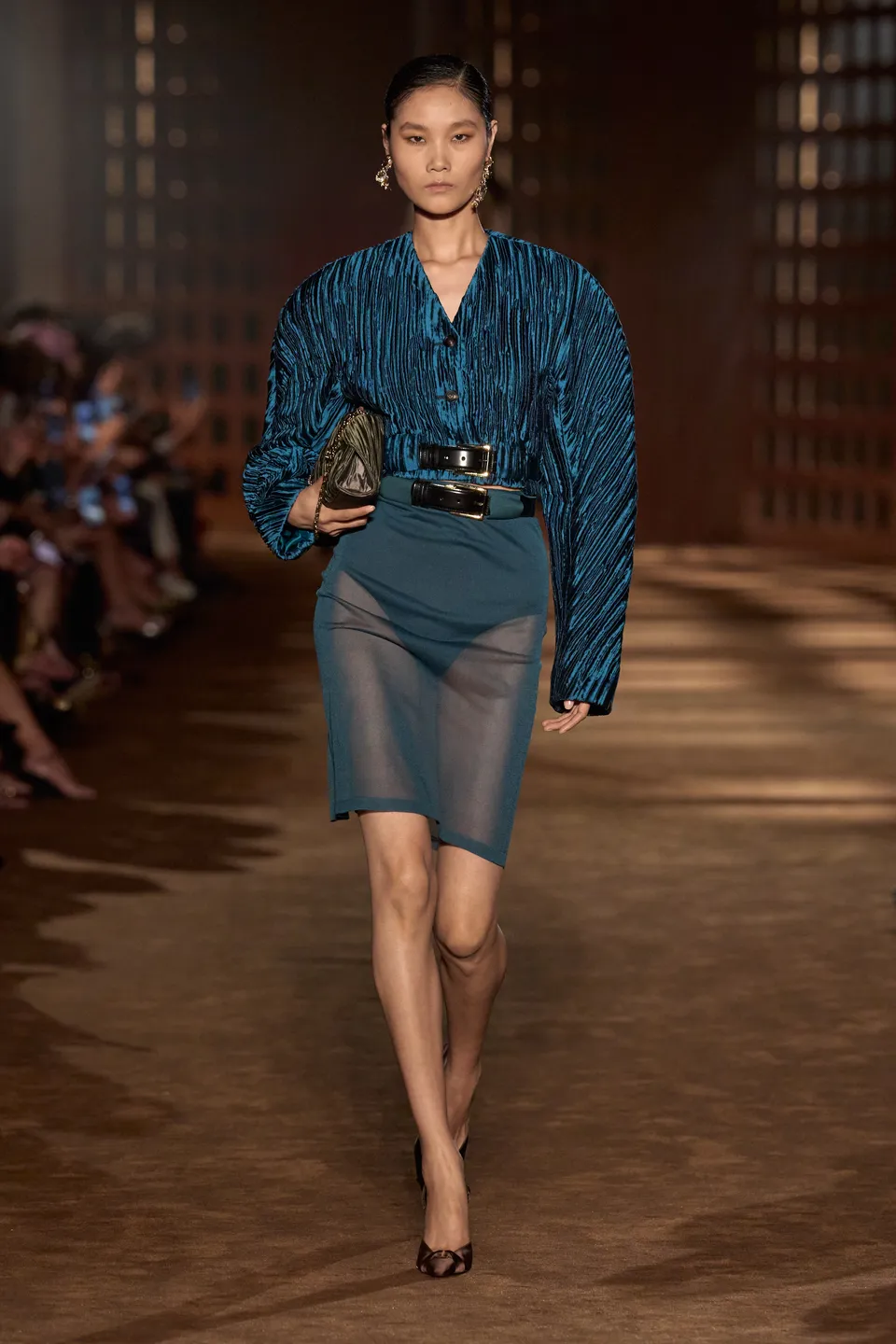
The 1940s offer Davis a powerful wardrobe architecture. Waists become controlled. Pencil skirts run close to the body. Shoulders carry authority. Pockets become large enough to affect posture. Double belts create a disciplined horizontal line around the torso.
Lee Miller gives that research its human dimension. Her transformation from model and muse into photographer and war correspondent brings ideas of visibility, authorship, and control into the collection. Man Ray contributes another visual language through Surrealism and solarization, where light alters the edge of an image and makes familiar forms appear unstable.
Traditional 1940s tailoring frequently used assertive shoulder padding. Ferragamo creates its rounded shoulder through cut and seam placement, giving volume a sculptural quality while preserving fluidity through the arm, creating a soft Y-line.
That rounded line becomes one of the collection’s strongest silhouettes. Below it, waists tighten sharply. Pencil skirts extend toward the calf. Coatdresses frame the body with double-breasted fronts. Elongated trousers and utility jackets bring a practical counterpoint to the femininity of the waist.
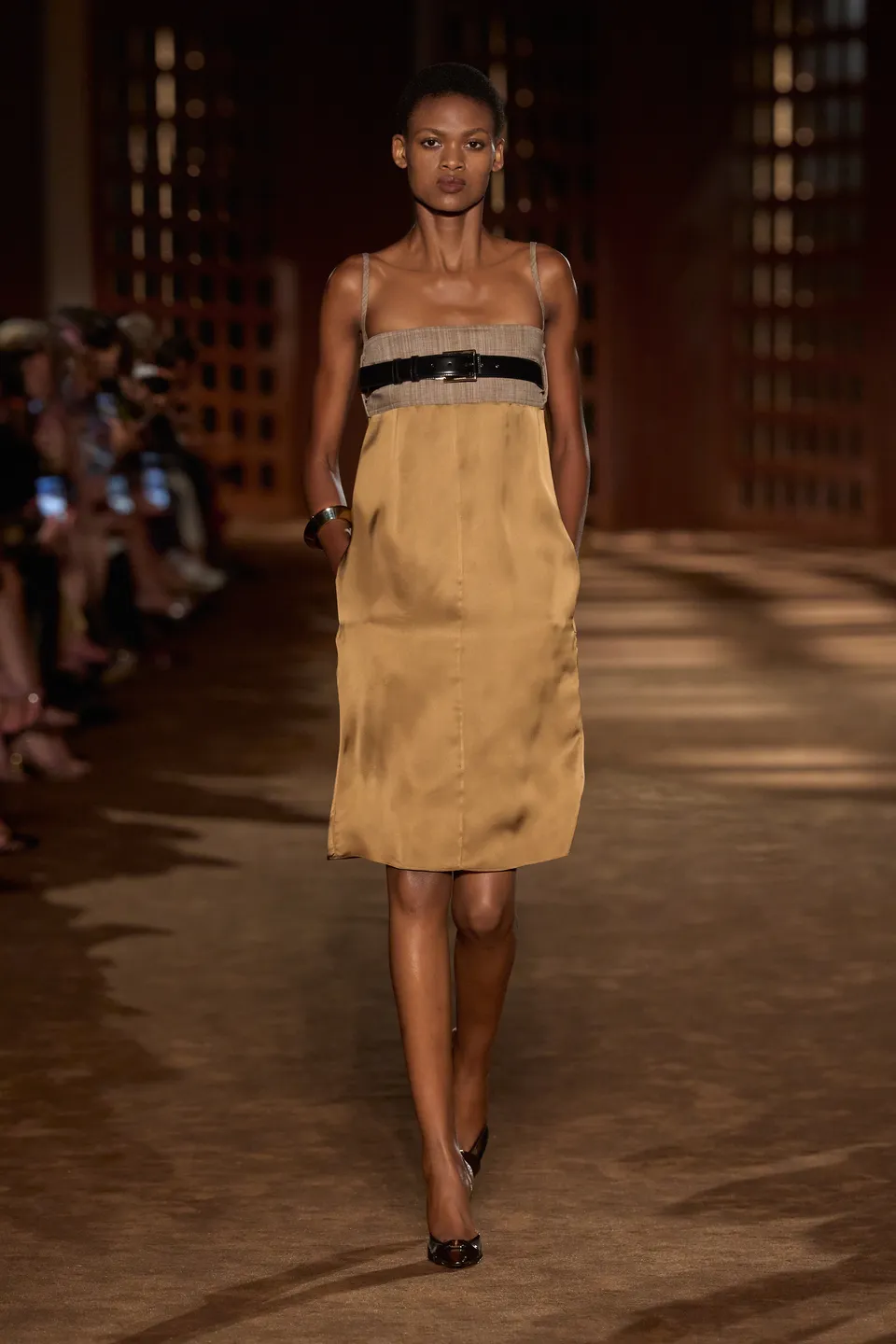
Belts appear repeatedly, sometimes doubled around the middle, sometimes travelling upward across the bust. Their original function shifts into body architecture.
The opening coatdress captures the idea perfectly. Power shoulders hold the frame, twin belts compress the waist and the length gives the garment an almost military severity.
Ferragamo takes a historically controlled silhouette and slowly introduces sensuality through everything placed around it.
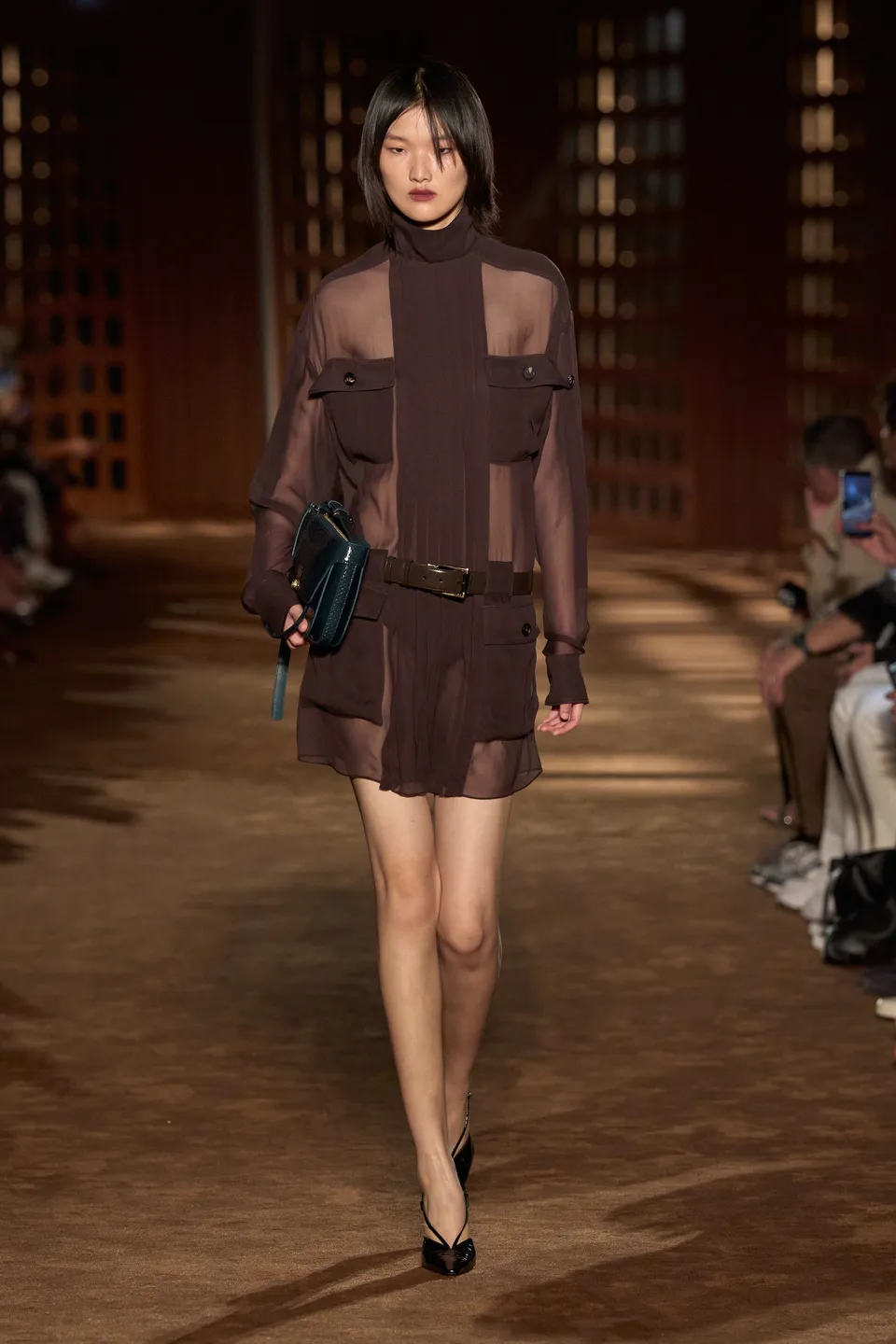
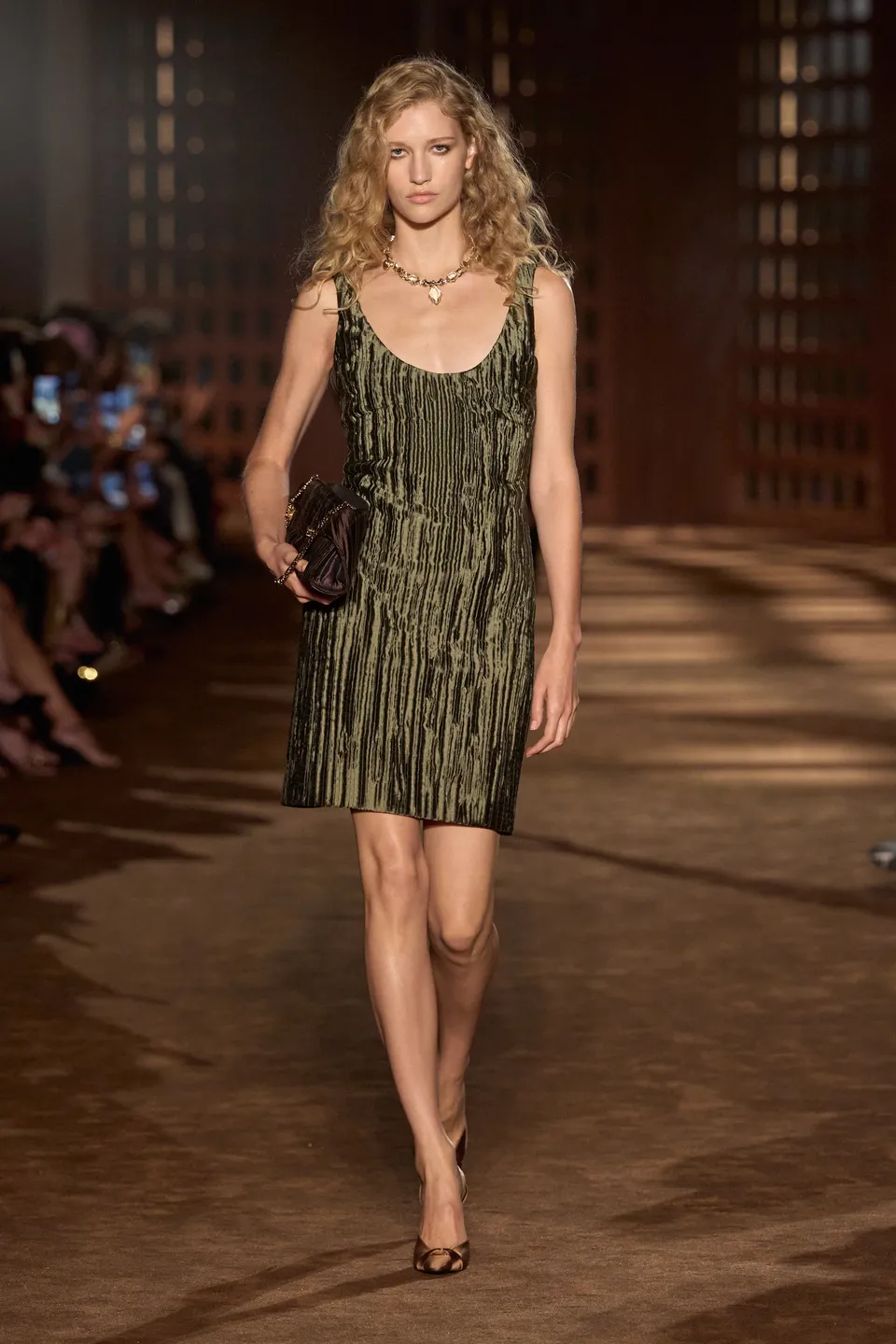
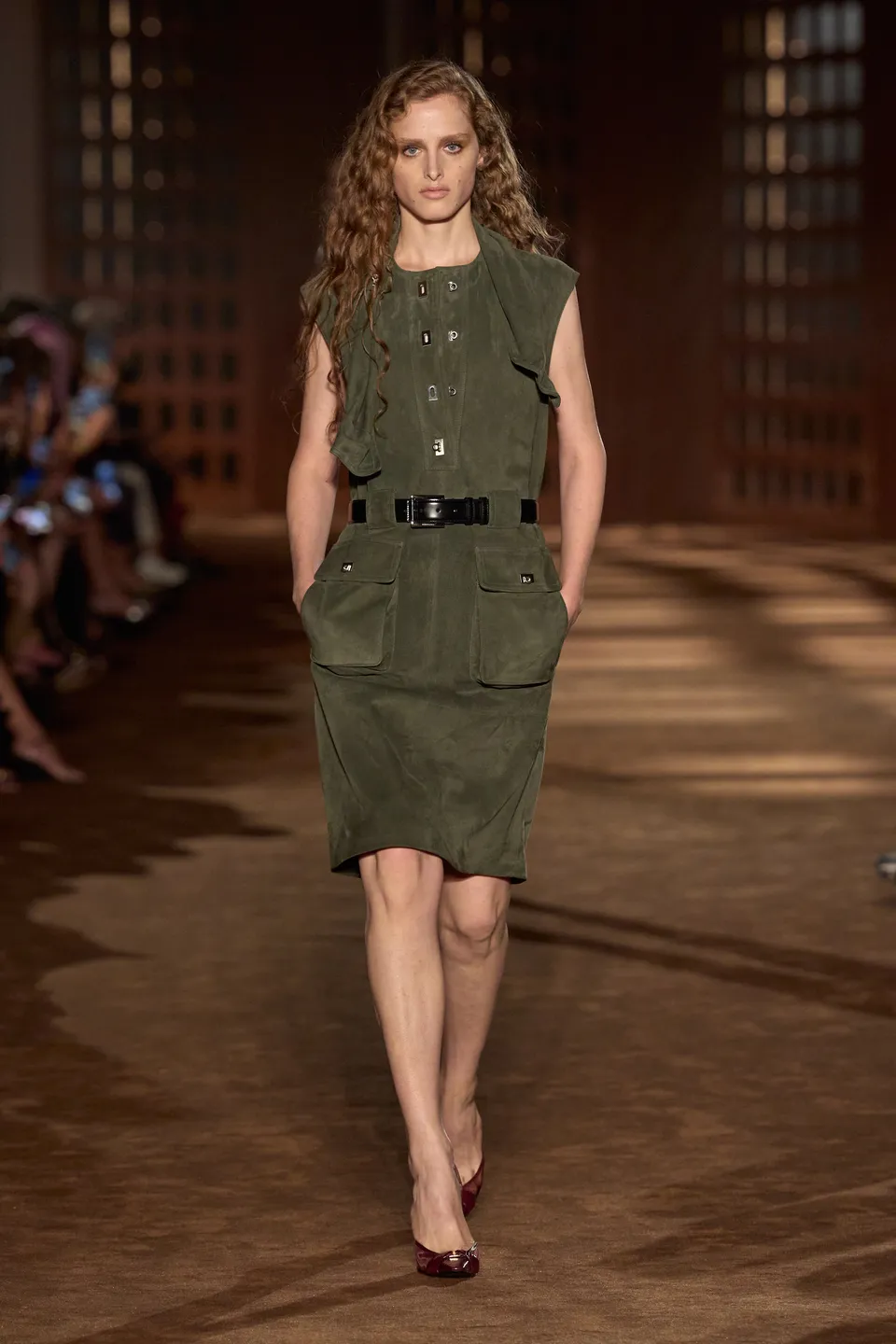
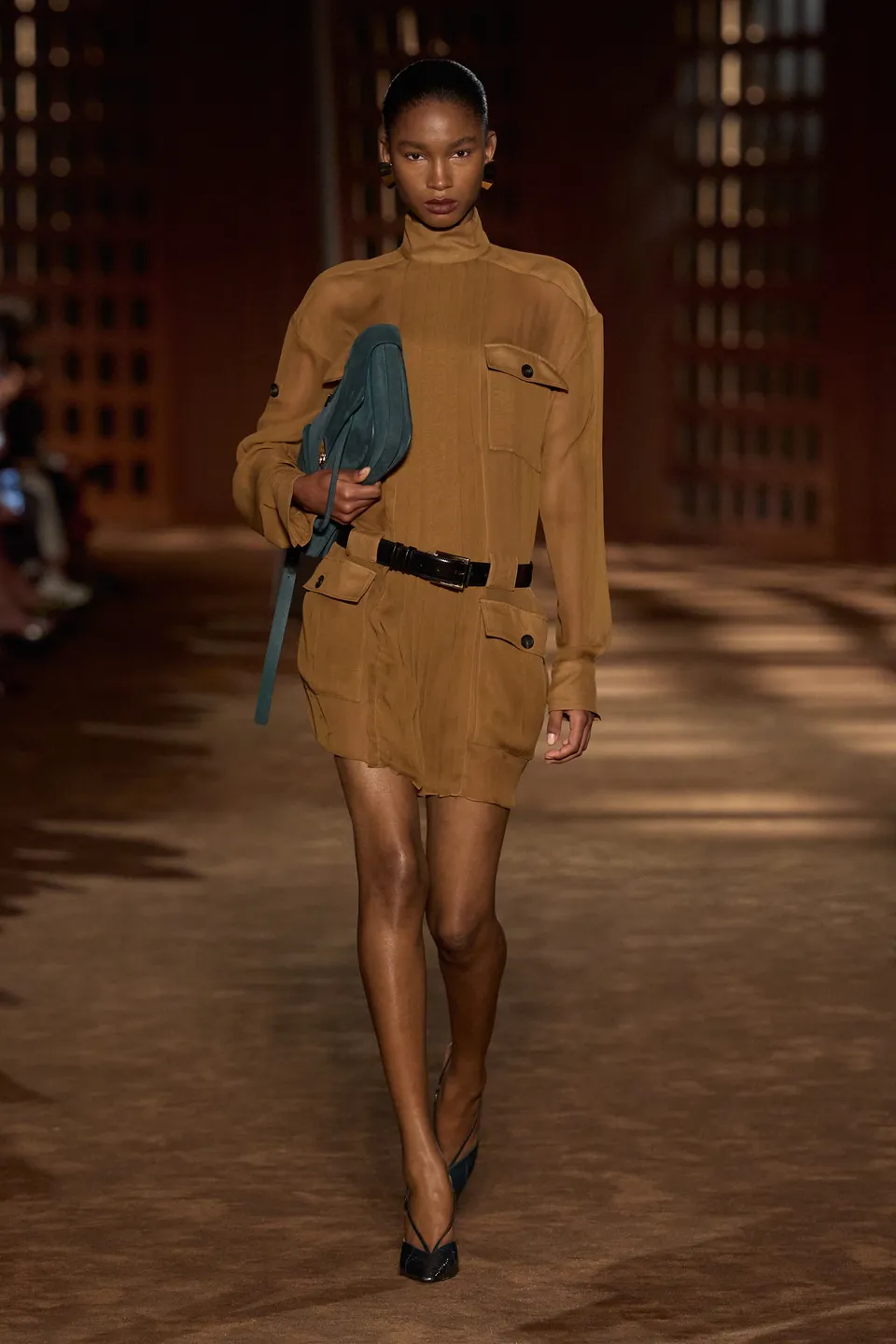
Military and safari references give SS27 much of its visual discipline. Bellows pockets sit across jackets and skirts. Workwear proportions appear in leather. Safari vests create rigid frames around the torso. Tailoring suggests uniforms through pocket placement, belts, and restrained color.
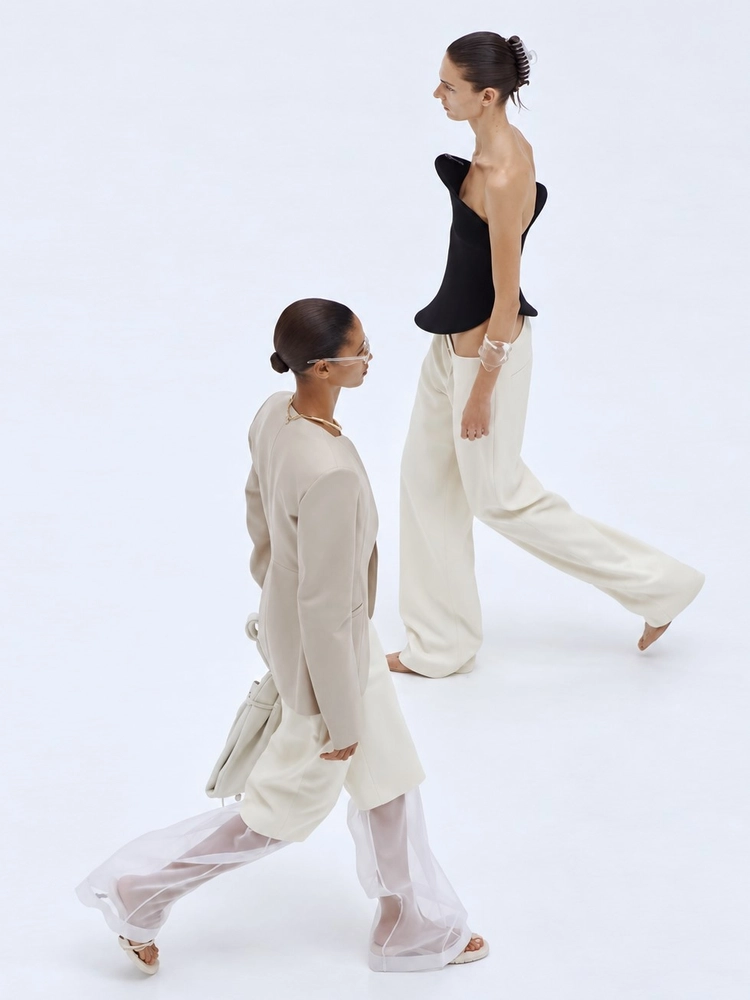
Chiffon receives practical pockets usually associated with sturdier textiles. Transparent tailoring exposes seams and layers that formal clothing usually keeps hidden. Sheer pencil skirts reveal lingerie underneath while retaining the posture of officewear.
Salvatore Ferragamo’s 1947 Invisible Sandal provides the collection with its most important archival clue.
The original shoe used transparent nylon monofilament across the upper, creating the illusion that part of the foot floated above the sole. It was technically inventive, visually strange, and deeply connected to Ferragamo’s fascination with materials.
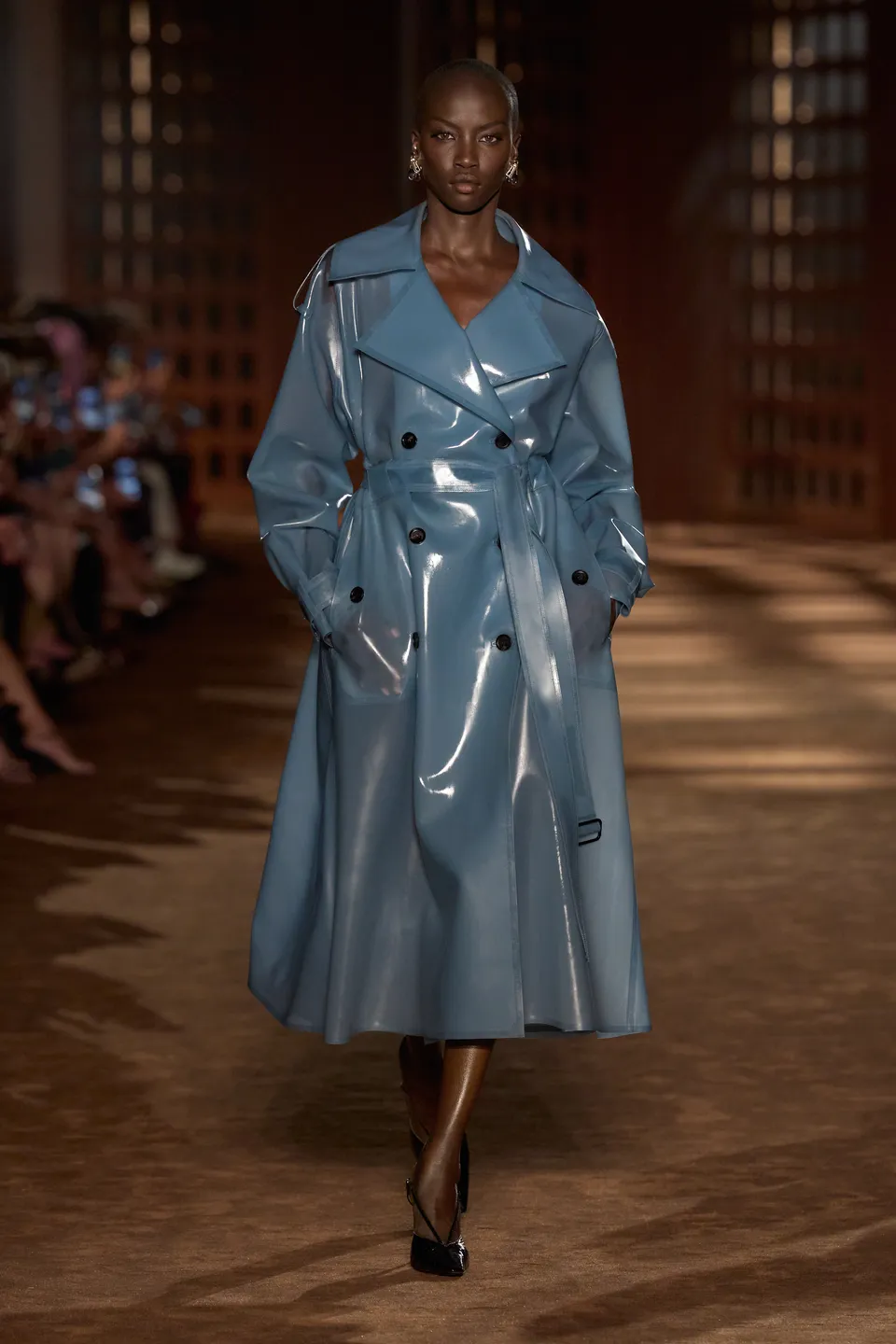
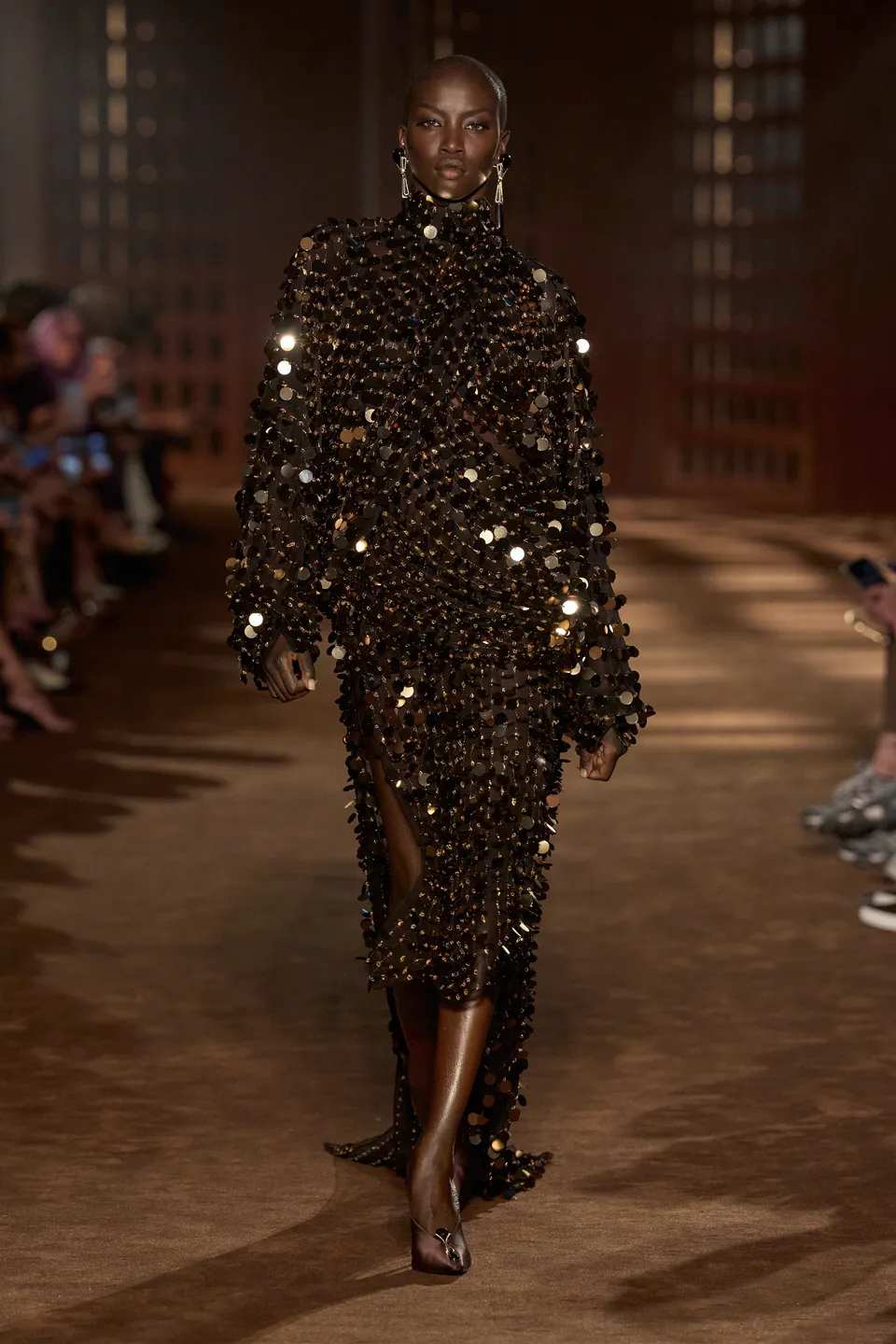
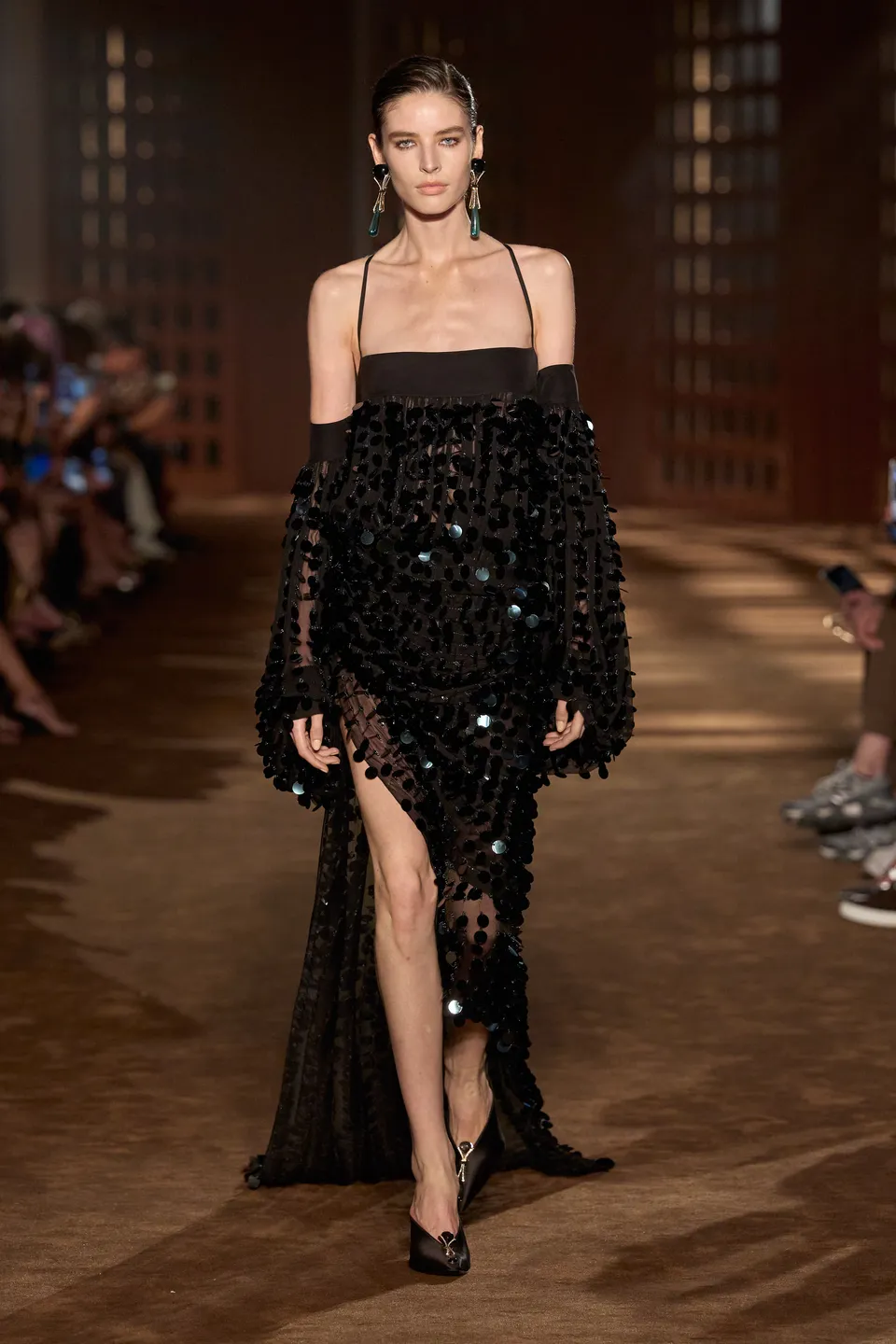
Davis takes that principle of disappearance far beyond footwear. Transparent silk-wool reveals the internal structure of tailoring. Chiffon reduces utility clothing into something nearly weightless. Translucent rubber forms glossy trenches and bodycon dresses. Cracked leather introduces dryness and age. Python adds a controlled flash of fetishism. Paillettes eventually carry the collection into evening through reflected light.
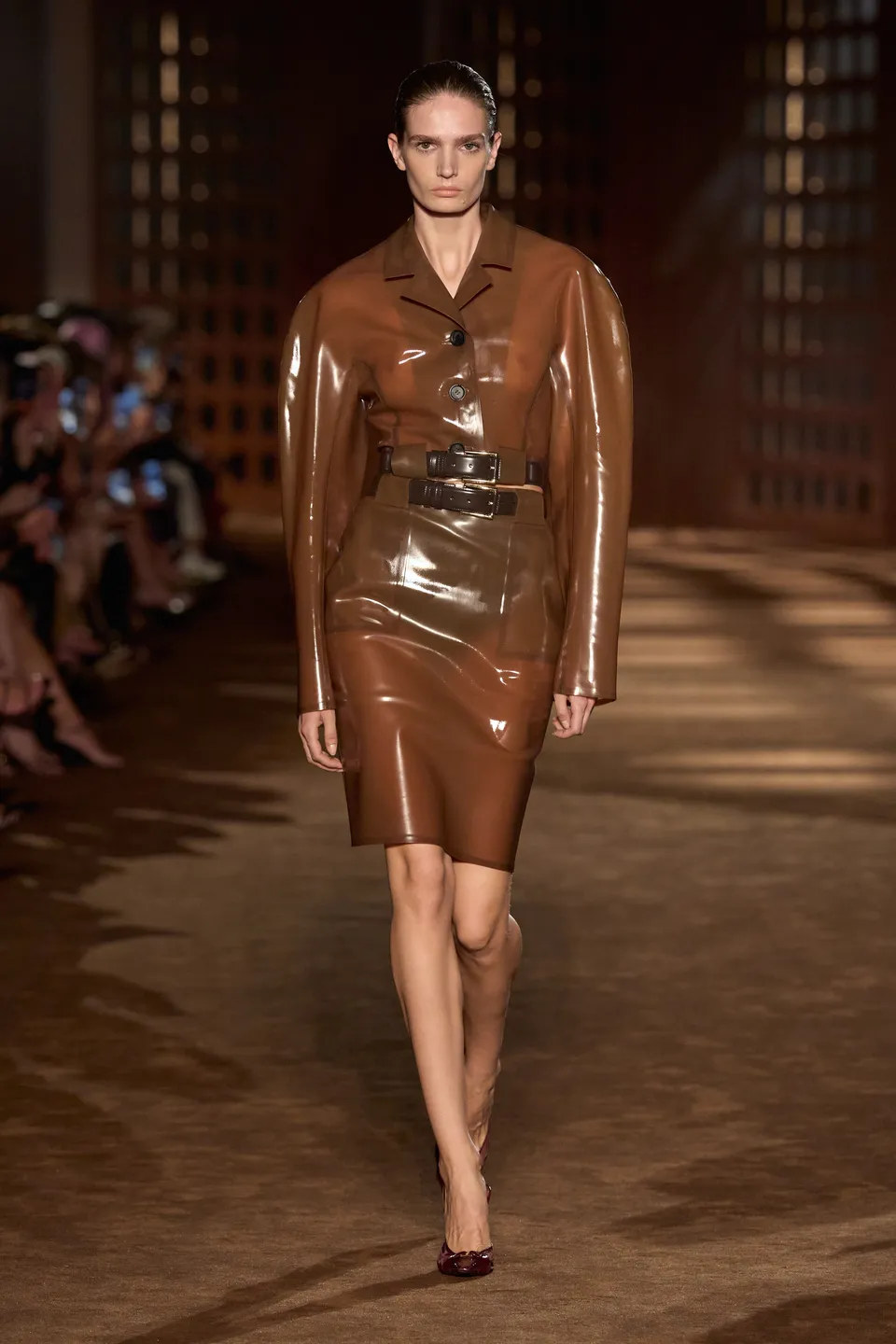
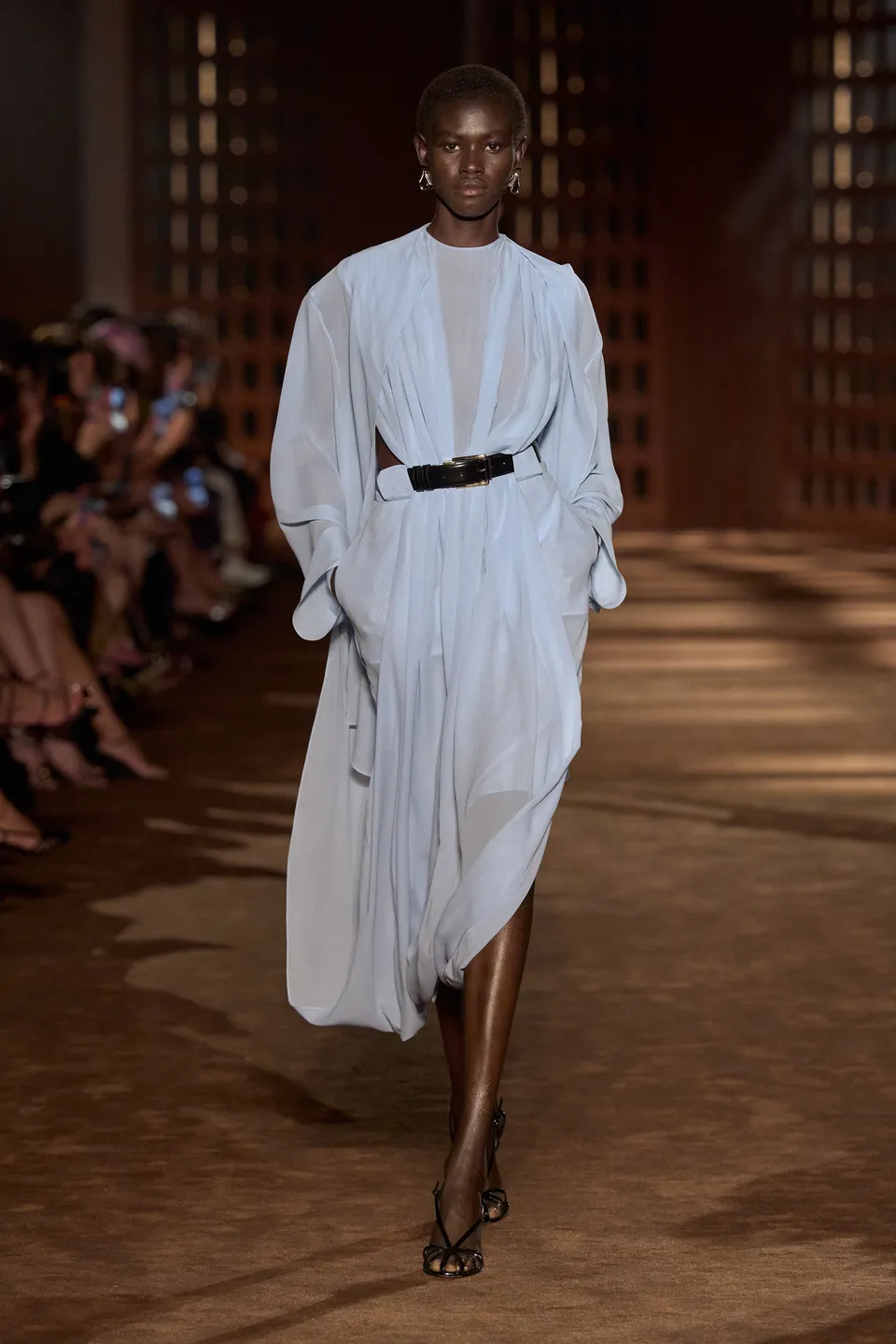
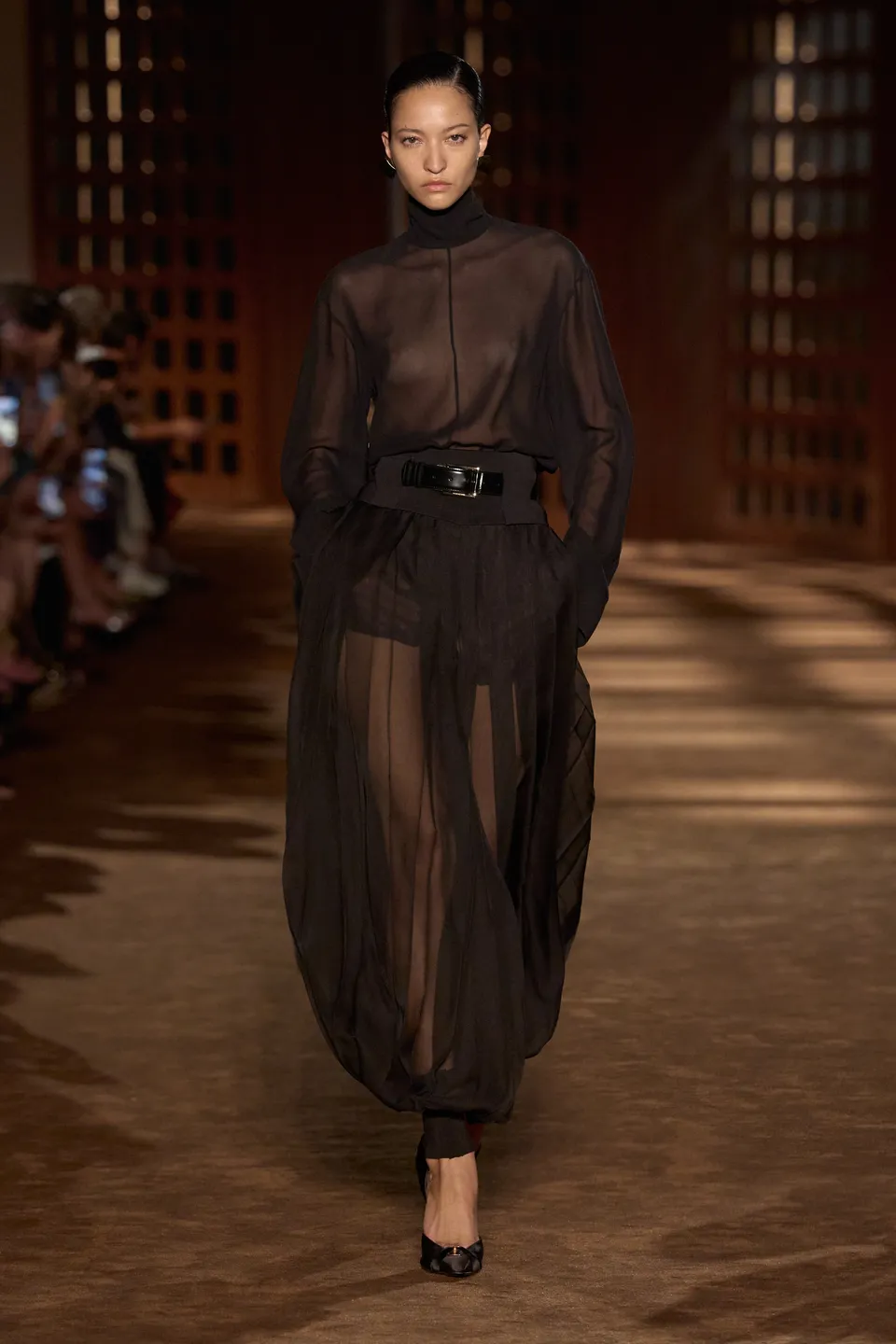
Salvatore experimented with what a shoe could physically become. Davis asks the same question of an entire wardrobe. The updated F-shaped wedge extends that thinking back into shoes through pumps, slingbacks, wedges and sandals, connecting the runway’s conceptual language directly with the category at the heart of Ferragamo history.
The palette gives the collection another route into Miller’s life.
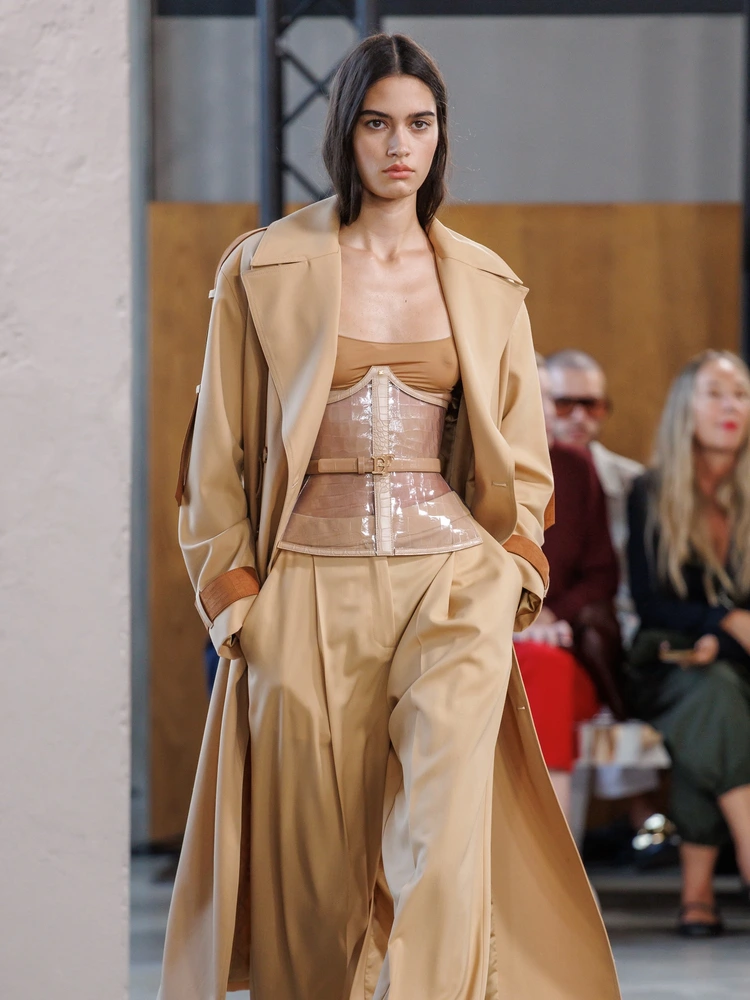
Her years connected to Egypt appear through sand, tobacco, khaki, muted olive, faded brown, and dry beige. Several leather surfaces resemble objects exposed to heat for long periods, carrying cracks and irregular coloration across their surfaces.
Topographical and moving-sand motifs extend landscape onto fabric. These desert tones create an elegant dryness around the tailoring, especially when paired with utility pockets and narrow skirts.
Then stronger color interrupts the restraint. Blue becomes particularly striking through translucent rubber. Black sharpens evening pieces. Reflective surfaces arrive later through paillettes and glossy textures.
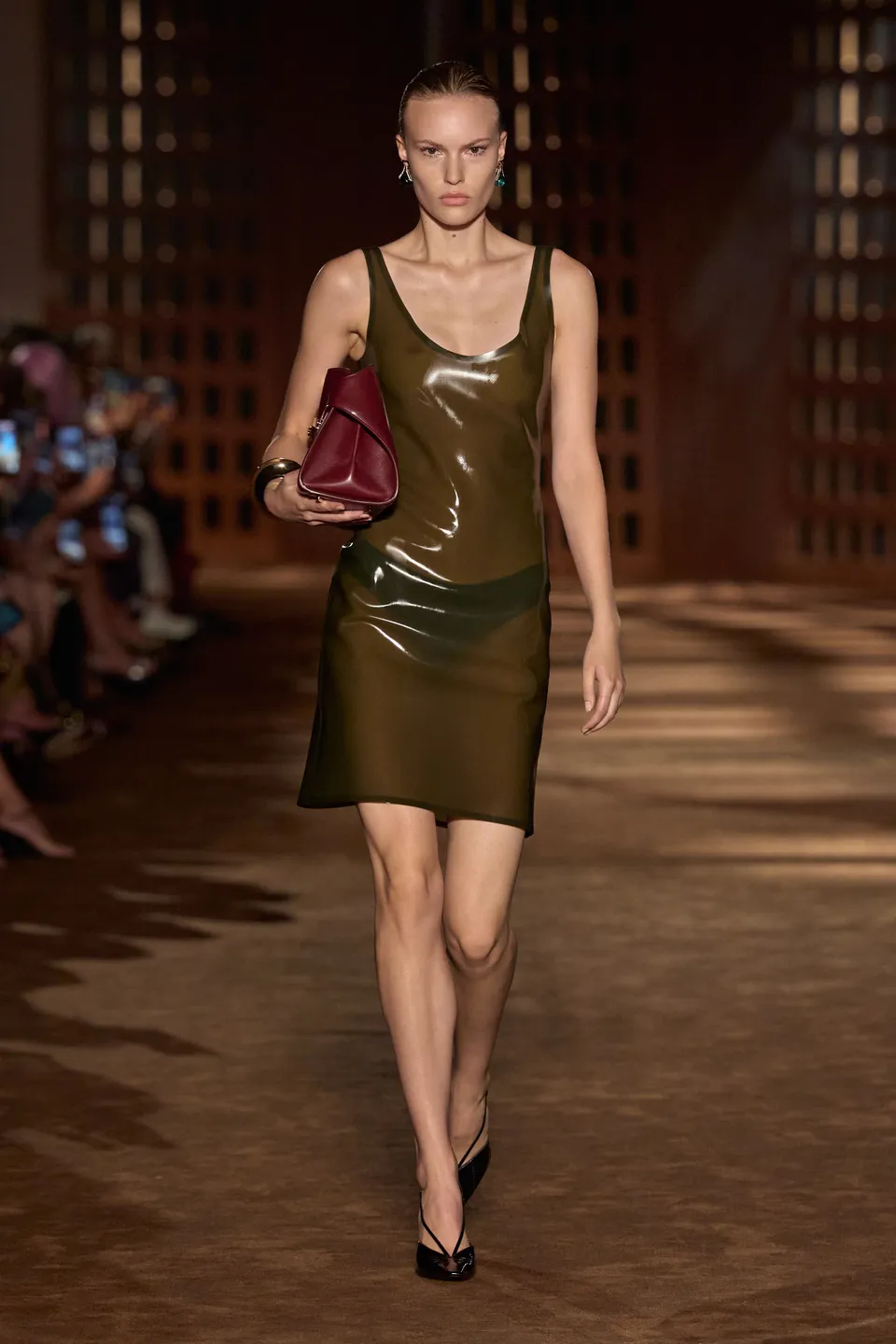
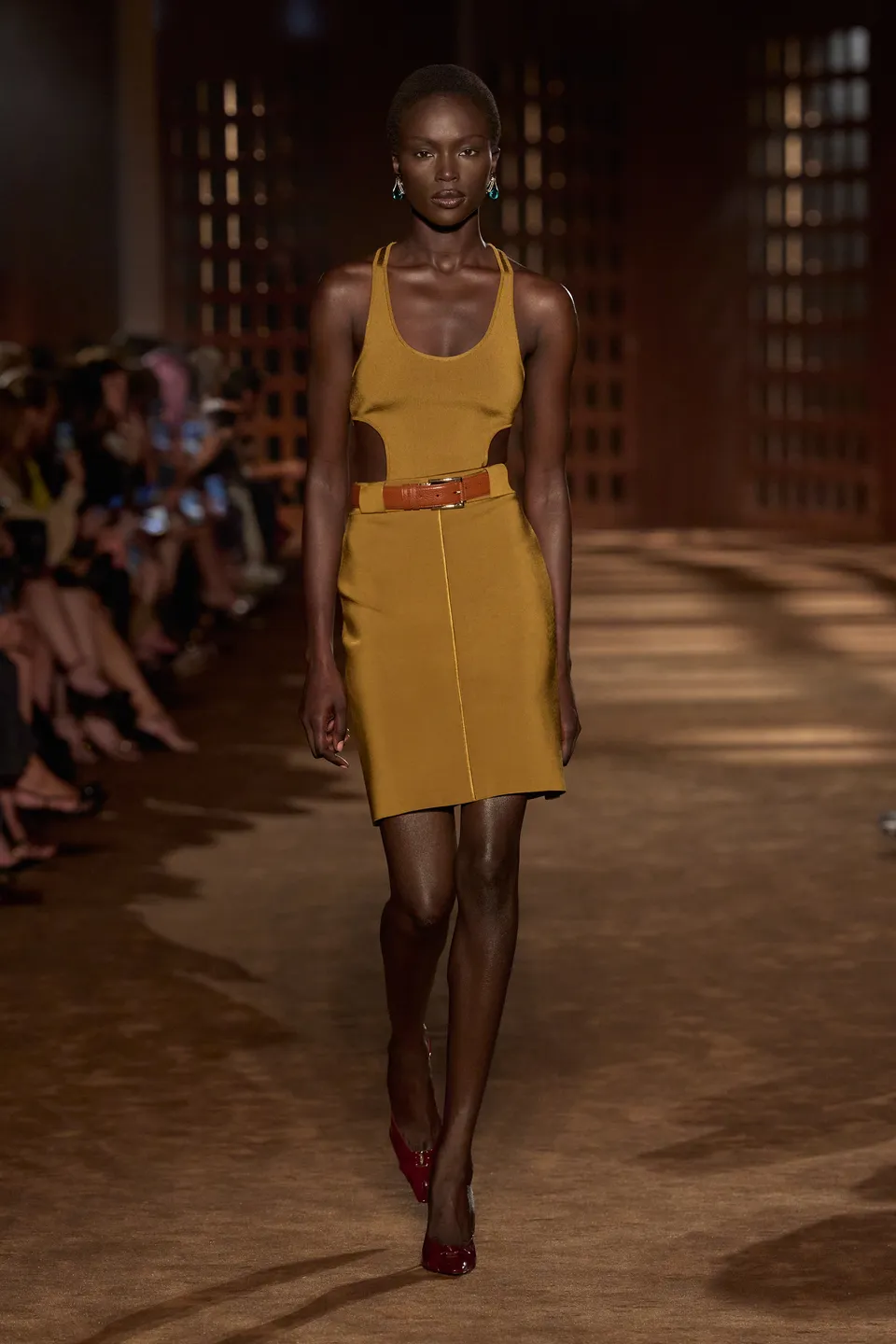
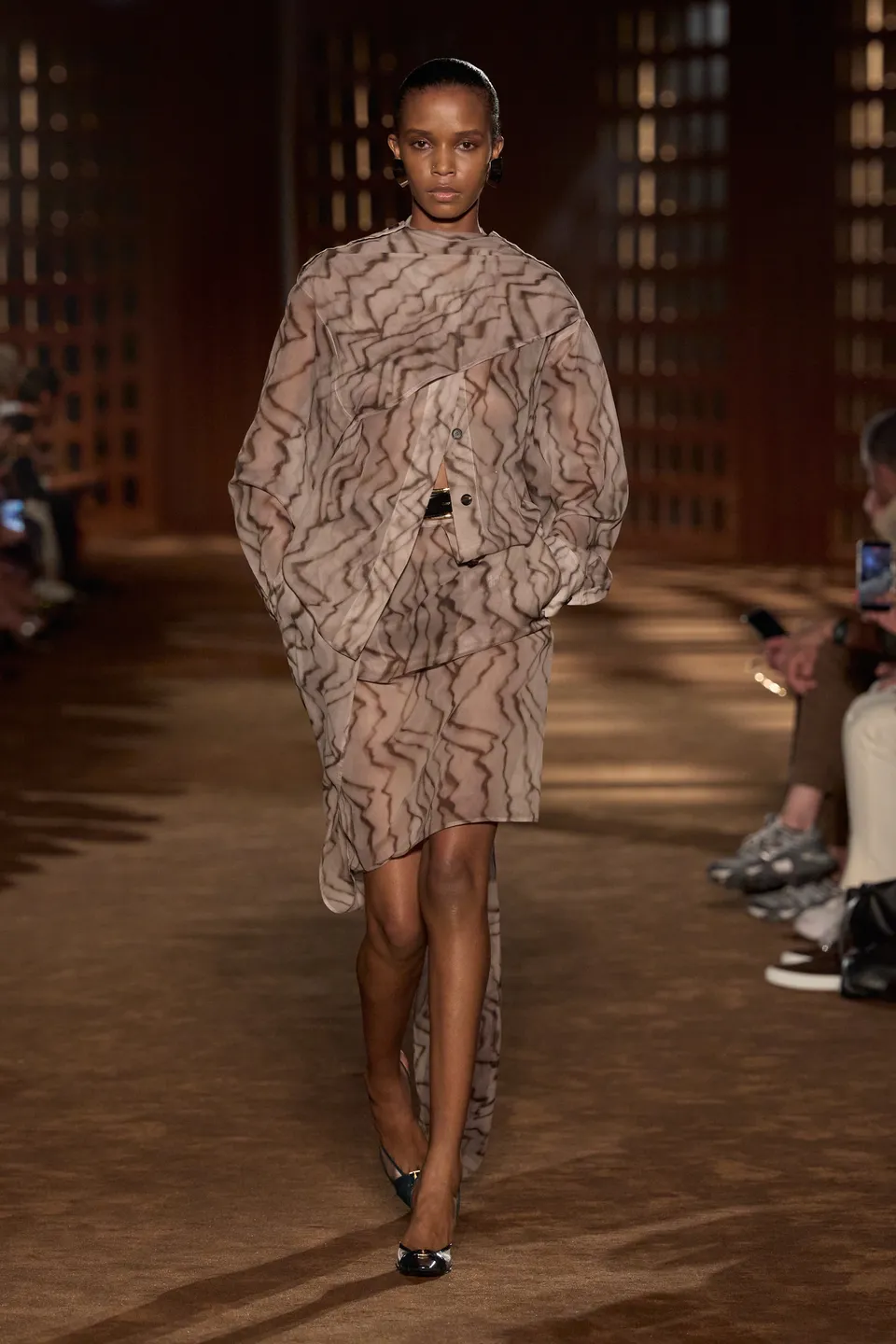
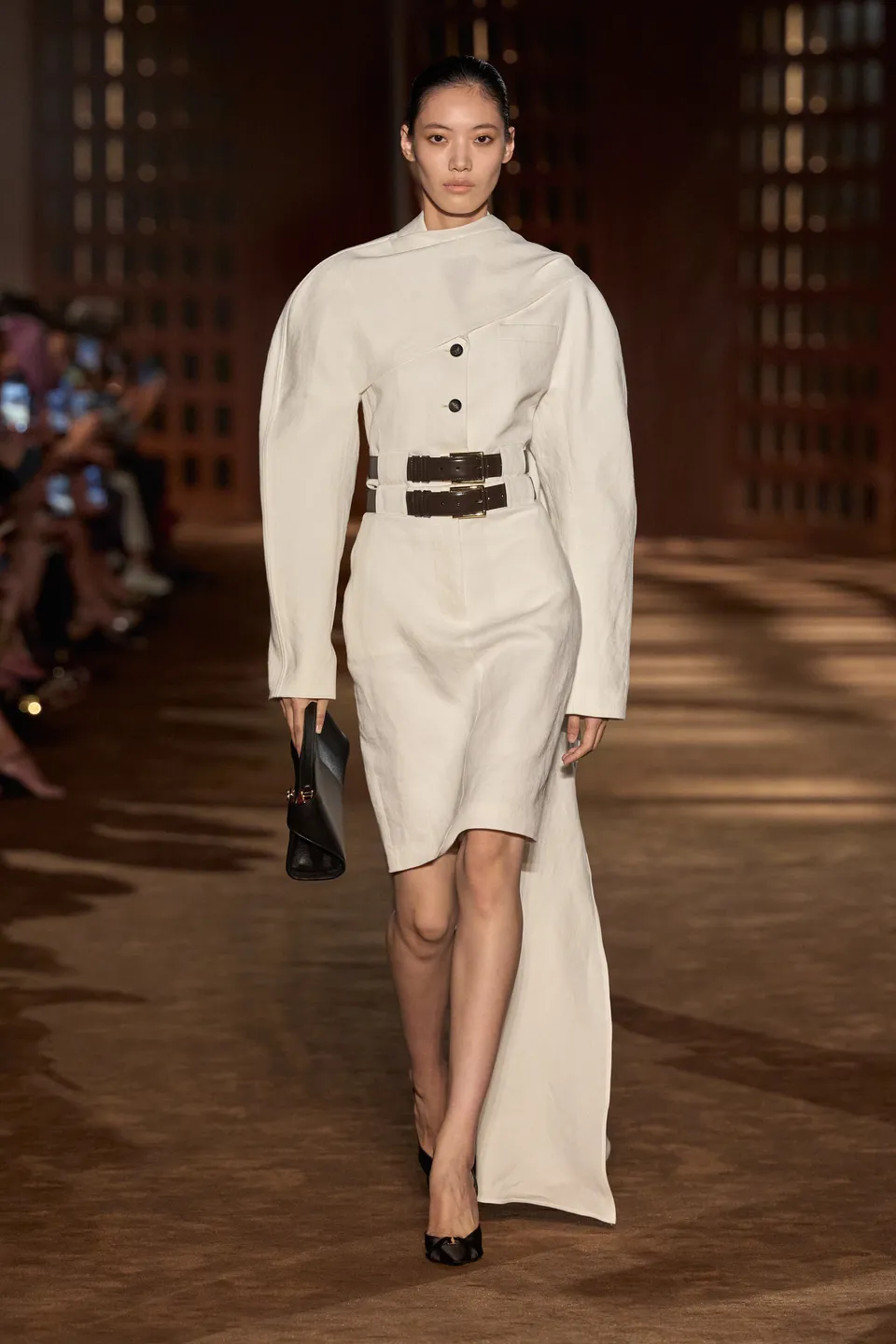
Several looks explain the collection almost instantly. The opening double-breasted coatdress with twin belts establishes the disciplined waist and rounded shoulder that structure the season. A sheer pencil skirt reveals lingerie beneath a highly formal silhouette, turning officewear into controlled exposure.
Scarf-draped dresses loosen the body through long folds of silk, giving movement a sensual role after the precision of the opening tailoring. Then comes Anok Yai in the translucent blue rubber trench. The piece is phenomenal.
Its shape remains elegant and recognizably urban, while the material changes its entire psychological register. Blue rubber reflects light across the body, transparency creates depth around the skin, and the long trench proportion gives the fetish surface enough architectural authority to look luxurious.
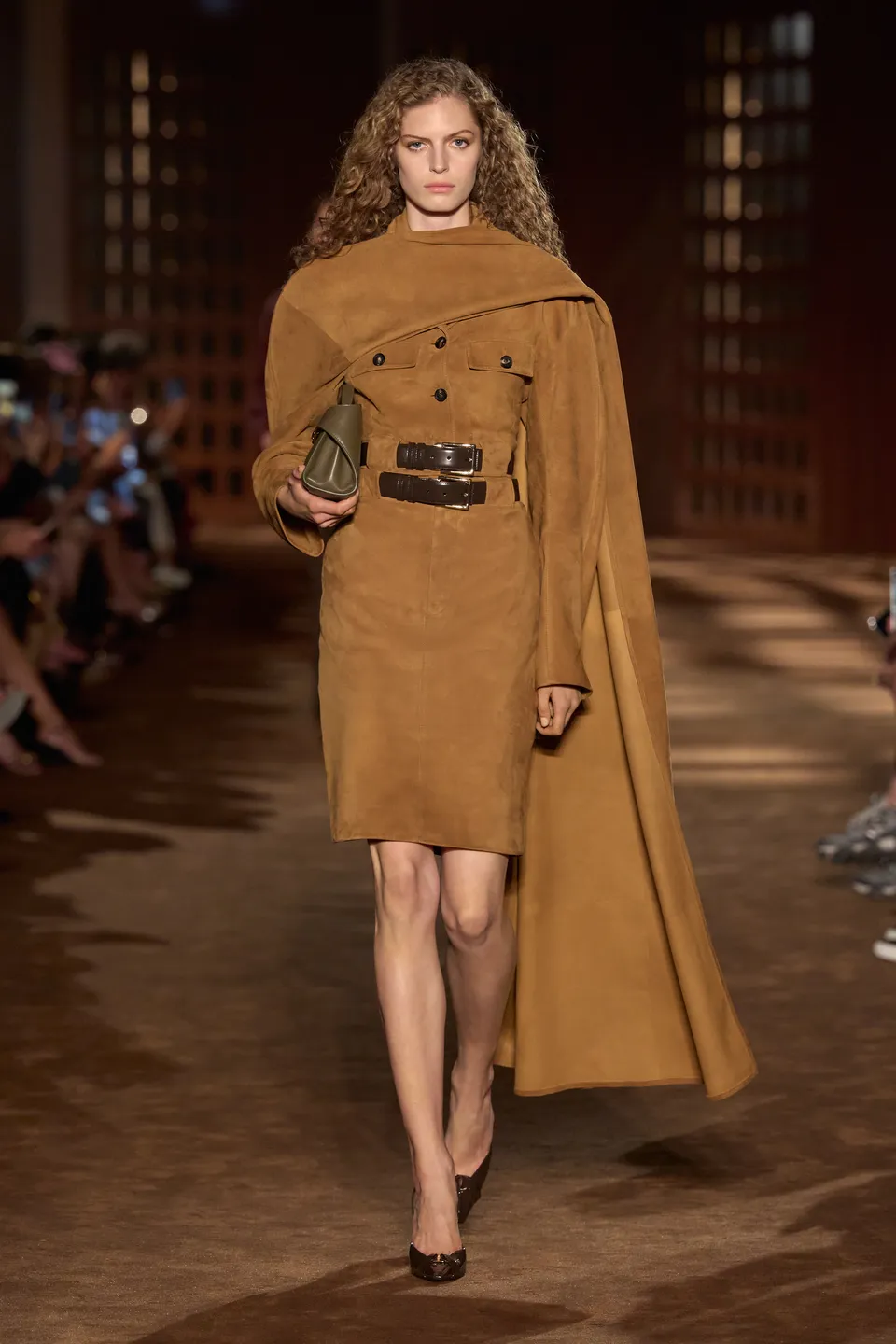
The look captures Davis’s Ferragamo at its strongest: polished construction carrying something slightly dangerous.
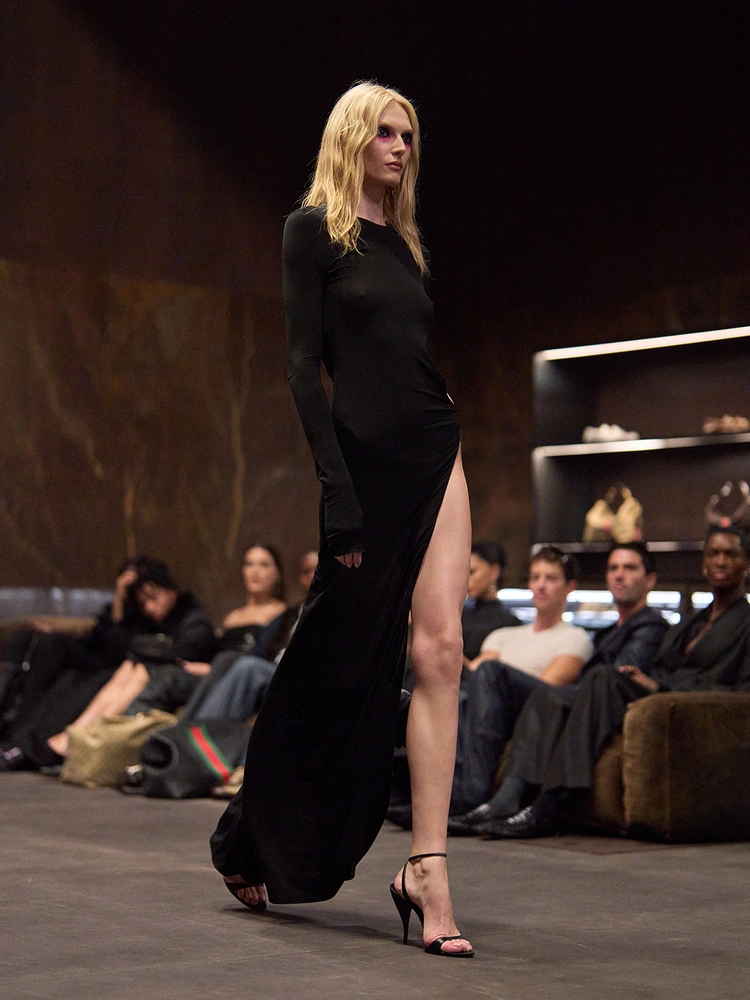
A black paillette column later restores glamour through movement and reflected light, closing the distance between the disciplined opening and the increasingly liberated second half.
SS27 marks an important change in Maximilian Davis’s relationship with the archive. History sits deeper inside the construction this season.
The house archive becomes permission for experimentation.
That creative freedom also arrives during a significant operational reset. Ferragamo has been reducing its assortment, tightening distribution, and concentrating attention on women’s shoes, handbags, and clearer product signatures. The company returned to profit in the first half of 2026 while direct-to-consumer sales strengthened, giving the current turnaround a firmer commercial base.
The business is editing. Davis is exploring. The collection still contains moments where experimentation asks for another degree of refinement. The latex hourglass dress carries a persuasive silhouette and a visually flatter surface, while the blue trench proves how sophisticated the same fetish vocabulary can become when material, movement and construction align.
Across the full runway, elegance remains the dominant impression. Ferragamo looks controlled, expensive and composed, yet Davis keeps inserting disturbances into that polish.
Advertisement