MENU
Close





Haute couture has spent generations protecting knowledge that could easily disappear with time. Yet at Fall/Winter 2026, could the most exciting form of couture innovation come from allowing that knowledge to encounter ideas it was never originally designed to meet?
Haute couture has spent generations protecting knowledge that could easily disappear with time. Yet at Fall/Winter 2026, could the most exciting form of couture innovation come from allowing that knowledge to encounter ideas it was never originally designed to meet?
August 24, 2026
Advertisement
Advertisement



The future can be an awkward word in haute couture. Few corners of the industry depend so deeply on knowledge passed between generations, from draping and embroidery to fitting, construction and the accumulated instincts of an atelier. At the same time, few provide designers with quite as much freedom to follow an idea before commercial practicality starts asking it to behave.
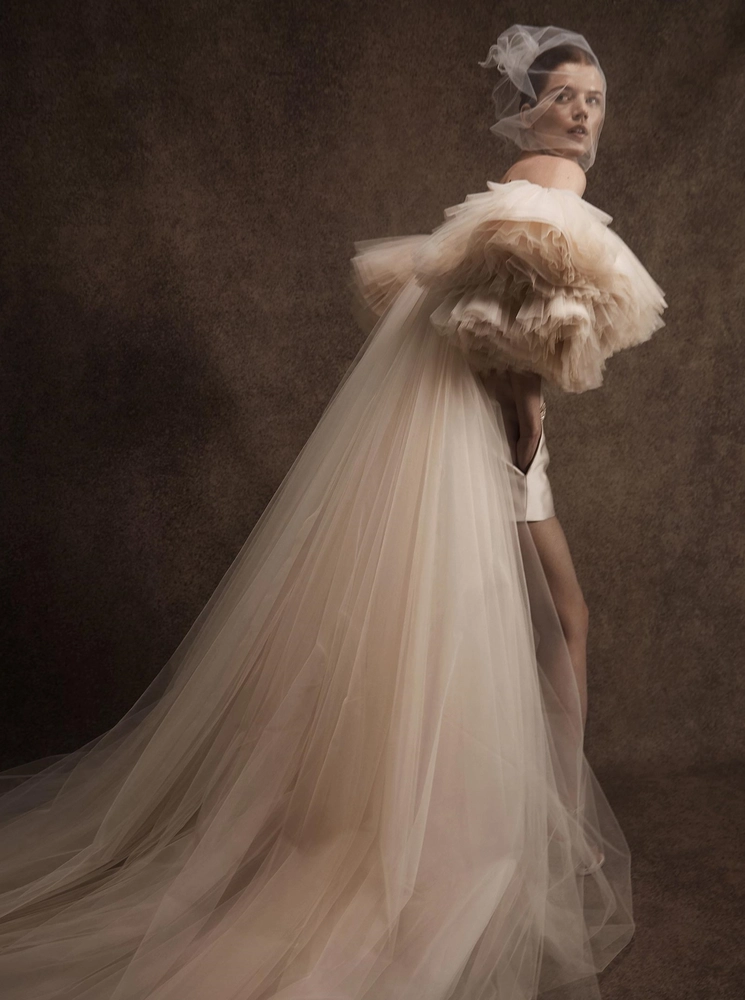
That contradiction has become increasingly productive. Fall/Winter 2026 suggests that couture innovation now lives in the space where inherited knowledge meets an appetite for experimentation. Science can enter the atelier. Discarded objects can acquire another purpose. Centuries-old handwork can imagine forms that appear strangely futuristic. A digital-age fantasy can be pulled off the screen and forced into physical existence.
Technology certainly belongs to this story, though machinery alone hardly defines its direction. Traditional couture techniques provide memory, while new tools, materials and cultural conditions expand the territory that memory can enter. Material experimentation becomes one expression of a much larger shift in attitude.
The future of haute couture is beginning to look like an expansion of what tradition is allowed to meet.
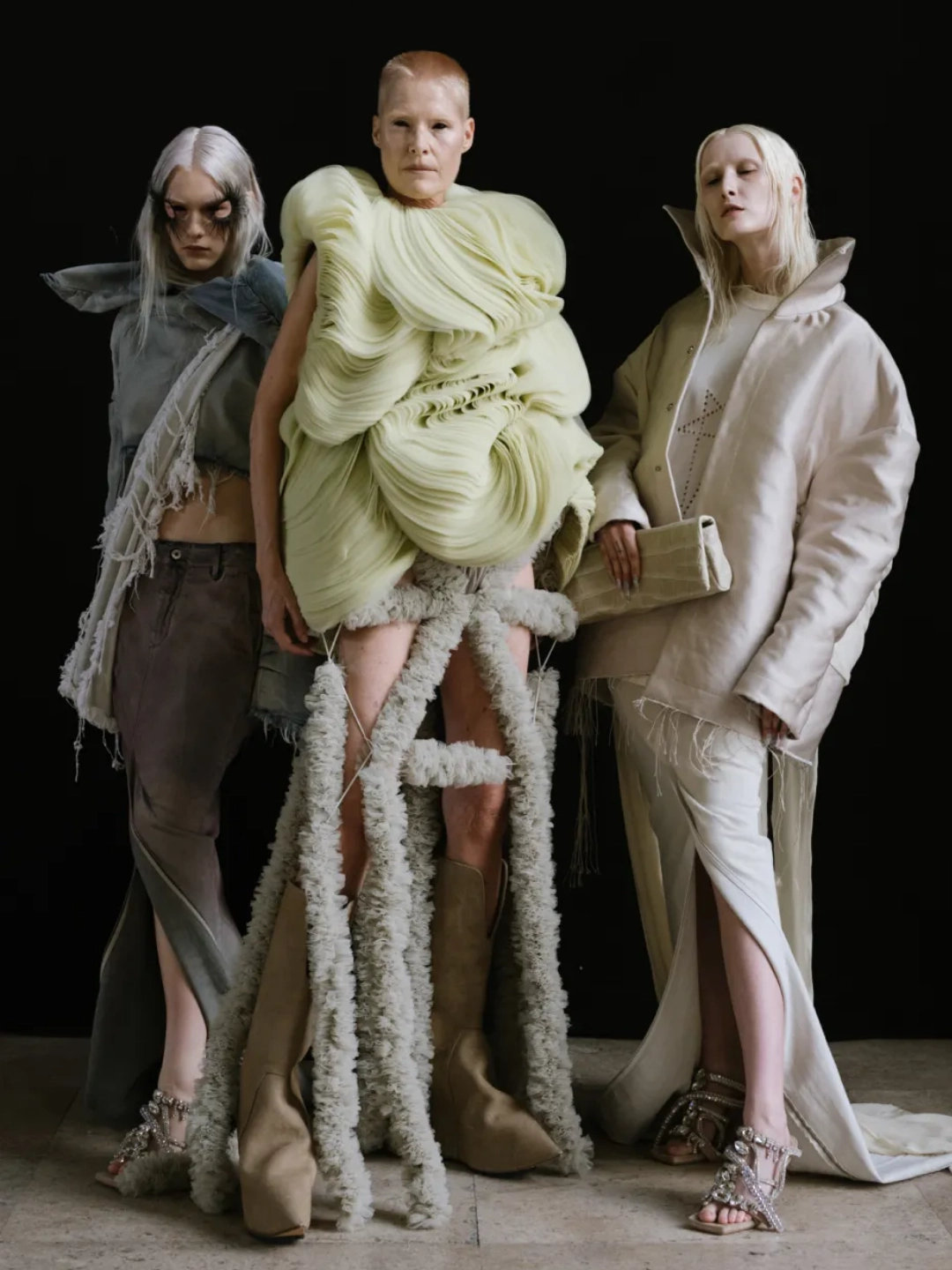
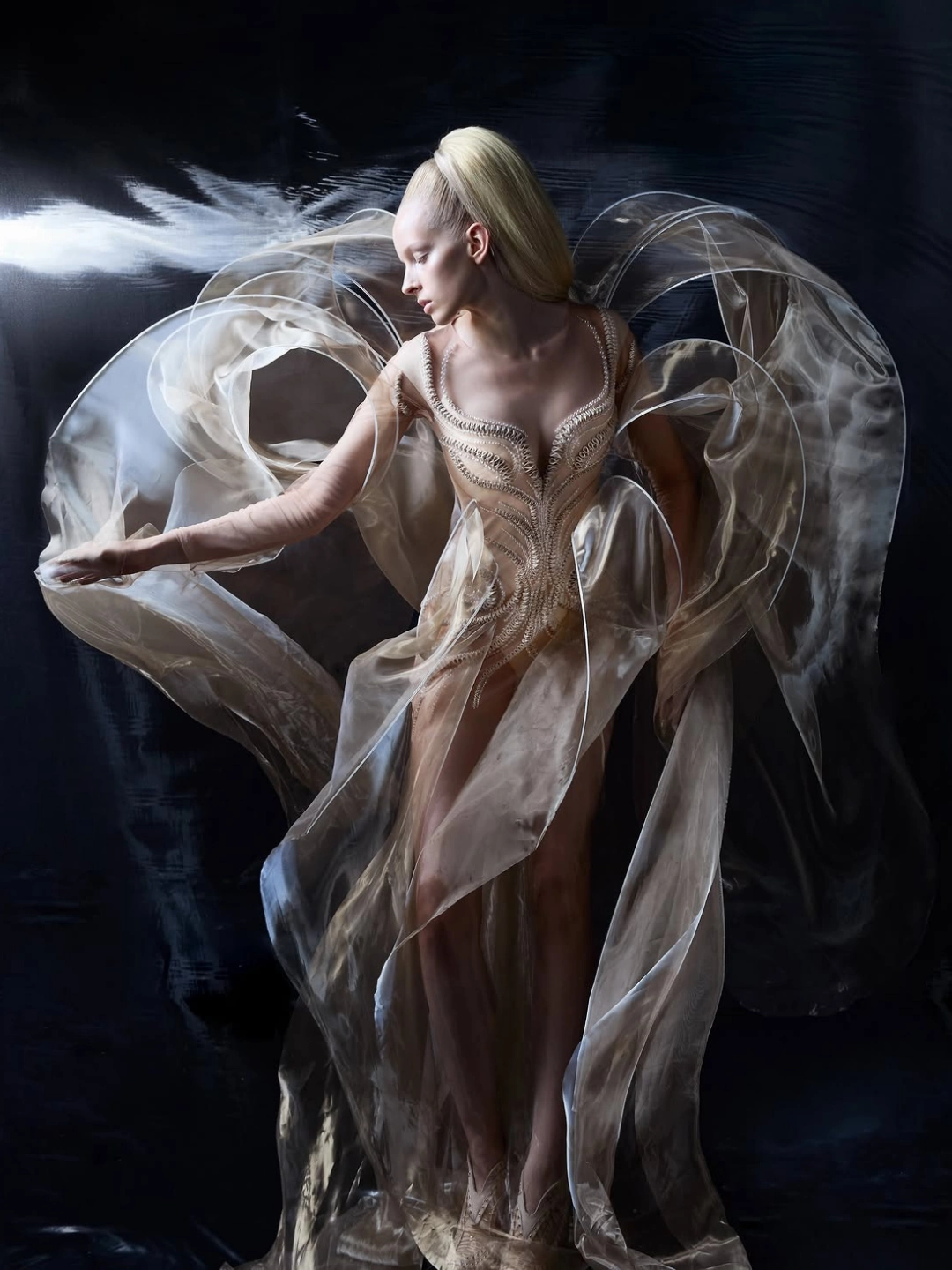
A vibrating star offers little obvious guidance for designing a dress. Neither do cosmic waves, biological systems or invisible forces moving through matter. For Iris van Herpen, that distance from conventional clothing language has long been part of the attraction.
Sonic Starquakes continued a practice in which another discipline can enter the creative process before a silhouette has taken shape. Astronomy, physics and movement become sources of curiosity, opening questions that eventually have to find some relationship with the human body.
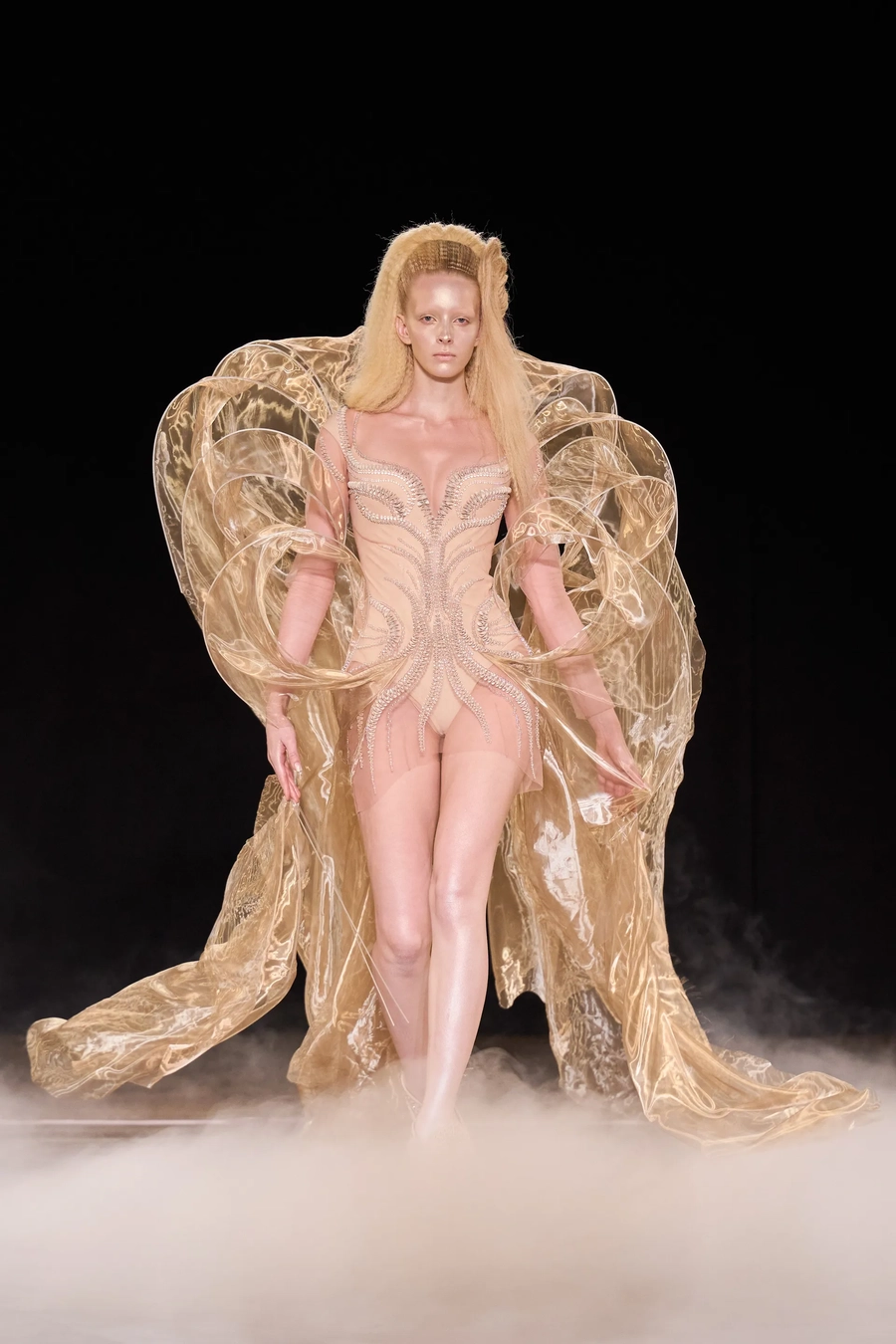
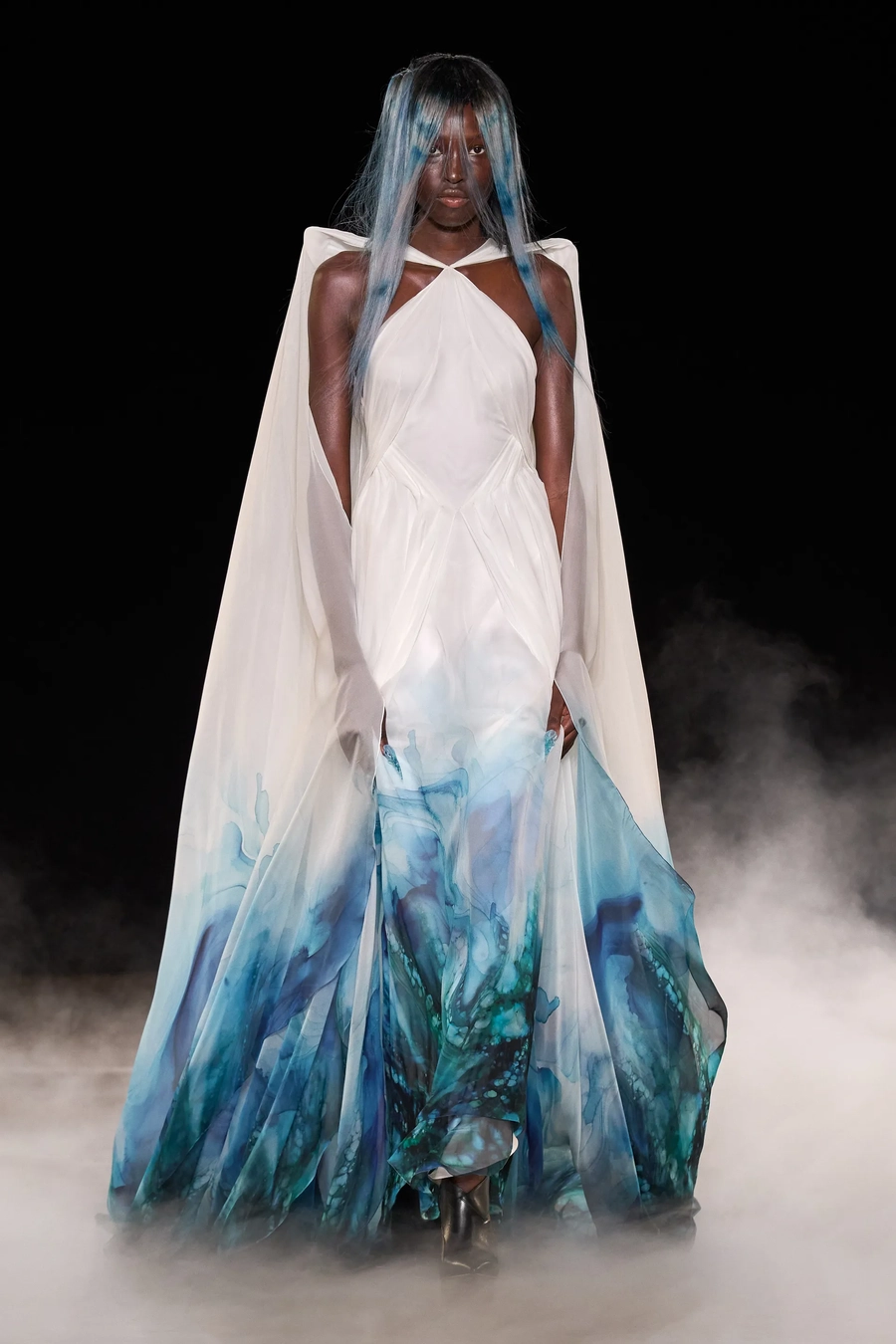
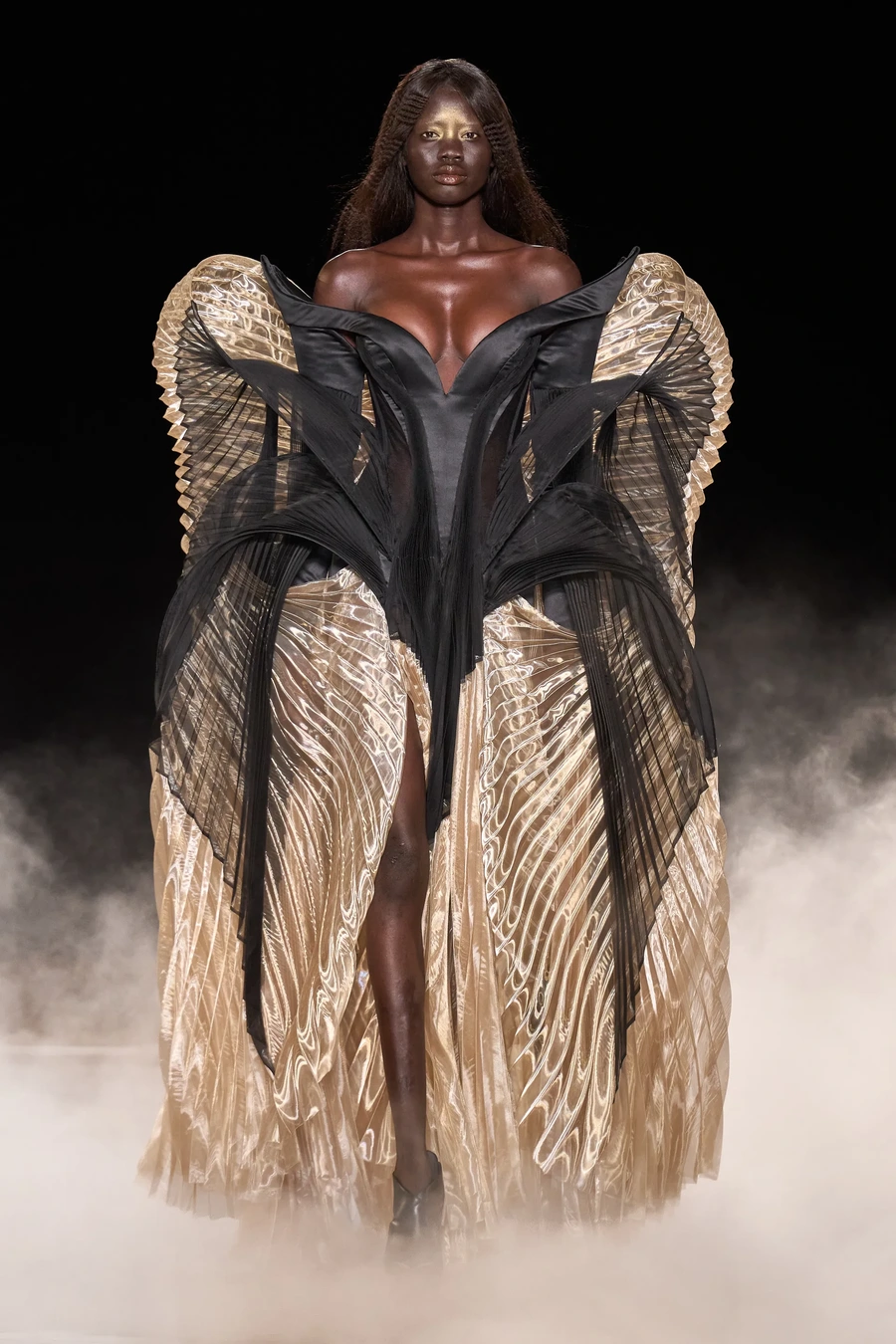
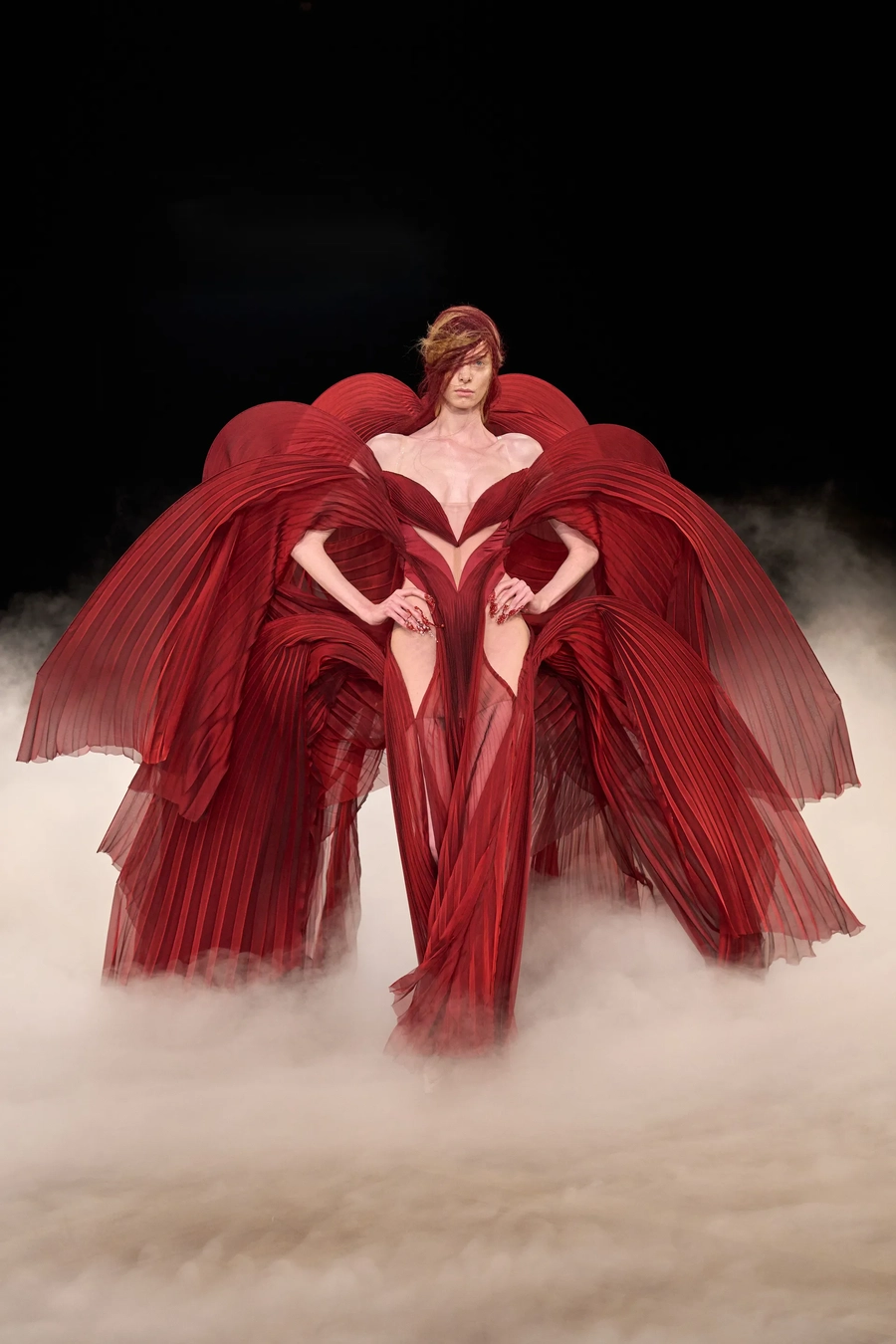
That relationship is where her particular vision of couture innovation becomes clear. Scientific ideas rarely function as decorative themes sitting around clothes. They alter what a garment is permitted to imagine itself as. Structure may appear caught in motion, surfaces can suggest energy travelling through them, and the body becomes a point where an abstract phenomenon finally acquires scale.
Her futurism therefore begins before technology enters the conversation. It begins with the willingness to accept that the next idea for a dress might originate somewhere outside dressmaking altogether.
Van Herpen’s work makes one proposition especially persuasive: the future of dress can grow richer when fashion stops searching only within itself for the next answer.
Kevin Germanier begins from almost the opposite condition. His materials have frequently existed for quite some time already.
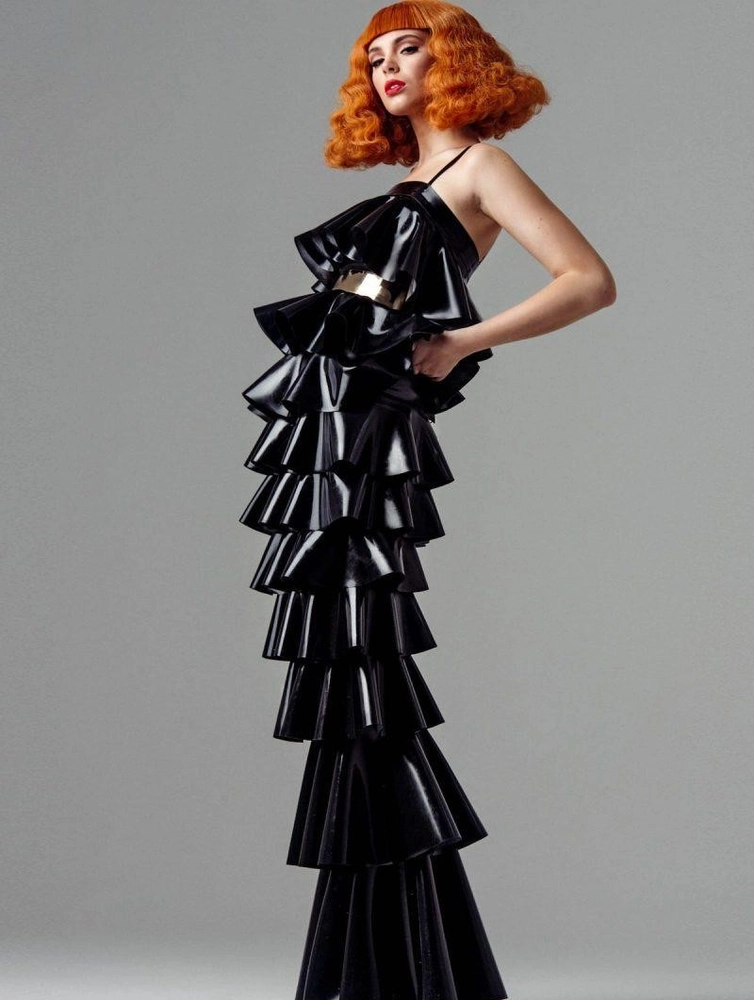
Overstock, surplus components and objects abandoned by previous production cycles enter his work after their original purpose has weakened. Fall/Winter 2026 continued that instinct with pieces that could incorporate materials from floristry, discarded industrial components and other objects far removed from the conventional image of couture.
The immediate conversation may be sustainability, yet the deeper question concerns newness itself. Does innovation always require something new?
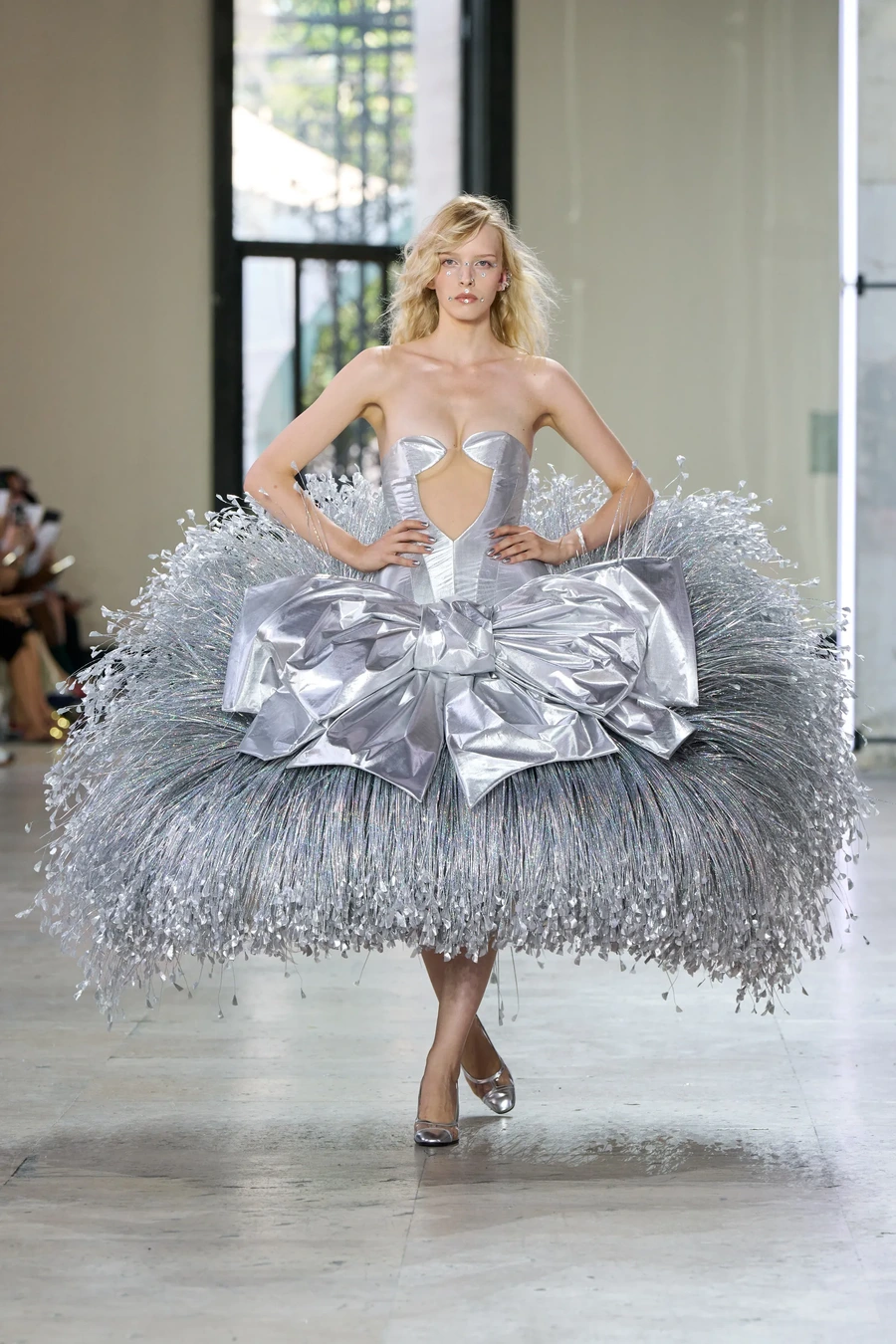
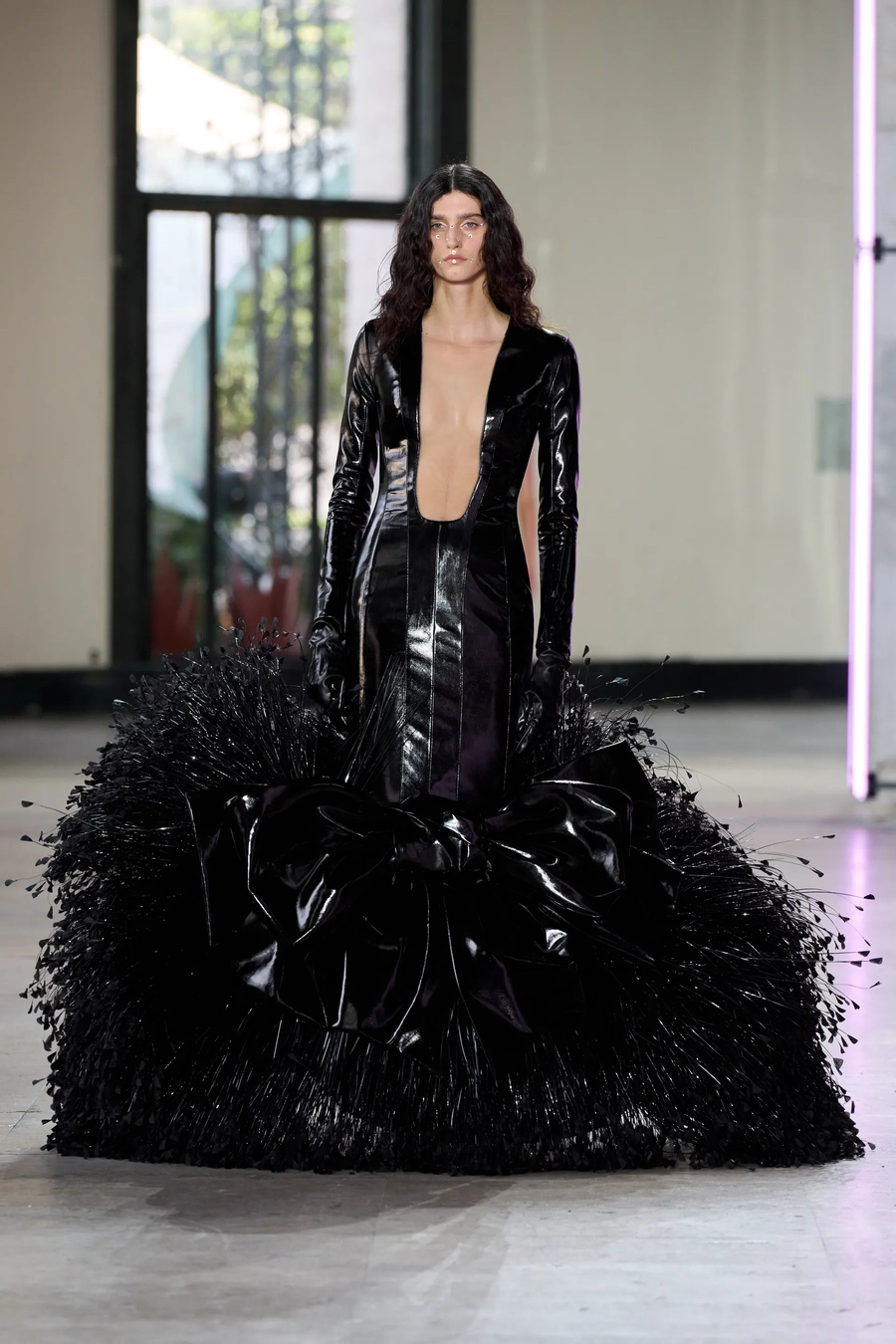
Germanier proposes a more mischievous answer. An existing object can acquire radical possibility when imagination changes the role assigned to it. Something designed for one commercial system can enter another carrying a completely different meaning, especially once material experimentation pushes it through colour, scale, embellishment and exaggerated form.
Germanier’s idea of the future begins with something the present has already decided it no longer wants.
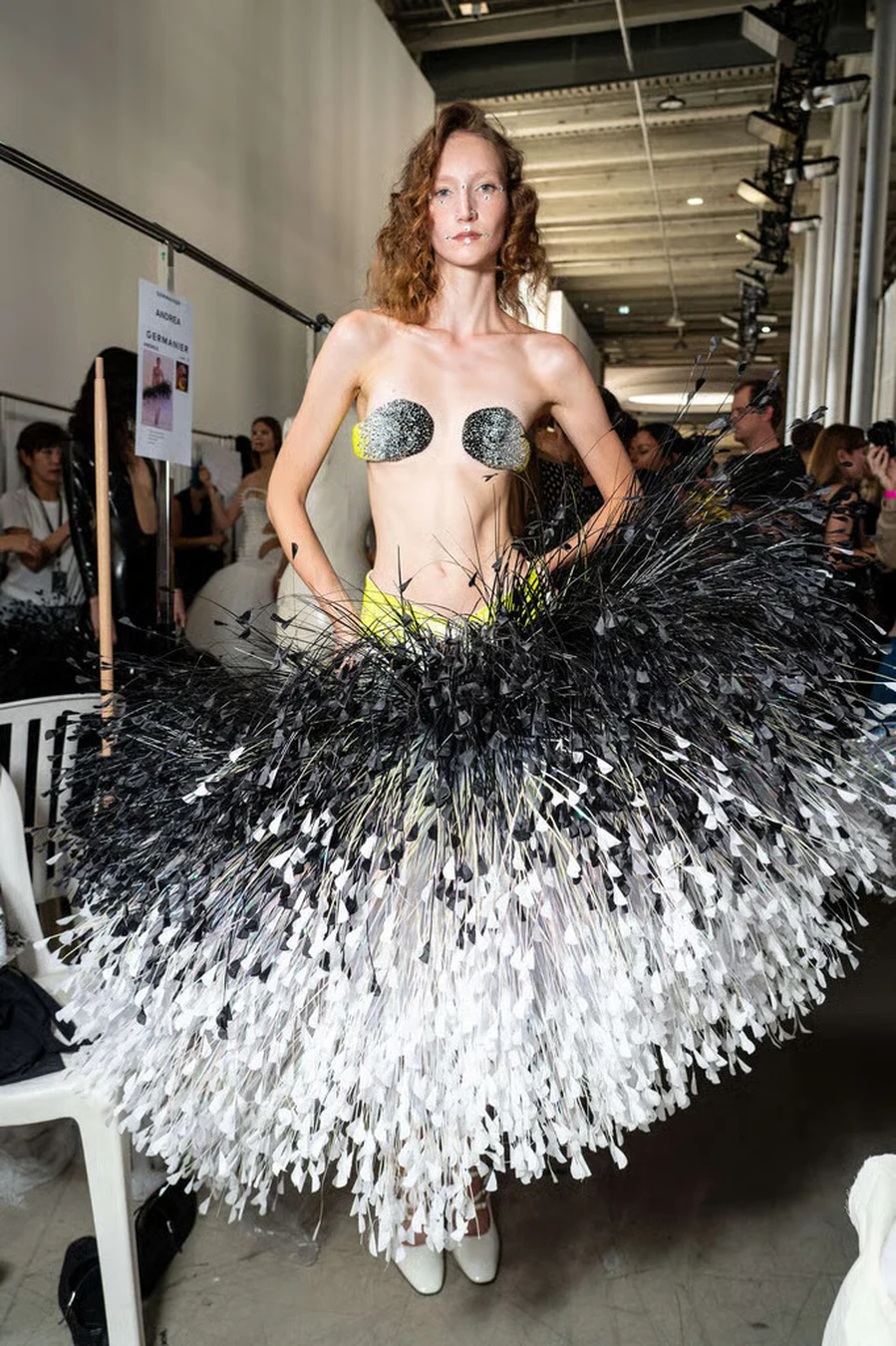
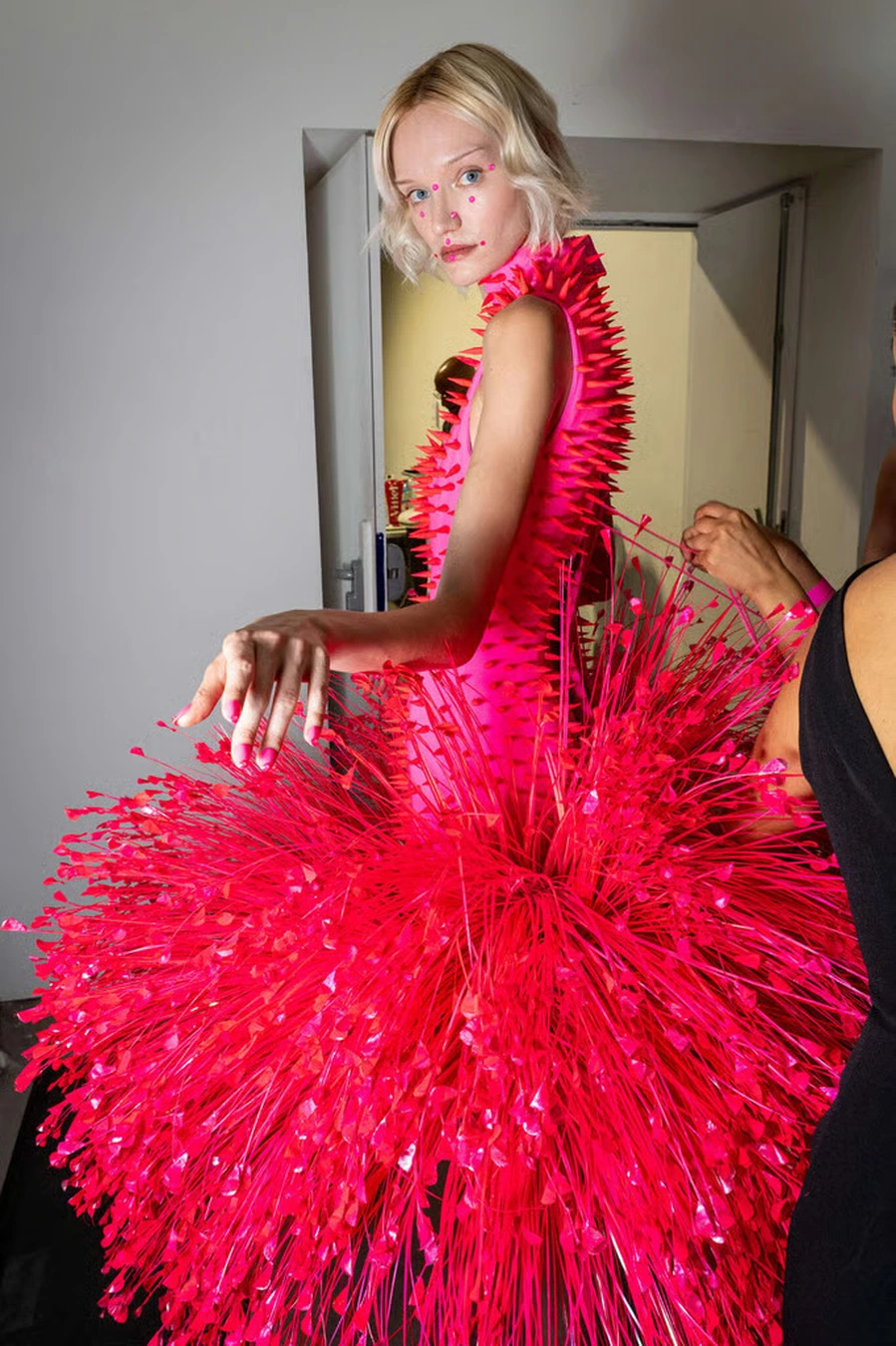
That attitude also frees recycled material from an aesthetic of restraint. His clothes can be fluorescent, excessive, crystalline and proudly artificial. Waste receives glamour without having to disguise its origins as a moral lesson.
If luxury creates leftovers, Germanier seems perfectly happy to make luxury out of the leftovers.
His contribution to couture innovation consequently lies beyond upcycling as a technique. It reframes creativity itself. The future can arrive through invention, but it can also emerge when somebody looks at an existing object and refuses to accept that its story has finished.
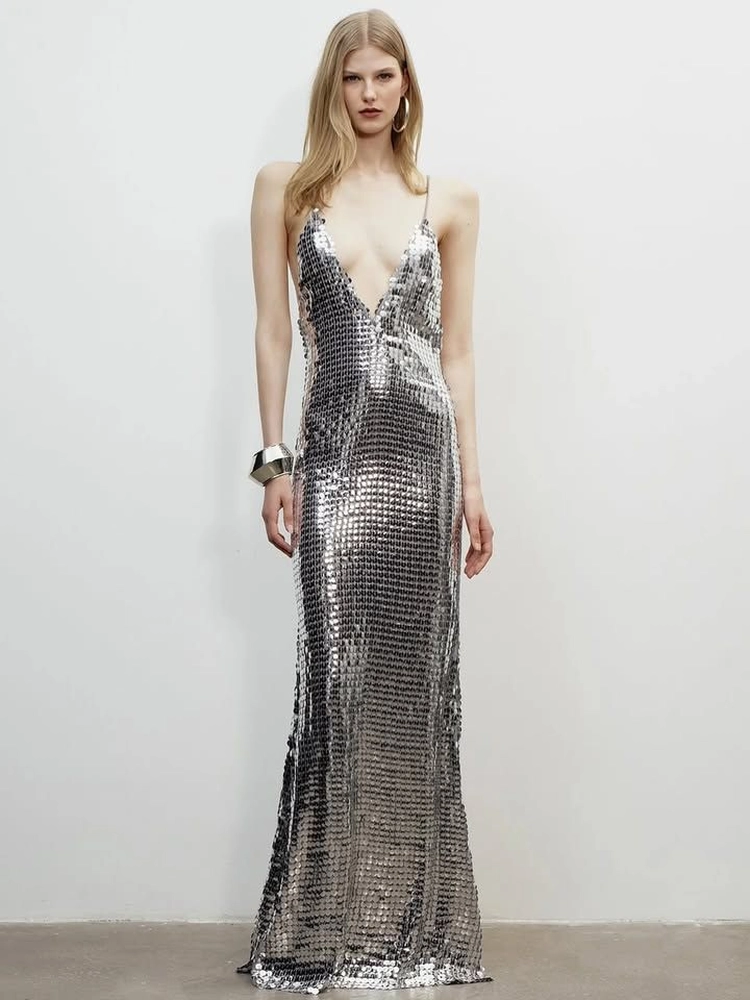
The futuristic wardrobe has acquired its own clichés. Metallic surfaces, synthetic materials, engineered shapes and machine precision can announce tomorrow before the viewer has considered anything else.
Rahul Mishra offers another possibility.
Devi approached couture through extraordinary concentrations of handwork, drawing on embroidery, beadwork and artisanal knowledge whose histories extend far beyond the current technological moment. Yet the resulting garments can develop an almost sculptural presence, allowing surfaces to grow, accumulate and occupy space with unexpected intensity.
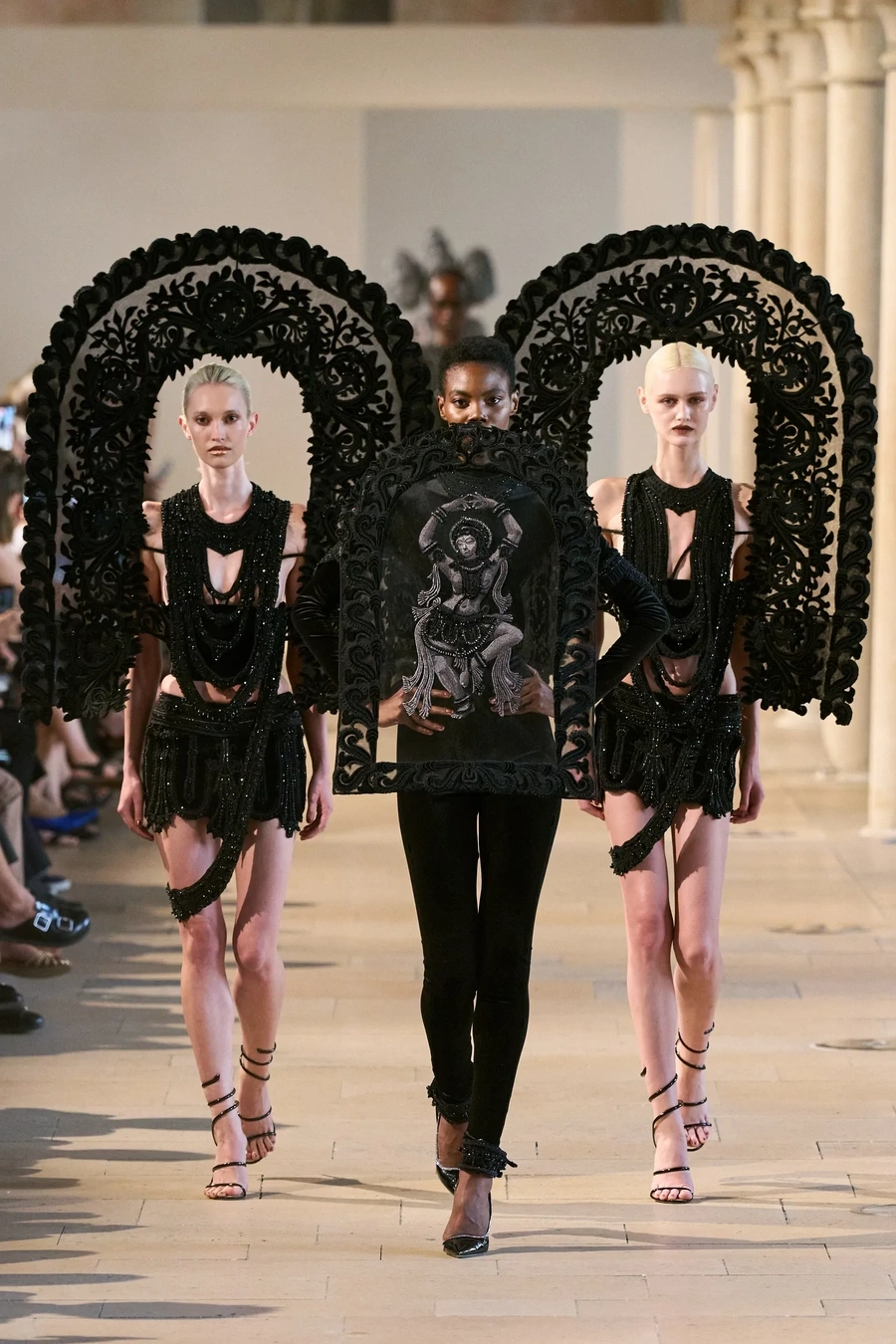
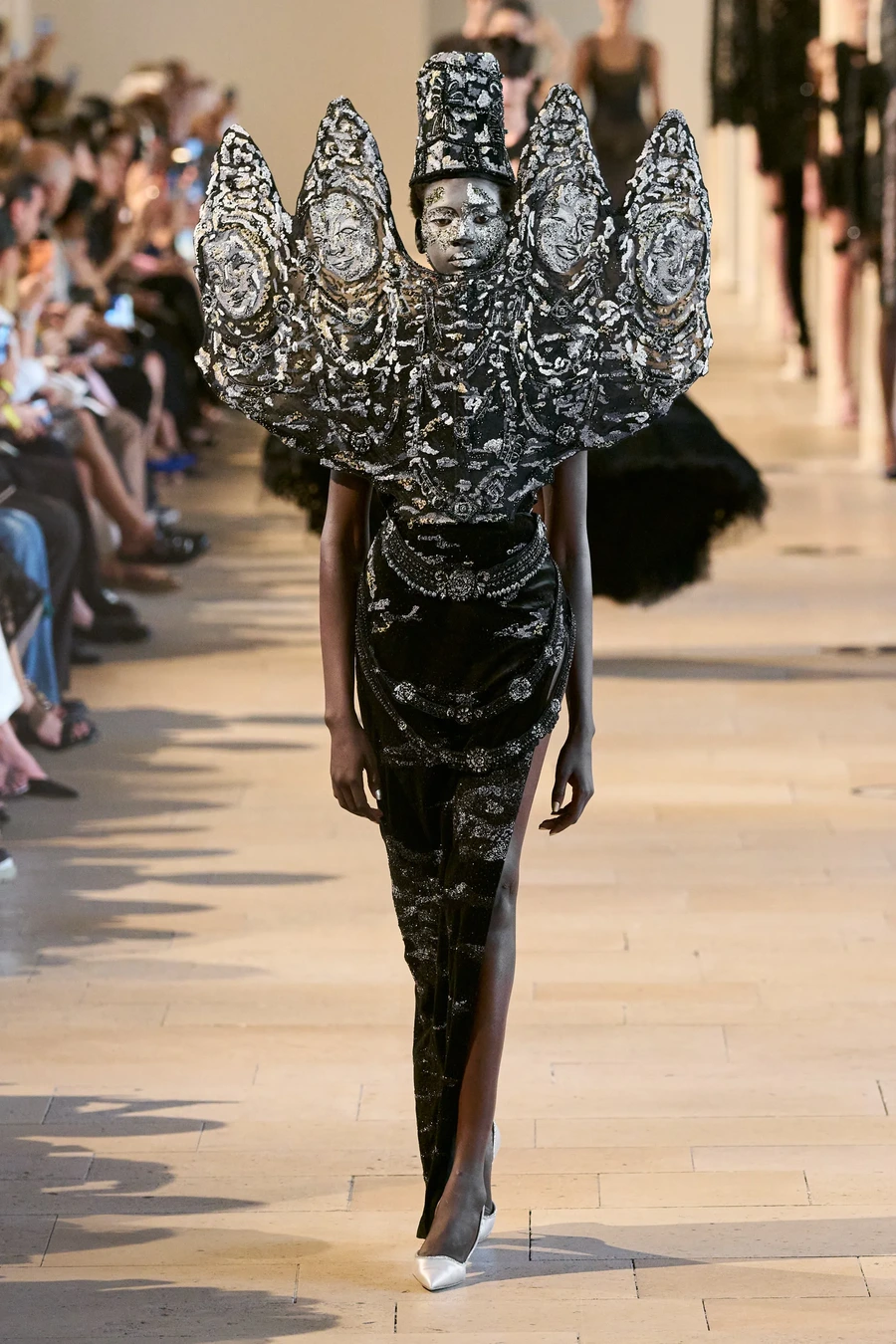
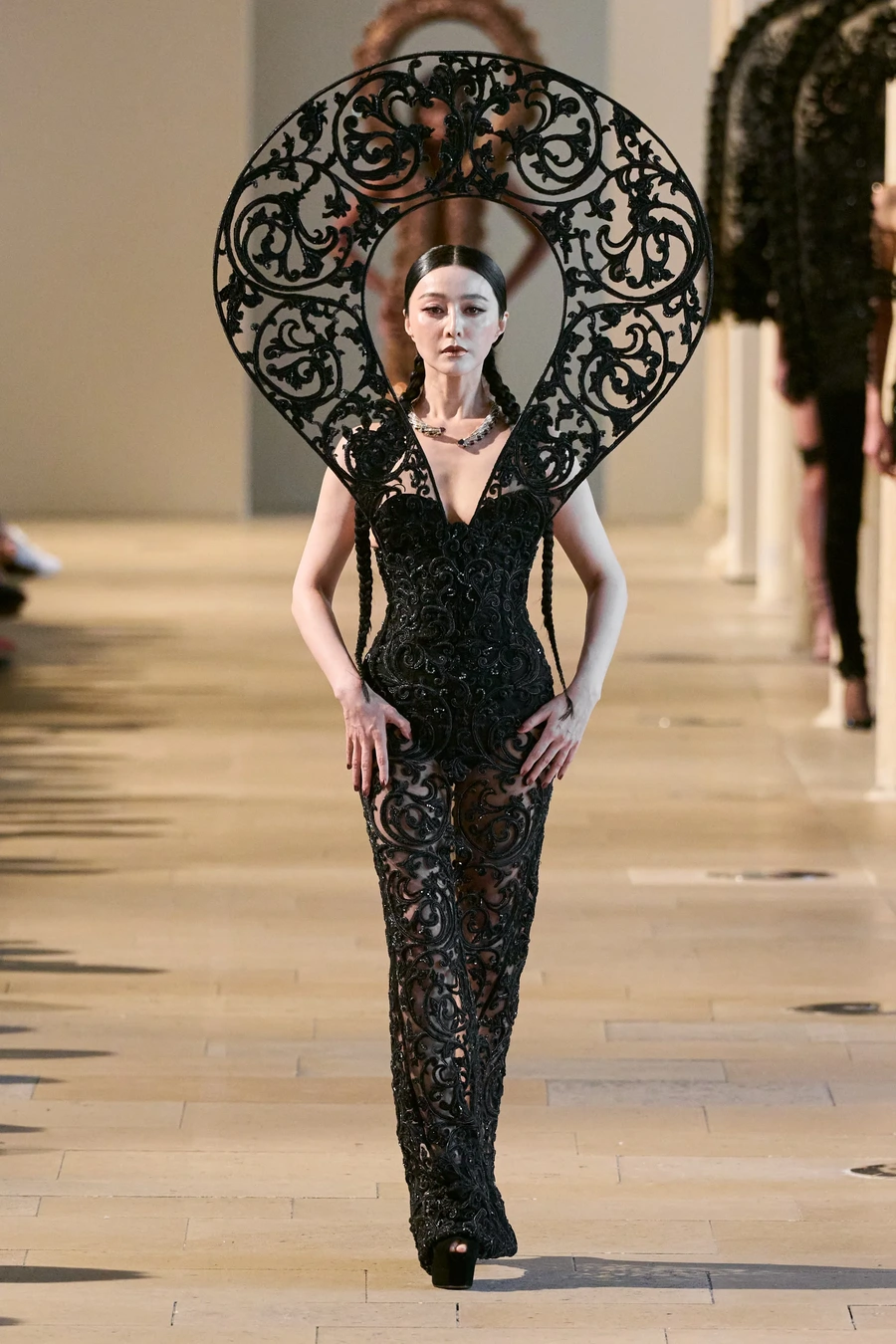
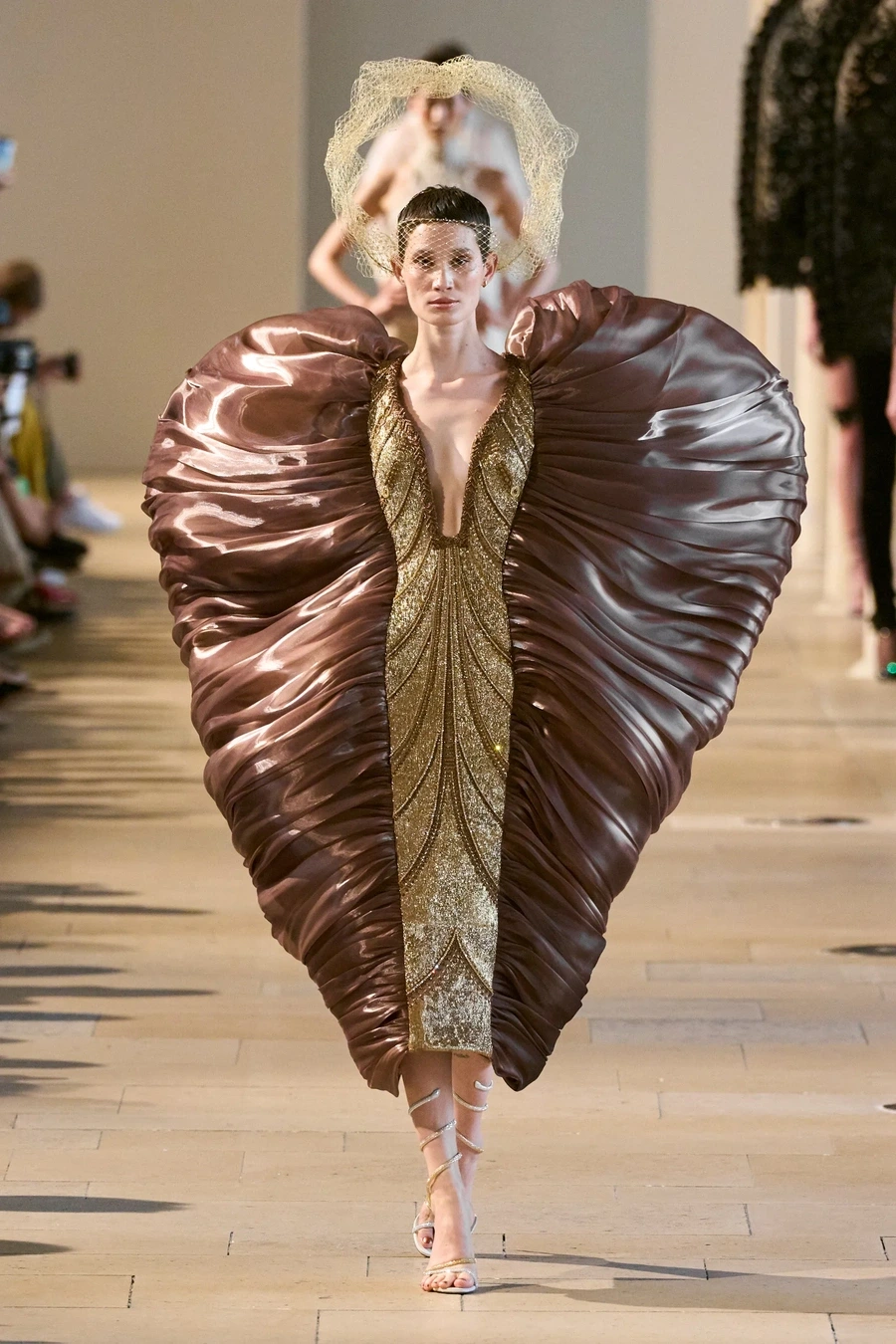
His work suggests that inherited knowledge can remain innovative through the new demands placed upon it. Traditional couture techniques gain another creative life when their scale, density or purpose changes. An old language can reach an unfamiliar conclusion without surrendering the history contained inside it. The human hand becomes central to that possibility.
At Rahul Mishra, innovation comes from giving an old language enough freedom to say something it has never said before.
His work keeps couture innovation connected to human knowledge at a moment when the idea of the future can easily become synonymous with automation. Progress may involve a new tool. It can also involve discovering that an ancient one still contains unexplored territory.
Contemporary culture has become extraordinarily good at producing impossible images. A garment can burn without heat, a body can dissolve into another material, proportions can defy gravity, and fantasy can appear fully formed on a screen within seconds.
Robert Wun chooses to give those images physical consequences.
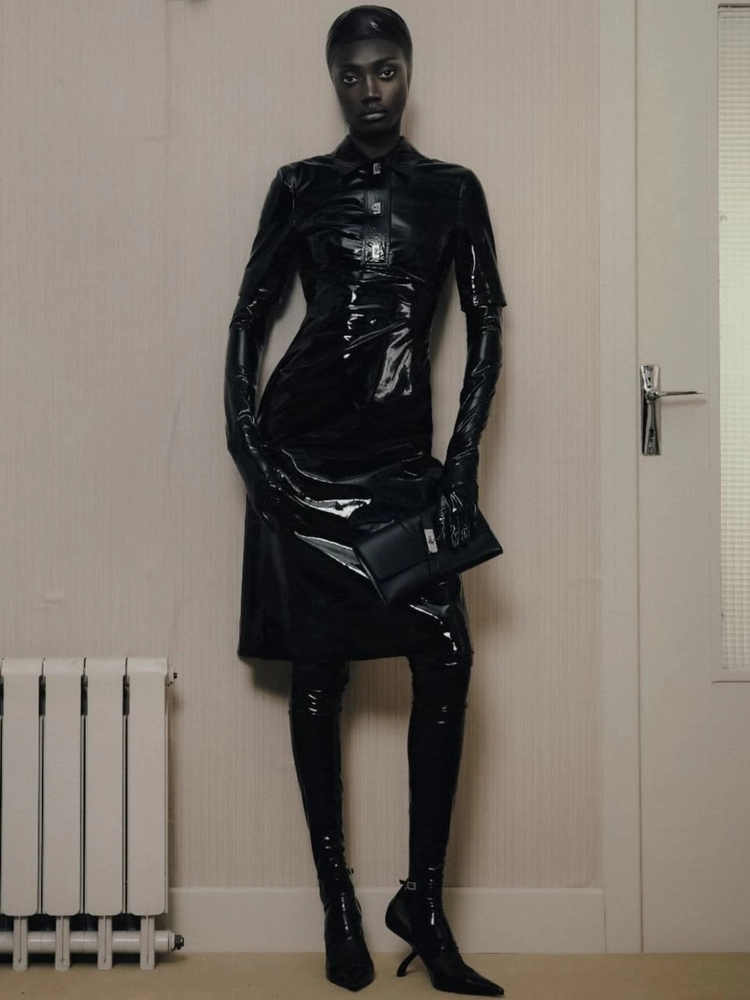
His couture has repeatedly treated dramatic visual ideas as things that must eventually exist around an actual body. Fall/Winter 2026 continued that cinematic instinct through darkness, fantasy and strange forms, extending a body of work where clothes can appear caught in an event or transformed by something beyond the ordinary rules of dress.
The desired image often arrives as an event. Something ruptures, floats, dissolves or freezes in motion. Pattern cutting and couture techniques then give that event physical consequence around a real body.
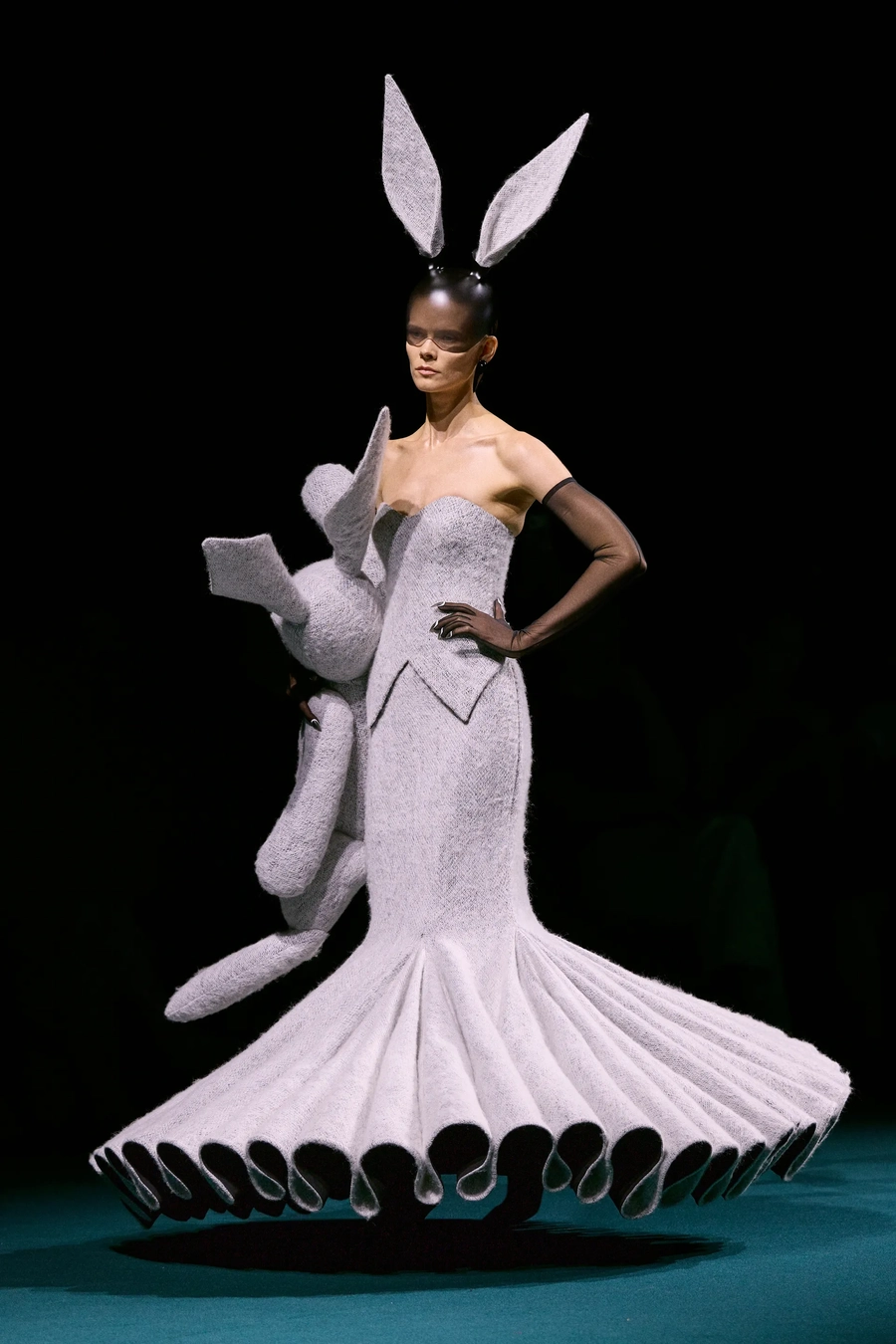
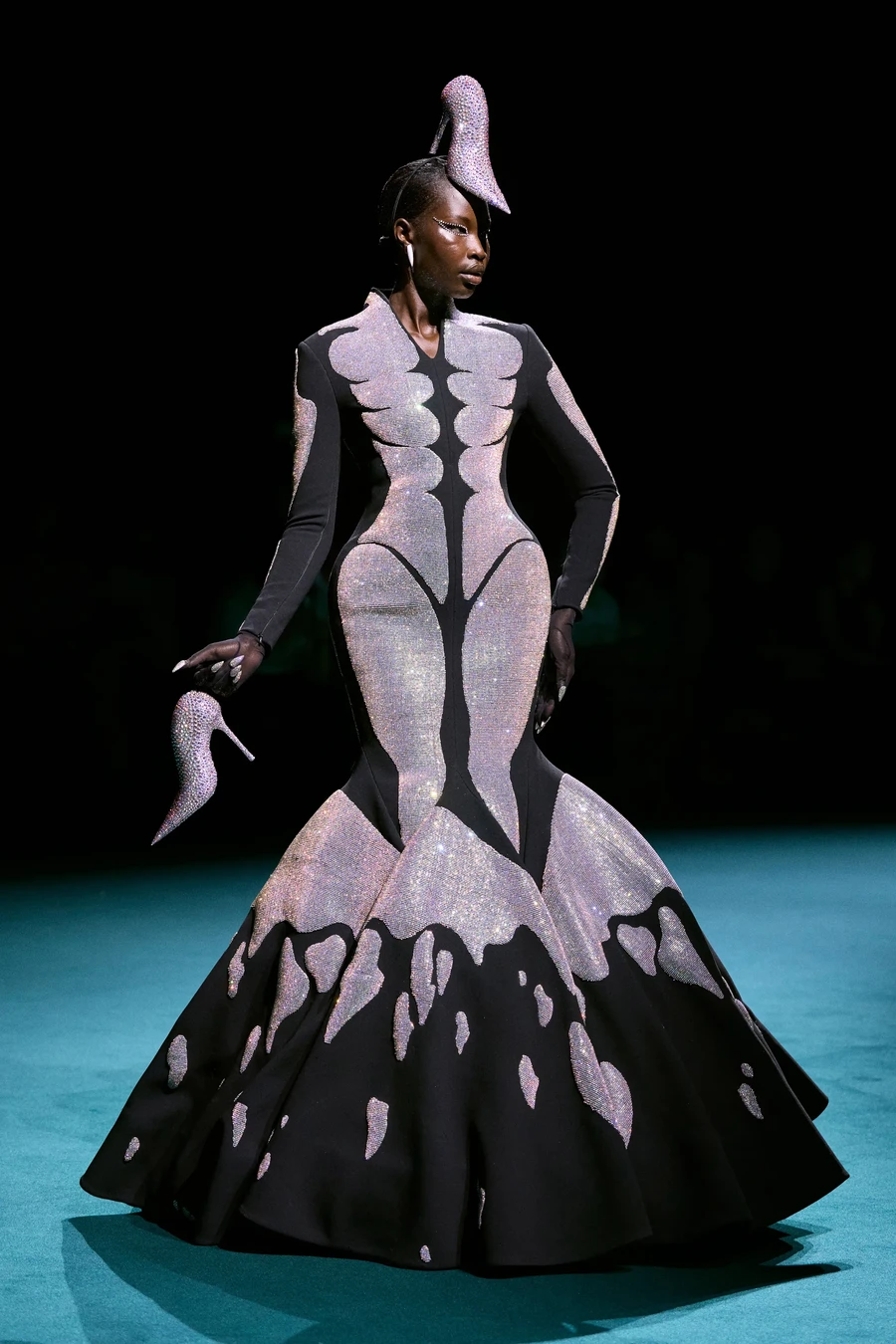
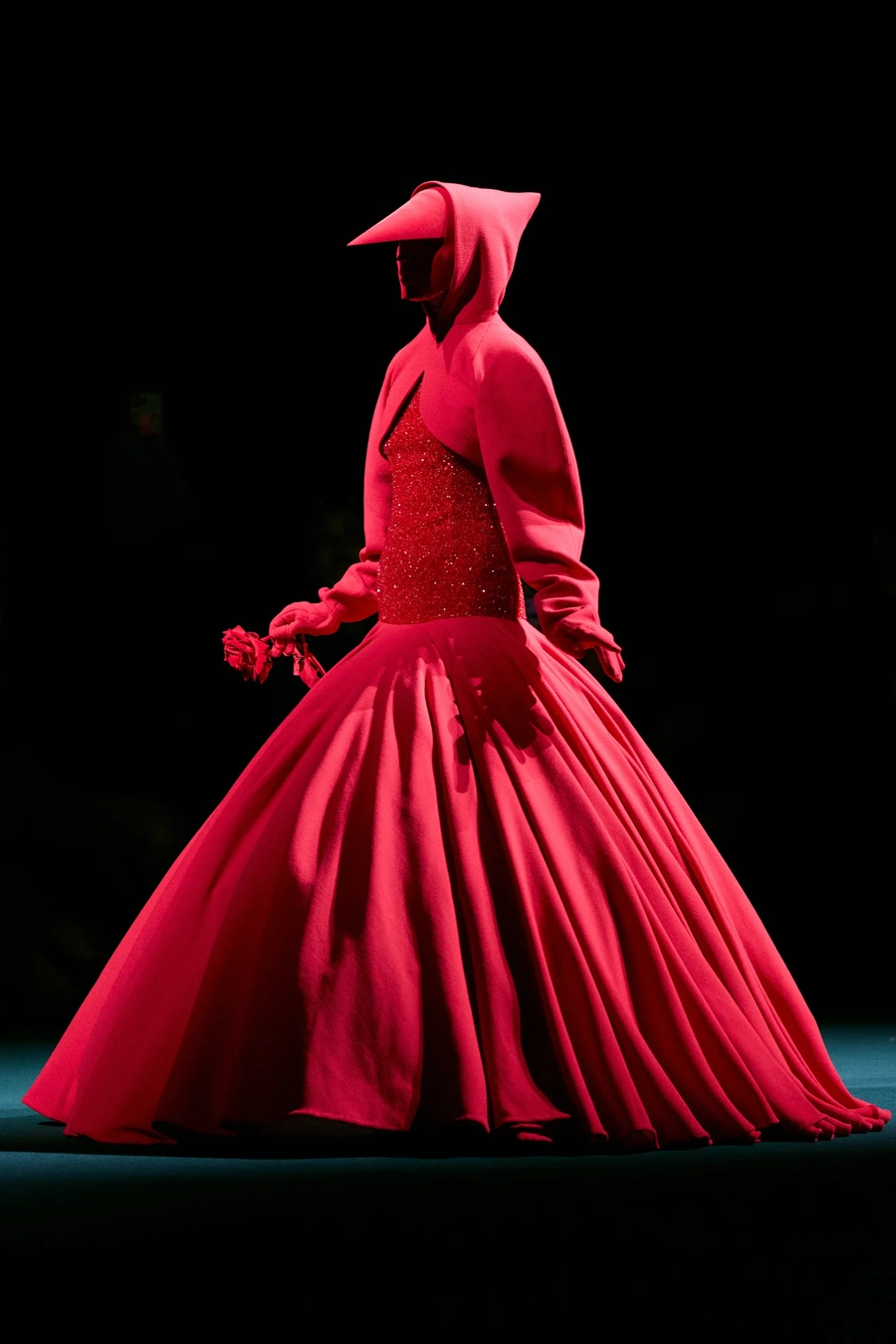
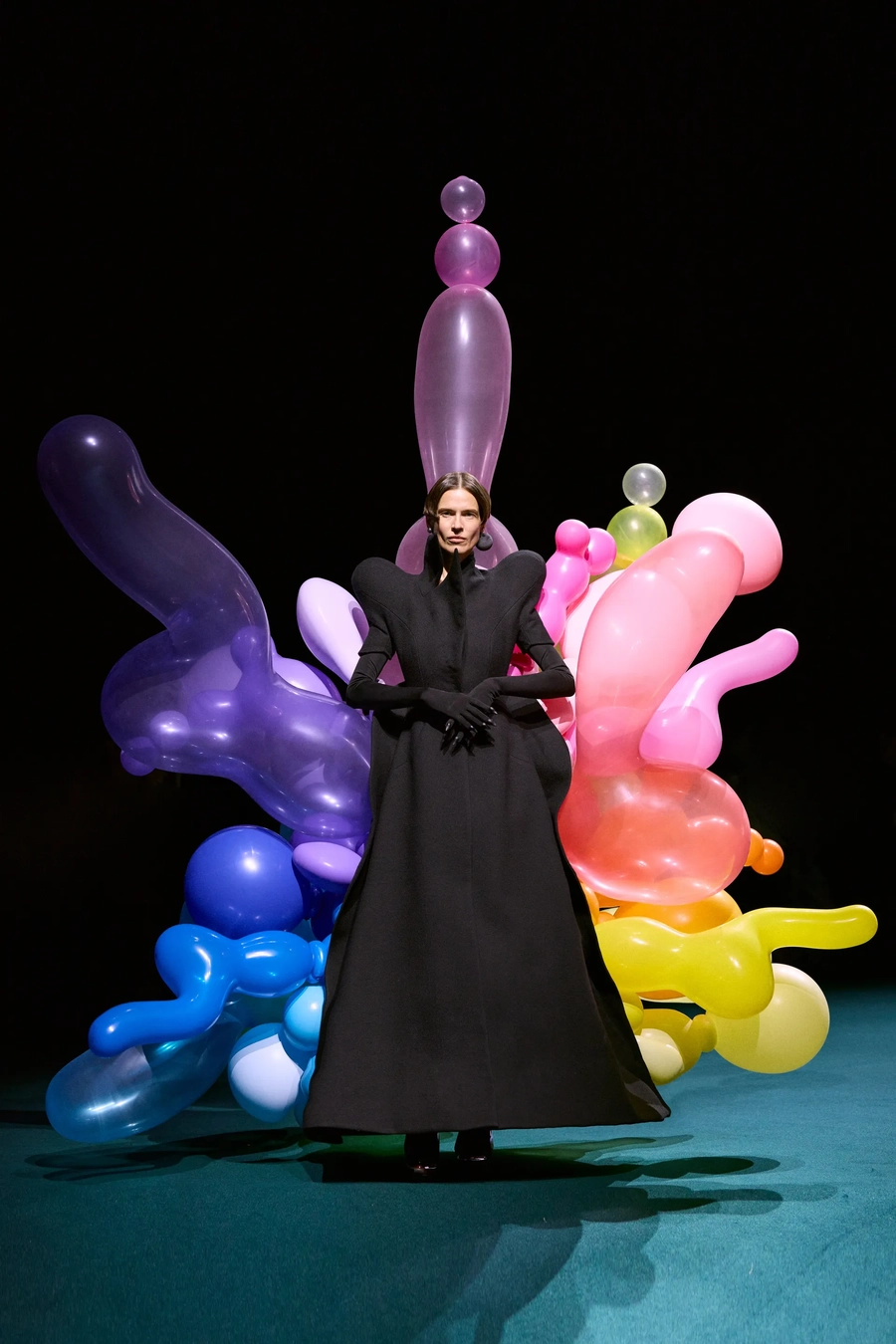
In an age when almost any impossible image can be generated on a screen, Robert Wun makes the more extravagant choice: he builds it.
A physical fantasy has weight. Someone must enter it. The silhouette must occupy a room. An illusion has to remain convincing once it leaves the controlled boundaries of an image.
Wun therefore brings another attitude into couture innovation. His work asks what happens when imagination is forced to become accountable to reality. An impossible idea becomes more compelling once the atelier has to find a way for it to exist. The illusion becomes truly extravagant when it survives outside the image.
Here, traditional making and contemporary visual culture meet from yet another direction. The screen expands what audiences can imagine; couture responds by proving that imagination can still acquire material presence.
Van Herpen looks outside fashion for questions worth translating. Germanier gives new purpose to things whose previous lives have ended. Mishra allows inherited knowledge to imagine unfamiliar forms. Wun gives physical consequences to fantasies that could easily remain digital.
They share little aesthetic resemblance, and that difference may say more about the current state of experimentation than any single futuristic silhouette could.
Progress no longer needs one visual language.
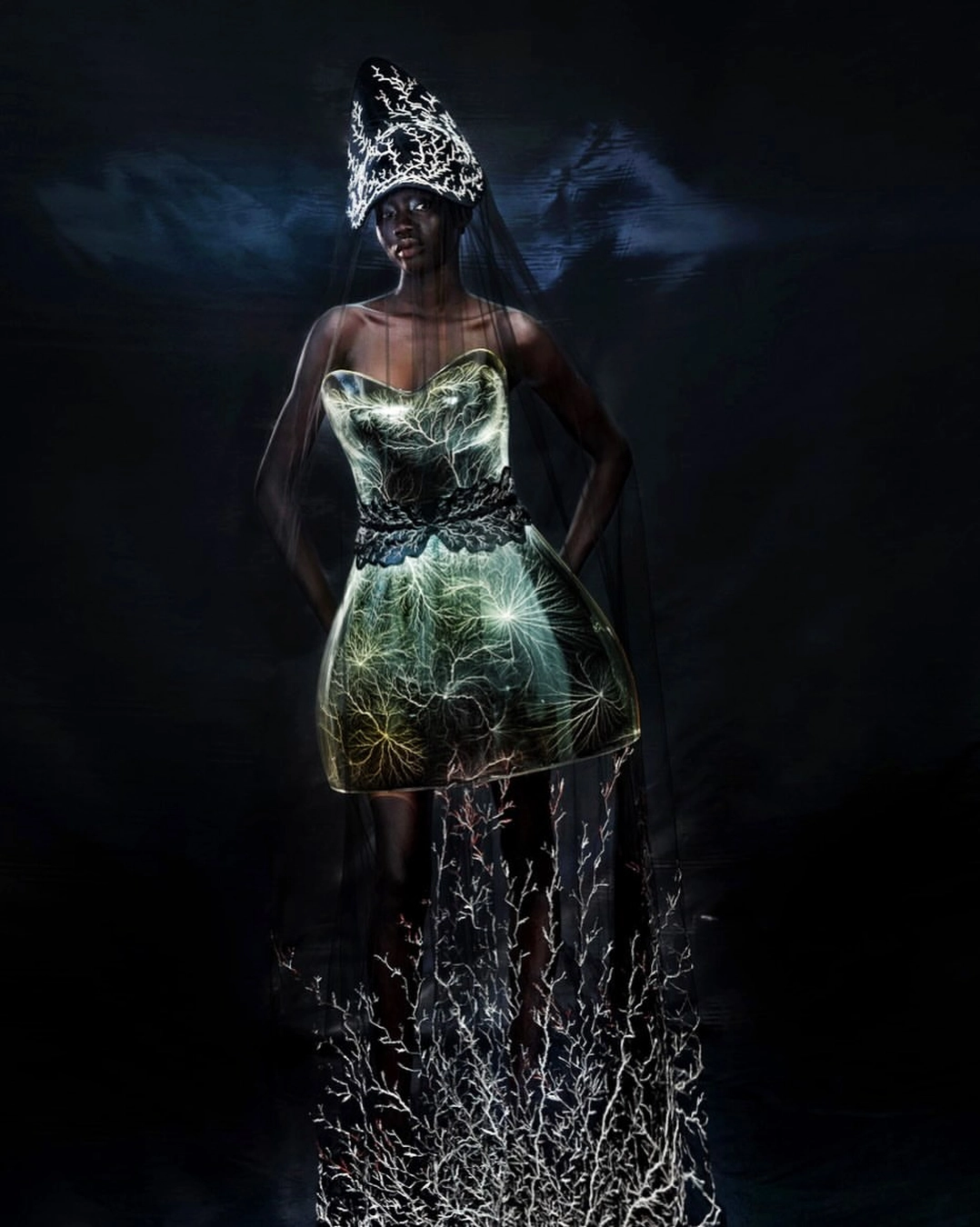
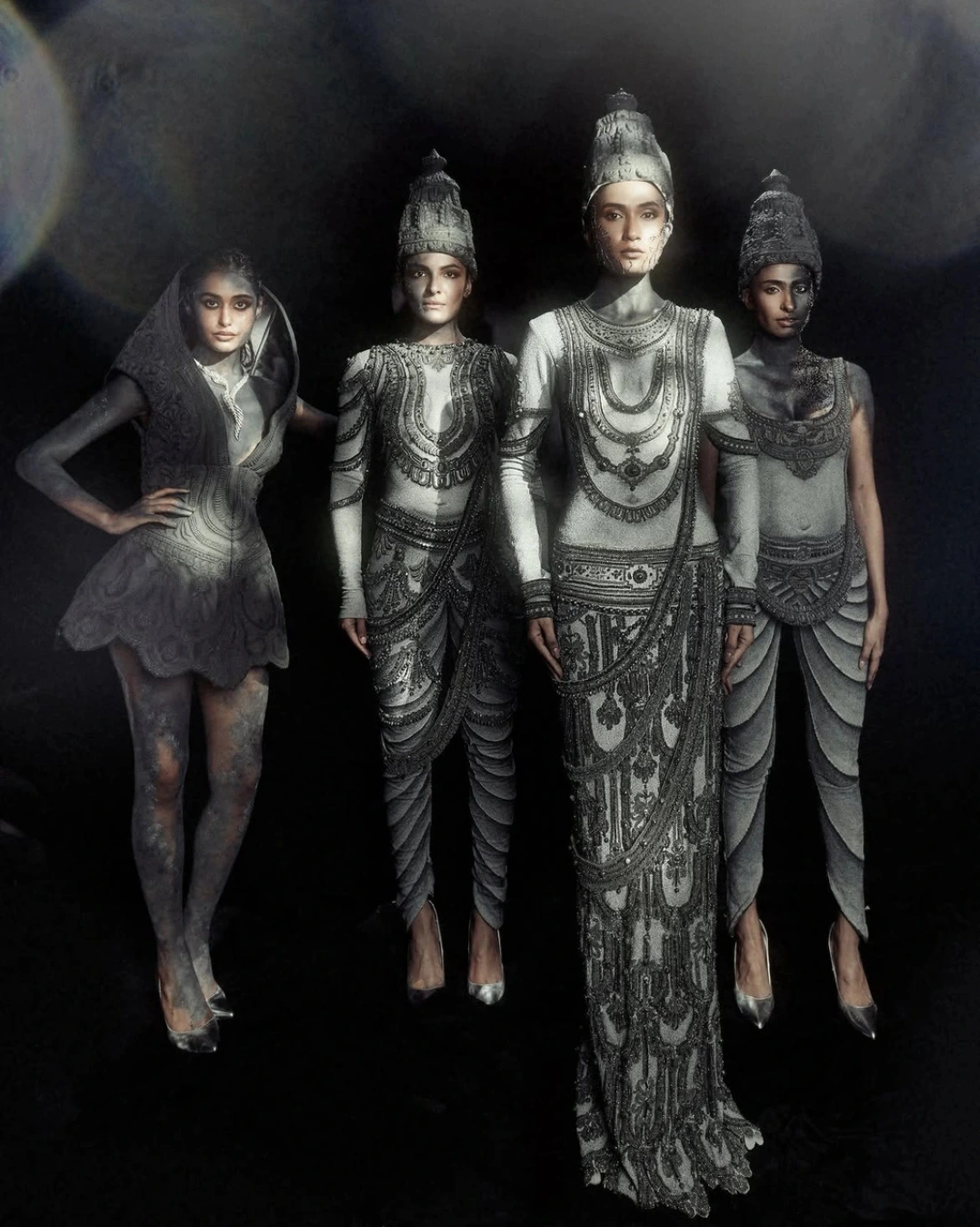
Material experimentation can involve an unfamiliar substance or the imaginative reuse of an existing one. Technology can expand the vocabulary of an atelier while traditional couture techniques continue generating ideas through knowledge held in human hands. The future can appear scientific, ornamental, excessive or cinematic without any one approach claiming greater authority over others.
What connects these designers is curiosity.
Perhaps the most futuristic quality of haute couture is precisely that willingness to remain radically curious, allowing centuries of knowledge to keep encountering unfamiliar ideas and giving couture innovation somewhere new to go.
Advertisement