MENU
Close





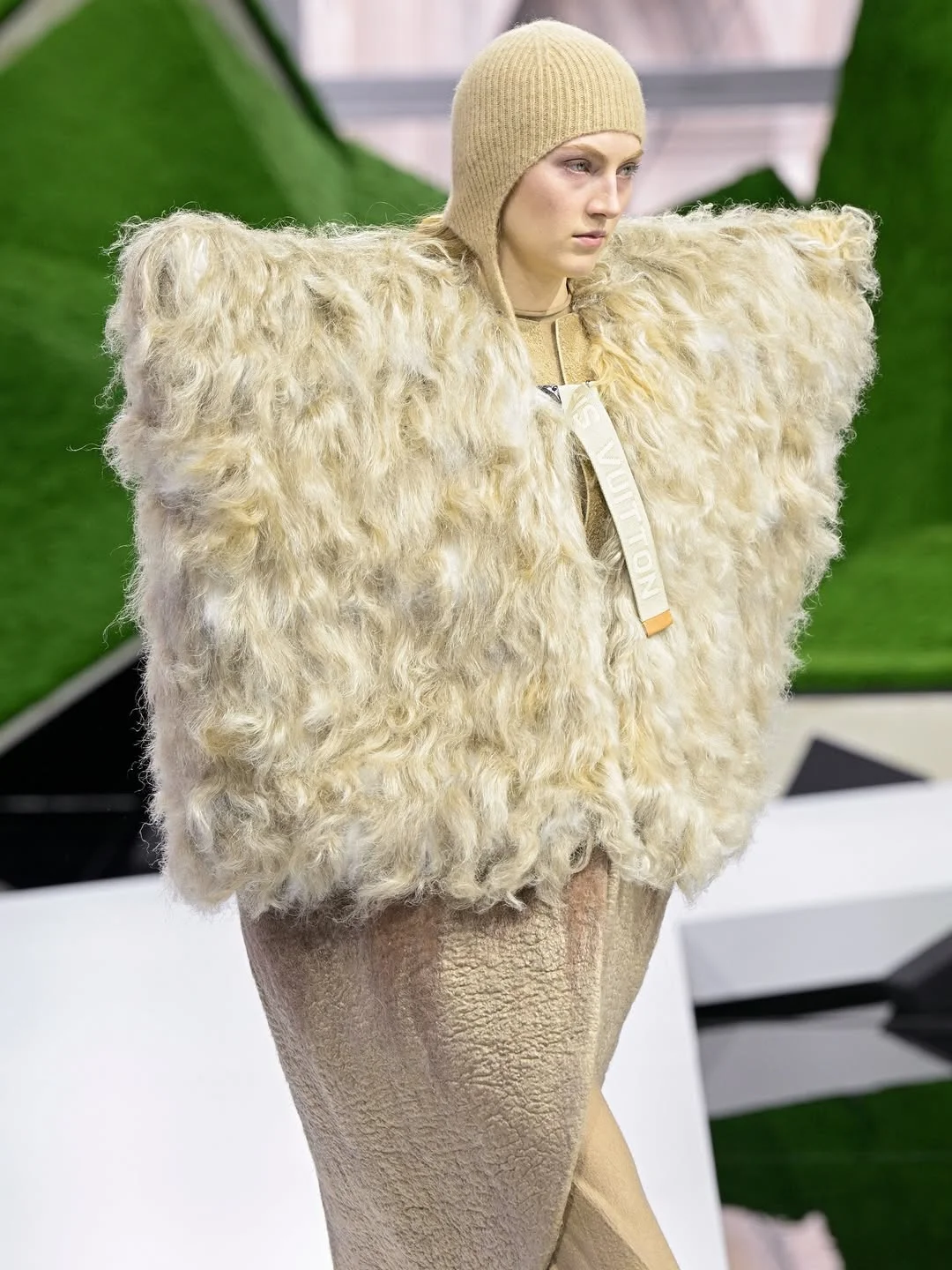
Last autumn, some of luxury’s most familiar houses appeared with entirely new creative identities attached to them. Almost one year into the industry’s great creative reset, which appointments have begun to reshape their houses, and which still seem caught somewhere between arrival and definition?
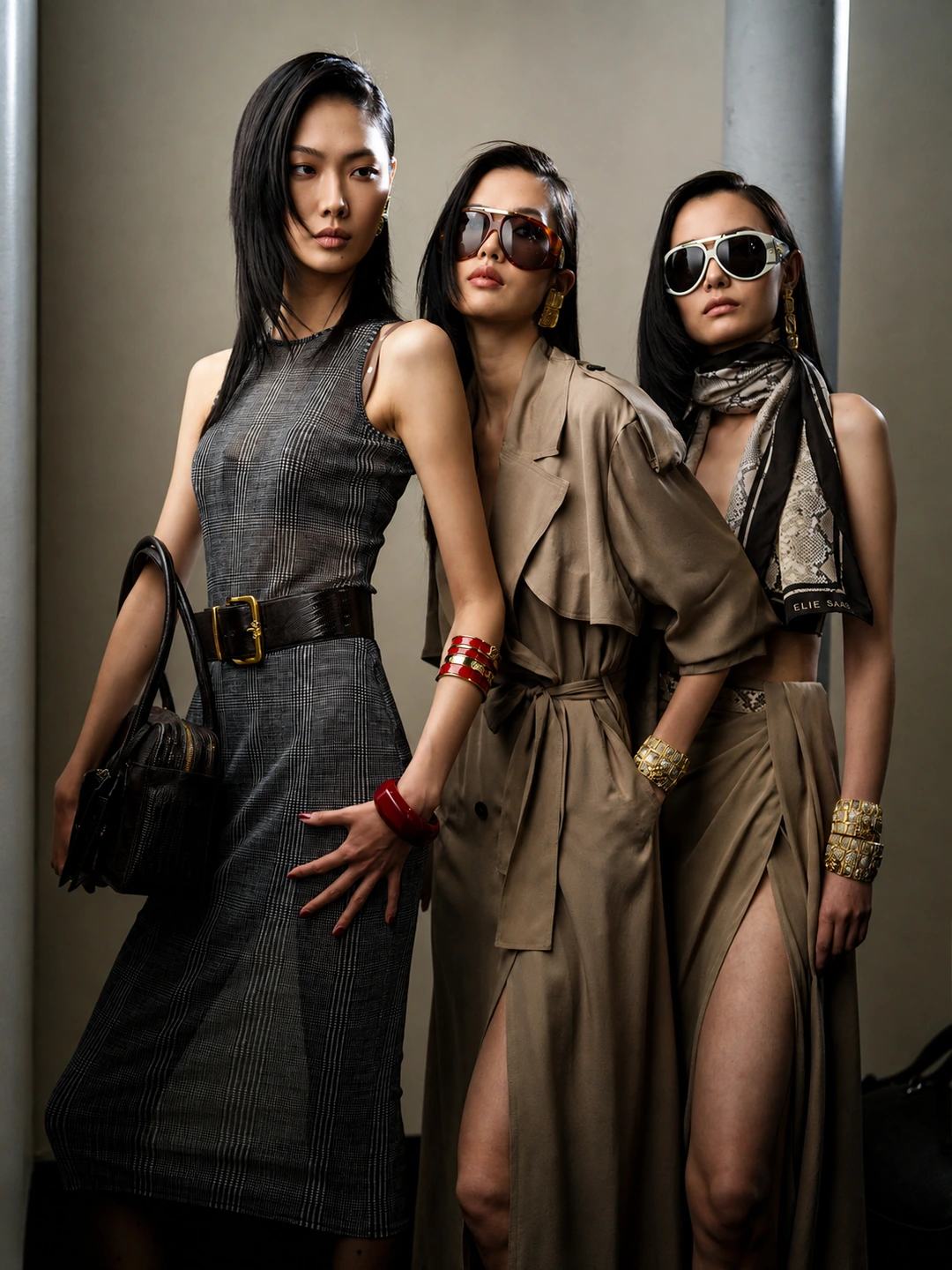
Last autumn, some of luxury’s most familiar houses appeared with entirely new creative identities attached to them. Almost one year into the industry’s great creative reset, which appointments have begun to reshape their houses, and which still seem caught somewhere between arrival and definition?
August 24, 2026
Advertisement
Advertisement


The first months of a new tenure are unusually forgiving. An archive is reopened, familiar codes acquire a different hand, and curiosity can carry even an unresolved collection surprisingly far. Spring/Summer 2026 gave that curiosity an extraordinary number of places to land. Matthieu Blazy arrived at Chanel, Jonathan Anderson took control of Dior, Pierpaolo Piccioli entered Balenciaga, Jack McCollough and Lazaro Hernandez succeeded Anderson at Loewe, Louise Trotter followed Blazy at Bottega Veneta, while Demna began rewriting Gucci. Maria Grazia Chiuri’s later return to Fendi extended the same wave of movement into another major Roman house.
Enough time has now passed for first impressions to become patterns. The useful question is no longer what each designer showed in their debut, or whether a particular runway delivered a viral image. Across several collections, repeated choices have begun revealing something more substantial: what each creative director actually wants the house to become.
Tweed has spent the past year looking increasingly comfortable outside the glass case at Chanel. Under Matthieu Blazy, familiar codes have loosened through proportion, surface and movement, while elaborate craftsmanship often arrives with an almost casual attitude. Pearls, quilting, jersey and black-and-white remain instantly legible, yet recognition rarely becomes the conclusion of the design.
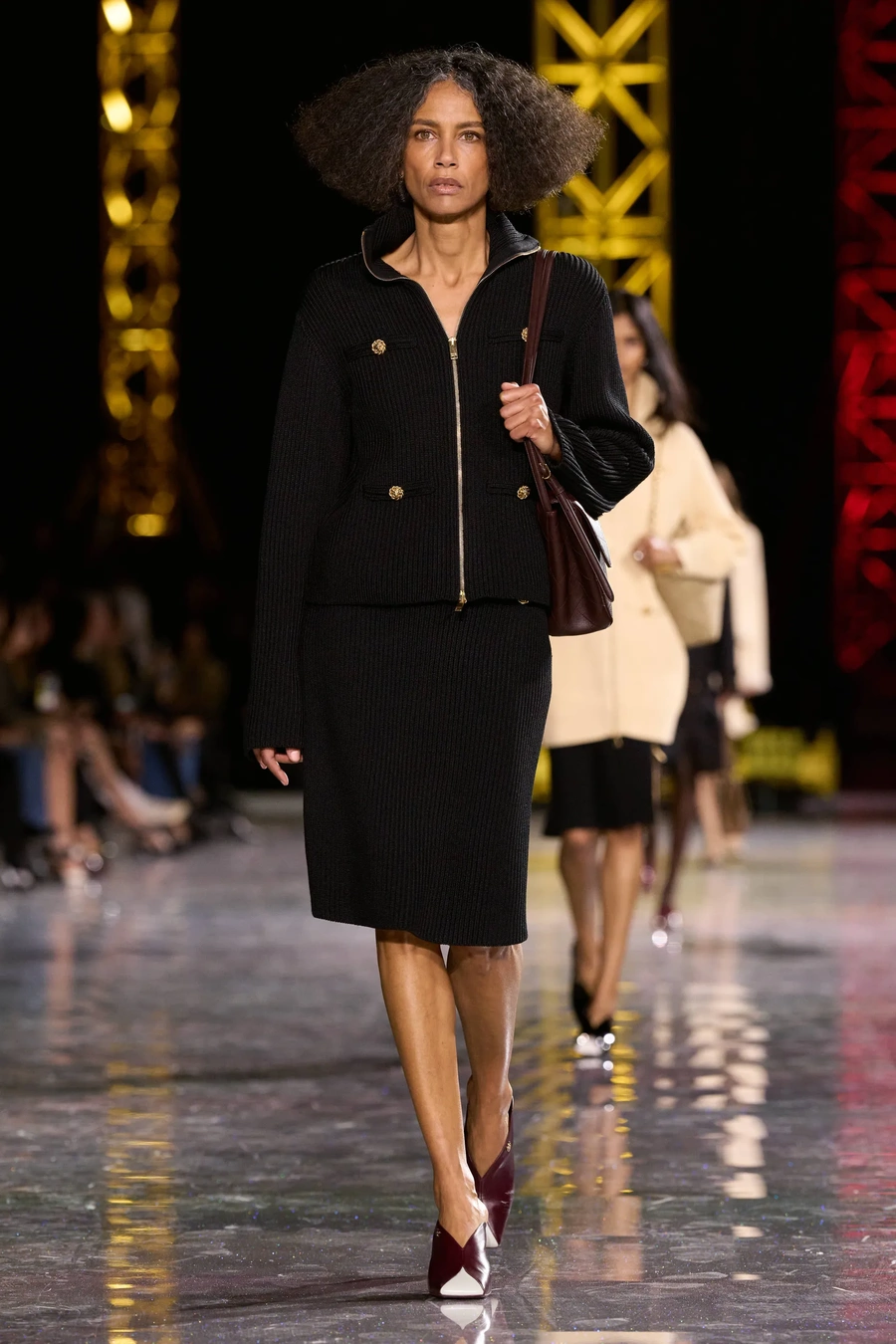
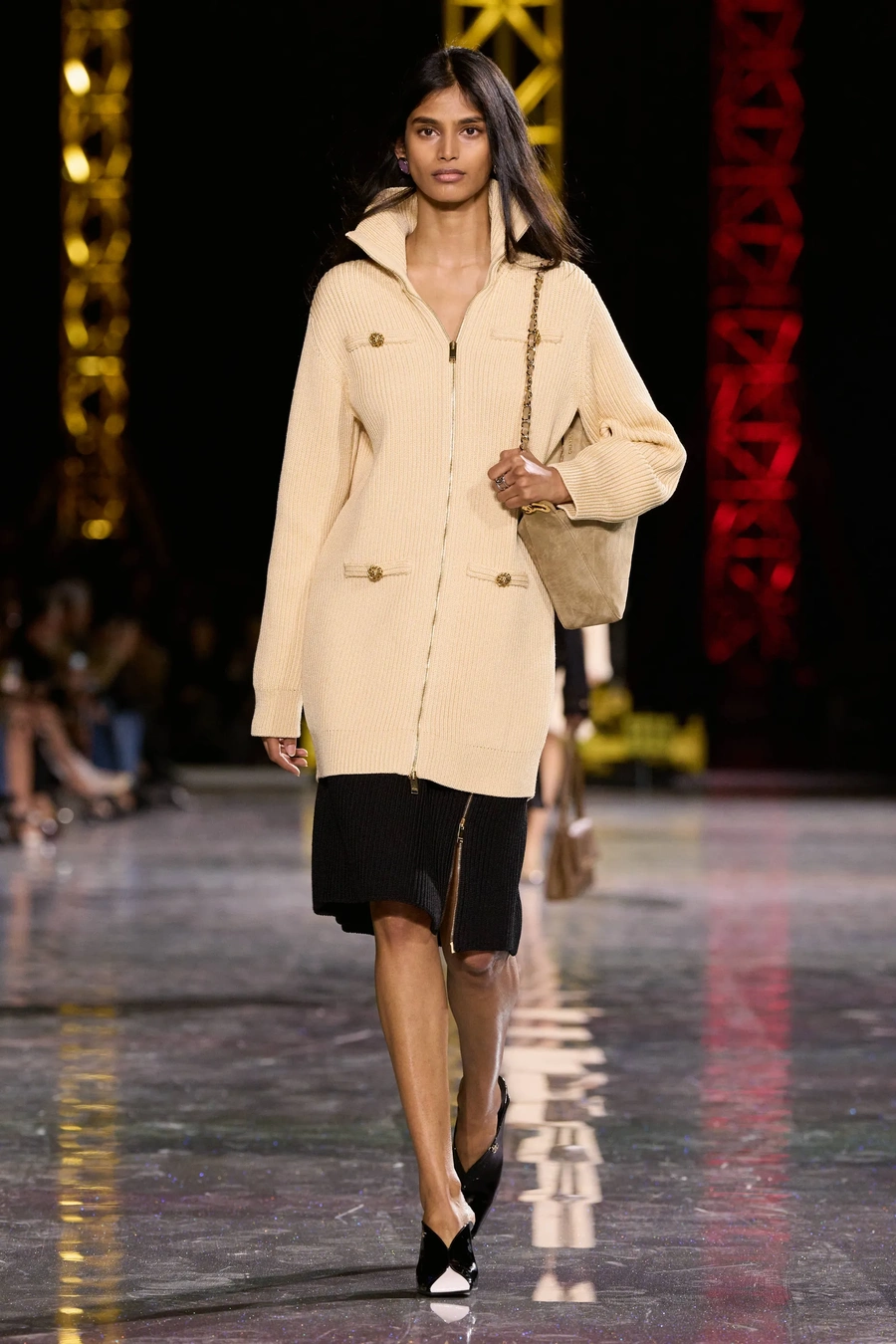
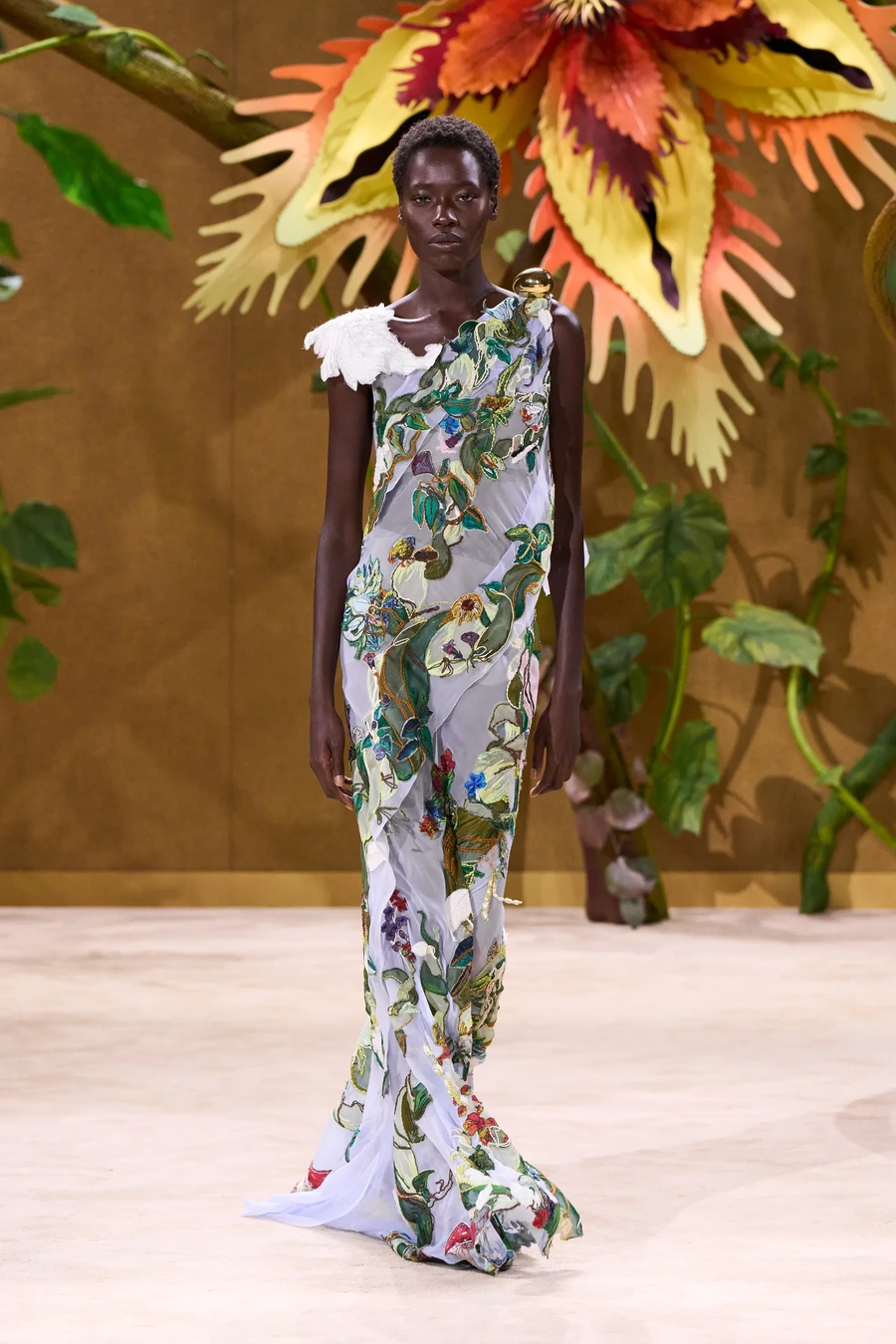
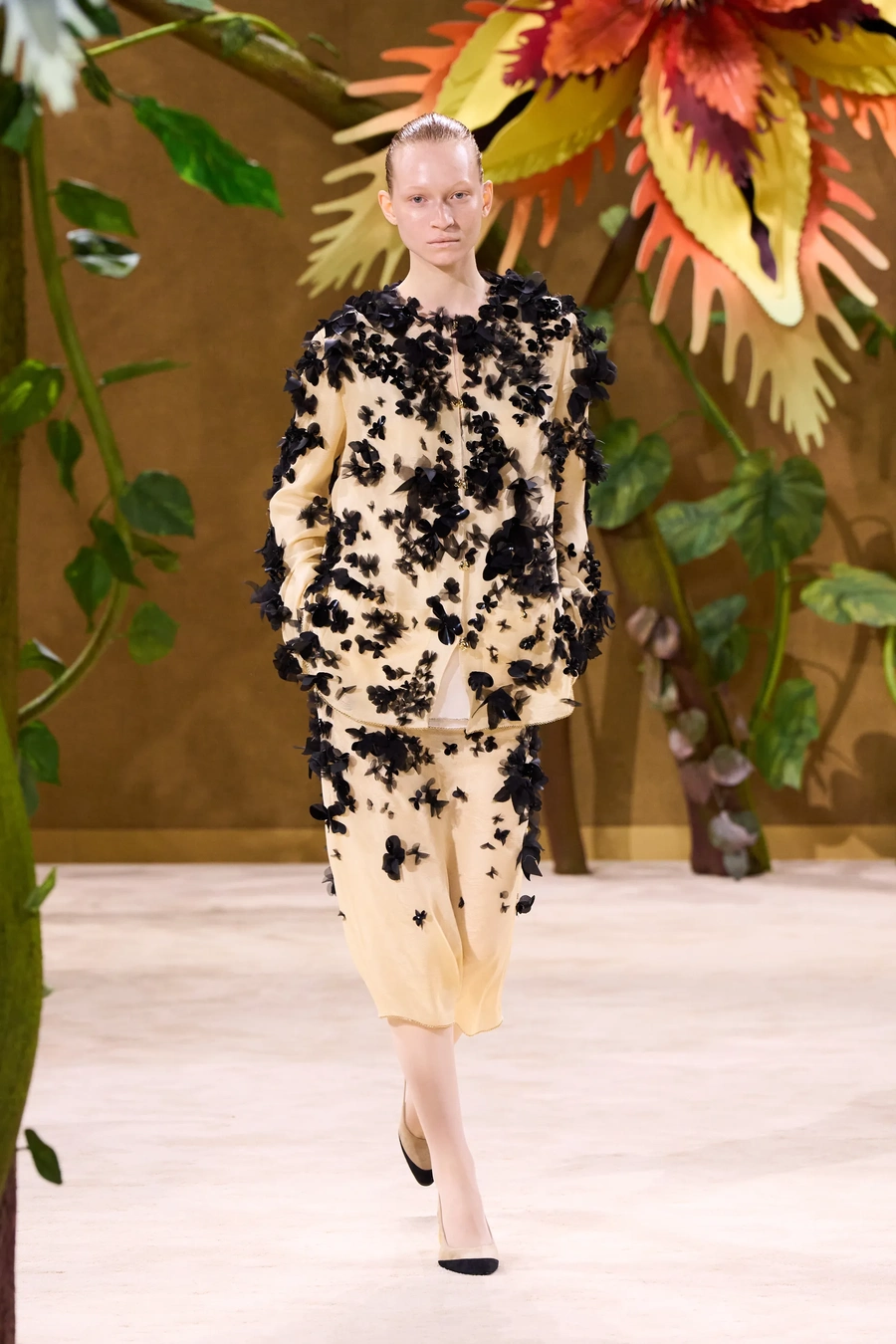
Chanel still carries the traces of Gabrielle Chanel everywhere, but Blazy has introduced another temperament around them: looser, more tactile, occasionally strange and far less ceremonial. Familiar materials can appear worn, enlarged or almost accidental; exquisite handwork can hide beneath clothes that seem instinctive enough to belong to an actual wardrobe. The maison’s history remains visible, while the image surrounding it has become unexpectedly young again. That shift may be the clearest sign of what Mathieu Blazy has achieved so quickly.
You can recognise Chanel in the details, yet the first impression increasingly belongs to Matthieu Blazy.
Jonathan Anderson has produced a similar sense of displacement at Dior through a completely different vocabulary. Historic forms have been compressed, softened, exaggerated and occasionally made strange, allowing the archive to move through his instinct for wit and disruption. The Bar jacket remains present as an idea, though its architecture has repeatedly dissolved into pleating, drape and altered volume. Couture technique passes freely between familiar house references and shapes that would once have seemed foreign to Dior.
There are moments when the eye registers an Anderson silhouette before it registers Dior, a surprising achievement inside a house whose visual codes have been repeated for nearly eight decades. The historical references still anchor the work, but they increasingly coexist with eccentricity, softness and a certain visual oddness that gives the maison fresh energy.
Sometimes the most convincing proof that Dior is moving forward is that a Dior look can briefly make you ask whether it is Dior at all.
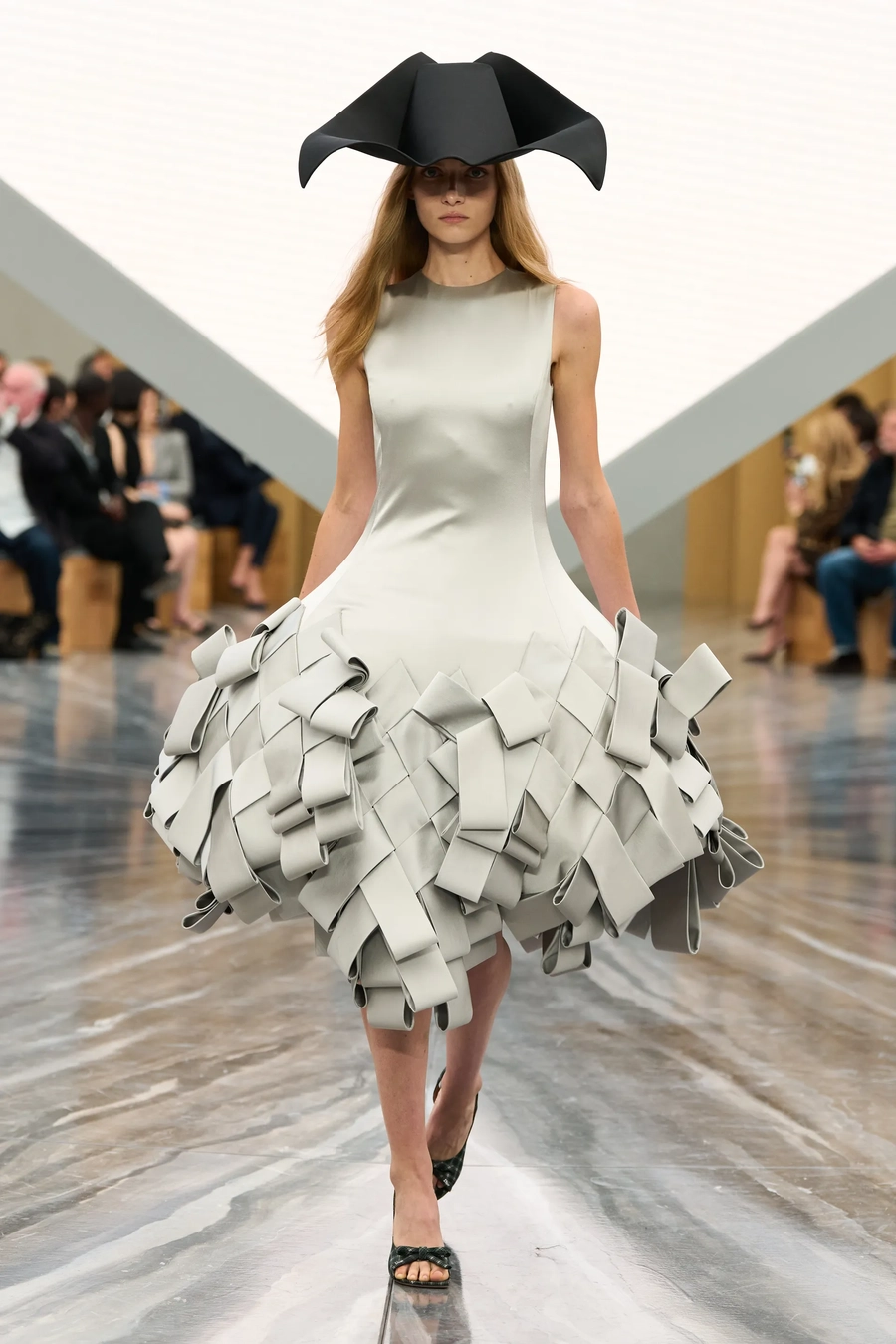
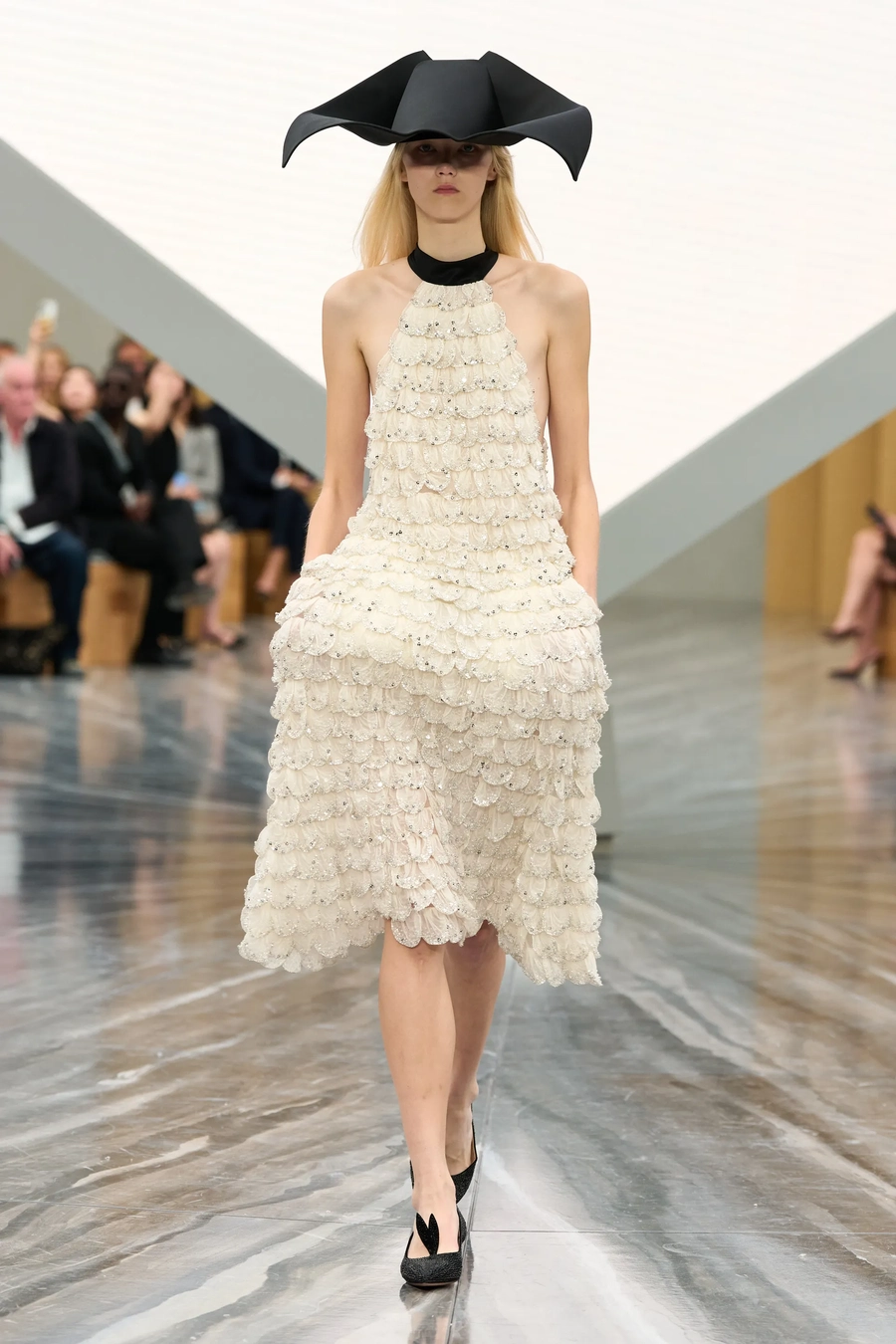
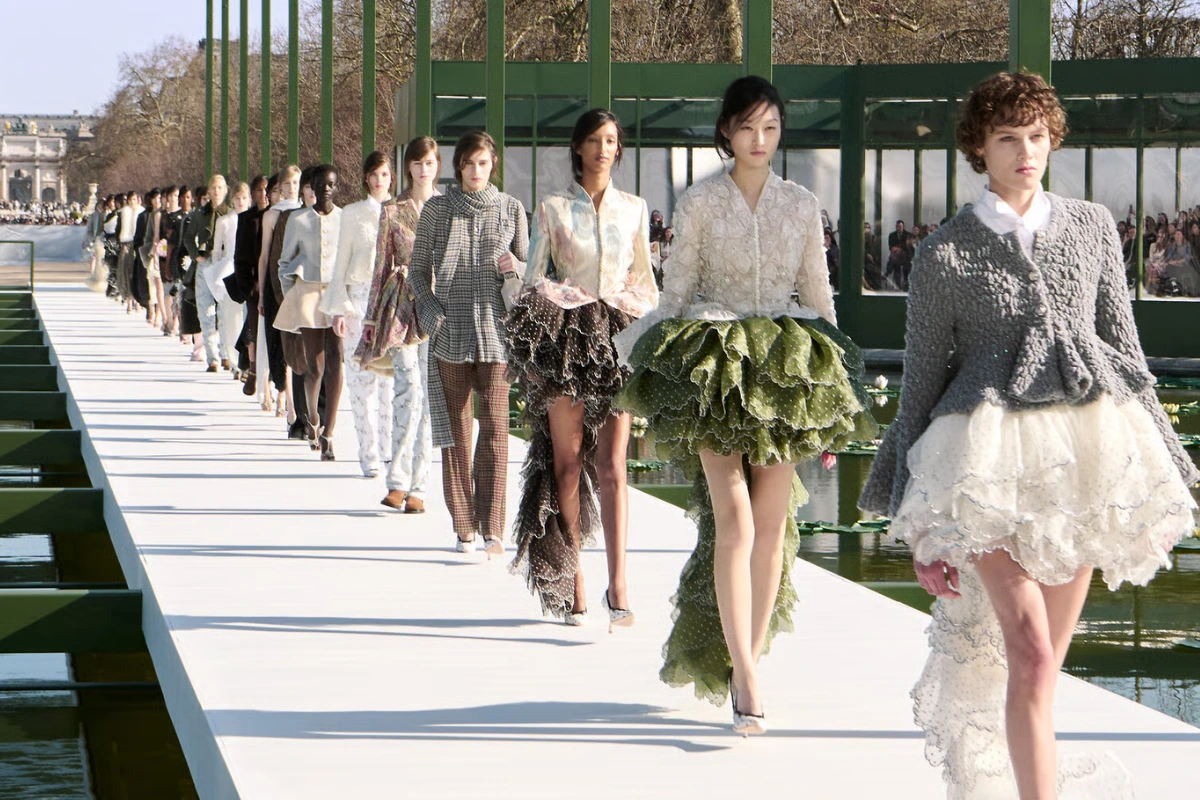
That places Chanel and Dior among the clearest transformations of the creative reset so far. Blazy and Anderson have both preserved enough history for continuity to remain intact, while introducing enough personal vocabulary for two of luxury’s oldest institutions to appear newly unsettled, and newly alive.
Pierpaolo Piccioli has travelled further backwards at Balenciaga. Cocooning volumes, volumes, sack-like freedom, trapeze constructions and the space held between garment and body have continued to surface across his work, silhouettes, gradually returning Cristóbal Balenciaga’s original methodology to the centre of the conversation. The references land through principle as much as silhouette. Fabric is given room to build architecture around the wearer, while volume becomes a way of liberating the body from conventional outlines.
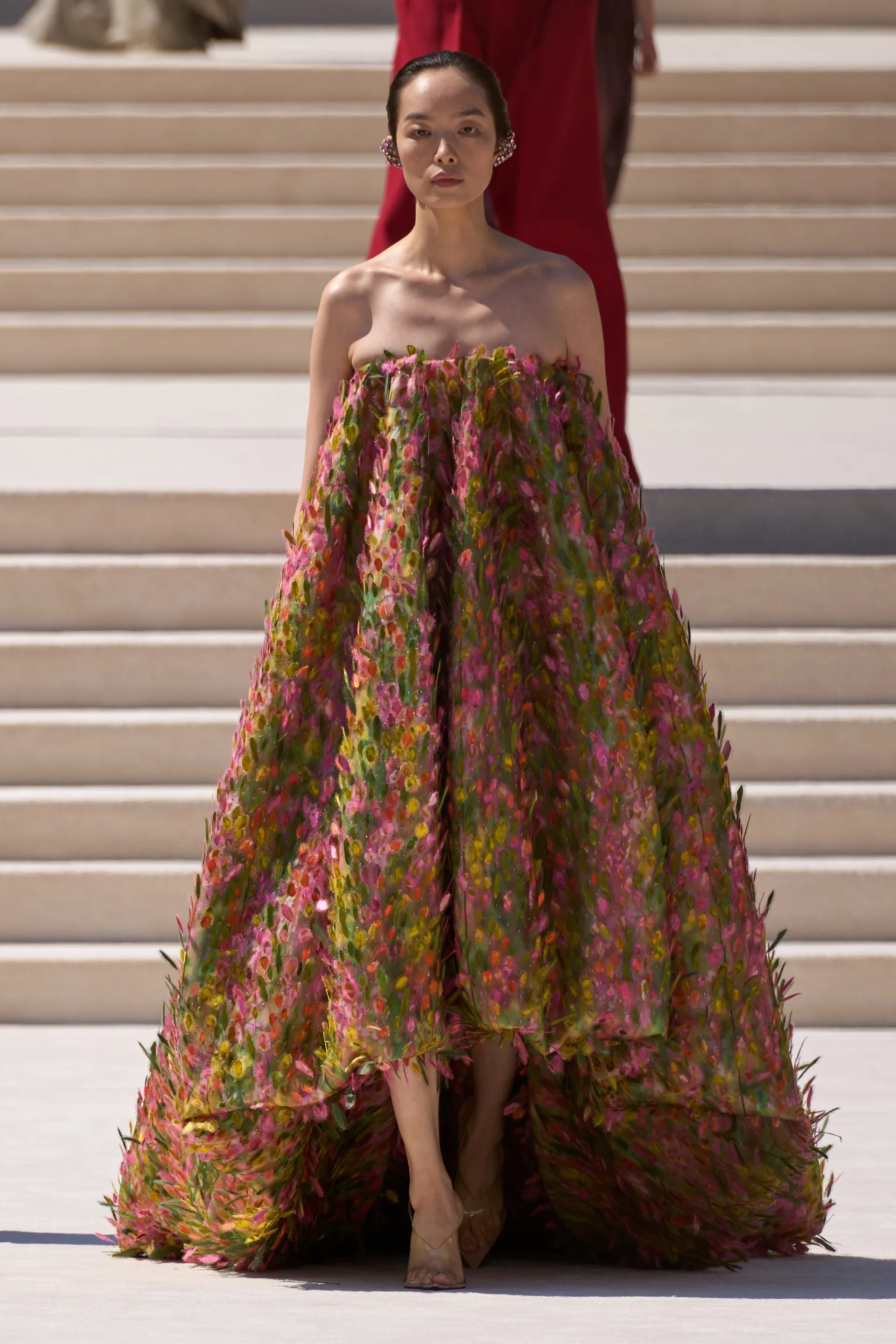
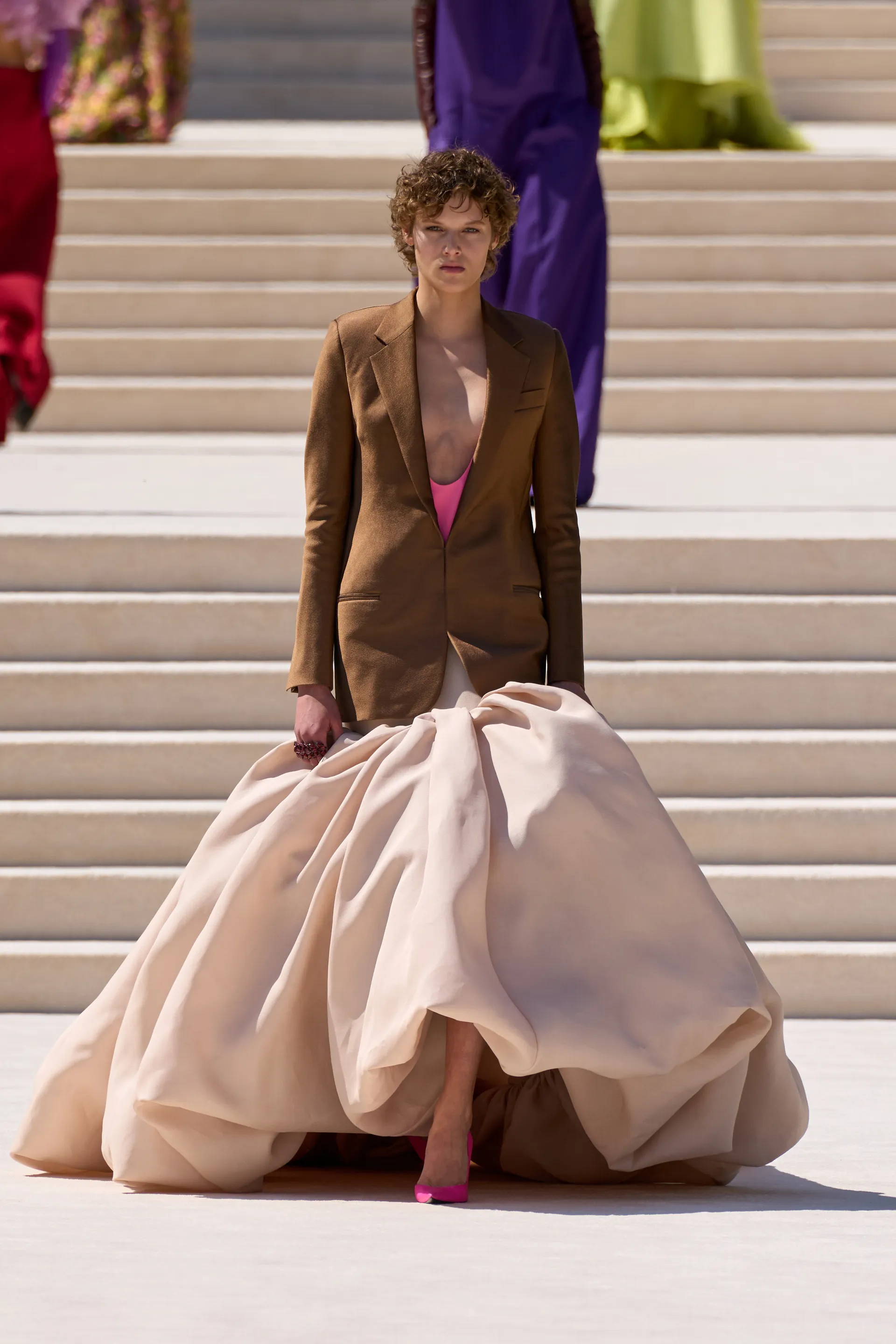
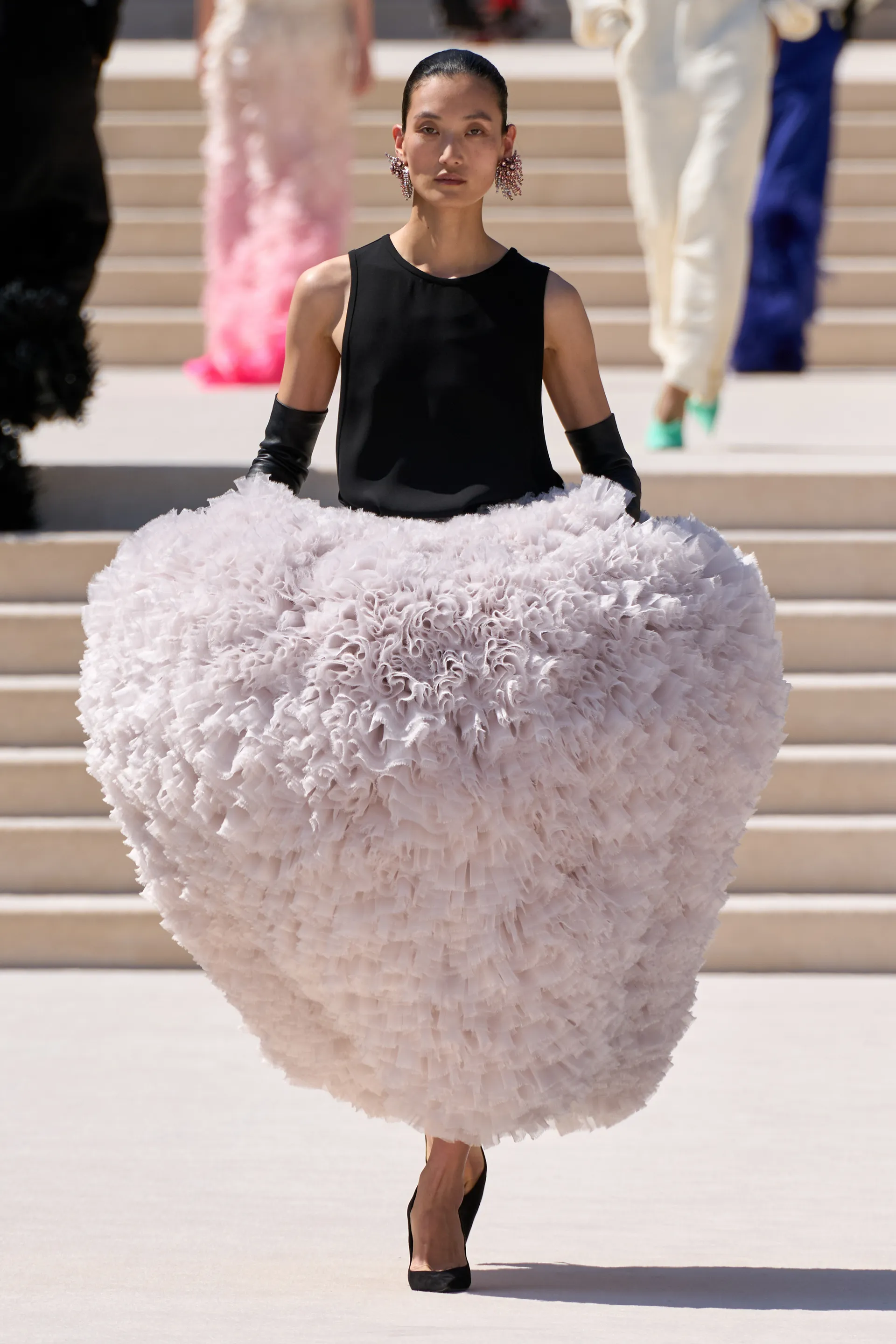
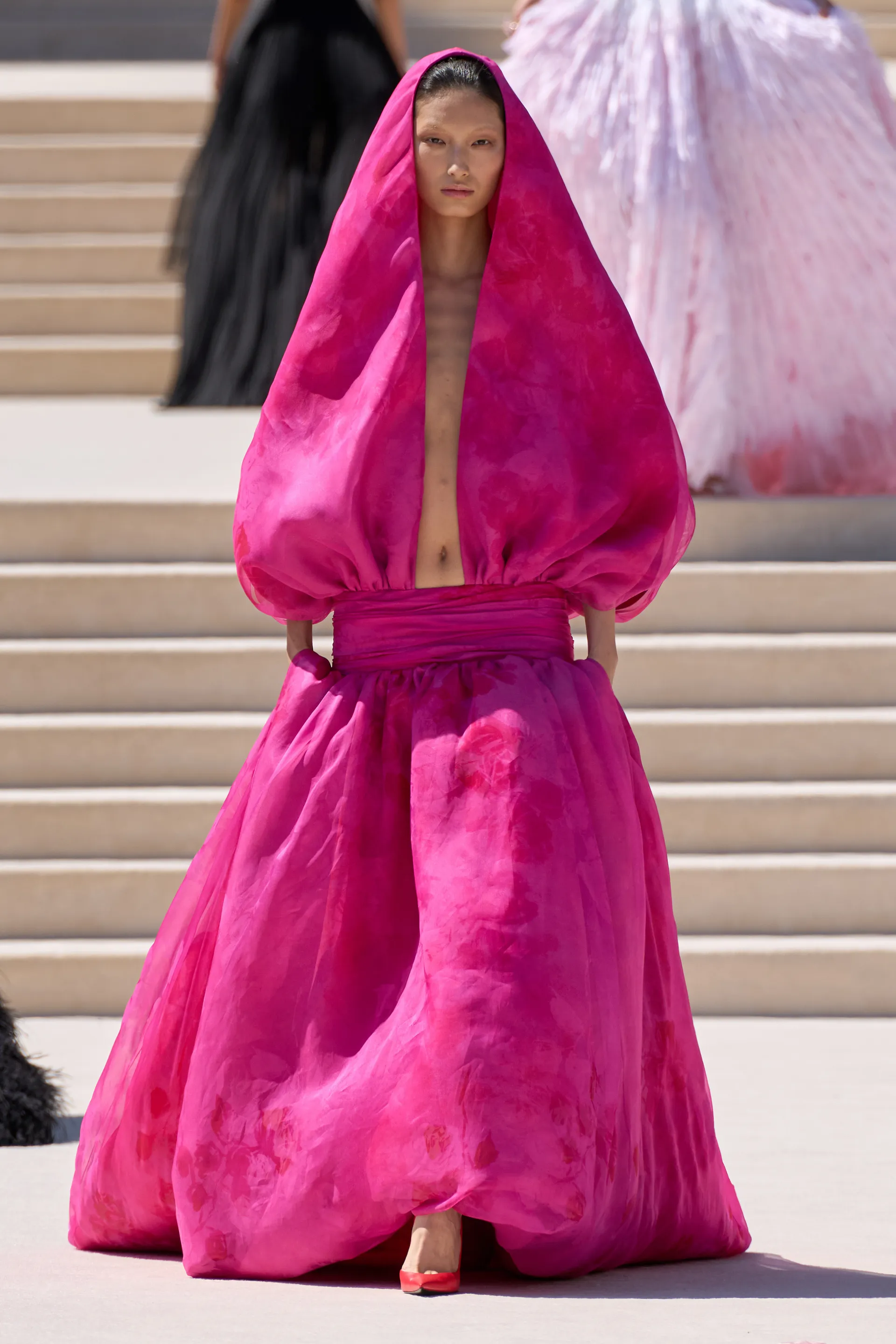
That dedication is beginning to distinguish Piccioli’s tenure from the chapter immediately before it. Elements of contemporary streetwear and the visual memory of Demna’s Balenciaga remain within the house, yet they increasingly coexist with an older architectural intelligence. Piccioli’s own fluency in colour, softness and couture adds another layer, allowing Cristóbal’s legacy to appear through a distinctly contemporary temperament. The process is still unfolding, but the direction has become increasingly coherent. Balenciaga is starting to reconnect with its founder through a method instead of nostalgia.
Gucci entered this period carrying a different kind of historical weight. Its archive contains several eras with enormous cultural visibility, and Demna's earliest work quickly reopened many of them through character, glamour, sexuality and spectacle. La Famiglia established an image-driven world immediately, giving the house renewed cultural volume and a wardrobe with obvious commercial possibilities.
Fall/Winter 2026 made the relationship with nostalgia harder to ignore. Comparisons with Tom Ford’s Gucci appeared repeatedly across the wider conversation, prompted by sleek tailoring, exposed skin, glossy surfaces and a deliberately heightened sensuality. There is an understandable affinity here. Ford’s Gucci carried provocation, sex and a polished form of excess, qualities that can sit surprisingly comfortably beside Demna’s own attraction to exaggeration, cultural friction and characters that hover between glamour and discomfort.
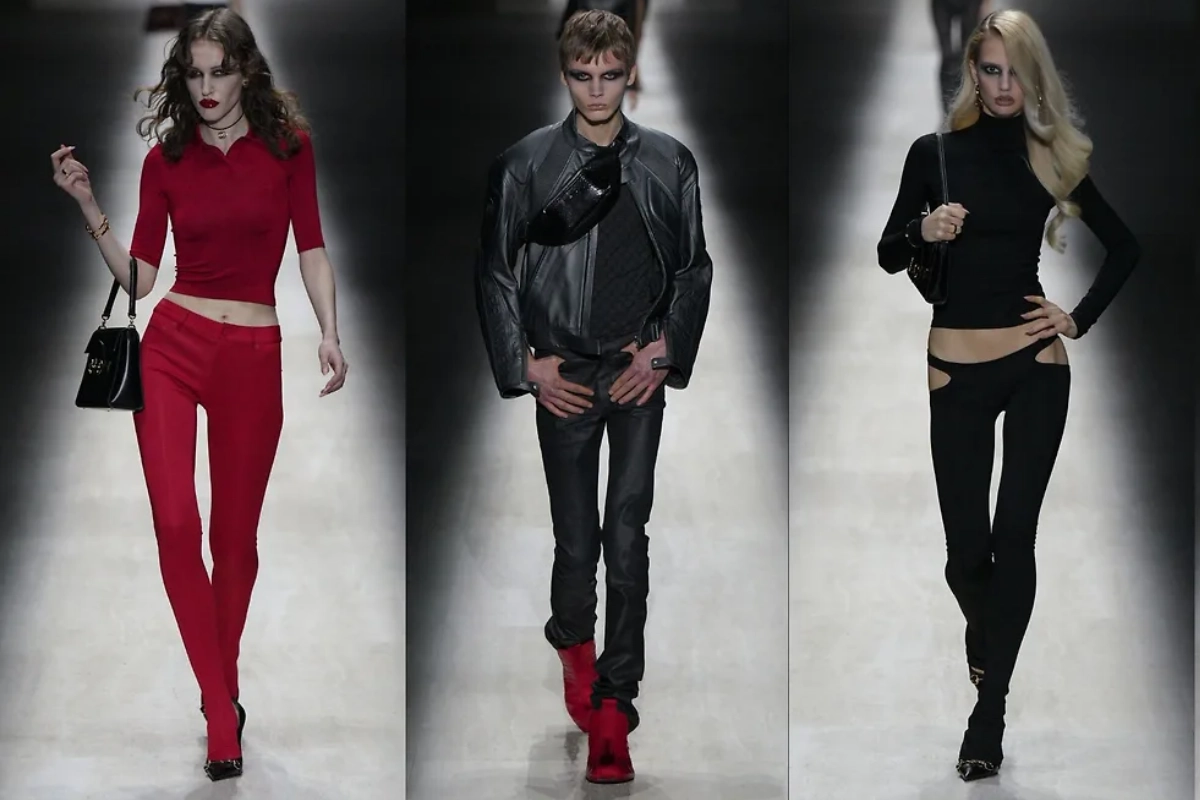
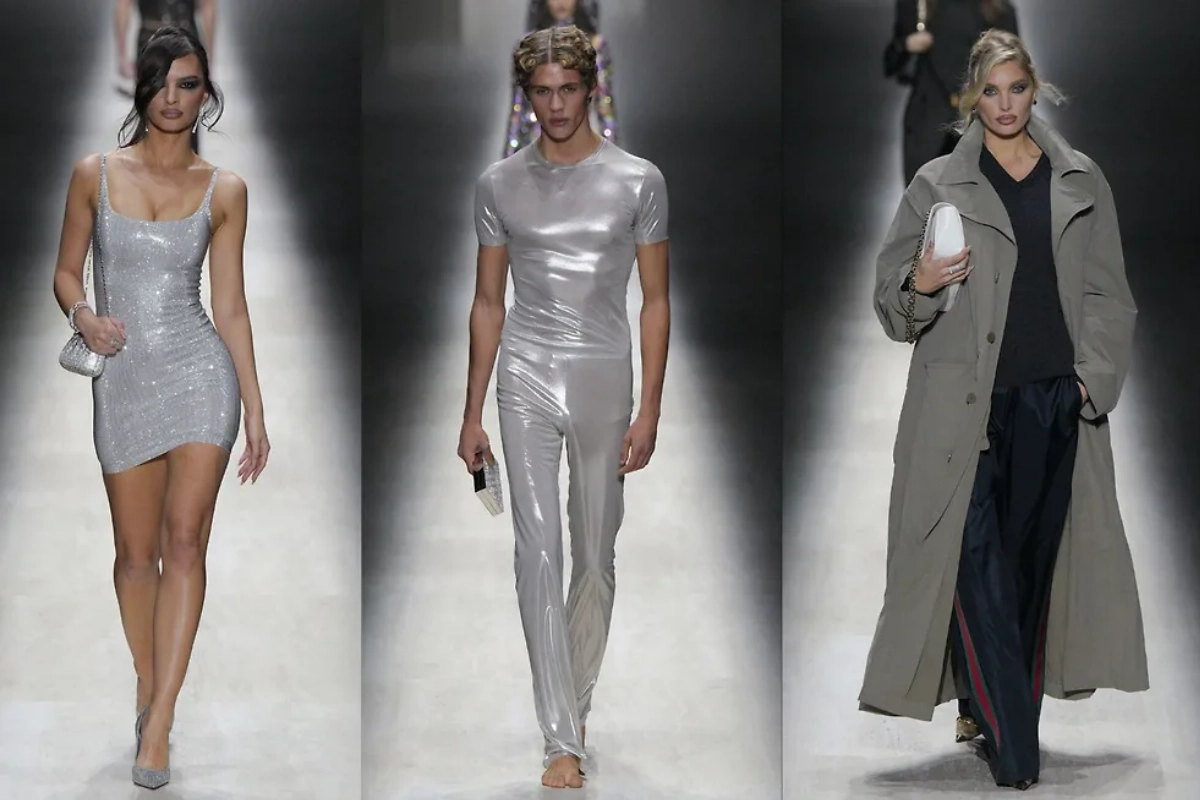
The question is how long that affinity can remain productive before nostalgia begins doing too much of the creative work. Fall/Winter 2026 offered plenty of recognisable desire and an accessible commercial proposition, yet its larger creative statement appeared less concentrated. Individual images landed quickly, while the collection as a whole left fewer ideas with the same conceptual force that defined Demna’s most consequential work elsewhere. Gucci generated €2.757 billion in revenue during the first half of 2026, down 9 percent on a reported basis year on year, although Kering recorded sequential improvement as newer products gained traction. Early commercial logic therefore has reasons to exist.
Almost a year into this chapter of the creative reset, the tension around Gucci sits precisely between those two measures of success. Demna may have found genuine common ground between his own sensibility and one of the house’s most seductive historical eras. The next step is proving that nostalgia can become raw material for something more specific, because a commercially convincing Gucci and a creatively defining Gucci are ultimately two different achievements.
At Fendi, Maria Grazia Chiuri’s return has produced a quieter transition. Ease, femininity, functionality and fluid construction have appeared consistently, supported by the confidence of someone who already knows the Roman house from the inside. Her years at Fendi before Valentino and Dior gave this appointment a different character from a designer encountering an archive for the first time.
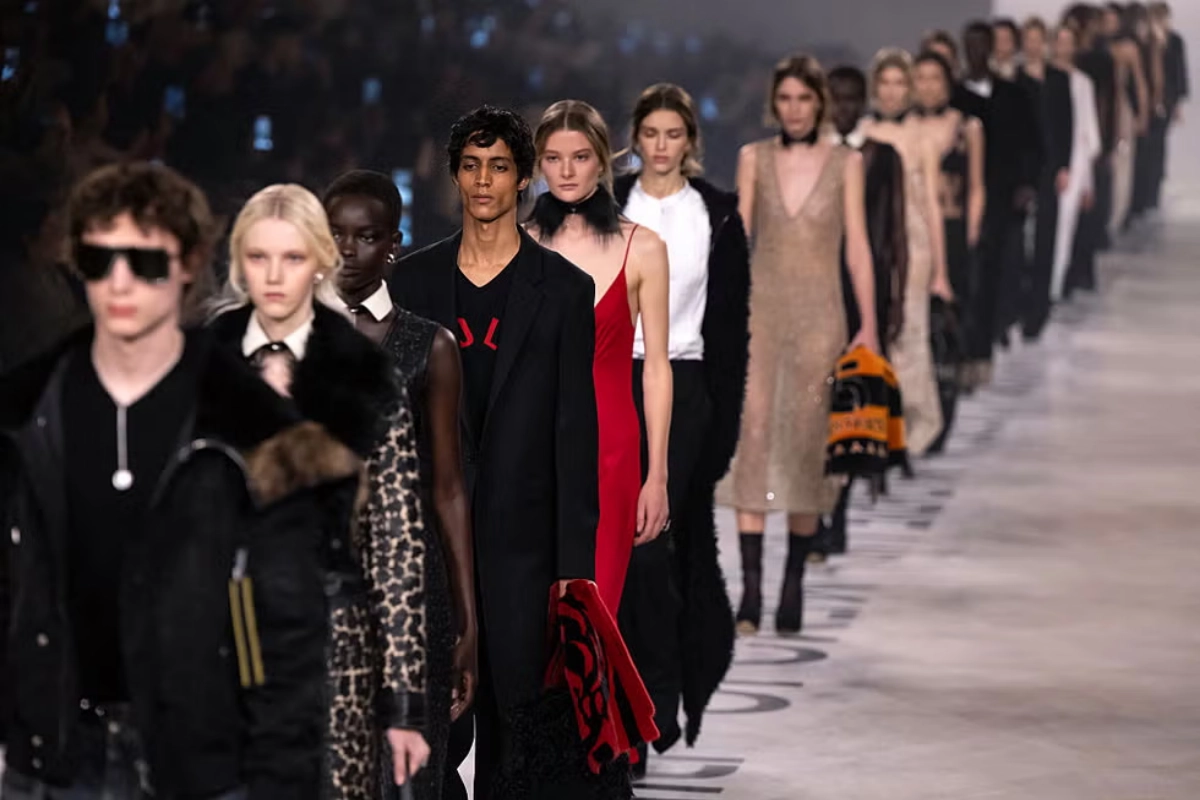
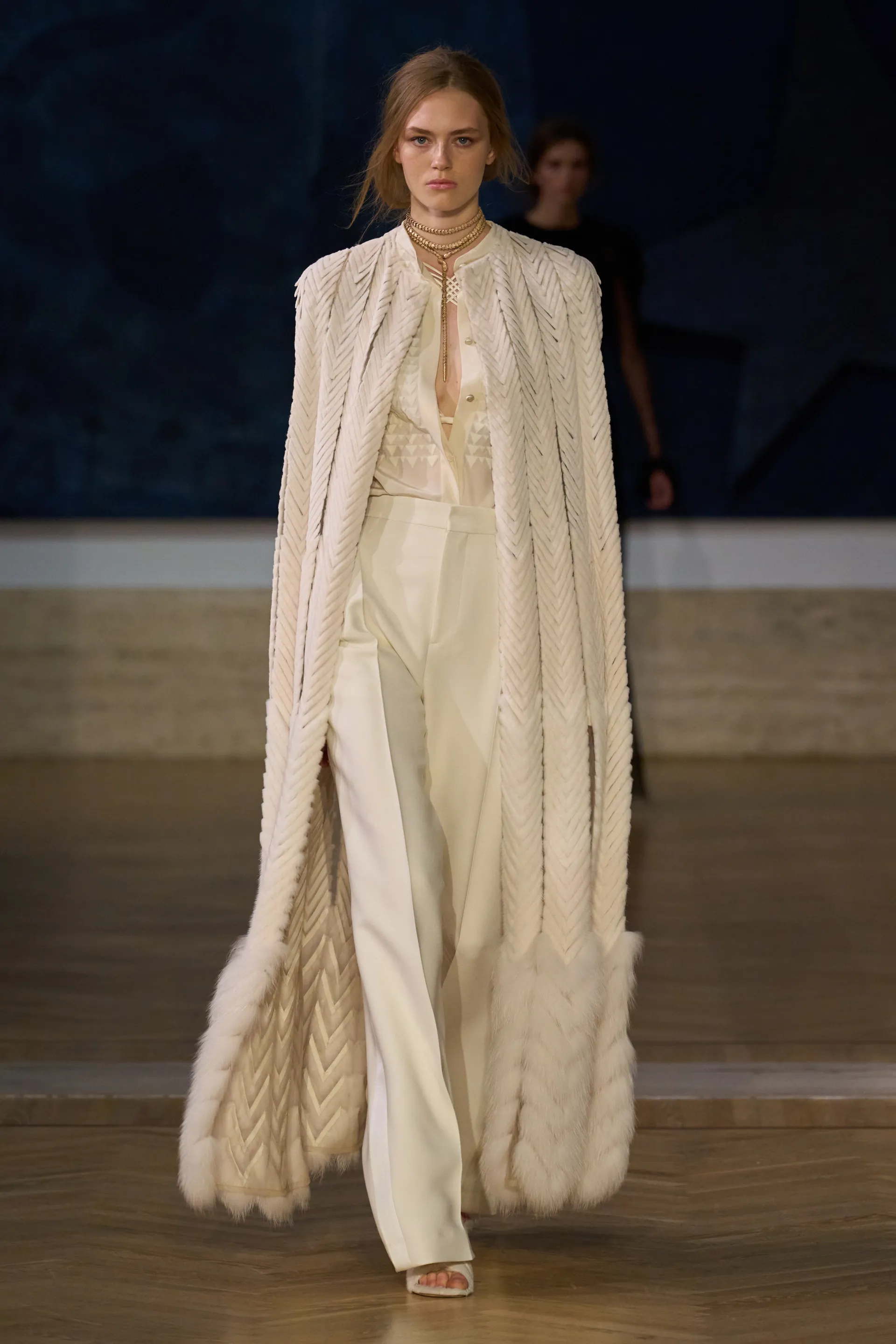
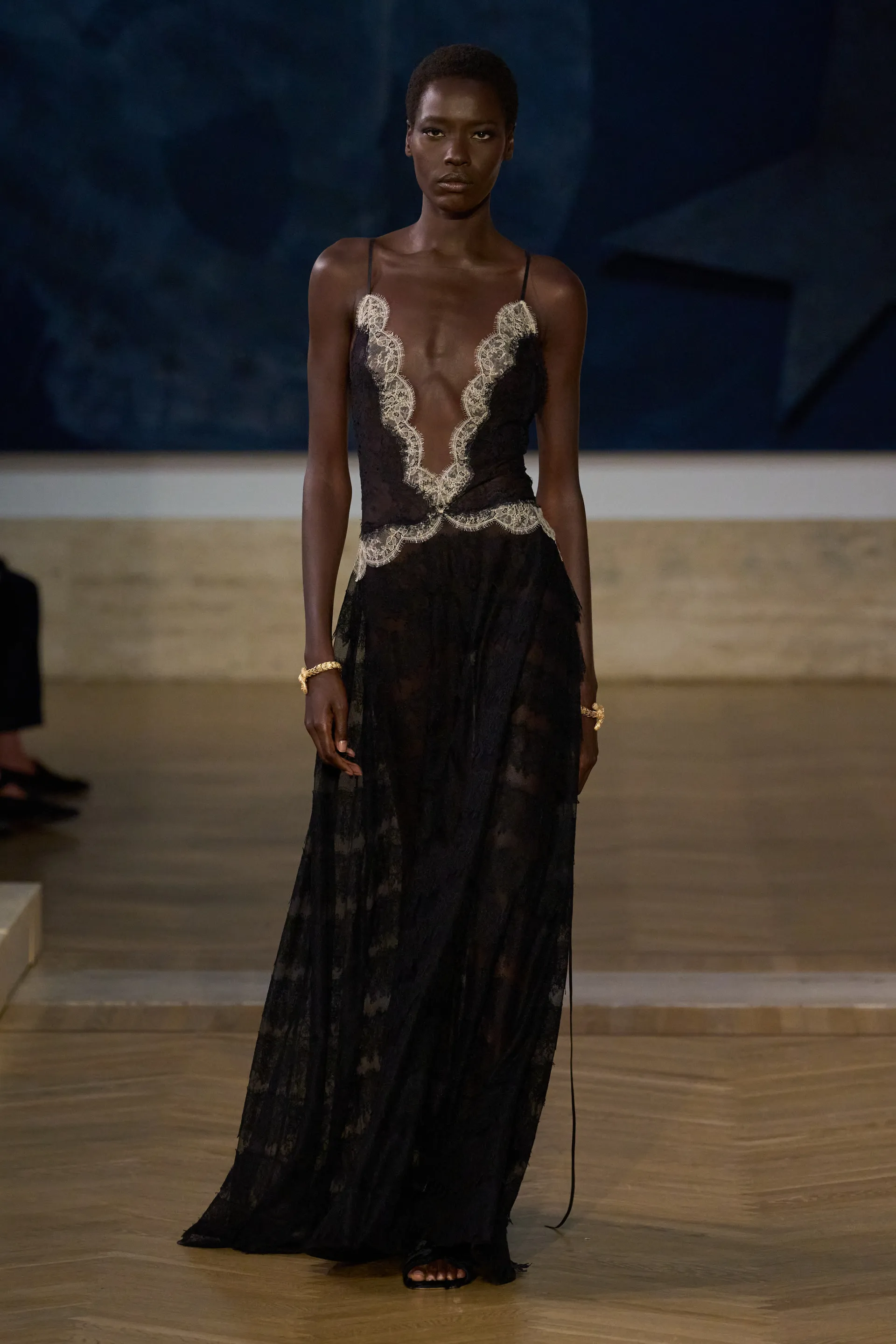
That familiarity has delivered coherence quickly. Surprise has arrived more selectively. Ready-to-wear and couture have so far shared a controlled, wearable sensibility, with soft silhouettes and a measured attitude that can make the work appear assured while leaving the larger identity of this new chapter relatively open. Chiuri has already shown that she can inhabit Fendi comfortably. The unresolved part of the creative reset lies in how sharply that comfort will eventually crystallise into a language that belongs specifically to her return.
Neither Gucci nor Fendi therefore reads as a failed transition. Their trajectories simply remain less settled. One has cultural volume in abundance and still has room to separate itself from powerful historical associations. The other possesses familiarity and consistency while waiting for a stronger creative inflection. Almost a year after the reshuffle began, those differences are useful reminders that appointment announcements happen instantly, while house identities rarely do.
At Loewe, the first obstacle was almost invisible because Jonathan Anderson had left behind such a successful modern identity. Craft, surrealism, art-world credibility and intellectual play had become deeply embedded in the way the house was perceived. Jack McCollough and Lazaro Hernandez therefore inherited an archive alongside a recent creative language that remained very alive in public memory.
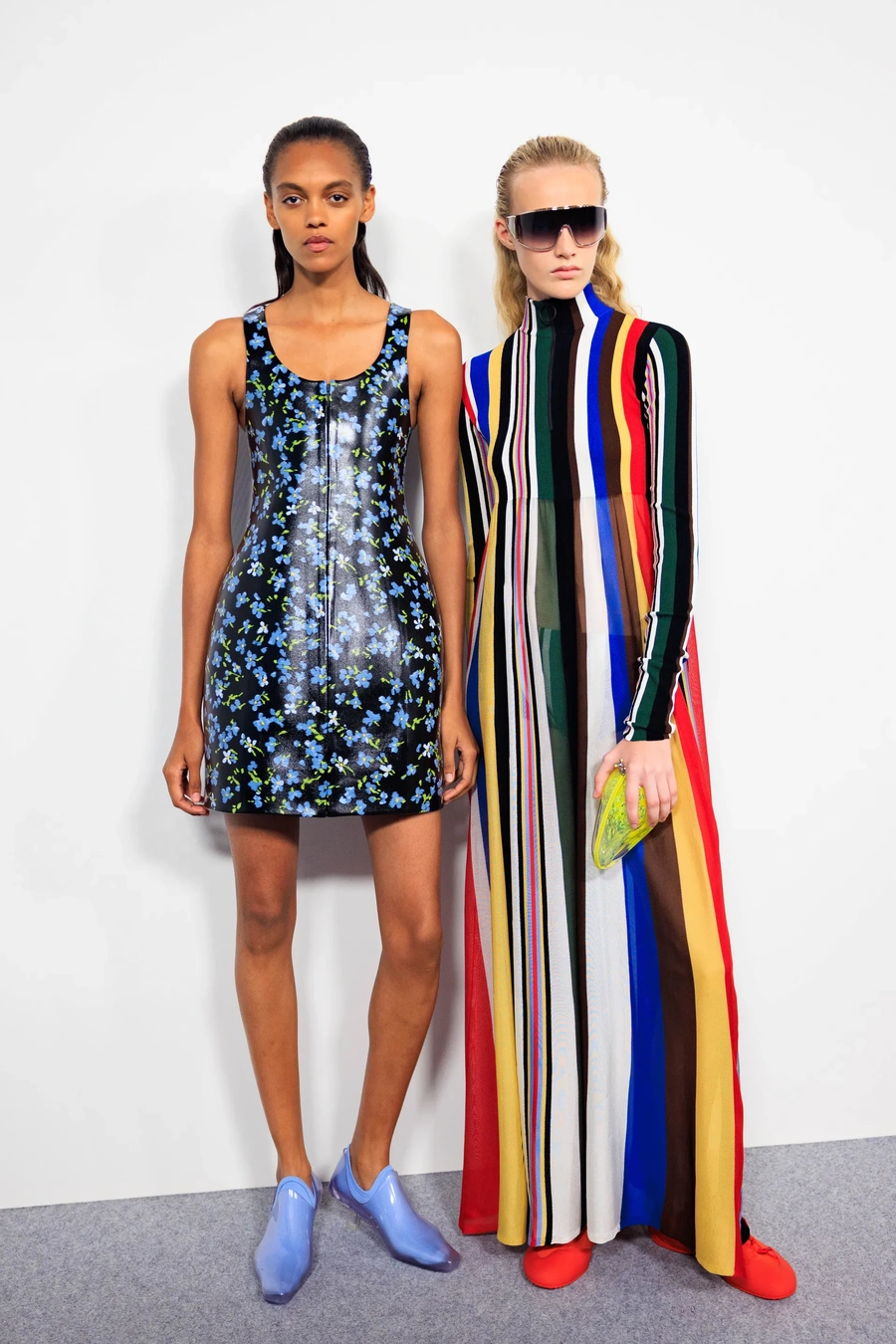
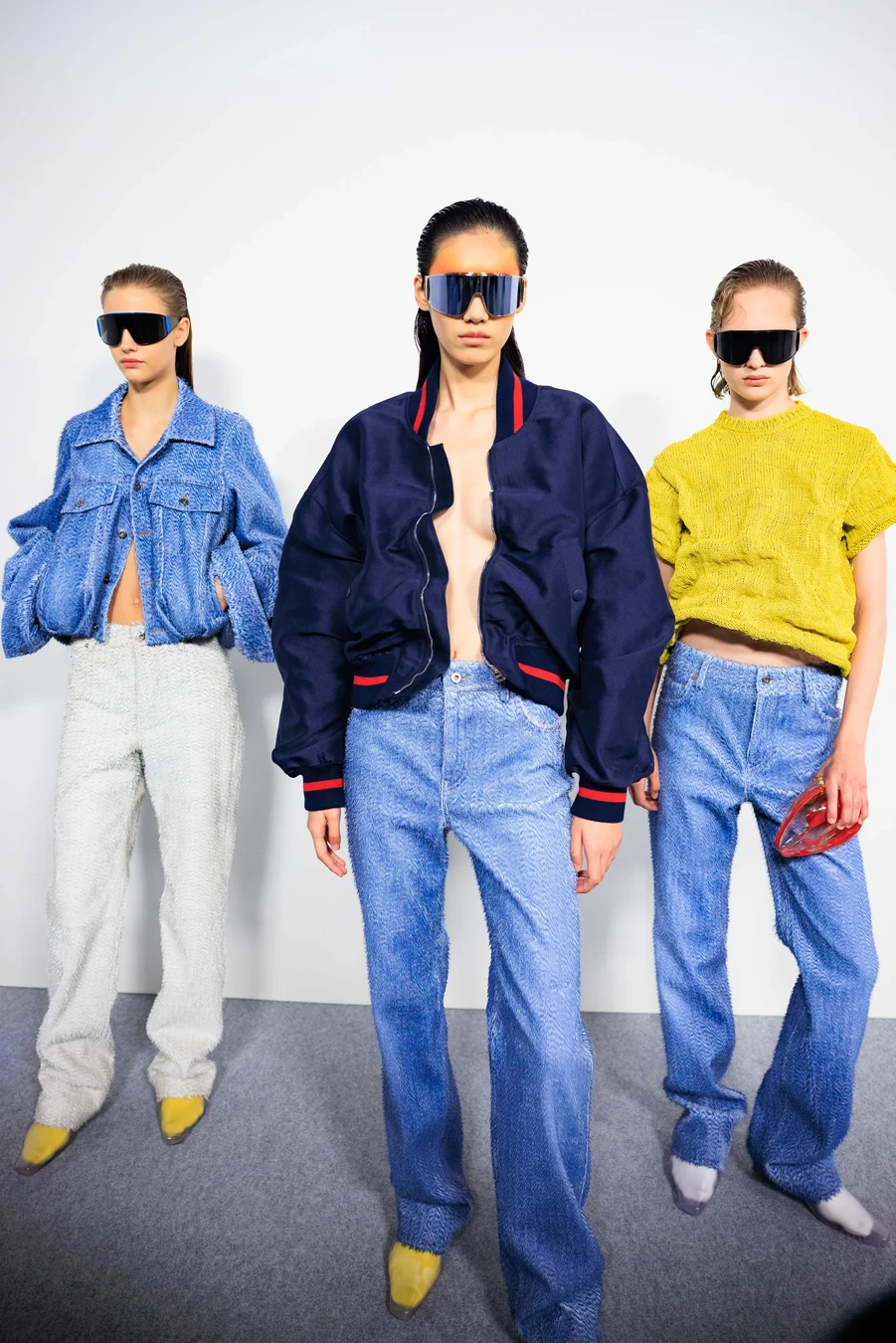
Their response has gradually brought the clothes toward a more graphic and physical register. Strong colour, sculptural volume and direct sensuality have given the wardrobe greater solidity, while leatherwork and unusual objects keep experimentation close to the surface. The change can appear subtle because craft remains central, yet the emotional temperature is shifting. Loewe increasingly reads through bodily presence and material clarity, allowing McCollough and Hernandez to create distance from Anderson without abandoning the conditions that made the house culturally significant.
Bottega Veneta presents the other side of that succession. Louise Trotter followed Matthieu Blazy after a tenure celebrated for technical intelligence, material experimentation and the ability to make extraordinary craft appear intellectually provocative. Keeping workmanship at the centre was almost inevitable. Her distinction has emerged through what surrounds it.
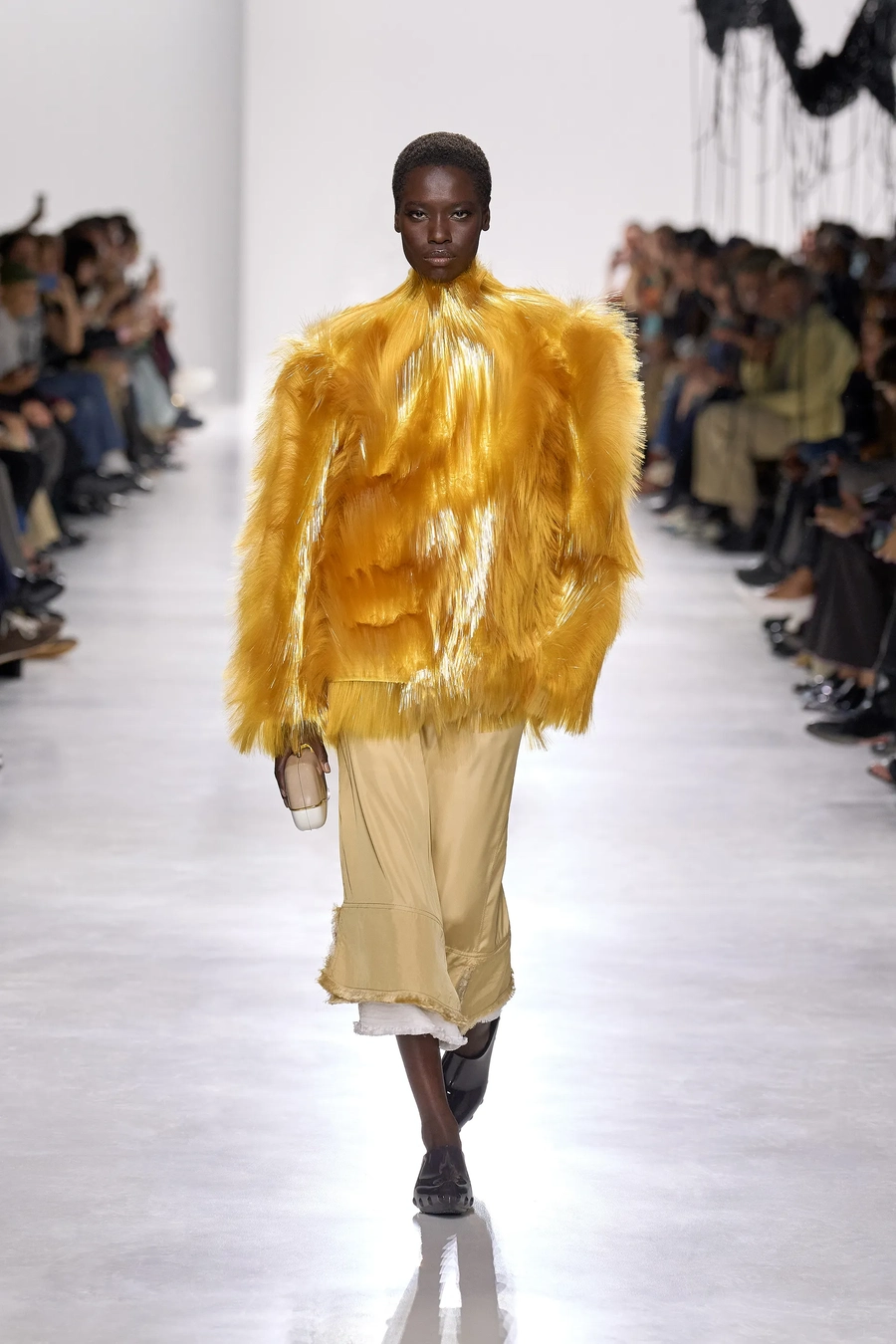
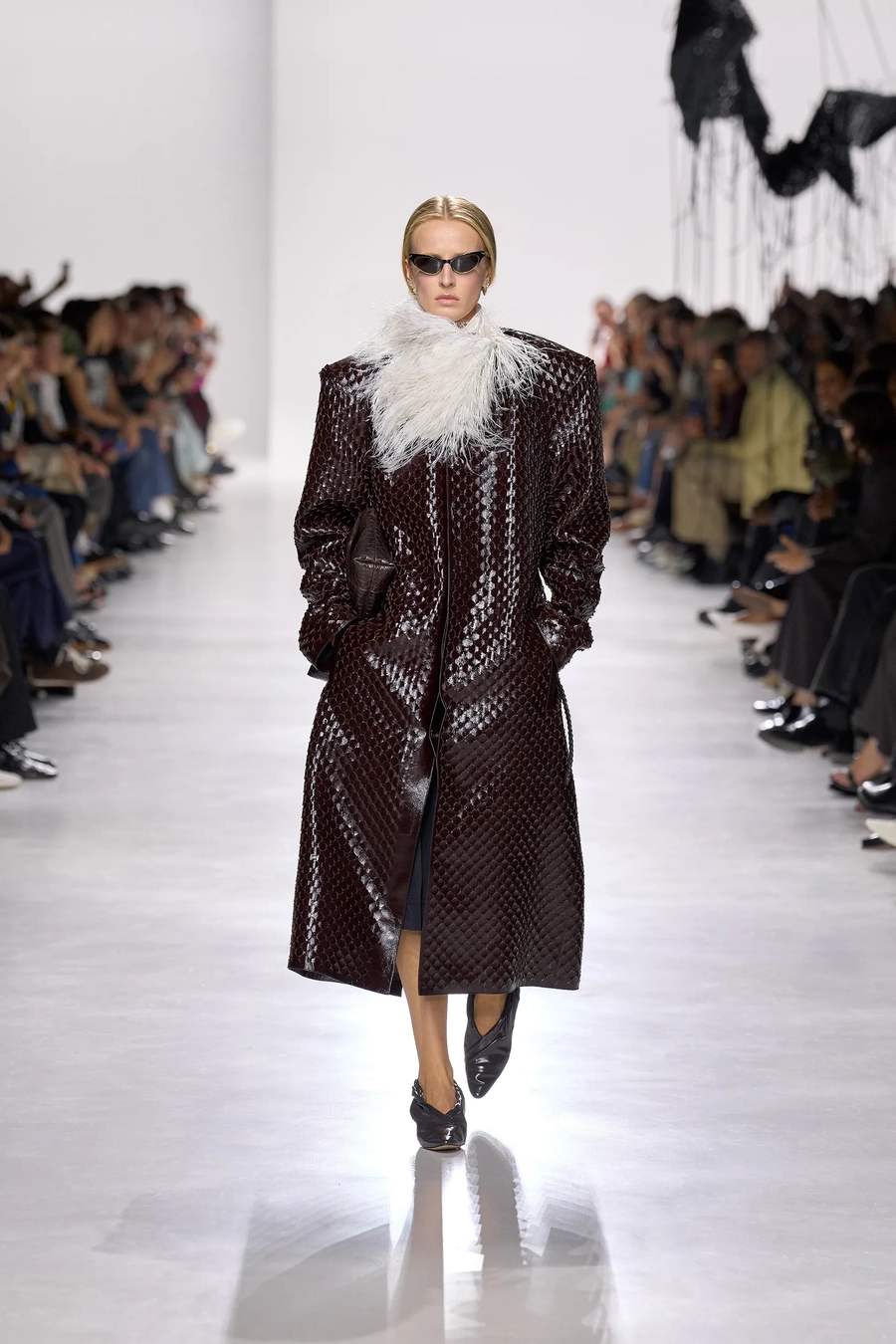
Italian social life has gradually entered the frame more clearly. Milanese daywear, the piazza, opera, family memory and the tension between restraint and flamboyance have given her collections a more human context. Curves soften familiar archetypes, practical clothes sit beside moments of sensuality, and craftsmanship functions within the wardrobe instead of becoming its entire intellectual premise. Trotter’s Bottega is beginning to look less preoccupied with demonstrating what material can do and more interested in the people who might actually live inside it.
That difference is small enough to resist instant verdicts, which is precisely what makes it useful one year into the reshuffle. McCollough and Hernandez at Loewe and Trotter at Bottega Veneta inherited houses that were already creatively healthy. Their task involved changing something audiences had little reason to want changed. Both have proceeded through gradual recalibration, allowing new priorities to accumulate until succession begins to look like authorship.
A year ago, the industry watched these appointments through the excitement of names moving between houses. The more revealing changes now live in recurring decisions. Chanel has gained looseness and a newly lived-in relationship with its codes. Dior has turned its archive into an active field of experimentation. Balenciaga is drawing Cristóbal’s methodology back toward its centre. Loewe and Bottega Veneta are quietly creating distance from exceptionally successful predecessors, while Gucci and Fendi remain more visible in the process of defining what their next identities will become.
Creative leadership rarely transforms a maison into one spectacular gesture. Language forms through accumulation, when certain proportions return, familiar materials begin behaving differently, and the same instincts survive beyond the novelty of a debut.
One year later, the biggest outcome is therefore less a ranking of winners and losers than the emergence of several genuinely different trajectories, which is when fashion’s great creative reset finally begins to look like lasting change.
Advertisement