For almost seventy years, Dior knew exactly how a woman should look. In 2016, the house finally handed that image to a woman, and the question suddenly shifted. Could she protect one of fashion’s most polished fantasies while exposing everything that fantasy had left unsaid? The years of Maria Grazia Chiuri at Dior began inside that tension.
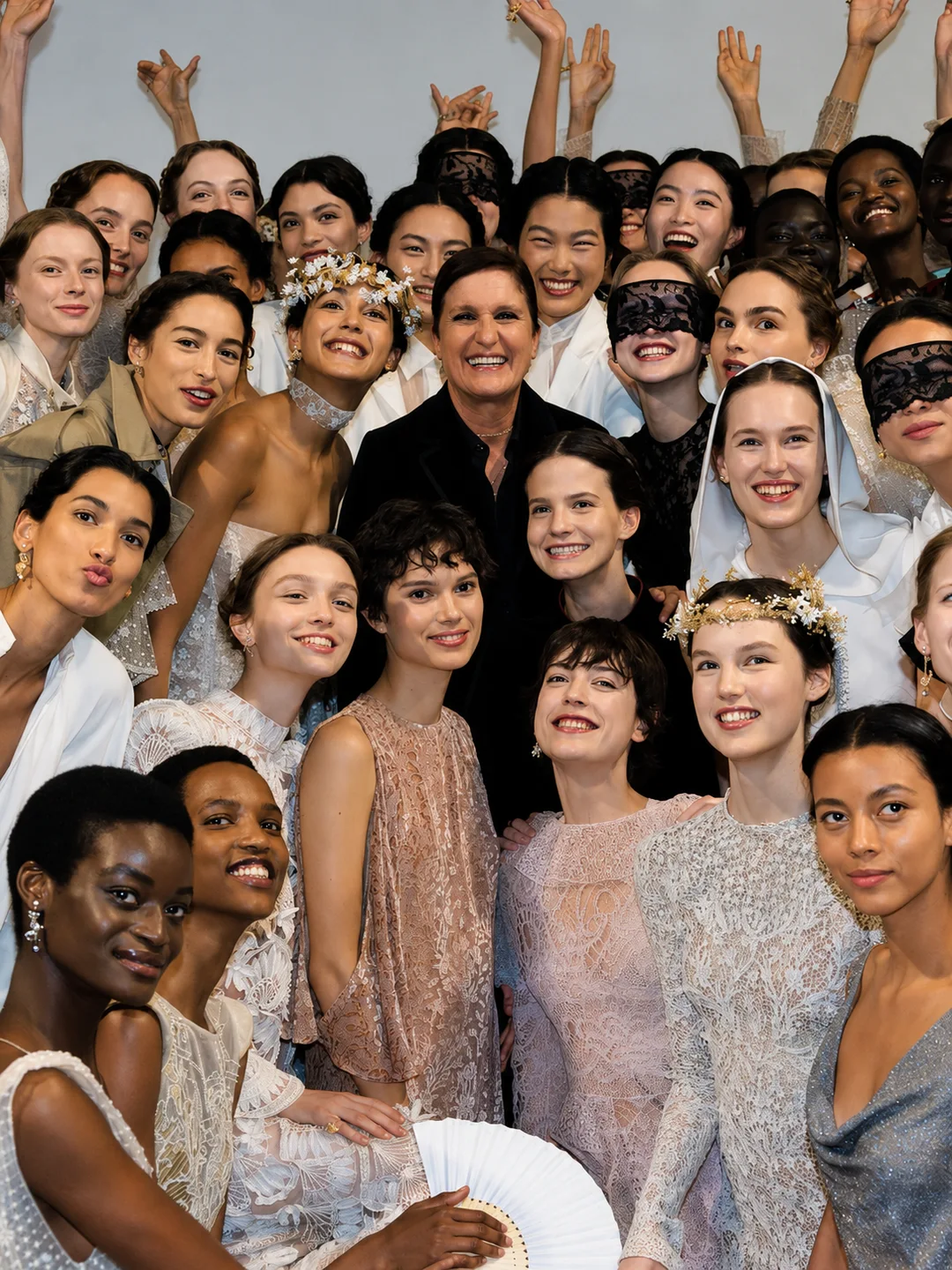
Maria Grazia Chiuri at Dior Changed Who Could Speak
For almost seventy years, Dior knew exactly how a woman should look. In 2016, the house finally handed that image to a woman, and the question suddenly shifted. Could she protect one of fashion’s most polished fantasies while exposing everything that fantasy had left unsaid? The years of Maria Grazia Chiuri at Dior began inside that tension.
July 15, 2026
Advertisement

Advertisement
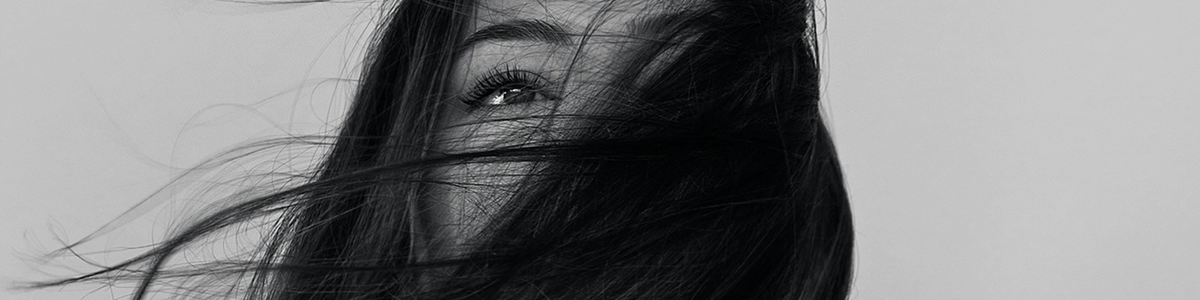


For decades, Dior had perfected the image of womanhood from the outside. When Maria Grazia Chiuri entered the house in 2016, the most important shift began before the first look reached the runway: the woman being imagined was finally also the woman holding the authority to imagine her.
The Woman Entered a House Built Around Women
Dior had spent decades producing women as ideals. Christian Dior’s New Look drew the waist inward and sent the skirt outward, constructing femininity through proportion, ceremony and controlled abundance. The designers who followed continually revised that woman, yet creative authority remained male until Maria Grazia Chiuri became the house’s first female director of womenswear in July 2016. Her appointment carried an institutional force before a single garment reached the runway.
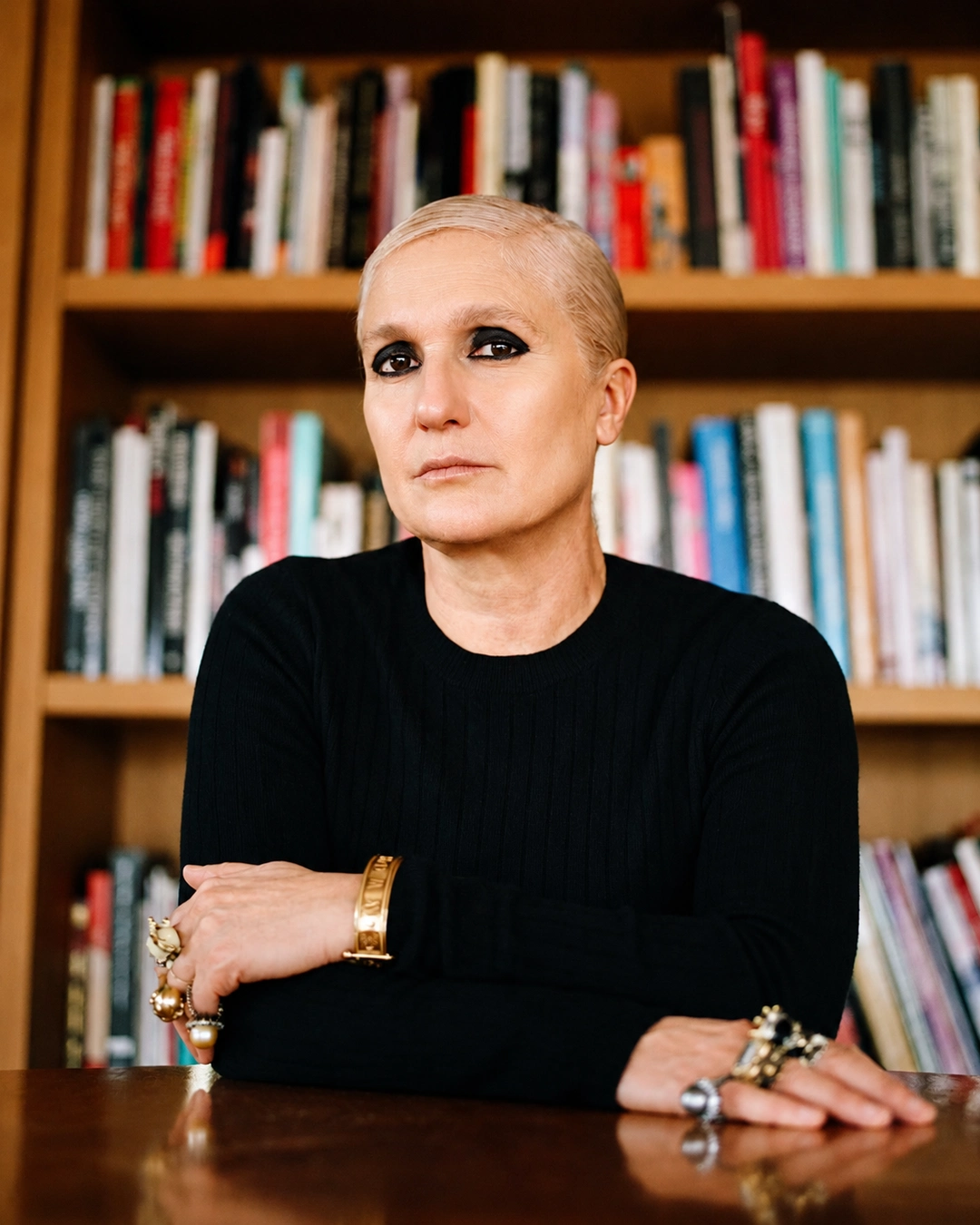
Maria Grazia Chiuri entered the maison without trying to erase the architecture around her. Dior’s value remained anchored in its most recognisable codes: the Bar jacket, the embroidered evening dress, the sweep of tulle and the precision of the atelier. She kept that vocabulary intact, then shifted attention toward the woman living inside it. Her intervention began with the person inside them. The Dior woman would retain her romance, but she would gain movement, appetite, opinions and a life beyond being observed.
Her debut made that repositioning visible through clothes. White fencing jackets introduced a language of protection and discipline, while tulle skirts appeared with sneakers and flat boots, allowing practicality and fantasy to inhabit the same wardrobe. Then came the white T-shirt carrying the title of Chimamanda Ngozi Adichie’s essay We Should All Be Feminists, styled beneath a midnight-blue embroidered skirt. She then returned to the gesture for Spring 2018 with a striped jersey asking Why Have There Been No Great Women Artists?, borrowing the title of Linda Nochlin’s influential 1971 essay on the structural exclusion of women from art history. The movement from Adichie’s collective declaration to Nochlin’s unresolved question widened the conversation around Dior, connecting the freedom to dress with the authority to create, be recognised and enter the cultural canon.
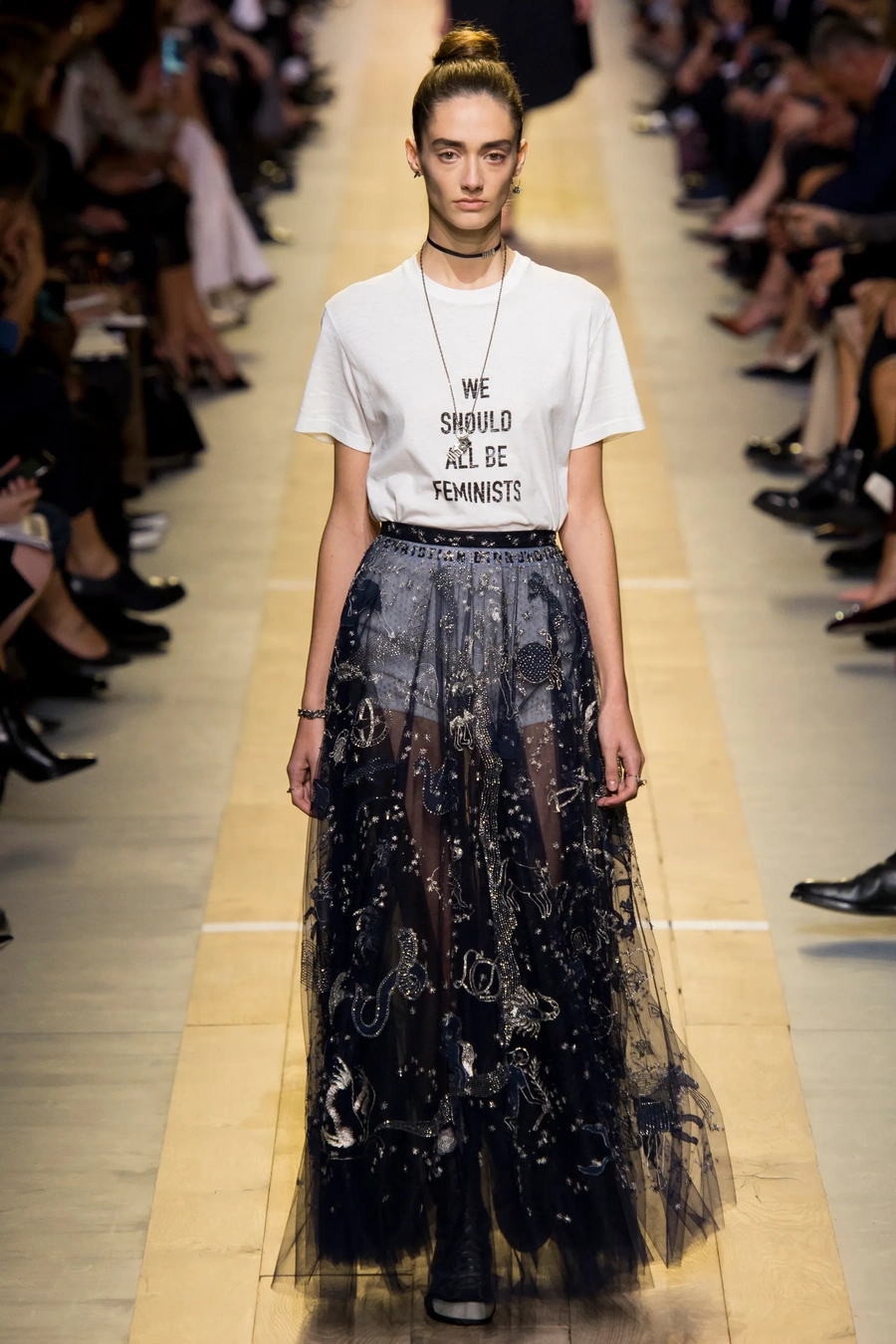
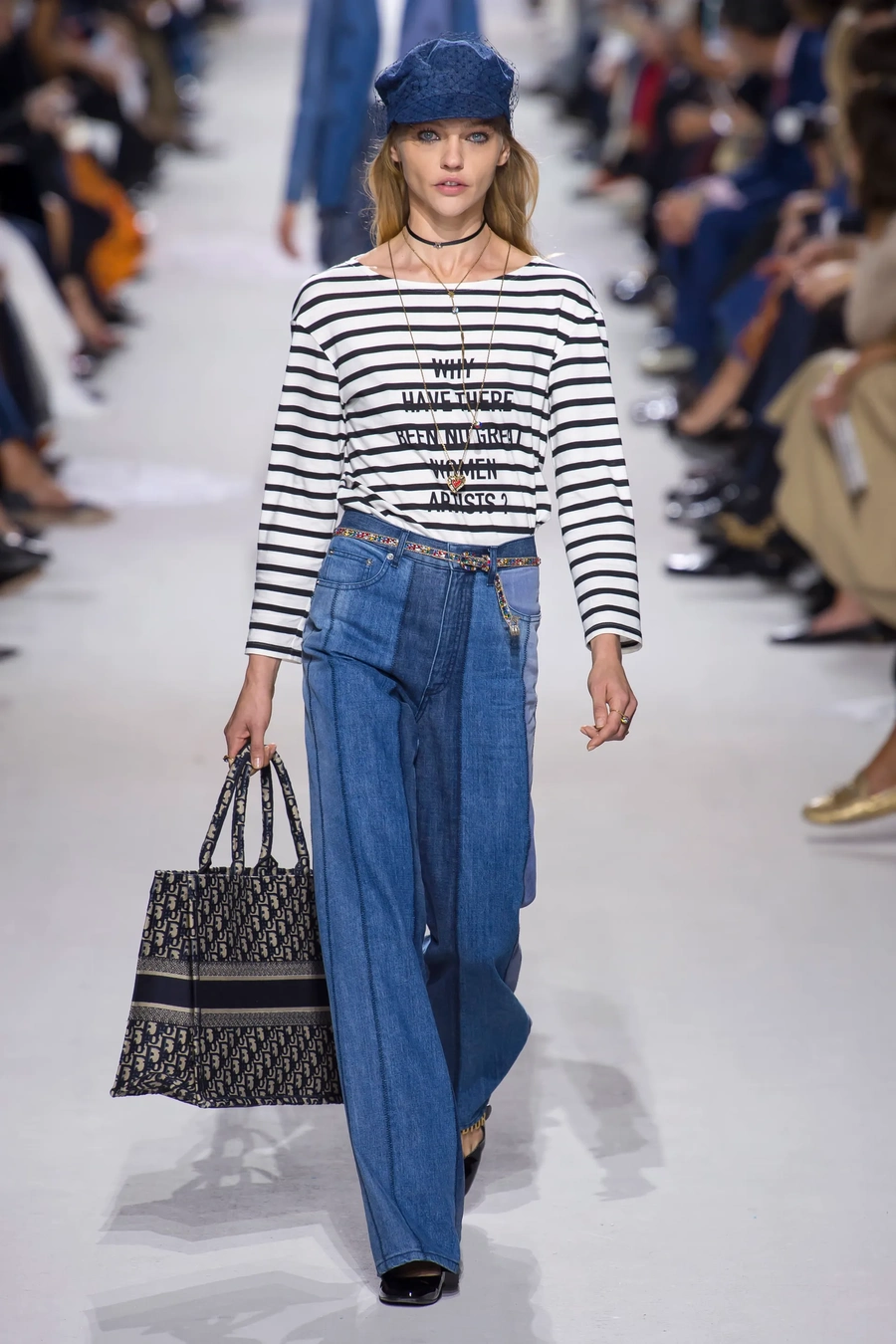
Maria Grazia Chiuri translated feminism into the physical logic of dressing, allowing protection, mobility and exposure to coexist within the same look. Fencing jackets framed the torso with discipline, flat shoes carried elegance into movement, and transparent skirts placed couture workmanship beside the practical layers beneath. Dior’s fantasy gained a body capable of inhabiting the world beyond the runway.
Femininity Steps Down From the Pedestal
The easiest reading of Chiuri’s Dior is also the weakest: feminist slogans placed over a conventional luxury business. Her larger project unfolded through the gradual reorganization of femininity itself.
Maria Grazia Chiuri transform her Dior's grammar delicacy stopped requiring passivity. Tulle remained one of her most persistent materials, but she treated it as a layer that could travel between combat boots, knitwear, tailored jackets and embroidered bodices. The contrast became recurring grammar. Hardness sharpened softness; transparency sat beside uniform dressing; historical silhouettes met pieces intended for an ordinary wardrobe.
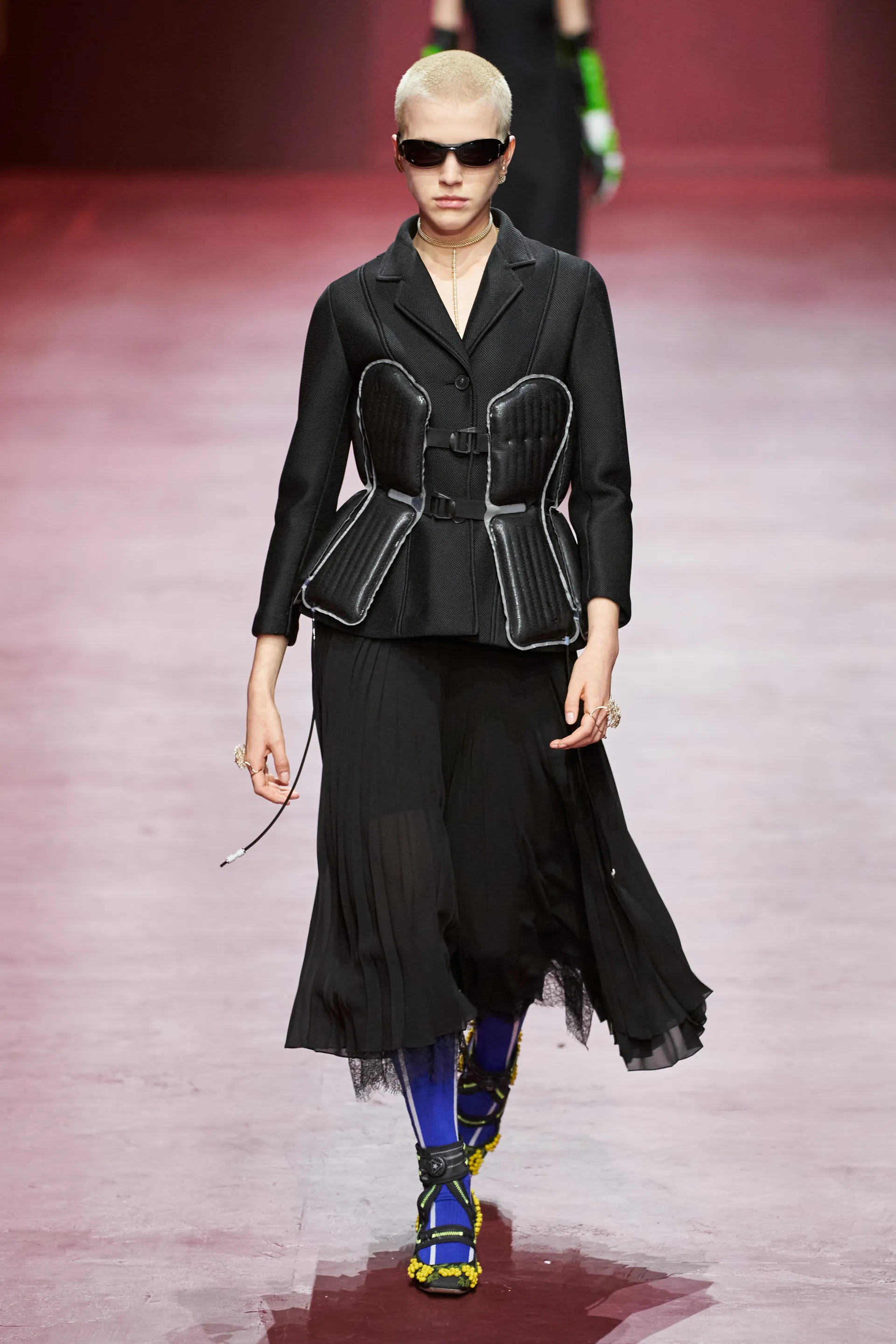
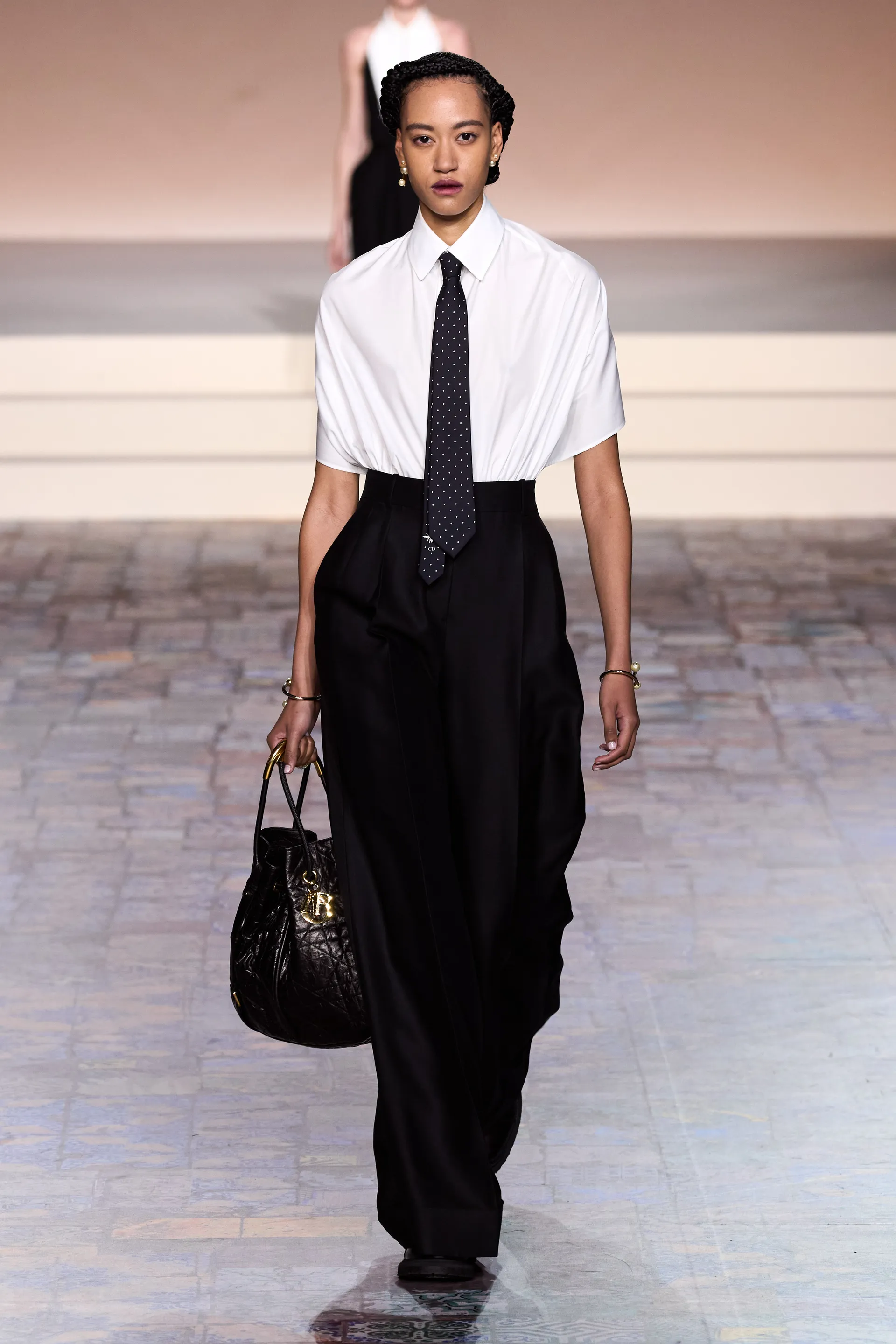
This approach rarely chased reinvention through a single revolutionary shape. Maria Grazia Chiuri built her impact through repetition and accumulation. The Bar jacket returned with altered proportions, less rigid styling and new cultural references. Long skirts appeared with shirts, sweaters and practical footwear. Corsetry became visible enough to be examined as structure instead of hidden as a mechanism shaping the body. Even her couture often treated fragility as a technical illusion, with lightweight surfaces supported by immense reserves of labor and engineering.
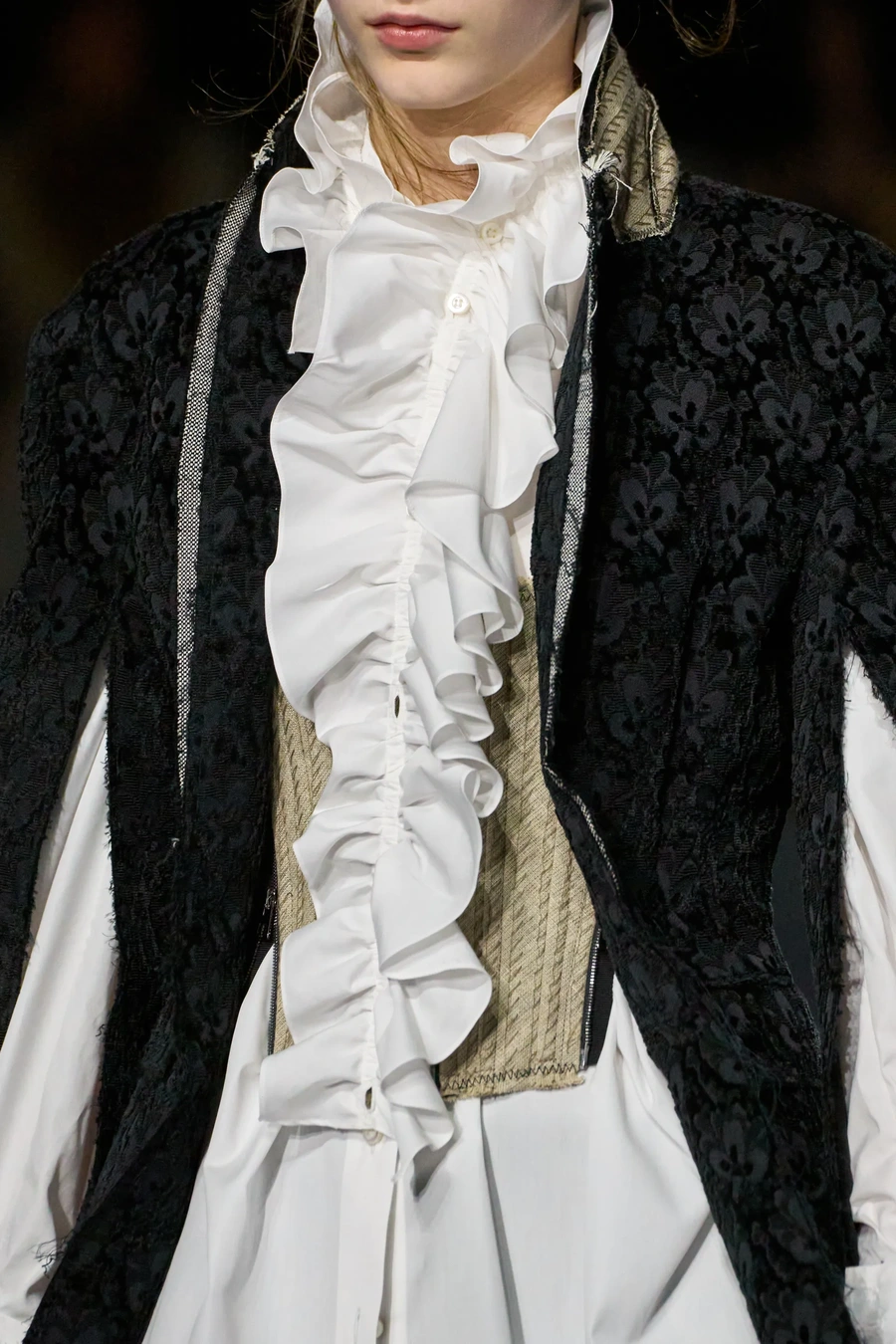
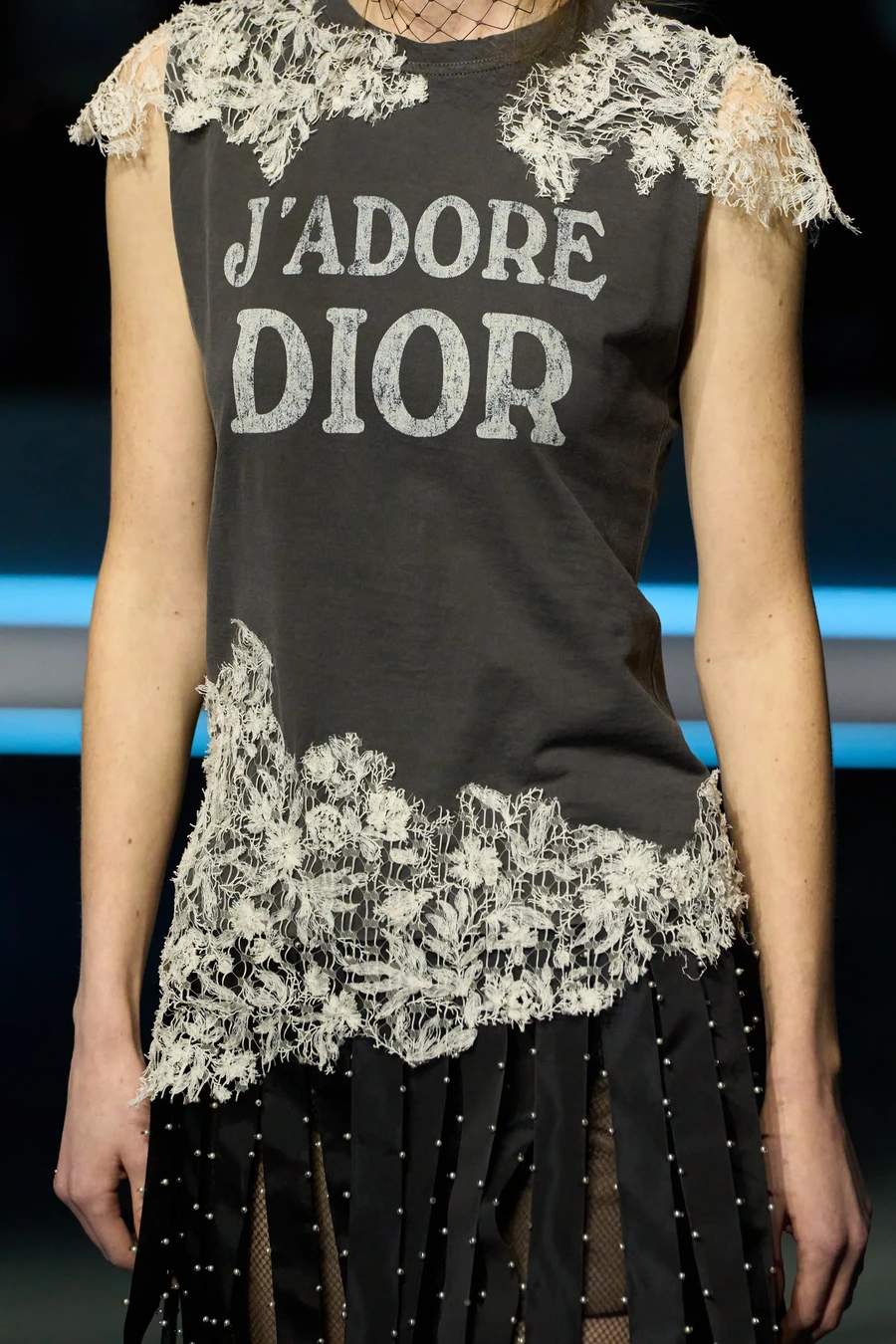
Maria Grazia Chiuri’s Dior often spoke in a quieter register, yet Fall 2025 showed how freely she could bring the house’s past into her own vocabulary. Galliano’s J’Adore Dior slogan returned with its pop immediacy intact, while a ruffled white shirt recalled Gianfranco Ferré’s architectural approach to tailoring. Neither reference remained trapped in nostalgia; she folded both into a wardrobe shaped by movement, practicality and transformation. Her question remained consistent: how could the Dior archive meet the rhythms of a contemporary woman without flattening the house into anonymous basics? Her answer moved between daywear and ceremony, masculine codes and romantic surfaces, protection and display.
Fashion becomes political long before words appear on a shirt. It is political in the body a silhouette permits, the discomfort it demands and the kind of life it imagines for its wearer. Maria Graziz Chiuri kept Dior recognizably feminine while refusing the belief that femininity must remain decorative, obedient or physically restrictive. She placed choice inside the styling, allowing a woman to reach for tulle, tailoring, embroidery and boots within the same identity.
The Runway Learns To Share Its Authority
The feminist T-shirt gave the public a concise symbol, but Maria Grazia Chiuri steadily expanded the idea through the people invited into Dior. The runway became a meeting point for fashion, feminist art, photography, performance and craft, with collaborators entering the official narrative as named contributors.
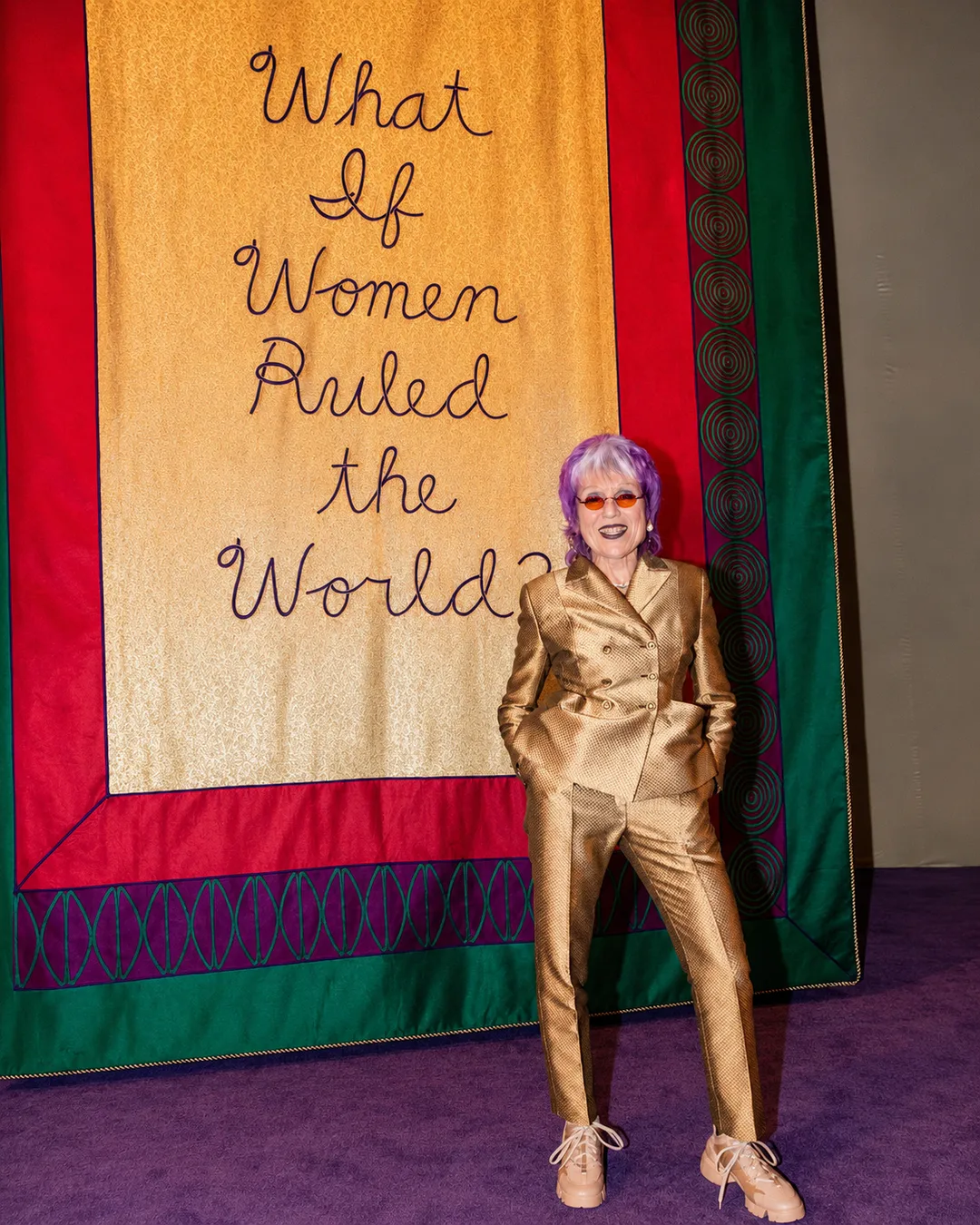
For Spring 2020 haute couture, Judy Chicago realized The Female Divine, a monumental installation developed from a feminist art project she had conceived decades earlier. The structure surrounding the collection was more than scenery. It altered the intellectual terms of the show, positioning the garments inside questions about women, divinity, creative authority and the institutions that decide which forms of work become culturally important.
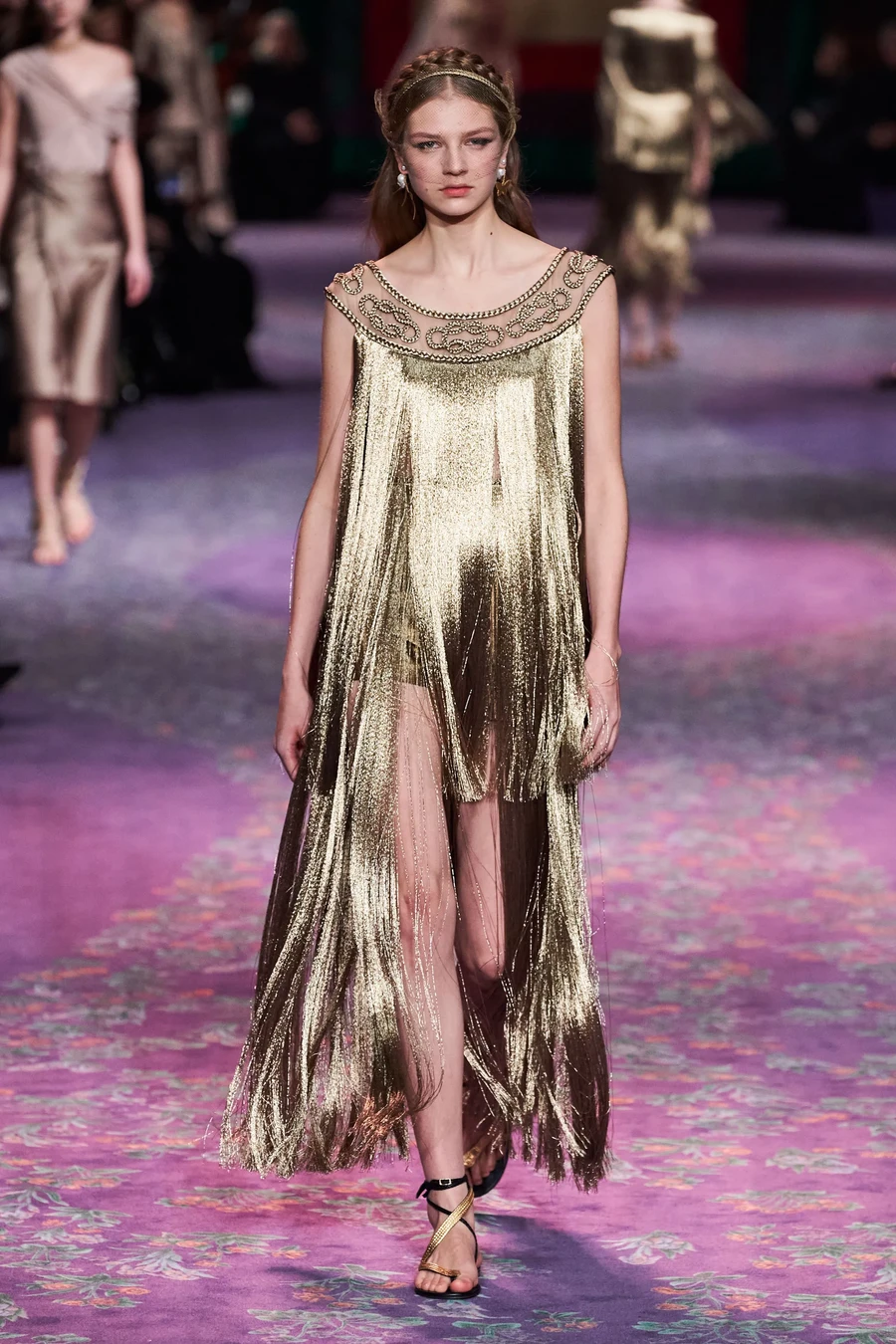
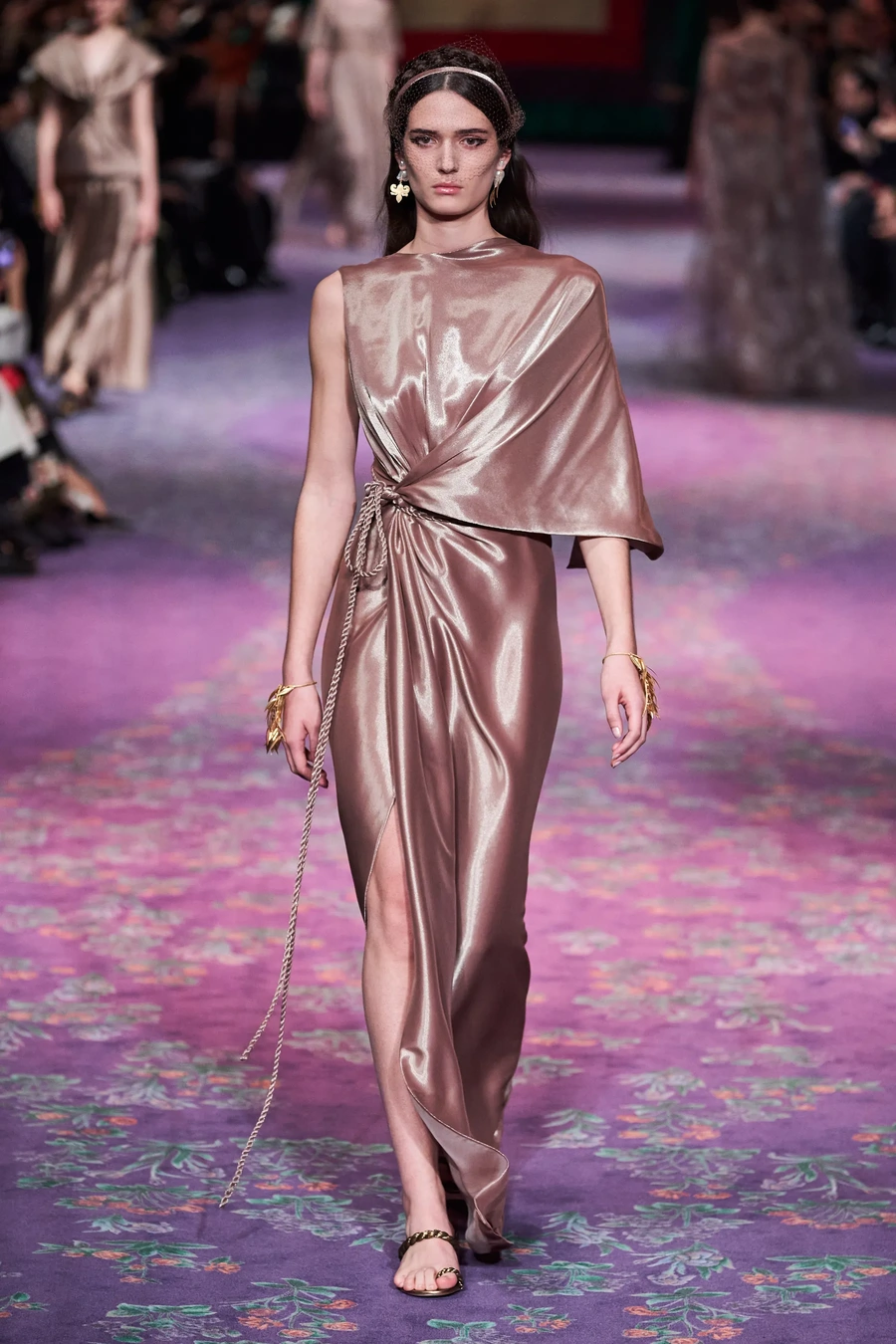
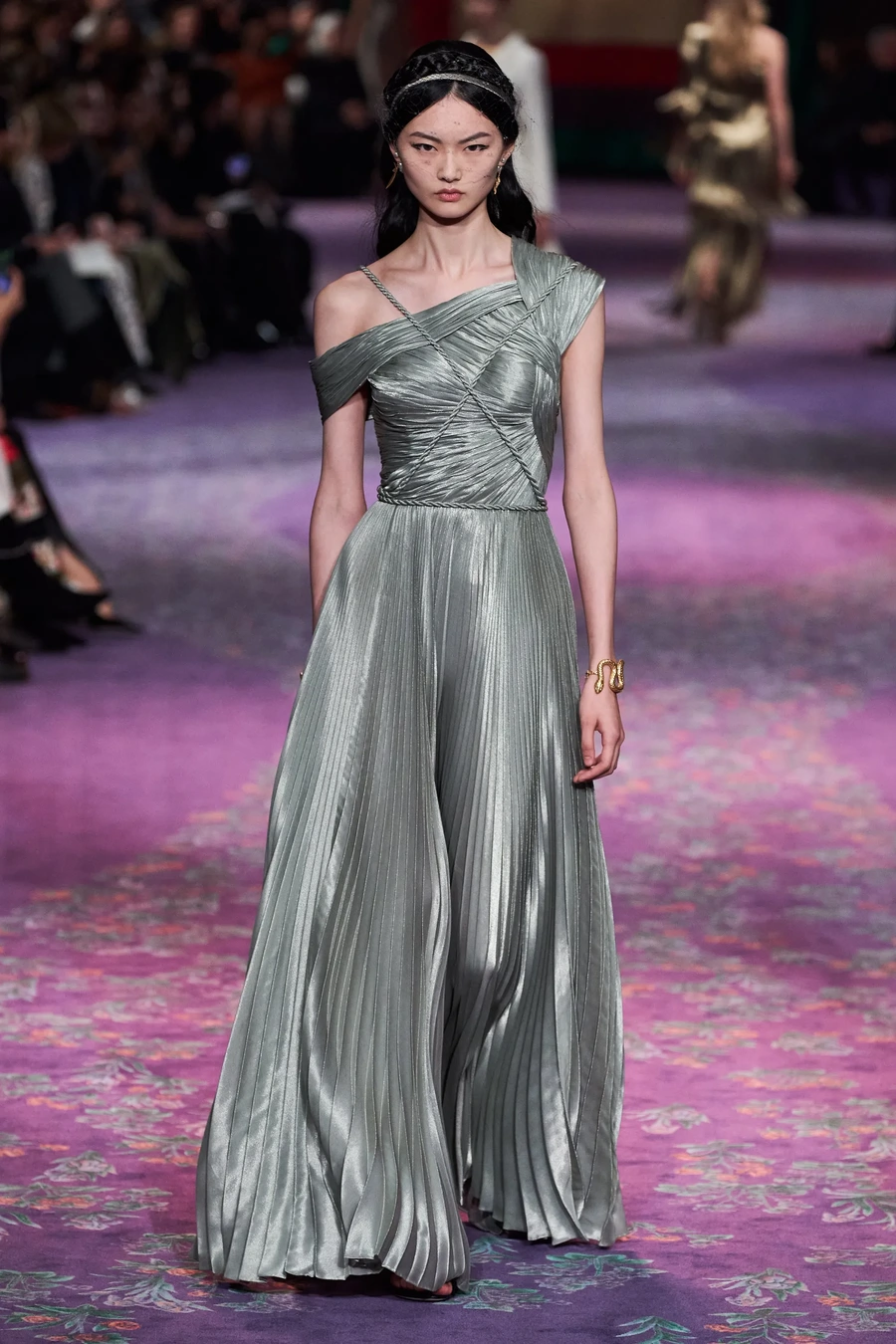
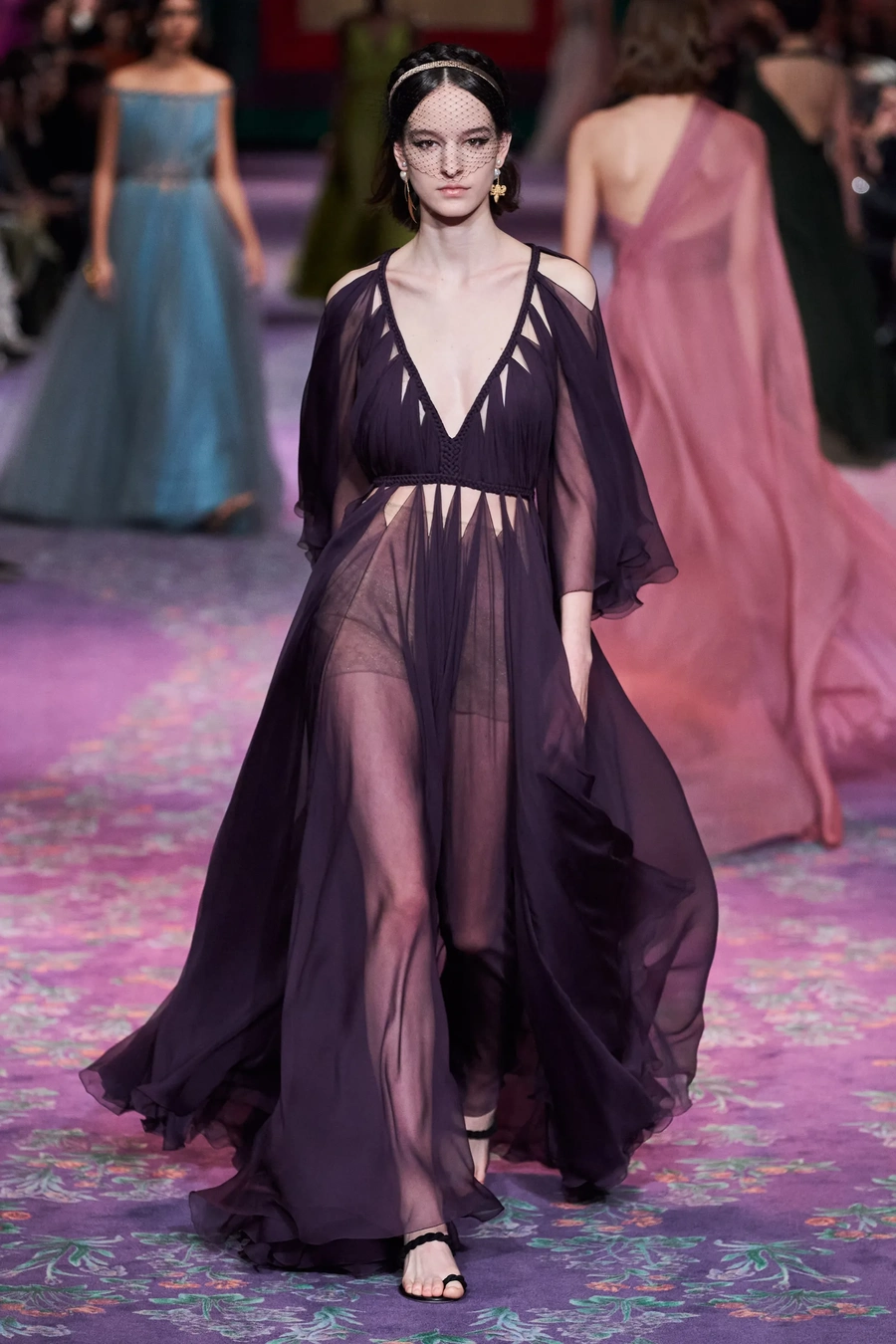
Maria Grazia Chiuri also developed Dior Talks and its Female Gaze series, bringing the photographers, artists, historians and writers surrounding her collections into extended public conversations. Dior later documented this network in HER DIOR, a film focused on her collaborations with women artists. The initiative demonstrated that her feminist approach had grown beyond a seasonal theme into an image-making system with its own participants, references and archives.
The contradiction remained impossible to remove. A feminist sentence produced as a luxury object could be purchased, copied, marketed and separated from its intellectual origin. The same visibility that carried the message around the world also made it easy to accuse Dior of packaging politics as a product.
Yet fashion has always converted ideas into objects. Chiuri’s contribution lay in refusing the comfortable fiction that luxury could exist outside the politics of gender, labor and representation. She allowed the contradiction to remain visible. The shirt was simultaneously a commodity and a cultural signal. The runway was simultaneously advertising and a temporary exhibition. Dior feminist fashion occupied that unstable space, where sincerity and commerce could support, complicate and challenge each other.
Craft Comes Forward From the Background
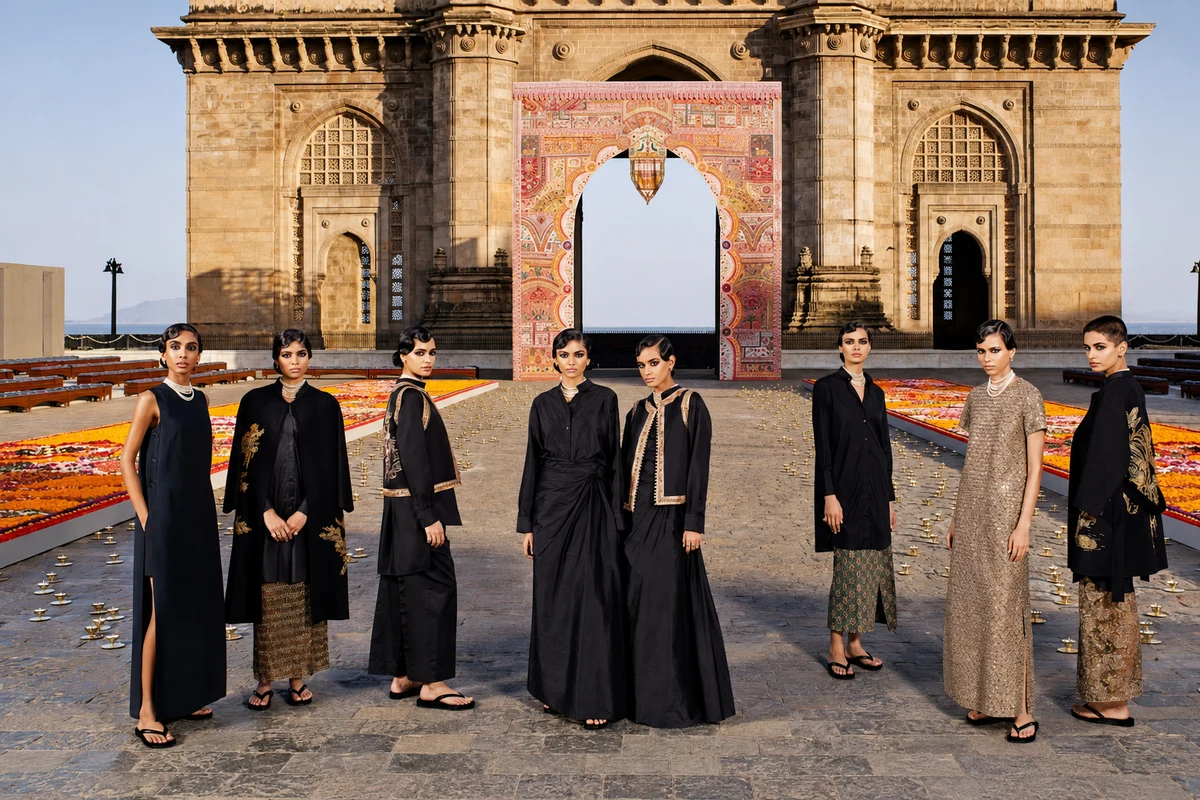
For the Fall 2023 collection in Mumbai, she placed the house’s long collaboration with Karishma Swali, the Chanakya ateliers and the Chanakya School of Craft at the center of the presentation. The monumental toran framing the runway required 25 craft techniques and 35,000 hours of work, while the collection drew directly from Indian textile and embroidery traditions. Dior named the collaborators, described the processes and allowed the craft network to become part of the collection’s identity.
The same instinct shaped Cruise 2024 in Mexico, where the silhouettes brought Frida Kahlo’s negotiation of gender into conversation with the huipil, Tehuana dress and locally produced embroidery. Artisans from different Mexican regions contributed through co-created garments, turning the collection into an exchange between Dior’s archive and living textile traditions.
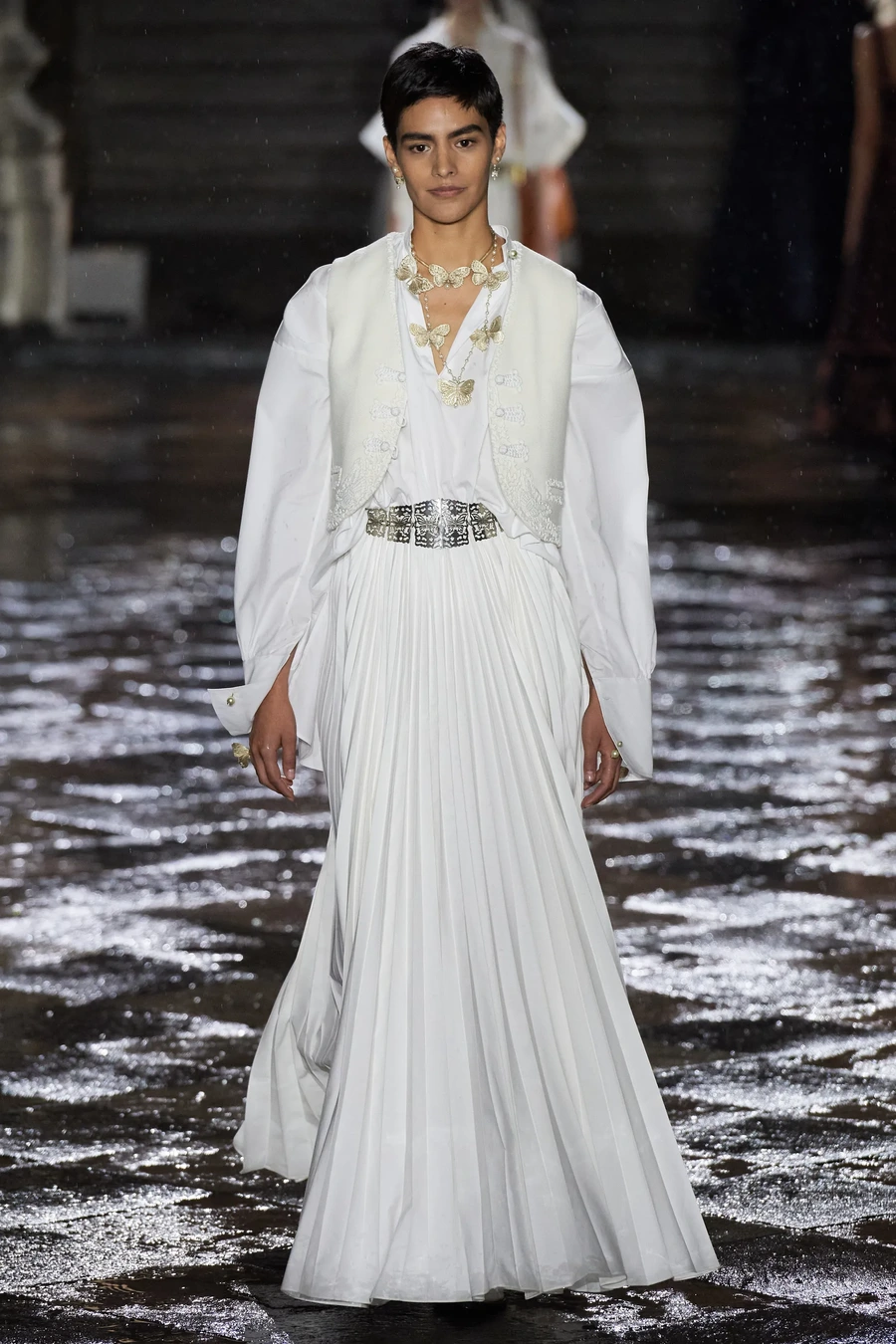
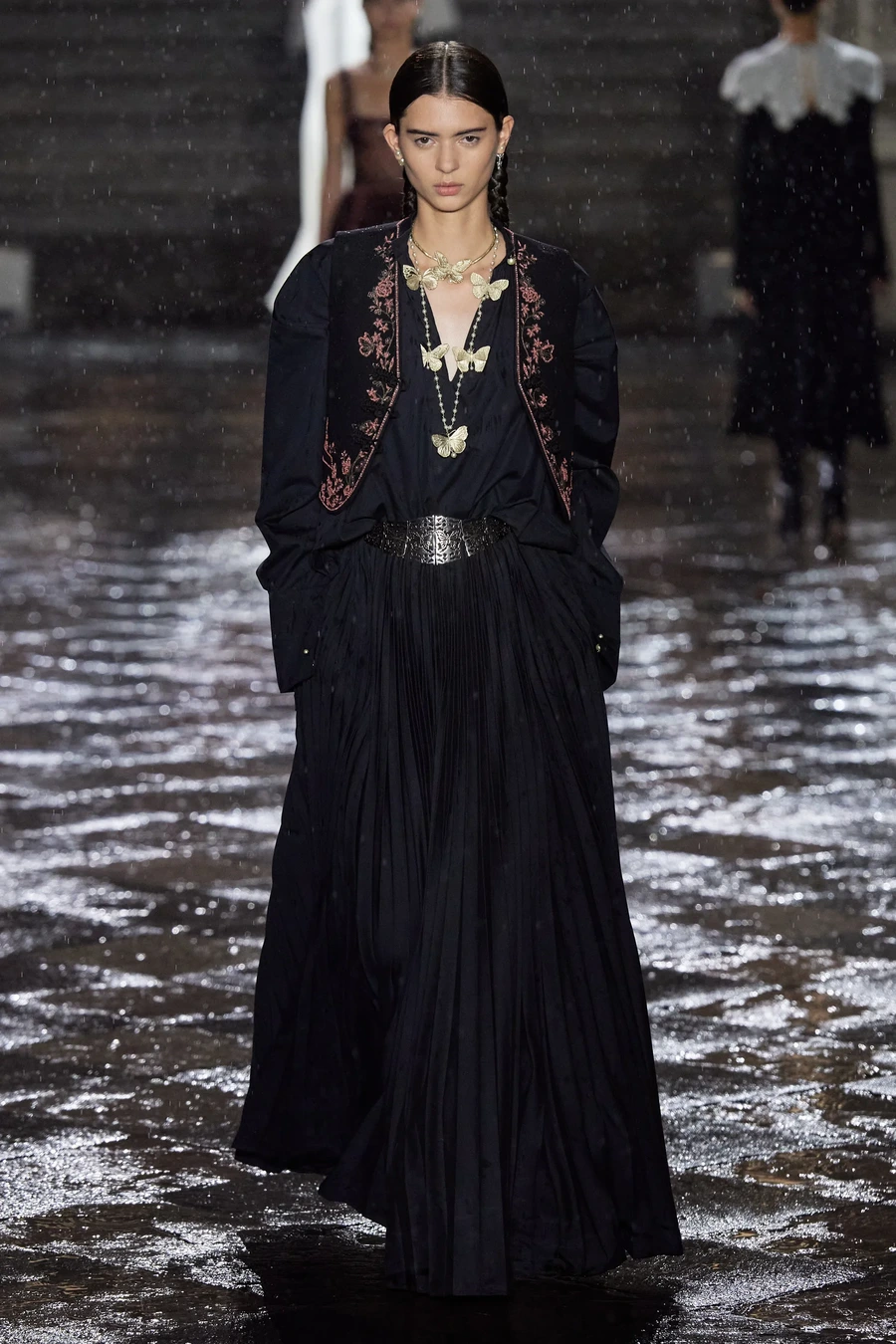
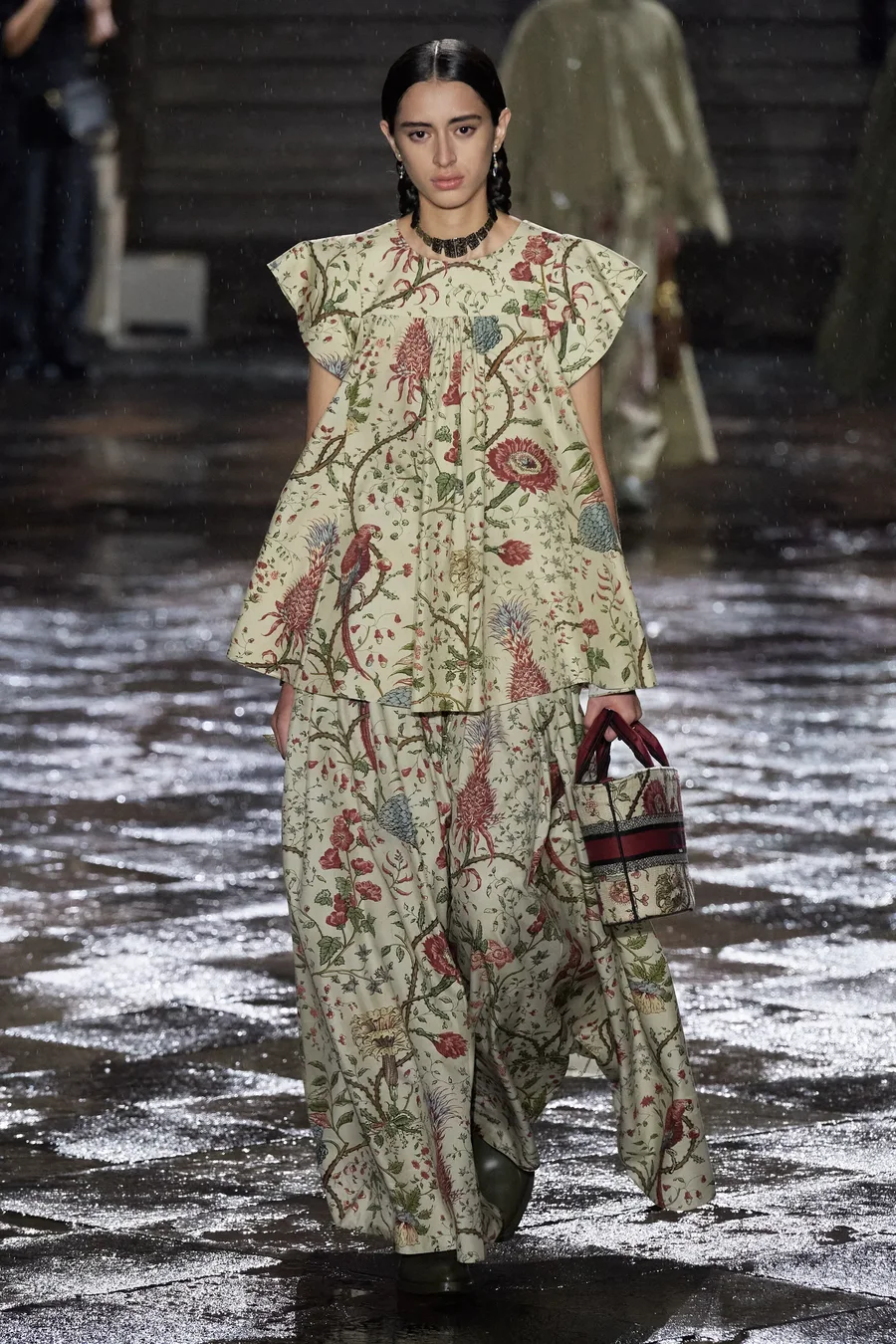
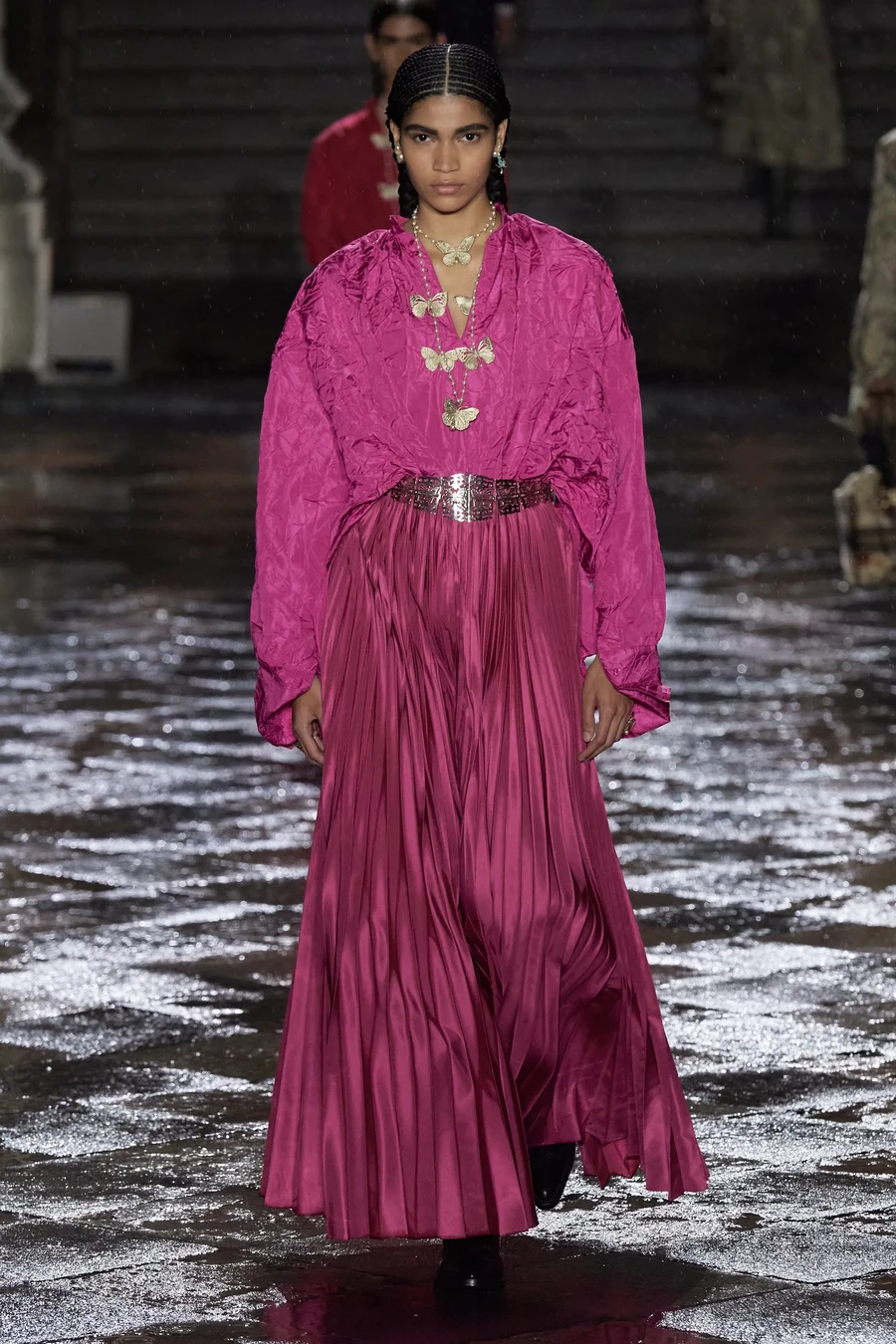
These projects carried their own complexities. A Parisian luxury house still possessed the capital, distribution and global platform through which regional craft became visible. Collaboration could never dissolve that imbalance completely. Chiuri’s approach nevertheless changed the framing. The embroiderer was no longer an invisible pair of hands confirming French excellence. Craft became knowledge, authorship and cultural memory.
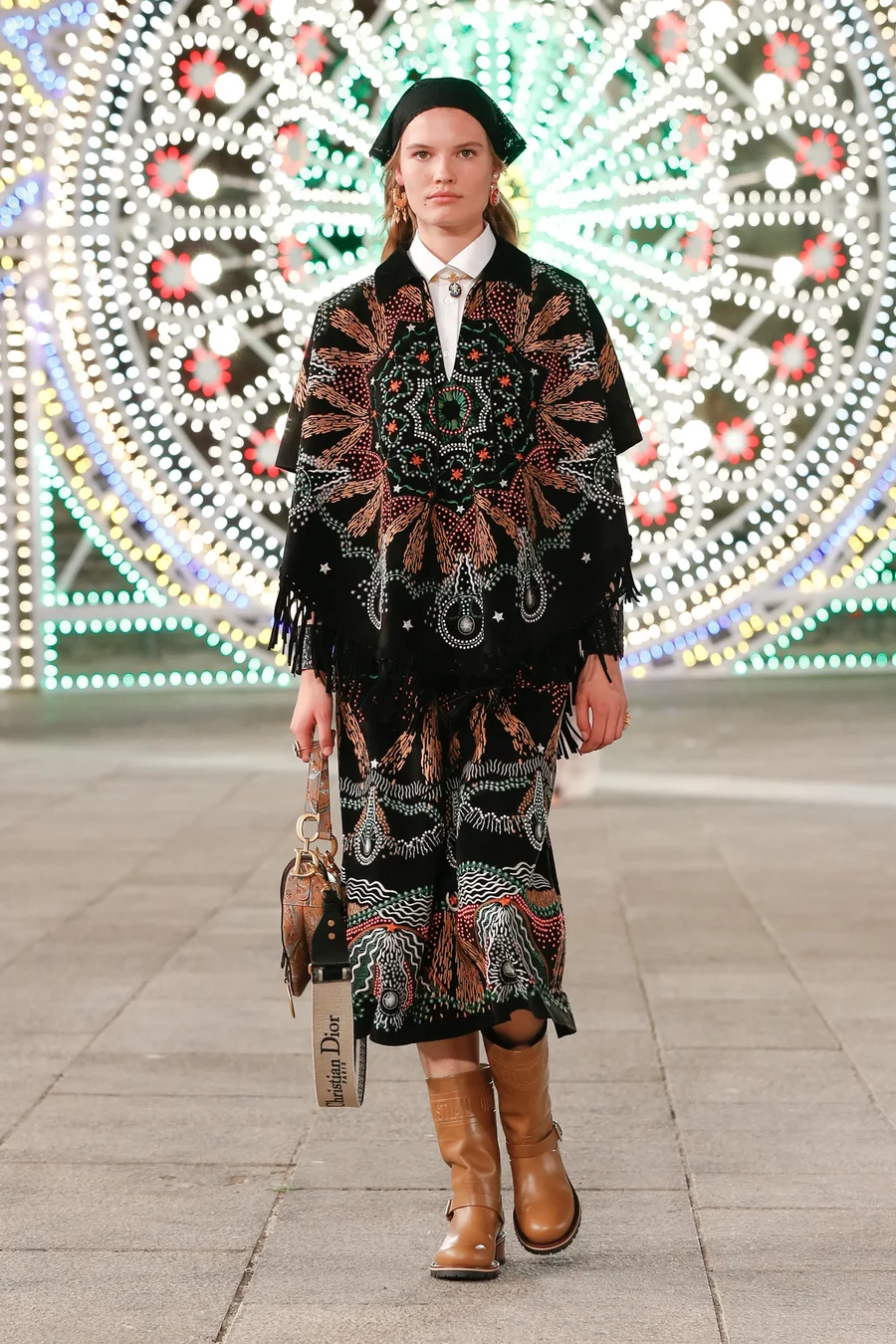
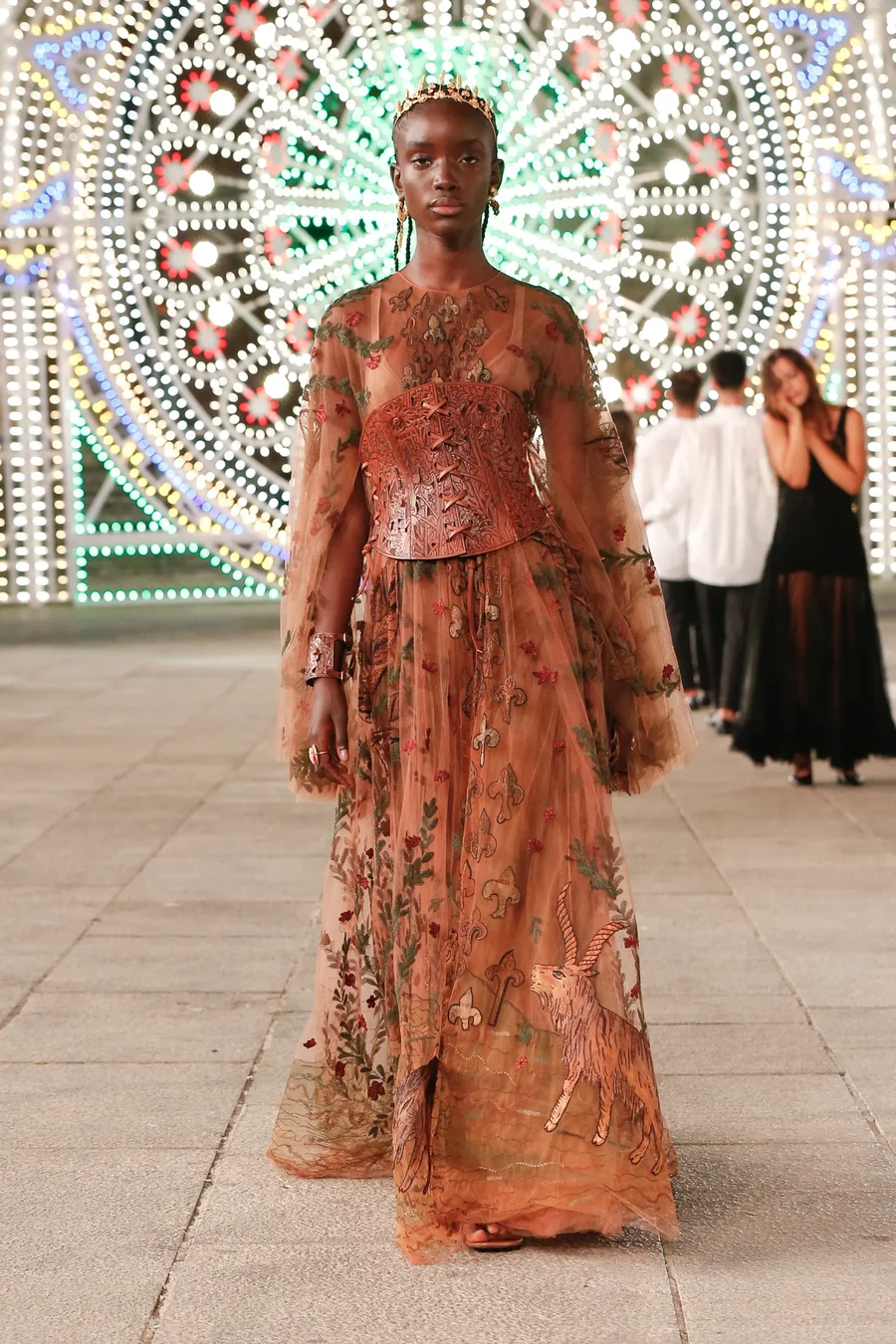
At Dior, feminism extended into the structure of authorship itself, shaping who entered the room, whose histories became material and whose names remained attached to the finished object. Politics therefore moved through fashion’s own infrastructure, from cloth and stitching to image, credit and transmission, instead of sitting apart from the clothes as a separate statement.
The Dior She Left Behind
By the time Maria Grazia Chiuri returned to Rome for Cruise 2026, Dior had already begun to look different from the house she entered nine years earlier. The change was less about replacing its symbols than altering the consciousness around them. A Bar jacket, an embroidered gown or a sweep of tulle could still carry the weight of heritage, yet the audience had learned to ask who was speaking through those objects, whose labour supported them and what version of womanhood they proposed.
Her tenure never produced universal agreement. The feminist language could appear too explicit, the historical references occasionally too carefully framed, and the recurring contrast between tulle, tailoring and practical footwear gradually became a recognisable formula. Yet those repetitions also gave Chiuri’s Dior its consistency. She returned to the same questions because fashion rarely settles them in a single collection: how femininity can hold strength without surrendering softness, how craft can retain cultural memory inside a global luxury system, and how beauty can carry conviction without turning into costume.
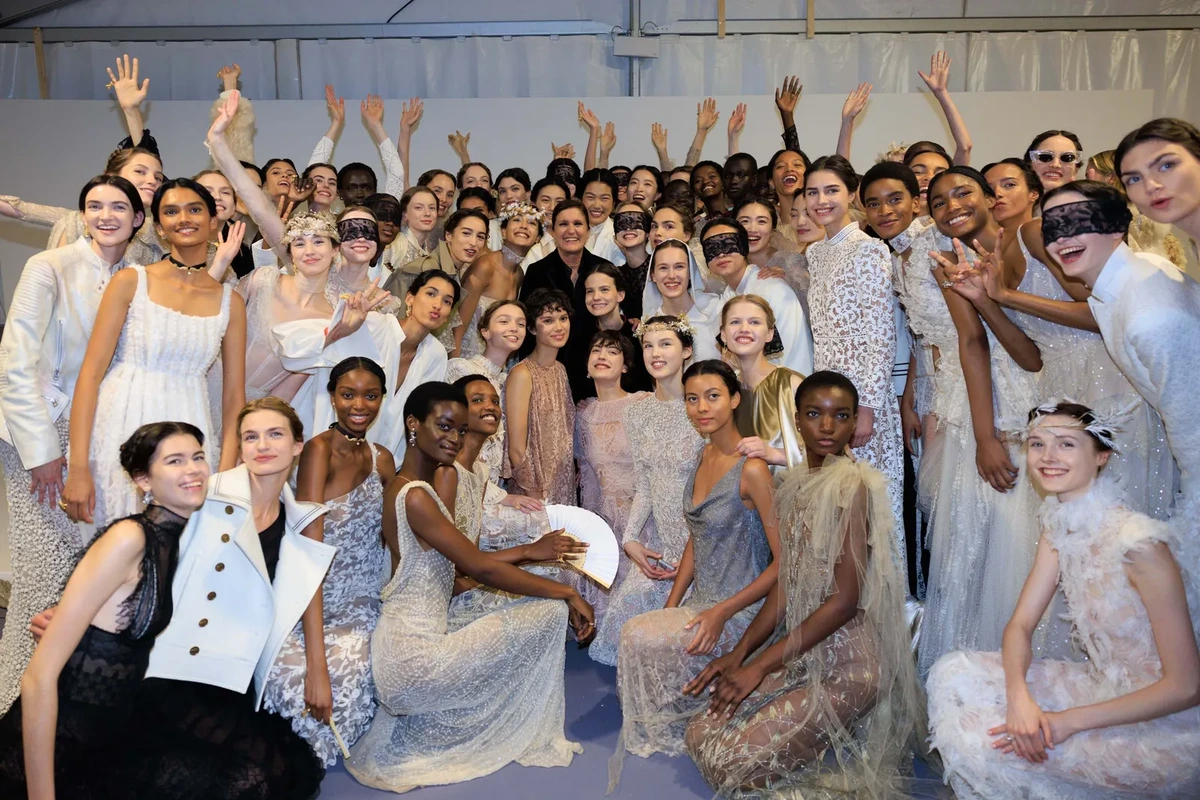
Women artists entered the runway as intellectual collaborators, artisans appeared within the official story of the collection, and historical female figures became more than decorative muses. Dior’s fantasy expanded beyond the isolated genius of a creative director and began to resemble a network of voices, techniques and inherited knowledge.
Maria Grazia Chiuri left her legacy behind a maison more conscious of politics embedded in its own image-making. Fashion remained luxurious, desirable and visually seductive, but it could no longer pretend that beauty arrived without authorship, labour or ideology. Her work made those structures visible while keeping them inside the language of clothes.
Maria Grazia Chiuri left Dior with its romance intact, yet the fantasy had changed ownership. Tulle, embroidery and couture grandeur still defined the house, now carrying the voices of women, artists and artisans who had once remained beyond the frame. That is the lasting force of Maria Grazia Chiuri: she left Dior more conscious of the women who wear it, shape it and ultimately give its beauty meaning.
Advertisement