Tokyo Fashion Week SS27 gave us enough numbers to start snooping anyway, from buyer invitations and showroom traffic to award cash and exactly who received the extra spotlight.

Tokyo Fashion Week SS27 Saves Its Numbers For Last
Tokyo Fashion Week SS27 gave us enough numbers to start snooping anyway, from buyer invitations and showroom traffic to award cash and exactly who received the extra spotlight.
September 7, 2026


The first four days of Tokyo Fashion Week SS27 had already given us enough to obsess over, from breakout labels and strange little details to craft stories worth stealing dinner conversation for. Greed kicked in anyway. One good show had us asking for two, two became three, and by Day 5 the appetite was very much alive.
Day 5 At Tokyo Fashion Week SS27
ANNA CHOI
ANNA CHOI entered Rakuten FWT with extraordinary restraint. Eight white platforms lined Shibuya Hikarie Hall B; models walked between them, climbed onto them and stayed in position while guests circulated with explanatory pamphlets. The collection itself contained just eight looks, turning the runway into something close to a private museum viewing.
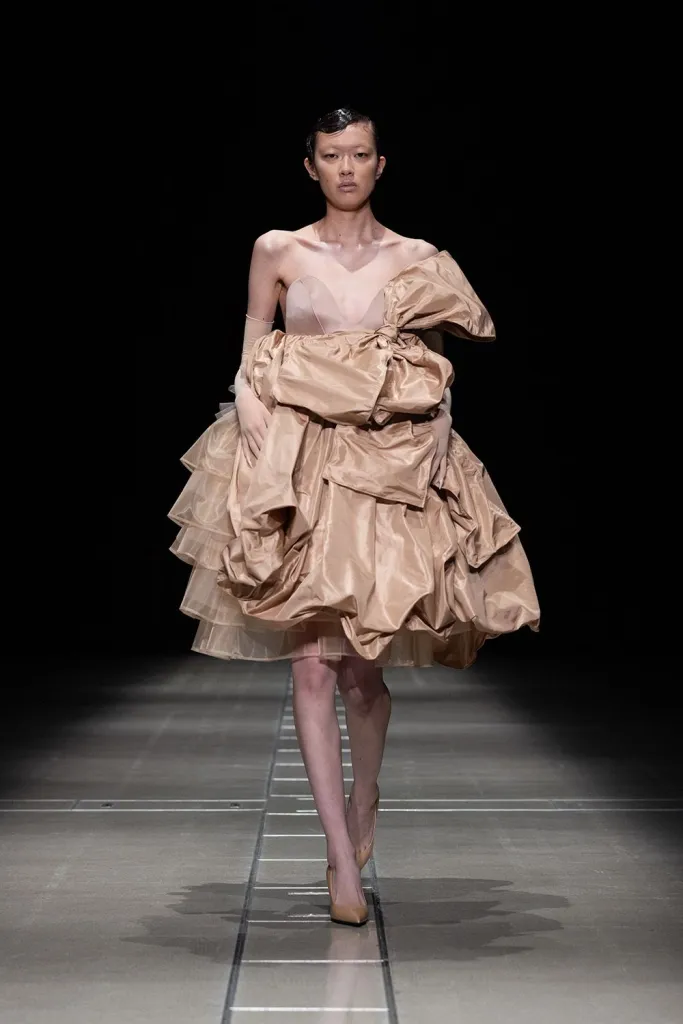
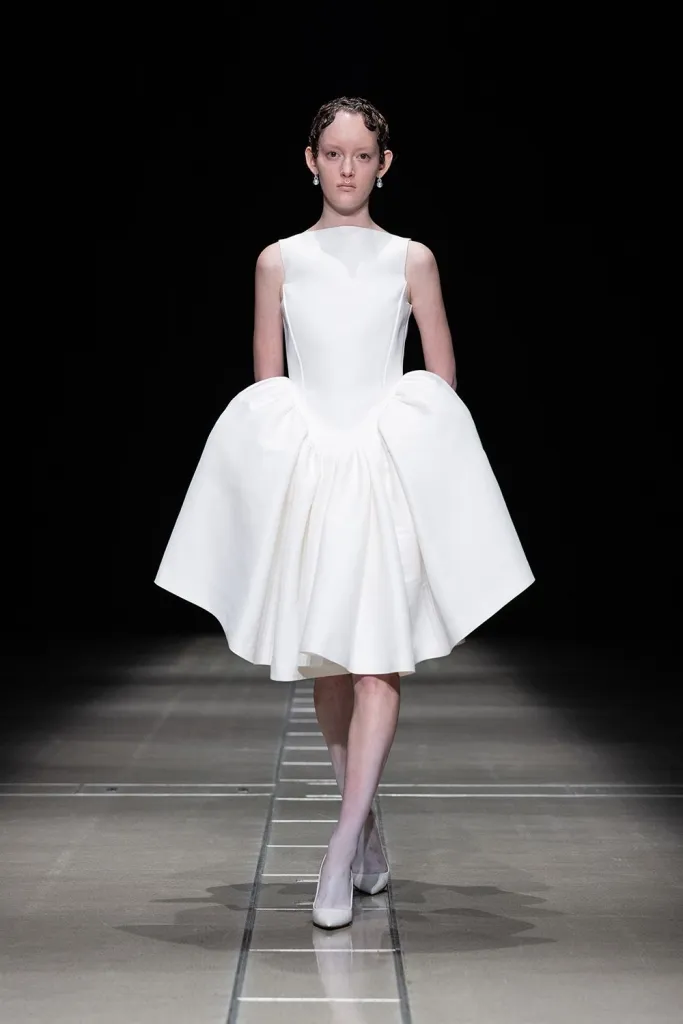
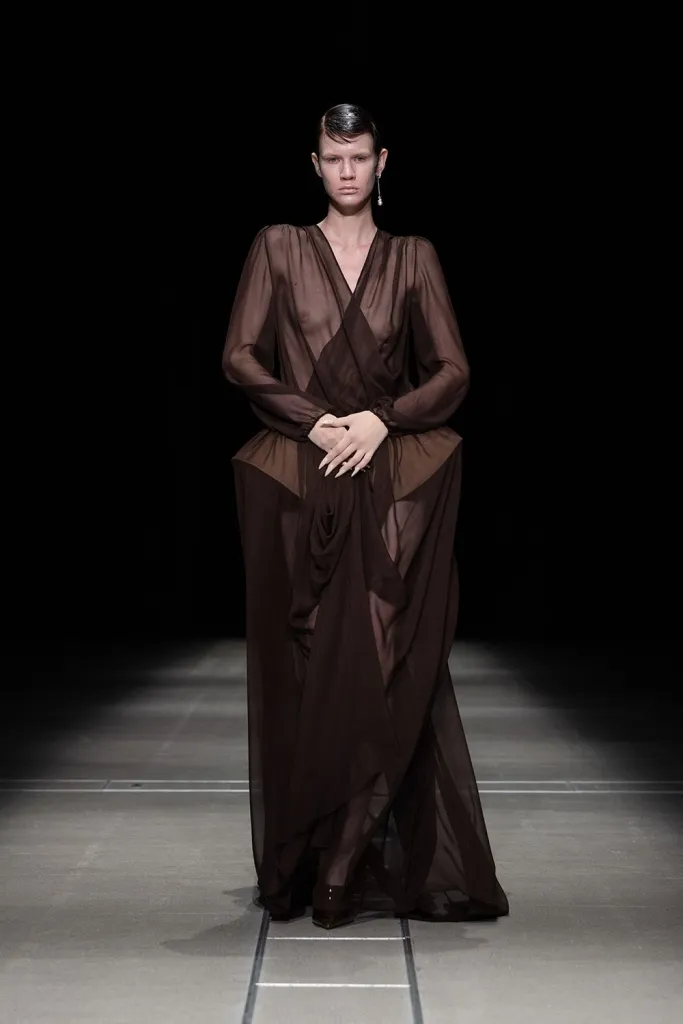

Silk satin and organza sculpted the body while Mikimoto pearls supplied the polish. The jewellery partnership had already taken shape during Paris Haute Couture 2026, where Anna Choi created clothing for a Mikimoto high-jewellery presentation.
YUKIHERO_PROWRESTLING
Yukihiro Teshima called the collection “VENUE” and booked Korakuen Hall, one of Japanese combat sports’ most beloved addresses. Wrestling-ring embroidery, masked-fighter buttons, and move diagrams appeared across the clothes, while actual legends joined the casting: Aja Kong, Naoko Fujioka, Yoko Gushiken, and Togi Makabe. Teshima ended his remarks visibly emotional.
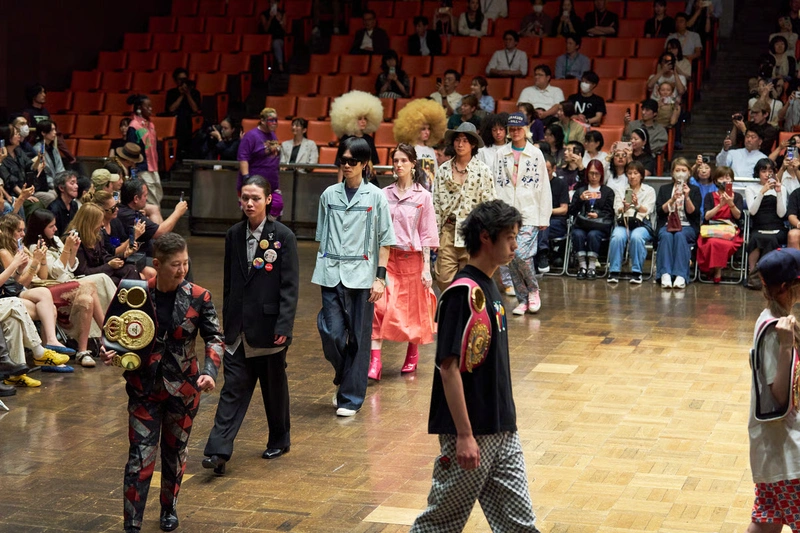
The venue makes the story deliciously specific. Korakuen Hall opened in 1962, seats 1,403 people, and its archive records roughly 250 professional-wrestling events and 100 boxing events each year. Teshima had already designed merchandise for the hall and is also involved with logo work tied to its 2027 renovation. Fashion entered a building that already functioned as his client, childhood memory, commercial partner and dream set. That is commitment to a theme.
ORIMI
At ORIMI, “PROPERLY DRESSED” came with a slightly unhinged smile. Jackets slipped into draping, shorts borrowed the shape of jacket sleeves, and a CA4LA hat swapped its expected trim for shoelaces. Social respectability remained visible while tiny disruptions kept picking at it.

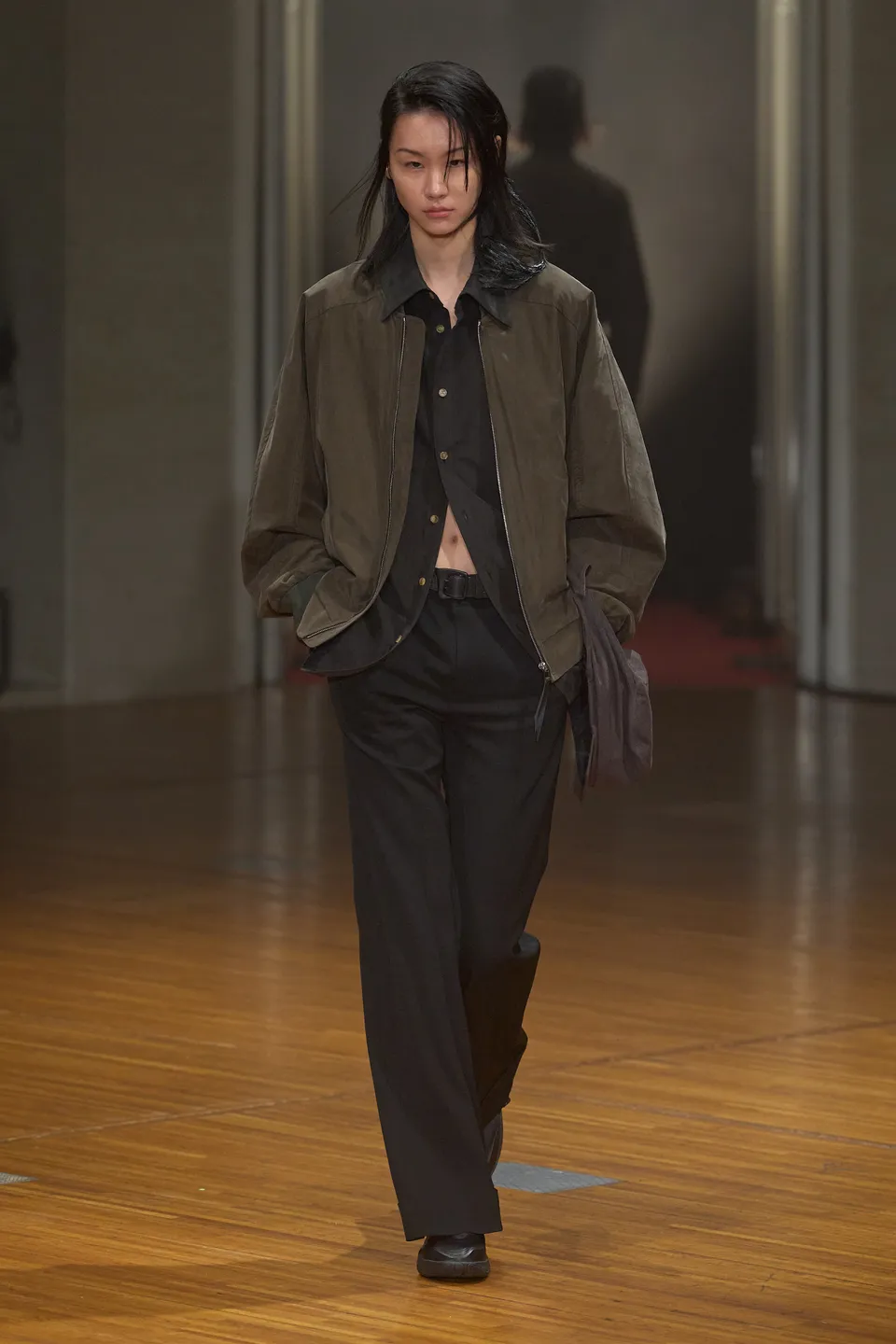


Here comes the backstage gossip in numerical form. ORIMI’s runway started at 17:30 on September 4. At 13:00 the following day, the Tokyo Fashion Award ceremony named Kenta Orimi among its 2027 winners. His label moved from runway scrutiny to international-development support in under a day, joining the Paris menswear track of an award that has selected 76 brands across 11 years.
Day 6 At Tokyo Fashion Week SS27
soduk
Tsukasa Kudo had the entire final collection slot to himself, and he used it for “LOVE,” an affectionate return to Okinawa. KID FRESINO produced the soundtrack, Taichi Yamane customized KEEN footwear, DILIGENCE PARLOUR supplied gerbera daisies, and Orion Beer appeared on collaboration T-shirts and caps. Models changed clothes, looked at paintings and lounged inside room-like spaces before Ayano Kaneko sang Sabishikunai live.

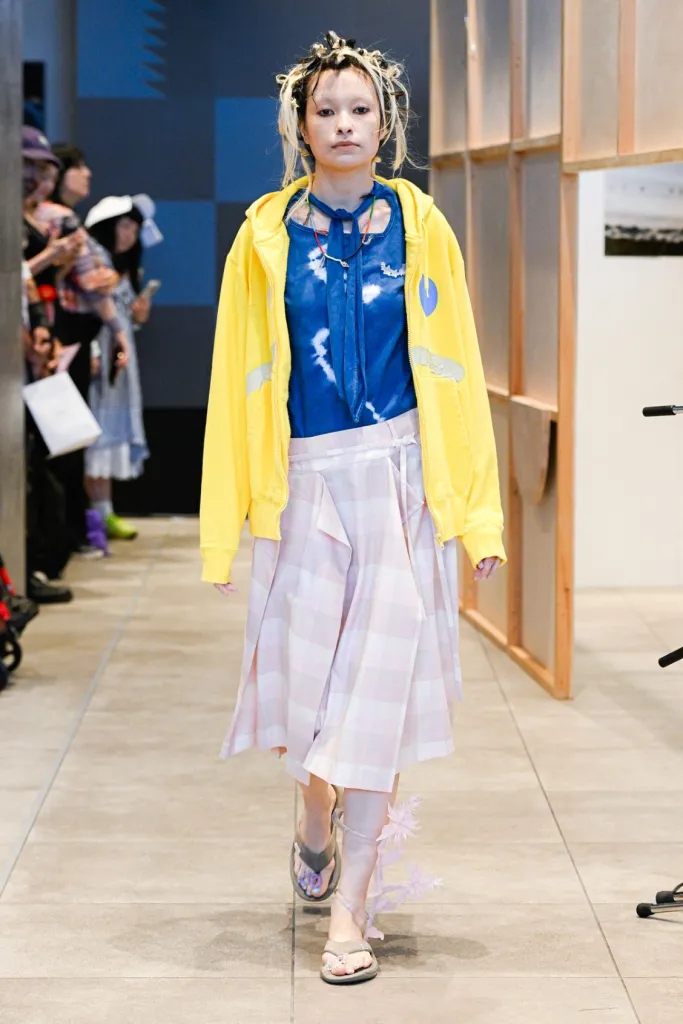


The sentiment flowed straight into retail. soduk currently lists 25 Japanese physical stockists, stretching from Tokyo and Kyoto to Fukuoka and Okinawa. On September 6, one day after Fashion Week, HIGASHI Shibuya PARCO started a pop-up carrying the Orion Beer collaboration; the SS27 exhibition opened September 8 with buyer appointments running alongside public access.
Homecoming, beer merch, buyers and a live song about staying close to home: Tokyo Fashion Week can be wonderfully specific.
Tokyo Fashion Week SS27, By The Numbers
Now for the part hiding behind all those runway photos.
The season was initially announced with 28 collection programmes. KAKAN later cancelled its runway, bringing the realised calendar to 27. From the final schedule, 22 were runways and five were presentations, meaning 81.5% of the programme used the catwalk format. Nine overseas collections accounted for exactly one-third of the final calendar. 2026 A/W presented 33 collections, meaning SS27 contracted by 18.2% season-on-season. A smaller schedule can concentrate one of Fashion Week’s scarcest commodities: attention. Six fewer collections create space for longer conversations, showroom visits, and fewer diary collisions.
JFWO also brought 16 supported international media, buyers and industry guests into Tokyo. The list included buyers from 10 Corso Como Seoul, Tessabit, FWRD & REVOLVE, Andreas Murkudis, BEAKER, and Saks Fifth Avenue Almaty. Fashion Week suddenly sounds very practical when the guest list starts resembling a wholesale strategy.
Fashion Week’s platform partnerships added another layer of selective visibility. Four brands, yoshiokubo, EITARO, yushokobayashi and RequaL≡, were filmed through the season’s Meta Glasses social-media project. Three, ENFÖLD, EITARO, and ANNA CHOI, received official backstage makeup support from NARS. Rakuten’s by R project supported KHOKI’s runway and connected the show to Rakuten Fashion commerce, while the sponsorship value remains private.
The JFW NEXT BRAND AWARD 2027 carried ¥3 million in annual prize money, divided into ¥1.5 million for SS27 and ¥1.5 million for AW27, plus venue and production support. The Grand Prix ultimately remained unawarded after judges assessed quality, originality, and financial strength, including a brand’s capacity to fund continued shows. Tokyo had cash ready and still kept the cheque in the drawer. That says plenty about how seriously financial readiness sits beside creative promise.
And here is the number worth keeping for trivia night. JFWO’s 20th-anniversary archive counted 1,844 shows, presentations and digital exhibitions, 524 participating brands, and international participation from 32 countries and regions through the 2026 S/S season. Add the officially reported 33 collections from 2026 A/W and 27 realised programmes from Tokyo Fashion Week SS27, and the running total reaches approximately 1,904 collection presentations across the organisation’s history. That last figure is our calculation from JFWO’s published totals.