MENU
Close





Ceramic jewelry is bringing joy and jingle into the contemporary jewelry landscape.

Ceramic jewelry is bringing joy and jingle into the contemporary jewelry landscape.
August 27, 2026


The material value of contemporary jewelry now increasingly comes from the cultural story embedded within an object and the technical skills required to make clay wearable.
Ceramic jewelry sits directly inside this shift. Once associated primarily with vessels, tiles, sculpture and domestic objects, ceramic has entered contemporary jewelry as a uniquely expressive material, especially when combined with precious metal, leather or wood.
Ceramic and jewelry have historically carried symbolic meaning, social status and cultural memory across centuries. Their technical histories developed through very different systems: jewelry grew from metalworking, stone setting and precision construction, while ceramics emerged through forming, glazing and firing, a process that carries unpredictability.
Bringing these disciplines together therefore involves far more than attaching a porcelain fragment to a chain. Many luxury houses have attempted ceramic jewelry.
Bvlgari brought ceramic into the architectural vocabulary of B.zero1, placing black or white ceramic between precious-metal bands and translating the collection’s Colosseum-inspired spiral into a bold combination of volume, relief and material contrast.
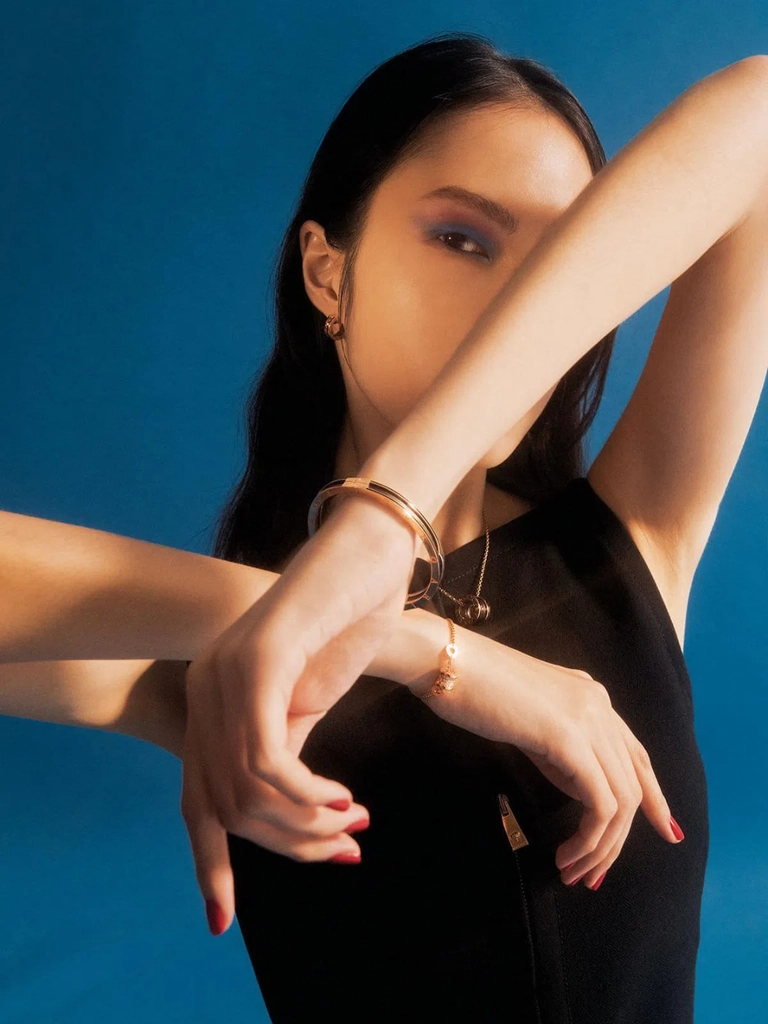

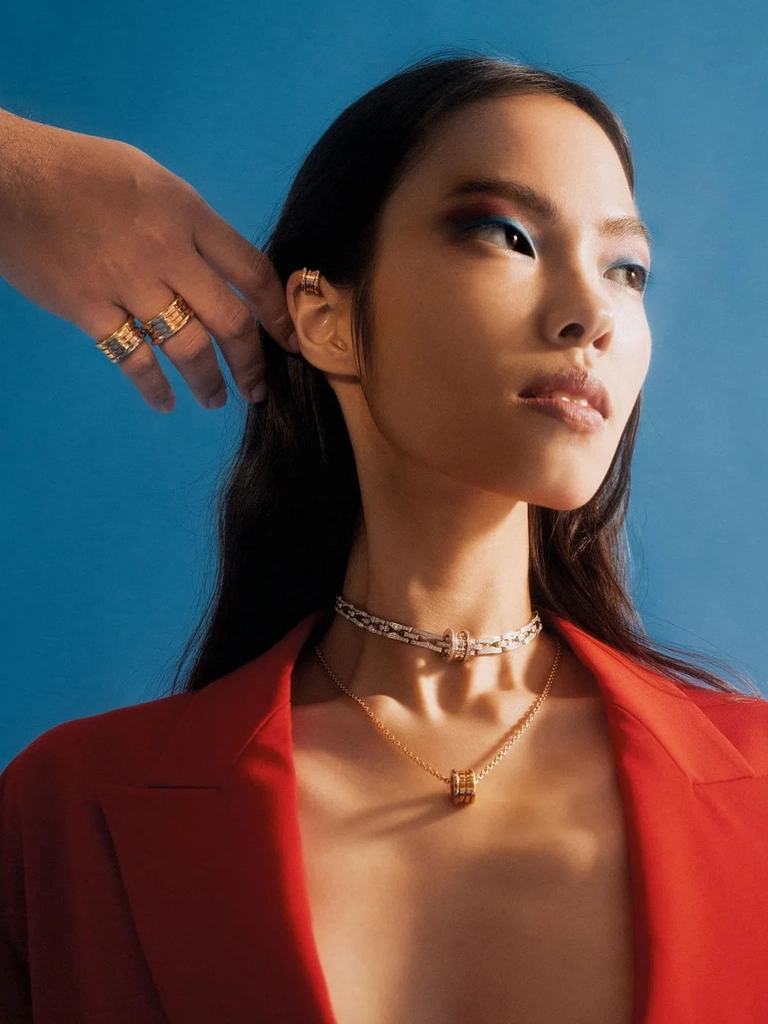

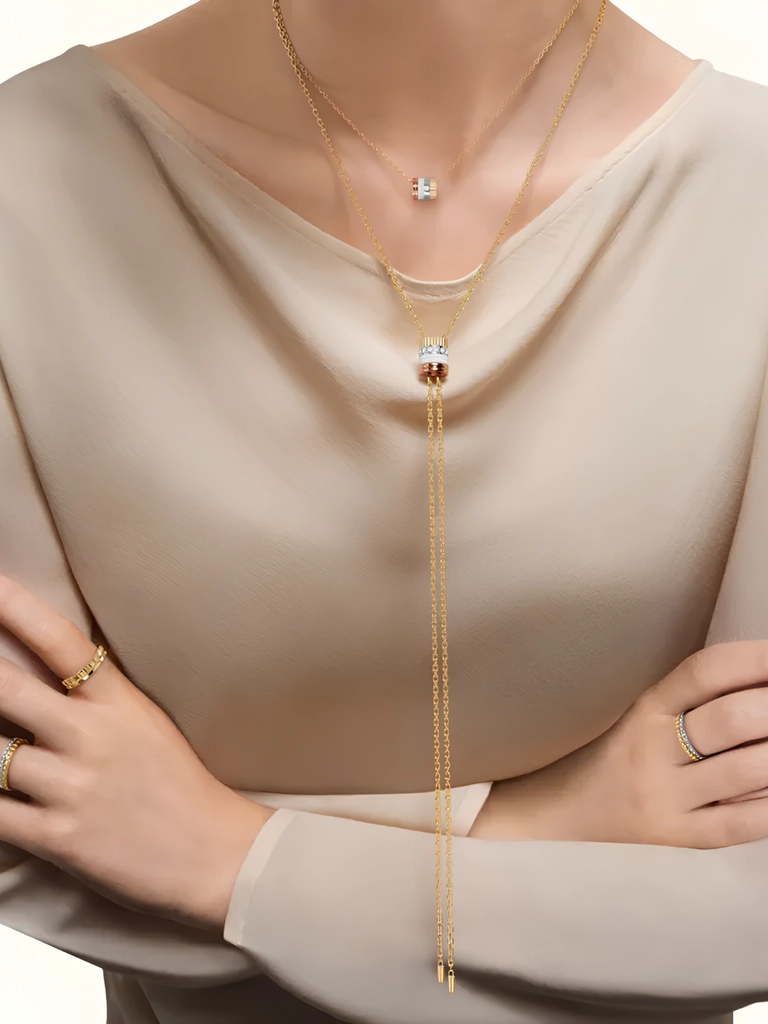
Boucheron uses ceramic to sharpen the intricate structure of Quatre, where Clou de Paris, Grosgrain, Double Godron and diamond detailing are stacked into richly textured bands punctuated by black or white ceramic.
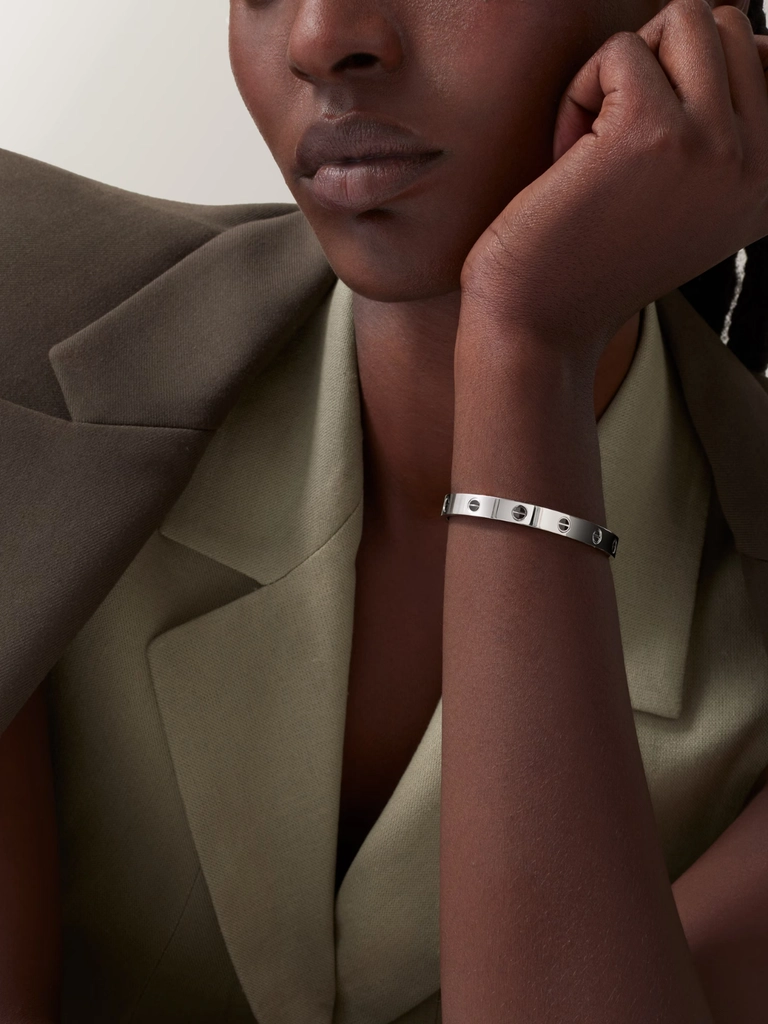
Cartier has introduced black ceramic into selected Love designs, allowing the material’s deep surface to interact with gold and diamonds within some of the house’s most recognizable silhouettes.
Roberto Coin approaches ceramic through a more sculptural vocabulary, combining smooth, high-gloss surfaces with 18K gold, gemstones and the house’s signature hidden ruby to create jewelry defined by flowing curves, saturated color and tactile contrast.
Across these examples, ceramic has become a sophisticated component of contemporary luxury craftsmanship, carrying ancient symbolism, technological innovation and modern visual identity within the intimate scale of jewelry.
Ceramic can be fragile. Fired ceramic can survive for centuries, yet a thin porcelain component can fracture after a single impact. A little bit too risky to carry around, is it?
This is where luxury craftsmanship becomes high-tech engineering, introducing high-tech, high-precision ceramics.
Typically engineered from materials such as zirconium oxide or titanium carbide, high-tech, high-precision ceramic, has travelled from demanding industrial applications in aeronautics and thermal engineering into contemporary high jewelry and watchmaking. And the process of making high-tech ceramic jewelry leaves no room for miscalculation.
High-purity zirconia powder is compacted under pressure and sintered in kilns at temperatures exceeding 1,400°C, or roughly 2,550°F, during which the material can shrink by around 20 percent. Therefore, designers must proportion and measure precisely before firing, since a fraction of a millimeter can affect the final fit of links, settings and moving components
The fruit after this labour is marvelous. Luxury ceramic is remarkably light, it resists scratching, oxidation, corrosion and UV exposure, and can reach around 8.5 to 9 on the Mohs hardness scale, approaching the hardness associated with some of the toughest materials used in jewelry.
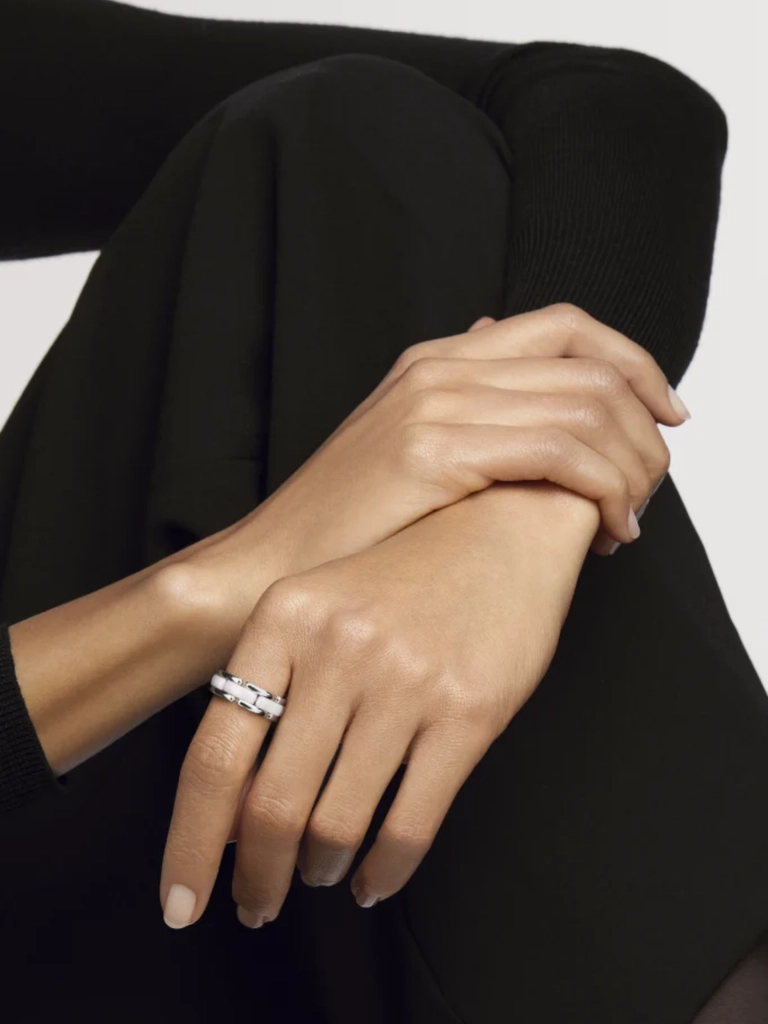
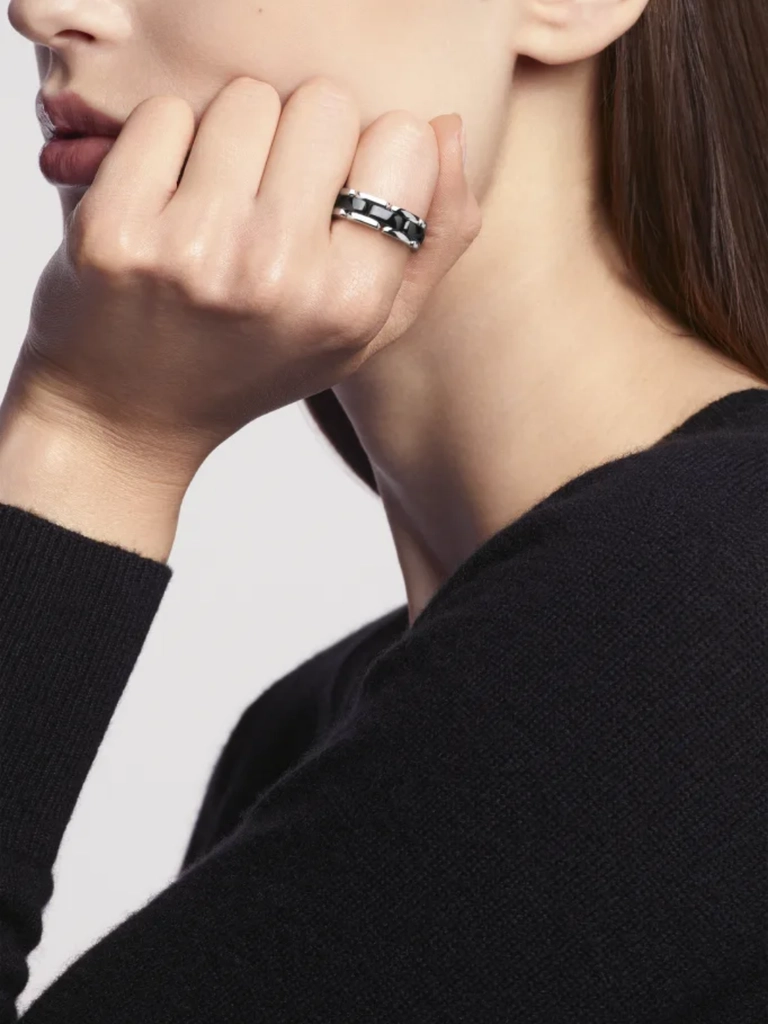
Combining high-tech ceramic with maison's heritage design language, and we have Chanel's Ultra collection. A material, associated with laboratories and aerospace engineering, is flipped into something unmistakably Chanel, translating the house’s monochrome palette, geometry tactile references to tweed into a sleek, highly technical form of modern adornment.
These glossy Chanel ceramic links with 18K white gold and pavé diamonds helped establish high-tech ceramics as a legitimate fine-jewelry material.
High-tech ceramics also give jewelry houses more control over color, although achieving saturated shades requires extremely precise material chemistry.
Cobalt oxide can produce deep blues, chromium oxide creates green tones, while carefully calibrated rare-earth oxides and other mineral additives help generate luminous whites, dense blacks and increasingly complex colors without sacrificing the material’s structural integrity.
Its physical properties add another layer of appeal: high-tech ceramic is widely valued for its hypoallergenic qualities, smooth surface and thermal neutrality, allowing it to adapt quickly to body temperature and remain comfortable during prolonged wear.
These characteristics have helped ceramics move deeper into the contemporary luxury market, where non-precious engineered materials increasingly sit alongside gold, platinum and gemstones as expressions of innovation.
Within a global luxury jewelry sector valued at roughly $59 billion in some recent market estimates, high-tech ceramics have emerged as a particularly dynamic niche, supported by consumers seeking lighter, more experimental forms of luxury. Self-purchasing women, millennials and Gen Z shoppers are especially important to this shift, drawn to jewelry that combines technical performance, strong color, modern design and a sense of individuality beyond traditional precious-material conventions.
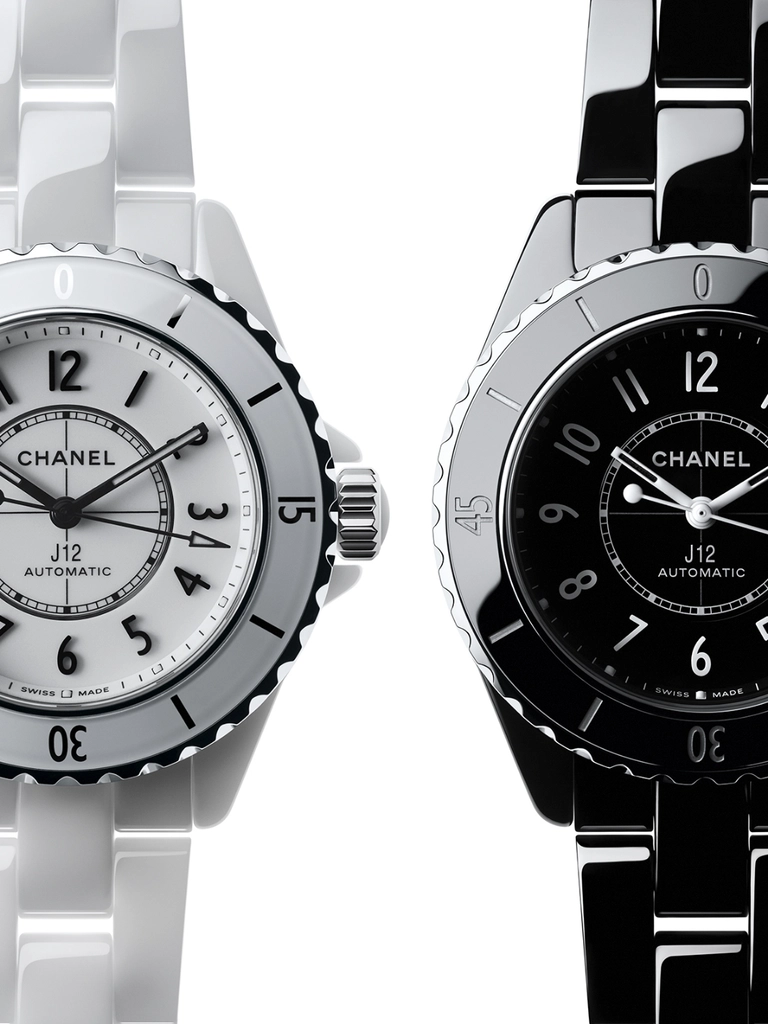
Luxury watchmaking played a decisive role in turning high-tech ceramic into a prestigious design material that deserves collecting. Launched in 2000, the Chanel J12 is one of the defining examples, introducing glossy black and later luminous white high-resistance ceramic across its case and bracelet and establishing an instantly recognizable graphic identity.
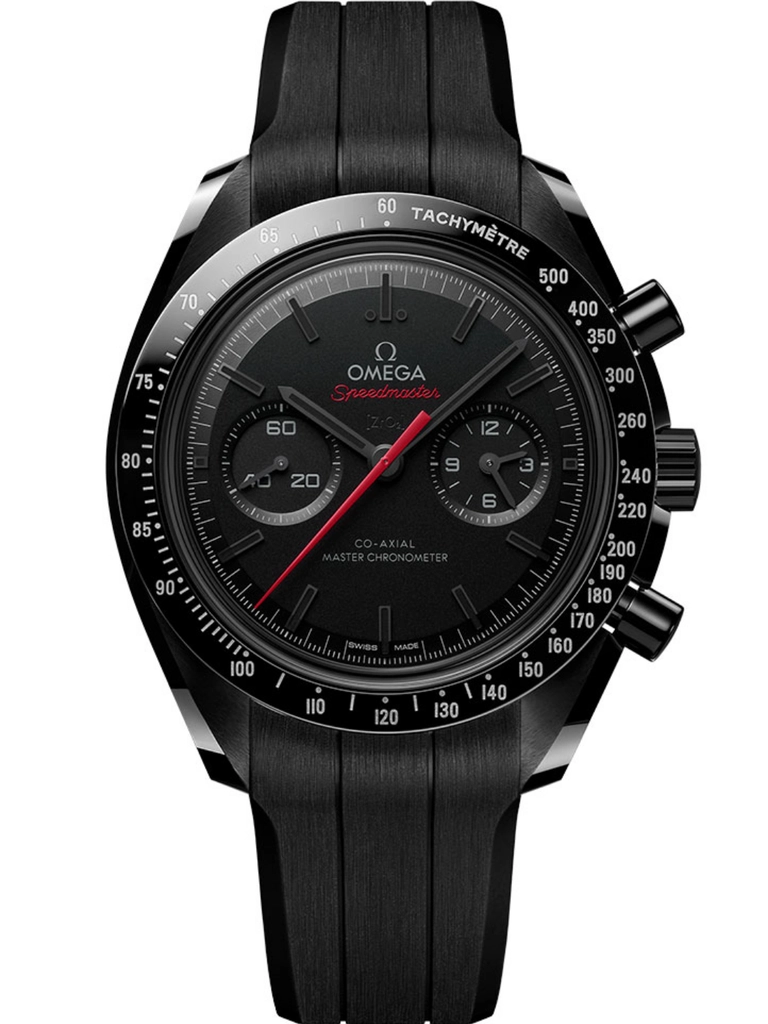
Omega pushed ceramic into a more technical register with the Speedmaster “Dark Side of the Moon”, developing an almost entirely black ceramic exterior across the case, bezel and key components, while later interpretations such as the Apollo 8 explored laser decoration inspired by the lunar surface. Hublot brought another dimension through its Big Bang family and the house’s “Art of Fusion” philosophy, combining ceramic with metals, rubber and complex movements while developing the material in increasingly vivid shades, from saturated red and blue to deep matte black.
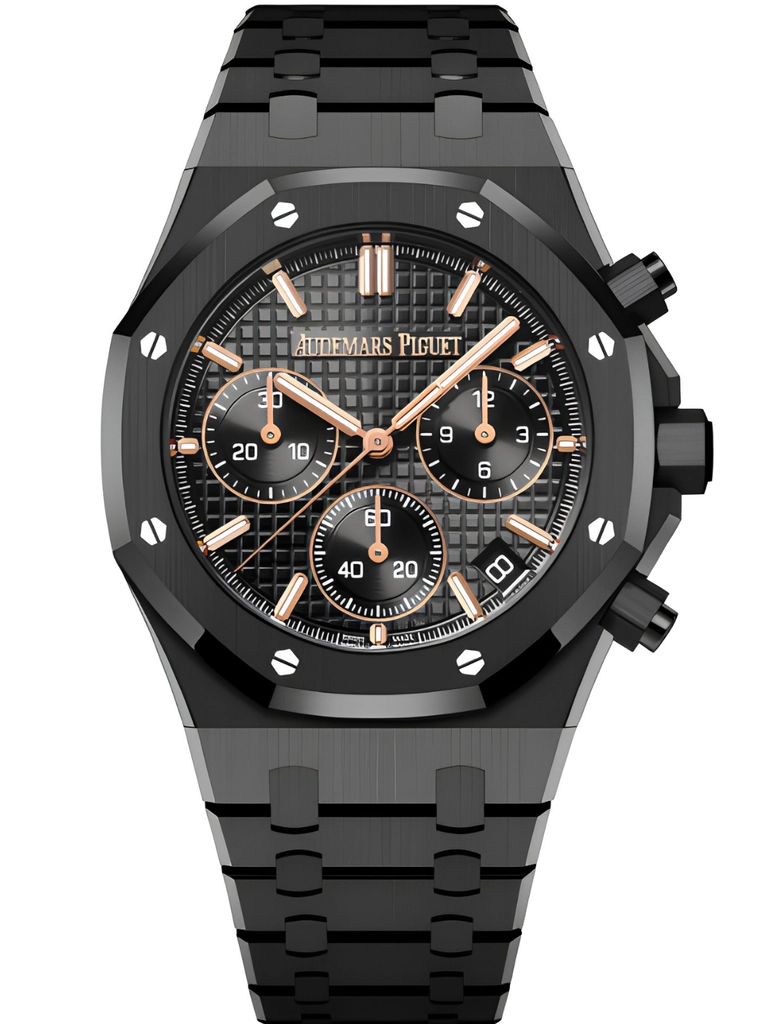
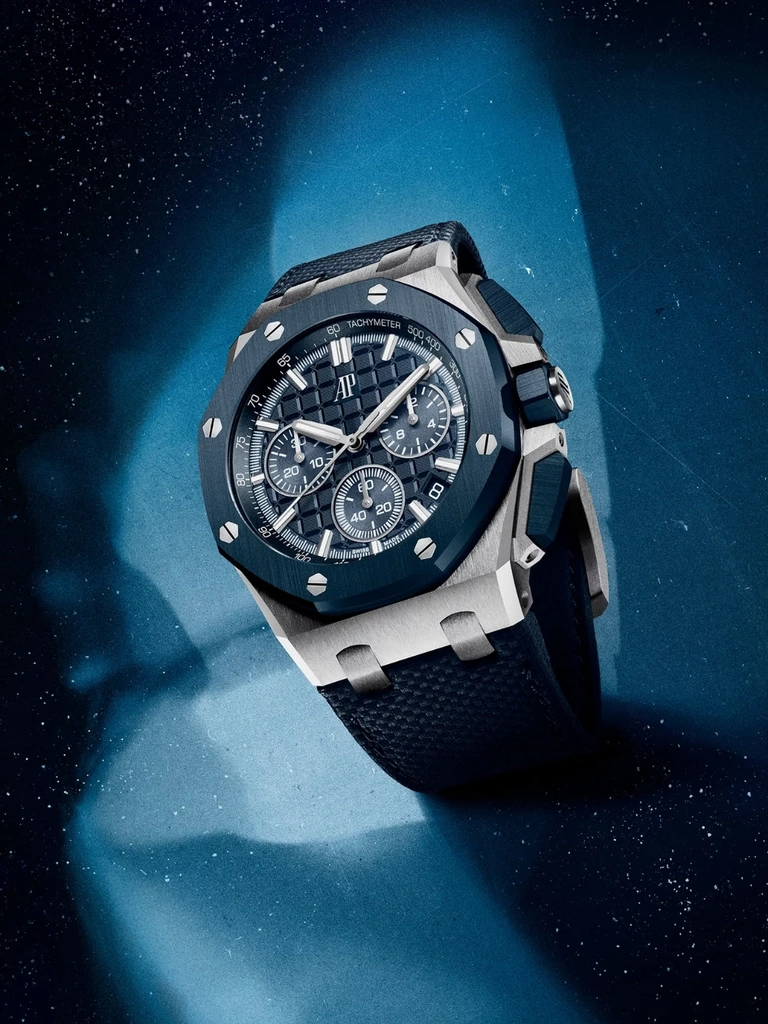
The Audemars Piguet Royal Oak and Royal Oak Offshore ceramic models reveal perhaps one of the most demanding expressions of the craft. Their ceramic cases and bracelets receive alternating satin brushing, mirror polishing and sharply defined bevels associated with the Royal Oak, requiring extensive machining and finishing on an exceptionally hard material.
Together, Chanel, Omega, Hublot and Audemars Piguet helped transform high-tech ceramic from an engineering solution into a recognizable language of contemporary luxury, setting the stage for its growing presence in diamond-set bracelets, rings and other forms of high jewelry.
Glazes react to firing conditions. Hand-painted decoration introduces minute differences between pieces. Fragments taken from existing objects carry patterns that may never align in precisely the same way twice. Ceramics naturally supports limited editions, artist collaborations, bespoke production and culturally specific collections. A designer can develop a recognizable visual identity through a particular glaze, regional ceramic technique or relationship between porcelain and another material.
Ceramic jewelry is a fertile ground for variation. And with that, personalization.
Its cultural potential is equally significant. Traditional ceramic craftsmanship holds centuries of accumulated technical knowledge. Bringing those methods into jewelry offers a route for heritage practices to enter contemporary life without freezing them inside historical reproduction.
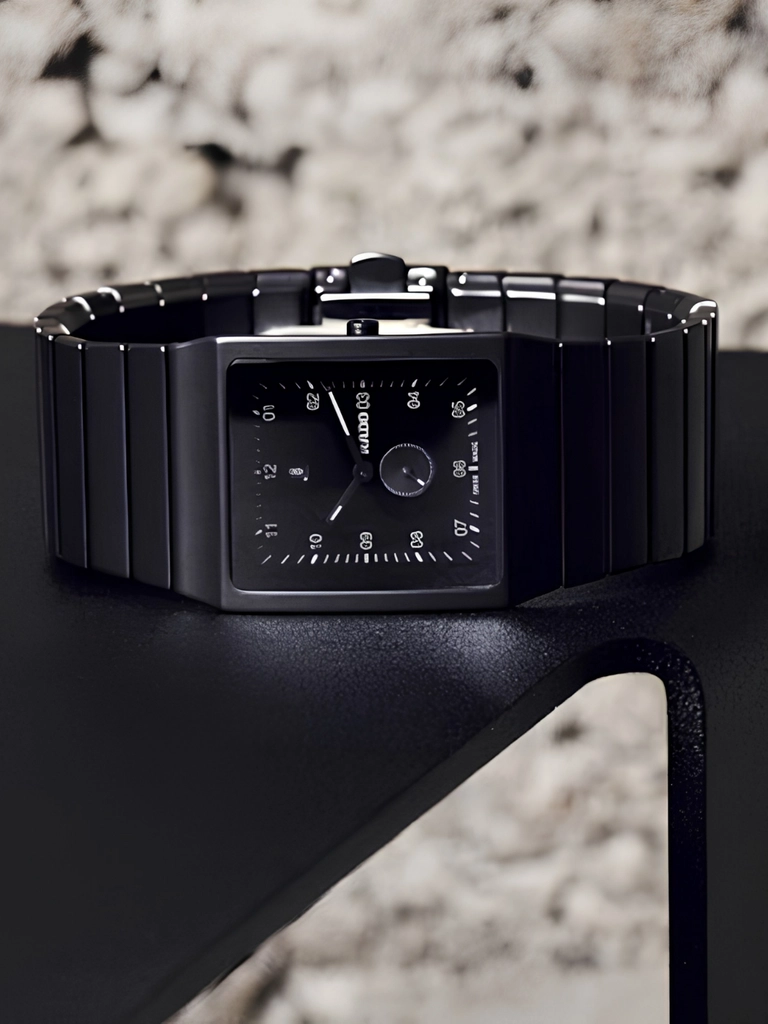
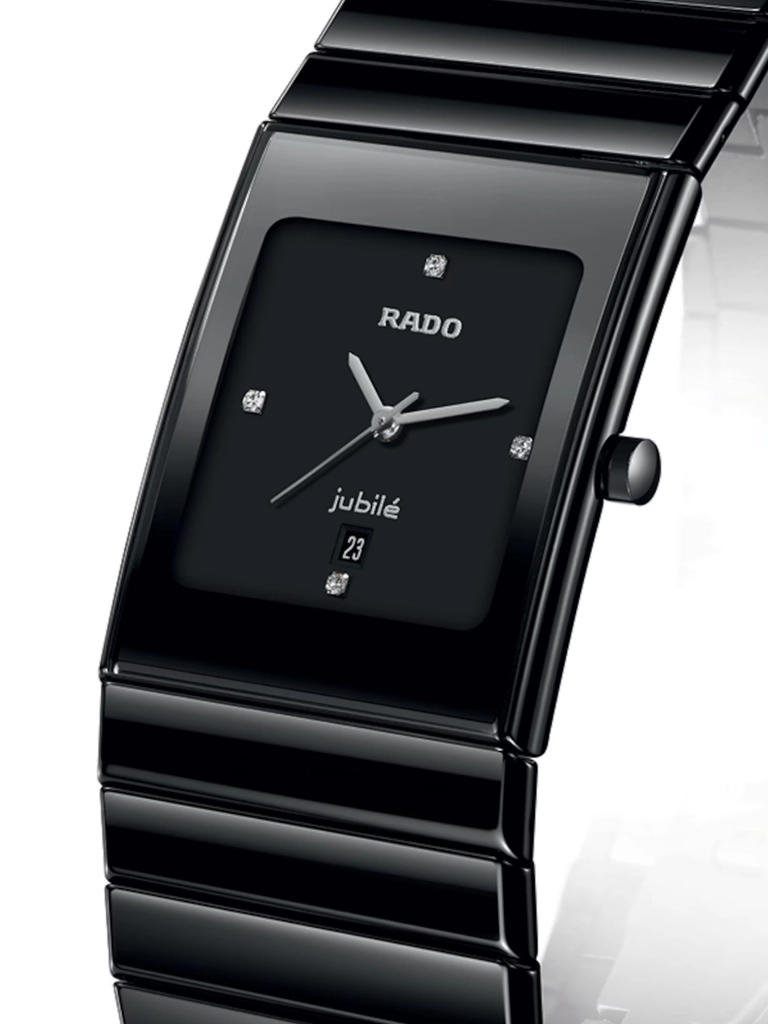
At the accessible luxury level, pieces typically range from around $300 to $1,200, with brands such as Rado using high-tech black or white ceramic alongside silver or restrained diamond details. Mid-tier luxury generally sits between $1,500 and $5,000, where collections such as Bvlgari’s B.zero1 and selected Roberto Coin designs combine high-gloss ceramic with 18K rose or yellow gold. High-luxury ceramic jewelry can move from roughly $5,500 to $18,000 and above, particularly in Chanel’s Ultra and ceramic-led J12 universe or selected Cartier creations, where sintered ceramic is integrated with pavé-set diamonds and precious metals.
At the haute joaillerie end, bespoke ceramic pieces can rise beyond $25,000 and reach six figures, especially when custom-colored ceramic is developed around rare gemstones, complex settings and limited-production craftsmanship. This pricing ladder reveals how ceramic has evolved from an industrial innovation into a fully established luxury material, capable of moving fluidly from technically driven watches to diamond-set jewelry and one-of-a-kind high-jewelry creations.
As luxury jewelry trends continue toward personalization, ceramic jewelry offers an exciting playground for cross-material experimentation and heritage revival. Leading the field are these unique ceramic jewelry artists.