MENU
Close





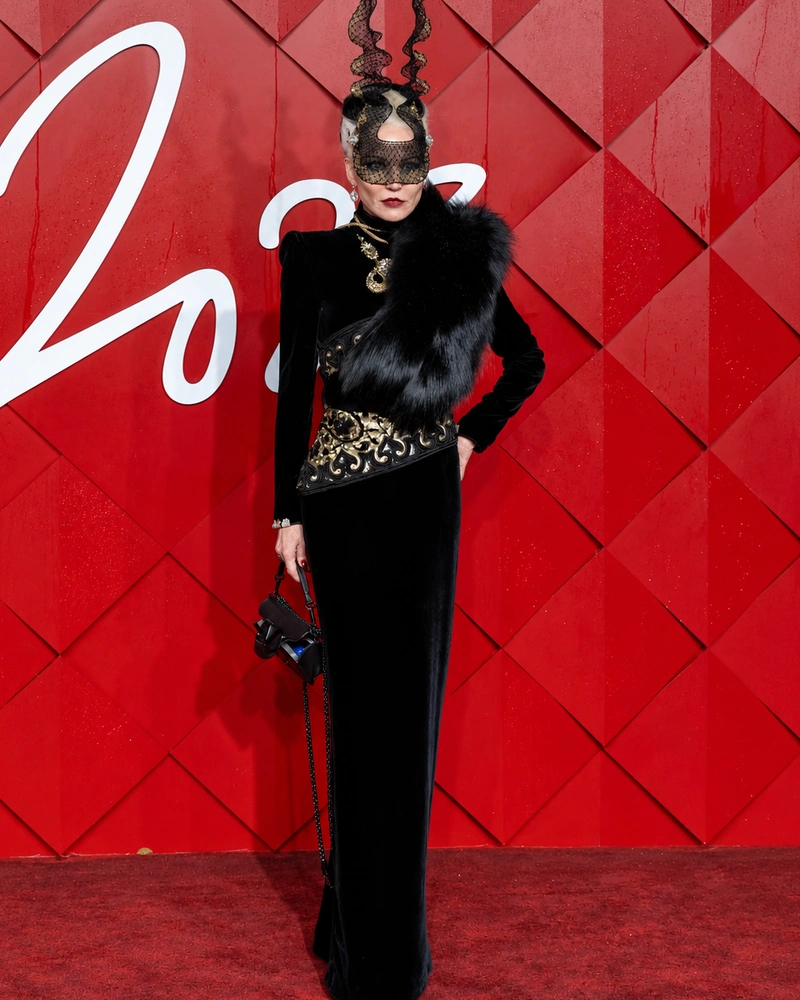
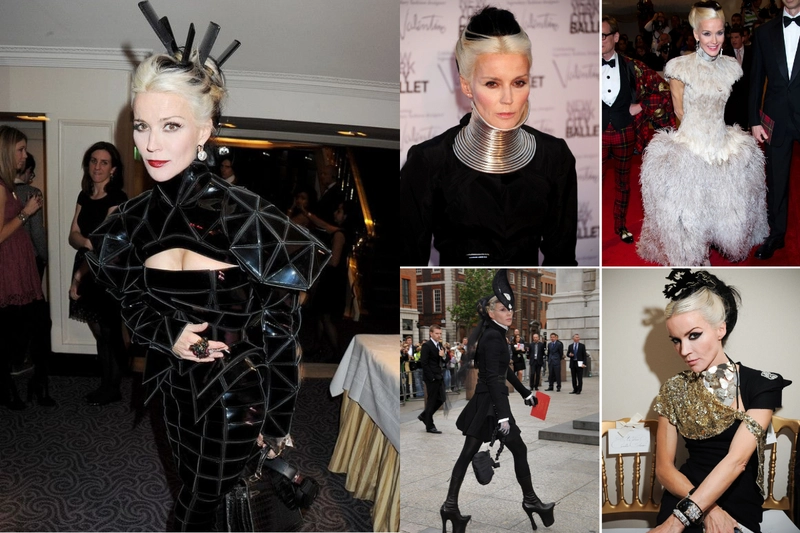
The first thing Daphne Guinness constructed was an unmistakable head. Platinum hair is divided by jet-black sections and manipulated upward into rolls, ridges, swept-back crests and elaborate architectural shapes. It can suggest a powdered gothicVictorian/Elizabethan coiffure from one angle and something almost extraterrestrial from another. The two-tone treatment is crucial: monochrome gives even the wildest arrangement a certain discipline, making her profile instantly readable.
Her beauty follows the same severity. Skin is kept pale and immaculate; black liner stretches the eyes into sharp feline points; cheekbones appear almost carved; a dark crimson mouth occasionally supplies the only strong color. It is an old aristocratic beauty language stripped of softness. There are echoes of portraiture, silent-film heroines and women dressed for mourning.
Born into the Guinness family and descended through her grandmother Diana Mitford from one of Britain’s most famously unconventional aristocratic families, she grew up surrounded by history and social codes. Her appearance seems to exaggerate that inheritance until it becomes fantasy. She resembles the woman whose portrait might hang at the end of an ancestral corridor, except someone has tampered with the century.
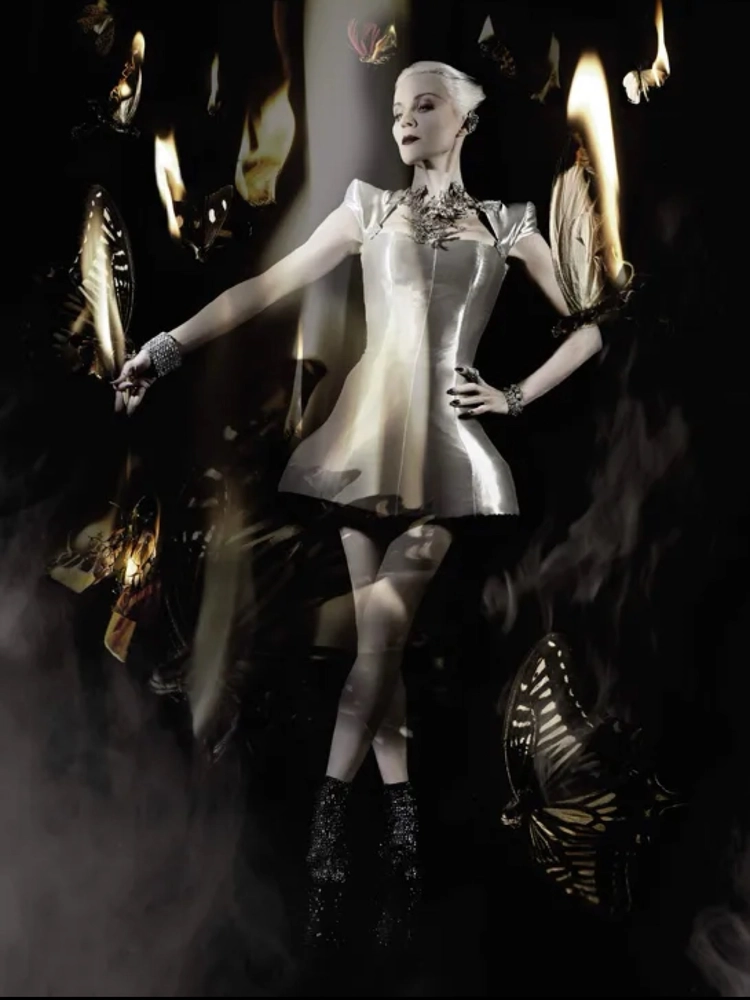
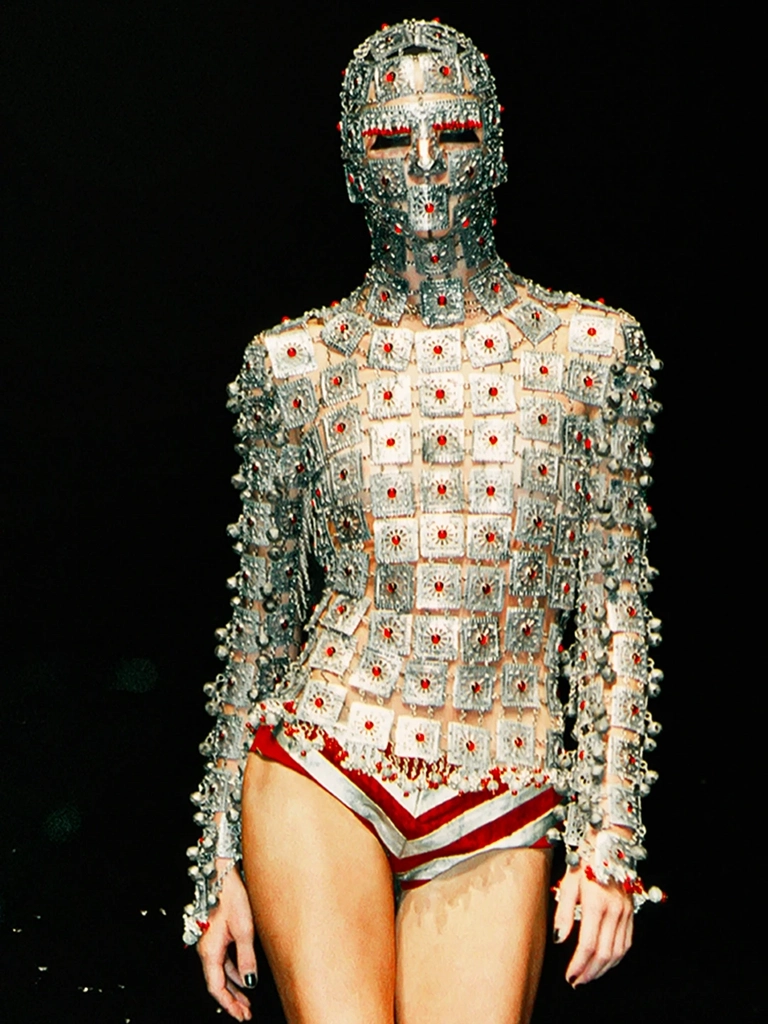
Her strongest clothes alter the architecture of the body: shoulders become sharper, waists narrower, torsos longer and hips sculpted into unfamiliar proportions. A jacket can resemble a military uniform stripped down to its most authoritarian lines. A corset can harden the torso into a shell. Gareth Pugh constructions introduce rigid planes and exaggerated volume, while Alexander McQueen pieces could turn Guinness into a bird, knight, aristocrat or some hybrid creature with no obvious historical period.
Her wardrobe has always moved comfortably between masculine and feminine codes. Crisp shirts and narrow trousers bring a dandyish austerity; tightly engineered dresses restore the curve of the body; military jackets bring command; feathers, lace and transparent textiles disturb that severity with fragility. Guinness once described an attraction to structure mixed with chaos, and her clothes repeatedly live inside that tension.
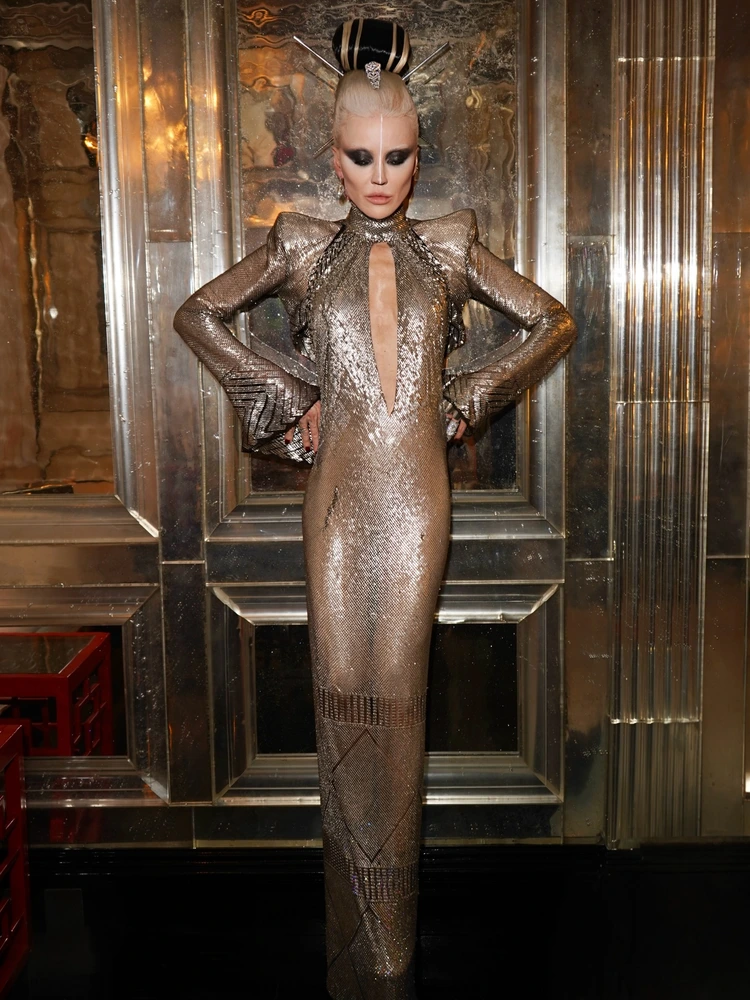
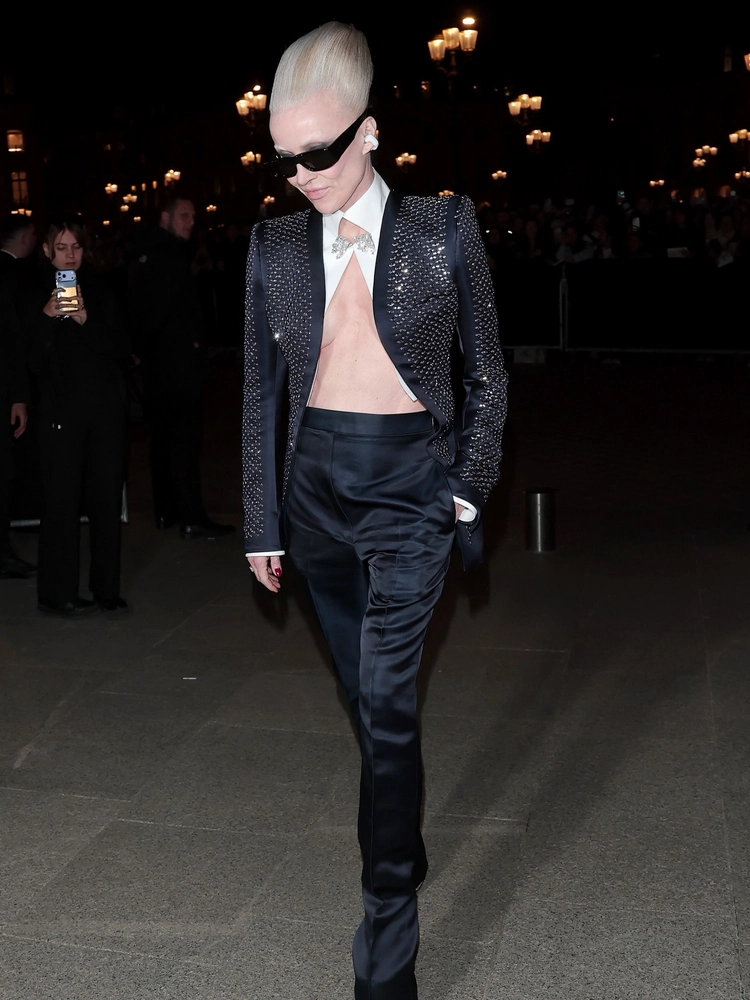
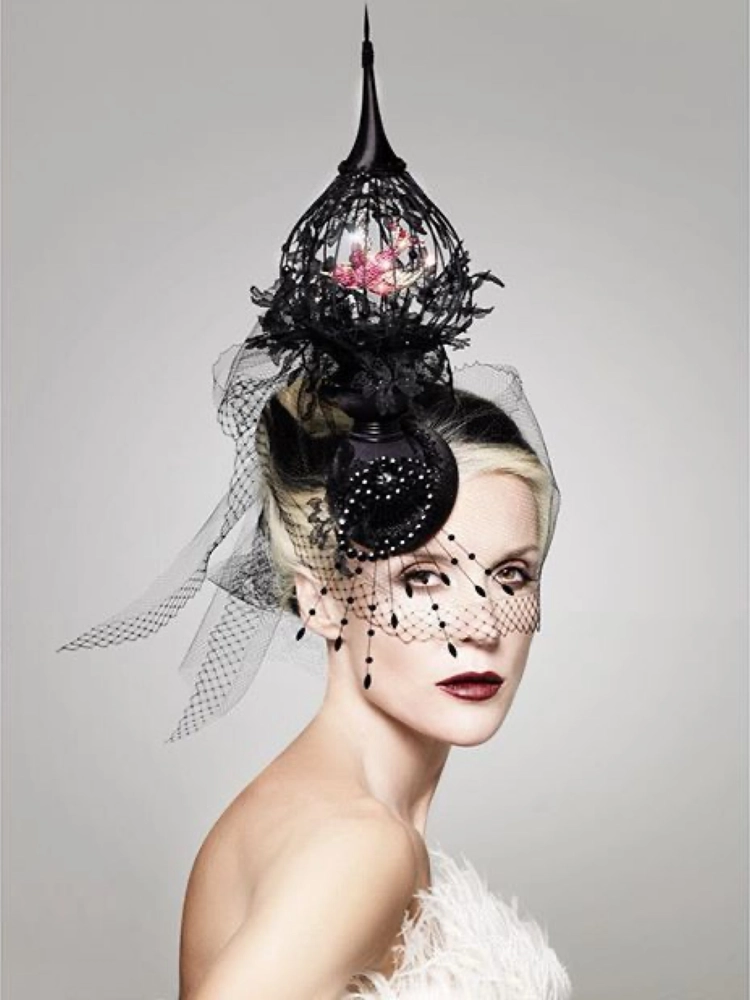
Daphne Guinness's most extravagant objects often seem too ambitious for the word “accessory.” Philip Treacy headpieces can behave like miniature sculptures, extending upward or forward until the space surrounding her becomes part of the design. Veils obscure portions of the face and introduce a ceremonial quality, somewhere between funeral dressing and aristocratic formality.
Then the footwear removes her from ordinary proportions altogether. Guinness became closely associated with extreme platforms, including Alexander McQueen's Armadillo shoes and heel-less designs by Noritaka Tatehana, turning the act of walking into part of the spectacle.
Nothing illustrates her relationship with fashion objects better than Contra Mundum, the extraordinary articulated glove she conceived with jeweller Shaun Leane, with Alexander McQueen involved in its development. The original impulse was remarkably personal: Guinness wanted armor. The finished piece turned that desire into white-gold chain mail articulated around the fingers and hand, populated by diamond birds as if protection itself had become high jewellery.
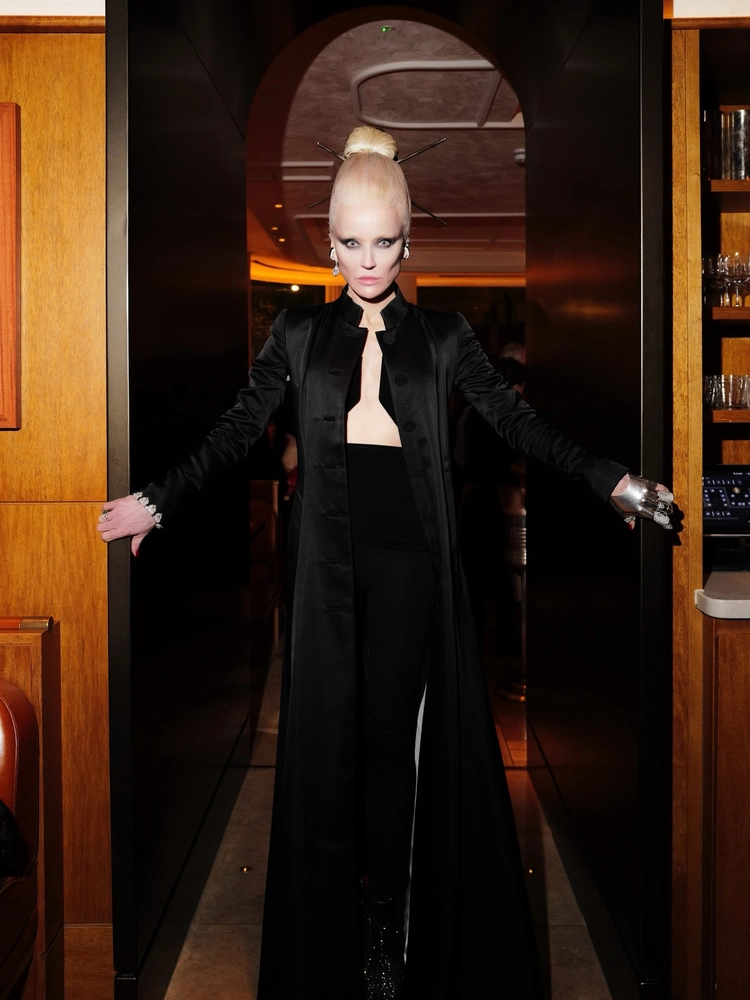
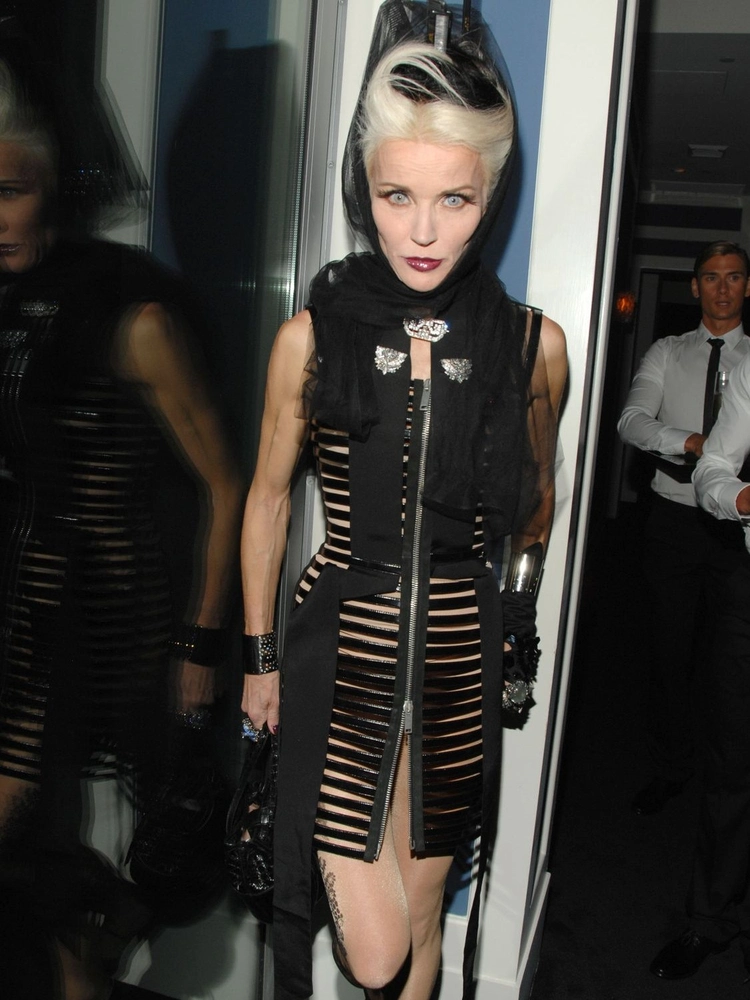
By 2011, Daphne Guinness had crossed a line few living style figures reach: a museum devoted an exhibition to her wardrobe. Around 100 garments and accessories from her personal collection were shown, with Guinness co-curating and styling every ensemble herself. The exhibition was organized around ideas including dandyism, armor and exoticism, effectively treating her manner of dressing as a fashion vocabulary worthy of study rather than celebrity memorabilia.
When Isabella Blow's extraordinary wardrobe faced dispersal after her death, Guinness purchased the entire collection in 2010. More than 100 pieces later appeared together in Isabella Blow: Fashion Galore!, preserving clothes by designers Blow had championed, including McQueen and Philip Treacy, as a coherent cultural archive.
On Daphne Guinness, everything is absorbed into a larger character so complete that even the strangest fashion object starts to look strangely inevitable. Designers could hand her something that seemed almost unwearable and she would make it feel like private property from an ancestral castle on another planet. Her real influence lies there: she expanded the fantasy of what a fashion person could be. Not muse, socialite, collector or performer separately, but all of them collapsed into one magnificent apparition.