





Atonement: The Emerald Dress That Haunts
Atonement: The Emerald Dress That Haunts

Few garments in cinematic history have acquired the cultural significance of the emerald-green dress worn by Keira Knightley in Atonement (2007). Nearly two decades after its theatrical release, the gown continues to inspire fashion enthusiasts, designers, and costume historians, its luminous silk remaining inseparable from one of cinema's most devastating love stories.
Directed by Joe Wright and adapted from Ian McEwan's novel, Atonement follows Cecilia Tallis and Robbie Turner, two young lovers whose relationship is tragically disrupted by a misunderstanding in the summer of 1935.
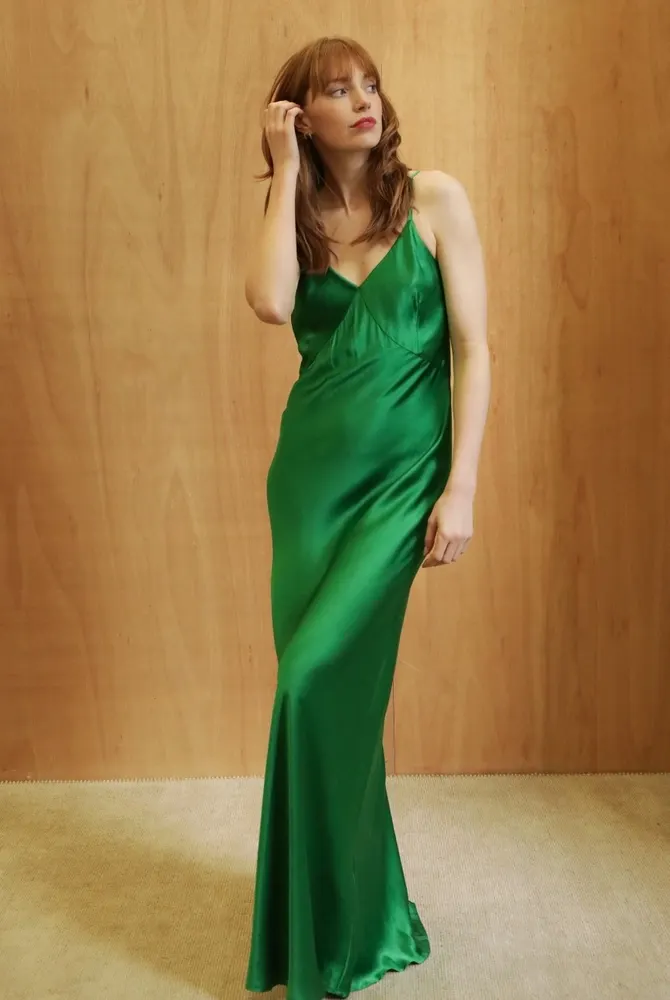
The film's defining fashion moment belongs to costume designer Jacqueline Durran, who created the extraordinary green evening gown for Cecilia's encounter with Robbie. Durran approached the costume through the visual language of 1930s eveningwear, incorporating the period's fluid silhouettes while adjusting its construction to suit Knightley's movement and the demands of the film.
For a contemporary recreation, Vona Dmytra Atonement Dress I offers a particularly faithful interpretation. The Ukrainian label has developed a gown directly inspired by Cecilia's costume, featuring slender straps, an open back, and an elongated skirt with an additional flowing train. The bodice incorporates carefully constructed detailing to shape the figure, while the made-to-measure design allows the garment to follow individual proportions.
The garment's vibrant green surface and generous volume translate the cinematic romance of Atonement into an expressive modern evening look. Its draping also allows the silhouette to change naturally with movement, recalling the delicate interplay between fabric and body that defines Durran's costume.
Another interpretation comes from Lora Gene The Maxi Slip Bias-Cut Dress, crafted from pure silk satin. Cut on the bias, the fabric falls diagonally across the body, allowing the gown to follow natural curves and create fluid movement. Its delicate adjustable straps, understated neckline, and softly luminous surface capture the sensual simplicity associated with Cecilia's wardrobe. The emerald-green styling also allows the fabric's natural sheen to take center stage.

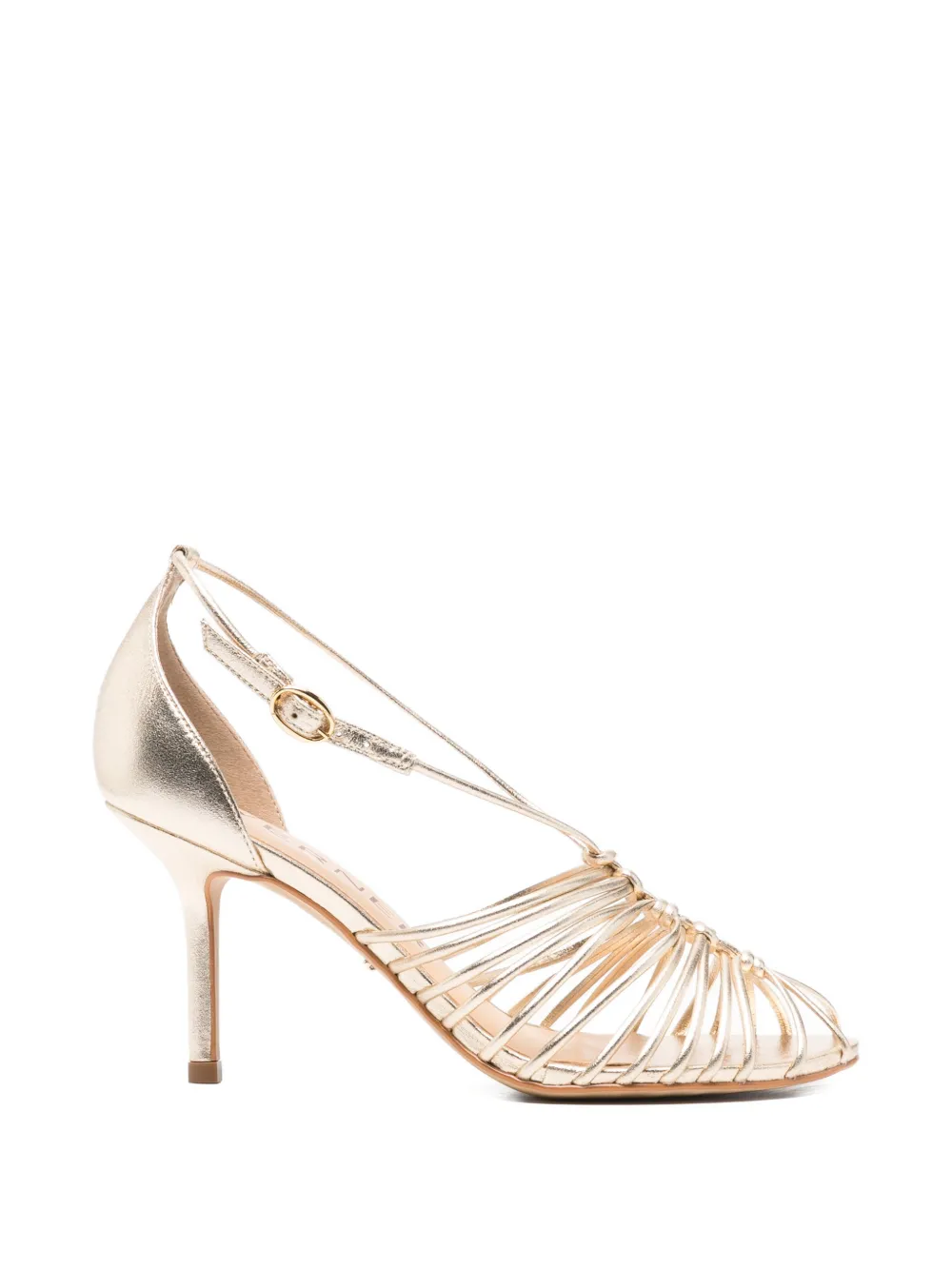
For footwear, metallic leather introduces the decorative sophistication of 1930s evening fashion. Werner Strappy Cage Sandals feature an intricate arrangement of narrow gold-tone straps, an open toe, and a delicate buckle fastening. Crafted from calf leather with a nine-centimeter heel, the design offers an elegant balance between vintage-inspired ornamentation and contemporary proportions.
Chantal Strappy Cage-Detail Pumps provide another beautiful option through their copper-toned metallic finish and elaborate cage construction. Made in Italy, the shoes feature a square open toe, a buckle-fastening slingback strap, and a slender stiletto heel. Their delicate metallic framework creates a sophisticated contrast with emerald silk, recalling the decorative character of interwar evening footwear.

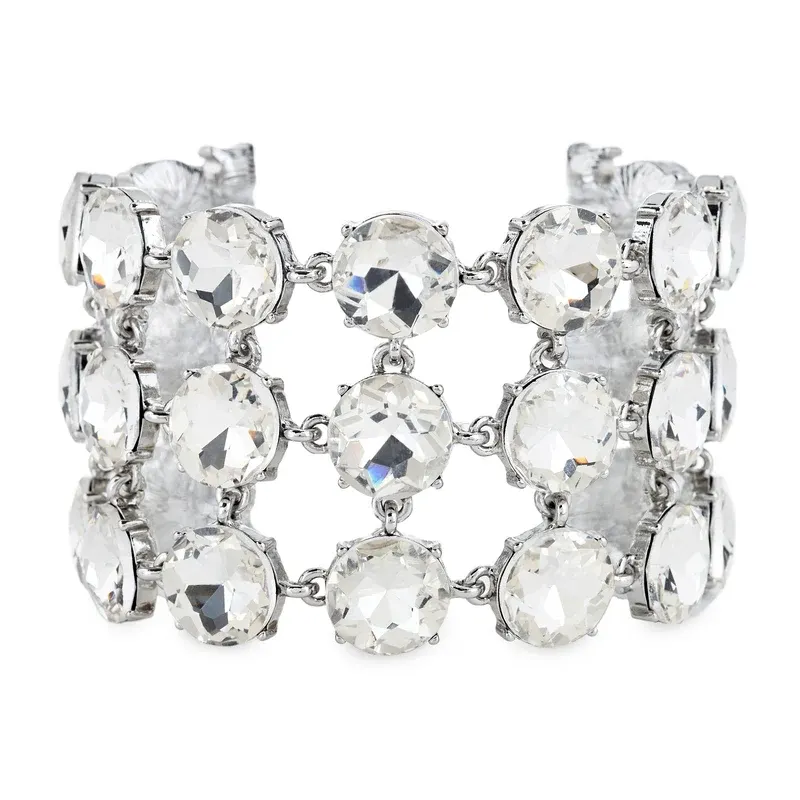
Jewelry completes the Atonement-inspired wardrobe with a touch of old Hollywood brilliance. The film's iconic styling incorporates a sparkling wrist ornament, whose reflective surface creates a striking visual accent against Cecilia's emerald dress.
Kenneth Jay Lane Three-Row Crystal Bracelet captures this spirit through three horizontal rows of large, round, faceted crystals. The silver-tone setting creates an elegant framework for the stones, whose reflective surfaces evoke the lavish costume jewelry associated with vintage Hollywood glamour.
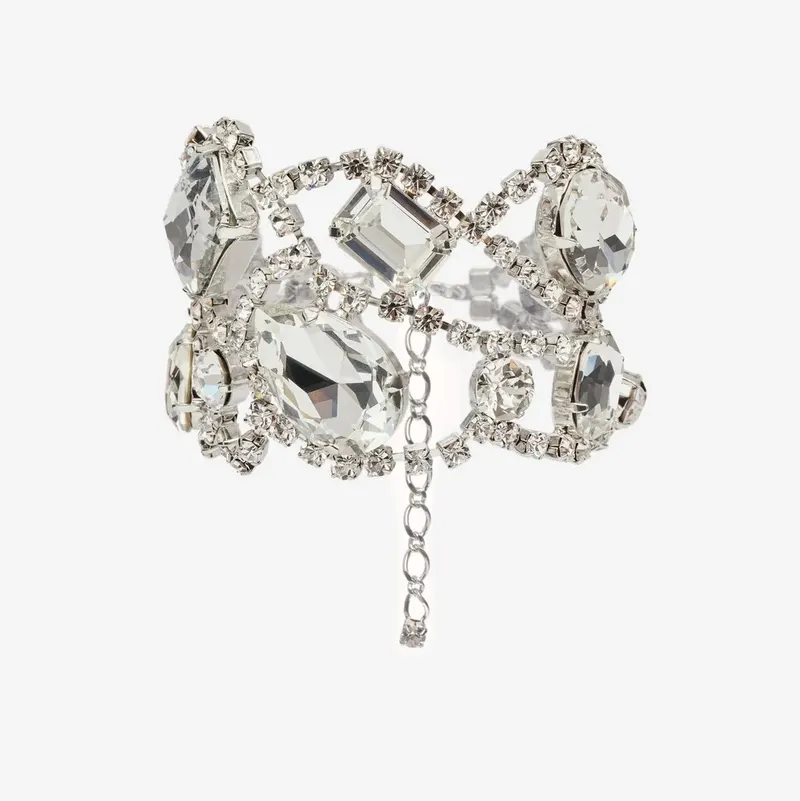
For a more elaborate interpretation, Magda Butrym Crystal-Embellished Bracelet brings dramatic ornamentation through oversized crystals surrounded by delicate pavé-set stones. Its sculptural silver-tone construction and adjustable chain create a striking piece of evening jewelry, particularly effective against the uninterrupted emerald surface of a silk gown.
The enduring fascination with Cecilia's green dress reveals how profoundly cinema can influence the visual language of fashion. Yet the emotional resonance of Atonement gives the dress an identity extending beyond its material beauty. It preserves the image of Cecilia during a fleeting moment of possibility, immediately before the events that will permanently alter her future. The emerald gown carries that memory through its color, movement, and extraordinary cinematic presence, making it one of the most haunting garments ever created for the screen.