MENU
Close





What happens when a skin cell quits its job but keeps showing up to the office? A zombie cell does exactly that, and researchers are now testing whether these cellular squatters should be silenced, removed or replaced.

What happens when a skin cell quits its job but keeps showing up to the office? A zombie cell does exactly that, and researchers are now testing whether these cellular squatters should be silenced, removed or replaced.
August 13, 2026
Advertisement

Advertisement



Most skin cells eventually divide, repair damage, perform their function and leave the tissue when their job is finished. A zombie cell takes a stranger route. It stops dividing, stays alive and continues communicating with the cells around it.
Scientists call this state cellular senescence. The nickname “zombie” comes from that unusual middle ground: the cell has lost its normal ability to renew itself while remaining biologically active.
Research on aging increasingly treats the accumulation of these cells as one contributor to declining tissue function. In skin, that means the zombie cell has moved from longevity laboratories into skincare, dermatology and aesthetic medicine.
The useful question is simple: if these cells become troublesome, should we calm them down or get rid of them?
A healthy cell divides when tissue needs renewal. When that cell experiences significant stress, including accumulated DNA damage, oxidative stress or repeated UV exposure, the body can permanently stop it from multiplying.
That protective shutdown is called senescence.
A zombie cell therefore has three defining traits: it has stopped dividing, it remains alive, and it can continue influencing its surroundings.
The last part creates the concern.
Many senescent cells release inflammatory signals, enzymes and other molecules collectively known as SASP, short for senescence-associated secretory phenotype.
The terminology sounds complicated. Its effect is easier to understand.
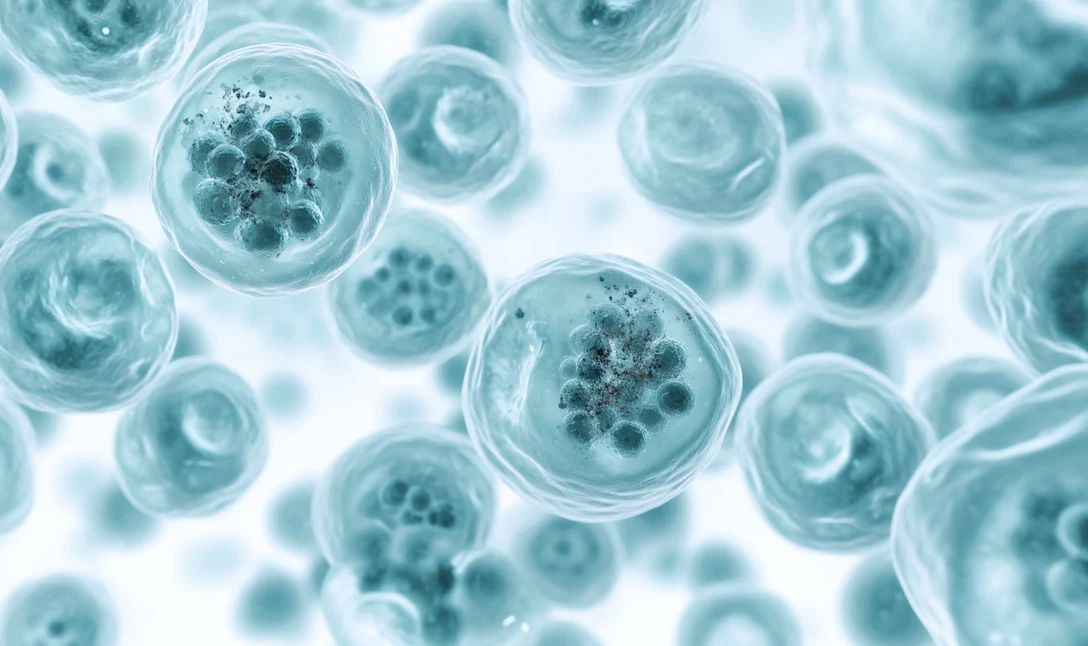
SASP is essentially the chemical conversation coming from the zombie cell. When senescent cells accumulate, that conversation can encourage inflammation, disturb nearby healthy cells and affect the structural material surrounding them.
This becomes particularly relevant in the dermis, where fibroblasts produce collagen and elastin.
Research from Seoul National University College of Medicine and Seoul National University Hospital in 2025 confirmed that aging skin contains senescent fibroblasts associated with reduced tissue function. Their work also demonstrated that changing the number of these cells could correspond with changes in collagen, elastin and hydration.
The conclusion is straightforward: zombie cells can alter the environment in which healthy skin cells are trying to work.
Cellular senescence itself still serves useful biological roles, including preventing damaged cells from continuing to divide. The concern develops when senescent cells remain and accumulate over time.
The problem involves both what the zombie cell stops doing and what it continues doing.
A senescent fibroblast has stopped dividing, which reduces its contribution to normal renewal. At the same time, its inflammatory signaling can influence neighboring tissue and contribute to enzymes that degrade parts of the skin’s supporting matrix.
Over years, that creates an increasingly difficult environment for healthy fibroblasts. Collagen production declines. Elasticity changes. Repair becomes slower. Chronic low-grade inflammation becomes increasingly associated with aging tissue.
This is exactly why zombie cells have become relevant to the skin longevity movement. Skin longevity shifts the beauty conversation away from simply correcting wrinkles or laxity after they appear and toward preserving how well skin cells, repair systems and structural tissue continue to function over time. From that perspective, senescent cells matter because they represent cells that have already lost part of their normal function while continuing to influence the health of the surrounding tissue.
Scientists therefore see senescent cells as one possible intervention point within a much larger aging process. They sit alongside UV damage, hormonal change, genetics, oxidative stress, mitochondrial decline and immune changes that collectively determine how well skin ages.
That also explains why calling every wrinkle a “zombie-cell problem” would oversell the biology. The significance of senescence lies deeper than a single visible sign. Skin longevity asks whether the cellular environment can stay functional for longer, and zombie-cell science asks what happens when part of that environment starts working against it.
The more useful idea is this: if aging skin contains an increasing population of cells sending disruptive signals, reducing their influence may create a healthier environment for the functioning cells that remain.
From there, science has developed two major strategies.
The easiest way to understand current research is through two words: senolytics and senomorphics.
Senolytics aim to eliminate senescent cells.
One important human study came from Mayo Clinic in 2019. Nine adults received a short course of the oral drugs dasatinib and quercetin, followed by tissue testing.
After treatment, markers associated with senescent cells in skin fell by around 20% to 31%, while several measurements in fat tissue also declined.
The important conclusion was larger than the percentages: researchers demonstrated in human tissue that senescent-cell burden could actually be reduced with a pharmacological intervention.
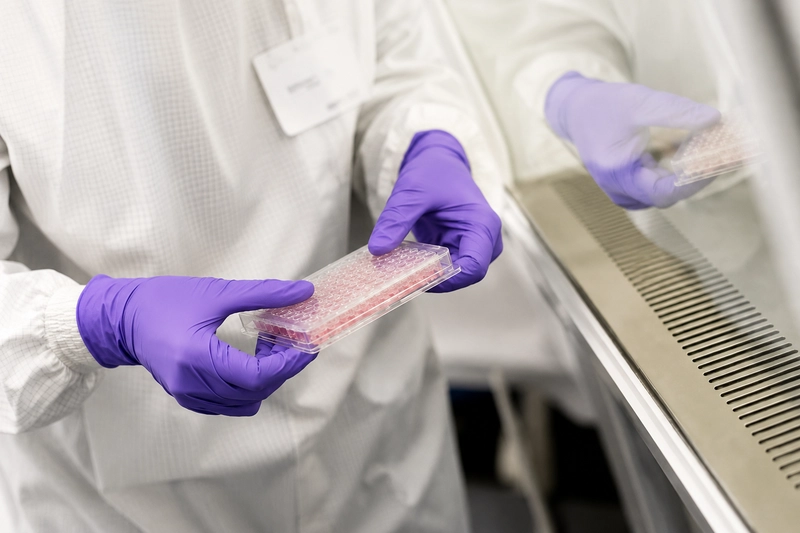
That established the possibility of truly “killing” zombie cells.
It also sits firmly inside experimental medicine. Dasatinib is a prescription cancer medication, and senolytic treatment remains an area of clinical research.
A jar of face cream operates in a different category.
That brings us to senomorphics.
A senomorphic aims to calm the zombie cell, reducing the harmful signals associated with senescence or helping keep cells from progressing deeper into that dysfunctional state.
This is where current skincare makes much more sense.
In 2023, research associated with OneSkin studied its Pep 14 peptide in human skin cells and human skin tissue from donors of different ages. The treatment reduced several markers associated with cellular senescence and inflammatory signaling.
The practical conclusion: the peptide appeared capable of making senescent cells behave in a healthier way, while the evidence centered on modulation of senescence rather than direct elimination.
That distinction should matter whenever a product advertises itself as “zombie-cell skincare.”
Calming a zombie cell and killing a zombie cell are two different biological claims.
Aesthetic procedures add a third possibility: remodel the tissue so that the population of senescent cells decreases while healthier cells repopulate the area.
In 2025, Seoul National University College of Medicine and Seoul National University Hospital studied 30 Korean women aged 60 and older.
Each participant received regular microneedling on one side of the face and microneedle radiofrequency on the other.
After four treatments, skin samples from the radiofrequency-treated side showed fewer senescent fibroblasts and increased numbers of functioning fibroblasts. Researchers also measured increases in collagen and elastin.
The key result is easy to understand:
the treatment changed the cellular population of aging skin.
The area contained fewer senescent fibroblasts and a stronger population of active fibroblasts afterward.

That makes microneedle RF particularly interesting within the zombie cell conversation. The procedure already had an established role in collagen remodeling. This research suggests that part of its rejuvenating effect may also involve changing which fibroblasts remain inside the tissue.
The treatment therefore works through controlled injury and repair. Heat creates a wound-healing response, damaged cells are cleared, and active fibroblasts repopulate the area.
Current science gives consumers a fairly simple hierarchy.
Reduce the stress that creates them. UV radiation contributes to cellular damage and senescence, making consistent sunscreen one of the most practical ways to reduce preventable cellular stress.
Calm them through skincare. Emerging senomorphic ingredients aim to reduce senescence-related signaling. Products based on technologies such as Pep 14 belong here.
Reduce their population through procedures. Human research from Seoul National University suggests microneedle radiofrequency can reduce senescent fibroblasts while increasing active fibroblasts, collagen and elastin.
Kill them through senolytics. True senolytic treatment currently belongs mainly to experimental medicine, where oral drugs have produced measurable reductions in senescent cells in human tissue.
The zombie cell is therefore far more than a catchy longevity term. It gives beauty a new way of thinking about aging: skin quality depends partly on what healthy cells are doing, and partly on what dysfunctional cells are allowed to keep doing around them. So whenever a product promises to target zombie cells, the useful question is remarkably simple: Does it kill them, calm them, or help the skin replace them? Three claims. Three very different levels of evidence.
Advertisement