MENU
Close





Etro SS27 is all haze, heat and floating paisley, yet beneath the beauty sits a growing pressure to make its romantic bohemia feel unmistakably current.
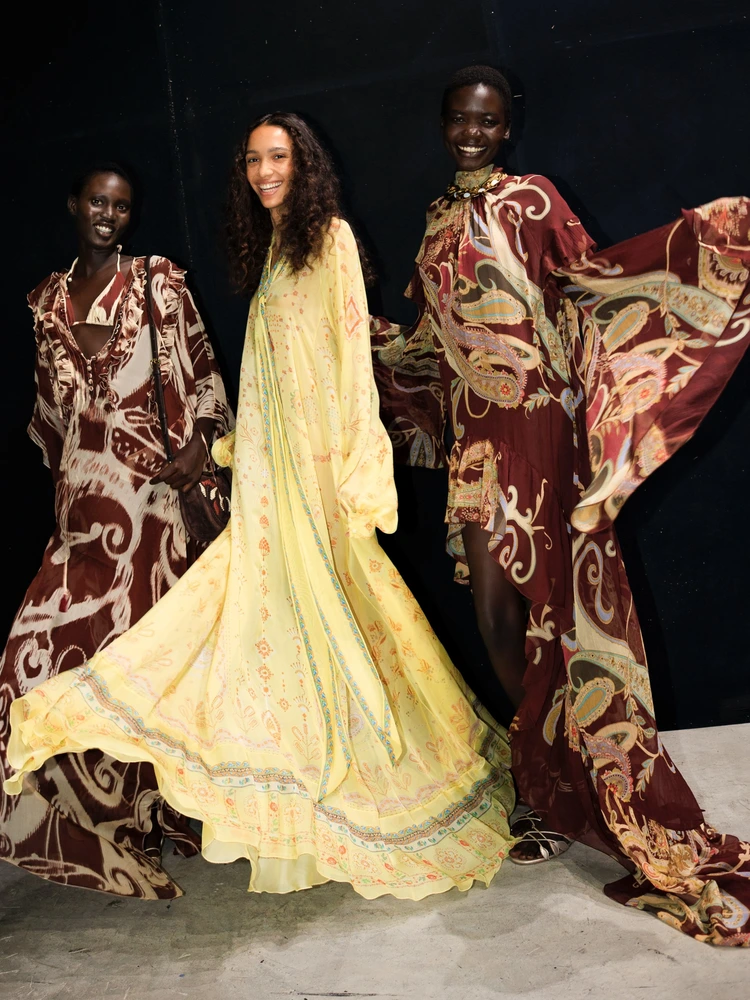
Etro SS27 is all haze, heat and floating paisley, yet beneath the beauty sits a growing pressure to make its romantic bohemia feel unmistakably current.
September 27, 2026
Advertisement

Advertisement



Milan received Etro SS27 in a considerably softer register. The collection, titled Halo, marked the house’s first major womenswear runway following Marco De Vincenzo’s departure in March 2026, placing the internal design studio in charge of one of Italian fashion’s most recognizable visual languages.
For a brand historically associated with saturated pattern and exuberant layering, Halo feels almost sun-drained. After years of strong creative direction, the house has entered a period where its familiar codes remain visible while the outline of its next identity is still forming.
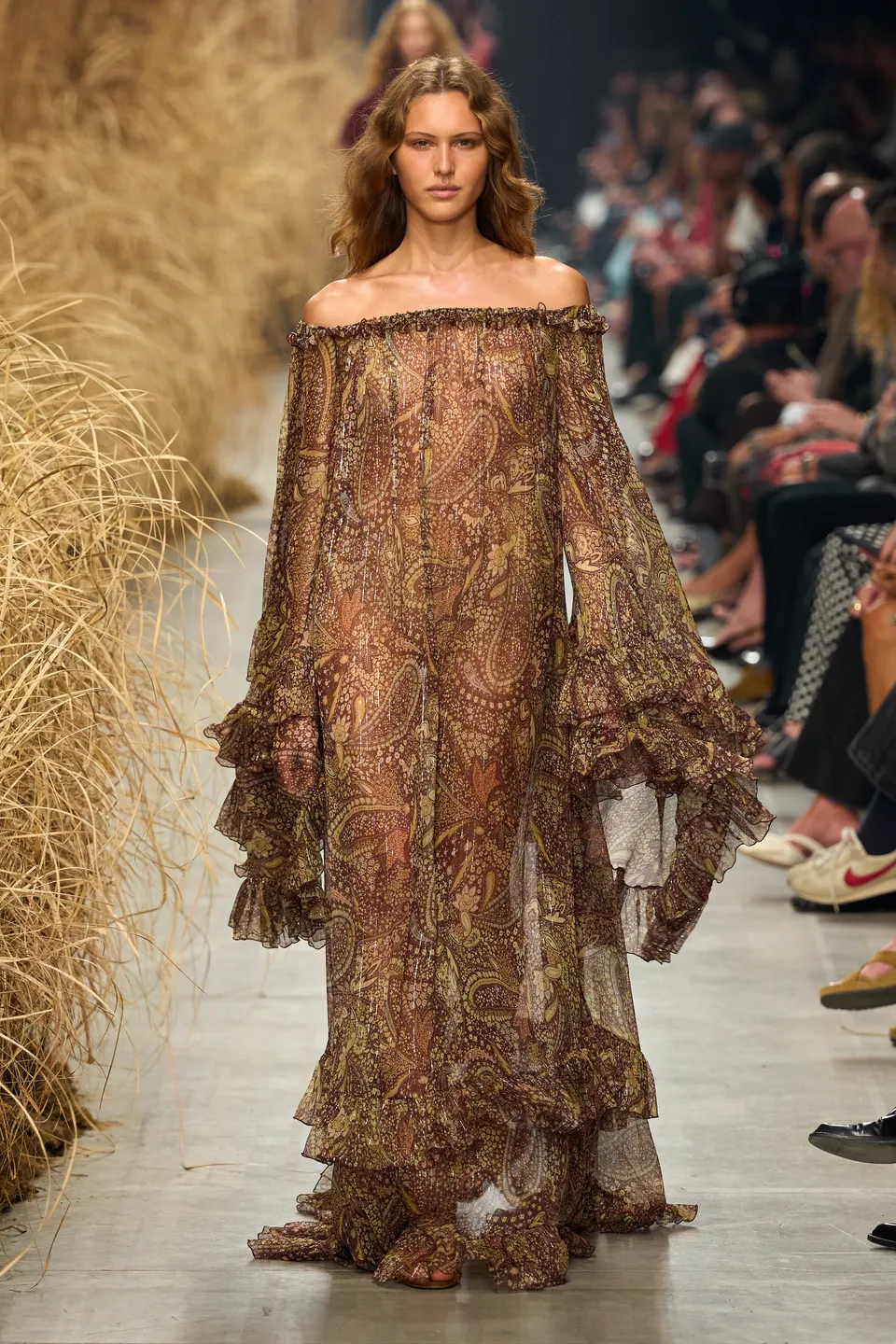
Paisley usually announces itself immediately at Etro. Here, it behaves differently.
The design team enlarges portions of the motif until their original geometry becomes difficult to read. Elsewhere, color fades across the surface, leaving paisley almost like the ghost of a print that once carried greater saturation. Some fabrics hold only fragments, as though hours of sunlight have slowly burned sections away.
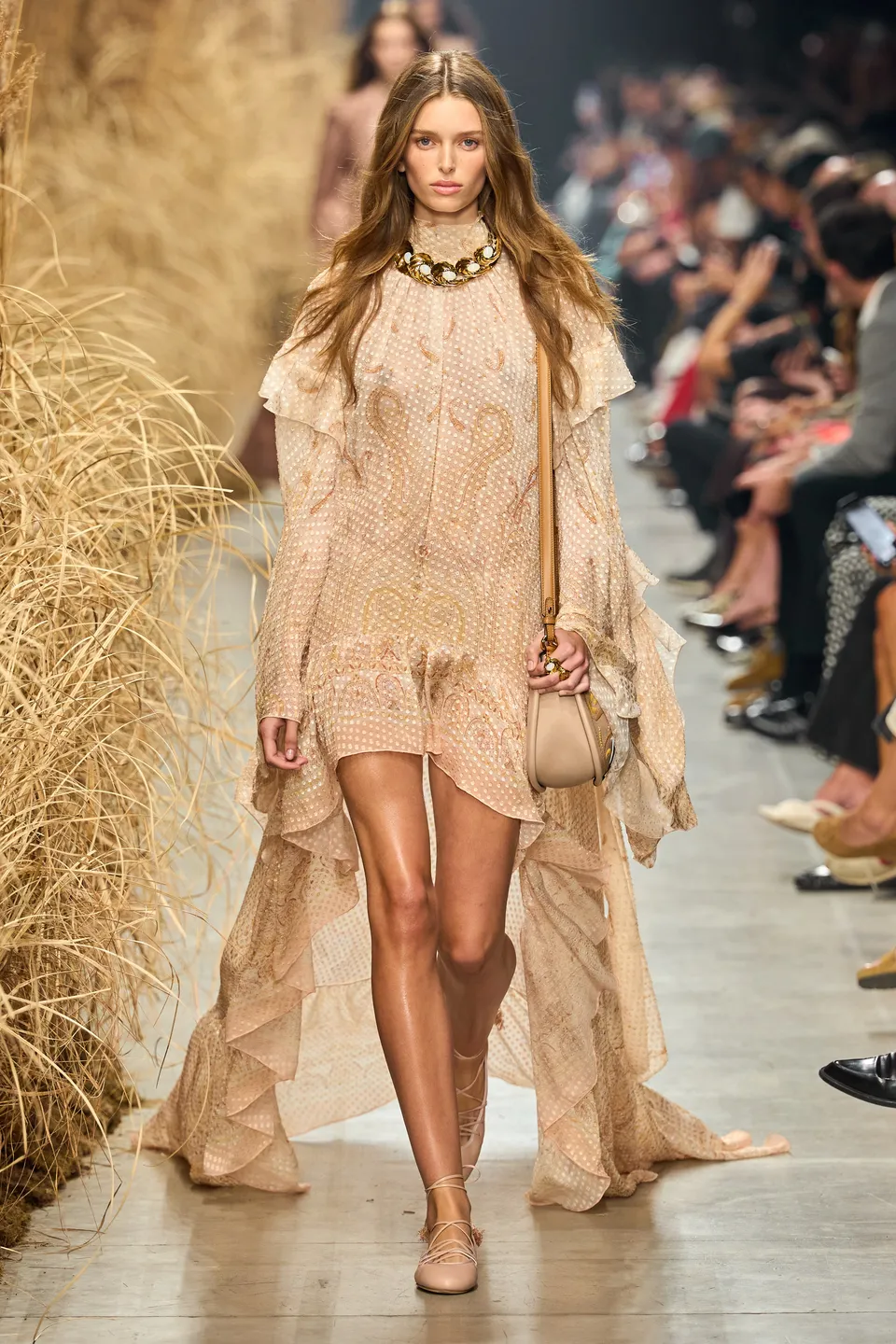
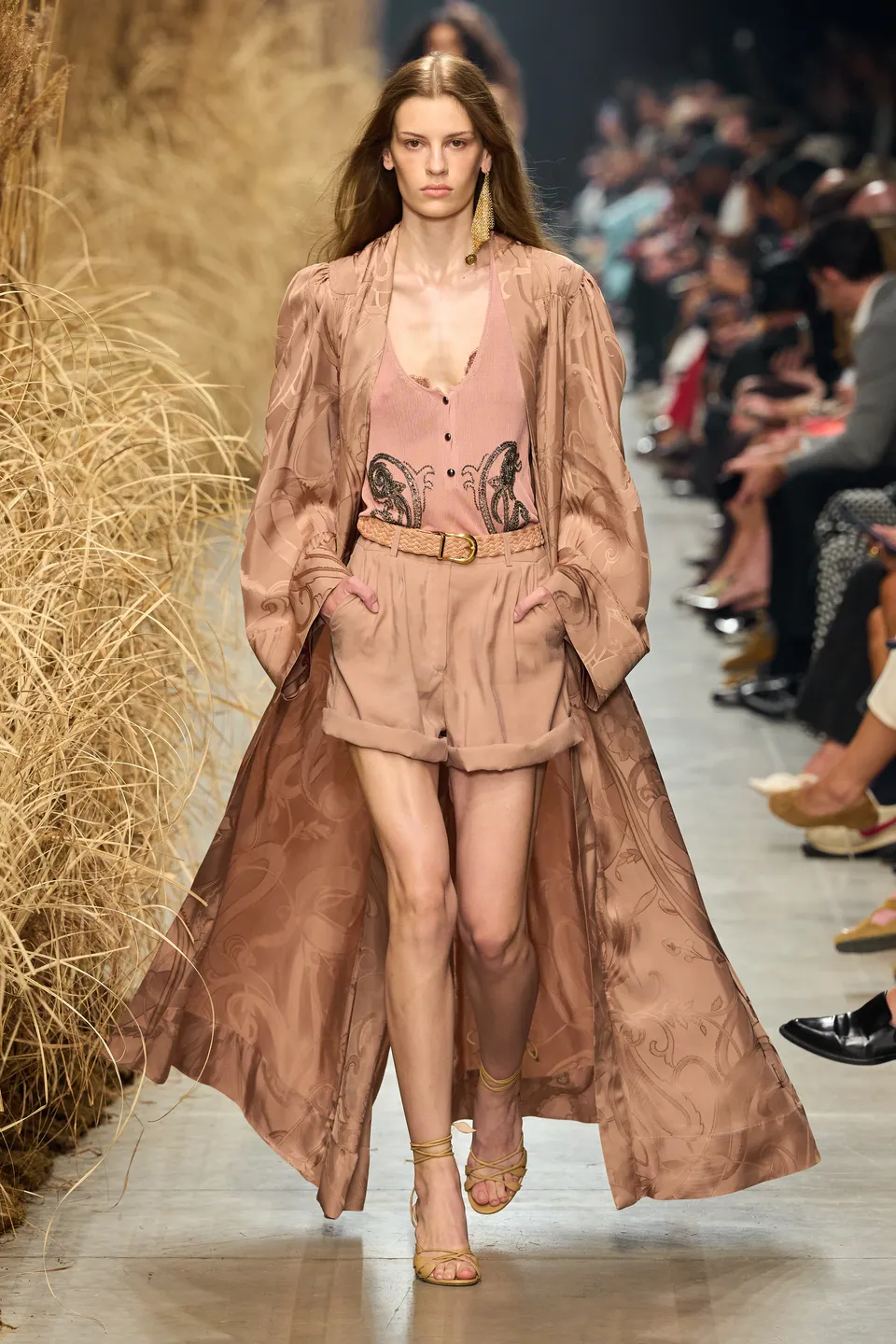
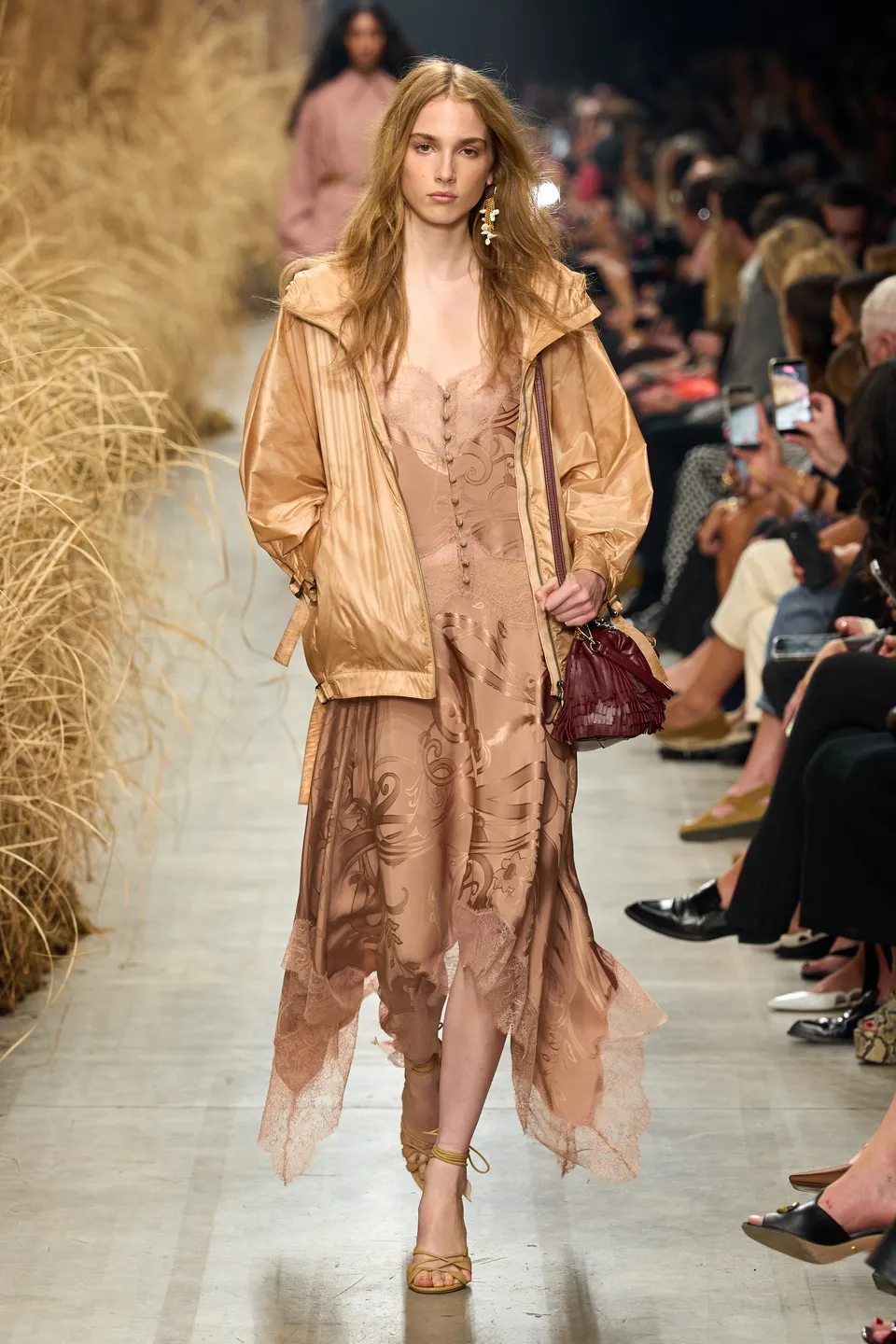
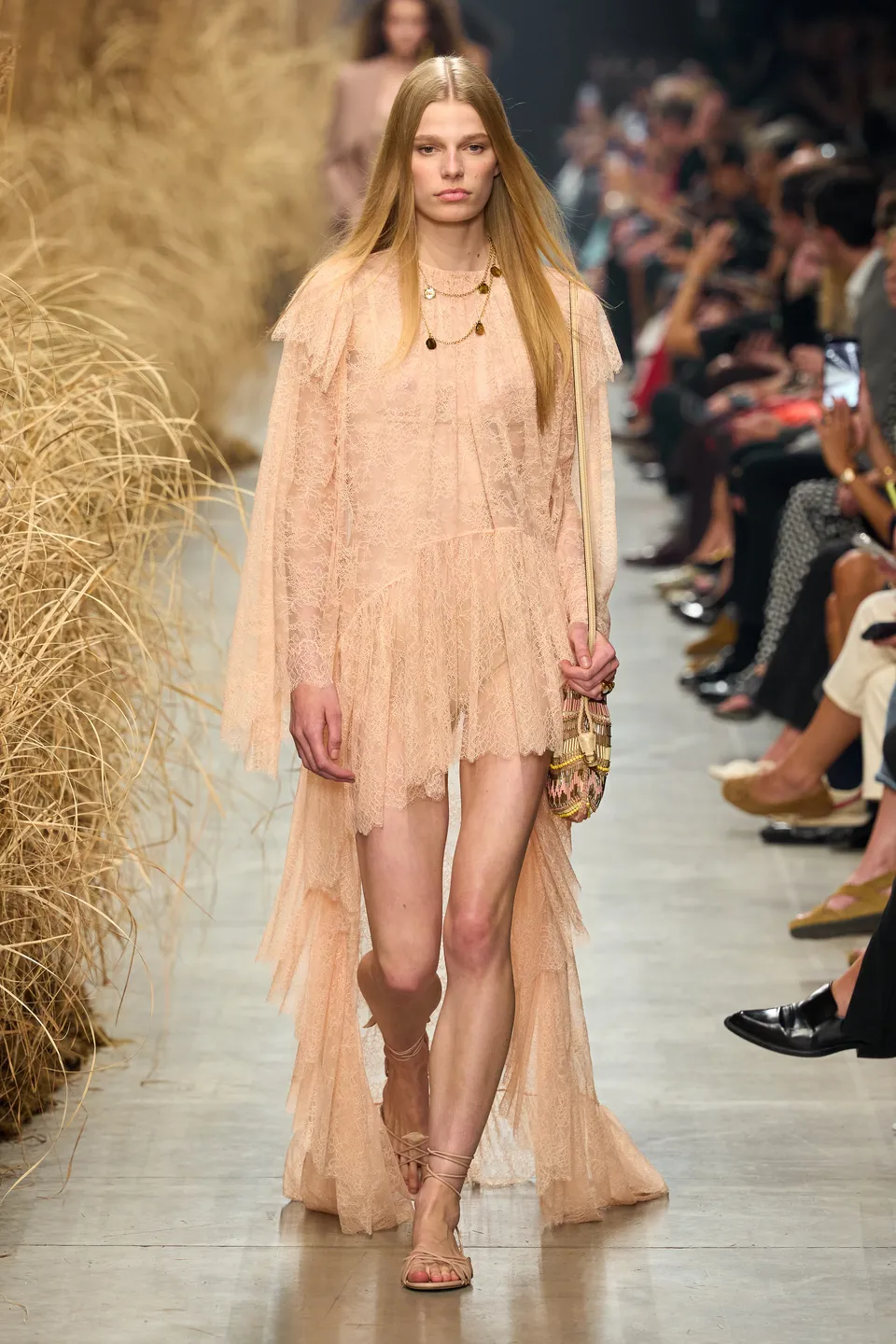
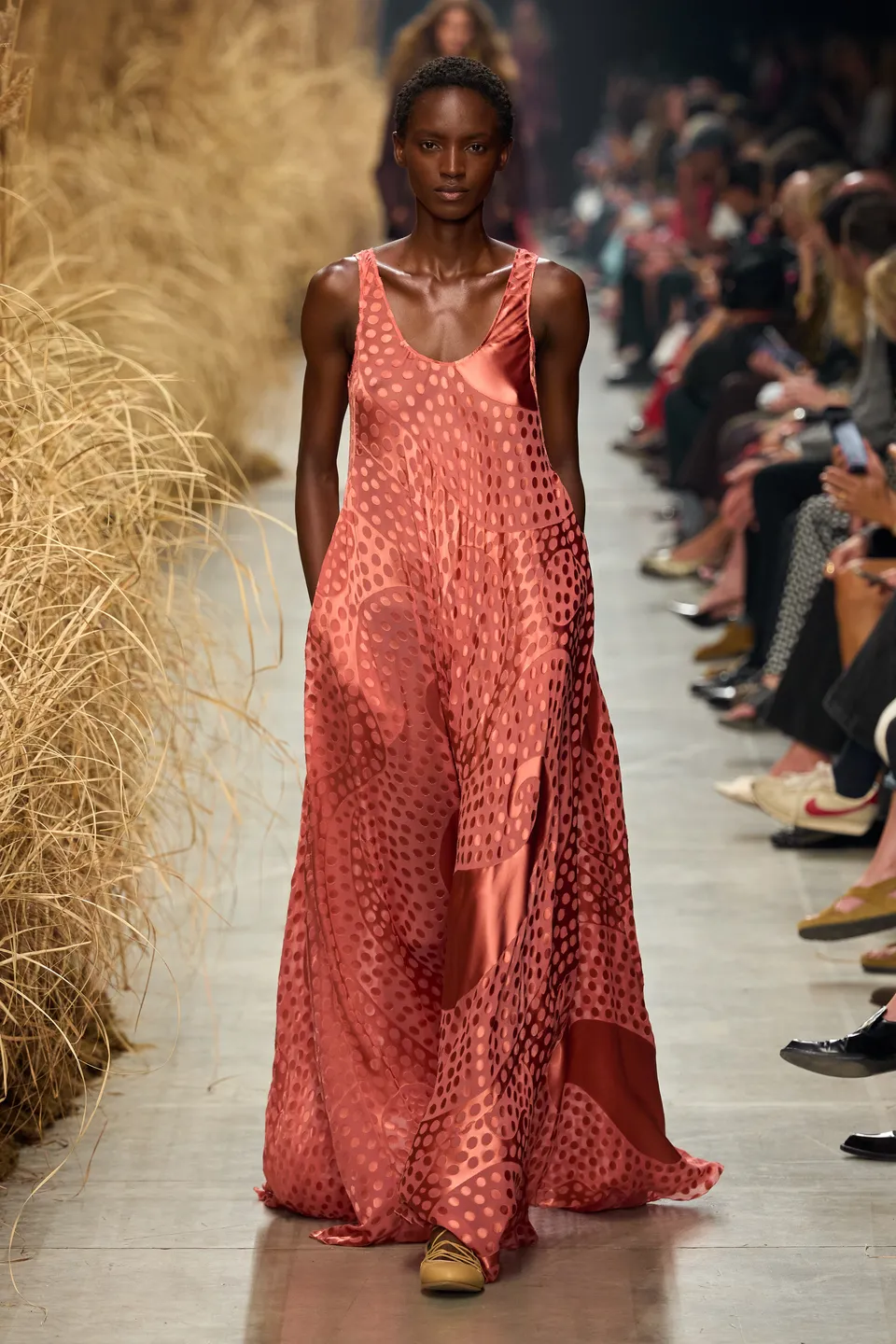
The collection follows the atmosphere of a summer day through color. Pale morning shades gradually warm. Dustier earth tones enter under brighter light. Deeper shades gather toward evening, allowing the runway to change temperature while maintaining a relatively gentle rhythm.
Print becomes less about immediate recognition and more about memory.
A woman appears to have owned these clothes for years, traveled with them, folded them into suitcases, worn them close to salt water, and left them drying beneath the sun.
Marco De Vincenzo spent close to four years expanding Etro through intense color, ruching, fringe, psychedelic pattern and kinetic surfaces. The studio now takes another route. Halo opens space between those elements.
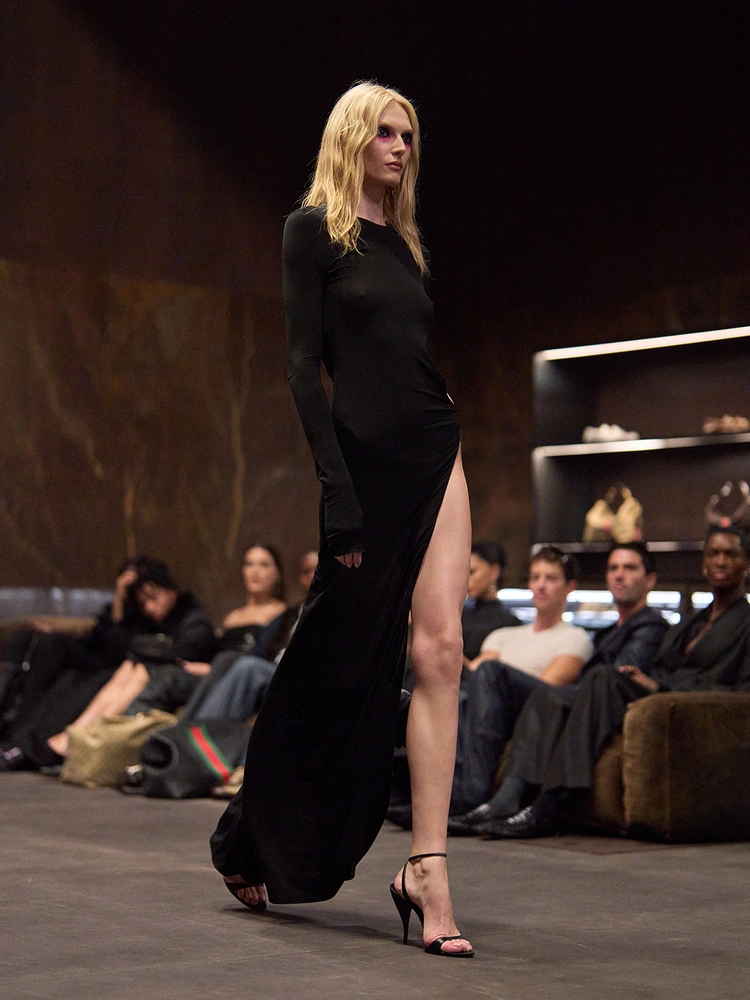
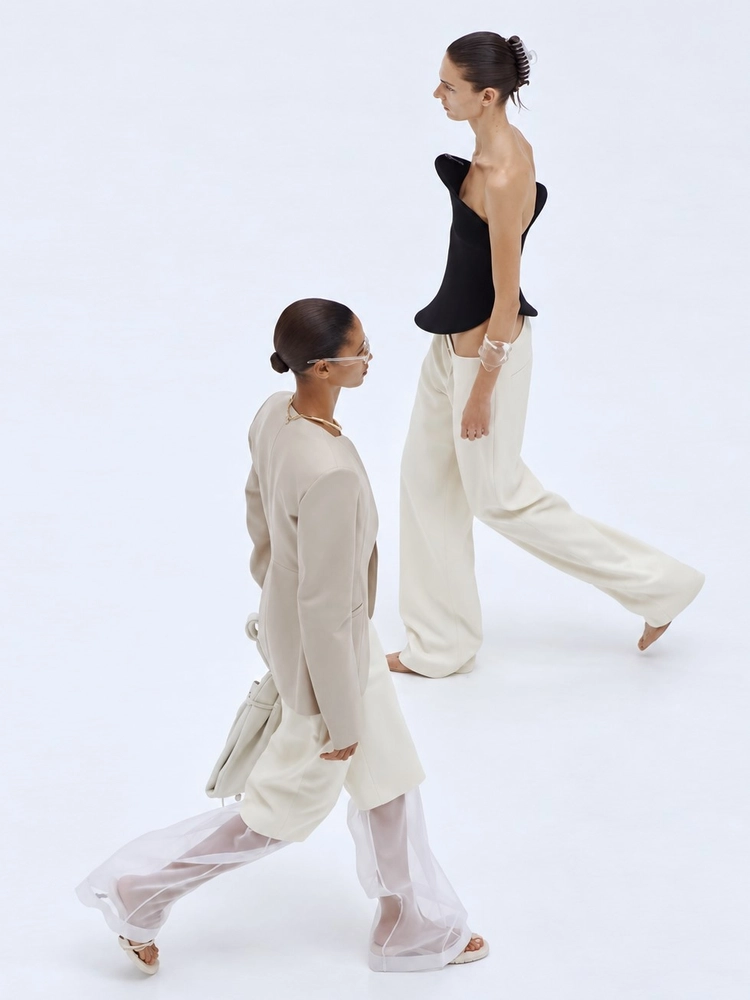
Long dresses follow the body with considerably less visual density. Slip constructions reduce the number of seams and layers competing for attention. Sheer fabrics reveal skin underneath, allowing the wearer to become part of the color composition. Narrow straps and lingerie references give the upper body delicacy, while extended trains carry movement behind the figure.
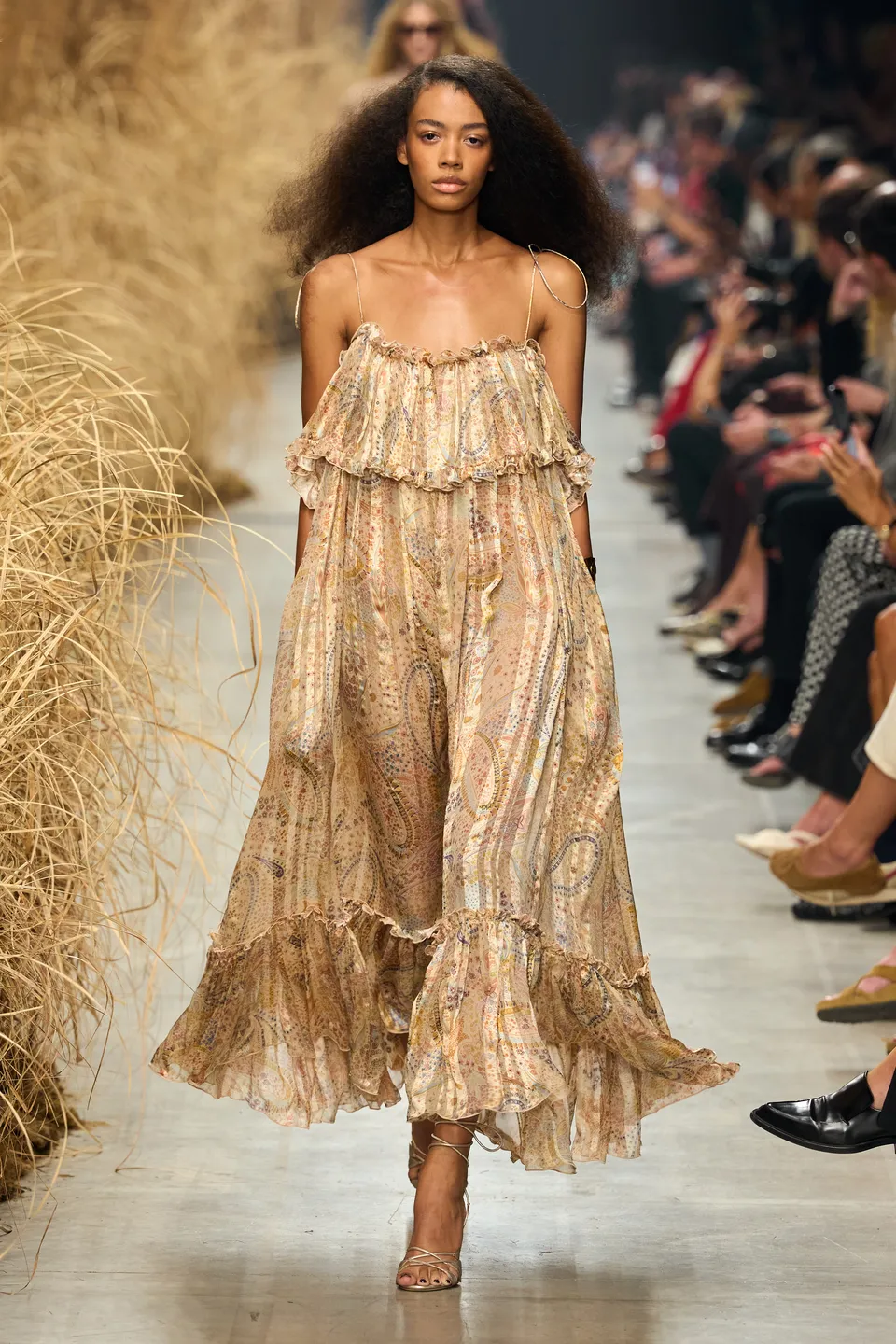
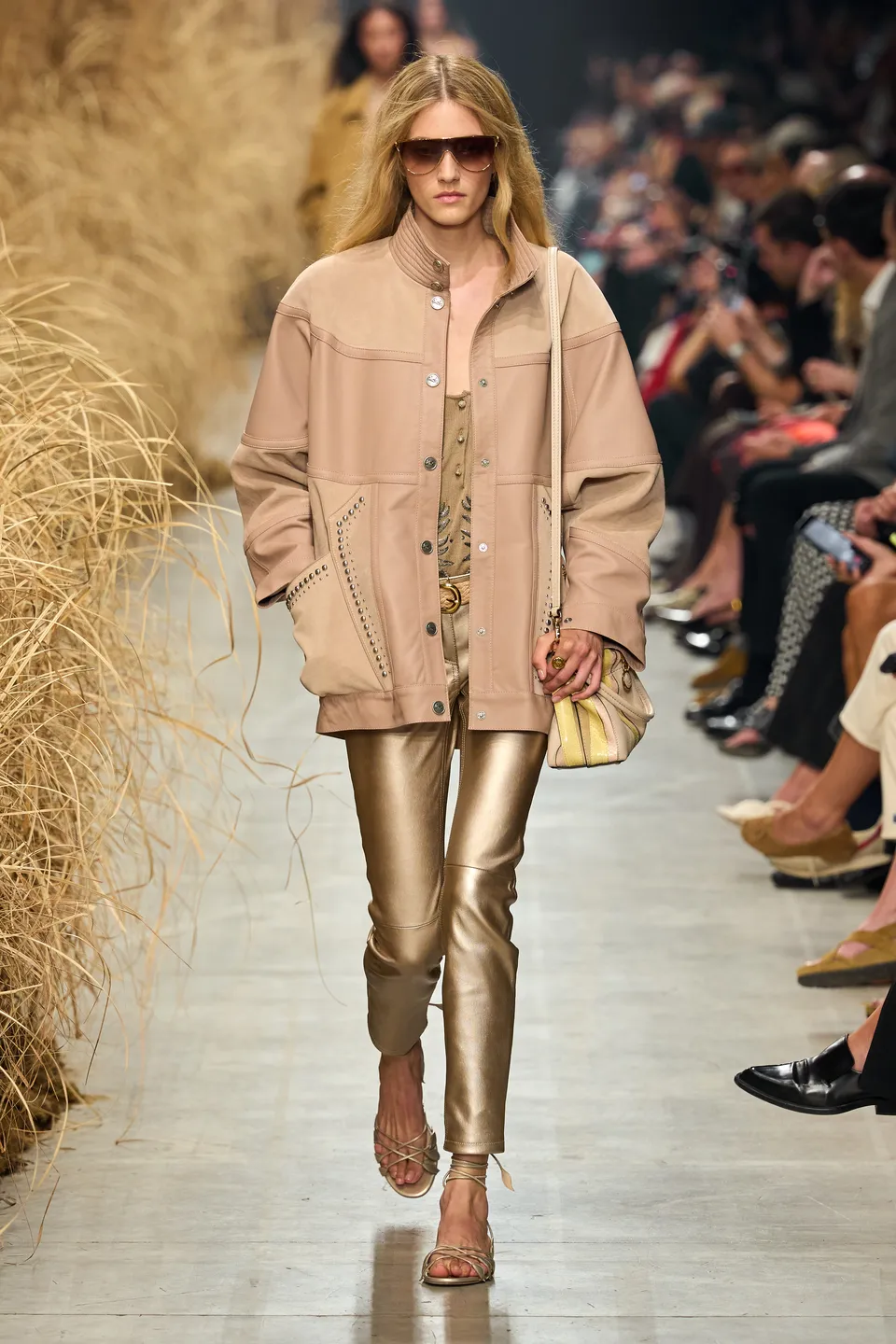
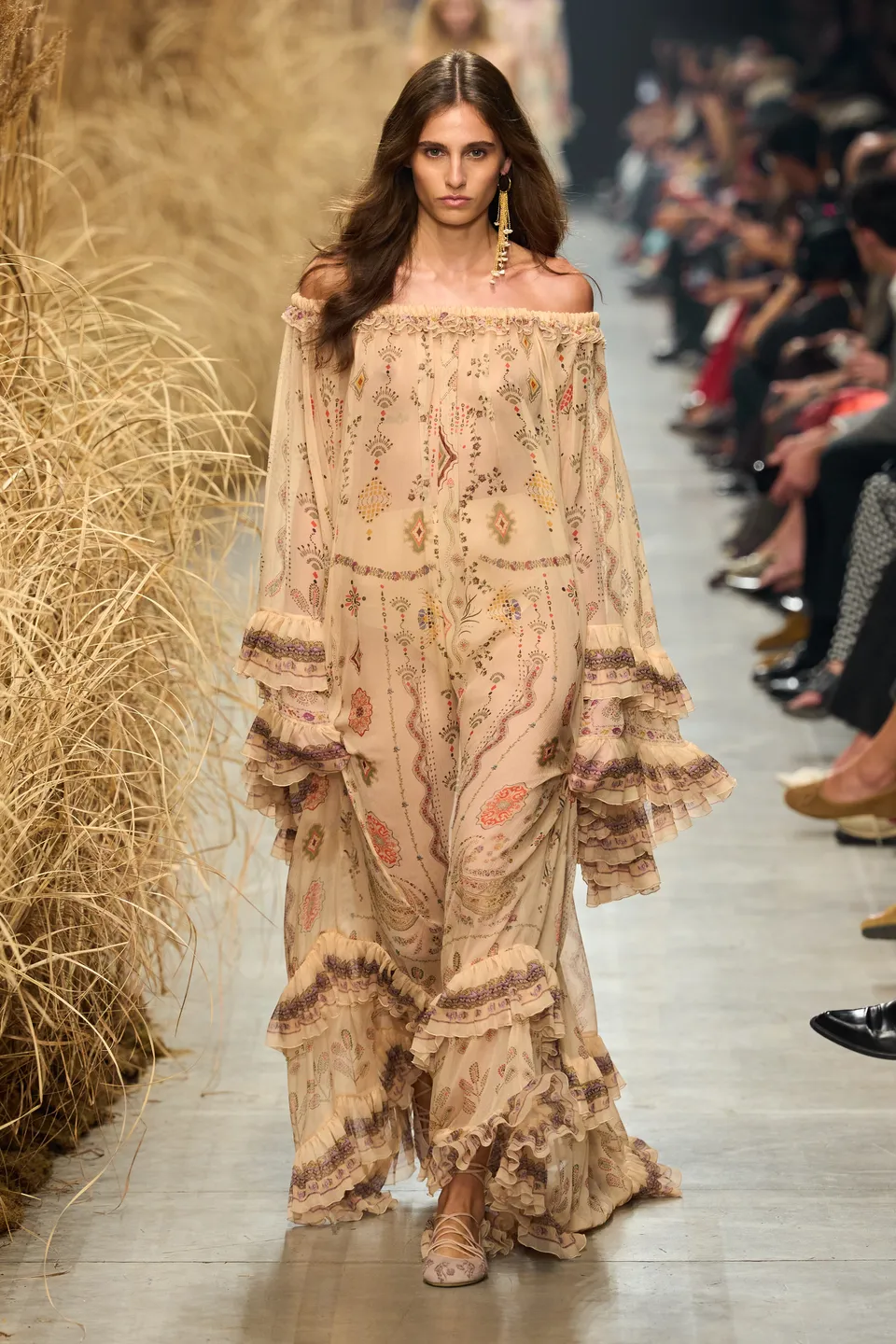
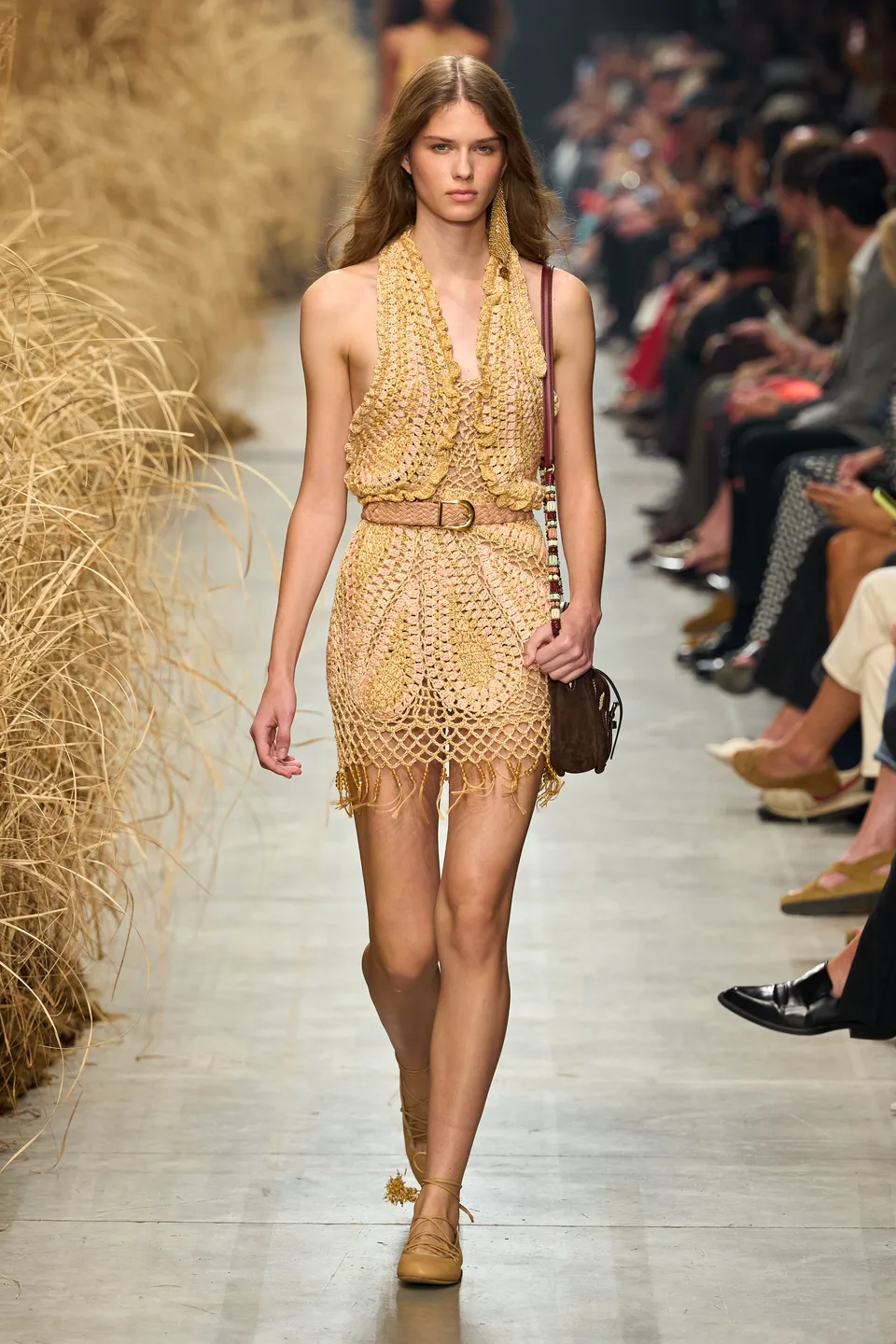
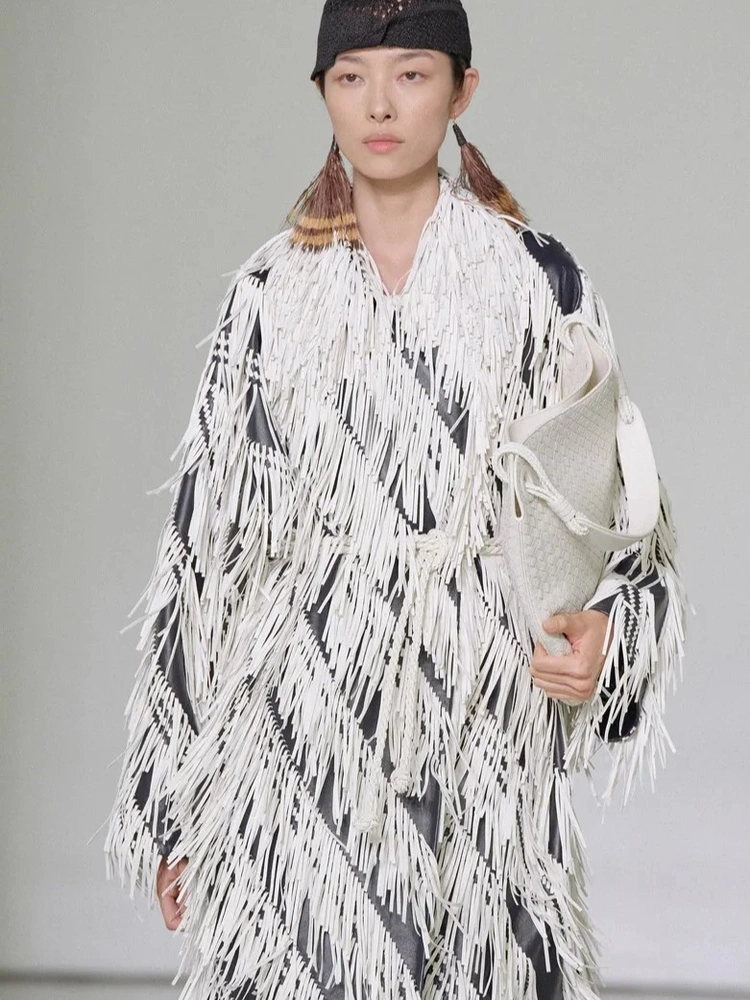
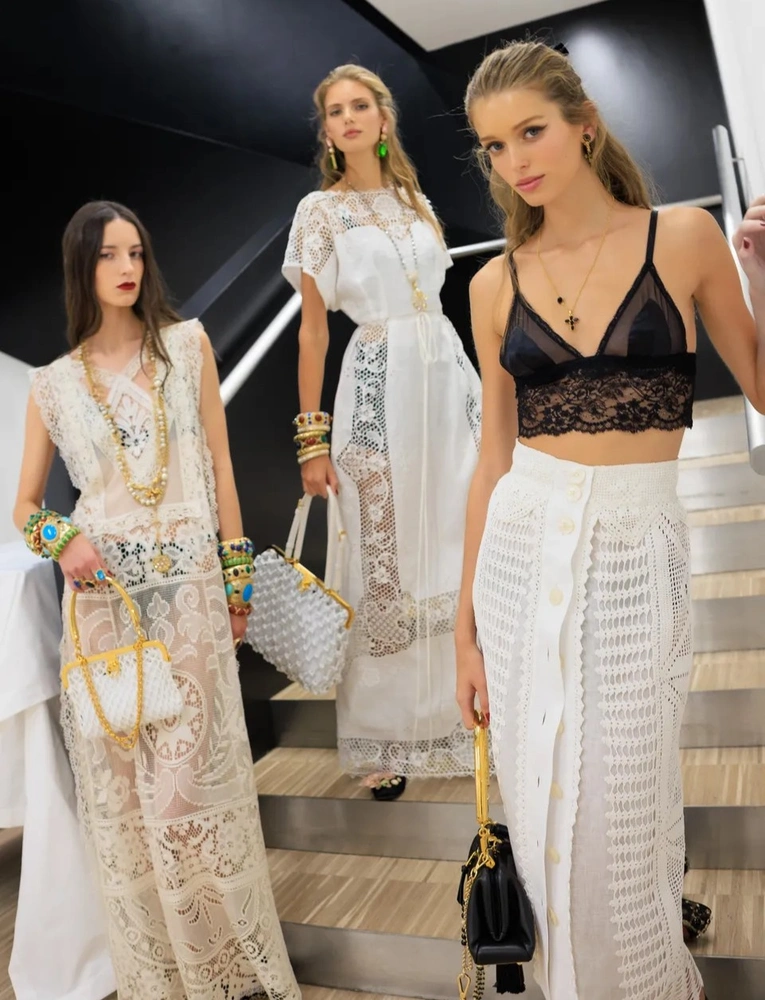
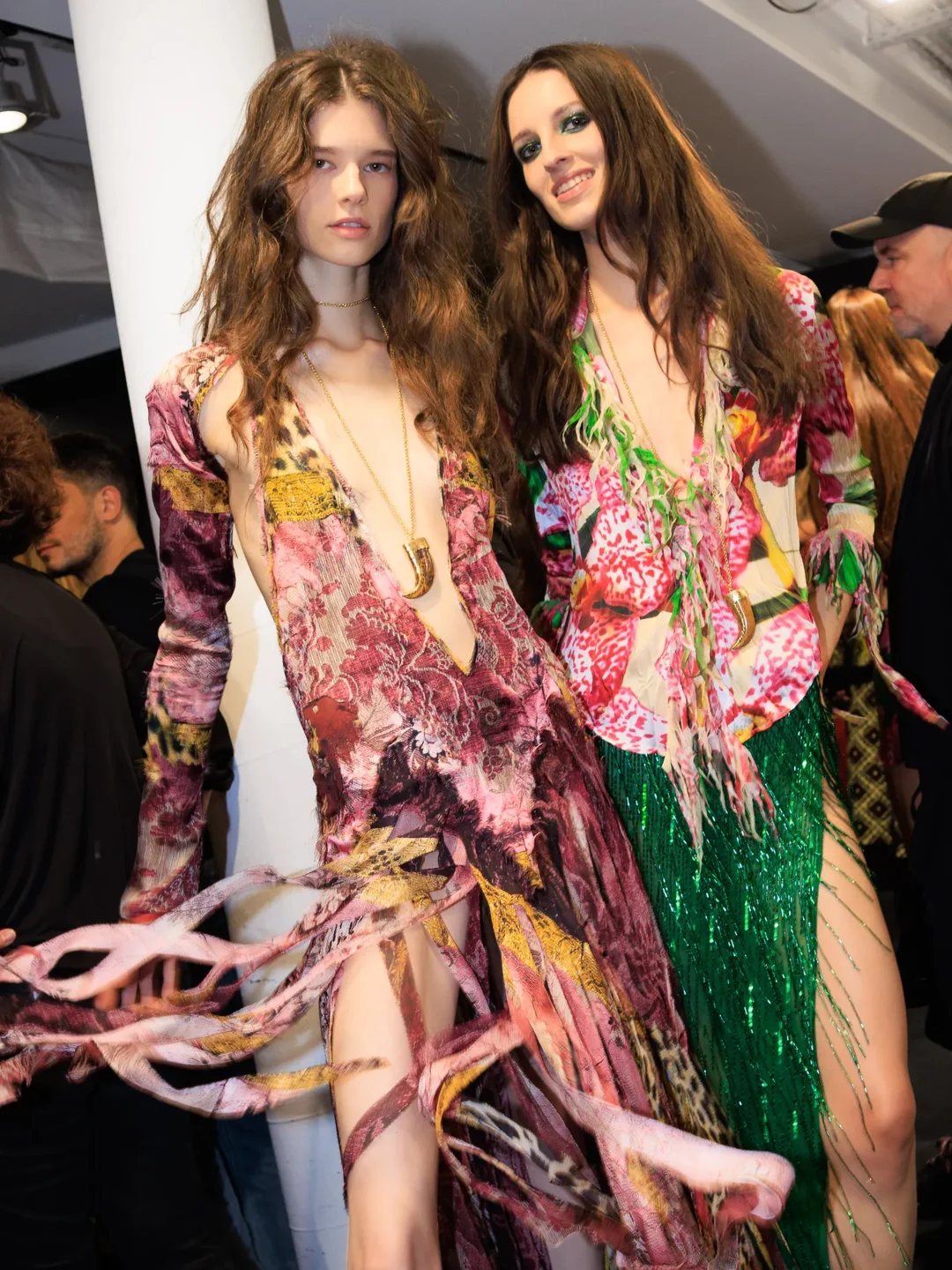
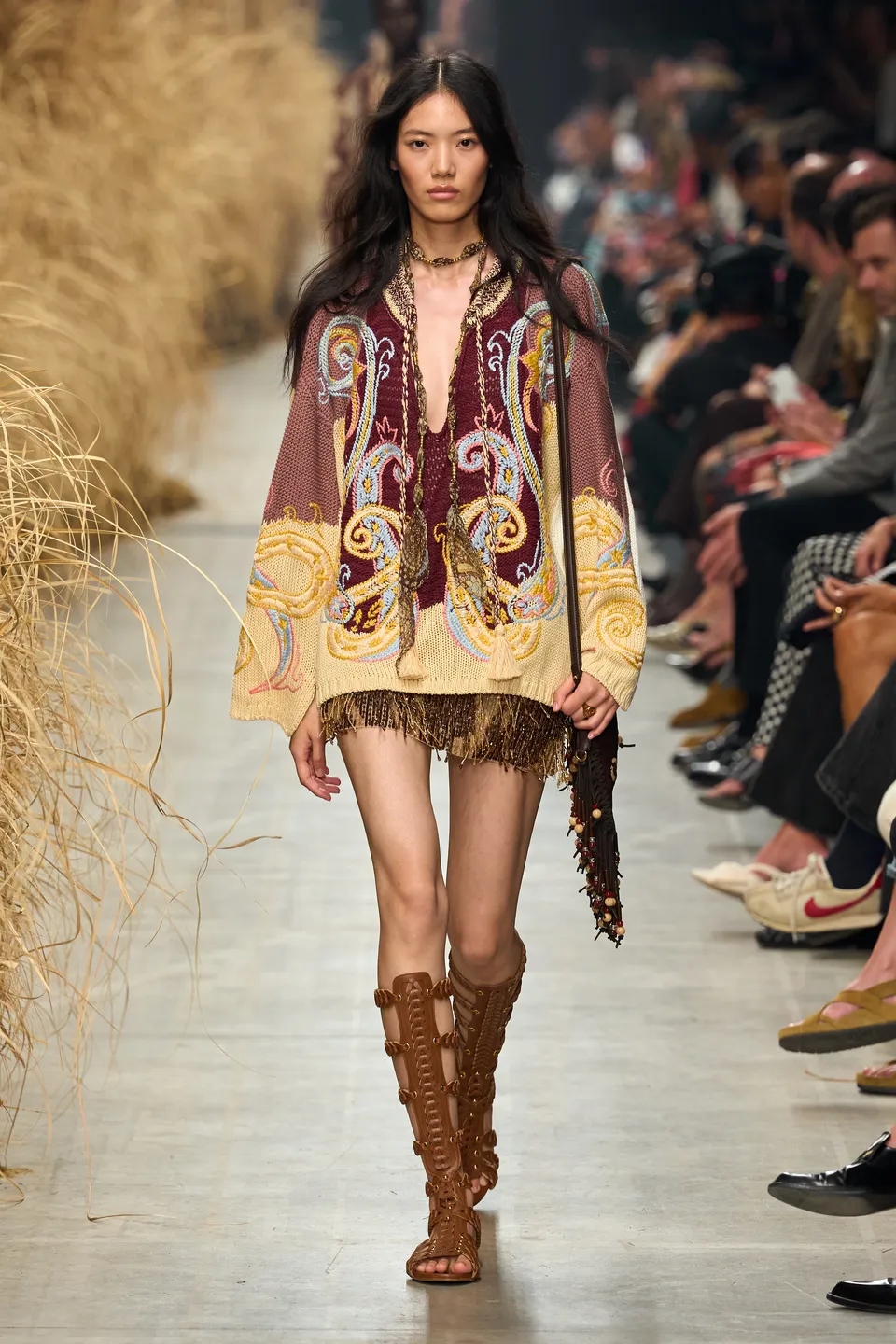
This season’s bohemian woman travels lighter. Fringe still swings from garments, yet it appears as an edge or moving accent. Crochet creates open sections of texture. Lace introduces transparency. The fabrics frequently seem capable of moving with the smallest amount of air.
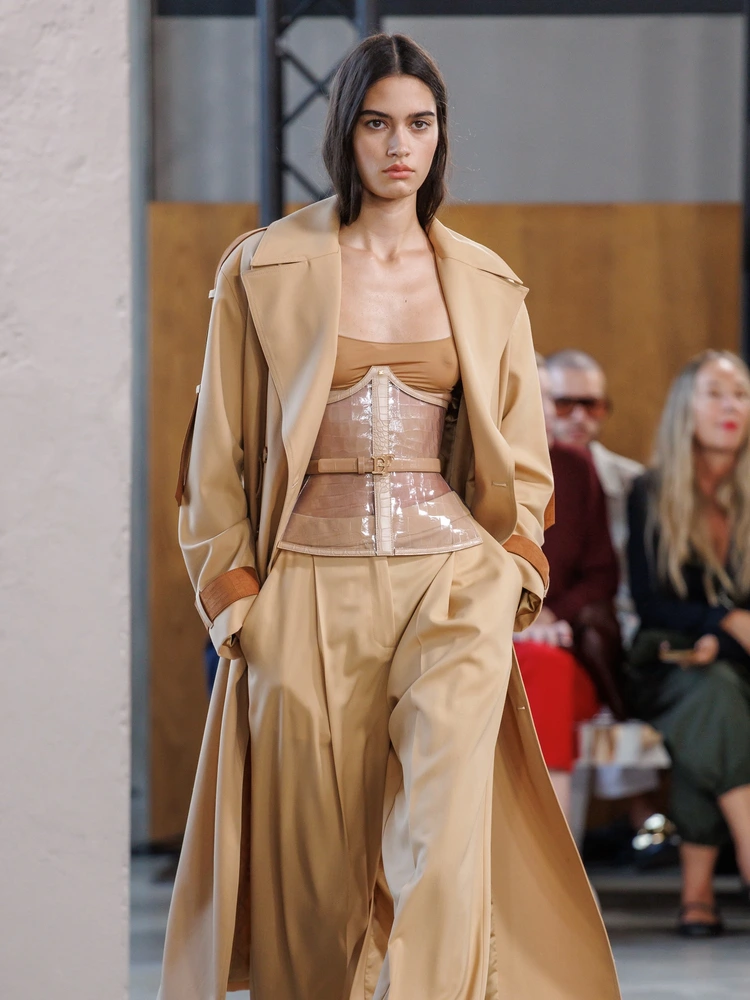
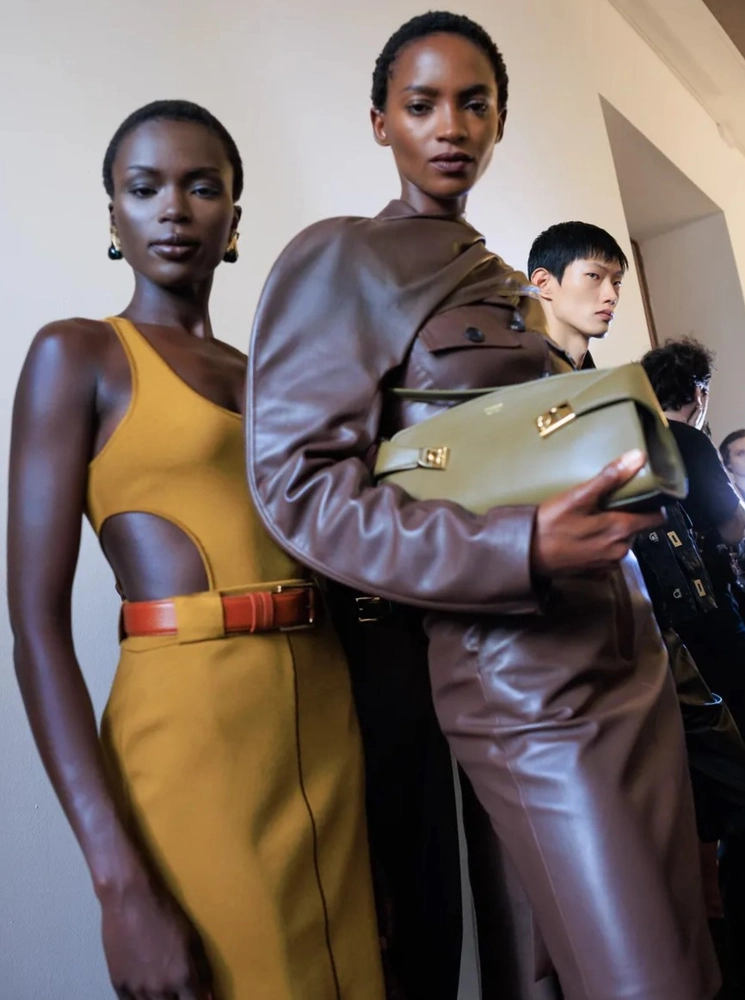
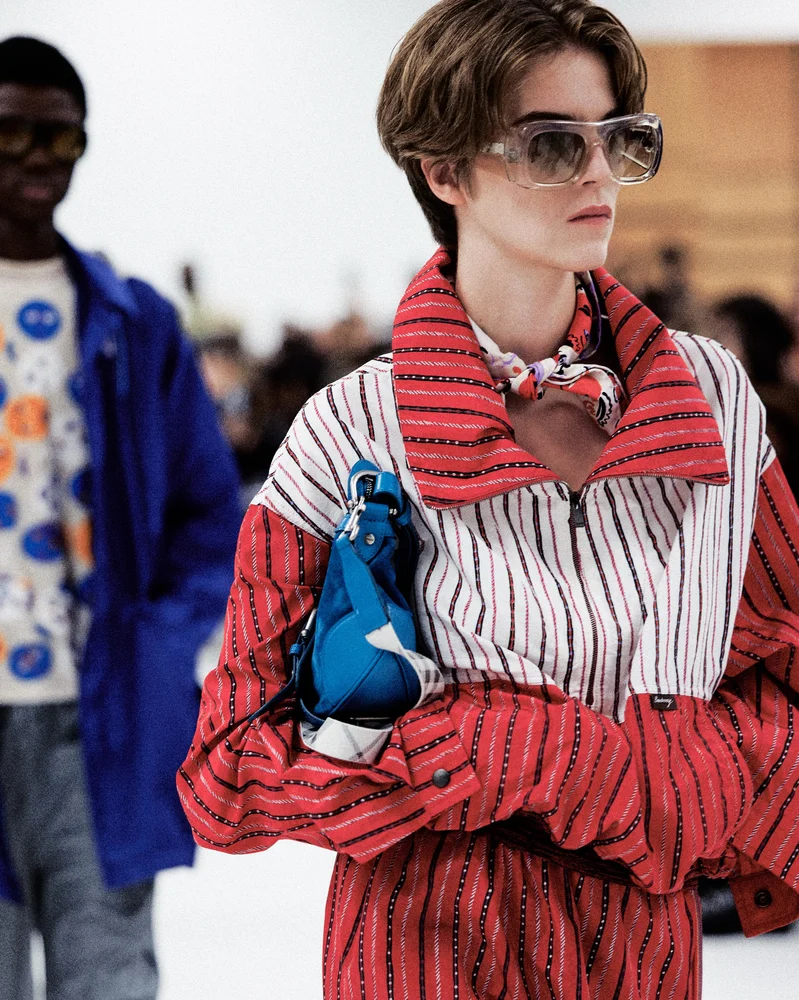
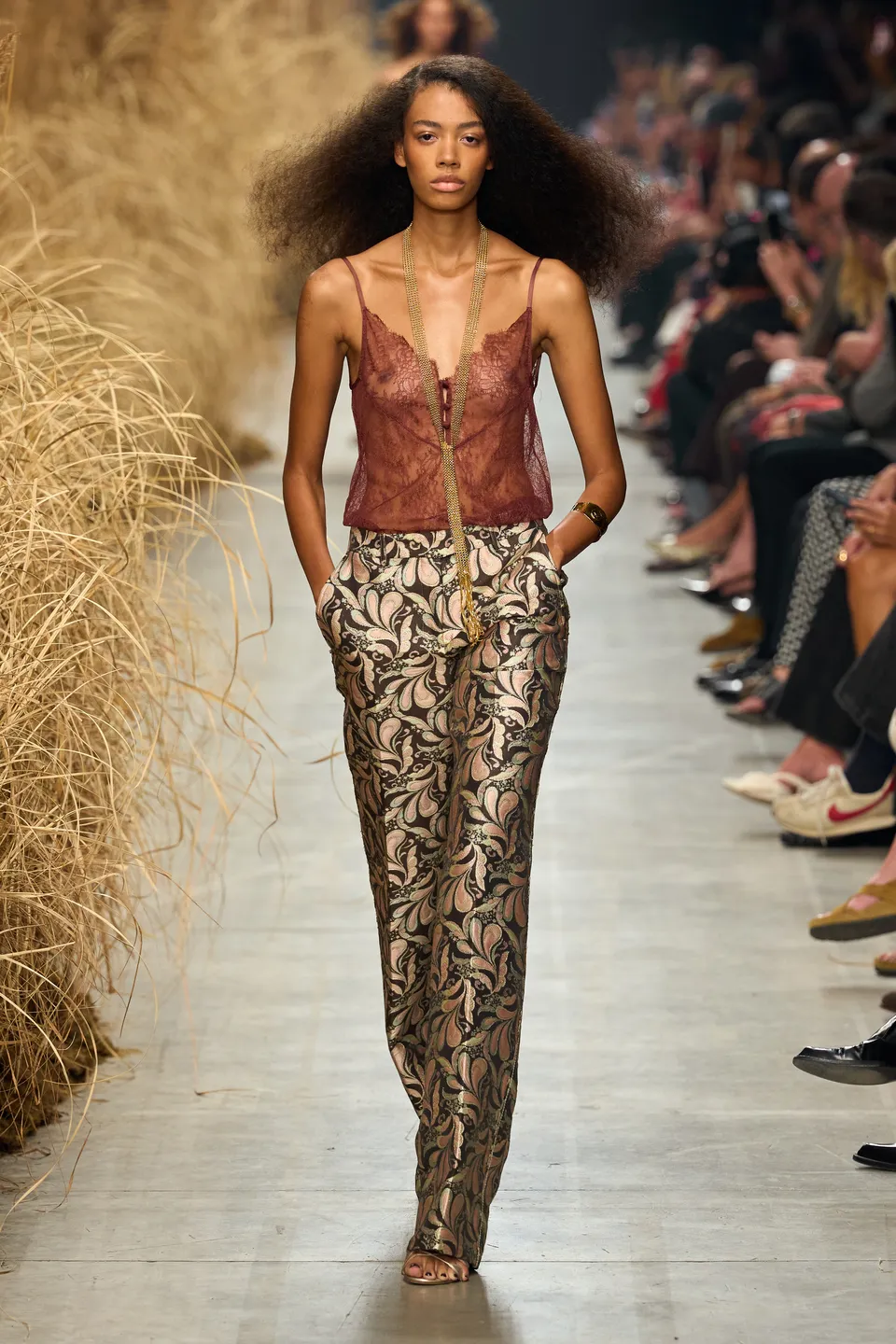
Then more substantial pieces interrupt the softness. Suede blousons hold their shape around the shoulders. Denim brings familiar everyday weight. Tailoring gives the torso and legs clearer architecture. Jacquard trousers provide textile richness within a controlled silhouette.
Suede becomes one of the season’s strongest tools. Paisley appears worked into its surface, allowing a graphic signature to gain depth and tactility. The motif becomes something closer to relief, changing as light moves across the material.
Placing Etro iconography onto an everyday textile shifts paisley away from its usual associations with silk, dresses, and luxurious printed surfaces. The treatment brings the house code into a more casual vocabulary while retaining enough visual irregularity to feel distinctive.
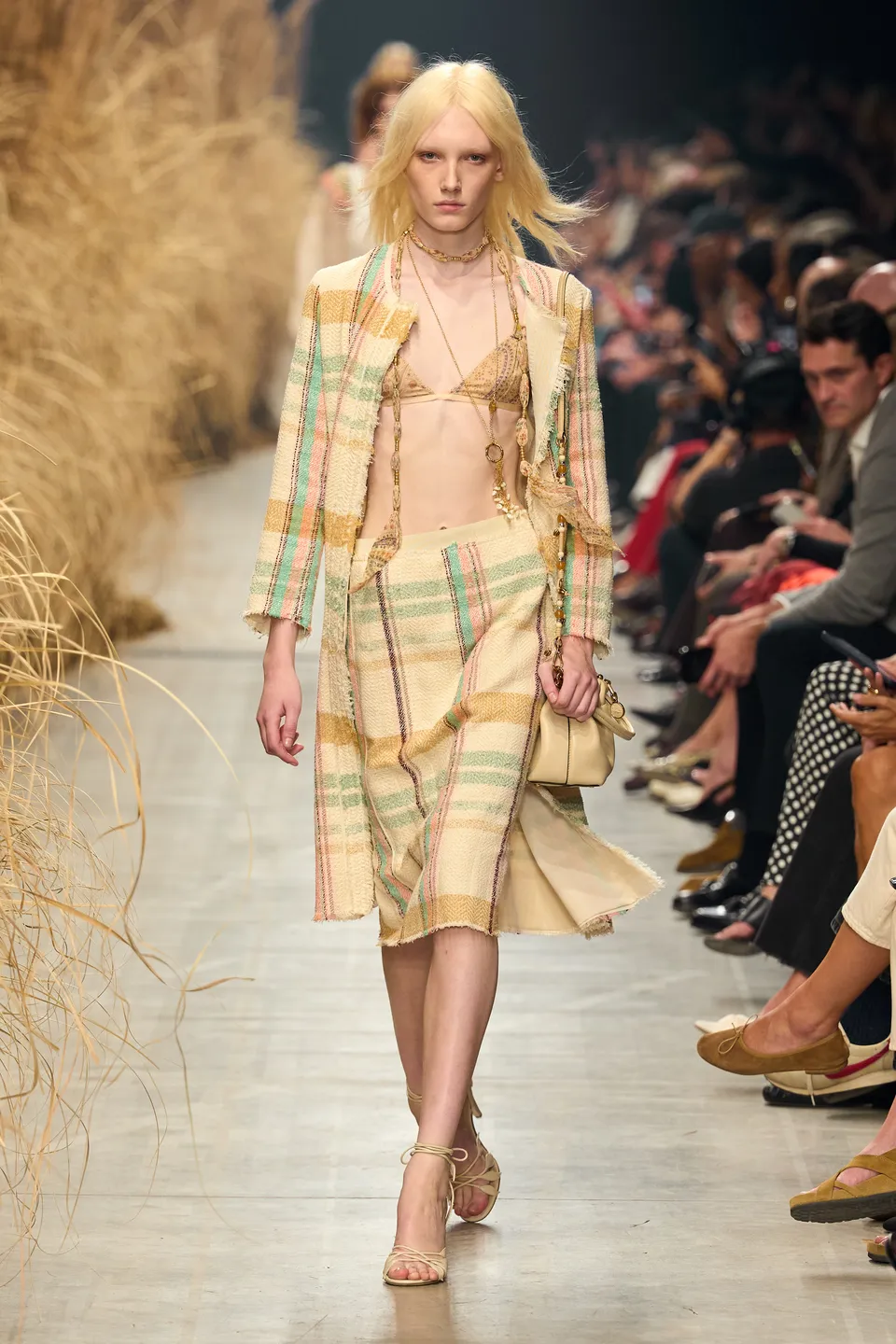
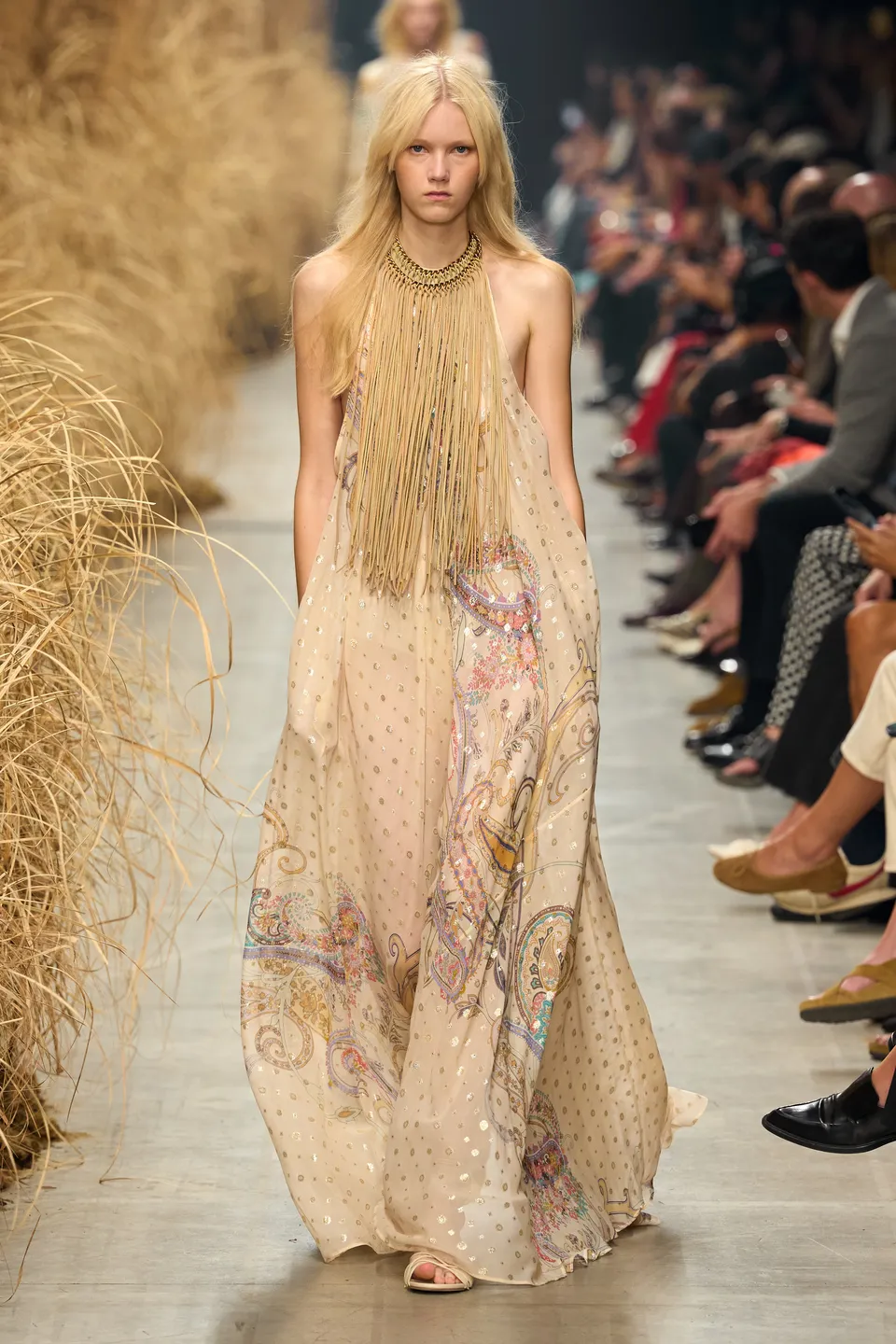
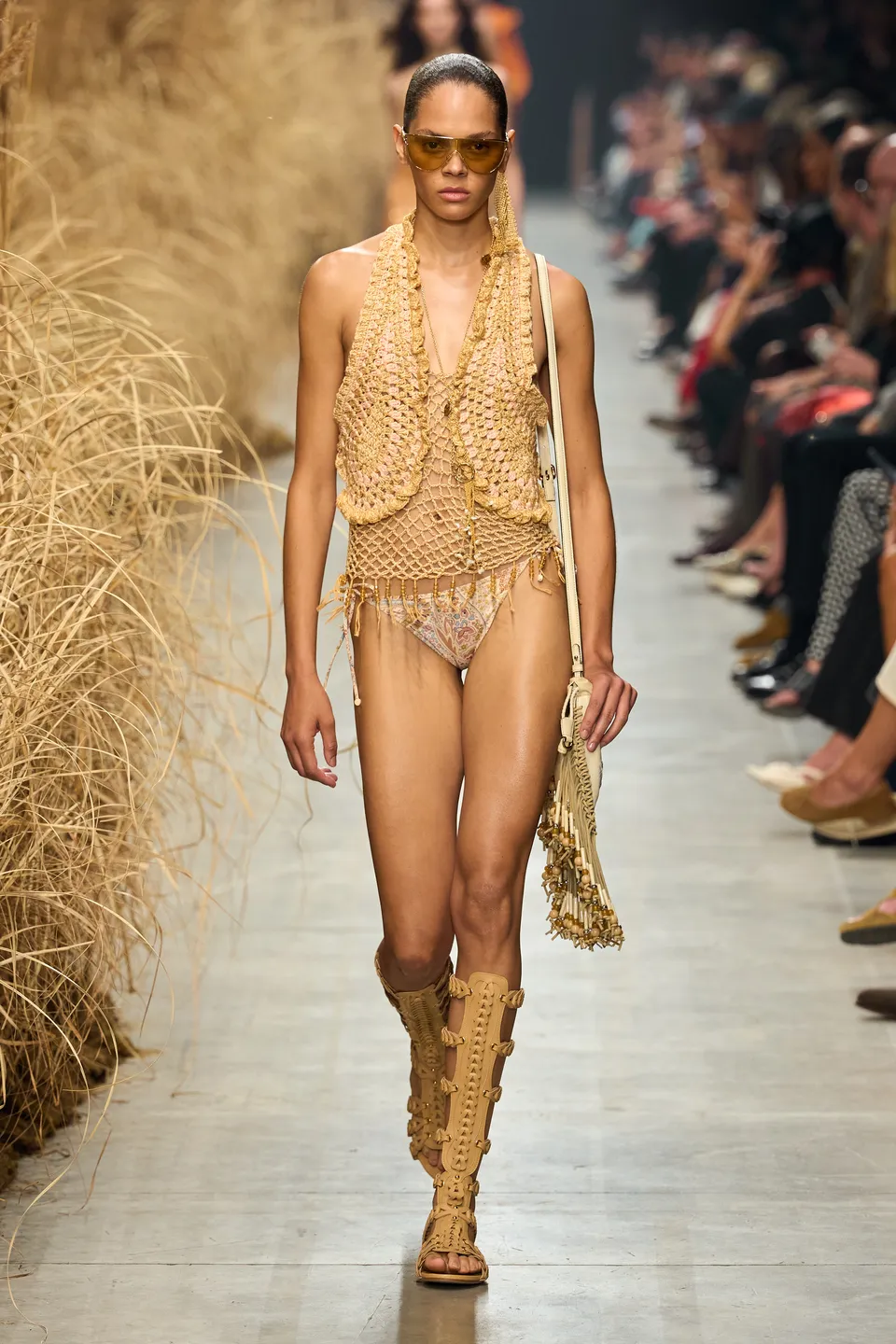
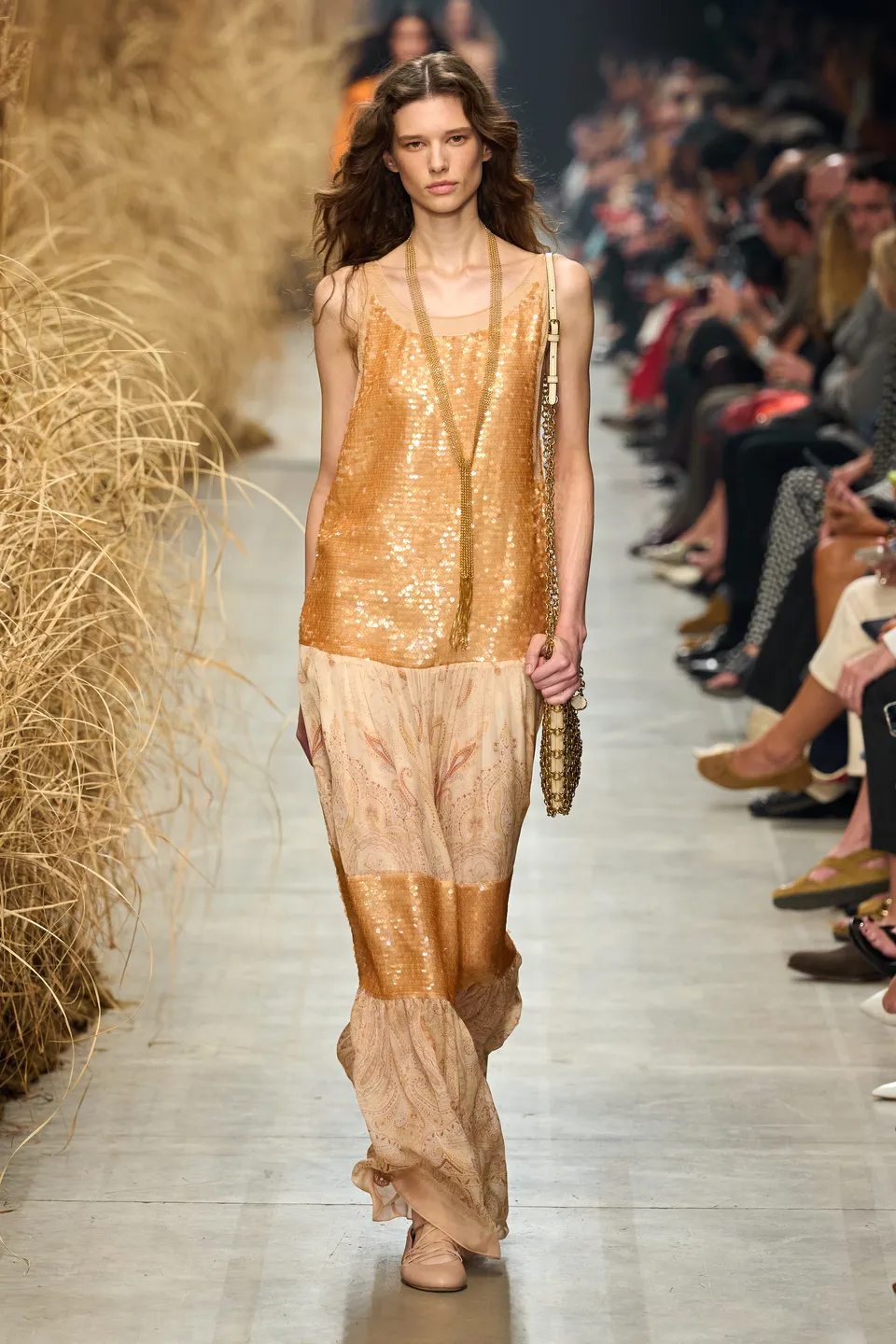
Elsewhere, crochet and lace open small spaces through the garment. Sheer fabrics allow one layer to appear through another. Fringe extends the architecture of dresses beyond their actual hems.
The styling gives Halo enough contemporary ease to keep its long dresses and paisley from slipping into period fantasy.
Flat sandals and gladiator-inspired footwear keep flowing silhouettes close to the ground. Ballet flats add another straightforward shape. Soft bags fold against the body with little ceremony.
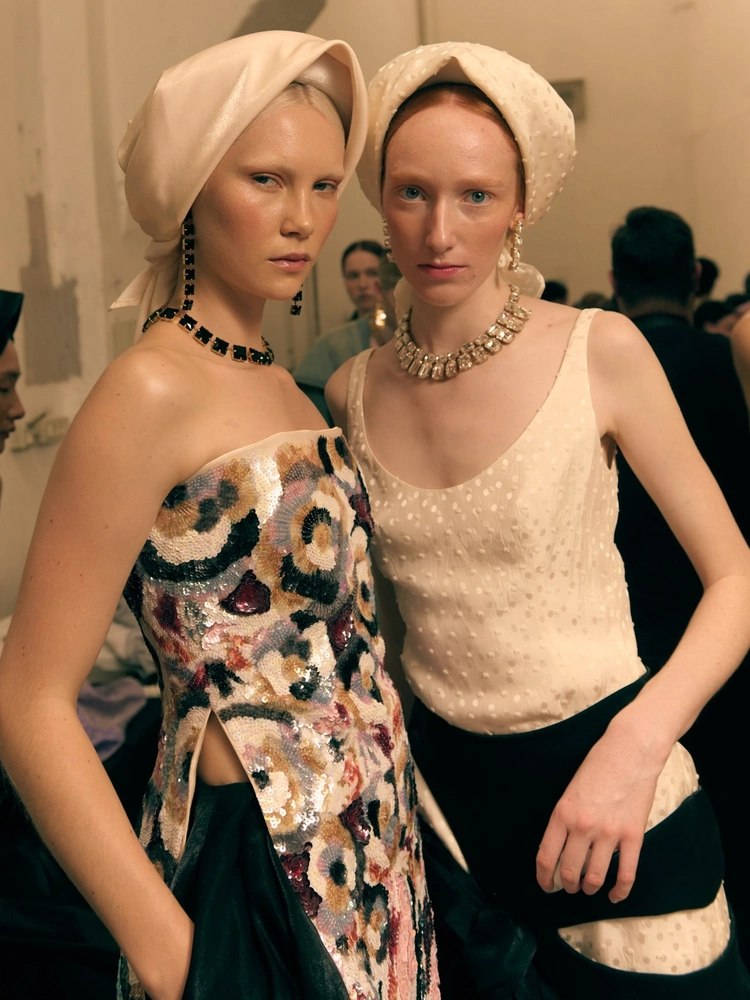
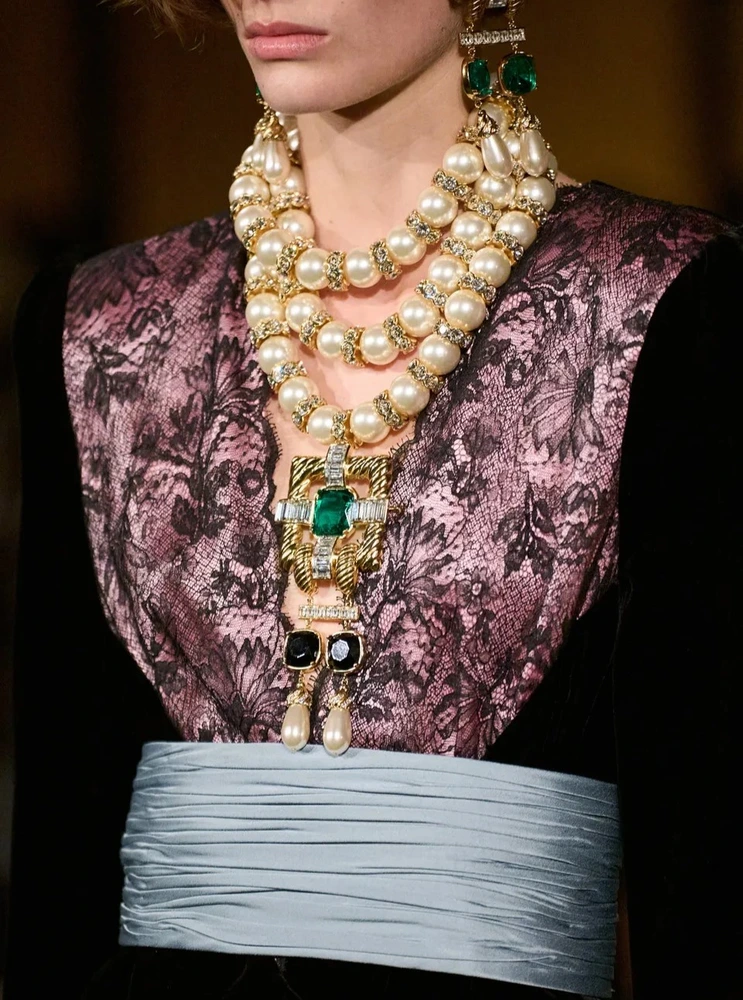
Statement jewellery introduces weight around otherwise delicate fabrics.
As a transitional collection, Etro SS27 achieves something important.
The internal studio proves that the house can operate through its own bohemian codes. The collection feels coherent with decades of archive while opening more space around the wearer.
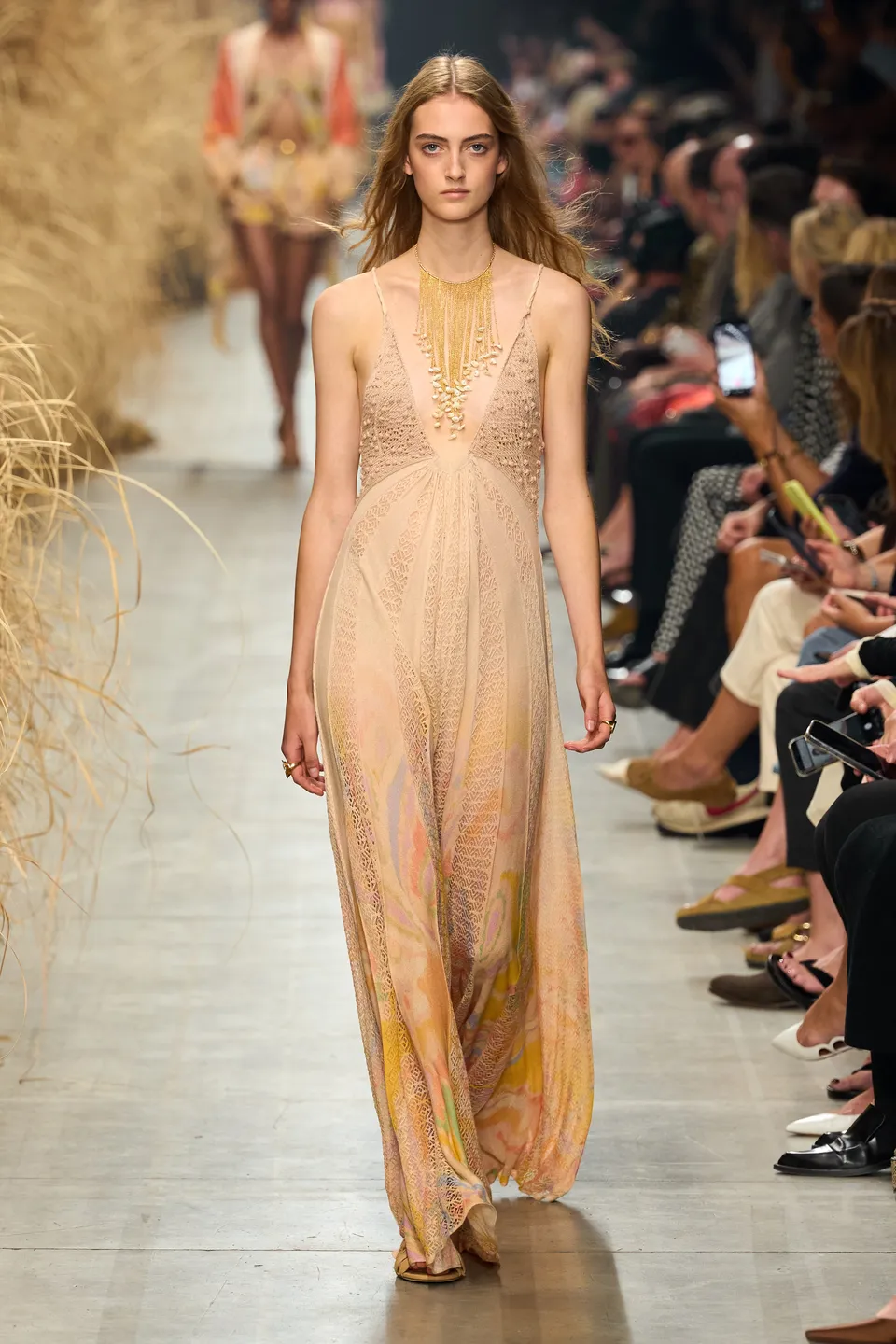
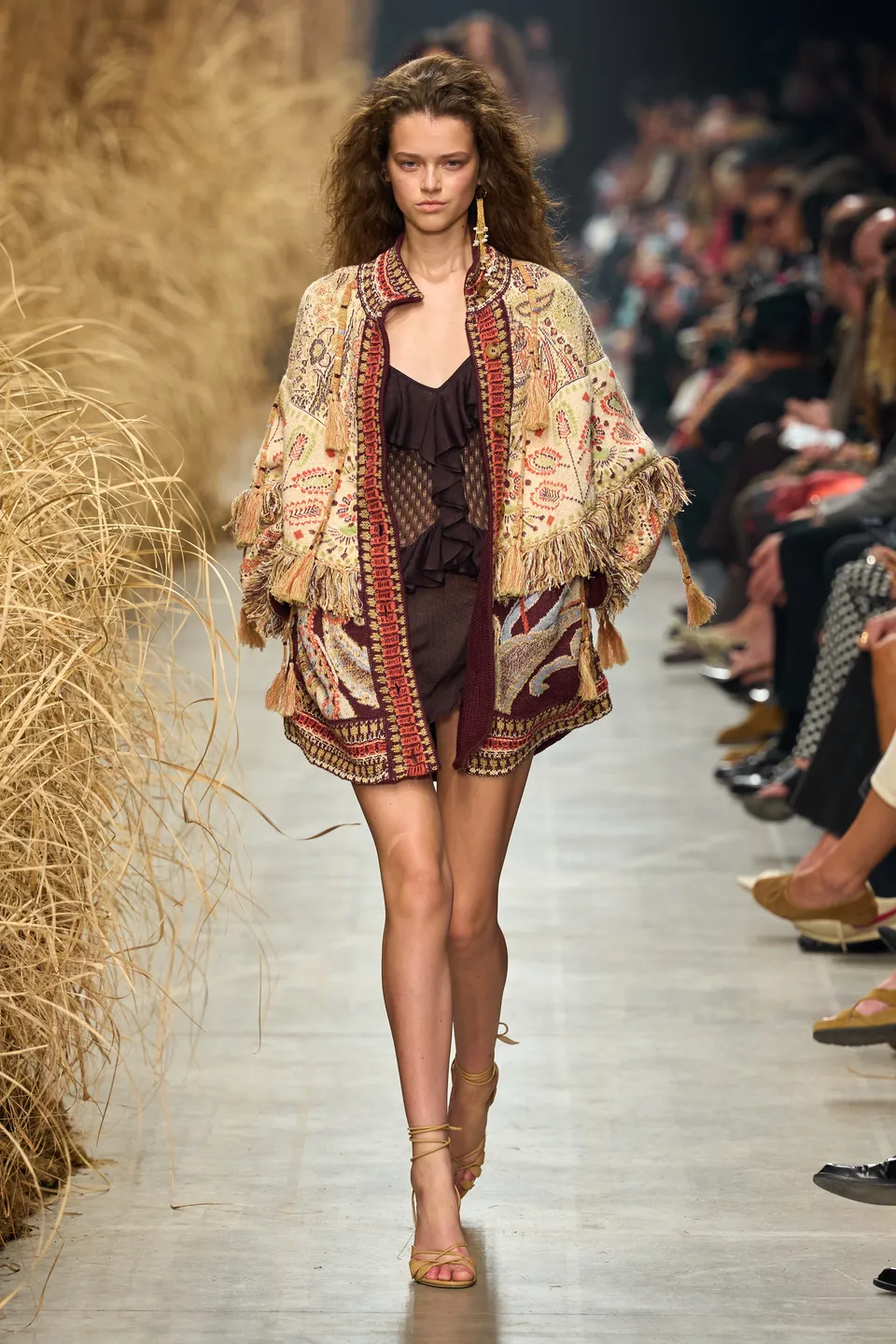
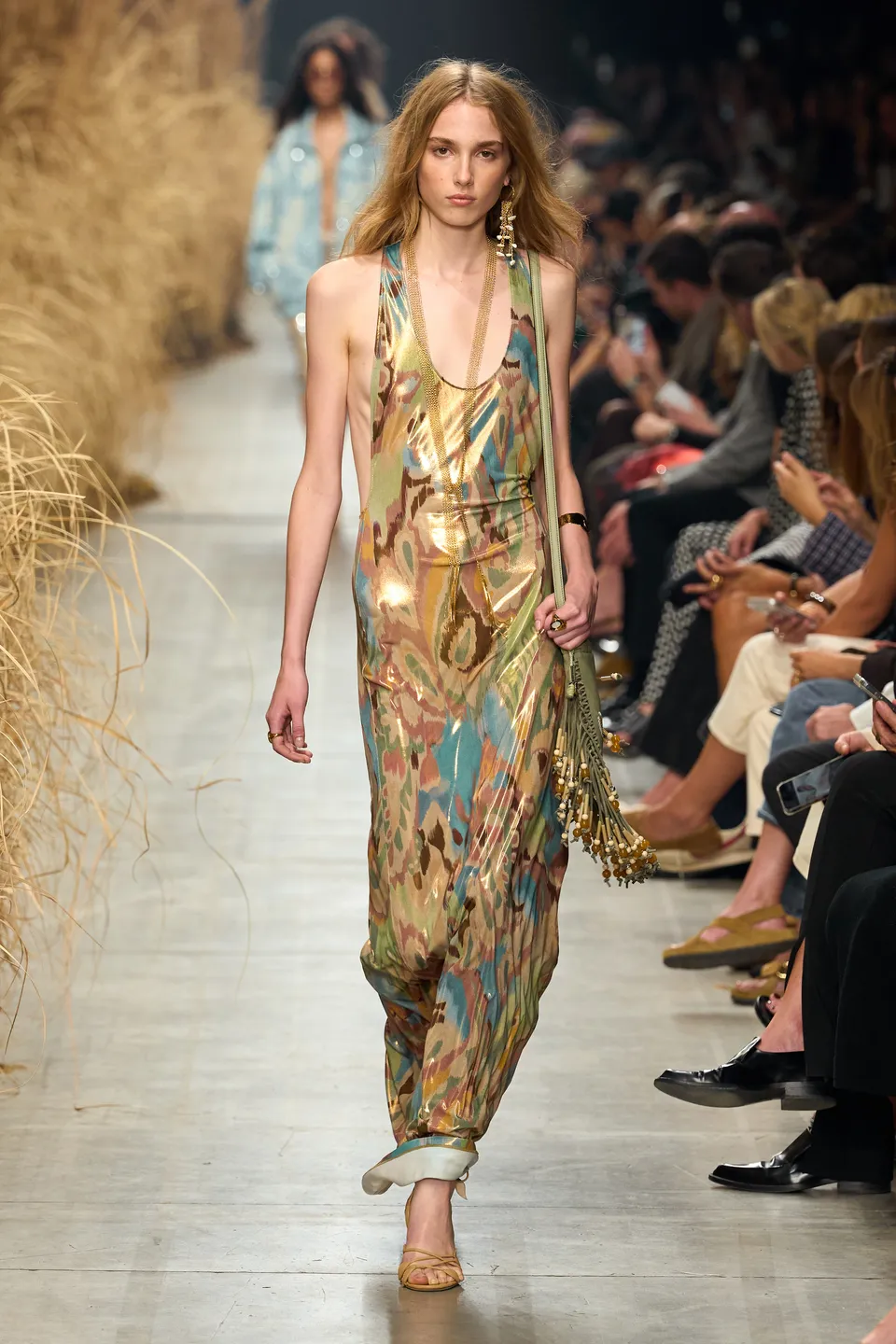
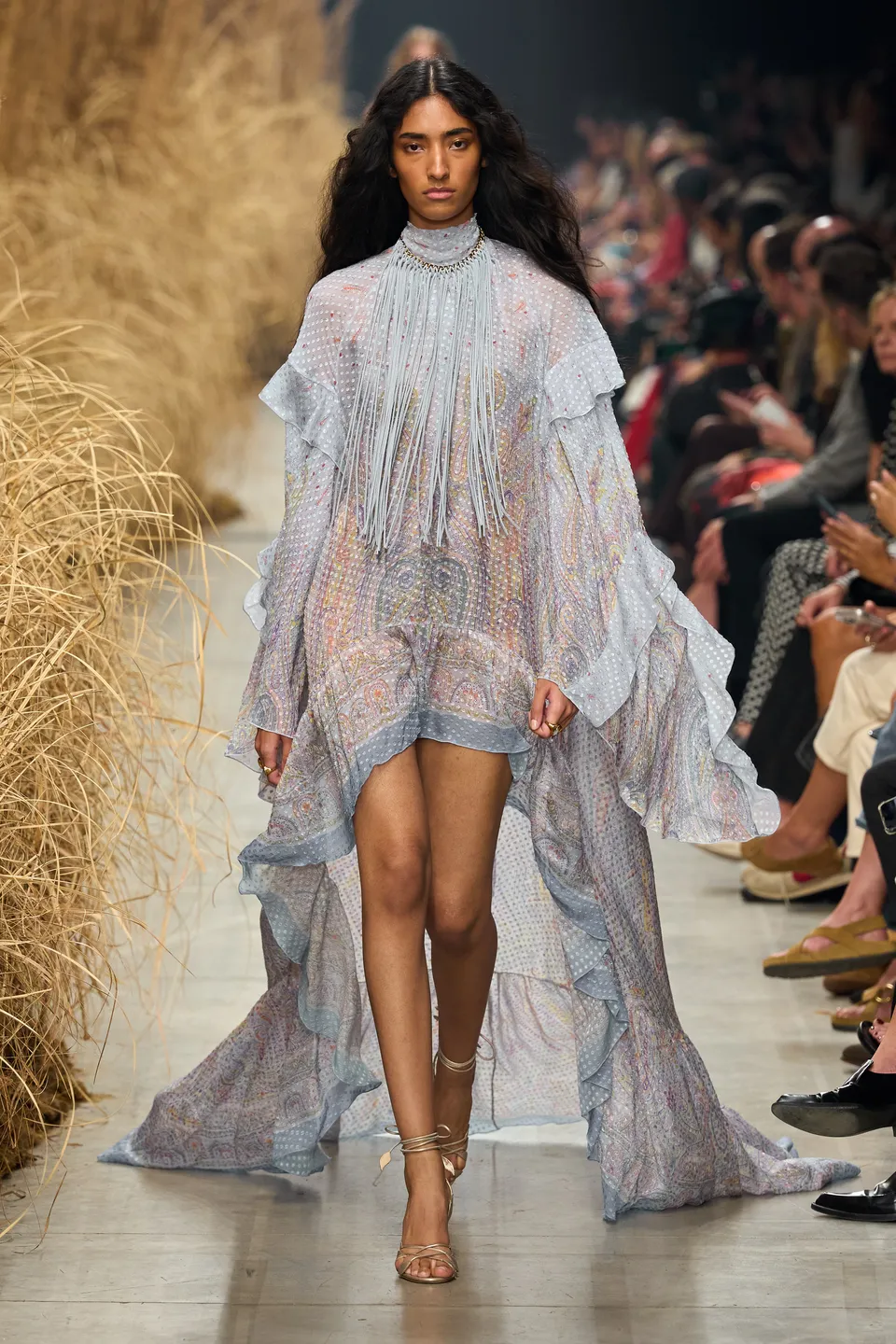
Yet that familiarity also exposes a larger problem. Seen through a lighter palette, sheer dresses, delicate florals, fluid resort shapes and sun-washed romanticism, parts of Halo enter visual territory that can recall Zimmermann.
That resemblance carries no inherent weakness. Zimmermann has built a highly successful language around polished resort femininity, floating dresses, floral pattern and sunlit sensuality.
The overlap reveals something larger about contemporary fashion.
Romantic resortwear has become crowded. Sheer layers, botanical prints, crochet, long trains, artisanal textures, and effortless vacation dressing now circulate across luxury, premium contemporary, and resort-focused labels with remarkable frequency. A beautifully executed dress can therefore enter a very busy visual field within seconds.
House codes provide recognition. Current fashion also demands proprietary tension.
For Etro, that could come from pushing paisley into stranger territories, inventing textile processes that belong unmistakably to the house, disrupting the floating silhouette with unexpected construction, bringing sharper Italian tailoring into conflict with bohemia, or allowing the archive to collide with something culturally specific to the present.
Three months before Marco De Vincenzo exited Etro, the founding family sold its final stake in a roughly €70 million ownership and capital deal, ending direct family involvement in the house founded in 1968. The transaction followed a difficult year in which revenue slid from €261 million to €245 million, and Etro recorded a €23 million net loss, putting real commercial pressure behind the phrase “new strategic phase.”
Halo therefore lands as the first major womenswear runway shaped by an internal studio after two seismic departures: the family and its creative director. Its beautiful, instantly identifiable paisley and bohemian ease suddenly read with another tension, as though Etro is protecting the codes with the strongest commercial recognition while the company rebuilds both its balance sheet and its creative centre.
Halo already hints at those possibilities through suede, faded prints and material manipulation. The collection simply leaves an appetite for a stronger move.
Its beauty is evident. Its craft is assured. Its atmosphere flows easily from look to look.
Etro has successfully proved that its visual DNA can survive a creative-director transition. SS27 now makes the next challenge impossible to ignore: in a fashion landscape filled with beautiful bohemian dresses, heritage alone creates familiarity, while a singular new proposition creates desire.
Halo clears the air. The next Etro collection has the opportunity to decide what enters that space.
Advertisement