MENU
Close





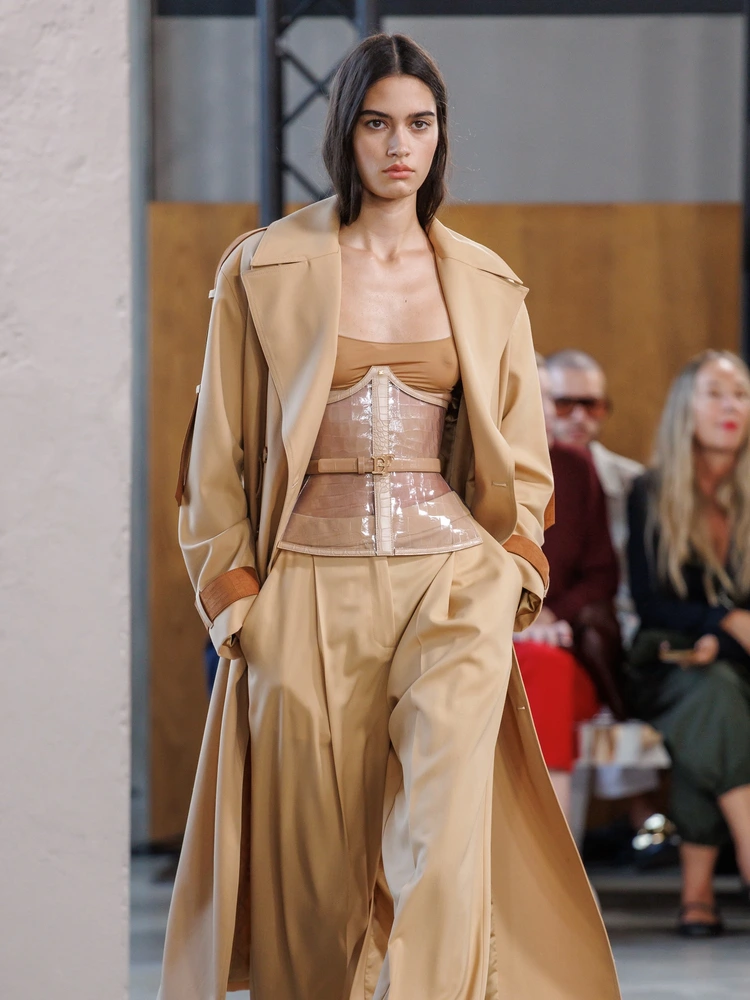
For The Attico SS27, Gilda Ambrosio and Giorgia Tordini filled a dark Milan runway with beds, tangled sheets, and pillows, then seated guests directly among them.
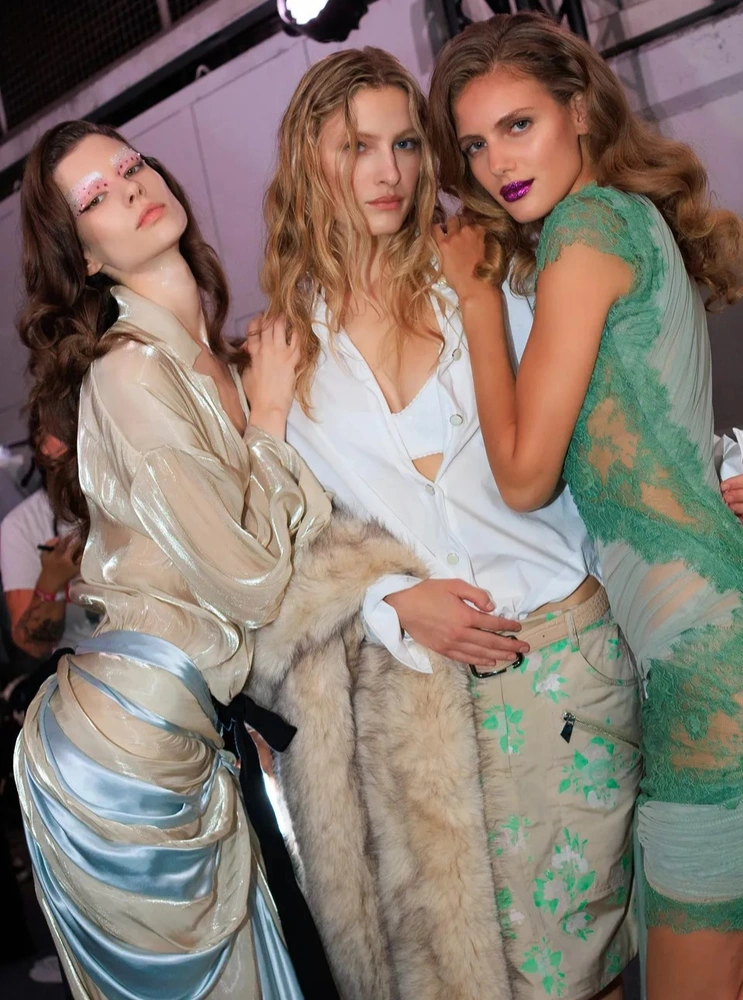
For The Attico SS27, Gilda Ambrosio and Giorgia Tordini filled a dark Milan runway with beds, tangled sheets, and pillows, then seated guests directly among them.
September 27, 2026
Advertisement

Advertisement



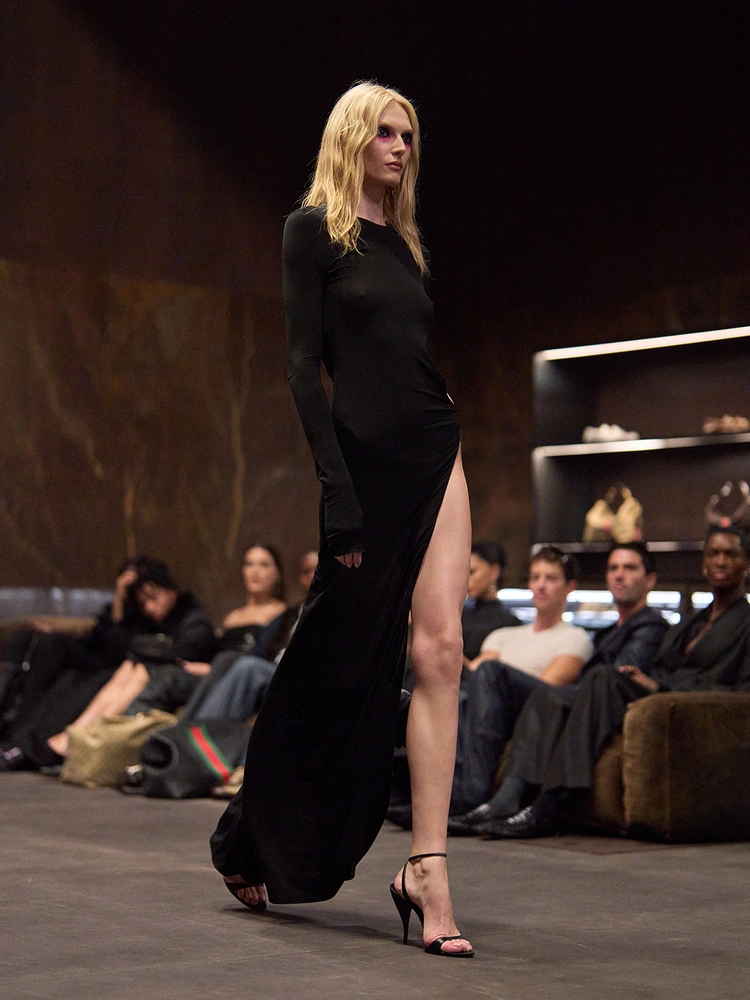
Models appeared through flashes of cabaret light as if somebody had opened a hotel-room door at exactly the wrong moment.
The collection is called Quando Nessuno Guarda, “When No One Looks,” and its timing carries a beautiful symmetry. The Attico turns ten this year. In 2016, the label started with 38 dressing gowns, transforming an intimate garment into something glamorous enough for the street. A decade later, the founders return to the bedroom where their story effectively started, this time carrying an entire wardrobe with them.
The inspiration came partly from Gabriel García Márquez’s idea that every person has three lives: public, private, and secret. Ambrosio and Tordini went directly toward the third.
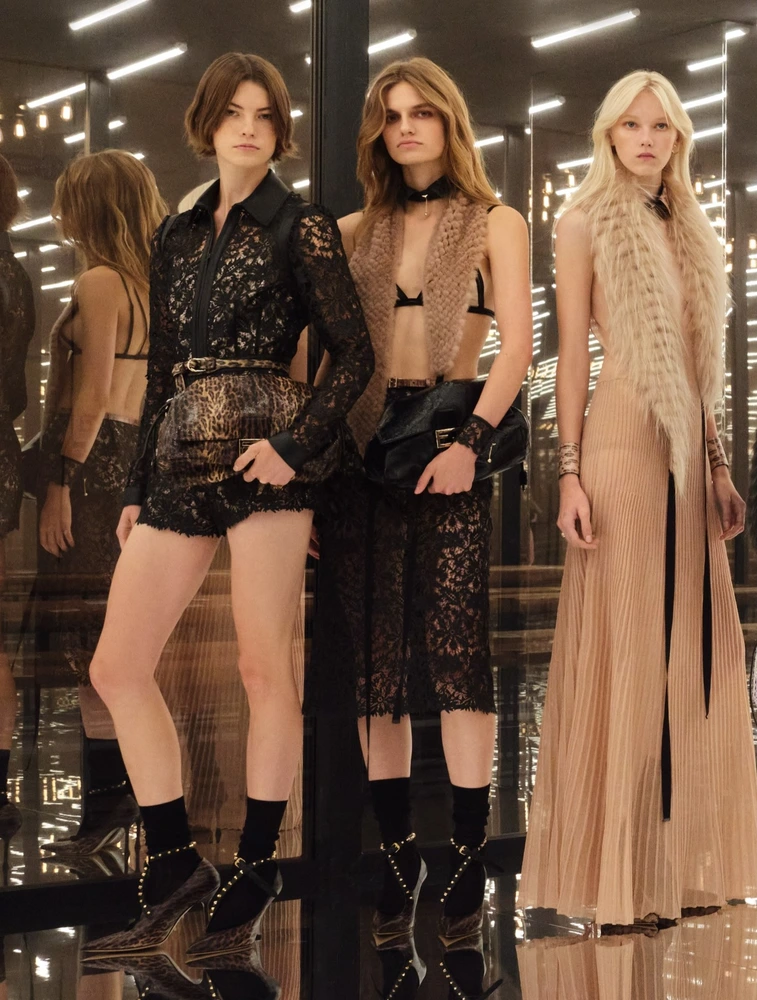
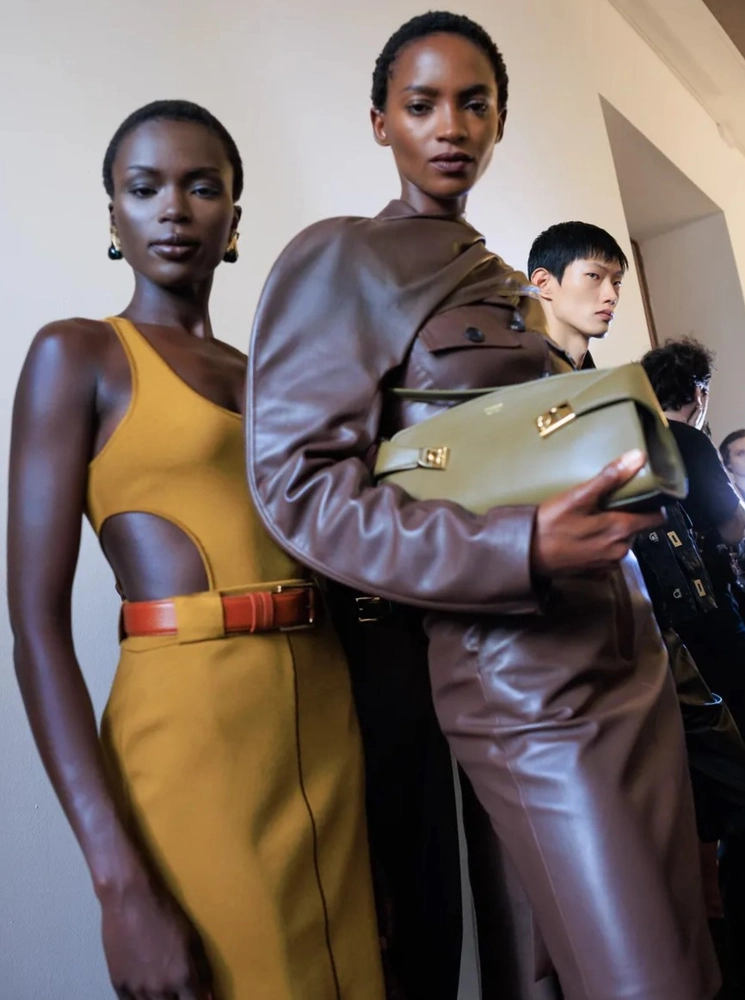
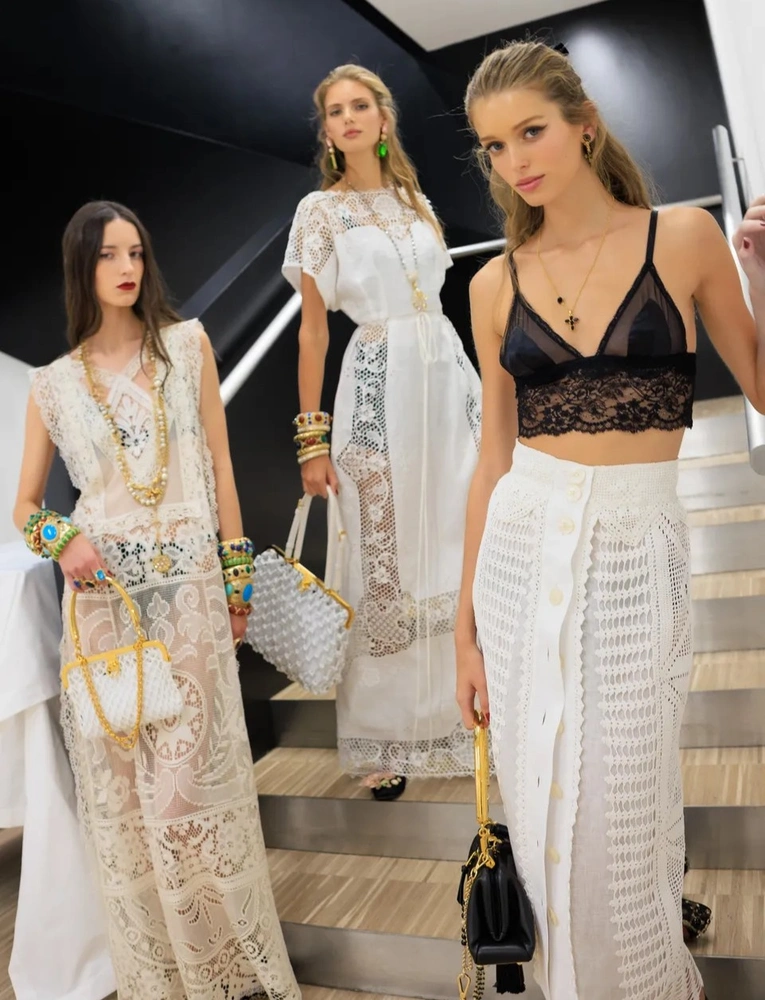
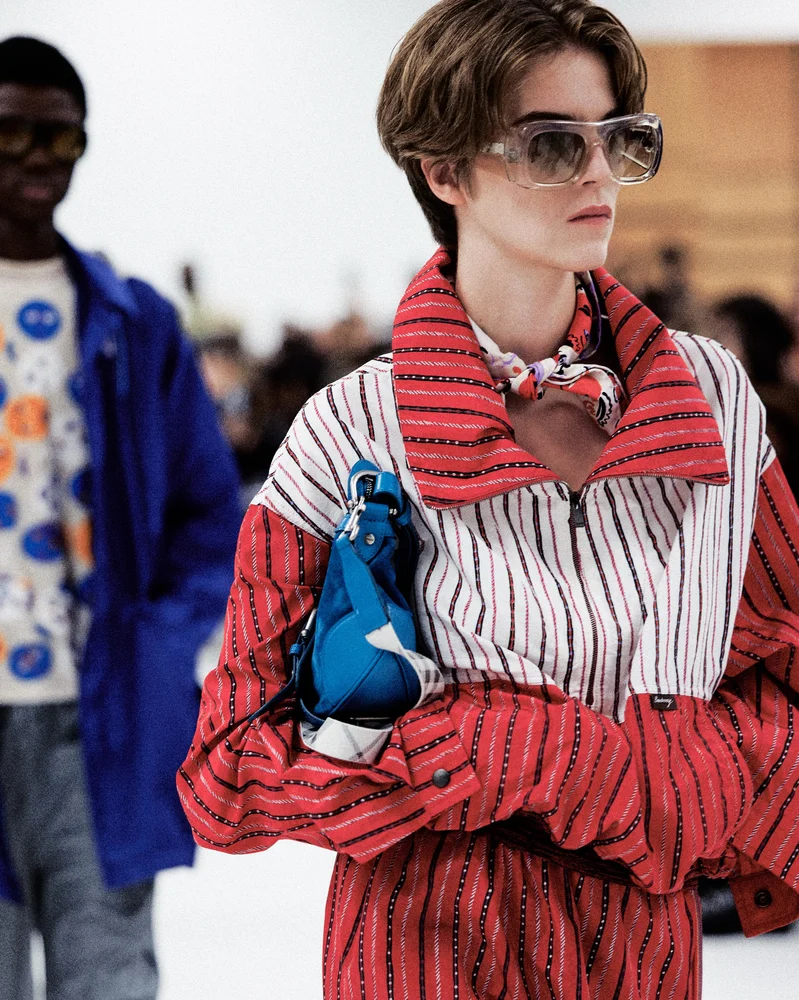
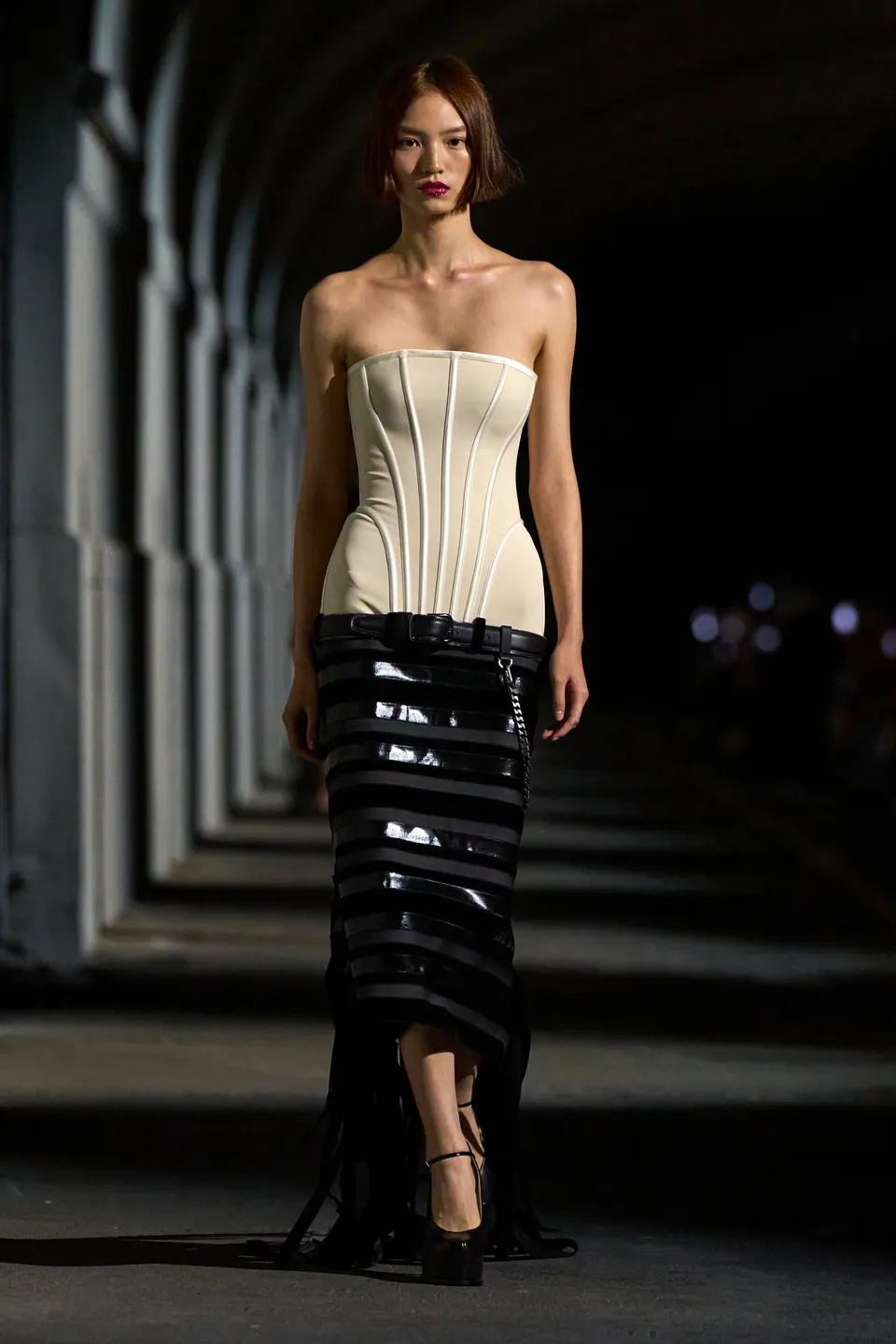
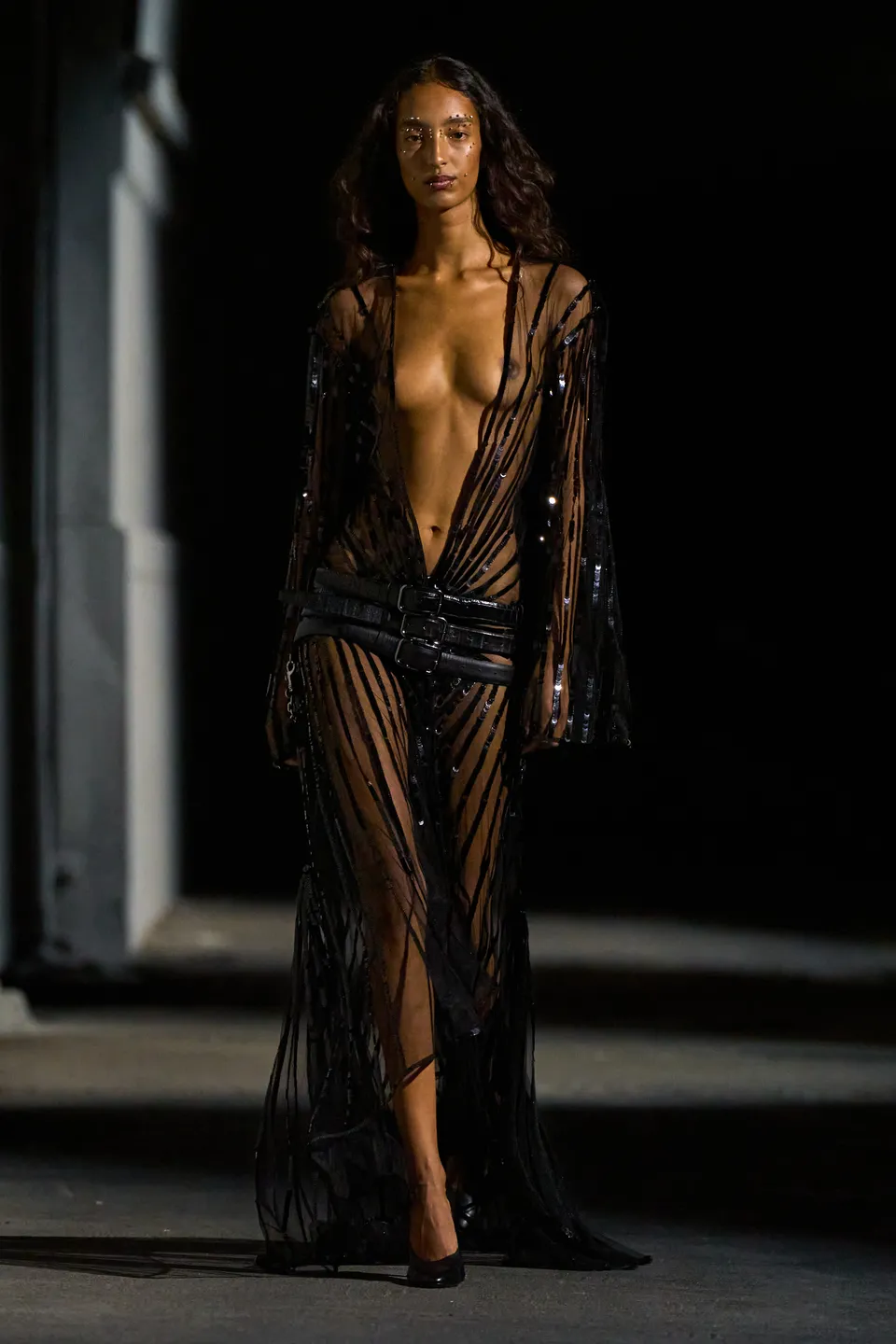
One woman walks out gothic, pierced and severe. Another gleams like a nightclub hallucination. A diva appears wrapped in velvet. Masculine shirting enters moments later. Lingerie slips into military tailoring. Somebody seems dressed for an evening that started twelve hours ago and still has several poor decisions left in it.
That multiplicity feels central to The Attico now. Ambrosio and Tordini built the brand through the productive friction between their own tastes. One gravitates toward bolder disruption, the other toward controlled glamour, and the clothes have always lived somewhere in that tension.
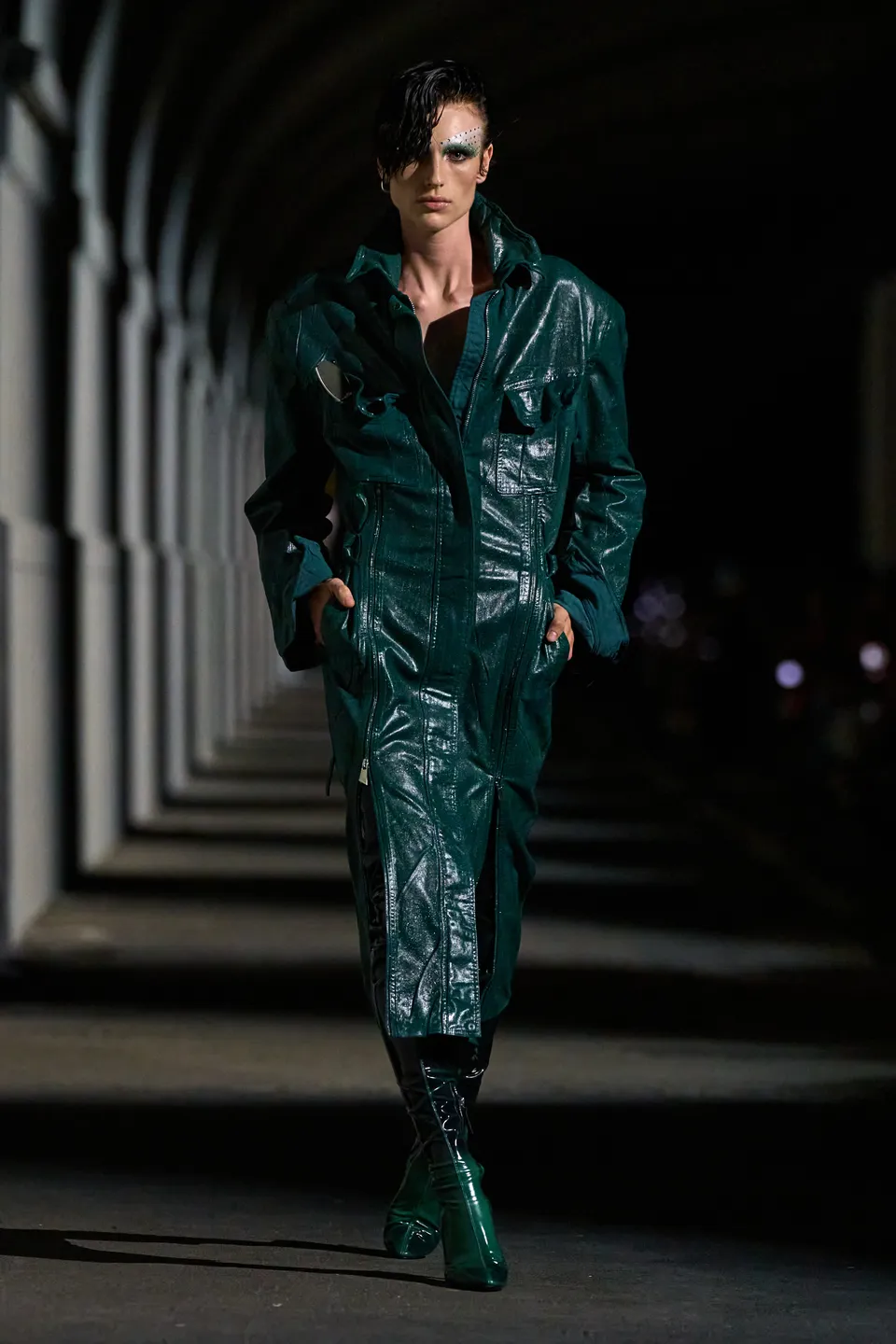
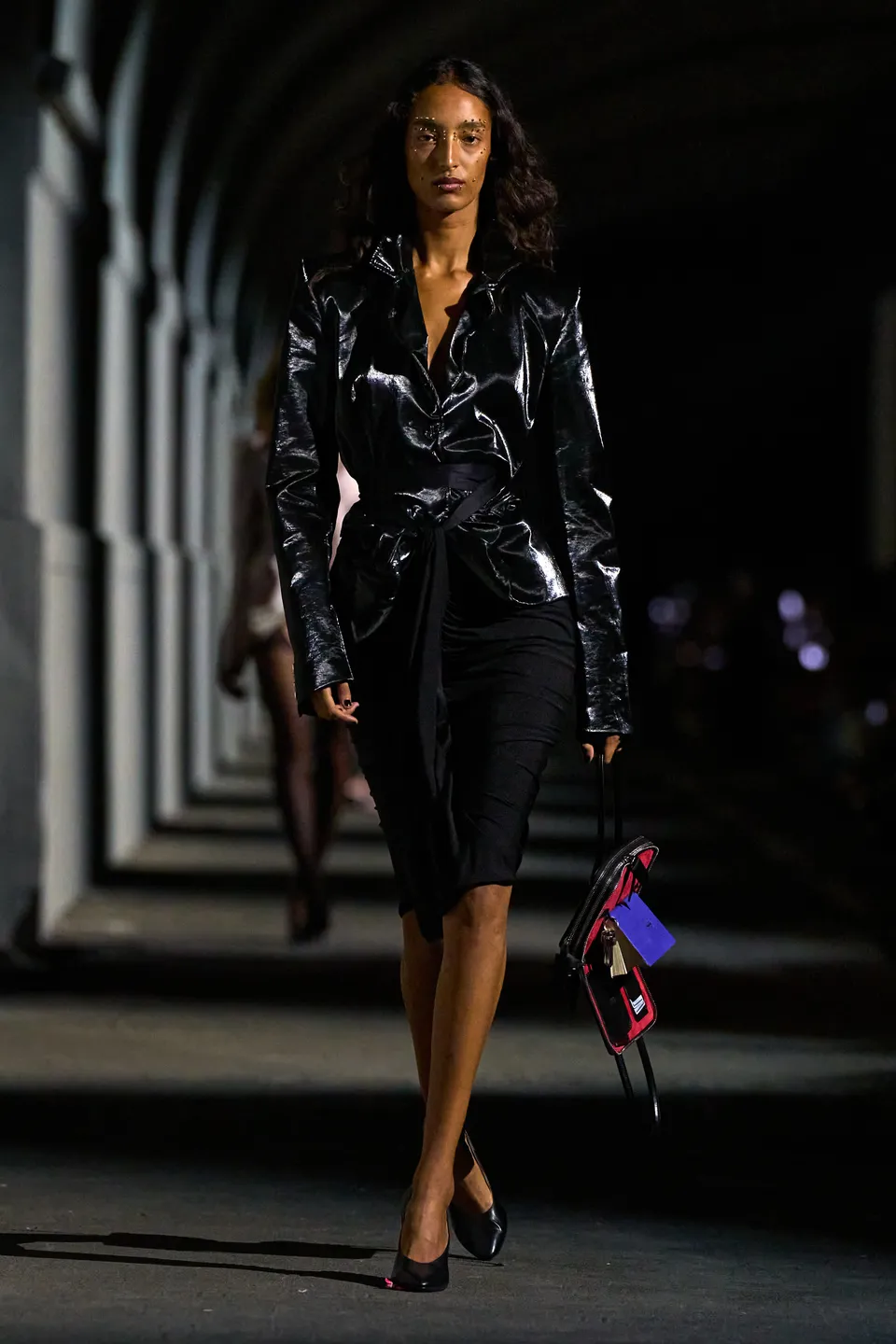
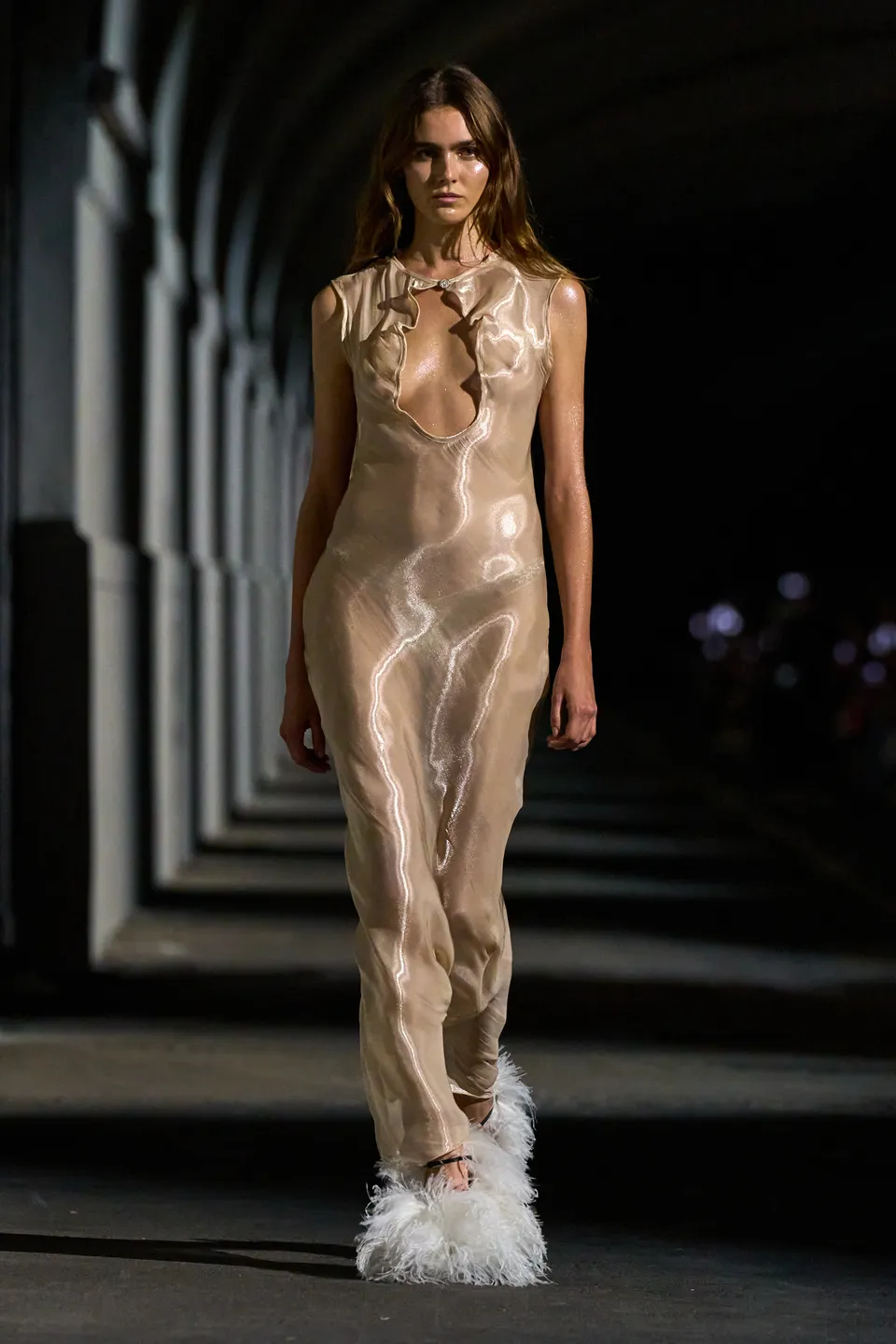
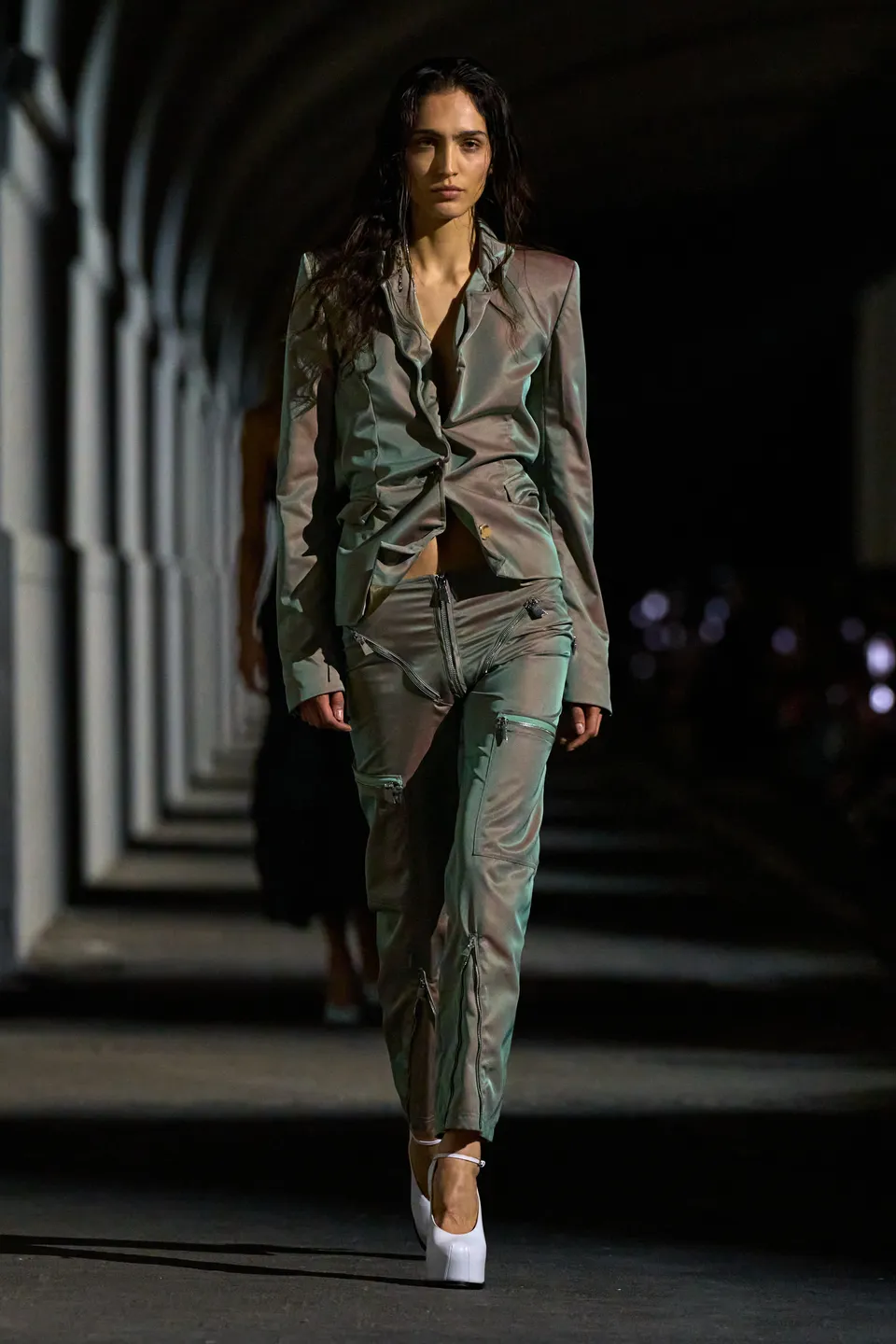
SS27 expands the idea into an entire cast. The bedroom gives those personalities freedom. A robe can become eveningwear. Underwear can meet an imposing shoulder. Sequins can appear beside something that resembles a man’s shirt stolen at sunrise. Clothes carry the slightly irrational logic of dressing alone, when taste becomes instinct, and the mirror becomes the only audience.
The designers call this “Attico core”: femininity as a collection of possible identities.
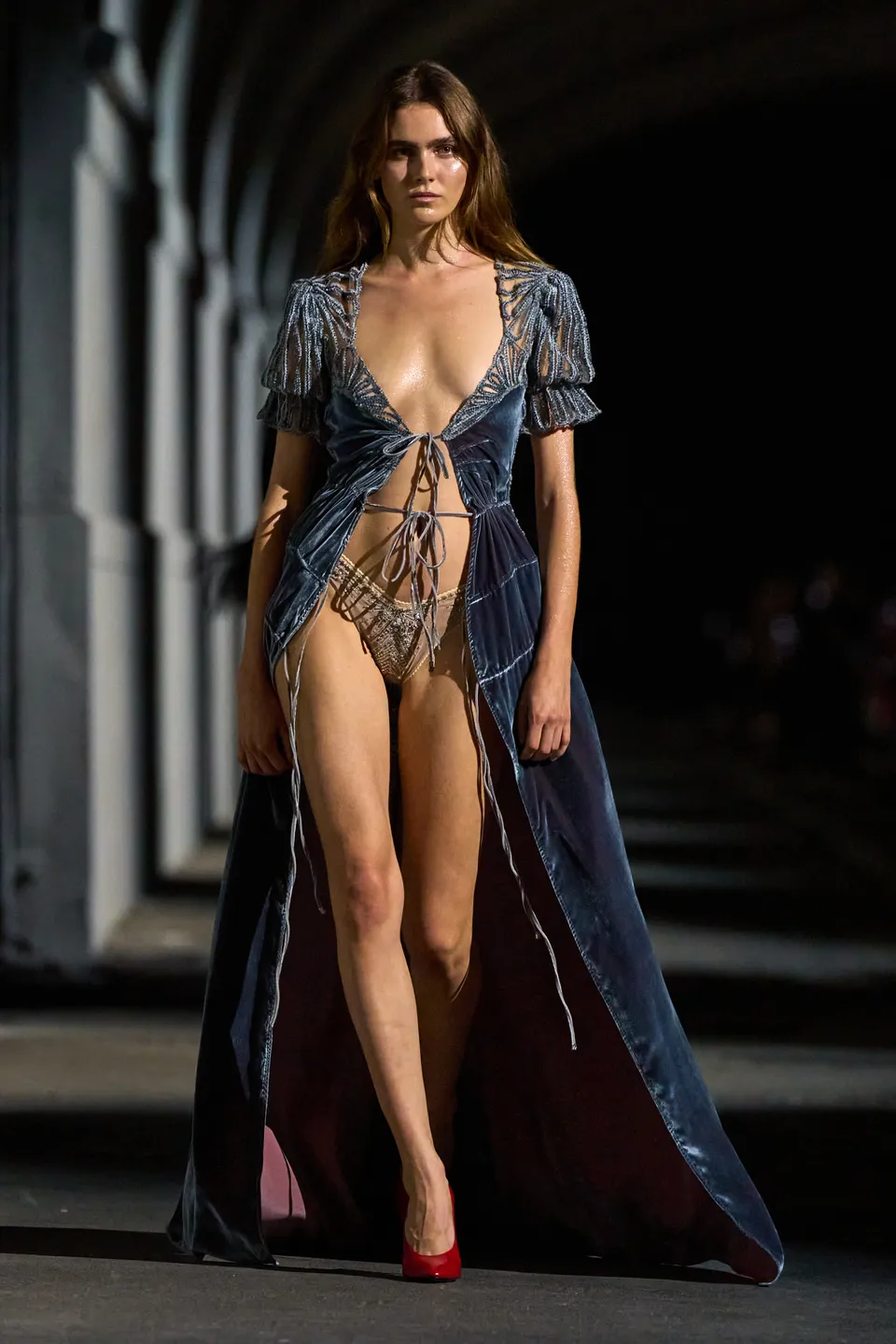
The vestaglia deserves special attention because it carries the history of the company inside one garment. When The Attico launched in 2016, Ambrosio and Tordini took the peignoir and dressing gown out of its domestic context, producing versions in velvet, embroidered silk, tulle, and canvas. Their proposition was already clear: clothes associated with privacy could live confidently in public.
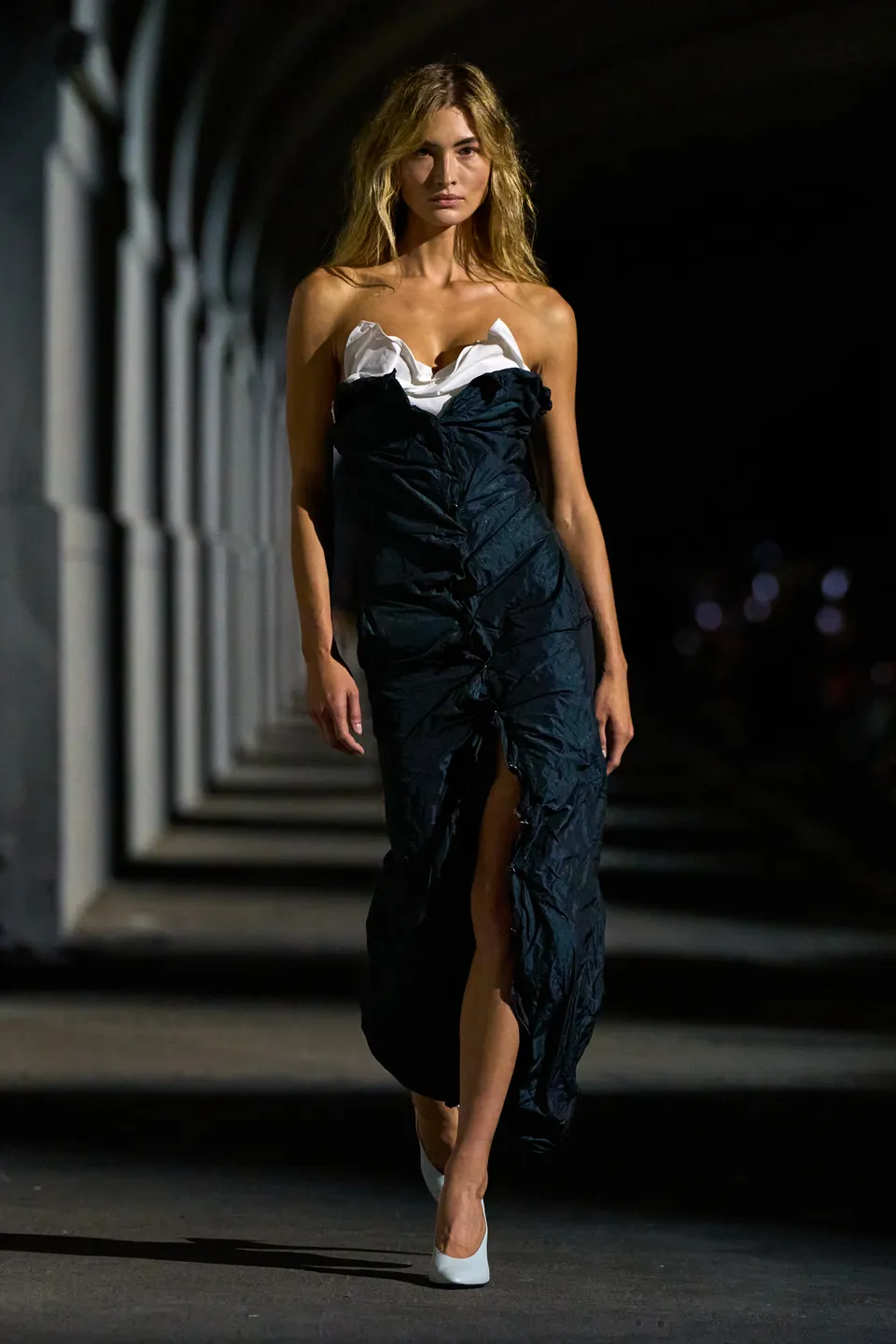
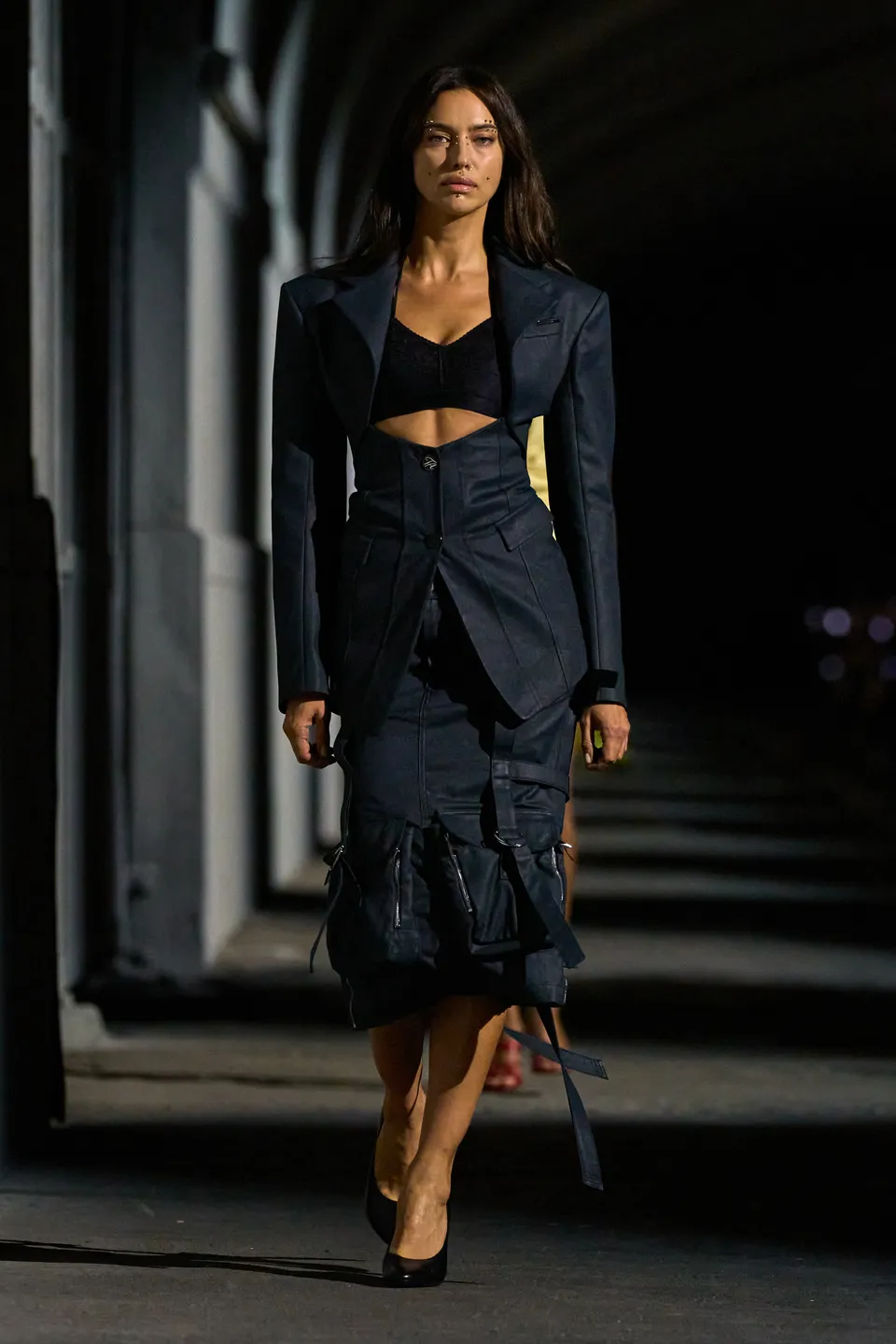
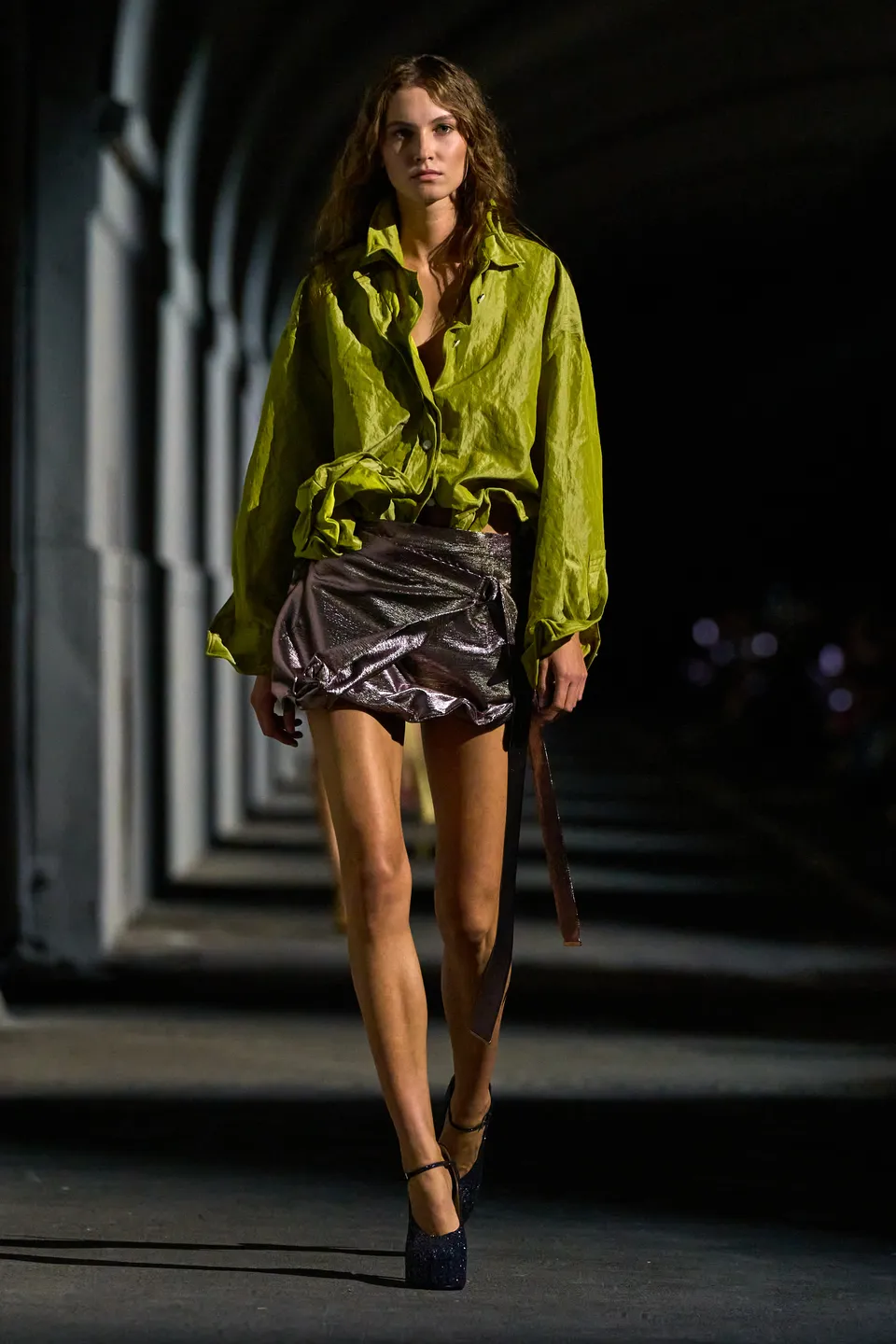
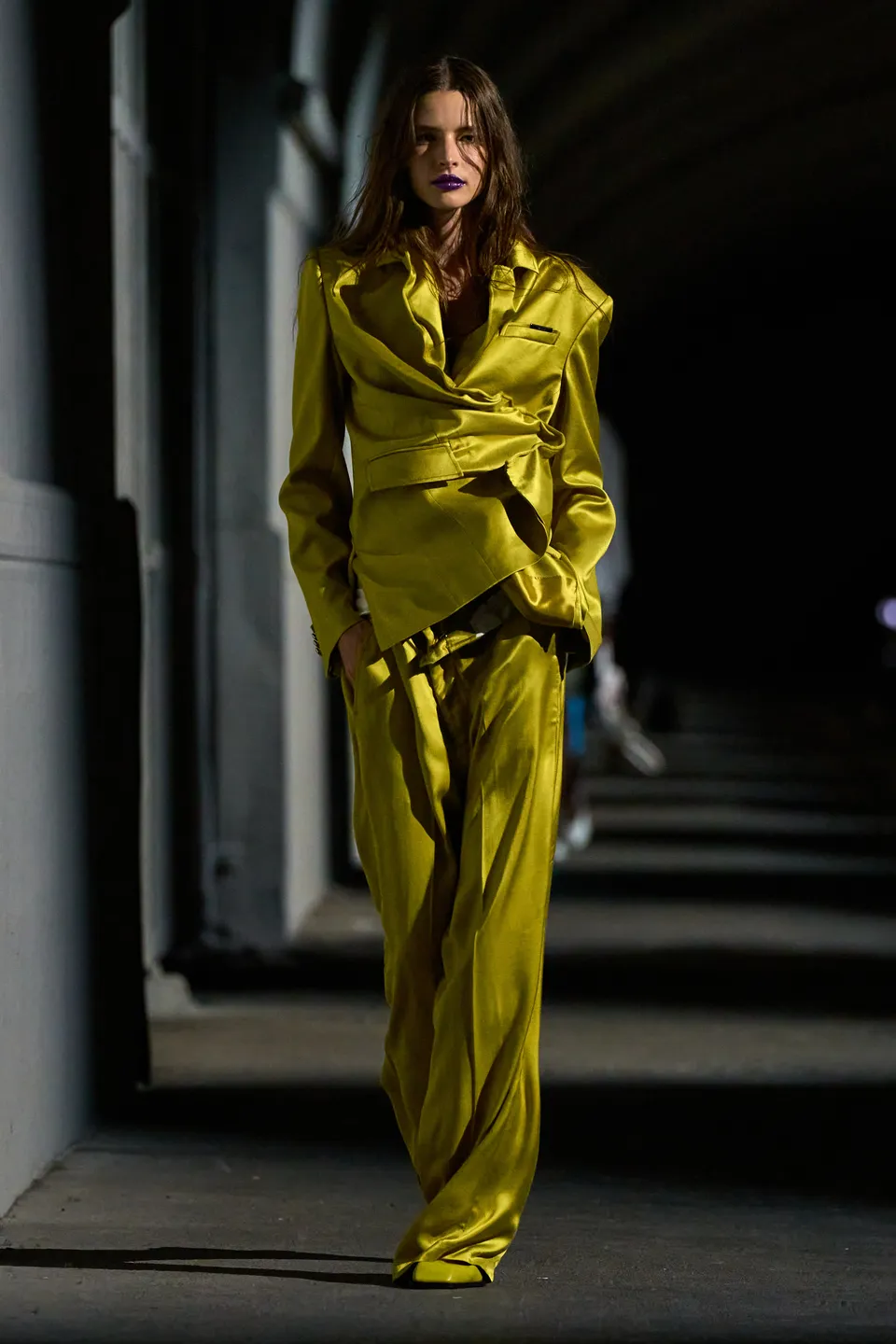
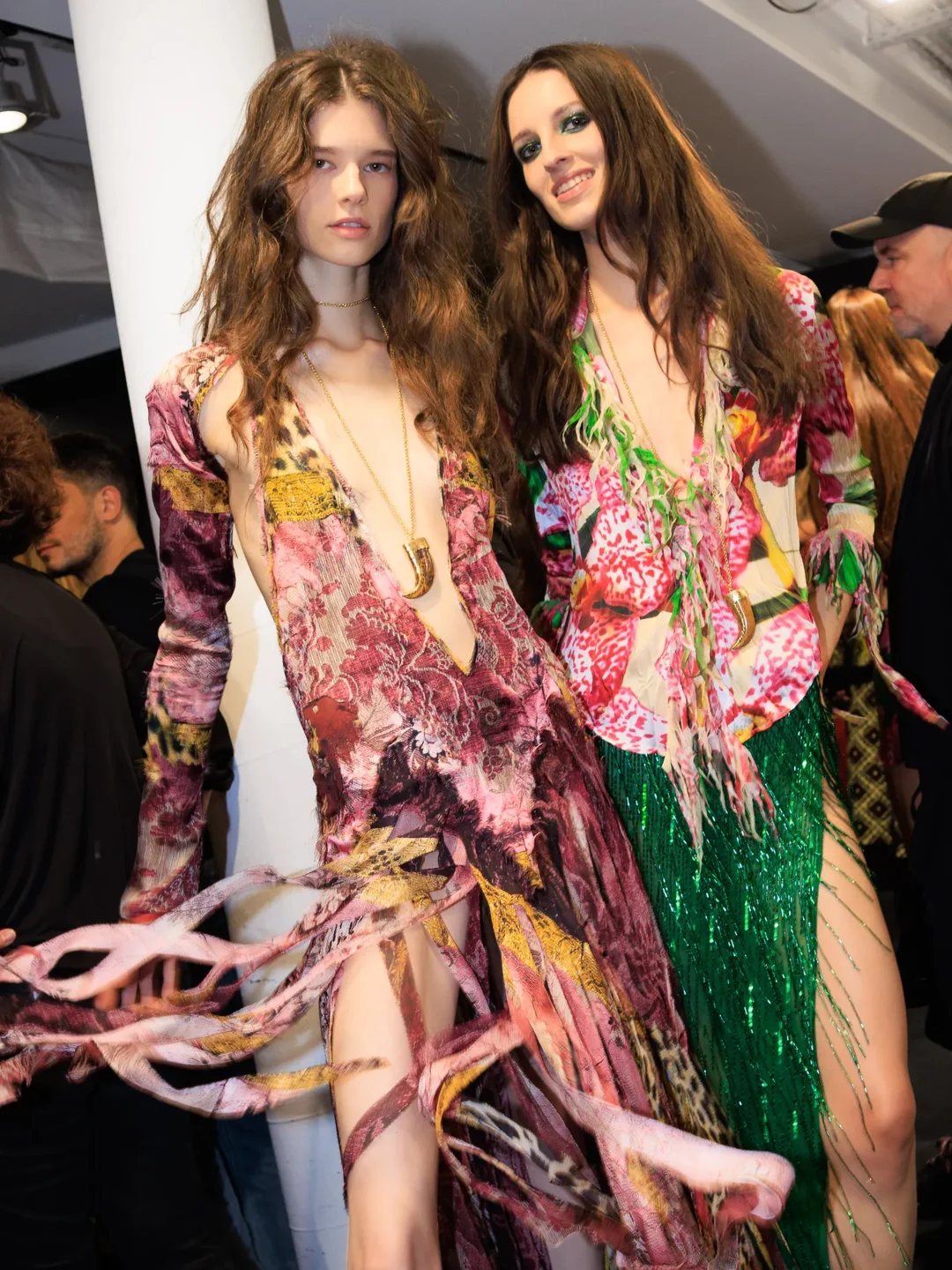
SS27 brings that idea full circle. Velvet robes sweep through the collection with an operatic richness. Layered fabrics create weight around the body. Their languor evokes beds, dressing rooms and the moment before somebody finally decides whether the night continues.
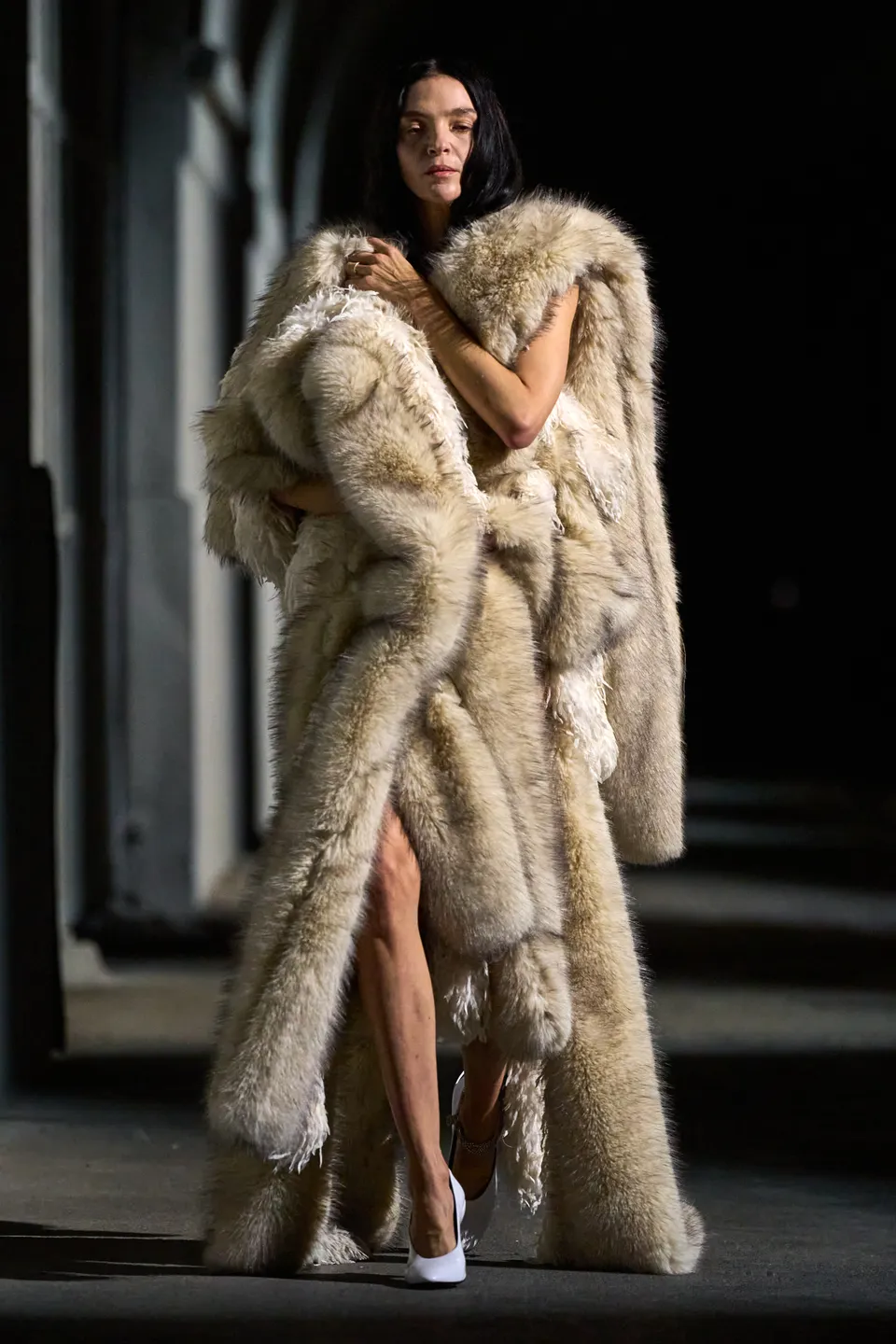
Velvet also reconnects the anniversary show with early Attico glamour, giving the collection a memory that feels tactile. The nostalgia ends there. Around those robes, the designers introduce military jackets, liquid tailoring, utility zippers, iridescent surfaces, sequined dresses and fur-like wraps. The wardrobe has grown with the company.
The sharpest new idea comes through metal wire embedded into fabric. Jackets can be bent. Dresses can be twisted. Draping can remain frozen in an awkward position. Shoulders can rise, collapse, or turn sideways. Fabric suddenly carries the memory of touch.
Wired tailoring looks as though somebody slept in it and then manipulated it back into shape. Draped dresses hold irregular folds across the torso. Stiffer iridescent textiles evoke vintage curtains and upholstery, drawing the language of interiors directly onto the body. One piece even took inspiration from an armchair.
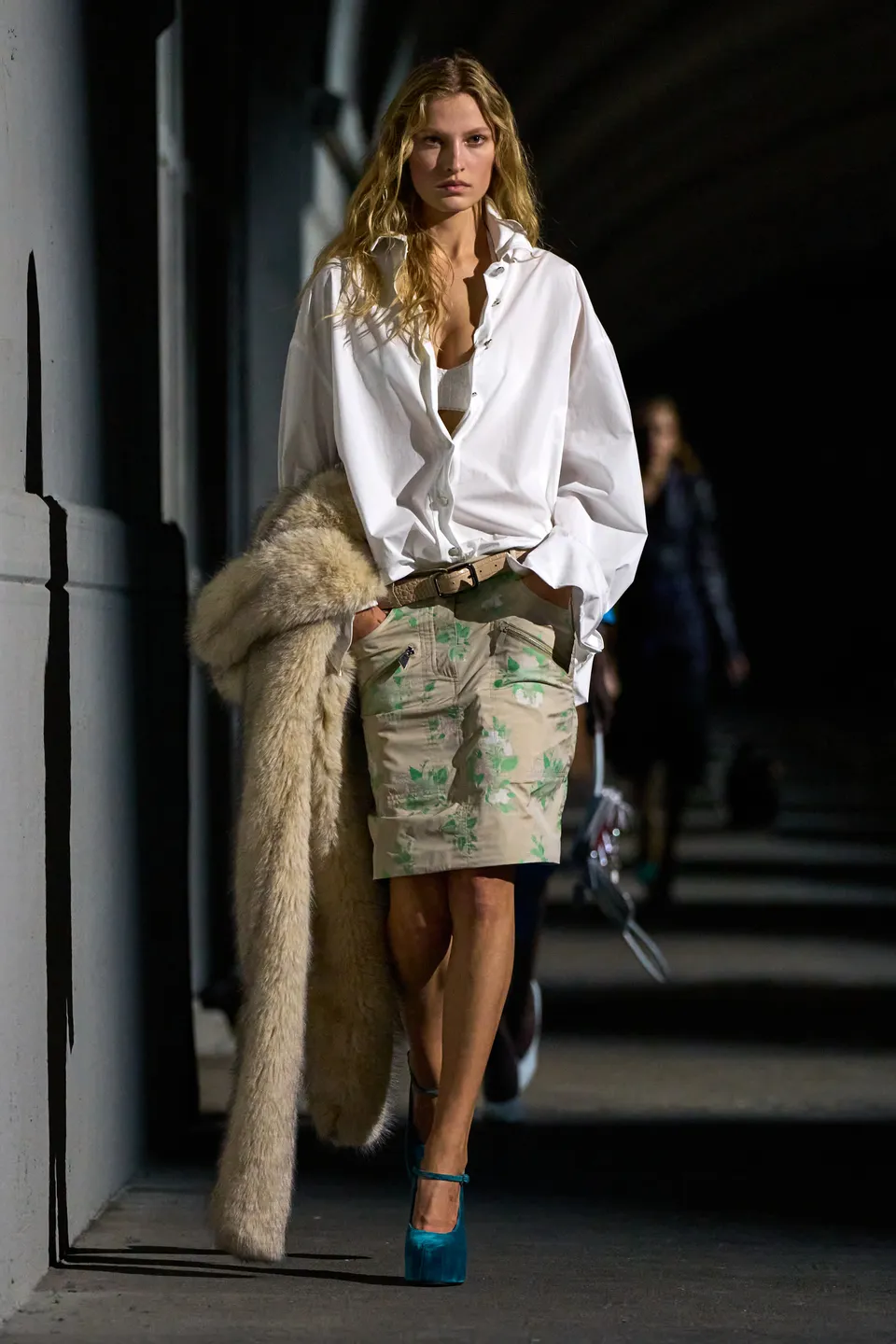
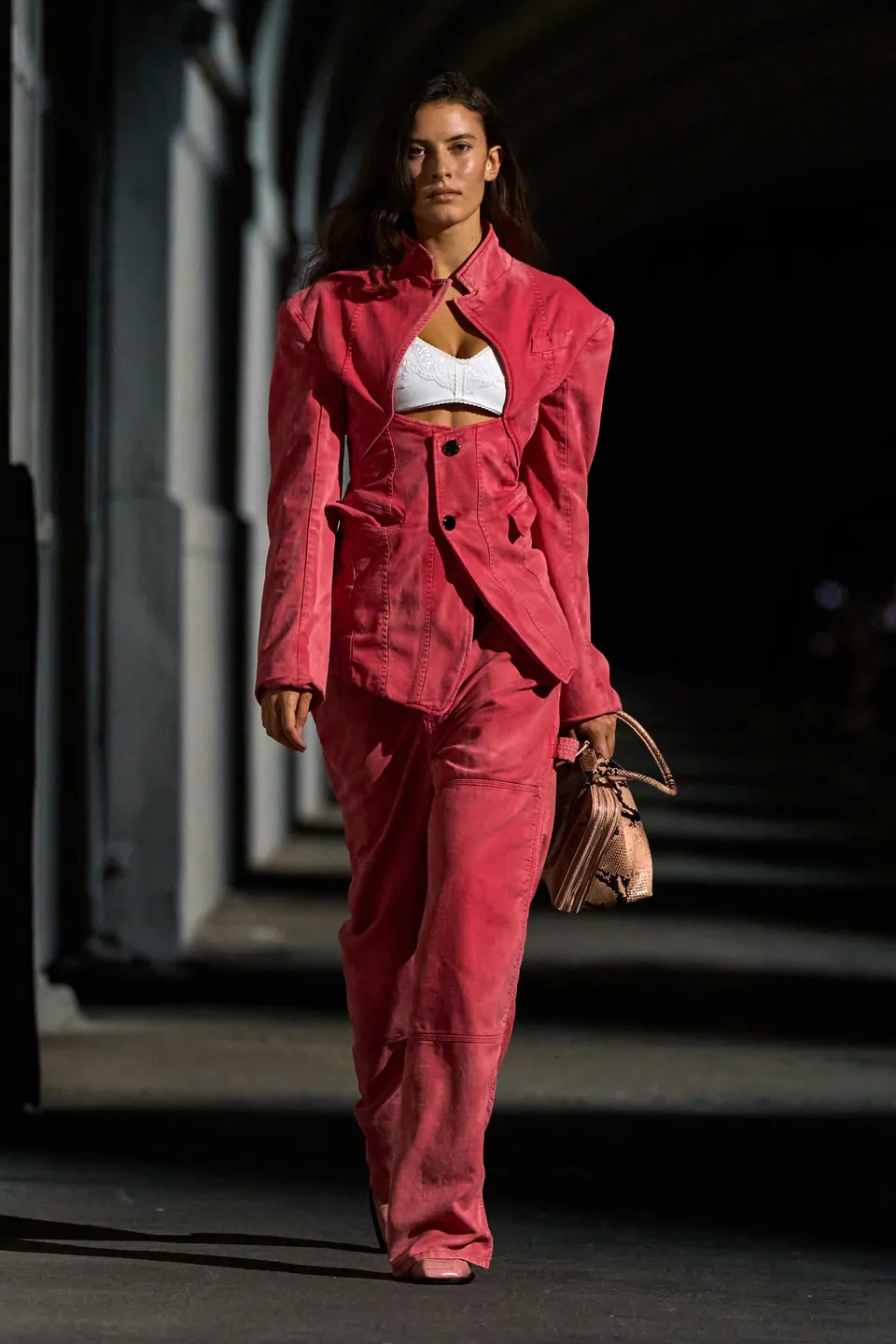
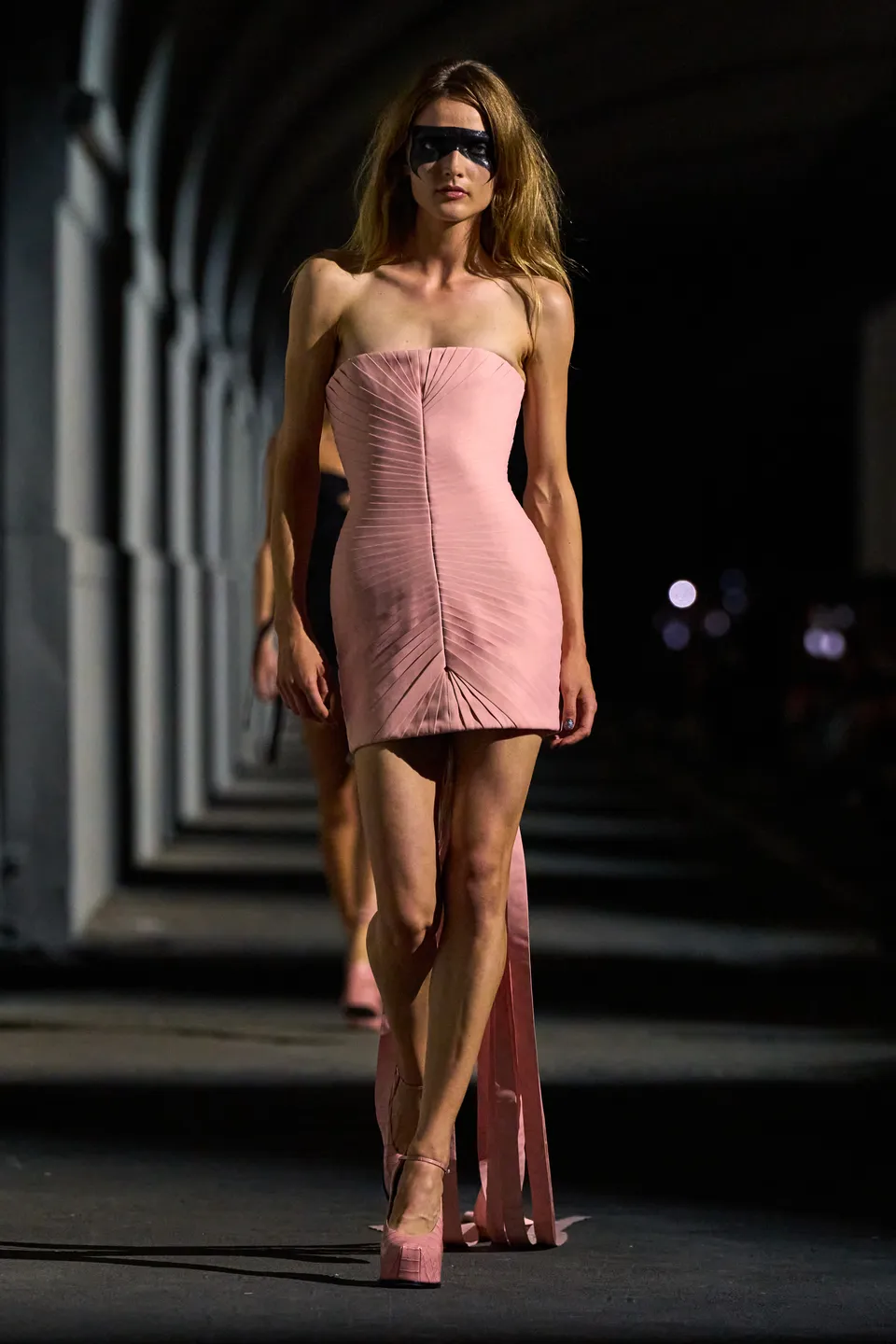
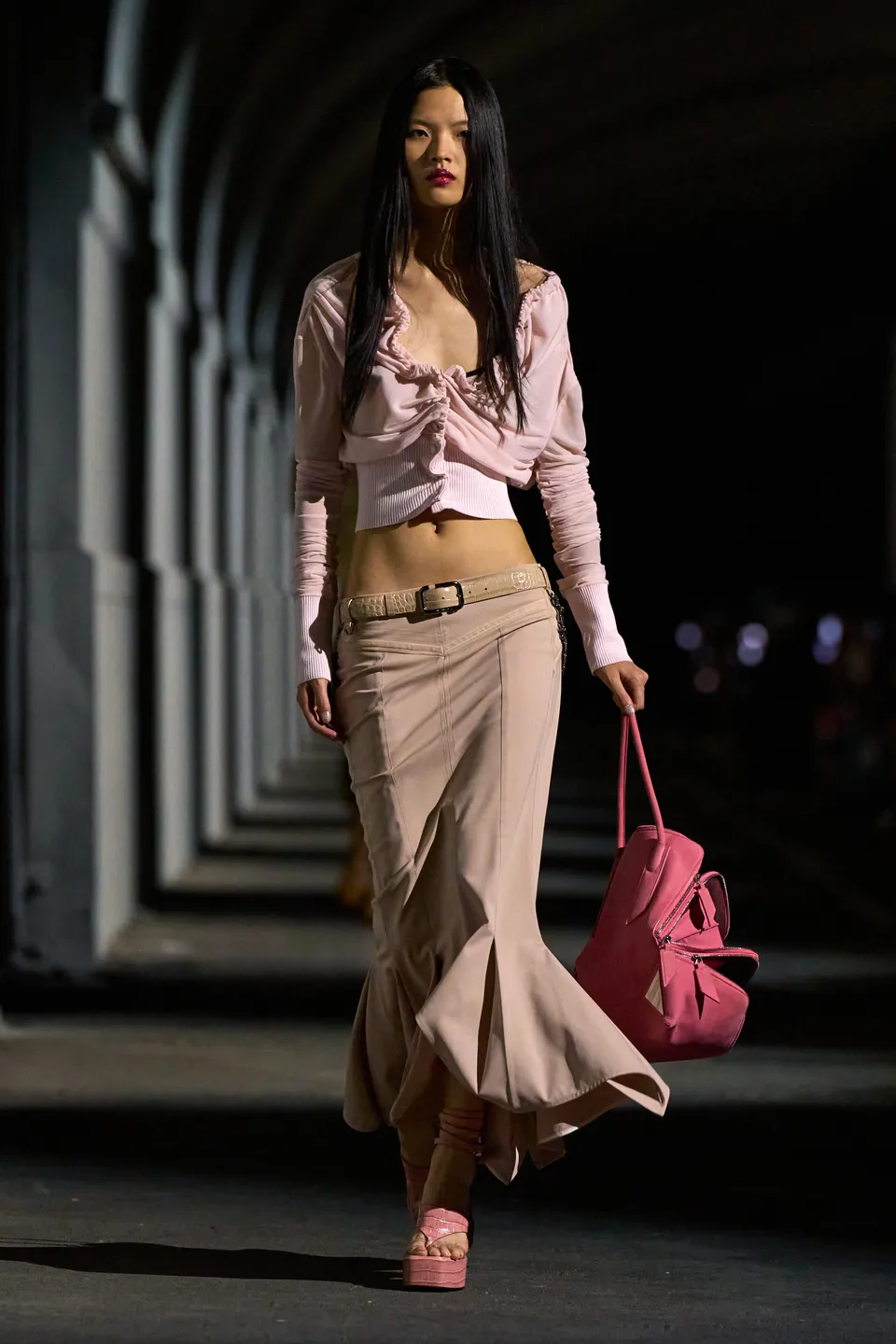
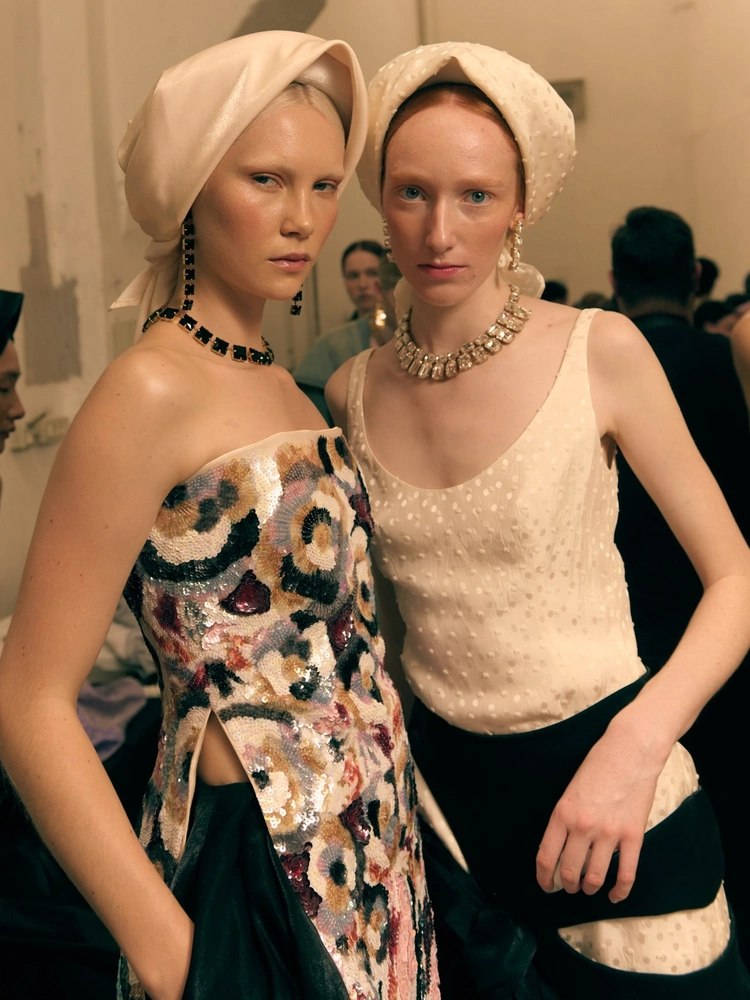
Sequins bring another texture into the room. Velvet absorbs light. Metallic surfaces release it. Sheer fabrics expose fragments of skin. Leather introduces density and control.
Long dresses cling and trail. Cargo pencil skirts hold the hips firmly. Military jackets broaden the power shoulders. Masculine shirts loosen the torso. Sheer layers allow skin to become part of the color palette.
The designers place special emphasis on the shoulder. “The shoulder is proud,” they explained backstage, and several jackets make that attitude visible through exaggerated structure.
Elsewhere, sensuality sinks lower. Leather trousers use zips along the back. Cut-outs slice through cleaner surfaces. Lingerie shapes frame the torso. Long hems drag slightly behind the body with an almost sleepy glamour.
Several looks capture a woman halfway through a transformation. One appears ready for bed. Another appears halfway dressed for dinner. A third carries the remains of last night into morning.
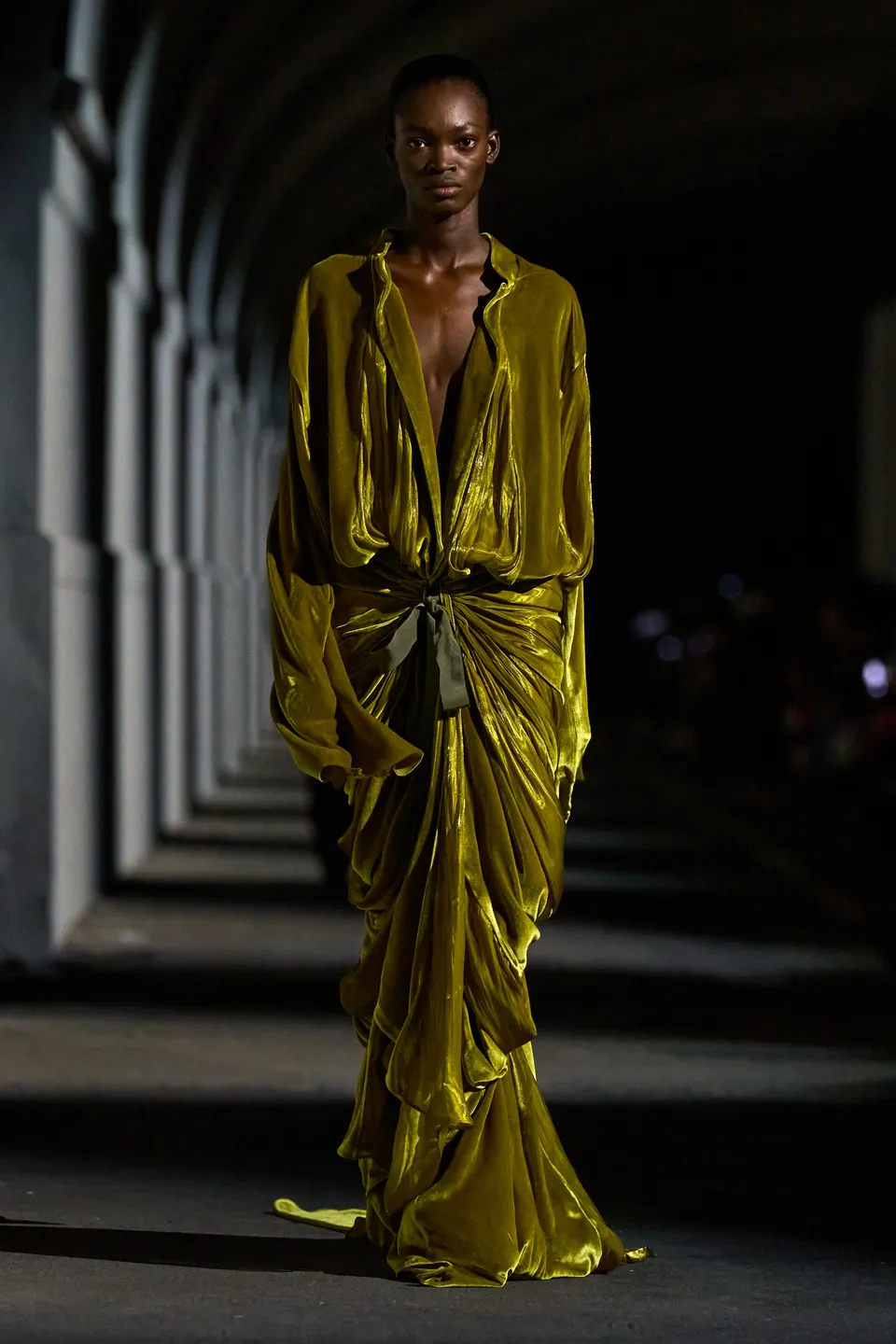
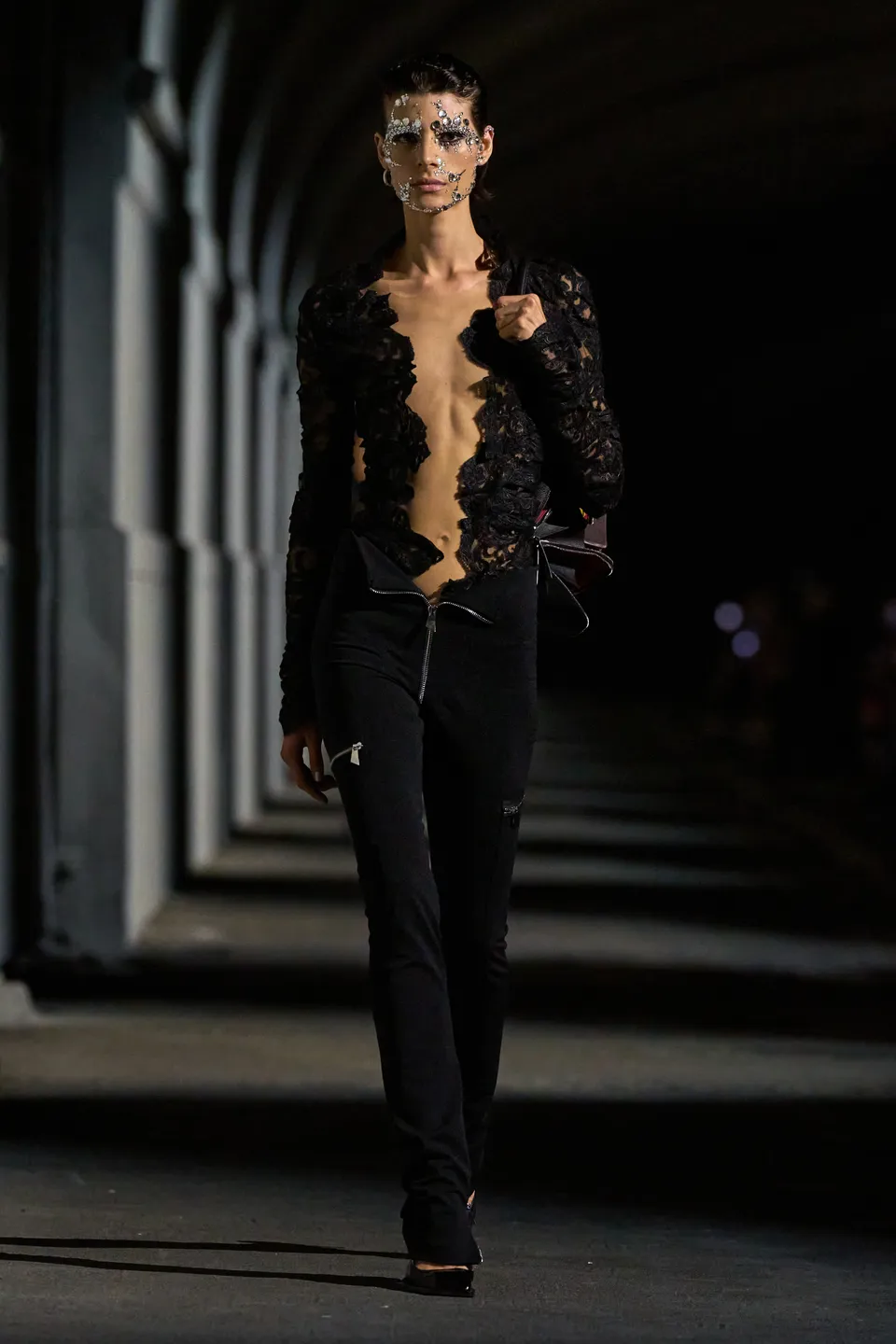
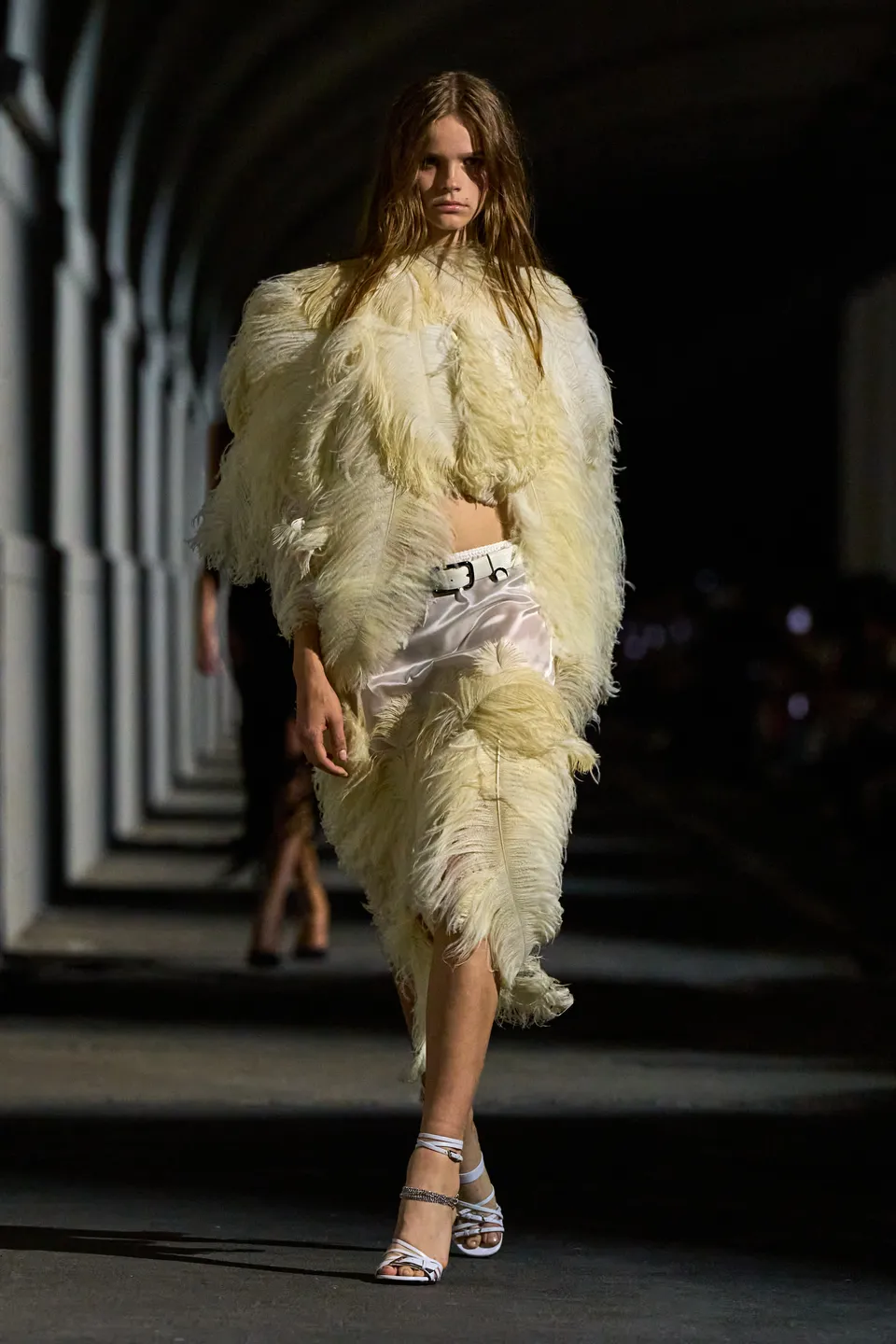
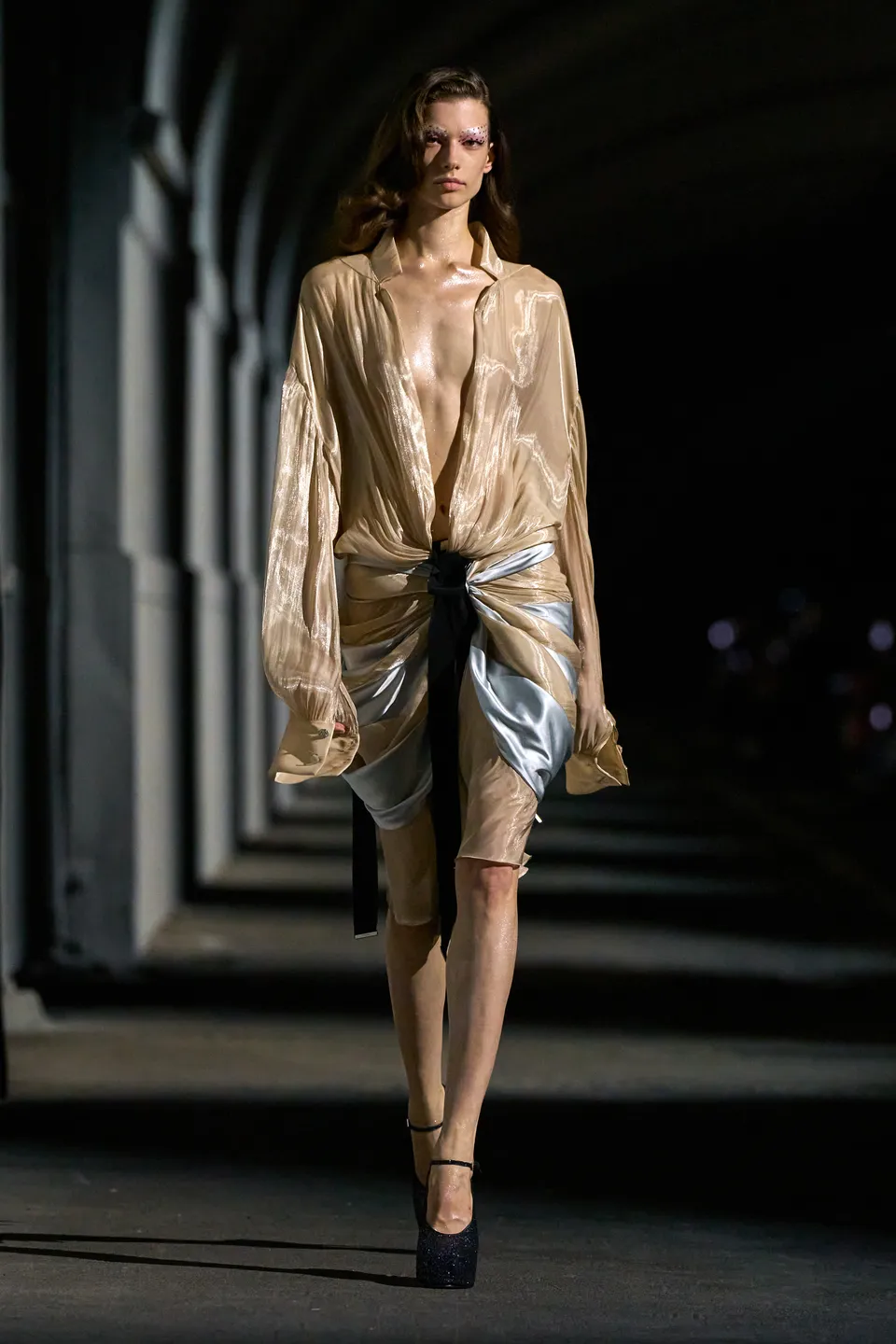
The wired pieces give the collection its clearest sense of evolution. A manipulated jacket shaped by internal wire turns tailoring into something personal and unstable, its surface recording the wearer’s hand.
The velvet robes carry another kind of strength. Their softness gives them intimacy, yet their scale pushes them toward theatre. A chandelier-like embellished dress represents the old Attico appetite at full volume: light moving across the body, glamour designed for the hour when subtlety has already gone home.
Cargo pencil skirts pull the collection toward utility, concentrating structure around the hips and giving the body a tougher outline.
The tenth anniversary becomes particularly interesting once the company behind the fantasy enters the picture.
Ambrosio has described the early The Attico woman as someone who lived mainly from 8 p.m. to 8 a.m. Today her wardrobe contains denim, tailoring, cargos and flats alongside the sequins and evening dresses that built the brand. The expansion mirrors the founders’ own journey from two friends designing wherever they could into creative directors leading a team they say now exceeds 50 people.
The early acceleration was extraordinary. Hypebae reports that the brand reached 140 stockists in its first year. In 2018, Archive, controlled through Remo Ruffini’s investment structure, acquired 49% of The Attico, giving the young label serious backing while Ambrosio and Tordini retained their creative identity.
The business has since experienced the realities that arrive with scale. Italian company filings for The Attico S.r.l. record approximately €23 million in 2025 revenue and €747,000 in profit, with turnover stabilising after a steeper contraction in 2024.
The founders are widening their definition of the brand at the same moment the clothes widen their definition of the woman. They speak about The Attico as a lifestyle universe spanning interiors, objects and experiences, an ambition already present at launch and increasingly realistic after a decade of building infrastructure.
Even the name predicted this future. Attico means penthouse in Italian: a private space high above the city, part home, part viewpoint, part fantasy.
The bedroom runway carries business logic beneath its rumpled sheets. A label born with 38 robes has reached the stage where a bed can represent clothing, interiors, identity and an entire possible lifestyle world.
Ten years ago, the brand taught the dressing gown how to leave the bedroom. Now The Attico has come back upstairs to see what else it can bring out with it.
Advertisement