MENU
Close





In MM6 Maison Margiela SS27, the eyes vanish behind coverings and the clothes take over, slipping out of their usual logic until getting dressed starts to look deliciously wrong.
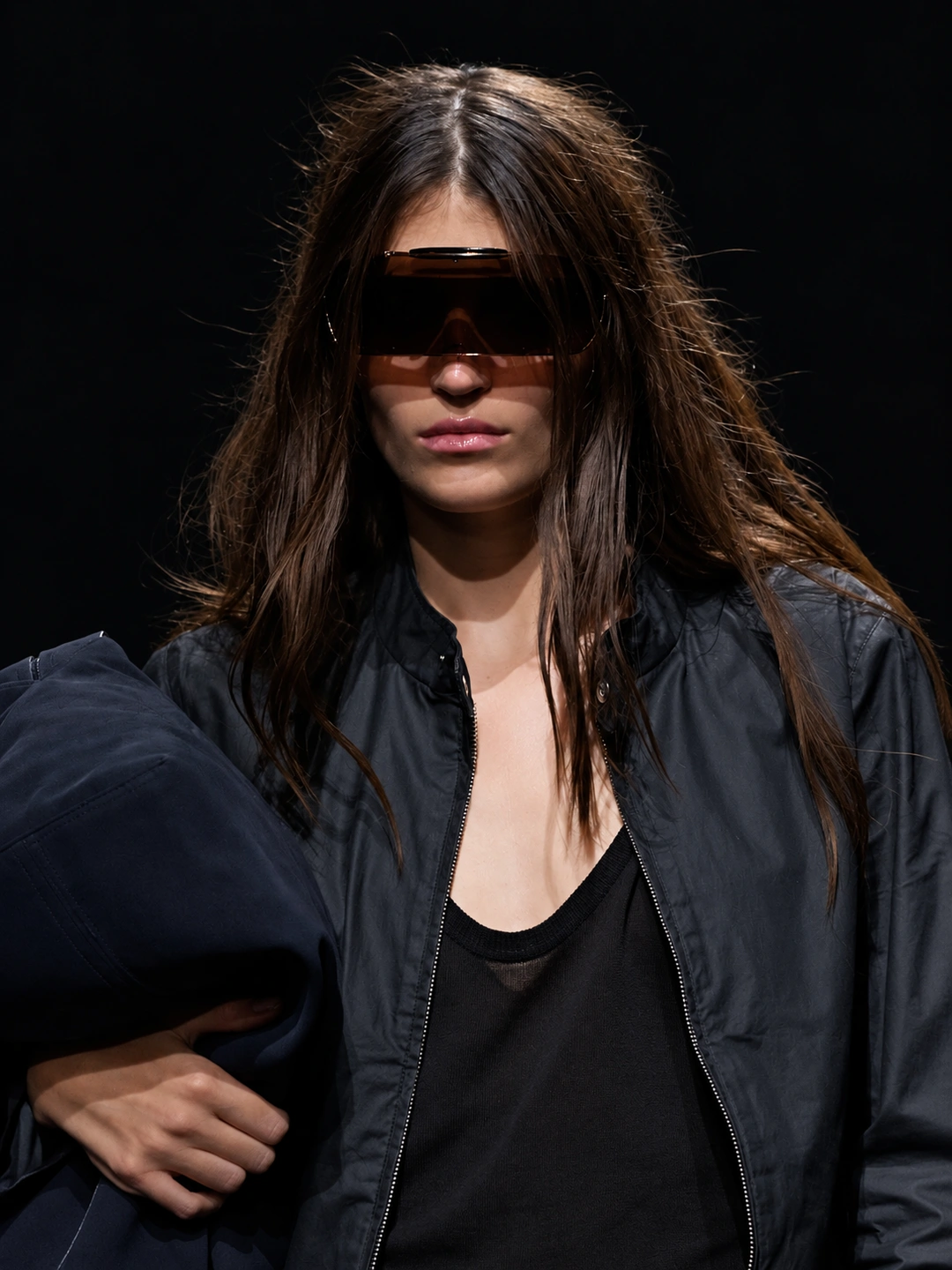
In MM6 Maison Margiela SS27, the eyes vanish behind coverings and the clothes take over, slipping out of their usual logic until getting dressed starts to look deliciously wrong.
September 27, 2026
Advertisement

Advertisement



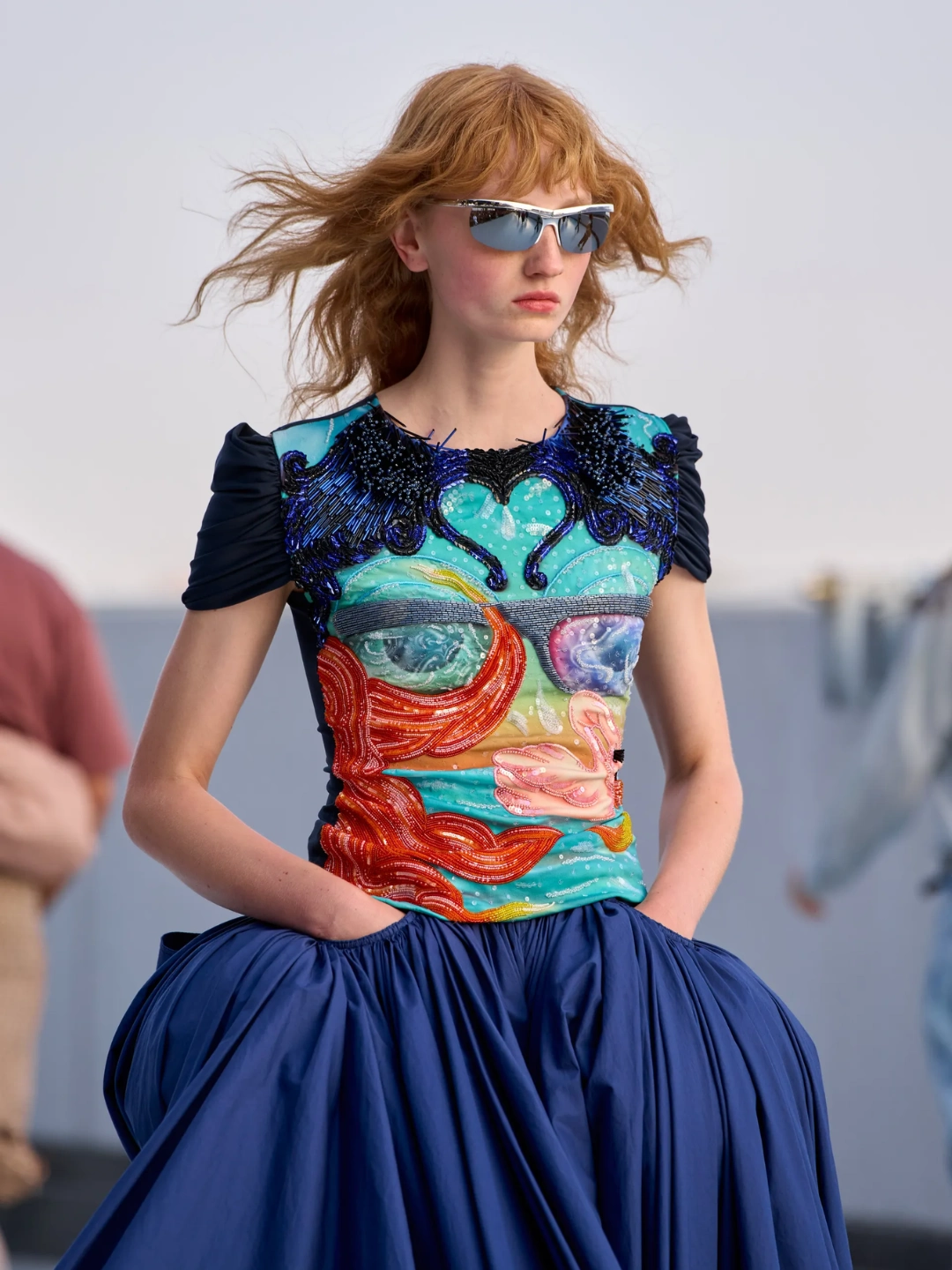
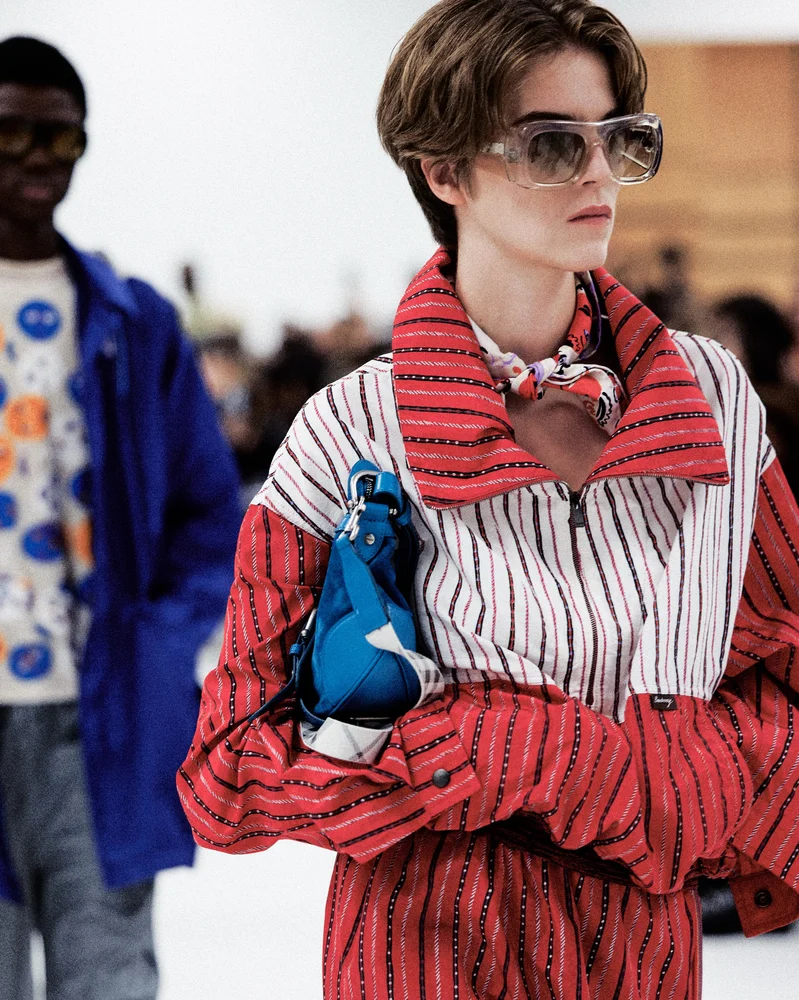
Eyes repeatedly disappear behind dark eyewear, withholding one of the easiest ways to read the person walking toward us. That visual instinct reaches back to one of Maison Margiela’s foundational principles. When Martin Margiela first veiled models in 1988, concealment redirected attention from individual identity toward the garment itself. Masks, wigs, veils and other forms of obscured faces later developed into a wider house language around anonymity.
MM6 translates that inheritance through sunglasses, placing distance between the audience and the person while everything below the neck starts behaving suspiciously. Familiar wardrobe pieces remain recognisable enough to trigger an immediate response. We know where a collar belongs. We know what a waistband is supposed to encircle. We know which opening receives an arm and which one receives a leg. MM6 Maison Margiela SS27 takes pleasure in watching that knowledge fail.
The anonymous MM6 studio described the collection through the freedom of childhood dress-up: “You try everything everywhere.” Garments keep their original identities while proportions, closures and entry points migrate around the body. The idea brings deconstructed fashion somewhere mischievous. Destruction barely enters the equation. A shift of several inches can cause enough trouble.
Tailoring rises from the legs toward the torso until a trouser construction begins behaving like a mini dress. Poplin follows another route, folding around the body while collars and openings survive as clues to the garment’s former life. Later, the jersey moves downward, with familiar T-shirt architecture reappearing around the hips. MM6 keeps the original garment legible throughout, which makes each displacement sharper.
Straight mini shapes inherit the narrow verticality of trousers and shirts, so the body is framed with little conventional waist definition. Elsewhere, fabric gathering around the hips creates a compact lower-body volume while the torso remains exposed or comparatively clean. What looks incorrect according to normal dressing produces surprisingly coherent proportions once the garment settles somewhere new.
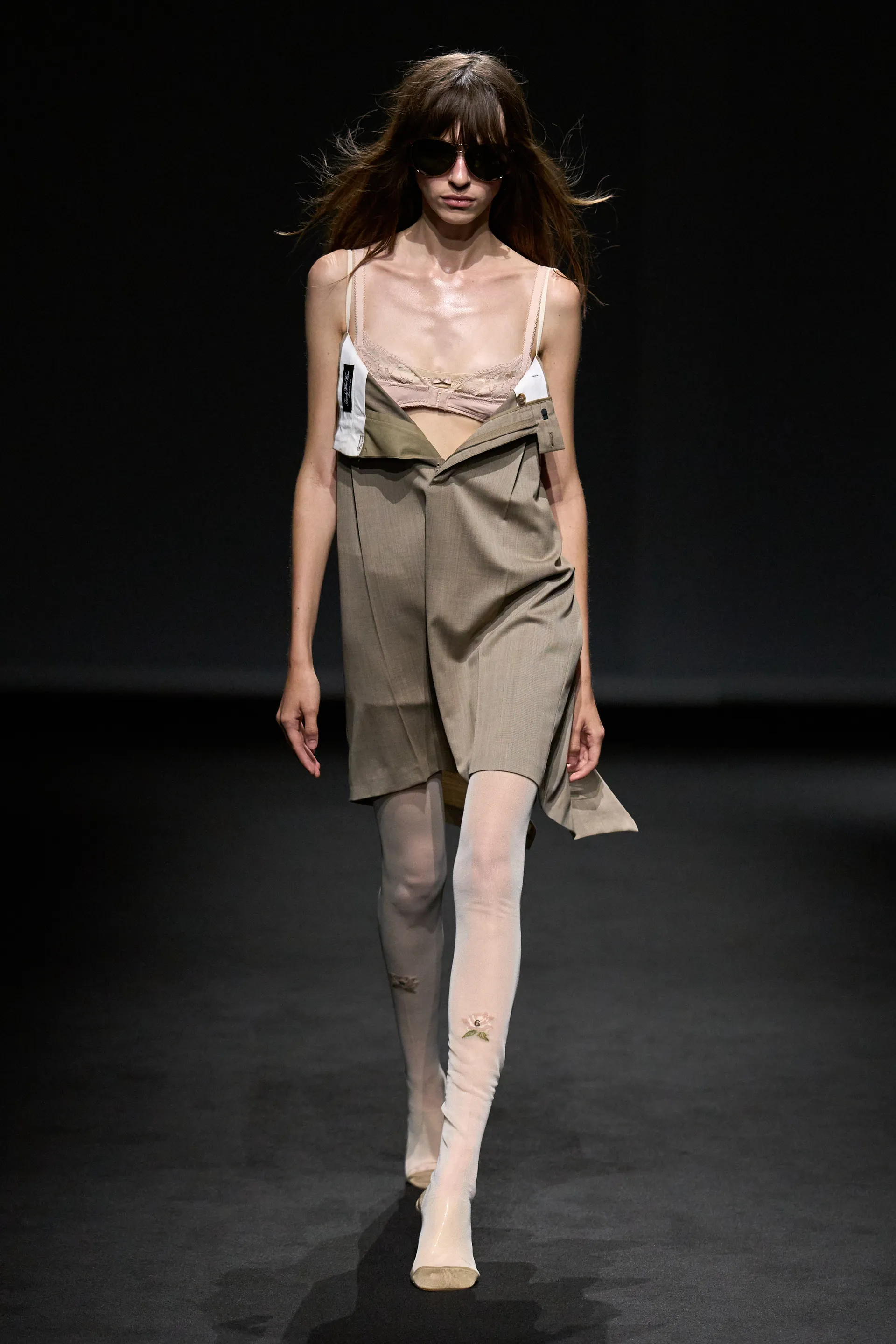
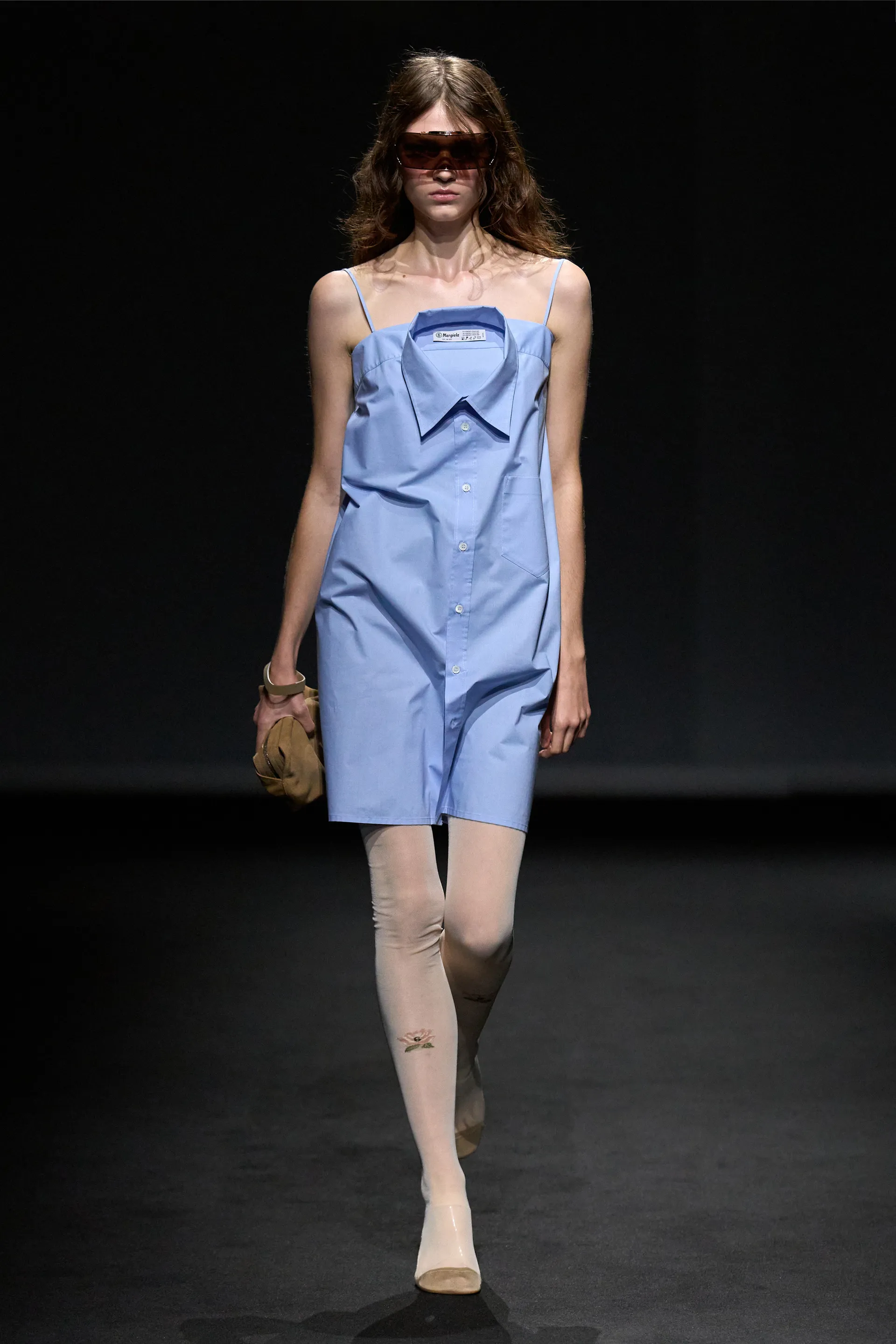
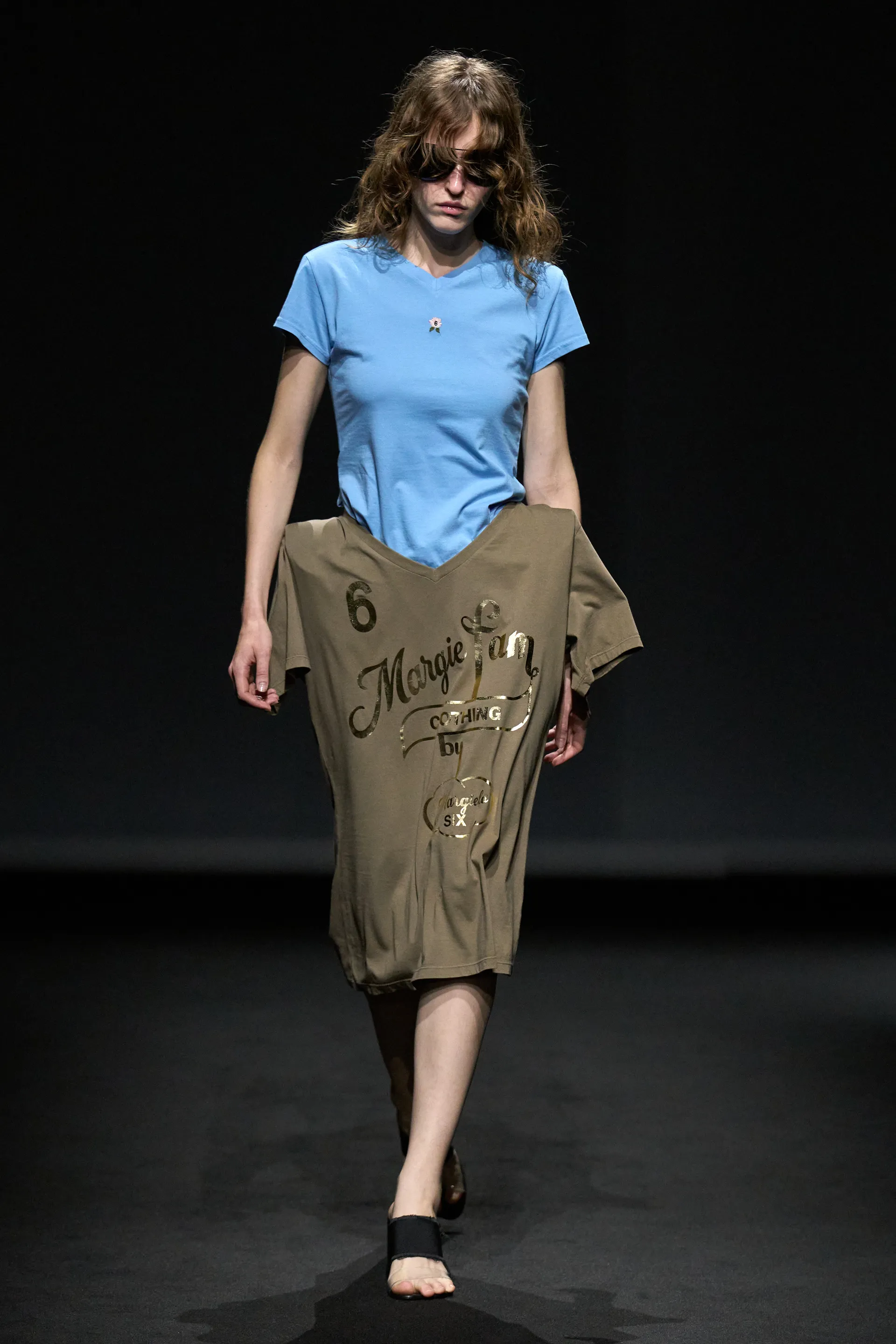
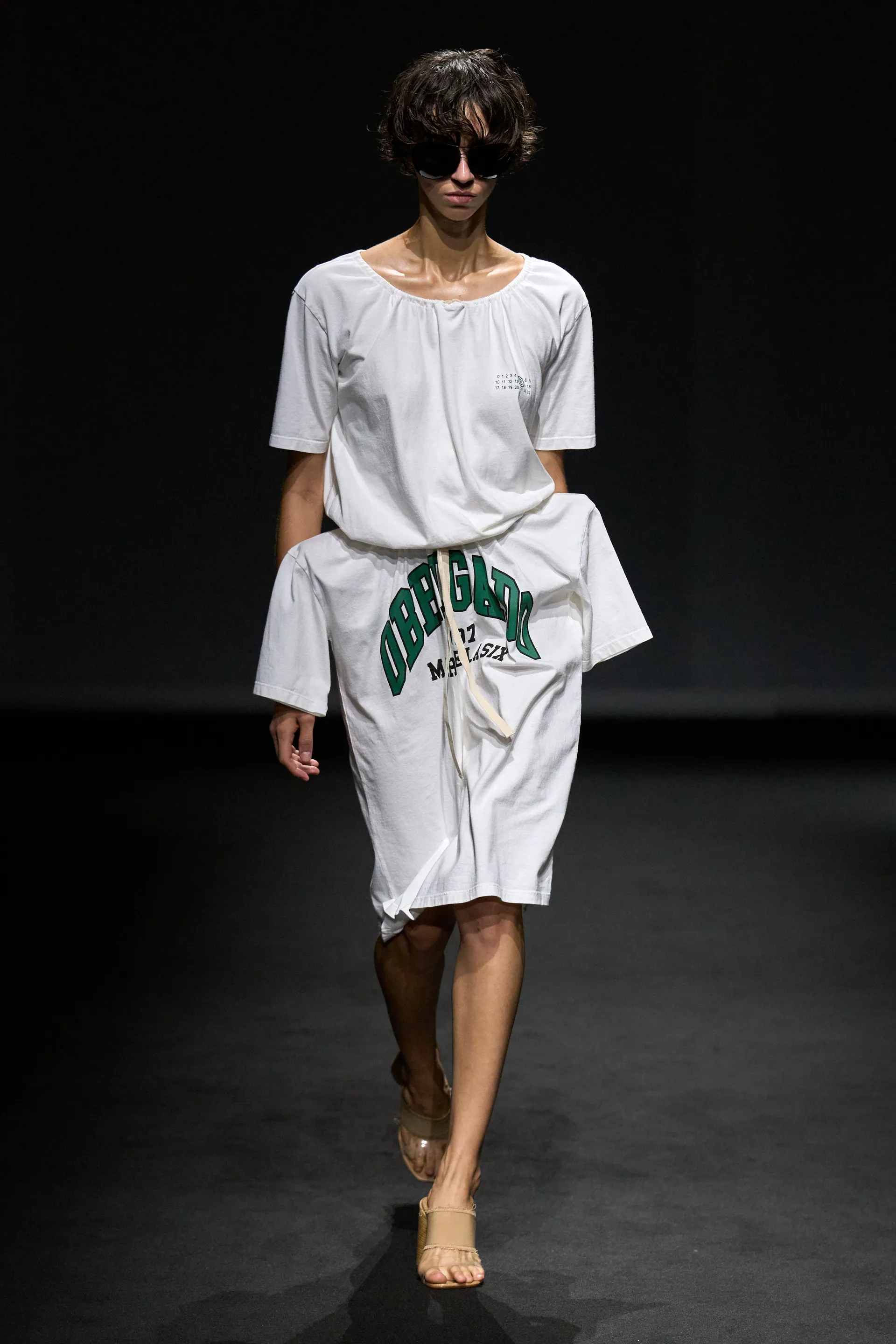
MM6 leaves enough of the familiar structure intact for recognition to happen first, then shifts the point of entry or the way it sits on the body until that recognition starts to wobble.
The studio has been circling this kind of instability for several seasons, treating everyday clothing as something that can be worn from another angle, folded into a different role or given more than one possible orientation. Spring 2027 pushes that instinct into something almost childlike, as if the only real instruction left is to keep trying until the garment finds a new place to belong.
Waists climb, shoulders shift and familiar points of balance start drifting away from where the body expects them to be. MM6 keeps the garments recognisable enough for the eye to search for order, then quietly moves that order elsewhere.
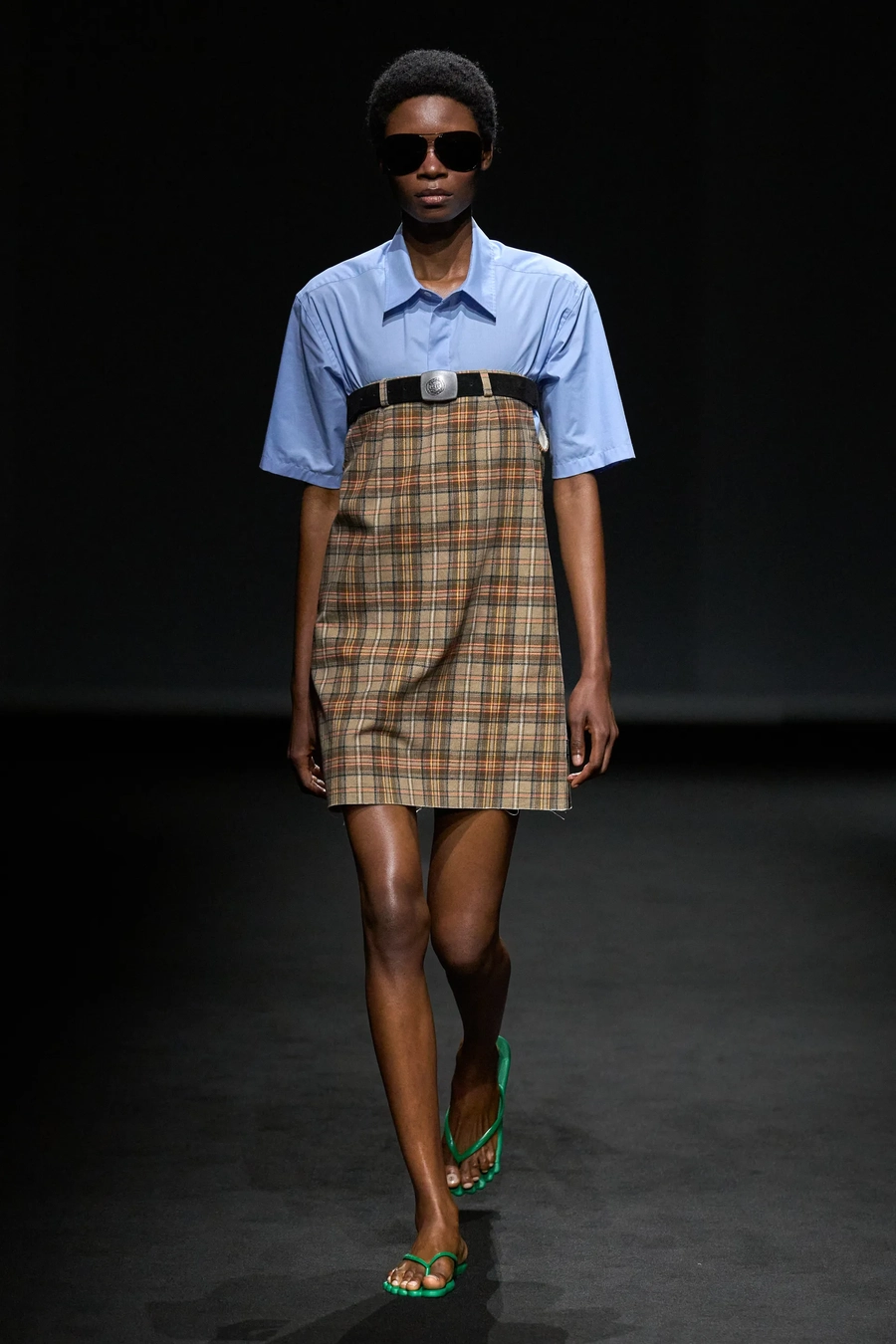
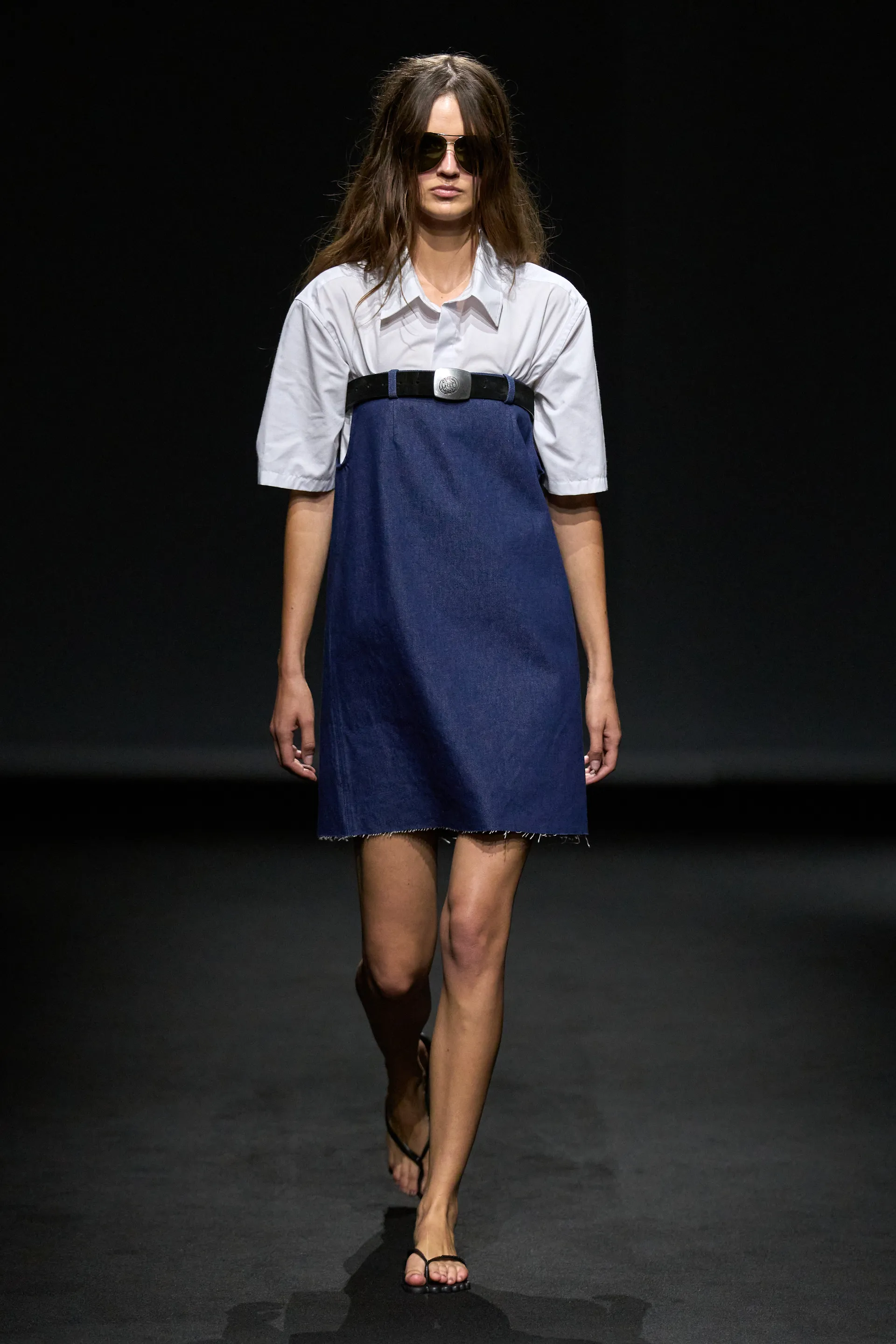
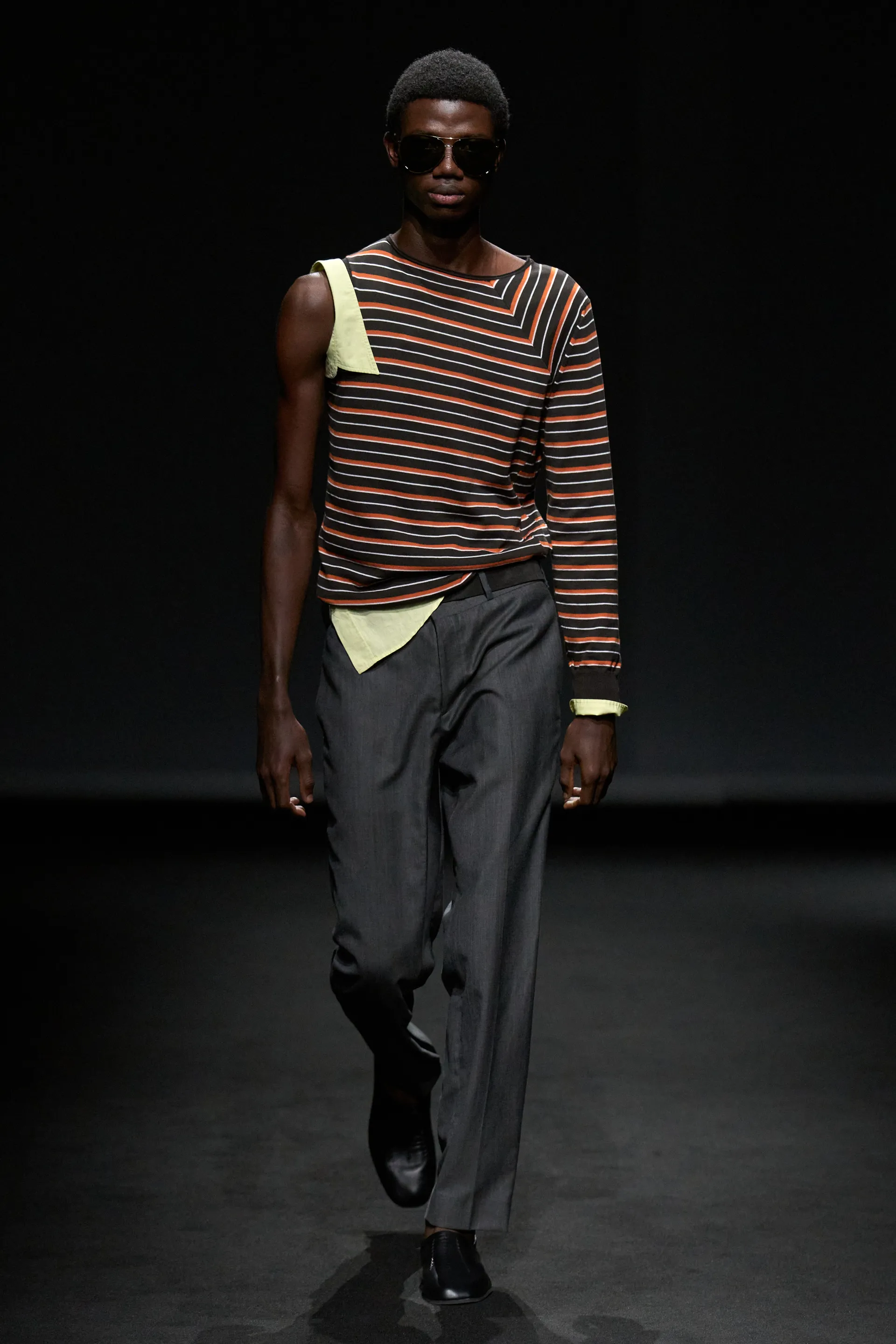
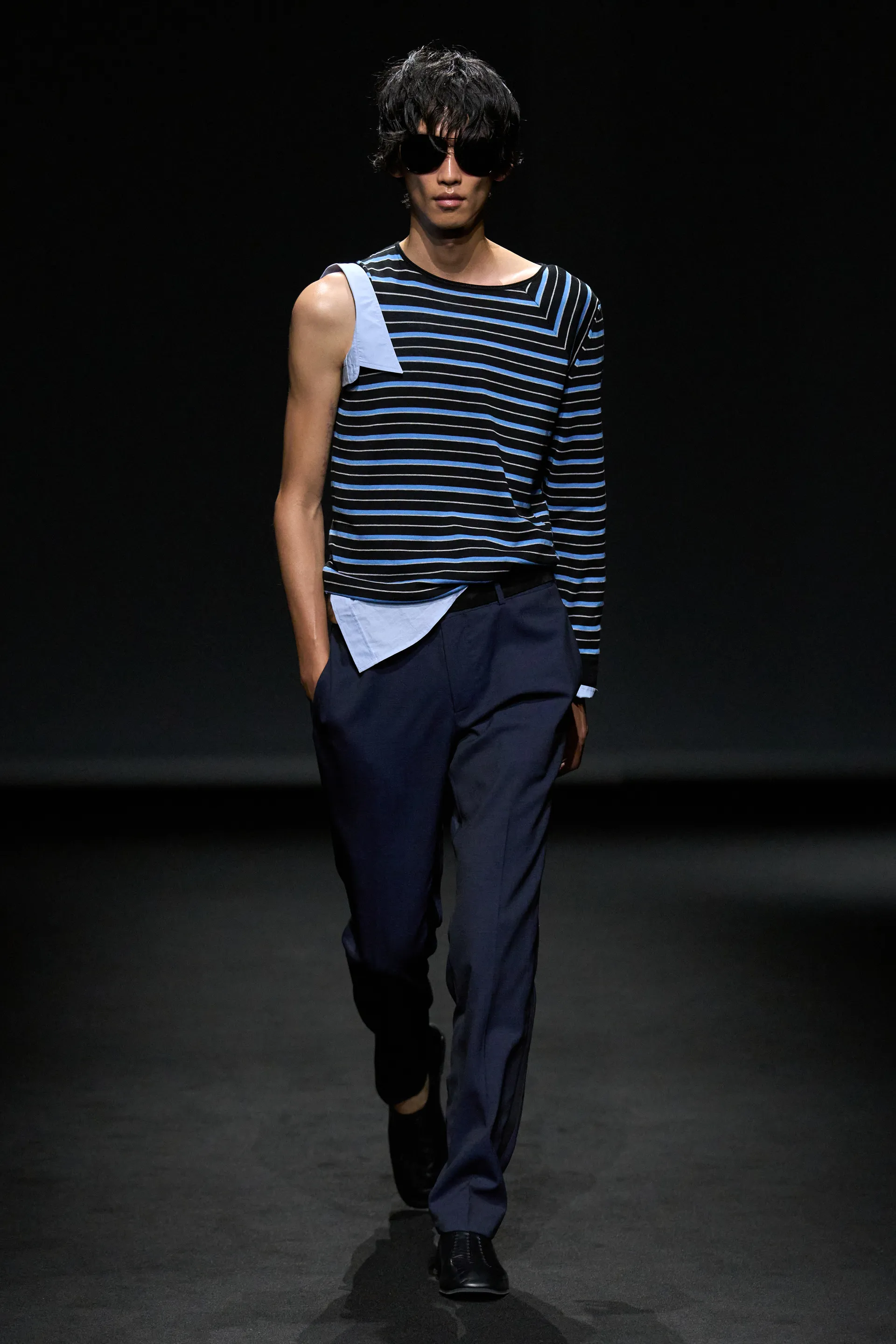
The silhouette changes through those small displacements. A false waist can stretch the legs, an off-centre upper line can tilt the whole torso, and volume pushed toward the hip gives the body a shape that sits somewhere between tailoring and old ceremonial dress. Nothing needs to become dramatically sculptural. The distortion works because the proportions remain calm enough for every misplaced line to register.
MM6 treats the body like a map with several landmarks shifted a few inches out of place, leaving the wearer familiar and slightly unreadable at the same time.
Outerwear suddenly looks as though it belongs to one scale while everything underneath belongs to another.
Washed peacoats drop over tiny shorts, compact tops leave long sections of torso and leg exposed, and abbreviated dresses stop high enough above the knee to stretch the lower body into an almost exaggerated line.
That sweetness quickly becomes odd once scale starts working against the adult body. Boxy outerwear can engulf the upper half while the lower half appears nearly absent. Short A-line dresses sit away from the torso with a simplified, almost toy-like geometry. Narrow minis compress the garment vertically, producing the impression that the wearer has grown but part of the wardrobe has stayed behind.
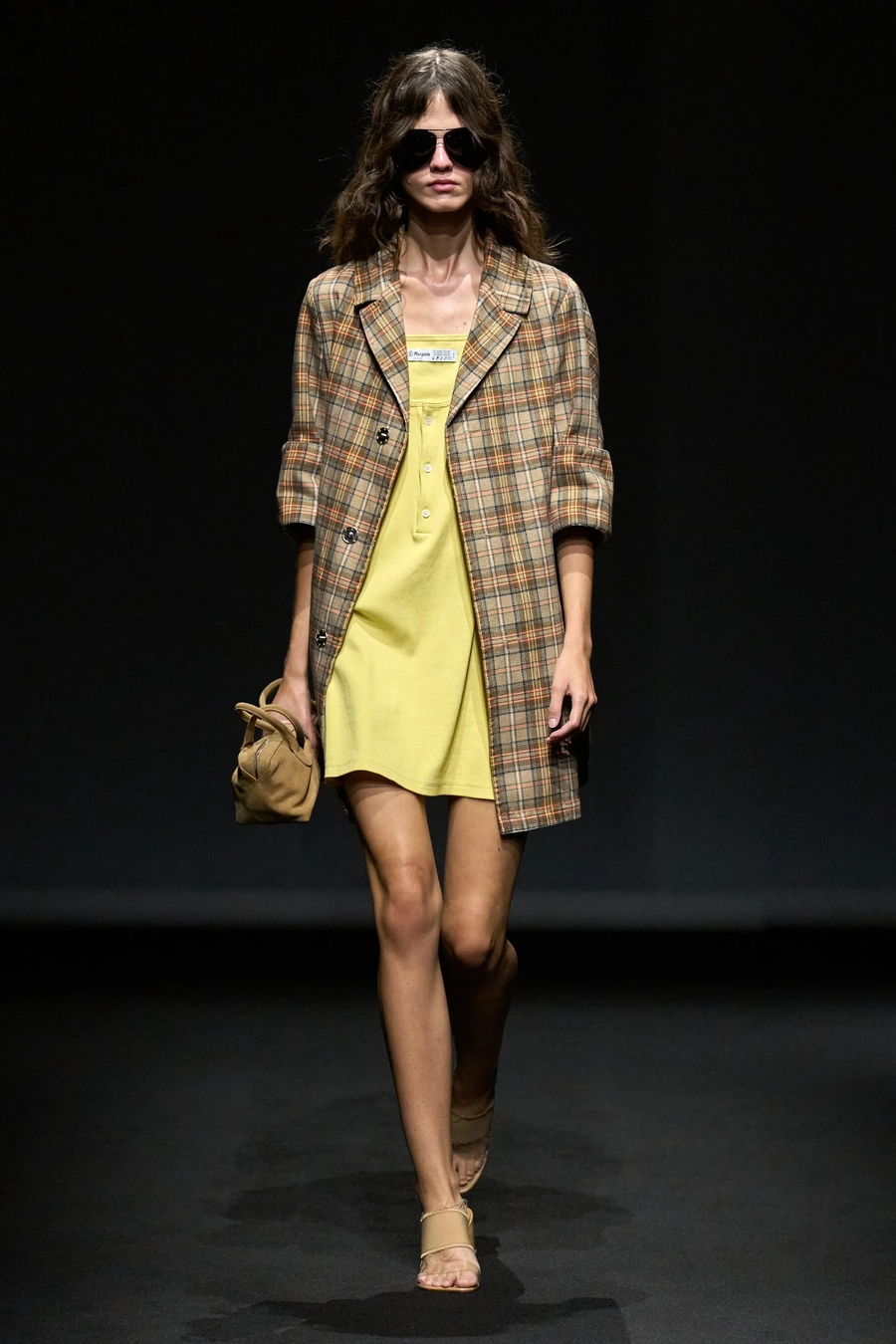
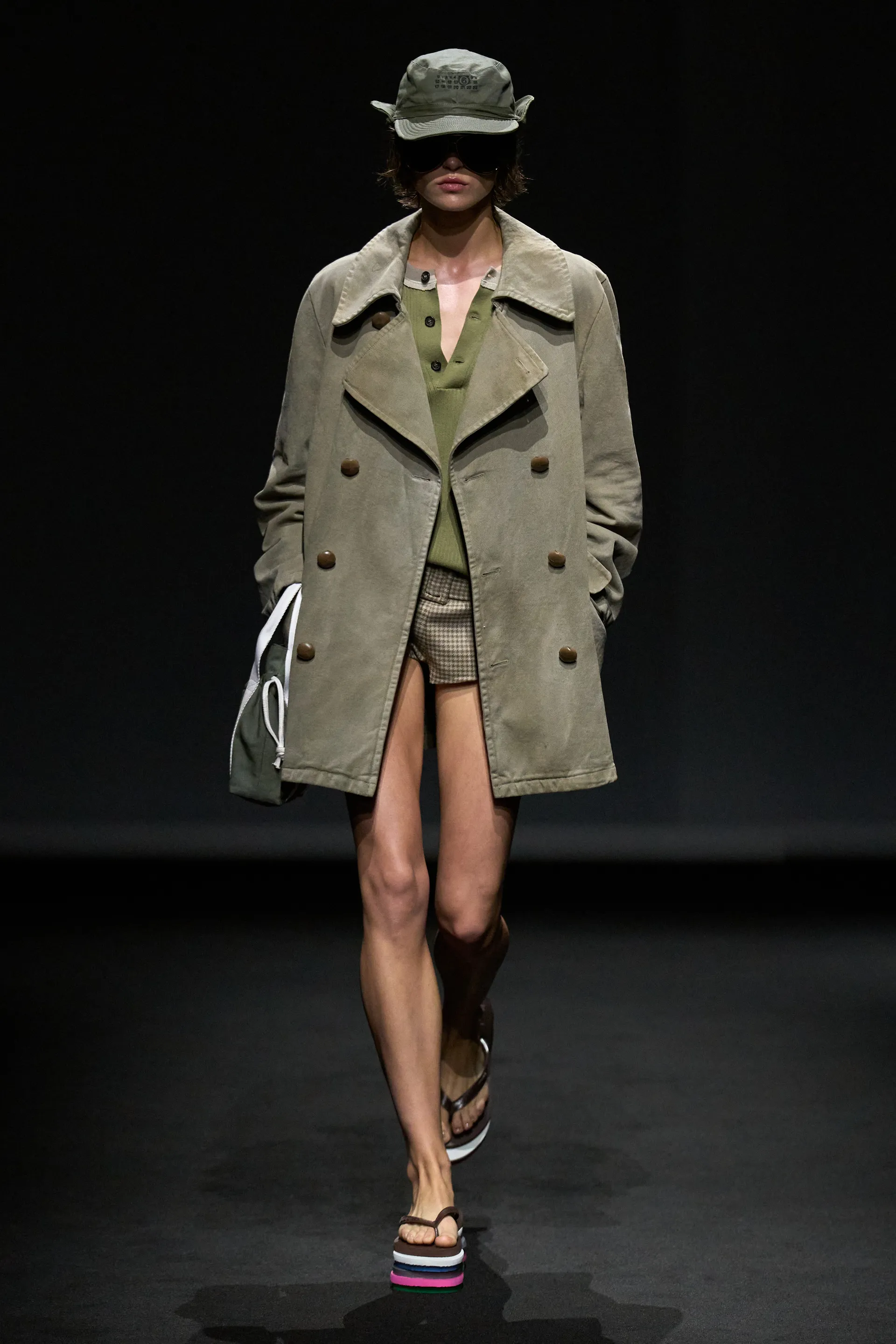
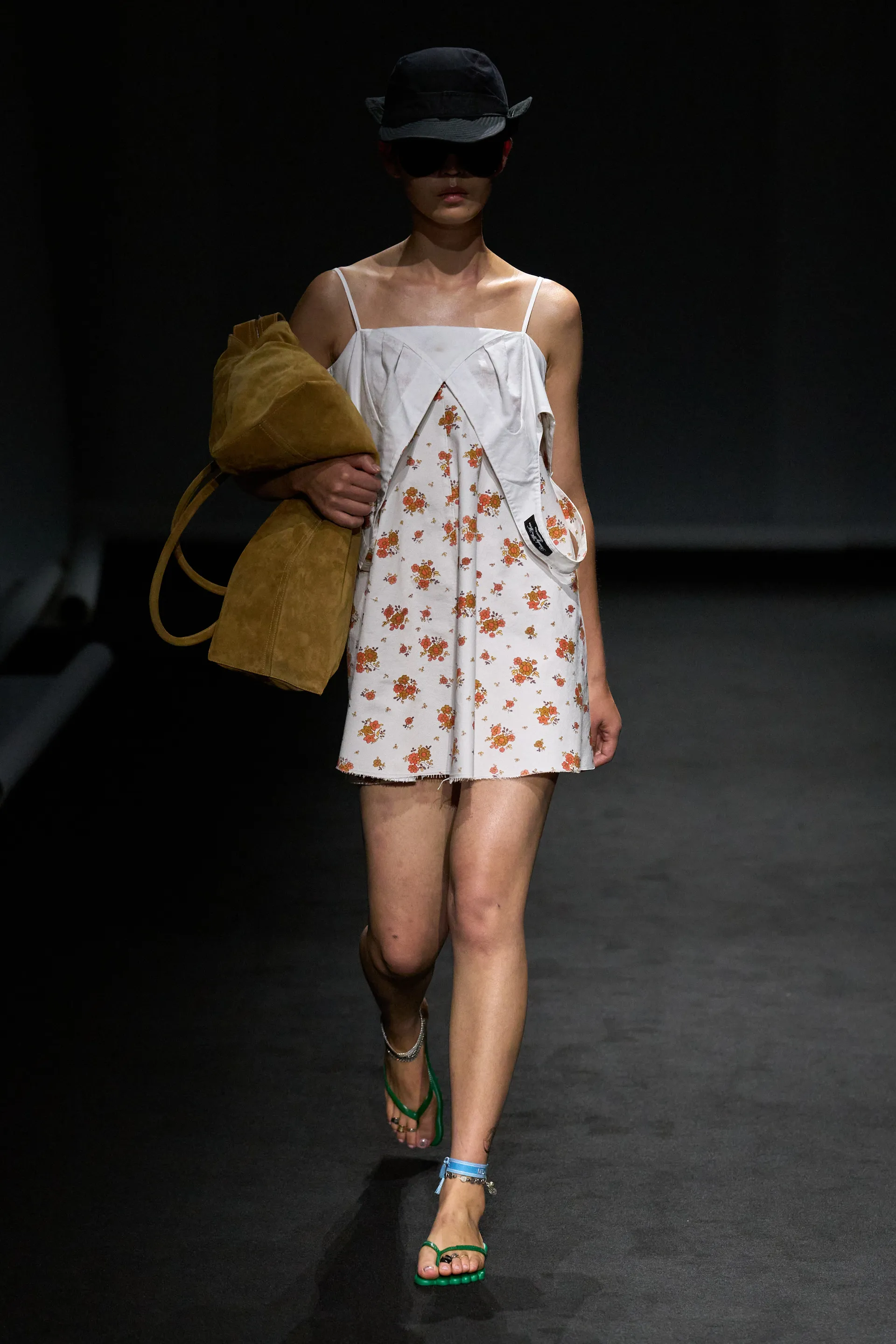
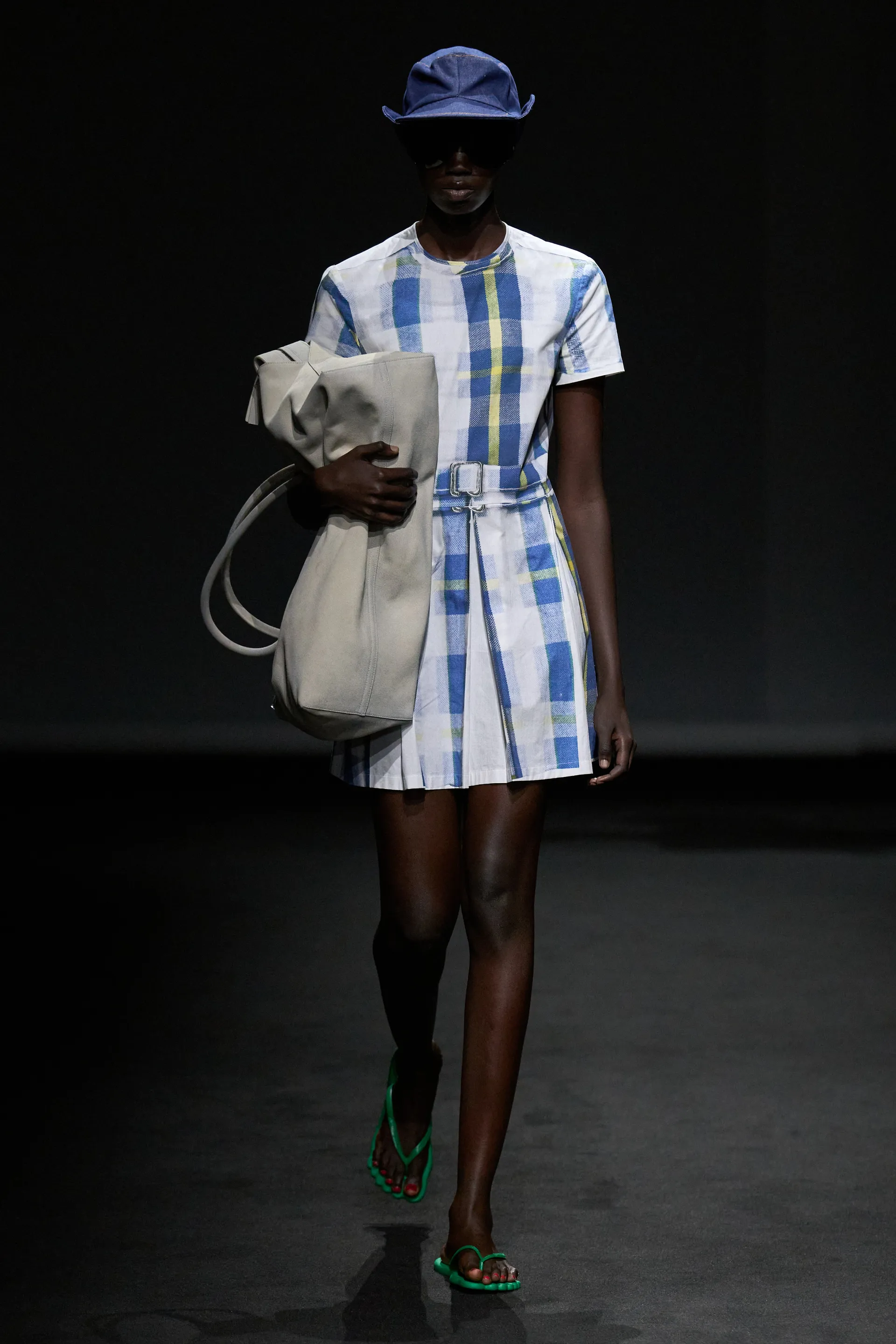
Childhood dress-up returns here without turning sentimental. Anyone who has tried on clothes several sizes too large, or pulled a small garment into completely unintended use, already knows the physical comedy behind these proportions. MM6 translates that memory through exact construction, keeping the silhouette awkward enough to preserve its charm.
Checks, faded surfaces and small floral dresses soften the conceptual machinery, while the covered eyes keep the overall image detached from conventional girlishness. The face remains unavailable. What looks sweet around the body acquires a slightly uncanny quality above it.
Toward the closing stretch, fabric starts slipping away from the places that normally secure it.
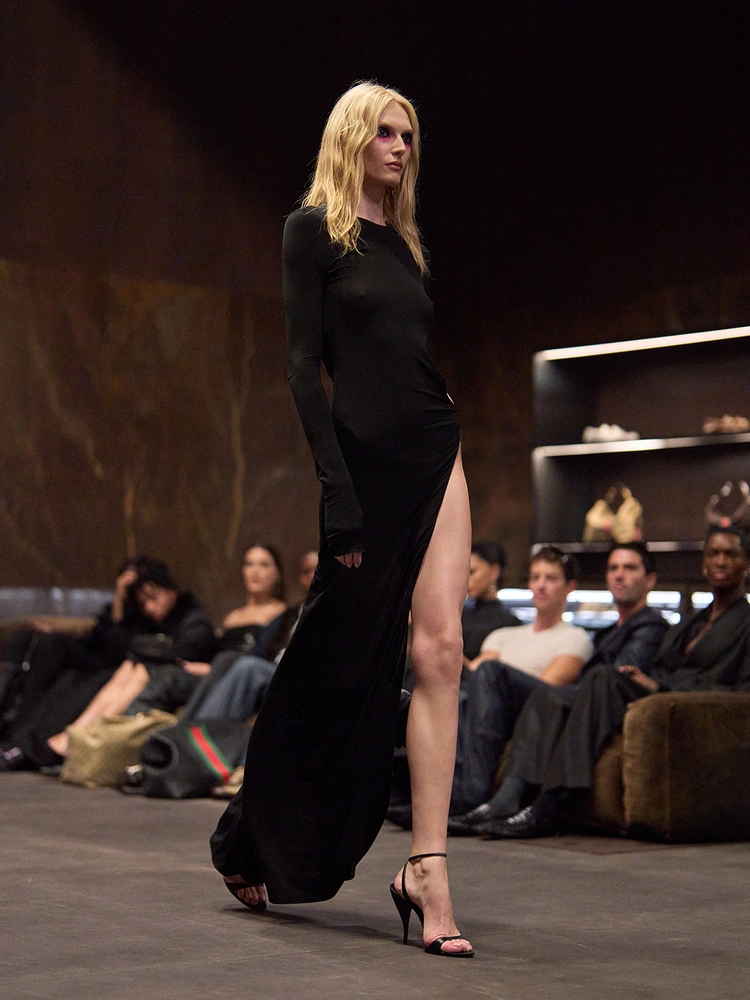
Long dresses hang lower across the upper body, with neckline and shoulder structure loosening until the garment appears suspended around the arms. Inner layers remain visible while the outer fabric drops into extended vertical columns. After a collection is spent moving openings and waistbands into unfamiliar positions, even gravity seems to join the experiment.
Volume narrows, ornament recedes, and the dresses descend with a fluidity that makes their unstable upper construction more obvious. The body remains upright while the garment appears caught halfway through an escape.
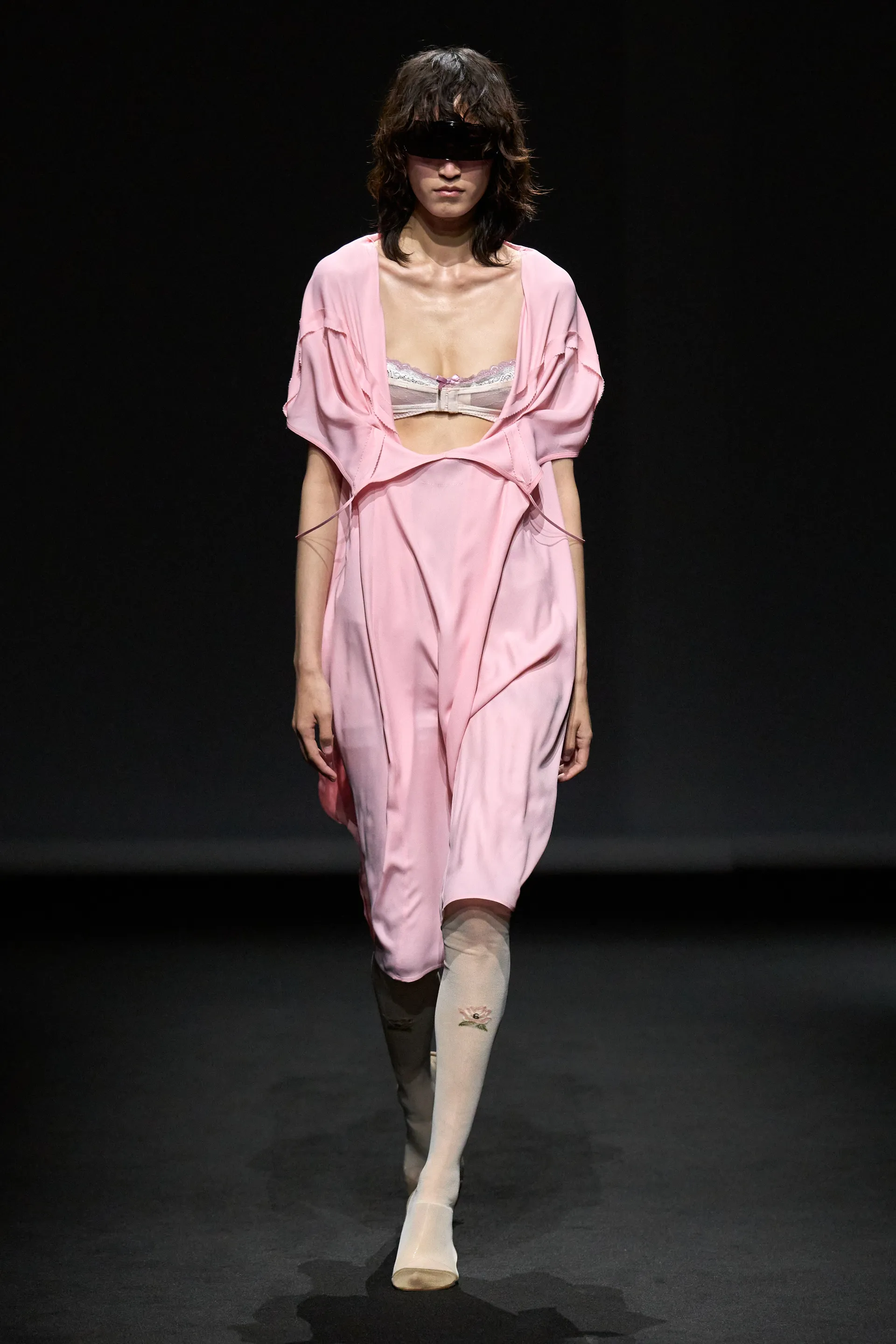
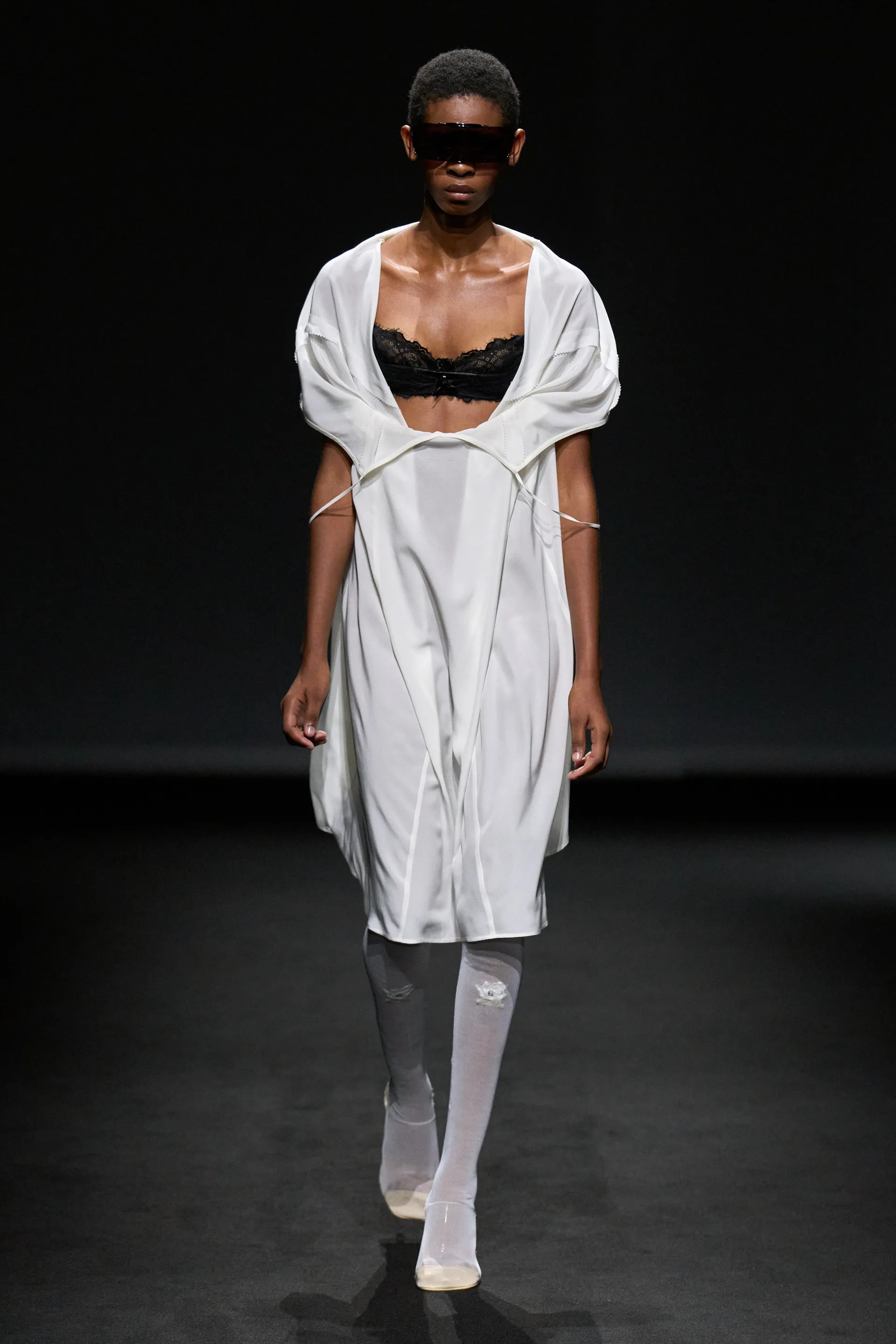
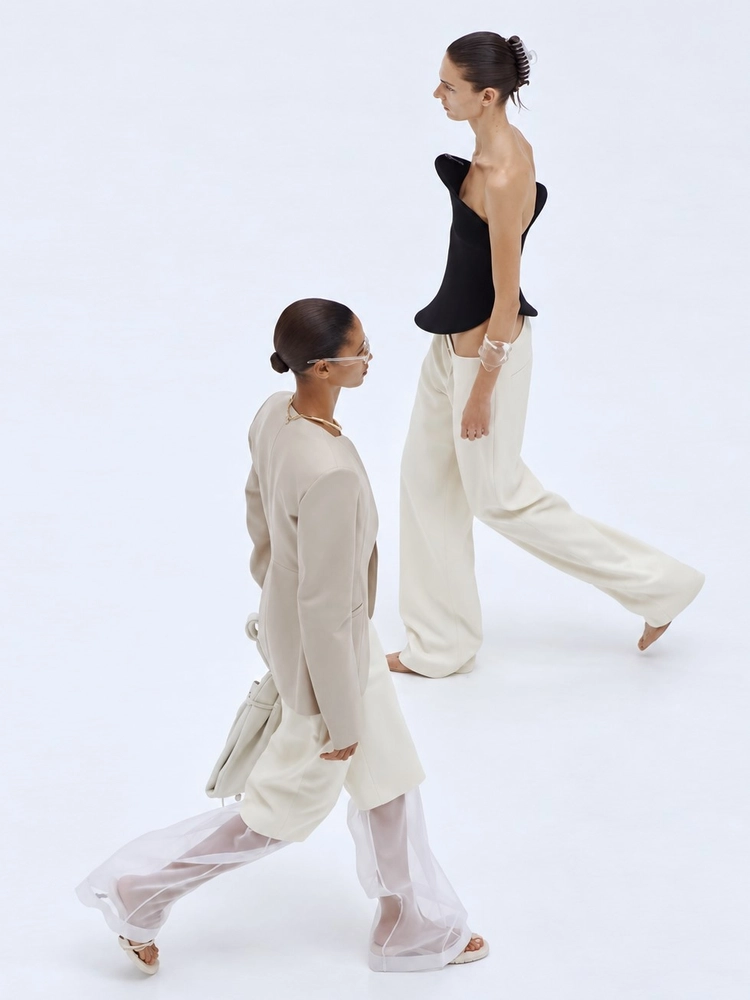
Pale tones soften the closing silhouettes, while long lengths of fabric continue to fall away from the shoulder and gather toward the floor. The vertical line stays clean, yet the upper edge looks increasingly unstable, as though the dress has slipped past the point where it was meant to hold.
By the end, the body and garment are no longer moving as one fixed unit. Fabric hangs, drops and shifts around the figure, leaving the final silhouettes suspended somewhere between dressed and coming undone. That instability gives the closing looks their tension, with very little need beyond drape, gravity and a shoulder line that refuses to stay put.
A familiar garment appears, the eye assigns it a function, and then one small displacement makes that certainty collapse. MM6 keeps returning to that pause, trusting the viewer to recognise the rule before noticing how neatly it has been broken.
By the closing stretch, that instability reaches the surface of the body itself. Dresses appear to slip from the shoulders, upper sections hang lower than expected, and long lengths of fabric fall as though dressing has been interrupted halfway through. The effect is neither accidental nor unfinished. It turns the act of getting dressed into another thing MM6 can misplace, leaving the garment suspended between worn, undone and almost falling away.
Deconstructed fashion here grows through misplacement instead of spectacle. Familiar shapes survive intact enough to retain their memory, while altered proportions and shifted entry points give them another life in the body. Even the falling-off effect continues that logic. The clothes remain recognisable, but their relationship with the wearer has loosened.
Playfulness keeps exercise from becoming overly cerebral. The collection carries the instinct of someone dressing without asking what an item was originally designed to do, following curiosity until a trouser, shirt or dress finds another place to belong.
Fashion spends plenty of time teaching the body how clothing should sit. MM6 Maison Margiela SS27 seems far more interested in the moment it starts slipping away.
Advertisement