MENU
Close





Gucci SS27 arrives with every product category in place, yet the darker the collection becomes, the more its sense of pleasure seems to disappear.
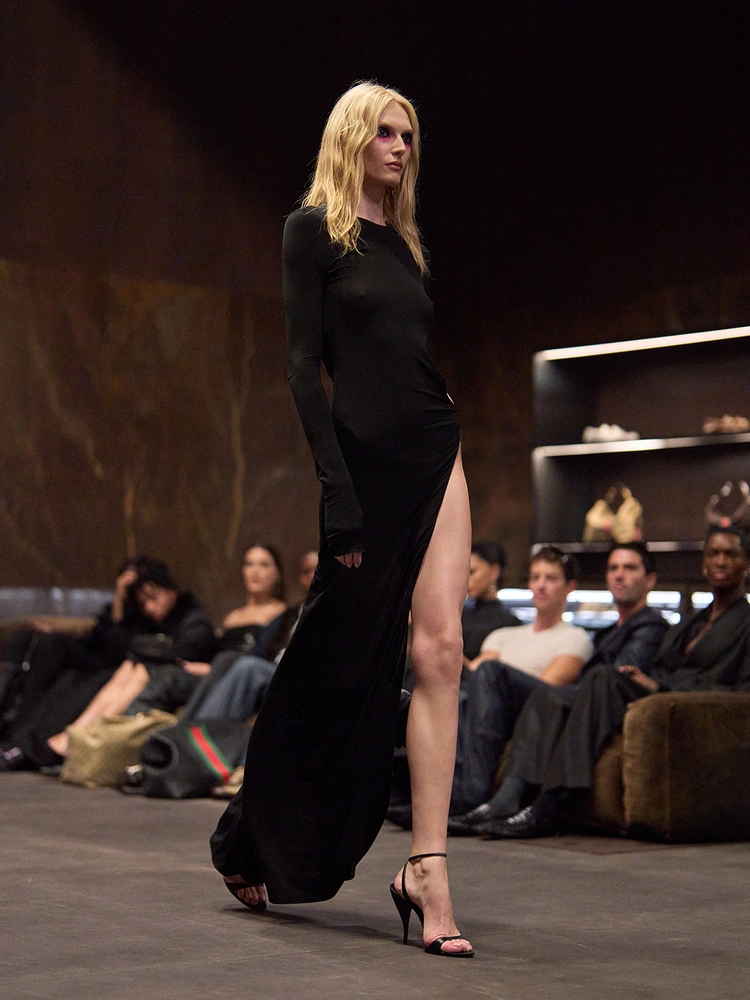
Gucci SS27 arrives with every product category in place, yet the darker the collection becomes, the more its sense of pleasure seems to disappear.
September 27, 2026
Advertisement

Advertisement



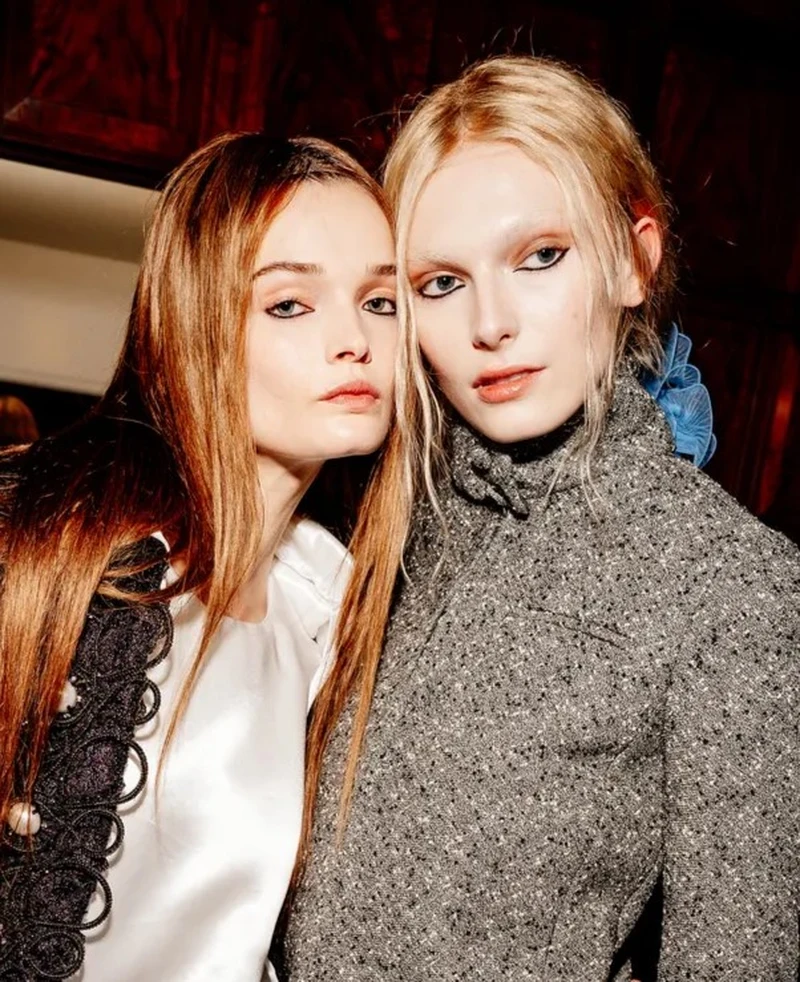
Gucci built the store first. For Spring/Summer 2027, Demna staged his latest collection inside a fully constructed vision of the house’s future retail environment, filling the space with handbags, shoes, clothing and polished fixtures until runway and sales floor became almost indistinguishable. Forty menswear looks and 43 womenswear looks followed through the boutique in Milan, populated by equestrians, wealthy Milanese women, prepsters, trophy wives, finance men, club boys and other exaggerated inhabitants of the Gucci universe.
Demna has described SS27 as the point where a year of separate research finally becomes his complete personal vision of Gucci. La Famiglia studied characters, Primavera pushed body and sensuality, and GucciCore concentrated on recognizable products. SS27 brings those exercises together.
Demna has always been skilled at identifying the social meaning hidden inside clothes. At Gucci, that instinct becomes a catalogue of aspiration.
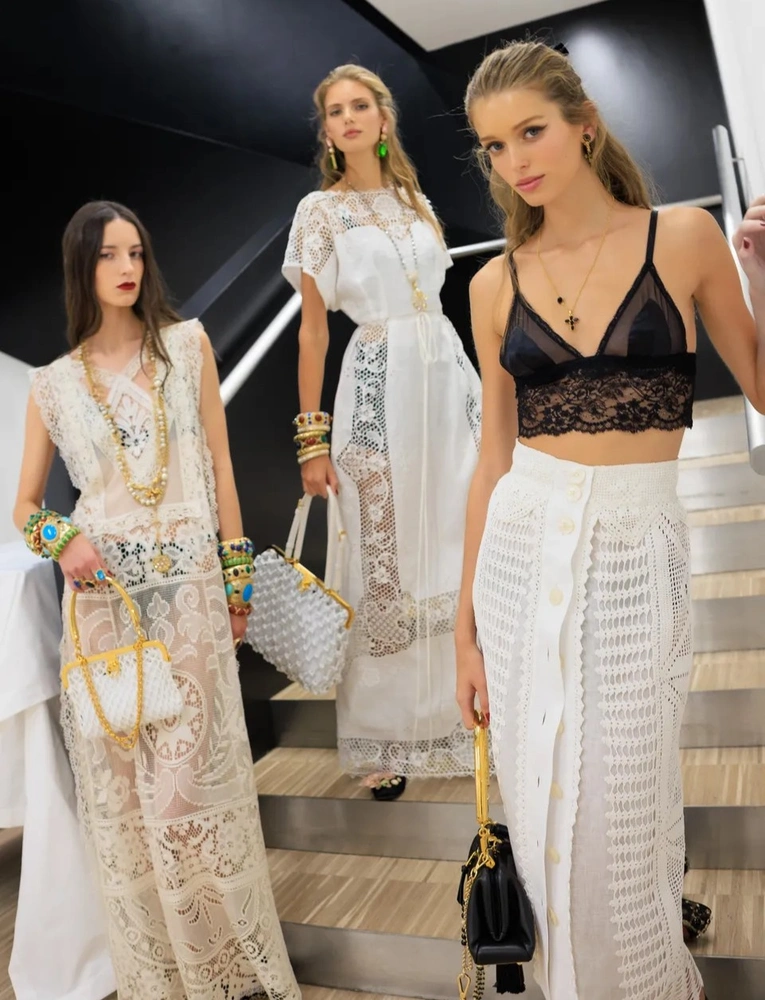
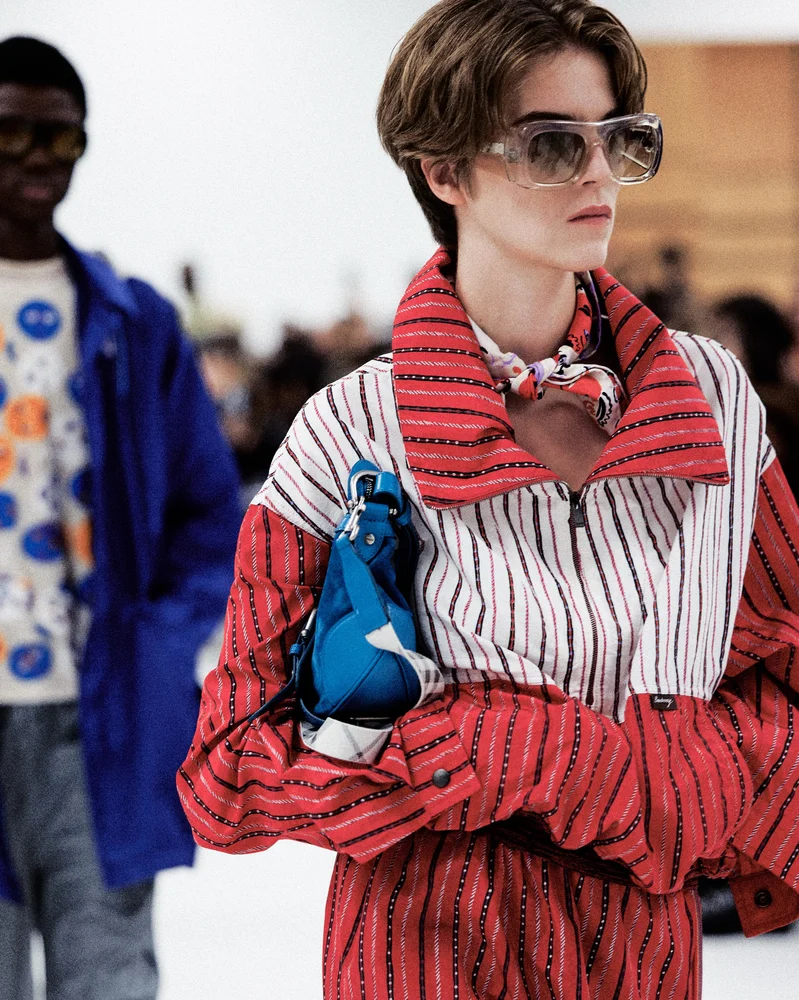
The equestrian woman represents inherited privilege. The polished Milanese woman carries bourgeois correctness. Preppy code introduces old-money uniform through rugby stripes, polo knits and tartan. Finance men and Italian playboys appear through clean tailoring, cropped trousers and loafers. Nightlife characters bring the body back into focus.
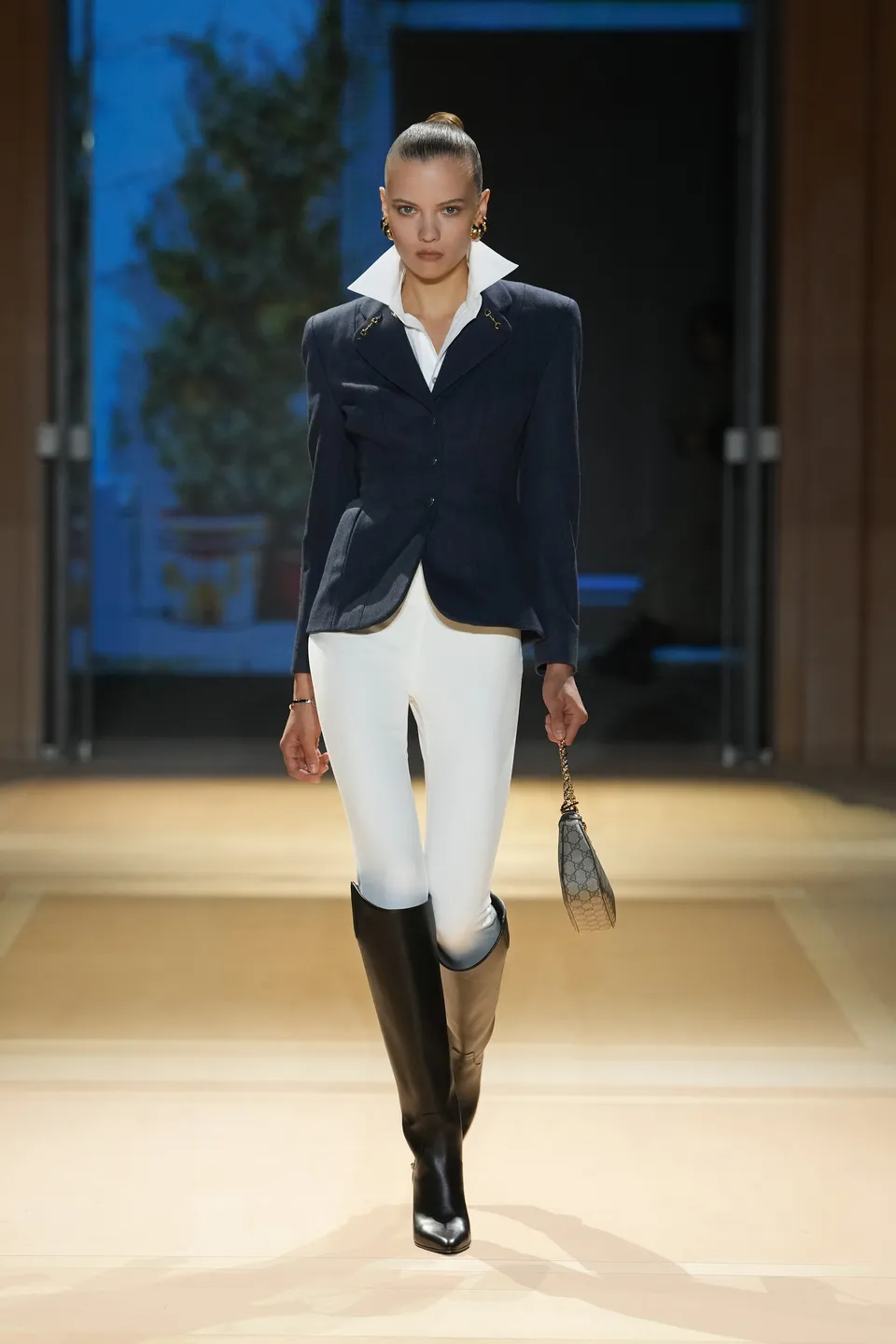
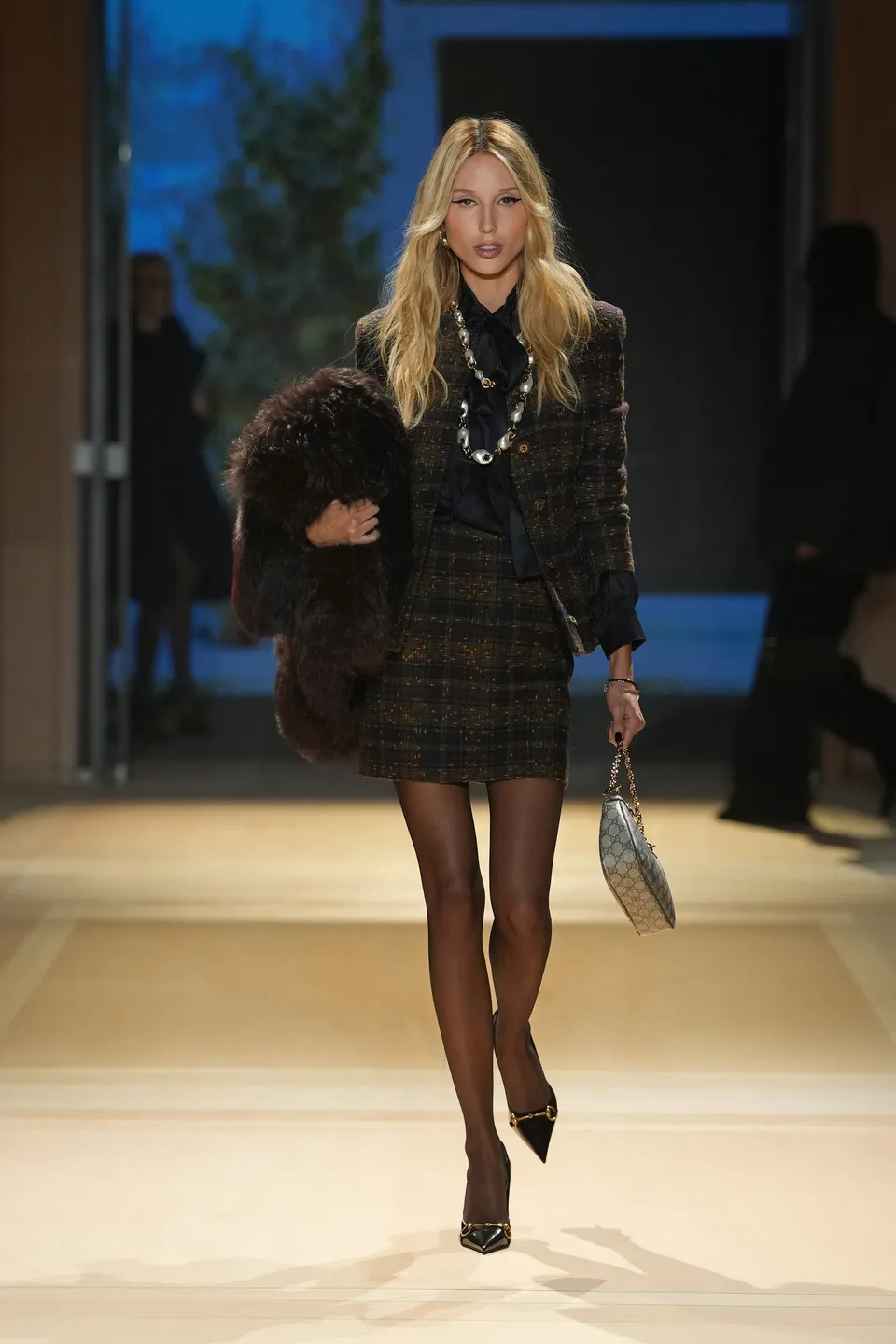
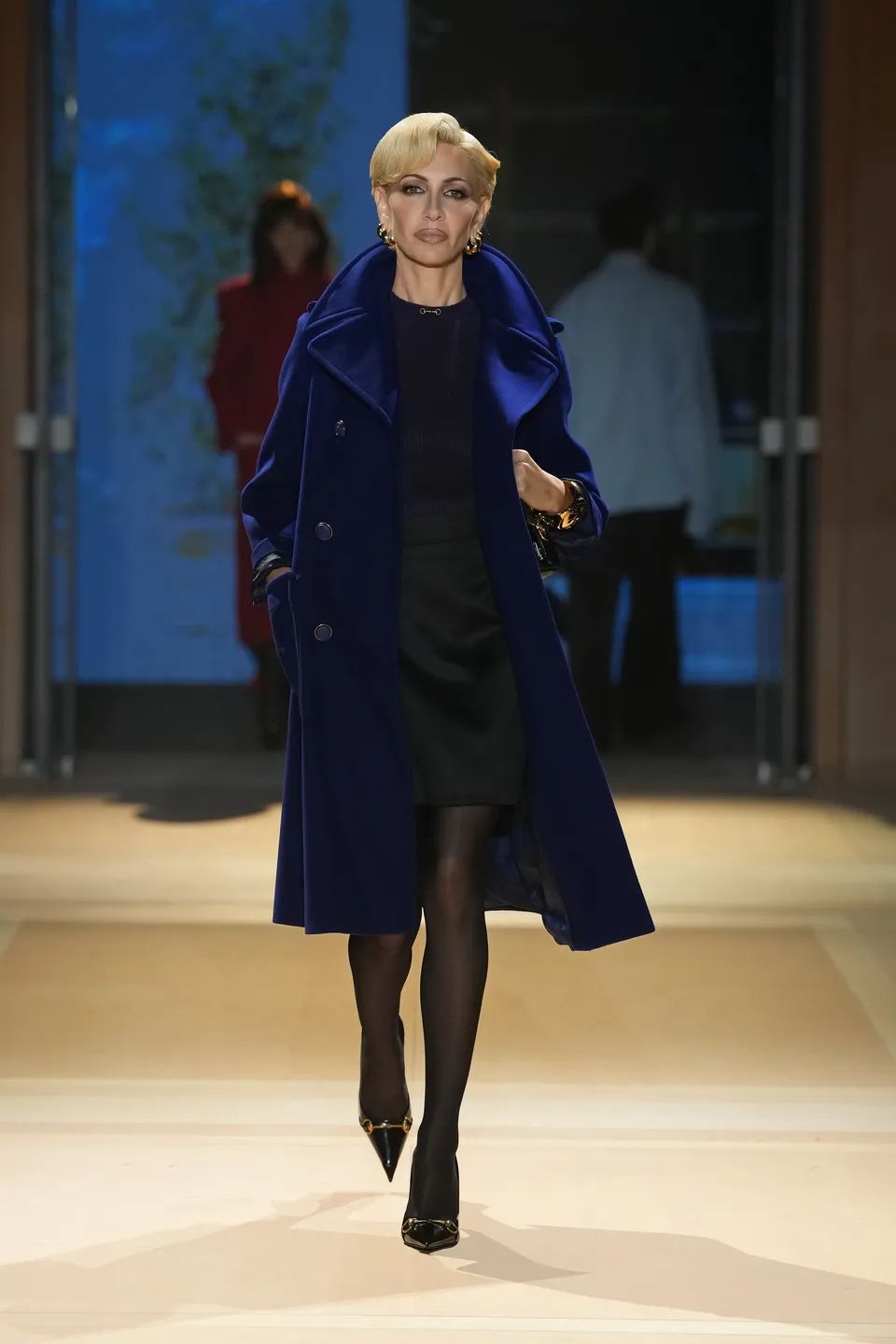
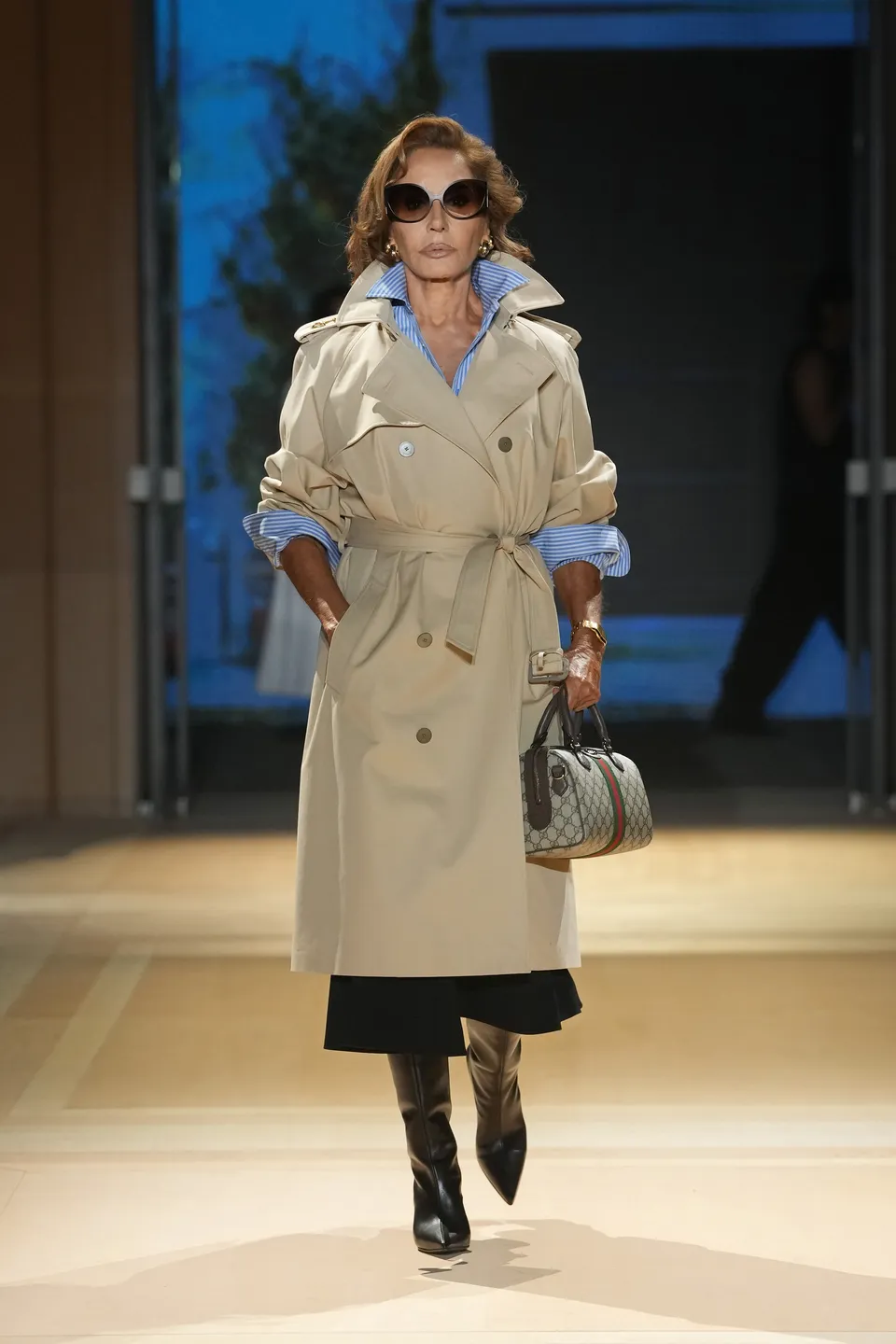
Demna calls part of this world “broken bourgeoisie,” a useful description of the collection’s method. Respectable clothing is taken slightly off balance through proportion, styling or exaggeration.
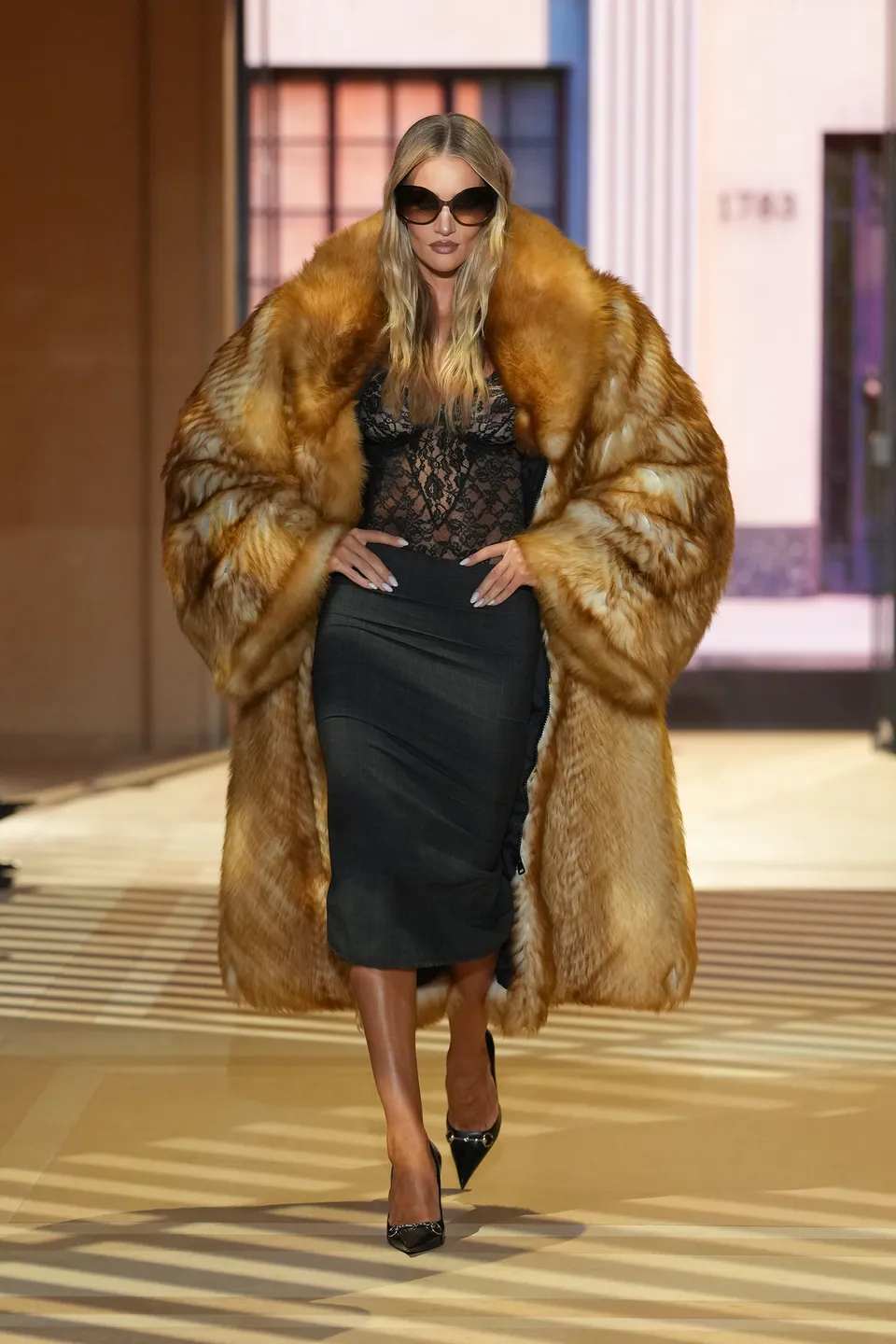
A tailored shoulder rises into a pagoda point. Conservative separates become tighter and more severe. Riding clothes gain sexual charge. Polo and rugby references are styled with enough polish to move beyond sportswear.
As fashion, the problem appears when archetype starts substituting for design progression. Gucci SS27 spends considerable energy telling us who these people are while giving fewer reasons to care about what they are wearing.
The strongest house-specific language comes through Gucci’s equestrian heritage.
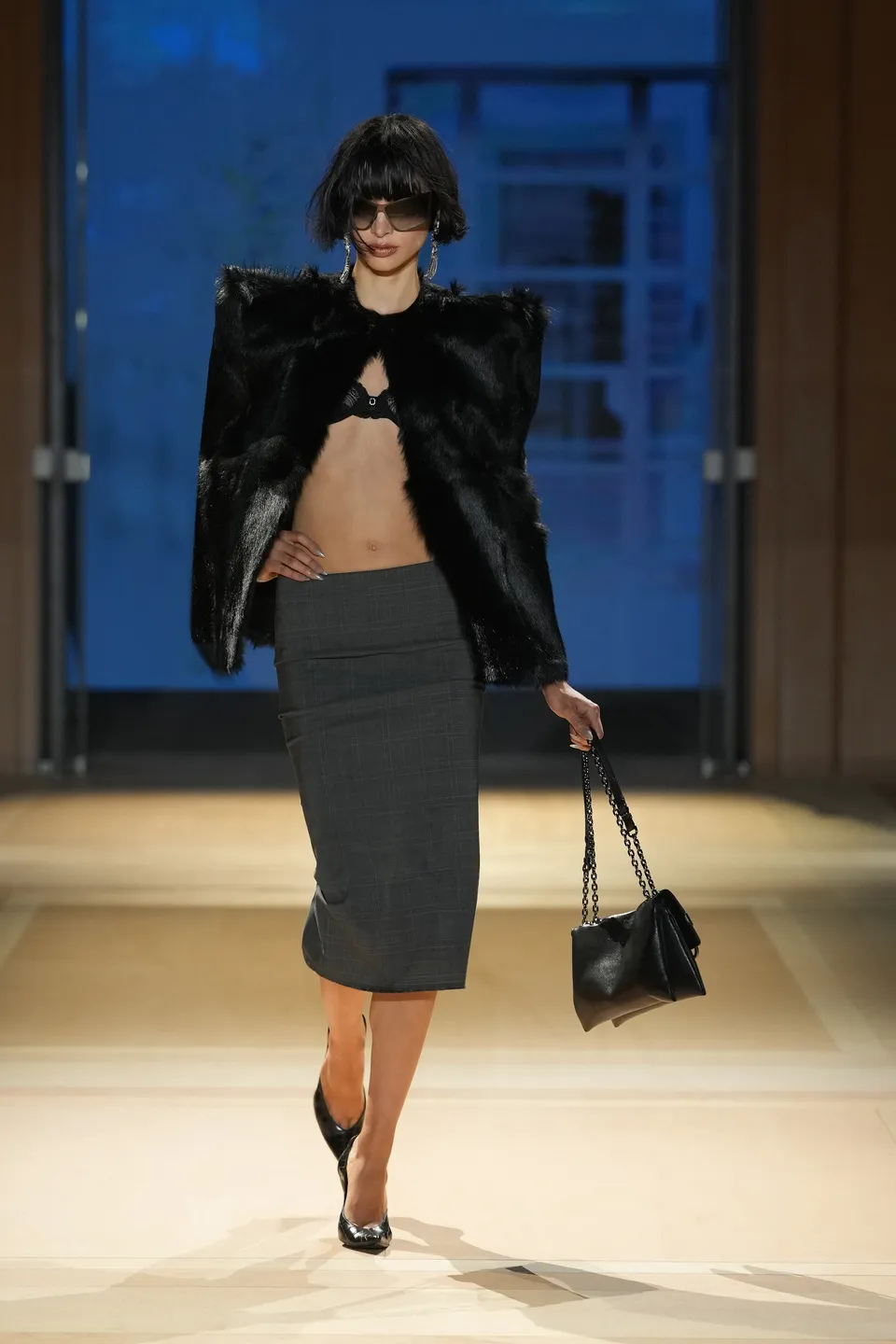
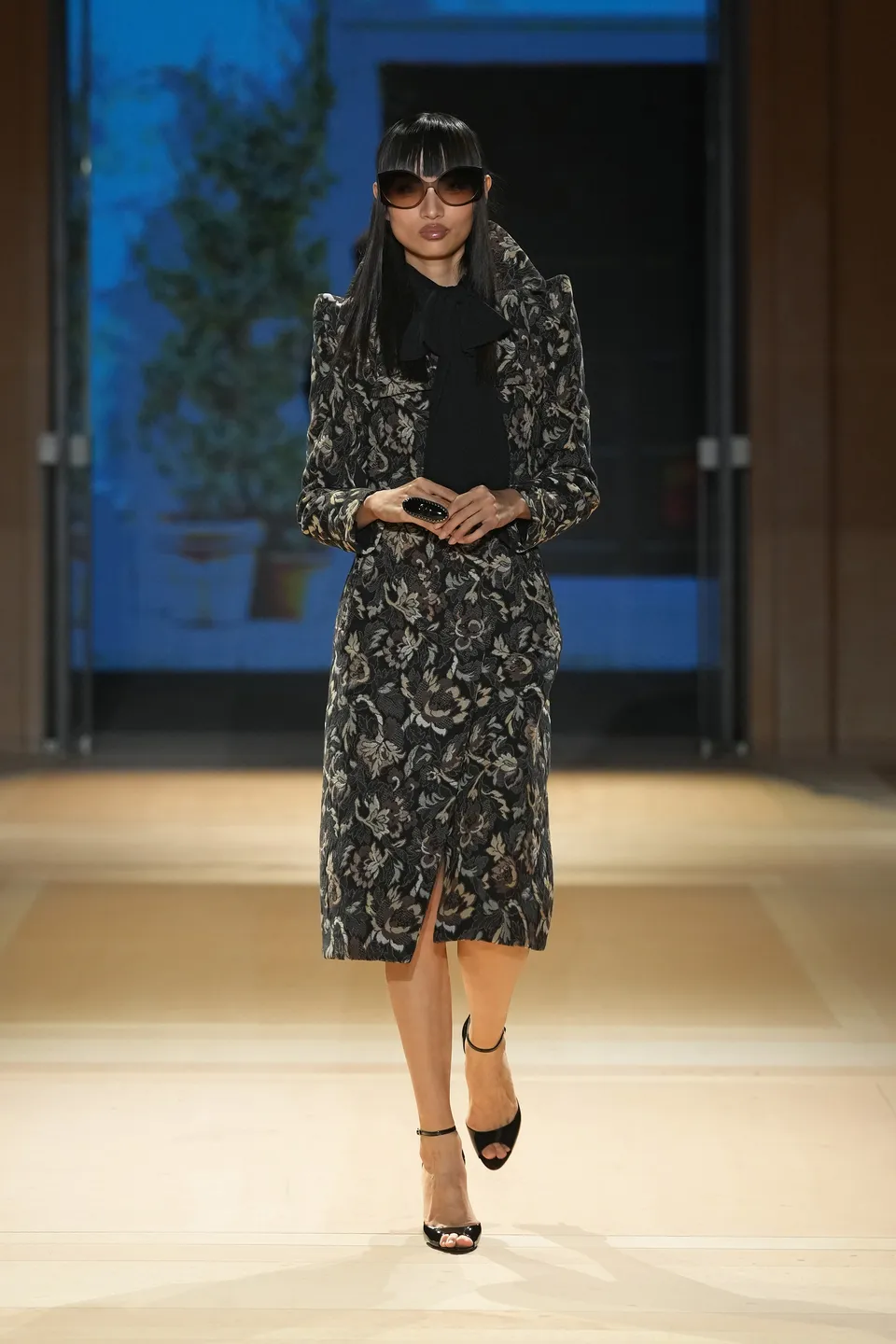
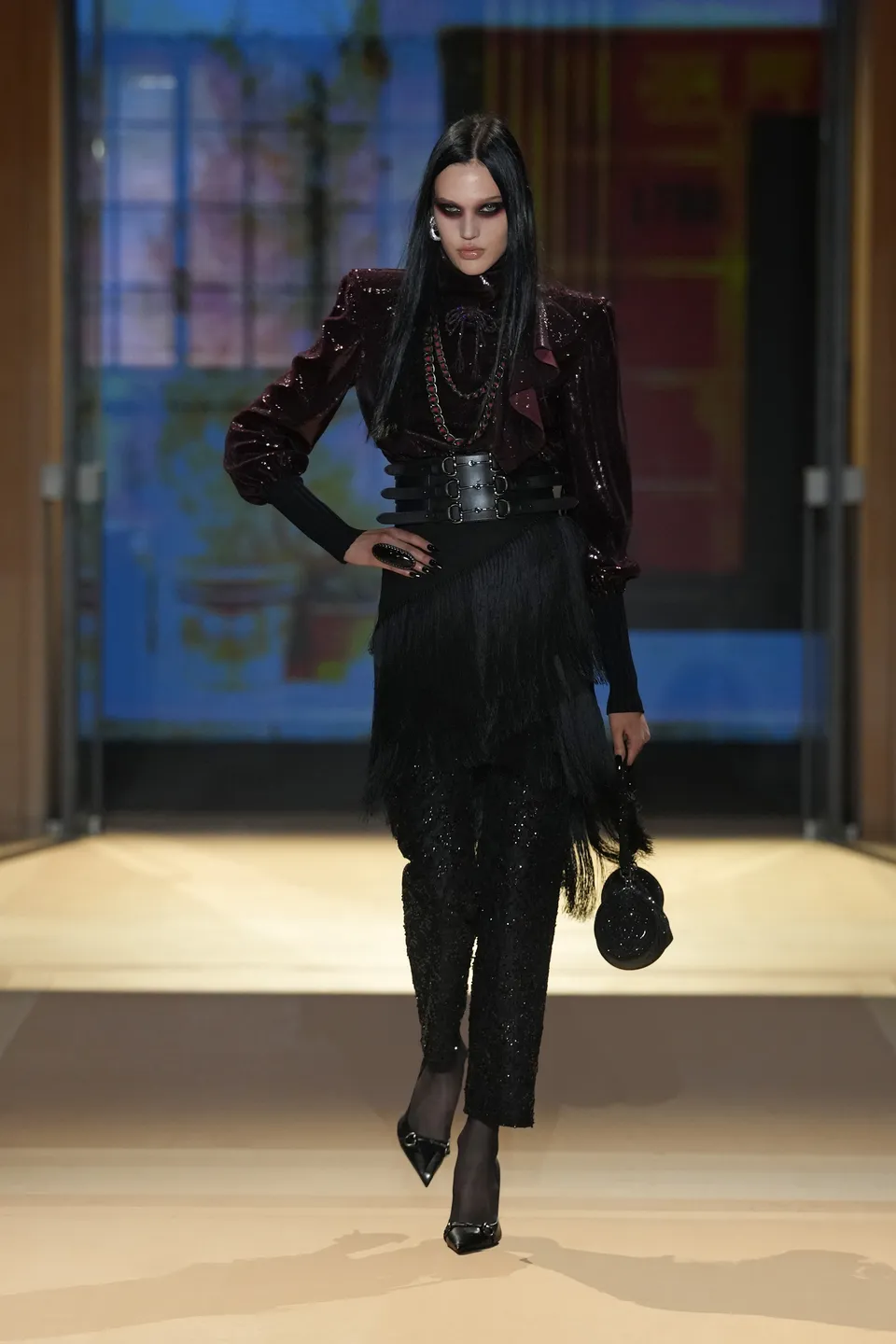
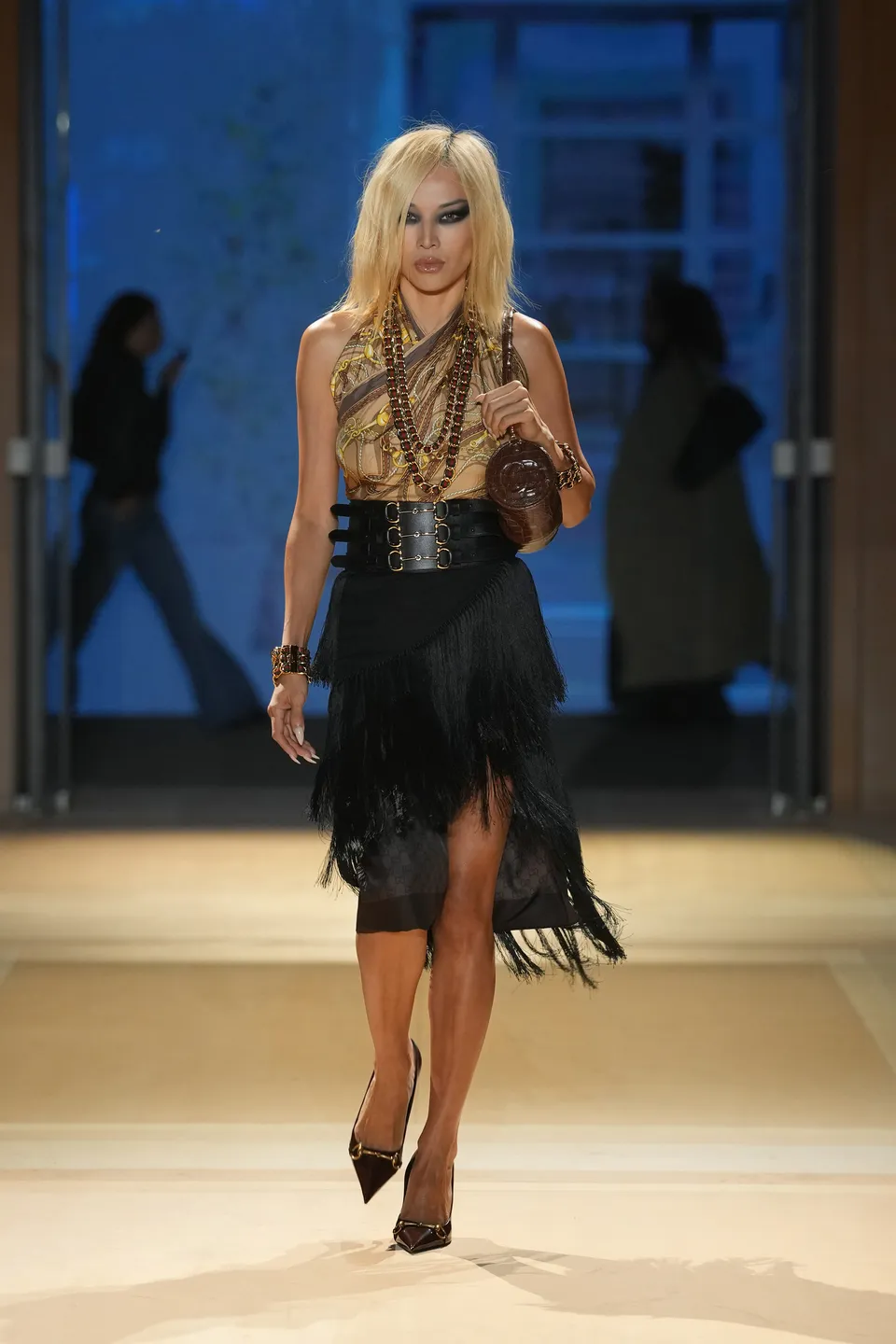
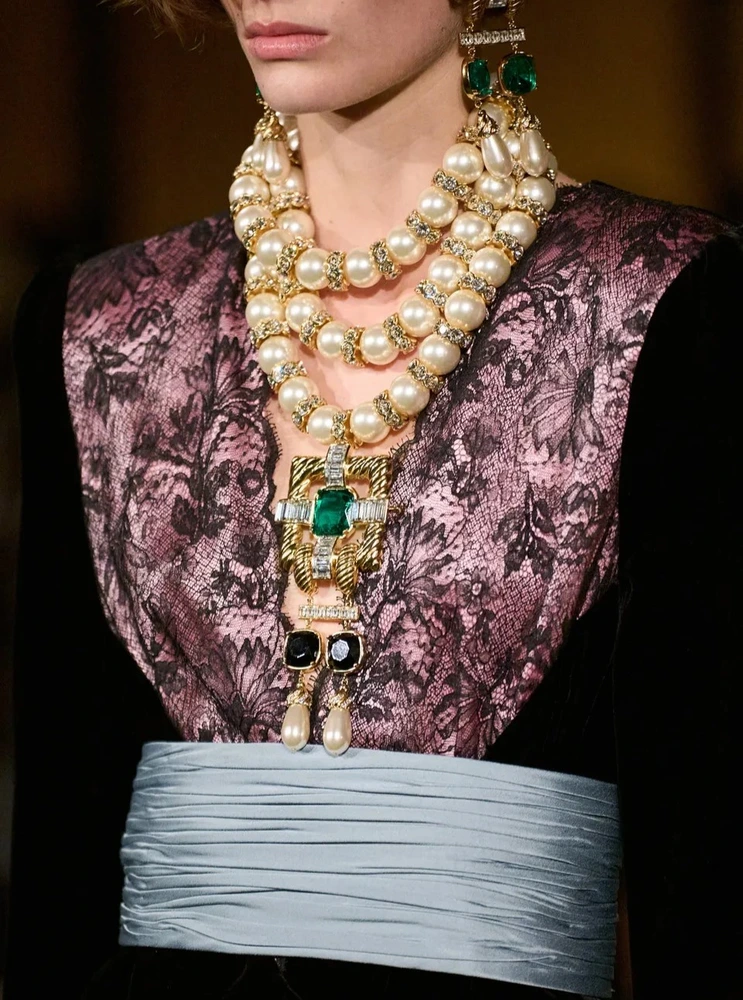
Jodhpurs, fitted riding trousers, tall boots, polished leather and Horsebit hardware establish a vocabulary that genuinely belongs to the house. Demna enlarges the Horsebit across belts, bags, footwear and body accessories until the motif moves from discreet heritage code toward graphic branding.
One motif can support an entire product ecosystem. A customer can enter through a bag, belt or shoe and still participate in the same runway fantasy. The new Horsebit tote and refreshed attention around Ophidia and GG Marmont make that logic especially visible.
Demna reheats almost every recipe available, from Tom Ford’s hypersexual Gucci to the oversized severity of his Balenciaga years, yet after such an elaborate tasting menu, we somehow leave the table still hungry.
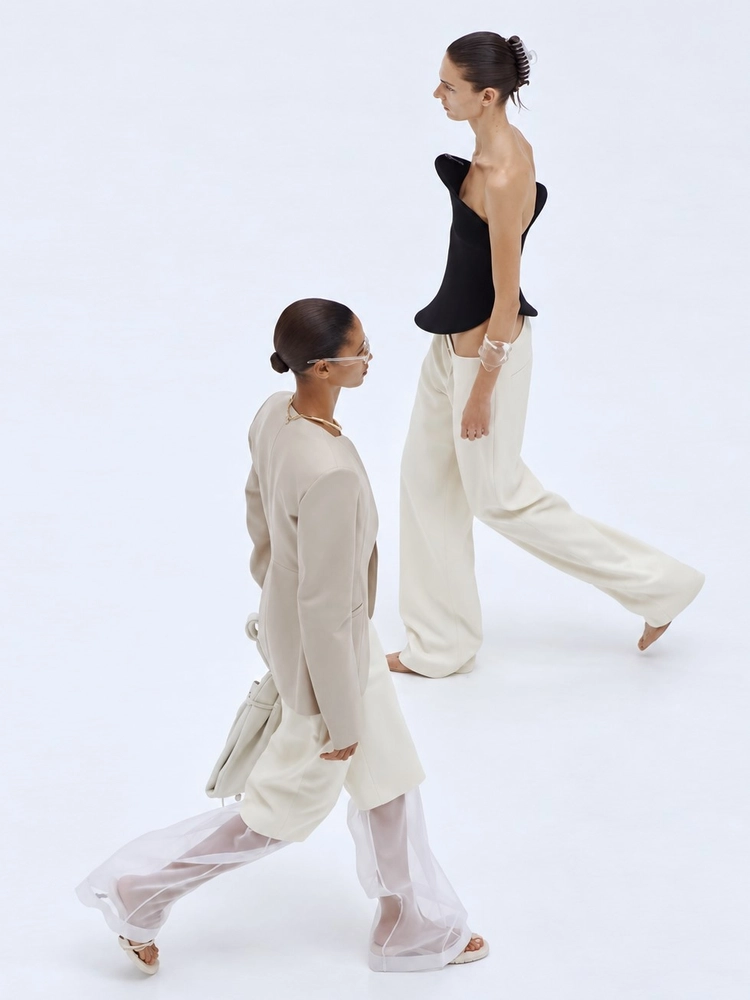
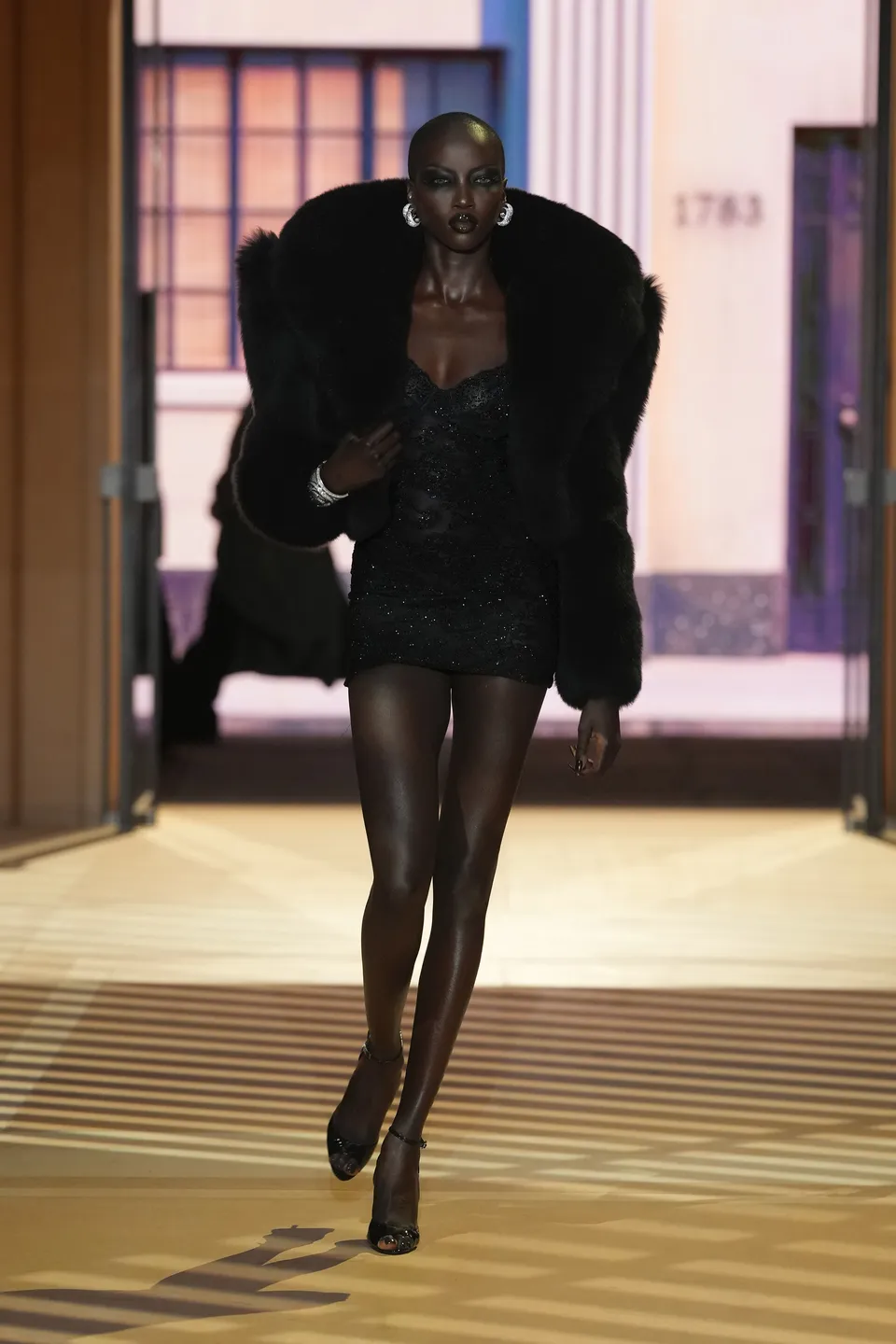
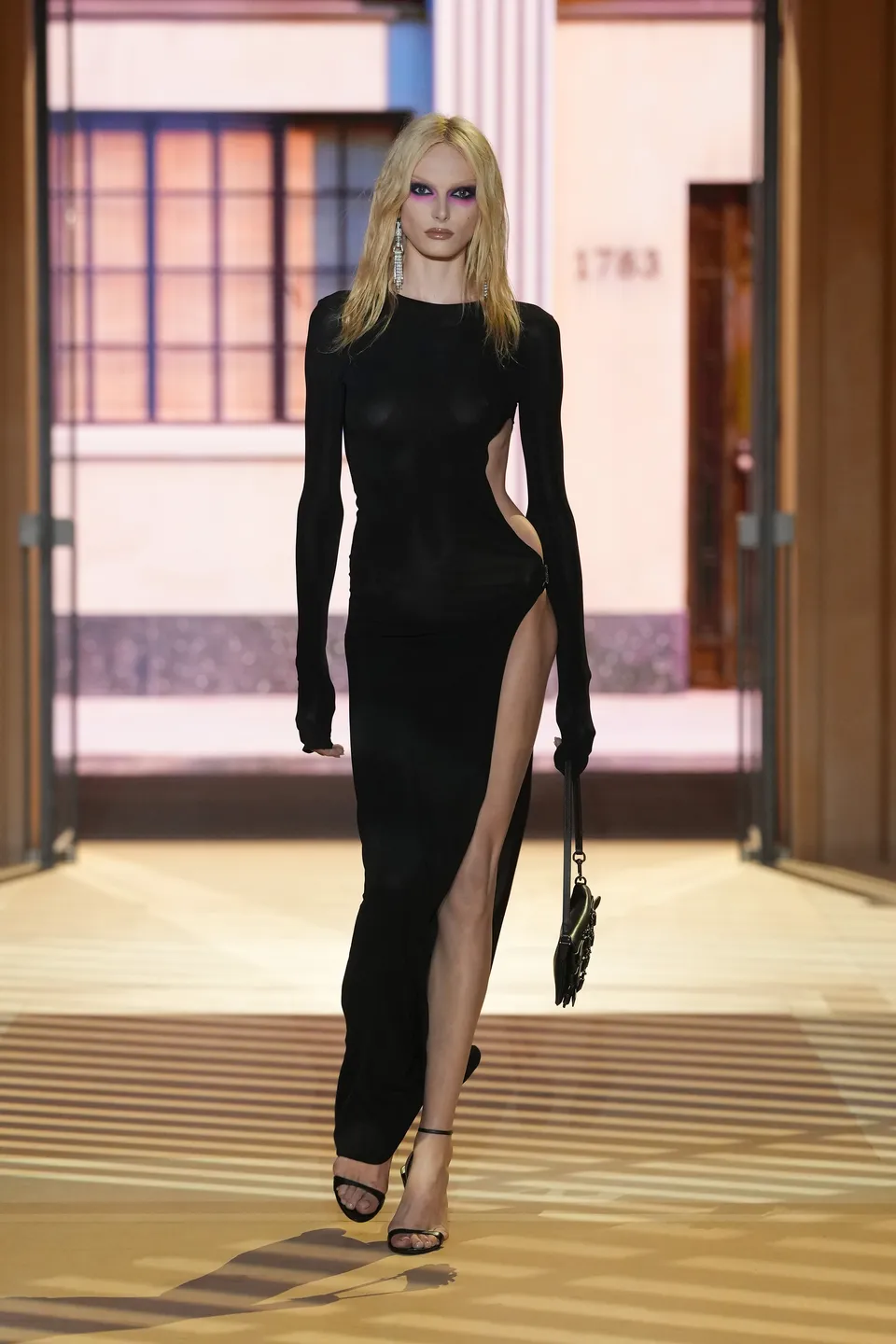
Pagoda shoulders sharpen jackets and coats into angular architecture. Cropped outerwear gains exaggerated upper volume. Narrow waists create tension underneath. Pencil skirts and close-fitting dresses push womenswear toward a controlled, slightly hostile glamour.
These are familiar Demna tools, and they remain effective in isolation. The difficulty comes from repetition.
Across 83 looks, pointed shoulders, tightly controlled bodies and bourgeois distortion start functioning almost like punctuation marks. They signal Demna before they deepen Gucci.
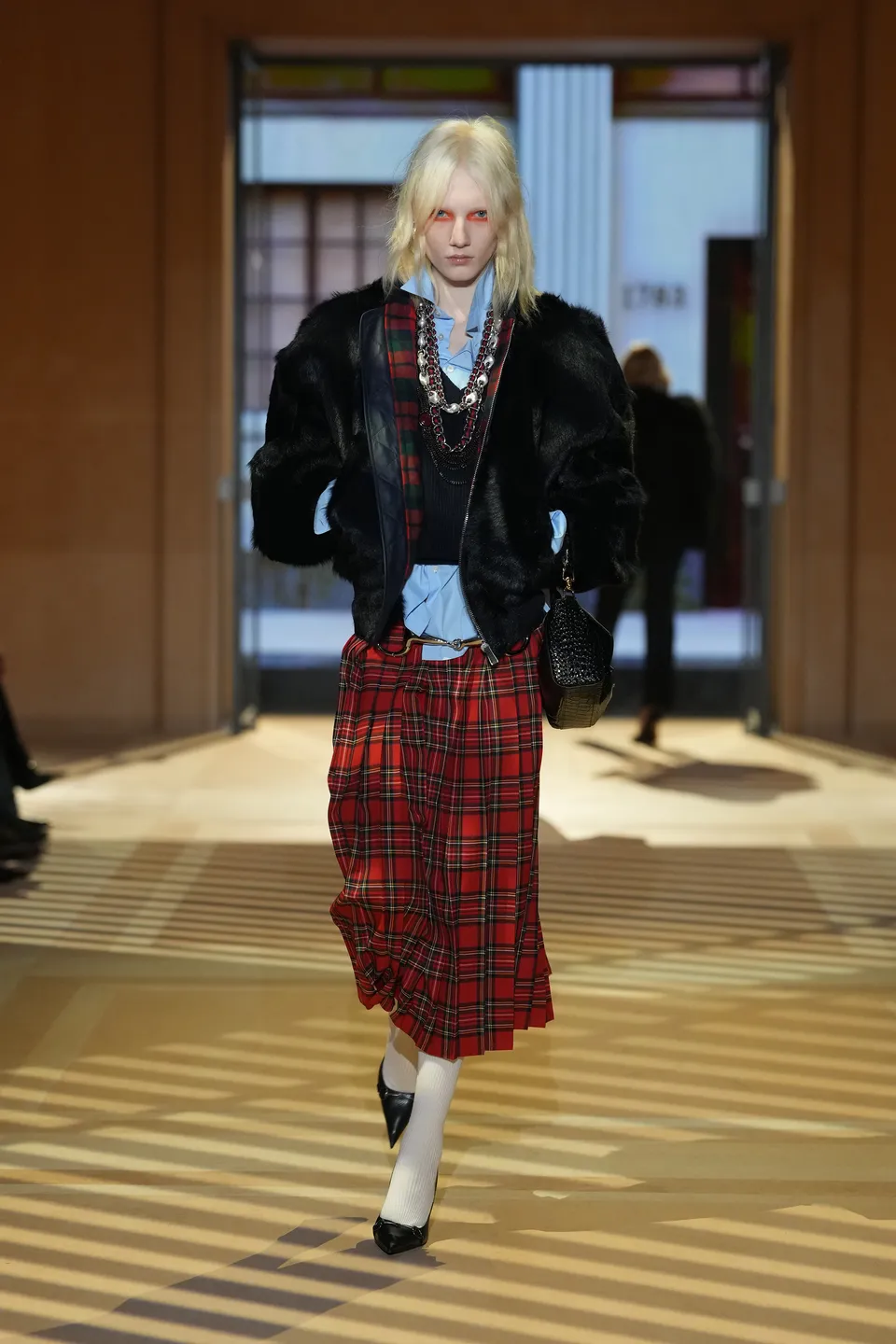
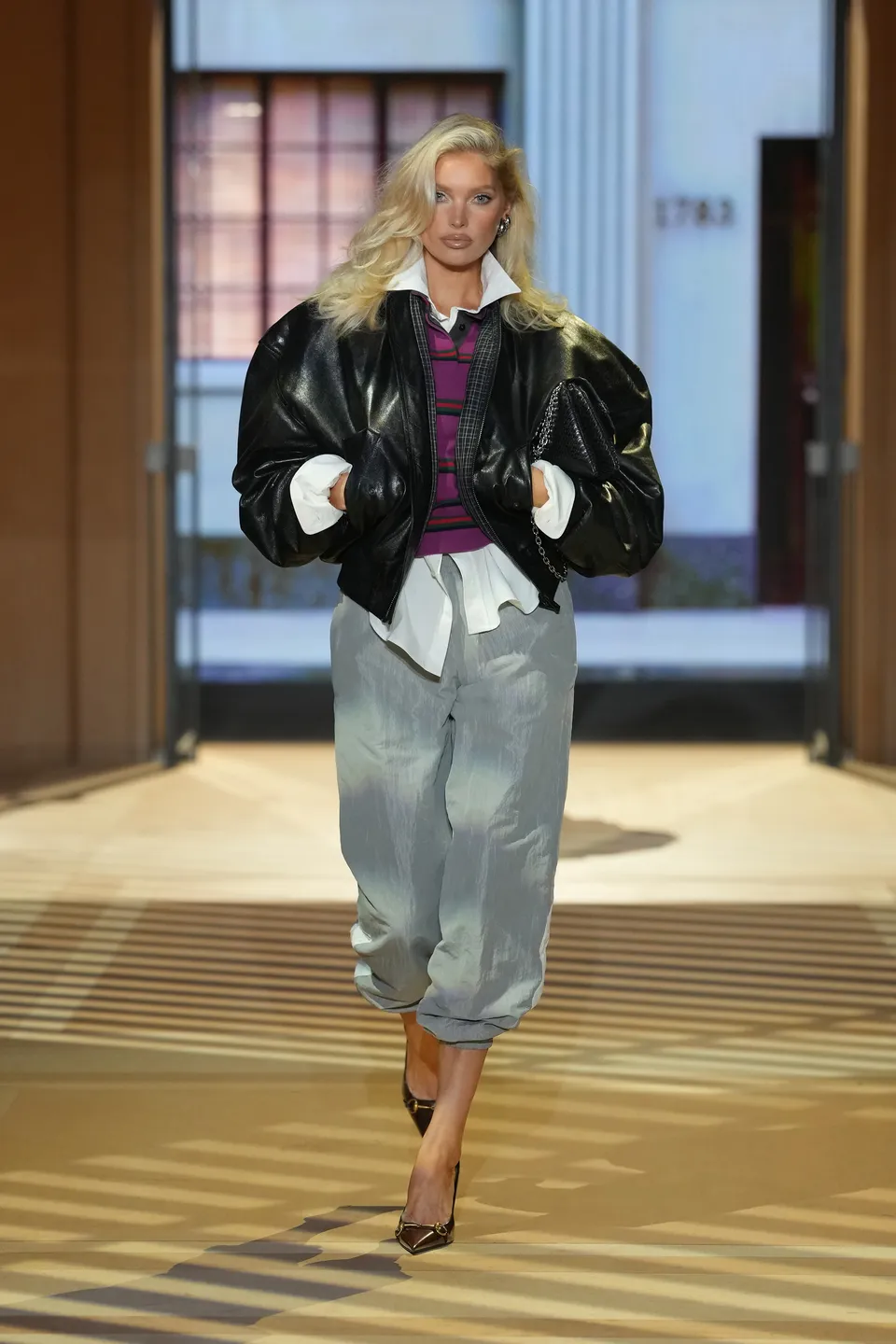
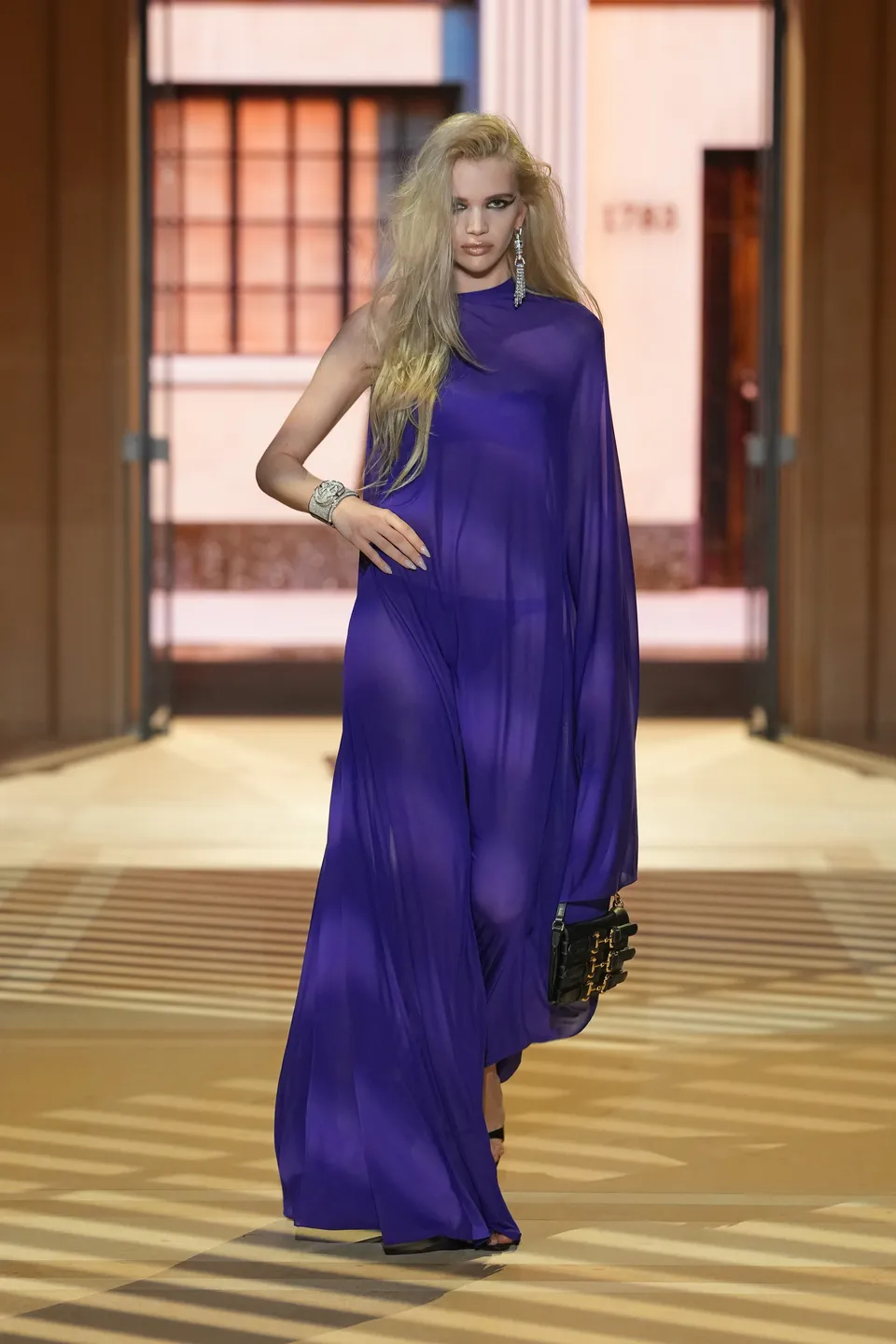
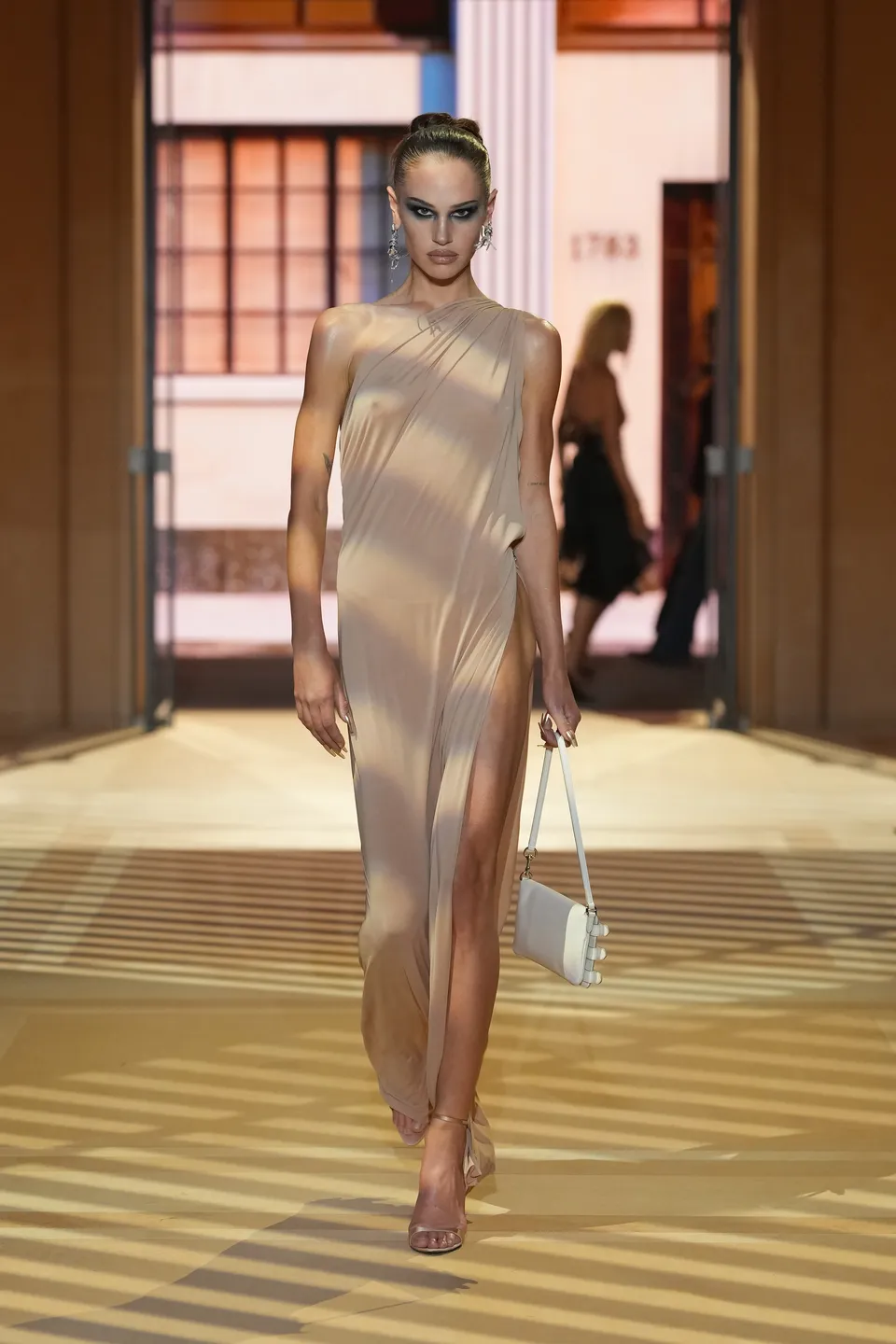
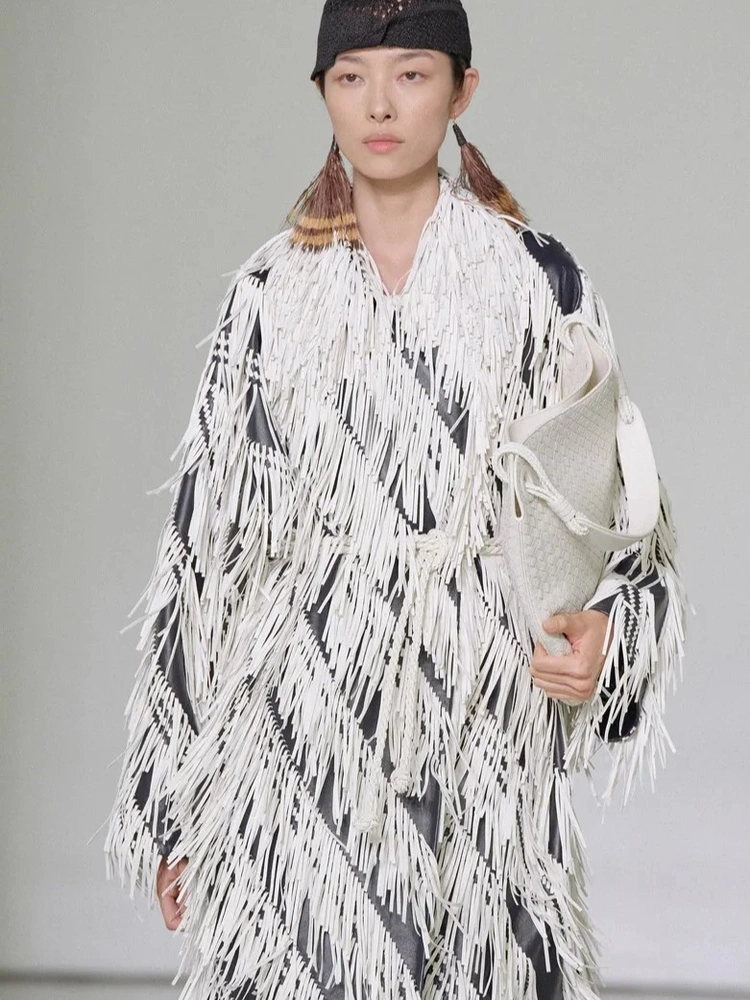
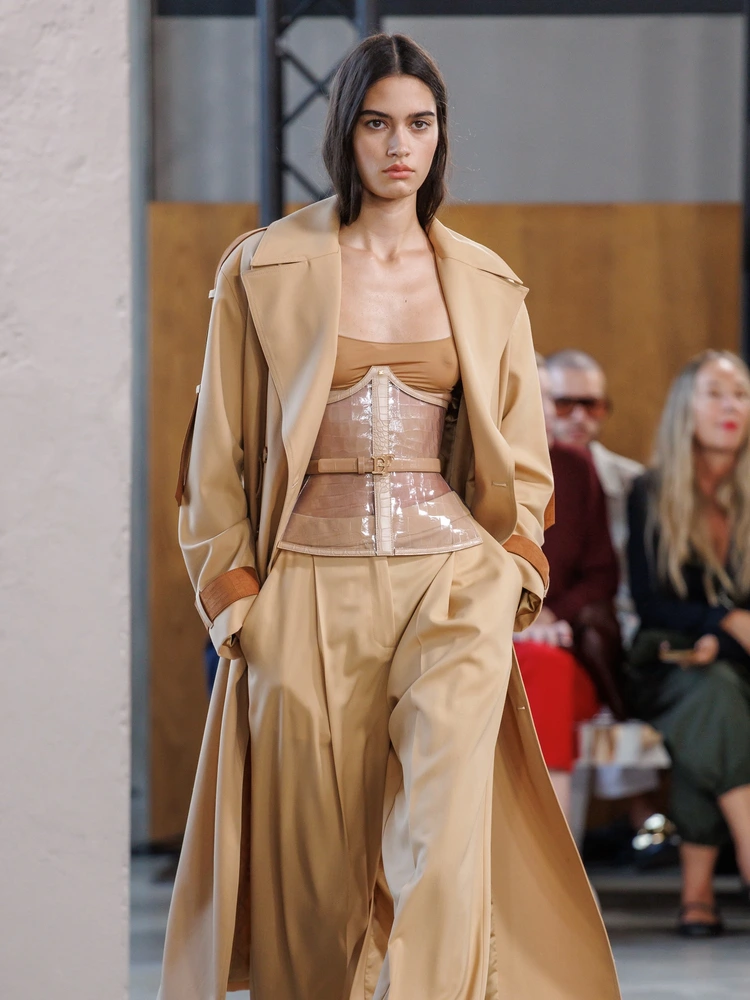
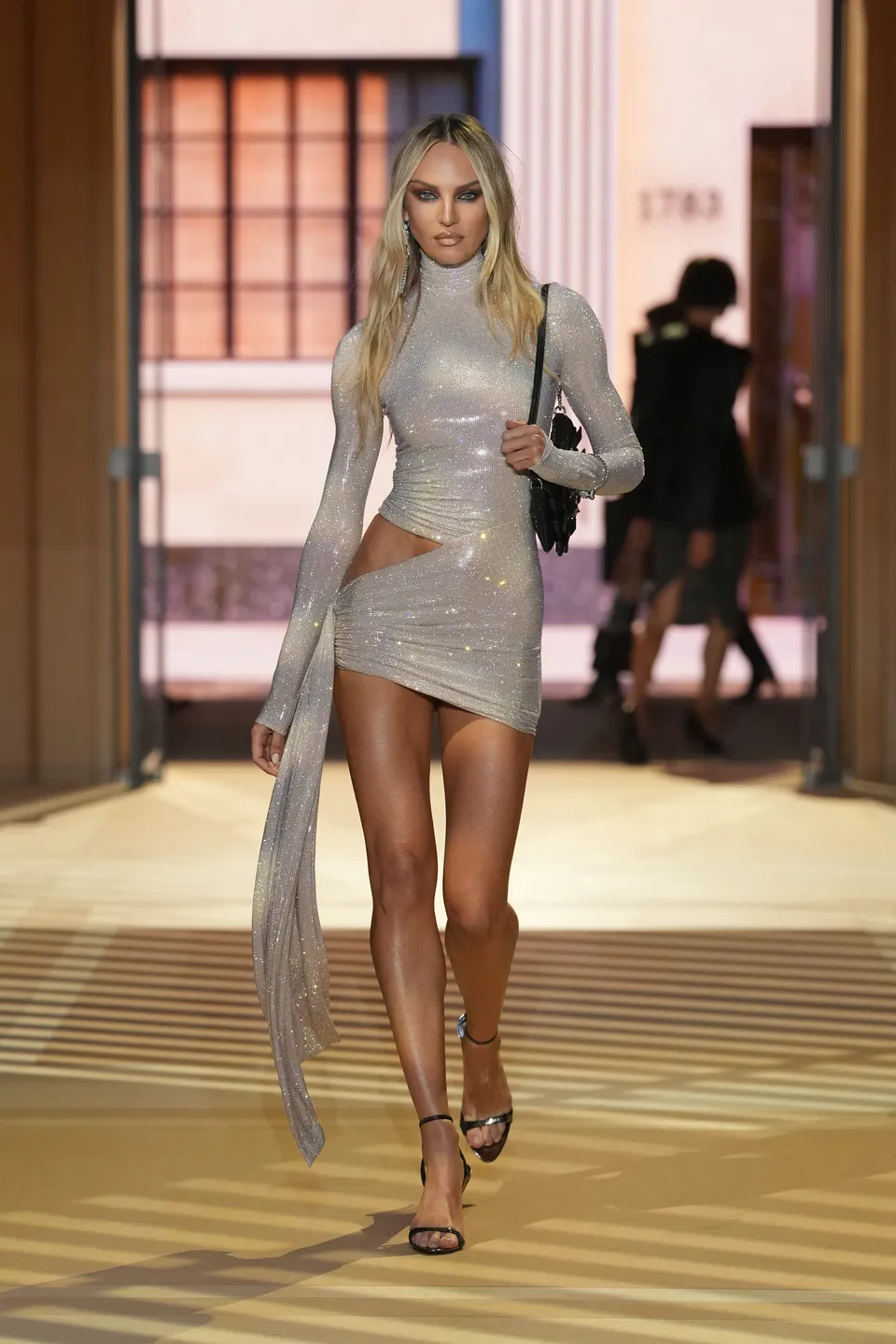
Womenswear contains the collection’s largest problem. The sequence moves from equestrian severity into tartan, lace, leather, capri pants, corset belts, fringe, sharply fitted tailoring and body-conscious eveningwear. Individual sections carry coherent styling, but the emotional through-line keeps slipping away.
Demna has previously spoken about the need to establish a silhouette at Gucci. SS27 still behaves through multiplicity, and the constant switching gives the collection the structure of a merchandising matrix: several customer types, several product categories, several price points, several historic references.
Menswear handles the same bourgeois language with greater ease. Cropped trousers, denim, sockless loafers, tailored coats, polos, rugby references and late-1980s or early-1990s Italian proportions give the men a cleaner rhythm. Demna has spoken about this kind of old-money menswear as unfamiliar territory for him, and that distance may actually help.
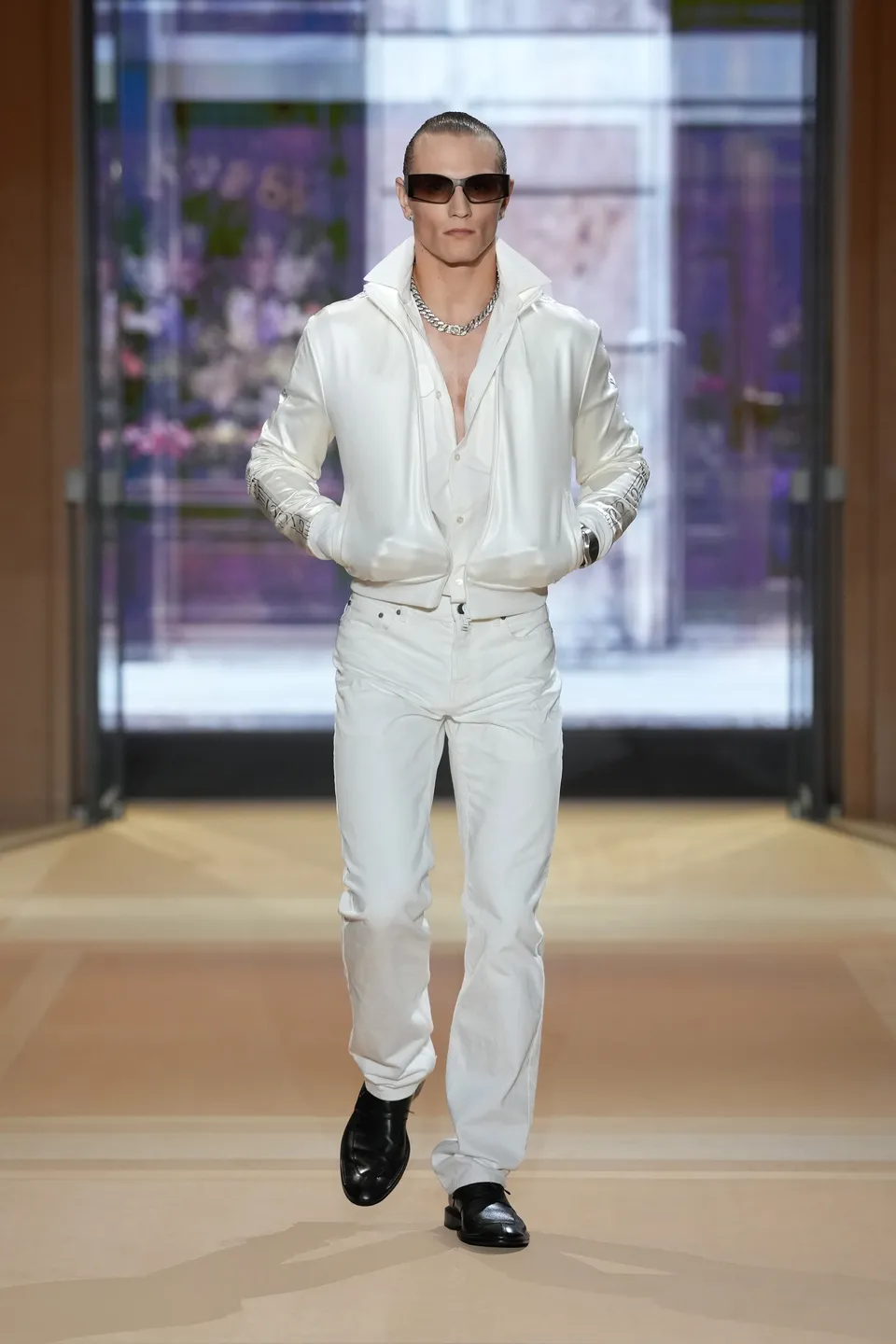
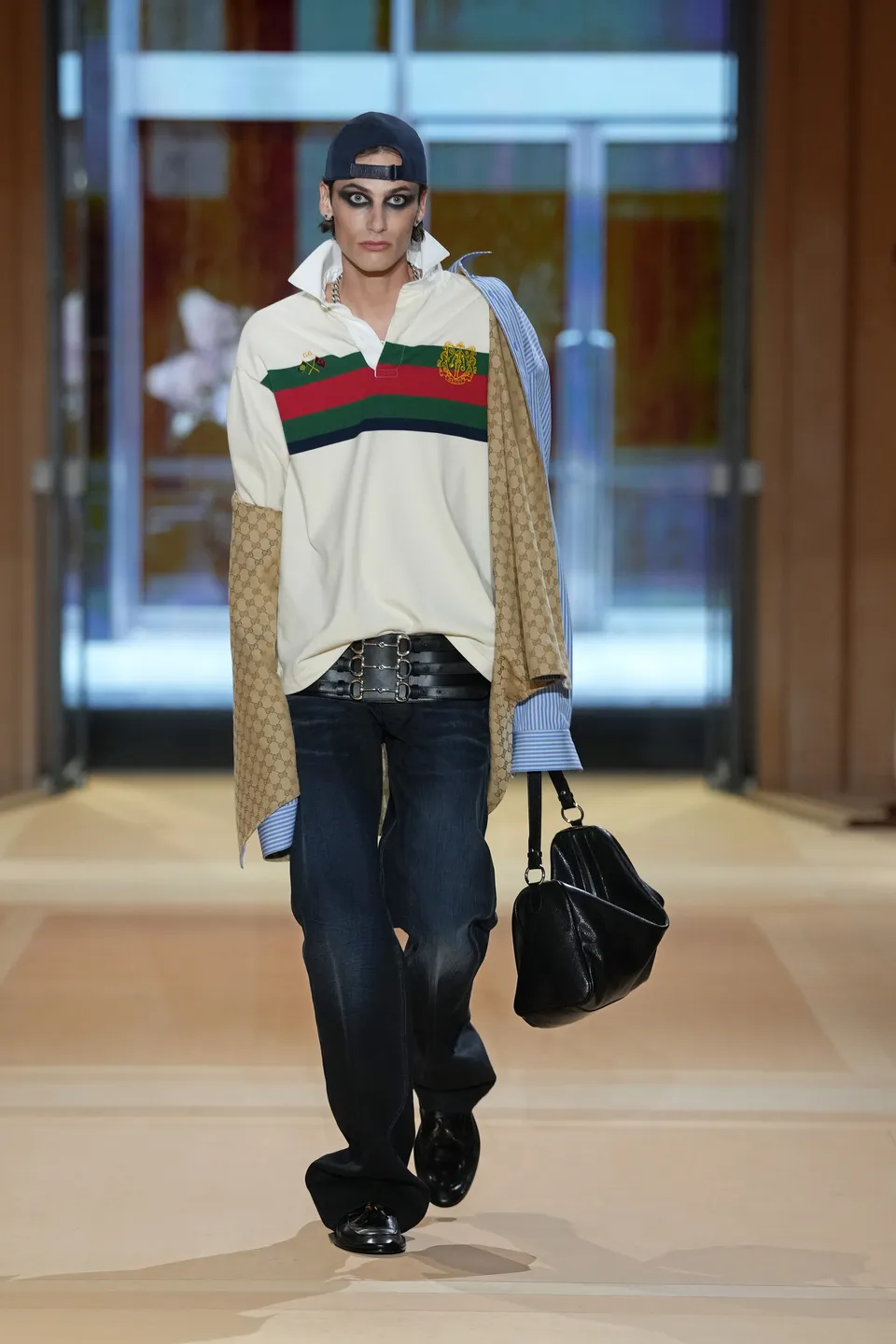
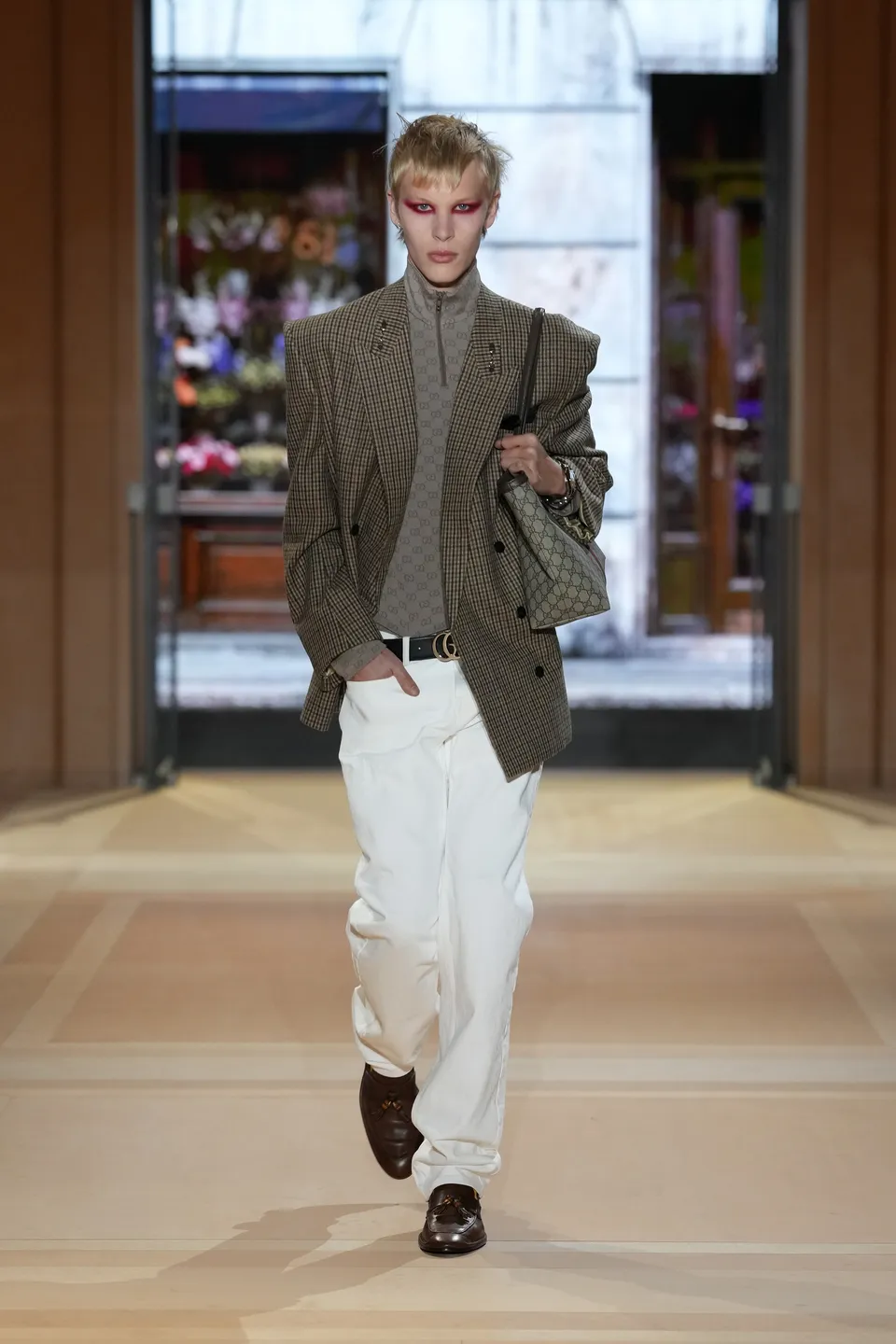
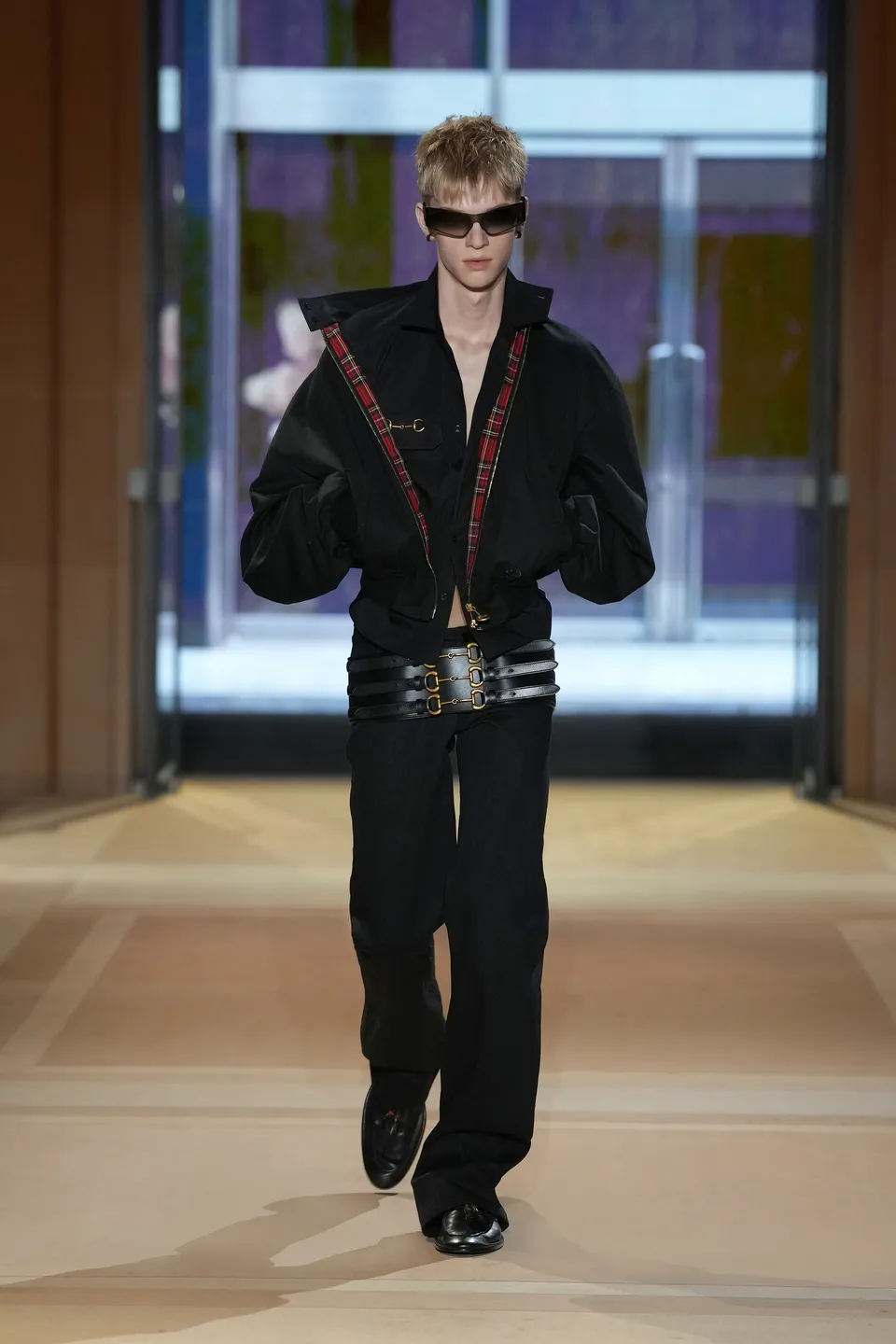
The replica boutique may be the clearest expression of Gucci’s current reality. Demna understands retail.
He understands how a bag, belt, coat, loafer and logo can communicate value inside seconds. His Gucci project has increasingly treated product architecture as part of creative direction, and SS27 turns that idea into literal scenery.
Guests reportedly asked about buying items displayed inside the space. That anecdote says almost everything. The commercial machinery is working exactly as intended.
Gucci is also in a turnaround, and the timing gives this strategy logic. The house’s Q2 2026 sales decline narrowed dramatically to around 2% on a comparable basis, while Kering has highlighted improving momentum around new products and refreshed collections. The brand needs stronger store traffic, clearer product, and customers willing to spend again.
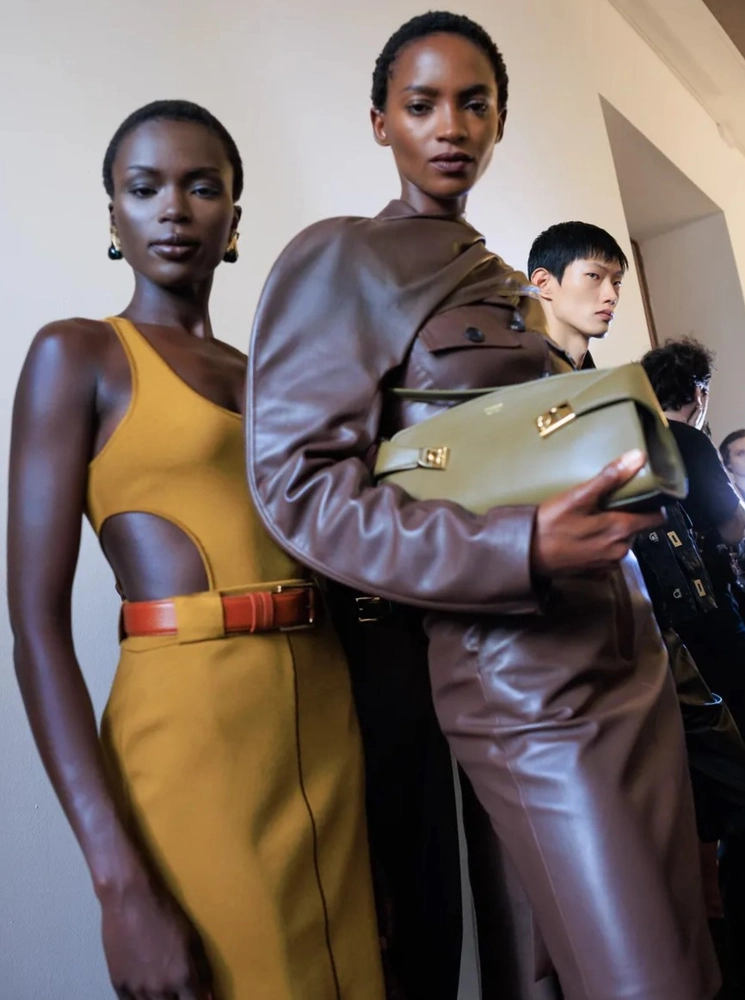
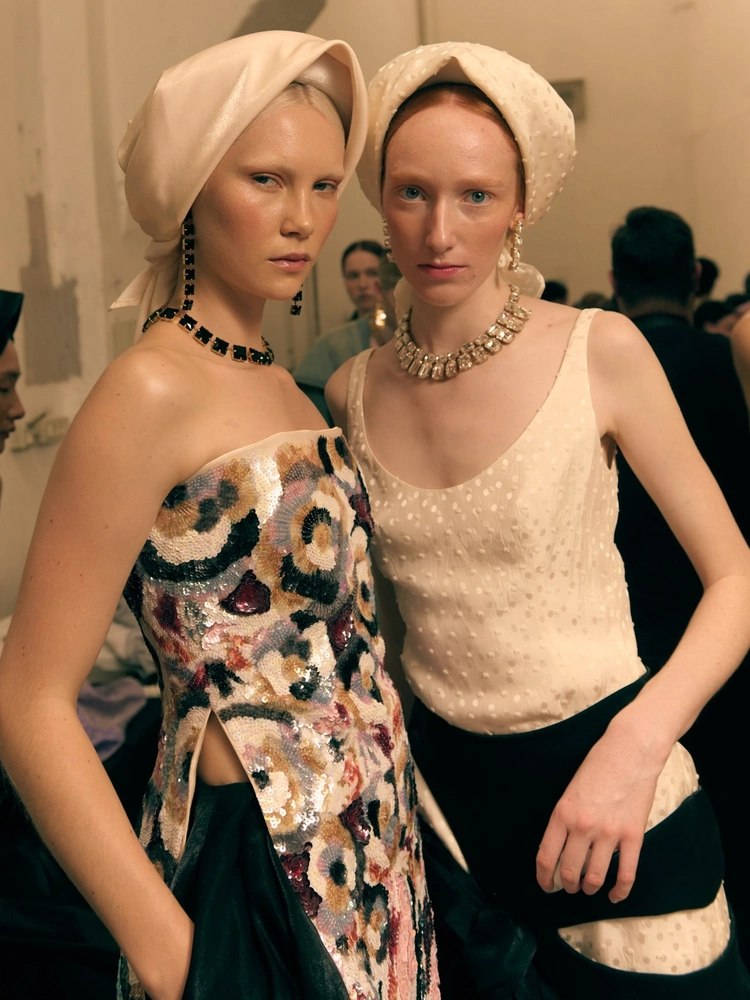
Much of the collection’s electricity actually comes from the models themselves, whose posture, expressions and icy self-possession animate clothes that can otherwise read strangely flat; once inhabited with that attitude, the tailoring, riding references and dark glamour suddenly acquire the life the garments struggle to generate alone.
The collection keeps looking like it is about to become stronger. Then the energy repeatedly settles. The darkness becomes monotonous. The styling grows severe. Character references stack up. Expensive product keeps entering the frame. The thrill drains out.
At Gucci’s current price point, vision alone has limited value. Execution needs direction. Direction needs creative escalation. A reference should become an idea, and that idea should become something the customer feels compelled to own because the object creates desire beyond recognition.
Too much of SS27 stops at recognition. Seeing everything does very little when the collection gives us so little to feel.
The fact that Demna calls this his completed personal vision makes the situation more serious. New creative appointments always generate an initial wave of curiosity. Early products benefit from novelty. Bags move. Coats sell. Cultural attention creates traffic.
The difficult stage comes after the honeymoon. Once customers understand the shoulders, the distorted prep, the characters, the Horsebits and the bourgeois satire, the collection has to offer another reason to return.
If the next season delivers another variation on this same formula, Gucci could face a deeper creative problem: a gifted designer whose personal language remains perfectly visible while the house itself struggles to become emotionally magnetic through it.
Demna is clearly talented. Gucci is clearly rich in heritage. The business is showing early signs of stabilization. SS27 proves those three facts can coexist with a runway that still feels strangely empty.
Advertisement