MENU
Close





"If it's legal and ethical, the answer is always yes."
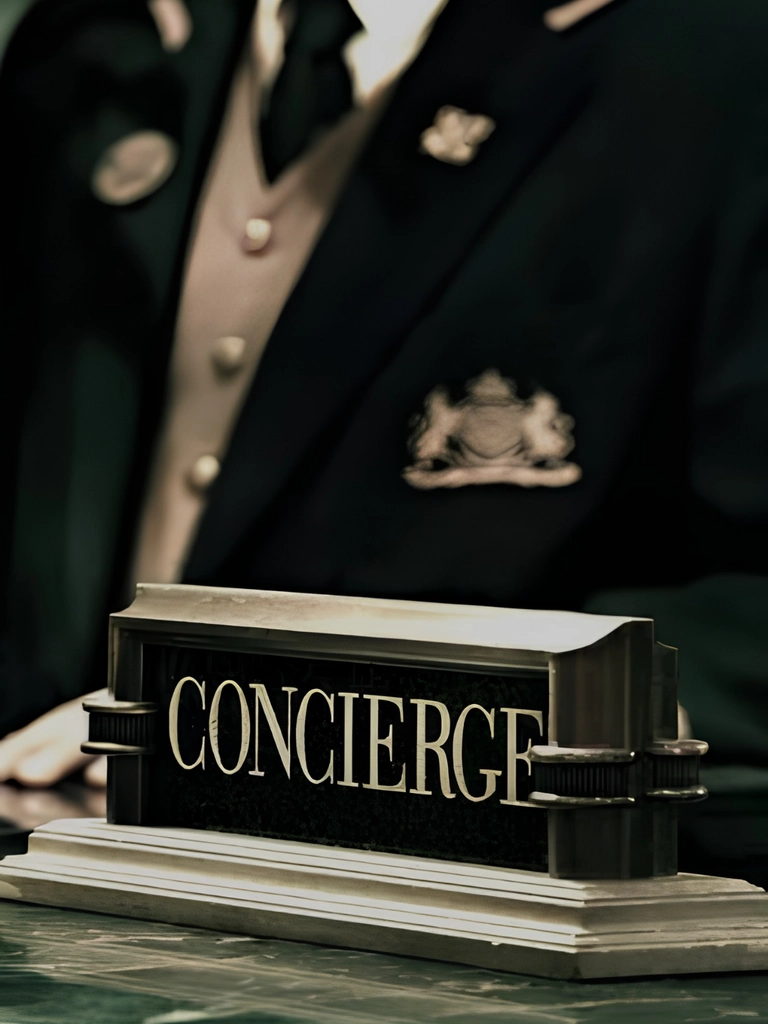
"If it's legal and ethical, the answer is always yes."
August 7, 2026


In The Devil Wears Prada, Miranda Priestly gives Andy Sachs one of the film’s most outrageous assignments: obtain the next unpublished Harry Potter book for her twins before its official release. The joke works because the request sounds almost too unreasonable to exist outside Miranda’s universe. Afterall, even Daniel Radcliffe and the entire cast of Harry Potter had to wait for the books to be released.

Yet a strikingly similar story has circulated from the real world of ultra-luxury hospitality. When a high-profile guest at a luxury property wanted to give his children the newest Harry Potter title ahead of publication, the concierge reportedly sourced two unpublished advance review manuscripts.
As absurb as it sounds, Miranda’s logic has become an extraordinarily real business proposition. Somewhere between the personal assistant, travel adviser, fixer and private office sits an industry whose job begins when Google, money and ordinary customer service have reached their limits. At the highest end of the market, the job begins precisely where ordinary service stops, when a request requires private networks
This is the ultimate luxury concierge service.
That industry has a much larger audience than it did when The Devil Wears Prada premiered in 2006. By the end of 2025, the global high-net-worth population had reached 25.3 million people controlling about $98.3 trillion in wealth, after annual increases of 7.9 percent and 8.7 percent respectively. The concentration becomes sharper at the top: the richest 1 percent of HNWIs hold 34.8 percent of HNWI wealth.
A larger fortune creates a curious kind of inconvenience. Several homes create several maintenance schedules. International schooling creates another calendar. Private aviation introduces crews, permits, landing slots and weather. Art collections involve insurance and conservation. Public visibility introduces security. Family offices solve the financial architecture while personal assistants absorb daily administration. Yet thousands of tiny decisions can still reach the principal.
This is the territory where luxury concierge services become interesting. Their true commodity is neither the yacht nor the Michelin-starred table. Those belong to somebody else. Their own product is the compression of complexity.
Consider Knightsbridge Circle. Its current membership starts at $55,000 annually with a $25,000 joining fee. Each personal manager handles a maximum of four memberships. A 1:1 tier costs $210,000 a year plus a $50,000 joining fee. The revealing number is four, not $210,000. Scarcity here exists inside the staffing model. The client is paying for a professional with enough available attention to remember context, anticipate a problem and stay with it until the outcome is delivered.
The spectacular requests give that operating model its mythology. Knightsbridge Circle has been associated with rare jewelry sourcing, private performances and highly engineered family trips. One reported Italian itinerary for a family of 15 combined a private Andrea Bocelli performance, an audience with Pope Francis, Passalacqua suites and a convoy of classic Italian cars. Older stories surrounding the firm include a private dinner beside Leonardo da Vinci’s The Last Supper and a wedding vow renewal involving the Pope.
Those anecdotes sound like extravagance. Operationally, they describe something more interesting: permission.
Almost anyone with enough money can charter an aircraft. Money alone cannot guarantee that a cultural institution will alter its normal access, that a sold-out venue will find capacity, that a sought-after performer will change a schedule, or that several independent suppliers will coordinate perfectly around one family. The concierge buys no magical exemption from reality. It brings relationships, credibility, planning and persistence into the negotiation.
At this level, access becomes accumulated social capital.
A restaurant reservation exposes how easily this industry can be misunderstood. The client asks for a table and receives a table, so the transaction appears remarkably simple.
Now add a delayed private flight. A guest has severe dietary restrictions. Another guest requires discreet security. Two attendees should avoid being seated together. The restaurant’s private room is technically unavailable. The client dislikes being presented with choices and expects the evening to proceed without further involvement. Suddenly, the valuable part of the service sits nowhere on the reservation itself.
This explains why the industry's business models fragment as wealth rises.
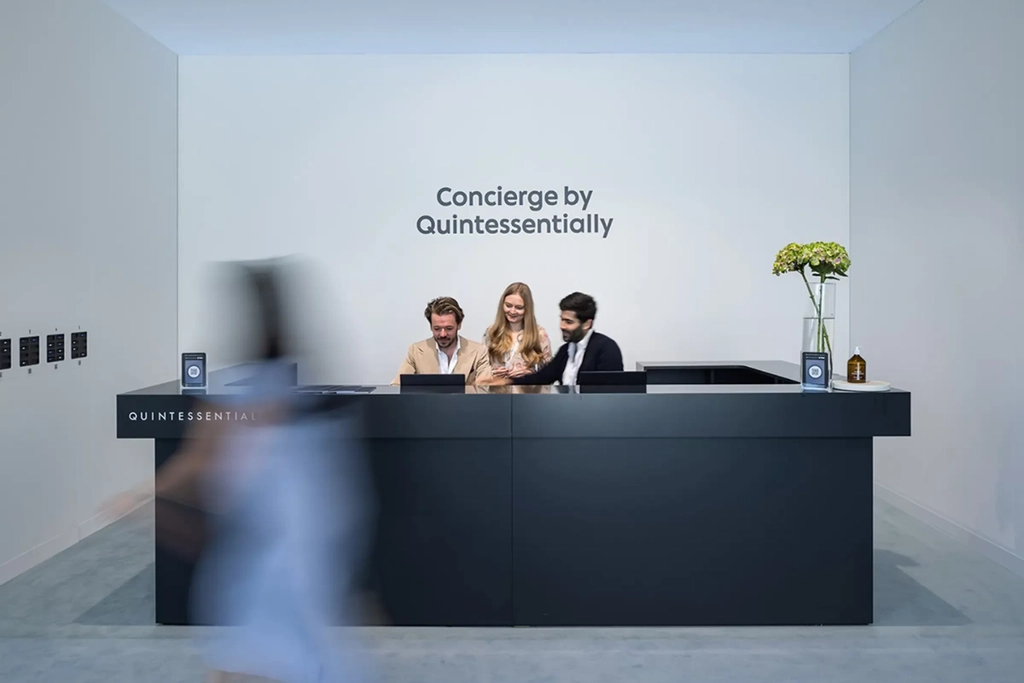
Quintessentially developed one of the broadest versions. Its current membership model assigns lifestyle managers who can coordinate dining, travel, events and personal requests through an international network, while the business also serves corporate clients. The individual relationship remains central even when the organization behind it becomes large.
Pure Entertainment Group occupies a more project-driven corner, combining concierge with bespoke luxury travel and experiential production. Here the request can resemble a creative commission. The value grows when a journey contains unusual venues, private programming, several countries, complex logistics and a large collection of independent suppliers.
Membership retainers provide the obvious revenue stream. They also perform a less obvious function: they filter demand. A business promising unlimited requests needs some mechanism to stop its human capacity becoming overwhelmed. High membership pricing controls the client base while financing the standby time required to deliver immediate attention.
Travel bookings and supplier relationships add another layer of economics. Complex events create project and fulfillment income. Yet blanket claims that luxury concierge firms simply receive a fixed 10 or 20 percent from everything they arrange flatten a highly variable ecosystem. Economics differ among hotels, villas, aviation, entertainment, events and specialist sourcing. The important structural point is that supplier revenue can coexist with client fees, which makes trust commercially sensitive. Ten Lifestyle Group, for example, explicitly reports revenue generated from corporate clients alongside supplier-related revenue.
Every hotel recommendation therefore contains a potential tension. The client believes the concierge knows them. A supplier may offer stronger economics. A commercially intelligent concierge firm protects the first relationship because one badly aligned recommendation can damage hundreds of future transactions.
Prestige itself also guarantees very little about profitability. Quintessentially’s latest reported figures illustrate the pressure. Revenue rose to £33.8 million, yet the business recorded a pre-tax loss of about £3 million. The lesson reaches beyond one company. An extraordinary address book can still sit inside an expensive organization carrying global offices, senior staff, technology investment and constant expectations of 24-hour service.
The glamour is front-end. The economics live backstage.
Ten Lifestyle Group reveals a second version of the industry, one with dramatically different mathematics.
The company began in 1998 with 20 private members in London. Its first major banking contract followed in 2001. Today it works with more than 50 corporate clients, while millions of people can access its services through financial institutions and premium brands. Its visible client and partner network includes American Express, HSBC, Barclays, Visa, Mastercard, RBC and NatWest.

For the year ending August 2025, Ten reported £65.7 million in net revenue, 375,000 active members and £14.6 million in adjusted EBITDA. Its adjusted EBITDA margin reached 22.2 percent.
Here the fascinating customer may be the company paying for the concierge.
A premium bank can spend years competing through interest rates, lounges, points and card materials. Concierge introduces an emotional utility. A client stuck abroad calls a bank-branded lifestyle service and gets the problem solved. The resulting loyalty can attach itself to the bank. Ten says its corporate clients can achieve at least three times their investment through metrics including retention, card spend, assets under management and customer acquisition.
Luxury concierge services consequently becomes a form of relationship infrastructure.
That explains why hospitality groups and financial institutions have bought into the category. Accor acquired control of John Paul in 2016 in a deal valuing the concierge and loyalty company at approximately $150 million. John Paul remains an Accor subsidiary and works on white-label loyalty propositions spanning luxury, financial services, mobility and hospitality. Accor already possessed thousands of hospitality relationships. Concierge expanded the number of moments in which those relationships could generate value.
Capital One made a similar strategic move when it acquired Velocity Black in 2023. Velocity combined a proprietary digital platform with human experts covering travel, entertainment, shopping and dining. The acquisition moves concierge closer to the operating system of a financial relationship: the card pays for the life, while the concierge helps organize it.
Two opposite luxury models are now developing simultaneously. Knightsbridge Circle preserves value through extreme human scarcity. Ten creates value through scale, corporate distribution and technology. One can place four clients with a manager. The other had 375,000 active members in its latest financial year.
Both ultimately confront the same equation: how much efficiency can be introduced before personalization starts to feel industrial?
That question may define the next decade of luxury concierge services.
A dinner booking contains beautiful machine-readable information: location, time, party size, dietary preferences, previous bookings, budget and availability. Travel contains even more. Much of the concierge workload is therefore perfect territory for automation.
Ten’s current platform already incorporates AI tools intended to improve personalization, speed and service quality. Velocity Black was built around a digital interface supported by human experts. The obvious trajectory places discovery, comparisons, preference retrieval, itinerary generation, confirmations and routine changes increasingly inside software.
Then a client asks for a closed museum.
Software can identify its director. It can search opening hours, analyze past events, draft an email and calculate logistics. The difficult question concerns why the director should say yes.
That answer lives inside human relationships.
A venue may cooperate because the concierge has brought valuable clients for ten years, respected every restriction, paid suppliers promptly, protected guest privacy and solved previous problems without public drama. The relationship carries memory. Its value cannot be downloaded along with the contact details.
AI therefore changes where expensive human labor is allocated. Routine coordination migrates downward into automation. Negotiation, taste, ambiguity, emotional intelligence and exception handling move upward.
The concierge of the future may resemble a private-office operating system. Software remembers passport details, restaurant preferences, birthdays, allergies, hotel histories and previous itineraries. Human managers spend their attention on the moments where an algorithm has little leverage: a security issue, diplomatic complication, medical request, sensitive family situation or a venue whose answer depends on trust.
This also explains why giving a UHNW client five restaurant suggestions can constitute surprisingly weak service. The options transfer the final decision back to the person paying to escape decisions. A sophisticated concierge learns enough context to recommend one.
For certain clients, luxury increasingly means fewer interfaces.

A good concierge gradually accumulates an unusually intimate map of a person’s life. Locations, passport information, children, residences, health preferences, favorite hotels, aircraft habits, anniversaries, payment details and security concerns can converge inside one service relationship.
Personalization becomes stronger as memory grows. Risk grows with it.

Privacy therefore functions as economic infrastructure. A compromised fashion purchase is embarrassing. A compromised itinerary for a public figure can become a security problem. The concierge’s promise of omniscience requires extraordinary discipline around who sees information, where it is stored and how widely it travels through vendors.
Scale produces another pressure point. A company can add members faster than it adds experienced judgment. The website still promises “access.” Response times remain polished. Yet each lifestyle manager quietly gains more clients, personal familiarity decreases and the concierge begins searching databases where it once called friends.
This is why staffing ratios reveal more than photographs of yachts. Continuity matters. Manager seniority matters. Supplier depth matters. The ability to handle an ordinary Tuesday matters.
The industry's old marketing fantasy centered on spectacular evidence of power: close the museum, find the impossible handbag, fly in the singer, secure the final table. Those stories remain useful because they dramatize connections. The mature product often produces no story at all.
A storm develops and the aircraft changes course before the principal hears about it. A villa discovers an allergy before arrival. Security reorganizes transport around an emerging risk. A lost possession crosses countries and returns to its owner. A birthday dinner changes cities without collapsing. The day simply continues.
Miranda Priestly would still ask for the unpublished Harry Potter book. A sophisticated concierge would map the publisher, author representation, rights holders, confidentiality, legal boundaries and every credible route toward creating the experience Miranda actually wants.
That distinction captures the entire business of luxury concierge services.