Lolita style moves through the city like a secret kept in plain sight. Its sweetness appears inviting at first, yet the closer one looks, the more the image seems to withdraw behind its own immaculate order, guarding a world that was never created for everyone to enter.

Lolita style moves through the city like a secret kept in plain sight. Its sweetness appears inviting at first, yet the closer one looks, the more the image seems to withdraw behind its own immaculate order, guarding a world that was never created for everyone to enter.
July 22, 2026
Advertisement

Advertisement



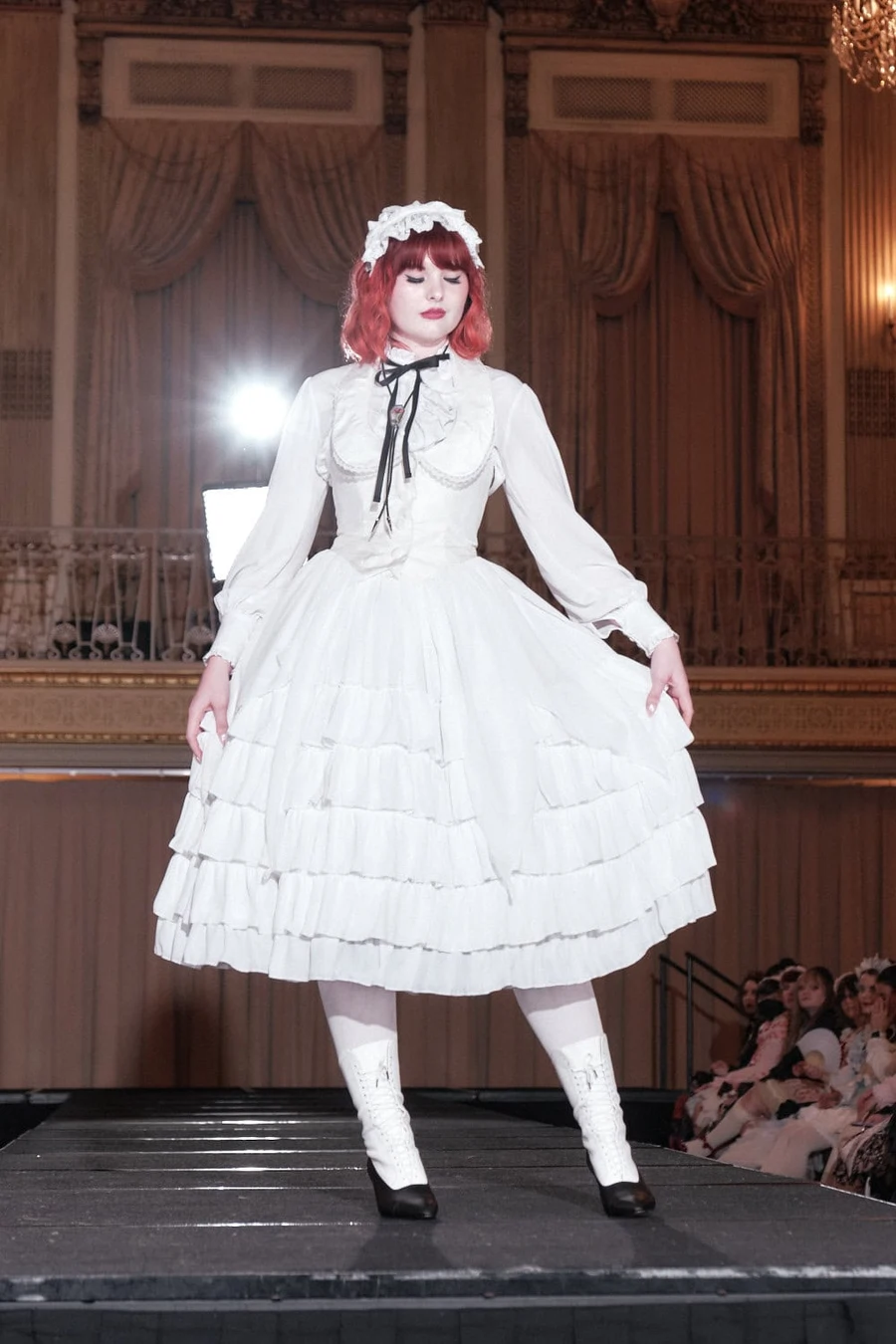
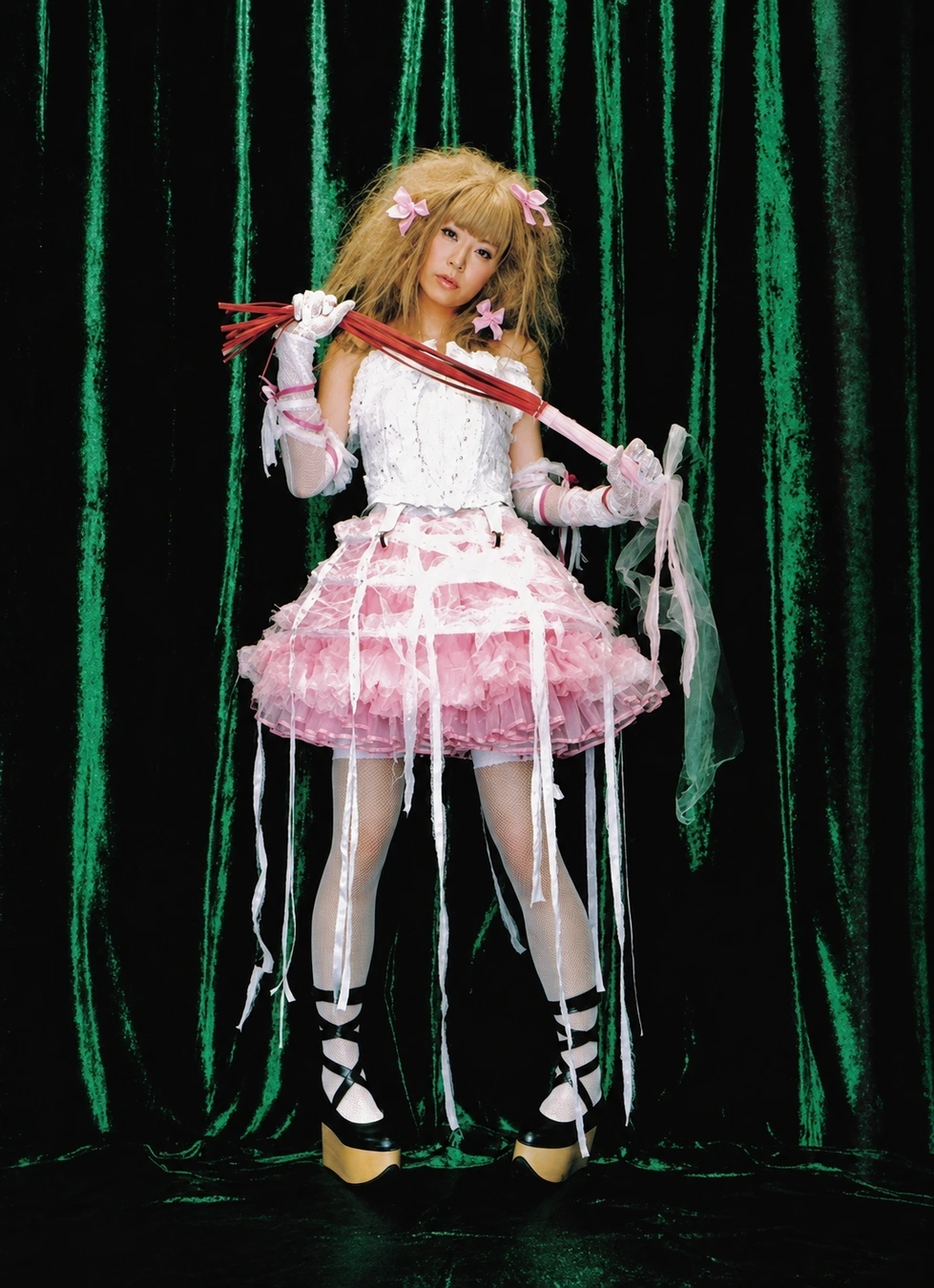
The silhouette keeps a measured distance from the body, creating a small territory that moves with the wearer rather than collapsing around her. Beneath the skirt, a petticoat preserves its volume, while the fitted bodice, covered neckline and carefully repeated details hold the image in deliberate order. Softness is present everywhere, yet nothing about it feels loose or accidental.
Lolita style draws from European dress, porcelain dolls, old illustrations and ceremonial interiors, but it does not reproduce any single past with historical obedience. Those fragments are filtered through Japanese imagination and reorganised into a visual language with its own proportions, etiquette and emotional temperature. The references may feel familiar, though the world they create has never quite existed outside the clothing itself.

Within Japanese street style, that distance from reality gives Lolita its peculiar force. The wearer is not attempting to become a child, nor stepping temporarily into the role of a fictional character. She is shaping an adult image around fantasy, precision and self-authored femininity, allowing beauty to remain elaborate in a culture that usually asks it to become faster, quieter and easier to consume.
The lace may appear tender, but tenderness is not the same as openness. The skirt withholds the outline of the body, the neckline redirects attention, and the completeness of the coord leaves little room for an outside gaze to rewrite its meaning. Lolita style invites attention while refusing easy interpretation, turning delicacy into a form of control and dress into a boundary that remains beautiful precisely because it never belongs to everyone who looks at it.
Long before Lolita style acquired its familiar bell-shaped silhouette and elaborate etiquette, Japan had already developed a fascination with girlhood as an aesthetic territory of its own. During the 1970s, kawaii culture spread through handwriting, stationery, illustration and consumer design, giving softness and apparent innocence a visual authority that extended far beyond childhood. Fashion absorbed that mood through clothes that looked as though they belonged to an imagined young heroine instead of the efficient adult woman waiting at the end of adolescence.

By the 1980s, the romantic “doll fashion” associated with labels such as Pink House had begun filling wardrobes with floral prints, gathered skirts and decorative layers. MILK, Jane Marple and Emily Temple Cute explored similarly nostalgic femininities, borrowing from European dress without attempting faithful historical reconstruction. These clothes established its emotional ground: prettiness could be cultivated with seriousness, while the image of the maiden could belong to women old enough to choose it for themselves.
Harajuku gave those scattered impulses a public stage during the 1990s. Among the district’s overlapping style tribes, lace, ruffles and covered silhouettes became increasingly legible as a distinct form of Japanese street style. Young people were composing identities on the pavement, where an outfit could be observed, photographed, imitated and revised by someone standing only a few metres away.
Lolitas and Gothic Lolitas became some of Harajuku’s most recognisable figures, turning sweetness into a spectacle that could hold its own beside punk, decoration and the darker experiments moving through Tokyo youth culture.
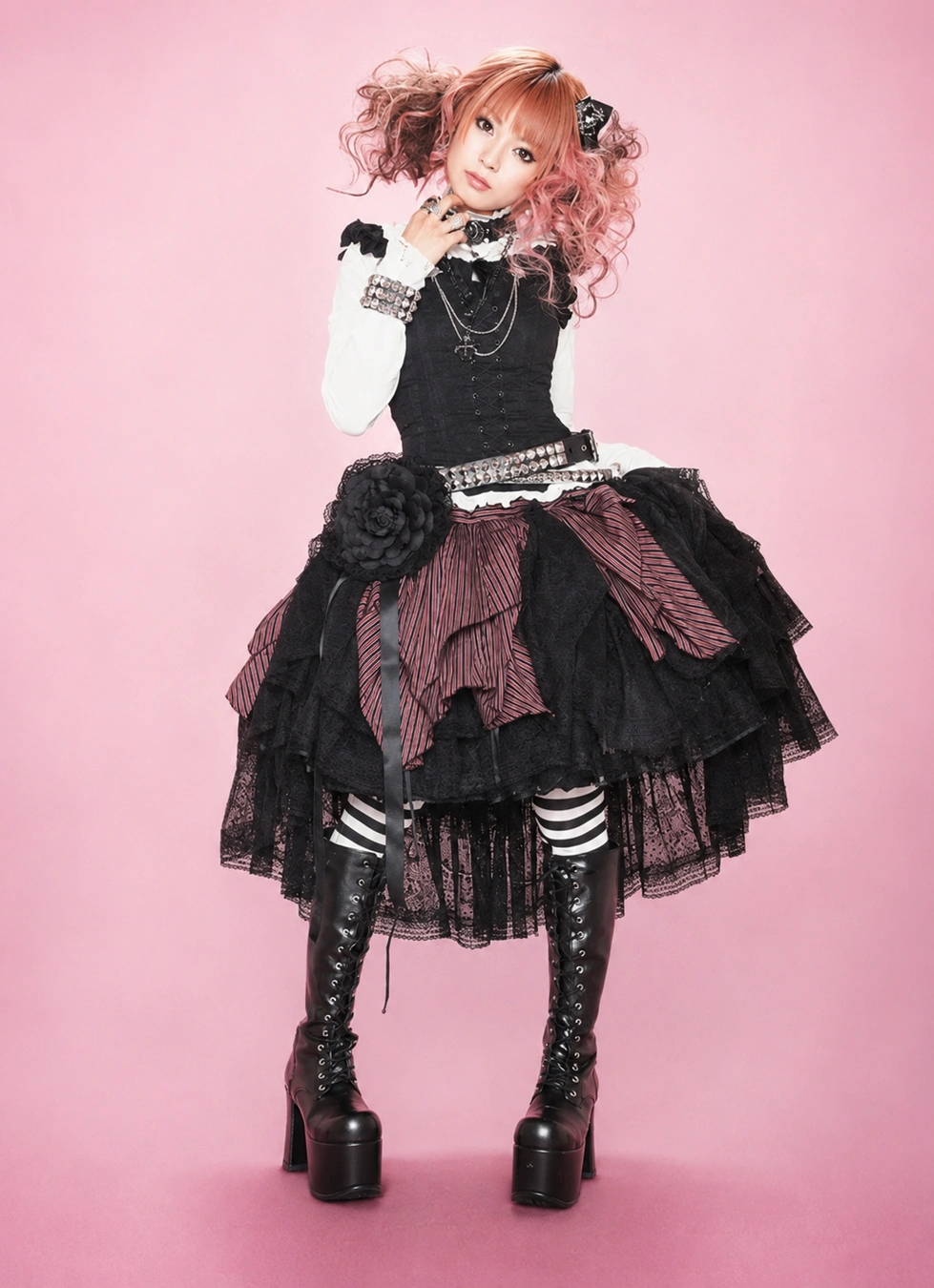

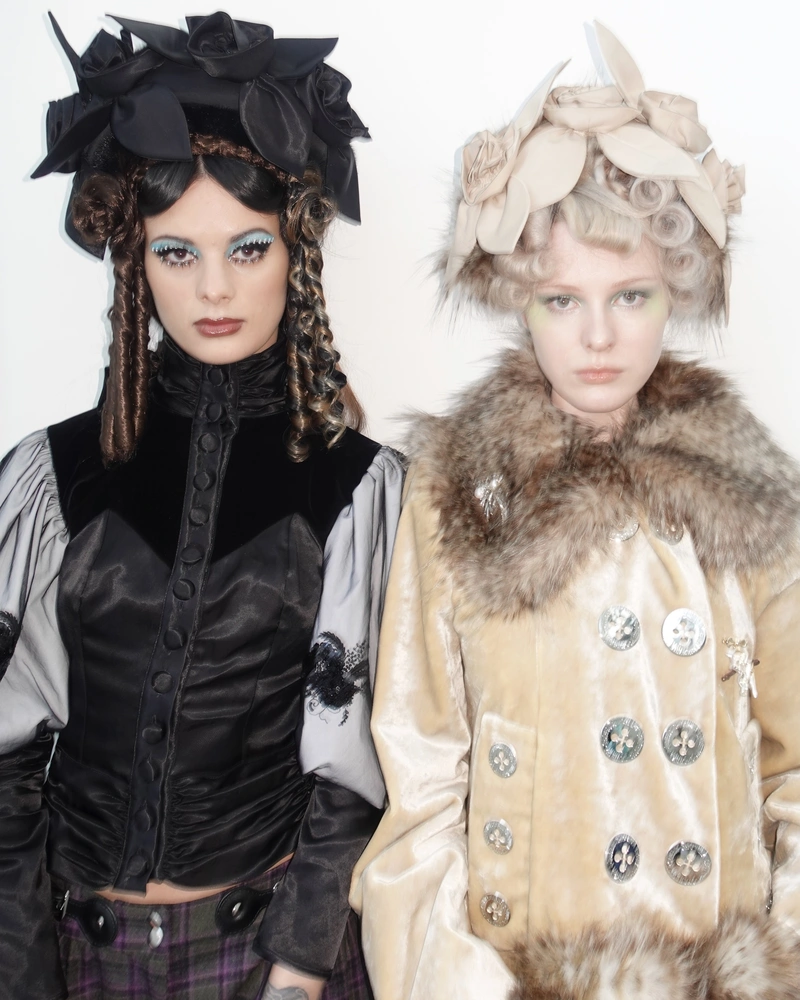
Visual Kei brought androgyny, Rococo excess and Victorian darkness into the same theatrical frame, carrying those codes from the stage into youth fashion. Through Mana and Moi-même-Moitié, Gothic Lolita gained one of its clearest visual languages, where black fabric, ecclesiastical motifs and ceremonial restraint gave the Lolita subculture a darker, more enduring identity.
What formed in Japan was never a recovered European past. Rococo ornament, Victorian propriety, shōjo fantasy and kawaii culture were taken apart, polished and placed together under a new set of rules. History supplied fragments. Lolita made the time of its own.
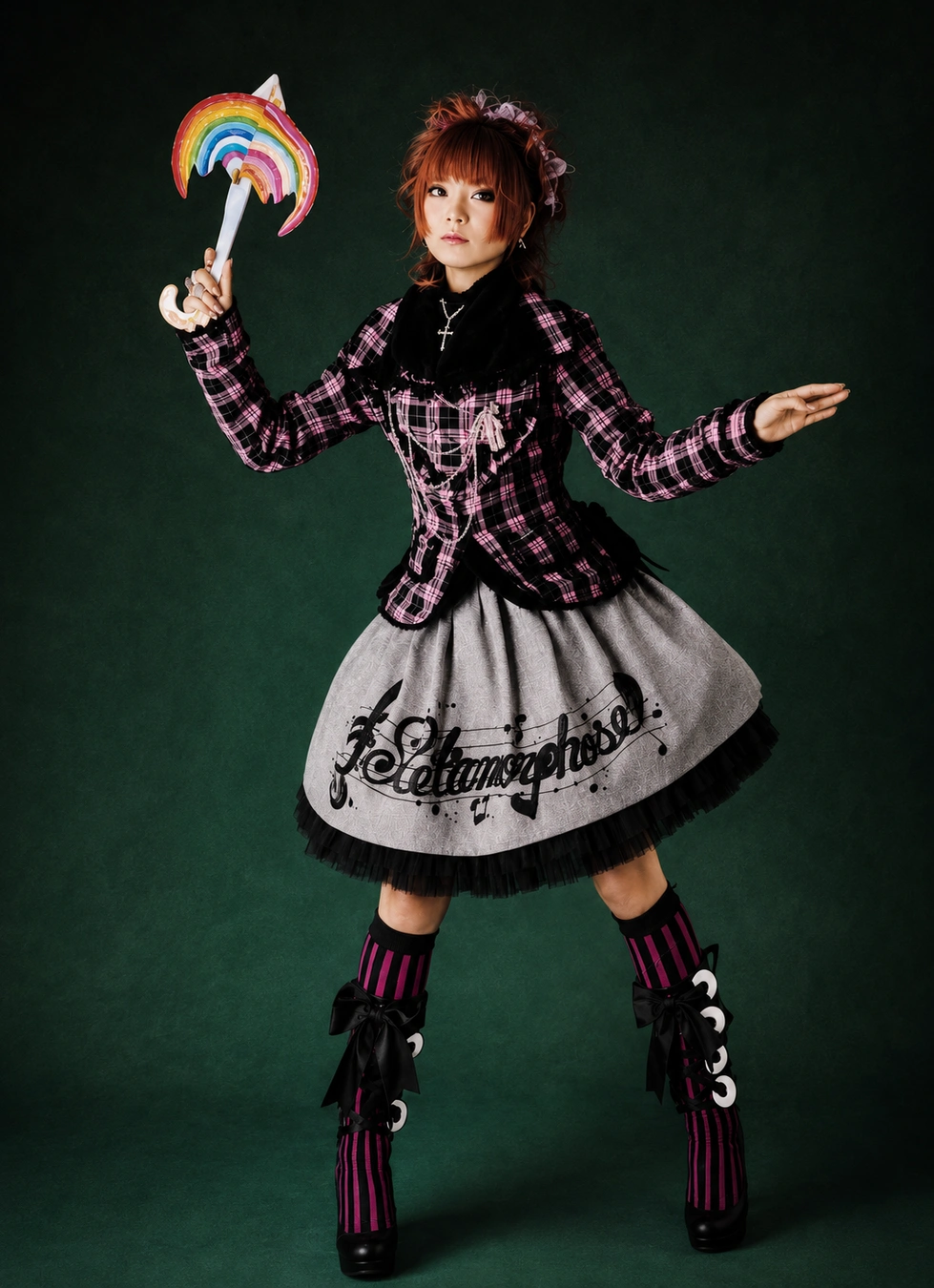
Lolita style shapes fabric into a deliberate structure around the body. The skirt is lifted into a bell or a clean A-line, held away from the legs by a petticoat that functions like an invisible frame. Above it, the waist is clearly placed and the neckline remains controlled, so the silhouette feels designed from the inside outward. The body is present, yet its natural outline is no longer the dominant shape.
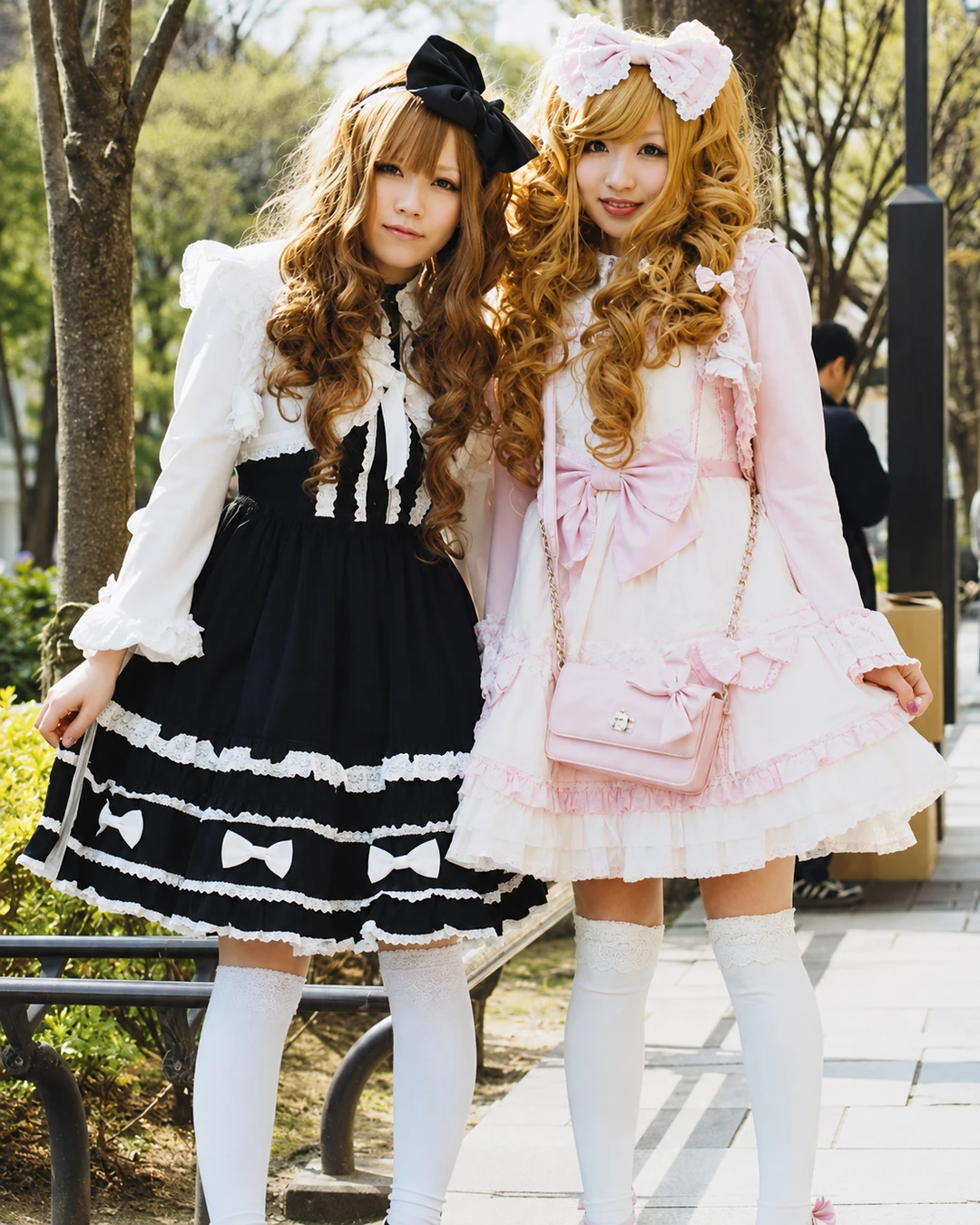
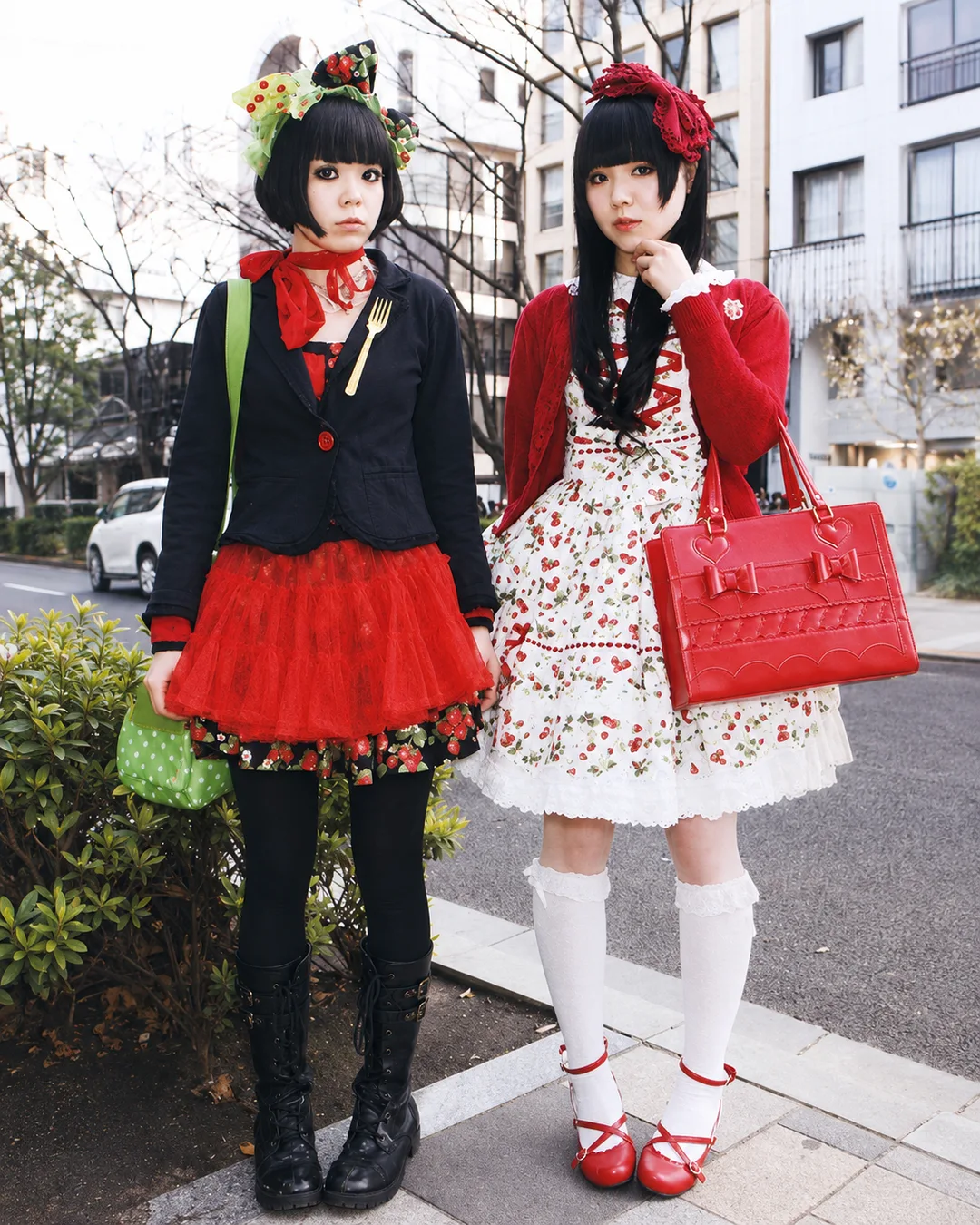
A fitted bodice may define proportion without clinging, while a blouse softens the shoulders through gathered sleeves and a carefully closed collar. Headwear restores visual weight near the face, and shoes ground the volume above with rounded toes, straps or a heavier platform. Nothing needs to match perfectly, but each detail must appear to understand the same rhythm. A ribbon near the throat can answer a smaller one at the wrist, while lace at the hem quietly returns to the collar.
Within Japanese street style, this discipline separates Lolita from clothing that is merely decorative. The abundance is governed by proportion, repetition and restraint. Even the most ornate cord depends on knowing where the eye should rest, which colour should lead and when another embellishment would disturb the whole image. The petticoat may remain unseen, but every visible element depends on the space it creates.

The different moods of the Lolita subculture are built upon this shared architecture. Sweet Lolita fills it with pastel colour, storybook prints and the polished pleasure of toys, cakes and carousel horses. Classic Lolita turns toward faded florals, old libraries and muted interiors, allowing the silhouette to feel quieter and more mature. Gothic Lolita keeps the same modest construction but darkens its atmosphere through black lace, stained-glass motifs and a severity that can feel almost ceremonial. Old-school Lolita strips the image back to heavier cotton, contrasting trims and simpler dresses, preserving the rawer energy of the style’s earlier years.
Across these variations, the same architecture holds the image together. The skirt establishes volume, the bodice controls proportion, and each bow, cuff, and line of lace reinforces a composition in which every detail feels deliberate.
Lolita style takes everything adulthood is expected to leave behind and grants it another life. Ribbons retain their ceremony, lace keeps its delicacy, and the pleasures once dismissed as girlish return with enough confidence to become a complete language. The sweetness that is chosen by someone who see through the world’s appetite for seriousness and has declined to let it govern every corner of her imagination.
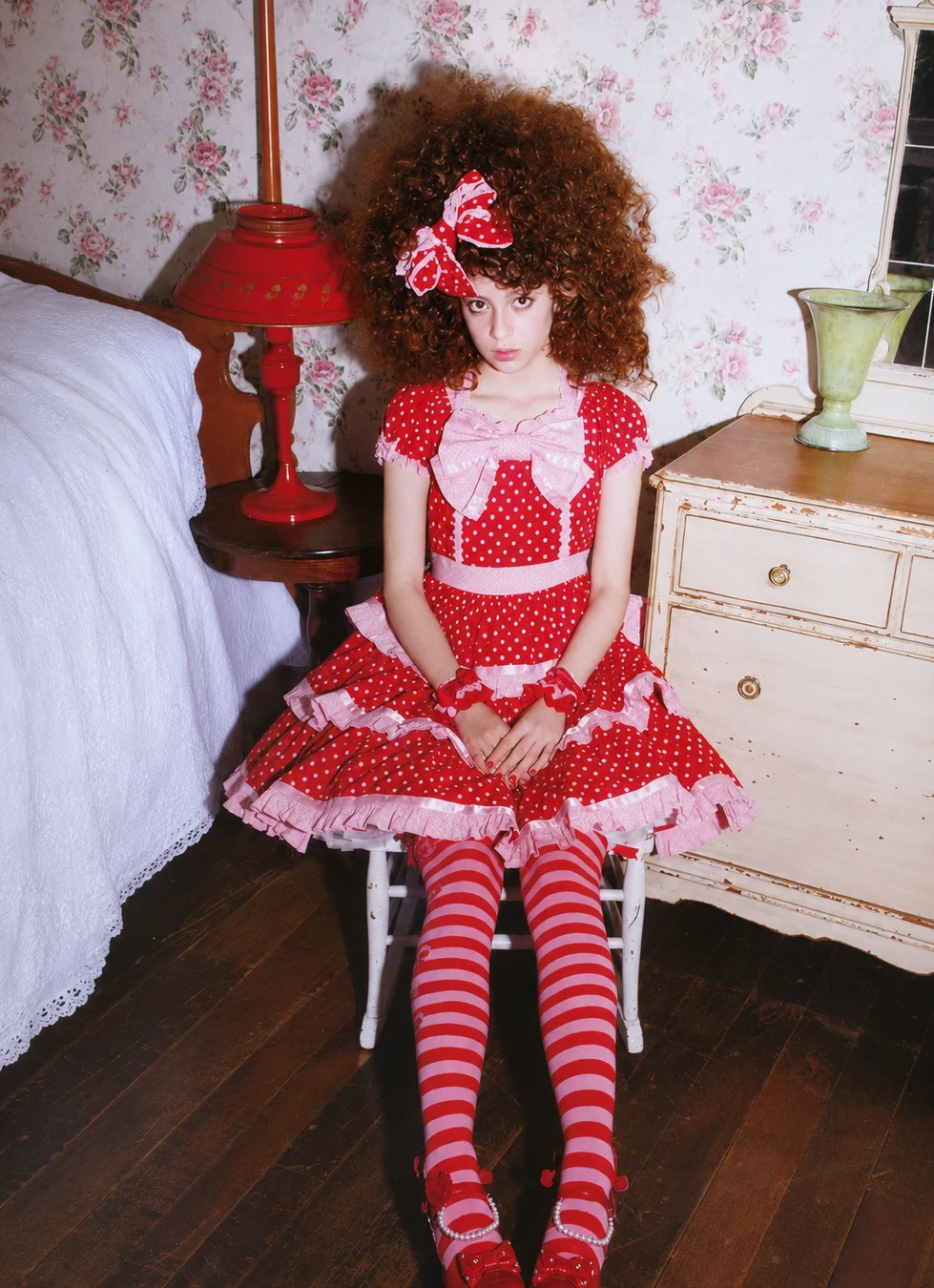
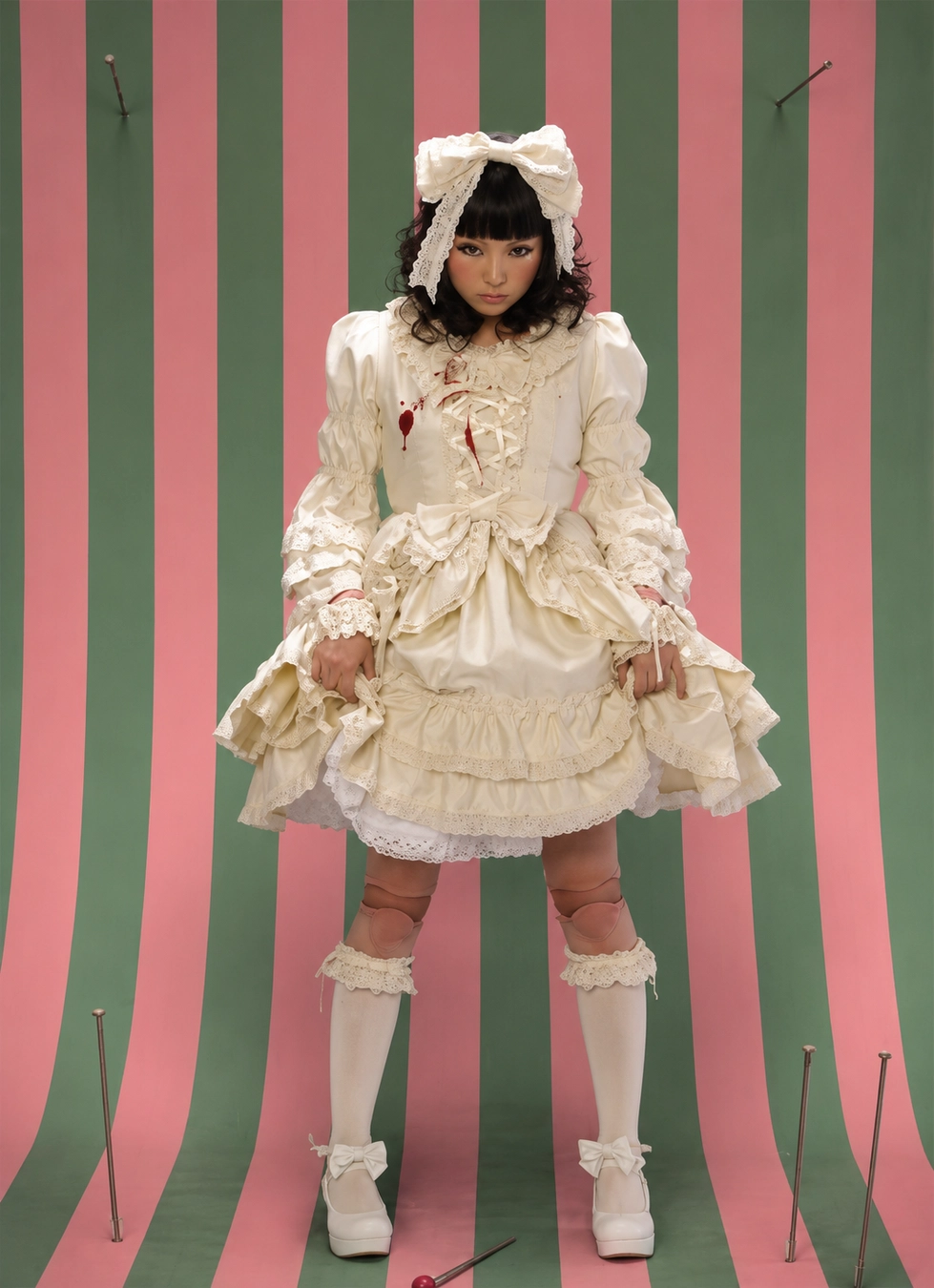
Within Japanese street style, Lolita offered femininity a more private form of power. A coord could require hours of preparation and still owe the surrounding street no explanation. The wearer might be admired, misunderstood or stared at, yet the world she carried remained under her authorship, protected by the care with which it had been made visible.
Clothing becomes a ritual through which daily life is briefly lifted out of routine. A café table can acquire the atmosphere of a drawing room, an afternoon meeting can feel ceremonial, and friendships may grow around the shared recognition of a print, a vanished collection or a dream dress remembered for years. Fantasy enters ordinary life quietly, changing its temperature without demanding that reality disappear.

Lolita style also preserves a kind of excess that modern adulthood rarely treats with tenderness. Time spent choosing ribbons, arranging accessories or waiting for the right piece appears impractical only within a culture that measures value through speed. Lolita answers with patience. Beauty deserves preparation, pleasure deserves attention, and a life may contain things whose purpose is simply to make it feel more fully inhabited.
It refuses the idea that maturity must thin the imagination until only usefulness remains. It lets softness grow older without hardening, allows wonder to survive without becoming naïve, and gives femininity the rare freedom to exist for itself, sealed inside a world whose door opens only from within.
On the runway, Lolita style reveals how many worlds can grow from the same devotion to fantasy. Some houses speak from within the Lolita subculture, while others approach its emotional territory through sweetness, theatricality and rebellion.
Baby, The Stars Shine Bright treats clothing like the architecture of a fairy tale, using ornate prints, ceremonial accessories and carefully controlled volume to build a complete imagined world. Every detail supports fiction, allowing the coord to feel less like decoration than a place governed by its own etiquette.
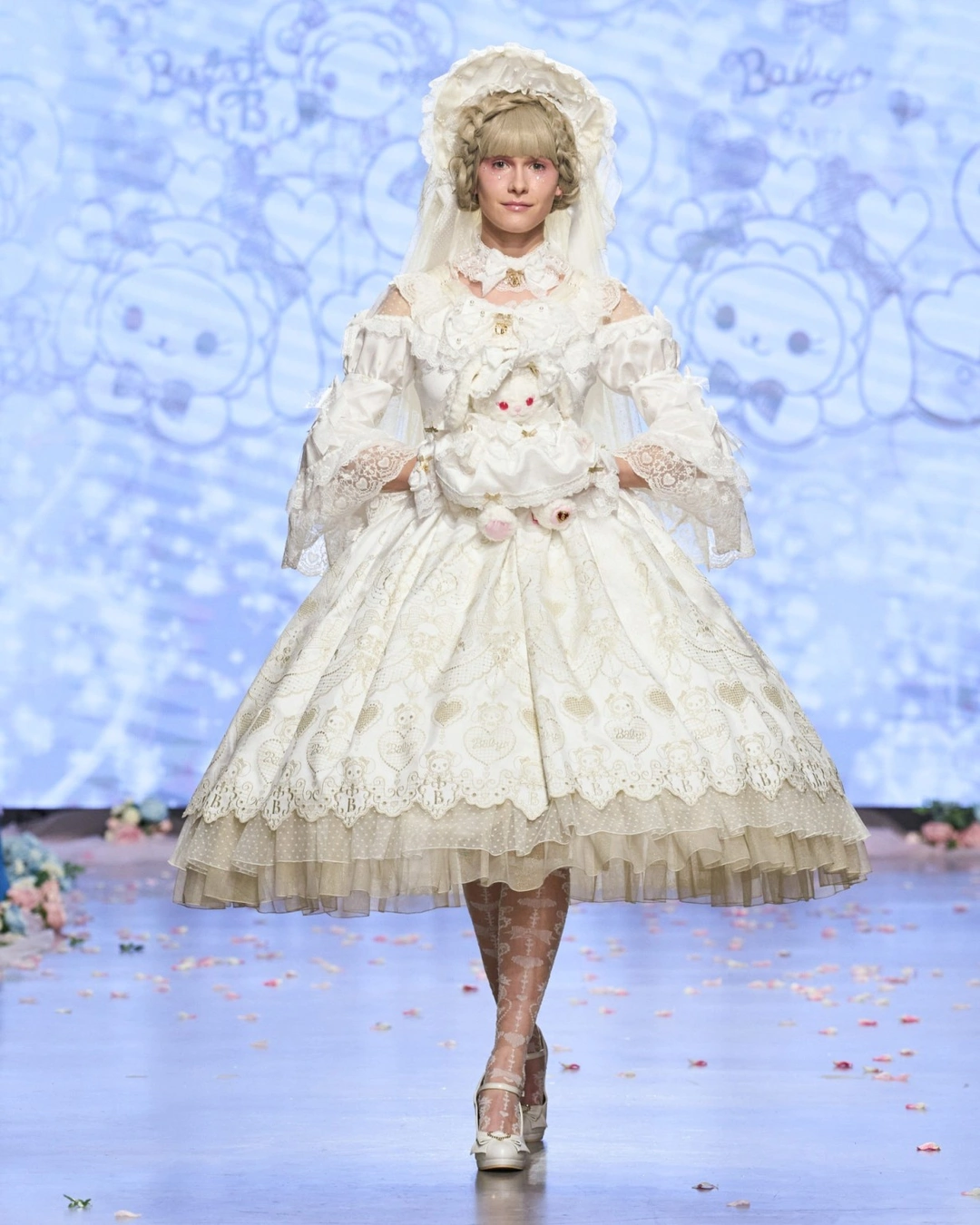
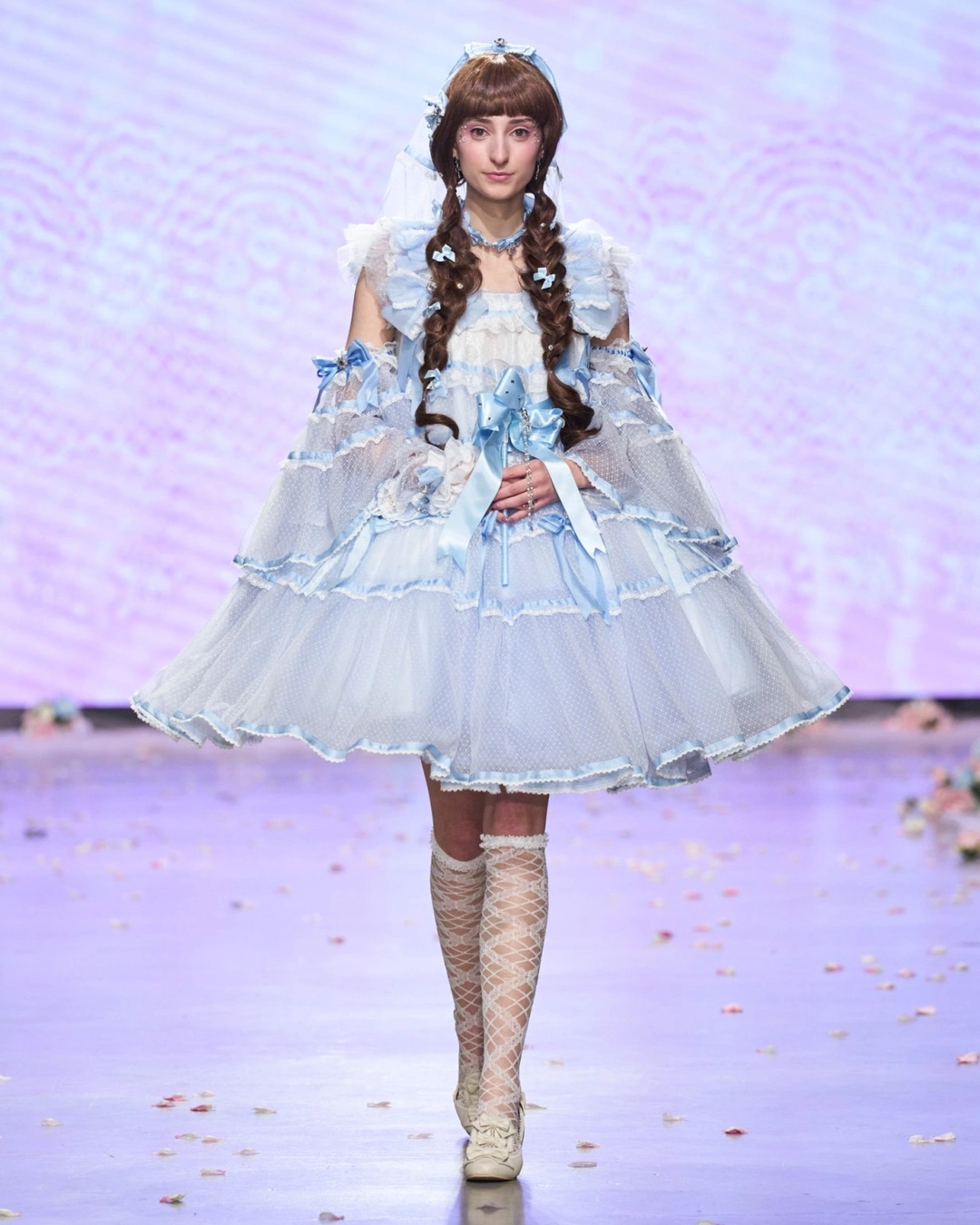
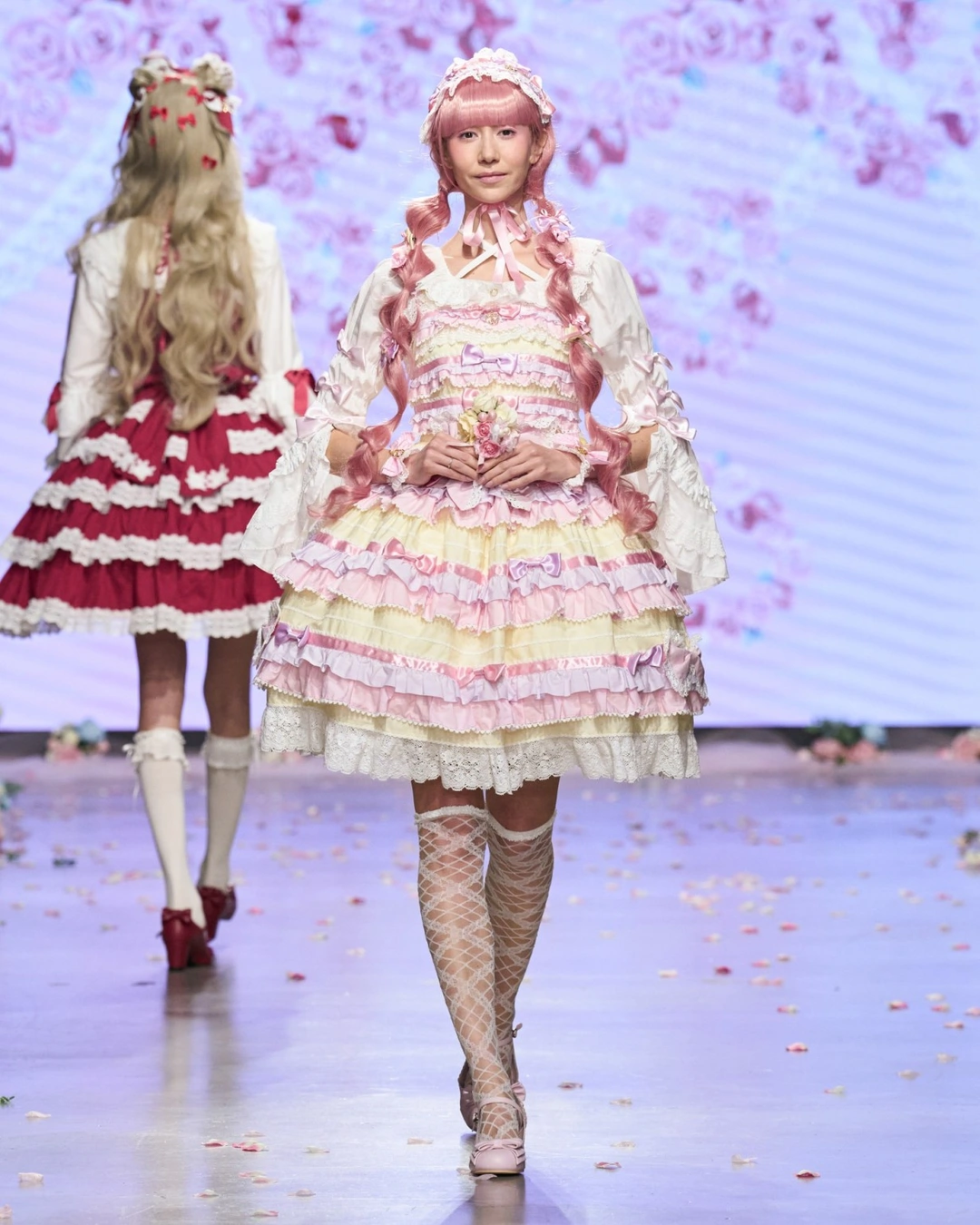
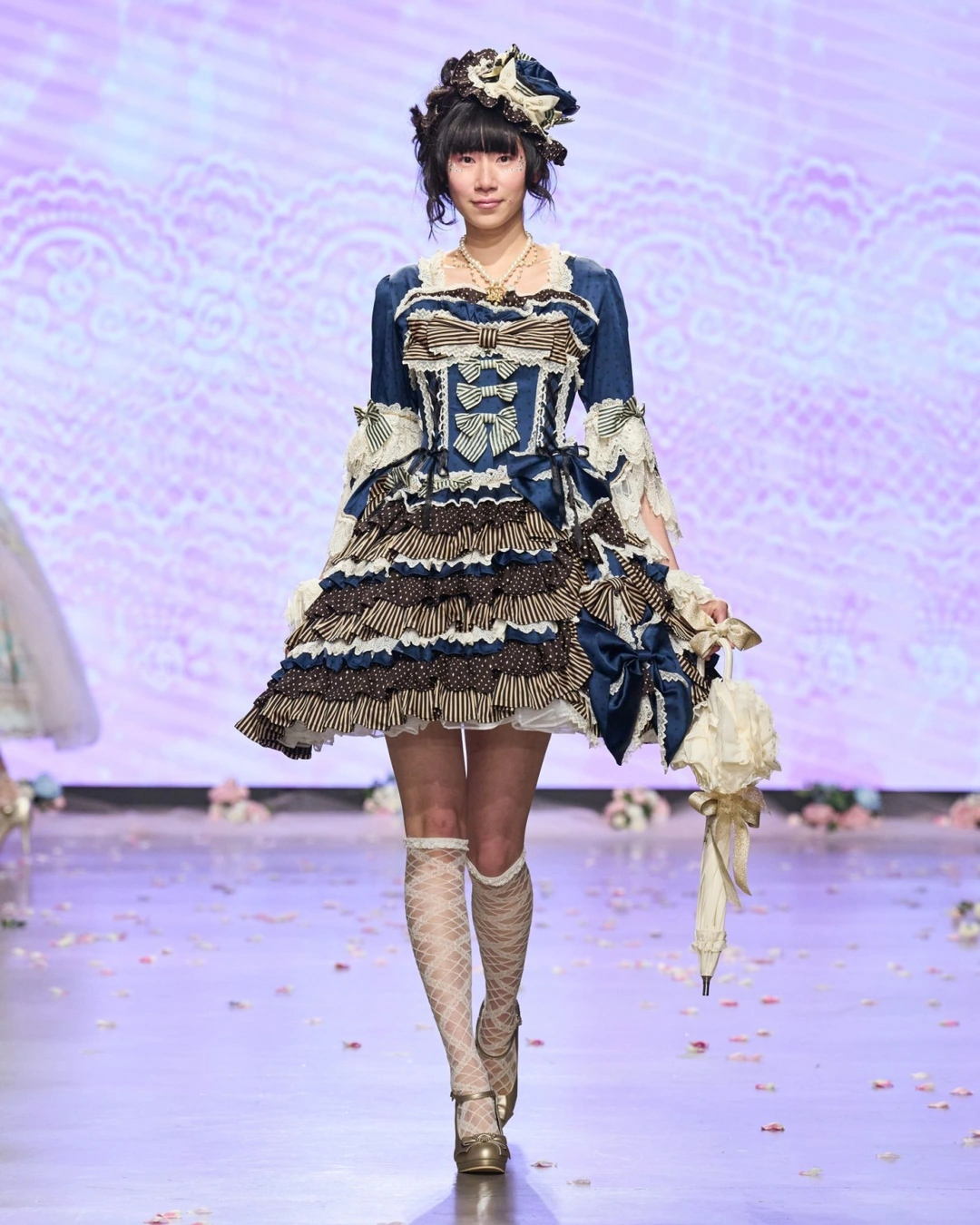
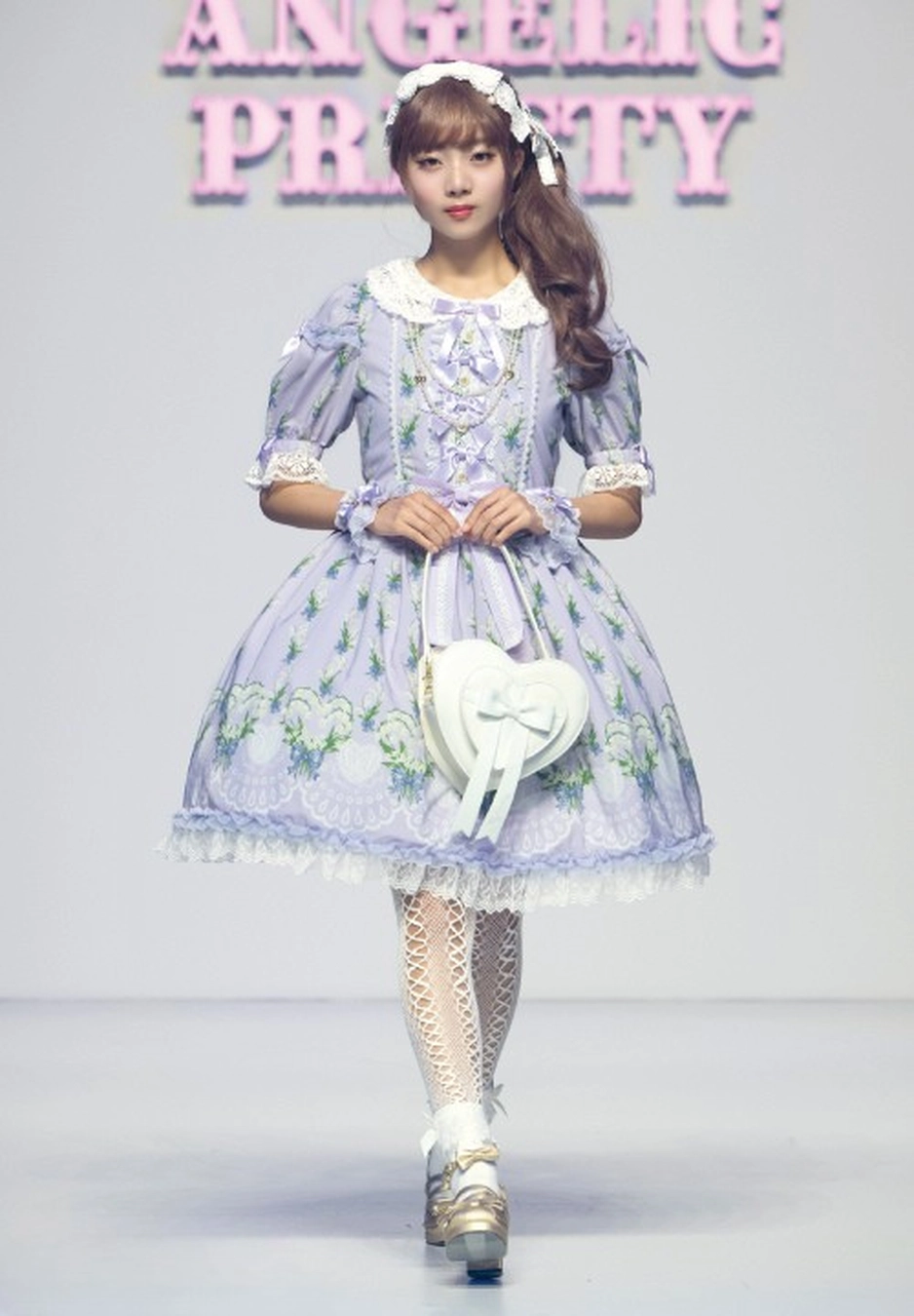
Angelic Pretty pushes that fantasy toward brighter pleasures, filling Japanese street style with colours that feel almost edible and prints that open onto toy rooms, sweets and dream landscapes. Its hyper-femininity carries confidence instead of fragility, allowing joy itself to become spectacular.
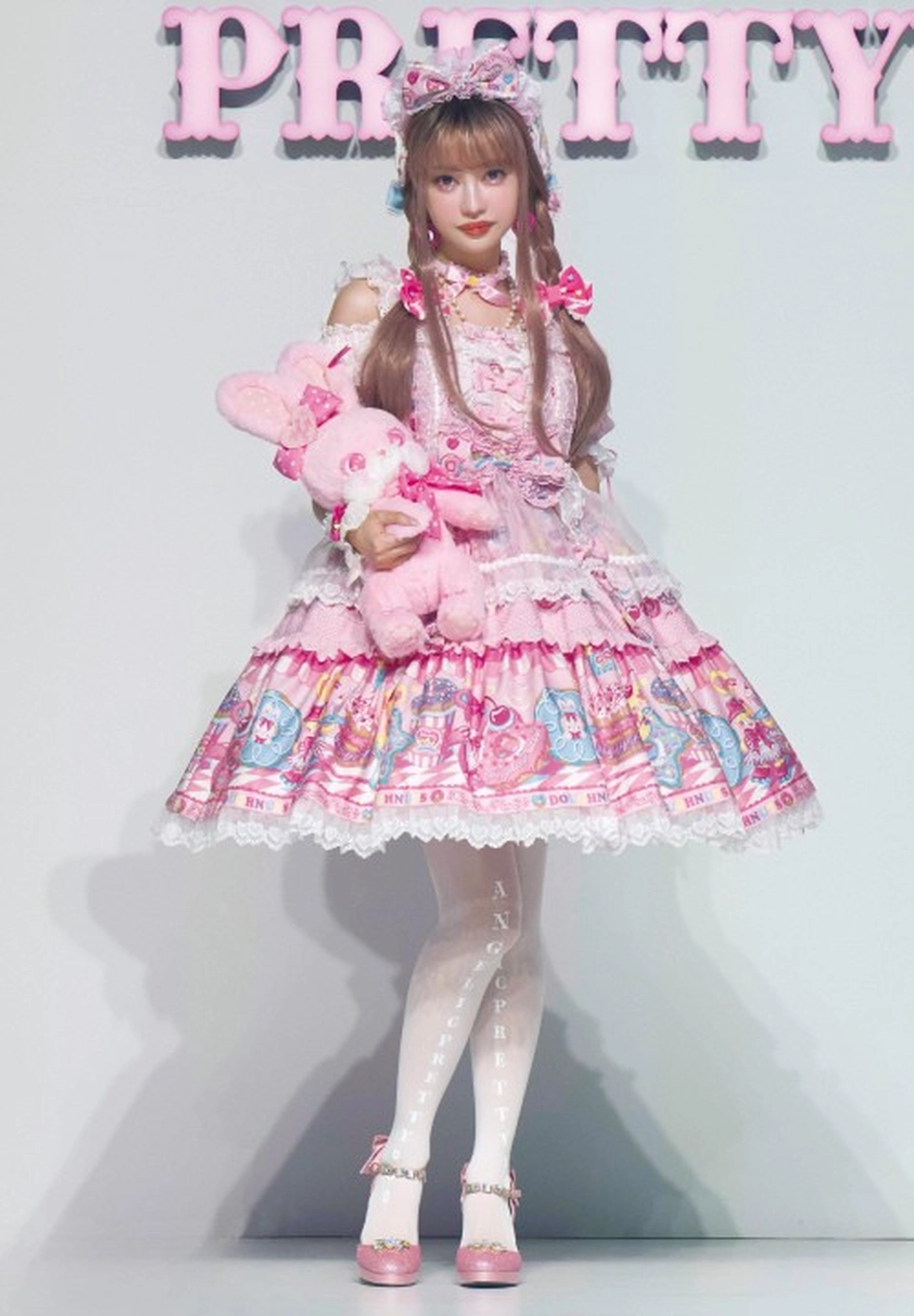
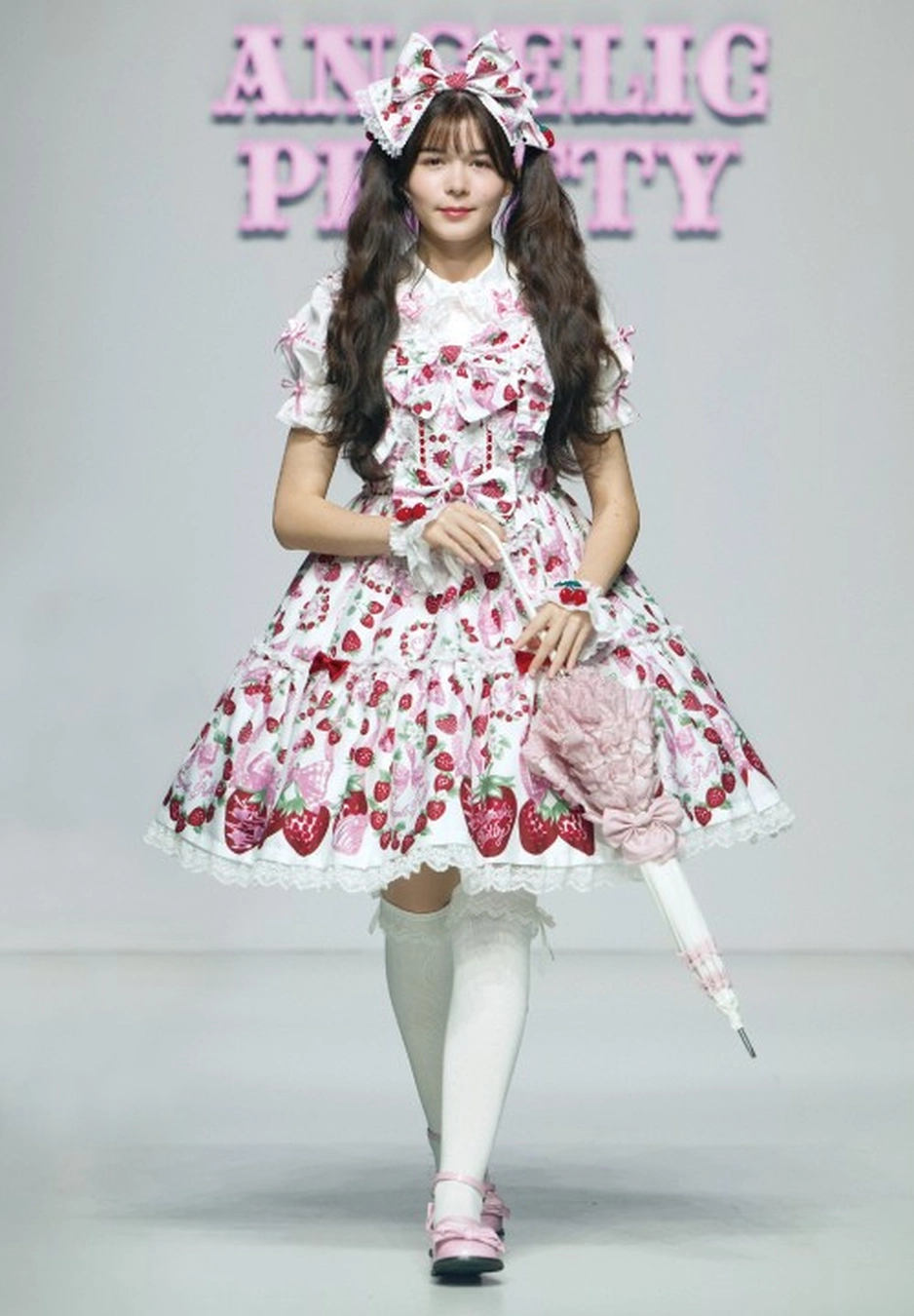
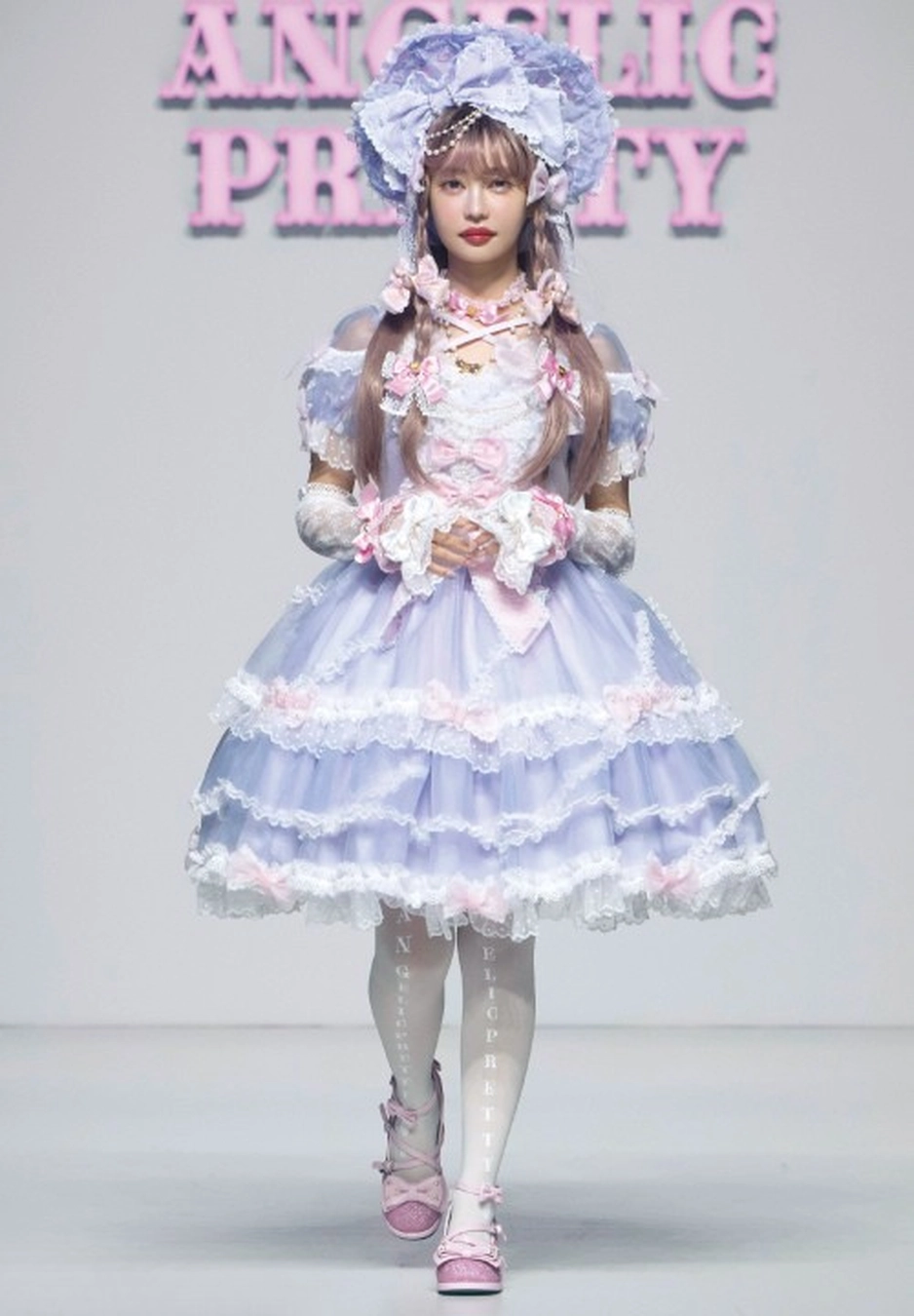
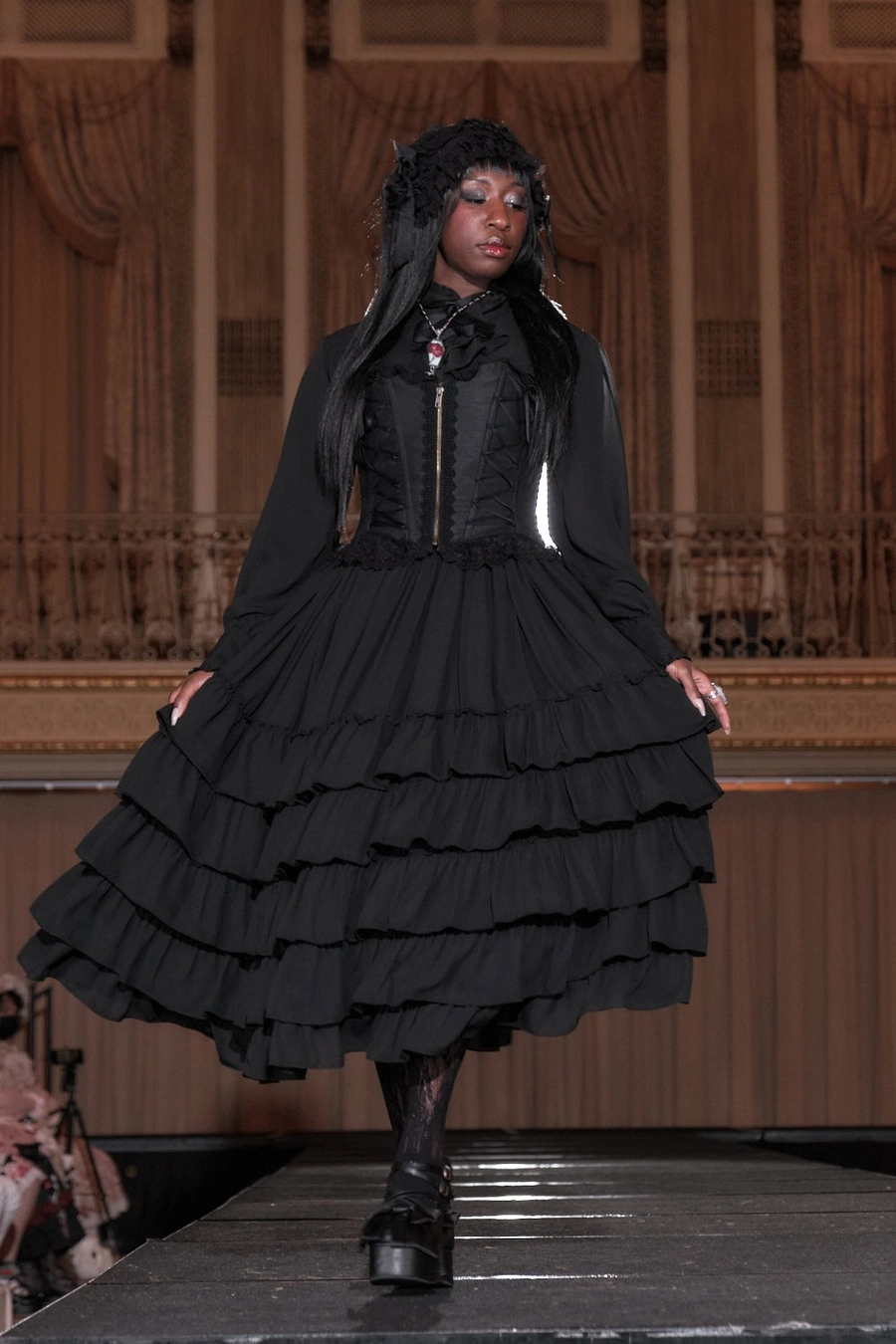
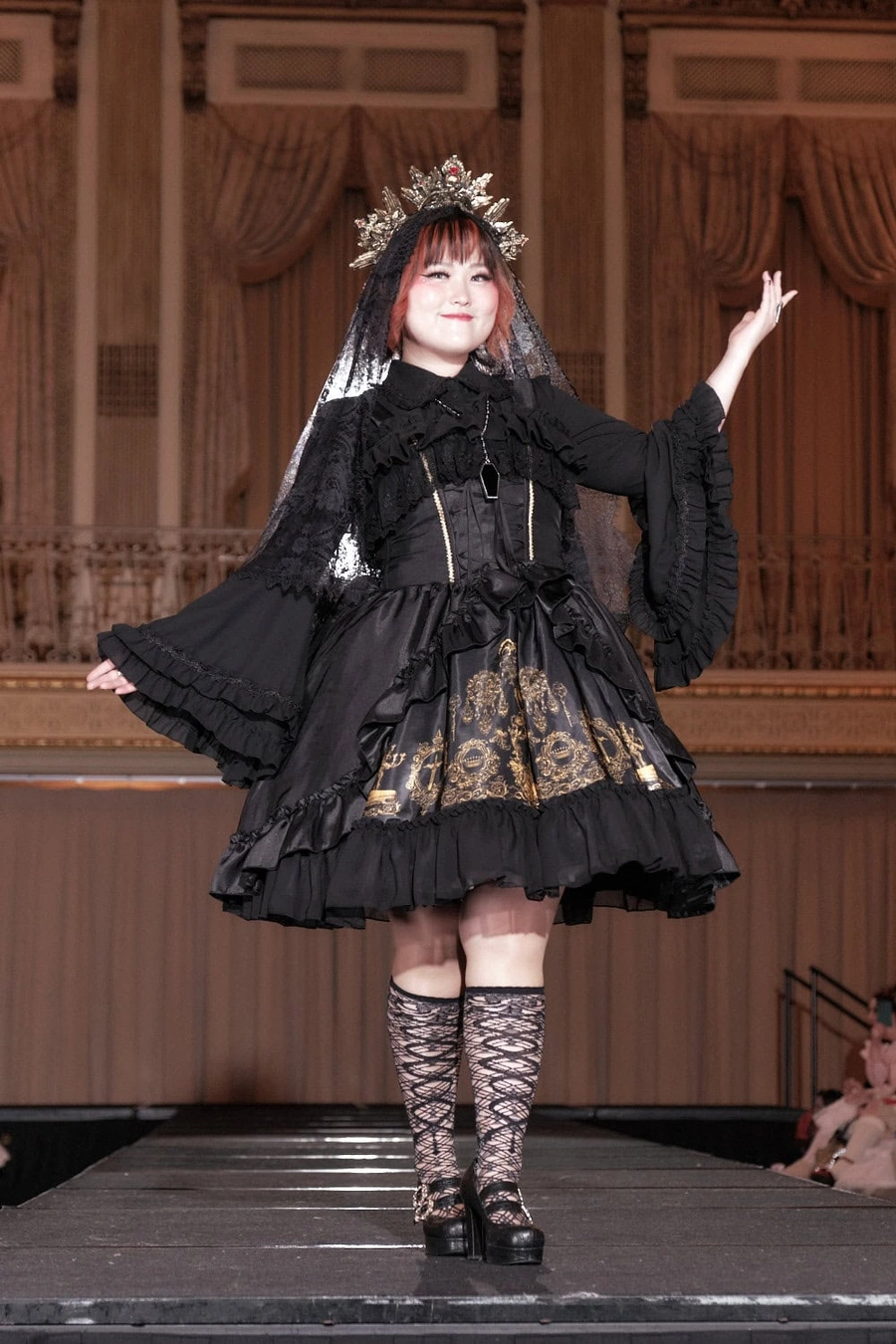
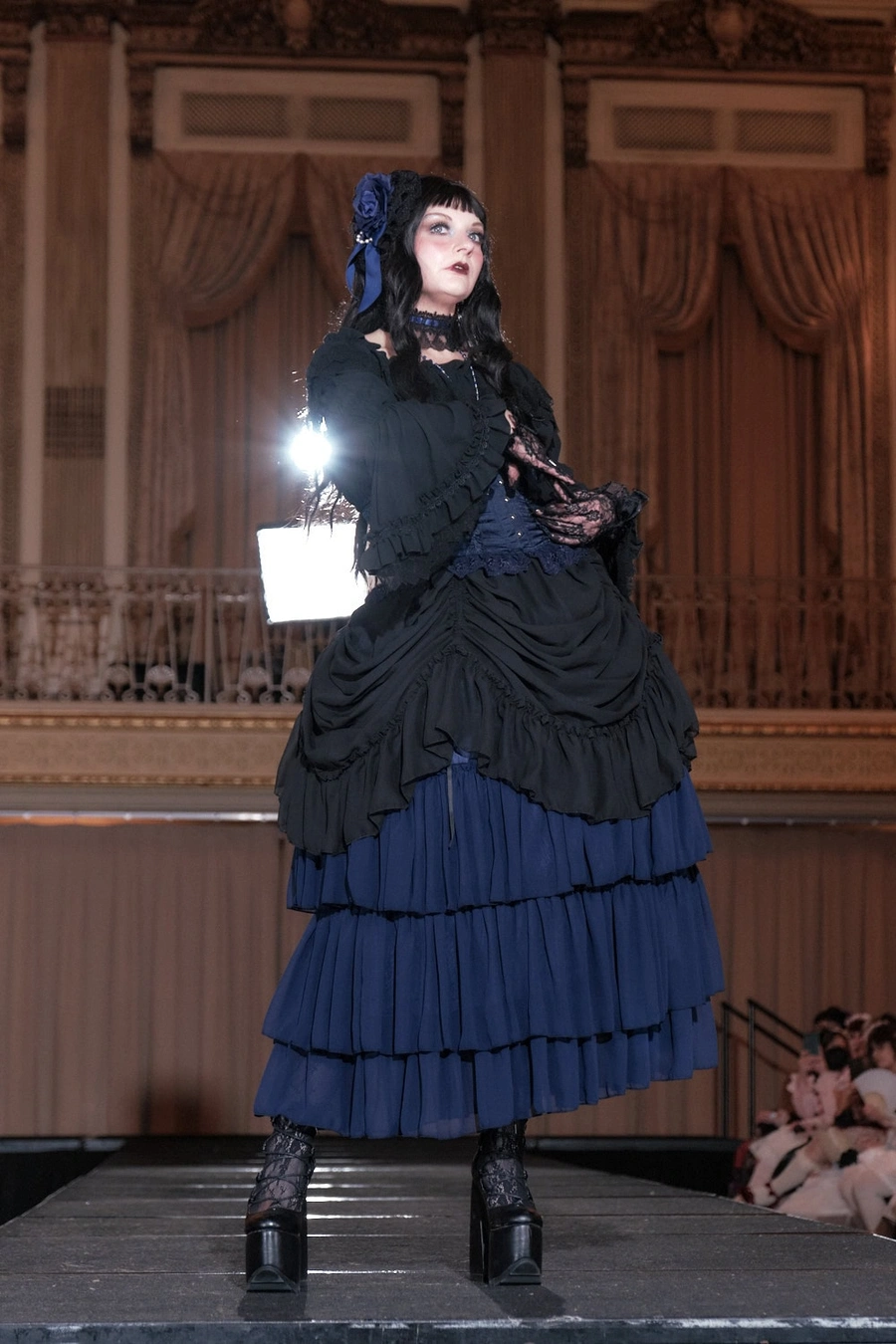
Atelier Pierrot draws the same imagination into shadow through corseted lines, heavy ruffles and black lace softened by romantic movement. Darkness becomes intimate rather than severe, surrounding the wearer with the atmosphere of a private nocturnal world.
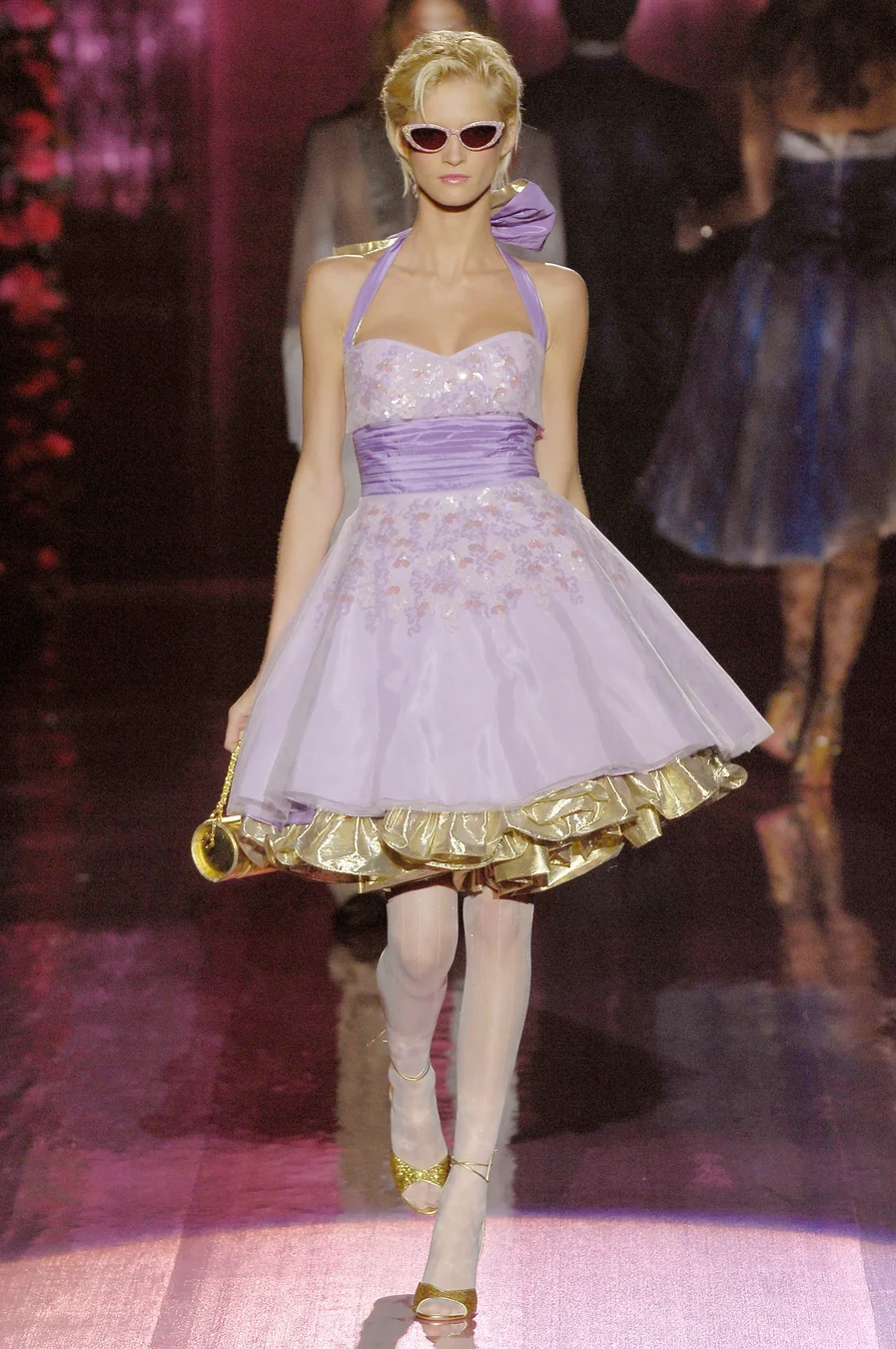
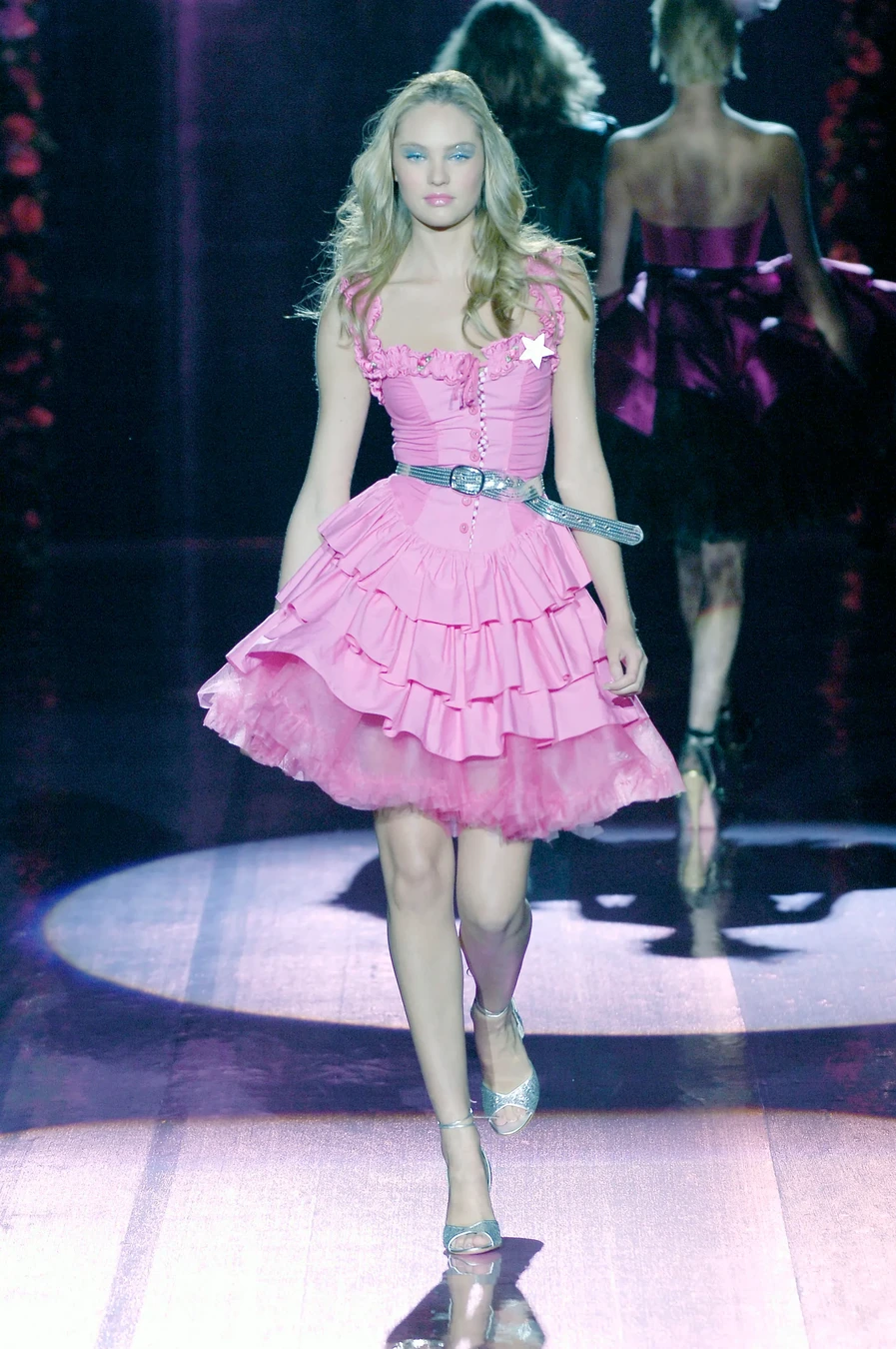
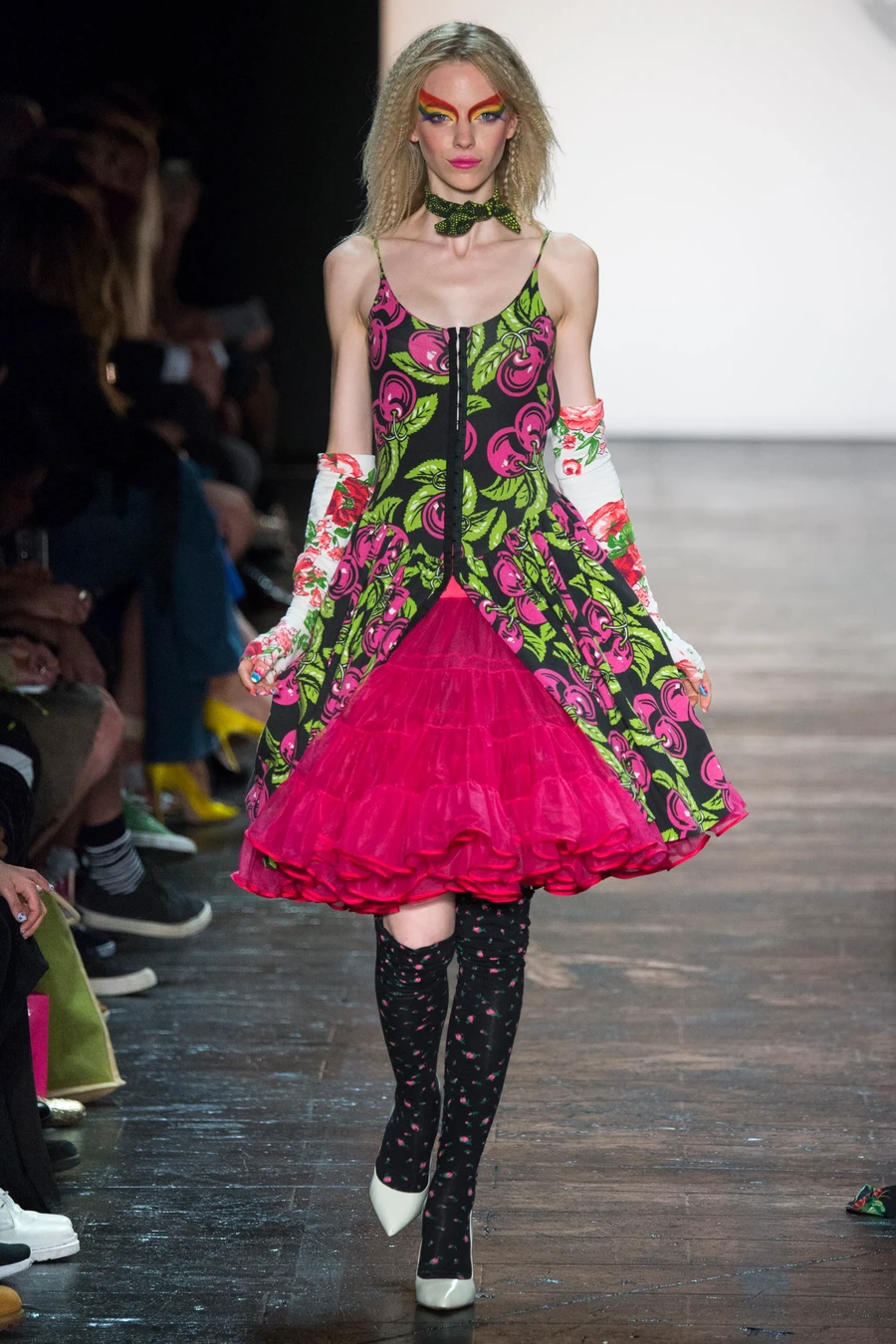
Betsey Johnson shares Lolita’s instinct for turning girlishness into mischief, colliding petticoats, floral excess and candy colour with an unmistakable punk energy. Her clothes carry the looseness of American party culture, yet they enter the same territory where prettiness grows louder, stranger and far less obedient.

Meadham Kirchhoff moves closer to the uneasy heart of that territory, where doll-like dresses hold tenderness and disorder in equal measure. Pastels, lace and childish imagery carry anger, vulnerability and resistance beneath their sweetness, as though the tea party has continued long enough for every hidden feeling to surface.
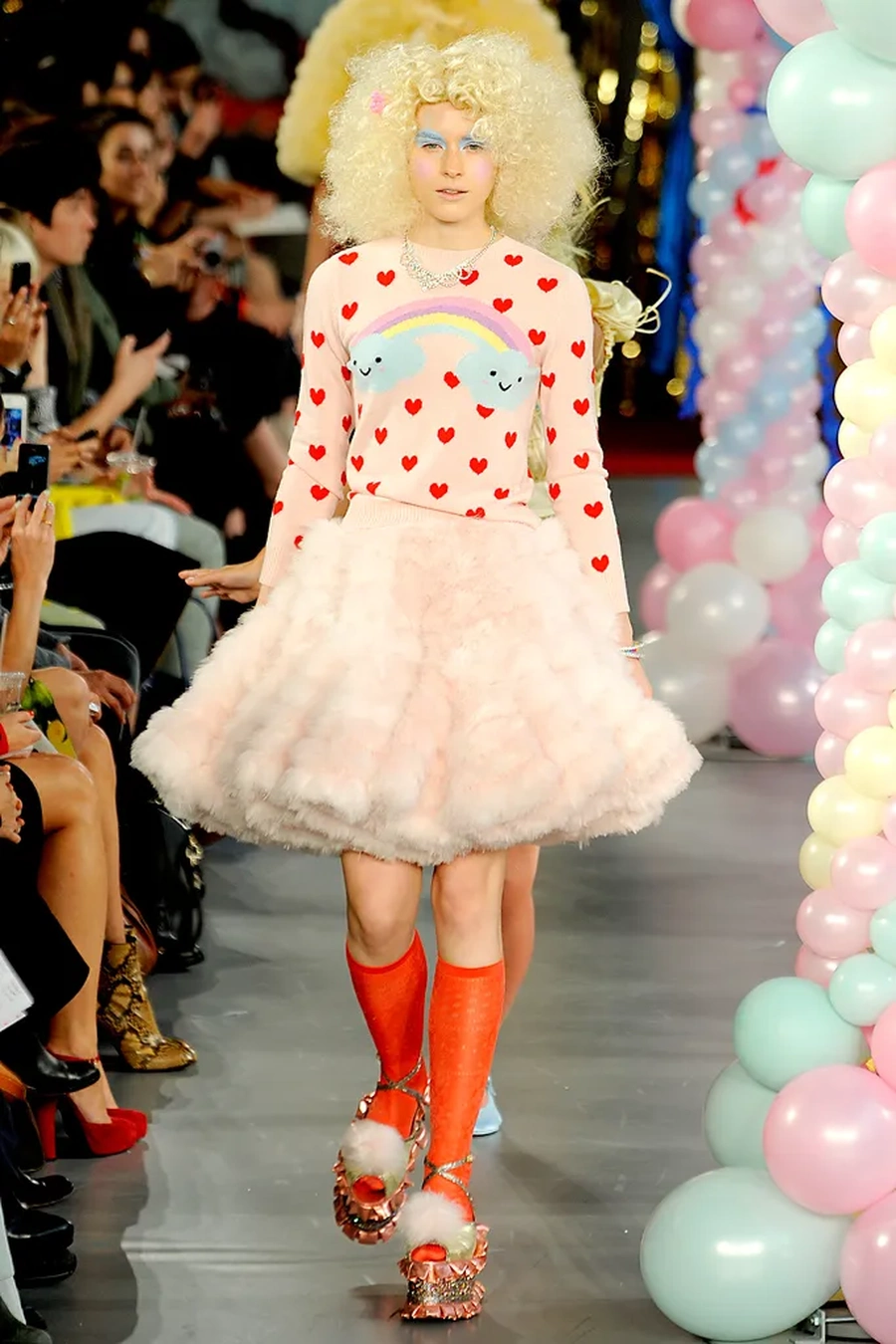
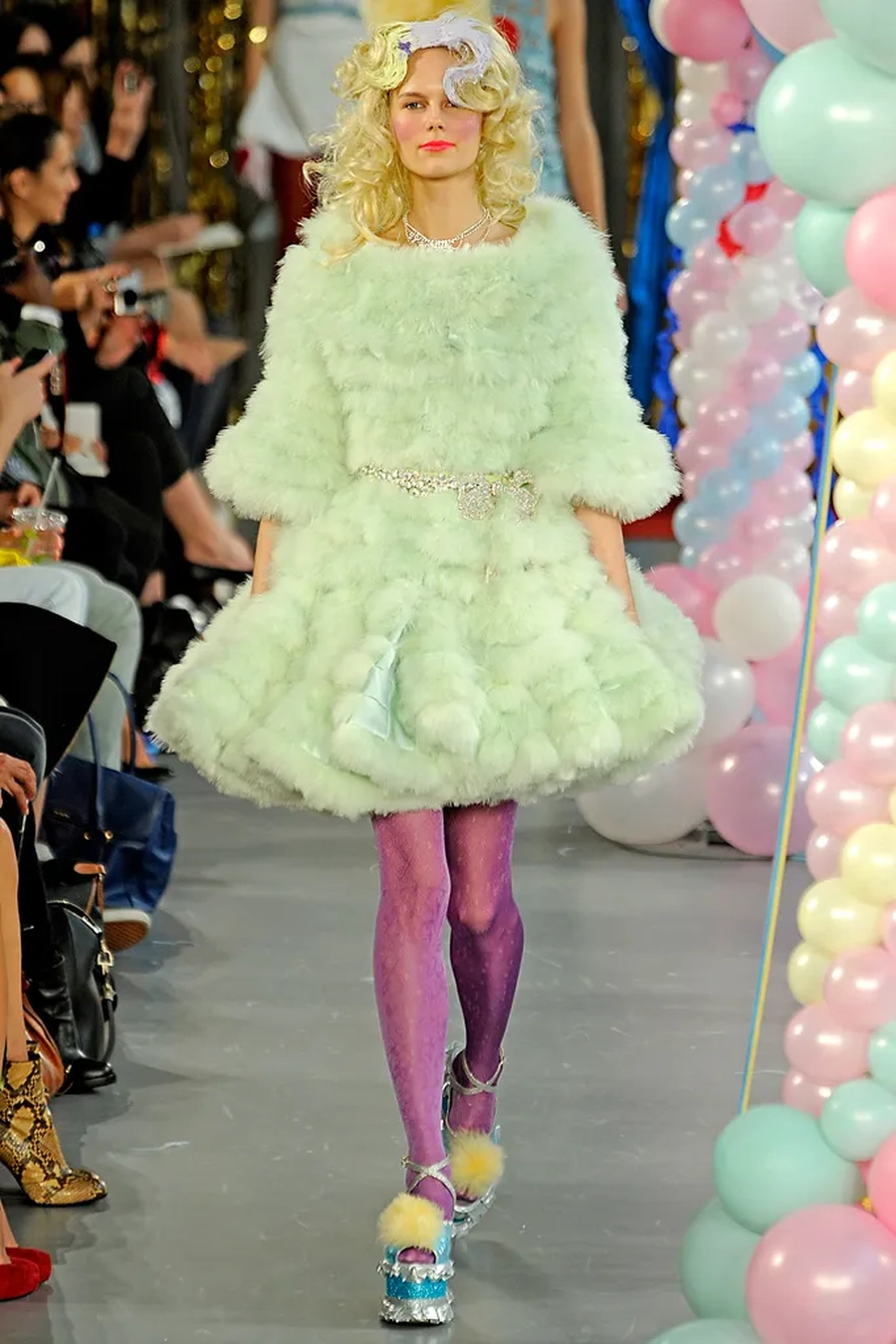
From within the culture, Lolita follows visual grammar shaped by ritual, memory and shared recognition. Beyond it, those same impulses loosen into something more unruly, where sweetness becomes excess and fantasy carries its own quiet defiance.
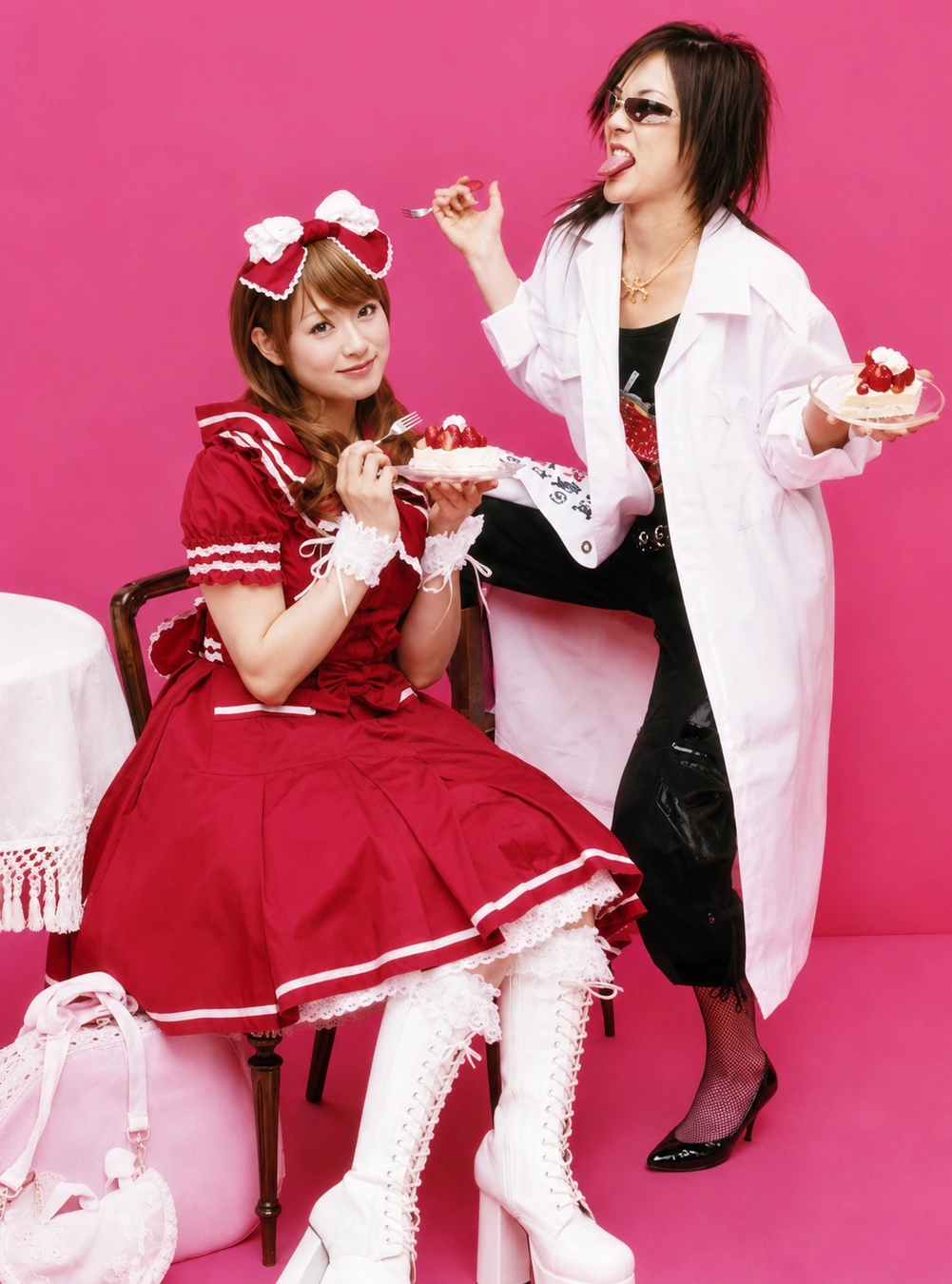
In Kamikaze Girls, Lolita style becomes the private philosophy through which Momoko survives a world she finds unbearably ordinary. Her devotion to Baby, The Stars Shine Bright carries far more than a taste for lace and Rococo fantasy, allowing her to preserve solitude, pride and a carefully imagined life until friendship quietly unsettles the walls she has built around it. The brand supplied Momoko’s wardrobe, helping the film turn an established Japanese street style into an image recognised far beyond Japan.

Deka Wanko places a Gothic Lolita heroine inside the disciplined, masculine world of police work, where her elaborate appearance follows her through investigations without fading into a temporary disguise. Ichiko’s clothes sharpen the contrast between how others first read her and the authority she gradually claims, allowing the Lolita subculture to appear within ordinary adult life rather than remaining sealed inside fantasy, music or Harajuku.

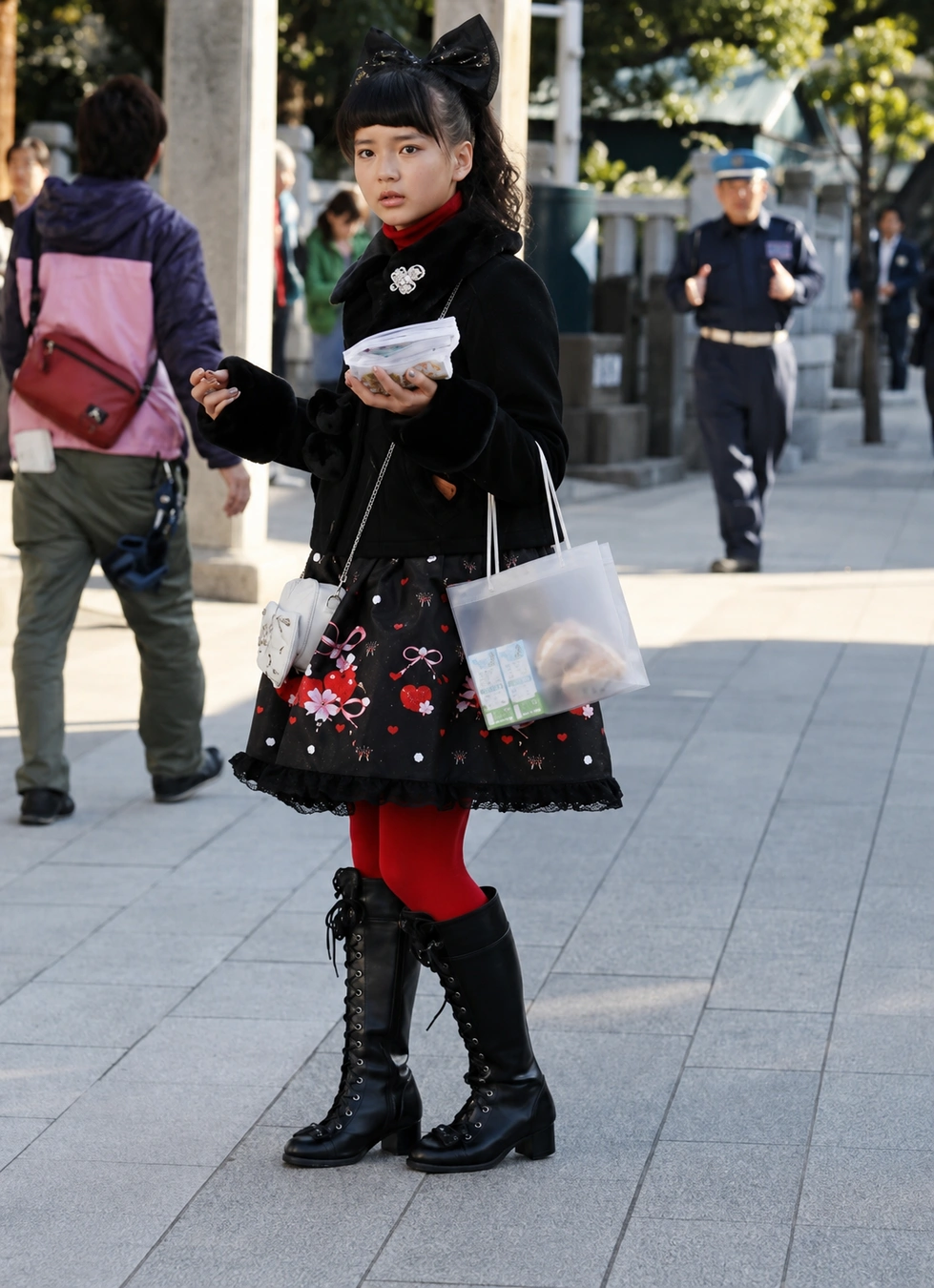
Together, the two works give Lolita clothing room to belong to a person rather than a spectacle. Momoko uses it to guard an inner kingdom, while Ichiko carries it directly into public responsibility, and neither woman abandons softness in order to prove that she can withstand the world.
Outside, the city keeps asking everything to move faster, look simpler and explain itself at a glance. Lolita style answers with patience, with ceremony, with a world whose meaning unfolds only for those willing to stay long enough to see it.
The ribbon is tied once more. Lace settles against the wrist. Somewhere beneath the skirt, the petticoat keeps its quiet shape, holding open a space where adulthood has not managed to erase wonder.
Perhaps that is the promise hidden inside the Lolita subculture. Growing older does not have to mean surrendering beauty to usefulness, nor teaching softness to apologise for taking up room. A life can still contain objects chosen only because they make the day feel more enchanted, more deliberate, more fully one’s own. Not childhood recovered. Not fantasy mistaken for reality. Only a woman decides that reality will have to make space for both.
Advertisement